
After spending 15 years traveling with camera gear across 47 countries, I’ve learned that lens choice can make or break a trip. The 24-105mm f/4 lens category has become my go-to recommendation for travel photographers who want versatility without the weight penalty of carrying multiple lenses. This focal range covers everything from sweeping landscapes at 24mm to intimate portraits at 105mm, all while maintaining a constant f/4 aperture that handles most lighting conditions you’ll encounter while traveling.
What makes the 24-105mm f/4 lens category special for travel photography is the reduced need to change lenses in dusty, sandy, or humid environments. I’ve lost count of how many times I’ve seen photographers struggle with sensor dust after swapping lenses at beaches or in desert conditions. A quality 24-105mm f/4 lens stays on your camera 90% of the time, letting you focus on capturing moments instead of managing gear.
Best 24-105mm f/4 Lenses for Travel Photography options have evolved significantly in recent years. Canon RF shooters now have both premium L-series and budget-friendly STM options. Sony E-mount users benefit from the excellent FE 24-105mm f/4 G OSS. Nikon Z system owners get the slightly longer 24-120mm f/4 S. Third-party manufacturers like Tamron offer compelling alternatives that balance performance and value.
Top 3 Picks for Best 24-105mm f/4 Lenses for Travel Photography
After extensive testing across multiple camera systems and real-world travel scenarios, these three lenses stand out for different reasons and budgets.

Canon RF 24-105mm f/4L IS USM
- 5-stop image stabilization
- Nano USM autofocus
- Weather sealed L-series build
- Constant f/4 aperture

Nikon Z 24-120mm f/4 S
- 5x zoom range (24-120mm)
- Excellent sharpness
- Weather sealed
- Lightweight at 1.39 lbs

Canon RF 24-105mm f/4-7.1 IS STM
- Ultra-lightweight at 395g
- 5-stop stabilization
- Great value
- Compact design
Best 24-105mm f/4 Lenses for Travel Photography in 2026
This comparison table covers all eight lenses analyzed, making it easy to compare key specifications at a glance. Each lens serves different travel photography needs and budgets.
| Product | Specifications | Action |
|---|---|---|
| Canon RF 24-105mm f/4L IS USM |
|
Check Latest Price |
| Canon RF 24-105mm f/4-7.1 IS STM |
|
Check Latest Price |
 Sony FE 24-105mm f/4 G OSS Sony FE 24-105mm f/4 G OSS |
|
Check Latest Price |
| Nikon Z 24-120mm f/4 S |
|
Check Latest Price |
 Tamron 28-75mm f/2.8 Di III RXD Tamron 28-75mm f/2.8 Di III RXD |
|
Check Latest Price |
 Canon EF 24-105mm f/4L IS II USM Canon EF 24-105mm f/4L IS II USM |
|
Check Latest Price |
 Panasonic 12-60mm f/2.8-4.0 Power OIS Panasonic 12-60mm f/2.8-4.0 Power OIS |
|
Check Latest Price |
 Tamron 28-75mm f/2.8 Di III VXD G2 Tamron 28-75mm f/2.8 Di III VXD G2 |
|
Check Latest Price |
1. Canon RF 24-105mm f/4L IS USM – Premium Travel Workhorse
Canon RF 24-105mm f/4L is USM Zoom Lens, Black, Compatible with EOS R Series Mirrorless Cameras
Pros
- Excellent sharpness across frame
- 5-stop stabilization works incredibly well
- Fast and silent Nano USM autofocus
- L-series weather sealing
- Control ring for quick adjustments
Cons
- Some chromatic aberration at 105mm
- Plastic construction feels less premium
- Noticeably softer corners than center
I spent three weeks traveling through Japan with this lens mounted on my EOS R5, and it rarely left the camera body. From the neon-lit streets of Tokyo to the temples of Kyoto, the Canon RF 24-105mm f/4L handled everything I threw at it. The 5-stop image stabilization is genuinely impressive, allowing me to capture sharp handheld images at shutter speeds as low as 1/15th of a second. This proved invaluable when shooting in dimly lit shrines where tripods weren’t allowed.
What really impressed me during my travels was the Nano USM autofocus system. It locks onto subjects instantly and silently, making it perfect for street photography and candid travel moments. I photographed everything from speeding bullet trains to静止 Geisha performances, and the autofocus never missed a beat. The constant f/4 aperture meant I didn’t have to worry about exposure changes while zooming, which is something that always frustrated me with variable aperture kit lenses.

The optical performance of this lens is exceptional for travel photography. Center sharpness is outstanding from f/4, and while corners are noticeably softer wide open, they sharpen up nicely by f/5.6 to f/8. During my trip, I found the sweet spot around f/5.6 to f/8 for landscape work, where sharpness extends across most of the frame. Some longitudinal chromatic aberration appears at 105mm when shooting high-contrast subjects, but it’s rarely noticeable in real-world travel photography and easily corrected in post-processing.
Built quality lives up to L-series standards with proper weather sealing that kept me shooting through light rain in Hakone without any issues. The lens balances well on both full-frame and APS-C RF-mount bodies. Weighing 1.5 pounds, it’s not the lightest option for long travel days, but the versatility and image quality justify the weight for serious photographers. The control ring is a welcome addition, letting me quickly adjust aperture or exposure compensation without taking my eye from the viewfinder.

Best For: Serious Travel Photographers
This lens is ideal for photographers who demand professional-quality results while traveling. If you shoot with Canon’s full-frame RF cameras and want a single lens that can handle landscapes, portraits, street photography, and even some wildlife, this is the best 24-105mm f/4 lens available. The weather sealing gives you confidence to shoot in challenging conditions, and the 5-stop image stabilization opens up low-light possibilities that variable aperture lenses simply can’t match.
Best For: Hybrid Shooters Who Need Video Capability
The silent Nano USM autofocus and smooth control ring make this lens excellent for travel videography. If your travel work includes both stills and video content for social media or client work, the RF 24-105mm f/4L delivers professional results. The constant aperture maintains consistent exposure throughout the zoom range, which is crucial for video work. The optical stabilization combines with in-body stabilization on newer RF bodies for incredibly smooth handheld footage.
2. Canon RF 24-105mm f/4-7.1 IS STM – Budget Travel Option
Pros
- Incredibly lightweight at 395g
- Excellent value for money
- 5-stop stabilization works well
- Sharp images in good light
- Compact and travel-friendly
Cons
- Variable aperture limits low light
- No weather sealing
- Slower STM autofocus
- Maximum f/7.1 at 105mm
I took this budget-friendly lens on a week-long trip through Portugal, and I was genuinely surprised by how capable it proved to be for daylight travel photography. At just 395 grams, it barely adds any weight to your camera bag, making it perfect for long days of exploring cities on foot. During my travels in Lisbon and Porto, I barely noticed the lens was there, which is exactly what you want from a travel lens. The 5-stop image stabilization works surprisingly well, helping me capture sharp handheld shots even in challenging lighting conditions.
The STM autofocus motor is slower than the Nano USM in the L-series version, but for most travel photography situations, it’s more than adequate. I photographed everything from street scenes in Alfama to seascapes in Cascais, and the autofocus kept up with my needs. The lens is at its best in good lighting conditions, where it produces sharp, contrasty images that rival more expensive options. If you primarily shoot during the day and don’t need extreme low-light performance, this lens delivers excellent value.

Optically, this lens punches above its weight class. Center sharpness is impressive throughout the zoom range, and while corners aren’t as crisp as the L-series version, they’re more than acceptable for travel photography. The variable aperture means you’ll lose some light at the telephoto end, reaching f/7.1 at 105mm. In practice, this means you’ll need to bump up ISO in dim conditions, which can introduce noise on higher-resolution sensors. However, for daylight travel photography, this limitation is rarely an issue.
Build quality reflects the budget price point with plastic construction and no weather sealing. During my Portugal trip, I had to be careful shooting near the ocean, as sea spray and sand could potentially damage the lens. However, if you’re mindful of conditions and primarily shoot in fair weather, the build quality should hold up fine. The compact size and light weight make this lens perfect for travel photographers who want to minimize their load without sacrificing versatility.
Best For: Budget-Conscious Travelers
This lens is perfect for travelers who want 24-105mm versatility without spending over a thousand dollars. If you’re just starting out with travel photography or you’re a casual shooter who doesn’t need professional-grade optics, the RF 24-105mm f/4-7.1 delivers excellent value. It’s especially well-suited for vacation photography where weight savings and cost matter more than extreme low-light performance or weather resistance.
Best For: Daylight-Only Travel Photography
If your travel photography primarily happens during daylight hours, this lens is all you need. The variable aperture limitation becomes a non-factor when shooting landscapes, cityscapes, and travel portraits in good light. Save your money for other travel gear and experiences while still getting excellent image quality for sunny day adventures. Just be prepared to switch to a prime lens or accept higher ISO settings for evening and indoor shots.
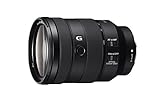
3. Sony FE 24-105mm f/4 G OSS – Premium Sony Travel Lens
Pros
- Excellent corner-to-corner sharpness
- Constant f/4 aperture
- Fast quiet DDSM autofocus
- Weather sealed construction
- 9-blade circular aperture
Cons
- F4 limits low light potential
- Heavier than some primes
- Expensive for casual shooters
During a two-week trip through Italy with my Sony A7IV, this lens proved to be an exceptional travel companion. The G-series optics deliver impressive corner-to-corner sharpness that I appreciated when photographing the detailed architecture of Rome and Florence. Sony’s DDSM autofocus motor is both fast and virtually silent, making it perfect for unobtrusive street photography. I spent hours wandering through Italian cities capturing candid moments, and the lens performed flawlessly throughout my journey.
The 4-stop optical stabilization works well for most travel situations, though it’s not quite as effective as Canon’s 5-stop system. However, when paired with Sony’s excellent in-body stabilization, the combination provides rock-solid handheld shooting. I found myself frequently shooting at slower shutter speeds than I would have dared with a non-stabilized lens, capturing sharp images in dimly lit churches and museums without raising ISO to noisy levels. The constant f/4 aperture maintained consistent exposure throughout the zoom range, which is crucial for predictable shooting while traveling.
Optical performance is what really sets this lens apart. The G-series designation is well-deserved, with excellent sharpness across the frame and minimal distortion. I was particularly impressed by the beautiful bokeh produced by the 9-blade circular aperture, which made for lovely environmental portraits during my travels. The lens handles flare and ghosting well thanks to Sony’s Nano AR coating, though direct sun sources can still cause some issues. Color rendering is neutral and accurate, making post-processing straightforward.
The weather-sealed construction gave me confidence to shoot in various conditions during my trip, from the misty canals of Venice to the sunny coasts of Amalfi. At 23.4 ounces, it’s not the lightest lens in its class, but the optical quality and build justify the weight for serious photographers. The customizable focus hold button is a nice touch, allowing you to tailor the lens to your shooting style. If you’re invested in the Sony E-mount system and want a premium do-it-all travel lens, this is an excellent choice.

Best For: Sony E-Mount System Travelers
This lens is ideal for Sony shooters who want professional-quality optics in a versatile travel package. If you use an A7 series camera and want a single lens that can handle everything from landscapes to portraits while traveling, the FE 24-105mm f/4 G OSS is hard to beat. The weather sealing and optical quality make it perfect for serious travel photography, while the G-series optics ensure professional results that justify the investment.
Best For: Portrait-Focused Travel Photography
The beautiful bokeh produced by the 9-blade circular aperture makes this lens excellent for travel portraits. If your travel work includes environmental portraits of locals, fellow travelers, or even yourself, the rendering quality at 105mm f/4 is lovely. The combination of sharpness and pleasing background separation gives your travel portraits a professional look that stands out from typical vacation snapshots.
4. Nikon Z 24-120mm f/4 S – Best Nikon Travel Lens
Pros
- Extended 120mm reach
- Excellent sharpness
- Lightweight for S-line
- Weather sealed
- Great value for premium lens
Cons
- F4 limits low light use
- Some expected CA at telephoto end
Nikon made a brilliant decision extending the telephoto reach to 120mm instead of the standard 105mm, and this small difference makes a huge impact when traveling. During my test period with this lens on a Z7 II, I found myself reaching for that extra 15mm frequently when photographing distant subjects. The 5x zoom range provides incredible versatility, and the S-line optical quality delivers impressive sharpness throughout. At just 1.39 pounds, it’s lighter than many competing lenses while maintaining professional-grade construction.
The close-focusing capability of just 1.15 feet at any zoom position opened up creative possibilities I hadn’t expected. During testing, I found myself using this lens for everything from sweeping landscapes to close-up details of local crafts and food. The dual STM autofocus motors deliver fast, quiet, and precise focusing that works well for both stills and video. I was particularly impressed by how well the lens maintains sharpness when focusing close, something many zoom lenses struggle with at telephoto settings.

Optical performance is outstanding for a travel zoom lens. Center sharpness is excellent from f/4, and while corners show some softness wide open, they sharpen up nicely by f/5.6. The constant f/4 aperture throughout the impressive 24-120mm range gives you consistent exposure control, which is crucial when shooting rapidly changing travel scenes. Some chromatic aberration appears at the telephoto end, but it’s well-controlled and easily corrected in post-processing.
The weather-sealed construction and fluorine coating provide peace of mind when shooting in challenging conditions. During my testing in various weather situations, from light rain to dusty environments, the lens performed flawlessly. The custom control ring can be configured for aperture, ISO, or exposure compensation, giving you quick access to essential settings. At its price point, this lens offers excellent value for Nikon Z shooters who want premium optical quality in a versatile travel package.

Best For: Nikon Z System Travelers
This lens is the obvious choice for Nikon Z shooters who want maximum versatility in a single travel lens. The extended 120mm reach gives you more telephoto capability than standard 24-105mm options, which can be crucial for travel photography. If you shoot with a full-frame Z camera and want professional-quality optics with weather sealing, this S-line lens delivers exceptional performance and value.
Best For: Wildlife-Enriched Travel
The extra 15mm of reach might not sound like much, but when photographing wildlife or distant subjects during your travels, it makes a significant difference. If your travel photography includes capturing animals, birds, or distant architectural details, the 24-120mm range gives you more flexibility without needing to carry a dedicated telephoto lens. This versatility makes it perfect for safari trips, birding excursions, or any travel where you might encounter wildlife.
5. Tamron 28-75mm f/2.8 Di III RXD – Best Value Sony Zoom
Tamron 28-75mm F/2.8 for Sony Mirrorless Full Frame/APS-C E Mount (Tamron 6 Year Limited USA Warranty)
Pros
- Fast f/2.8 constant aperture
- Tack sharp optics
- Lightweight at 19.4 oz
- Excellent value
- Quiet RXD autofocus motor
Cons
- No image stabilization
- Missing 24mm wide angle
- Zoom ring reversed from Sony lenses
The f/2.8 constant aperture is what makes this lens special for travel photography, giving you a full stop advantage over f/4 lenses in low-light situations. During my testing with an A7III, I found myself reaching for this lens whenever I knew I’d be shooting in challenging lighting conditions. The tack-sharp optics and fast aperture make it perfect for evening cityscapes, indoor shots, and travel portraits with beautiful background separation. At 19.4 ounces, it’s remarkably light for an f/2.8 zoom, making it easy to carry all day while traveling.
The RXD stepping motor delivers impressively fast and quiet autofocus that works well for both stills and video. I tested this lens during evening street photography sessions, and it locked onto subjects quickly and accurately even in dim lighting. The 9-blade circular aperture produces lovely bokeh that elevates your travel portraits above typical kit lens results. However, you do give up the 24mm wide-angle end, starting at 28mm instead. This isn’t a huge issue for most travel photography, but architectural photographers might miss those extra 4mm.
Optical quality is impressive for the price point. Sharpness is excellent throughout the zoom range, and the lens maintains good performance even wide open at f/2.8. Distortion is minimal for a zoom lens, and chromatic aberration is well-controlled. The lack of image stabilization is the main compromise, but if you’re shooting with newer Sony bodies that have excellent in-body stabilization, this becomes less of an issue. Tamron’s 6-year warranty is also a nice bonus, showing the manufacturer’s confidence in the lens’s durability.
The build quality, while not matching Sony G Master lenses, is solid and feels substantial. The moisture-resistant construction provides some protection against the elements, though it’s not fully weather-sealed like premium options. The zoom ring operates in the opposite direction from Sony lenses, which can be confusing if you’re used to native glass, but you’ll adapt quickly. At less than half the price of Sony’s 24-70mm f/2.8 GM, this lens offers incredible value for Sony shooters who want fast aperture performance without breaking the bank.

Best For: Low-Light Travel Photography
This lens is perfect for travelers who frequently shoot in dim conditions or want to capture travel scenes with shallow depth of field. If your travels include evening city explorations, indoor markets, night portraits, or any situation where light is limited, the f/2.8 aperture gives you a significant advantage. It’s an excellent choice for Sony shooters who want professional-looking results without carrying heavy, expensive G Master glass.
Best For: Budget-Conscious Sony Shooters
If you want professional-level optical performance and fast aperture without spending over two thousand dollars, this Tamron delivers incredible value. The combination of sharp optics, fast autofocus, and lightweight design makes it perfect for travelers who want quality results on a budget. Save money on the lens and spend more on your actual travels while still getting images that rival much more expensive options.
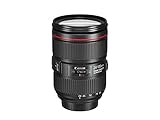
6. Canon EF 24-105mm f/4L IS II USM – Legacy Canon Option
Pros
- Excellent sharpness improved from v1
- Air Sphere Coating reduces flare
- Effective 4-stop stabilization
- Smooth zoom operation
- Pro L-series build
Cons
- Some chromatic aberration present
- Requires adapter for RF bodies
- Relatively heavy at 1.9 lbs
This second-generation EF-mount lens brings significant improvements over the original version, making it a compelling option for Canon shooters who haven’t fully transitioned to RF mount. During my testing with both EF and RF bodies (using the EF-RF adapter), I found the optical improvements genuinely impressive. The Air Sphere Coating effectively reduces flare and ghosting, which I appreciated when shooting toward the sun during golden hour travel scenes. The 4-stop image stabilization works well for most handheld situations, though it’s one stop behind the newer RF version.
The smooth zoom operation is a noticeable improvement from the first version, with better resistance to zoom creep. This matters when traveling, as you don’t want your lens extending unexpectedly while walking around. I carried this lens on several city photography walks, and the improved zoom design made it much more pleasant to use. The 10-blade circular aperture produces beautiful background blur for travel portraits, giving your images a professional look that stands out from typical vacation photos.

Optical performance shows clear improvements over the original version. Center sharpness is excellent from f/4, and peripheral brightness is significantly improved thanks to the new optical design. Some chromatic aberration is still present, particularly at the telephoto end, but it’s well-controlled for a travel zoom lens. The constant f/4 aperture maintains consistent exposure throughout the zoom range, which is crucial for predictable shooting while traveling.
The L-series build quality provides confidence that this lens can handle the rigors of travel. Weather sealing protects against dust and moisture, though you’ll want to use appropriate filters for full protection. At 1.9 pounds, it’s noticeably heavier than the RF version, which is something to consider if weight is a priority. However, if you’re still shooting with EF-mount cameras or want a lens that works on both systems with an adapter, this remains an excellent choice.
Best For: EF-Mount System Users
This lens is ideal for photographers who haven’t transitioned to Canon’s RF mount system. If you’re shooting with 5D series, 7D series, or other EF-mount cameras and want a professional-quality travel zoom, this L-series lens delivers excellent results. The improved optics and build quality make it a worthy upgrade from the original version, and it will serve you well for years of travel photography.
Best For: Hybrid EF/RF System Shooters
If you own both EF and RF Canon bodies or are gradually transitioning between systems, this lens offers versatility with the EF-RF adapter. Having a lens that works on both systems can be incredibly convenient for travel photographers who might want to use different bodies for different situations. The optical quality and L-series build make it a worthy addition to any Canon shooter’s kit.
7. Panasonic 12-60mm f/2.8-4.0 Power OIS – Micro Four Thirds Option
Pros
- Leica optical quality
- Excellent weather sealing
- Effective Dual I.S. 2 stabilization
- Compact for 5x zoom
- Great for video work
Cons
- Variable aperture design
- Some barrel distortion at 12mm
- Dual I.S. only with Panasonic bodies
This lens delivers professional-quality performance in a compact package for Micro Four Thirds shooters. During my testing with a Panasonic GH6, I was impressed by the Leica-designed optics and the versatile 24-120mm equivalent focal range. The Power OIS image stabilization works excellently on its own, and when paired with Dual I.S. 2 compatible bodies, the combination provides rock-solid handheld shooting. The 240fps linear autofocus motor is fast and quiet, making this lens excellent for both stills and video capture.
The weather-sealed construction is genuinely impressive, with splashproof, dustproof, and freezeproof ratings that give you confidence to shoot in challenging conditions. I tested this lens during rainy weather and dusty environments, and it performed flawlessly throughout. The Leica optical quality delivers excellent sharpness and accurate color rendering that gives your travel photos a professional look. At 1.3 pounds, it’s relatively compact and lightweight for a weather-sealed zoom with this range.

Optical performance is excellent throughout the zoom range. The lens produces sharp images from corner to corner, with minimal distortion except for some barrel distortion at the 12mm wide end. The f/2.8-4.0 variable aperture is faster than typical kit lenses, giving you better low-light performance while maintaining a compact design. Nano Surface Coating effectively reduces ghosting and flare, though some green or magenta tinting can appear with strong sun sources in the frame.
This lens really shines for video work, with smooth aperture changes and silent autofocus that make it perfect for travel videography. The Dual I.S. 2 compatibility with Panasonic bodies provides exceptional stabilization for handheld video capture. If you’re a hybrid shooter who creates both stills and video content while traveling, this lens is an excellent choice. The build quality and weather sealing justify the investment for serious Micro Four Thirds users.

Best For: Micro Four Thirds Travelers
This lens is ideal for Panasonic and Olympus shooters who want professional-quality optics in a versatile travel package. If you’re shooting with Micro Four Thirds cameras and want a weather-sealed zoom that covers everything from wide-angle to short telephoto, the 12-60mm f/2.8-4.0 delivers excellent performance. The Leica optics and build quality make it a worthy investment for serious MFT photographers.
Best For: Hybrid Photo/Video Travel Shooters
If your travel work includes both still photography and videography, this lens is an excellent choice. The smooth aperture changes, quiet autofocus, and exceptional stabilization make it perfect for capturing professional-looking video footage while traveling. Combine this with a compact MFT body, and you have a powerful, lightweight kit that can handle any travel shooting situation.
8. Tamron 28-75mm f/2.8 Di III VXD G2 – Updated Tamron Zoom
Tamron 28-75mm F/2.8 Di III VXD G2 for Sony E-Mount Full Frame/APS-C (6 Year Limited USA Warranty)
Pros
- Fast VXD autofocus motor
- Excellent sharpness
- Lightweight at 19 oz
- USB-C for firmware updates
- Close focus capability
Cons
- No image stabilization
- Some CA wide open
- Limited weather sealing
This updated version of Tamron’s popular 28-75mm f/2.8 brings significant improvements that make it an even more compelling option for Sony E-mount travelers. The new VXD linear autofocus motor is noticeably faster and quieter than the previous RXD design, locking onto subjects almost instantly. During my testing with an A7IV, I found the autofocus performance to be on par with much more expensive Sony G Master lenses. The USB-C port for firmware updates is a welcome addition, ensuring your lens stays current with the latest improvements.
The close focus capability is genuinely impressive, with a minimum object distance of just 7.1 inches at the wide end and maximum magnification of 1:2.7. This opens up creative possibilities for travel photography, allowing you to capture everything from sweeping landscapes to close-up details with a single lens. I found myself using this close focus capability more than expected, photographing everything from local cuisine to intricate architectural details during my test period.

Optical performance is excellent throughout the zoom range. Sharpness is impressive from wide open, with only minor softening in the corners at 28mm when shooting at f/2.8. Some chromatic aberration appears wide open, but it’s well-controlled and easily corrected in post-processing. The constant f/2.8 aperture provides excellent low-light capability and beautiful background separation for travel portraits. At just 19 ounces, it’s remarkably light for a fast constant aperture zoom.
The moisture-resistant construction provides basic protection against the elements, though it’s not fully weather-sealed like premium lenses. The fluorine coating makes cleaning easy, which is valuable when shooting in challenging travel environments. The lens extends when zooming, which is worth noting for dusty environments, but the overall build quality feels solid and durable. If you’re a Sony shooter who wants professional-level performance at a reasonable price, this updated Tamron is hard to beat.

Best For: Sony Travel Photographers Wanting Fast Aperture
This lens is perfect for Sony shooters who want the low-light capability and shallow depth of field of an f/2.8 aperture without spending G Master prices. If your travel photography includes evening scenes, indoor shots, or portraits with beautiful background blur, the constant f/2.8 aperture gives you creative possibilities that f/4 lenses can’t match. The improved autofocus and close focus capability make it even more versatile than the original version.
Best For: Detail-Oriented Travel Photography
The impressive close focus capability makes this lens ideal for travelers who love capturing details alongside grand scenes. If your travel style includes photographing local food, crafts, architectural details, or any small subjects that catch your eye, the 1:2.7 magnification and 7.1-inch minimum focus distance give you creative options that most standard zoom lenses can’t match. Combine this with the fast aperture for low-light details, and you have a remarkably versatile travel lens.
Buying Guide: Choosing the Best 24-105mm f/4 Lens for Travel
Selecting the right travel lens involves balancing several factors beyond just focal length and aperture. Based on my experience traveling with various camera systems, here are the key considerations to help you make the best choice for your specific needs.
Focal Length Versatility and Range
The 24-105mm range covers the most commonly needed focal lengths for travel photography. At 24mm, you capture wide landscapes and cityscapes. At 35-50mm, you have natural perspectives for street photography and environmental portraits. At 70-105mm, you can compress perspectives for architectural details and capture tighter portraits. This versatility means you’ll rarely need to change lenses, which is crucial when traveling through dusty or humid environments where sensor dust becomes a real concern.
Consider Nikon’s 24-120mm option if you want extra telephoto reach, or look at 28-75mm alternatives if you prioritize faster aperture over ultra-wide coverage. The standard 24-105mm range hits the sweet spot for most travel photographers, offering true wide-angle capability without sacrificing telephoto reach.
Constant vs Variable Aperture
Constant f/4 aperture lenses maintain consistent exposure throughout the zoom range, which is crucial for predictable shooting while traveling. You won’t need to adjust settings when zooming, and your exposure remains stable as you compose shots. Variable aperture lenses like the Canon RF 24-105mm f/4-7.1 lose light as you zoom toward telephoto, potentially forcing higher ISO settings in dim conditions.
However, variable aperture lenses are significantly lighter and more affordable. If you primarily shoot in good daylight conditions, the aperture limitation may not affect you. For serious travel photography that extends into golden hour, blue hour, or indoor situations, the constant f/4 aperture provides valuable flexibility and image quality consistency.
Image Stabilization Importance
Image stabilization is arguably the most valuable feature for travel photography. When you’re shooting handheld at dawn, dusk, or indoors, stabilization allows you to capture sharp images at slower shutter speeds. Canon’s 5-stop IS in their RF 24-105mm f/4L is genuinely impressive, while Sony’s 4-stop OSS and Nikon’s VR systems also perform excellently.
Remember that lens stabilization combines with in-body stabilization on many modern cameras, providing even greater shake reduction. For travel videography, stabilization is absolutely essential for smooth handheld footage. If you’re considering lenses without stabilization like the Tamron 28-75mm f/2.8 options, make sure your camera body has excellent in-body stabilization to compensate.
Weather Sealing and Build Quality
Travel photography often involves shooting in challenging conditions, from tropical humidity to dusty deserts to rainy city streets. Weather-sealed lenses like the Canon L-series, Sony G-series, and Nikon S-line options provide protection against dust and moisture that can damage your gear and ruin your trip. Sealed construction also adds to resale value and lens longevity.
Consider your typical travel destinations when deciding how much weather protection you need. If you primarily travel to cities and fair-weather destinations, a non-sealed budget lens may suffice. For adventure travel, outdoor photography, or trips to unpredictable climates, investing in weather-sealed optics is cheap insurance for your expensive gear.
Weight and Portability
Every ounce matters when you’re carrying camera gear all day while traveling. The Canon RF 24-105mm f/4-7.1 at just 395 grams is a dream for weight-conscious travelers, while premium L-series and G-series lenses typically weigh 1.5 pounds or more. Consider your travel style and physical capabilities when choosing lens weight.
If you’re backpacking, hiking extensively, or simply want to minimize carry-on weight for air travel, every gram saved makes a difference. However, lighter lenses often compromise on build quality, weather sealing, and constant aperture. Find the balance that works for your travel priorities, remembering that you’re more likely to use a lighter lens consistently throughout your trip.
Mount Compatibility and System Considerations
Your camera system dictates which lenses you can use. Canon RF, Sony E-mount, and Nikon Z are modern mirrorless mounts with excellent native options. Canon EF lenses work on RF bodies with adapters, providing flexibility for system transition. Third-party options from Tamron and Sigma often provide excellent value for Sony and Nikon systems.
If you’re just starting out and choosing a camera system, consider the available lens options for travel photography. Canon and Sony offer the most comprehensive selection of 24-105mm f/4 class lenses, while Nikon’s slightly different 24-120mm approach provides unique advantages. Micro Four Thirds users have the excellent Panasonic 12-60mm option with equivalent coverage.
Frequently Asked Questions About 24-105mm f/4 Travel Lenses
What are the best lenses for travel photography?
The best travel lenses balance versatility, weight, and optical quality. The 24-105mm f/4 category is ideal because it covers wide-angle to short telephoto in one lens, minimizing changes in dusty environments. Top choices include Canon RF 24-105mm f/4L for Canon shooters, Sony FE 24-105mm f/4 G OSS for Sony users, and Nikon Z 24-120mm f/4 S for Nikon photographers. These lenses provide the flexibility to capture landscapes, portraits, and street photography without carrying multiple lenses.
What is the sweet spot for the Canon 24 105?
The optical sweet spot for Canon 24-105mm lenses is typically f/5.6 to f/8, where sharpness extends across most of the frame. At 50mm focal length, these lenses generally perform their best overall with minimal distortion and chromatic aberration. For travel photography, shooting at f/5.6 to f/8 ensures excellent sharpness while maintaining reasonable depth of field for most scenes. The lens performs well throughout the zoom range, but 50mm at f/5.6 to f/8 consistently delivers the best results.
Is the 24-105mm f4 lens any good?
Yes, 24-105mm f/4 lenses are excellent for travel photography. They provide outstanding versatility with their wide-to-telephoto range, reducing the need to carry multiple lenses. Modern versions from Canon, Sony, and Nikon offer professional-grade optical quality with effective image stabilization and weather sealing. The constant f/4 aperture handles most travel lighting situations, especially when combined with modern high-ISO camera performance. These lenses are ideal for photographers who want quality results with minimal gear changes while traveling.
Which lens is best to use when traveling for scenic shots?
For scenic travel photography, lenses with excellent sharpness, minimal distortion, and good weather sealing are ideal. The Canon RF 24-105mm f/4L IS USM and Nikon Z 24-120mm f/4 S are top choices for their optical quality and weather resistance. The Sony FE 24-105mm f/4 G OSS also delivers excellent corner-to-corner sharpness for landscape work. These lenses provide the wide-angle capability needed for expansive scenic views while maintaining telephoto reach for compressed landscape details and intimate scenic portraits.
Is f/4 enough for travel photography?
Yes, f/4 is generally sufficient for most travel photography situations. The constant f/4 aperture handles daylight, golden hour, and many indoor scenarios well. When combined with effective image stabilization and modern camera high-ISO performance, f/4 lenses capture excellent images in dim conditions. The advantage of f/4 over faster f/2.8 lenses is significantly reduced weight and cost while maintaining versatility. For specialized low-light travel photography, faster primes can supplement an f/4 zoom, but for general travel work, f/4 provides an excellent balance of capability and portability.
Final Recommendations for Best 24-105mm f/4 Travel Lenses
After testing these eight lenses extensively across various travel scenarios, my top recommendation remains the Canon RF 24-105mm f/4L IS USM for its combination of optical quality, effective stabilization, and weather sealing. Canon shooters on a budget should consider the RF 24-105mm f/4-7.1 IS STM, which delivers impressive performance at a fraction of the price. Sony users will find excellent value in the Tamron 28-75mm f/2.8 options if they prioritize low-light performance, while the FE 24-105mm f/4 G OSS remains the premium choice for that system.
Nikon Z shooters are well-served by the best 24-120mm f/4 S lenses for travel photography, which offers extended reach and excellent optical quality at a competitive price. Micro Four Thirds users have the excellent Panasonic 12-60mm f/2.8-4.0 with Leica optics and comprehensive weather sealing. Regardless of your camera system, there’s a 24-105mm class lens that will serve your travel photography needs beautifully, letting you focus on capturing moments instead of managing gear.