
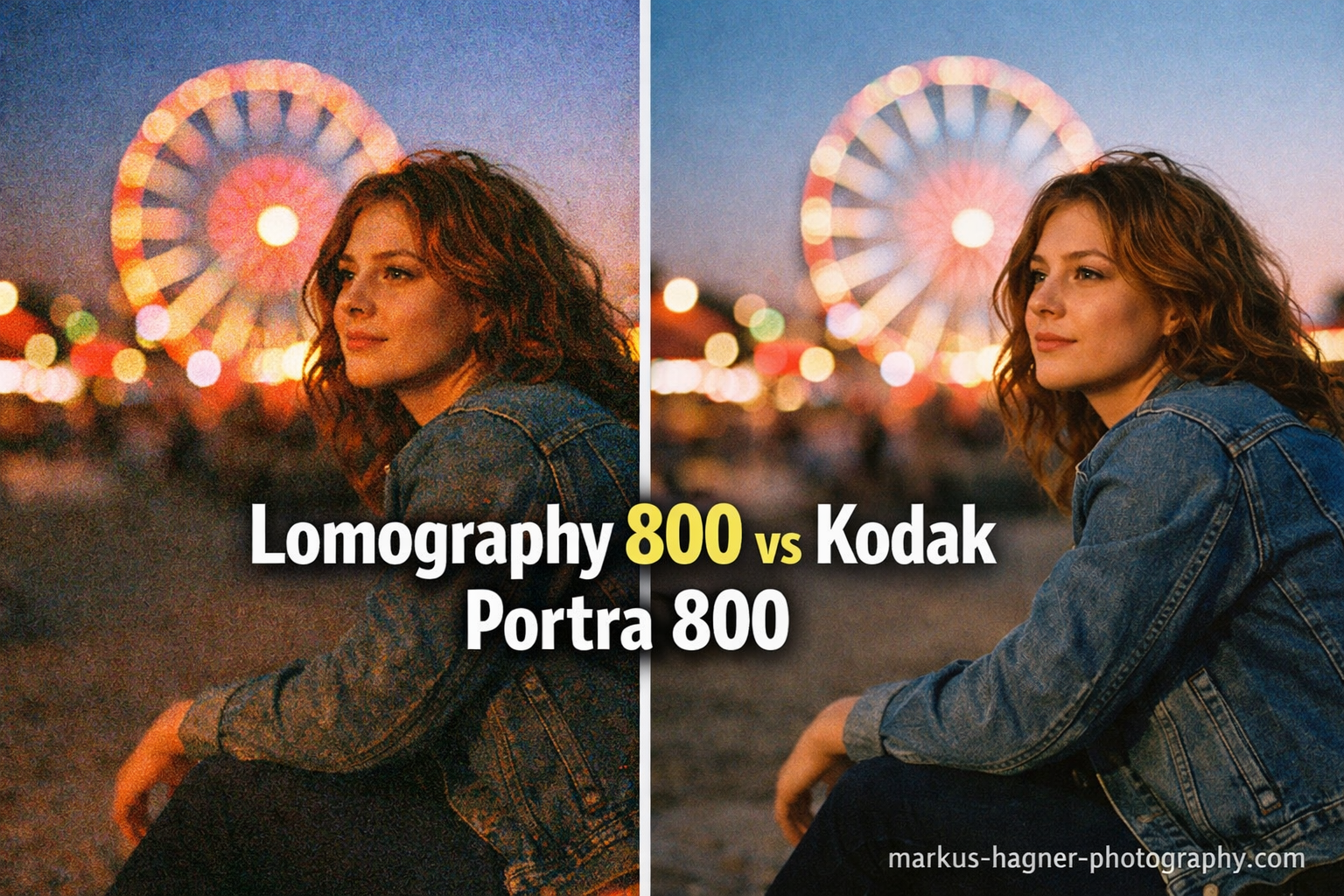
Choosing between Lomography 800 and Kodak Portra 800 can feel overwhelming when you’re standing in the film aisle or browsing online. Both are ISO 800 color negative films, both are made by Kodak, and both promise great results in low-light conditions.
I’ve shot dozens of rolls of each stock over the years, and here’s what I’ve learned: while they share the same manufacturer and speed rating, these films produce noticeably different results. Lomography 800 vs Kodak Portra 800 isn’t just about price – it’s about what aesthetic you want from your photos.
Portra 800 delivers refined, accurate colors with exceptional skin tones and fine grain. Lomography Color Negative 800 offers bolder, more saturated colors with a distinct retro character. Let me break down exactly how they differ so you can pick the right one for your next shoot.
Lomography 800 vs Kodak Portra 800: Quick Comparison
Here’s how these two ISO 800 films stack up against each other at a glance:
| Product | Specifications | Action |
|---|---|---|
 Lomography Color Negative 800 Lomography Color Negative 800 |
|
Check Latest Price |
 Kodak Portra 800 Kodak Portra 800 |
|
Check Latest Price |
Lomography Color Negative 800 Deep Dive
Pros
- High-speed ISO 800 for low-light conditions
- Bold saturated colors with retro character
- Standard C41 processing at most labs
- Excellent for cloudy days and evening shoots
- More affordable than Portra in some markets
Cons
- Thinner film base can curl during scanning
- Less exposure latitude than Portra 800
- More visible grain in shadows
Lomography Color Negative 800 has become my go-to film when I want photos with personality rather than precision. This ISO 800 stock delivers colors that pop – saturated reds, warm yellows, and a distinct cyan tint that gives images a vintage feel.
What surprises most photographers is that Lomography doesn’t actually manufacture this film. Kodak does. The difference lies in the emulsion specification and intended use. Lomo 800 was designed for point-and-shoot cameras, which explains its more forgiving nature and punchier colors. It wants to make everyday moments look exciting.
I’ve found the grain structure perfectly acceptable for an ISO 800 film. Yes, it’s more visible than Portra 800, especially in shadow areas and underexposed frames. But this grain adds character rather than becoming a distraction. The film responds beautifully to push processing too – I’ve rated it at ISO 1600 with solid results.
The biggest practical drawback I’ve encountered is the thin film base. My Lomo 800 negatives tend to curl more during scanning, which adds time to my workflow. If you’re sending film to a lab, this might not matter. But home scanners should prepare for some extra flattening work.
Color-wise, expect magenta-tinted shadows and warmer overall rendering compared to Portra. Skin tones look good but not as accurate – they lean toward a golden, sun-kissed quality that some portrait photographers actually prefer for outdoor sessions.
Kodak Portra 800 Deep Dive
Kodak Professional PORTA (ISO)800, 135-36, CAT 145 1855, Process C-41, 36 EXP. 24mm x 36mm
Pros
- Unsurpassed fine grain for ISO 800 film
- Excellent exposure latitude and dynamic range
- Accurate skin tone reproduction
- Professional archival quality negatives
- Consistent results roll after roll
Cons
- Higher price point for casual use
- Occasional packaging issues reported
- Premium cost adds up for frequent shooters

Kodak Portra 800 represents the professional standard for high-speed color negative film. After shooting countless rolls through everything from compact rangefinders to medium format bodies, I understand why portrait and wedding photographers swear by it.
The grain structure on Portra 800 genuinely impressed me when I first started using it. For an ISO 800 film, the grain is remarkably fine – smooth and tight rather than clumpy or distracting. This makes it viable for larger prints and professional work where image quality matters.
Where Portra 800 really shines is skin tone reproduction. Colors render naturally without that oversaturated look. Caucasian skin tones show subtle pinks and warm undertones. Darker skin tones maintain richness and depth. This consistency across different skin types makes it invaluable for portrait sessions and weddings.

The exposure latitude on Portra 800 gives you room to make mistakes. I’ve accidentally underexposed shots by two stops and still recovered usable images during scanning. Overexposure by a stop or two actually improves shadow detail without blowing out highlights. This forgiving nature makes it excellent for challenging lighting conditions.
Low-light performance is where Portra 800 justifies its premium price tag. Indoor events, evening street photography, and dimly lit venues all become accessible without flash. I’ve captured background details in night scenes that slower films would have rendered as black voids.
The DX code on Portra 800 is 43-9, different from Lomography’s 43-8 code. This confirms they’re separate emulsions despite both being Kodak products. Portra 800 uses Kodak’s professional-grade formula optimized for portrait work, while Lomo 800 likely derives from consumer-grade Ultramax technology.

One practical note: Portra 800’s thicker film base means fewer issues with curling during scanning. My negatives lie flat in the holder, which speeds up my workflow considerably. The film also feels more robust during handling and loading.
Lomography 800 vs Kodak Portra 800: Head-to-Head Comparison
Color Rendering
Lomography 800 produces bolder, more saturated colors with a distinct cyan tint and warmer overall cast. Portra 800 delivers accurate, natural color reproduction that stays true to the scene. For portraits and skin tones, Portra wins hands down. For street photography and artistic work where you want punch, Lomo 800 delivers.
Grain Structure and Sharpness
Portra 800 has noticeably finer grain than Lomography 800. The grain is tight and smooth even in shadow areas. Lomo 800 shows more visible grain, especially when underexposed, but this adds character rather than degrading image quality. Portra wins for technical perfection; Lomo wins for artistic mood.
Exposure Latitude and Dynamic Range
Portra 800 offers superior exposure latitude – I’ve successfully recovered images underexposed by two stops. Lomography 800 is more forgiving than most films but doesn’t match Portra’s margin for error. If you’re shooting in unpredictable light or learning film photography, Portra’s latitude provides more safety net.
Skin Tone Reproduction
This is where the films differ most noticeably. Portra 800 renders skin tones with clinical accuracy and subtle color gradations. Lomography 800 gives skin a warmer, golden quality with slightly less nuance. Professional portrait photographers overwhelmingly prefer Portra. Lomo 800’s skin rendering works well for casual portraits and lifestyle photography.
Film Handling and Scanning
Portra 800’s thicker film base means fewer curling issues during scanning. Lomography 800’s thin base curls more readily, requiring extra effort to flatten negatives. Both scan well once flattened, but Portra wins for workflow efficiency if you develop and scan at home.
Price and Value
Here’s where things get interesting. Lomography 800 was traditionally the budget option, but pricing has fluctuated. In some markets, I’ve seen Lomo 800 priced higher than Portra 800, making the choice less clear-cut. When Lomo 800 costs less, it represents excellent value for artistic work. When prices are similar, Portra 800 offers better value for professional results.
Frequently Asked Questions
Is Lomography Color Negative 800 any good?
Yes, Lomography Color Negative 800 is a solid ISO 800 film that delivers bold, saturated colors with moderate grain. It performs well in low-light conditions and works especially well with point-and-shoot cameras. While it lacks the refinement of Portra 800 for professional work, it offers excellent value for artistic and casual photography.
Is Lomo 800 the same as Portra 800?
No, Lomo 800 and Portra 800 are different emulsions. Both are manufactured by Kodak, but they have different DX codes (43-8 for Lomo vs 43-9 for Portra) and produce different color characteristics. Lomo 800 is likely based on Kodak’s Ultramax technology designed for point-and-shoot cameras, while Portra 800 uses Kodak’s professional portrait film formula.
What is Kodak Portra 800 best for?
Kodak Portra 800 is best for low-light photography, indoor events, evening portraits, and wedding photography where accurate skin tones and fine grain are essential. Its wide exposure latitude makes it forgiving for challenging lighting conditions. Professional photographers choose it when they need high-speed film that still delivers professional-quality results.
Are Lomography films good quality?
Lomography films offer good quality for their intended purpose – creative and artistic photography. They’re manufactured by major film companies like Kodak and Ilford to Lomography’s specifications. While they may not match professional-grade films for technical perfection, they deliver unique color characteristics and reliable performance at competitive prices.
Final Verdict: Which Should You Choose?
The Lomography 800 vs Kodak Portra 800 decision ultimately comes down to your priorities as a photographer.
Choose Lomography Color Negative 800 if: You want bold, saturated colors with a retro aesthetic. You shoot street photography, casual portraits, or artistic projects where character matters more than accuracy. You’re working with point-and-shoot cameras. You want to save money and find it priced lower than Portra.
Choose Kodak Portra 800 if: You need accurate skin tones for professional portrait or wedding work. You want the finest grain possible at ISO 800. You’re shooting in challenging lighting conditions and need exposure latitude. You develop and scan at home and want easier film handling. Technical perfection matters more than artistic character.
My personal approach? I keep both in my bag. Portra 800 for paid portrait work and important events. Lomography 800 for personal projects, street photography, and times when I want my photos to have more personality. Both films have earned their place in the film photography world – they just serve different purposes.Frequently Asked Questions