
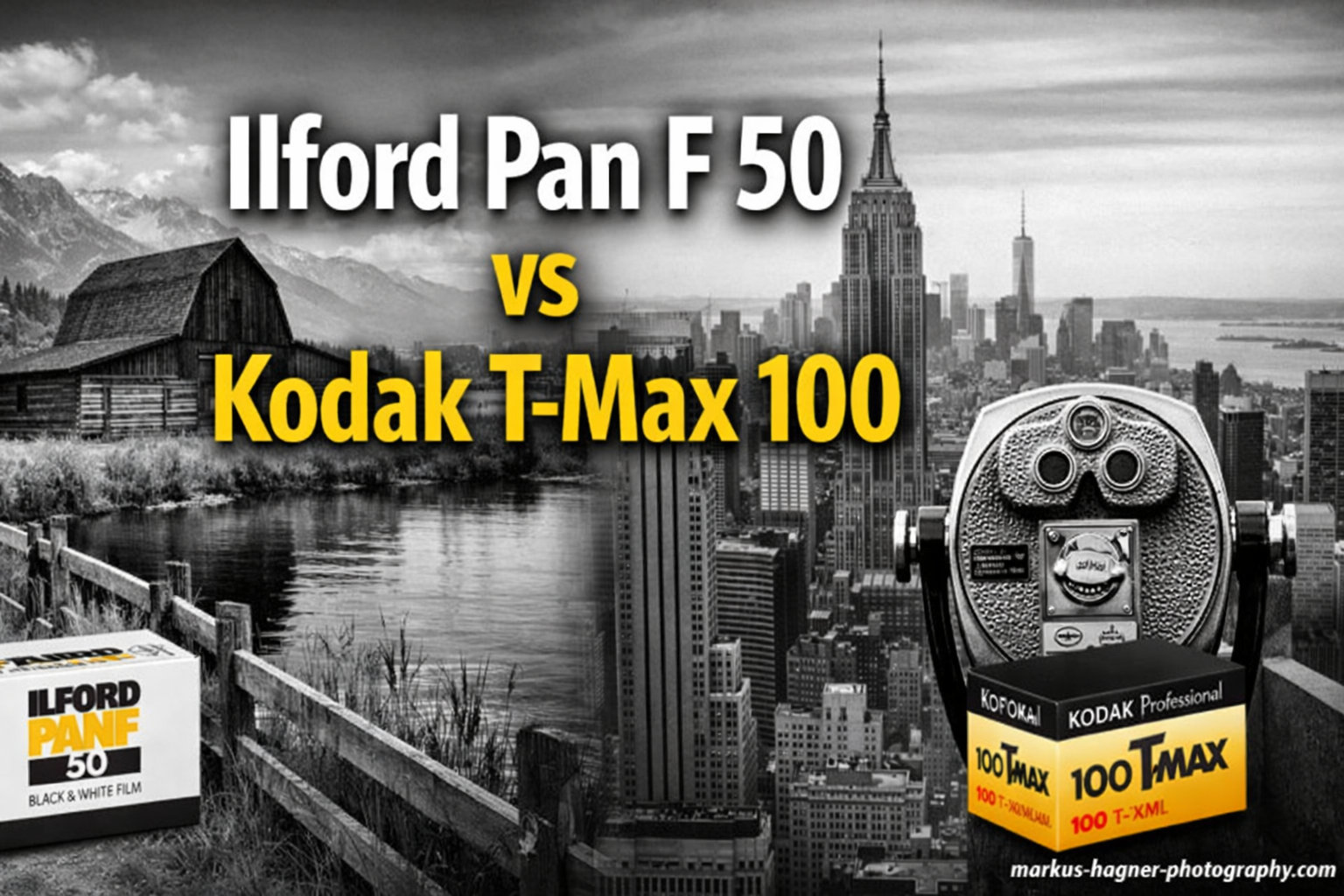
Choosing between slow-speed black and white films can feel like picking between two master painters. Each has its own signature style, strengths, and devoted following. When it comes to Ilford Pan F 50 vs Kodak T-Max 100, the decision really comes down to what you want from your final image and what conditions you’ll be shooting in.
Both films are legendary in the analog photography world. Ilford Pan F Plus 50 delivers that classic high-contrast look with microscopic grain, while Kodak T-Max 100 brings modern T-Grain technology and smoother tonality to the table. I’ve shot both extensively, and each has earned a permanent spot in my film bag for different reasons.
After testing these films side by side in various lighting conditions, here’s my honest take on how they compare and which one deserves your next roll.
Ilford Pan F 50 vs Kodak T-Max 100: Quick Comparison
| Product | Specifications | Action |
|---|---|---|
 Ilford Pan F Plus 50 Ilford Pan F Plus 50 |
|
Check Latest Price |
 Kodak T-Max 100 Kodak T-Max 100 |
|
Check Latest Price |
At a glance, the key difference is speed. Pan F 50 is a true slow film requiring bright conditions or a tripod, while T-Max 100 gives you an extra stop of flexibility. But there’s much more to explore beneath these specs.
Ilford Pan F Plus 50: The Fine Grain Champion
Ilford PAN F Plus, Black and White Print Film, 135 (35 mm), ISO 50, 36 Exposures (1707768)
Pros
- Exceptionally fine grain
- Amazing contrast and sharpness
- Gorgeous tonal gradation
- Well priced for quality
- Pushes reasonably well to ISO 100
Cons
- ISO 50 requires bright light or tripod
- Needs good exposure for best results
- Can run contrasty without filters
I first fell in love with Ilford Pan F Plus 50 during a summer architecture shoot. The sun was blazing, and I needed every bit of that slow ISO 50 speed to capture crisp details without overexposing. The results blew me away. The grain structure is so fine that even 16×20 enlargements look smooth and detailed. This is traditional emulsion at its finest.
What sets Pan F apart is its contrast character. This film loves bright, contrasty scenes. The blacks go deep and rich, while highlights retain beautiful detail. It gives that classic Ansel Adams-style tonality that many photographers chase. The sharpness is intense too, making it ideal for subjects where detail matters: architecture, still life, and landscape work.
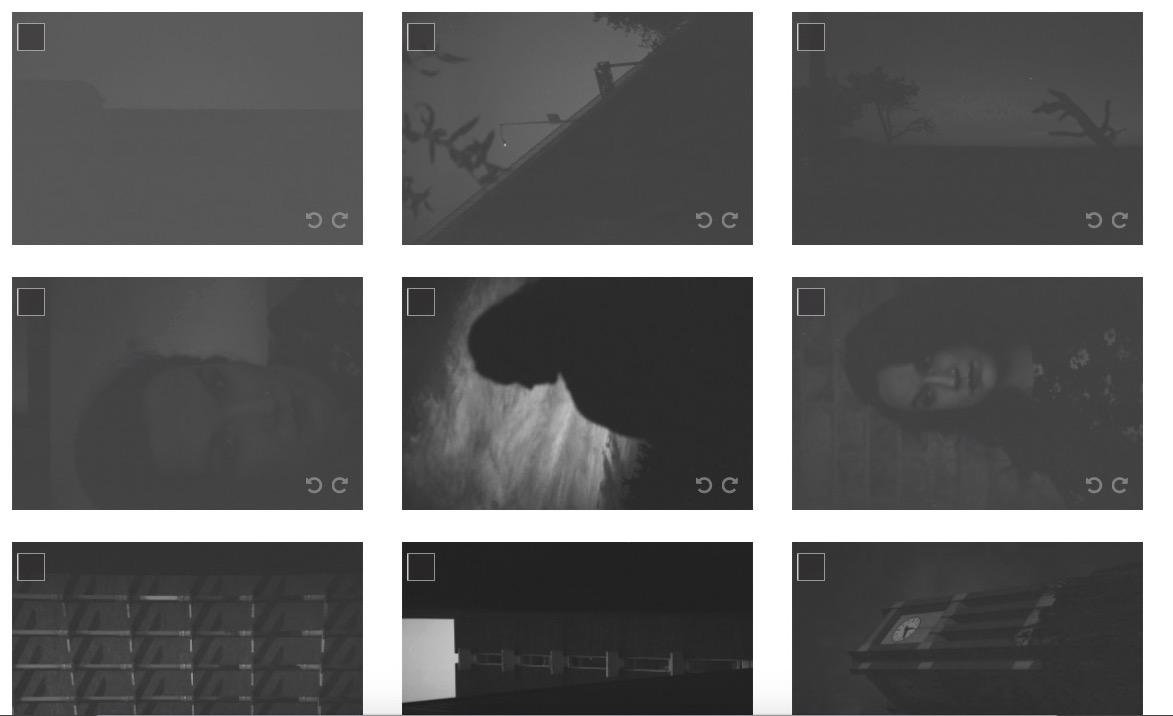
The trade-off is that ISO 50 speed. You need either bright outdoor conditions, a tripod, or flash to use it effectively. I’ve tried pushing it to ISO 100 and even 200, and while it handles the push reasonably well, you lose some of that fine grain magic. For best results, shoot it at box speed in controlled conditions.
Forum photographers often mention that Pan F can look contrasty without filters. I’ve found this to be true for certain scenes. A yellow or orange filter helps tame the contrast and adds depth to skies. Some users also note that Pan F has a shorter shelf life after exposure, so process your rolls promptly for consistent results.
For developing, I’ve had excellent results with Ilford ID-11 at 1:1 dilution. The Massive Dev Chart times work well, though some photographers rate Pan F at EI 25 to reduce development time and minimize grain even further. Perceptol also delivers beautiful results if you want maximum sharpness.
Kodak T-Max 100: The Modern T-Grain Contender
Pros
- T-Grain technology for ultra-fine grain
- ISO 100 more versatile
- Wider exposure latitude
- Smoother tonality
- Professional quality
Cons
- Limited stock availability
- Some reports of expired film
- Less traditional B&W character
Kodak T-Max 100 represents the modern approach to black and white film. Its T-Grain technology uses tabular silver halide crystals that pack more efficiently than traditional cubic grains. The result? Exceptionally fine grain at a more usable ISO 100 speed. I reach for T-Max 100 when I want clean, detailed negatives with a slightly more modern aesthetic.
The tonality of T-Max is where opinions diverge. Some photographers love its smooth grayscale transitions and even tonality. Others find it lacks the character and punch of traditional emulsions. I fall somewhere in the middle. For certain subjects like portraits or soft landscapes, that smooth tonality is exactly what I want. For dramatic street scenes or architecture, I might prefer the punchier look of Pan F.
The extra stop of speed makes T-Max 100 significantly more versatile. You can handhold in overcast conditions or shoot with smaller apertures. It also pushes more gracefully than Pan F if you need extra speed. I’ve pushed T-Max 100 to ISO 400 with acceptable results, something I wouldn’t attempt with Pan F.
One thing to watch: stock availability can be inconsistent. T-Max 100 sometimes goes in and out of stock, and there have been reports of expired film being shipped by some retailers. Always check expiration dates when ordering. Despite being a Kodak Professional product, it remains widely available through major photography retailers.
For developing, Kodak T-Max Developer or D-76 are classic choices. Xtol also works beautifully, delivering fine grain with good shadow detail. The film’s wider exposure latitude means it’s more forgiving of metering errors compared to Pan F, which makes it a friendlier choice for photographers newer to black and white film.
Ilford Pan F 50 vs Kodak T-Max 100: Head-to-Head Comparison
Grain and Sharpness
Both films deliver exceptionally fine grain, but they achieve it differently. T-Max 100’s T-Grain technology actually produces finer measured grain than Pan F’s traditional emulsion. In practical use, the difference is subtle. Both resolve tremendous detail and handle enlargement beautifully. T-Max edges ahead slightly for pure technical sharpness, while Pan F offers a more classic, organic grain structure that many photographers prefer aesthetically.
ISO Speed and Versatility
This is where T-Max 100 clearly wins. ISO 100 gives you that extra stop of flexibility for handholding, shooting in variable light, or using smaller apertures. Pan F’s ISO 50 is limiting. You need bright sun or a tripod, which restricts when and where you can shoot. If versatility matters, T-Max is the obvious choice.
Contrast and Tonal Range
Pan F delivers higher contrast with deeper blacks and more dramatic tonality. It excels at creating punchy, graphic images. T-Max offers smoother tonal transitions and a more even grayscale. Neither is better; they’re just different tools for different visions. I prefer Pan F for architecture and dramatic landscapes, T-Max for portraits and soft nature scenes.
Developing and Latitude
T-Max 100 has wider exposure latitude and is more forgiving of metering mistakes. Pan F demands precise exposure for best results. Both films work well with popular developers like D-76, ID-11, and Xtol. Pan F benefits from careful development to avoid excessive contrast buildup.
Frequently Asked Questions
What is the difference between Ilford and Kodak film?
Ilford films typically produce higher contrast images with deeper blacks, while Kodak films are known for smoother tonality and a more even grayscale. Ilford uses traditional cubic grain emulsions in many films, while Kodak’s T-Max line uses T-Grain tabular crystal technology for finer grain at higher speeds.
What is Ilford Pan F?
Ilford Pan F Plus is a slow-speed (ISO 50) black and white negative film known for exceptionally fine grain, high sharpness, and high contrast. It’s ideal for bright lighting conditions and subjects requiring maximum detail resolution. The film uses traditional emulsion technology and is made in Wales.
Is Kodak T-Max discontinued?
Kodak T-Max 100 and T-Max 400 are both still in production and widely available. T-Max P3200 was discontinued at one point but was reintroduced in 2018. All three T-Max films remain current products in Kodak’s professional lineup as of 2026.
Which has finer grain: Pan F 50 or T-Max 100?
Technically, T-Max 100 has finer measured grain due to its T-Grain technology. However, Pan F 50’s grain is so fine that the practical difference is minimal. Both films deliver exceptional grain quality suitable for large enlargements. The choice comes down to aesthetic preference rather than grain alone.
Verdict: Which Film Should You Choose?
After shooting both films extensively, here’s my honest recommendation for the Ilford Pan F 50 vs Kodak T-Max 100 debate.
Choose Ilford Pan F Plus 50 if: You love that classic, high-contrast black and white look. You shoot primarily in bright conditions or use a tripod. You want the finest possible grain from a traditional emulsion. You photograph architecture, still life, or subjects where maximum detail matters.
Choose Kodak T-Max 100 if: You need more shooting flexibility with ISO 100 speed. You prefer smoother tonality over punchy contrast. You want fine grain with wider exposure latitude. You shoot varied subjects in changing light conditions.
My personal pick? I keep both in my bag. Pan F 50 for those perfect sunny days when I want that classic look, and T-Max 100 for everything else. There’s no wrong choice here, just different tools for different creative visions.