
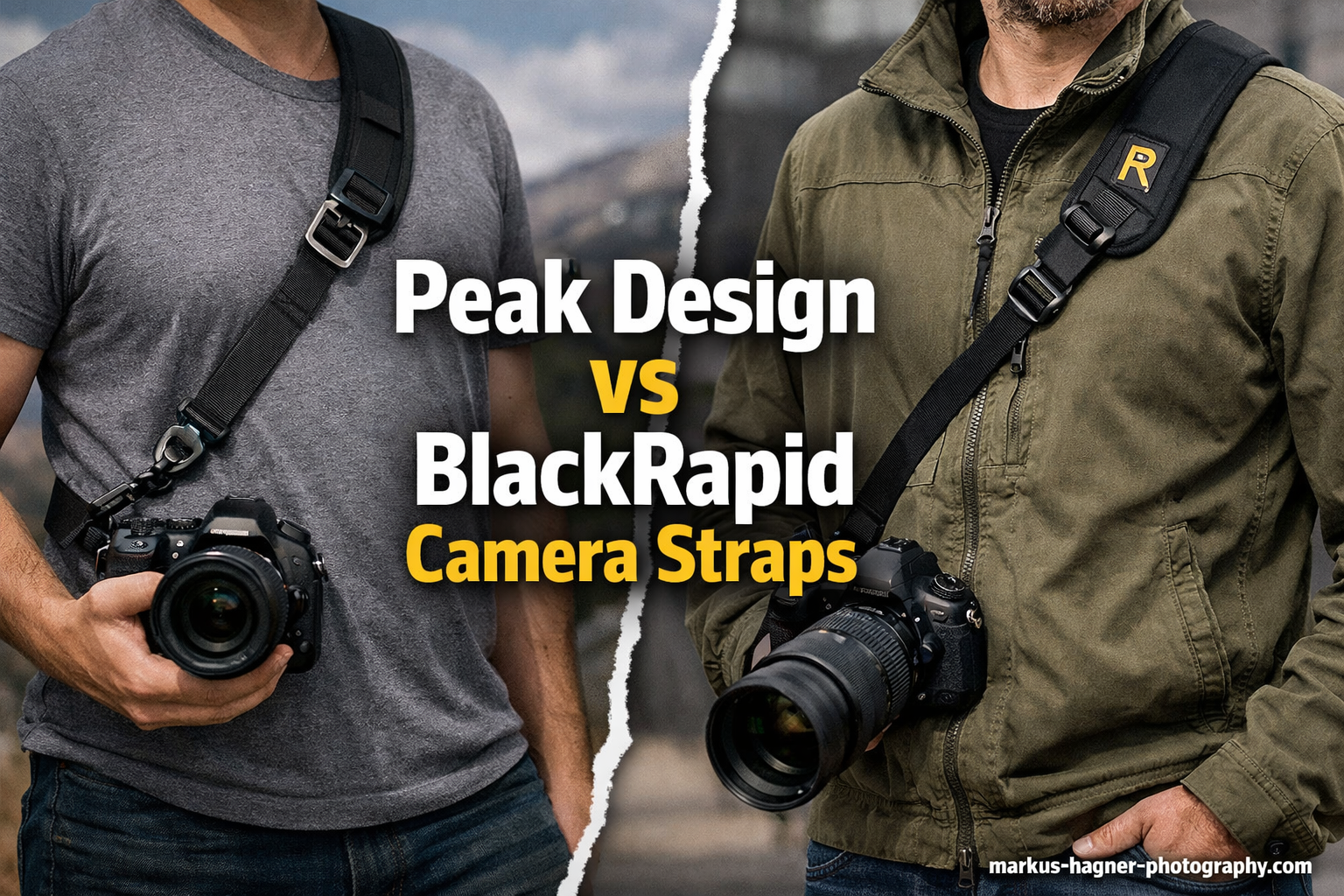
Choosing between Peak Design and BlackRapid camera straps is one of the most common debates among photographers who want a comfortable, secure way to carry their gear. Both brands have built loyal followings by offering excellent cross-body sling systems, but they take fundamentally different approaches to how your camera attaches and moves with you.
I have tested both the Peak Design Slide and BlackRapid RS-4 extensively over the past few years, shooting everything from weddings to hiking trips. The Peak Design vs BlackRapid camera straps comparison really comes down to how you prefer your camera to behave when you are not actively shooting and where you want the strap to attach to your camera body.
Here is the quick verdict: Peak Design wins if you want maximum versatility, prefer using your camera strap lugs for attachment, and shoot in situations where camera stability matters. BlackRapid excels if you frequently wear a backpack, want a strap that stays put on your shoulder while your camera slides along it, or need the fastest possible draw-to-shoot motion.
Peak Design vs BlackRapid Camera Straps: Quick Comparison
| Product | Specifications | Action |
|---|---|---|
 Peak Design Slide Camera Strap
|
|
Check Latest Price |
 BlackRapid RS-4 Camera Sling
|
|
Check Latest Price |
The table above shows the key differences at a glance. Peak Design uses their proprietary Anchor Link system that attaches to your camera’s strap lugs, while BlackRapid connects to your tripod socket. This fundamental design choice affects everything from comfort to compatibility with other gear like tripods and backpacks.
Peak Design Slide Camera Strap
Pros
- Exceptional build quality
- Quick-adjust sliders for easy transitions
- Anchor Link system holds 200lbs
- Comfortable for all-day shooting
- Versatile carrying styles
- Grippy side stays on shoulder
Cons
- Learning curve with anchor system
- Higher price point
The Peak Design Slide represents what happens when a company rethinks a product category from scratch. Rather than simply improving on traditional neck straps, Peak Design created something entirely new with their Anchor Link system. Small looped connectors attach to your camera’s strap lugs or tripod plate, and the strap itself clips onto these anchors with a satisfying click.
Each anchor is rated to hold over 200 pounds, which is far more than any camera setup weighs. This massive safety margin means I have never once worried about my camera coming loose, even when carrying a heavy DSLR with a telephoto lens attached. The peace of mind this provides cannot be overstated when you are carrying thousands of dollars of equipment.
What makes the Slide unique is its seatbelt-style webbing construction. One side is smooth and glides over your clothing effortlessly, while the other has a grippy textured surface that stays put on your shoulder. This dual-surface design is genuinely clever because you can flip the strap depending on whether you want it to slide or stay in place.
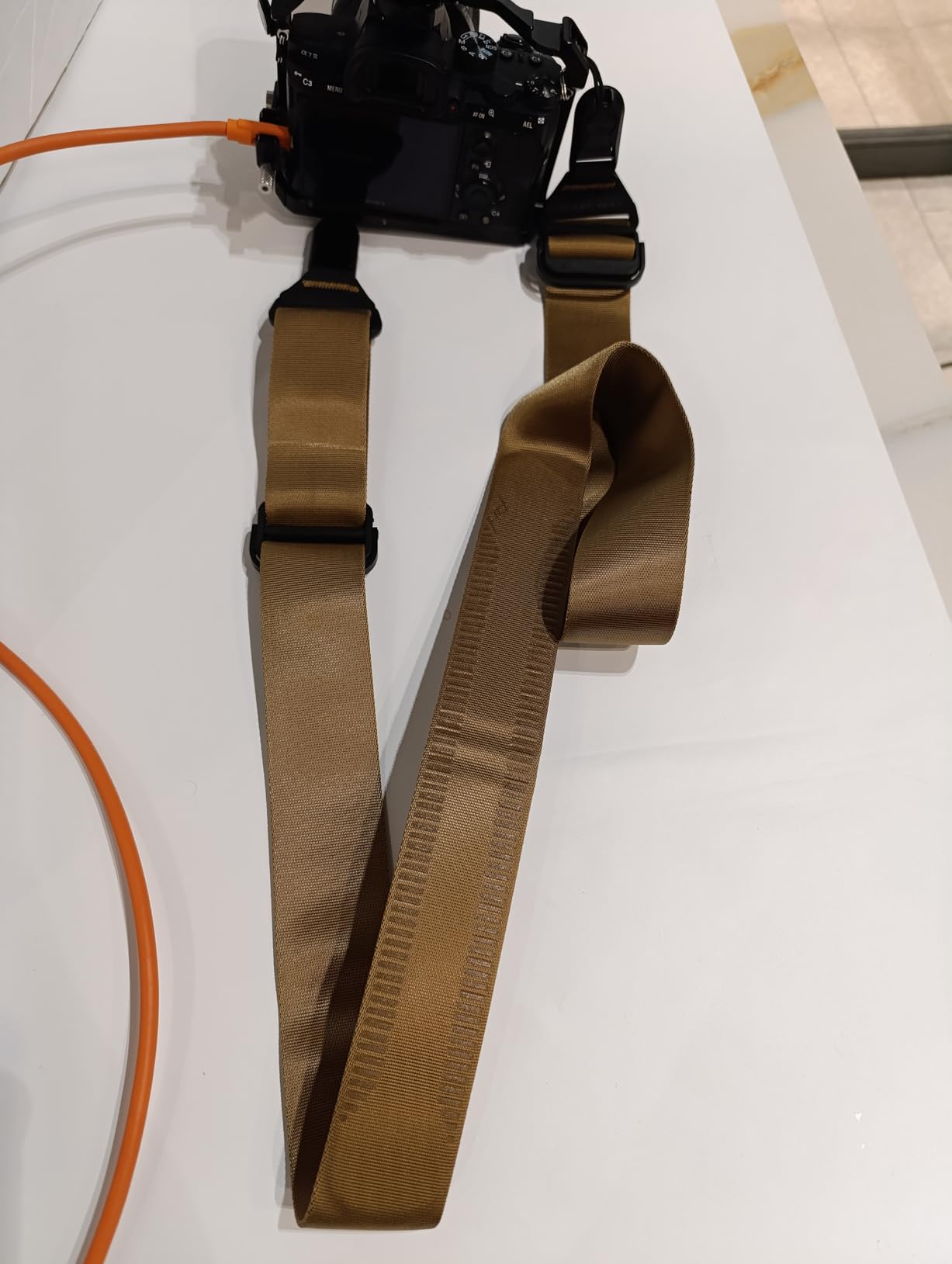
After shooting with the Slide for several months across various conditions, I found the quick-adjust sliders incredibly useful in practice. You can change the length from 39 to 57 inches with just one finger, which is perfect for switching between messenger-style carry at your hip and a tighter configuration when you need the camera closer to your body during active shooting.
The internally padded nylon webbing offers all-day comfort without adding bulk. Unlike some camera straps that feel like they are strangling you after an hour, the Slide distributes weight evenly across your shoulder. I have worn it for 10-hour wedding days without any discomfort.
The biggest advantage of Peak Design’s approach is versatility. Because the anchors attach to your strap lugs rather than your tripod socket, you can use the strap in multiple configurations: over your shoulder, across your chest in sling style, or even as a traditional neck strap if you prefer. The anchors also work seamlessly with Peak Design’s Capture clip system if you want to switch between strap and belt-clip carrying throughout the day.
One thing forum users consistently mention is that when you remove the Peak Design strap, you have small anchor loops remaining on your camera. These can make a slight metallic noise when they tap against your camera body and occasionally catch on things when you are packing your gear. I have not found this to be a major issue, but it is worth knowing about if you are particular about a clean camera setup.
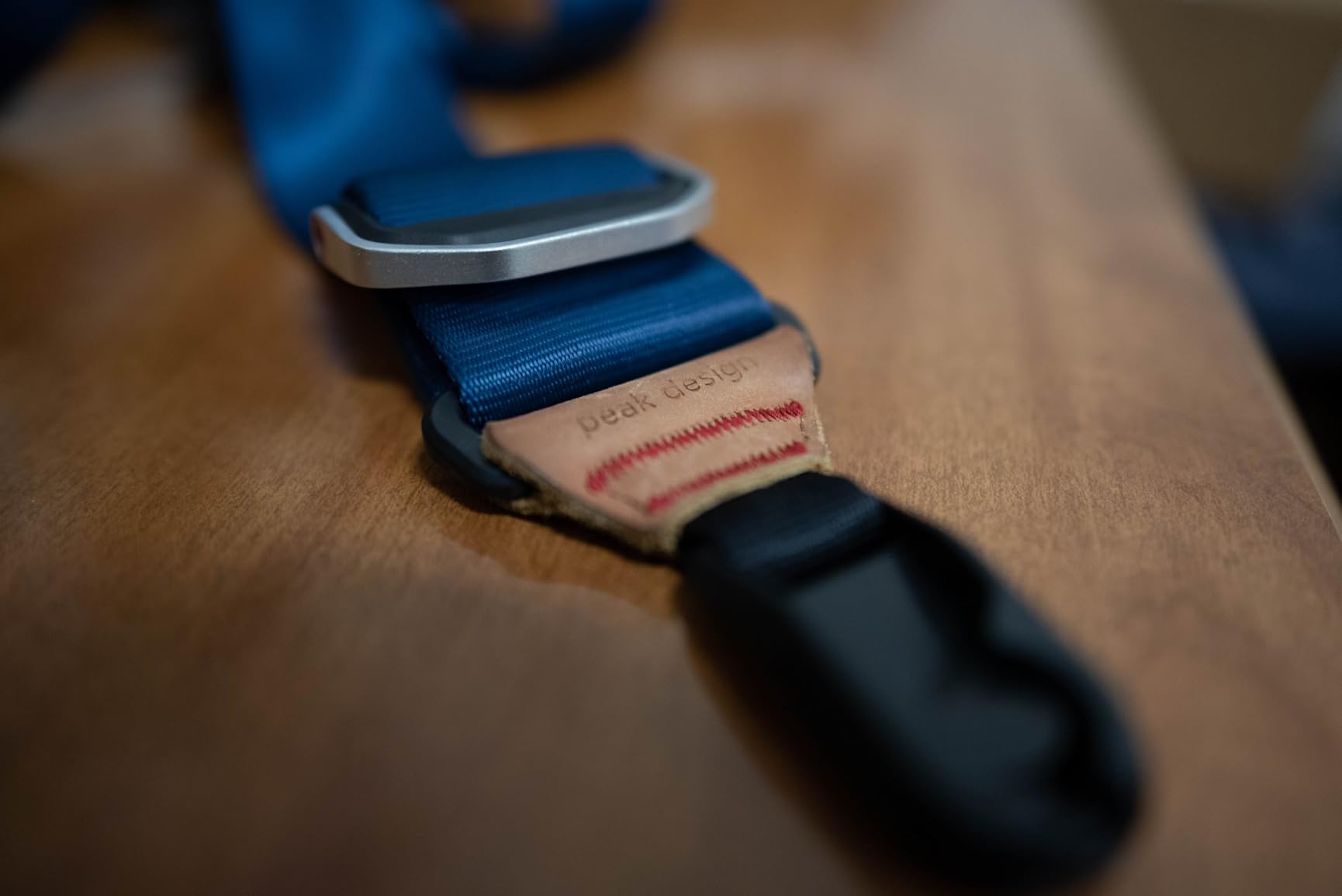
With over 7,200 reviews and a 4.8-star rating on Amazon, the Slide has clearly earned its reputation among photographers worldwide. The build quality feels premium in your hands, and the minimalist design looks professional whether you are shooting a corporate event, a wedding, or hiking through the mountains on a landscape photography trip.
The universal compatibility is another strong point. Peak Design designed this strap to work with all camera systems, including mirrorless cameras, DSLRs, rangefinders, and even binoculars. If you shoot with multiple camera brands or are considering switching systems, the Slide will work with whatever you use.
BlackRapid RS-4 Camera Sling Strap
Pros
- Comfortable shoulder sling design
- Instant slide to shooting position
- Camera rotates without coming undone
- Includes safety tether
- Zippered pocket for small items
- Works left or right shoulder
- Spring bumpers prevent movement
Cons
- Safety tether may be too short
- Can shift without under-arm strap
- Carabiner can knock camera
BlackRapid pioneered the modern sling strap concept, and the RS-4 represents their refined classic design philosophy. Instead of attaching to your strap lugs like most traditional straps, BlackRapid connects directly to your camera’s tripod socket using their CR3 swivel and FR5 connection system. This fundamental difference in attachment method shapes the entire shooting experience.
The way BlackRapid works is distinctive: the strap itself stays relatively stationary on your shoulder while the camera slides along the strap using a metal carabiner and gliding mechanism. When you want to shoot, you simply grab your camera and slide it up to eye level in one fluid motion. It is remarkably fast and intuitive once you get used to the system.
This design philosophy prioritizes quick access above all else. The camera hangs at your side ready to be drawn, much like a holster for a sidearm. For event photographers who need to react quickly to fleeting moments, this can make the difference between getting the shot and missing it entirely.
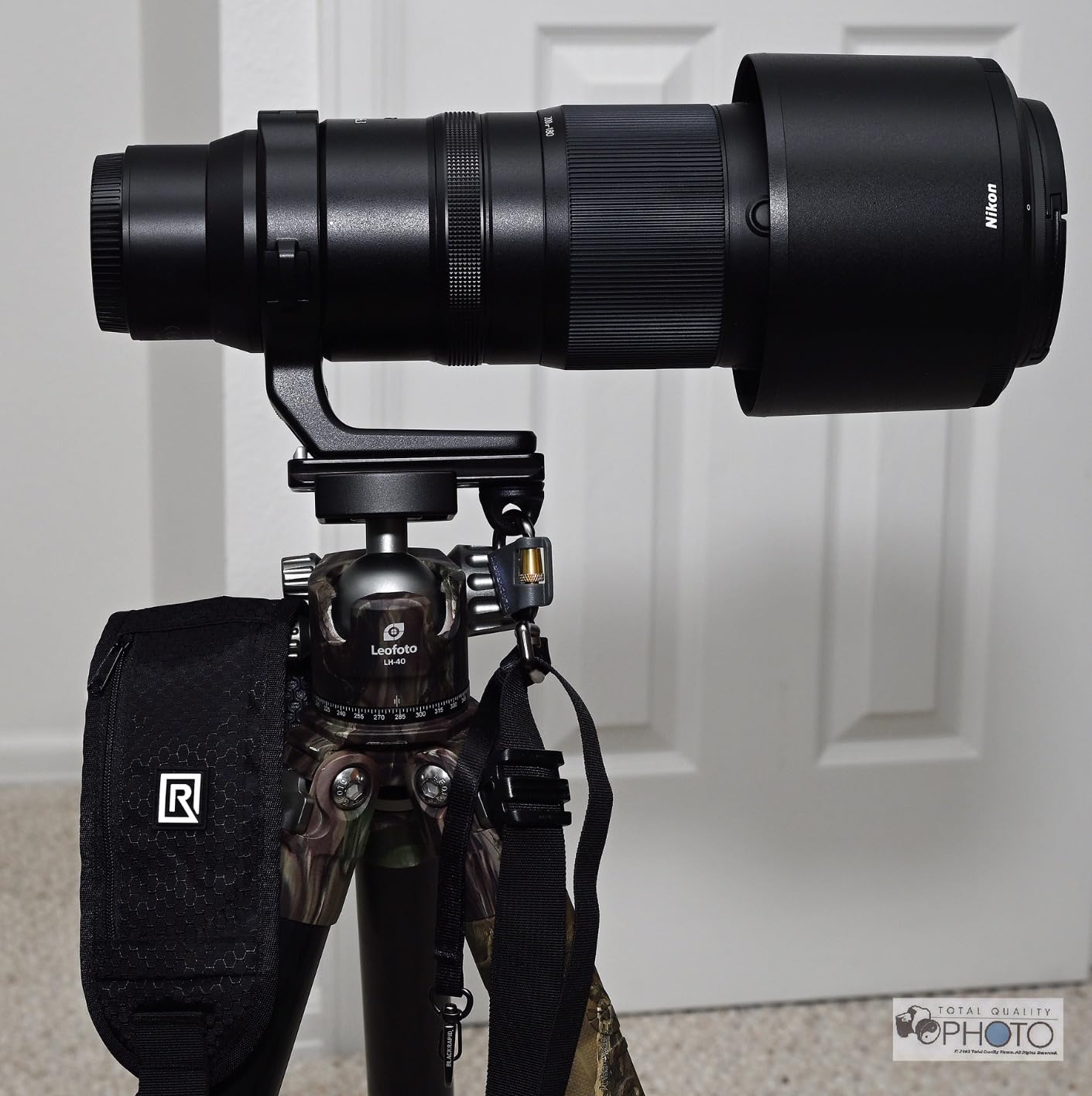
I found the shoulder pad on the RS-4 exceptionally comfortable for extended use. It uses foam padding with a thin nylon honeycomb overlay that breathes well and distributes weight evenly across your shoulder. Photographers with neck issues often prefer BlackRapid specifically because the weight sits entirely on your shoulder rather than anywhere near your neck.
The RS-4 includes several thoughtful features that show BlackRapid has refined this design over many years of real-world feedback. There is a Lockstar cover that prevents the carabiner from accidentally opening during use, front and rear spring cam locks that stop the camera from sliding around when you do not want it to move, and even a small zippered pocket in the shoulder pad perfect for storing a spare memory card or battery.
One concern photographers often raise about BlackRapid is the tripod socket attachment. Is it safe to hang your expensive camera from that single point? BlackRapid addresses this by including a safety tether that provides backup security in case the main connection ever fails. In my extensive experience with the system, the main connection has never shown any sign of failing, but the tether adds welcome peace of mind for heavier setups with professional bodies and large lenses.
The CR3 swivel connector allows the camera to rotate freely without the strap twisting up, which is essential for a smooth draw motion. The FR5 fastener screws securely into your tripod socket and provides the attachment point for the carabiner. Both components feel robust and well-engineered.
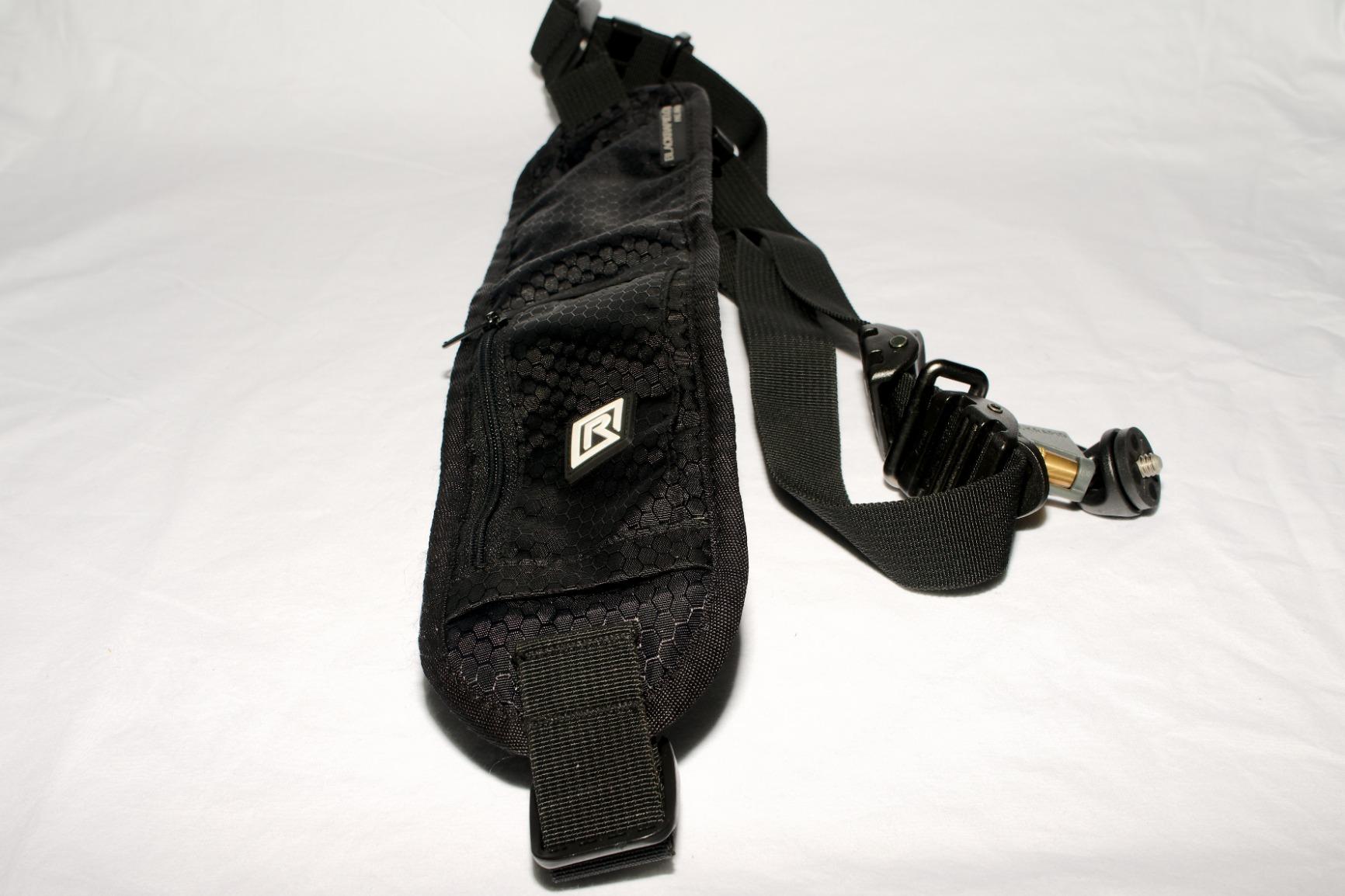
With a 4.6-star rating from over 600 reviews, the RS-4 has proven itself reliable in the hands of working photographers. It weighs just 5.3 ounces, making it one of the lighter options in the premium strap category. The thin, straight, low-profile pad works well on either your left or right shoulder, accommodating both left and right-handed photographers equally.
The totally adjustable length means you can customize the fit to your body type and preferred carrying height. Some photographers like their camera hanging lower near their hip, while others prefer it higher for easier access. The RS-4 accommodates both preferences easily with its front adjustment mechanism.
Peak Design vs BlackRapid: Head-to-Head Comparison
Attachment Method
This is the most fundamental difference between the two systems and affects everything else about how they perform. Peak Design attaches to your camera’s strap lugs or tripod plate using their Anchor Link system with small looped connectors. BlackRapid attaches directly to your tripod socket using a screw-in connector with a carabiner.
The Peak Design approach keeps your tripod socket free for its intended purpose. You can attach the anchors to multiple cameras and swap the single strap between them quickly, which is useful if you shoot with multiple bodies. However, you will always have small anchor loops remaining on your camera when the strap is removed.
BlackRapid’s tripod socket attachment means you cannot use a tripod without first removing the connector. This adds a step to your workflow if you frequently switch between handheld and tripod shooting. Some photographers solve this by using a quick-release plate that works with both systems, but it requires additional investment and planning.
The benefit of BlackRapid’s approach is a cleaner camera when the strap is off. There is nothing hanging off your camera body, which some photographers prefer for packing their gear in bags or when using the camera on a tripod for extended sessions.
Comfort and Weight Distribution
Both straps excel at distributing weight across your shoulder rather than concentrating it on your neck like traditional camera straps. After using both for full-day shoots in various conditions, I found them equally comfortable for normal camera setups. Neither caused the neck strain that made me dread using standard neck straps.
The Peak Design Slide features that clever dual-surface webbing that lets you choose between grip and glide. When the grippy side faces your shoulder, the strap stays put. When the smooth side faces your shoulder, the strap slides easily for repositioning. This versatility is genuinely useful in different shooting situations.
BlackRapid’s shoulder pad is slightly more padded, which some photographers prefer for heavier rigs with telephoto lenses. The foam padding with honeycomb overlay does a good job of breathing and preventing sweat buildup during long shoots in warm conditions.
Forum users with neck problems consistently report preferring BlackRapid’s pure shoulder-sling design. The strap never rides up against your neck the way some configurations of the Peak Design Slide can when worn across the body. If you have existing neck issues from years of carrying cameras, this difference matters.
Security and Reliability
Peak Design’s anchors are rated for 200 pounds each, and you typically use two of them for a single camera. That is massive overkill for any camera setup, which is exactly what you want in a safety-critical system. The connection feels solid and has never given me any concern during active use.
The carabiner-style clip that connects the strap to the anchors engages with a positive click that you can feel and hear. This tactile feedback confirms your camera is secure every time you attach it. After thousands of attachment cycles, my clips still engage as securely as when they were new.
BlackRapid includes a safety tether as backup to the main carabiner connection. Some users worry about the tripod socket being a single point of failure, though I have never seen or heard of an actual failure in normal use among the photography community. The Lockstar cover prevents the carabiner from accidentally opening if something catches on it.
Both systems are secure enough that I would trust them with my most expensive gear without hesitation. The real difference is psychological rather than practical: some photographers feel more comfortable with dual attachment points (Peak Design) while others prefer the simplicity of BlackRapid’s single streamlined connection.
Backpack Compatibility
This is where the comparison gets interesting and where real-world use diverges from lab testing. Forum discussions consistently highlight that Peak Design’s Slide does not work as well when you are wearing a backpack. The strap tends to slide around unpredictably because there is now fabric between the strap and your shoulder, preventing the grippy surface from doing its job.
BlackRapid handles backpacks significantly better because the strap itself stays relatively stationary on your shoulder, even over backpack straps. The camera slides along the strap rather than the strap sliding along your body. If you frequently hike with a backpack while carrying your camera for landscape or wildlife photography, this is a significant consideration.
I have experienced this issue personally on several hiking photography trips. When wearing a backpack with the Peak Design Slide, I found myself constantly readjusting the strap position as it migrated around my torso. With BlackRapid, the strap stayed put and the camera still slid smoothly into shooting position whenever I needed it.
For travel photographers who carry their camera while wearing a daypack, this difference alone might make the decision for you. The frustration of a strap that will not stay in place can really detract from the shooting experience.
Camera Swing and Stability
One common complaint about BlackRapid is camera swing during movement. Because the camera hangs from a single point and can rotate freely on the swivel connector, it tends to flop around more when you are walking briskly or climbing over terrain. The spring bumpers help somewhat, but some inherent movement is unavoidable with this design.
Peak Design keeps the camera more stable against your body when worn messenger-style across your chest. The dual attachment points prevent rotation, and you can cinch the strap tighter for even less movement during active pursuits. If camera stability during movement matters to you, Peak Design has the clear edge.
As one forum user eloquently put it: “Peak Design slides around on your body with the camera. BlackRapid stays in place on your body, and camera slides on the strap.” This perfectly captures the essential difference in how each system behaves in practice and helps explain why photographers develop such strong preferences for one over the other.
Frequently Asked Questions
Is Peak Design camera strap good?
Yes, the Peak Design Slide is excellent. With over 7,200 reviews and a 4.8-star rating, it is widely considered one of the best camera straps available. The Anchor Link system holds over 200 pounds, the seatbelt-style webbing is comfortable for all-day shooting, and the quick-adjust sliders make it easy to change carrying configurations on the fly.
Do professional photographers use camera straps?
Yes, many professional photographers use camera straps, especially cross-body sling straps like Peak Design and BlackRapid. These systems distribute weight across the shoulder for comfortable all-day shooting, which is essential for wedding photographers, event photographers, and photojournalists who carry their cameras for extended periods.
Are Peak Design straps slash proof?
Peak Design does not specifically market their straps as slash-proof. The seatbelt-style nylon webbing is durable and rated for significant weight, but it is not designed to resist cutting attacks. If slash resistance is a priority for travel photography in high-risk areas, you may want to consider a dedicated anti-theft strap.
What is the difference between BlackRapid Sport Breathe and BlackLine?
The BlackRapid Sport Breathe features a breathable mesh shoulder pad designed for active use and warm weather, while the BlackLine uses a different pad material. The Sport Breathe is part of BlackRapid’s active line with more ventilation, whereas BlackLine offers different aesthetic options. Both use the same fundamental tripod-socket attachment system.
Verdict: Which Camera Strap Should You Choose?
The Peak Design vs BlackRapid camera straps decision ultimately depends on your shooting style, what other gear you carry, and what you prioritize in a carrying system. Both are excellent products that have earned their loyal followings through years of reliable performance.
Choose the Peak Design Slide if you want maximum versatility in carrying configurations, prefer attaching to strap lugs rather than your tripod socket, shoot in situations where camera stability during movement matters, want to use the same strap with multiple cameras quickly, or value premium build quality and a refined user experience. It is the better choice for street photography, events where you move between different carrying positions throughout the day, and photographers who appreciate thoughtful design details.
Choose the BlackRapid RS-4 if you frequently wear a backpack while shooting, have neck issues that make you prefer pure shoulder carry without any neck contact, want the fastest possible slide-to-shoot motion for capturing fleeting moments, or prefer a simpler attachment system that leaves your camera clean when the strap is removed. It excels for hiking photographers, wedding shooters who carry heavy gear all day, and anyone who values quick access over multiple carrying configurations.
Both straps are excellent and will serve you well for years. I have used both extensively and would trust either with my primary camera. The Peak Design Slide edges out as my personal favorite for its versatility, build quality, and the clever dual-surface webbing design. However, BlackRapid remains the better option for specific use cases, particularly backpack photography and situations where the fastest possible draw matters most.