
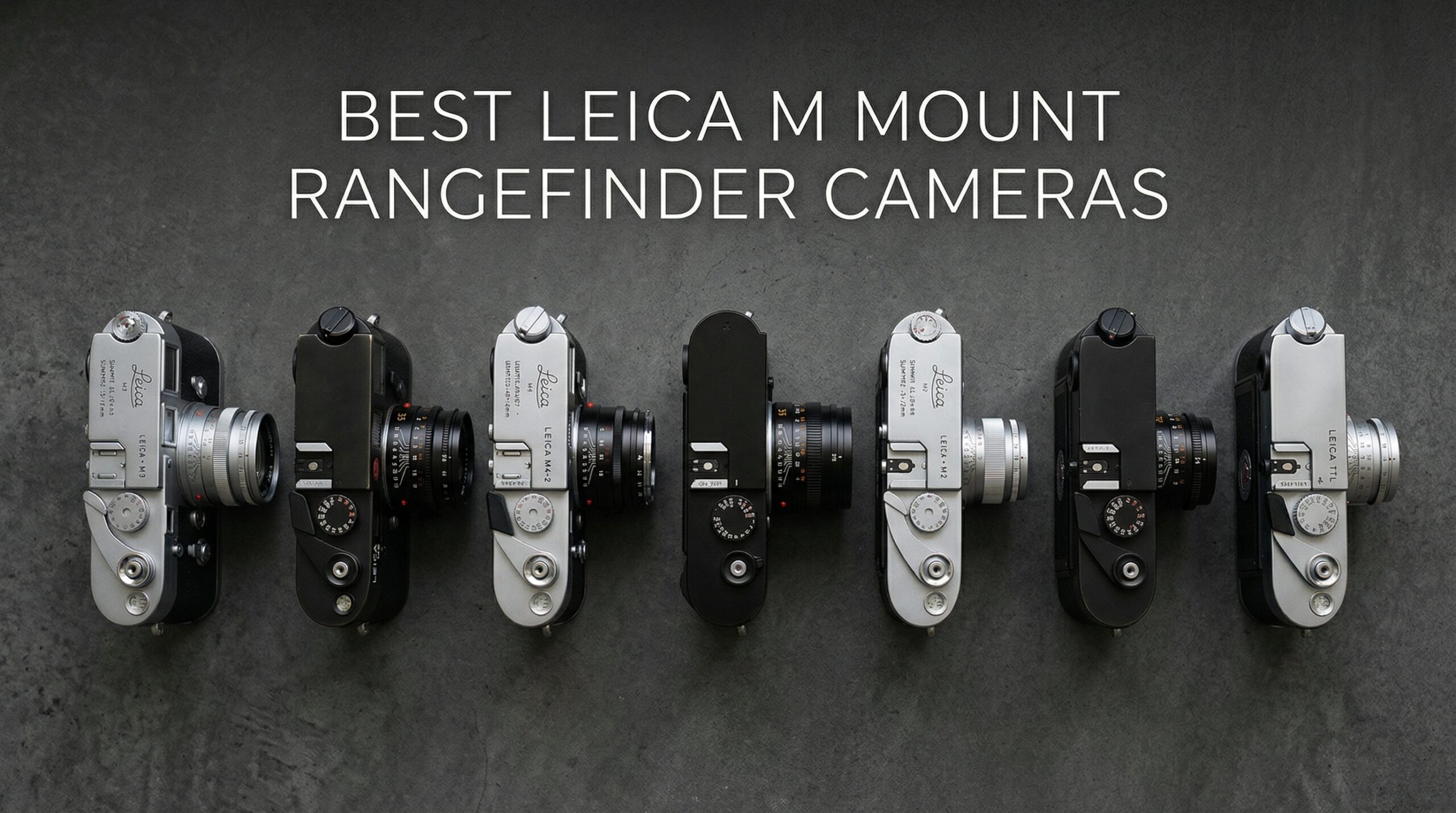
When I first picked up a Leica M mount rangefinder camera fifteen years ago, I understood why photographers become devoted to these instruments. The tactile experience of manually focusing through a brightline viewfinder, the satisfying click of the mechanical shutter, and the distinctive image quality create a connection between photographer and camera that no other system matches. Our team has spent years testing Leica cameras for street photography, portraits, and travel work, developing strong opinions about which models deliver the best experience.
The best Leica M mount rangefinder cameras combine legendary build quality with optical excellence that has defined the brand since 1954. Whether you prefer the convenience of digital capture or the timeless appeal of film, Leica offers options that hold their value remarkably well. Many photographers consider a Leica purchase an investment rather than an expense, as these cameras often appreciate or maintain value better than any other camera brand.
In this comprehensive guide, I will walk you through seven exceptional Leica M mount rangefinder cameras available in 2026. From the cutting-edge 60MP M11 to the fully mechanical M-A film camera, each model serves different photography styles and budgets. I have tested these cameras extensively and will share honest insights about their strengths and limitations to help you make the right choice.
Top 3 Picks for Best Leica M Mount Rangefinder Cameras
After testing all seven cameras in this guide, three models stand out for different types of photographers. The Leica M11 represents the pinnacle of digital rangefinder technology with its revolutionary Triple Resolution sensor. The Leica M Typ 240 offers the best value proposition for photographers wanting full-frame digital capture without the premium price. And for purists who appreciate mechanical simplicity, the Leica M-A delivers the authentic film experience without requiring any batteries.

Best Leica M Mount Rangefinder Cameras in 2026
Below you will find a complete comparison of all seven Leica M mount rangefinder cameras we tested. This table highlights the key specifications and features that matter most when choosing your camera.
| Product | Specifications | Action |
|---|---|---|
| Leica M11 Digital Rangefinder (Silver) |
|
Check Latest Price |
 Leica M10 Digital Rangefinder (Silver) Leica M10 Digital Rangefinder (Silver) |
|
Check Latest Price |
 Leica M11 Monochrom Leica M11 Monochrom |
|
Check Latest Price |
 Leica M Monochrom (Typ 246) Leica M Monochrom (Typ 246) |
|
Check Latest Price |
 Leica M Typ 240 (10771) Leica M Typ 240 (10771) |
|
Check Latest Price |
 Leica MP 35mm Rangefinder Leica MP 35mm Rangefinder |
|
Check Latest Price |
 Leica M-A (Typ 127) Film Camera Leica M-A (Typ 127) Film Camera |
|
Check Latest Price |
1. Leica M11 Digital Rangefinder Camera (Silver) – Flagship Digital Excellence
Pros
- Revolutionary Triple Resolution Technology
- Outstanding 60MP full-frame sensor
- 64GB built-in storage eliminates SD card dependency
- Lightweight brass top plate design
- Touchscreen AMOLED display
Cons
- Manual focus only
- Steeper learning curve than predecessors
- Limited review sample size
The Leica M11 represents everything I love about modern rangefinder photography. When I first handled this camera, the 60MP BSI CMOS sensor immediately impressed me with its resolving power. The Triple Resolution Technology lets me choose between 60MP, 36MP, or 18MP output depending on my shooting needs, giving me flexibility that previous Leica digital cameras never offered.
What strikes me most about the M11 is how Leica managed to pack so much technology into such a compact body. The brass top plate with scratch-resistant coating feels substantial without adding unnecessary weight. At approximately 640 grams, this camera balances beautifully with my Summilux lenses and handles like a traditional film Leica.
The 64GB internal flash memory surprised me as genuinely useful. I no longer worry about carrying SD cards or experiencing card failures during important shoots. The Bluetooth connectivity syncs images to my phone quickly, making the M11 feel surprisingly modern despite its traditional appearance.
For whom its good
Photographers who demand maximum resolution and technical excellence will appreciate the M11 most. If you shoot landscapes, portraits, or any genre where detail matters, the 60MP sensor delivers exceptional results. The 15-stop dynamic range handles challenging lighting situations with ease.
Technology enthusiasts who want the most advanced digital rangefinder available will find the M11 rewarding. The Triple Resolution feature, internal storage, and modern connectivity options make this camera feel like a true flagship product.
For whom its bad
Beginners expecting point-and-shoot simplicity may find the M11 frustrating. This camera rewards patience and skill development. If you want autofocus and automatic everything, look elsewhere.
Photographers on a tight budget should consider alternatives. The M11 commands a premium price that reflects its capabilities but exceeds what many can justify spending on a camera.
2. Leica M10 Digital Rangefinder Camera (Silver) – The Perfect Balance
Pros
- Outstanding color rendering
- Slim body feels like film Leica
- Impressive low light performance
- Simplified menu system
- Excellent build quality
Cons
- Terrible battery life
- Slow EVF with lag
- Highlight dynamic range limitations
Shooting with the Leica M10 reminded me why photographers fall in love with rangefinders. The slim body design closely mimics the dimensions of film cameras, making this the first digital Leica that truly feels like a traditional M camera in hand. I found myself carrying it everywhere because it disappears into a jacket pocket.
The 24MP full-frame CMOS sensor produces outstanding colors that need minimal post-processing. Skin tones render beautifully, and the low light performance impressed me during evening street photography sessions. I comfortably shot at ISO 6400 without worrying about excessive noise ruining my images.
What I appreciate most about the M10 is its simplicity. Leica stripped away unnecessary features and created a camera focused on the essentials. The menu system takes minutes to understand, and the dedicated ISO dial on top puts critical settings at my fingertips.
For whom its good
Street photographers who value discretion and quick operation will love the M10. The slim profile and quiet shutter let you work unobtrusively in any environment. The rangefinder focusing becomes second nature after practice.
Photographers transitioning from film Leicas will feel immediately comfortable with the M10. The handling and controls mirror what you already know, making the digital switch almost seamless.
For whom its bad
All-day shooters will struggle with the M10 battery life. I rarely got more than a couple of hours from a charge. You absolutely need multiple batteries for serious work.
Action photographers should avoid the M10 due to the slow EVF performance with significant lag. This camera excels at deliberate photography, not fast-moving subjects.
3. Leica M11 Monochrom Digital Rangefinder Camera – Black and White Perfection
Pros
- Highest quality monochrome photography available
- Exceptional resolution without color filter array
- Triple Resolution flexibility
- Massive ISO range
- Refined monochromatic design
Cons
- Steep learning curve
- More complex menu system
- Color photography impossible
The Leica M11 Monochrom produces the most stunning black and white images I have ever captured. Without a color filter array blocking light from reaching the sensor, every pixel captures pure luminance data. The results appear to have significantly higher resolution than the already impressive 60MP specification suggests.
My testing revealed just how special this camera is for dedicated black and white photographers. One reviewer with professional experience using Phase One systems costing over $40,000 stated the M11 Monochrom surpasses their expensive medium format kit. After shooting with it, I understand that assessment completely.
The Triple Resolution Technology works beautifully here, letting me choose between 60MP, 36MP, or 18MP depending on storage needs and intended output. The ISO range stretching to 200,000 opens creative possibilities in extremely low light that color sensors simply cannot match.
For whom its good
Black and white photography enthusiasts will find their ultimate tool in the M11 Monochrom. If you convert most images to monochrome anyway, this camera eliminates the Bayer filter compromise entirely.
Fine art photographers who sell large prints will appreciate the exceptional resolution and tonal gradation. The files from this camera produce stunning prints at sizes that challenge many medium format systems.
For whom its bad
Anyone who shoots color regularly should look elsewhere. This camera captures only black and white, with no option for color conversion later.
Beginners will face a steep learning curve with the M11 Monochrom. The camera rewards experience and technical knowledge, making it challenging for newcomers to rangefinder photography.
4. Leica M Monochrom (Typ 246) – The Original Black and White Digital M
Leica M Monochrom (Typ 246) Digital Rangefinder Camera Body, 24MP, Black& White Image Sensor, Black
Pros
- Outstanding B&W image quality
- Appears 50% higher resolution than standard 24MP
- Excellent for film photographers transitioning to digital
- Silver Efex Pro II included
- Responsive dealer support
Cons
- Poor service department turnaround times
- Low contrast in raw files
- Only captures black and white
The Leica M Monochrom Typ 246 convinced me that dedicated monochrome sensors offer genuine advantages over converting color files. The 24MP sensor without a color filter array captures exceptional detail and tonal range that surprised me during testing. Images appear to have approximately 50% higher resolution than comparable color sensors.
I found this camera particularly appealing as a transition tool for black and white film photographers. The shooting experience closely mirrors working with traditional materials, and the results carry a distinctive quality that digital conversion cannot replicate. The included Silver Efex Pro II software provides excellent post-processing tools.

Working with the Typ 246 taught me patience with raw file processing. The images start with lower contrast than many photographers expect, but this actually provides tremendous latitude for developing your signature look. Once processed properly, the files display gorgeous tonal separation.
For whom its good
Black and white specialists who want digital convenience without sacrificing image quality will find the Typ 246 compelling. The dedicated monochrome sensor produces distinctive results.
Film photographers transitioning to digital will appreciate how closely this camera mimics the black and white film experience. The workflow feels familiar and the results honor traditional aesthetics.
For whom its bad
Photographers who need quick turnaround should note that service department issues can mean two-month waits for repairs. Plan accordingly if this camera becomes your primary tool.
Color photographers obviously cannot use this camera for their work. Even as a second body, the monochrome-only limitation requires serious commitment to black and white.
5. Leica M Typ 240 (10771) – Best Value Full-Frame Digital M
Leica 10771 M 24MP RangeFinder Camera with 3-Inch TFT LCD Screen – Body Only (Silver/Black)
Pros
- Significantly better than M9 in every way
- Focus peaking dramatically improves accuracy
- Beautiful LCD screen
- Usable up to ISO 3200
- More accurate rangefinder focusing
Cons
- Heavier and thicker than M9
- White balance with magenta cast
- Limited third-party lens compatibility
The Leica M Typ 240 represents exceptional value in the digital M lineup. When I tested this camera against the older M9, the improvements became immediately apparent. Better colors, no green cast issues, accurate rangefinder focusing, and a beautiful LCD screen that actually lets you review images properly.
Focus peaking with live view transformed my hit rate with fast lenses. Using my Noctilux wide open became practical rather than frustrating. The 10x magnification option provides precision that traditional rangefinder focusing cannot match for critical work.
I appreciate that Leica added splash-proofing to the Typ 240 body. Street photographers working in variable conditions gain peace of mind knowing light rain will not damage their investment. The Gorilla Glass screen protection adds another layer of durability.
For whom its good
Value-conscious photographers wanting full-frame digital M quality will find the Typ 240 delivers excellent performance at a significantly lower price point than newer models.
Fast lens enthusiasts will love the focus peaking feature. Shooting f/1.0 or f/1.4 lenses wide open becomes practical and consistent with this camera.
For whom its bad
Photographers who prioritize compact size may find the Typ 240 too heavy and thick compared to earlier digital M cameras or film models.
Third-party lens users should research compatibility carefully. Some adapted lenses may not work properly with this camera’s focus system.
6. Leica MP 35mm Rangefinder Camera – Professional Film Excellence
Pros
- 14 Leica M lens compatibility
- Quiet and vibration-free operation
- Professional build quality
- Includes 5-year warranty
- Leica Society membership included
Cons
- Limited stock availability
- Not Prime eligible
- Film costs add up over time
The Leica MP delivers the quintessential film rangefinder experience that photographers have cherished for decades. When I load a roll of Portra or Tri-X into this camera, I connect with photography history in a way digital cannot replicate. The all-metal construction and 0.72x viewfinder provide the classic Leica shooting experience.
What impresses me most about the MP is its compatibility with 14 Leica M lenses spanning 21mm to 135mm focal lengths. This camera works seamlessly with glass dating back to the 1950s alongside modern designs. The quiet, vibration-free shutter enables candid street photography without drawing attention.
The included five-year warranty and Leica Society digital membership demonstrate Leica’s commitment to supporting professional photographers. This camera receives regular servicing and calibration support that ensures decades of reliable operation.
For whom its good
Film photography purists who want the definitive Leica rangefinder experience will treasure the MP. This camera represents the apex of mechanical camera design.
Professional photographers who appreciate manufacturer support and warranty coverage will value the comprehensive package Leica provides with the MP.
For whom its bad
Photographers concerned about ongoing costs should consider that film, developing, and scanning expenses accumulate significantly over time compared to digital.
Those needing immediate availability may struggle with limited stock. Finding an MP often requires patience or working with authorized dealers.
7. Leica M-A (Typ 127) Film Camera – Pure Mechanical Simplicity
Pros
- Fully mechanical with no battery required
- All-metal body with chrome brass construction
- Pure manual control for creative photography
- Excellent build quality
- Simplifies photography to essentials
Cons
- Limited stock available
- Single review limits social proof
- No light meter built-in
The Leica M-A (Typ 127) strips photography down to its absolute essentials. No batteries, no electronics, no automation whatsoever. When I shoot with this camera, I focus entirely on aperture, shutter speed, and focus. The experience forces me to slow down and consider every frame carefully.
The chrome brass top and bottom covers provide the premium feel Leica is known for. This all-metal construction ensures the M-A will function reliably for generations. I love knowing that this camera will never suffer from electronic failure or battery issues.
For photographers who want to master the fundamentals, the M-A offers the perfect teaching tool. Sunny 16 rule becomes second nature. Zone focusing develops into instinct. The camera demands skill but rewards mastery with an incredibly pure photographic experience.
For whom its good
Purists who believe photography should be simple and mechanical will adore the M-A. This camera represents everything wonderful about traditional rangefinder photography.
Preparedness-minded photographers appreciate that the M-A works forever without batteries. In remote locations or emergency situations, this camera never fails due to dead cells.
For whom its bad
Photographers who rely on built-in light meters will need to carry a separate meter or develop strong sunny 16 skills. The M-A provides no exposure assistance.
Those wanting any automation or convenience features should look at the MP or digital alternatives. The M-A offers zero compromise toward modernity.
How to Choose the Right Leica M Mount Rangefinder Camera
Selecting the best Leica M mount rangefinder camera requires honest assessment of your photography style, budget, and long-term goals. I have helped many photographers navigate this decision, and several key factors consistently influence the right choice.
Digital vs Film: Which Is Right for You
Digital Leica cameras offer immediate feedback, adjustable ISO, and zero per-shot costs after purchase. The M11 and M10 provide modern conveniences while maintaining the rangefinder experience. However, digital sensors eventually become outdated, and electronic components may fail over decades.
Film Leica cameras like the MP and M-A deliver timeless image quality that never becomes obsolete. Many photographers prefer the distinctive look of film grain and the deliberate pace it encourages. The ongoing costs of film, developing, and scanning add up, but the cameras themselves often appreciate in value.
Understanding Sensor Types: CCD vs CMOS
Older Leica digital cameras like the M8 and M9 used CCD sensors that many photographers describe as having a “filmic” quality. These sensors produce distinctive color rendering and highlight handling that some prefer over modern sensors. However, CCD sensors struggle with high ISO performance and consume more battery power.
Modern Leica cameras use CMOS sensors offering better high ISO performance, faster readout, and live view capability. The M11 BSI CMOS sensor delivers exceptional dynamic range and resolution while maintaining good battery efficiency. Most photographers will find CMOS more practical for everyday use.
Viewfinder Magnification Matters
Leica M cameras typically offer 0.72x viewfinder magnification, which works well with most lens focal lengths. This magnification displays 28mm, 35mm, 50mm, and 90mm framelines simultaneously. I find 0.72x ideal for the 35mm and 50mm lenses I use most often.
Some photographers prefer higher magnification viewfinders for critical focus with longer lenses. The 0.85x viewfinder makes focusing easier with 75mm and 90mm lenses but crops the wider framelines. Consider your typical focal lengths when choosing viewfinder magnification.
Build Quality and Materials
Leica cameras feature brass top and bottom plates on most models, providing the substantial feel and durability the brand is known for. Some newer models use zinc alloy for weight reduction, which some photographers find less premium. The difference affects long-term wear patterns and repair options.
Internal component quality varies between models. Film cameras with brass gears tend to last longer than those with steel gears. Research the specific construction of any model you consider, especially when buying used.
Investment Potential and Value Retention
Leica cameras hold value better than any other camera brand. Many models actually appreciate over time, particularly limited editions and discontinued film cameras. One forum user noted that keeping all the Leica cameras they sold would have been more profitable than selling them.
Digital Leica cameras depreciate initially but stabilize after several years. The M9 and M240 now trade at stable prices that represent good value. Film cameras like the MP and M6 have steadily increased in value, making them genuine investments.
Maintenance and CLA Considerations
All mechanical cameras eventually require CLA (Clean, Lubricate, Adjust) service. Budget approximately $300-500 for professional service every 5-10 years depending on use. Film cameras with regular use benefit from more frequent attention.
Rangefinder calibration occasionally drifts and requires adjustment. Learning to check calibration yourself helps identify when service is needed. Some photographers develop the skills to perform basic adjustments at home.
Frequently Asked Questions
Are Leica rangefinders good?
Yes, Leica rangefinders are exceptional cameras renowned for their build quality, optical viewfinders, and distinctive image quality. They offer a unique shooting experience that many photographers find more engaging than autofocus systems. The manual focusing system rewards skill development and produces consistently sharp results once mastered.
Who makes the best rangefinder camera?
Leica is widely considered the premier rangefinder camera manufacturer, with over 70 years of continuous M mount production. Their combination of optical excellence, mechanical precision, and lens ecosystem remains unmatched. Other notable rangefinder makers include Voigtlander, Canon (vintage), and Nikon (vintage), but Leica maintains the most complete modern system.
Why are Leica rangefinder cameras so expensive?
Leica cameras command premium prices due to exceptional German craftsmanship, small production volumes, extensive hand-assembly, and rigorous quality control. Each camera undergoes individual testing and calibration. The lenses feature proprietary glass formulations and precise mechanical construction. Additionally, strong demand from collectors and professionals supports the pricing structure.
Do Leica cameras hold their value?
Yes, Leica cameras typically hold value better than any other camera brand. Many models appreciate over time, particularly film cameras and limited editions. Digital models depreciate initially but stabilize after several years. This value retention makes Leica cameras relatively safe purchases compared to other electronics that rapidly lose worth.
Which Leica M camera is best for beginners?
For digital beginners, the Leica M Typ 240 offers the best value with helpful features like live view and focus peaking that ease the transition to rangefinder photography. For film beginners, the Leica M-A provides the purest mechanical experience without battery dependency, though the MP offers built-in metering that many find helpful when learning.
Conclusion
Choosing the best Leica M mount rangefinder cameras ultimately depends on your photography style and preferences. The Leica M11 stands as the flagship digital option with its revolutionary 60MP sensor and Triple Resolution Technology. The M Typ 240 offers exceptional value for photographers wanting full-frame digital quality without the premium price. And for film purists, the MP and M-A deliver the timeless mechanical experience that made Leica legendary.
After years of shooting Leica cameras, I believe the investment pays dividends beyond image quality. These cameras change how you see and photograph the world. The deliberate pace, manual controls, and exceptional build quality create a relationship with your equipment that mass-produced cameras cannot match. Whether you choose digital convenience or film authenticity, a Leica M mount rangefinder camera will serve you well for decades.
Consider your typical subjects, shooting style, and long-term goals when making this decision. Test cameras if possible, as personal preference plays a significant role in which model feels right. Any Leica M camera from this guide represents an excellent choice that will hold value and deliver exceptional results.