
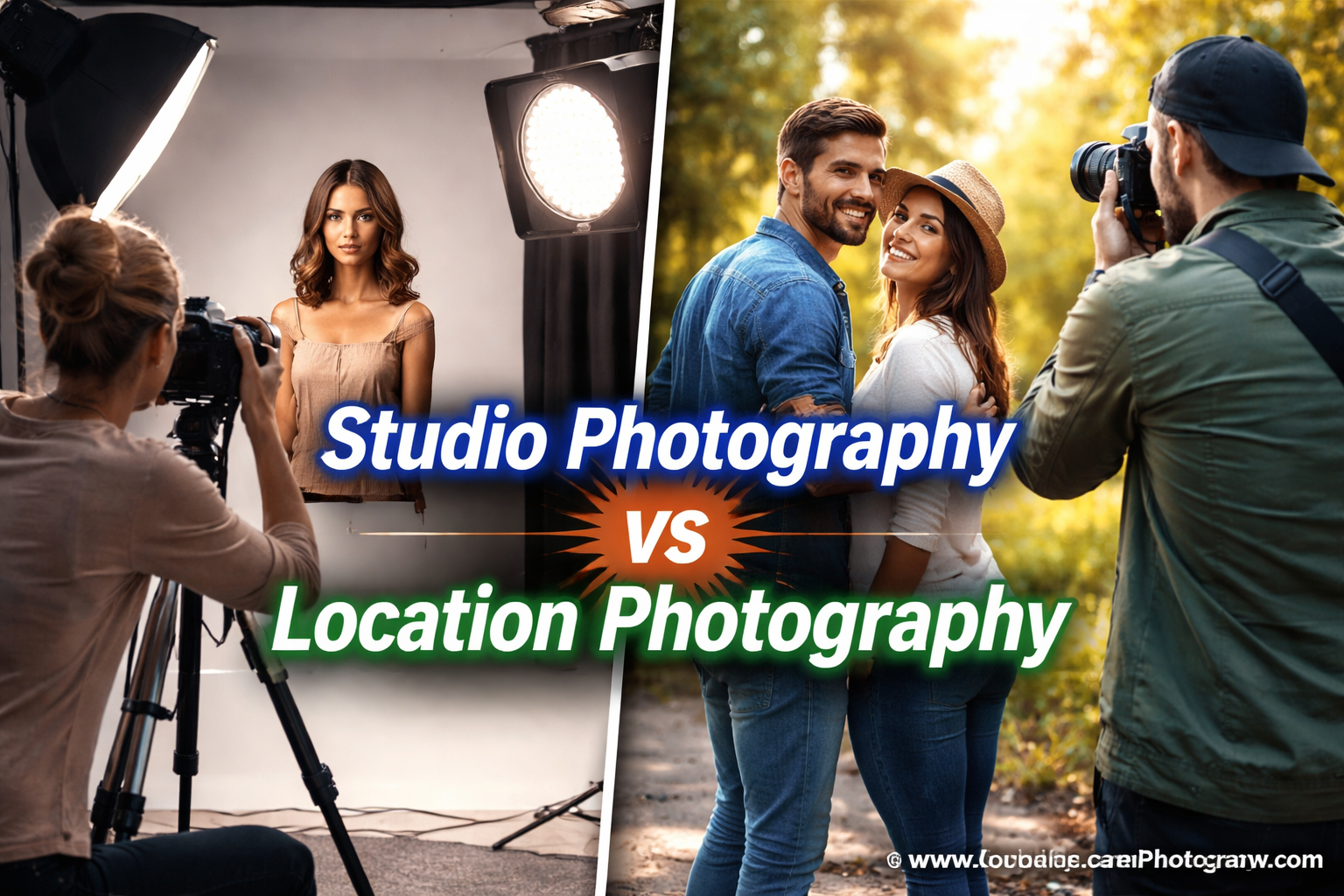
Deciding between studio photography and location photography is one of the biggest choices you will make as a photographer or client. Each approach offers distinct advantages that can dramatically impact your final images, workflow, and overall experience. In this comprehensive guide to Studio Photography vs Location Photography, I will break down everything you need to know to make the right decision.
After shooting hundreds of sessions in both environments over the past decade, I have learned that neither option is universally better. The best choice depends entirely on your specific needs, budget, timeline, and creative vision.
Here is the quick verdict: Studio photography excels when you need complete control, consistency, and a professional setting for headshots or product photography. Location photography wins when you want authenticity, environmental context, and natural expressions from your subjects.
Let me walk you through the detailed comparison so you can make an informed decision.
Studio Photography vs Location Photography: Quick Comparison
The table below gives you an at-a-glance overview of how these two approaches compare across the most important factors.
| Feature | Studio Photography | Location Photography |
|---|---|---|
| Environment | Controlled indoor space | Real-world settings (indoor or outdoor) |
| Lighting | Artificial lighting (full control) | Natural light or mixed lighting |
| Weather Dependency | None | High (outdoor shoots) |
| Privacy | Complete privacy | Varies by location |
| Equipment Needed | Extensive (strobe lights, backdrops, modifiers) | Portable gear (battery-powered strobes, reflectors) |
| Setup Time | Minimal (permanent setup) | Significant (transport and setup each time) |
| Cost Structure | Higher overhead (rent, utilities, insurance) | Travel fees, permits, potential rental costs |
| Variety | Limited to props and backdrops | Unlimited backgrounds and settings |
| Best For | Headshots, product photography, branding | Environmental portraits, weddings, lifestyle |
Now let us dive deeper into each option so you understand exactly what to expect.
Studio Photography: Complete Guide
What Is Studio Photography?
Studio photography takes place in a dedicated indoor space where the photographer has complete control over every element of the image. This controlled environment allows for precise manipulation of lighting, backgrounds, props, and ambiance.
A photography studio typically includes professional lighting equipment such as strobe lights and continuous lighting, various backdrops (seamless paper, muslin, canvas), light modifiers like softboxes and octabanks, and props for styling. The space itself may be a permanent commercial rental, a home studio, or a temporary space rented by the hour.
Key Characteristics of Studio Photography
Controlled Environment: Every aspect of the shoot is manageable. You set the color temperature, intensity, and direction of light. You choose the exact background. You control the temperature, music, and overall atmosphere.
Artificial Lighting: Studio photographers rely on strobe lights, monolights, or continuous lighting setups. A typical three-point lighting setup includes a key light, fill light, and edge light or rim light to create dimension and separation.
Consistency: Results are predictable and repeatable. If you shoot corporate headshots for 50 employees, each image will have the same lighting, background, and overall quality.
Pros of Studio Photography
Complete Lighting Control: I can shape light exactly how I want it using softboxes, octabanks, grids, and reflectors. No worrying about clouds moving or the sun dipping behind a building. My lighting ratios stay consistent shot after shot.
Weather Independence: Rain, snow, extreme heat, or unexpected weather changes have zero impact on studio sessions. Clients appreciate knowing their appointment will happen regardless of conditions outside.
Privacy: Some clients feel self-conscious having their photo taken in public spaces. A studio provides a private environment where they can relax and focus on the camera without worrying about passersby watching.
Efficiency: With a permanent setup, there is no loading and unloading equipment, no travel time between locations, and no scouting new spots. Clients come in, we shoot, and they leave.
Professional Atmosphere: A dedicated studio space signals professionalism and can justify higher pricing. Clients see the investment you have made in your business.
Consistent Results: For commercial work, product photography, or corporate headshots, consistency matters. Studio work delivers the same quality every single time.
Cons of Studio Photography
Higher Overhead Costs: Studio rent, utilities, insurance, and equipment maintenance add up quickly. Many photographers spend $500 to $3,000+ monthly on studio overhead alone. You need enough consistent work to justify these fixed costs.
Limited Variety: Even with multiple backdrops and props, studio images can feel repetitive. You are working within the same four walls, which limits creative variety compared to location work.
Less Authentic Feel: Some clients want images that feel natural and candid. Studio portraits can sometimes feel stiff or overly formal, lacking the environmental context that tells a broader story.
Space Limitations: Smaller studios restrict the types of shots you can create. Full-body shots, group photos, or setups requiring significant distance between subject and background may not be possible.
Intimidating for Some Subjects: The formal studio environment can make certain people nervous. Children, pets, or camera-shy individuals may feel more comfortable in familiar surroundings.
Best Use Cases for Studio Photography
- Corporate Headshots: Consistent lighting and backgrounds for company directories and LinkedIn profiles.
- Product Photography: Controlled environment for e-commerce, catalogs, and advertising.
- Branding Photography: Professional images for websites, marketing materials, and social media.
- Portrait Photography: Classic portraits where the focus should be entirely on the subject.
- Fashion and Editorial: High-end shoots requiring precise lighting control.
Studio Photography Equipment Checklist
If you are setting up a studio, here is the essential equipment you will need:
- Camera and lenses (portrait lenses like 85mm or 50mm work well)
- Strobe lights or monolights (minimum two, ideally three or more)
- Light modifiers (softboxes, octabanks, umbrellas, grids)
- Light stands and boom arms
- Backdrops (seamless paper in multiple colors, fabric backdrops)
- Backdrop stands
- Reflectors and flags
- Tethering setup for client review
- Props and posing tools
Initial equipment investment for a basic studio setup typically ranges from $5,000 to $15,000, with professional configurations reaching $30,000 or more.
Studio Cost Considerations
Understanding the financial commitment helps you decide if studio ownership fits your business model:
Monthly Rent: Studio spaces range from $500 to $3,000+ monthly depending on location, size, and amenities. Urban areas command premium prices while suburban locations offer more square footage for less money.
Utilities: Electricity for lighting and climate control, internet, water, and waste disposal typically add $100 to $400 monthly to operating costs.
Insurance: Business liability, equipment coverage, and property insurance usually cost $1,200 to $3,000 annually depending on coverage levels and location.
Equipment Maintenance: Strobe tubes need replacement, backdrops wear out, and technology advances. Budget 10 to 15 percent of equipment value annually for maintenance and upgrades.
For photographers starting out, studio rental by the hour or day offers an alternative to permanent leases. Day rates typically range from $200 to $800 depending on the facility.
Location Photography: Complete Guide
What Is Location Photography?
Location photography, also called on-location photography, takes place in real-world settings rather than a dedicated studio. These locations can be outdoors (parks, urban environments, beaches) or indoors (homes, offices, event venues, historic buildings).
The location becomes part of the visual story. Environmental portraits show subjects in context, whether that is a CEO in their boardroom, a couple at their wedding venue, or a fitness enthusiast at their gym.
Key Characteristics of Location Photography
Natural Elements: Location photographers work with available light, existing backgrounds, and environmental features. This can mean golden hour sunlight streaming through trees or the architectural lines of a modern building.
Adaptability Required: Every location presents unique challenges and opportunities. You must read the light, find the best angles, and make quick decisions about composition and exposure.
Environmental Context: The setting tells part of the story. A musician photographed in a recording studio conveys different meaning than one photographed against a seamless backdrop.
Pros of Location Photography
Authenticity and Natural Feel: Location images often feel more genuine and relaxed. Subjects in familiar or meaningful environments tend to show more natural expressions.
Unlimited Variety: Every location offers new creative possibilities. Urban environments, natural landscapes, industrial spaces, and private homes all provide unique backdrops.
Environmental Storytelling: The background adds context and meaning to your images. This is especially valuable for branding photography, where showing the workspace or environment reinforces the subject’s identity.
Lower Fixed Costs: Without studio rent and utilities, your overhead stays low. You only pay for locations when you need them, or you can find free public spaces.
Unique and Memorable: A stunning location creates images that stand out. Clients often remember and share photos taken at beautiful or meaningful places.
Client Convenience: Some clients prefer being photographed in their own space. Corporate clients save time when you come to their office rather than having staff travel to a studio.
Cons of Location Photography
Weather Dependency: Outdoor shoots are at the mercy of Mother Nature. Rain, wind, extreme temperatures, or unexpected weather changes can force rescheduling. I always build weather backup plans into my location shoots.
Lighting Challenges: Harsh midday sun, deep shade, or mixed indoor lighting can be difficult to manage. You must work with available light or bring portable lighting equipment.
Permit Requirements: Many popular locations require photography permits. Public parks, beaches, and historic sites often charge fees ranging from $50 to several hundred dollars for commercial photography.
Limited Privacy: Public spaces mean public exposure. Other people walking through your frame, curious onlookers, and background noise can all impact the shoot.
Equipment Transport: Everything must be packed, transported, and set up at each location. This adds time and physical effort to every session.
Unpredictable Conditions: Construction, events, or crowds can make a scouted location unusable on shoot day. Flexibility and backup plans are essential.
Best Use Cases for Location Photography
- Wedding Photography: Couples want images at their venue and meaningful locations.
- Environmental Portraits: Showcasing subjects in their work or home environment.
- Lifestyle Photography: Candid, natural images that feel authentic.
- Fitness and Athletic Photography: Gyms, tracks, and outdoor settings enhance the story.
- Real Estate and Architectural Photography: The property is the subject.
- Family and Senior Portraits: Meaningful locations create more personal images.
Location Photography Equipment Checklist
Location work requires portable, versatile gear. Here is what I bring:
- Camera and lenses (versatile zoom lenses are helpful)
- Battery-powered strobes or speedlights
- Portable light stands
- Reflectors and diffusers
- Off-camera flash triggers
- Portable softboxes or umbrellas
- Camera bag or rolling case for transport
- Location permit documents
- Weather protection for gear
Location equipment investment typically ranges from $2,000 to $8,000 depending on the quality and quantity of portable lighting gear you choose.
Permit and Weather Considerations for Location Photography
Permit Requirements: Research permit needs before booking any location. National parks, state parks, city properties, and historic sites often require commercial photography permits. Fees typically range from $50 to $500 per shoot. Some locations require advance applications that take weeks to process.
Weather Planning: I always identify backup options for outdoor shoots. Covered pavilions, indoor alternatives nearby, or flexible rescheduling policies protect both you and your client. Building weather contingency into contracts prevents misunderstandings.
Golden Hour Scheduling: The hour after sunrise and hour before sunset provide the most flattering natural light for outdoor portraits. Scheduling sessions during these windows dramatically improves results compared to harsh midday sun.
Head-to-Head Comparison: Studio vs Location
Lighting Control Comparison
Studio: Complete control is the primary advantage. I can set up a three-light configuration with a key light in a softbox, a fill light at a specific ratio, and an edge light for separation. Color temperature stays consistent. Shadows fall exactly where I want them.
Location: Lighting varies constantly. Outdoor shoots depend on time of day, weather, and cloud cover. Golden hour provides beautiful warm light, but you have a narrow window to work with it. Midday sun creates harsh shadows that require fill flash or reflectors to manage.
Winner: Studio for control and consistency. Location for natural, organic lighting effects.
Cost Breakdown Comparison
Studio Costs:
- Monthly rent: $500 to $3,000+ depending on location and size
- Utilities: $100 to $300 monthly
- Insurance: $100 to $300 monthly
- Equipment investment: $5,000 to $20,000+ initial setup
- Ongoing maintenance and upgrades
Location Costs:
- Travel expenses: varies by distance (mileage, gas, parking)
- Location permits: $50 to $500+ per location
- Portable equipment: $2,000 to $8,000 initial investment
- Location rental fees (if applicable): $100 to $500+ per session
- No fixed monthly overhead
Winner: Location photography has lower fixed costs and is more flexible for photographers starting out. Studio becomes more economical when you have consistent high-volume work.
Weather and Scheduling Factors
Studio: Sessions happen regardless of weather. No rescheduling due to rain, extreme heat, or other conditions. This reliability is valuable for commercial clients with tight deadlines.
Location: Weather can force rescheduling, which costs time and potentially money. However, some weather conditions (overcast skies, light fog) can actually improve outdoor portraits by creating soft, diffused light.
Winner: Studio for reliability and scheduling predictability.
Privacy and Client Comfort
Studio: Complete privacy allows clients to relax without public scrutiny. This is especially valuable for clients who feel self-conscious or need to discuss sensitive business matters during the session.
Location: Public spaces lack privacy. Crowds, other photographers, and curious onlookers can make camera-shy subjects uncomfortable. However, some clients feel more at ease in familiar surroundings like their home or office.
Winner: Depends on the client. Studio offers guaranteed privacy, while location offers comfort through familiarity.
Versatility and Creative Variety
Studio: Limited by available backdrops, props, and space. However, you can create virtually any lighting setup you can imagine. Technical possibilities are nearly endless within the physical constraints of your space.
Location: Infinite variety in terms of environments, backgrounds, and natural lighting conditions. Each shoot offers fresh creative challenges and opportunities.
Winner: Location for variety and creative freshness. Studio for technical precision.
Industry-Specific Recommendations
Corporate and Business Photography: Studios work well for standardized headshots across large organizations. Location is better for environmental portraits that show executives in their actual workspace.
Product Photography: Studios are almost always the right choice. Product images require consistent lighting and backgrounds for catalogs and e-commerce.
Wedding Photography: Location is essential. Couples want images at their venue and meaningful spots. Some wedding photographers also offer engagement sessions in studios for variety.
Portrait Photography: Both work well. Studios for classic, timeless portraits. Locations for lifestyle and environmental portraits that tell a story.
Fashion and Editorial: Both have their place. High-fashion often uses studios for precise lighting control. Editorial spreads frequently use locations for narrative context.
Food Photography: Studios provide the controlled lighting that food photography demands. However, restaurant and lifestyle food photography often benefits from location settings.
Frequently Asked Questions
What are the disadvantages of a studio shoot?
Studio shoots have several disadvantages including higher overhead costs (rent, utilities, insurance typically $500 to $3,000+ monthly), limited variety in backgrounds and settings, less authentic feel compared to natural environments, space limitations that restrict certain shot types, and an atmosphere that can feel intimidating to camera-shy subjects or children.
What is the 20 60 20 rule in photography?
The 20 60 20 rule suggests that 20% of your photography work will be exceptional, 60% will be good and serviceable, and 20% will not meet your standards. This rule helps photographers set realistic expectations and focus on improving their consistency rather than expecting every shot to be perfect.
What is the most profitable type of photography?
Commercial and corporate photography tend to be the most profitable types. This includes product photography, advertising photography, and corporate headshots. These clients have marketing budgets and need consistent, professional images. Wedding photography is also highly profitable due to the premium clients pay for a once-in-a-lifetime event, though it requires weekend work and high stress tolerance.
What is the highest paid type of photographer?
The highest paid photographers typically work in commercial advertising, fashion, and specialized niches like architectural or medical photography. Commercial photographers working with major brands can earn six-figure incomes. Fashion photographers for top magazines and brands also command high rates. Specialization is key to commanding premium prices in any photography field.
Verdict: Which Should You Choose?
After weighing all factors in this Studio Photography vs Location Photography comparison, here is my recommendation:
Choose studio photography if:
- You need consistent, predictable results
- You are shooting product photography or corporate headshots
- Weather reliability is essential
- Privacy matters for your clients
- You have enough volume to justify studio overhead
- You want complete control over every element of the image
Choose location photography if:
- You want authentic, natural-feeling images
- Environmental context enhances your subject’s story
- You are just starting out and want low overhead
- You enjoy variety and creative challenges
- Your clients prefer being photographed in meaningful places
- You photograph weddings, events, or lifestyle content
Consider a hybrid approach: Many successful photographers offer both options. You might rent studio space by the hour when needed while primarily shooting on location. Or maintain a small studio for headshots while taking portrait clients outdoors for lifestyle sessions.
Some photographers start with location work to build their portfolio and client base, then add studio space once their volume justifies the monthly overhead. This approach reduces financial risk while building toward a full-service photography business.
The best photographers can work effectively in both environments. Master studio lighting fundamentals, then learn to read and adapt to location conditions. This versatility makes you valuable to a wider range of clients and keeps your creative work fresh and engaging.