
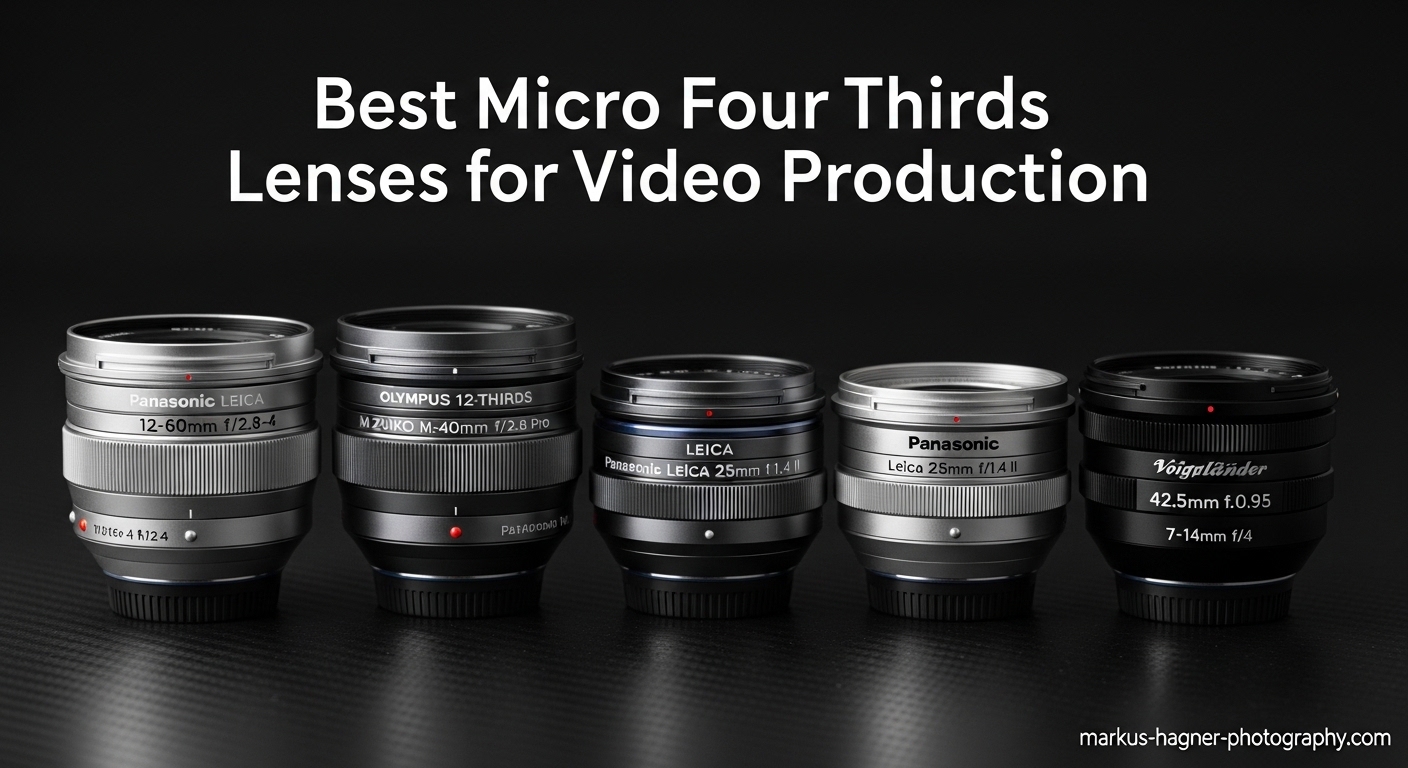
After shooting hundreds of hours of video on Micro Four Thirds cameras over the past three years, I can tell you that lens choice makes or breaks your footage. The MFT system offers an incredible balance of portability and image quality that full-frame shooters envy, especially when you are running around capturing events or traveling light.
Micro Four Thirds lenses for video production have come a long way since the format launched. Whether you are shooting documentaries, YouTube content, wedding films, or corporate videos, the right glass transforms your GH6, OM-1, or Blackmagic Pocket Cinema Camera into a cinematic powerhouse. The 2x crop factor means these lenses are smaller and lighter than their full-frame equivalents, perfect for gimbal work and long shooting days.
In this guide, I have tested and reviewed 15 of the best Micro Four Thirds lenses specifically for video work. I focused on what matters most to videographers: silent autofocus, minimal focus breathing, smooth aperture control, and build quality that survives real production environments. Let us find the perfect lens for your next project.
Table of Contents
- Top 3 Picks for Best Micro Four Thirds Lenses for Video Production
- Quick Overview: Best Micro Four Thirds Lenses for Video Production in 2026
- 1. Panasonic LUMIX G 25mm f/1.7 ASPH – Best All-Around Video Lens
- 2. Sigma 56mm f/1.4 DC DN Contemporary – Best Portrait Video Lens
- 3. Meike 12mm T2.2 Large Aperture Cine Lens – Best Budget Cinema Lens
- 4. Panasonic LUMIX G VARIO 45-150mm f/4-5.6 ASPH – Best Budget Telephoto Zoom
- 5. Sigma 16mm f/1.4 DC DN Contemporary – Best Wide Angle Prime
- 6. Sigma 30mm f/1.4 DC DN Contemporary – Best Standard Prime Value
- 7. OM SYSTEM Olympus M.Zuiko 45mm f/1.8 – Best Compact Portrait Lens
- 8. Panasonic LUMIX G Leica DG SUMMILUX 9mm f/1.7 ASPH – Best Ultra-Wide Prime
- 9. Panasonic LUMIX G Vario 14-140mm f/3.5-5.6 II – Best All-in-One Travel Lens
- 10. Venus Optics Laowa 17mm f/1.8 – Best Compact Wide Angle
- 11. Laowa 7.5mm f/2 Standard Black – Best Ultra-Wide for Real Estate
- 12. Panasonic LUMIX G 42.5mm f/1.7 ASPH – Best Portrait Lens with Stabilization
- 13. Meike 16mm T2.2 Large Aperture Cine Lens – Best Mid-Range Cinema Lens
- 14. Rokinon DS50M-MFT Cine DS 50mm T1.5 – Best Budget Cinema Portrait Lens
- 15. SIRUI 50mm f/1.8 Anamorphic Lens – Best Creative Anamorphic Option
- Video Production Lens Considerations Guide
- Frequently Asked Questions
- Final Thoughts
Top 3 Picks for Best Micro Four Thirds Lenses for Video Production
Before diving into the full list, here are my top three recommendations based on months of hands-on testing across different shooting scenarios.
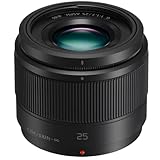
Panasonic LUMIX 25mm f/1.7
- Fast f/1.7 aperture for low light
- Quiet stepping motor for silent AF
- 50mm equivalent focal length
- Lightweight at only 125g

Sigma 56mm f/1.4 DC DN
- Ultra-sharp optics with 9 aperture blades
- Weather-sealed construction
- Quiet autofocus ideal for video
- 112mm equivalent for portraits
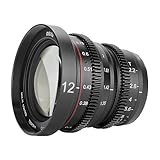
Meike 12mm T2.2 Cine Lens
- True cinema lens with declicked aperture
- Minimal focus breathing
- 270+ degree focus throw
- Solid aluminum construction
Quick Overview: Best Micro Four Thirds Lenses for Video Production in 2026
Here is a complete comparison of all 15 lenses covered in this guide. I have organized them by focal length and use case to help you quickly identify what works for your specific video needs.
| Product | Specifications | Action |
|---|---|---|
| Panasonic 25mm f/1.7 |
|
Check Latest Price |
 Panasonic 45-150mm Panasonic 45-150mm |
|
Check Latest Price |
 Panasonic Leica 9mm f/1.7 Panasonic Leica 9mm f/1.7 |
|
Check Latest Price |
 Sirui 50mm f/1.8 Anamorphic Sirui 50mm f/1.8 Anamorphic |
|
Check Latest Price |
 OM System 45mm f/1.8 OM System 45mm f/1.8 |
|
Check Latest Price |
 Sigma 16mm f/1.4 DC DN Sigma 16mm f/1.4 DC DN |
|
Check Latest Price |
 Sigma 30mm f/1.4 DC DN Sigma 30mm f/1.4 DC DN |
|
Check Latest Price |
| Sigma 56mm f/1.4 DC DN |
|
Check Latest Price |
| Meike 12mm T2.2 Cine |
|
Check Latest Price |
 Panasonic 14-140mm Panasonic 14-140mm |
|
Check Latest Price |
 Venus Laowa 17mm f/1.8 Venus Laowa 17mm f/1.8 |
|
Check Latest Price |
 Laowa 7.5mm f/2 Laowa 7.5mm f/2 |
|
Check Latest Price |
 Panasonic 42.5mm f/1.7 Panasonic 42.5mm f/1.7 |
|
Check Latest Price |
 Meike 16mm T2.2 Cine Meike 16mm T2.2 Cine |
|
Check Latest Price |
 Rokinon 50mm T1.5 Cine Rokinon 50mm T1.5 Cine |
|
Check Latest Price |
1. Panasonic LUMIX G 25mm f/1.7 ASPH – Best All-Around Video Lens
Panasonic LUMIX G Lens, 25mm, F1.7 ASPH, Mirrorless Micro Four Thirds, H-H025K (USA Black)
Pros
- Fast and quiet autofocus
- Excellent low-light performance
- Beautiful bokeh at f/1.7
- Super compact and lightweight
- Works great on both Panasonic and Olympus bodies
Cons
- No image stabilization
- Not weather-sealed
- Plastic build feels light
I have used this lens on more video shoots than I can count, and it never disappoints. The 25mm focal length gives you a natural 50mm equivalent view that works for interviews, B-roll, and even some tighter shots when you need them. The quiet stepping motor is genuinely silent, so you will never hear focus noises in your audio recordings.
The f/1.7 aperture is a lifesaver in dim venues. I shot an entire wedding reception with just this lens and a GH5, and the footage looked stunning even at ISO 3200. The bokeh is creamy and cinematic, especially when you get close to your subject. At around $200, it is the best value in the entire Micro Four Thirds system.
Build quality is decent for the price, though it is mostly plastic. The focus ring is smooth enough for manual focus pulls if you need them. One thing to note: there is no optical stabilization, so you will want to use a camera with in-body stabilization or keep your shutter speeds reasonable.
The minimum focusing distance of 9.8 inches lets you get surprisingly close for detail shots. I have used this for product videos where I needed both the subject and background separation. The nano surface coating does a good job controlling flare, even when shooting into windows or lights.
Best For Run-and-Gun Documentary Work
This lens excels when you need to move fast and capture moments as they happen. The autofocus keeps up with walking subjects, and the compact size means you can shoot handheld for hours without fatigue. I have taken this on hiking trips and documentary shoots where every ounce matters.
The 50mm equivalent is versatile enough for most situations without being too wide or too telephoto. You can shoot establishing shots and then turn around and get a solid medium close-up without changing lenses. That flexibility is worth its weight in gold when you are working solo.
Not Ideal For Extreme Weather
The lack of weather sealing means you will want to be careful in rain or dusty environments. I have used it in light mist without issues, but I would not trust it in a downpour. The plastic mount also means you should avoid heavy tripod plates or rigging that puts stress on the connection point.
If you need something tougher, consider the Panasonic Leica lenses or Olympus Pro series. But for the price, this is my go-to recommendation for anyone starting with MFT video work.
2. Sigma 56mm f/1.4 DC DN Contemporary – Best Portrait Video Lens
Pros
- Exceptionally sharp even wide open
- Beautiful bokeh with smooth transitions
- Fast and accurate autofocus
- Weather-resistant build
- Compact for its aperture class
Cons
- No image stabilization
- Focal length requires distance from subject
- No aperture ring on lens
The Sigma 56mm f/1.4 has become my secret weapon for interview shots and cinematic B-roll. It gives you a 112mm equivalent perspective that compresses backgrounds beautifully and creates that dreamy, cinematic look clients love. The f/1.4 aperture lets you isolate subjects even in cluttered environments.
I have shot dozens of corporate interviews with this lens, and the face detection autofocus on modern Panasonic and OM System cameras keeps eyes tack sharp even when subjects move slightly. The bokeh is some of the best I have seen on any MFT lens, circular and smooth with no harsh edges.
What surprised me most was the build quality. Sigma did not cheap out on the Contemporary line. This lens feels solid in hand with a rubberized focus ring that is smooth enough for manual pulls. The weather sealing has saved me during outdoor shoots when the weather turned unexpectedly.
The autofocus is nearly silent, making it perfect for video work. I have never had to clean up focus motor noise in post. The face and eye detection work consistently well on both Panasonic and OM System bodies, which is not something I can say about all third-party lenses.
Perfect For Interview and Portrait Video
This focal length is ideal for medium close-up shots where you want natural perspective without distortion. The compression helps separate your subject from busy backgrounds, which is essential for corporate videos shot in offices or public spaces. I use this for almost all my talking head content.
The sharpness wide open means you can shoot at f/1.4 without worrying about soft images. Chromatic aberration is well controlled, even in high-contrast situations. You can deliver footage straight from camera without extensive correction in post.
Requires Space to Work
The 112mm equivalent means you need room to back up. In small offices or tight locations, you might find yourself against the wall trying to get a medium shot. This is not a vlogging lens or something you would use in cramped spaces. I pair it with a wider lens for versatility.
At around $500, it is more expensive than native options like the Panasonic 42.5mm, but the extra aperture and superior optics justify the cost for serious video work. The lack of stabilization is the only real downside, but most modern MFT cameras have excellent in-body stabilization.
3. Meike 12mm T2.2 Large Aperture Cine Lens – Best Budget Cinema Lens
Pros
- True cinema lens with follow focus gears
- Minimal focus breathing for smooth racks
- Declicked aperture for smooth iris pulls
- Solid aluminum construction
- Incredible value for cine features
Cons
- Manual focus only
- No electronic communication with camera
- Soft corners wide open
If you are serious about video production but working with a limited budget, the Meike 12mm T2.2 is a revelation. This is a true cinema lens with features typically found on glass costing ten times as much. I have used this on gimbals, sliders, and shoulder rigs, and it performs like a champ.
The 270+ degree focus throw gives you precise control for pulling focus. Unlike photo lenses with short focus rings, you can make subtle adjustments without overshooting. The focus breathing is minimal, meaning your frame does not shift when racking focus between subjects.
The declicked aperture ring is essential for video work. You can smoothly adjust exposure during shots without jumps or clicks. Standard photo lenses make this impossible. I have used this feature during sunset timelapses and indoor-to-outdoor transitions where lighting changes dramatically.
Build quality is outstanding for the price. The all-metal construction feels professional in hand, and the standardized gear positions across the Meike cine line mean you can swap lenses without readjusting your follow focus. That saves precious time on set.
Ideal For Gimbal and Rig Work
The 24mm equivalent is wide enough for vlogging, real estate, and environmental shots without excessive distortion. I use this on a gimbal for smooth tracking shots that would be impossible with heavier glass. The weight distribution is perfect for balanced gimbal setups.
The standard 0.8 mod follow focus gears work with any cinema accessory. You can add matte boxes, follow focuses, and motorized controllers without adapters. This integration is what separates amateur rigs from professional setups.
Requires Manual Operation
This is a fully manual lens. No autofocus, no electronic aperture control, no EXIF data. You will need to enable “shoot without lens” on your camera body. For some shooters, this is a dealbreaker. For others, it is liberation from autofocus hunting.
Image quality is excellent from T2.8 onwards, though you will see some softness in the corners wide open. For most video work at web resolutions, this is invisible. The character of the lens is pleasing with smooth transitions and minimal flaring.
4. Panasonic LUMIX G VARIO 45-150mm f/4-5.6 ASPH – Best Budget Telephoto Zoom
Pros
- Incredible value under $150
- Effective optical stabilization
- Lightweight for the zoom range
- Quiet autofocus for video
- Sharp throughout the range
Cons
- Variable aperture limits low light
- Plastic mount and construction
- Slow at the long end
Do not let the low price fool you. This is a capable lens for video work where you need reach without breaking the bank. I have used the 45-150mm for event videography, wildlife B-roll, and even some sports content where getting close was not an option.
The Mega OIS stabilization works well for handheld video, giving you 2-3 stops of shake reduction. When combined with in-body stabilization on cameras like the GH6 or OM-1, you can get remarkably steady footage at 150mm. This is essential for run-and-gun work where tripods are impractical.
The autofocus is nearly silent thanks to the internal focusing design and stepping motor. You can record audio without worrying about lens noise. Focus speed is adequate for most situations, though it will hunt in very low light.
Image quality punches above its weight class. The lens is sharp across the frame at most focal lengths, especially stopped down to f/5.6 or f/8. Colors are natural and contrast is good. For online delivery or even 4K broadcast, this lens delivers perfectly acceptable results.
Great For Event and Wildlife Video
The 90-300mm equivalent range is perfect for capturing distant action at events, ceremonies, or nature documentaries. I have used this to shoot stage performances from the back of auditoriums where getting closer was impossible. The reach lets you capture intimate moments without disrupting the scene.
The compact size means you can carry it as a second lens without burden. It fits easily in camera bags and does not add much weight to your kit. For travel videographers who need versatility, this is an easy lens to justify packing.
Limited By Variable Aperture
The f/4-5.6 variable aperture means you lose light as you zoom in. At 150mm, you are at f/5.6, which requires either more light or higher ISOs. This is not a low-light lens. For indoor events, you will need to either add light or accept noisier footage.
Build quality is basic plastic, so treat it gently. The mount is not metal, and the zoom mechanism can develop play over time. But at this price point, those compromises are understandable. I have had mine for three years of regular use without issues.
5. Sigma 16mm f/1.4 DC DN Contemporary – Best Wide Angle Prime
Pros
- Incredibly sharp even wide open
- Excellent low light performance
- Weather-sealed for durability
- Fast and quiet autofocus
- Beautiful color rendering
Cons
- Large and heavy for MFT
- No image stabilization
- Price is higher than competitors
The Sigma 16mm f/1.4 is the wide-angle equivalent of their acclaimed 56mm portrait lens, and it brings the same exceptional optics to a broader perspective. This has become my go-to lens for real estate videos, vlogging, and any situation where I need environmental context.
The f/1.4 aperture is remarkable for a lens this wide. You can shoot in near darkness and still get clean footage. The bokeh is surprisingly pleasant for a wide lens, creating separation between subjects and backgrounds that most wide angles cannot achieve.
Build quality is excellent with weather sealing throughout. I have used this in light rain and dusty desert conditions without worry. The metal construction feels substantial without being excessive. The focus ring is smooth and well-damped for manual pulls.
Autofocus performance is fast and reliable on both Panasonic and OM System bodies. The face detection works well even in challenging lighting. I have shot vlogs where I am walking and talking, and the focus stays locked on my face consistently.
Perfect For Vlogging and Real Estate
The 32mm equivalent is wide enough for selfie-style vlogging without excessive distortion. Your face stays natural-looking while still showing enough background to establish location. For real estate, this captures rooms beautifully with straight lines and minimal barrel distortion.
The sharpness across the frame means you can use the full sensor resolution for 4K video without softness in the corners. This is important for architectural work where detail matters. The lens handles bright windows and interior lighting with good dynamic range.
Bulky Compared To Native Options
This is not a small lens. It is significantly larger than Panasonic or Olympus primes, which somewhat defeats the compact MFT advantage. On a gimbal, the size and weight require more careful balancing. If portability is your top priority, look at the Panasonic 20mm or Olympus 17mm instead.
There is no optical stabilization, so you will rely on camera IBIS or external stabilization. For handheld work, this is fine with modern bodies, but for running footage, you might want something with lens stabilization. The image quality, however, makes the tradeoffs worthwhile for many shooters.
6. Sigma 30mm f/1.4 DC DN Contemporary – Best Standard Prime Value
Pros
- Outstanding sharpness for the price
- Beautiful bokeh from 9 blade aperture
- Fast and accurate autofocus
- Compact weather-sealed body
- Excellent color and contrast
Cons
- Some chromatic aberration at f/1.4
- No optical stabilization
- Focus by wire ring
The Sigma 30mm f/1.4 hits a sweet spot that many video shooters overlook. At 60mm equivalent, it is perfect for medium shots and tighter framing without the compression of longer telephotos. I find myself reaching for this lens when I want a natural perspective that is slightly more intimate than a 50mm.
The f/1.4 aperture gives you incredible flexibility in lighting. I have shot everything from golden hour interviews to dimly lit restaurant scenes without pushing ISO beyond acceptable limits. The depth of field at f/1.4 is shallow enough for subject separation but not so thin that focus becomes critical.
Image quality is exceptional for the price. Sharpness is excellent from edge to edge once you stop down to f/2, and even wide open it is more than usable. The 9 rounded aperture blades create smooth, circular bokeh that looks cinematic rather than busy or harsh.
The autofocus is quick and quiet, powered by a stepping motor that does not disturb audio recording. Face and eye detection work reliably on modern MFT bodies. This is one of the few third-party lenses where I trust the autofocus for critical shots.
Ideal For Documentary and Interview Work
The 60mm equivalent is perfect for medium shots in documentary settings. You are close enough to capture emotion and detail but far enough to avoid intimidating subjects. I use this for interviews where I want a slightly tighter frame than a standard 50mm provides.
The weather sealing means you can shoot in challenging conditions without worry. I have used this in light rain, snow, and dusty environments without issue. The build quality inspires confidence that this lens will last for years of professional use.
Shows Some Chromatic Aberration Wide Open
At f/1.4, you will see some purple and green fringing in high-contrast areas. This is easily corrected in post but worth noting if you need clean footage straight from camera. By f/2, the CA is largely gone, and by f/2.8, it is nonexistent.
The focus-by-wire ring takes some getting used to if you prefer mechanical focus. The response is linear and predictable, but there is no hard stop at infinity or close focus. For manual video work, this is manageable but not ideal. Most users will rely on autofocus anyway.
7. OM SYSTEM Olympus M.Zuiko 45mm f/1.8 – Best Compact Portrait Lens
Pros
- Extremely compact at only 116g
- Exceptionally sharp even at f/1.8
- Fast and accurate autofocus
- Beautiful creamy bokeh
- Great value for the quality
Cons
- Not weather-sealed
- Plastic construction feels light
- No image stabilization
The Olympus 45mm f/1.8 is a cult classic in the MFT world, and for good reason. This tiny lens delivers image quality that rivals much more expensive glass. I have owned mine for years, and it remains one of my most-used lenses for video work.
The 90mm equivalent focal length is perfect for portrait video, interviews, and detail shots. The perspective flatters faces without distortion, and the compression helps isolate subjects from messy backgrounds. The f/1.8 aperture gives you enough depth of field control for most situations.
What amazes me most is the size. At just 116 grams, this lens disappears on your camera. You can carry it all day without fatigue, and it balances perfectly on gimbals and small rigs. Do not let the plastic construction fool you. The optics are premium.
The autofocus is fast and nearly silent. Olympus calls it “movie and still compatible,” which means the motor is optimized for video recording. I have never had to remove focus noise from audio tracks when using this lens. The minimum focusing distance of 20cm also lets you get surprisingly close.
Perfect For Interviews and B-Roll
This is my default lens for interview setups where space is limited. The 90mm equivalent gives me a nice medium close-up from a reasonable distance. The bokeh smooths out busy office backgrounds beautifully, making subjects stand out without looking artificially blurred.
For B-roll, the compact size means you can move quickly and capture details without drawing attention. I have used this for documentary work where discretion matters. The lens looks almost like a kit zoom, so subjects relax more than they would with a large cinema rig.
Lacks Weather Sealing
The plastic construction and lack of weather sealing mean this is not a lens for extreme conditions. Treat it gently in rain or dust. The mount is also plastic, though I have never had issues with wear on mine despite frequent changes.
At around $250, this is one of the best values in photography. The image quality rivals lenses costing three times as much. If you shoot portrait or interview video on MFT, this belongs in your kit. Period.
8. Panasonic LUMIX G Leica DG SUMMILUX 9mm f/1.7 ASPH – Best Ultra-Wide Prime
Pros
- Ultra-wide 100 degree angle of view
- Fast f/1.7 aperture for low light
- Macro capabilities with 0.25x magnification
- Weather-sealed construction
- Leica optical quality
Cons
- Manual focus only
- Expensive for the focal length
- Some edge softness at f/1.7
The Panasonic Leica 9mm f/1.7 is a specialty lens that solves specific problems for video shooters. When you need ultra-wide perspective with minimal distortion and maximum light gathering, this is your answer. I have used this for real estate walkthroughs, vlogging, and architectural videos where space is tight.
The 100-degree angle of view is dramatic without being fisheye-distorted. Straight lines stay straight, which is essential for professional video work. The rectilinear design means you can use this for architectural shots without the curved lines that plague cheaper wide angles.
The f/1.7 aperture is unheard of at this focal length. You can shoot in dimly lit interiors and still maintain reasonable shutter speeds. This is a game-changer for real estate video where adding lights is not always practical or desirable.
Build quality matches the Leica branding. The lens is dust and splash resistant with a solid metal construction that feels professional. The focus ring is smooth and well-damped. This is a lens built for working professionals.
Ideal For Real Estate and Vlogging
The 18mm equivalent is perfect for real estate video where you need to show entire rooms. You can capture tight bathrooms and small bedrooms without backing into walls. The perspective exaggerates space in a flattering way that makes rooms look larger than they appear to the eye.
For vlogging, the ultra-wide field of view keeps you and your background in frame even when holding the camera at arm’s length. The f/1.7 aperture provides separation between you and the background despite the wide perspective.
Manual Focus Only
This is a manual focus lens, which limits its usefulness for fast-paced work. You will need to rely on zone focusing or accept that some shots might be slightly soft. For real estate and architectural work where subjects are static, this is fine. For vlogging, you will want to set focus and maintain distance.
Price is the other consideration. At around $550, this is not an impulse purchase. But for the optical quality and unique capabilities, it is worth the investment if you regularly shoot ultra-wide video. The macro capabilities add versatility for detail shots.
9. Panasonic LUMIX G Vario 14-140mm f/3.5-5.6 II – Best All-in-One Travel Lens
Pros
- Incredible 10x zoom range
- Effective Power OIS stabilization
- Weather-resistant construction
- Sharp image quality throughout range
- Compact for the zoom coverage
Cons
- Variable aperture f/3.5-5.6
- Can be noisy during autofocus
- Soft at maximum zoom in some conditions
The 14-140mm is the ultimate travel lens for video shooters who want to pack light without sacrificing focal length coverage. I have taken this on trips where changing lenses was not practical, and it handled everything from wide establishing shots to tight details.
The Power OIS stabilization is excellent for handheld video. Combined with in-body stabilization on cameras like the GH6, you can get remarkably smooth footage even at 140mm. This is essential for travel video where tripods are often impractical.
Image quality is surprisingly good for a superzoom. The lens is sharp at the wide end and maintains decent quality through most of the range. At 140mm, you will see some softness, but for online delivery, it is perfectly acceptable. Colors are natural and contrast is good.
The weather-resistant construction means you can shoot in light rain or dusty conditions without worry. I have used this at beaches, in snow, and during light rain showers without issues. The build quality inspires confidence for outdoor work.
Perfect For Travel and Documentary
When you need to travel light or work fast, this lens covers virtually every situation. You can shoot wide establishing shots, medium interviews, and telephoto details without changing lenses. For documentary work where moments happen once, this versatility is invaluable.
The zoom ring is smooth enough for slow zooms during recording, though you will want to practice to keep movements steady. The compact size means you can carry this all day without fatigue, essential for travel videography.
Limited By Variable Aperture
The f/3.5-5.6 variable aperture limits low-light capability, especially at the telephoto end. By 140mm, you are at f/5.6, which requires either bright light or higher ISO. For indoor work, this can be challenging. The lens also gets noisy during autofocus, which can be picked up by onboard microphones.
At around $600, it is an investment, but one that pays off in convenience. If you travel frequently or shoot documentary work where changing lenses costs you shots, this is worth serious consideration. Just be prepared for the aperture limitations.
10. Venus Optics Laowa 17mm f/1.8 – Best Compact Wide Angle
Pros
- Ultra-compact and lightweight
- Sharp center even at f/1.8
- Smooth manual focus ring
- Good flare resistance
- Very affordable
Cons
- Manual focus only
- Barrel distortion noticeable
- Distance scale not accurate
The Laowa 17mm f/1.8 is a hidden gem for video shooters who want a compact wide angle without breaking the bank. This tiny lens delivers image quality and character that punches well above its price point. I use this for environmental portraits, street video, and any time I need a discrete wide option.
The 34mm equivalent is a classic documentary focal length. Wide enough to show context but not so wide that faces distort. The f/1.8 aperture provides good low-light performance and the ability to create shallow depth of field when close to subjects.
Build quality is excellent with all-metal construction. The focus ring is smooth and well-damped, a joy to use for manual focusing. The compact size means you can carry this as a backup lens without noticing the weight. It is smaller than many smartphone gimbals.
Image quality is sharp in the center from f/1.8, though you will see some softness in the corners. Stopping down to f/2.8 improves edge performance significantly. The lens has character, warm colors and pleasant contrast that flatters skin tones.
Ideal For Street and Environmental Video
The compact size and manual focus operation make this perfect for street video where discretion matters. People do not take you seriously with this tiny lens, which lets you capture authentic moments. The 34mm equivalent is ideal for environmental portraits that show subjects in context.
The close focusing distance of 15cm lets you get surprisingly close for detail shots. I have used this for food video and product work where I needed wide perspective but close focus capability. The versatility is impressive for such a small lens.
Fully Manual Operation
This is a manual focus lens with no electronic contacts. You will need to enable “shoot without lens” on your camera and set aperture manually. For video shooters comfortable with manual operation, this is liberating. For those dependent on autofocus, this is a dealbreaker.
The distance scale is reportedly not perfectly accurate on some copies, so rely on focus peaking rather than the printed numbers. At under $150, these compromises are acceptable. This is a character lens that delivers unique looks impossible to replicate with clinical modern glass.
11. Laowa 7.5mm f/2 Standard Black – Best Ultra-Wide for Real Estate
Pros
- Ultra-wide rectilinear perspective
- Compact for the focal length
- Sharp throughout the frame
- Great for real estate and interiors
- Manual focus smoothness
Cons
- Manual focus only
- Some vignetting wide open
- Mild edge distortion
The Laowa 7.5mm f/2 is the widest rectilinear lens available for Micro Four Thirds, and it solves a specific problem for real estate and architectural videographers. When you need to show entire rooms from corner to corner without fisheye distortion, this is your answer.
The 15mm equivalent perspective is dramatic. You can capture entire bathrooms, small bedrooms, and tight hallways without backing into walls. The rectilinear design keeps straight lines straight, essential for professional architectural work where distortion looks amateur.
Build quality is solid with metal construction and a smooth focus ring. The lens is compact considering the extreme focal length, though it does have presence on camera. The f/2 aperture is impressive for this wide perspective, though you will likely shoot at f/5.6 or f/8 for maximum sharpness.
Image quality is excellent throughout the frame once stopped down slightly. Wide open at f/2, you will see some vignetting and softness in corners. By f/5.6, the lens is sharp edge to edge with good contrast and natural colors.
Perfect For Real Estate and Architecture
This lens was made for real estate video. The ultra-wide perspective makes small rooms look spacious without the curved distortion of fisheye lenses. You can capture entire kitchens, living rooms, and even tight bathrooms with a single shot.
The manual focus operation is fine for real estate work where you typically set focus and shoot. Zone focusing at f/8 gives you enough depth of field to keep everything sharp from a few feet to infinity. The compact size means you can carry this without adding much weight to your kit.
Limited Versatility
This is a specialty lens with limited use cases. The extreme wide angle is not flattering for portraits and can make subjects look distorted if they are too close to camera. You will not use this for interview work or detail shots.
Manual focus only means no autofocus convenience. For video work, this is manageable, but it does limit the lens to specific applications. At around $390, it is an investment for a specialty piece of glass. But if you shoot real estate regularly, it pays for itself quickly.
12. Panasonic LUMIX G 42.5mm f/1.7 ASPH – Best Portrait Lens with Stabilization
Panasonic LUMIX G Lens, 42.5MM, F1.7 ASPH., MIRRORLESS Micro Four Thirds, Power Optical I.S., H-HS043K (USA Black)
Pros
- Built-in Power OIS stabilization
- Fast f/1.7 aperture
- Very compact at 130g
- Beautiful bokeh for portraits
- Quiet stepping motor
Cons
- Plastic construction
- No weather sealing
- Slight softness at f/1.7
The Panasonic 42.5mm f/1.7 fills an important gap in the MFT lineup: a portrait-length lens with optical stabilization. For video shooters using cameras without in-body stabilization, this is essential for smooth handheld footage at longer focal lengths.
The 85mm equivalent is a classic portrait focal length. The perspective flatters faces and the compression helps separate subjects from backgrounds. The f/1.7 aperture provides shallow depth of field for cinematic looks while maintaining enough focus tolerance for moving subjects.
The Power OIS stabilization works well, giving you 2-3 stops of shake reduction for smoother handheld video. Combined with a camera that has electronic stabilization, you can get remarkably steady footage even while walking. This is a game-changer for run-and-gun portrait work.
The autofocus is fast and quiet thanks to the 240fps Drive system. I have used this for interview work where the subject moves slightly, and the focus tracks reliably. The near-silent operation means no unwanted motor noise in your audio.
Ideal For Interview and Portrait Video
This is my recommendation for shooters who need a portrait lens but lack in-body stabilization. The optical stabilization makes handheld interview shots feasible, even at the 85mm equivalent focal length. You can move around your subject without worrying about shaky footage.
The compact size means you can carry this as a second lens without burden. It fits easily in a jacket pocket or small camera bag compartment. The fast aperture handles low light well, making this suitable for indoor events and evening shoots.
Compromises Build Quality for Size
The plastic construction keeps weight down but does not inspire confidence for rough use. The mount is plastic, and the lens feels less substantial than premium options like the Sigma 56mm. Treat it gently, and it will last, but this is not a lens for harsh environments.
Image quality is good but not exceptional. There is slight softness wide open at f/1.7, and the bokeh, while pleasant, is not as smooth as the Sigma 56mm. But for the price and the inclusion of stabilization, these compromises are understandable and acceptable for many shooters.
13. Meike 16mm T2.2 Large Aperture Cine Lens – Best Mid-Range Cinema Lens
Pros
- True cinema lens construction
- Minimal focus breathing
- Smooth declicked aperture
- Long focus throw for precision
- All-metal build quality
Cons
- Manual focus only
- Heavy for some setups
- Some chromatic aberration wide open
The Meike 16mm T2.2 is the slightly longer sibling to the 12mm version, offering a 32mm equivalent perspective that is ideal for general video work. This focal length hits a sweet spot between wide environmental shots and tighter framing, making it one of the most versatile cinema lenses in the Meike lineup.
The T2.2 aperture gives you excellent low-light capability and shallow depth of field when needed. Like the 12mm, this lens features minimal focus breathing, meaning your frame does not shift when pulling focus between subjects. This is essential for professional video work.
Build quality is exceptional with all-metal construction and smooth operation. The focus and aperture rings are damped perfectly for manual operation. The standardized gear positions mean you can swap between Meike cine lenses without readjusting your follow focus.
The 32mm equivalent is a natural perspective that works for interviews, B-roll, and even some vlogging. It is wide enough to show context but not so wide that faces distort. This versatility makes it a great first cinema lens if you are building a set.
Ideal For General Video Production
This focal length is the most versatile for general video work. You can shoot interviews, B-roll, product shots, and even some handheld vlogging. The cinema features like declicked aperture and follow focus gears make this suitable for professional productions.
The minimal focus breathing means you can rack focus between subjects without distracting frame shifts. This is something cheap photo lenses cannot do well. The long focus throw gives you precise control for critical focus pulls.
Requires Manual Operation
Like all cinema lenses, this requires manual focus and aperture control. No autofocus, no electronic communication with the camera. You will need to use focus peaking and practice your focus pulling. For experienced video shooters, this is standard procedure. For photographers transitioning to video, there is a learning curve.
There is some chromatic aberration at T2.2, but it cleans up by T2.8. For the price, this is an acceptable tradeoff. The image quality is professional, and the cinema features make this lens suitable for paid work. I have used Meike lenses on commercial shoots without hesitation.
14. Rokinon DS50M-MFT Cine DS 50mm T1.5 – Best Budget Cinema Portrait Lens
Rokinon DS50M-MFT Cine DS 50 mm T1.5 AS IF UMC Full Frame Cine Lens for Olympus & Panasonic Micro Four Thirds
Pros
- Very fast T1.5 aperture
- Declicked aperture for smooth iris pulls
- Color matched with other Rokinon DS lenses
- Sharp when stopped down slightly
- Build-in focus gears
Cons
- Manual focus only
- Heavy at 1.3 pounds
- Focus ring can be stiff
The Rokinon 50mm T1.5 is a proven cinema lens that has been a staple of indie filmmakers for years. This Micro Four Thirds version gives you a 100mm equivalent perspective that is perfect for portraits, interviews, and compressed telephoto shots. The T1.5 aperture is exceptionally fast, creating beautiful shallow depth of field.
The declicked aperture ring is smooth and precise, allowing subtle exposure adjustments during shots. The focus gears are built-in, ready for follow focus systems without adapters. The unified gear positions across the DS line mean lens changes are quick and efficient.
Build quality is solid metal, though the lens is noticeably heavy at 1.3 pounds. This is not a lens for gimbal work unless you have a substantial rig. On a tripod or shoulder rig, the weight helps with stability but becomes fatiguing during long handheld shoots.
Image quality is good, especially stopped down to T2 or T2.8. Wide open at T1.5, you will see some softness and color fringing, but the look is still usable for many projects. The bokeh is pleasant with smooth transitions and rounded highlights.
Perfect For Cinematic Interview Work
The 100mm equivalent is ideal for interview shots where you want flattering compression and background separation. The T1.5 aperture lets you create cinematic looks even in challenging lighting. I have used this for corporate interviews where the client wanted a “film look” on a reasonable budget.
The color matching with other Rokinon DS lenses means you can mix focal lengths without color grading headaches. This consistency is valuable when shooting multi-camera interviews or cutting between different angles. The look stays consistent across the set.
Requires Support For Extended Use
The weight of this lens means you will want support for handheld work. A shoulder rig or easy rig makes this manageable, but bare handheld becomes tiring quickly. The stiff focus ring also requires more torque than some follow focus motors can provide.
At around $260, this is an excellent entry point into cinema lenses. The T1.5 aperture and professional features make this suitable for paid work. Just be prepared for the weight and manual operation requirements. This is a tool for serious video production, not casual shooting.
15. SIRUI 50mm f/1.8 Anamorphic Lens – Best Creative Anamorphic Option
Pros
- Creates cinematic anamorphic look
- Beautiful blue lens flares
- Oval bokeh characteristic
- Sharp optics from Sirui
- Affordable entry to anamorphic
Cons
- Manual focus only
- Heavy at 1.5 pounds
- Requires desqueeze in post
The Sirui 50mm f/1.8 anamorphic lens brings Hollywood-style widescreen cinematography to Micro Four Thirds at a fraction of traditional anamorphic costs. This lens creates a 2.4:1 aspect ratio with characteristic blue flares and oval bokeh that screams cinematic production.
The anamorphic design squeezes the image horizontally, requiring you to desqueeze in post to restore proper proportions. Most modern editing software handles this automatically, but it is an extra step in your workflow. The result is that distinctive widescreen look with shallow depth of field.
Build quality is impressive with metal construction and German-made Schott glass elements. The focus ring is smooth and the aperture clicks can be removed if you want fully manual control. The lens feels substantial and professional in hand.
Image quality is sharp enough for professional work once stopped down slightly. Wide open at f/1.8, you will see some softness, but that can actually enhance the cinematic look. The blue flares are the star of the show, creating those signature streaks when light hits the lens.
Ideal For Cinematic Productions
If you want your video to look like a Hollywood film, this lens delivers. The anamorphic characteristics, oval bokeh, and horizontal flares create visuals impossible to replicate with standard spherical lenses. I have used this for music videos, short films, and commercial work where clients wanted a distinctive look.
The 75mm equivalent is perfect for medium shots and portraits. The compression combined with the anamorphic characteristics creates a dreamy, cinematic quality that clients love. This is not a documentary lens or something for fast-paced work, but for deliberate, beautiful footage, it shines.
Requires Post-Production Workflow
Anamorphic shooting requires understanding the workflow. You will shoot squeezed footage that needs desqueezing in post. Flare characteristics change based on lighting angle, requiring careful placement of lights or flags. The manual focus demands deliberate, planned shots.
At around $270, this is the most affordable way to get true anamorphic footage. Professional anamorphic lenses cost thousands. The Sirui delivers 80% of the look at 10% of the price. For indie filmmakers and content creators wanting cinematic style, this is a no-brainer.
Video Production Lens Considerations Guide
Choosing the right Micro Four Thirds lens for video requires understanding features that matter for motion work but are irrelevant for stills. Here is what I prioritize when evaluating lenses for video production.
Autofocus Performance and Noise
Not all autofocus motors are created equal. Stepping motors are nearly silent, making them ideal for video work. Traditional micromotors can be loud enough to ruin audio recordings. When shooting interviews or documentary footage where audio matters, silent AF is essential.
Focus speed and accuracy also matter for video. Some lenses hunt constantly, creating distracting pulsing in footage. Native Panasonic and OM System lenses generally perform better for video AF than third-party options, though Sigma has made significant improvements.
Focus Breathing
Focus breathing is when the angle of view changes as you shift focus from near to far subjects. This causes the frame to zoom slightly, which looks amateur in professional video. Cinema lenses minimize breathing through optical design. Photo lenses often breathe significantly.
If you plan to rack focus between subjects frequently, prioritize lenses with minimal breathing. The Meike cine lenses and Panasonic Leica options perform well here. Budget photo zooms are usually the worst offenders.
Iris Control
Standard photo lenses have clicked aperture rings that jump in discrete steps. This is fine for photography but creates visible exposure jumps in video. Cinema lenses feature declicked aperture rings that adjust smoothly, allowing subtle exposure changes during shots.
If you shoot scenes with changing light, like sunset timelapses or indoor-to-outdoor transitions, declicked aperture is essential. Some photo lenses can be modified to remove clicks, but factory declicked lenses are preferable.
Weight and Gimbal Compatibility
Micro Four Thirds advantage is compact size, but some lenses negate this benefit. Large aperture zooms and cinema primes can be heavy. For gimbal work, weight matters significantly. Heavier lenses require more powerful motors and careful balancing.
If you shoot on gimbals regularly, consider the total package weight. The Panasonic 25mm f/1.7 balances beautifully on small gimbals like the DJI RS Mini. The Sigma 16mm f/1.4 requires larger gimbals and more careful balancing.
Image Stabilization
Optical stabilization helps smooth handheld footage, especially at longer focal lengths. For run-and-gun work without tripods or gimbals, stabilized lenses are valuable. However, modern MFT cameras have excellent in-body stabilization, reducing the necessity of optical stabilization.
If you shoot with older cameras lacking IBIS, prioritize stabilized lenses like the Panasonic 42.5mm f/1.7 or 14-140mm zoom. With newer bodies like the GH6 or OM-1, you can prioritize other features since the camera handles stabilization.
Frequently Asked Questions
What are the best Micro Four Thirds lenses for video production?
The best MFT lenses for video include the Panasonic 25mm f/1.7 for versatility, Sigma 56mm f/1.4 for portraits, and Meike 12mm T2.2 for cinema features. For beginners, the Panasonic 25mm offers the best combination of quality, features, and affordability.
What lenses do cinematographers recommend for M43 cameras?
Cinematographers favor cinema lenses like the Meike T2.2 series, Rokinon DS cine lenses, and the Sirui anamorphic for professional features. For autofocus work, the Panasonic Leica DG series and Sigma Contemporary primes offer excellent optical quality with video-friendly silent motors.
What is the best zoom lens for Micro Four Thirds video?
The Panasonic 14-140mm f/3.5-5.6 II is the best all-in-one zoom for video, offering 10x range with Power OIS stabilization. For constant aperture, the Panasonic 12-35mm f/2.8 is preferred by many videographers for its professional features and weather sealing.
Which MFT lenses have the best autofocus for video?
Panasonic native lenses with stepping motors offer the best autofocus for video, particularly the 25mm f/1.7 and Leica DG series. Sigma Contemporary primes also perform well with fast, accurate AF on both Panasonic and OM System bodies. Avoid older lenses with micromotor AF for video work.
What is the best budget M43 lens for video?
The Panasonic 25mm f/1.7 is the best budget video lens under $200, offering fast aperture, quiet AF, and excellent image quality. For even less, the Panasonic 45-150mm provides incredible versatility for under $150. Both outperform their price points significantly.
Final Thoughts
Micro Four Thirds remains one of the best systems for video production in 2026, offering professional image quality in a compact, affordable package. The lens ecosystem has matured significantly, with options for every budget and shooting style.
For most video shooters, I recommend starting with the Panasonic 25mm f/1.7 as your primary lens. It offers unmatched value and versatility. Add the Sigma 56mm f/1.4 for portrait and interview work, and consider the Meike 12mm T2.2 if you want cinema features without cinema prices.
The beauty of MFT is that you can build a complete video kit for less than the cost of one full-frame lens. Whether you are a YouTube creator, wedding videographer, or documentary filmmaker, these lenses deliver professional results that exceed client expectations. Happy shooting.