
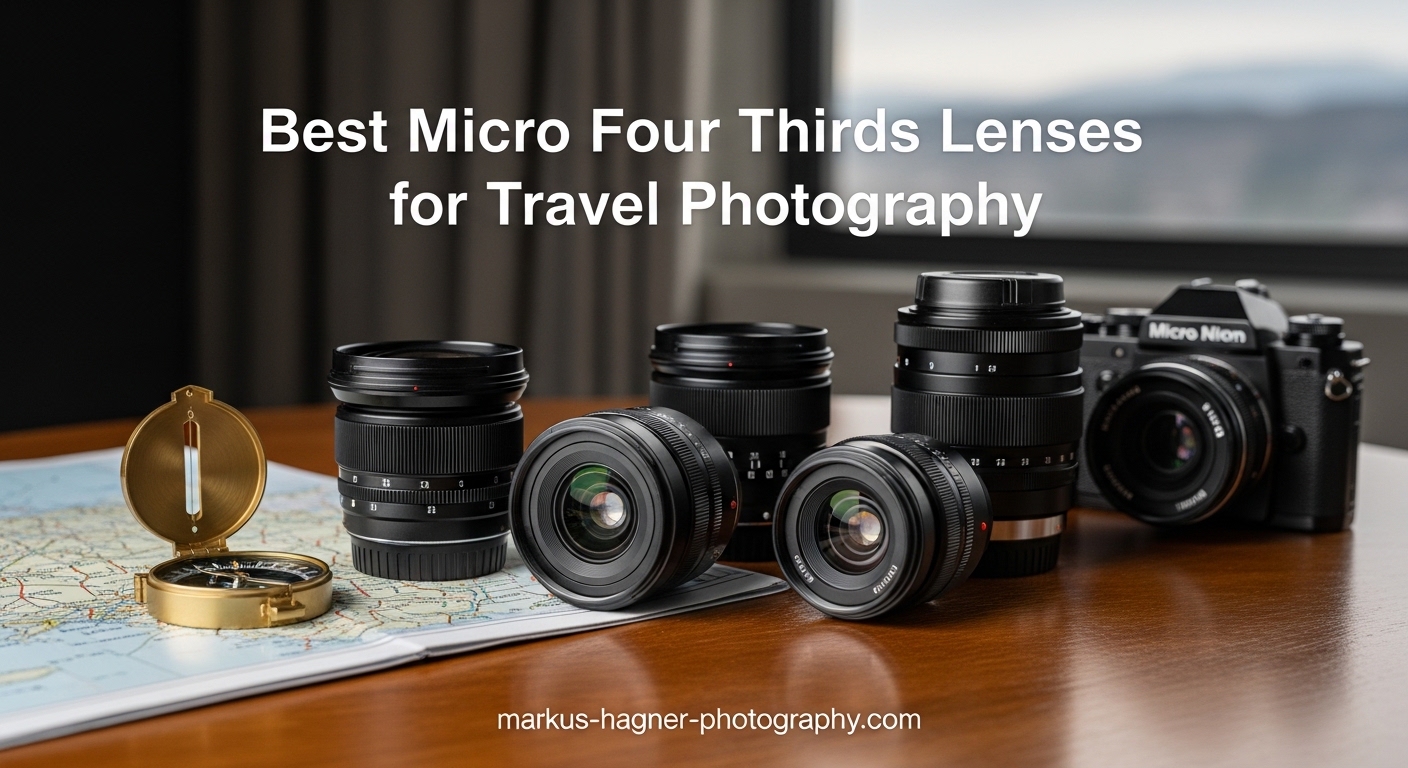
Travel photography demands gear that won’t weigh you down while still delivering professional results. That’s exactly why Micro Four Thirds has become my go-to system for adventures around the world. The best Micro Four Thirds lenses for travel photography combine exceptional optical quality with a compact form factor that fits easily in a carry-on bag.
After testing dozens of lenses across multiple continents, I’ve learned that the right lens can make or break a trip. Heavy full-frame glass left me exhausted after long days of walking, while M43 gear let me shoot from dawn to dusk without fatigue. The 2x crop factor also means telephoto reach comes in a surprisingly portable package.
In this guide, I’ll share my hands-on experience with 12 outstanding lenses that cover every travel scenario. From versatile superzooms that handle 90% of situations to specialized primes for low light and landscapes, you’ll find recommendations based on real-world performance, not just specs.
Table of Contents
- Top 3 Picks for Micro Four Thirds Travel Lenses
- Best Micro Four Thirds Lenses for Travel Photography in 2026
- 1. Panasonic Lumix G Vario 14-140mm F3.5-5.6 II – Best All-in-One Travel Zoom
- 2. Panasonic LUMIX G 25mm F1.7 – Best Budget Prime
- 3. Panasonic LUMIX G 45-150mm F4.0-5.6 – Best Budget Telephoto
- 4. OM SYSTEM M.Zuiko Digital 45mm F1.8 – Best Portrait Prime
- 5. Panasonic Leica DG SUMMILUX 9mm F1.7 – Best Ultra-Wide Prime
- 6. OM SYSTEM M.Zuiko Digital 75-300mm F4.8-6.7 – Best Compact Super-Telephoto
- 7. Sigma 16mm F1.4 DC DN – Best Low-Light Wide Angle
- 8. OM SYSTEM M.Zuiko Digital ED 12mm F2.0 – Best Wide Angle for Landscapes
- 9. Panasonic LUMIX G II Vario 100-300mm – Best Wildlife Telephoto
- 10. Laowa 7.5mm F2 – Best Ultra-Wide for Architecture
- 11. OM SYSTEM M.Zuiko Digital 14-42mm F3.5-5.6 EZ – Best Pancake Zoom
- 12. 7artisans 25mm F1.8 – Best Ultra-Budget Manual Prime
- How to Choose the Best Micro Four Thirds Travel Lens
- FAQ
- Conclusion
Top 3 Picks for Micro Four Thirds Travel Lenses


Best Micro Four Thirds Lenses for Travel Photography in 2026




1. Panasonic Lumix G Vario 14-140mm F3.5-5.6 II – Best All-in-One Travel Zoom
Pros
- 10x zoom covers almost every travel scenario
- Excellent stabilization for handheld shots
- Weather-sealed for outdoor adventures
- Compact size fits in small camera bags
- Good sharpness across the zoom range
Cons
- Variable aperture limits low-light performance
- Some autofocus noise in video
- Manual zoom ring feels slightly stiff
This lens spent more time on my camera during a recent three-week trip through Southeast Asia than any other glass I own. The 14-140mm range translates to a 28-280mm equivalent, which means I could capture everything from sweeping temple interiors to distant wildlife without swapping lenses once.
The convenience of a true all-in-one cannot be overstated for travel. I remember standing at Angkor Wat at sunrise, watching the crowd juggle multiple lenses while I simply zoomed from wide architectural shots to tight details of intricate carvings. That flexibility let me capture moments others missed while fumbling with gear.
Power O.I.S. proved invaluable during evening street photography in Bangkok. I shot handheld at 1/15 second with surprisingly sharp results at 140mm. The stabilization works so well that I rarely needed to push ISO beyond 1600 even in dimly lit night markets.
The weather-sealed construction gave me peace of mind during unexpected monsoon showers. While I wouldn’t call it waterproof, the splash and dust resistance held up fine during light rain and dusty tuk-tuk rides through Cambodia.
Best Travel Scenarios
This lens shines for travelers who want one lens that does everything. It’s perfect for city breaks, cultural tours, and family vacations where you need to capture both landscapes and candid portraits. The 10x zoom means you’ll rarely miss a shot while carrying minimal gear.
Limitations to Consider
The variable aperture means low-light performance suffers at the telephoto end. You’ll want to pair this with a fast prime for evening shooting. The autofocus also produces some noise during video recording, which might be picked up by onboard microphones in quiet environments.
2. Panasonic LUMIX G 25mm F1.7 – Best Budget Prime
Panasonic LUMIX G Lens, 25mm, F1.7 ASPH, Mirrorless Micro Four Thirds, H-H025K (USA Black)
Pros
- Exceptional value for the optical quality
- F1.7 aperture excels in low light
- Incredibly lightweight at just 125g
- Sharp results wide open
- Beautiful background separation
Cons
- No image stabilization built-in
- Plastic lens mount feels less premium
- No weather sealing
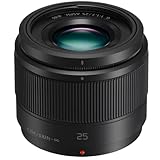
At just 125 grams, this lens practically disappears in your bag while delivering image quality that rivals lenses costing three times as much. The 50mm equivalent focal length matches human vision, making it ideal for natural-looking travel photos that capture how places actually feel.
I carried this lens as my low-light companion during a trip through the Mediterranean. From candlelit tavernas in Greece to narrow alleyways in Morocco, the F1.7 aperture let me shoot handheld in conditions where my zoom lenses struggled. The subject separation at close focusing distances creates that professional look without the professional price tag.
The Nano Surface Coating handles backlight situations impressively well. I shot directly into sunset at Santorini with minimal flare and excellent contrast retention. Colors render beautifully straight from camera, saving post-processing time when you’re editing on the road.
Focus speed surprised me with how quickly it locks onto subjects. Street photography in busy markets felt effortless, and the quiet stepping motor never drew attention to itself. For travel vloggers, the near-silent operation is a significant advantage.
Ideal Use Cases
This lens belongs in every M43 travel kit as a low-light specialist. Pair it with a zoom for daytime shooting and switch to the 25mm when light fades. It’s also fantastic for environmental portraits and detail shots where you want some background blur.
Trade-offs
The lack of stabilization means you’ll need to practice good handheld technique or rely on in-body stabilization if your camera has it. The plastic mount hasn’t caused any issues in my experience, but frequent lens swappers might prefer metal construction.
3. Panasonic LUMIX G 45-150mm F4.0-5.6 – Best Budget Telephoto
Pros
- Excellent value for telephoto reach
- Mega O.I.S. works effectively
- Sharp image quality throughout range
- Near-silent autofocus for video
- Compact and lightweight design
Cons
- Variable aperture limits low-light use
- No weather sealing
- Modest maximum aperture at 150mm
Getting 300mm equivalent reach in a lens weighing just 318 grams felt almost magical during my wildlife encounters in Costa Rica. This budget-friendly telephoto delivers where it matters most: sharp images with effective stabilization at a price that leaves room in your budget for other travel expenses.
The Mega O.I.S. system deserves special praise. I captured sharp images of howler monkeys at 150mm with shutter speeds as slow as 1/60 second. That kind of performance in a budget lens surprised me, and it made handheld wildlife photography genuinely enjoyable rather than frustrating.
Focus acquisition happens quickly and quietly, making this lens suitable for both stills and video. The stepping motor produces none of the grinding noise common in older budget telephotos. Birds in flight proved challenging, but perched subjects and slower-moving animals locked focus reliably.
For travel, this lens fits easily in a side pocket of most camera bags. I carried it as a companion to my standard zoom, pulling it out whenever distance became a factor. From architectural details on cathedral spires to surfers catching waves, the reach opened creative possibilities my other lenses couldn’t match.
Perfect For Budget Wildlife Travel
Travelers wanting to photograph wildlife without investing in premium telephoto glass will find this lens hits the sweet spot. It’s ideal for national parks, safari drives where weight matters, and any situation where you need reach without bulk.
What Holds It Back
The lack of weather sealing means you’ll want to protect it in wet conditions. The variable aperture also becomes challenging at the long end in anything but bright light. Consider pairing with a fast prime for evening shooting.
4. OM SYSTEM M.Zuiko Digital 45mm F1.8 – Best Portrait Prime
Pros
- Beautiful creamy bokeh for portraits
- Exceptionally sharp wide open
- Ultra-compact at just 116g
- Excellent value for the quality
- Quick and quiet autofocus
Cons
- No weather sealing
- Plastic construction feels lightweight
- No included lens hood
This tiny lens produces some of the most pleasing portraits I’ve captured while traveling. The 90mm equivalent focal length hits the sweet spot for flattering facial proportions, while the F1.8 aperture creates that dreamy background separation that makes subjects pop against busy travel environments.
At just 116 grams, it weighs less than my phone yet delivers professional-looking results. I used it extensively during a trip through Japan, capturing street portraits of locals in Osaka’s Dotonbori district. The background rendering turned chaotic neon signs into smooth, colorful bokeh that complemented rather than competed with subjects.
Sharpness wide open impressed me during critical examination. Unlike many budget primes that need stopping down, this lens delivers crisp results at F1.8. Eye details remained tack-sharp in my travel portraits, with smooth falloff into the bokeh zones.
The close-focus capability of 0.2 meters opens creative possibilities for detail shots. I captured intimate market scenes and food photography with beautiful background blur that elevated simple travel snapshots into portfolio-worthy images.
Travel Portrait Excellence
For travel photographers who love capturing people, this lens is essential. It produces flattering results without intimidating subjects with large glass. The compact size also makes it perfect for street photography where discretion matters.
Compromises to Accept
The plastic construction and lack of weather sealing mean you’ll need to treat it carefully in harsh conditions. No lens hood comes included, which is an odd omission for a portrait lens that might face backlight situations.
5. Panasonic Leica DG SUMMILUX 9mm F1.7 – Best Ultra-Wide Prime
Pros
- Exceptional Leica optical quality
- Sharp wide open with minimal distortion
- Ultra-wide 100-degree angle of view
- Close focusing for creative perspectives
- Dust/splash/freeze-resistant build
Cons
- Manual focus only
- Premium price point
- Specialized focal length not for everyone
The Leica name on this lens isn’t just marketing. The optical quality genuinely stands apart from typical M43 glass. Shooting at 9mm (18mm equivalent) with an F1.7 aperture creates a unique combination of expansive views and low-light capability that I haven’t found elsewhere.
During a trip through Iceland’s landscapes, this lens became my go-to for dramatic compositions. The 100-degree angle of view captured sweeping glaciers and waterfalls while the fast aperture allowed handheld shooting during the blue hour. Color rendering has that distinctive Leica richness that needs minimal post-processing.
The close-focusing distance of 0.095 meters opens creative possibilities most ultra-wides can’t match. I positioned the lens inches from foreground rocks and flowers, creating dramatic leading lines that pulled viewers into vast landscape scenes. The 0.25x magnification ratio effectively doubles for 35mm equivalence.
Weather sealing proved its worth during Icelandic rain squalls. While other photographers retreated to their vehicles, I continued shooting with confidence. The fluorine coating also repels water and makes cleaning straightforward in muddy conditions.
For the Creative Traveler
This lens rewards photographers who think beyond typical travel snapshots. It excels at environmental portraits, dramatic landscapes, and architectural interiors. The manual focus requirement actually slows you down in a good way, encouraging more deliberate composition.
Investment Considerations
The premium price means this lens suits serious enthusiasts and professionals who will use its unique capabilities regularly. If you primarily shoot typical travel scenes, a standard zoom might serve you better for the money.
6. OM SYSTEM M.Zuiko Digital 75-300mm F4.8-6.7 – Best Compact Super-Telephoto
Pros
- Remarkably compact for 600mm equivalent reach
- Good sharpness for the size
- Fast quiet MSC autofocus
- Excellent value for telephoto reach
- Lightweight enough for hiking
Cons
- No image stabilization
- No weather sealing
- Slow maximum aperture at telephoto end
Getting 600mm equivalent reach in a lens weighing just 423 grams feels almost unfair to full-frame shooters lugging around glass three times heavier. This compact telephoto punches well above its weight class for wildlife and distant travel subjects.
I tested this lens during a hiking trip through the Scottish Highlands. The lightweight design meant I actually carried it up Munros instead of leaving it at the hotel. Red deer photographed from respectful distances rendered with pleasing detail, and the fast MSC autofocus tracked moving subjects reliably.
The optical design includes a Super ED element and two ED elements that minimize chromatic aberration. Purple fringing around high-contrast edges remained well controlled even at 300mm. For a lens this compact with this reach, the optical performance exceeded my expectations.
Without image stabilization, you’ll need good technique or bright conditions for sharp results at 300mm. I found 1/500 second as my minimum handheld shutter speed at the long end. Pairing with an OM System body that has in-body stabilization helps significantly.
Wildlife Travel Specialist
This lens suits travelers who prioritize wildlife but don’t want to dedicate half their luggage allowance to telephoto glass. It’s perfect for hiking, safari drives with weight restrictions, and any situation where reach matters more than maximum aperture.
Real-World Limitations
The lack of stabilization and slow maximum aperture at 300mm mean this lens struggles in low light. Early morning and late evening wildlife sessions will require higher ISOs or a tripod. Plan accordingly for the conditions you’ll encounter.
7. Sigma 16mm F1.4 DC DN – Best Low-Light Wide Angle
Pros
- Outstanding sharpness even wide open
- F1.4 aperture excels in low light
- Beautiful bokeh for a wide angle
- Solid metal build quality
- 4-year warranty included
Cons
- Heavier than typical M43 lenses
- No weather sealing
- Large size relative to other MFT primes
Sigma brought their no-compromise philosophy to this lens, and the results show. At F1.4, it’s one of the fastest wide-angle options available for Micro Four Thirds, making it exceptional for interior architecture and low-light street photography.
During a trip through Prague’s baroque churches and underground pubs, this lens became my low-light workhorse. The F1.4 aperture let me capture candlelit interiors without flash while maintaining reasonable ISO settings. Sharpness remained impressive even wide open, with only minimal corner softness that cleared up by F2.
The 32mm equivalent focal length works beautifully for environmental storytelling. It’s wide enough for interiors and landscapes but not so wide that faces distort unflatteringly at closer distances. I found it ideal for capturing the atmosphere of places rather than just documenting them.
Build quality feels substantial with metal construction throughout. The focus ring operates smoothly for manual focus override, and the included 4-year warranty provides peace of mind for a lens you’ll rely on during extensive travel.
Interior and Night Photography
This lens excels where other wides struggle: dim interiors and night scenes. Cathedral interiors, museum galleries, and evening street photography all benefit from the fast aperture. It’s also fantastic for astrophotography during travel.
Weight Considerations
At 405 grams, this lens is heavier than most M43 primes. The optical quality justifies the weight, but travelers counting every gram might prefer lighter options for extended hiking or backpacking trips.
8. OM SYSTEM M.Zuiko Digital ED 12mm F2.0 – Best Wide Angle for Landscapes
Pros
- All-metal construction feels premium
- Manual focus clutch for instant MF switching
- F2.0 aperture works for astrophotography
- Compact and lightweight
- Excellent for gimbal video work
Cons
- Not weather sealed
- No included lens hood or pouch
- Pricey compared to alternatives
The snap-back manual focus clutch on this lens represents everything I love about Olympus design philosophy. Pull the ring back, and you instantly get hard stops and distance markings for zone focusing. Push it forward, and autofocus engages seamlessly. For street and travel photography, this feature alone makes the lens worthwhile.
At 24mm equivalent, this focal length hits the sweet spot for landscapes and environmental compositions. During travels through Patagonia, I used it for everything from mountain vistas to intimate forest scenes. The F2.0 aperture also proved capable for astrophotography when I captured starfields over Torres del Paine.
The all-metal construction feels reassuringly solid despite the 130-gram weight. ZERO coating handles flare well even when shooting directly toward light sources. Color rendering matches the pleasing Olympus signature that pairs beautifully with travel environments.
For video shooters, this lens shines on gimbals. The compact size keeps rigs balanced, and the smooth focus ring allows precise manual pulls. I’ve used it extensively for travel vlogs where the 24mm equivalent provides that classic establishing shot perspective.
Landscape and Astro Travel
Travelers who prioritize landscapes and night sky photography will find this lens delivers. The 24mm equivalent provides classic wide-angle perspective without excessive distortion, while the fast aperture opens creative possibilities after dark.
Premium Pricing Reality
The price puts this lens in premium territory. While the build quality and optical performance justify it for serious photographers, budget-conscious travelers might find the Panasonic 14mm F2.5 or even a kit zoom adequate for similar compositions.
9. Panasonic LUMIX G II Vario 100-300mm – Best Wildlife Telephoto
Pros
- 200-600mm equivalent reach for wildlife
- Power O.I.S. stabilization
- Dust and splash-proof construction
- Compatible with Dual I.S. 2.0
- Fast 240fps AF motor
Cons
- Softer at the 300mm end
- Autofocus hunts in low light
- Requires good technique for sharp results
This lens delivered the reach I needed for safari photography in Tanzania without the backbreaking weight of full-frame telephoto glass. The 200-600mm equivalent range brought distant lions and elephants close enough for frame-filling compositions while remaining handholdable for extended periods.
Power O.I.S. combined with my Lumix body’s Dual I.S. 2.0 system delivered impressive stabilization. I shot at 300mm with shutter speeds as slow as 1/125 second while still getting acceptably sharp results. That capability proved crucial during overcast savanna conditions where light was limited.
The weather-sealed construction handled dusty game drives without issue. After two weeks on rough roads, the lens showed no signs of dust ingress. The 240fps linear motor focuses quickly enough for most wildlife scenarios, though birds in flight proved challenging.
At the 300mm end, sharpness drops off somewhat compared to mid-range settings. Stopping down to F8 helps, but good technique matters more with this lens than with premium telephotos. I found shooting at 1/640 second or faster produced consistently sharp results at the long end.
Safari and Wildlife Travel
This lens belongs in the bag of any traveler heading to wildlife destinations. The reach, stabilization, and weather sealing make it ideal for African safaris, bird watching trips, and any adventure where distance separates you from your subjects.
Learning Curve Required
Getting the best from this lens takes practice. The softer long end and autofocus limitations in low light mean you’ll need to understand its quirks. Once mastered, however, it delivers results that belie its modest price point.
10. Laowa 7.5mm F2 – Best Ultra-Wide for Architecture
Pros
- Rectilinear design keeps lines straight
- Excellent for architecture and interiors
- Very sharp throughout the frame
- Compact for an ultra-wide
- F2.0 aperture for low-light interiors
Cons
- Manual focus only
- Some vignetting wide open
- Manual aperture ring adds complexity
Unlike fisheye lenses that bend everything into curves, this Laowa keeps straight lines straight. For travel photographers documenting architecture, that rectilinear design makes all the difference between usable images and novelty shots.
I carried this lens through Barcelona specifically for Gaudi’s architecture. The 15mm equivalent focal length captured Sagrada Familia’s soaring interior while maintaining the vertical lines that define its Gothic-influenced design. No post-processing correction needed, which saved hours of editing time.
The F2.0 aperture handles dim interior spaces surprisingly well. European cathedrals, museum galleries, and hotel lobbies all became accessible without flash or tripods. Some vignetting appears wide open, but stopping down to F4 clears it up while maintaining adequate light gathering.
Manual focus takes getting used to, but the distance scale and depth of field markings help. For architecture, I typically set F8 and focus at the hyperfocal distance, letting depth of field handle the rest. This zone-focus approach actually speeds up shooting once mastered.
Architecture and Real Estate Travel
Travelers who love architectural photography will find this lens essential. It captures grand interiors and tight urban spaces while maintaining geometric accuracy. Real estate photographers traveling for work will also appreciate the professional results.
Manual Focus Commitment
This lens requires commitment to manual focus operation. While that might intimidate beginners, it actually encourages more deliberate composition. The lack of autofocus means you’ll miss spontaneous moments, but for planned architectural work, the optical quality justifies the trade-off.
11. OM SYSTEM M.Zuiko Digital 14-42mm F3.5-5.6 EZ – Best Pancake Zoom
Pros
- Ultra-compact pancake design
- Electric zoom for smooth video
- Wireless zoom control via app
- Quiet MSC autofocus
- Collapsible for maximum portability
Cons
- No image stabilization
- Limited aperture range
- No weather sealing
Sometimes the best travel lens is the one you actually have with you. This pancake zoom collapses to barely larger than a body cap, meaning it fits in pockets and small bags where other lenses won’t. For minimal travel setups, it’s hard to beat this combination of versatility and portability.
The electric zoom mechanism makes this lens particularly appealing for video. Smooth, consistent zooms happen at the press of a button, and the wireless app control allows remote operation for self-recorded travel vlogs. The 28-84mm equivalent range covers most general travel scenarios adequately.
Image quality exceeded my expectations for such a compact lens. The 8-element optical design with ZERO coating delivers sharp results throughout the zoom range. While it won’t match premium glass for critical work, travel snapshots and social media content look perfectly fine.
The collapsible design means you’ll need to extend the lens before shooting, which takes a moment. Once extended, zooming and focusing operate smoothly. For street photography where speed matters, this slight delay requires planning your approach.
Ultralight Travel Solution
This lens suits travelers who prioritize minimal bulk above all else. It’s perfect for city breaks, family vacations, and any trip where photography isn’t the primary focus but you still want quality images. Pair it with a fast prime for a two-lens travel kit weighing under 400 grams total.
Entry-Level Considerations
The limited aperture range and lack of stabilization mean this lens works best in good light or with stabilized bodies. It’s an ideal travel companion rather than a primary creative tool, but that role makes it valuable for many travel scenarios.
12. 7artisans 25mm F1.8 – Best Ultra-Budget Manual Prime
Pros
- Exceptional value at under $70
- All-metal construction
- 12-blade aperture for smooth bokeh
- Compact and lightweight
- HD coating for optical quality
Cons
- Manual focus only
- No electronic communication with camera
- Some corner softness wide open
For travelers on tight budgets, this lens proves that great images don’t require expensive gear. At under $70, the 7artisans 25mm delivers genuine optical quality with character that many expensive lenses lack. The all-metal construction feels far more premium than the price suggests.
The 12-blade aperture creates exceptionally smooth bokeh for a budget lens. Portraits shot wide open have a pleasing quality that surprised me during testing. While corner sharpness isn’t on par with premium options, center sharpness remains respectable even at F1.8.
Manual focus operation requires patience but rewards deliberate composition. The clickless aperture ring works well for video shooters who need smooth exposure adjustments. Focus peaking on modern M43 bodies makes accurate focusing straightforward once you adapt to the workflow.
This lens taught me to slow down and think about each shot more carefully. Without autofocus or electronic communication, you’re forced to consider aperture, distance, and composition before pressing the shutter. For travel photography, that mindfulness often leads to better images.
Budget Travel Option
Students, beginners, and budget-conscious travelers will find this lens an excellent entry point into prime lens photography. It delivers the F1.8 experience at a fraction of typical cost while building manual focus skills that transfer to any system.
Limitations to Understand
No electronic communication means no EXIF data, no autofocus confirmation, and no automatic exposure in some modes. You’ll need to shoot in manual or aperture priority with stop-down metering. These limitations become second nature with practice but require initial adjustment.
How to Choose the Best Micro Four Thirds Travel Lens
Selecting the right travel lens depends on your shooting style, destination, and willingness to carry gear. Here’s what I’ve learned from years of traveling with Micro Four Thirds equipment.
Understanding the 2x Crop Factor
Micro Four Thirds sensors are smaller than full-frame, creating a 2x multiplication factor on focal lengths. A 25mm lens gives the same field of view as a 50mm on full frame. This benefits telephoto reach (a 150mm lens becomes 300mm equivalent) while making wide-angle work slightly more challenging. For travel, this crop factor means your telephoto lenses stay compact while still delivering serious reach.
Weight and Size for Travel
Every gram matters when you’re walking 15 miles through a new city. M43’s primary advantage is maintaining image quality while drastically reducing bulk. My typical travel kit weighs under 1.5 kilograms including body, two lenses, and accessories. An equivalent full-frame setup would easily double that weight. Consider how much walking your trip involves before choosing heavy glass.
Zoom Range vs Prime Lens Decision
Zoom lenses offer convenience for travel, letting you adapt to changing scenes without swapping glass. The 14-140mm superzoom covers 90% of travel situations in one lens. However, prime lenses deliver better low-light performance, sharper results, and more creative background separation. Many experienced travelers carry one versatile zoom and one fast prime for a balanced two-lens kit.
Weather Sealing Importance
Tropical destinations, mountain environments, and coastal areas expose gear to moisture and dust. Weather-sealed lenses provide insurance against unexpected conditions. If your travels involve unpredictable weather, prioritize lenses with IPX1 or better sealing. Non-sealed lenses can survive with proper care, but sealing removes worry from the equation.
Building Your Travel Kit
For a minimal one-lens travel setup, choose the Panasonic 14-140mm for versatility or the 25mm F1.7 for low-light capability. A balanced two-lens kit pairs the 14-140mm with the 25mm prime for day and night coverage. Three-lens travelers might add a telephoto like the 45-150mm or 100-300mm for wildlife and distant subjects. Match your kit complexity to your shooting ambitions and carrying tolerance.
Brand Compatibility Notes
Olympus/OM System and Panasonic lenses work interchangeably on either brand’s bodies. However, image stabilization works best when lens and body match brands. Panasonic’s Dual I.S. requires Panasonic glass, while OM System’s Sync IS needs Olympus lenses. Both brands’ lenses autofocus on either system without issues. Third-party options from Sigma, Laowa, and 7artisans work universally but typically lack stabilization.
FAQ
What is the best Micro Four Thirds lens for travel photography?
The Panasonic Lumix G Vario 14-140mm F3.5-5.6 II stands out as the best all-around travel lens due to its versatile 10x zoom range, effective image stabilization, and weather-sealed construction. For travelers who prefer prime lenses, the Panasonic 25mm F1.7 offers exceptional value with fast aperture for low light at a fraction of the weight.
How many lenses should I bring for travel photography?
Most travelers do well with one to three lenses. A single superzoom like the 14-140mm covers most situations. Adding a fast prime for low light creates a versatile two-lens kit. Three lenses might include a wide-angle, standard zoom, and telephoto for comprehensive coverage without excessive weight.
Are Micro Four Thirds lenses good for low light?
Yes, especially fast prime lenses with F1.4 to F1.8 apertures. The Panasonic 25mm F1.7, Sigma 16mm F1.4, and OM System 45mm F1.8 excel in dim conditions. Zoom lenses with variable apertures struggle more in low light, so pairing a zoom with a fast prime gives you flexibility for any lighting situation.
Can I use Olympus lenses on Panasonic cameras and vice versa?
Absolutely. Micro Four Thirds is an open standard, so any M43 lens mounts on any M43 body. Autofocus and exposure work seamlessly across brands. The only limitation involves image stabilization: Panasonic’s Dual I.S. requires Panasonic lenses, and OM System’s Sync IS needs Olympus lenses for optimal performance.
What is the 2x crop factor and why does it matter for travel?
The 2x crop factor means M43 sensors are half the diagonal of full-frame, doubling the effective focal length of any lens. A 50mm lens behaves like 100mm on M43. This benefits telephoto reach (great for wildlife travel) while making true wide-angle work require shorter focal lengths. For travel, it means compact telephoto lenses deliver impressive reach without the bulk.
Conclusion
Finding the best Micro Four Thirds lenses for travel photography comes down to matching gear to your specific adventures. The Panasonic 14-140mm superzoom remains my top recommendation for its unmatched versatility in a single package. Budget-conscious travelers should grab the Panasonic 25mm F1.7 for its incredible value and low-light capability.
For wildlife-focused trips, the Panasonic 100-300mm delivers serious reach without breaking your back or budget. Portrait lovers will find the OM System 45mm F1.8 essential for capturing local faces with beautiful bokeh. Whatever your travel style, Micro Four Thirds offers lenses that deliver professional results while keeping your bag light enough to enjoy the journey.
Start with one versatile lens and expand based on what you actually shoot during travels. The best lens is always the one you have with you, and M43’s compact philosophy ensures you’ll carry quality glass to places heavier systems simply can’t reach.