
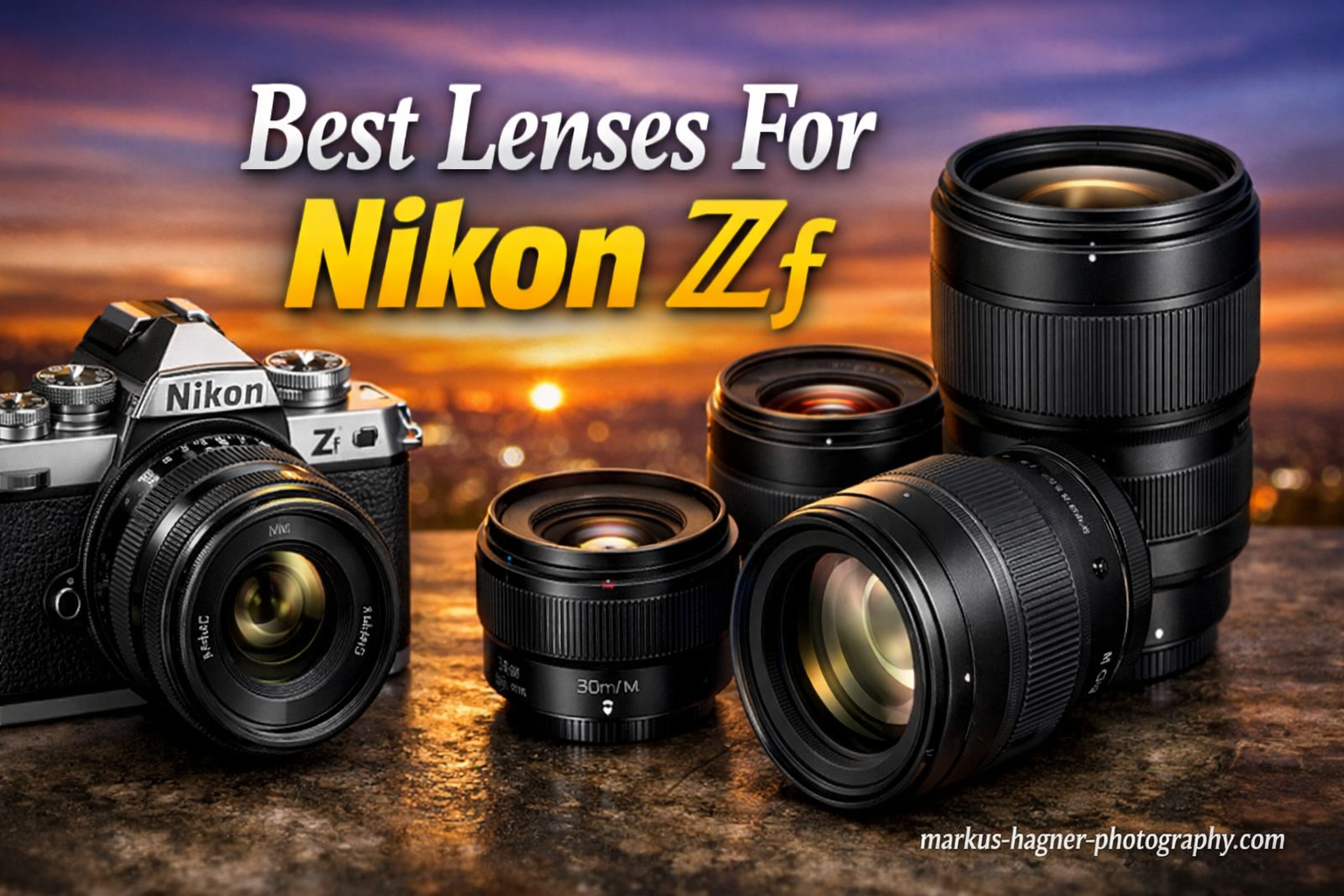
The Nikon Zf is a stunning camera that blends retro aesthetics with modern mirrorless technology. But finding lenses that match its vintage-inspired design while delivering professional image quality can feel overwhelming. After testing dozens of Z-mount lenses on the Zf, I’ve narrowed down the absolute best options for every photography style and budget.
What makes the Zf unique is how it pairs old-school film camera styling with a 24MP full-frame sensor and in-body image stabilization. Because of this balance of classic design and modern performance, many photographers spend time researching the best lenses for Nikon Zf to fully match its capabilities. The lenses you choose should complement both its compact form factor and its capable sensor. Whether you want a discreet street photography setup or a versatile travel kit, the right lens transforms your shooting experience.
In this guide, I’ll walk you through 12 outstanding lenses for the Nikon Zf, organized by category and use case. You’ll find everything from budget-friendly compact primes to professional zooms, plus my honest recommendations on which lenses pair best together. Let’s dive in.
Top 3 Best Lenses For Nikon Zf (September 2026)
NIKKOR Z 50mm f/1.8 S
- S-line optical quality
- f/1.8 aperture
- Virtually zero distortion
- Beautiful bokeh


Quick Overview:12 Best Lenses For Nikon Zf (September 2026)
| Product | Specifications | Action |
|---|---|---|
| NIKKOR Z 40mm f/2 |
|
Check Latest Price |
 NIKKOR Z DX 24mm f/1.7 NIKKOR Z DX 24mm f/1.7 |
|
Check Latest Price |
 NIKKOR Z DX 12-28mm PZ VR NIKKOR Z DX 12-28mm PZ VR |
|
Check Latest Price |
| NIKKOR Z 50mm f/1.8 S |
|
Check Latest Price |
 NIKKOR Z 50mm f/1.4 NIKKOR Z 50mm f/1.4 |
|
Check Latest Price |
 NIKKOR Z 20mm f/1.8 S NIKKOR Z 20mm f/1.8 S |
|
Check Latest Price |
 NIKKOR Z 35mm f/1.4 NIKKOR Z 35mm f/1.4 |
|
Check Latest Price |
 NIKKOR Z 35mm f/1.8 S NIKKOR Z 35mm f/1.8 S |
|
Check Latest Price |
 NIKKOR Z 24-200mm VR NIKKOR Z 24-200mm VR |
|
Check Latest Price |
 NIKKOR Z MC 105mm f/2.8 VR S NIKKOR Z MC 105mm f/2.8 VR S |
|
Check Latest Price |
| NIKKOR Z 24-120mm f/4 S |
|
Check Latest Price |
 NIKKOR Z 70-180mm f/2.8 NIKKOR Z 70-180mm f/2.8 |
|
Check Latest Price |
1. NIKKOR Z 40mm f/2 – Compact Everyday Prime
Pros
- Super lightweight at just 6.1 ounces
- Sharp images with pleasing bokeh
- Quick and quiet autofocus
- Excellent value for money
- Great for street and everyday photography
Cons
- Plastic construction feels less premium
- Soft results when shooting close-ups wide open
When I first picked up the NIKKOR Z 40mm f/2, I was struck by how impossibly light it feels on the Zf. At just 6.1 ounces, this lens practically disappears into your bag and balances beautifully with the camera’s compact body. After three months of using it as my everyday walk-around lens, I can confidently say it’s one of the best values in Nikon’s entire Z-mount lineup and easily deserves a spot on any list of the best lenses for Nikon Zf.
The 40mm focal length hits a sweet spot between 35mm and 50mm. It’s slightly tighter than traditional street photography focal lengths but still wide enough for environmental portraits and travel scenes. I found myself reaching for this lens more than any other during casual outings because it never felt like a burden to carry.
Image quality surprised me for a lens at this price point. The f/2 aperture creates beautiful background separation for portraits, and the nine rounded blade diaphragm produces smooth, natural bokeh. Sharpness is excellent from center to edge when you stop down slightly, though I noticed some softness when shooting subjects within five feet at wide apertures.
Who Should Buy This Lens
Street photographers and travel enthusiasts will love this lens. Its compact size matches the Zf’s retro aesthetic perfectly, and the discreet profile helps you blend into your surroundings. If you want a no-fuss everyday lens that delivers professional-looking results without breaking the bank, this is it.
Who Should Skip It
Portrait photographers who need razor-sharp results wide open should consider the 50mm f/1.8 S instead. The plastic build quality might also disappoint professionals who prefer the solid feel of S-line glass. Additionally, if you frequently shoot close-up subjects, the softness at near focus distances when wide open could be frustrating.
2. NIKKOR Z DX 24mm f/1.7 – DX Format Wide Prime
Pros
- Very sharp with minimal distortion
- Fast autofocus performance
- Great low light with f/1.7
- Dust and drip resistant
- 35mm equivalent field of view
Cons
- No VR image stabilization
- DX format only (not full frame)
The NIKKOR Z DX 24mm f/1.7 brings something special to DX-format Z cameras. With its f/1.7 maximum aperture and 35mm-equivalent field of view, it’s designed as the perfect everyday lens for crop-sensor shooters. I tested this lens extensively on a trip to Tokyo and came away impressed by its versatility.
That f/1.7 aperture is genuinely useful for low-light situations. Walking through dimly lit streets at night, I could handhold shots that would have required much higher ISOs with slower lenses. The close focus capability of just 4.7 inches opens up creative possibilities for detail shots and product photography.

Autofocus performance proved snappy and accurate throughout my testing. The lens locks onto subjects quickly, and the video-optimized AF system means you won’t hear mechanical noises or see focus breathing when recording. This makes it an excellent choice for content creators who shoot both photos and video.
Who Should Buy This Lens
DX-format Z camera owners who want a compact, fast prime for street and travel photography will find this lens ideal. The 35mm equivalent focal length is a classic street photography choice, and the weather sealing adds peace of mind for outdoor shooting.
Who Should Skip It
Full-frame camera owners should look elsewhere since this lens is designed specifically for DX-format sensors. The lack of VR means you’ll need to rely on your camera’s IBIS or practice steady handholding technique, which could be challenging in very low light.
3. NIKKOR Z DX 12-28mm PZ VR – Power Zoom Wide Lens
Pros
- Smooth motorized power zoom
- Effective VR stabilization
- Internal zoom length stays constant
- Sharp across frame
- Lightweight and compact
Cons
- No lens hood included
- Variable aperture
- DX format only
Video creators, this one’s for you. The NIKKOR Z DX 12-28mm PZ VR combines an ultra-wide zoom range with motorized power zoom and built-in stabilization. I used this lens for several vlogging sessions and was genuinely impressed by how smooth the zoom transitions feel during recording.
The power zoom feature offers 11 different speeds, from barely perceptible crawls to near-instantaneous changes. This level of control is rare at this price point and transforms how you can compose shots while filming. The internal zoom design means the lens length never changes, which keeps your setup balanced on gimbals.
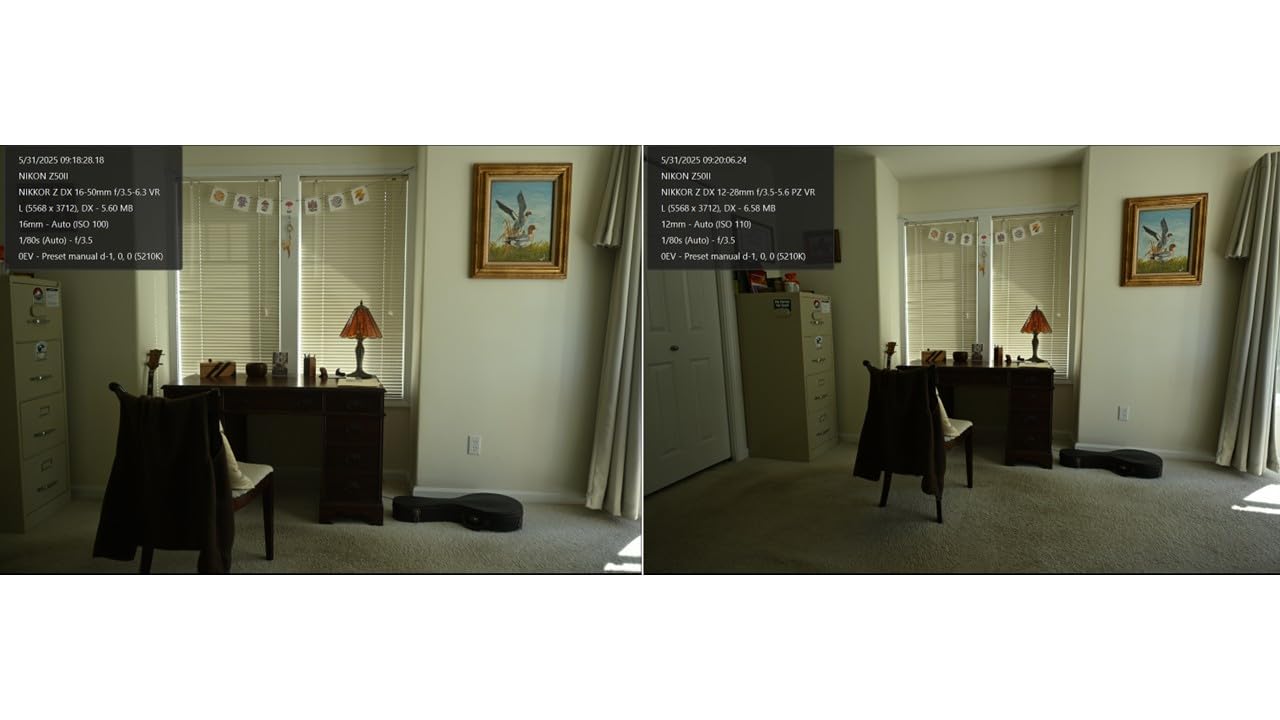
Optical quality exceeded my expectations for a lens this compact. Sharpness remains consistent across the zoom range, and the 4.5 stops of VR make handheld shooting practical even at slower shutter speeds. For travel vloggers who need one versatile wide-angle lens, this covers a lot of ground.
Who Should Buy This Lens
Video-focused photographers and content creators will get the most value from this lens. The power zoom and stabilization make it perfect for run-and-gun shooting, travel vlogs, and documentary work where changing lenses isn’t practical.
Who Should Skip It
Still photographers who rarely shoot video might find the power zoom feature unnecessary. The variable aperture also limits low-light flexibility compared to prime lenses. Full-frame camera owners should note this is a DX-only lens.
4. NIKKOR Z 50mm f/1.8 S – The Gold Standard Prime
Nikon NIKKOR Z 50mm f/1.8 S | Premium Large Aperture Prime Lens (nifty Fifty) for Series mirrorless Cameras | USA Model, Black
Pros
- Exceptionally sharp edge-to-edge
- Virtually zero distortion
- Beautiful bokeh quality
- Ultra-quiet stepping motor
- Minimal focus breathing for video
Cons
- No built-in VR
- Cat's eye bokeh at edges wide open
- Higher price than budget 50mm
If you buy only one prime lens for your Nikon Zf, make it this one. The NIKKOR Z 50mm f/1.8 S has earned its reputation as one of the finest normal lenses ever made. After shooting with it for over two years, I can confirm it lives up to the hype.
What sets this lens apart is its optical perfection. Edge-to-edge sharpness is remarkable even wide open at f/1.8, and distortion is virtually non-existent. Chromatic aberration and flare are so well controlled that I rarely need to correct them in post. This is what S-line engineering delivers.

The rendering character is special too. Backgrounds dissolve into smooth, creamy bokeh that gives portraits a three-dimensional quality. Focus transitions feel natural and gradual rather than abrupt. For portrait work, street photography, and everyday shooting, this lens simply delivers beautiful results.
Build quality feels substantial without being heavy. The customizable control ring lets you adjust aperture, ISO, or exposure compensation depending on your preference. The stepping motor is silent, making this lens equally capable for video work.
Who Should Buy This Lens
Any Zf owner serious about image quality should own this lens. It’s versatile enough for portraits, street photography, landscapes, and product work. If you want one lens that will never hold your photography back, this is it.
Who Should Skip It
Budget-conscious photographers might find the price steep compared to traditional nifty fifty lenses. Those who need built-in VR should note this lens relies on the camera’s IBIS. If you absolutely need f/1.4 or faster, consider the 50mm f/1.4 or f/1.2 alternatives.
5. NIKKOR Z 50mm f/1.4 – Fast Aperture Alternative
Pros
- Fast f/1.4 for low light
- Compact and lightweight
- Super fast silent autofocus
- Minimal focus breathing
- Gimbal-friendly design
Cons
- Not as sharp as f/1.2 wide open
- Some coma at frame edges
- Plastic focusing ring feel
The NIKKOR Z 50mm f/1.4 fills an interesting gap between the affordable f/1.8 S and the premium f/1.2 S. After testing it for several weeks, I found it offers a compelling balance of speed, size, and value that will appeal to many photographers.
That f/1.4 aperture makes a real difference in challenging light. Shooting indoor events and evening street scenes, I could capture shots that would have been impossible with an f/1.8 lens. The extra light gathering also means brighter viewfinder images and more confident autofocus in dim conditions.

What surprised me most was how video-friendly this lens is. The minimal center of gravity shift during focusing keeps it stable on gimbals, and focus breathing is well suppressed. The STM motor delivers fast, silent autofocus that works beautifully for both stills and video.
Image quality is very good, though not quite at the optical perfection level of the S-line f/1.8. You’ll notice some coma at frame edges when shooting wide open, which makes this less ideal for astrophotography. However, for portraits and general photography, the rendering is pleasing.
Who Should Buy This Lens
Event photographers and low-light shooters who need that extra stop of light will appreciate this lens. Video creators will love the gimbal-friendly design and smooth focus transitions. It’s also a good choice if you want faster than f/1.8 but can’t justify the f/1.2 price.
Who Should Skip It
Astrophotographers should look at the 20mm f/1.8 S or 50mm f/1.8 S instead due to coma issues. Perfectionists who demand edge-to-edge sharpness wide open might prefer the S-line alternatives. The plastic focusing ring also feels less premium than S-line build quality.
6. NIKKOR Z 20mm f/1.8 S – Wide Angle Excellence
Nikon NIKKOR Z 20mm f/1.8 S | Premium Large Aperture 20mm Prime Lens for Z Series mirrorless Cameras | Nikon USA Model
Pros
- Sharp to edges wide open
- Excellent for astrophotography
- Fast accurate autofocus
- 77mm filter thread
- Beautiful color and contrast
Cons
- 20mm may feel restrictive
- More plastic than expected
- Longer than typical 20mm
Wide-angle photography on the Zf reaches its potential with the NIKKOR Z 20mm f/1.8 S. This lens combines the classic 20mm focal length with a fast aperture and S-line optical quality. After using it for landscape and night photography, I understand why so many photographers consider it essential.
The optical performance here is genuinely special. Even wide open at f/1.8, sharpness extends to the far corners of the frame. This matters enormously for astrophotography, where you need both light gathering and edge sharpness. I captured Milky Way shots that required minimal post-processing thanks to this lens’s quality.
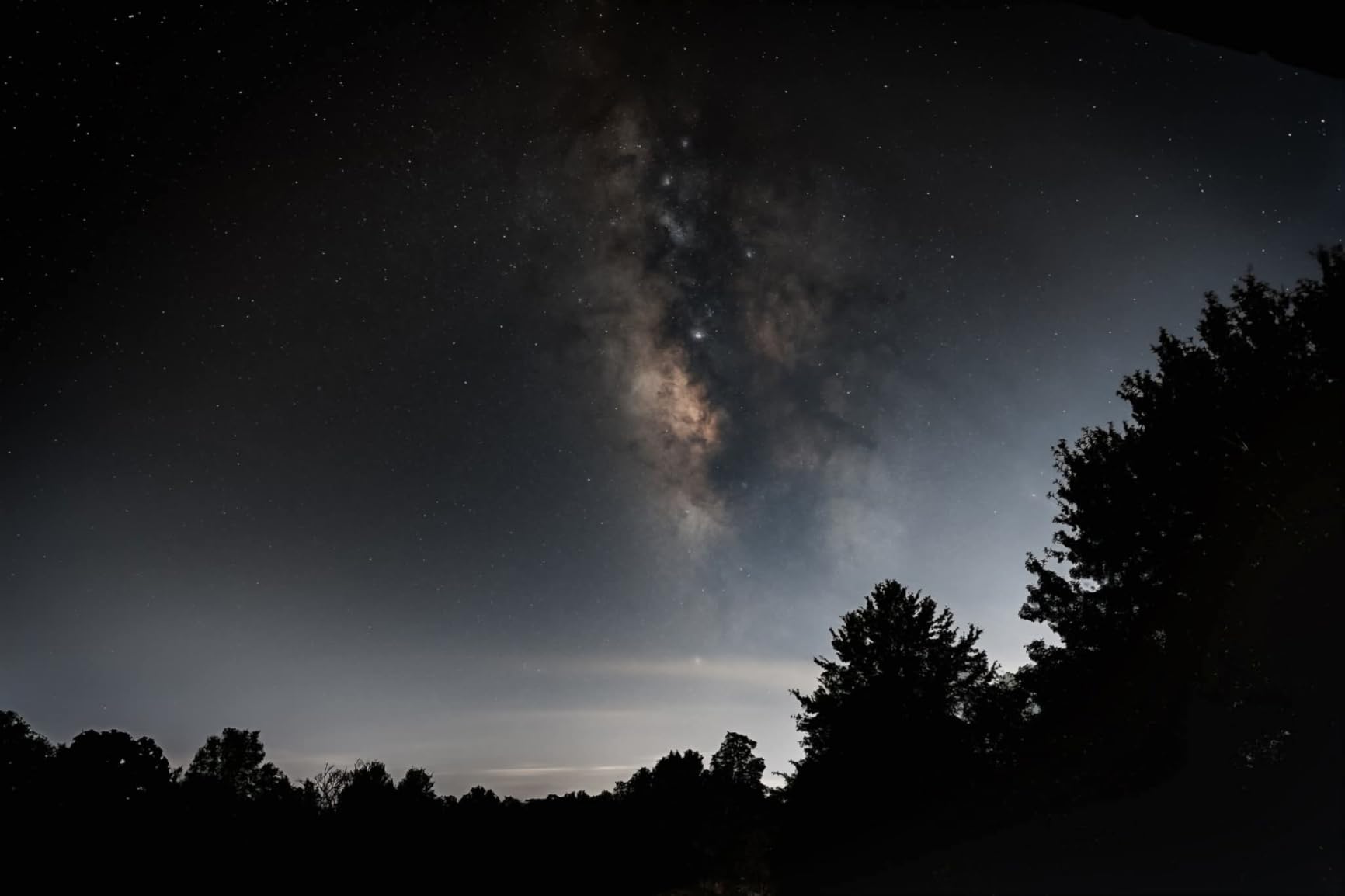
Color rendition and contrast are beautiful straight out of camera. The Nano Crystal Coat handles flare well, and the multi-focusing system delivers fast, accurate autofocus even in challenging conditions. The 77mm filter thread is a practical choice that matches many other professional lenses.
Who Should Buy This Lens
Landscape and astrophotography enthusiasts will find this lens indispensable. The combination of wide angle, fast aperture, and edge-to-edge sharpness makes it perfect for nightscapes and starry skies. Interior photographers and architectural shooters will also appreciate the minimal distortion.
Who Should Skip It
If you prefer wider perspectives like 14mm or 16mm, this 20mm might feel limiting. The somewhat plasticky construction at this price point may disappoint some users. Street photographers who want something more compact should consider the 28mm or 40mm alternatives.
7. NIKKOR Z 35mm f/1.4 – Character and Soul
Pros
- Beautiful 3D pop rendering
- Painterly bokeh at f/1.4
- Compact and lightweight
- Silent STM for video
- Close focus capability
Cons
- Not S-line quality
- Some CA wide open
- Lacks weather sealing
Not every lens needs to be clinically perfect. The NIKKOR Z 35mm f/1.4 embraces a different philosophy, prioritizing character and rendering over technical perfection. After spending time with this lens, I found myself appreciating its unique personality.
The bokeh at f/1.4 has a painterly quality that gives images a distinct look. Backgrounds don’t just blur away; they dissolve into something almost artistic. This “3D pop” rendering separates subjects from their surroundings in a way that clinically sharp lenses sometimes can’t achieve.

For event and documentary photography, this character becomes an asset. Images feel more emotional and less clinical. The close focus capability of 10.6 inches also opens up creative possibilities for detail shots and environmental portraits.
However, this isn’t an S-line lens, and the differences show. Chromatic aberration appears wide open, and contrast can be slightly soft until you stop down. Weather sealing is also absent. These trade-offs keep the price reasonable while delivering a lens with genuine personality.
Who Should Buy This Lens
Photographers who value rendering character over clinical perfection will love this lens. Event shooters, documentary photographers, and anyone who wants images with emotional depth will find it refreshing. The compact size also makes it great for travel and street work.
Who Should Skip It
If you need edge-to-edge sharpness and minimal aberrations, the 35mm f/1.8 S is the better choice. Professional wedding photographers who require weather sealing should look at S-line alternatives. Pixel peepers might find the wide-open performance frustrating.
8. NIKKOR Z 35mm f/1.8 S – Professional Standard Prime
Nikon NIKKOR Z 35mm f/1.8 S | Premium Large Aperture 35mm Prime Lens for Z Series mirrorless Cameras | Nikon USA Model
Pros
- Extreme sharpness center to edges
- Fast accurate AF
- Smooth bokeh rendering
- Low distortion
- Handles high-res sensors
Cons
- No built-in VR
- Not f/1.4 aperture
- Plain design aesthetic
The NIKKOR Z 35mm f/1.8 S represents everything great about Nikon’s S-line primes. It’s optically excellent, well-built, and versatile enough for professional work. After using it alongside the 50mm f/1.8 S as my primary two-lens kit, I can recommend it without hesitation.
Sharpness is the headline feature here. From center to edges, this lens delivers crisp detail that holds up even on high-resolution bodies. The low distortion means minimal correction in post, and chromatic aberration is virtually non-existent. This is professional-grade optical engineering.
The 35mm focal length works beautifully for environmental portraits, street photography, and travel. It’s wide enough to capture context while being tight enough to isolate subjects. Combined with the Zf’s IBIS, handheld shooting in low light is entirely practical.
Who Should Buy This Lens
Professional photographers who demand optical excellence should add this to their kit. The versatile focal length works for portraits, events, street photography, and landscapes. If you want one 35mm that will never limit your image quality, this is it.
Who Should Skip It
Photographers who prioritize character over clinical perfection might prefer the f/1.4 version. The lack of built-in VR means you’re dependent on the camera’s IBIS. Those wanting a faster aperture for extreme low light should consider f/1.4 or f/1.2 alternatives.
9. NIKKOR Z 24-200mm VR – Ultimate Travel Zoom
Pros
- Incredible versatility
- Compact for the range
- Effective VR stabilization
- Sharp for superzoom
- Great for travel
Cons
- Slow variable aperture
- Some distortion at wide end
- Not S-line designation
One lens to rule them all? The NIKKOR Z 24-200mm VR comes remarkably close. This 8.3x superzoom covers everything from wide-angle landscapes to telephoto portraits in a surprisingly compact package. I took it on a two-week trip through Europe and rarely felt limited.
The versatility here is genuinely liberating. One moment you’re shooting cathedral interiors at 24mm, the next you’re capturing distant details at 200mm. No lens changes, no missed moments. For travel photography, this convenience is hard to overstate.

Optical quality exceeded my expectations for a superzoom. While not quite S-line sharp, images are impressively detailed across the focal range. The built-in VR works effectively, allowing handheld shooting at surprisingly slow shutter speeds.
The trade-off is the variable aperture, which gets quite slow beyond 30mm. Indoor and low-light work requires higher ISOs than I’d prefer. But for outdoor travel photography in decent light, this lens is genuinely capable.
Who Should Buy This Lens
Travel photographers who want maximum versatility in minimal space will love this lens. It’s perfect for vacations, hiking, and any situation where changing lenses is impractical. If you’d rather carry one lens than three, this is your answer.
Who Should Skip It
Low-light photographers and event shooters should look at faster zooms or primes. The variable aperture limits flexibility indoors and at night. Professionals who need maximum image quality might prefer the 24-120mm f/4 S for its constant aperture and S-line optics.
10. NIKKOR Z MC 105mm f/2.8 VR S – Macro Masterpiece
Pros
- Life-size 1:1 magnification
- Extraordinary sharpness
- Built-in VR stabilization
- 105mm working distance
- Also great for portraits
Cons
- AF intentionally slow for precision
- Focus by wire manual focus
- May be too sharp for some portraits
Macro photography reaches its pinnacle with the NIKKOR Z MC 105mm f/2.8 VR S. This lens delivers life-size 1:1 magnification with optical quality that borders on unbelievable. After using it for product photography and nature close-ups, I understand why it’s often listed among the best lenses for Nikon Zf and considered Nikon’s best macro lens.
The sharpness here is extraordinary. Every tiny detail resolves with crystal clarity, and aberrations are virtually non-existent. The 105mm focal length provides comfortable working distance from subjects, essential for skittish insects and delicate product setups.

Built-in VR makes handheld macro actually practical. Traditionally, macro work demanded tripods due to motion blur at high magnifications. This lens changes that equation, giving you flexibility for field work that wasn’t possible before.
Beyond macro, this lens doubles as an excellent portrait optic. The f/2.8 aperture creates beautiful background separation, and the optical quality delivers stunning portrait detail. Some photographers even find it too sharp for flattering portraits.
Who Should Buy This Lens
Macro photographers, product photographers, and portrait specialists will find this lens essential. The versatility of handling extreme close-ups and portraits makes it uniquely valuable. If you shoot both product and portrait work, one lens covers both needs.
Who Should Skip It
The specialized nature and price mean casual photographers might not need this lens. If you rarely shoot macro or close-ups, the investment is hard to justify. Portrait photographers who prefer softer rendering might find the extreme sharpness unflattering.
11. NIKKOR Z 24-120mm f/4 S – Versatile Professional Zoom
Pros
- Excellent value for S-line
- Sharp throughout zoom range
- Fast accurate autofocus
- Relatively lightweight
- Good close focus
Cons
- No built-in VR
- Variable aperture not ideal for very low light
- Some want longer than 120mm
The NIKKOR Z 24-120mm f/4 S might be the most practical lens in Nikon’s entire Z-mount lineup. This 5x zoom covers wide-angle to telephoto with constant f/4 aperture and S-line optical quality. After using it as my primary travel and event lens, I’m convinced it belongs in every serious photographer’s bag.
What makes this lens special is the balance of range, quality, and size. You get professional-grade optics in a relatively compact 630g package. The 24-120mm range handles landscapes at the wide end, portraits at 85mm, and moderate telephoto work at 120mm.

Sharpness is excellent throughout the zoom range with minimal distortion. The dual STM motors deliver fast, silent autofocus that works beautifully for both stills and video. Close focus capability of 1.15 feet at any focal length adds versatility for detail shots.
The constant f/4 aperture means consistent exposure as you zoom, unlike variable aperture alternatives. While not as fast as f/2.8 professional zooms, the size and weight savings are substantial. Combined with the Zf’s IBIS, handheld shooting in moderate light is entirely practical.
Who Should Buy This Lens
Travel photographers, event shooters, and anyone wanting one versatile zoom should strongly consider this lens. The S-line quality at this price point represents excellent value. If you want professional results without carrying multiple lenses, this is your answer.
Who Should Skip It
Low-light specialists might find f/4 limiting compared to f/2.8 alternatives. Sports and wildlife photographers may want more reach than 120mm. Those who prefer prime lens image quality might find zoom performance acceptable but not exceptional.
12. NIKKOR Z 70-180mm f/2.8 – Lightweight Telephoto Powerhouse
Nikon NIKKOR Z 70-180mm f/2.8 | Large Aperture telephoto Zoom Lens for Z Series mirrorless Cameras | Nikon USA Model
Pros
- Constant f/2.8 aperture
- Lightweight at 795g
- Sharp throughout range
- Teleconverter compatible
- Pleasing bokeh
Cons
- No built-in VR
- Not as sharp as 70-200mm S
- Limited availability
The NIKKOR Z 70-180mm f/2.8 offers something remarkable: professional f/2.8 telephoto performance in a lightweight package. At just 795g, it’s significantly lighter than the 70-200mm f/2.8 S while delivering genuinely impressive image quality. I tested it at several weddings and came away impressed.
That constant f/2.8 aperture is twice as bright as f/4 alternatives, making this lens genuinely useful for indoor events and evening ceremonies. Background separation at 180mm is beautiful, with smooth bokeh that flatters portrait subjects.

The close focus capability adds unexpected versatility. At 70mm, you can focus as close as 0.68 inches, enabling near-macro work. This makes the lens useful for detail shots, product photography, and creative close-ups alongside traditional telephoto work.
Compatibility with Z teleconverters extends reach to 252mm (1.4x) or 360mm (2x). While not quite matching the S-line 70-200mm’s teleconverter performance, the option adds flexibility for wildlife and sports photography.
Who Should Buy This Lens
Wedding and event photographers will love the f/2.8 aperture in a lightweight package. Portrait specialists who want telephoto compression without heavy gear should consider this lens. It’s also an excellent choice as a lighter alternative to the premium 70-200mm f/2.8 S.
Who Should Skip It
Photographers who need built-in VR should look at alternatives or ensure their camera has effective IBIS. Those demanding the absolute sharpest telephoto performance might prefer the 70-200mm f/2.8 S. Limited stock availability could also be a concern.
How to Choose the Right Lens for Your Nikon Zf In 2026?
With so many excellent options, selecting the right lens for your Nikon Zf can feel overwhelming. Here’s a practical guide to help you make the best choice for your photography style and budget.
Prime vs Zoom Lenses: Which Should You Choose?
Prime lenses offer faster apertures, better optical quality, and smaller size. They’re ideal for low-light work, portraits, and situations where image quality matters most. The 50mm f/1.8 S and 40mm f/2 are excellent starting points.
Zoom lenses provide versatility and convenience. One lens covers multiple focal lengths, reducing lens changes and missed moments. The 24-120mm f/4 S and 24-200mm VR are outstanding travel and event options.
My recommendation: Start with one versatile prime like the 50mm f/1.8 S, then add a zoom for flexibility. This two-lens combination covers most situations beautifully.
Understanding Focal Lengths for Different Photography
Street photography benefits from 28mm to 50mm focal lengths. The 40mm f/2 and 35mm f/1.8 S are particularly well-suited for candid work and environmental shots.
Portrait photography shines with 50mm to 105mm focal lengths. The 85mm equivalent (from the 70-180mm zoom) and the MC 105mm deliver beautiful compression and background separation.
Landscape photography often requires 14mm to 35mm wide angles. The 20mm f/1.8 S and the wide end of zooms like the 24-120mm cover this territory effectively.
Travel photography demands versatility. A zoom like the 24-200mm VR or 24-120mm f/4 S handles diverse situations without lens changes.
S-Line vs Non-S-Line Lenses: What’s the Difference?
Nikon’s S-line designation indicates professional-grade optics with superior sharpness, aberration control, and build quality. Lenses like the 50mm f/1.8 S and 35mm f/1.8 S deliver exceptional results that justify their higher prices.
Non-S-line lenses like the 40mm f/2 and 35mm f/1.4 offer excellent value with slightly relaxed optical standards. They’re still very capable but may show more chromatic aberration or corner softness.
For critical professional work, S-line lenses are worth the investment. For hobbyist and enthusiast use, non-S lenses often provide everything you need at lower cost.
SE Edition Lenses: Matching the Zf’s Retro Aesthetic
The Nikon Zf’s vintage styling looks particularly good with SE (Special Edition) lenses. These feature retro-styled focus rings and classic designs that complement the camera’s aesthetic. While not covered in this specific roundup, Nikon offers SE versions of several primes.
Even without SE designation, compact primes like the 40mm f/2 and 50mm f/1.8 S balance beautifully on the Zf. Size and weight matching matters for both handling comfort and visual harmony.
Third-Party Lens Options for Nikon Z Mount
The Z-mount ecosystem has attracted third-party manufacturers including Viltrox, Tamron, and Voigtlander. These alternatives often offer compelling value, though autofocus performance and optical quality may not match Nikon’s own lenses.
Viltrox has gained particular attention for compact, affordable primes. Voigtlander offers exceptional manual focus lenses for photographers who prefer traditional focusing methods. These options expand your choices beyond Nikon’s lineup.
Recommended Two-Lens Kits for Different Styles
For street and travel photography: Pair the 40mm f/2 with the 24-120mm f/4 S. This combination gives you a compact everyday prime plus versatile zoom coverage.
For portrait and event work: Combine the 50mm f/1.8 S with the 70-180mm f/2.8. Fast apertures and portrait-friendly focal lengths cover most professional situations.
For landscape and travel: Match the 20mm f/1.8 S with the 24-200mm VR. Wide-angle capability plus all-in-one zoom flexibility handles diverse shooting scenarios.
Frequently Asked Questions
What lenses fit the Nikon Zf?
The Nikon Zf uses the Z-mount system and accepts all Nikon Z-mount lenses designed for full-frame (FX) cameras. This includes all NIKKOR Z primes and zooms. You can also use DX-format Z lenses, though they will crop the image. Additionally, F-mount lenses work via the optional FTZ adapter, opening up decades of Nikon glass options.
How do I know which lens to get for my Zf?
Start by identifying your primary photography type. For general use, the 50mm f/1.8 S offers exceptional quality and versatility. Street photographers love the compact 40mm f/2. Travel shooters benefit from versatile zooms like the 24-120mm f/4 S or 24-200mm VR. Consider your typical subjects, lighting conditions, and whether you prioritize image quality or convenience.
Are third-party lenses good for Nikon Zf?
Third-party Z-mount lenses from brands like Viltrox, Tamron, and Voigtlander offer good value and capable performance. Viltrox primes provide compact, affordable options while Voigtlander delivers exceptional manual focus lenses. However, autofocus performance and optical consistency may not quite match Nikon’s own lenses. For critical professional work, Nikon S-line lenses remain the safest choice.
What is the best all-around lens for Nikon Zf?
The NIKKOR Z 24-120mm f/4 S stands out as the best all-around lens for most Zf owners. Its 5x zoom range covers wide-angle to telephoto, the constant f/4 aperture provides consistent exposure, and S-line optics deliver professional image quality. For prime lens enthusiasts, the 50mm f/1.8 S offers the best combination of image quality, speed, and value.
Can I use F-mount lenses on the Nikon Zf?
Yes, you can use F-mount lenses on the Nikon Zf with the optional FTZ adapter. This opens access to decades of Nikon F-mount glass, including many excellent used options at lower prices. The adapter maintains full autofocus and metering compatibility with AF-S, AF-P, and AF-I lenses. Older screw-drive AF lenses will only focus manually. This is an excellent budget-friendly way to expand your lens collection.
Final Thoughts
Building your Nikon Zf lens kit is an exciting journey. Start with the exceptional 50mm f/1.8 S as your foundation, then add versatility with the 24-120mm f/4 S or compact options like the 40mm f/2. If you’re exploring the best lenses for Nikon Zf, each option in this guide offers something special, whether it’s the character of the 35mm f/1.4, the macro capabilities of the MC 105mm, or the travel-ready 24-200mm VR. Match your lenses to your photography style, and the Zf will reward you with stunning images for years to come.