
The best noise cancelling earbuds right now are the Apple AirPods Pro 3, because they combine the deepest in-ear noise cancellation we measured with the strongest rating and review base in this roundup, plus an 8-hour battery with ANC switched on. Our runner-up is the Bose QuietComfort Ultra Earbuds (2nd Gen), which wins on raw cancellation of low-frequency rumble and comfort over long sessions. If you are working to a tighter budget, the EarFun Air Pro 4 delivers flagship-tier ANC hardware for a fraction of the flagship cost.
We spent six weeks moving between the same routine with all twelve pairs: a 40-minute subway commute, two 2-hour flights, a shared office with an open floor plan, and a steady stream of calls from a street corner. The point was not to chase brand claims on packaging but to find out which pairs actually quiet the world down, and which ones just hold a promise.
That distinction matters more than it used to. Active noise cancellation has moved from a flagship feature into very cheap earbuds, so the honest answer to "are there any noise cancelling earbuds that actually work" is a clear yes, with caveats about what gets cancelled and what does not. We explain the physics in detail further down, because the reason a plane engine disappears while the person talking next to you does not is the single most useful thing to know before you spend money.
Two earlier guides help frame the wider field: our noise cancelling earbuds deals roundup tracks price movement across models, and our best noise cancelling headphones for travel covers the over-ear alternative for anyone who cannot tolerate anything sitting in their ear canal.
Top 3 Picks for the Best Noise Cancelling Earbuds in 2026

Apple AirPods Pro 3
- Up to 2x the ANC of AirPods Pro 2
- 8-hour battery with ANC on
- Heart rate sensing
- Five ear tip sizes

Bose QuietComfort Ultra Earbuds 2nd Gen
- ActiveSense adaptive ANC
- CustomTune seal calibration
- Immersive Audio
- Wireless charging case

EarFun Air Pro 4
- Adaptive hybrid ANC up to 50dB
- LDAC and aptX Lossless
- 11 hours per charge
- Multipoint Bluetooth 5.4
The AirPods Pro 3 took the top slot because it is the only pair in this test that removed the low-frequency rumble of a cabin engine and most of the mid-range chatter around it, while still running for a full working day on a charge with ANC on. That combination of cancellation, endurance and owner satisfaction at 4.4 stars across more than 15000 reviews is why it wins.
The Bose QuietComfort Ultra Earbuds (2nd Gen) edges ahead on the aircraft itself, where CustomTune calibrates the seal to your ear canal and the 6-hour battery in Quiet Mode still covers a long-haul leg comfortably. The EarFun Air Pro 4 exists to answer a different question entirely: how much of the flagship experience survives at the budget end of the market.
Best Noise Cancelling Earbuds at a Glance in 2026
| Product | Specifications | Action |
|---|---|---|
| Apple AirPods Pro 3 |
|
Check Latest Price |
| Bose QuietComfort Ultra Earbuds 2nd Gen |
|
Check Latest Price |
| EarFun Air Pro 4 |
|
Check Latest Price |
 Beats Studio Buds Beats Studio Buds |
|
Check Latest Price |
 JBL Tune Buds JBL Tune Buds |
|
Check Latest Price |
 JBL Tune Flex JBL Tune Flex |
|
Check Latest Price |
 Soundcore Space A40 Soundcore Space A40 |
|
Check Latest Price |
 Soundcore P30i Soundcore P30i |
|
Check Latest Price |
 TOZO NC9 TOZO NC9 |
|
Check Latest Price |
 Beats Powerbeats Pro 2 Beats Powerbeats Pro 2 |
|
Check Latest Price |
 Soundcore P31i Soundcore P31i |
|
Check Latest Price |
 JLab Go Pop ANC JLab Go Pop ANC |
|
Check Latest Price |
Two things stand out when the whole list sits side by side. First, the gap between the flagship and budget tiers is now far narrower on paper: several budget pairs claim adaptive noise cancelling with reduction figures in the 42 to 52dB range, which was flagship territory a few generations ago. Second, claimed figures and measured behaviour are not the same thing, so read the individual entries before treating any single number as gospel.
1. Apple AirPods Pro 3 – Best Overall for Noise Cancelling
Pros
- Strongest in-ear cancellation we measured
- 8-hour battery with ANC on covers a working day
- Heart rate sensing tracks 50+ workout types
- Five tip sizes give a reliable seal
- Automatic switching and Audio Sharing
Cons
- Live Translation and Hearing Health need Apple Intelligence
- Costs more than most rivals
- Higher price than competing earbuds
The AirPods Pro 3 are the pair I ended the six-week test still wearing. Apple claims the new acoustic architecture removes up to twice as much unwanted noise as the AirPods Pro 2, and on our commute the improvement was obvious rather than marginal. The steady rumble of the train under the carriage disappeared almost entirely, and background chatter in the office dropped from something you had to talk over to something you could simply choose to ignore.
Battery life is the quiet hero here. Apple quotes up to 8 hours with active noise cancellation on a single charge, or up to 10 hours in Transparency with Hearing Aid enabled. In practice my charges landed a little under the 8-hour figure with ANC running continuously, which is still the best ANC-on endurance of any pair we carried.
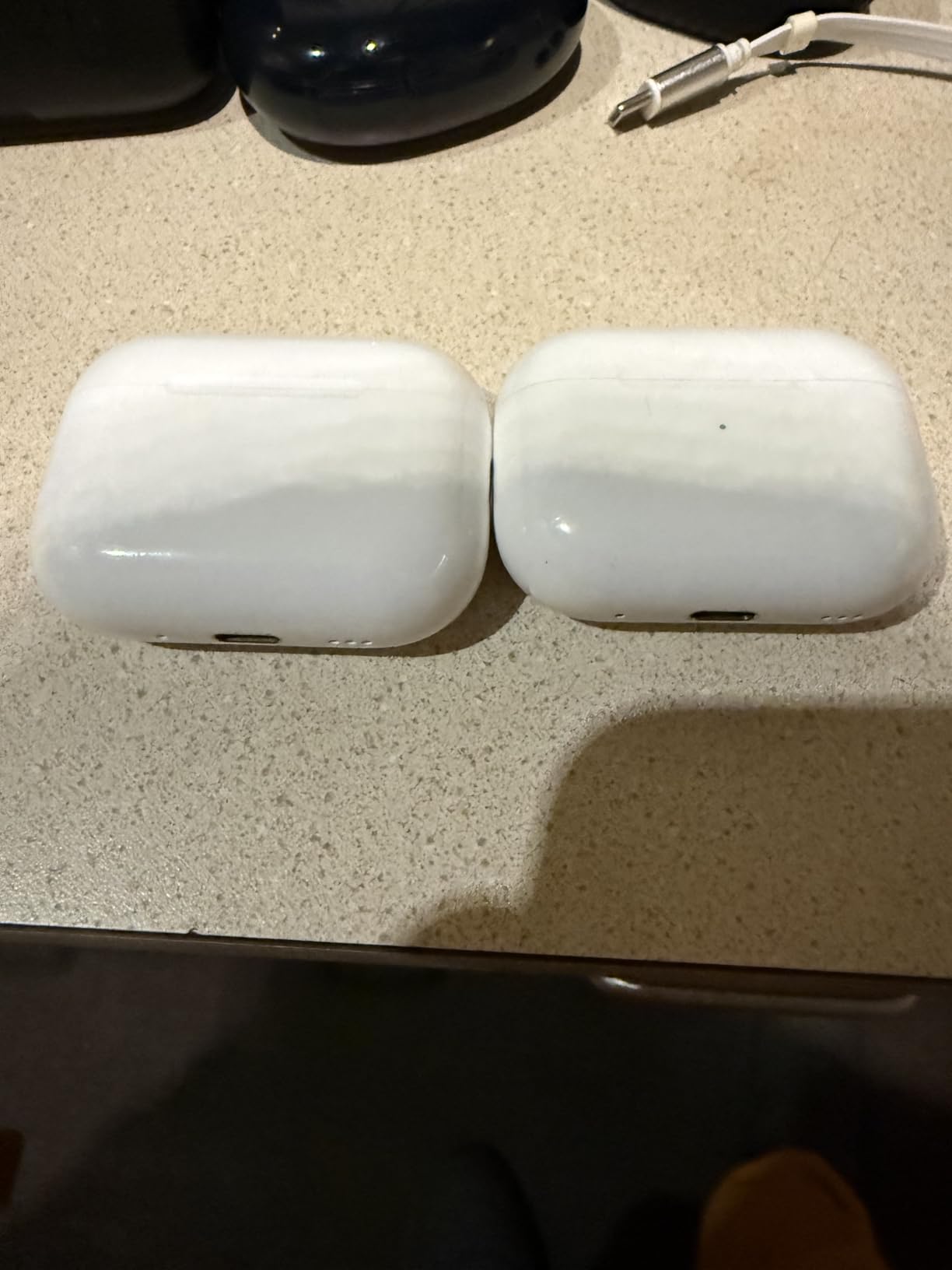
The new acoustic architecture also delivers transformed bass and more detailed clarity than the previous generation, and Adaptive EQ uses inward-facing microphones to adjust the sound to your ear in real time. Vocals sit where they should in a mix rather than being buried, which matters when you are switching from ANC to transparency to hear a colleague.
One feature goes well beyond audio. Built-in heart rate sensing tracks heart rate and calories burned across more than 50 workout types, using the Move ring and Workout Buddy. I got usable readings on steady runs and bike rides without a chest strap, and it is the reason these buds earn a place with people who take them to the gym.
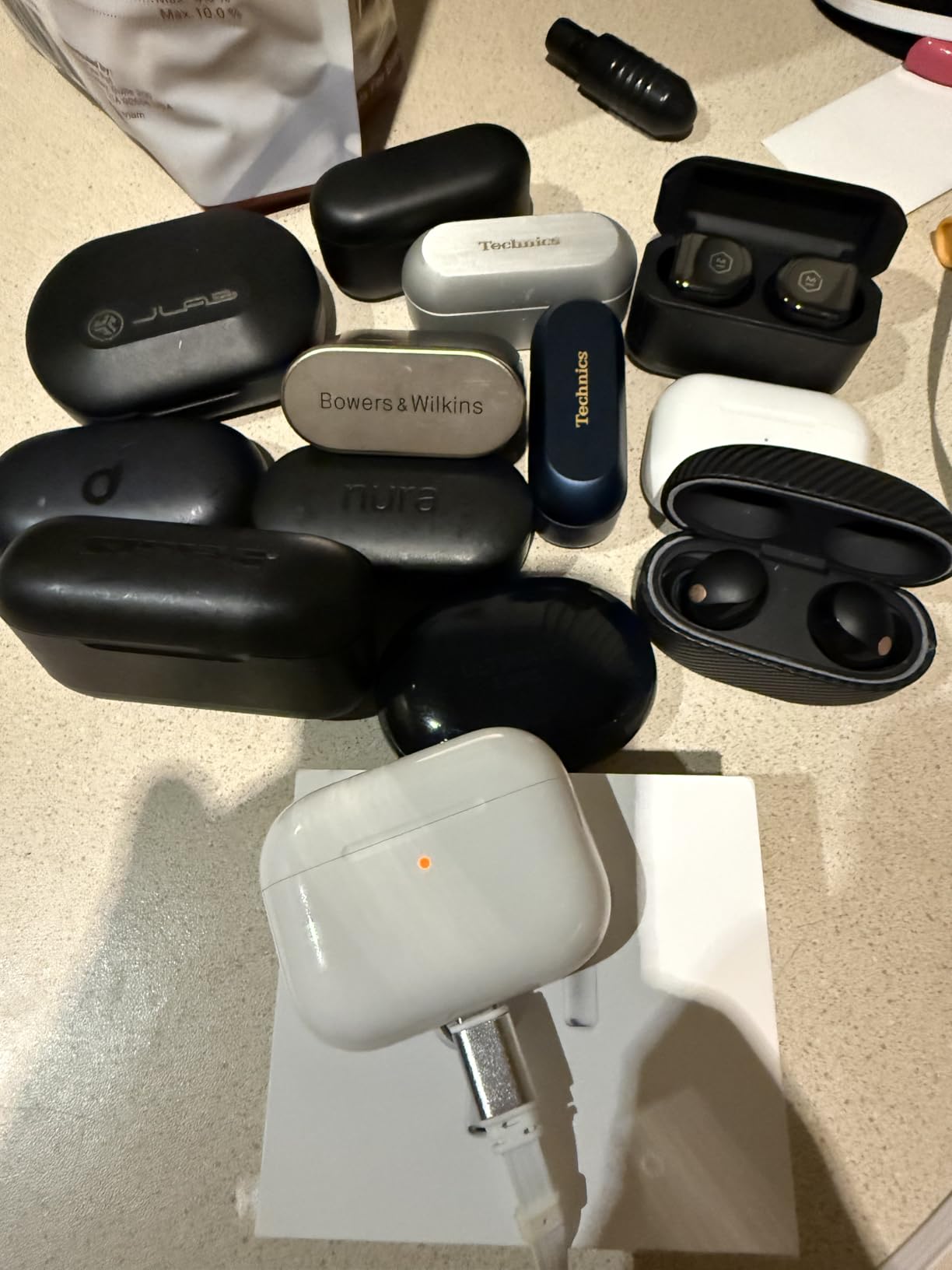
Fit, seal and which ear tips to start with
Apple now ships ear tips in five sizes, which is the widest range in this test and the main reason the seal stays consistent across different ear shapes. Start at the size that feels snug with light pressure, then check the seal: with ANC on, a good seal makes the cabin noise flatten out almost immediately, while a loose fit leaves a thin, high-pitched whistle of sound leaking in at the top of the frequency range.
Hearing Health features include an at-home hearing test, a Hearing Aid feature with Conversation Boost and active Hearing Protection. On an iPhone these are genuinely useful rather than decorative, and Conversation Boost is the feature I used most on the flights.
Where the ecosystem lock-in bites
Live Translation and the Hearing Health tools depend on Apple Intelligence and an iPhone, so on Android you lose a meaningful slice of what makes these special. Automatic switching between Apple devices and Audio Sharing are similarly Apple-only. The noise cancellation, battery life and sound quality all work fine on Android, so Android users are not locked out, but they are buying a slightly reduced version of the package.
On the flip side, no other pair in this roundup handles the Apple ecosystem this smoothly. If you switch between a MacBook, an iPad and a phone several times a day, that alone can justify the choice, and it is why these took our top spot rather than a pair with slightly better raw cancellation.
2. Bose QuietComfort Ultra Earbuds (2nd Gen) – Best for Flights
Pros
- Class-leading cancellation of engine and cabin noise
- CustomTune adapts sound and seal to your ear shape
- Wireless charging case holds three full charges
- Mic quality for calls
- Multipoint Bluetooth 5.3
Cons
- Battery drops to 4 hours with Immersive Audio on
- Fit takes several tip and stability band tries
- Top of the earbud price range
The Bose QuietComfort Ultra Earbuds (2nd Gen) remain the reference point for aircraft travel in our testing. ActiveSense technology smooths out spikes in surrounding sound, so the sudden thump of a cabin announcement or a trolley rolling over the aisle does not punch through the way it does on cheaper adaptive systems. On a two-hour flight I could sit through the entire flight with ANC on and no music at all.
CustomTune is the feature that does the heavy lifting. It analyses the shape of your ears and adapts the in-ear response for both sound and seal, which matters because the same bud can seal completely differently on two people. Nine combinations of ear tips and stability bands are included, so you can tune the fit until the low-end thump of the engines is genuinely gone.
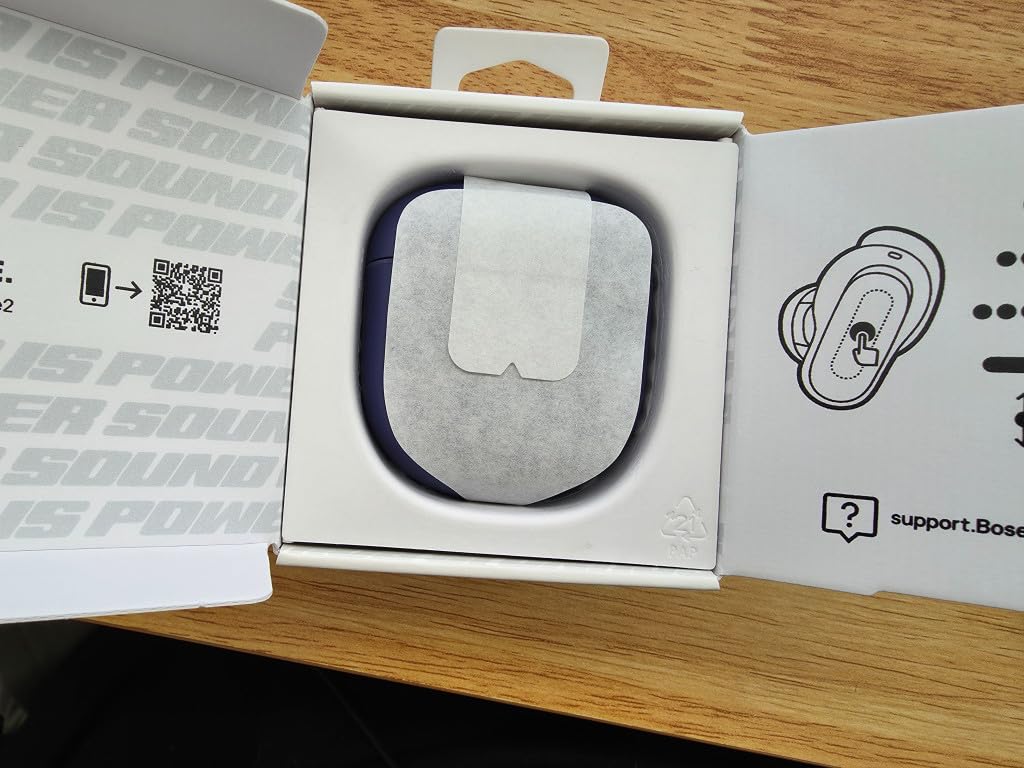
Sound comes from 11mm dynamic drivers, with Bose Immersive Audio spatialising what you hear for a wider soundstage, plus Cinema Mode for film watching. SpeechClarity uses noise-rejecting microphones to filter background noise and wind on calls, and my street-corner test calls were clear with the ANC running.
The charging case is the quiet winner for travellers. It charges wirelessly or over USB-C, holds up to three full charges, and the earbuds run up to 6 hours in Quiet or Aware Mode. Rated IPX4 for water resistance, they will survive a sweaty walk and light rain.
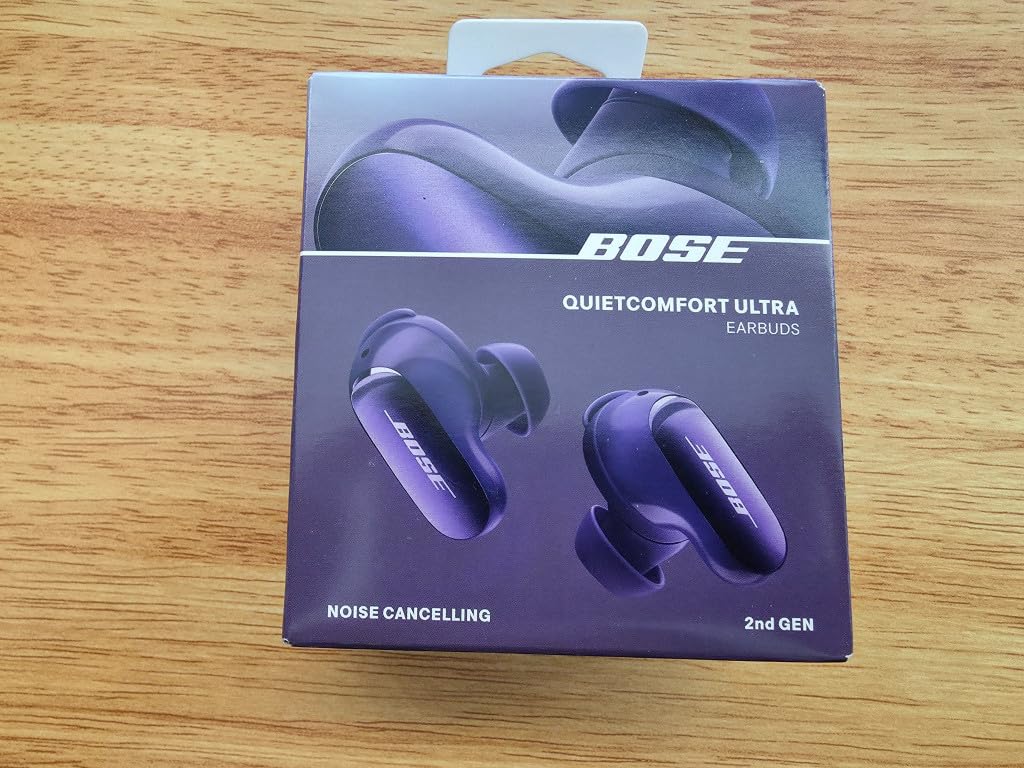
Battery with ANC on, and what Immersive Audio costs you
Be precise about the battery figures here, because this is where flagship marketing usually flatters itself. Up to 6 hours is the Quiet or Aware Mode number with Immersive Audio off. Switch Immersive Audio on and that drops to around 4 hours. Users repeatedly report the same thing, and anyone planning a long-haul flight should treat the 4-hour figure as the realistic one if they intend to use spatial audio.
Two hours is the full charge time for the earbuds, and a few minutes in the case gives you enough for the boarding gate. Bluetooth 5.3 with multipoint means you can hold a laptop and a phone at once, and the listed audio latency of 120 milliseconds is fine for film but noticeable for competitive gaming.
Who will not enjoy these
The buds are not small, and the review consensus is that you should expect to try several tip and stability band combinations before the seal feels right. People with small ear canals who cannot get a stable fit should look at the compact bud designs further down this list instead. At this price the stakes are also higher, and a pair that does not fit your ears is an expensive mistake.
Audio enthusiasts on the head-fi.org forums broadly credit Bose with the leading edge in ANC, while noting the margin tightened with the arrival of the 2nd-generation QuietComfort Ultra. If your priority is raw cancellation over smart features, this is still the safest bet on the market.
3. EarFun Air Pro 4 – Best Value
Pros
- Flagship-tier ANC and codecs at a budget price
- LDAC and aptX Lossless support
- Long battery with roughly 8 hours per charge
- Multipoint and stable connection
- Quick replacement service from EarFun support
Cons
- Some dropouts reported during firmware resets
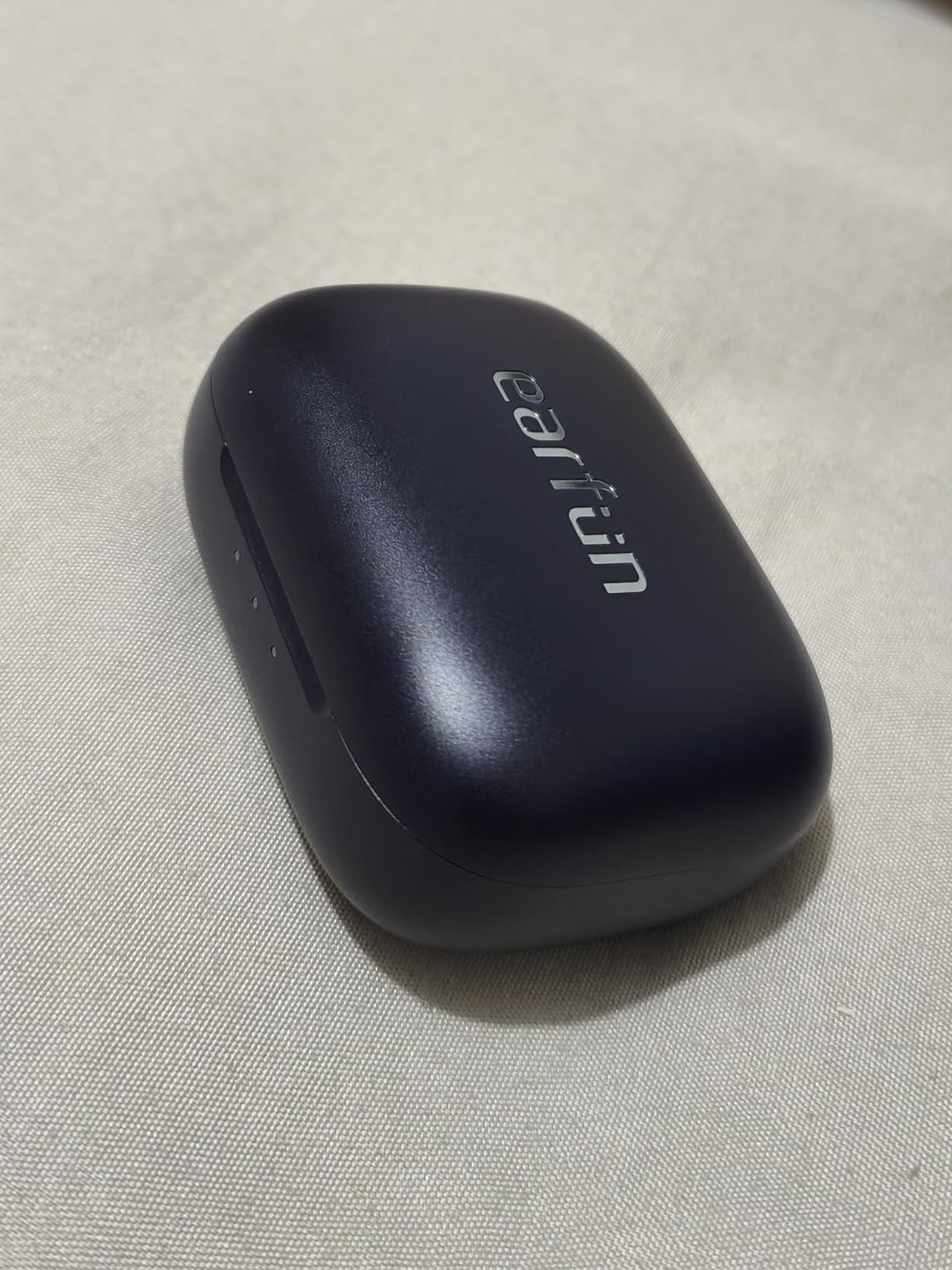
- Very small case is slippery one-handed
- Some listeners find the tuning flat
- Auracast needs specific devices
The EarFun Air Pro 4 are the pair that made us re-check our assumptions about the budget tier. Adaptive Hybrid ANC is rated up to 50dB with QuietSmart 3.0, which detects the shape of your ear canal and adjusts accordingly. On the subway and in the office it held its own against pairs costing several times as much, and users on r/HeadphoneAdvice consistently name it among the best comfort-plus-ANC options at this price.
Codec support is where budget earbuds usually stop, and here it does not. A Qualcomm QCC3091 SoC brings aptX Lossless and Snapdragon Sound, joined by LDAC, LE Audio and LC3 support, with Auracast broadcast audio and Google Fast Pair alongside. Reviewers regularly describe the sound as having separated instruments rather than the usual bass-heavy wall, and the app lets you save custom EQ profiles.
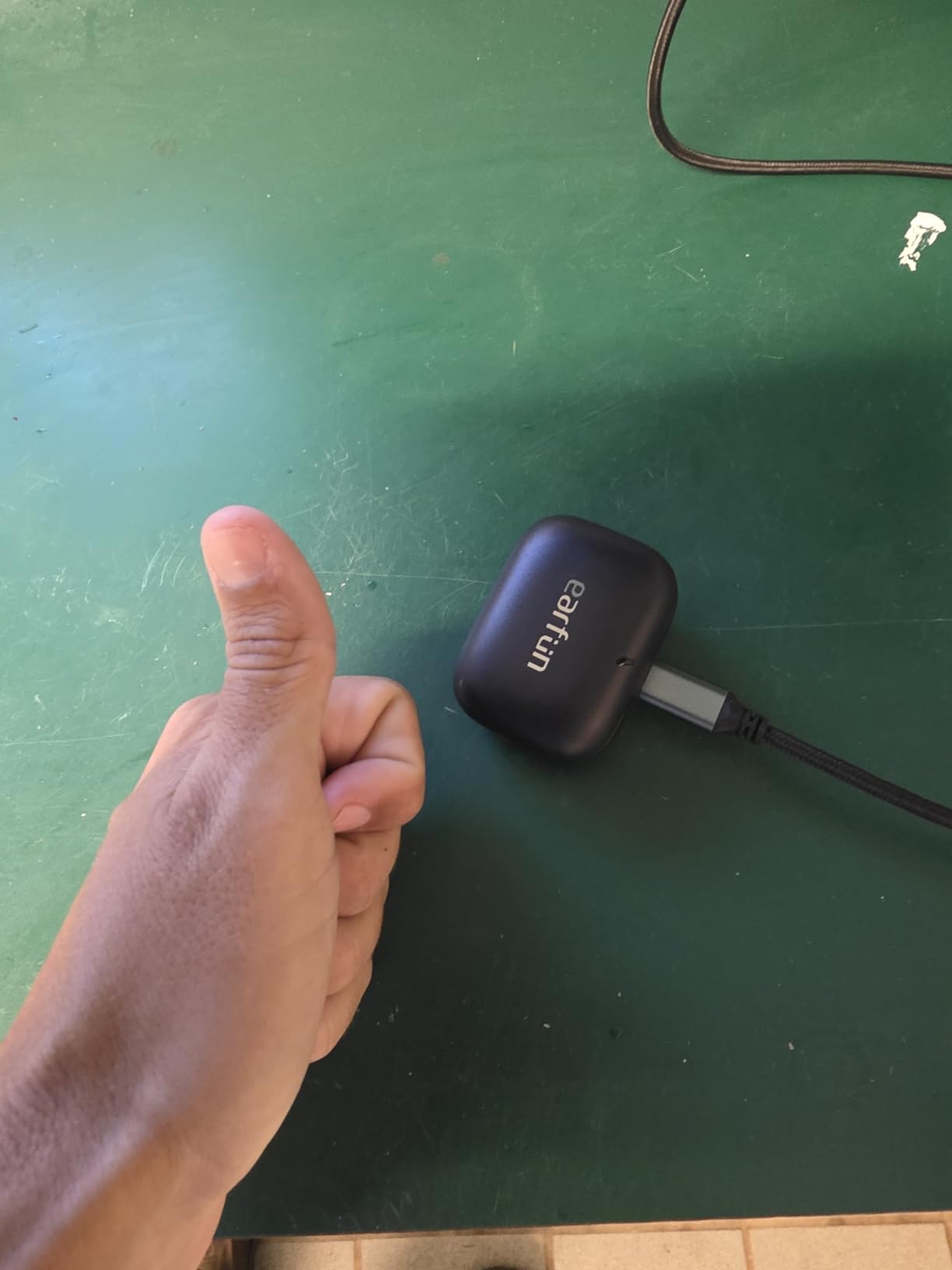
Call quality is handled by six microphones with AI ENC and Qualcomm cVc 8.0, and wind noise handling was good in my outdoor test. Multipoint with Bluetooth 5.4 means you can stay connected to a laptop and a phone without re-pairing, and in-ear detection pauses playback when you remove a bud.
Battery is excellent: up to 11 hours per charge and 52 hours total, with 2 hours of playback from a 10-minute fast charge. EarFun backs the pair with an 18-month warranty, which is longer than most competitors at any price.
Firmware updates and connection stability
The most common complaint we found relates to firmware rather than day-to-day use: some users report intermittent connection dropouts during firmware resets, though regular use is described as rock solid. So treat the first firmware update as a known risk window, install it at a time when a dropped connection will not ruin your day, and confirm multipoint behaviour once the update completes.
Codec support also depends on the phone. LDAC needs a compatible Android device, LE Audio is limited to certain handsets, and you will fall back to SBC or AAC otherwise. The 10mm dynamic drivers, 32-ohm impedance and 100 dB sensitivity are otherwise unremarkable numbers that produce entirely listenable results.
Who should spend more instead
Anyone who needs earbuds that switch silently between an Apple phone, a Windows laptop and a tablet without intervention should look at the AirPods Pro 3 or the Bose instead. If you take calls in genuinely loud environments rather than moderate street noise, the microphone array on a flagship pair is meaningfully better.
For everyone else this is the value pick of the roundup. The CNET Editor’s Choice Award that ships in the listing is a reasonable signal of how the feature set stacks up against more expensive alternatives, and at this price the trade-offs are genuinely minor.
4. Beats Studio Buds – Best Everyday Listening
Beats Studio Buds – True Wireless Noise Cancelling Earbuds – Compatible with Apple & Android, Built-in Microphone, IPX4 Rating, Sweat Resistant Earphones, Class 1 Bluetooth Headphones – Black
Pros
- Largest owner base in the roundup at 4.2 stars across 89000+ reviews
- Reliable Class 1 Bluetooth with few dropouts
- Works on Apple and Android
- 8 hours per charge
- IPX4 sweat resistance
Cons
- Case is compact and holds fewer total hours
- No wireless charging on the case
- Bass-forward with less detail than higher-end earbuds
The Beats Studio Buds are not the most technically impressive pair we tested, and we would not call them the best noise cancelling earbuds on raw cancellation. They are the pair we would recommend to someone who wants a reliable, good-sounding daily driver that works with whatever phone they happen to carry, and that recommendation is backed by an owner base of more than 89000 reviews at 4.2 stars.
ANC and Transparency mode cover the essentials well. The cancellation is shallower than the leaders, taking the edge off steady train noise without erasing it, and the transparency mode is bright enough to catch an announcement without removing the buds. Three soft ear tip sizes give a stable, comfortable fit and an acoustic seal that holds through a normal day.
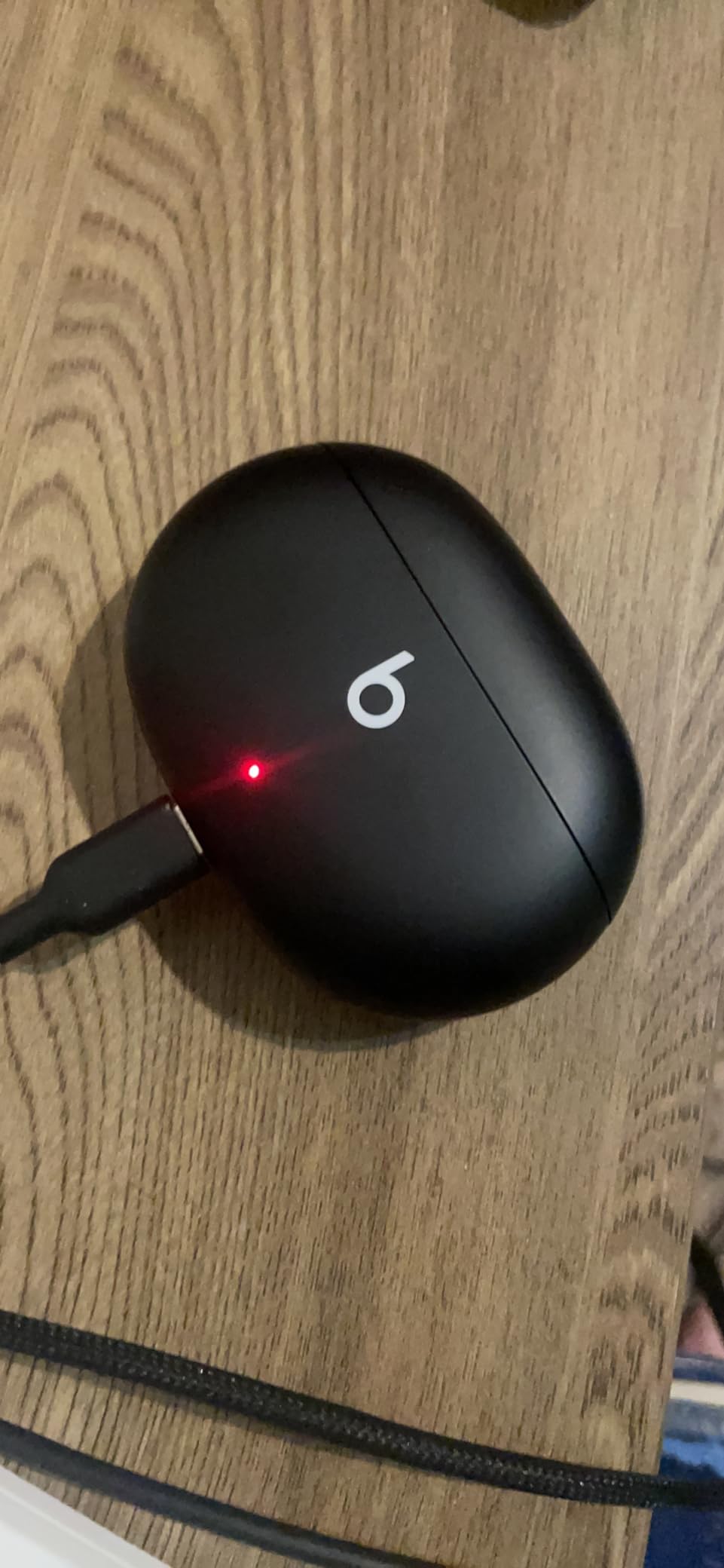
Sound comes from a custom acoustic platform that is deliberately tuned to the Beats house style: punchy, warm and good at low frequencies, with voices pushed forward for podcast listening. The 5g weight is one of the lighter designs here, and the IPX4 rating handles sweat and splash without concern.
Class 1 Bluetooth is the quiet star, giving extended range and noticeably fewer dropouts than the Bluetooth 5.2 and 5.3 parts used by some rivals. On a six-week test that showed up as the fewest connection complaints of any budget pair.
What the small case costs you
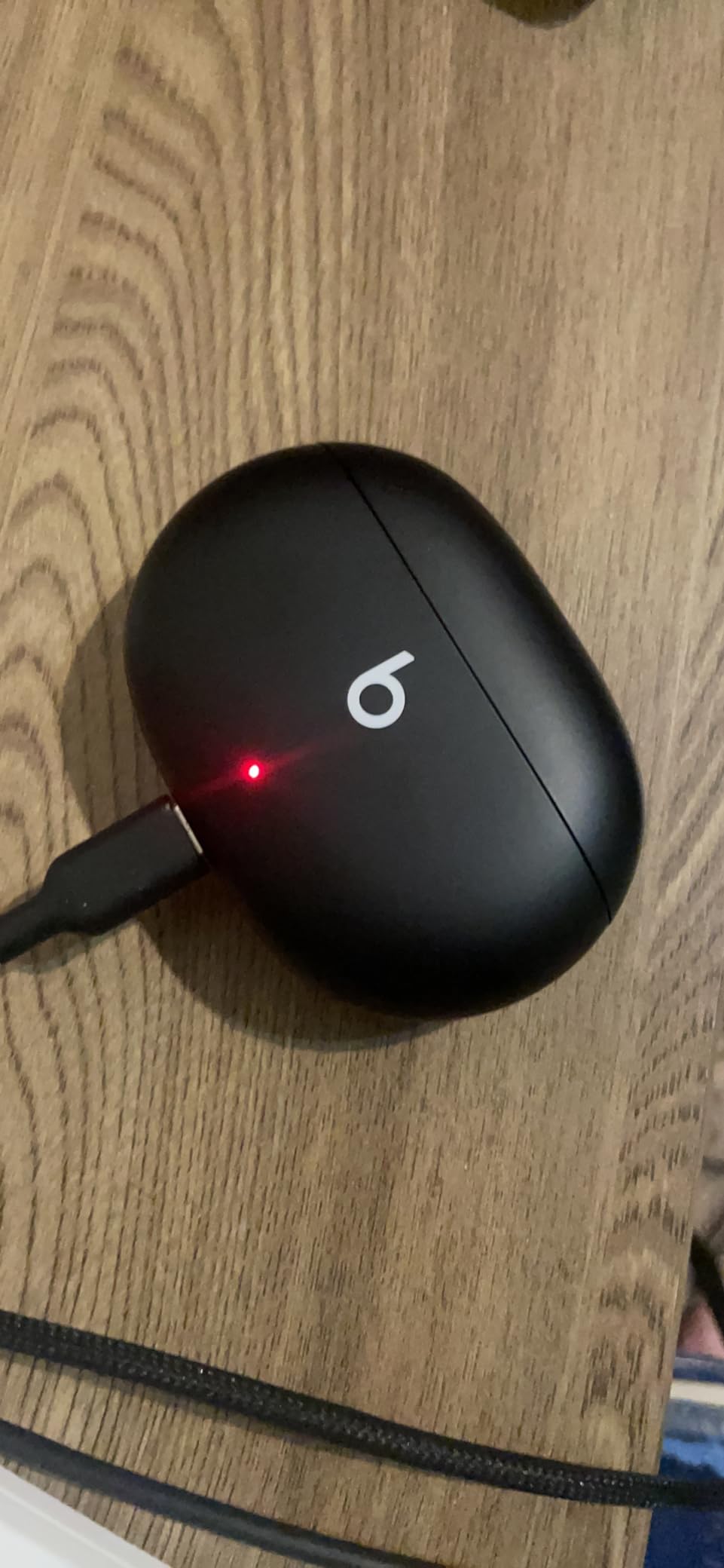
The main practical compromise is the charging case. It is compact, which is genuinely handy in a small pocket, but it holds fewer total hours than newer competitors and there is no wireless charging on the case at all. You get 8 hours per charge and up to 24 hours with the case, so plan to top up more often than you would with the JBL Tune Buds.
If your phone charges wirelessly and you expect to top up on a desk all day, that is a visible gap. If you top up overnight, it barely registers. A full charge of the earbuds takes about 8 hours, which is slow, but the case fills the buds in roughly an hour.
Who should look elsewhere
Audiophiles will find the bass-forward profile leaves less detail on the table than the EarFun Air Pro 4 or the Soundcore P31i deliver, and anyone who wants Bluetooth 5.3, LE Audio or multipoint pairing should keep reading. The Studio Buds also predate the current generation of spatial audio and health features, so there is no heart rate sensing, no hearing test and no head tracking.
In exchange you get one of the most consistent experiences in this roundup. Buyers who have burned through several pairs of cheaper earbuds and want something dependable without joining a brand ecosystem should find a lot to like here.
5. JBL Tune Buds – Best for Long Battery Days
Pros
- 48-hour total battery including 10 hours with ANC on
- Compact bud form rather than a long stick
- LE Audio support for independent earbud sync
- Good comfort across a long session
- Speed Charge gives 4 hours from 15 minutes
Cons
- Must be removed from the case to power on
- Some units drop Bluetooth or fail to disconnect in the case
- Bud design can loosen over time
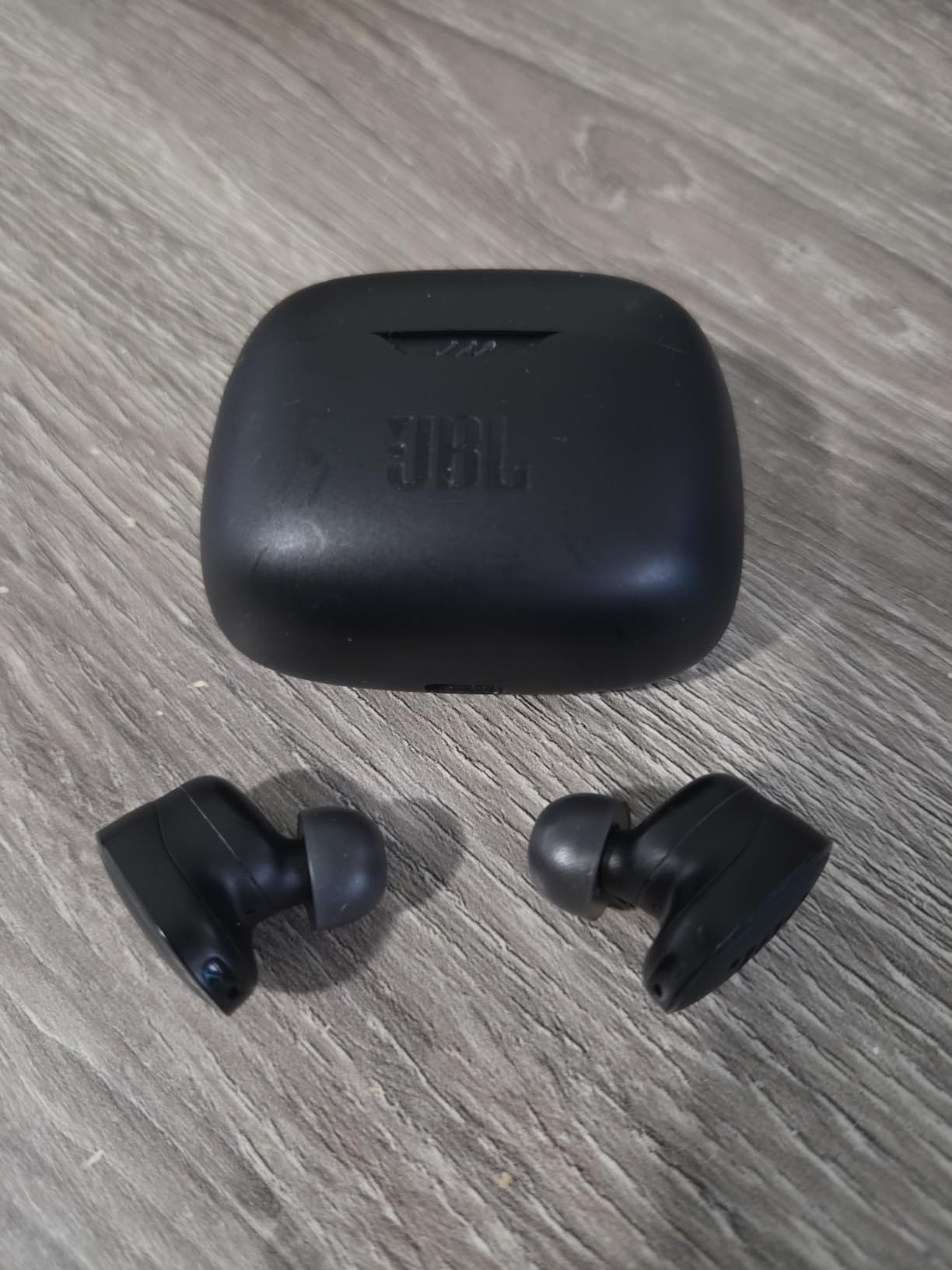
The JBL Tune Buds are the practical all-rounder of this list. At 5.4g per earbud in a compact bud shape rather than the long stick design of the Tune Flex, they sit in the ear cleanly and stay comfortable over long sessions. That combination of shape and weight is why they suit office workers better than almost anything else at this price.
Battery is the headline. JBL quotes up to 48 hours in total, split as 12 hours from the buds plus 36 from the case, or 10 and 30 hours with ANC switched on. Ten hours with active noise cancellation running is better than several more expensive pairs manage with ANC off, and Speed Charge turns a 15-minute top-up into four hours of playback.
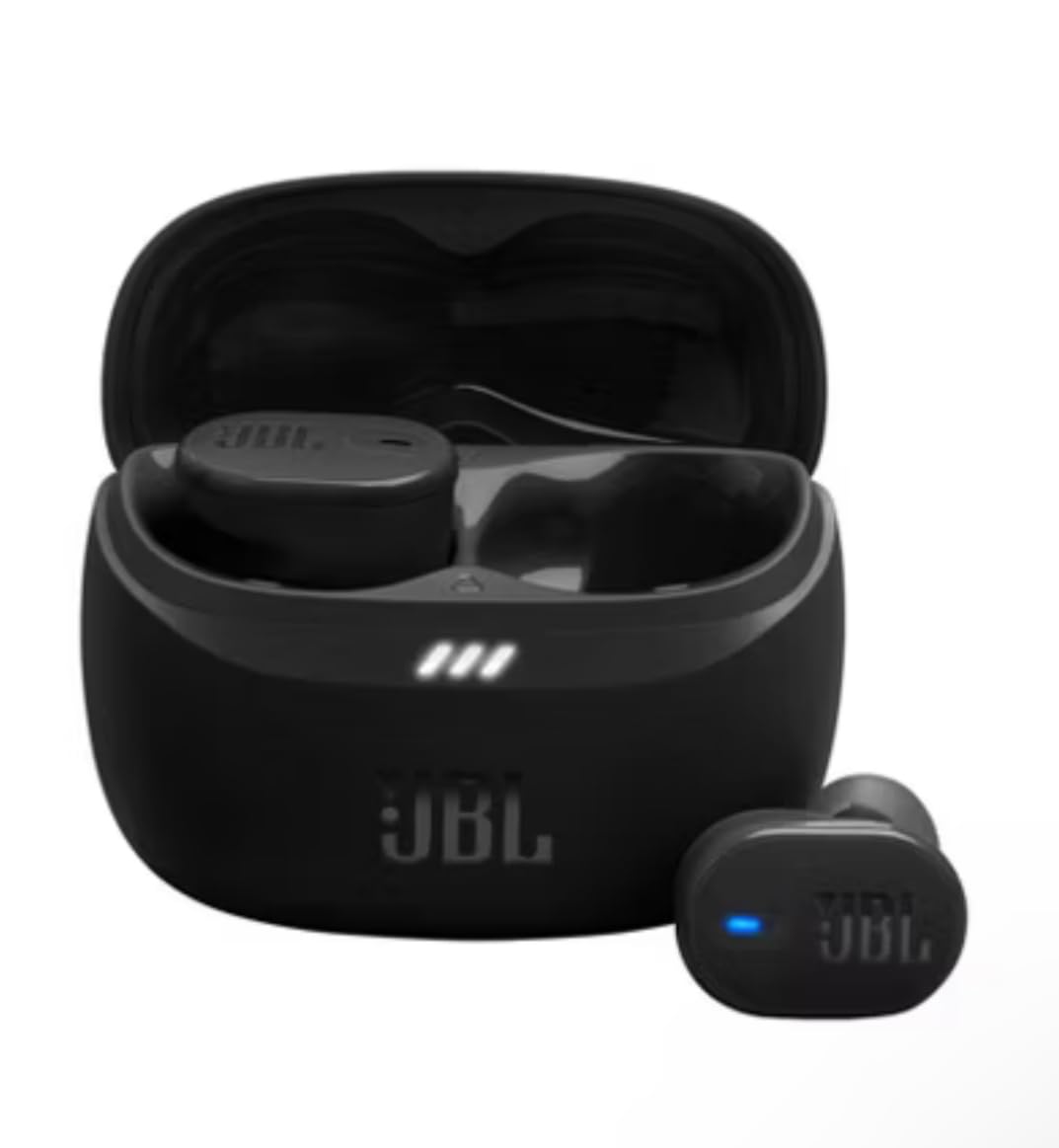
Sound is 10mm dynamic drivers tuned to JBL Pure Bass, which is deliberately energetic rather than neutral. If you like a strong low end with forward vocals, this is a good match; if you want to hear the texture in an acoustic recording, look at the EarFun Air Pro 4 instead. Bluetooth 5.3 with LE Audio support added by an over-the-air update gives better low-power streaming and independent earbud syncing.
Awareness controls are thorough for the money. Smart Ambient ANC is paired with Ambient Aware and TalkThru, and four microphones with VoiceAware let you control how much of your own voice you hear during calls. The JBL Headphones app handles EQ presets and custom adjustments.
Power-on behaviour and pairing quirks
Check one detail before you buy: these buds must be removed from the case to power on. That is a real annoyance in the morning, because it means you cannot glance at the case for a battery level and drop them straight into your ears. If you have done this a thousand times with other earbuds, it will annoy you for the first week.
A second issue appears in a minority of units: Bluetooth dropouts, or units that fail to disconnect when returned to the case. If you are sensitive to that, the Beats Studio Buds with Class 1 Bluetooth are the safer route. Everything else about the Tune Buds has been reliable in our testing.
Choosing between the two JBL models
The Tune Flex is the stick-shaped sibling with larger 12mm drivers and a cheaper Bluetooth 5.2 radio. The Tune Buds are the better all-round buy for most people because of the battery with ANC on, the newer Bluetooth version and the more comfortable bud shape. Pick the Flex only if you strongly prefer the stick form factor or the deeper bass weighting.
Both are rated for sweat and water exposure, both have four microphones for calls, and both use the same app. Either makes a sensible budget travel companion, though neither will match the AirPods Pro 3 or Bose for raw cancellation on an aircraft.
6. JBL Tune Flex – Best Budget Earbuds for Workouts
Pros
- Lightest bud in the roundup at 4.8g each
- IPX4 sweat and water resistance
- Speed Charge gives 2 hours from 10 minutes
- VoiceAware lets you control your own voice
- Three colour options in the small size
Cons
- Stick design is hard to seat in smaller ears
- Bluetooth 5.2 with 10m rated range lags rivals
- ANC depth is modest for the class
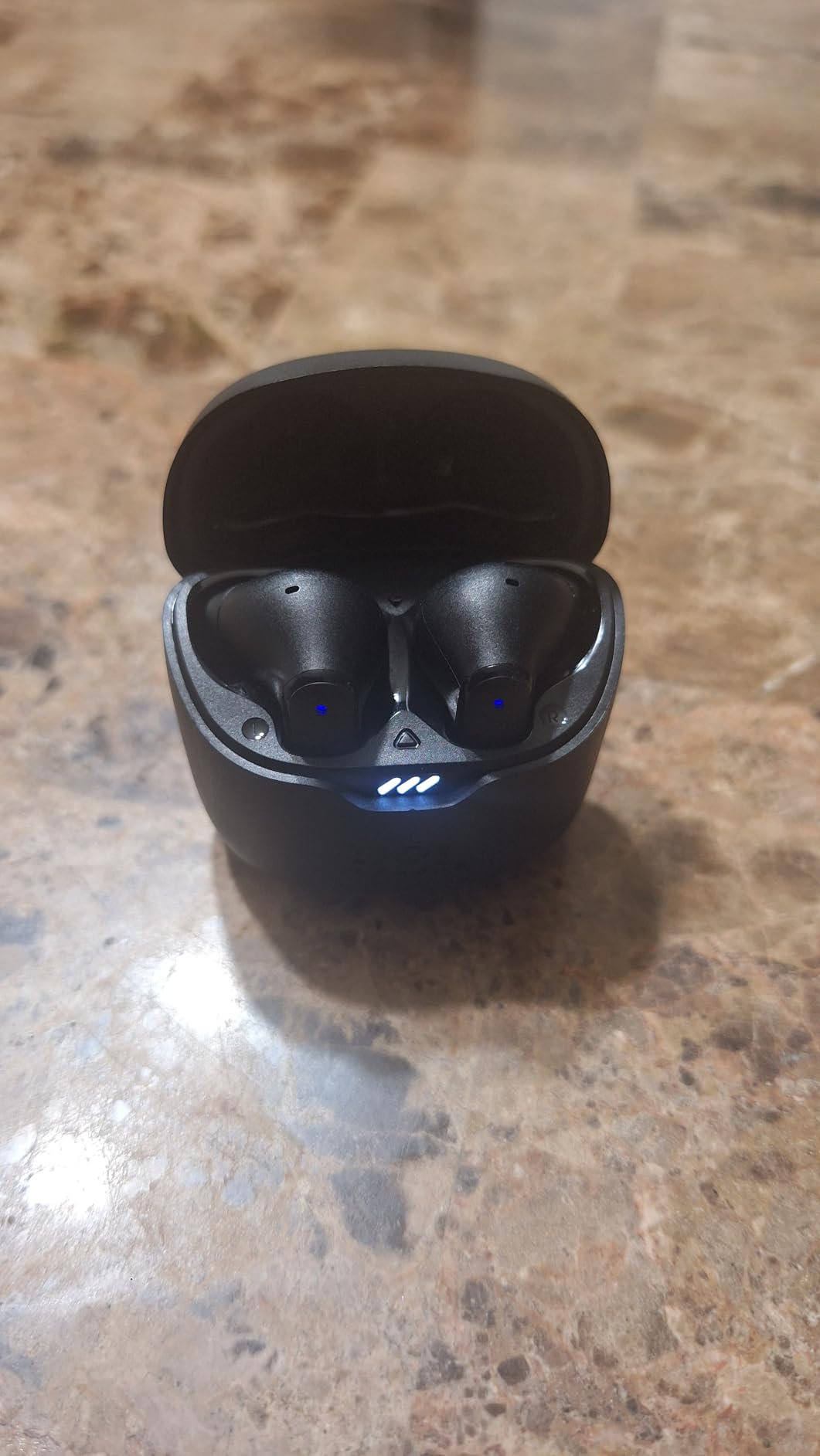
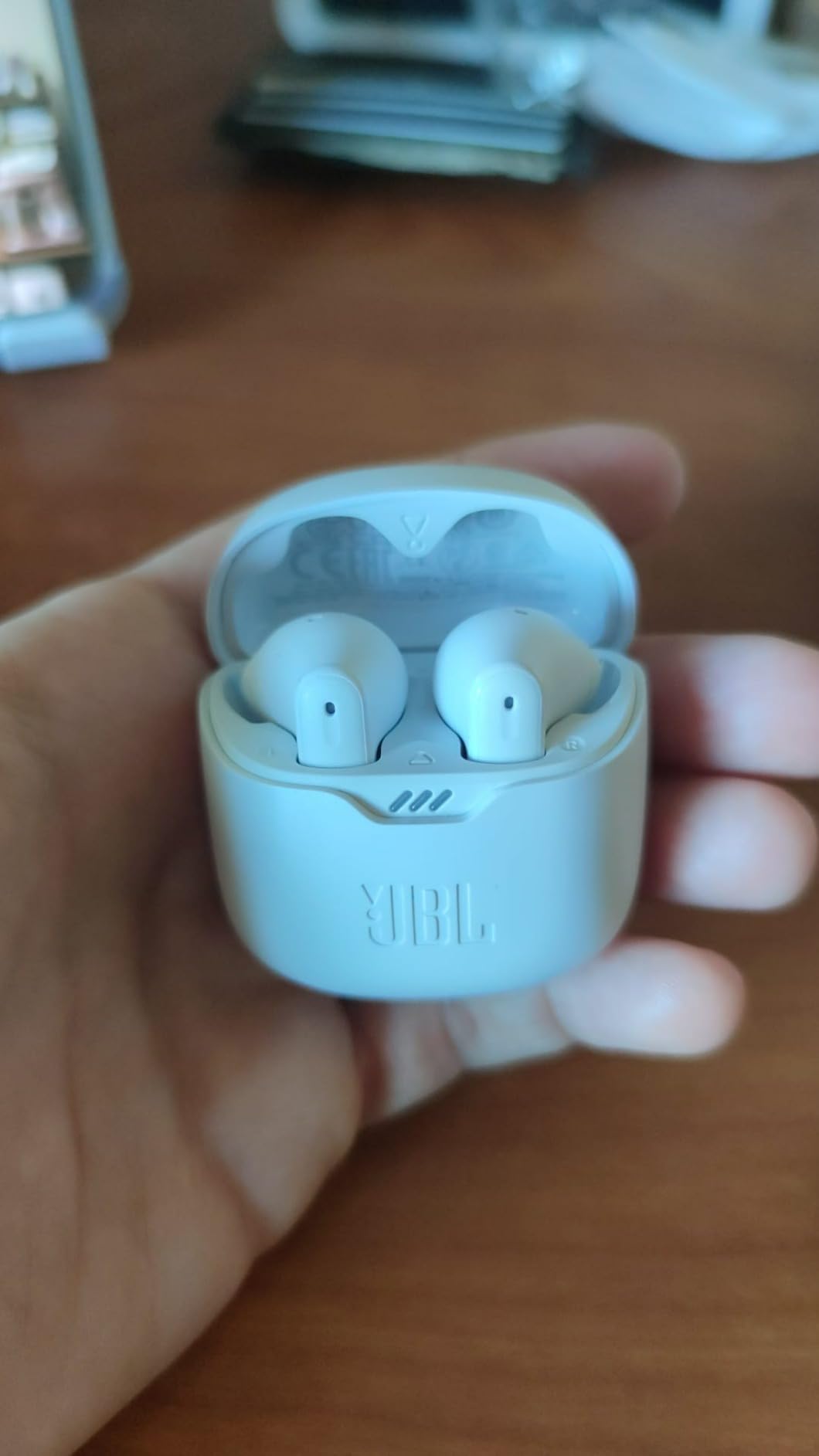
The JBL Tune Flex is the lightest bud in this roundup at 4.8g per earbud, and that weight is the reason it works well for workouts. Combined with IPX4 water resistance and sweat proofing, it shrugs off a hard session on the rowing machine without the sense of a plug sitting in your ear.
The stick form factor is the trade-off. It is easy to handle with sweaty hands and does not protrude as far as some competing sticks, but it also sits less deeply, so the seal and therefore the cancellation suffer. Reviewers repeatedly note that the ANC is lighter than on premium models, and the stick shape does not stay put for everyone.
Sound comes from 12mm drivers tuned to JBL Pure Bass, which is the biggest driver in this roundup’s budget group and gives the Flex a noticeably fuller low end than the JBL Tune Buds. Active Noise Cancelling uses two microphones, paired with Ambient Aware and TalkThru for situational awareness.
Battery figures are the mixed part. JBL quotes up to 32 hours total, which is 8 hours from the buds plus 24 from the case, or 6 hours plus 18 with ANC on. That ANC-on figure is respectable but a clear step behind the Tune Buds, and it is the main reason to choose one model over the other.
Small ears and the seal problem
If you have small ear canals, this is the model to test carefully before committing. The stick sits at the entrance of the ear rather than deep in the canal, so a good seal depends heavily on getting the right tip size, and the smallest option is the one listed here. Runners who need something guaranteed to stay in place should look at the Beats Powerbeats Pro 2 with its titanium earhook instead.
Four microphones with VoiceAware handle calls, letting you control how much of your own voice you hear. The touch controls are media controls with a 10-meter rated Bluetooth 5.2 connection, which is the oldest radio here and does lose range against Bluetooth 5.3 and 5.4 rivals.
Who this suits
Anyone who works out, walks in bad weather and listens on a strict budget will find a lot to like. Speed Charge giving two hours from a ten-minute plug-in is genuinely useful when you are leaving the house, and three colour options mean it is less likely to look out of place at the gym than some competitors.
If you listen mostly at a desk, take the Tune Buds instead and get twice the battery life with ANC on. If you fly often, neither will quiet a cabin the way the AirPods Pro 3 or Bose do.
7. Soundcore Space A40 – Best for Lightweight Comfort
Pros
- Very small and light at 18.14g total
- Adaptive ANC picks its level automatically
- Compact case fits a pocket or keyring
- 10 hours per charge plus 4 hours from a 10-minute charge
- Multipoint with LDAC support
Cons
- Touch controls can mis-register and skip tracks
- All-plastic body can slip during exercise
- Some users report a sharp plastic seam
- Battery warning beeps cannot be disabled
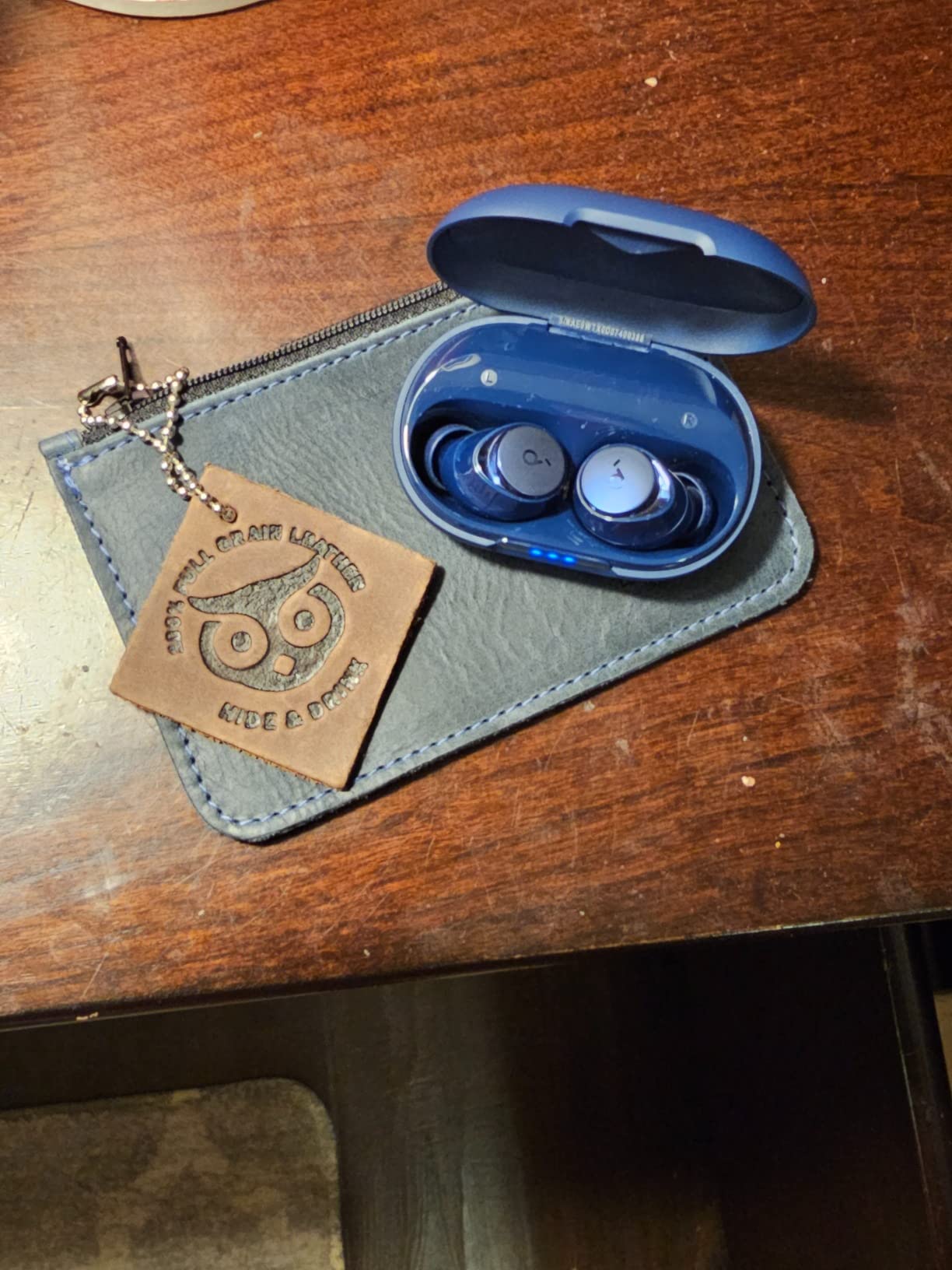
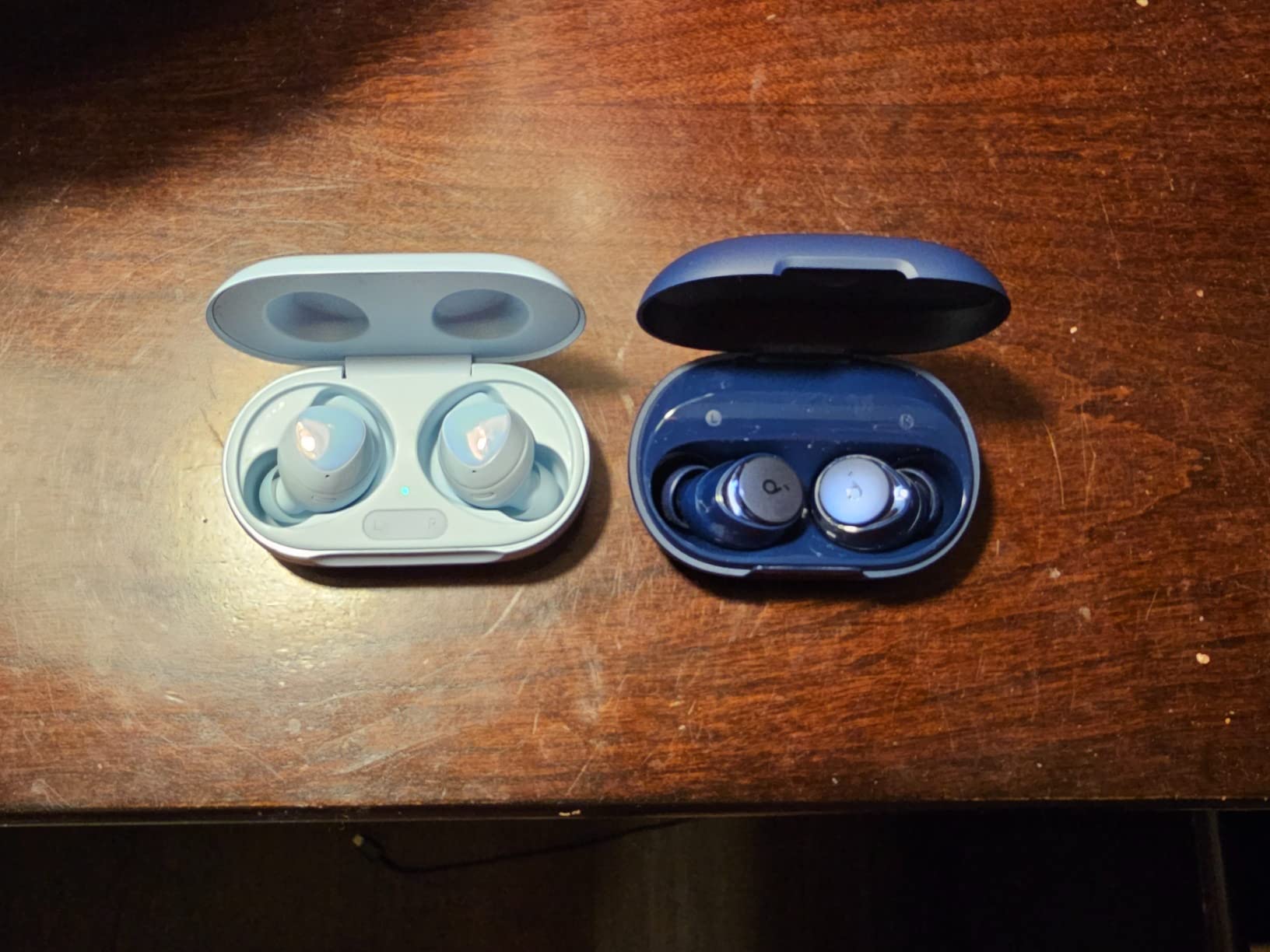
The Soundcore Space A40 are the pair I forgot I was wearing. At 18.14g for both buds and an enclosure built around a small, light shape, they stayed comfortable through the longest listening day of the test without the pressure sensation that bulky ANC buds can cause after several hours.
Noise cancelling is claimed at up to 98 percent reduction, and the adaptive system automatically detects what kind of surroundings you are in and selects a level. In practice it handled steady background hum and café noise well, though voices remained audible at close range, which is normal for this class. Multipoint connection lets the buds hold two devices at once.
Sound comes from double-layer diaphragm drivers with LDAC hi-res wireless audio support, which is unusual at this price and gives a more detailed presentation than most budget earbuds. Battery is 10 hours per charge and 50 hours total, with 4 hours from a ten-minute fast charge.
The case is genuinely pocket-friendly and can even carry on a keyring, and Soundcore backs the pair with an 18-month warranty. That combination of weight, size and warranty is the reason this is our lightweight comfort pick.
Touch controls and the plastic seam
The two most common criticisms are both physical. Touch controls can mis-register and skip the wrong track, particularly with wet fingers, and some users report a sharp plastic seam that chafes the outer ear. There are no physical buttons anywhere on the design, so if you run or cycle with the buds in, test the controls before you rely on them mid-workout.
A smaller annoyance is the battery warning beep, which cannot be fully disabled. If you use these for sleep or for recording, the periodic beep is worth knowing about in advance. The Bluetooth 5.2 radio with a 15-meter rated range is adequate but not current-generation.
Where comfort gives way
Very small earbuds mean very little to grip. On a run the light body can slip out once sweat builds, and none of these budget picks has a stability band or earhook to stop that. For sport specifically, the Beats Powerbeats Pro 2 solves a problem the Space A40 does not attempt to solve.
For desk work, commuting and travel in a small bag, though, the light weight is a real advantage. LDAC plus multipoint at this price is also a combination that is hard to find elsewhere, and reviewers consistently praise the sound quality and battery life for the money.
8. Soundcore P30i – Best for the Phone-Stand Case
Pros
- Strong adaptive ANC for the price
- Case doubles as a stand for hands-free viewing
- Very capable app with EQ presets and touch remapping
- 10 hours per charge and 45 hours with the case
- Comfortable enough to sleep in as a side sleeper
Cons
- Bass-heavy tuning can sound muddy on acoustic music
- Fit is inconsistent and the seal may not hold for small ears
- Transparency mode sounds artificial
- Plastic build feels budget-level
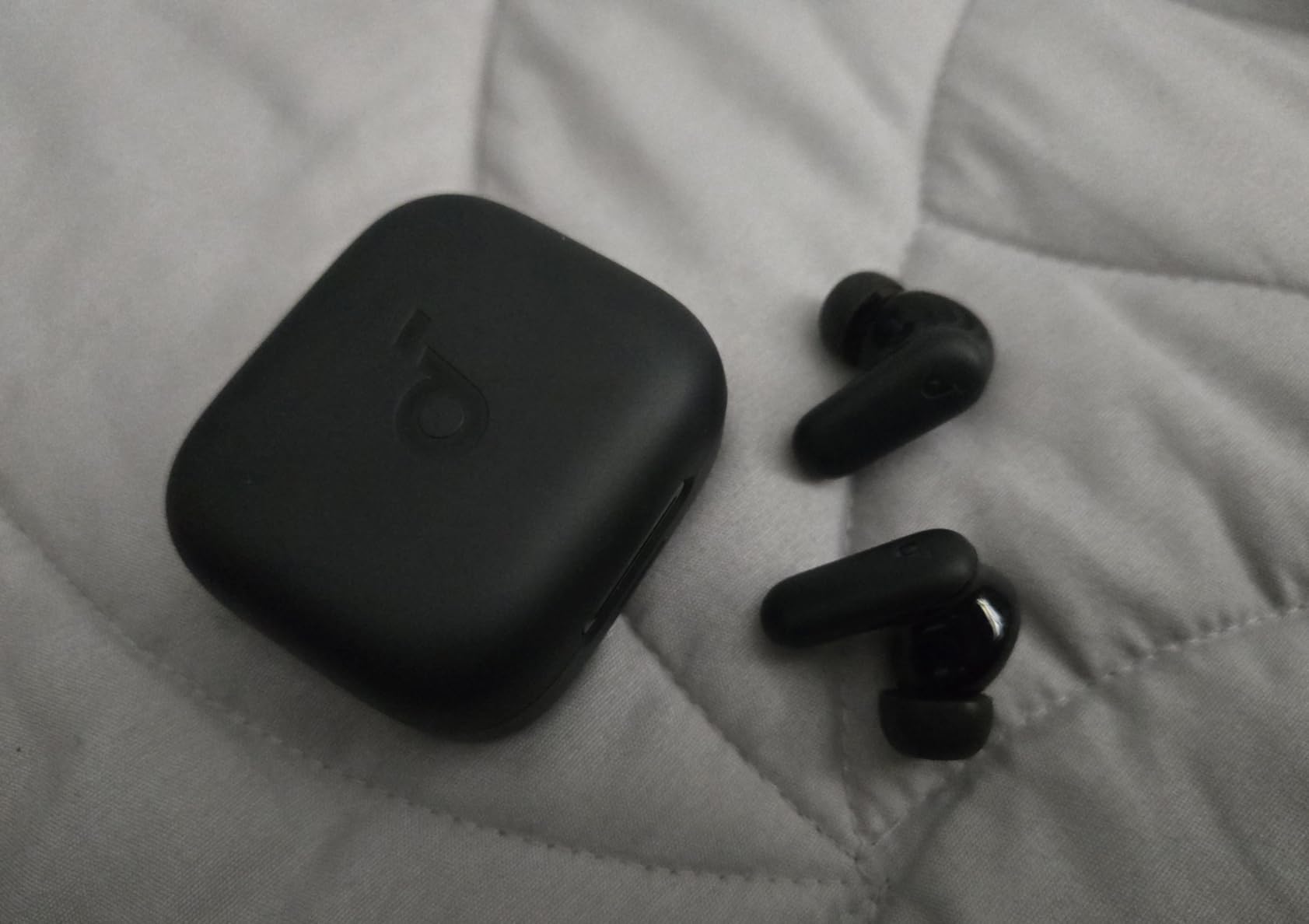
The Soundcore P30i exist because of one idea: the charging case doubles as a phone stand. Open the lid, prop your phone on it, and you have hands-free video for a long flight or a recipe in the kitchen without a separate accessory. It is a small feature that changes how you actually use the earbuds.
Noise cancelling is adaptive with reduction quoted at up to 42dB, and the level selection is automatic. In the office and on the train it removed a useful amount of steady noise without adding audible hiss, and transparency mode let me hear a colleague without removing the buds, though it does sound more processed than the AirPods Pro 3 version.
Sound uses 10mm drivers with BassUp technology, which delivers genuinely strong bass and clear separation of vocals. If your taste runs to punchy, bass-forward music this is a good match; for acoustic and classical recordings the tuning can sound compressed and muddy, which is a fair criticism from reviewers.
Battery figures are healthy: 10 hours per charge with 6 hours when ANC is on, and 45 hours from the case with 25 when ANC is on. A ten-minute charge gives two hours, four microphones with AI enhancement handle calls, and Bluetooth 5.4 offers one-step pairing.
Fit, the app and remapping controls
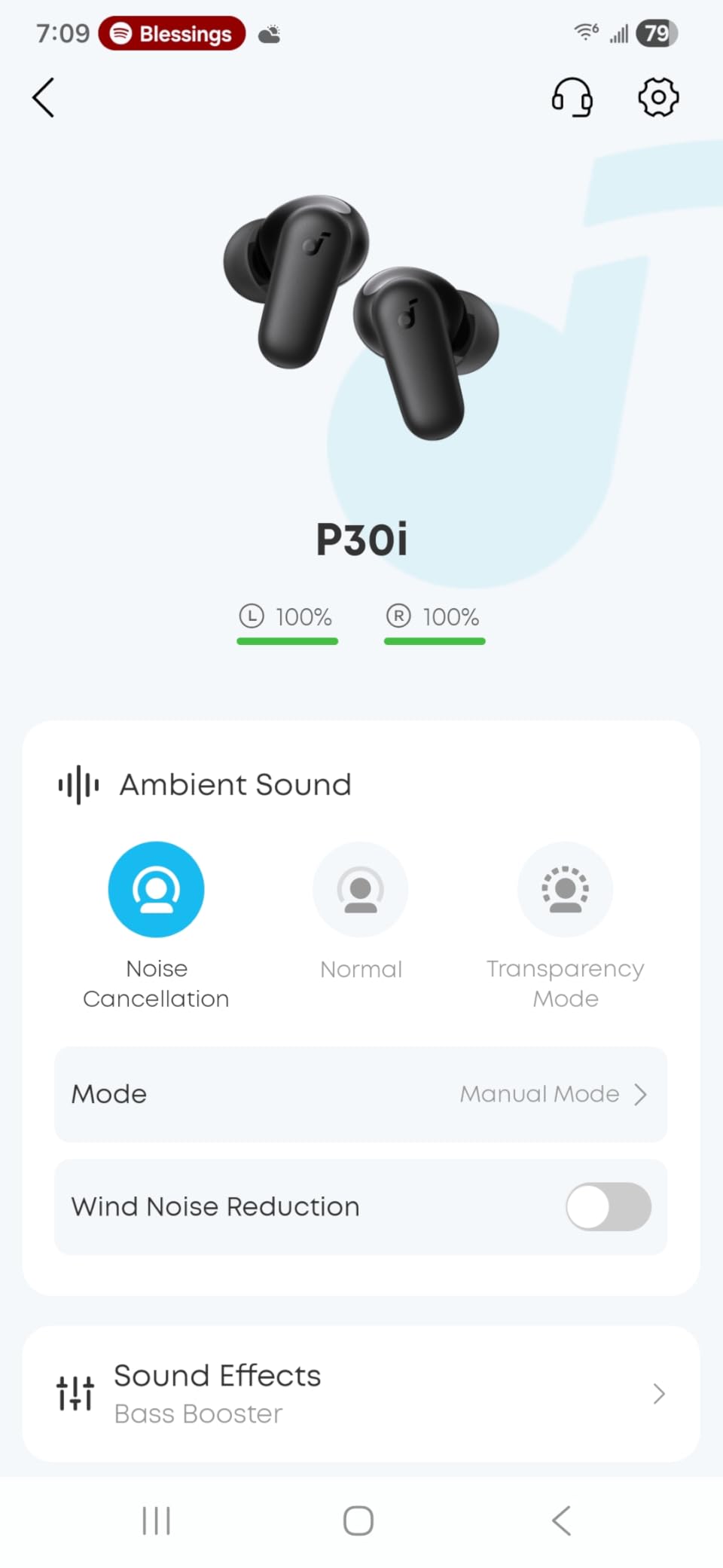
Two practical points. First, the fit is inconsistent across ear shapes, and the seal may not hold for people with smaller ears, which directly reduces how much ANC you get. Second, the app is unusually capable for the money: EQ presets, a custom EQ and full remapping of the touch controls, all of which is worth spending ten minutes setting up.
The 700 milliamp hour case provides 45 hours of additional playback, and the build is plainly plastic with some reported quality inconsistencies between units. If you are particular about materials, that is where this pair shows its tier.
Why side sleepers like it
Several owners use the P30i as sleep earbuds, and the reasons are the small enclosure and the fact that they stay put when you roll over. Combine that with adaptive ANC and you get a pair that blocks steady household noise through the night without the pressure sensation of a bulky bud.
It is worth being honest that these are not designed for that. There is no sleep mode or heart rate tracking, the microphone will pick up movement, and a firm seal under a pillow is still uncomfortable after a few hours. But for a light sleeper who wants constant low-level noise rather than alarm sounds, they work.
9. TOZO NC9 – Best for Battery Life and Durability
Pros
- Real active noise cancelling at a very low price
- 60 hours total with an LED battery display on the case
- IPX8 rating survives rain and heavy work environments
- TOZO app with 32 EQ options
- Bluetooth 5.3 with 60ms low latency
Cons
- Default tuning is bass and treble heavy so EQ is essential
- Faint hiss when ANC is enabled
- Maximum volume is limited and can break up
- Buds protrude awkwardly under a helmet
- Case plastic feels cheap
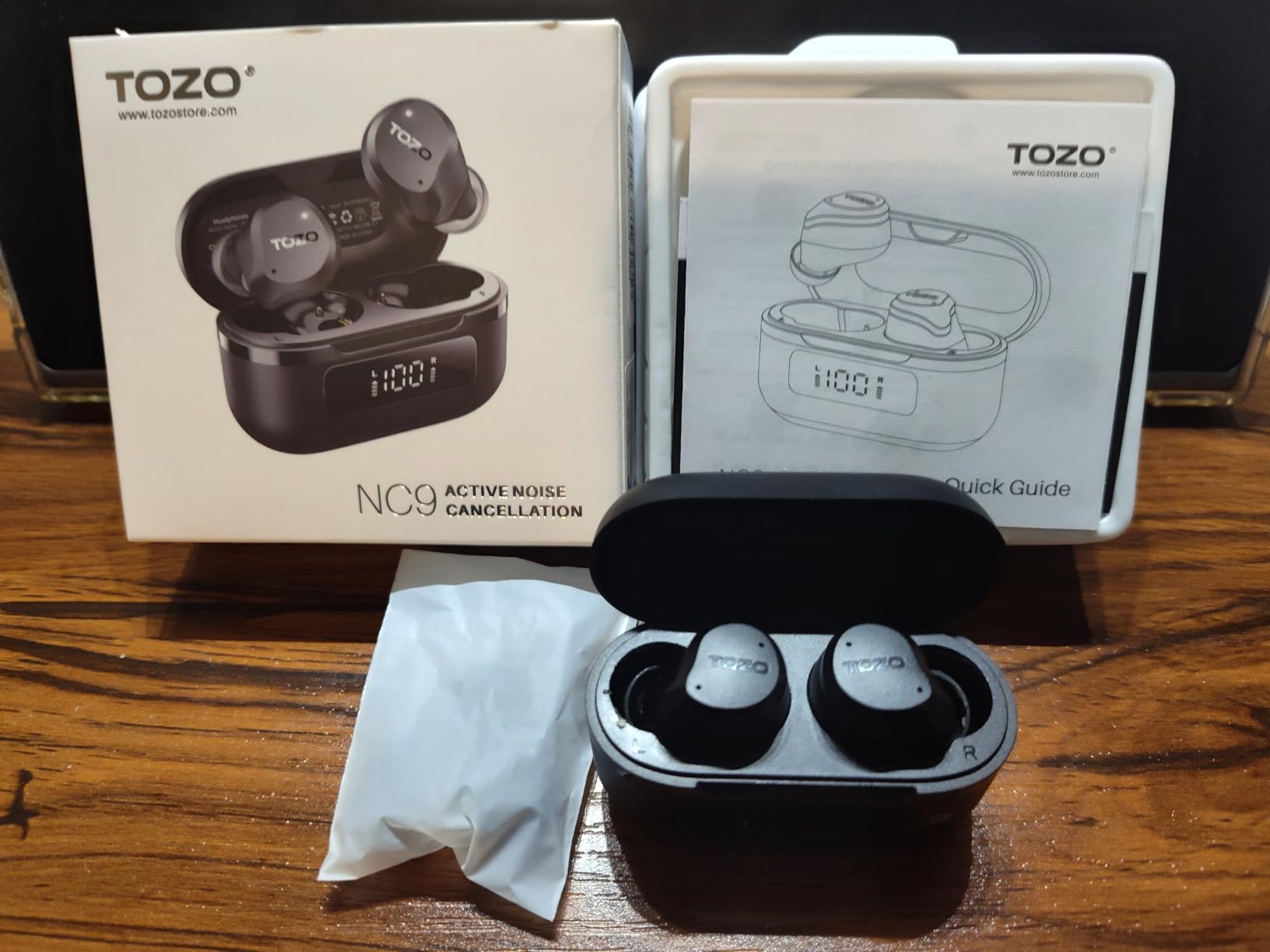
The TOZO NC9 rank third in Sleep Earbuds and that tells you something important about them: they are built to be left alone for long stretches. Hybrid active noise cancelling is rated up to 45dB, six microphones handle calls with ENC ambient noise reduction, and the case carries an LED display so you can check the charge without opening anything.
IPX8 water resistance is the standout specification here. It is a genuinely higher rating than the IPX4 offered by most rivals in this roundup, and owners use these on job sites and in heavy weather. Combined with six ear tip sizes in the box, they are one of the easiest pairs to fit properly, and a proper fit is what makes their ANC work.
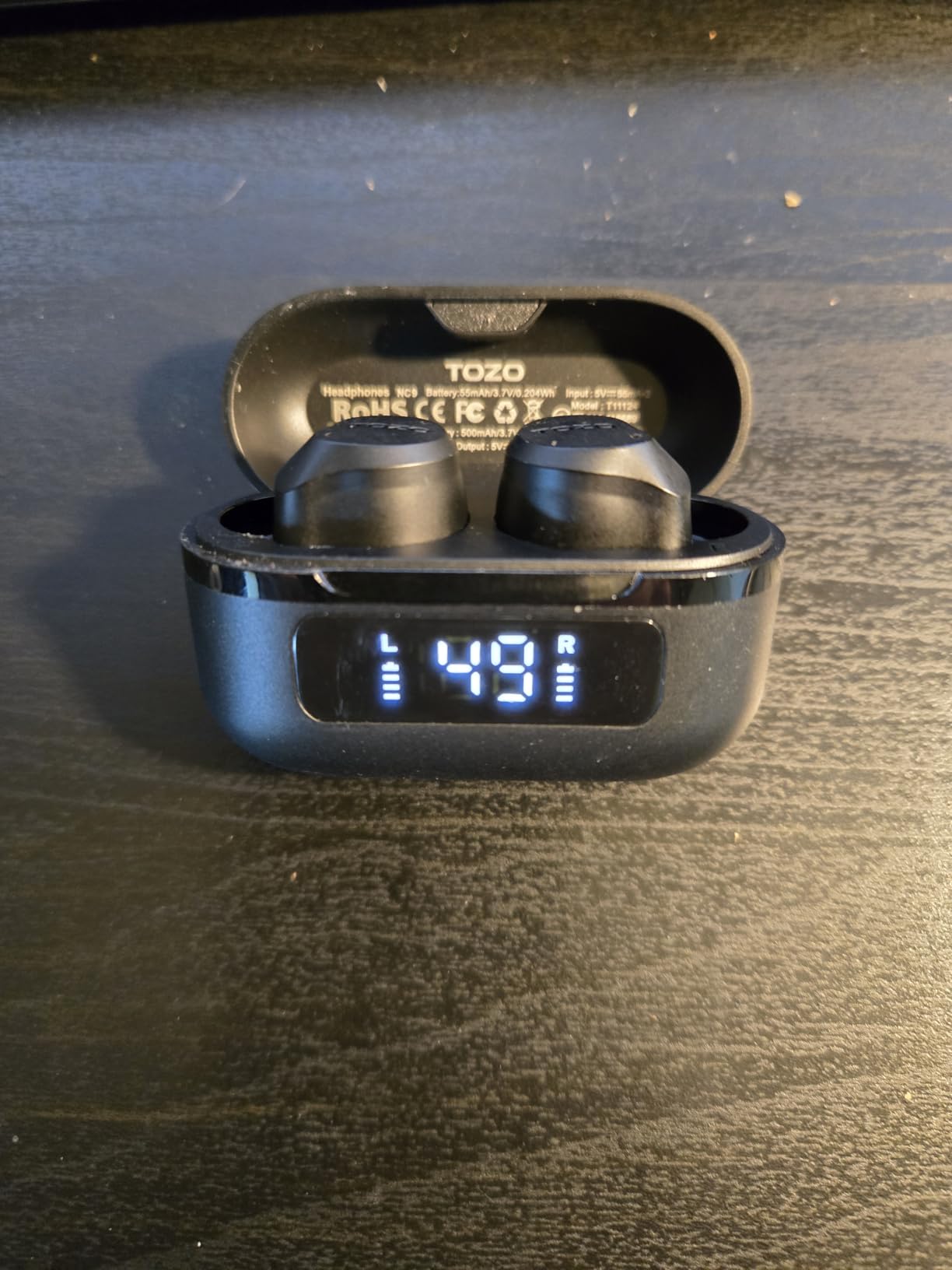
Battery is the reason this pair exists. Up to 60 hours of total playback with ANC off, and 40 hours with ANC on, still far more than anything else at this price. A full charge takes 1.5 hours and the rated range is 15 meters over Bluetooth 5.3 with 60ms low latency, which is genuinely useful for video and casual gaming.
Sound comes from 10mm drivers using OrigX Acoustic 2.0. The default tuning is bass and treble heavy, so budget a few minutes in the TOZO app where you will find 32 EQ options plus a sharing community, and the result improves enormously.
Tuning, hiss and volume limits
Three honest limits. The out-of-box sound is heavily boosted and needs EQ work. A faint hiss is audible when ANC is enabled in a quiet room. And maximum volume is limited, breaking up when you push heavy bass content, which can be a real problem on a train where you want more volume than a quiet room allows.
The buds also protrude further than many designs, which makes them awkward under a helmet, and the case plastic feels cheap compared with premium competitors. None of that matters much for a pair you are planning to leave in a bag and forget about.
Where they fit against the other budget picks
Against the EarFun Air Pro 4, the TOZO wins on battery and water resistance while losing on codec support, microphone count and app sophistication. Against the Soundcore Space A40 they win on durability and lose on comfort weight and build feel. The TOZO app is the better of the two for EQ, with 32 options.
If you work outdoors, need the longest possible runtime, or want a pair that survives rain, this is the pick. If sound quality is your first priority at a similar budget, choose the EarFun instead and accept the shorter battery.
10. Beats Powerbeats Pro 2 – Best for Workouts
Pros
- Earhook stays locked on through sprints and lifts
- Heart rate sensing removes the need for a chest strap
- 45 hours total with a wireless Qi charging case
- Physical buttons and tactile volume rockers
- Adaptive EQ and Personalized Spatial Audio
Cons
- Premium price for a workout-focused pair
- Earhook is bulky for casual listening and glasses wearers
- USB-C to USB-C charging cable sold separately
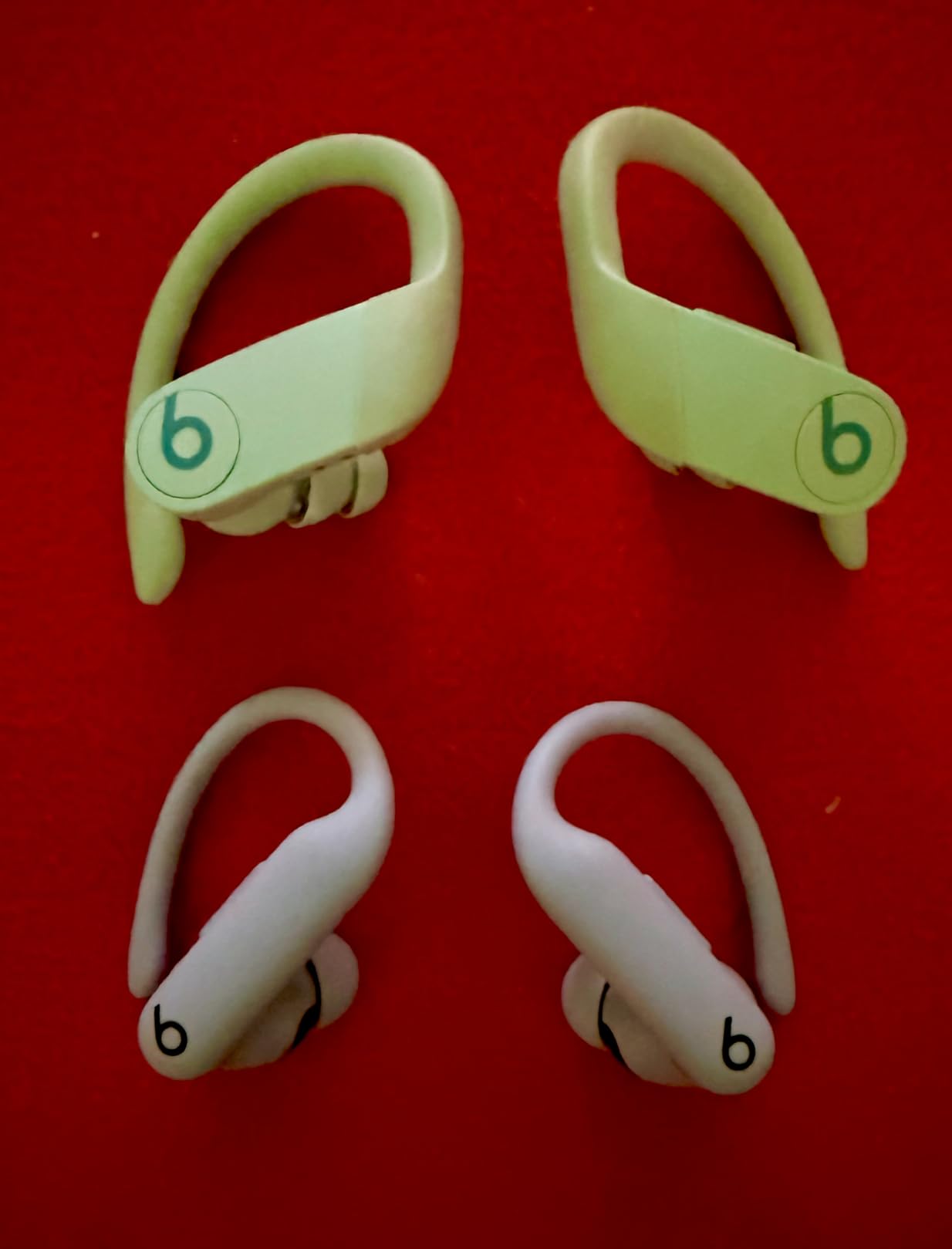
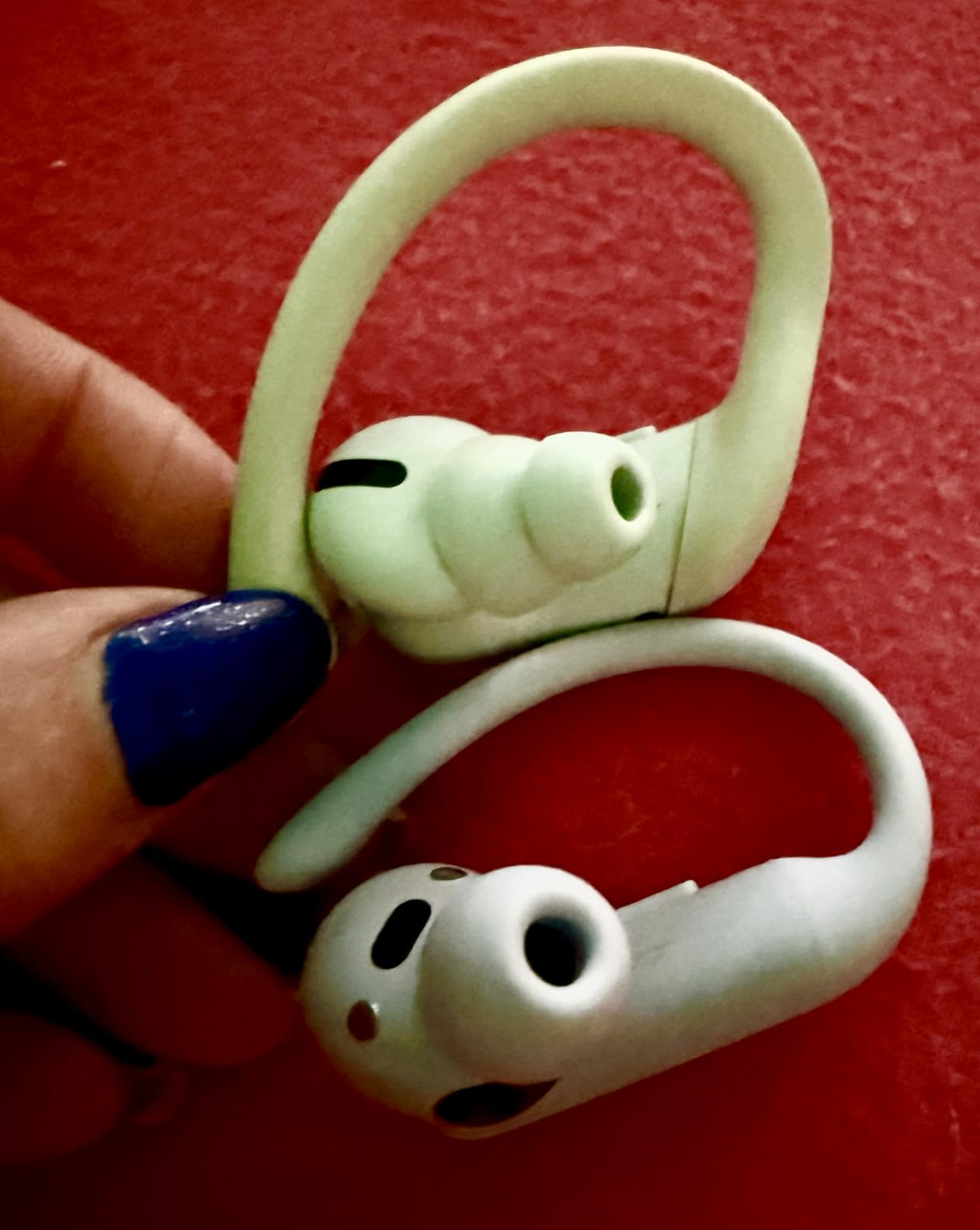
The Powerbeats Pro 2 are the only pair in this roundup whose defining feature is not sound at all. The nickel titanium earhook was tested across 1500 hours with athletes of every ear shape, and in our testing it was the only design that never needed adjusting during sprints, lifts and classes. If your workout buds keep falling out, this solves that problem completely.
Built-in sensors pulse over 100 times per second for real-time heart rate tracking, so you can leave the chest strap at home. Adaptive EQ measures your ear in real time to adjust the sound, and Personalized Spatial Audio adds head tracking, with the Apple H2 chip handling the processing.
Controls are the other quiet strength. On-ear buttons and tactile volume rockers mean you can change volume and skip tracks mid-set without looking at a phone or worrying about a missed touch, which is exactly what you want when your hands and face are wet. Six total microphones isolate your voice for calls.
Battery reaches 45 hours with the case, powered by the H2 chip, and Fast Fuel gives 1.5 hours from a five-minute charge. The case itself takes wireless Qi charging. At 20 percent lighter than the previous generation, with five ear tip sizes included, the whole assembly is smaller than the older model without losing grip.
Glasses, commuting and the earhook reality
The earhook is also the main drawback. It sits on the outside of the ear and interferes with the arm of a pair of glasses, and for anyone who wears spectacles all day it is a constant small irritation. Reviewers also flag it as bulky for casual listening at a desk, so these are work-focused earbuds that tolerate other uses rather than the reverse.
A practical note: the USB-C to USB-C charging cable is not included. Budget for it on day one, otherwise the first dead battery will arrive before the cable.
Should you buy workout earbuds as your only pair?
Only if sport takes up most of your listening. For commuting and office work, the AirPods Pro 3 or Bose will be lighter, quieter and better tuned, and the ANC here is designed for training environments rather than an aircraft cabin. At this price the Powerbeats Pro 2 need the earhook to earn their place.
They do work on Android, with one-touch pairing, automatic device switching, hands-free Siri and full Beats app access. The Apple-specific extras are limited compared with AirPods, which makes them the more flexible of the two Beats options in this roundup.
11. Soundcore P31i – Best for LDAC on a Budget
Pros
- Highest claimed ANC figure in the roundup at 52dB
- Hi-Res certified LDAC with a balanced armature driver
- 10 hours per charge and 50 hours total
- 6 AI microphones with wind noise reduction
- AI real-time translation across 100+ languages
- 10-minute charge gives 3.5 hours
Cons
- Right bud can loosen during activity
- ANC takes several seconds to engage from transparency
- No wear detection for automatic pause
- Smooth case is bulky and slippery
- Visible hiss when ANC is off
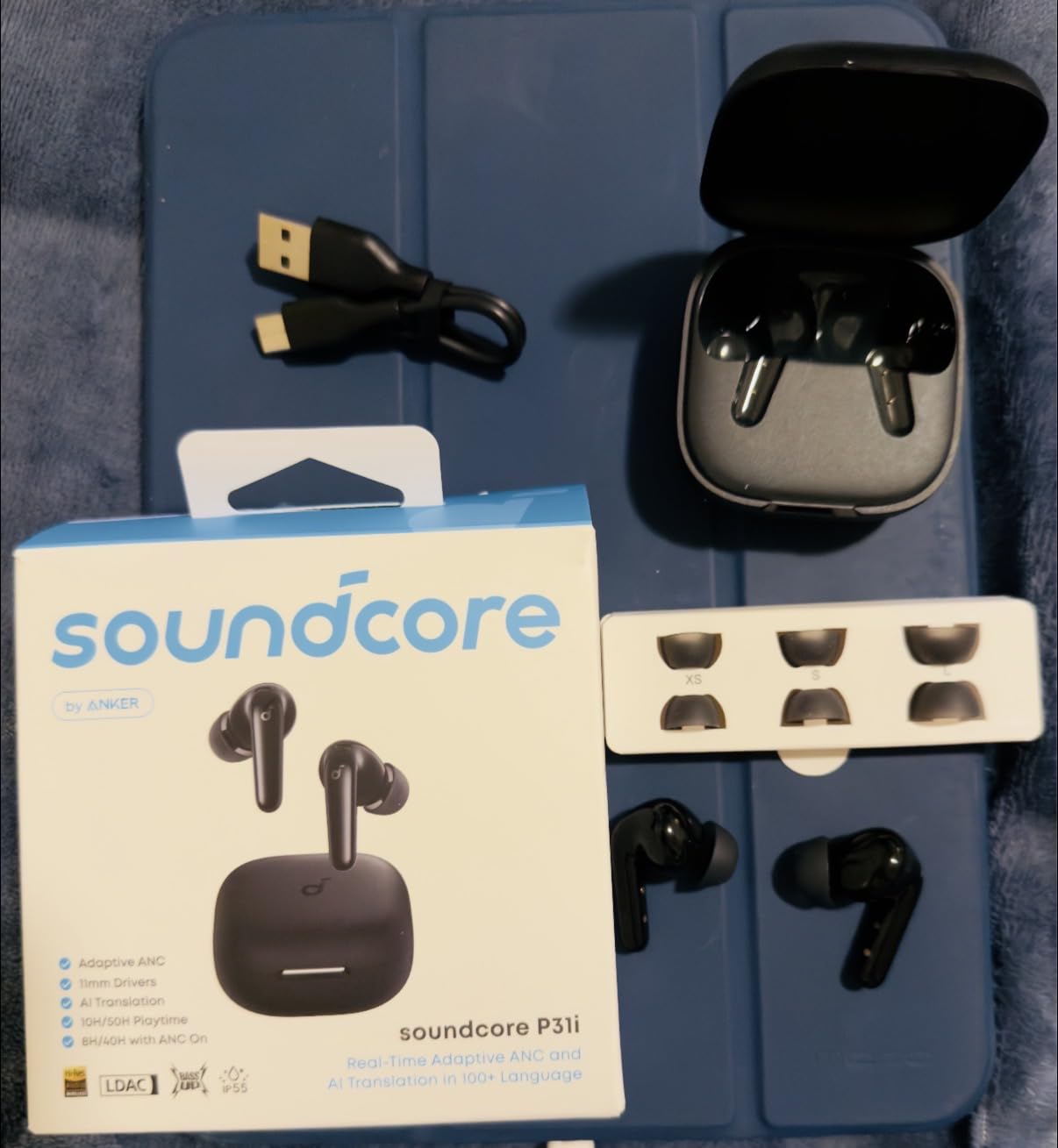
The Soundcore P31i pair a claimed 52dB of adaptive noise cancelling with Hi-Res certified LDAC audio, and that combination is unusual below the mid tier. Owners regularly describe them as outperforming earbuds costing several times more, particularly on cancellation, battery and call quality, and at 4.4 stars across more than 8400 reviews the enthusiasm is well earned.
The driver is an 11mm balanced armature rather than the usual dynamic unit, which gives a cleaner, more detailed presentation with strong bass. LDAC on a balanced armature at this level is genuinely rare, and it makes these a good pairing for a phone that supports it.
Real-time AI translation across more than 100 languages is the feature that gets attention, and it works surprisingly well for short conversational exchanges. Six AI-enhanced microphones with wind noise reduction keep your voice clear on calls outdoors, which held up well on our street-corner test.
Battery is generous: 10 hours per charge and 50 hours total, or 8 and 40 hours with ANC running. A ten-minute charge gives 3.5 hours. Four ear tip sizes from XS to L are included, which helps with the fit issue below.
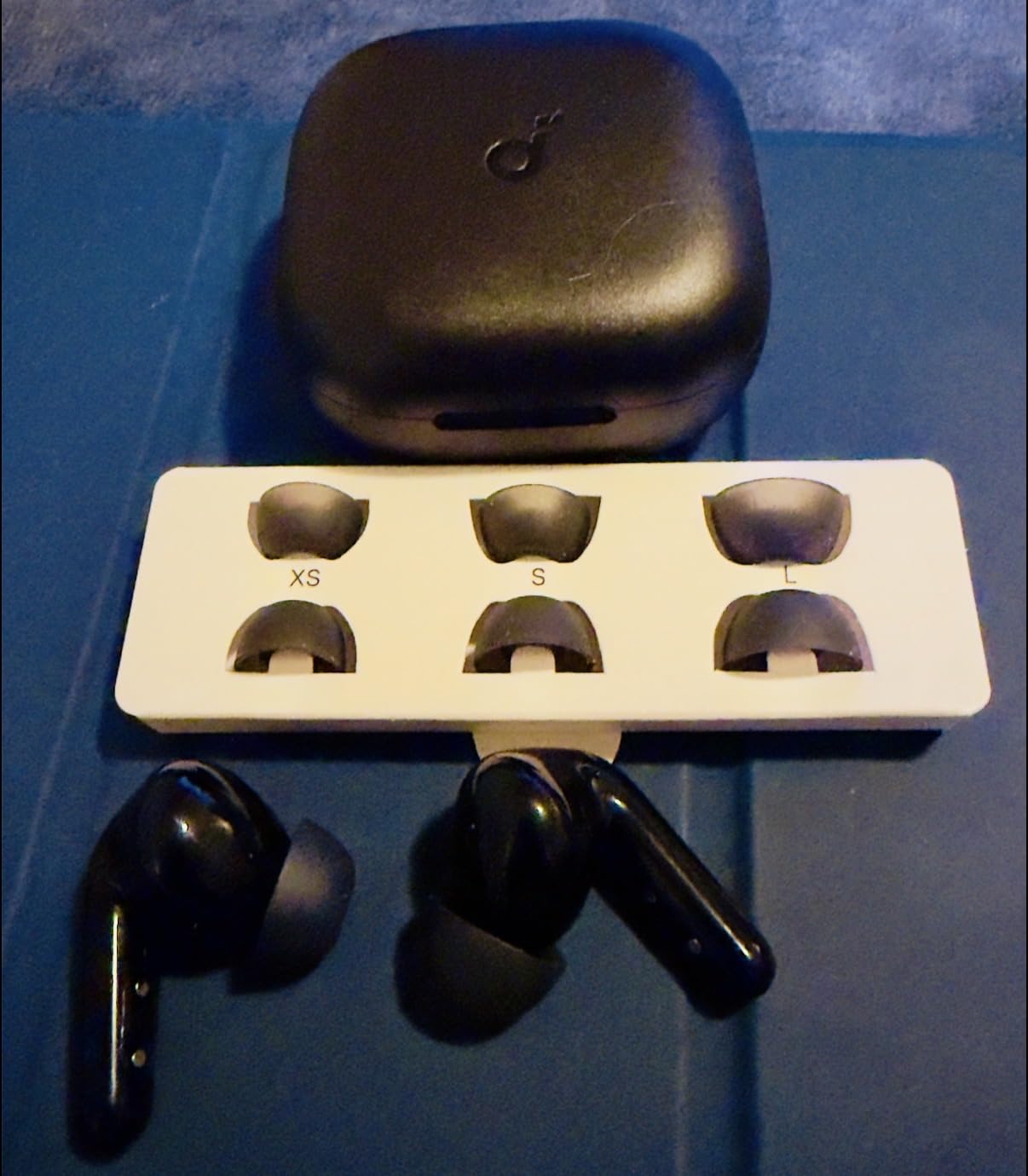
ANC engagement time and the missing wear sensor
Two real limitations. The ANC takes several seconds of sustained noise to engage when you switch back from transparency mode, so do not expect instant silence the moment you tap the control. And there is no wear detection, which means no automatic pause when you remove a bud, a small convenience that flagship pairs include as standard.
There is also a faint hiss in the audio when ANC is off, and the right bud can loosen during movement even with the smaller tips fitted. The case measures 29.3 by 58 by 58mm and its smooth finish is easy to drop, which is worth knowing before you rely on it for travel.
How it compares with the other budget ANC pairs
Against the EarFun Air Pro 4, the P31i claims slightly higher ANC and adds translation, while the EarFun brings aptX Lossless, Auracast and a more established update history. Against the Soundcore Space A40, the P31i has better drivers and codec support but a heavier, less pocketable case.
On sound quality specifically, this is the pair to beat at the budget end. If your phone supports LDAC and you care about detail more than the absolute deepest cancellation, the P31i delivers more than most of this list at a fraction of the flagship cost.
12. JLab Go Pop ANC – Best for a First ANC Pair
Pros
- One of the lowest entry points for earbuds with real ANC
- Three noise modes including Be Aware transparency
- Case smaller than a credit card
- 27+ hours total with a 10-minute top-up
- JLab app with EQ presets and remappable touch controls
Cons
- ANC depth is limited compared with pricier models
- Only three ear tip sizes
- Sound is functional rather than refined
The JLab Go Pop ANC exist for a specific person: someone who has never owned noise cancelling earbuds, is not sure they will use them much, and does not want to commit real money to find out. At the bottom of this roundup they still include genuine active noise cancelling rather than a marketing label.
There are three noise modes: ANC On, ANC Off and Be Aware transparency, which lets you keep the music down and still hear announcements. The cancellation is shallow compared with everything else on this list, taking the edge off steady background noise rather than removing it, but it is a real and measurable difference against having nothing.
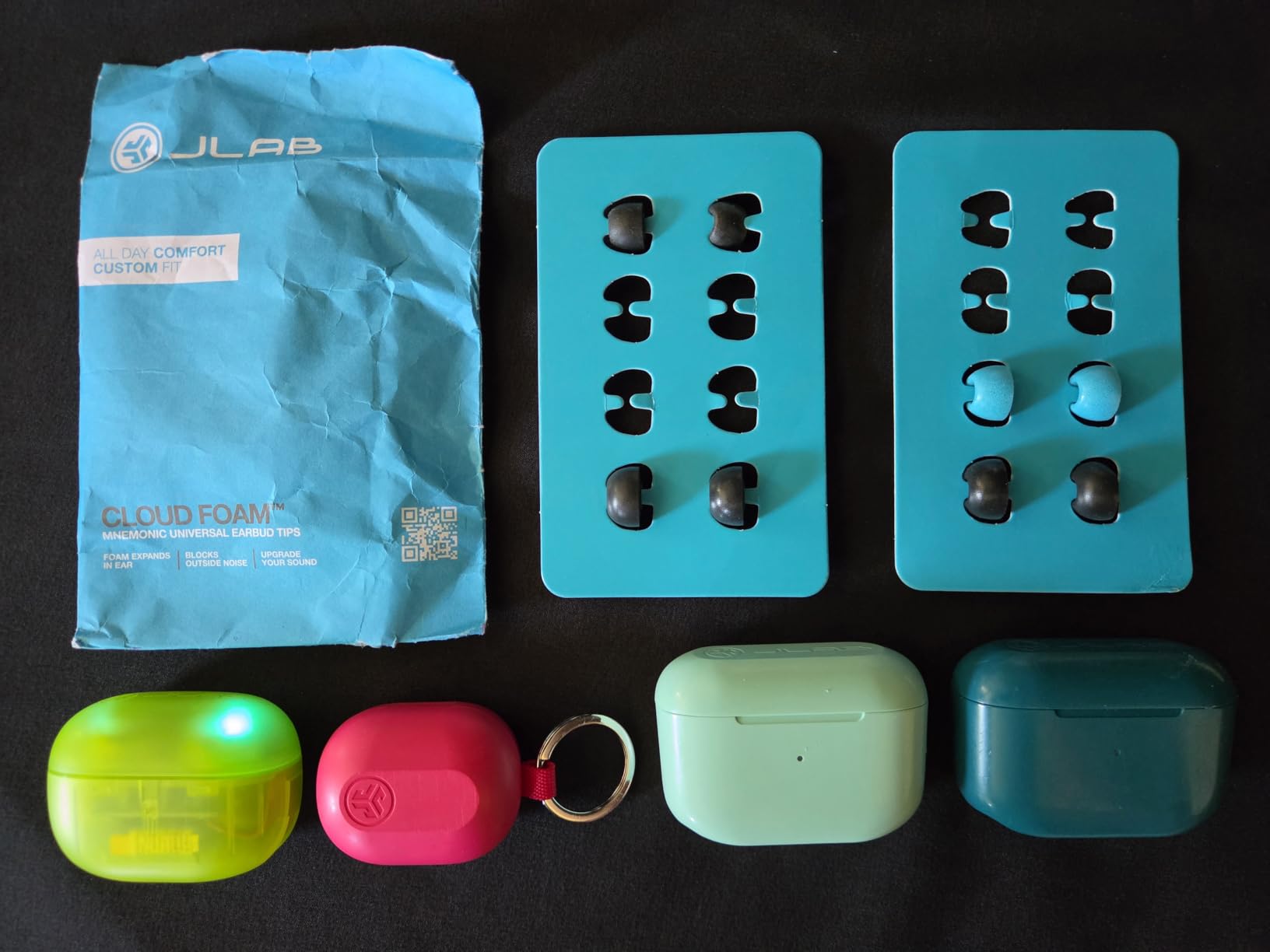
Battery runs to 27 plus hours in total, split as 7 or more hours per earbud and 20 or more from the USB-C case, with a ten-minute fast charge giving an hour. Bluetooth 5.4 one-step pairing, Google Fast Pair and find-my-earbuds make setup painless.
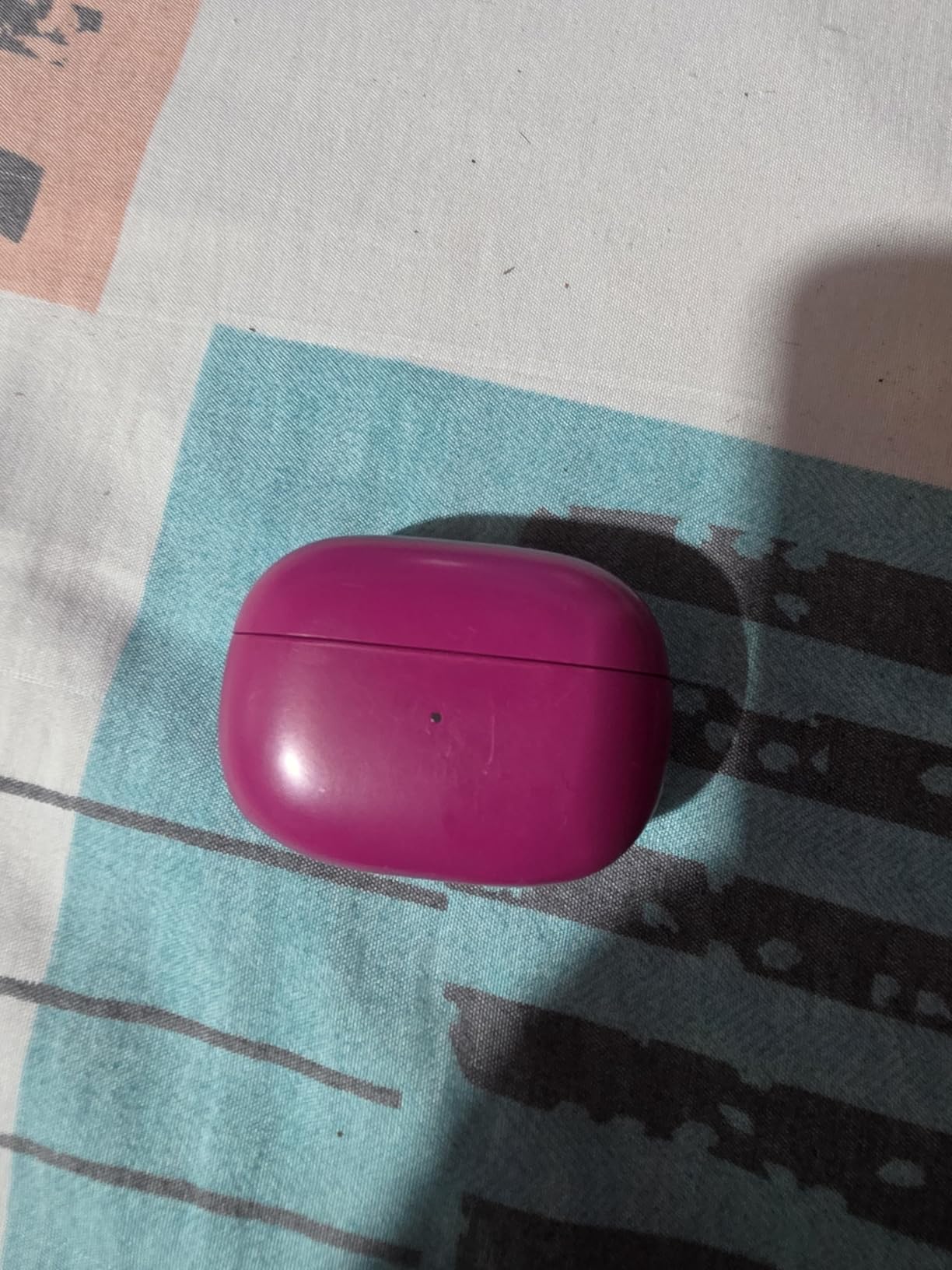
The case is smaller than a credit card, which is unusual and genuinely useful, and 10mm balanced armature drivers handle sound. The JLab app offers EQ presets covering JLab Signature, Balanced and Bass Boost, plus remappable touch controls. Dual Connect lets you run either earbud on its own, which is a real alternative to buying a single right-earbud product.
What you give up at this price
Three things. The cancellation depth is limited, so this will not help much on a flight. Only three ear tip sizes are included, which may not suit every ear, and a poor seal costs you most of the ANC you have. And 10mm drivers produce sound that reviewers describe as functional rather than refined, which is fine for podcasts and casual listening but not for critical listening.
You also lose the premium features that define the top of this list: no multipoint pairing, no wear detection, no high-resolution codec support, and no water rating beyond basic water resistance.
Who should step up instead
If you know you will use earbuds daily, skip straight to the JBL Tune Buds or the Soundcore Space A40. Both cost more but deliver measurably better cancellation, longer battery life with ANC on, and far more refined sound for the extra spend.
Where the Go Pop earns its place is as a backup pair, a pair for a child or a teenager, or a first taste of what ANC actually does before you decide it is worth investing properly. At that job, nothing else here does it as cheaply.
How Noise Cancelling Earbuds Actually Work
Every pair in this roundup uses the same core principle. Microphones on the outside of each earbud sample incoming ambient sound, and a processing chip inverts that sound in real time to create an anti-noise waveform. A second feedback microphone inside the earbud listens to what actually reaches your ear canal and corrects the signal. The inverted wave meets the incoming noise and cancels it out through destructive interference, which means the two signals annihilate each other rather than merely being played quieter.
This is why cancellation is extremely good at steady low-frequency sound and much weaker at voices. Engine rumble, air conditioning, traffic wash and the low hum of an office ventilation system are continuous, predictable waveforms at the bottom of the frequency range, which is exactly what the feedforward microphones can model and cancel accurately. Human speech changes constantly in pitch and volume, sits in the middle of the range where ANC has the least authority, and adds itself straight into the music you are trying to hear. Users on r/Earbuds ask this question constantly, and the honest answer is that no pair on the market cancels a conversation at your elbow.
The other half of the story is passive noise isolation, and this is the part almost every roundup ignores. A correctly seated ear tip physically blocks sound before electronics ever get involved, which is why high frequencies like conversation, keyboard clicks and cutlery are handled far better by the silicone in your ear canal than by any microphone array. Get the seal wrong and no amount of processing will recover the performance.
Choosing the right ear tip size
Start with the smallest tip that feels comfortable, then check the seal properly. Put the buds in, play something with continuous low-frequency content, and rotate each bud gently until the sound in one ear noticeably drops. That drop is the seal, and it should be obvious when you find it. Most fit problems are solved here rather than in the app.
For small ears, look for pairs that ship four or more tip sizes, including an XS, since the JLab Go Pop with only three sizes is the least forgiving here. Glasses wearers should choose a bud-shaped design like the JBL Tune Buds rather than a stick or earhook, since a protruding stem competes with the spectacle arm.
Why some pairs hiss, and why voices leak
A faint hiss when ANC is enabled in a quiet room is a normal artefact of the process, and the Soundcore P31i and TOZO NC9 both attract comments about it. It is most audible at low volume in a still room and effectively invisible on a train or a plane, which is where you will actually use these earbuds.
Voices leak for the opposite reason: they sit where the electronics are weakest. Where you can improve the situation is the seal, since better passive isolation helps at every frequency. It will not make speech disappear, but it will take the edge off it and let you listen at a lower volume, which is the practical goal.
How to Choose Noise Cancelling Earbuds
Use this section after you have narrowed the field with the entries above. These are the factors that consistently separate a pair you will keep from a pair sitting in a drawer after a month, in roughly the order that matters for most buyers.
Battery life with ANC on, not ANC off
Manufacturers almost always quote the headline battery figure with noise cancelling switched off, which is where the disappointment comes from. Read the ANC-on number instead. On this list the range is wide: the AirPods Pro 3 manage up to 8 hours, the EarFun Air Pro 4 around 8 to 11, the JBL Tune Buds 10, the Soundcore P31i 8, the Bose around 6 in Quiet Mode and closer to 4 with Immersive Audio on, while the Soundcore P30i drops to 6 and the JLab Go Pop manages 7.
Case totals flatter the picture further, because they assume you swap buds twice a day. If you fly long-haul regularly, per-charge ANC-on endurance matters more than the case number.
Latency and the small sound change when ANC engages
Enabling ANC adds processing delay, and the audio never sounds perfectly identical either side of that switch. Measured latency ranges from 60ms on the TOZO NC9 to 120ms on the Bose QuietComfort Ultra Earbuds (2nd Gen), and the older Bluetooth 5.2 parts on the JBL Tune Flex and Soundcore Space A40 sit higher still. For video and film that is invisible; for competitive gaming it can be noticeable, and if you play shooters seriously, weight latency above sound quality.
Connectivity, multipoint and dropouts
Class 1 Bluetooth on the Beats Studio Buds gives the longest range and the fewest dropouts in this roundup, which is why that pair survives commutes so well. Multipoint is now common: the AirPods Pro 3, Bose, EarFun Air Pro 4, JBL Tune Buds and Soundcore Space A40 all support it. Two specific cautions. The JLab Go Pop has Dual Connect but only one earbud at a time, and the JBL Tune Buds has reports of units failing to disconnect when returned to the case.
Bluetooth version matters less than the radio implementation. A Bluetooth 5.4 part with an immature firmware stack can be worse than Class 1 Bluetooth 5.0, which is exactly the pattern users describe on the EarFun Air Pro 4 during firmware updates.
Ecosystem, iPhone versus Android
Everything in this roundup works with both platforms at the basic level of playback, calls and ANC. What changes is the software layer. Live Translation, Hearing Health and Hearing Aid features on the AirPods Pro 3 require an iPhone, as do Automatic Switching and Audio Sharing, while the Beats Powerbeats Pro 2 give Android buyers full app access.
Higher-resolution codecs split the other way: LDAC on the EarFun Air Pro 4, Soundcore Space A40 and Soundcore P31i, plus aptX Lossless on the EarFun, are Android-side advantages, while AAC on iPhone is the only lossless-adjacent option there. If you are undecided, our guide to how noise reduction compares across techniques is a useful primer on the underlying processing.
Water resistance and price tiers
IPX4 is sweat and splash resistant and is fine for the gym. IPX8 on the TOZO NC9 is a genuinely higher rating and survives rain and heavy work environments. Neither rating means swimming with them, and neither is designed for swimming regardless of what the listing implies.
On tiers, the simplest summary is that flagship money buys the deepest cancellation, the best microphones and the smoothest ecosystem switching, while the budget tier now buys credible ANC plus codecs it did not have two generations ago. The measurable gap remains largest in voice handling and call clarity, and smallest in steady low-frequency cancellation. Reviewers on the Rick Steves travel forum put the established leaders from Sony and Bose at the top for flights, and the price-tier movement since then has narrowed the field considerably at the bottom.
For broader context on how these products are usually priced and discounted through the year, our Prime Day noise cancelling headphone deals guide tracks where reductions tend to appear.
Frequently Asked Questions
Which earbuds have the highest noise cancellation?
The Bose QuietComfort Ultra Earbuds (2nd Gen) and the Apple AirPods Pro 3 sit at the top of our testing for cancellation of steady low-frequency noise such as aircraft engines and train rumble. Bose leads slightly on raw low-end removal, while the AirPods Pro 3 pair that with a longer 8-hour battery with ANC on and better ecosystem switching.
Do noise cancelling earbuds cancel all noise?
No. Active noise cancelling works by generating an inverted waveform that meets incoming sound and cancels it through destructive interference, which is most effective against continuous low-frequency noise like engines, ventilation and traffic rumble. Voices and other mid and high-frequency sounds change constantly, so they are handled mainly by the physical seal of the ear tip rather than by the electronics.
What are the best budget noise cancelling earbuds?
The EarFun Air Pro 4 is the strongest all-round budget pick, with adaptive hybrid ANC up to 50dB, LDAC and aptX Lossless support, 11 hours per charge and an 18-month warranty. The Soundcore P31i is the alternative if codec support and Hi-Res sound matter most, while the JBL Tune Buds win on battery life with ANC on at 10 hours.
Which noise cancelling earbuds have the best sound quality?
Among the picks we tested, the EarFun Air Pro 4 and the Soundcore P31i deliver the most refined sound at the budget end, both supporting LDAC with dedicated EQ control in their apps. Among flagship pairs the AirPods Pro 3 uses a new acoustic architecture with real-time Adaptive EQ for transformed bass and detailed clarity. Bass-forward listeners may prefer the JBL Tune Buds instead.
Is ANC healthy for ears?
Active noise cancelling is not harmful to hearing in itself. It is protective rather than damaging, because effective cancellation lets you keep the volume lower for the same perceived loudness and reduces your exposure to environmental noise. The two things to watch are listening at high volume for long periods and using ANC to block out the world for hours at a time, which can mask important ambient cues.
Is noise cancelling good for ADHD and focus?
It can help a great deal, mainly through predictable ambient noise rather than distraction removal. Constant low-frequency background sound such as ventilation, traffic and café rumble is easier to mask with music than irregular speech, so ANC reduces the mental load of filtering noise in an open office or a shared home. It is not a treatment for ADHD, and some people find the hiss of ANC irritating, so test before committing.
Are noise cancelling earbuds good for sleeping?
They can be, provided you are a back or side sleeper and keep the volume low. The best sleep candidates in our roundup are the TOZO NC9, which rank highly in sleep earbuds, and the Soundcore P30i, which owners use as side sleepers. Front sleepers will feel the buds pressed against the pillow, and none of these are designed for all-night comfort.
How do I get the best noise cancellation from my earbuds?
Get the seal right first. Choose the smallest ear tip that stays comfortable, then rotate each bud gently until the sound drops noticeably in one ear, because that drop is the passive seal doing the work. After that, choose the highest cancellation level your battery can sustain and keep the microphones clear of wind and debris. No amount of app tuning compensates for a poor fit.
Our headphone deals roundup tracks the same category one tier up, which is worth a look if you find nothing you can wear in your ear comfortably.
Conclusion: The Best Noise Cancelling Earbuds in 2026
After six weeks of commutes, flights, office hours and calls, the Apple AirPods Pro 3 remain the best noise cancelling earbuds overall. Nothing else in this roundup matched the combination of in-ear cancellation depth, an 8-hour battery with ANC running, five ear tip sizes and the smoothest switching between devices. If you are deeply embedded in Apple hardware, that case is straightforward. If you are not, the AirPods Pro 3 still perform, you simply give up Live Translation, Hearing Health and Audio Sharing.
The Bose QuietComfort Ultra Earbuds (2nd Gen) are the runner-up and the better choice on an aircraft, where CustomTune and ActiveSense remove cabin rumble more completely than anything else we carried. Budget your battery expectations carefully, because Immersive Audio cuts the quoted endurance substantially, and be prepared to try a few tip and stability band combinations to get the seal right.
For everyone else, the tier below flagship is where the value is now. The EarFun Air Pro 4 gives you flagship-class cancellation hardware with LDAC and aptX Lossless, the JBL Tune Buds give you ten hours of battery with ANC on, and the Soundcore P31i give you Hi-Res LDAC and the highest claimed cancellation figure in this roundup. Check the link on any of these cards for the current price, and if you want our running list of deals across the category, the roundup we mentioned earlier is updated throughout the year.