
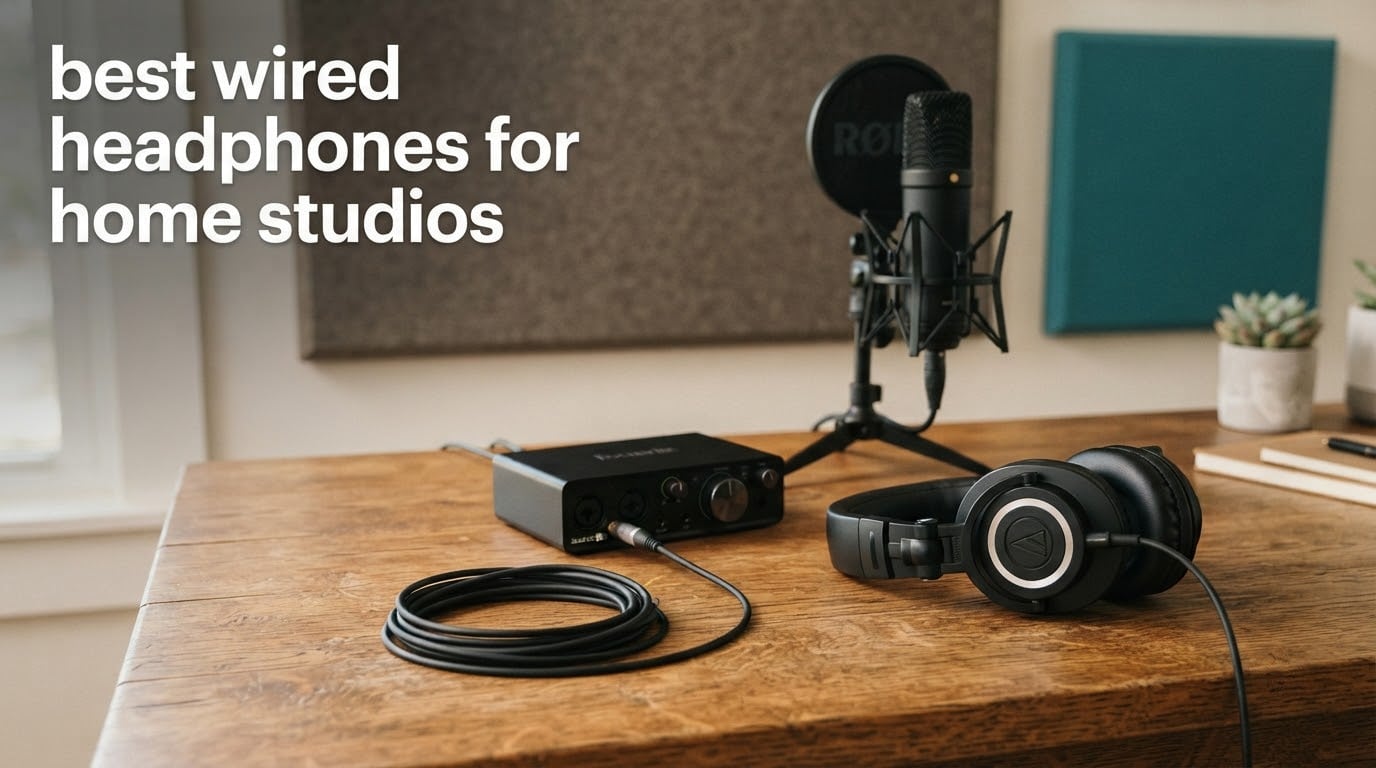
The best wired headphones for home studios are the Audio-Technica ATH-M50x for most people. They are closed-back, they run at 38 ohm so a USB-powered interface drives them without a separate headphone amp, the cable detaches, and they carry more owner reviews than anything else in this list. If your room is untreated and you want a wider soundstage for mixing, the beyerdynamic DT 990 Pro is the other option worth owning, with the caveat that its 250 ohm version wants real amplification.
I have spent years recording and mixing in rooms that were never designed for the job: a spare bedroom, a corner of a garage, a desk in a flat above someone who sleeps at night. In all of those rooms, headphones were the first monitoring purchase and the last one I stopped using. That experience shaped every pick below, because the questions that matter in a home studio are not the same questions a spec sheet answers.
Two of them decide almost everything. The first is isolation: can you track a vocal without the headphone sound leaking into the microphone? The second is whether your interface can actually drive the pair. A 250 ohm headphone on a bus-powered laptop jack is the single most common complaint I see from home producers, and it has a simple fix that I walk through below. Until then, here is the short version of what to buy and why.
Top 3 Picks for Wired Home Studio Headphones in 2026


The M50x takes the top slot because it does the tracking job and the mixing job without asking you to change anything in your signal chain. The Sony MDR-7506 is the one to buy if you want the pair that physically outlasts everything else in your studio. The DT 990 Pro is the mixing specialist, and it is the only open-back in this group that I would call a genuine reference.
Best Wired Headphones for Home Studios (October 2026)
| Product | Specifications | Action |
|---|---|---|
| Audio-Technica ATH-M50x |
|
Check Latest Price |
| Sony MDR-7506 |
|
Check Latest Price |
 Audio-Technica ATH-M20x Audio-Technica ATH-M20x |
|
Check Latest Price |
 beyerdynamic DT 990 Pro 250 Ohm beyerdynamic DT 990 Pro 250 Ohm |
|
Check Latest Price |
 Audio-Technica ATH-M40x Audio-Technica ATH-M40x |
|
Check Latest Price |
 OneOdio A71 OneOdio A71 |
|
Check Latest Price |
 AKG K240 Studio AKG K240 Studio |
|
Check Latest Price |
 Sennheiser HD 280 Pro Sennheiser HD 280 Pro |
|
Check Latest Price |
 MAONO MH601 MAONO MH601 |
|
Check Latest Price |
 FIFINE HD8 FIFINE HD8 |
|
Check Latest Price |
 AKG K92 AKG K92 |
|
Check Latest Price |
 OneOdio Pro DJ OneOdio Pro DJ |
|
Check Latest Price |
Two columns in that table matter more than the rest. Impedance decides whether you can skip a headphone amp, and open versus closed decides whether you can record anything at all. Every other specification is a preference.
1. Audio-Technica ATH-M50x: Best All-Rounder for a Home Studio
Audio-Technica ATH-M50X Professional Studio Monitor Headphones, Black, Professional Grade, Critically Acclaimed, with Detachable Cable
Pros
- Easy to drive from any audio interface
- Excellent isolation in a loud room
- Detachable cable with two lengths included
- Swiveling cups for one-ear tracking
Cons
- Ear pads flatten with heavy daily use
- No carrying case in the base package
- Closed design keeps you cut off from the room
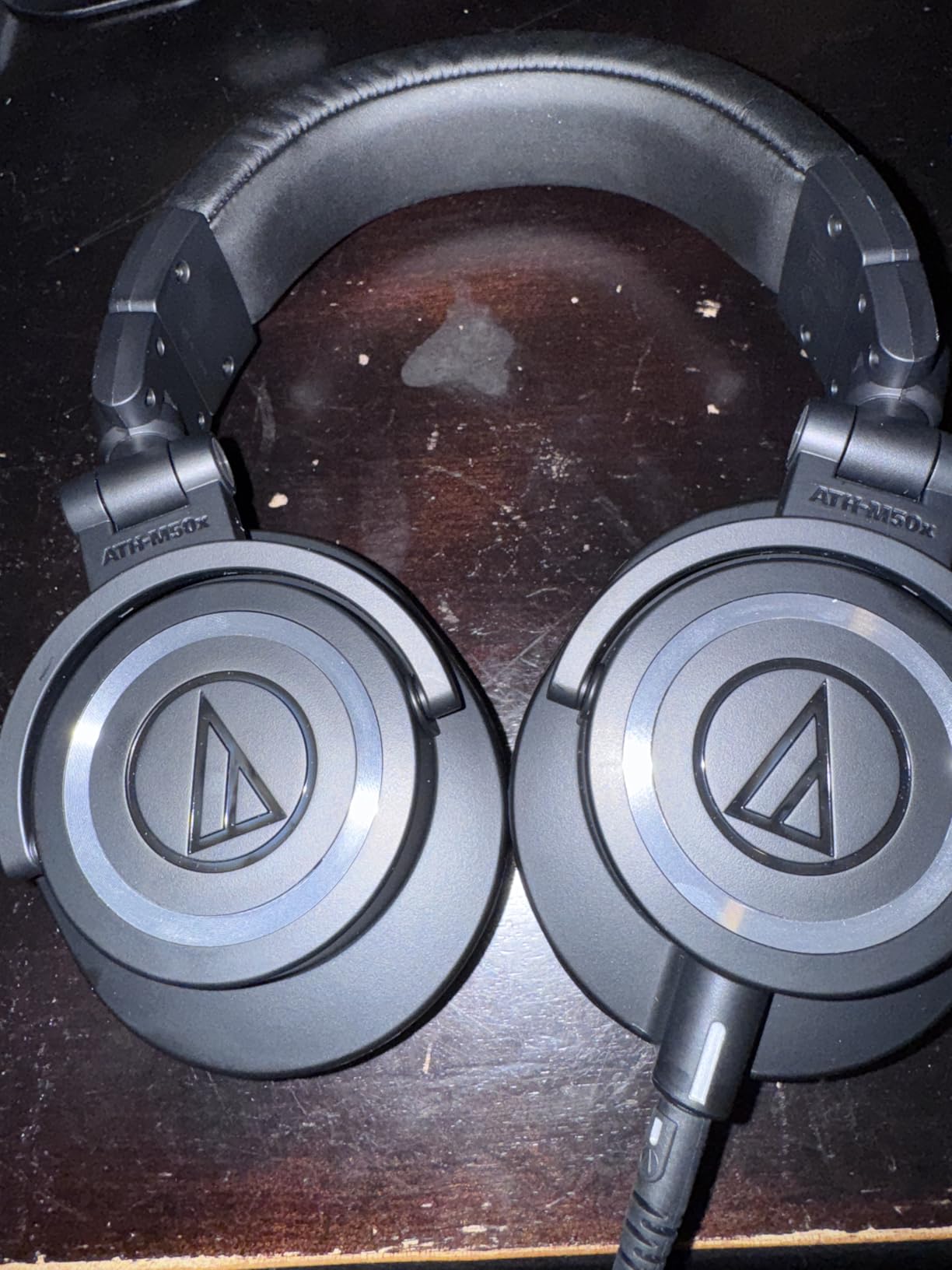
The ATH-M50x is the pair I recommend when someone asks me for one recommendation and does not want a lecture. It is closed-back, which means it isolates well enough to track a vocal in a room with a running fan, and it runs at 38 ohm, which means it plays at a sensible level straight from a USB interface without a separate amp.
My daily tracking pair for several years was the ATH-M50x, and the thing that keeps it in rotation is the balance. The low end is present but not boosted, the midrange stays clear, and the treble has enough air to hear sibilance problems that cheaper closed-backs smear over. At 0.29 kg it also stays comfortable through a full day of editing and mixing without the pressure headache that heavier clamps cause.
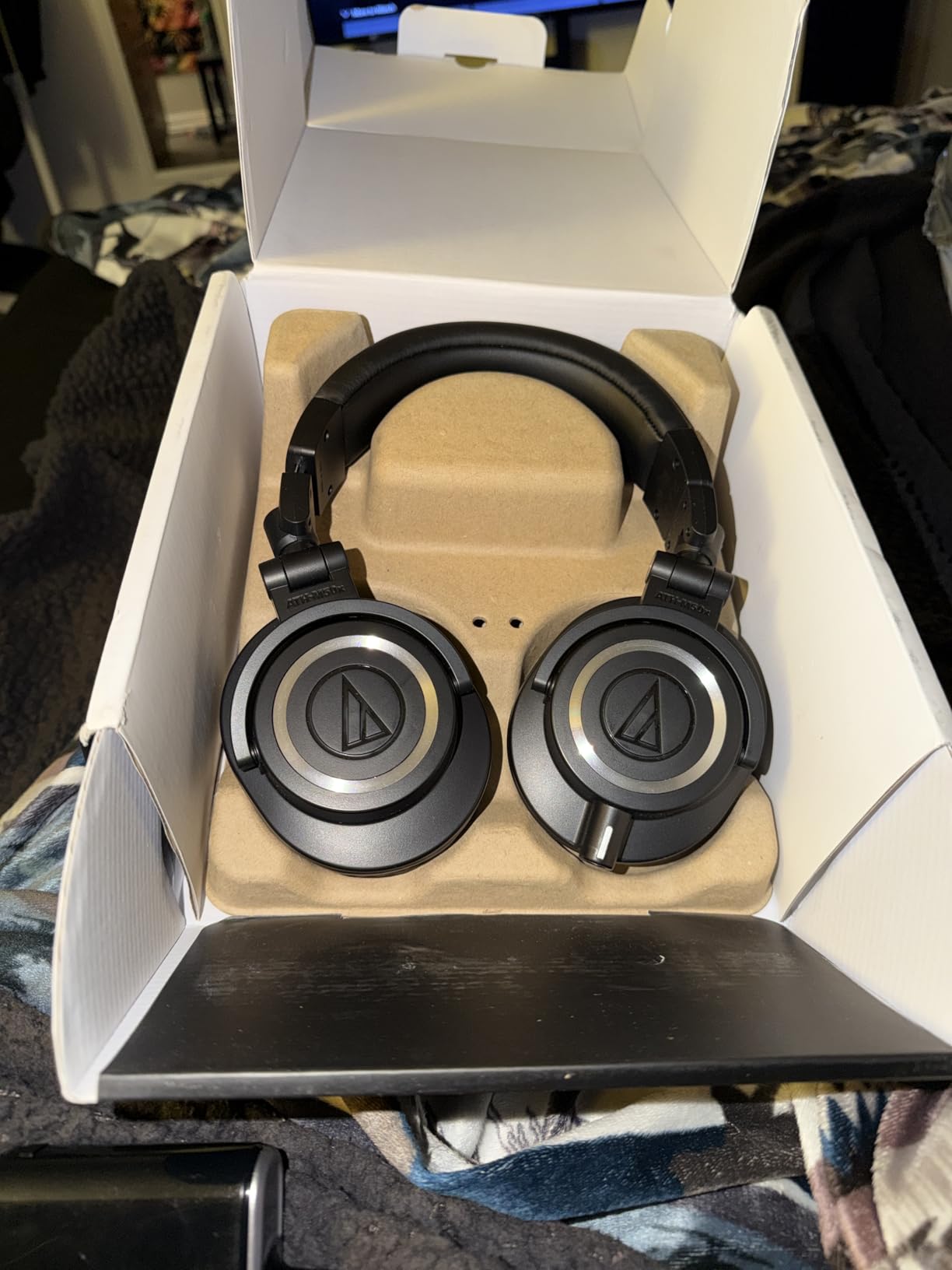
Spec-wise this is a 45 mm large aperture driver with rare earth magnets, a stated frequency range of 20 Hz to 28,000 Hz, 99 dB sensitivity, and a detachable cable. The cups swivel 90 degrees so you can pull one side off your ear and fold a mic into the gap, which is the standard tracking move with a condenser capsule.
Ignore the headline bandwidth number and look at the shape of the response instead. A wide stated range tells you almost nothing; what matters is that the tuning stays close to neutral across the midrange rather than adding a lift or a scoop somewhere you will make decisions. Audio-Technica’s M-series has always done that well, and reviewers consistently describe the M50x as the default studio headphone for a reason.
Why the M50x suits a room you have not treated
Closed-back cups plus a circumaural seal mean you are hearing far less of your room’s own bass than you would on speakers, so the low end you judge here is closer to what a treated room would give you. It is still not neutral, because no closed-back can hide a boosted bass shelf, but the M50x is about as honest as a closed design gets at this tier.
It is also the safest recommendation for a tracking-heavy home studio. The isolation means you can record without shouting over the track, and the light weight means you are not constantly adjusting the fit between takes.
Where the M50x disappoints
The pads flatten. That is true of any pair worn daily for a year, but it matters more here because the seal is what produces the isolation, and a compressed pad leaks. Replacement pads are widely available and inexpensive, so treat it as scheduled maintenance rather than a defect.
The other limitation is philosophical. A closed-back will never give you the sense of front-to-back depth that the open-backs below deliver, so if you mix spatial work, reverbs, or anything with a wide stereo image, keep this as the tracking pair rather than the only pair.
2. Sony MDR-7506: The Rugged Tracking Standard
Pros
- Built to survive years of daily studio use
- Lightweight and comfortable for long takes
- Includes a 1/4 inch adapter and soft case
- Honest neutral response
Cons
- Fixed cable cannot be replaced
- Very long straight cord adds desk clutter
- Less isolation than modern closed-backs
- Ear pads feel thin once they age
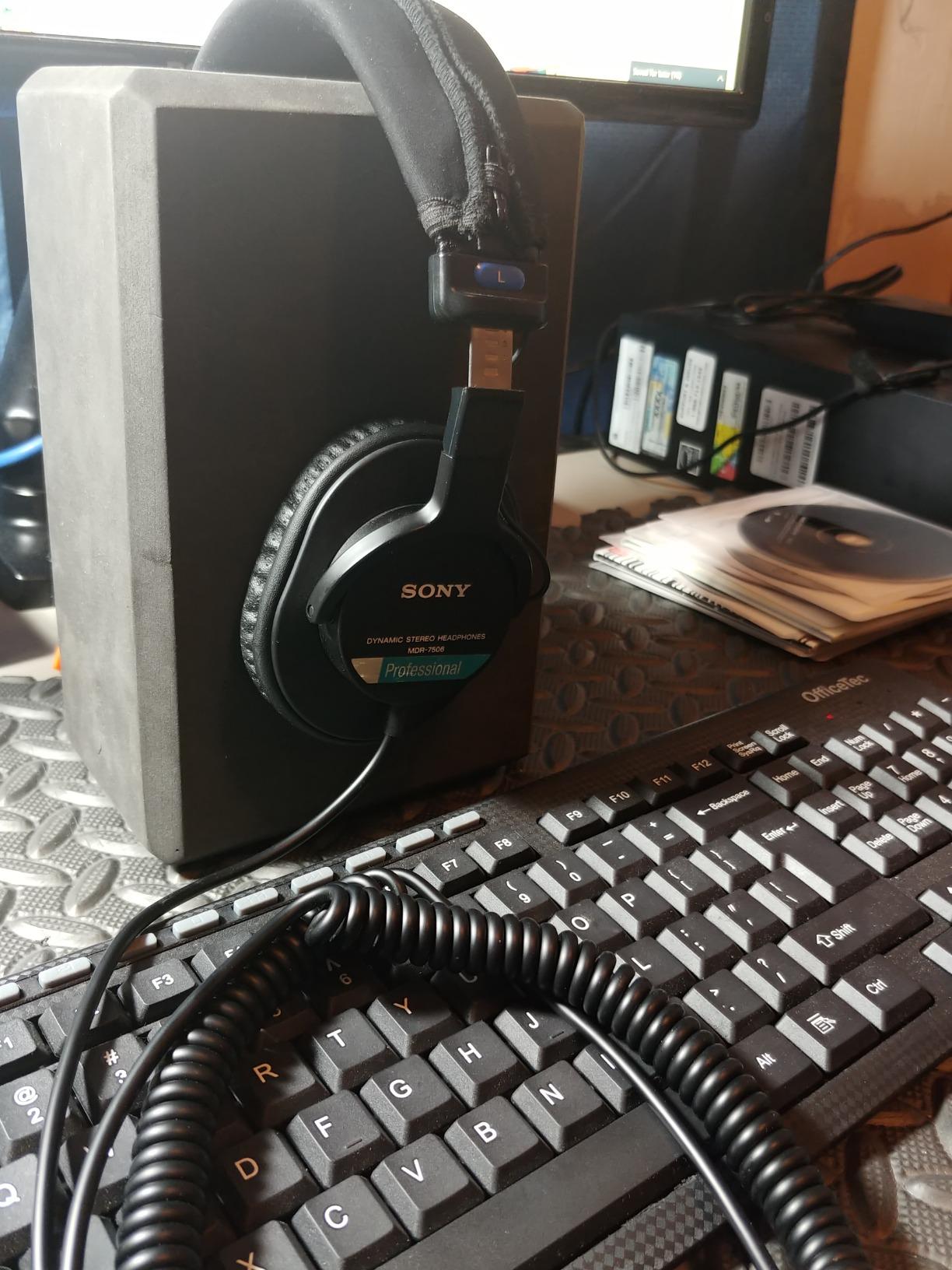
The MDR-7506 has been the default headphone in broadcast booths and edit suites for so long that engineers buy it without shopping. That is a compliment and a warning. It is not the most accurate headphone you can own, and it is not the most comfortable, but it is close to indestructible and every studio on earth has a spare.
For a home studio I use it the same way. It goes on for tracking, it takes a bit of abuse from being thrown in a bag, and it does not develop the creaks and rattles that plastic headphones in this category do. At 63 ohm it drives fine from a typical interface, though it is not as sensitive as the 32 to 47 ohm models here, so it wants more of your volume knob.
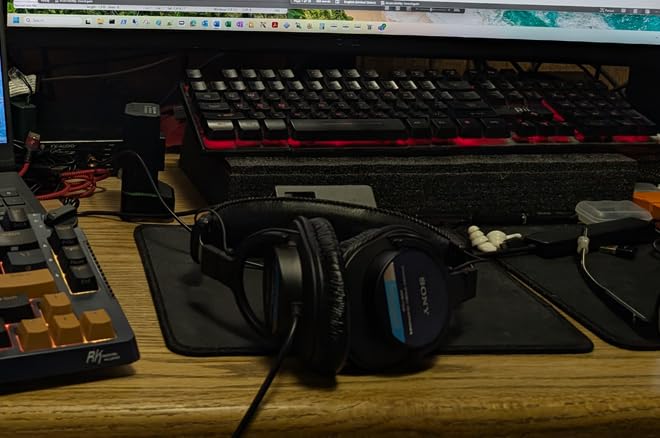
The build is a closed-ear design with 40 mm neodymium drivers, a non-detachable 9.8 ft cord with a gold plated plug, and a supplied quarter-inch adapter. It folds flat into the included soft case, which is a nicer detail than it sounds if you move between a home room and a different space regularly.
Sonically it is honest and slightly bright. Some people describe it as harsh on female vocals or on heavily boosted cymbals. The response is still close enough to neutral that mix decisions transfer, which is why professionals have kept using it through every generation of better-measured alternatives.
When the Sony MDR-7506 is the right call
Pick it when the pair will be used hard rather than listened to carefully. Tracking is the answer: it isolates reasonably, it is light, and it will not matter to you that the pads are thin because you will replace them in two years anyway. It is also a sensible pick if you record video or need to move between rooms.
On home studio forums, owners keep describing it as a pair they expect to keep indefinitely, which is a durability claim more than an audio claim, but for a home studio with no equipment budget to replace failed gear it is a real advantage.
When to buy something else
The fixed cable is the dealbreaker for a lot of people, and it is the single most-cited complaint on this model. If you route cable around a desk, move between a bedroom and a garage, or simply expect a cable to fail eventually, you will end up soldering or buying a different headphone.
It also isolates less well than the modern closed-backs here. If your room has a washing machine, a partner watching television, or street noise, you will hear it, and you will hear your own headphones leaking into the microphone too. For late-night work in a shared home, the M50x or the HD 280 Pro handles that better.
3. beyerdynamic DT 990 Pro 250 Ohm: Best Soundstage for Mixing
Pros
- Wide open soundstage for judging depth and placement
- Velour pads stay cool for hours
- German build holds up over years
- Fast tight bass reveals mix problems
Cons
- 250 ohm needs an amp for full volume
- Treble can be sharp on bright tracks
- Leaks sound both ways so live tracking is out
- Fixed coiled cable
The DT 990 Pro is the pair I mix on when I want to hear where things are. Open-back cups remove the pressure seal entirely, and the result is a wide, natural soundstage that makes it obvious whether a reverb sits behind the vocal or three metres to the left. That spatial awareness is the whole reason to own an open-back.
This is the only 250 ohm headphone in the group, and it is the one I most want to warn you about. On a bus-powered laptop jack or a small USB interface, it will play but it will not have headroom, which means you turn the volume up further than you should and lose the ability to make quiet judgement calls about hiss or noise floor. It deserves a wall-powered interface or a dedicated headphone amp.
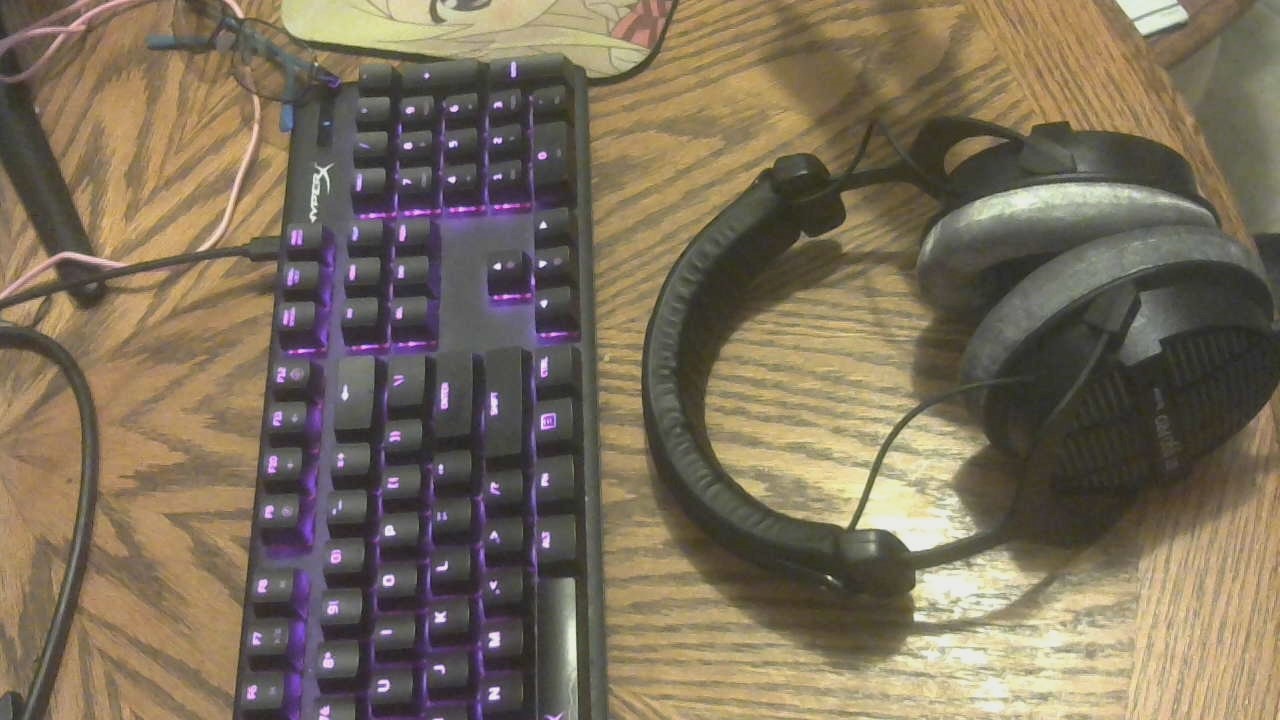
Specs are a dynamic open-back driver, a stated 5 Hz to 35,000 Hz range, 96 dB sensitivity, a fixed 3 m coiled cable, and 3.5 mm plus 6.35 mm connections. The velour pads are the reason this pair stays comfortable through a whole mix day, and the spring-steel headband keeps the clamping force moderate.
It is worth being straight about the tuning. The DT 990 Pro is close to neutral in the midrange but has a gentle bass lift and a treble peak that some listeners find sharp. That is not a dealbreaker for mixing, and it is part of why the pair has been a studio fixture for so long, but if you are particular about flatness the M40x is the flatter option here.
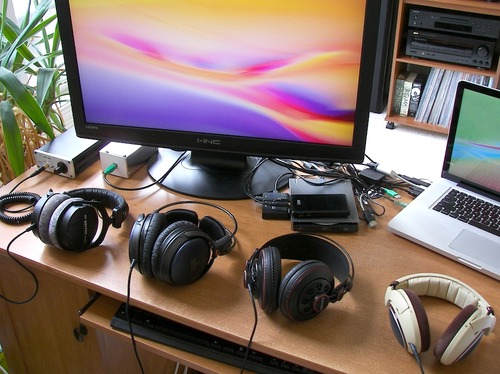
Why I mix on the DT 990 Pro
Judging a mix in an untreated bedroom means your speakers are lying to you about everything except the middle. Headphones remove the room, and an open-back removes the last sealed-can artefacts, so what you hear through them is closer to the recording itself. That makes them the better mixing tool even in a bad room.
The velour pads also stay cooler than protein leather, which matters in a summer tracking session. If you are mixing late at night and your neighbours need silence, headphones are the only answer anyway, and the 990 Pro is the most revealing one you can wear.
Who must skip it
Never track with it. The open design means your mix plays out of the headphone and straight into the microphone, and there is no fix for that other than turning the volume down until you cannot monitor properly. It is also a poor choice for a noisy shared home, since you will hear the outside world constantly.
The impedance is the other disqualifier. If your setup is a laptop with a bus-powered USB dongle and no room for a wall outlet near the desk, buy a 32 to 64 ohm headphone instead and save yourself the troubleshooting.
4. Audio-Technica ATH-M40x: The Flattest Tuning in the Group
Pros
- Very flat and neutral with no added colouration
- Trivially easy to drive from a laptop or phone
- Swiveling earcups for one-ear monitoring
- Straight and coiled detachable cables both included
Cons
- Very floppy frame
- cannot be put on with one hand
- Stock pads run small on larger ears
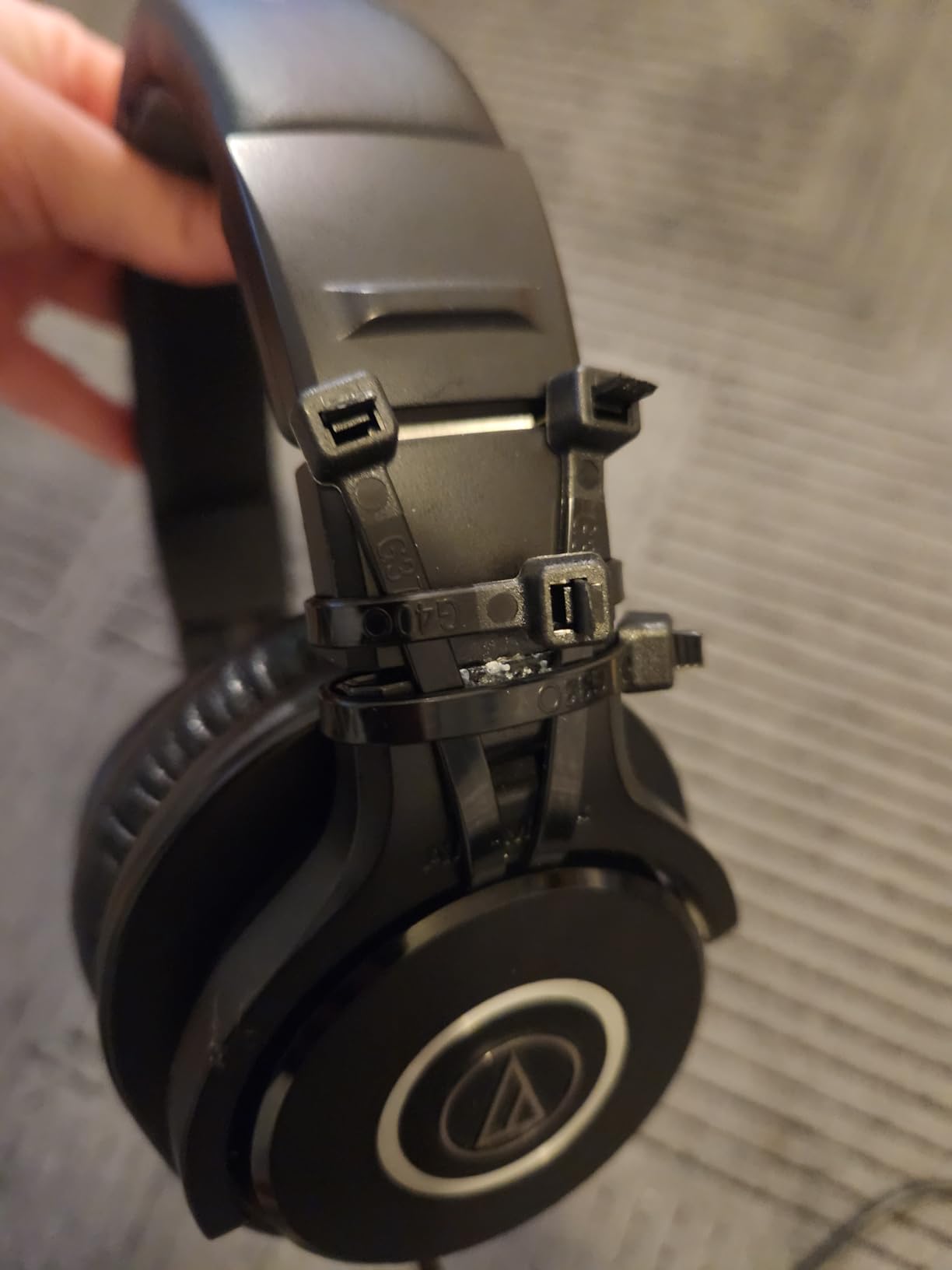
- Hinge parts have failed for some owners
The M40x sits between the M20x and the M50x and it exists for one reason: it is the flattest of the three. If your work involves judging whether a mix is finished, and you keep finding yourself tempted to boost the treble because the headphone version sounds dull, the M40x is the one that removes that temptation.
At 35 ohm it is among the easiest to drive in this list. I have used it straight from a laptop headphone jack with no interface at all and still had usable level, which makes it a good second pair for someone who records on a laptop and moves around.
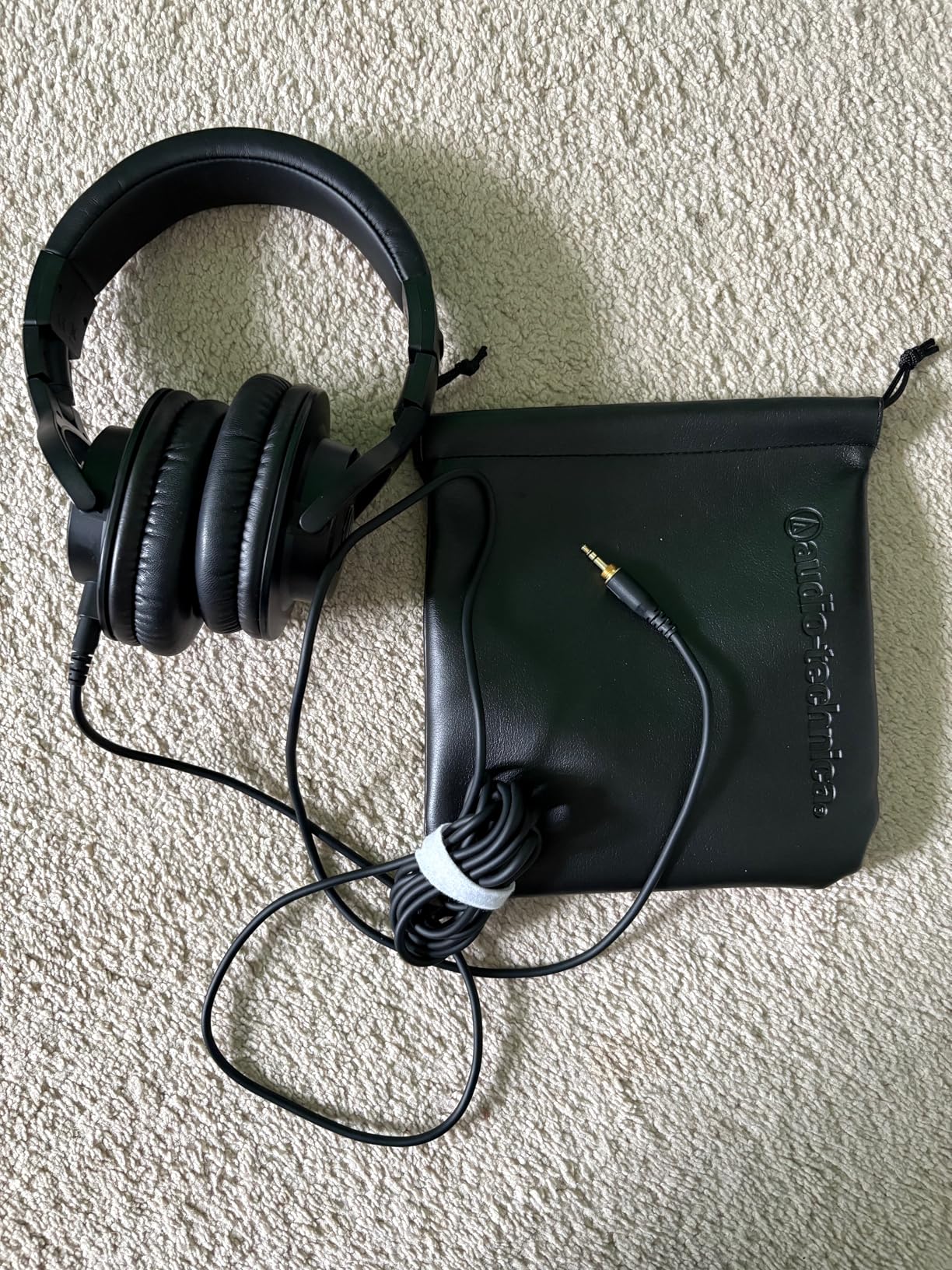
The specification sheet lists 40 mm drivers with rare earth magnets, a 15 Hz to 24,000 Hz range, 98 dB sensitivity, and a detachable cable system. You get two cables in the box, a straight one and a coiled one, plus a leatherette pouch and a screw-on adapter, which is more than most competitors include.
Isolation is genuinely good for a closed-back, and the swivel cups let you fold one ear open for tracking a singer. Reviewers frequently compare it favourably to far more expensive flat studio headphones on measured response, which is why it keeps appearing as the value recommendation in mixing threads.
Where flatness actually matters
Flatness matters most when you are not making creative choices but closing a project. Tired ears, a long session, and a deadline all push producers toward decisions that flatter the headphone instead of the track. A flat pair removes that drift, and the M40x is the flattest headphone here.
It is also a good choice for editing and mastering work where you are judging small level differences, because the tuning does not shift your perception of balance. For learning an instrument or writing to a reference, it will not inspire you, and that is exactly the point.
Where it falls down for you
The frame is very floppy. You cannot put these on with one hand, and the soft headband means they need a moment to settle, which is mildly annoying when you are taking calls between takes. Some owners with larger ears find the stock pads run small and will want to move to an aftermarket pad set.
They are also not enjoyable for casual listening. A deliberately flat headphone removes bass lift and treble excitement, so if the same pair has to survive your commute and your mix, expect to reach for something else on the sofa.
5. Audio-Technica ATH-M20x: Best Value Tracking Headphone
Pros
- Flat and well balanced for the tier
- Light enough for long sessions at a low weight
- Solid metal and plastic construction
- Effective isolation in a noisy room
Cons
- Non-detachable cable
- Bass is leaner than the M40x and M50x
- Clamp can annoy wearers with glasses
- Modest build versus higher models
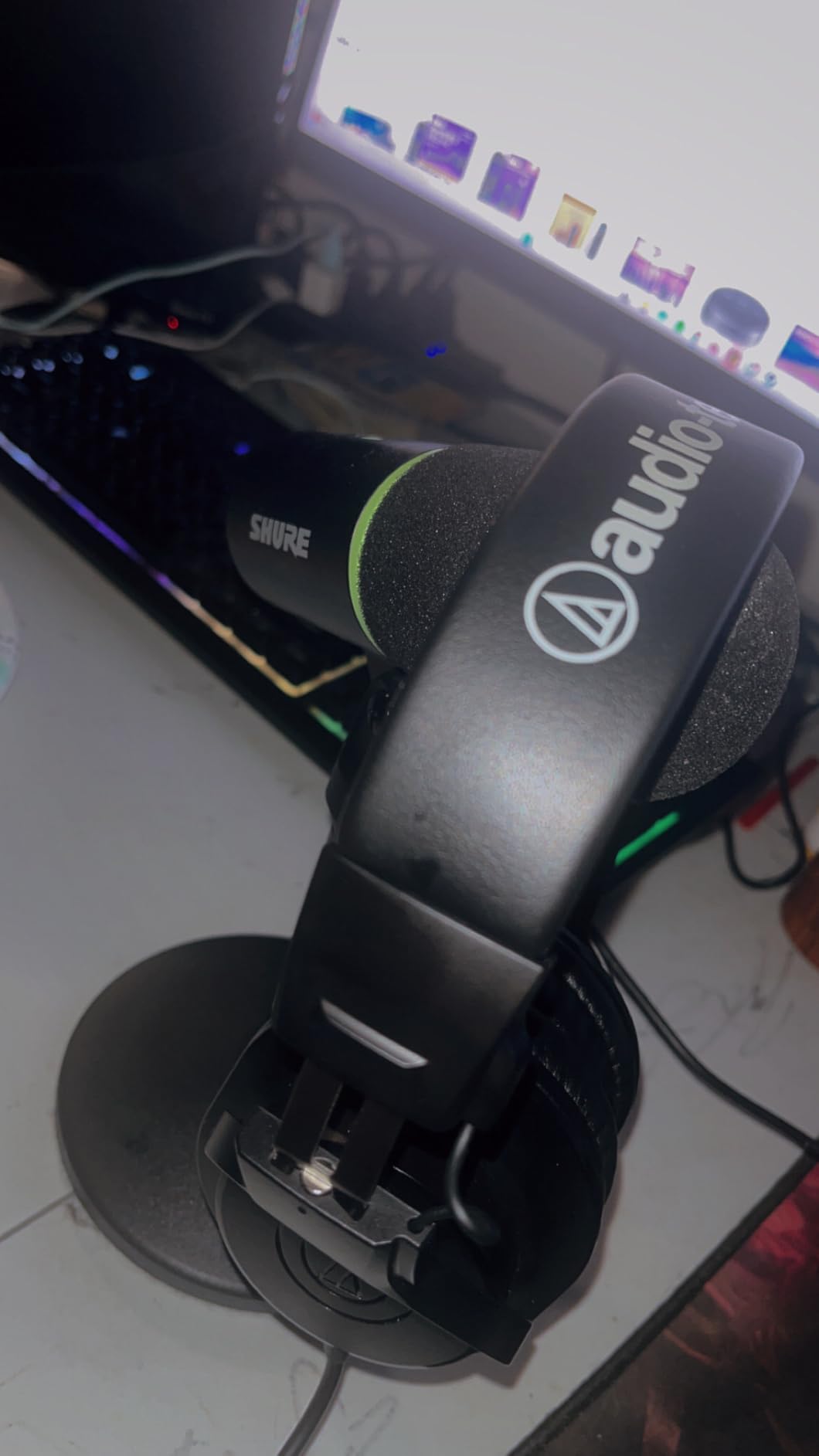
The M20x is the pair I hand to students and to anyone whose studio is a bedroom with a laptop and a USB interface. It costs less than half of what the M50x does, it is lighter than almost anything else here, and the tuning is flat enough that you are not learning bad habits while you learn the software.
At 210 g it is the pick I recommend for long editing sessions. Fatigue is usually a weight and clamp problem, not a sound problem, and the M20x solves both cheaply. The single-sided cable exit means the cord runs down one side of your neck rather than catching on your desk, which keeps a cluttered workspace usable.
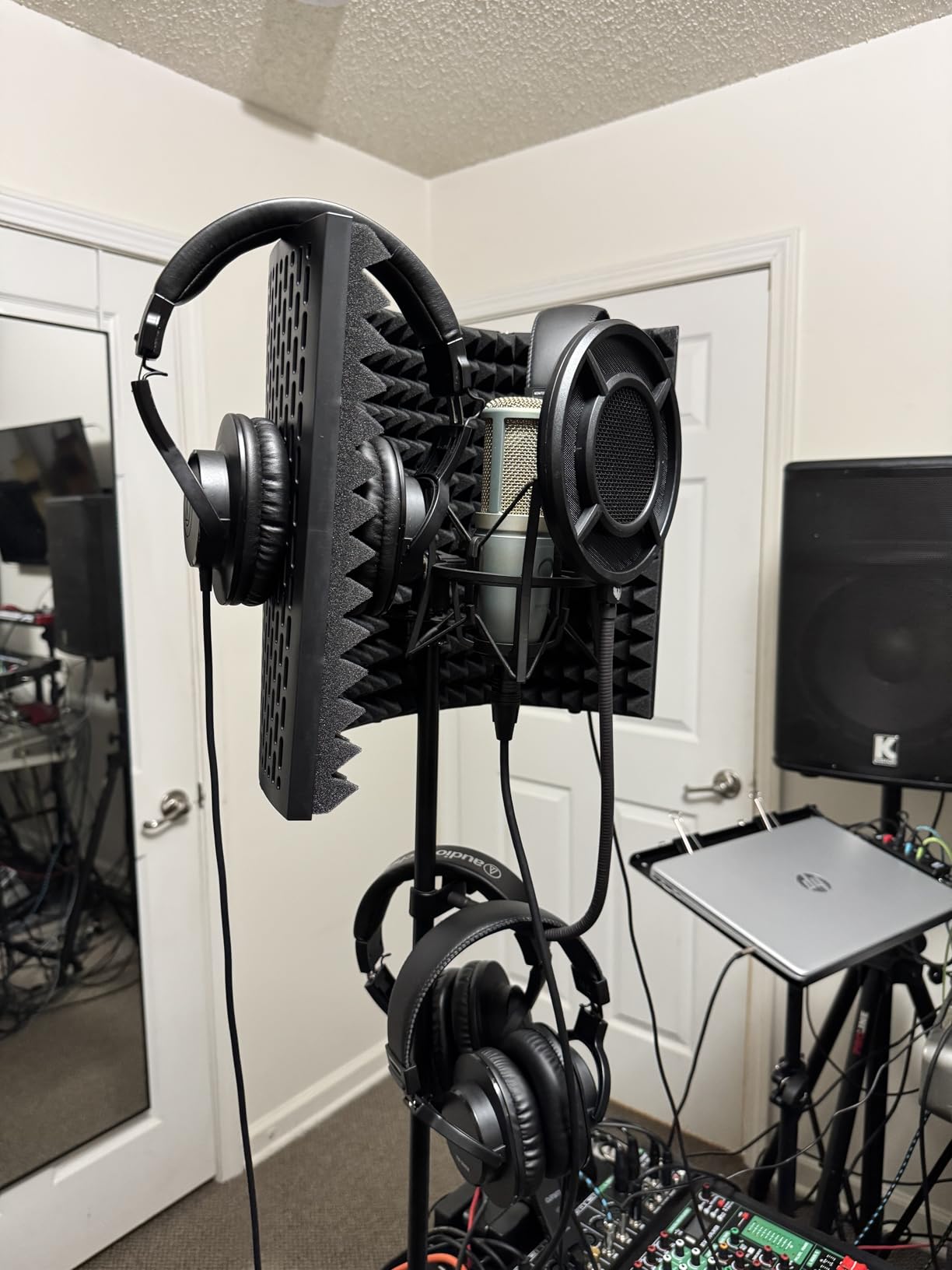
Specs are 40 mm drivers with rare earth magnets, a 15 Hz to 20,000 Hz range, 96 dB sensitivity, 47 ohm impedance, and a fixed tangle-free cable with a 3.5 mm jack. The circumaural design gives isolation good enough for tracking in a shared home, and the two-year warranty covers parts and labour.
Where it falls short is bass weight. Audio-Technica tunes this one for an enhanced low frequency, but compared with the M40x and M50x the low end reads as lean. If your material is bass-heavy, check your mixes on a second reference before you commit to a kick and sub relationship.
When the M20x is the right spend
It is the right pick when the budget is genuinely the constraint. You get a headphone that reveals mix detail, isolates adequately for tracking, and will not fall apart. That combination at this price is why it stays on every recommended list, including home studio forum threads where people ask for a starting setup under a hundred.
It is also the sensible first closed-back if you are building a two-pair system later. Track on the M20x, and put your money toward an open-back for mixing when you are ready rather than stretching now.
What you give up by starting here
The fixed cable is the practical one. It is the same complaint that appears on budget closed-backs across the board, and once it fails you either repair it or replace the headphone. The clamp is the comfort one, and it is worth testing if you wear glasses, because the headband pressure lands exactly where the frame sits.
You also lose a little bass extension compared with the M50x, and you lose the second cable option. Neither is critical for a first pair, and both become irritating once you are mixing finished work for other people.
6. Sennheiser HD 280 Pro: Strongest Isolation in the Group
Pros
- Very strong passive attenuation for tracking
- Every wearable part including cable can be replaced
- Warm natural tuning suits long sessions
- Folds down for transport
Cons
- Bass is less extended than open-back references
- Clamping force feels tight on some heads
- Only a coiled cable in the box
- Replacement pads are an extra cost
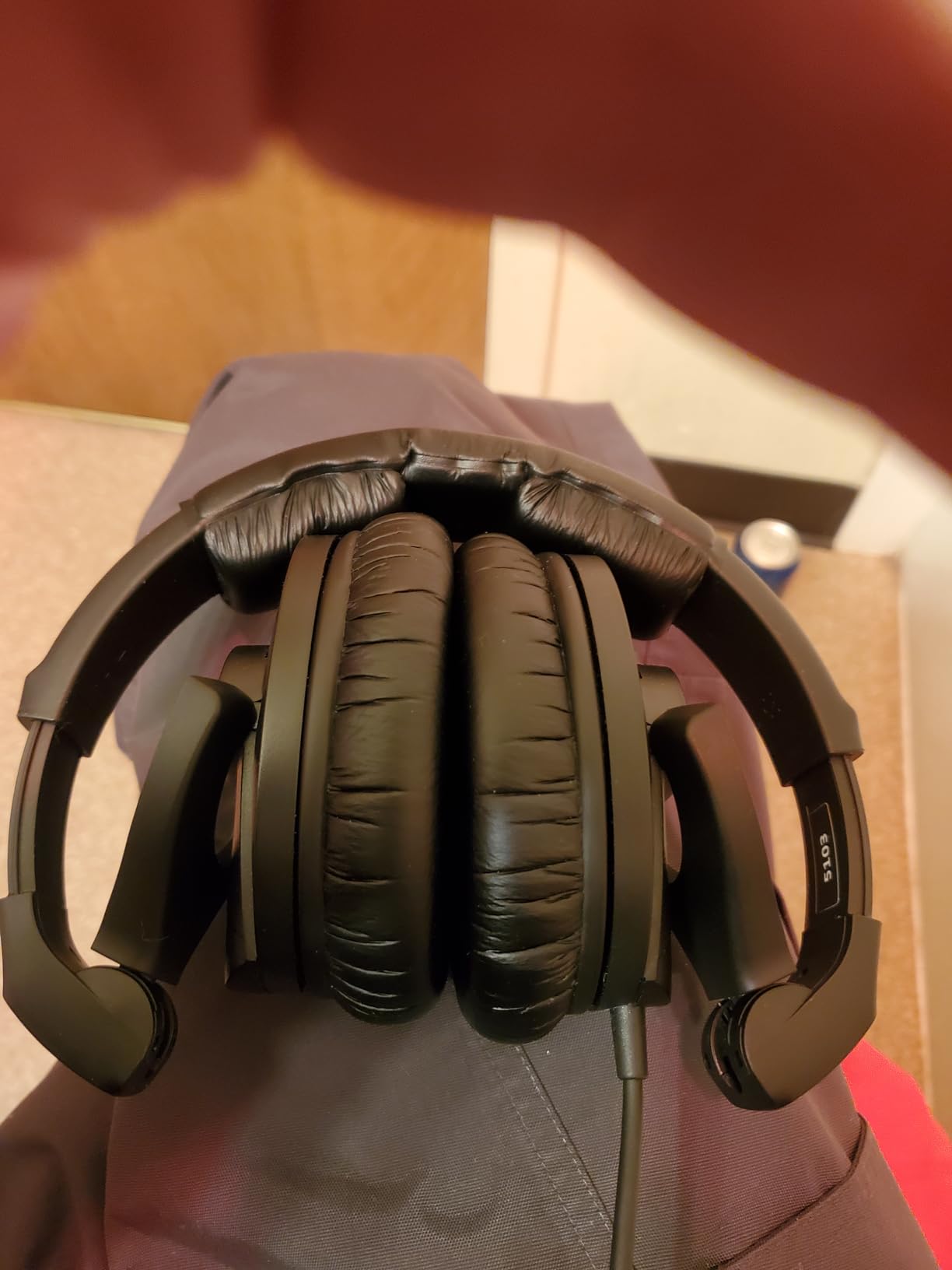
The HD 280 Pro is the one I reach for when the noise floor of my house is the problem. Sennheiser rates it at up to 32 dB of passive attenuation, which is the highest figure claimed by anything on this list and is consistent with how sealed the pads feel.
That sealing matters more in a home studio than most listening guides admit. If you share a wall with a neighbour who watches television in the evening, or you track near a road, the noise you are monitoring competes with the noise you are recording and you end up pushing both. Isolation removes one variable from the equation.
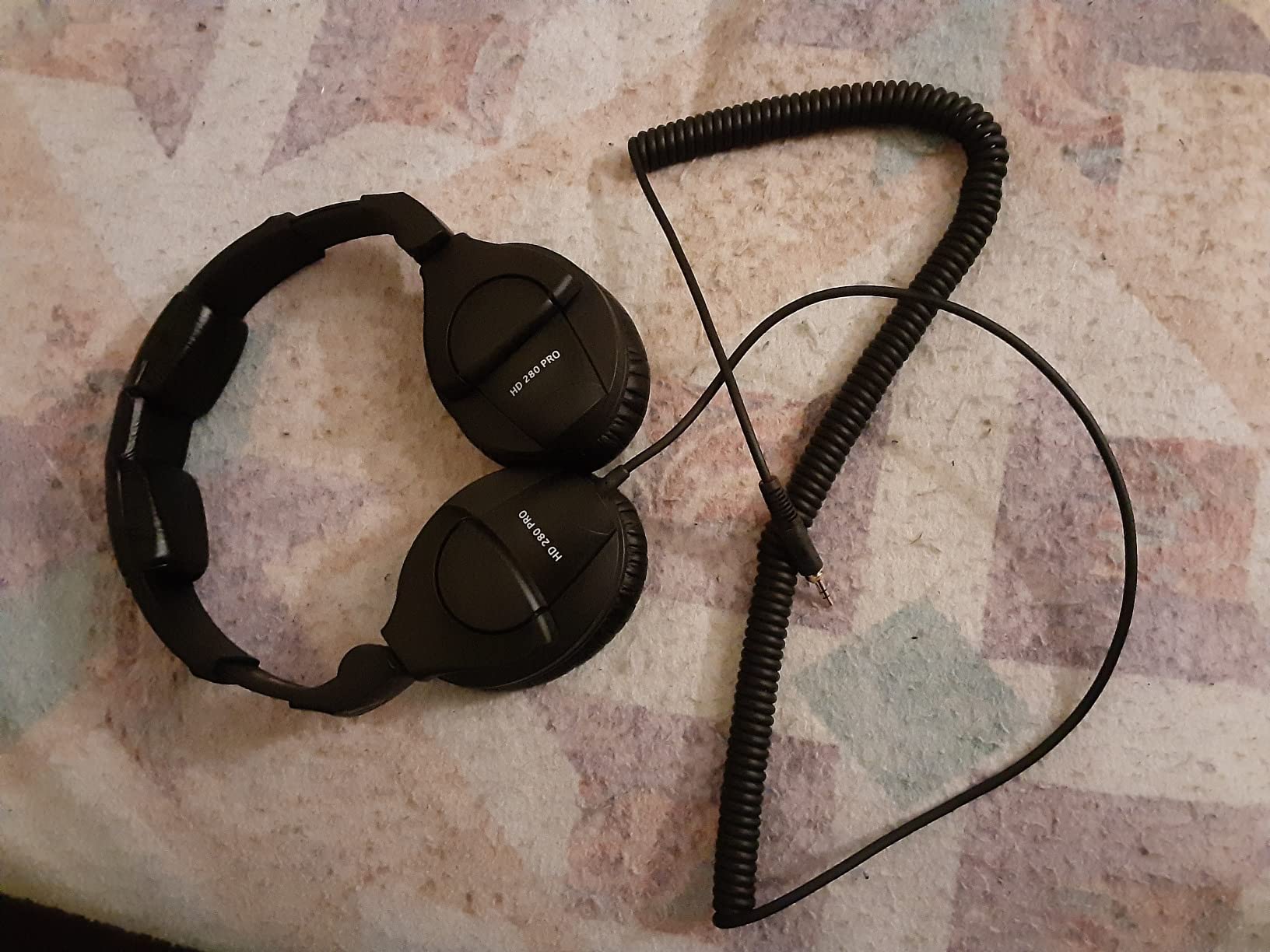
The specification is a dynamic closed-ear driver, an 8 Hz to 25,000 Hz stated range, 64 ohm impedance, a detachable 9.8 ft coiled cable, and a 6.35 mm jack with a screw-on adapter. The earpieces collapse inward for transport, which is useful because this is a pair you might reasonably take to a rehearsal space or another room.
The durability story is the real selling point. Earpads, headband padding, and the audio cord are all replaceable, and those parts have been available for years. Over a decade of ownership that matters more than the sound signature, because the first thing that fails on cheap headphones is always the cable or the pads.
Why isolation wins in a home studio
The rule is simple: record on the most closed-back pair you own, then mix on the most open-back pair you own. The HD 280 Pro is my recording pair because it lets me raise the monitoring level without the microphone picking it up. For voiceover, podcasting, and vocal tracking in a shared home, that is the single feature that changes your workflow.
It is also a good pair for editing spoken word, where a warm signature is easier on the ears for long sessions than a bright reference curve.
Where it is the wrong tool
The tuning is warm and the bass is less extended than an open-back, so it is a weaker low-end reference. If your main job is mixing and mastering rather than tracking, this should be a second pair rather than your only one, and something like the DT 990 Pro or the M40x will serve you better as the reference.
Comfort is the other caution. The clamp is firm, which some wearers love and some find restrictive over many hours, and only one coiled cable is included, so if you need a short cord for a laptop you will need another cable. If your head is on the tight side, audition first.
7. AKG K240 Studio: Best Semi-Open Pick
Pros
- Genuinely light for long sessions
- Self-adjusting headband fits many head sizes
- Locking detachable mini-XLR cable is easy to replace
- Neutral with good instrument separation
Cons
- Leaks sound both ways so live tracking is out
- Sub-bass below 100 Hz is thin
- Lower maximum volume than many closed-backs
- Can feel warm during long sessions
The K240 is the odd one out in this list in a useful way. It is semi-open, which means it sits between a sealed closed-back and a fully open grille, and that middle ground gives you a more natural sense of room and instrument separation than a sealed cup without the total leak of an open-back.
At 240 g with a self-adjusting gimbal headband, it is one of the few headphones here that I can put on for a six-hour beatmaking session and forget about. For producers who work in a DAW for hours rather than tracking in blocks, that comfort advantage is worth more than a specification point.
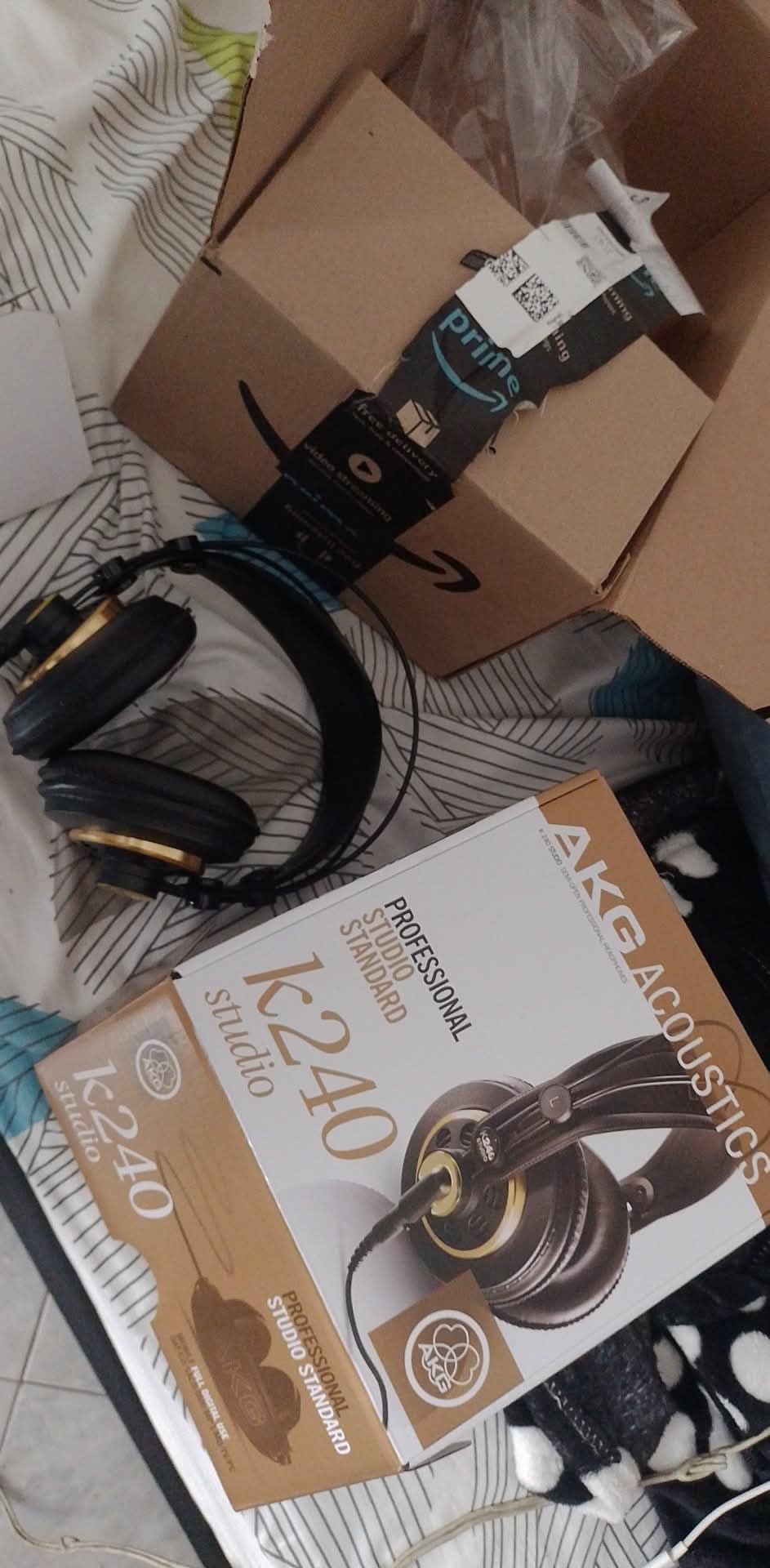
Specs are 30 mm XXL transducers with Varimotion diaphragms, a 15 Hz to 25 kHz range, 104 dB sensitivity, 55 ohm impedance, and a detachable 3 m cable using a locking mini-XLR connector with a screw-on quarter-inch adapter. That locking connector is the cable design I most wish every other headphone used: pull it out deliberately, and it never comes loose mid-session.
AKG has made this headphone for a very long time, and it appears constantly in home studio threads as a budget vocal-tracking recommendation. The semi-open compromise means you should not use it for live recording with a microphone in the same room, but for tracking, editing, and mixing at low volume in a domestic space it works well.
Where a semi-open design earns its place
The semi-open trade is this: you get a wider, more open presentation than a closed-back and a better sense of space around the mix, in exchange for leakage. For editing, beatmaking, and mastering at moderate levels in a quiet flat, that trade is usually good. It is one of the few affordable ways to hear a mix that does not sound sealed-in.
The 104 dB sensitivity also means it runs to a decent level from a modest interface despite being a 55 ohm pair, so it is a low-risk first headphone for a laptop setup.
When to choose a different design
Do not record a singer or a guitar amp with it while wearing it. The sound leaks out of the cups into the microphone, and you will either print the headphone mix into the recording or end up monitoring at an unusable level.
The bass is also genuinely thin below about 100 Hz, so if you produce bass-heavy music and need to check low end, treat this as a tracking and editing pair rather than your reference. And check the volume ceiling: it does not get as loud as the sealed models here, which matters if your interface has a low output.
8. MAONO MH601: Best Headphone for Podcast and Voiceover Work
Pros
- Large 50 mm drivers sound better than the price suggests
- Comfortable over multi-hour recording sessions
- Detachable cable plus an interchangeable 6.35 mm jack
- Good isolation for podcast monitoring
Cons
- Cord can slip out of the socket on the headphone
- Pad and headband padding can flake with age
- White branding is visible on camera
- No microphone or inline controls
If your home studio produces spoken word rather than music, the MH601 is built for exactly that. It is a closed-back 32 ohm headphone with a 50 mm driver, which is a large driver in a category where many cheaper models use 40 mm, and reviewers regularly compare it favourably to pairs costing twice as much.
It runs at 32 ohm, which makes it one of the easiest pairs on this list to drive, and the passive wired design means no battery, no pairing, and no latency. For someone recording a podcast on a laptop with a USB microphone and no interface, that simplicity is worth more than any measurement.
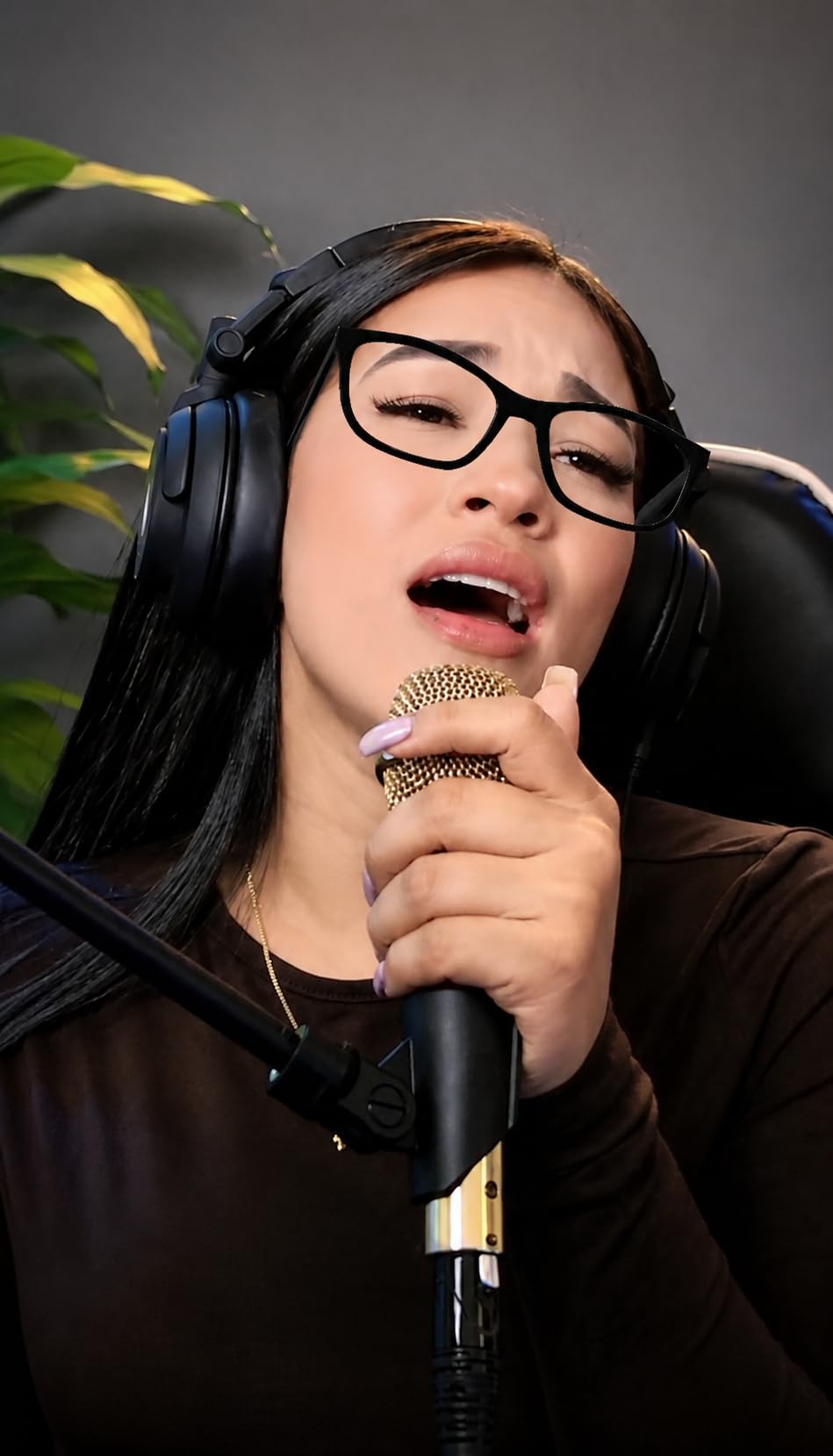
The specification lists a 50 mm large aperture driver, a 20 Hz to 20,000 Hz range, 103 dB sensitivity, 32 ohm impedance, and a detachable spring-loaded 9.8 ft cable with an interchangeable 6.35 mm jack. The cups swivel 90 degrees for single-ear monitoring, and the whole thing folds for transport.
The manufacturer claims 85 percent ambient noise blocking on the protein leather cushions. Treat that as a marketing figure rather than a measurement, but in practice the seal is decent for the money and it is comfortable over long recording blocks, which is the real test for voiceover work.
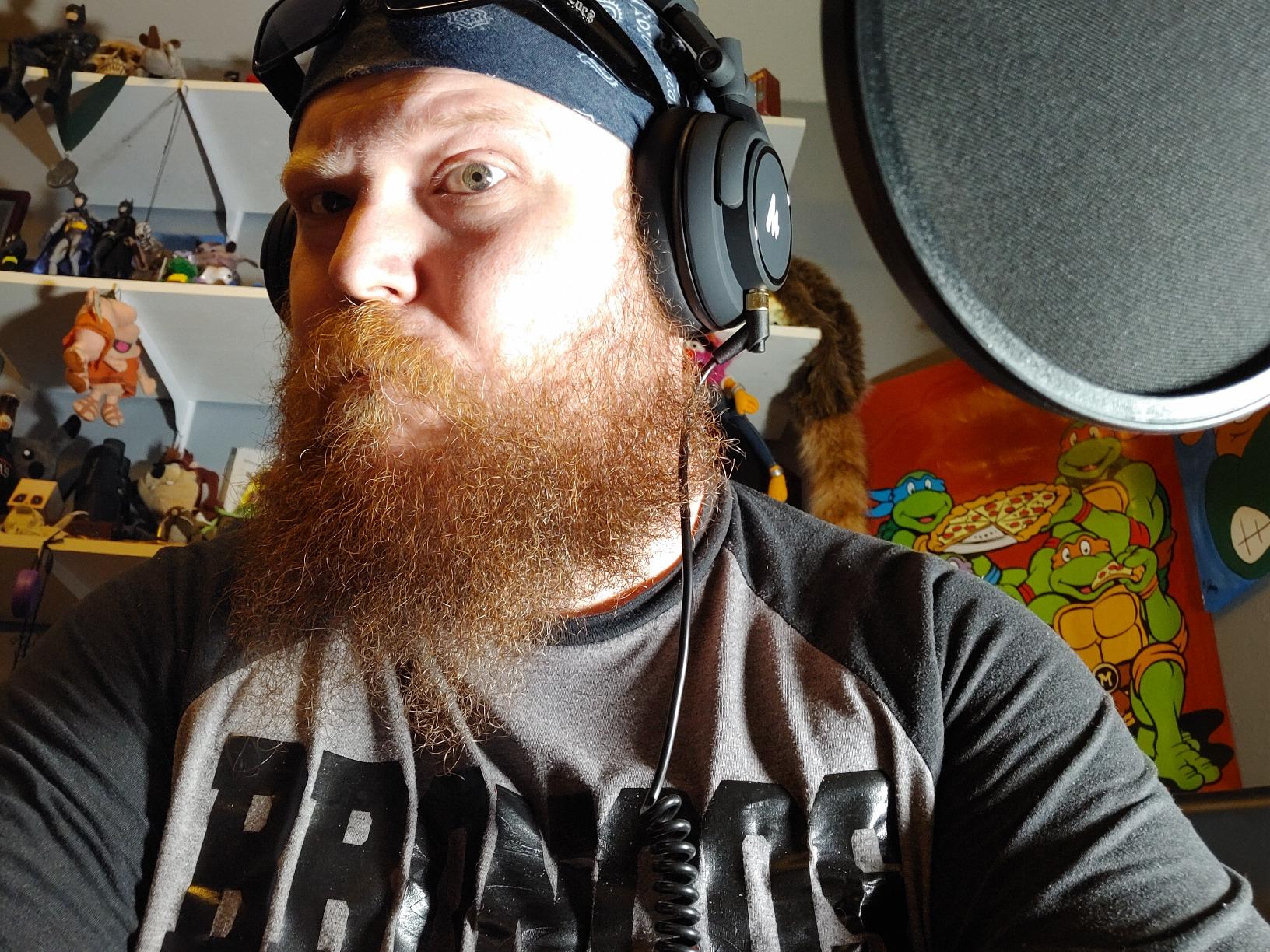
Why spoken-word producers should shortlist it
Podcast and voiceover sessions are long and repetitive, and you are judging edit points rather than mastering a low end. What you need is accurate speech intelligibility, a comfortable fit over two hours, and a cable that will not fail. This pair does all three, and it includes a three-year warranty which is unusually long at this tier.
It is also a reasonable choice for video editing and sound design, where you need detail on dialogue and effects without a large soundstage.
Where it is not the tool
It is not a mixing reference. The tuning is pleasant rather than flat, and there is no open-back option at this price. If music mixing is part of what you do, you will want a second pair with a flatter curve.
The spring-loaded cable and the socket design have both drawn complaints, with the cable reported as able to work loose from the headphone end. Keep a spare cable, and if you record while moving around, secure it. Also note the white branding if you appear on camera while wearing them.
9. FIFINE HD8: Best for Budget Podcast Editing
Pros
- Flat and clear monitoring for the price
- Two detachable coiled cables cover 3.5 mm and 6.35 mm
- Lightweight and comfortable for long sessions
- Decent passive isolation for a closed-back
Cons
- Plastic build feels inexpensive
- Fixed ear cups cannot swivel for one-ear monitoring
- Can buzz at very high bass settings
- Bass is boosted relative to true flat
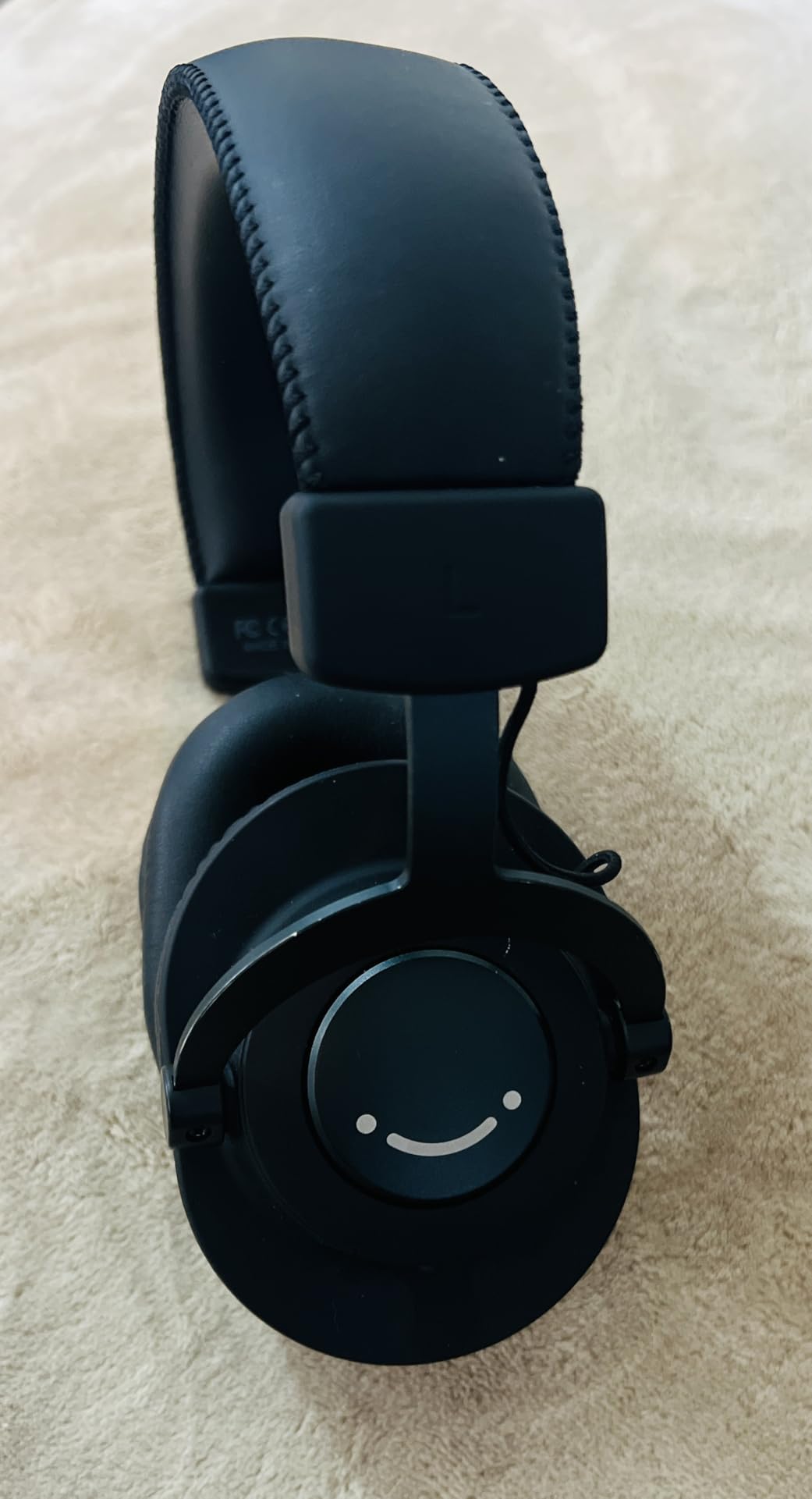
The HD8 solves a specific problem better than it has any right to: what do you use for editing if your only connection is a 3.5 mm jack on a laptop. Most closed-backs at this level ship one cable and make you find an adapter, and this one includes two full detachable coiled cables with both 3.5 mm and 6.35 mm plugs.
That cable kit alone makes it the most practical pick for a mobile or laptop-only setup. Both cables are 9.8 ft and detachable, so the cable is the first thing that fails, and you replace a cable rather than a headphone. At 32 ohm it drives from anything.
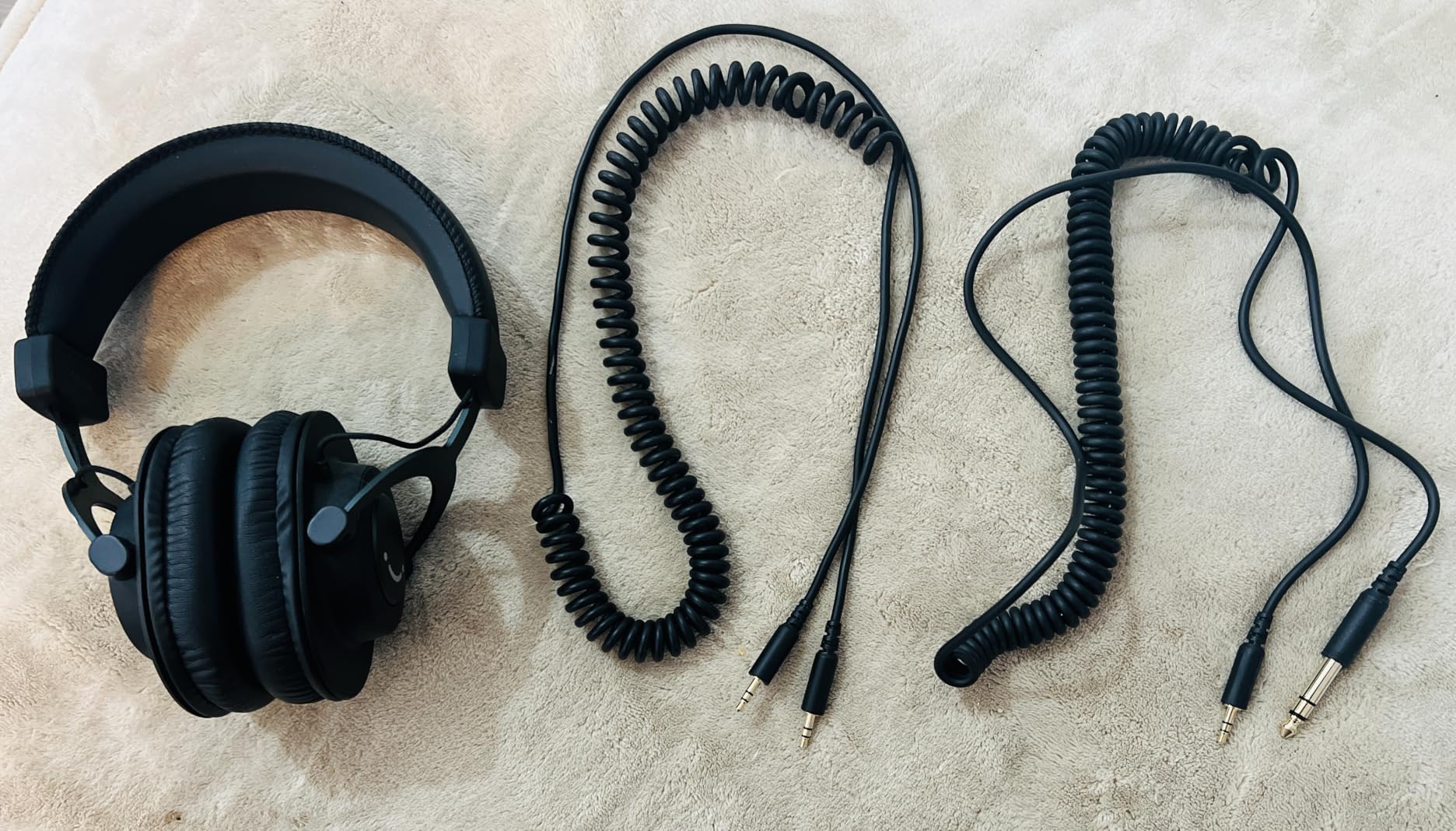
Specs are a 50 mm driver across a 20 Hz to 20,000 Hz range, 95 dB sensitivity, 32 ohm impedance, and a circumaural closed-back design weighing 265 g. It is compatible with mixers, audio interfaces, microphones, and game consoles, which covers the podcast and streaming use case nicely.
The signature is warm and mid-focused rather than flat, and reviewers note that bass sits slightly above a true reference. That is fine for dialogue editing where clarity of the voice is the goal, and it is not fine for mastering, where a boosted low end will mislead you.
Where the HD8 makes sense
Choose it if you are building a home recording setup around spoken content and you want one pair of headphones that connects to a laptop, a small interface, and a mixer without hunting adapters. The weight and cushioning also make it comfortable for long editing sessions, which is the dominant activity for most podcast producers.
It is a reasonable companion for streaming and gaming too, since the isolation keeps external noise out and the 32 ohm load is trivial for any source.
What it cannot do
There is no swivel, so you cannot use the single-ear monitoring trick for tracking a vocalist, and that is a real limitation if you ever want to record rather than just edit. The fixed cup design also means less positional awareness than a swivel pair gives you.
Build feel is the other thing. At 265 g with plastic hinges, it will not feel like the M50x, and reviewers mention buzzing at high bass settings when the driver is pushed hard. For critical low-end work, look elsewhere.
10. OneOdio A71: Best Feature Coverage Under 50 Dollars
Pros
- Detachable coiled and straight cables both included
- 90 degree swivel cups for single-ear cueing
- Shared audio port for listening with someone else
- Protective woven carry case included
Cons
- Bass and treble are less refined than studio-focused models
- Mostly plastic construction
- Narrower soundstage than open-back references
The A71 is the one I recommend when someone wants to practise DJ cueing or monitor alongside another person on a very limited budget. The shared audio port on the left cup is unusual at any price, and it lets two people listen without a splitter, which is genuinely useful for beatmaking with a collaborator.
The cable kit is unusually complete. You get a detachable coiled cord and a detachable straight cord, with both 3.5 mm and 6.35 mm plugs represented, so you are not searching for adapters before your first session. The 90 degree swivel cups let you pull one side back for single-ear cueing.
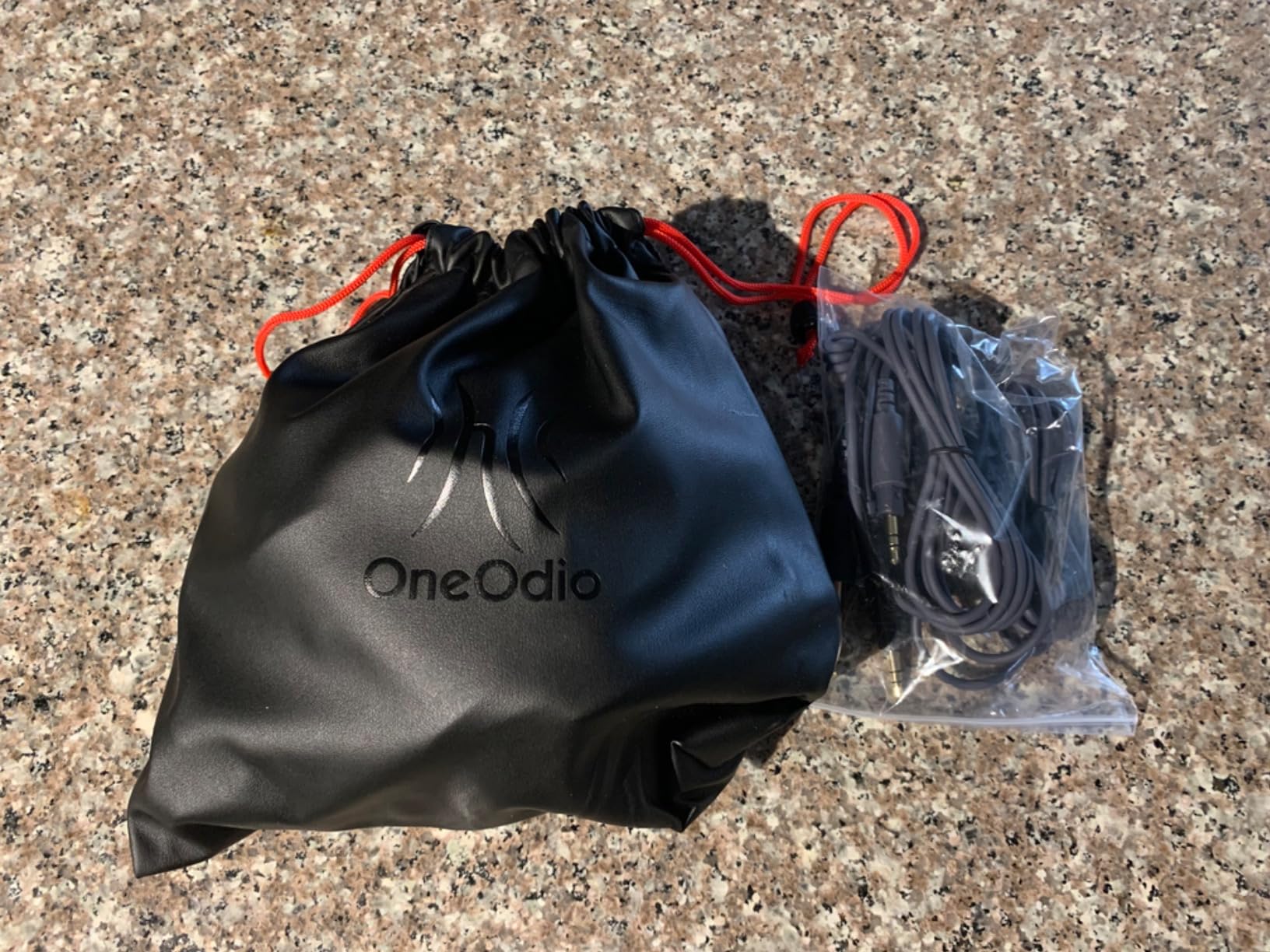
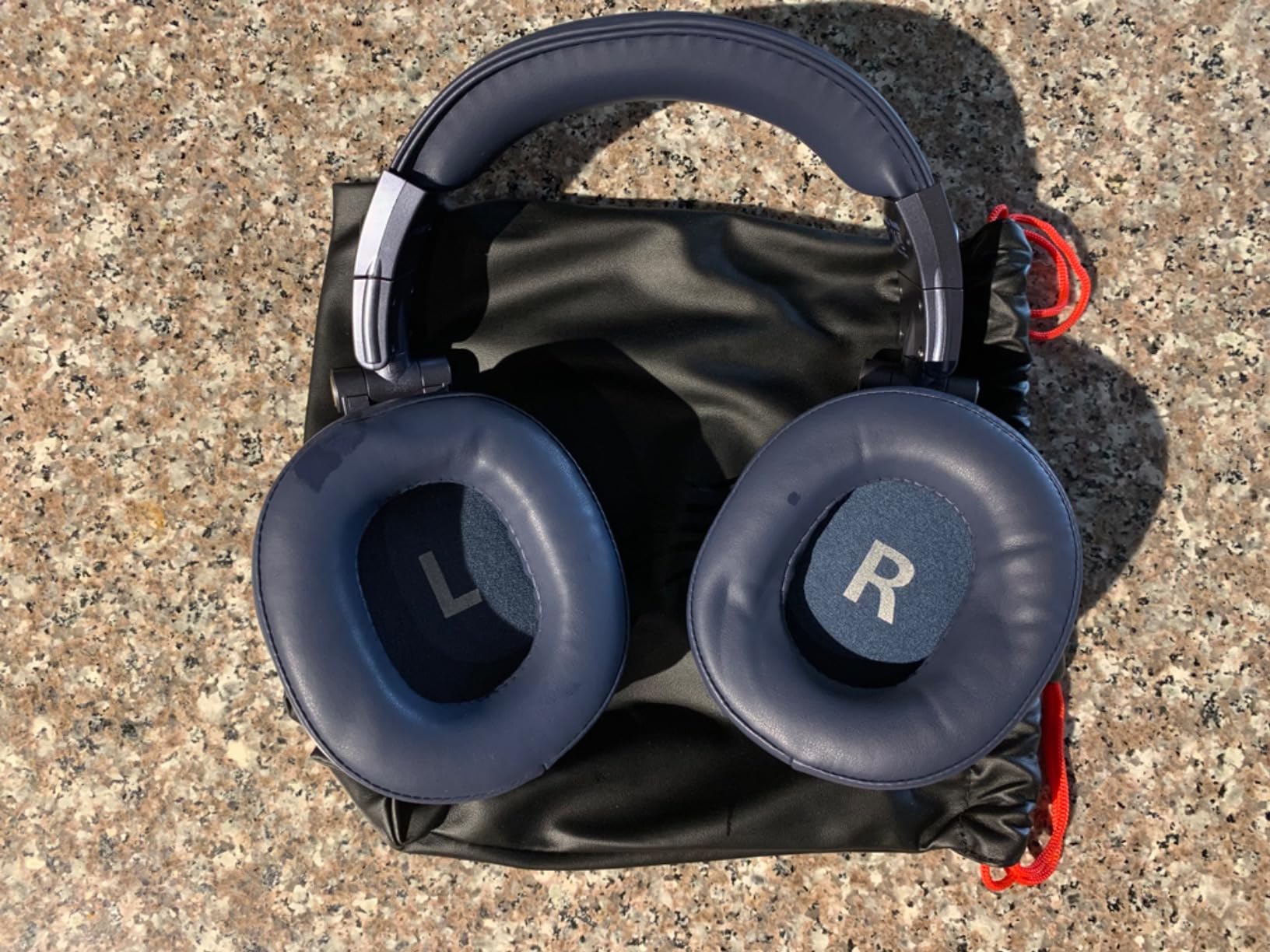
Specs are 40 mm drivers, a stated 20 Hz to 40,000 Hz range, 110 dB sensitivity, 32 ohm impedance, and a 13.28 oz weight. The stretchable adjustable headband and padded cushions are fine for long sessions at this price, and the woven carry case is a nice inclusion that most competitors in this bracket skip.
Be clear about what you are buying. The stated 40 kHz upper figure is a marketing number, not a quality signal, and the actual tuning is closer to a consumer headphone than a flat studio reference. It sounds clear and lively, but it is not the pair you will finalise a master on.
Best used for cueing and collaboration
If you are building a home studio around a home setup for DJ practice, or you want a second pair so a collaborator can hear the track while you work, the shared port is the feature that sells it. The swiveling cups also make it usable for basic one-ear monitoring during practice, which most budget headphones cannot do.
It is a good first pair for a teenager learning to mix, because it survives being passed around and the detachable cable takes the punishment that fixed cables on cheaper models cannot.
Where it stops being useful
Soundstage depth and tuning accuracy are the limits. The cups are closed, so there is no spatial awareness, and the frequency response is coloured rather than neutral, so bass-heavy mixes will fool you.
For that reason I would not use it as a mixing reference in any project that leaves your room. Track and edit on it if you like, but check the balance on something flatter before you export, and expect a narrower image than you would get from a semi-open or open-back.
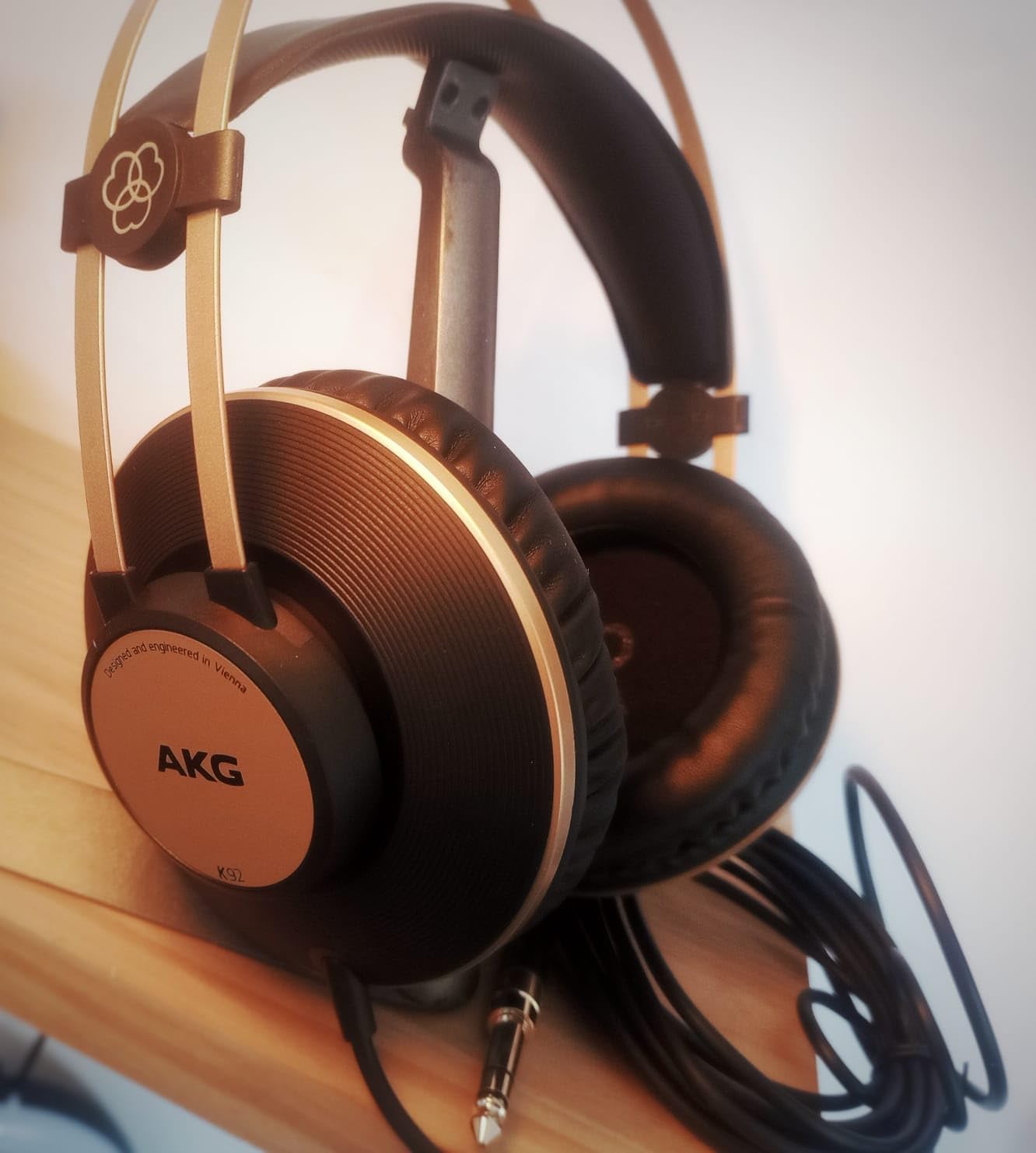
11. AKG K92: Best Lightweight Closed-Back
AKG Pro Audio K92 Over-Ear, Closed-Back, Critical Listening and Studio Headphones, Matte Black and Gold
Pros
- Extremely light at 200 g for long sessions
- 32 ohm loads easily from phones and laptops
- Gold plated 1/8 inch plug and adapter included
- Clean balanced sound for the tier
Cons
- Bass is light and tuning is not perfectly flat
- Fixed non-detachable cable
- No swivel or folding for one-ear monitoring
- Less detail and isolation than higher tier models
The K92 is the lightest closed-back headphone in this group at 200 g, and that is its entire argument. If you are the kind of person who gets a headache from headband pressure after two hours, the weight difference between this and a 300 g pair is the difference between finishing a session and stopping early.
It is also trivially easy to drive at 32 ohm, which makes it a safe first headphone for a phone, a laptop, or a small interface. There is no amp maths to do and no risk of the quiet-headphone problem.
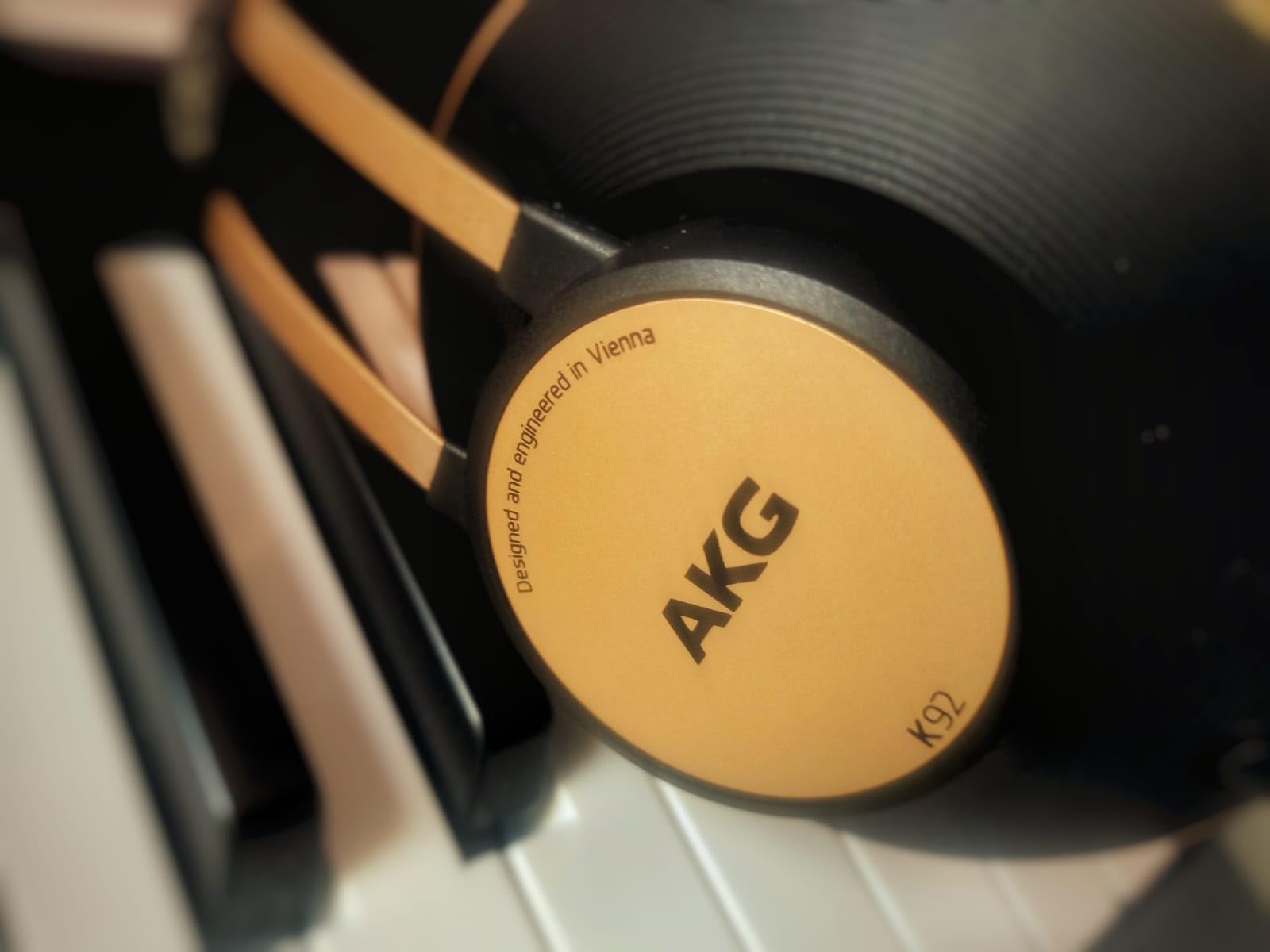
Specs are 40 mm drivers, 32 ohm impedance, a gold plated 1/8 inch plug with a gold screw-on 1/4 inch adapter, a closed-back circumaural design, and a fixed cable. Audio-Technica and AKG both build at this weight class with plastic and metal reinforcement, and the K92 is no exception.
Sound is clean and balanced, but reviewers are consistent that the bass is light and the tuning is not perfectly flat. That means it will not mislead you as much as a bass-boosted headphone will, but it also will not give you the low-end extension you need to judge a mix properly.
When the AKG K92 makes sense
It suits long, low-intensity sessions: editing dialogue, sorting takes, writing to a reference track, or working on a mix you have already balanced. It also works as a travel pair, since the weight barely registers on a neck over a long flight.
Pick it when comfort is your main constraint and mixing is not the main event. The included gold plated connectors and adapter mean you can connect to almost anything without buying a cable.
Where it falls short
The fixed cable is the practical limit, and there is no swivel, so you cannot do single-ear tracking at all. Isolation is decent but not exceptional, so it will not rescue a very noisy room the way the HD 280 Pro can.
For low-end decisions it is the wrong tool. Light bass plus a modest driver means you will consistently under- or over-shoot your sub-bass depending on how you compensate. Check low end on something with more extension before you finish a track.
12. OneOdio Pro DJ: Most Reviewed Budget Pair
Pros
- Powerful bass with clear mids and highs
- Very comfortable over long sessions
- Detachable coiled and straight cables plus a shared port
- Works with mixers
- keyboards and interfaces
Cons
- Bassy tuning is not accurate for critical mixing
- Some units have reported internal wiring failures
- Headband can slide forward with a tight clamp
- Ear openings are small relative to the cups
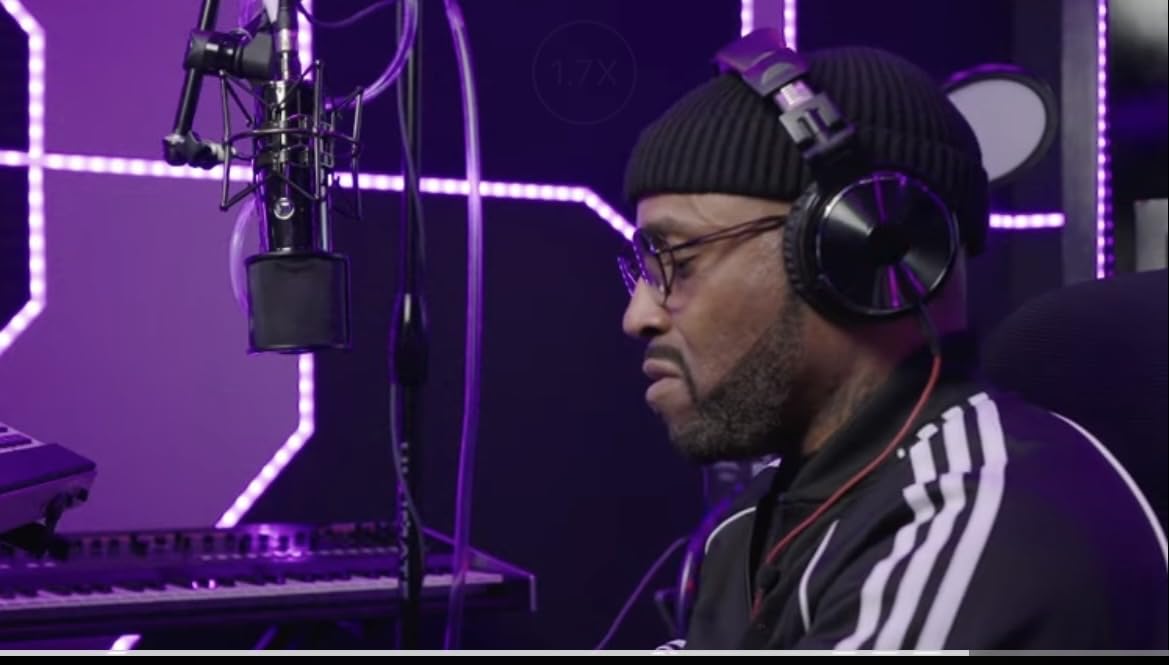
This is the highest-volume pair in the set by a wide margin, and for a specific reason: it makes a lot of sound for very little money. The 50 mm neodymium drivers push real bass, the pads are soft, and at 32 ohm it will drive from anything with a headphone output.
I would not use it to mix a record for someone else. The tuning is bass-forward, which is exactly the colouring that makes a mix sound good in a phone speaker session and translate badly everywhere else. Use it for beatmaking, for enjoying music, or as a secondary pair for cueing, and keep a flat headphone for the decisions.
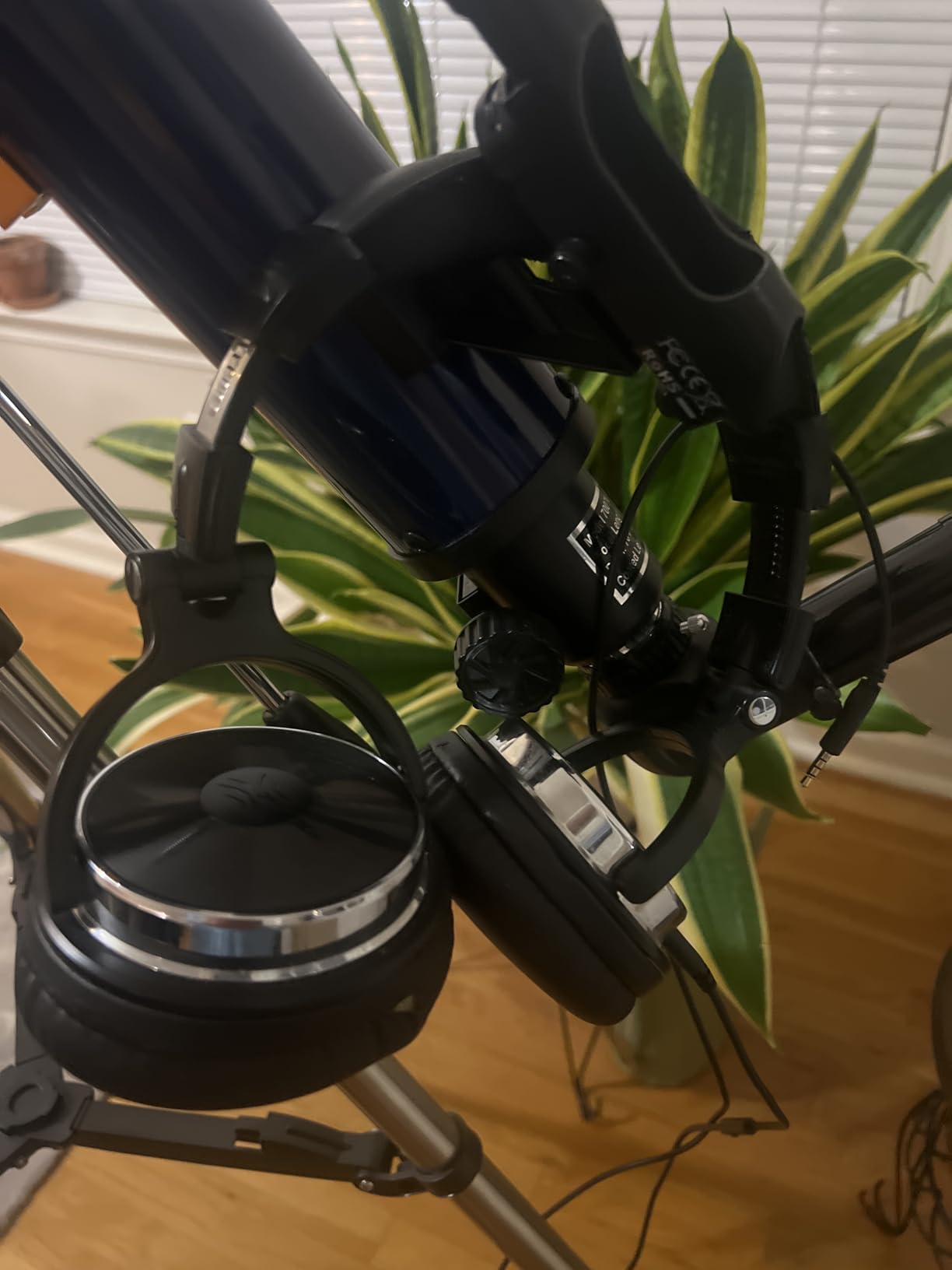
Specs are 50 mm neodymium drivers, a stated 20 Hz to 40,000 Hz range, 110 dB sensitivity, 32 ohm impedance, and a weight of 415 g. Both a coiled 6.35 mm cable and a straight 3.5 mm cable are detachable and included, and the shared audio port returns for a second listener.
At 415 g it is the heaviest headphone here, so comfort depends on your head and your session length. The clamp is on the firm side and the headband can creep forward, which reviewers mention often enough that it is worth knowing before a long day of use.
Where a bass-forward pair still makes sense
It is a fun, forgiving headphone. If you write beats, produce electronic music, or just want a pair to listen to while your DAW is open, the extra low end is a feature rather than a fault, and the shared port means you can hand a friend a second pair of the same headphones.
For casual home listening alongside your studio work, it is hard to argue with the value, especially with a protective case included.
Why it is not a critical-listening pick
Colouration is the issue. A boosted bass shelf changes how you read the whole balance, and producers consistently under-mix their low end on bass-forward headphones. There have also been durability complaints about internal wiring on some units, so check the return window carefully and keep the detachable cable close, since a cable fault is easy to spot and easy to fix.
If your output is music other people pay for, keep at least one flat headphone in the studio. If you are on a very tight budget and can only buy one, buy a flat one instead.
Why Headphones Beat Monitors in an Untreated Room
Monitor speakers tell you two things at once: what the recording sounds like, and what your room does to it. In a treated commercial room the second signal is small enough to ignore. In a bedroom or a garage, it is often larger than the first, which is why beginners conclude their monitors are broken when they are actually working exactly as specified.
The specific problems are predictable. Flutter echo between parallel walls smears the midrange and destroys the stereo image. Early reflections from a bare ceiling or a desk bounce back into the mix position and raise your perception of presence, so vocals sit forward. Worst of all, a small room has a low-frequency mode structure that boosts some bass frequencies and cancels others, so the sub-bass you hear is a property of the room, not the track.
Headphones remove the room from the equation entirely. There is no reflection path and no modal build-up, so what reaches your ears is closer to the signal leaving the interface. That is why headphones are not a compromise in a home studio, they are the accurate tool, and why I would spend money here before spending it on speakers. If you do go the speaker route, the room work comes first, and you can start reading about acoustic panels for home studios before you shop for speakers.
That said, headphones are not a complete replacement for speakers. Your speakers tell you how your mix will sound on systems that are not headphones, and that translation matters for low end. The practical answer is to use each tool for what it is good at, which is exactly what the next few sections set up.
Open-Back vs Closed-Back vs Semi-Open for Home Studios
The three designs differ in one physical way: whether air can pass through the earcup. Everything else follows from that, including whether you can record, how much the low end lies to you, and whether the neighbours can hear you.
Closed-back headphones seal against your head. That seal produces isolation, which means you can record a vocal without the headphone mix bleeding into the microphone, and it prevents outside noise from competing with what you are monitoring. The cost is that the drivers have to move air inside a small sealed volume, which naturally adds some low-end boost and roll-off of the very deepest bass. Closed-backs are the right default for tracking, and the majority of picks on this list are closed for exactly that reason.
Open-back headphones use a grille instead of a solid cup. Air moves freely in and out, which produces a wider soundstage, a more natural sense of space, and a more even low end because there is no sealed cavity to pressurise. The trade-off is total acoustic transparency in both directions: you hear the room, and the room hears you. Open-backs are mixing tools, not recording tools.
Semi-open headphones sit in between, usually with a fabric or foam layer over part of the grille. You get some of the openness of an open-back with better containment, which makes them a reasonable compromise for beatmaking and editing in a domestic space. They still leak, so they are not for live tracking.
The decision rule I use is simple. If the session includes a microphone and an artist, track on a closed-back. If the session is you and a DAW, mix on whatever reveals the most, which is usually an open-back. If your neighbours need silence at midnight, both are quieter than speakers, which is the real reason many home producers end up on cans at eleven at night.
Matching Impedance to Your Audio Interface
Impedance is the number that causes the most confusion and has the simplest explanation. It is measured in ohms, and it describes how hard the headphone is to drive. A low-impedance headphone asks little of the output stage. A high-impedance headphone asks a lot, and a source that cannot deliver produces low volume, distortion, or both.
The practical rule is short. Anything from 32 to 100 ohm will play loudly from a laptop jack, a bus-powered USB interface, or a wall-powered interface without any extra help. Above roughly 150 ohm you should assume you need a wall-powered interface or a dedicated headphone amplifier, and at 250 ohm the difference is not subtle.
This is the single most common complaint from home producers, and it shows up in home studio and audio forums constantly as a version of why my studio headphones sound so quiet. The thread almost always ends the same way: the person bought a high-impedance headphone and a bus-powered interface, and the interface was the limiting factor all along. Every pick on this list that runs at 32, 35, 38, 47, 55, 63, or 64 ohm avoids that problem entirely.
Here is the checklist I follow when a pair sounds quiet, in order. First, confirm the cable is fully seated into the interface, because a 6.35 mm plug that is half a turn short is the most common fault of all. Second, check that the cable is the right specification, since a thin unshielded cable can lose level. Third, raise the interface’s own headphone volume to maximum, because many interfaces have a software-independent knob that is separate from the DAW level. Fourth, verify the DAW output level and the interface monitor source are actually the ones you think they are. Fifth, if you have a wall adapter nearby, plug the interface into mains power instead of bus power and try again, because powered interfaces have a stronger output stage. Sixth, if the pair is 250 ohm or higher and none of that helped, you need a headphone amp, and that is not a defect in your headphone.
Sensitivity matters alongside impedance, and the two together determine how much voltage your source needs. The MAONO MH601 and AKG K240 both sit at 103 to 104 dB sensitivity, which is why they get loud on modest hardware despite not being the lowest impedance here.
One Pair or Two Pairs? A Two-Pair Workflow
If you can only buy one pair, buy a closed-back. It is the only design that works for both halves of the job, and every product in the tracking half of this list is closed-back for that reason. If you can stretch to two, the second pair should be an open-back, and the order you use them in matters more than the models you choose.
The workflow is this. Track and edit on the closed-back, because you need isolation while a performer is in the room. Then mix on the open-back, because you want to hear the stereo image and the room-free low end that a sealed cup distorts. When you finish, play the mix on the closed-back again and at low volume on a phone speaker, and fix whatever falls apart.
This also solves the untreated-room low-end problem. Closed-backs tend to exaggerate bass, so when you switch to an open-back for the final check you will hear the difference immediately and know whether your sub-bass balance was honest or flattering. If the mix collapses on the open-back and booms on the closed-back, your low end was tuned to the headphone rather than the track, and now you know.
You do not need a specific budget to do this. A flat closed-back at the entry tier plus an open-back a step up from it covers the whole workflow, and if money is genuinely tight, one closed-back plus a corrective EQ plugin is a workable substitute. Whatever you spend, the workflow only helps if you actually alternate between the pairs on the same project rather than owning both and mixing on one.
What You Can Ignore
Advertised bandwidth tells you nothing. A stated range of 20 Hz to 40,000 Hz, or 10 Hz to 32,000 Hz, is a measurement of how far a driver moved before it stopped, not a statement about how accurately it reproduced what it heard in between. Two headphones can share an identical stated range and disagree completely on the shape of the response in the 2 kHz to 4 kHz region, which is where most mixing decisions happen. Look at the curve, not the endpoints.
Break-in is largely a myth, with one small caveat. Ear pads do compress over the first weeks, which changes the seal and therefore the low end, particularly on a closed-back. That is a genuine change and it makes early impressions unrepresentative. The drivers themselves do not meaningfully change, so give it a fortnight before you judge and then stop thinking about it.
Bluetooth and active noise cancelling should be avoided for critical work, and the reason is technical rather than moral. Bluetooth compression and wireless latency alter the signal, and low-latency codecs still change it. Active noise cancelling applies a processing filter to the signal you hear, which directly alters frequency response, and those filters typically target the low-mid region where vocal intelligibility lives. For mixing, editing, and mastering, use a wired connection and none of these problems exist.
Finally, do not treat a headphone purchase as needing a matching amplifier as a default. Of the twelve pairs here, eleven will run at a comfortable level straight from an interface that most home studios already own. Only the DT 990 Pro 250 Ohm actually needs added power, and that is a design choice by the manufacturer rather than a flaw.
Frequently Asked Questions
Should I get open-back or closed-back headphones for a home studio?
Get closed-back for tracking and open-back for mixing. Closed-back cups isolate enough to record a vocal without headphone bleed printing into the microphone, and they keep outside noise from competing with what you monitor. Open-back cups deliver a wider soundstage and a more even low end, which makes judgement calls about depth and placement easier. If you can only afford one pair, choose a closed-back such as the Audio-Technica ATH-M50x.
Do I need a headphone amplifier for studio headphones?
Usually not. Headphones rated from 32 to 100 ohm will play at a comfortable level straight from a laptop jack or a bus-powered USB audio interface. You need a headphone amplifier when the pair sits at roughly 150 ohm or above, or when your interface is bus-powered and the volume feels low or thin. In this group the beyerdynamic DT 990 Pro 250 Ohm is the one model that genuinely benefits from added power.
What impedance studio headphones work with a USB audio interface?
Aim for 32 to 64 ohm if your interface is powered only by USB. Models at 32, 35, 38, and 47 ohm are the easiest to drive, and the ATH-M50x at 38 ohm is the safest single choice for an unknown setup. Pairs up to about 100 ohm usually work from a wall-powered interface as well. Anything at 250 ohm will play, but without headroom you will push the level past the point where quiet details become audible.
Can I mix music on closed-back headphones?
Yes, and plenty of released records were mixed that way. The honest caveat is that a closed-back naturally adds some low-frequency emphasis and rolls off the deepest bass, so your low-end balance will read warmer than it really is. Work around it by mixing on the closed-back, then checking the low end on an open-back or on a phone speaker at low level before you export.
How do I choose studio headphones for recording vocals?
Choose isolation and one-ear monitoring first. Look for a closed circumaural design that seals around the ear, and 90 degree swiveling earcups so you can fold one cup back and place a microphone in the gap. The Audio-Technica ATH-M50x and ATH-M40x both swivel, while the Sennheiser HD 280 Pro offers the highest stated passive attenuation at up to 32 dB. Avoid open and semi-open designs entirely for live recording.
Is Bluetooth or wireless okay for studio monitoring?
No, not for critical work. Bluetooth codecs compress and alter the signal, and even low-latency modes change what you hear. Wireless models also add latency, which makes them awkward for tracking against a live performance. Use a wired connection for recording and mixing. Wireless headphones are fine for reference listening on the move, just not for making decisions about a mix.
Are studio headphones good for everyday listening?
They work, but most flat studio models are deliberately unexciting. The Audio-Technica M-series and the AKG K240 Studio are tuned close to neutral, which means less bass lift and fewer sparkling treble details than a consumer headphone. Plenty of producers use one pair for everything and do not mind. If you want a single pair for commuting and mixing, the Sennheiser HD 280 Pro is the more forgiving choice here.
Do studio headphones need a break-in period?
The drivers do not meaningfully change, but the ear pads do. Sealing pads compress over the first few weeks, which alters the isolation and the low-end response, particularly on a closed-back design. Give a new pair about a fortnight of regular use before you judge it, then stop thinking about break-in entirely. Any major change in sound after that point is a fault, not an adjustment period.
Final Verdict: Where to Start in 2026
Start with the Audio-Technica ATH-M50x. At 38 ohm it drives from whatever interface you already own, it isolates well enough to track vocals in a noisy home, the cable detaches, and the tuning stays close enough to neutral that your mix decisions will survive contact with other systems. It is the pair I recommend to anyone who will only buy one.
If your priority is mixing rather than tracking, and you have a wall outlet near your desk, put the beyerdynamic DT 990 Pro on the shortlist instead and budget for a headphone amp. If your budget is tight, the ATH-M20x does the same job honestly for a fraction of the cost. If you record in a shared home and noise is your main problem, the Sennheiser HD 280 Pro seals the best of anything here.
Whatever you choose, buy a wired pair, check the impedance against your power supply, and keep a flat headphone in the room. If your studio also needs a visual setup, our guides to green screens for home studios and green screen kits cover the other half of a production setup, and you can read our security camera picks for home studios if you are recording in a space you also live in.