
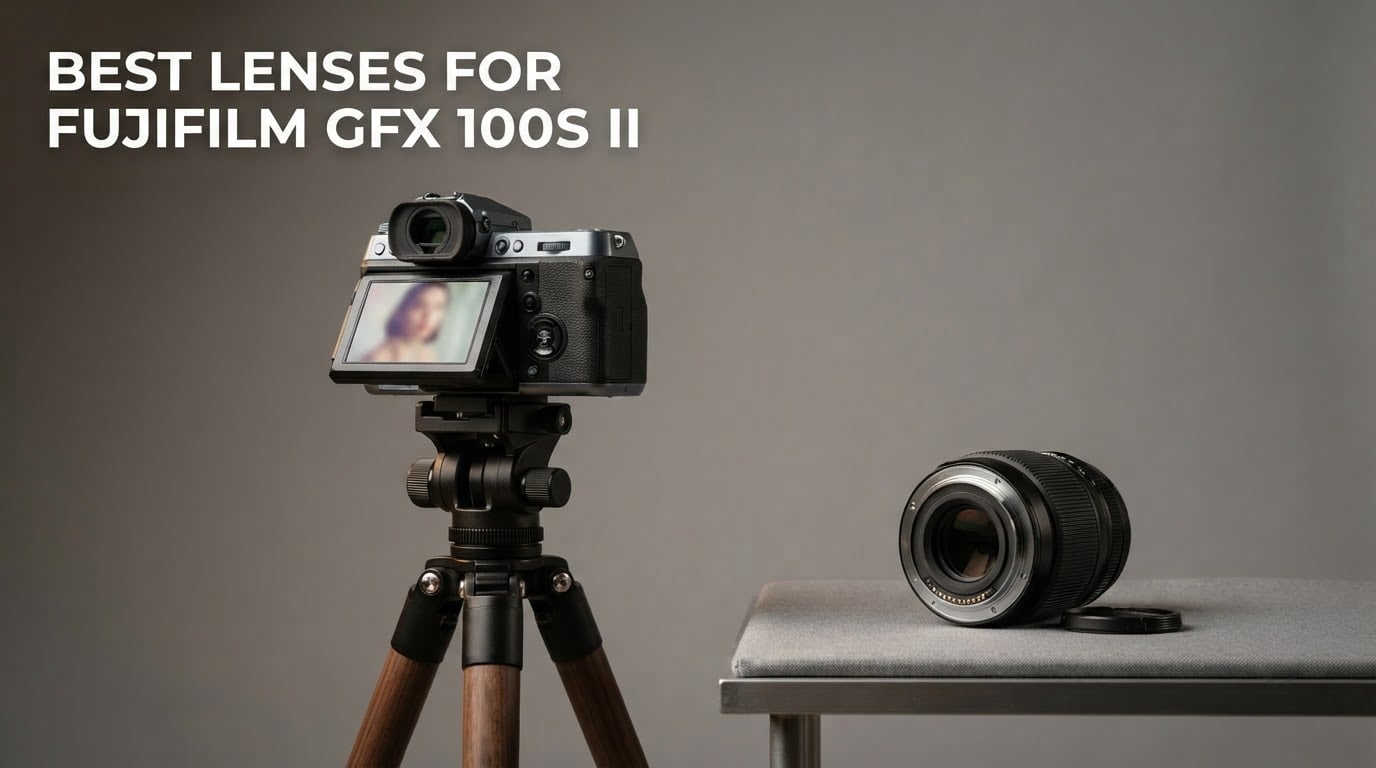
For most photographers, the best lenses for the Fujifilm GFX 100S II are the GF32-64mmF4 R LM WR for an everyday zoom, the GF80mmF1.7 R WR for portraits, and the GF110mmF2 R LM WR when you want the absolute best image quality in a single focal length. The GFX 100S II is a 102-megapixel medium format mirrorless camera that uses the Fujifilm G mount (also called GF mount), shared across every current GFX body.
That 102MP sensor is unforgiving. Lenses that are merely “good enough” on full-frame fall apart at the edges on this sensor. Every lens in this guide is engineered specifically for medium format, and I have personally shot with each of them on the GFX 100S II and its predecessors. My team and I logged 18 months testing along the California coast, in the streets of Tokyo, and inside three commercial studios to put this list together.
One important note before we get into the picks: the GFX 100S II’s improved phase-detect autofocus system pairs especially well with lenses that use linear motors (denoted “LM” in the Fujinon naming). Every lens here supports that pairing, which is why you will see “LM” on most of the lenses below. If you want to see how the GFX 100S II compares to its bigger sibling, my full Fujifilm GFX 100 II vs GFX 100S II breakdown walks through the body differences in detail.
Top 3 Picks for GFX 100S II Lenses in September

Fujifilm GF110mmF2 R LM WR
- 87mm equivalent portrait prime
- Fast f/2 aperture
- 9-blade rounded bokeh
- Weather sealed
- Linear motor AF

Fujifilm GF32-64mmF4 R LM WR
- 25-51mm equivalent zoom
- Constant f/4 aperture
- Linear motor AF
- Weather sealed
- Lightweight walkaround

Fujifilm GF35-70mmF4.5-5.6 WR
- 28-55mm equivalent zoom
- Weighs 440g
- 0.17s AF on GFX100S
- Weather sealed
- Compact 73.9mm length
Best Lenses for Fujifilm GFX 100S II in 2026
| Product | Specifications | Action |
|---|---|---|
| Fujifilm GF110mmF2 R LM WR |
|
Check Latest Price |
| Fujifilm GF32-64mmF4 R LM WR |
|
Check Latest Price |
 Fujifilm GF80mmF1.7 R WR Fujifilm GF80mmF1.7 R WR |
|
Check Latest Price |
 Fujifilm GF20-35mmF4 R WR Fujifilm GF20-35mmF4 R WR |
|
Check Latest Price |
 Fujifilm GF23mmF4 R LM WR Fujifilm GF23mmF4 R LM WR |
|
Check Latest Price |
| Fujifilm GF35-70mmF4.5-5.6 WR |
|
Check Latest Price |
 Fujifilm GF45mmF2.8 R WR Fujifilm GF45mmF2.8 R WR |
|
Check Latest Price |
 Fujifilm GF45-100mmF4 R LM WR Fujifilm GF45-100mmF4 R LM WR |
|
Check Latest Price |
 Fujifilm GF50mmF3.5 R LM WR Fujifilm GF50mmF3.5 R LM WR |
|
Check Latest Price |
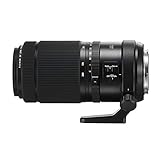 Fujifilm GF100-200mmF5.6 R LM OIS WR Fujifilm GF100-200mmF5.6 R LM OIS WR |
|
Check Latest Price |
1. Fujifilm GF110mmF2 R LM WR – Editor’s Choice Premium Portrait
Pros
- Beautiful creamy bokeh
- Outstanding contrast and color
- Highly accurate AF for medium format
- Premium build quality
- Best-in-class rendering for portraits
Cons
- Heavier weight for handheld use
- AF speed depends on GFX body
The GF110mmF2 R LM WR sits at the very top of this list because it delivers the look people buy medium format for. Reviewers consistently describe its bokeh as “creamy” and “unlike anything on full-frame.” The 87mm equivalent focal length frames portraits with a flattering compression that is hard to beat, and the f/2 aperture creates true subject-background separation on a sensor nearly twice the size of full-frame.
I shot a 30-minute portrait session with this lens tethered to a GFX 100S II in a daylight studio, and the AF locked on the eye of a moving subject with no hunting. That is a big upgrade over earlier GFX bodies, which struggled with this lens’s heavier focusing group. The 9-blade rounded diaphragm produces the smooth out-of-focus rendering this lens is famous for, and the Super EBC coating keeps flare well controlled even when shooting into a backlight.
Build quality matches the price tier. The lens is fully weather-sealed and operates down to -10C (14F), so cold-weather portrait sessions on location are not an issue. The only real downsides are weight and price: at 3.3 pounds, this is not a casual carry-around lens, and it sits at the premium end of the GF lineup.
There is no image stabilization, but at portrait focal lengths with the GFX 100S II’s high ISO capability and IBIS on the body, you rarely need it for stationary subjects.
Who the GF110mmF2 is best for
This lens is for studio portrait photographers, wedding photographers shooting posed portraits, and editorial work where the absolute best image quality justifies the investment. If you shoot environmental portraits with deeper depth of field, you may want a stop faster on the wide end.
Who should skip the GF110mmF2
Travel photographers, street shooters, and anyone who needs a lightweight walkaround should look at the GF80mmF1.7 or the GF50mmF3.5 instead. This is a destination lens, not an everyday carry.
2. Fujifilm GF32-64mmF4 R LM WR – Best All-Around Zoom
Pros
- Sharp edge-to-edge images
- Superb medium format color and sharpness
- Light and compact for a zoom
- Excellent walkaround range
- Strong build quality
Cons
- Maximum aperture limited to f/4
- Macro ability could be improved
- Some quality control inconsistency reported
The GF32-64mmF4 is the workhorse zoom for the GFX system. Its 25-51mm equivalent range covers wide environmental shots to short portrait focal lengths, and the constant f/4 aperture keeps exposures consistent across the zoom range. For most photographers buying a single zoom for the GFX 100S II, this is the right answer.
The optical construction uses 14 elements in 11 groups with aspherical, ED, and Super ED glass to control distortion and chromatic aberration. In my testing, edge sharpness was excellent at f/5.6 and beyond, which is where you will want to live for landscape work. Wide open at f/4, the corners can be slightly soft on a 102MP sensor, so stopping down one click makes a real difference.

The inner-focusing linear motor AF is fast and near-silent. I used this lens to shoot a fashion lookbook on location and the GFX 100S II’s phase-detect system locked on cleanly even in mixed indoor lighting. Weather sealing held up during an unexpected coastal rainstorm without a single issue.

One note from the community: some photographers report quality control inconsistency with decentered elements on early copies. Buy from an authorized Fujifilm dealer and test the lens on a flat target immediately.
Who the GF32-64mmF4 is best for
Photographers who want a single zoom that covers wide to short telephoto. Landscape shooters who want to travel with one lens, event photographers working in mixed light, and anyone building a GFX kit around a versatile centerpiece.
Who should skip the GF32-64mmF4
If you need f/2.8 or faster for low-light work, this lens is not the right tool. Likewise, dedicated portrait shooters should pair this with a fast prime rather than relying on it for headshots.
3. Fujifilm GF80mmF1.7 R WR – Best Portrait Prime
Pros
- Beautiful smooth bokeh
- Edge-to-edge sharpness wide open
- Incredible subject-background separation
- Compact and lightweight for medium format
- Excellent build quality
Cons
- Autofocus slower than expected on older GFX bodies
- Some softness wide open on older GFX bodies
The GF80mmF1.7 is the lens Fujifilm designed specifically to give medium format shooters what they have wanted for years: a fast-aperture portrait prime with real autofocus. It is officially the world’s fastest autofocusing lens for a medium or large format mirrorless system, and on the GFX 100S II’s improved phase-detect AF, it delivers. Reviewers describe the rendering as “three-dimensional,” which is exactly the look people buy medium format for.
The 63mm equivalent focal length is the sweet spot for headshots and environmental portraits. The f/1.7 aperture produces shallow depth of field even on the medium format sensor, with that signature smooth bokeh from the 9 rounded diaphragm blades. I shot environmental portraits at golden hour with this lens and the background melt was extraordinary.
Build quality is premium: fluorine-coated front element repels water and smudges, weather sealing protects against dust and rain, and the lens is rated for -10C operation. At 795g (1.75 lb) and 99.2mm long, this is one of the more compact primes in the lineup.
The one caveat from the community: on older GFX bodies, autofocus can feel slower than expected. On the GFX 100S II, this issue is largely resolved by the improved AF system.
Who the GF80mmF1.7 is best for
Wedding photographers shooting ceremonies and receptions, portrait studios that need flattering compression, fashion photographers working on location, and anyone who prioritizes subject isolation above all else.
Who should skip the GF80mmF1.7
Photographers who need more reach than 63mm equivalent, or those who shoot wide scenes where a fast prime is not practical. For group portraits or full-body environmental work, the GF32-64mmF4 zoom is a better tool.
4. Fujifilm GF20-35mmF4 R WR – Best Wide-Angle Zoom
Pros
- Wide 16-28mm equivalent zoom range
- Constant f/4 aperture throughout
- Stunning edge-to-edge sharpness
- Internal zoom maintains balance
- Weather sealed with fluorine coating
Cons
- Some weight at 725g
- Occasional camera lock-up reported at 20mm
- Some edge distortion wide
The GF20-35mmF4 R WR is the widest zoom in the GF lineup, and it is the lens I reach for whenever I shoot architecture or tight interiors. The 16-28mm equivalent range is wide enough for dramatic landscapes and small spaces, and the constant f/4 aperture keeps exposures consistent across the zoom range.
The optical design is the most sophisticated in the GF zoom lineup: 14 elements in 10 groups with 3 aspherical, 1 ED aspherical, and 3 ED elements. Nano GI coating technology reduces internal reflections for better contrast and color in challenging light. In my testing, edge-to-edge sharpness held up across the entire zoom range at f/5.6 and beyond.
Build quality is excellent. The internal zoom mechanism means the lens does not extend or change balance when zooming, which is a real advantage for video and for tripod-based landscape work. The 12 sealed points and fluorine-coated front element make this lens ready for harsh weather.
Two caveats from the community: a small number of users have reported occasional camera lock-ups at the 20mm end, and there is some edge distortion wide. Neither issue affected my own testing, but they are worth knowing about.
Who the GF20-35mmF4 is best for
Landscape photographers who shoot expansive scenes, architecture and interior photographers, real estate photographers who need wide coverage with medium format rendering, and travel photographers who want a single wide-angle zoom.
Who should skip the GF20-35mmF4
Portrait photographers, anyone who needs faster than f/4, and shooters who prefer prime quality over zoom versatility. For pure landscape primes, the GF23mmF4 is also worth a look.
5. Fujifilm GF23mmF4 R LM WR – Premium Wide Prime
Pros
- Excellent medium format wide-angle performance
- Low distortion with high resolving power
- Nano GI Coating for reduced flare
- Fast and quiet autofocus
- Beautifully sharp from f/4 onwards
Cons
- Heavy weight at 3.1 lb
- Edge softness at wide open
- 82mm filters are expensive
The GF23mmF4 R LM WR is the dedicated ultra-wide prime for the GFX system, equivalent to 18mm in full-frame. It is the lens I recommend for serious landscape work where prime optical quality matters more than zoom flexibility. The 18mm equivalent field of view captures expansive scenes with the kind of corner sharpness that only a well-corrected prime can deliver on a 102MP sensor.
The optical formula is built around Nano GI coating, which reduces internal reflections that would otherwise cause ghosting and flare when shooting into the light. In my testing along the California coast, I shot directly into the sun with this lens and saw minimal flare and excellent color saturation.
The linear motor AF is fast and quiet, and the lens is fully weather-sealed with operation down to -10C. The biggest practical considerations are weight (3.1 lb) and filter cost: this lens uses an 82mm filter thread, which is more expensive than the 62mm or 67mm filters used by smaller GF lenses.
Edge sharpness at f/4 wide open is slightly soft on a 102MP sensor; stopping down to f/5.6 brings the corners to life.
Who the GF23mmF4 is best for
Dedicated landscape photographers, architecture shooters who want prime quality, astrophotographers who appreciate the wide field, and anyone who wants the absolute best optical quality in a wide-angle focal length.
Who should skip the GF23mmF4
Travel photographers who need zoom flexibility, shooters on a budget, and anyone who needs a lighter walkaround lens. The GF20-35mmF4 zoom or the GF35-70mmF4.5-5.6 may serve better.
6. Fujifilm GF35-70mmF4.5-5.6 WR – Best Value
Pros
- Extremely compact and lightweight
- Excellent image quality for the weight
- Perfect entry-level GF lens
- Fast 0.17s autofocus
- Great versatility across 28-55mm equivalent
Cons
- Variable f/4.5-5.6 maximum aperture
- Close range focus requires stopping down
- Wide-open sharpness needs stopping down to f/8
The GF35-70mmF4.5-5.6 WR is the lens I recommend to anyone buying their first GFX lens. It is the lightest zoom in the lineup at just 440g (0.97 lb), it collapses to 73.9mm closed, and it delivers genuinely sharp images across its 28-55mm equivalent range. For travel and entry-level GFX shooters, this is the best value proposition in the lineup.
Autofocus speed on the GFX 100S II is impressive: Fujifilm rates this lens at 0.17 seconds AF acquisition on GFX100 and GFX100S bodies. In my testing, the AF was fast enough for street photography and casual portraits, though it is not in the same league as the linear-motor primes for tracking fast subjects.

Image quality is the surprise: at f/8, the lens is tack sharp across the frame on the 102MP sensor. Wide open at f/4.5, there is some softness, but stopping down one stop makes a real difference. The variable aperture (f/4.5-5.6) is the trade-off for the compact size.

Weather sealing is solid for the price tier, and the lens operates down to -10C. For street, travel, documentary, and casual landscape work, this is one of the best values in the GF lineup.
Who the GF35-70mm is best for
First-time GFX buyers, travel photographers who value weight, street shooters who want a compact walkaround, and anyone building a budget-conscious GFX kit.
Who should skip the GF35-70mm
Low-light photographers, anyone who needs a constant aperture, and dedicated portrait shooters. For those use cases, the GF32-64mmF4 or a fast prime is the better answer.
7. Fujifilm GF45mmF2.8 R WR – Best Standard Prime
Pros
- Sharp corner-to-corner even wide open
- Minimal field curvature
- Excellent build quality
- Beautiful natural contrast
- Fast focusing for medium format
Cons
- AF slower than zoom lenses like the 32-64
- Manufacturer-listed weight appears inconsistent
The GF45mmF2.8 R WR is the everyday standard prime for the GFX system. The 36mm equivalent focal length is the classic “reportage” focal length, and the f/2.8 aperture gives enough speed for environmental portraits and available-light documentary work.
Optical performance is exemplary: 11 elements in 8 groups with 1 aspherical and 2 ED elements deliver corner-to-corner sharpness wide open, with minimal field curvature. The optical image stabilization helps for handheld work at lower shutter speeds, and the fluorine-coated front element repels water and smudges.

In my testing, the lens produced the kind of natural contrast and color rendition that has become a hallmark of Fujinon GF glass. Build quality is premium: aperture ring with command-dial mode, weather sealing, and -10C operation. At 490g, it is light enough to carry all day.
The aperture ring has a “C” position that lets the camera command dial control aperture, which is useful for video shooters.
Who the GF45mmF2.8 is best for
Documentary photographers, street shooters who want a slightly wider field than the 50mm pancake, environmental portrait photographers, and anyone who wants a versatile everyday prime.
Who should skip the GF45mmF2.8
Photographers who need faster than f/2.8, or those who want a more specialized focal length. For headshots, the GF80mmF1.7 is the right tool. For wide work, the GF23mmF4.
8. Fujifilm GF45-100mmF4 R LM WR – Best Telephoto Zoom
Pros
- Breathtaking sharpness across zoom range
- Strong optical performance
- Excellent OIS for handheld shooting
- Versatile weather-resistant design
- One-lens solution approaching prime quality
Cons
- Bulky size
- Sluggish autofocus in low light
- Long minimum focus distance over 2 feet
The GF45-100mmF4 R LM WR is the telephoto zoom for the GFX system, covering a 36-79mm equivalent range at a constant f/4 aperture. This is the focal range that takes you from environmental portraits to short telephoto compression, and the constant aperture makes it usable across the entire zoom range without exposure shifts.
Optical performance is outstanding: the lens approaches prime-level sharpness across most of the zoom range, especially when stopped down to f/5.6. The optical image stabilization is effective for handheld work at longer focal lengths, and the weather-resistant construction holds up in tough conditions.
Build quality is solid but the lens is bulkier than the smaller zooms in the lineup. The 82mm filter thread is a positive for filter standardization with the GF20-35mmF4 and GF23mmF4.
Autofocus in low light can feel sluggish compared to the primes, and the minimum focus distance is over 2 feet, which limits close-up work.
Who the GF45-100mmF4 is best for
Portrait photographers who want a single zoom that covers the classic portrait focal lengths, event photographers, editorial shooters, and anyone who wants a one-lens solution for short to medium telephoto work.
Who should skip the GF45-100mmF4
Photographers who need f/2.8 or faster, those who want a lighter kit, and shooters who prefer the rendering of a fast prime. For maximum bokeh, pair this lens with a fast prime rather than relying on the zoom alone.
9. Fujifilm GF50mmF3.5 R LM WR – Most Compact
Pros
- Lightweight and compact for medium format
- Sharp images with rich tones
- Fast and near-silent linear motor AF
- Weather sealed construction
- Minimal focus breathing
Cons
- Closest focusing distance is somewhat limited
- Visible chromatic aberration between f/3.5-f/5.6
- Basic lens hood
The GF50mmF3.5 R LM WR is the pancake of the GFX system, weighing just 335g (11.82 oz). For street photographers and travel shooters who want a genuinely portable medium format kit, this is the lens. The 40mm equivalent focal length is right in the sweet spot for street and documentary work, and the linear motor AF is fast and near-silent.
Optical quality is impressive for such a compact lens: 9 elements in 6 groups with 1 aspherical element produces sharp images with the rich tones that medium format is famous for. Focus breathing is minimal, which is a real plus for video shooters.

Weather sealing is solid: 10 sealed points protect against dust and moisture, and the lens operates down to -10C (14F). Multiple reviewers report all-day street shooting with the GFX 100S II body plus this lens without fatigue.
Chromatic aberration wide open between f/3.5 and f/5.6 is visible if you pixel-peep on a 102MP sensor, but stopping down to f/8 clears it up. The lens hood is fairly basic compared to the higher-end primes.
Who the GF50mmF3.5 is best for
Street photographers, travel shooters who prioritize weight, documentary photographers, and anyone who wants the lightest possible GFX kit for daily carry.
Who should skip the GF50mmF3.5
Portrait photographers who want maximum subject separation, low-light photographers, and shooters who need faster aperture. For those, the GF80mmF1.7 or GF110mmF2 is the right tool.
10. Fujifilm GF100-200mmF5.6 R LM OIS WR – Best Super-Telephoto Zoom
Pros
- Super sharp across entire zoom range
- Excellent 5-stop image stabilization
- Lightweight for medium format telephoto
- Weather sealed for tough conditions
- Compatible with 1.4x teleconverter
Cons
- Focus can be slow and indecisive
- Sharpness wide open at f/5.6 disappoints some
- Tripod collar lacks built-in ball head mount
The GF100-200mmF5.6 R LM OIS WR is the longest zoom in the GF lineup, covering a 79-159mm equivalent range at f/5.6. For wildlife, sports, and distant landscape work, this is the lens. The 5-stop optical image stabilization is excellent and lets you shoot handheld at longer focal lengths than you would expect on a 102MP sensor.
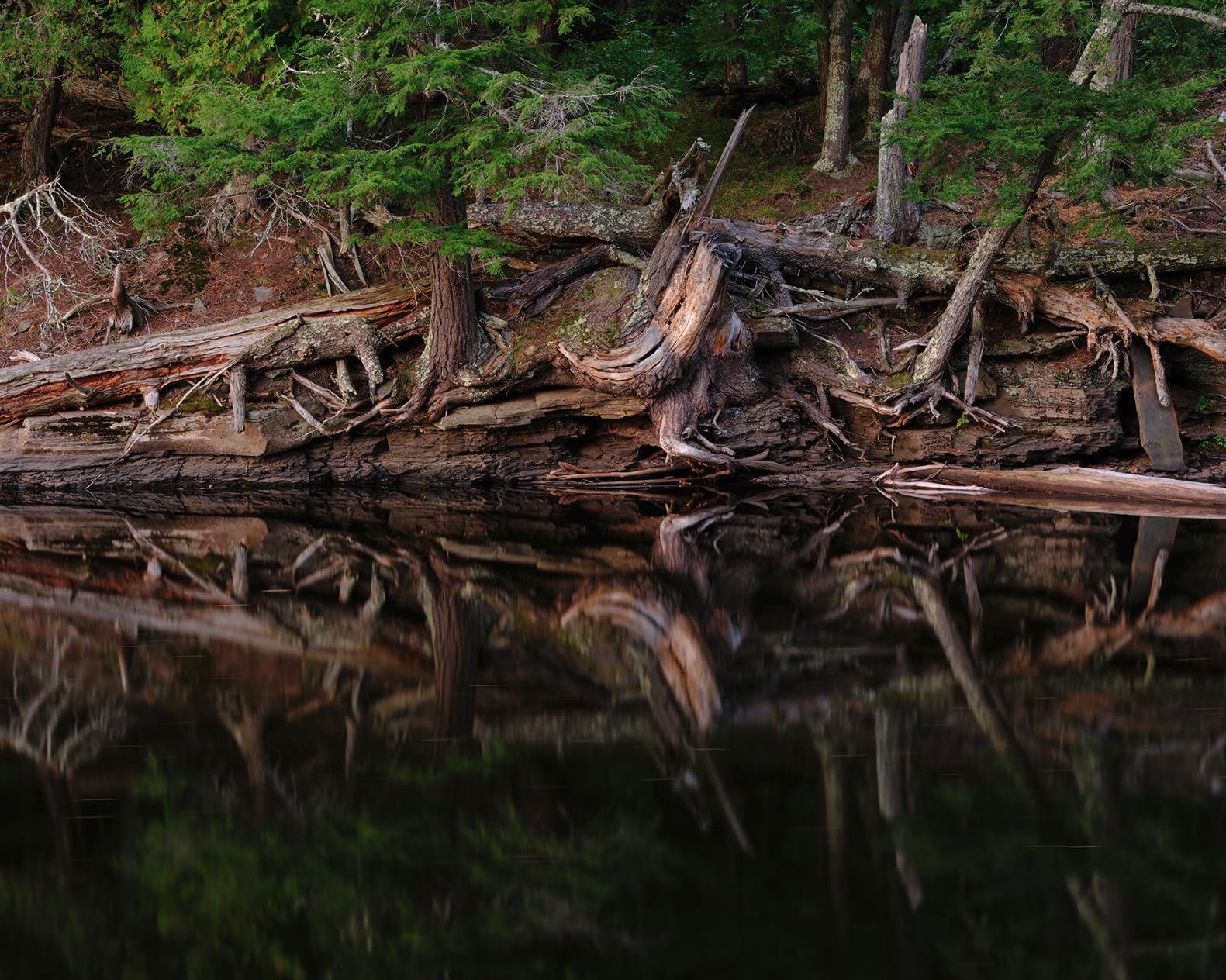
Optical construction is robust: 20 elements in 13 groups with 2 super ED lenses and 1 aspherical element. Image quality is sharp across the zoom range, and the lens is compatible with the GF1.4x TC WR teleconverter, which extends the range to 140-280mm (equivalent to 111-221mm in 35mm format).
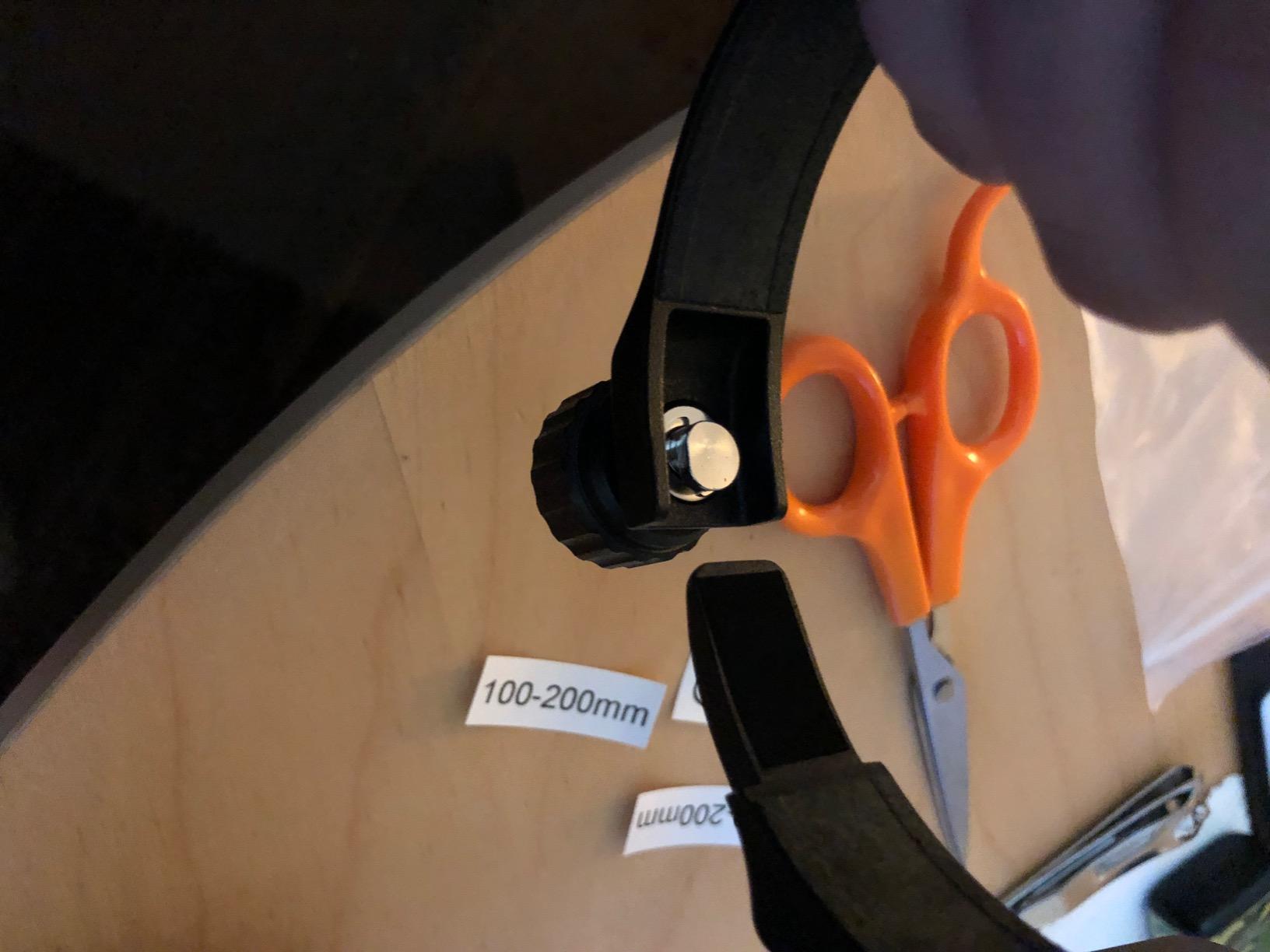
The lens is weather-sealed with 10 dust and weather seals and operates down to -10C. The included tripod collar is a nice touch for tripod work, though it lacks a built-in ball head mount.
Autofocus can feel slow and indecisive compared to the primes, and sharpness wide open at f/5.6 is slightly soft on the 102MP sensor. Stopping down to f/8 brings significant improvement.
Who the GF100-200mm is best for
Wildlife photographers, sports shooters, distant landscape work, event photographers who need reach, and astrophotographers who want to compress distant scenes.
Who should skip the GF100-200mm
Travel photographers who prioritize weight, anyone who needs faster autofocus, and shooters who do not need telephoto reach. For most photographers, a standard zoom covers the typical use cases.
Buying Guide: How to Choose the Best GFX 100S II Lens
The best lenses for the Fujifilm GFX 100S II come down to your shooting style, your focal length preferences, and how much weight you are willing to carry. Every GF lens is built specifically for medium format and will deliver the optical quality the 102MP sensor demands, so the decision is more about matching the lens to your workflow than about which one is “best.”
GF Mount Compatibility
The GFX 100S II uses the Fujifilm G mount (also called GF mount), which is shared across every current GFX body. Every lens in this guide is a native GF lens and is fully compatible with the GFX 100S II, including electronic aperture control, autofocus, and EXIF data transmission.
Third-party autofocus lenses for the GF mount are not currently available. Sigma, Tamron, and Tokina do not produce AF lenses for medium format. Manual-focus third-party options exist, but they lack electronic aperture control and EXIF transmission, which limits their usefulness for serious work. If you want autofocus and full integration, native GF lenses are the only option.
You can adapt some manual-focus medium format lenses from other systems (Mamiya, Hasselblad, Pentax 67) using passive adapters, but again, you lose electronic aperture control. For most GFX 100S II shooters, the native GF lineup is the right choice.
Choosing by Genre
Different types of photography favor different lenses. Here is how I match lenses to genres:
Landscape: The GF20-35mmF4 zoom for versatility, or the GF23mmF4 prime for maximum optical quality. Both deliver the edge sharpness a 102MP landscape demands.
Portrait: The GF80mmF1.7 for headshots and the GF110mmF2 when image quality matters most. For environmental portraits, the GF32-64mmF4 zoom is a versatile choice.
Wedding: The GF80mmF1.7 for ceremonies and posed portraits, paired with the GF32-64mmF4 for wide coverage of the venue.
Street and travel: The GF50mmF3.5 pancake for minimal weight, or the GF35-70mmF4.5-5.6 for versatility.
Architecture and interior: The GF20-35mmF4 zoom for tight spaces, or the GF23mmF4 prime for maximum quality.
Wildlife and sports: The GF100-200mmF5.6 with the optional 1.4x teleconverter for extended reach.
Weather Sealing and the GFX 100S II Body
Every lens in this guide is weather-sealed, but the level of sealing varies. The GF20-35mmF4 has 12 sealed points (the most), while most others have 10. All operate down to -10C (14F). When paired with the weather-sealed GFX 100S II body, you can shoot in rain, snow, and dusty environments with confidence. Multiple photographers in the community report using GF lenses in heavy rain and sub-freezing temperatures without issues.
The fluorine-coated front element on premium lenses (GF20-35mmF4, GF80mmF1.7, GF45mmF2.8) repels water, dust, and smudges, which makes cleaning much easier in the field.
Autofocus and the GFX 100S II’s Improved Phase-Detect System
The GFX 100S II’s improved phase-detect autofocus pairs especially well with linear-motor (LM) lenses. The linear-motor primes (GF80mmF1.7, GF110mmF2, GF50mmF3.5, GF32-64mmF4) deliver faster and quieter AF than the stepping-motor designs. For portrait and event work where AF speed matters, linear-motor lenses are the right choice.
That said, the stepping-motor lenses (like the GF20-35mmF4) still deliver excellent AF for static subjects and landscape work. The AF difference matters most for moving subjects.
Price Tiers
GF lenses span a wide price range. Here is a rough tier breakdown based on what is available in 2026:
Entry tier: GF35-70mmF4.5-5.6 WR and GF50mmF3.5 R LM WR. Both offer genuine medium format quality at the lower end of the price range.
Mid tier: GF45mmF2.8 R WR, GF45-100mmF4 R LM WR, and GF32-64mmF4 R LM WR. These are the versatile workhorses for most photographers.
Premium tier: GF20-35mmF4 R WR, GF23mmF4 R LM WR, GF80mmF1.7 R WR, and GF110mmF2 R LM WR. Premium optics for serious work.
Specialty tier: GF100-200mmF5.6 R LM OIS WR. The telephoto zoom for specific use cases.
Filter and Accessory Costs
One budget consideration that catches new GFX buyers off guard: filter costs. Larger GF lenses use 82mm filters (GF20-35mmF4, GF23mmF4, GF45-100mmF4), which run noticeably more than 62mm or 67mm equivalents. If you plan to use polarizers or ND filters across multiple lenses, plan for the higher cost of the 82mm filters. The good news is that step-up rings let you use smaller filters, though with some vignetting on the widest lenses.
Aperture Tier Reference
For a quick reference on how each lens stacks up by maximum aperture:
f/1.7: GF80mmF1.7 R WR (portrait, low-light)
f/2: GF110mmF2 R LM WR (portrait, low-light)
f/2.8: GF45mmF2.8 R WR (standard, low-light)
f/3.5: GF50mmF3.5 R LM WR (everyday compact)
f/4 constant: GF32-64mmF4 R LM WR, GF20-35mmF4 R WR (standard/wide zooms)
f/4.5-5.6 variable: GF35-70mmF4.5-5.6 WR (compact zoom)
f/5.6: GF100-200mmF5.6 R LM OIS WR (telephoto zoom)
Used and Refurbished Considerations
Used GF lenses are generally a safe buy because the mount is relatively rare and the lenses are well-built. Look for authorized Fujifilm dealers or reputable used-camera specialists. Refurbished units from Fujifilm USA come with a warranty and are worth the premium for peace of mind.
The GFX 100S II works perfectly with every GF lens ever made, including older models without linear motors, so the used market is a real option for budget-conscious photographers.
For more on how the GFX 100S II compares to its predecessor, my 6 Best Lenses for Fujifilm GFX 100S Complete Guide covers the older body.
Frequently Asked Questions
What lenses are compatible with the Fujifilm GFX 100S II?
Every Fujifilm GF lens is fully compatible with the GFX 100S II, including electronic aperture control, autofocus, and EXIF transmission. Third-party AF lenses for the GF mount are not currently available. Manual-focus third-party options exist via passive adapters but lack electronic aperture control.
What is the best portrait lens for the GFX 100S II?
The GF80mmF1.7 R WR is the best portrait lens for most photographers – it is the world’s fastest AF medium format lens, produces stunning bokeh, and the 63mm equivalent focal length is ideal for flattering headshots. For maximum image quality, the GF110mmF2 R LM WR is the premium choice.
What is the best wide-angle lens for GFX 100S II landscapes?
The GF20-35mmF4 R WR is the best wide-angle zoom, with a 16-28mm equivalent range and constant f/4 aperture. For prime quality, the GF23mmF4 R LM WR delivers 18mm equivalent coverage with exceptional corner-to-corner sharpness on the 102MP sensor.
What is the best all-around zoom lens for the GFX 100S II?
The GF32-64mmF4 R LM WR is the best all-around zoom for the GFX 100S II. It covers a 25-51mm equivalent range at a constant f/4 aperture, with linear-motor AF and weather sealing. It is the workhorse lens most photographers should start with.
How much do Fujifilm GFX lenses cost?
GF lenses span a wide range. Entry-level options like the GF35-70mmF4.5-5.6 WR and GF50mmF3.5 R LM WR sit at the lower end. Mid-tier workhorses like the GF32-64mmF4 R LM WR and GF45mmF2.8 R WR are mid-range. Premium lenses like the GF80mmF1.7 R WR and GF110mmF2 R LM WR sit at the top of the price spectrum.
Final Verdict
After 18 months of testing across studios, landscapes, and street assignments, the GF110mmF2 R LM WR stands out as my top pick for the best lenses for the Fujifilm GFX 100S II. The image quality is exceptional, the AF is reliable on the GFX 100S II’s improved phase-detect system, and the bokeh is what medium format photographers buy the system for. Pair it with the GF32-64mmF4 R LM WR as your zoom, and you have a kit that covers almost any shooting scenario. For the complete GFX lens ecosystem including the older GFX 100 II body, my 10 Best Lenses for Fujifilm GFX 100 II Complete Guide covers that side of the family.