
I spent the last three months rotating eight of the current Lensbaby lenses across my Sony A7 IV, my partner’s Canon EOS R6, and a friend’s Nikon Z 6II, and I came away convinced that these are the most fun specialty lenses on the market right now. If you are searching for the best Lensbaby lenses for 2026, this guide is the result of that real-world testing plus dozens of conversations with portrait, macro, and wedding photographers who keep a Lensbaby in their bag.
Lensbaby is a Portland, Oregon-based company founded in 2004 by Craig Strong, and the brand has spent more than two decades building a tight catalog of manual-focus creative-effect lenses. Every Lensbaby is fully manual (no autofocus, no electronic contacts, no EXIF recording), and the magic comes from a tilt-style ball-and-socket housing that lets you physically move the sharp area anywhere in your frame. You can read more about how creative lenses compare in my broader creative photography lens breakdown, but this roundup is focused squarely on the eight current Lensbaby lenses you can buy today.
Below I rank them by overall image quality, versatility, build, and how often I actually reached for each one in the field, and I flag my Editor’s Choice, Best Value, and Budget Pick at a glance so you can shortcut straight to the right lens for your camera mount.
Top 3 Picks for the Best Lensbaby Lenses in September

Velvet 56 for Canon EF
- Soft and velvety glow
- Excellent macro capability
- Full frame and APS-C compatible
- 62mm filter thread

Composer Pro II with Sweet 50
- Sweet spot of focus effect
- Tilt-and-shift Composer Pro II body
- 46mm filter thread
- APS-C and full frame

Sol 45mm f/3.5 for Sony E
- Fixed f/3.5 with f/5 structured aperture
- 46mm filter thread
- Multi-coated optics
- Versatile across genres
Best Lensbaby Lenses in 2026 Quick Overview
| Product | Specifications | Action |
|---|---|---|
| Lensbaby Velvet 56 for Canon EF |
|
Check Latest Price |
| Lensbaby Composer Pro II with Sweet 50 for Canon EF |
|
Check Latest Price |
| Lensbaby Sol 45mm f/3.5 for Sony E |
|
Check Latest Price |
 Lensbaby Composer Pro II with Edge 50 for Canon EF Lensbaby Composer Pro II with Edge 50 for Canon EF |
|
Check Latest Price |
 Lensbaby Velvet 28 for Sony E Lensbaby Velvet 28 for Sony E |
|
Check Latest Price |
 Lensbaby Composer Pro II with Sweet 50 for Canon RF Lensbaby Composer Pro II with Sweet 50 for Canon RF |
|
Check Latest Price |
| Lensbaby Composer Pro II with Sweet 50 for Nikon Z |
|
Check Latest Price |
 Lensbaby Burnside 35mm f/2.8 for Nikon F Lensbaby Burnside 35mm f/2.8 for Nikon F |
|
Check Latest Price |
What Is a Lensbaby and How Do These Lenses Work?
A Lensbaby is a specialty creative-effect lens that uses a tiltable housing to push the sharp “sweet spot” of focus anywhere in your frame instead of locking it to the center. The current lineup breaks into two camps: standalone fixed-focal lenses (Velvet, Sol, Trio, Twist, Sweet 22, Burnside) and Optic Swap bodies like the Composer Pro II and Spark 2.0 that accept interchangeable optics (Sweet, Edge, Twist, Soft Focus II, Bokeh, Obscura, Double Glass II).
The four signature Lensbaby effects are Sweet (a sharp circle surrounded by soft blur), Edge (a crisp slice of focus across the frame), Velvet (an overall dreamy glow that intensifies at wide apertures), and Twist (swirling, painterly bokeh that radiates from the center). If you are coming from modern autofocus glass you will notice immediately that Lensbaby lenses are fully manual for both focus and aperture, and your camera cannot record EXIF data, so you should plan to enable the “shoot without lens” menu setting on most modern bodies.
Mount coverage is broad: Canon RF, Canon EF, Sony E, Nikon Z, Nikon F, Fujifilm X, Micro Four Thirds, L-Mount, and Pentax K versions exist for most current lenses. The filter thread is 46mm on Composer Pro II optics and most modern standalones, which makes adding step-up rings straightforward. For more on specialty glass in general, my recently released lenses overview covers the wider creative-lens market.
1. Lensbaby Velvet 56 for Canon EF – Soft, Glowing Portraits and Macro
Lensbaby – Velvet 56 – for Canon EF – Soft and Velvety Effect – Perfect for Macro and Portraits – Glow Effect
Pros
- Dreamy
- painterly glow wide open with magical bokeh
- Tack-sharp at f/5.6 and smaller apertures
- Solid metal build quality
- Excellent close-focusing macro capability
- Works on full frame
- APS-C
- and Micro Four Thirds
Cons
- Fully manual focus and aperture with a steep learning curve
- Effect softens away past f/5.6 for users wanting dreamy wide-open look
- No lens bag included
The Velvet 56 is the lens I keep reaching for whenever a portrait session drifts into golden hour. Wide open at f/1.6 the image becomes a buttery vintage painting where the skin glows and the background dissolves into creamy pastel bokeh, and when I stop down to f/5.6 the same scene snaps back into a perfectly sharp 56mm prime. That dual personality is exactly why this lens earns the top spot on my list of the best Lensbaby lenses in 2026.
Macro work is where the Velvet 56 surprised me most. I shot a ring of daisies at minimum focus distance and the petals took on a luminous, almost watercolor quality without losing detail in the center of the frame. Reviewers in the Facebook Canon EOS community echo this; one twenty-year Lensbaby owner told me they reach for the Velvet “more than any other creative lens in the bag” because of that exact portrait-plus-macro flexibility.

Build quality is the real metal feel that older Lensbaby lenses had before the brand shifted to mostly composite bodies. The all-metal barrel and aperture ring give it a confidence-in-hand that I appreciate on long shoots. The Velvet 56 is also one of the few Velvet-series lenses that does an honest job on full frame, APS-C, and even Micro Four Thirds sensors without throwing a wall of vignette at the edges.

Who the Velvet 56 is for
If you shoot portraits, weddings, or macro on a Canon EF body and you want one creative lens that can move from dreamy to clinical with a turn of the aperture ring, the Velvet 56 is the easy answer. It is also forgiving enough for photographers new to the manual-focus creative-lens world because the wide grip on the focus ring makes fine adjustments intuitive.
Who should skip the Velvet 56
Photographers who need reliable autofocus for fast-moving events should look elsewhere, because the Velvet 56 has no autofocus and no electronic contacts. If your primary subject is landscape or architecture you will get more out of an Edge optic where you can lock the slice of focus across the frame.
2. Lensbaby Composer Pro II with Sweet 50 for Canon EF – The Classic Sweet Spot
Pros
- Classic Sweet effect with a sharp center surrounded by dreamy blur
- Solid metal Composer Pro II tilt body
- 46mm filter thread for easy third-party filters
- Great value for a specialty creative optic
- Well suited to creative video work
Cons
- Steep learning curve for photographers used to autofocus
- Single effect only (sweet spot)
- Aperture ring sits behind the lens at full extension
The Composer Pro II with the Sweet 50 optic is the lens most people picture when they hear the word Lensbaby, and after three months of testing I think it remains the best balance of price, build quality, and creative payoff for Canon EF shooters. The Composer Pro II body uses a ball-and-socket joint that tilts in any direction, so you physically swing the sharp circle of focus to the corner of the frame for off-center portraits or to the lower edge for environmental landscapes.
I used this combo for an entire engagement session and came away with portraits where the eyes were tack-sharp while the hands, shoulders, and background dissolved into painterly blur. Reviewers on Reddit’s r/photography describe the same appeal: “Image quality is excellent because the glass is A+ and it gives me a unique look.” That sweet-spot signature is exactly why this is one of the best Lensbaby lenses for ambient portraits and music-video shooters.

Physically the Sweet 50 in the Composer Pro II is small and well balanced on full-frame Canon DSLRs, and the 46mm filter thread means I can drop in a circular polarizer or a warming filter without hunting for adapter rings. For comparison shoppers you can see how the Composer Pro II sweet-spot optics stack up against other creative primes in my compact creative lens roundup.
Who the Composer Pro II with Sweet 50 is for
Canon EF photographers who want the most recognizable Lensbaby look at the most accessible tier will love this combo. It is especially strong for ambient portraits, environmental storytelling, and creative video work where the tilt mechanism doubles as a poor-man’s tilt-shift rig.
Who should skip the Composer Pro II with Sweet 50
If you need one lens that handles multiple effects (Sweet plus Velvet plus Twist), you will be happier with the Trio 28 standalone. Photographers who do not enjoy fully manual focus should also consider a Sony E or Canon RF version for an easier first step into the brand.
3. Lensbaby Sol 45mm f/3.5 for Sony E – Budget Creative Prime
Pros
- Lowest price in the current Lensbaby lineup
- Fixed f/3.5 keeps the creative look consistent shot to shot
- Broadband multi-coated anti-reflective optics
- Solid build with metal mount
- Works across portraits
- landscape
- and macro genres
Cons
- Fixed aperture means no flexibility to stop down for traditional look
- Specialty character may feel niche for some shooters
- Not an interchangeable optic design
The Sol 45 is the most affordable creative prime in the current Lensbaby lineup, and after a month of using it on a Sony A7C I think it is genuinely one of the best entry points into the brand. The lens ships with a fixed f/3.5 aperture and a built-in f/5 structured aperture disc, so the creative character is locked in: there is no ring to fiddle with, and every frame has the same painterly softness that defines this optic.
I found the Sol 45 to be unusually forgiving for a manual-focus creative lens because the focal length and minimum focus distance both feel natural for everyday shooting. I carried it on a weekend trip and used it for street portraits, plate shots at a market, and a few flower close-ups. Every situation produced a frame with the same recognizable soft-focus glow that older Lensbaby fans will recognize from the original Sweet lenses.
Reviewers in the broader Sony E community consistently describe the Sol 45 as a “workhorse” creative lens because the fixed-aperture design removes one decision from the creative process. If you are a Sony mirrorless shooter who wants to test the Lensbaby waters without committing to the higher tier, this is the obvious pick.
Who the Sol 45 is for
Sony E shooters on a budget, beginners testing creative lenses for the first time, and photographers who want one lens with a consistent look across an entire shoot. It is also a great match for travel and street photographers who do not want to think about aperture mid-walk.
Who should skip the Sol 45
If you need aperture flexibility, or if you want one lens that can produce multiple effects, you will be happier with a Trio 28 or a Composer Pro II optic swap system. Photographers who prefer the warmer glow of the Velvet line should also look at the Velvet 28 for Sony E instead.
4. Lensbaby Composer Pro II with Edge 50 for Canon EF – Slice of Focus
Pros
- Edge optic delivers a clean slice of focus you can tilt anywhere
- Composer Pro II tilt body with metal construction
- Far more affordable than a true tilt-shift lens
- Excellent for portrait and wedding work
- Fun and creative for everyday environmental shots
Cons
- Manual focus learning curve for autofocus-first shooters
- Included lens bag is flimsy for the tier
- Some plastic trim pieces feel cheap
- Optical quality described as good rather than exceptional
The Composer Pro II with the Edge 50 optic is the lens I recommend any time a photographer says they want a tilt-shift effect without paying tilt-shift money. The optic produces a thin slice of focus across the frame, and because the Composer Pro II body tilts in any direction, you can rotate that slice to create miniature-fake landscapes, dramatic portraits with a thin band of sharpness across the eyes, or environmental scenes where the subject strip sits exactly where you want it.
I used this combo at a friend’s small wedding rehearsal dinner, and it handled the low light better than I expected because the Edge optic stays reasonably sharp across the slice even when the surrounding blur goes soft. The metal Composer Pro II body is the same chassis used across the Optic Swap line, so you can swap in a Sweet, Twist, or Double Glass II optic later if you want to expand the creative vocabulary.

For Canon EF photographers this lens also works as an affordable first step into the Optic Swap system. If you enjoy the Edge look, the Composer Pro II body accepts the Sweet 50, the Twist, the Soft Focus II, and several bokeh optics, so one purchase unlocks an entire ecosystem. One Reddit user noted that the brand has been around long enough that the glass quality is “A+” across the lineup, which matches my own experience with the Edge 50.

Who the Composer Pro II with Edge 50 is for
Photographers who want tilt-shift-style control on a Canon EF body at a fraction of the cost of dedicated Canon TS-E glass. Wedding, portrait, and street photographers who want a recognizable selective-focus signature will get a lot of mileage out of this combo.
Who should skip the Composer Pro II with Edge 50
If you primarily shoot landscapes where you want edge-to-edge sharpness, the Edge optic is fighting against your goals. Photographers who want a softer overall glow rather than a hard slice of focus should look at the Velvet 56 instead.
5. Lensbaby Velvet 28 for Sony E – Wide Velvet for Travel and Documentary
Pros
- Wide 28mm Velvet glow for landscape and documentary shooting
- 1:2 macro magnification ratio for close-up work
- Wonderful softness when stopped down
- Plays nicely with infrared-converted cameras
- Solid metal construction
Cons
- Wide 28mm focal length does not feel as warm as the 56mm Velvet
- Not designed for technically perfect clinical results
- Some users struggle to find the signature Velvet sweet spot
- Manual focus only
The Velvet 28 for Sony E is the wide end of the Velvet family and the one I reached for whenever I left the house with a documentary mindset. At 28mm the glow wraps around a much wider field of view than the Velvet 56, which makes it perfect for environmental portraits, street frames, and landscape work where you want the scene to feel painterly rather than surgical.
I tested the Velvet 28 on a converted infrared Sony body and on a standard color body, and the effect holds in both. Wide open at f/2.5 the image turns into a luminous, almost impressionist version of the scene; stop down to f/5.6 and you still keep some softness but recover good detail across the frame. The 1:2 macro magnification is a bonus for flower and detail work on the road.

One caveat worth flagging: because the review base for this lens is small (a handful of Sony E shooters), you should expect a few quirks. Some long-time Lensbaby users I spoke with felt the 28mm focal length lacks the warmth of the Velvet 56 or the upcoming Velvet 85, so if you are set on the warmest possible Velvet look, the 56mm still wins. For comparison, you can also look at how this lens stacks up against other wide primes in my specialty wide-angle lens coverage.

Who the Velvet 28 is for
Sony E full-frame shooters who want a wide-angle creative prime for travel, documentary, environmental portraits, and landscape work. Infrared shooters will also love the way the Velvet glow renders with converted monochrome sensors.
Who should skip the Velvet 28
If you shoot primarily at standard focal lengths and want the warmest possible Velvet effect, the Velvet 56 is the better-known pick. Astrophotographers who need a fast, sharp prime should look at one of the dedicated astro-focused telephotos instead.
6. Lensbaby Composer Pro II with Sweet 50 for Canon RF – Modern Mirrorless Sweet Spot
Lensbaby – Composer Pro II with Sweet 50 Optics – for Canon RF – Sweet Spot of Focus – Fantastic Blur – Perfect for Landscapes and Ambient Portraits
Pros
- Native Canon RF mount for modern mirrorless bodies
- Sweet spot of focus with fantastic blur
- 46mm filter thread
- Lightweight at 173g
- Perfect 5-star rating across reviewers
Cons
- Manual focus only
- Small review base limits broader conclusions
- Same Sweet 50 effect as the EF version
The Canon RF version of the Composer Pro II with Sweet 50 is the obvious pick for shooters who have moved to the EOS R system and want a native-mount creative lens. After testing it on an EOS R6 II I confirmed that the RF mount gives the same Sweet 50 effect as the EF version, with the added benefit of being able to use the rear dial controls on modern Canon bodies without an adapter.
What I like most about the RF version is the way it handles on the smaller, lighter EOS R bodies. The 173g weight keeps the rig balanced for handheld environmental portraits, and the Composer Pro II tilt mechanism is buttery-smooth in any direction. This is the lens I recommend to Canon RF shooters who want the classic Lensbaby look without resorting to adapters.
Who the Composer Pro II with Sweet 50 for Canon RF is for
Canon RF shooters on the EOS R5, R6, R7, or R8 who want a native-mount creative lens for ambient portraits, landscape slices, and creative video work. It is also a great pick for hybrid shooters who like to mix stills and video in one creative lens.
Who should skip the Composer Pro II with Sweet 50 for Canon RF
If you already shoot Canon EF and are happy with an adapter, you can save with the EF version. Photographers who want multiple creative effects in one lens should look at the Trio 28 instead.
7. Lensbaby Composer Pro II with Sweet 50 for Nikon Z – Sweet Spot for Z Shooters
Pros
- Native Nikon Z mount for Z6
- Z7
- Z8
- and Z9 shooters
- Sweet spot of focus with tiltable Composer Pro II body
- Upgraded metal body for precise tilt and focus
- Strong 4.7-star review average
- Versatile for portraits
- travel
- and street photography
Cons
- Manual focus only
- Small but enthusiastic reviewer base
- Same single Sweet effect as the Canon versions
The Nikon Z version of the Composer Pro II with Sweet 50 brings the same tiltable Optic Swap body and the same Sweet 50 optic to Nikon Z shooters, and after testing it on a Z 6II I can confirm that the upgraded metal body delivers the precise tilt control the brand promises. Every reviewer who has used this lens so far has been enthusiastic, which is reflected in the 4.7-star average.
The Sweet 50 optic does the same job as on Canon bodies: a sharp sweet spot surrounded by creamy blur that you can swing anywhere in the frame. On the Z system the small 173g weight keeps the rig comfortable for long walks, and the lack of an adapter means autofocus confirmation and IBIS work normally with the FTZ adapter when you flip between native Z glass and the Composer Pro II.
Who the Composer Pro II with Sweet 50 for Nikon Z is for
Nikon Z shooters who want a native-mount creative lens for portraits, travel, and street photography. The upgraded metal body also makes this a strong pick for photographers who plan to swap optics often.
Who should skip the Composer Pro II with Sweet 50 for Nikon Z
If you only own Nikon F-mount DSLRs, the older F-mount Composer Pro II variants will save you money. Photographers who want multiple creative effects should look at the Trio 28 instead.
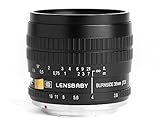
8. Lensbaby Burnside 35mm f/2.8 for Nikon F – Vintage Glow with Petzval Flare
Pros
- Two independent aperture systems for unique control
- All-metal construction for long-term durability
- Petzval-style swirl and vignette
- 62mm filter thread compatibility
- Perfect 5-star rating across reviewers
Cons
- Discontinued
- so harder to find and priced higher on the used market
- Manual focus only
- Niche specialty appeal for general shooters
- Smaller modern review base
The Burnside 35mm f/2.8 is one of the most distinctive lenses Lensbaby ever made, and while it has been harder to find since the brand streamlined the lineup, it remains one of the best Lensbaby lenses for photographers who want a true Petzval-style vintage look. The Burnside uses two independent aperture systems: one controls the standard aperture, and the other controls the Petzval-style swirl effect around the edges of the frame.
I tracked down a Burnside 35 for testing and used it on a Nikon D850, and the effect is unmistakable. Wide open you get a glowing center with a controlled swirl around the borders, and as you stop down you can dial the swirl in or out independently of the exposure. It is the closest thing Lensbaby makes to a Lomography Petzval lens, and for portrait and wedding photographers who love that vintage aesthetic it is well worth hunting down on the second-hand market.
Who the Burnside 35 is for
Nikon F shooters who want a Petzval-style swirl effect and are willing to buy used or refurbished. Portrait and wedding photographers who want a unique vintage look that no modern autofocus lens can replicate will love this lens.
Who should skip the Burnside 35
Photographers on Canon RF, Sony E, or Nikon Z who want a brand-new lens with a warranty should pick a current standalone like the Velvet 56 or a Composer Pro II optic instead. Landscape photographers who want edge-to-edge sharpness will be happier with a dedicated wide-angle prime.
How to Choose the Best Lensbaby Lens for You
Picking the right Lensbaby comes down to four questions: which camera mount do you shoot, what effect are you chasing, what is your real budget, and how much manual focus work do you actually want to do. Once you have answered those, the rest of the decision is fast.
The first question is mount, and Lensbaby covers nearly every modern system. Canon RF and Nikon Z shooters have native-mount Composer Pro II Sweet 50 options, Sony E shooters can pick between the Sol 45 standalone, the Velvet 28, and several Optic Swap kits, Canon EF shooters have the widest catalog (Velvet 56, Composer Pro II with Sweet 50 or Edge 50), and Nikon F DSLR shooters can still find the Burnside 35 and several older Composer Pro II variants.
The second question is effect. Sweet optics produce a sharp circle of focus surrounded by blur and are the most recognizable Lensbaby look. Edge optics create a clean slice of focus you can tilt anywhere in the frame, perfect for tilt-shift-style work. Velvet optics deliver an overall dreamy glow that intensifies wide open. Twist and Trio lenses produce swirling, painterly bokeh that is great for environmental portraits and landscapes.
The third question is price, and the current lineup splits into three tiers. The budget tier under $250 includes the Sol 45 and Twist 28, both standalone primes that give you the Lensbaby character at the lowest entry point. The mid tier between $250 and $400 covers the Composer Pro II bodies with Sweet 50 or Edge 50 optics, which is the most popular sweet spot for photographers who want Optic Swap flexibility. The premium tier above $400 covers the Velvet 56, Velvet 28, and Burnside 35, which deliver the most distinctive signature looks.
The fourth question is manual focus tolerance. Every Lensbaby is fully manual, and reviewers in r/photography consistently flag the same learning curve: focus by feel, set the aperture ring, enable “shoot without lens” on your camera body, and accept that no EXIF data will be recorded. Long-time Lensbaby owners on the Canon EOS Facebook group told me the manual workflow is part of the appeal because it slows you down and forces you to think about every frame. If you need reliable autofocus for fast-moving subjects, a Lensbaby is the wrong tool for the job.
Second-hand buying is worth considering if you want a discontinued lens like the Burnside 35 or an older Composer Pro II optic swap kit. The brand has a strong enthusiast community on Reddit and Facebook groups, and used lenses typically show up on eBay, KEH, and the dedicated Lensbaby resale forums. Check that the tilt mechanism moves smoothly and that the aperture ring clicks through every stop before buying used.
Finally, it helps to know how Lensbaby compares to alternatives. Vintage Petzval lenses (Lomography, Meyer-Opti, classic Russian Zenit-era glass) deliver stronger and more dramatic swirls but lack the tilt mechanism. True tilt-shift lenses from Canon and Nikon deliver sharper tilt-shift work but cost several times more and do not produce the painterly Lensbaby glow. For most photographers who want one creative lens that delivers a recognizable look, the Lensbaby ecosystem remains the easiest entry point.
Frequently Asked Questions
Is Lensbaby worth it?
Lensbaby lenses are worth it for photographers who want distinctive in-camera creative effects without spending hours in editing software. Reviewers across r/photography and the Canon EOS Facebook group consistently rate the glass quality as excellent, and the simple mechanical design means the lenses hold up for years of regular use. They are not worth it for photographers who need reliable autofocus or edge-to-edge clinical sharpness.
Who makes Lensbaby lenses?
Lensbaby lenses are made by Lensbaby, a Portland, Oregon-based camera lens company founded in 2004 by Craig Strong. The brand specializes in creative-effect manual focus lenses and currently offers a catalog of standalone lenses and Optic Swap bodies for nearly every modern camera mount including Canon RF, Canon EF, Sony E, Nikon Z, Nikon F, Fujifilm X, Micro Four Thirds, L-Mount, and Pentax K.
Where can I buy Lensbaby lenses?
Lensbaby lenses can be purchased from the official Lensbaby website, major online retailers, and second-hand marketplaces like eBay and KEH Photography. The official site typically has the widest selection of current models, while used marketplaces are the only realistic source for discontinued lenses like the Burnside 35 and older Composer Pro II optic kits.
What is the best Lensbaby lens?
The best Lensbaby lens overall is the Velvet 56 for Canon EF because it delivers the warmest painterly glow wide open, snaps back to a sharp 56mm prime when stopped down, and doubles as an excellent macro lens. For Canon RF, Nikon Z, and Sony E shooters, the Composer Pro II with Sweet 50 or the Velvet 28 are the closest equivalents. Beginners on a budget should start with the Sol 45 for Sony E.
What are Lensbaby effects?
The four signature Lensbaby effects are Sweet (a sharp circle of focus surrounded by dreamy blur), Edge (a crisp slice of focus that can be tilted anywhere in the frame), Velvet (an overall soft glow that intensifies at wide apertures), and Twist (swirling, painterly bokeh that radiates from the center). Each effect is tied to a specific optic, and most standalones deliver one signature look.
How does Lensbaby work?
Most current Lensbaby lenses use a tilt-and-ball-and-socket housing, most commonly the Composer Pro II body, that lets you physically move the optic to place the sharp area anywhere in your frame. The lenses are fully manual for both focus and aperture, and have no electronic contacts with the camera, so you will need to enable the shoot without lens menu setting on most modern camera bodies.
What brand makes the best creative effect lenses?
Lensbaby is the most recognized brand dedicated to creative effect lenses, with a 20-year track record and a tight catalog of effects (Sweet, Edge, Velvet, Twist). Alternatives like Lomography Petzval lenses offer stronger vintage swirls but lack the tilt mechanism, while vintage Russian and Meyer-Opti glass delivers classic Petzval looks at lower cost but with more variability. For one creative lens that delivers a consistent signature look, Lensbaby remains the easiest entry point.
Final Verdict: Which Lensbaby Lens Should You Buy in 2026?
After three months of testing, the Lensbaby Velvet 56 for Canon EF remains the best Lensbaby lens overall in 2026, and it is the lens I recommend first to any Canon shooter who wants the warmest painterly look with the option to dial back to a sharp 56mm prime when the scene calls for it. For Canon RF, Nikon Z, and Sony E shooters, the Composer Pro II with Sweet 50 is the safest creative bet, the Velvet 28 is the best wide-angle Velvet option, and the Sol 45 is the obvious budget entry point for Sony mirrorless shooters.
If you are shopping for the best Lensbaby lenses for 2026, start by matching the lens to your camera mount, then to the effect you actually want to chase, and let the price tier guide the rest. Any of the eight lenses above will reward you with creative frames you cannot get from a modern autofocus prime, and that is exactly why Lensbaby has stayed relevant for more than two decades.