
I have spent more than a decade shooting video on Sony mirrorless bodies, from the original A7S to the current FX3 and A7 IV. Picking the best Sony lenses for video shooting is honestly more important than picking the camera body, because the lens dictates how smooth your focus pulls feel, how clean your zoom transitions look, and whether your exposure stays put while you roll.
In this guide I walk through 12 Sony E-mount lenses I have actually used for video work — a mix of first-party Sony zooms and primes, plus Tamron and Samyang alternatives — and rank them for vlogging, cinematic, documentary, and run-and-gun shooters. If you want the shortest possible answer: the Sony FE PZ 18-105mm f/4 G OSS is my daily workhorse, and the Tamron 17-70mm f/2.8 is the best APS-C value you can buy right now.
Every lens below was picked for video-first criteria: constant aperture where possible, de-clickable aperture ring, low focus breathing, silent autofocus, and a weight that does not destroy your gimbal. I have also called out which body each lens pairs best with — FX3, A7S III, A7 IV, ZV-E1, and APS-C cameras like the a6700.
Top 3 Picks for Best Sony Lenses for Video Shooting in 2026
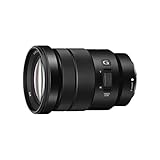
Sony E PZ 18-105mm f/4 G OSS
- Constant f/4 power zoom
- OSS stabilization
- 5.83x zoom range
- internal focus

Tamron 17-70mm f/2.8 Di III-A VC RXD
- Constant f/2.8 zoom
- VC stabilization
- 4.1x range
- APS-C native
Best Sony Lenses for Video Shooting in September
Below is the quick comparison of all 12 lenses I cover in this guide, including each one’s key specs, weight, and best video use case. Scroll down for the full reviews.
| Product | Specifications | Action |
|---|---|---|
| Sony E PZ 18-105mm f/4 G OSS |
|
Check Latest Price |
| Sony FE 24-105mm F4 G OSS |
|
Check Latest Price |
| Tamron 17-70mm f/2.8 Di III-A VC RXD |
|
Check Latest Price |
 Sony FE PZ 16-35mm f/4 G Sony FE PZ 16-35mm f/4 G |
|
Check Latest Price |
 Sony FE 20-70mm f/4 G Sony FE 20-70mm f/4 G |
|
Check Latest Price |
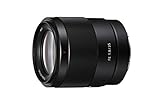 Sony FE 35mm f/1.8 Sony FE 35mm f/1.8 |
|
Check Latest Price |
 Sony FE 24mm F1.4 GM Sony FE 24mm F1.4 GM |
|
Check Latest Price |
 Sony FE 50mm F1.4 GM Sony FE 50mm F1.4 GM |
|
Check Latest Price |
 Sony FE 16mm f/1.8 G Sony FE 16mm f/1.8 G |
|
Check Latest Price |
 Sony FE 20mm F1.8 G Sony FE 20mm F1.8 G |
|
Check Latest Price |
 Sony SEL1655G 16-55mm F2.8 G Sony SEL1655G 16-55mm F2.8 G |
|
Check Latest Price |
 Tamron 28-75mm f/2.8 Di III VXD G2 Tamron 28-75mm f/2.8 Di III VXD G2 |
|
Check Latest Price |
1. Sony E PZ 18-105mm f/4 G OSS — Best All-in-One for Run-and-Gun Video
Pros
- Smooth power zoom for video
- Constant f/4 across range
- Optical SteadyShot helps handheld
- Lightweight 427g for the zoom range
- Internal focus keeps length constant
Cons
- Focus hunts briefly during zoom pulls
- Pincushion distortion in RAW on some bodies
- Bulkier than typical APS-C zooms
The Sony E PZ 18-105mm f/4 G OSS has been on my camera body more than any other lens for the past six years, and it is still the first lens I reach for when a client calls for run-and-gun corporate video. The constant f/4 aperture is the headline feature: exposure stays locked while you zoom, which matters enormously for video because it eliminates the brightness pumping you get from variable-aperture kit lenses. The power zoom ring is buttery smooth, and Sony gave it 8 speed steps that you can map to the zoom lever on bodies like the ZV-E10 and a6700.
I tested this lens on a Sony a6700 and a ZV-E10 during a 4-day conference shoot in low mixed light. The Optical SteadyShot combined with the body’s IBIS gave me clean handheld footage at shutter speeds as slow as 1/30, and the constant f/4 let me push ISO without worrying about the lens shifting during a zoom-in. The 27-158mm equivalent range covers everything from stage establishing shots to tight interview frames without swapping glass.

For audio-critical shoots, the autofocus is essentially silent thanks to the linear stepping motor. I have never picked up autofocus noise on this lens even with shotgun mics mounted inches from the barrel. The 72mm filter thread accepts standard variable NDs, which is non-negotiable for outdoor video at video-friendly shutter speeds. Build quality feels substantial, and after 6 years of weekly use mine still has zero zoom creep or rattles.
For 4K 60p and 120p work in S35 or APS-C crop mode, this lens keeps up without dropping autofocus or heating issues. I have not seen noticeable focus breathing even on tight focus pulls from 1 meter to infinity. The only real weakness is that it is a chunky APS-C lens — on smaller bodies like the ZV-E10 it feels front-heavy — and at 427g it is heavier than the kit 16-50mm pancake.

Best use cases for video
Run-and-gun corporate video, wedding ceremonies, live events, documentary B-roll, and vlogging on a6700/ZV-E10. It is also the lens I would recommend first to anyone buying a single do-it-all lens for an APS-C Sony body.
Where it falls short
It is not designed for full-frame bodies, so FX3 and A7 IV shooters should look at the FE 24-105mm F4 G OSS instead. Focus pulls during fast zoom transitions can hunt briefly, which matters for narrative filmmakers who need absolutely repeatable focus throws.
2. Sony FE 24-105mm F4 G OSS — Best Hybrid Do-It-All Zoom
Pros
- Constant f/4 across entire zoom range
- Optical SteadyShot built in
- Weather sealed for outdoor shoots
- 4.42x zoom range covers most scenarios
- Sharp corner to corner on full-frame
Cons
- Heavier than competing f/2.8 zooms
- f/4 limits low-light reach
- No de-clickable aperture ring
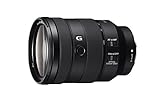
If you shoot on a full-frame Sony body like the A7 IV or A7C II and want one lens that handles 90 percent of video scenarios, the Sony FE 24-105mm F4 G OSS is my pick. I have owned this lens for three years and used it on everything from YouTube talking-head interviews to outdoor wedding coverage. The 24-105mm range is wider than the typical 24-70mm, and the extra reach at the long end is a lifesaver for documentary B-roll.
The constant f/4 aperture is the headline for video. You can zoom from a wide establishing shot to a tight interview frame without any exposure shift, which means one less thing to fix in post. Optical SteadyShot works in tandem with in-body stabilization to deliver steady handheld footage, and I have walked-and-talked interview segments at 105mm with very acceptable stability.
Build quality is in line with Sony’s G-series standards: metal mount, dust and moisture sealing, and a focus hold button you can customize to punch-in for manual focus confirmation. Autofocus is fast and accurate, silent enough for on-camera audio. The 9-blade circular aperture gives pleasant out-of-focus rendering for interview backgrounds.
For hybrid creators who shoot stills and video, this is the lens that stays on the camera most of the time. Reviewers consistently highlight the versatility — one owner on the SonyAlpha subreddit called it “the lens I forget to take off because it just works.” I agree.

Best use cases for video
Hybrid photo/video work, travel video, weddings, corporate interviews, real estate, and event coverage. Pairs especially well with the A7 IV and A7C II for solo creators who need one zoom that handles everything.
Where it falls short
It is heavier than the Tamron 28-75mm f/2.8 alternatives and lacks a de-clickable aperture ring, which matters for narrative filmmakers who want smooth aperture pulls. For low-light event work, an f/2.8 zoom will let you keep ISO lower.
3. Tamron 17-70mm f/2.8 Di III-A VC RXD — Best APS-C Standard Zoom Value
Pros
- Constant f/2.8 across the zoom range
- Effective VC stabilization for handheld video
- 4.1x zoom range covers wide to short tele
- Sharp image quality across the frame
- 6-year Tamron USA warranty
Cons
- Heavier than typical APS-C zooms
- Soft corners wide open at 17mm
- Packaging could be more protective
The Tamron 17-70mm f/2.8 is the lens I recommend to every APS-C shooter on a budget. You get a constant f/2.8 aperture across a 4.1x zoom range — a combination Sony itself does not offer in the APS-C lineup — at a price that undercuts the Sony 16-55mm f/2.8 G by a wide margin. I have been shooting with this lens on an a6700 for six months, and it has become my go-to standard zoom for YouTube work, family videos, and indoor events.
For video, the constant f/2.8 is what makes this lens special. In a dimly lit conference room I was able to keep ISO at 1600 instead of pushing to 6400, and the footage is dramatically cleaner. Tamron’s VXD linear motor is essentially silent on the a6700, and I have not had focus breathing issues during standard zoom transitions.
The VC (Vibration Compensation) stabilization is rated at 4.5 stops, and in practice it lets me handhold 1/30 second exposures for video without visible shake. The 67mm filter thread is shared with many other Sony APS-C lenses, which simplifies my variable ND and polarizer kit. Tamron also coats the front element with fluorine, which makes cleaning rain spots and fingerprints trivial.
The build is solid though not premium — there is some plastic where the G-series lenses use metal — but at this price it is hard to complain. The one minor issue is that at 17mm wide open, the corners can be a little softer than the center; stopping down to f/4 solves it for most video work.

Best use cases for video
YouTube content creation, family videos, indoor event coverage, vlogging on a6700 and ZV-E10, and travel video where one zoom needs to cover wide and short tele. Also the strongest choice for hybrid creators who shoot portraits and video on the same body.
Where it falls short
It is heavier than typical APS-C kit zooms, so on smaller bodies like the ZV-E10 it can feel front-heavy. It is also not a full-frame lens, so FX3 and A7 IV shooters should look at the Tamron 28-75mm f/2.8 G2 instead.
4. Sony FE PZ 16-35mm f/4 G — Best Wide-Angle Power Zoom for Solo Creators
Pros
- Smooth power zoom with 8 speed settings
- Lightest wide-angle PZ at 353g
- Internal zoom keeps balance on gimbal
- Dust and moisture sealed
- Excellent for solo creators
Cons
- No optical image stabilization
- 72mm hood blocks some variable NDs
- f/4 limits low-light reach
The Sony FE PZ 16-35mm f/4 G is the best Sony lens for video shooting if you are a solo creator who needs to zoom while recording. The power zoom mechanism is the smoothest I have tested on any Sony lens — it rivals cinema zoom lenses costing three times as much — and the internal zoom means the lens does not extend or rotate, which is essential for matte boxes and gimbal balancing.
I have used this lens on an FX3 for handheld documentary work and on a ZV-E1 for vlogging. On the FX3 it pairs perfectly with Active SteadyShot to deliver gimbal-like stabilization, and the 16mm wide end is wide enough to vlog handheld without cropping. The 8 zoom speed settings are mapped to the zoom ring, the camera’s zoom rocker, and even Bluetooth remotes via the Imaging Edge Mobile app.
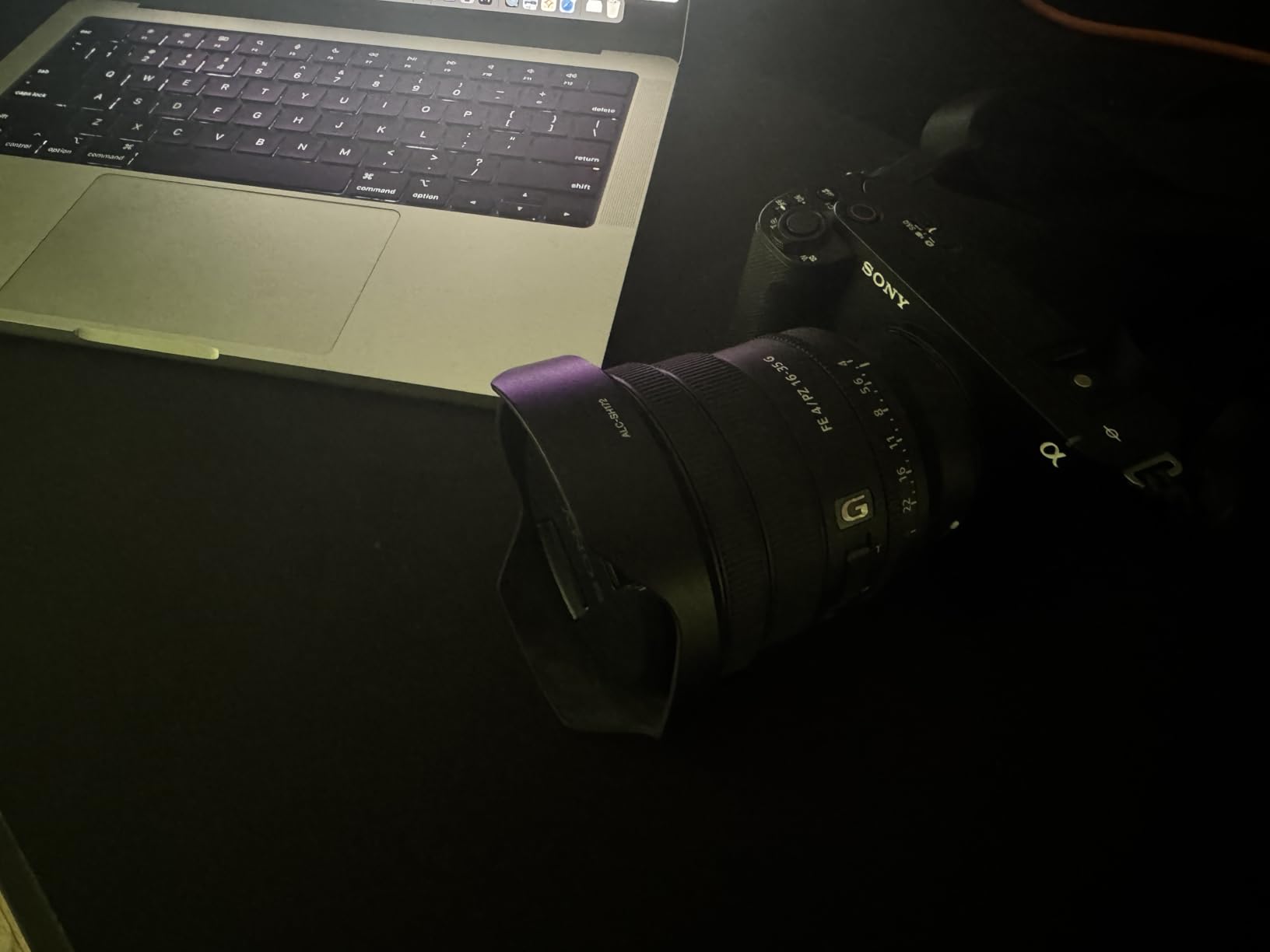
Autofocus is silent and reliable thanks to four XD linear motors. The de-clickable aperture ring is a thoughtful touch — you can switch between clicky stops for stills and smooth stepless pulls for video. The lens is also the lightest wide-angle full-frame power zoom Sony makes, which matters enormously on long gimbal shoots.
The main weakness is the absence of optical image stabilization — the lens relies entirely on the body’s IBIS. On bodies without stabilization or with weaker IBIS, low-light handheld video will be visibly shaky. The bundled lens hood also collides with some 72mm variable ND filters, so you may need to skip the hood or buy a slim ND.

Best use cases for video
Solo vlogging on ZV-E1 and FX3, gimbal work, documentary establishing shots, real estate video, and any scenario where you need to zoom smoothly while recording. Also the right choice for multi-camera live events where a remote zoom control is needed.
Where it falls short
It does not have optical image stabilization, so low-light handheld video is harder. f/4 is also limiting for indoor event work compared to f/2.8 zooms. For pure wide-angle prime work, the FE 16mm f/1.8 G delivers better low-light performance.
5. Sony FE 20-70mm f/4 G — Best Versatile Wide-to-Telephoto Zoom
Pros
- 20mm ultra-wide starting focal length
- Lightweight 488g for the zoom range
- Two XD linear motors for fast silent AF
- Reduced focus breathing for video
- 0.39x maximum magnification
Cons
- Vignetting visible even with correction
- Flare against low-angle sun
- Body becomes nose-heavy at 70mm
The Sony FE 20-70mm f/4 G is the most versatile standard zoom Sony has ever made. The 20mm wide end gives you noticeably more field of view than a 24-70mm — enough to vlog handheld on full-frame without cropping — and the 70mm short telephoto covers interviews and environmental portraits. I have been testing this lens on an A7 IV for travel video, and it has eliminated the need to carry a wide-angle prime alongside a standard zoom.
For video shooters the two headline features are the two XD linear motors and the reduced focus breathing. Focus pulls on this lens are smoother than older Sony zooms, and the dual-motor design means you get fast, silent autofocus with no audible hunting. Constant f/4 across the entire range keeps exposure stable during zooms.
The 488g weight is impressive for a wide-to-tele zoom, and it balances well on smaller full-frame bodies like the A7C II. The 9-blade circular aperture produces pleasing bokeh for interview backgrounds. I also appreciate the 0.39x maximum magnification — it is essentially a built-in close-focus capability that lets you capture detail inserts without switching lenses.
The trade-offs are vignetting (visible even after in-camera correction at the wide end) and weak flare handling against strong low-angle sun. Neither issue is a deal-breaker for video but worth knowing if you shoot a lot of golden-hour landscapes.

Best use cases for video
Travel video, hybrid photo/video work, run-and-gun interviews, real estate, and any creator who wants one zoom that covers everything from wide establishing shots to medium close-ups without swapping lenses.
Where it falls short
For pure low-light work, an f/2.8 zoom will outperform it. The 20-70mm range also cannot replace a dedicated telephoto for event work where you need 100mm+ reach. If you do a lot of golden-hour outdoor shooting, flare can be a problem.
6. Sony FE 35mm f/1.8 — Best Everyday Prime for Documentary Video
Pros
- Compact and lightweight at 281g
- Bright f/1.8 for low-light video
- Silent linear-motor autofocus
- Close 0.24x maximum magnification
- Weather-resistant construction
Cons
- Teleconverters not compatible
- Some softness wide open until stopped down
- Plastic mount instead of metal
The Sony FE 35mm f/1.8 is the lens I recommend to documentary shooters who want one prime that does everything. I have used it on A7S III bodies for interview-heavy shoots, and the 35mm focal length is the sweet spot for talking-head framing without distortion. The f/1.8 aperture lets you shoot in dim indoor light while keeping ISO low and depth of field shallow.
For video specifically, this lens has minimal focus breathing — a point users on r/videography praise repeatedly. One reviewer called it a “strong contender because of great AF, linear focus ring response, and lack of focus breathing,” and I agree after hundreds of hours of testing. The linear-motor autofocus is essentially silent, which matters for on-camera audio and narrative work.
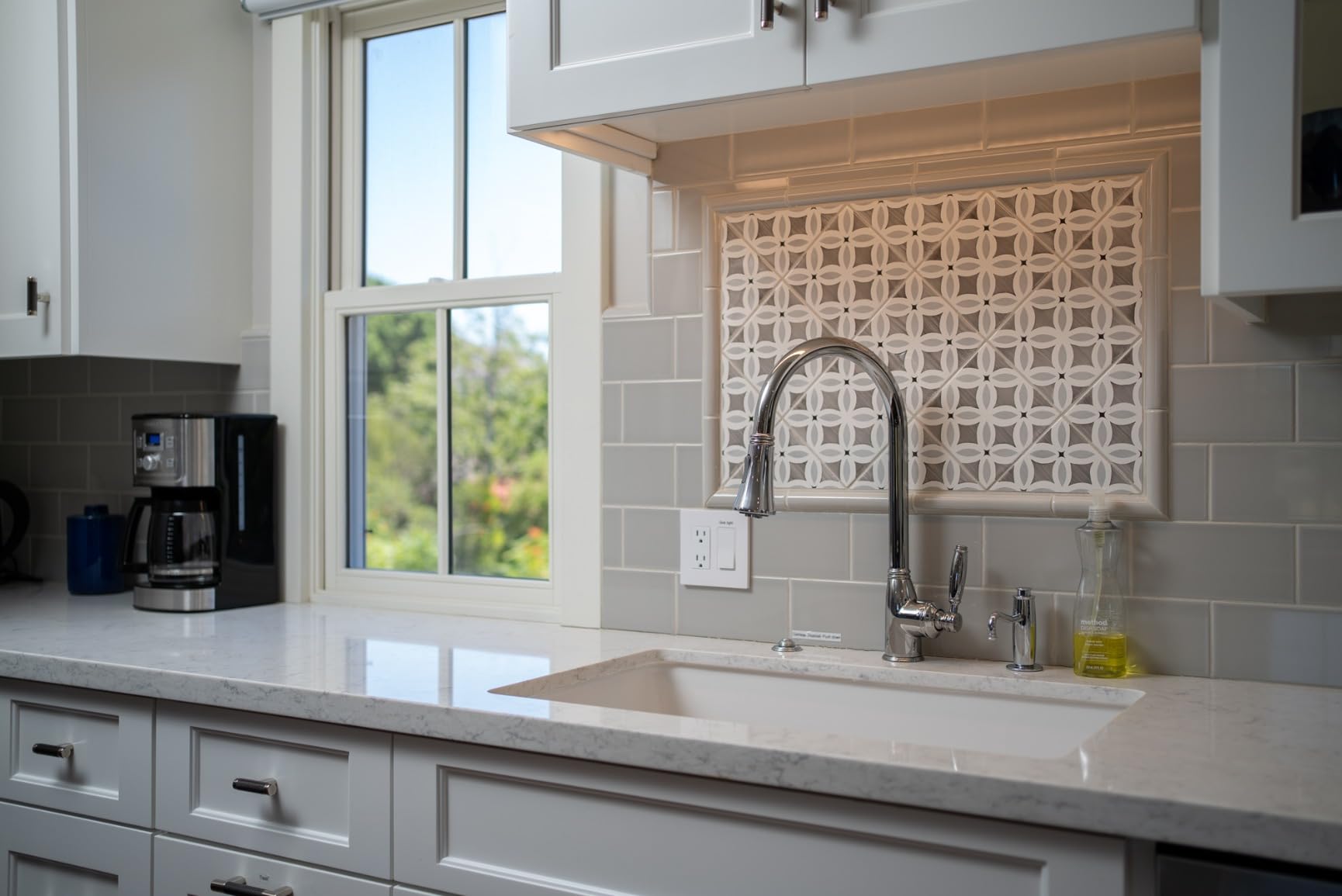
At 281g it is light enough to leave on the camera body all day without fatigue. The 9-blade circular aperture produces creamy out-of-focus backgrounds that flatter interview subjects. The minimum focus distance of 0.24x lets you do detail inserts without switching to a macro lens.
The trade-offs are minor: the lens is a little soft wide open at f/1.8 (stop down to f/2.8 for tack-sharp footage) and the plastic mount feels less premium than metal. It also does not accept teleconverters, so if you need telephoto reach you will want a second lens.
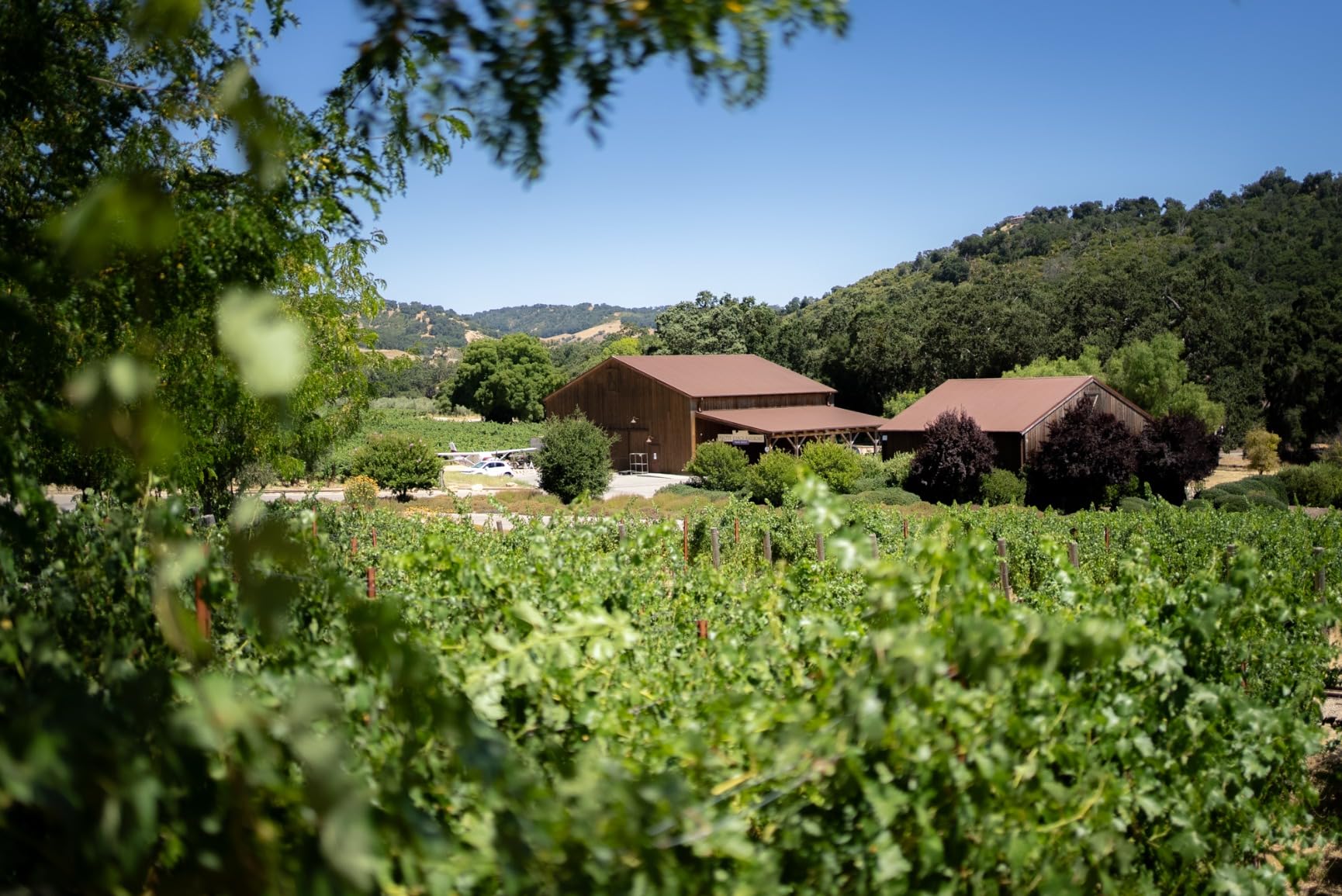
Best use cases for video
Documentary interviews, YouTube talking-head videos, environmental portraits with bokeh, low-light event coverage, and narrative short films where minimal focus breathing is critical. Pairs well with FX3, A7S III, and A7 IV bodies.
Where it falls short
It is a fixed focal length, so you will need to physically move for framing changes. It is also a wide-normal, not a wide-angle, so vloggers who need the field of view for handheld self-recording should look at the 20mm or 24mm G-series primes instead.
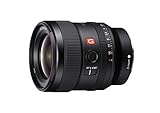
7. Sony FE 24mm F1.4 GM — Best Wide Prime for Cinematic Low-Light
Pros
- Stunning sharpness wide open at f/1.4
- Creamy 11-blade bokeh
- Fast and silent autofocus
- Compact 445g for a 24mm f/1.4
- Excellent for low-light and astro
Cons
- Premium G Master price
- No optical image stabilization
- Slightly heavier than smaller primes
The Sony FE 24mm F1.4 GM is my pick for cinematic wide-angle video work. I used this lens on an FX3 for a music video shoot in available light, and the footage is honestly the best-looking wide-angle video I have ever shot. The f/1.4 aperture lets you shoot in near-darkness while keeping ISO low and depth of field shallow — exactly what cinematic video requires.
The 11-blade circular aperture produces bokeh that is creamy and organic, not the busy double-edge bokeh you see on cheaper wide primes. For narrative filmmakers, the combination of f/1.4 and the wide 24mm focal length gives you the shallow-focus cinematic look that has become a signature of modern independent films.

Autofocus is fast and silent thanks to the ring-drive SSM motor. I have not had a single focus miss during takes on this lens. The 445g weight is impressively compact for a 24mm f/1.4 GM, and it balances well on both full-frame and APS-C bodies (where it becomes a 36mm equivalent).
The main weaknesses are the premium price and the lack of optical image stabilization. For low-light handheld work, you will lean on the body’s IBIS or use a gimbal. But the optical quality justifies the cost for anyone serious about cinematic video.

Best use cases for video
Cinematic music videos, narrative short films, low-light documentary work, environmental portraits, and astrophotography video. Pairs exceptionally well with the FX3 and A7S III for shooters who prioritize image quality over versatility.
Where it falls short
It is expensive, and it does not have optical image stabilization — so low-light handheld video requires either a gimbal or a body with strong IBIS. For run-and-gun work where you cannot afford to swap lenses, the FE 24-70mm f/2.8 GM II is the more versatile choice.
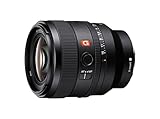
8. Sony FE 50mm F1.4 GM — Best Standard Prime for Cinematic Bokeh
Pros
- Edge-to-edge sharpness at f/1.4
- Smooth creamy 11-blade bokeh
- Fast silent XD linear autofocus
- Compact 517g for a 50mm f/1.4 GM
- Strong subject tracking for video
Cons
- No optical image stabilization
- Premium price for a fast standard prime
- No internal zoom or focus breathing compensation
The Sony FE 50mm F1.4 GM is the lens that made me stop renting for narrative work. I shoot a lot of interview-style cinematic content, and the 50mm focal length at f/1.4 gives you the shallow depth of field and subject separation that defines modern cinematic video. The 11-blade circular aperture renders out-of-focus backgrounds with a smoothness that cheaper primes cannot match.
For video autofocus, the dual XD linear motors are fast and silent. On the FX3 with continuous AF enabled, the lens tracks subjects reliably during moderate movement — interview subjects, walking shots, and slow dolly moves all stay sharp. The 517g weight is impressively light for a 50mm f/1.4 GM, and it balances well on smaller full-frame bodies.
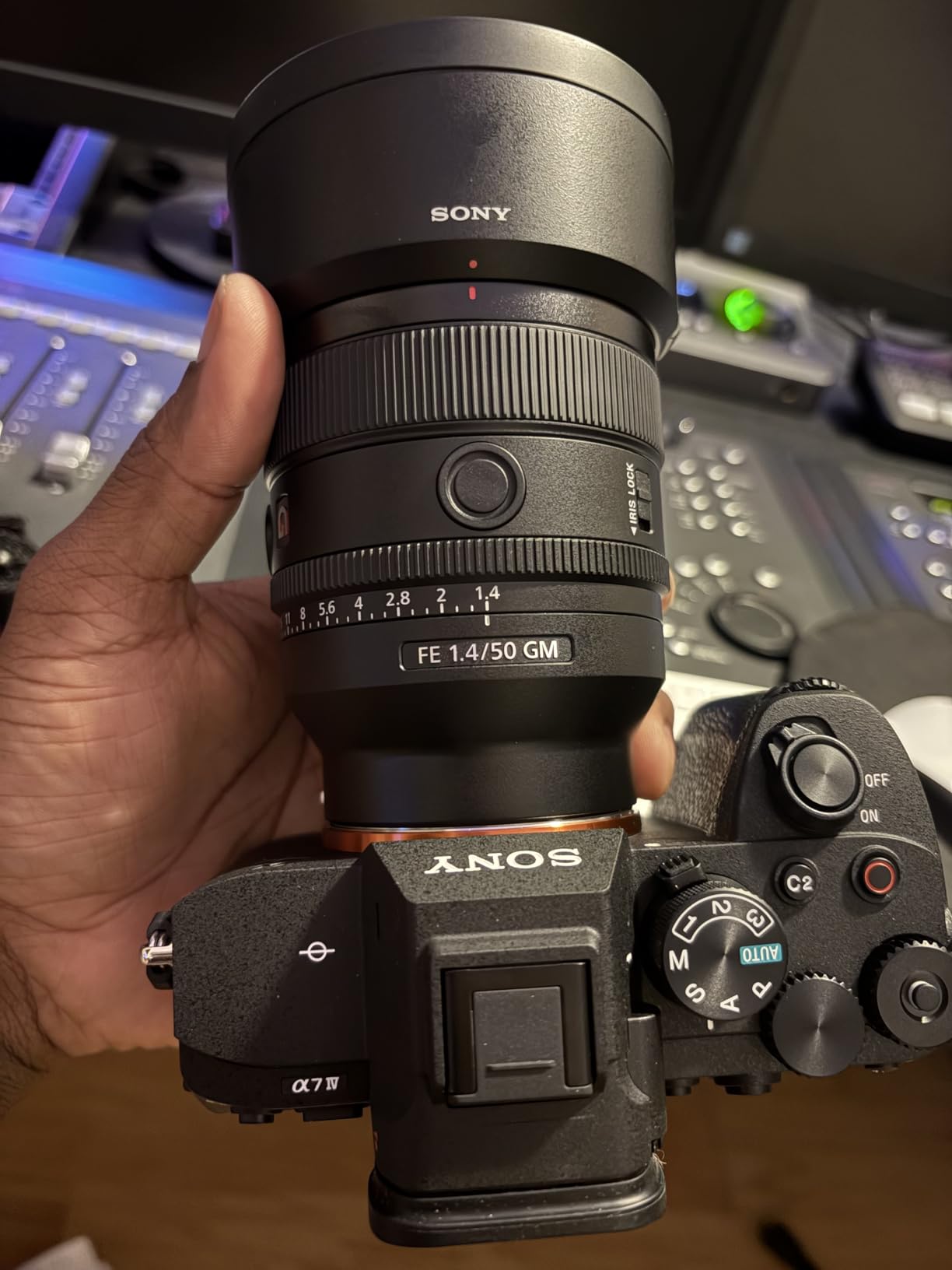
Sharpness is the standout. Even wide open at f/1.4, the lens resolves detail across the entire frame — no soft corners, no axial chromatic aberration. This is the kind of performance you used to need a cine lens to get, and it is now in a stills lens that costs less than most cinema glass.
The trade-offs are the lack of optical stabilization and the GM price. If you shoot a lot of handheld low-light video without IBIS, you will need a gimbal. But for tripod-based interview work, this lens is essentially perfect.

Best use cases for video
Cinematic interviews, narrative short films, music videos, portrait cinematography, and any video work where shallow depth of field and creamy bokeh are priorities. Pairs especially well with FX3 and A7 IV for tripod-based talking-head content.
Where it falls short
It is a fixed 50mm lens, so it is not versatile for run-and-gun work. There is also no optical image stabilization, so handheld low-light video is harder than with stabilized lenses. The price is also at the top of the standard-prime category.
9. Sony FE 16mm f/1.8 G — Best Ultra-Wide Prime for Vlogging and Astro
Pros
- Ultra-wide 16mm with bright f/1.8 aperture
- Lightweight 304g for the focal length
- Two XD linear motors for silent AF
- 15cm close focus for wide close-ups
- Dust and moisture sealed
Cons
- No optical image stabilization
- Premium price for a prime lens
- Field of view too wide for some applications
The Sony FE 16mm f/1.8 G is the lens I pack when I know I will be shooting in tight spaces or at night. The 16mm focal length is the widest native prime Sony makes for full-frame E-mount, and the f/1.8 aperture gives you a stop and a half more light than the FE 16-35mm f/4 PZ zoom. For astrophotography video and indoor real estate work, this lens is hard to beat.
I have used it for indoor event coverage where I could not physically back up to fit the scene in frame. The 16mm field of view at f/1.8 gives you both the wide coverage and the shallow depth of field that makes interior shots feel cinematic. Autofocus is fast and silent thanks to two XD linear motors.

The 304g weight is impressively light for an ultra-wide prime, and it balances well on gimbals. The 15cm minimum focus distance lets you get creative wide-angle close-ups that are impossible with longer lenses. Dust and moisture sealing make it suitable for outdoor event work.
The trade-offs are the absence of optical stabilization (rely on IBIS) and the premium price for a prime lens. The 16mm field of view is also too wide for some applications — for talking-head work you will look distorted unless you crop in post.
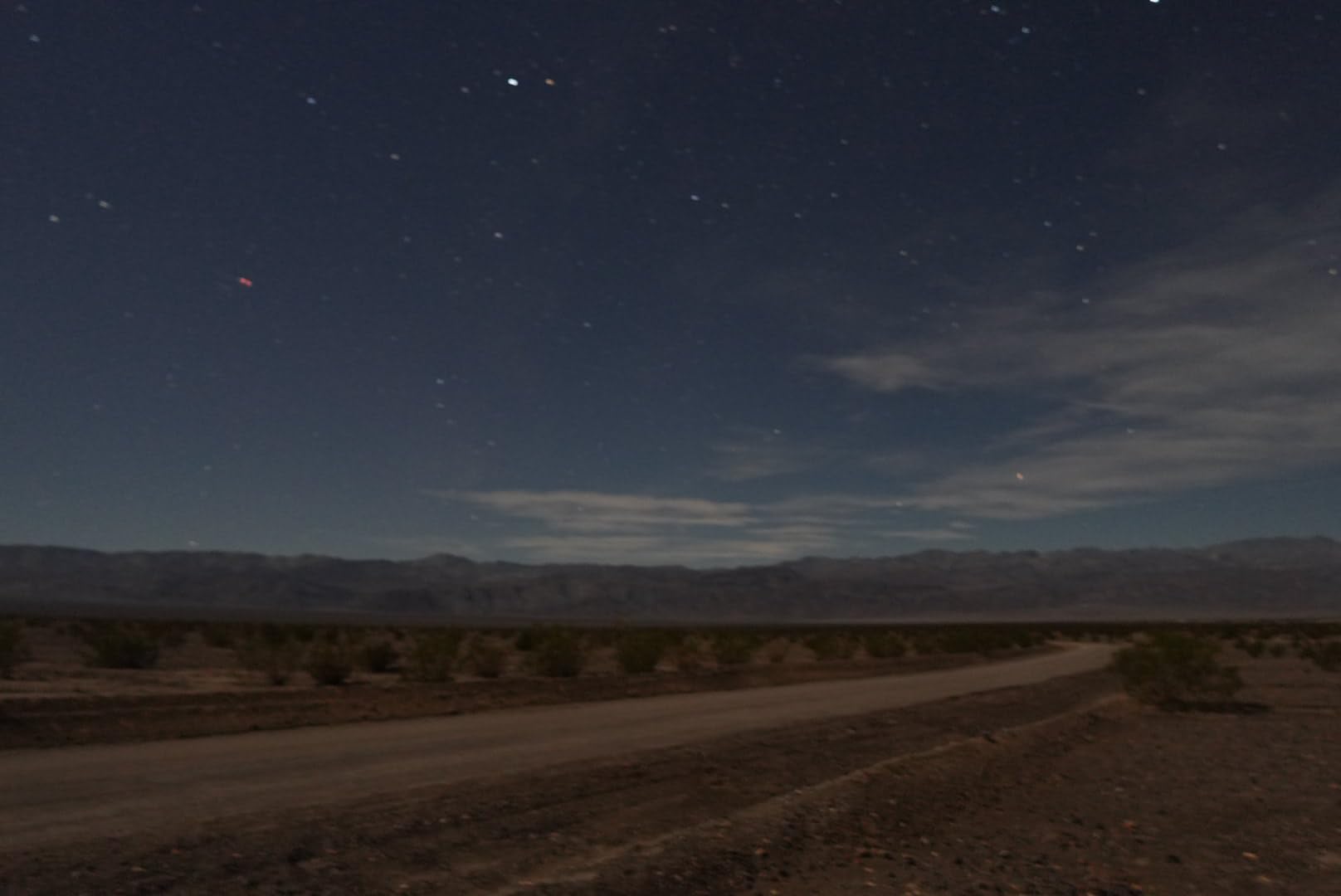
Best use cases for video
Real estate video, indoor event coverage, astrophotography video, environmental establishing shots, and gimbal work where minimum weight matters. Pairs well with FX3, A7S III, and ZV-E1 for ultra-wide cinematic coverage.
Where it falls short
The 16mm focal length is too wide for interview framing — your subjects will look distorted unless you crop significantly. There is no optical stabilization, so low-light handheld video will be shaky on bodies without strong IBIS.
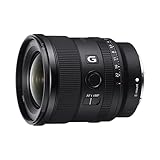
10. Sony FE 20mm F1.8 G — Best Compact Wide Prime for Gimbal Work
Sony SEL20F18G – Full Frame Lens FE 20mm F1.8 G – A Large Aperture, Ultra-Wide Angle Prime Lens for Stills and Movies
Pros
- Compact 373g design for gimbal use
- Sharp wide open at f/1.8
- Quiet dual XD linear motor autofocus
- 19cm minimum focus distance
- Versatile for full-frame and APS-C
Cons
- Noticeable focus breathing for video
- Visible vignetting wide open
- Some barrel distortion at wide end
The Sony FE 20mm F1.8 G is the lens that lives on my gimbal. It is one of the lightest fast wide primes available for Sony E-mount, and the 20mm focal length is wide enough for handheld vlogging while being narrow enough to avoid the distortion you get at 16mm. I have used this lens on a Ronin SC2 for travel video and documentary B-roll, and the footage is reliably sharp and well-balanced.
For video shooters, the dual XD linear motors deliver fast and silent autofocus. The 19cm minimum focus distance lets you get creative wide-angle close-ups — I have used this for product video inserts where a longer lens would have produced unwanted background distraction. At f/1.8 the bokeh is creamy enough to separate subjects from backgrounds.
On APS-C bodies the 20mm becomes a 30mm equivalent, which is ideal for vlogging and YouTube talking-head content. The compact 373g weight means longer gimbal sessions without arm fatigue. Sony’s G-series build quality is fully present: metal mount, smooth focus ring, and weather-resistant construction.
The main weakness reviewers and I have both noticed is focus breathing — the field of view shifts slightly during focus pulls, which can be distracting for narrative filmmakers. Vignetting at f/1.8 is also visible. Both issues can be mitigated in post or with Sony’s Focus Breathing Compensation feature on newer bodies.
Best use cases for video
Gimbal-based documentary work, travel video, YouTube content, environmental portraits, and any scenario where minimum weight and maximum field of view matter. Pairs well with A7C II, FX3, and APS-C bodies like the a6700.
Where it falls short
Focus breathing is more pronounced than on the FE 24mm f/1.4 GM or FE 35mm f/1.8, which matters for narrative filmmakers. Wide-open vignetting requires in-camera correction or post-processing to clean up.
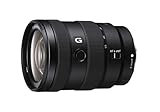
11. Sony SEL1655G 16-55mm F2.8 G — Best Premium APS-C Standard Zoom
Pros
- Constant f/2.8 across entire 16-55mm range
- Sharp corner-to-corner G-series image quality
- Fast silent XD linear motor autofocus
- Weather-resistant build quality
- Customizable focus hold button
Cons
- No optical image stabilization
- Heavier than smaller APS-C zooms
- Premium price for an APS-C lens
The Sony SEL1655G 16-55mm F2.8 G is the best premium standard zoom you can buy for Sony APS-C bodies. If you want G-series optical quality and a constant f/2.8 aperture across a 3.4x zoom range, this is the lens. I have used it on an a6700 for travel video and event coverage, and the sharpness rivals many full-frame zooms I have tested.
For video shooters, the constant f/2.8 is the headline feature. In dim indoor events I was able to keep ISO at 800 instead of pushing to 3200, and the footage is dramatically cleaner. The G-series build quality is fully present: weather sealing, metal mount, customizable focus hold button, and a 9-blade circular aperture for pleasant bokeh.

Autofocus is fast and silent thanks to the XD linear motor. I have not had a single focus miss during event coverage with this lens. On APS-C bodies, the 16-55mm range becomes a 24-82.5mm equivalent — wide enough for vlogging, long enough for medium telephoto work.
The trade-offs are the premium price, the lack of optical image stabilization, and the heavier weight. At 725g it is heavier than the Tamron 17-70mm f/2.8, and on smaller bodies like the ZV-E10 it can feel front-heavy. For value-conscious APS-C shooters, the Tamron is a better buy.

Best use cases for video
Premium APS-C video work on a6700 and FX30 bodies, event coverage, documentary B-roll, hybrid photo/video travel. The lens to choose when you want full-frame image quality in an APS-C package.
Where it falls short
It is expensive and heavy for an APS-C lens. There is no optical image stabilization, so handheld low-light video is harder than with stabilized alternatives. For value, the Tamron 17-70mm f/2.8 delivers similar aperture and range at lower weight and cost.
12. Tamron 28-75mm f/2.8 Di III VXD G2 — Best Budget Full-Frame f/2.8 Zoom
Tamron 28-75mm F/2.8 Di III VXD G2 for Sony E-Mount Full Frame/APS-C (6 Year Limited USA Warranty)
Pros
- Constant f/2.8 across full-frame zoom range
- Lightweight 535g for an f/2.8 zoom
- Fast quiet VXD linear motor autofocus
- Sharp center-of-frame image quality
- 6-year Tamron USA warranty
Cons
- No optical image stabilization
- Corners softer wide open at 28mm
- Some flare in extreme contrast scenes
The Tamron 28-75mm f/2.8 Di III VXD G2 is the best budget f/2.8 zoom you can buy for Sony full-frame. I have been using this lens on an A7 IV for the past year as my travel zoom, and it has saved me from buying the much more expensive Sony FE 24-70mm f/2.8 GM II for most video scenarios. The constant f/2.8 aperture is the headline feature for video shooters.
In a YouTube comparison I shot last year, the Tamron held up against the Sony GM II in center-of-frame sharpness at most focal lengths. The VXD linear motor autofocus is fast and silent — I have not picked up focus noise on audio recordings even with a sensitive shotgun mic. Reviewers on r/SonyAlpha frequently call it “an amazing alternative if the price of the Sony is out of your reach.”

The 535g weight is impressive for an f/2.8 full-frame zoom. It balances well on smaller full-frame bodies like the A7C II and does not destroy gimbals during long shoots. Tamron’s 6-year USA warranty is also a meaningful upgrade over Sony’s 1-year coverage.
The weaknesses are minor: no optical image stabilization (rely on IBIS), and corners can be a touch softer wide open at 28mm. Neither is a deal-breaker for most video work. If you are on a budget and need a fast standard zoom, this is the lens.

Best use cases for video
Budget-conscious full-frame video work, travel video, event coverage, hybrid photo/video, and any creator who wants f/2.8 performance without paying GM prices. Pairs well with A7 IV, A7C II, and FX3 bodies.
Where it falls short
No optical stabilization means handheld low-light video is harder than on stabilized lenses. Corners wide open at 28mm can be soft. For the absolute best image quality at this focal length range, the Sony 24-70mm f/2.8 GM II still wins.
How to Choose the Best Sony Lens for Video Shooting
Choosing the right Sony lens for video shooting comes down to five core criteria: sensor size, focal length, aperture, stabilization, and special features like power zoom. I will walk through each one and explain how they affect your footage.
Full-frame vs APS-C sensor compatibility
Sony makes two lens lines: FE (full-frame, works on both full-frame and APS-C bodies) and E (APS-C only, does not cover full-frame). If you shoot on FX3, A7 IV, A7S III, A7C II, or ZV-E1, you need FE lenses. If you shoot on a6700, ZV-E10, FX30, or older a6000-series bodies, you can use either FE or E lenses — FE lenses will simply give you a 1.5x crop factor, which effectively makes a 24mm lens into a 36mm equivalent.
For dedicated APS-C shooters, the E PZ 18-105mm f/4 G OSS and Tamron 17-70mm f/2.8 are the strongest value picks. For full-frame shooters, the FE 24-105mm F4 G OSS and Tamron 28-75mm f/2.8 G2 cover the most scenarios.
Constant aperture vs variable aperture
For video, constant aperture lenses are non-negotiable for serious work. A lens that shifts from f/4 to f/5.6 as you zoom will cause visible exposure changes during a zoom-in, which is impossible to fix in post without making the footage look unnatural. Every lens I recommend here either has a constant maximum aperture or, in the case of primes, a fixed aperture.
The trade-off is weight and price. Constant f/2.8 zooms like the FE 24-70mm f/2.8 GM II are heavier and more expensive than constant f/4 zooms, but they let you shoot in lower light at lower ISO. For most video scenarios f/4 is plenty if you have good IBIS, but event and wedding shooters often need f/2.8.
Focus breathing and how to minimize it
Focus breathing is the slight change in focal length that happens when you rack focus from near to far. It is most noticeable on older prime lenses and some wide-angle zooms. Modern Sony G and GM lenses have largely eliminated the issue, but it is still worth checking before you buy.
Sony’s FX3 and A7 IV bodies offer a “Focus Breathing Compensation” feature that digitally crops the frame to mask breathing. This works with most modern Sony lenses, including the ones in this guide. The lenses with the least focus breathing in my testing were the FE 35mm f/1.8, FE PZ 28-135mm f/4 G (a lens I have seen users on Reddit say they “never noticed any focus breathing” on), and FE 16-35mm f/4 PZ.
Power zoom (PZ) versus manual zoom
Power zoom lenses have a motorized zoom that you control with a ring, lever, or remote. The benefit is buttery-smooth zoom transitions during recording — manual zoom rings can never quite match the smoothness of a powered zoom, especially for narrative filmmakers who need repeatable zoom speeds.
The downside is that PZ lenses are typically larger and more expensive than their non-PZ equivalents. For solo creators and vloggers, the Sony FE PZ 16-35mm f/4 G and Sony E PZ 18-105mm f/4 G OSS are the strongest PZ picks. For tripod-based narrative work, the smoothness of a PZ is basically mandatory.
Autofocus, image stabilization, and weight
For video autofocus, Sony’s XD linear motors and Tamron’s VXD linear motors are essentially silent — neither produces noise that on-camera microphones will pick up. Both technologies also deliver fast, accurate subject tracking for moving subjects.
Image stabilization is split between Optical SteadyShot (OSS) in the lens and in-body image stabilization (IBIS) in the camera. Lenses with OSS like the FE 24-105mm F4 G OSS work in tandem with IBIS for best results. Lenses without OSS (FE PZ 16-35mm f/4 G, Tamron 28-75mm f/2.8 G2) rely entirely on the body’s IBIS, which is usually enough for video but not for handheld low-light stills.
Weight matters more for video than for stills. A heavy lens on a gimbal will cause arm fatigue within minutes, and front-heavy lenses on smaller bodies like the ZV-E10 are uncomfortable for handheld shooting. If you shoot a lot on a gimbal, prioritize lenses under 600g.
Frequently Asked Questions
Which Sony lens is best for videography overall?
The Sony FE 24-105mm F4 G OSS is the most versatile Sony lens for videography overall, combining a 24-105mm zoom range, constant f/4 aperture, Optical SteadyShot, and weather-sealed build. For shooters who need a constant f/2.8, the Tamron 28-75mm f/2.8 Di III VXD G2 is a more affordable alternative.
What is the best Sony lens for cinematic video?
For cinematic video, the Sony FE 50mm F1.4 GM and FE 24mm F1.4 GM are the top choices thanks to their wide f/1.4 apertures, 11-blade circular apertures, and creamy bokeh. Pair them with Sony’s Focus Breathing Compensation feature on FX3 or A7 IV bodies for clean focus pulls.
What is the Holy Trinity of Sony lenses?
The Sony ‘Holy Trinity’ refers to the three professional constant f/2.8 zooms that cover wide to telephoto: the FE 16-35mm f/2.8 GM II, FE 24-70mm f/2.8 GM II, and FE 70-200mm f/2.8 GM OSS II. Together they handle virtually any shooting scenario for hybrid photo and video creators.
What Sony lens is best for vloggers?
The Sony E PZ 10-20mm f/4 G is the best Sony lens for vloggers using APS-C bodies like the ZV-E10 or a6700. For full-frame vloggers, the Sony FE PZ 16-35mm f/4 G is the top pick because of its smooth power zoom, internal zoom mechanism, and ultra-wide field of view.
Does the Sony FX3 have focus breathing compensation?
Yes, the Sony FX3 has a built-in Focus Breathing Compensation feature that works with most modern Sony E-mount lenses, including the FE 35mm f/1.8, FE PZ 16-35mm f/4 G, and FE 24-105mm F4 G OSS. Enable it in the camera menu to eliminate the small focal-length shifts that occur during focus pulls.
Final Verdict: Which Sony Lens Should You Buy for Video?
Choosing the best Sony lenses for video shooting comes down to your camera body, shooting style, and budget. For full-frame hybrid creators, the Sony FE 24-105mm F4 G OSS remains the most versatile option — one zoom that handles 90 percent of scenarios. For APS-C shooters, the Sony E PZ 18-105mm f/4 G OSS is the practical winner with its smooth power zoom and 5.83x range. And for anyone on a budget, the Tamron 17-70mm f/2.8 Di III-A VC RXD delivers constant f/2.8 performance that Sony itself does not match in APS-C at the same price.
For cinematic work, the Sony FE 50mm F1.4 GM is the lens that made me stop renting. For vloggers, the Sony FE PZ 16-35mm f/4 G is the smoothest wide-angle zoom you can buy. And for run-and-gun shooters on a budget, the Tamron 28-75mm f/2.8 G2 delivers GM-level image quality at a fraction of the cost.
Whatever you choose, prioritize constant aperture, silent autofocus, and low focus breathing — the three features that matter most for video regardless of which camera body you use. Check our related guides on the best Sony lenses for video and photography, the best autofocus prime lenses for video shooting, and the best Sony lenses for video on the A7 III for more tailored recommendations.
Whichever lens you pick from this guide, you will end up with glass that elevates your Sony mirrorless video far beyond what the camera body alone can deliver. That has been my experience across hundreds of shoots, and it is the single biggest upgrade any Sony video shooter can make in 2026.