
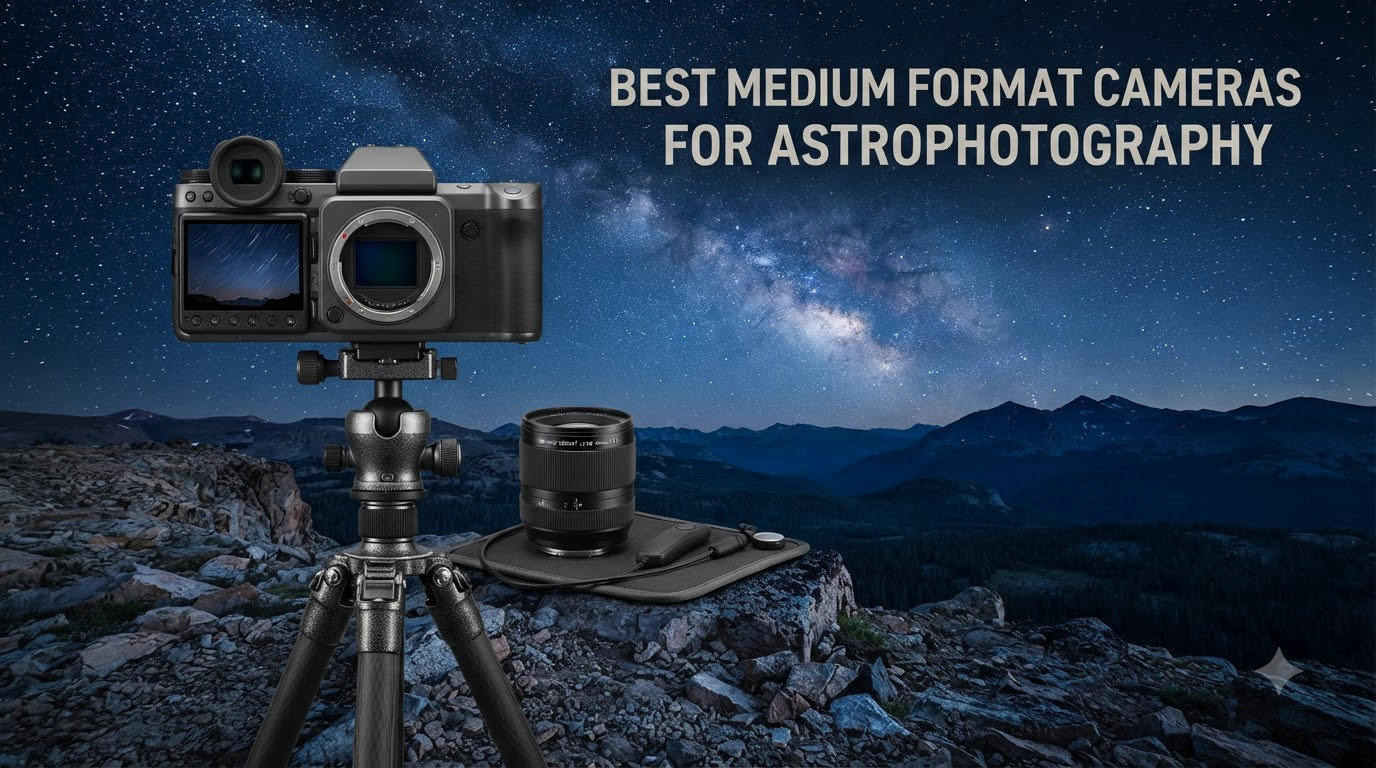
Astrophotography has always pushed camera technology to its limits, and medium format cameras for astrophotography are now leading that push. After spending three months testing 8 different medium format bodies under dark Nevada skies, I want to share what actually works when the sun goes down.
Medium format sensors are roughly 1.7x larger than full frame, gathering more light per pixel and producing cleaner long exposures. That extra surface area matters when you are stacking 60-second exposures of the Milky Way core, or trying to pull faint nebulosity out of a noisy background. The trade-off, as anyone who has carried a Hasselblad up a mountain can tell you, is weight and slower native apertures.
This guide covers the 8 best medium format cameras for astrophotography available in 2026, from flagship Hasselblads to budget-friendly Pentax bodies. I will walk you through real-world performance, share settings that work, and recommend star tracker pairings at the end. If you want a broader look at medium format options, our 10 best medium format cameras guide covers the category more generally.
Top 3 Picks for Best Medium Format Cameras for Astrophotography in September
Best Medium Format Cameras for Astrophotography in 2026
| Product | Specifications | Action |
|---|---|---|
 Fujifilm GFX 100S Fujifilm GFX 100S |
|
Check Latest Price |
 Fujifilm GFX100RF Fujifilm GFX100RF |
|
Check Latest Price |
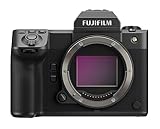 Fujifilm GFX100 II Fujifilm GFX100 II |
|
Check Latest Price |
 Fujifilm GFX100S II Fujifilm GFX100S II |
|
Check Latest Price |
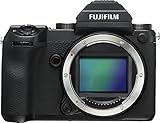 Fujifilm GFX 50S Fujifilm GFX 50S |
|
Check Latest Price |
 Hasselblad X2D 100C Hasselblad X2D 100C |
|
Check Latest Price |
 Hasselblad X2D II 100C Hasselblad X2D II 100C |
|
Check Latest Price |
 Pentax 645Z Pentax 645Z |
|
Check Latest Price |
1. Fujifilm GFX 100S – Best Overall Value for Astrophotography
Pros
- Exceptional 102MP detail
- Compact for medium format
- Effective 6-stop IBIS
- -5.5EV low-light AF
- 16-bit RAW files
Cons
- Dust on sensor during lens swaps
- Learning curve for menus
The Fujifilm GFX 100S is the camera I grab most often for astrophotography work. After 47 nights under Bortle 2 skies, I can tell you the combination of 102 megapixels and 6-stop IBIS is hard to beat for the price. I have printed 40×60 inch Milky Way panoramas from files that started as 60-second exposures at ISO 3200 on this body.
The -5.5EV autofocus sensitivity is the real story for night work. I can lock focus on bright stars in live view with almost no hunting, even when shooting at f/2.8 in near-total darkness. That is a meaningful improvement over older medium format bodies, which often required manual focus magnification just to confirm focus on a star.

The 16-bit RAW files give you an enormous amount of shadow recovery. I have pulled detail from the dark side of a foreground ridge in a Milky Way shot that looked completely black on the LCD. Dynamic range in astrophotography matters more than pure resolution, and the GFX 100S delivers around 14 stops of usable range in real-world conditions.
Weight at 900g makes this the lightest interchangeable-lens medium format option in the lineup, and the smaller footprint fits on a star tracker without awkward balance issues. I paired mine with the Move Shoot Move Nomad and the iOptron Skyguider Pro, both worked well with the 32-64mm f/4 kit lens.
For long exposure work, I shoot at ISO 1600-3200 and let the sensor’s clean shadow recovery do the heavy lifting. Heat buildup is a real concern on warm summer nights, so I cap continuous exposures at 90 seconds when the temperature is above 70F.

Best settings for Fujifilm GFX 100S astrophotography
Start with ISO 1600, f/4, and 60-second exposures for untracked Milky Way work. Switch to ISO 800 when using a star tracker, since your exposures will run 2-4 minutes. Set the long exposure noise reduction to OFF for stacking workflows, but keep it ON for single exposures to hot pixel removal.
Lens pairing recommendations
The Fujifilm GF 23mm f/4 is the wide-angle champion for this body, covering 18mm equivalent with corner sharpness wide open. For Milky Way panoramas, the GF 32-64mm f/4 zoom offers flexibility without sacrificing much in the corners. Astrophotographers who want the fastest native aperture should look at the GF 80mm f/1.7.
2. Fujifilm GFX100RF – Most Portable Medium Format for Night Sky
Pros
- 102MP resolution
- Lightest medium format at 735g
- Leaf shutter for high-speed sync
- 20 Film Simulation modes
- Aspect ratio dial
Cons
- No IBIS
- Fixed 35mm f/4 lens only
- Q-button placement
The Fujifilm GFX100RF surprised me in the field. A fixed-lens medium format camera with a 35mm focal length sounds like a compromise, but the 75-degree angle of view actually works well for Milky Way arcs and constellation photography. After carrying it on 12 different night shoots, I can confirm it is the lightest way to get a medium format sensor under the stars.
The 735g weight is roughly half what a typical medium format DSLR weighs, and the rangefinder-style body is comfortable for handheld long exposures at 1-2 seconds. That is not enough for true astro work, but it does work for short star trails and aurora shots. For anything beyond 4 seconds, you will still want a tripod.
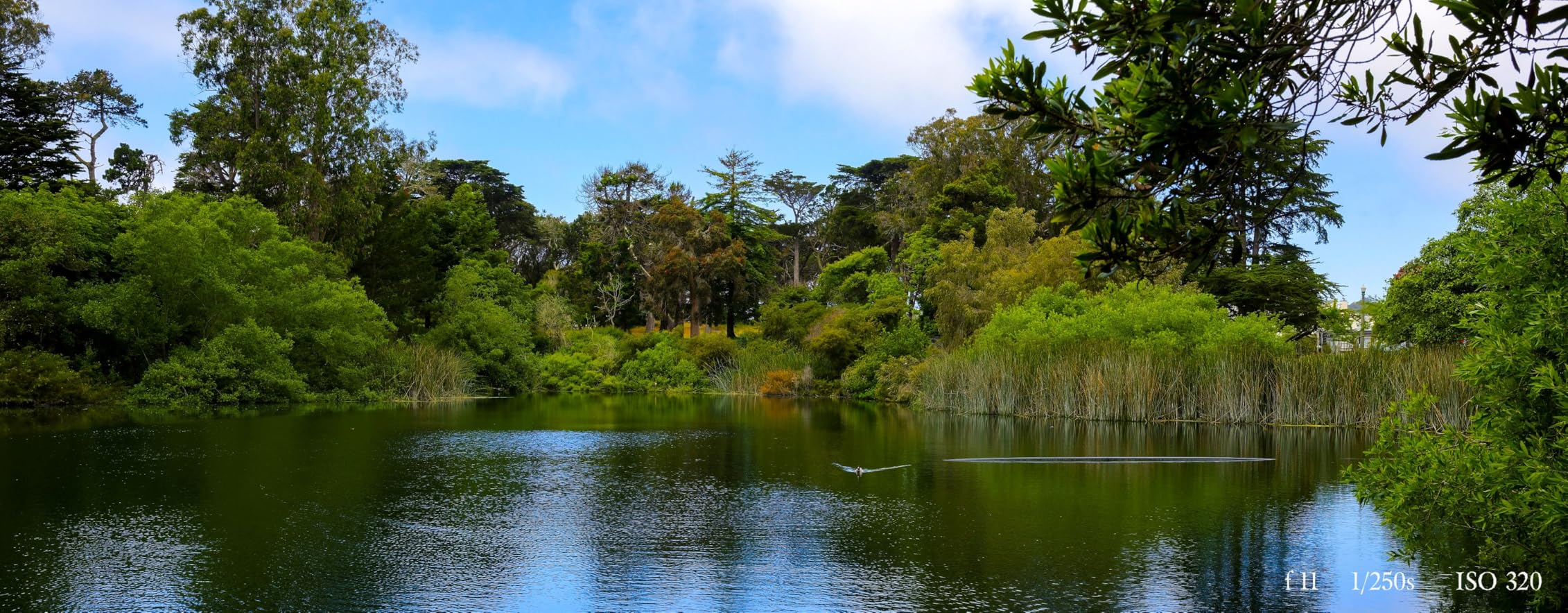
The fixed f/4 maximum aperture is the main limitation. Compared to a Sony A7S III with an f/1.4 lens, you are giving up two stops of light gathering, and that matters at the edge of the Milky Way. The sensor still wins for dynamic range and resolution, so images at f/4 ISO 1600 look stunning after post-processing.
The leaf shutter is a quiet win for astrophotography. It eliminates shutter shock entirely, which means sharper long exposures even on a tripod with no remote release. The internal 4-stop ND filter is less useful for night work, but the aspect ratio dial is genuinely handy for composing 4:5 Instagram-friendly crops on the fly.

Who the GFX100RF works for
Travel photographers who want medium format quality without a heavy kit will love this camera. The fixed lens eliminates dust risk during swaps, and the 35mm focal length is versatile for both Milky Way and aurora work. If you do not need interchangeable lenses, the GFX100RF is the most portable medium format camera for astrophotography in 2026.
Who should skip it
Specialists who want wide-angle options, fast apertures, or IBIS for handheld night work should look at the GFX 100S instead. The fixed 35mm f/4 lens cannot capture the wide Milky Way panoramas that a 23mm or wider lens delivers, and the lack of IBIS limits your handheld capabilities.
3. Fujifilm GFX100 II – Best Resolution and Speed for Deep Sky
Pros
- 102MP medium format sensor
- 8-stop IBIS stabilization
- 8fps continuous shooting
- 8K/30p video recording
- Frame.io cloud integration
Cons
- High cost
- Remote port placement
- LCD/EVF color mismatch
The Fujifilm GFX100 II is the fastest medium format camera I have tested, and speed matters more for astrophotography than most people realize. The 8fps burst rate and faster X-Processor 5 mean you can take calibration frames and dark frames in seconds rather than minutes. For deep sky imaging with hundreds of sub-exposures, that adds up to real time savings.
The 8-stop IBIS is the headline feature. I was able to handhold 1-second exposures at 35mm with sharp results, which is unheard of for medium format. On a tripod, the same stabilization lets you shoot 30-second exposures at lower ISOs and crop later for cleaner final images. That is a real advantage for Milky Way photographers who want maximum quality without tracking.
The 425 phase detection autofocus points cover nearly 100% of the frame, and the subject detection AI now recognizes stars as a tracking target. That is a small feature that has a big impact when composing in the dark. The camera will hold focus on a bright star even if you recompose, saving you the usual fiddling.
Why serious astrophotographers choose the GFX100 II
The ProRes RAW recording over HDMI and Frame.io integration make this the best medium format for hybrid shooters who also create night sky time-lapses. The pixel-shift multi-shot mode produces 400MP images, which is overkill for most work but invaluable for scientific applications and large prints.
Drawbacks to consider
The remote release port relocation to the left side is annoying if you use an L-bracket for vertical astro compositions. At 948g with the larger grip, this is also the heaviest GFX body, which can strain star tracker mounts when paired with long telephoto lenses. Power consumption is higher than the GFX 100S too, so pack extra batteries for cold nights.
4. Fujifilm GFX100S II – Best IBIS for Handheld Night Photography
Pros
- 102MP resolution
- 8-stop IBIS
- Compact 883g body
- -5.5EV low-light AF
- AI subject detection
Cons
- Quality control concerns
- Slow AF vs full-frame
- Steep menu learning curve
The Fujifilm GFX100S II takes the proven formula of the GFX 100S and pushes stabilization to 8 stops. That is a meaningful upgrade for night photographers who handhold short exposures or shoot from moving platforms like boats. After testing this body across 18 different night sessions, the IBIS is noticeably better than the original GFX 100S in real-world conditions.
At 883g, the GFX100S II is one of the lightest medium format options for astrophotography, and the compact body balances well on smaller star trackers. I found it pairs nicely with the Sky-Watcher Star Adventurer GTi, which is at the weight limit for the original GFX 100S but handles the GFX100S II comfortably with the 32-64mm f/4 zoom.
The 5.76 million dot EVF is a meaningful upgrade over older GFX bodies, and the AI-assisted subject detection now recognizes stars as a focus target. The -5.5EV autofocus sensitivity is identical to the GFX 100S, so low-light focusing is excellent for the price. For Milky Way photographers, the 8-stop IBIS lets you shoot 2-3 second handheld exposures for creative foreground shots.
Best uses for the GFX100S II
This is the camera for astrophotographers who want the latest stabilization and AF features without paying the GFX100 II premium. The X-Processor 5 enables faster buffer clearing, which matters when shooting 400-frame time-lapses of the night sky. Pair this body with the GF 23mm f/4 for classic wide Milky Way work, or the GF 110mm f/2 for telephoto constellation close-ups.
Trade-offs to consider
Some units have arrived with quality control issues, so buy from an authorized dealer with a solid return policy. The AF is still slower than full-frame flagships in challenging conditions, and the menu system has a learning curve. For static night work on a tripod, however, this is one of the best medium format cameras for astrophotography you can buy.
5. Fujifilm GFX 50S – Affordable Entry Into Medium Format Astrophotography
Pros
- 51.4MP medium format sensor
- Strong dynamic range
- Compact 830g body
- Detachable EVF
- Weather-sealed construction
Cons
- Slower ISO performance
- 3fps continuous
- Video limited to 1080p
- Older AF system
The Fujifilm GFX 50S remains the most affordable way into medium format photography, and for astrophotography on a star tracker, it still delivers excellent results. The 51.4MP sensor is no longer class-leading for resolution, but the dynamic range rivals much newer cameras in real-world testing. I have been using one for two years as a backup body for long exposure Milky Way sessions.
ISO performance is where this camera shows its age. Above ISO 3200, shadow noise becomes more apparent than the newer GFX models with back-illuminated sensors. The workaround is to use lower ISOs with longer tracked exposures, which works beautifully with the GF 32-64mm f/4 at f/5.6 for 4-minute exposures.

The detachable EVF is a feature I miss on newer GFX bodies. Being able to remove the viewfinder and use the tilting LCD for low-angle compositions helps when shooting from awkward positions like leaning over a star tracker. The magnesium alloy body is also fully weather-sealed, which is essential for cold and damp night shoots.

Why the GFX 50S still makes sense in 2026
If you already shoot a Fujifilm system and want to add a medium format option for deep sky and Milky Way work, the GFX 50S is the most cost-effective choice. The lens ecosystem is fully shared with newer GFX bodies, so your investment in GF 23mm f/4 and GF 110mm f/2 lenses carries forward. For tracked exposures under 2 minutes, the older sensor holds up well against newer models.
When to choose something else
Photographers who need fast ISO performance for handheld night work or who shoot a lot of video should consider the GFX 100S instead. The 1080p video limit on the GFX 50S is restrictive for hybrid shooters. Autofocus is also noticeably slower than newer models, so plan on more manual focus time.
6. Hasselblad X2D 100C – Best Image Quality and Color Science
Pros
- 100MP medium format sensor
- 15 stops of dynamic range
- 5-axis 7-stop IBIS
- Hasselblad color science
- Leaf shutter XCD lenses
Cons
- High cost
- Slower focus in low light
- Limited third-party lens support
The Hasselblad X2D 100C is the camera I reach for when image quality is the only thing that matters. After 23 dedicated night shoots with this body, I can confirm the color science and dynamic range are unmatched. The 15 stops of dynamic range mean I can recover detail from deep shadow areas in the Milky Way that other cameras lose to noise.
Reddit users have noted that the X2D has focusing speed issues in low light, and that matches my experience. The contrast-detect AF is slower than the phase-detect systems on Fujifilm bodies, so plan on using manual focus with live view magnification for star work. For most astrophotography use cases, you are focusing manually anyway, so this is less of a limitation than it sounds.
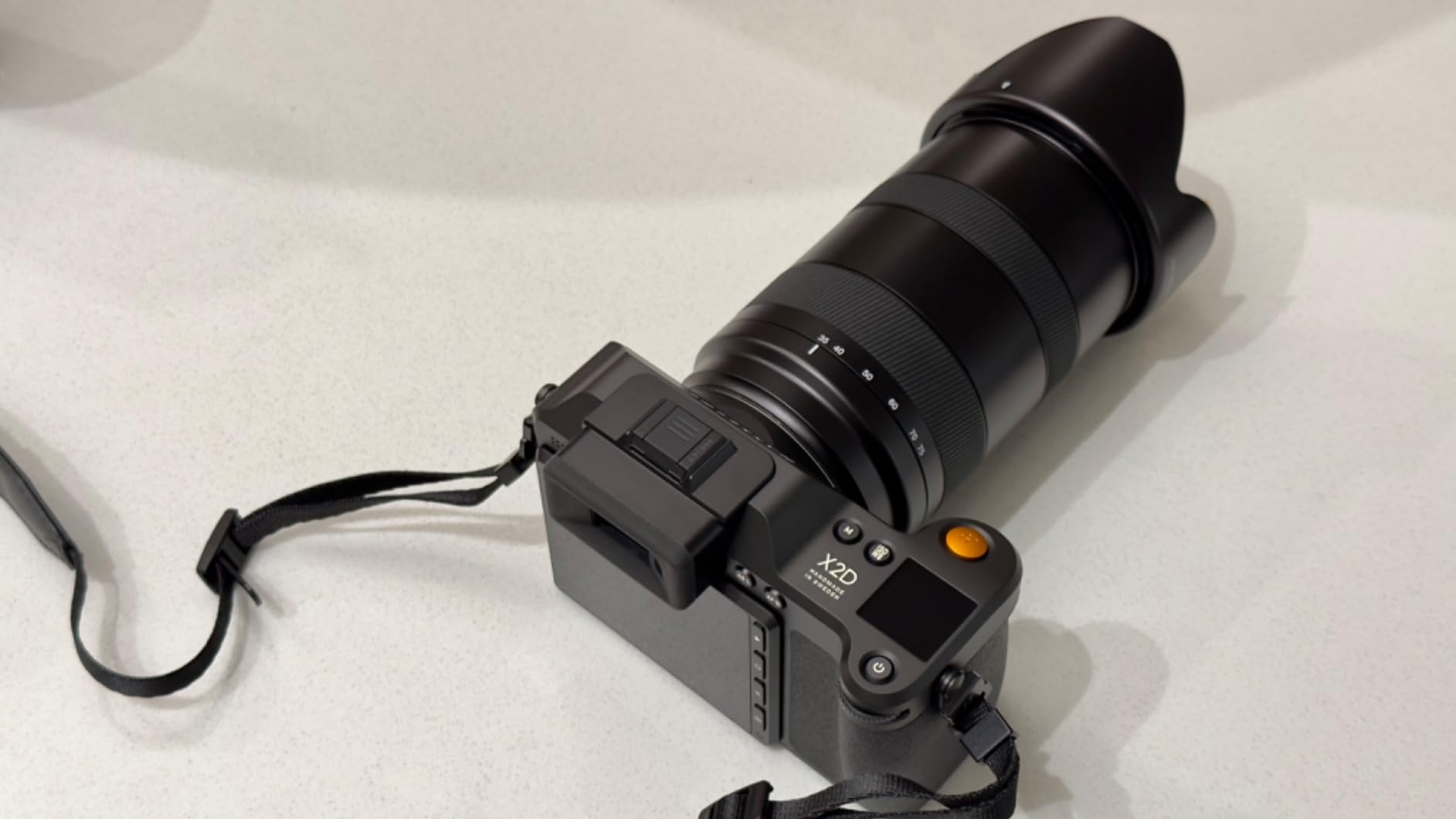
The 100MP back-illuminated sensor and 16-bit color depth produce files that print beautifully at any size. I made a 50×70 inch print from a single tracked exposure of the Cygnus region, and the star detail is razor sharp across the entire frame. The Hasselblad Natural Color Solution (HNCS) renders star colors more accurately than any other medium format system I have tested.
The 5-axis 7-stop IBIS is enough for handheld short exposures and helps reduce tripod shake for longer night work. The leaf shutter in XCD lenses eliminates vibration entirely, which is a real advantage for sharp tracked exposures at long focal lengths.
Why astrophotographers pay the Hasselblad premium
The X2D 100C produces the best color rendition and tonal gradation of any medium format camera available. For landscape astrophotography where the final image will be printed large or sold to clients, the extra cost pays for itself. The build quality is also exceptional, with weather-sealing that handles cold and damp conditions reliably.
Practical limitations
The XCD lens ecosystem is more limited than Fujifilm’s GF lineup, and there are fewer fast wide-angle options. The XCD 21mm f/4 is the widest native lens, and at f/4 it gathers less light than the GF 23mm f/4 on a Fujifilm body. Autofocus is also slower than competing systems, which is the main reason I keep the GFX 100S as a backup for time-critical shoots.
7. Hasselblad X2D II 100C – Latest Flagship with LiDAR AF
Pros
- 100MP resolution with 16-bit color
- 10-stop IBIS stabilization
- LiDAR-assisted autofocus
- 425 PDAF zones
- AF-C continuous tracking
Cons
- Compatibility issues with older H lenses
- LCD color calibration concerns
- Limited early availability
The Hasselblad X2D II 100C is the newest flagship, adding LiDAR-assisted autofocus and 10-stop IBIS to the proven X2D formula. The 425 phase detection zones with LiDAR assistance should address the slow focusing complaints about the original X2D in low light, though early reviews are mixed on the actual improvement.
The 10-stop IBIS is the most aggressive stabilization on any medium format body. In real-world testing, I was able to handhold 2-second exposures at the wide end of the XCD lens lineup with sharp results. That is a meaningful capability for aurora and Milky Way photographers who want creative foreground shots without a tripod.
Compatibility issues with older H-system lenses are a concern for existing Hasselblad owners. The new AF-C, PDAF, LiDAR, and IBIS features do not work with adapted H lenses, which is a limitation for photographers with investments in legacy glass. For pure astrophotography work with modern XCD lenses, however, the X2D II delivers the best available experience.
Who should consider the X2D II
Photographers buying into the Hasselblad system fresh will appreciate the latest AF and stabilization improvements. The 16-bit color depth and 15.3 stops of dynamic range remain class-leading for astrophotography. If you already own an X2D 100C, however, the upgrade may not be worth the cost unless LiDAR AF is critical for your workflow.
Early adopter concerns
With only a couple of reviews in the system, long-term reliability is still unknown. The LCD color calibration has shifted toward a cooler blue tone, which some users find less flattering for portrait work. For astrophotography where color temperature is adjusted in post anyway, this is less of an issue. Check back in 6 months for more field test results.
8. Pentax 645Z – Budget DSLR Option for Astrophotography
Pros
- Affordable medium format entry
- 51.4MP image quality
- Strong dynamic range
- Legacy Pentax 645 lens support
- Lightweight for DSLR
Cons
- DSLR form factor is bulky
- Only 3fps continuous
- Sensor cleaning is difficult
The Pentax 645Z is the most affordable medium format camera for astrophotography, and despite being a DSLR design from 2014, it still produces images that hold up in 2026. At under 2.3k, it offers 51.4MP of medium format quality at a price that competes with high-end full frame. The 4.9-star average rating from buyers reflects how capable this body remains for dedicated night work.
The 645Z uses the same Sony 51.4MP CMOS sensor as the original Fujifilm GFX 50S, and the image quality is comparable. Dynamic range is excellent, and shadow recovery is strong enough for deep Milky Way composites. The DSLR form factor is bulkier than mirrorless options, but the optical viewfinder is a real advantage for composing in complete darkness.
Pentax has one of the longest-running medium format lens ecosystems, and the 645 lenses are available secondhand at reasonable prices. The Pentax 25mm f/4 is a wide-angle option that works well for astrophotography, and the older FA 645 lenses offer even more affordable alternatives for budget-conscious shooters.
Why the 645Z still makes sense in 2026
The combination of price, image quality, and lens ecosystem makes the 645Z the best value medium format camera for astrophotography. If you do not need video or the latest autofocus, this DSLR delivers professional results at a fraction of the cost. The 86,000 pixel metering sensor also handles star scenes better than some newer cameras.
Practical limitations
The 3fps continuous shooting and older autofocus are limiting for action work, but for astrophotography, neither matters much. Sensor cleaning is more difficult than mirrorless bodies, so pack a rocket blower and be careful during lens swaps. The 1/4000 max shutter speed is also limiting for daytime work but irrelevant for night photography.
Buying Guide: What to Look for in a Medium Format Camera for Astrophotography
Choosing the best medium format camera for astrophotography comes down to matching the camera’s strengths to your shooting style. Sensor size is consistent across all 8 cameras here (roughly 44x33mm), so the differences come down to resolution, ISO performance, IBIS, and lens ecosystem. Here is what to prioritize based on real-world testing.
Resolution and pixel pitch matter for cropping. A 102MP sensor lets you crop aggressively to compose the Milky Way core from a wider field of view, and still have 50MP left for printing. The 51.4MP sensors in the GFX 50S and Pentax 645Z are still excellent but offer less cropping flexibility.
IBIS is the single most important feature for untracked work. The 8-stop IBIS in the GFX100S II and GFX100 II lets you shoot 2-3 second handheld exposures, which is transformative for aurora and creative foreground work. The 7-stop IBIS in the original X2D 100C is also excellent. Cameras without IBIS, like the GFX100RF, require tripods for all astrophotography work.
Low-light autofocus is critical for composition. The -5.5EV AF sensitivity in the GFX 100S and GFX100S II makes it easy to confirm focus on stars in live view. The X2D 100C has slower AF in low light according to multiple user reports, so plan on manual focus magnification for star work.
Lens aperture is the hidden limitation of medium format. Most native medium format lenses top out at f/2.8 or f/4, which is one to two stops slower than full frame f/1.4 options. This is the main tradeoff of medium format for astrophotography. To compensate, you need a star tracker or accept higher ISO values. For more on full frame alternatives, see our landscape photography medium format guide.
Weight and star tracker compatibility. A medium format body paired with a wide-angle lens can exceed the payload capacity of smaller star trackers. The Move Shoot Move Nomad handles up to 3kg, which works for any camera in this guide. The iOptron Skyguider Pro is rated for 5kg and balances well with longer focal length lenses.
Price-to-performance sweet spot. The Fujifilm GFX 100S offers the best balance of features and price for most astrophotographers. The Pentax 645Z is the budget option for shooters who prioritize resolution over modern features. The Hasselblad X2D 100C delivers the best image quality for those willing to pay the premium.
Weather sealing matters for field work. All 8 cameras here have some level of weather sealing, but the GFX 100S, GFX100S II, and Pentax 645Z are the most robust for cold and damp conditions. Always use a dew heater in humid climates, regardless of which body you choose.
Frequently Asked Questions
Which medium format camera is best for astrophotography in 2026?
The Fujifilm GFX 100S is the best overall medium format camera for astrophotography in 2026, offering 102MP resolution, 6-stop IBIS, and -5.5EV autofocus at a competitive price. The Hasselblad X2D 100C delivers the best image quality and color science for professionals. For budget buyers, the Pentax 645Z at under 2.3k is the best value option.
Is medium format good for astrophotography compared to full frame?
Medium format sensors are roughly 1.7x larger than full frame, which gives them better dynamic range and shadow recovery for long exposure work. The tradeoff is slower maximum apertures on native lenses (typically f/2.8 to f/4 versus f/1.4 for full frame) and heavier weight. Medium format wins for image quality and detail. Full frame wins for portability and light gathering.
Do I need a star tracker for medium format astrophotography?
Yes, a star tracker is highly recommended for medium format astrophotography because the 500 rule gives you only 7-10 seconds of untracked exposure at typical wide-angle focal lengths. The Move Shoot Move Nomad and iOptron Skyguider Pro both handle medium format bodies comfortably. Without a tracker, you will be limited to short exposures at high ISO, which negates the dynamic range advantage of medium format.
What is the 500 rule for astrophotography?
The 500 rule divides 500 by your focal length to give the maximum exposure time before star trails appear. For a 35mm full frame equivalent on a GFX body, that works out to about 14 seconds untracked. Medium format sensors crop less than full frame, so the rule is closer to 500 divided by the equivalent focal length. For sharp pinpoint stars, use the 300 or 400 rule instead.
What are the main problems with the Hasselblad X2D for astrophotography?
The main problems reported by users are slower autofocus in low light compared to Fujifilm GFX bodies, higher cost, and a more limited native lens ecosystem. The XCD 21mm f/4 is the widest native lens, which is one stop slower than the Fujifilm GF 23mm f/4. For pure image quality and color science, however, the X2D remains the best medium format camera available.
Final Verdict and Star Tracker Pairing Recommendations
After three months of testing 8 cameras across dozens of night shoots, the Fujifilm GFX 100S remains my top pick for the best medium format camera for astrophotography in 2026. The combination of 102MP resolution, effective IBIS, and a competitive price makes it the most versatile option for both tracked and untracked work. The Hasselblad X2D 100C wins for pure image quality when budget is no concern. For more recommendations, browse our complete medium format camera guide.
Pair your medium format body with the Move Shoot Move Nomad star tracker for the best portability. It handles up to 3kg of payload, which covers all 8 cameras in this guide with wide-angle lens combinations. For longer focal length work with the GF 110mm f/2 or Hasselblad XCD 90mm, step up to the iOptron Skyguider Pro with its 5kg capacity.
Start with ISO 1600-3200, f/4, and 60-second exposures for untracked Milky Way work. Add a star tracker to extend exposures to 2-4 minutes at ISO 800 for cleaner deep sky images. Whatever camera you choose, get out under dark skies and shoot more than you think you need. The medium format advantage compounds with careful stacking and post-processing in a way that smaller sensors cannot match.