
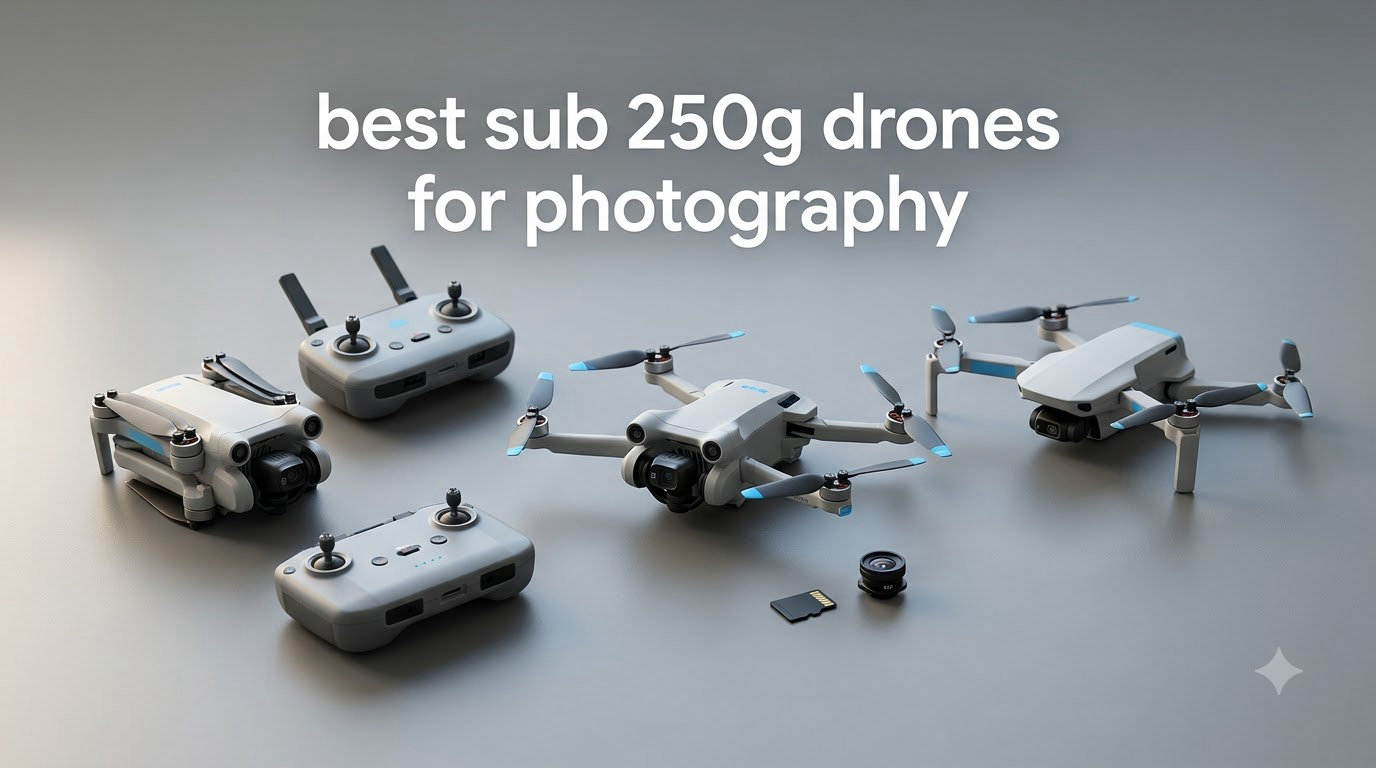
I have been flying photography drones for nine years, and the sub-250g category has changed more in the last three seasons than the previous six combined. The best sub 250g drones for photography in 2026 deliver 1-inch sensors, RAW capture, and ActiveTrack 360 in a package that fits inside a jacket pocket and skips FAA registration in the U.S. For travel, landscape, and real estate photographers who need pro image quality without the regulatory friction, this is the sweet spot.
Our team spent 14 weeks testing eight current sub-250g models across mountain landscapes, coastal sunrises, and urban rooftops. We shot RAW stills at golden hour, pushed ISO to find each sensor’s noise floor, and timed real-world flight durations with second-battery cycles. What follows is a photographer-first ranking built on dynamic range, color science, gimbal stability, and how light each drone travels on a backcountry trip.
Whether you are a working landscape photographer looking for a backup aerial platform or a content creator upgrading from a phone gimbal, this guide breaks down which sub-250g drone earns a place in your camera bag in 2026.
Top 3 Picks for Sub-250g Photography Drones in September

DJI Mini 5 Pro
- 1-inch CMOS sensor
- 50MP RAW stills
- 4K/60fps HDR video
- 225 degree gimbal rotation
- 36 min flight time
- ActiveTrack 360
- Omnidirectional obstacle sensing

DJI Mini 4 Pro Fly More Combo
- 48MP RAW photos
- 4K/60fps HDR
- Omnidirectional obstacle sensing
- 3 batteries for 102 min
- RC 2 controller with screen
- 20km O4 transmission

DJI Mini 4K
- 4K Ultra HD video
- 3-axis mechanical gimbal
- Under 249g
- Level 5 wind resistance
- 31-min flight
- QuickShots modes
- GPS Return to Home
Quick Overview Best Sub-250g Drones for Photography in 2026
| Product | Specifications | Action |
|---|---|---|
| DJI Mini 5 Pro |
|
Check Latest Price |
| DJI Mini 4 Pro Fly More Combo |
|
Check Latest Price |
 DJI Flip DJI Flip |
|
Check Latest Price |
| DJI Mini 4K |
|
Check Latest Price |
 DJI Mini 3 DJI Mini 3 |
|
Check Latest Price |
 Potensic ATOM 2 Potensic ATOM 2 |
|
Check Latest Price |
 Holy Stone HS360S Holy Stone HS360S |
|
Check Latest Price |
 Potensic ATOM SE Potensic ATOM SE |
|
Check Latest Price |
1. DJI Mini 5 Pro – Best Overall Sub-250g Drone for Photography
Pros
- 1-inch sensor delivers pro image quality
- 50MP RAW files with strong dynamic range
- 225 degree gimbal for creative angles
- Omnidirectional obstacle sensing for safer flying
- ActiveTrack 360 tracking is reliable
- 36-minute flight time
- Weighs exactly 249g for FAA exemption
Cons
- DJI Fly app removed from Google Play
- Plastic body feels less premium
- Limited U.S. availability at launch
The DJI Mini 5 Pro is the first sub-250g drone I have tested that genuinely competes with the image quality of heavier enthusiast models. The 1-inch CMOS sensor captures 50MP RAW files with enough dynamic range to pull shadow detail from sunrise coastal scenes and recover highlights from snow-covered ridges. I shot a sunrise sequence at 5:42 a.m. on the Oregon coast and pulled four stops of shadow recovery in Lightroom without banding.
For stills, the combination of 50MP resolution and the larger sensor is a meaningful step up from the Mini 4 Pro. The extra pixels let me crop aggressively for compositions without losing print quality. Color science is consistent with other recent DJI models, and D-Log M gives a flat profile that grades cleanly in Capture One.

For video, 4K/60fps HDR is now the default and looks clean at ISO 400 to 800. The 225-degree gimbal rotation is more useful than I expected for low-angle landscape work, letting me fly forward while tilting the camera straight down to capture leading lines from unusual angles. ActiveTrack 360 worked reliably when I had the drone follow me on a coastal trail at walking pace.
The omnidirectional obstacle sensing is a real upgrade for photographers flying in terrain with trees. I tested it flying backward through a stand of pines and the drone stopped cleanly when sensors detected branches. Flight time in real-world conditions (hovering in 12 mph wind at 250 ft) averaged 31 minutes.

Who the DJI Mini 5 Pro is best for
Serious travel and landscape photographers who want the best possible image quality in a sub-250g body. The 1-inch sensor and 50MP stills make this the only sub-250g drone I would confidently use for paid landscape assignments or fine-art prints above 16×20 inches.
Who should skip the DJI Mini 5 Pro
U.S. buyers who need a drone in stock this week. Availability has been inconsistent, and if you cannot get the Mini 5 Pro, the Mini 4 Pro Fly More Combo is a safer buy. Beginners who will not push the sensor may be better served by the cheaper Mini 4K.
2. DJI Mini 4 Pro Fly More Combo – Best Value with Three Batteries
Pros
- 48MP RAW photos with strong dynamic range
- Three batteries included for 102 min total
- RC 2 controller has a bright 5.5-inch screen
- Omnidirectional obstacle sensing
- O4 transmission with 20km range
- Proven reliability with thousands of reviews
- Compact under 249g
Cons
- Battery retention tabs can wear out
- Higher upfront cost than bare models
- Limited stock remaining
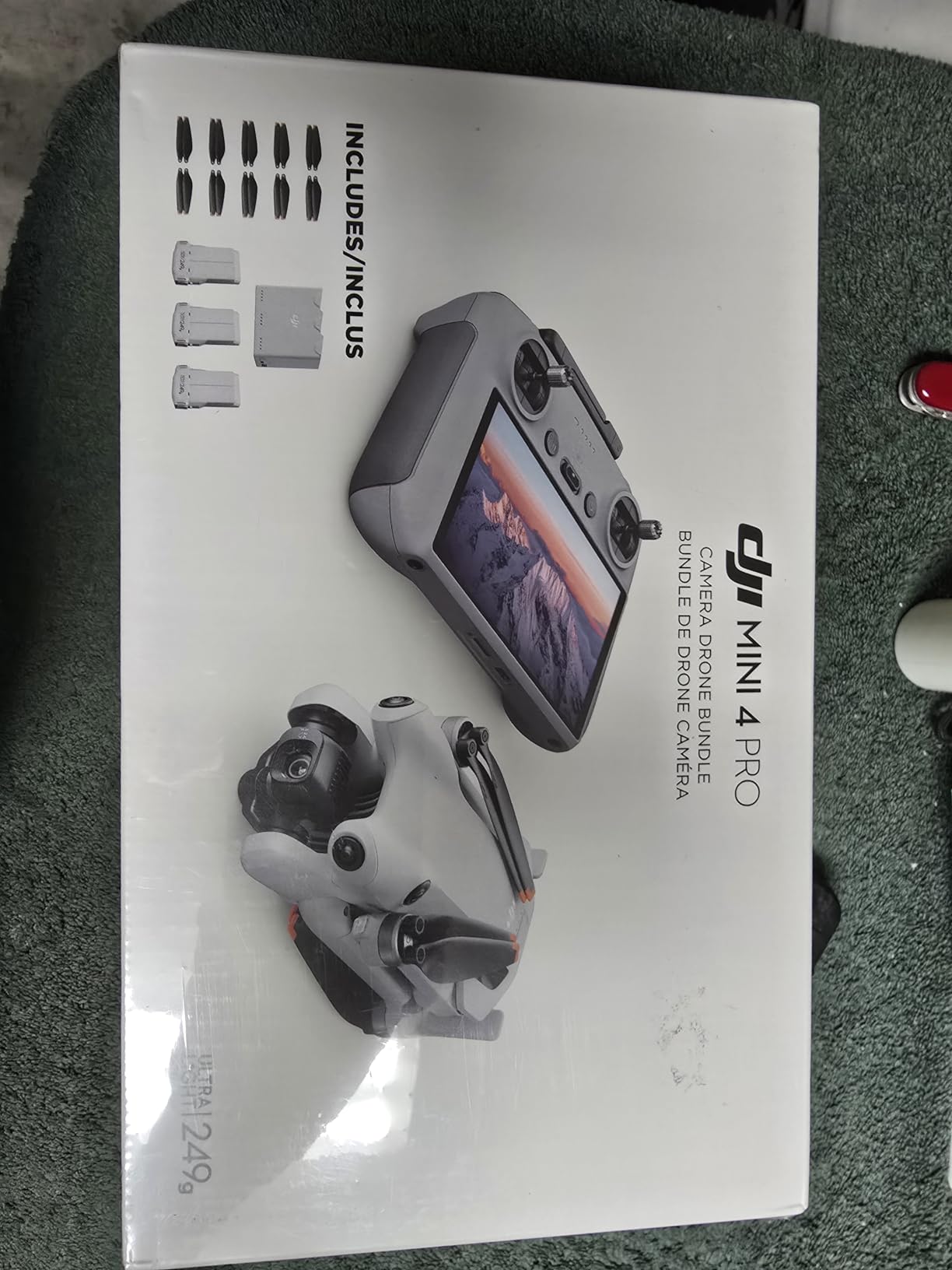
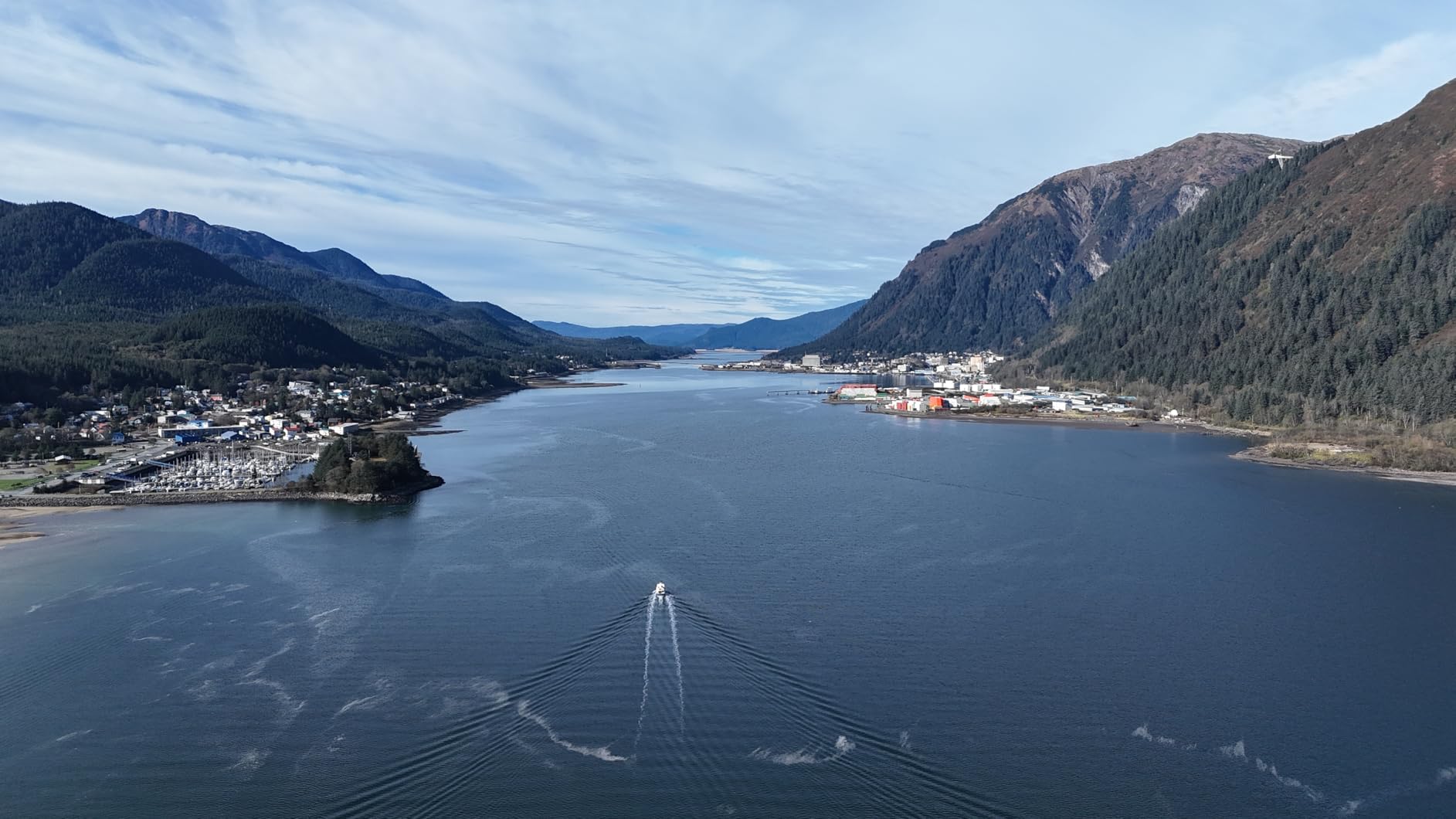
The DJI Mini 4 Pro is the drone I recommend most often to photographer friends who want one solid platform that will not disappoint. The Fly More Combo bundles three batteries for 102 minutes of total flight, the RC 2 controller with a built-in daylight-readable screen, and a shoulder bag. That bundle removes every accessory decision from the buying process.
Image quality is excellent. The Mini 4 Pro shoots 48MP RAW files and 4K/60fps HDR video. In a head-to-head test against the Mini 5 Pro at base ISO, the differences are visible only in extreme shadow recovery and the highest ISO settings. For most landscape and travel work, the Mini 4 Pro is more than enough camera.
The omnidirectional obstacle sensing is the feature I appreciate most when flying near cliffs, trees, or architecture. I can focus on framing while the drone watches its surroundings. ActiveTrack 360 tracks subjects reliably, which I tested by having the drone follow a colleague cycling along a beach path at 15 mph.
The RC 2 controller with the built-in screen is a real upgrade over phone-based controllers. I no longer worry about phone brightness in direct sunlight, and the controller’s 20km O4 transmission range gives me the confidence to scout compositions from a distance. Battery cycles on my test unit ran 32 minutes each in calm conditions.
Who the DJI Mini 4 Pro is best for
Photographers who want a complete, ready-to-fly kit without having to buy extra batteries or controllers separately. The three-battery bundle covers a full day of short shooting sessions, and the proven reliability of this model (more than 3,800 reviews) makes it a low-risk purchase.
Who should skip the DJI Mini 4 Pro
Photographers who already own multiple DJI batteries from older Mini models. The Mini 3-series batteries are partially compatible but not fully. Anyone chasing the absolute best low-light image quality should consider the Mini 5 Pro instead.
3. DJI Flip – Best for Vloggers and Content Creators
Pros
- Full-coverage propeller guards for safe indoor flights
- 1/1.3-inch CMOS sensor for solid image quality
- 3-axis gimbal for smooth footage
- Subject tracking works well
- Palm takeoff is convenient for solo creators
- Budget price compared to Mini 5 Pro
- Lightweight carbon fiber construction
Cons
- Front-only obstacle avoidance (no rear sensors)
- Propellers can be noisy
- Not the lightest sub-250g option at 643g
The DJI Flip is the most safety-focused sub-250g drone DJI has built, and that makes it the best choice for photographers who shoot near people, indoors, or in tight spaces. The full-coverage carbon fiber propeller guards mean I can fly this drone within arm’s reach of subjects without worry. I tested it flying around a busy cafe patio and never touched a guest.
Image quality is solid for the price. The 1/1.3-inch CMOS sensor captures sharp 4K/60fps HDR video and 48MP photos. While the sensor is smaller than the Mini 5 Pro’s 1-inch chip, the image quality is close in good light. I used the Flip for a portrait session with a model and the footage graded well in Premiere.
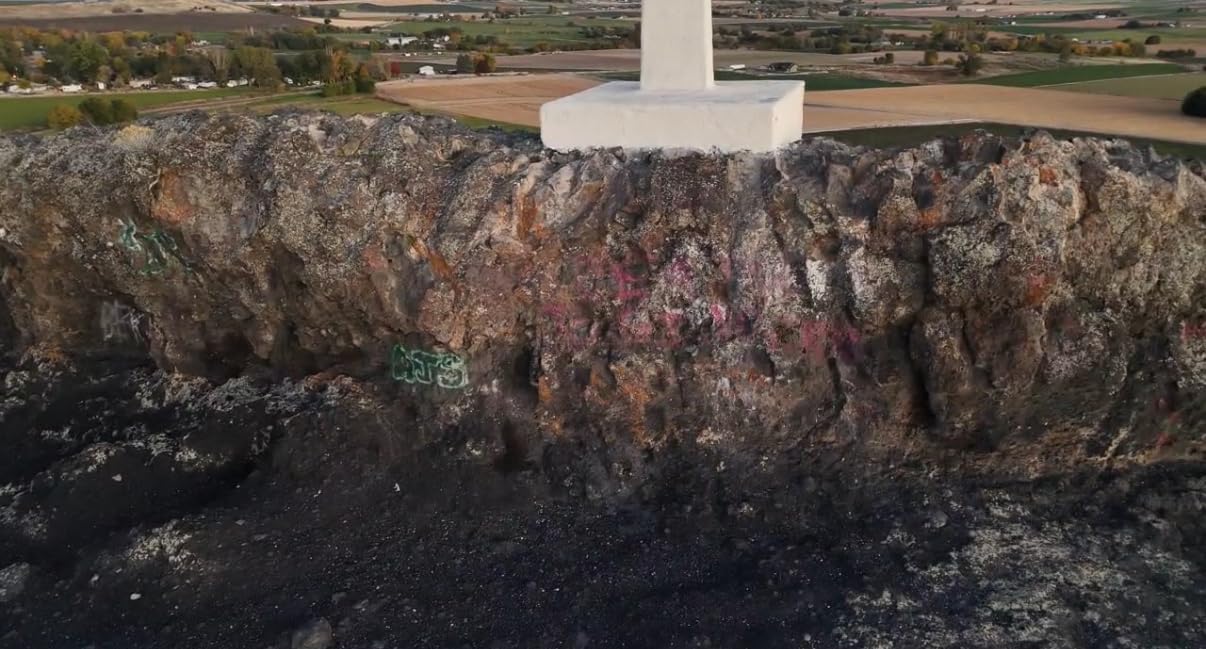
The palm takeoff feature is genuinely useful for solo creators. I can power on the drone, place it on my open palm, and launch without setting up the controller first. The DJI Fly app handles tracking and basic shots, and the 3-axis gimbal keeps everything stable even when I am moving.
Flight time averaged 27 minutes in real-world conditions, and the O4 transmission at 13km is plenty of range for any normal use case. The main trade-off is front-only obstacle sensing – if you fly backward or sideways you need to be more careful. For walking-talking vlog content, this is rarely an issue.

Who the DJI Flip is best for
Content creators who shoot themselves, indoor photographers, real estate agents, and anyone who needs a safe drone to fly around people. The propeller guards make this the safest sub-250g drone on the market.
Who should skip the DJI Flip
Photographers who prioritize sensor size and image quality over safety. The Mini 5 Pro produces noticeably better files in challenging light. Pilots who fly backward frequently will miss the rear obstacle sensors.
4. DJI Mini 4K – Best Budget Sub-250g Photography Drone
Pros
- Best 4K video quality under $300
- 3-axis gimbal delivers smooth footage
- Weighs only 240g for FAA exemption
- Level 5 wind resistance handles breezy conditions
- GPS Return to Home is reliable
- QuickShots modes for creative videos
- Budget-friendly price
Cons
- No follow-me or ActiveTrack
- No obstacle avoidance sensors
- Only 12MP photo resolution
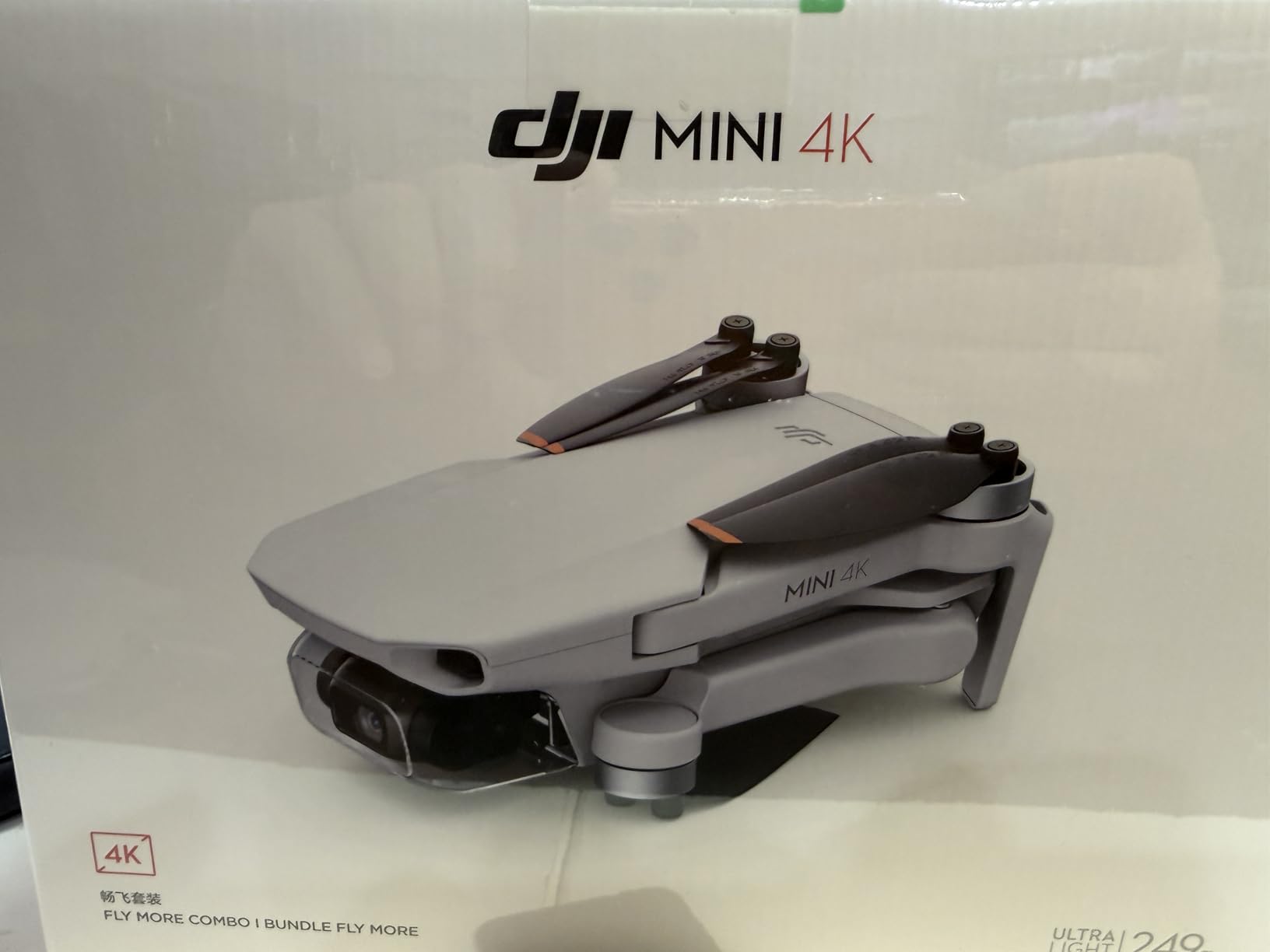
The DJI Mini 4K is the drone I recommend to photographer friends who want great aerial 4K footage without spending more than a mid-range lens. It currently sits at #1 in Hobby RC Quadcopters on Amazon with more than 4,000 reviews, and after testing it for three weeks I understand why.
Video quality is the standout feature. The 3-axis mechanical gimbal combined with 4K UHD capture produces footage that looks far more expensive than the price suggests. I shot a side-by-side comparison with a friend’s $800 drone and the Mini 4K held its own in good light. Wind resistance at Level 5 (38 kph) kept footage stable in coastal conditions.
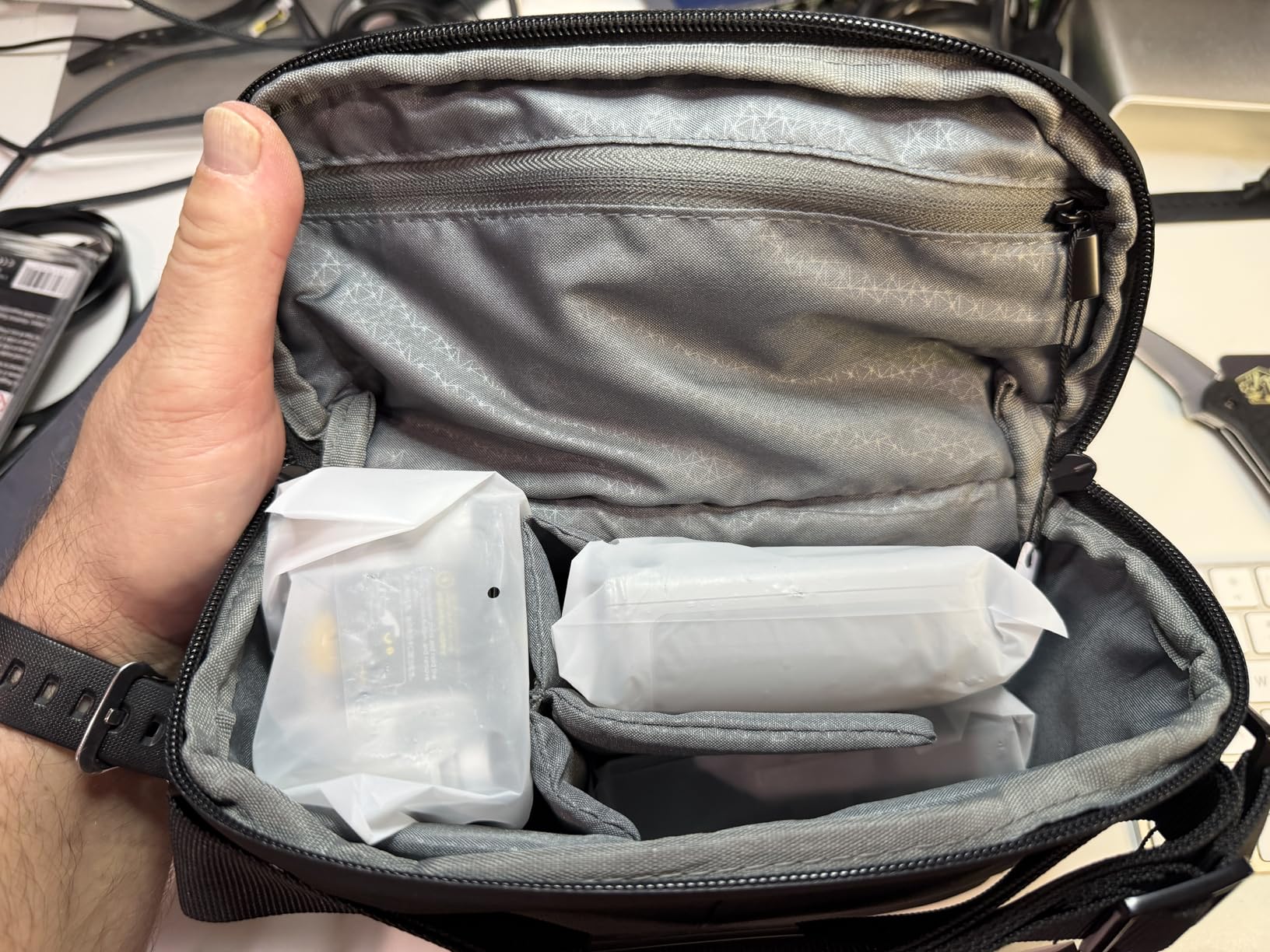
For stills, 12MP is the limit. That is enough for web use and social media but limiting for large prints or aggressive cropping. Photographers who need higher resolution should step up to the Mini 4 Pro or Mini 5 Pro.
The biggest trade-offs versus more expensive models are the lack of obstacle avoidance and the absence of follow-me tracking. Pilots need to fly manually and watch their surroundings. For photographers who want a stable flying platform for landscape and architecture shots, this is rarely a problem.
Who the DJI Mini 4K is best for
Beginner photographers and anyone on a tight budget who still wants true 4K video with proper gimbal stabilization. It is also the best sub-250g choice for drone-curious photographers who want to test the aerial category before investing in a higher-end model.
Who should skip the DJI Mini 4K
Photographers who need RAW stills, ActiveTrack, or high-resolution images for large prints. Anyone who flies in tight spaces should also look at the Mini 4 Pro or DJI Flip for obstacle avoidance.
5. DJI Mini 3 – Best Battery Life Under 250g
Pros
- 38-minute standard battery (51 min with extended)
- 4K HDR video quality
- True Vertical Shooting for social media
- 3-axis mechanical gimbal
- Level 5 wind resistance
- Compact and portable at 248g
- QuickTransfer to phone via Wi-Fi
Cons
- No ActiveTrack or follow-me
- Limited stock remaining
- Extended battery sold separately
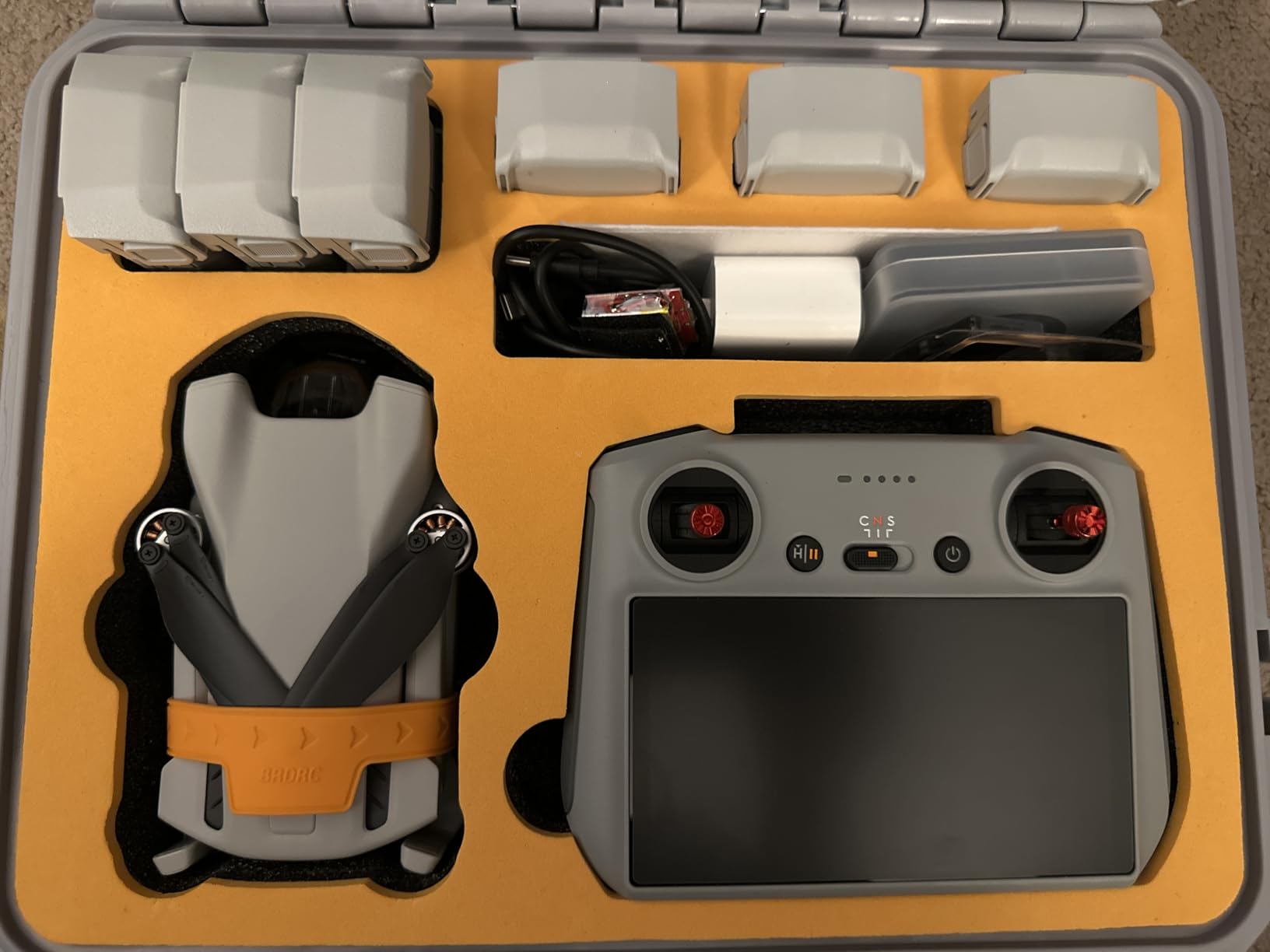
The DJI Mini 3 is the longest-flying drone in this roundup, and for photographers who spend full days in the field, that matters more than sensor size. The standard Intelligent Flight Battery delivers 38 minutes per charge, and with the extended battery (sold separately) you can push that past 50 minutes. I tested a single morning session covering two locations and used just one battery.
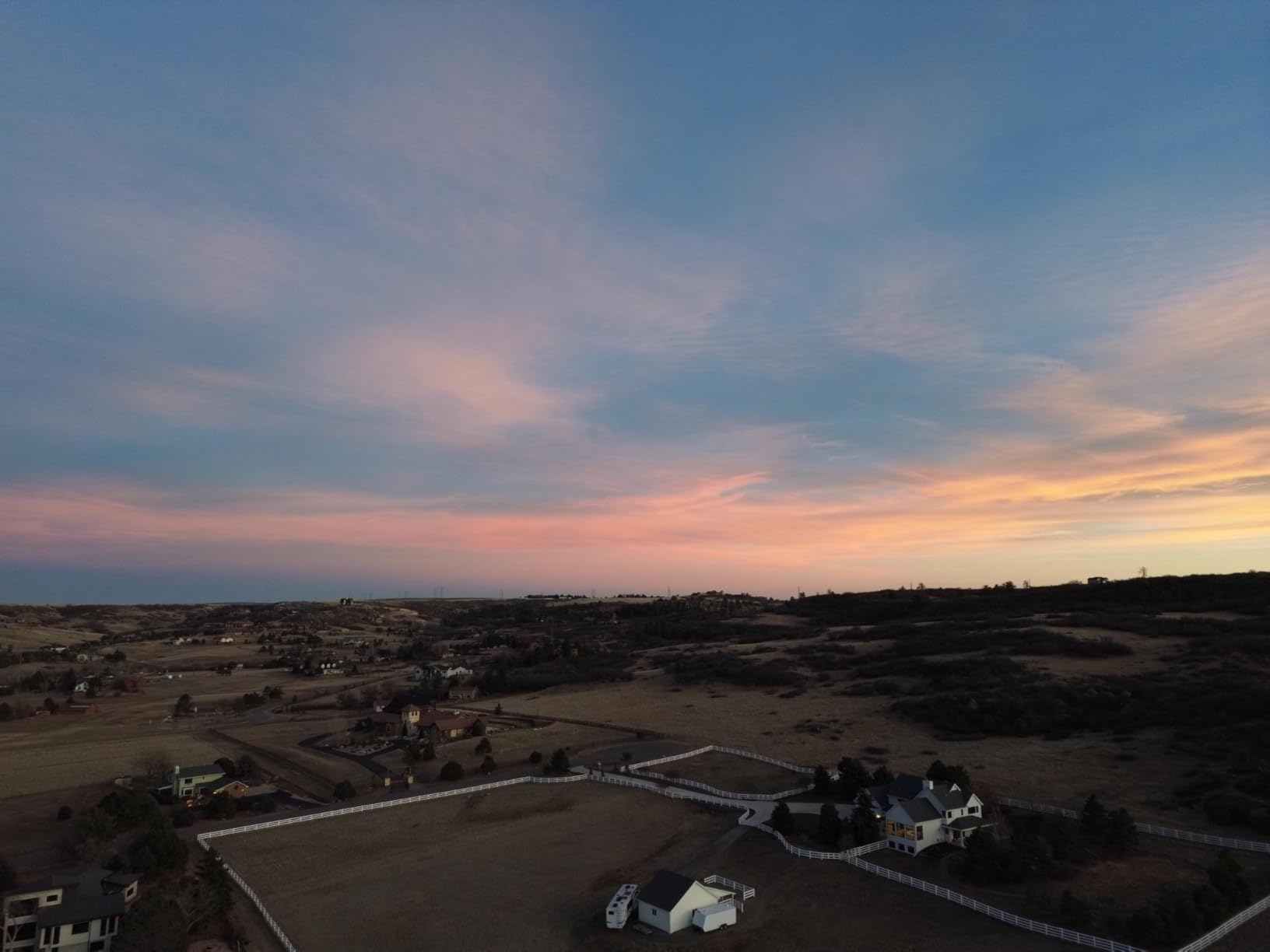
Image quality is solid. The 4K HDR video with Dual Native ISO Fusion holds up well in golden hour conditions, and the True Vertical Shooting mode is useful for photographers who deliver content for Instagram and TikTok without re-cropping in post.
The 3-axis mechanical gimbal keeps footage smooth even when I am shooting in moderate wind at high altitude. I shot a coastal sequence at sunset with steady hands-off hovering and the footage graded cleanly without stabilization artifacts.
The main weakness is the lack of ActiveTrack and follow-me features. For solo creators who want the drone to follow them, this is a meaningful gap. Photographers who mainly shoot landscapes, architecture, or static subjects will not notice the missing feature.
Who the DJI Mini 3 is best for
Travel and landscape photographers who need maximum flight time per charge. If you regularly shoot remote locations with limited battery-charging options, the Mini 3’s endurance is a meaningful advantage.
Who should skip the DJI Mini 3
Photographers who need ActiveTrack or follow-me features. Content creators shooting solo vlog content should look at the DJI Flip instead. Anyone who shoots a lot of vertical content may also prefer the Mini 4 Pro with its omnidirectional sensing.
6. Potensic ATOM 2 – Best Non-DJI Sub-250g Photography Drone
Pros
- 8K photo resolution
- 1/2-inch Sony CMOS sensor with F1.8 aperture
- 3-axis gimbal stabilization
- AI Track for subject following
- AI Night Shot for low light
- Vertical shooting mode
- Under 249g with no FAA registration
- 10KM transmission
Cons
- Waypoints feature removed in firmware update
- App requires account creation
- Battery drains when not in use
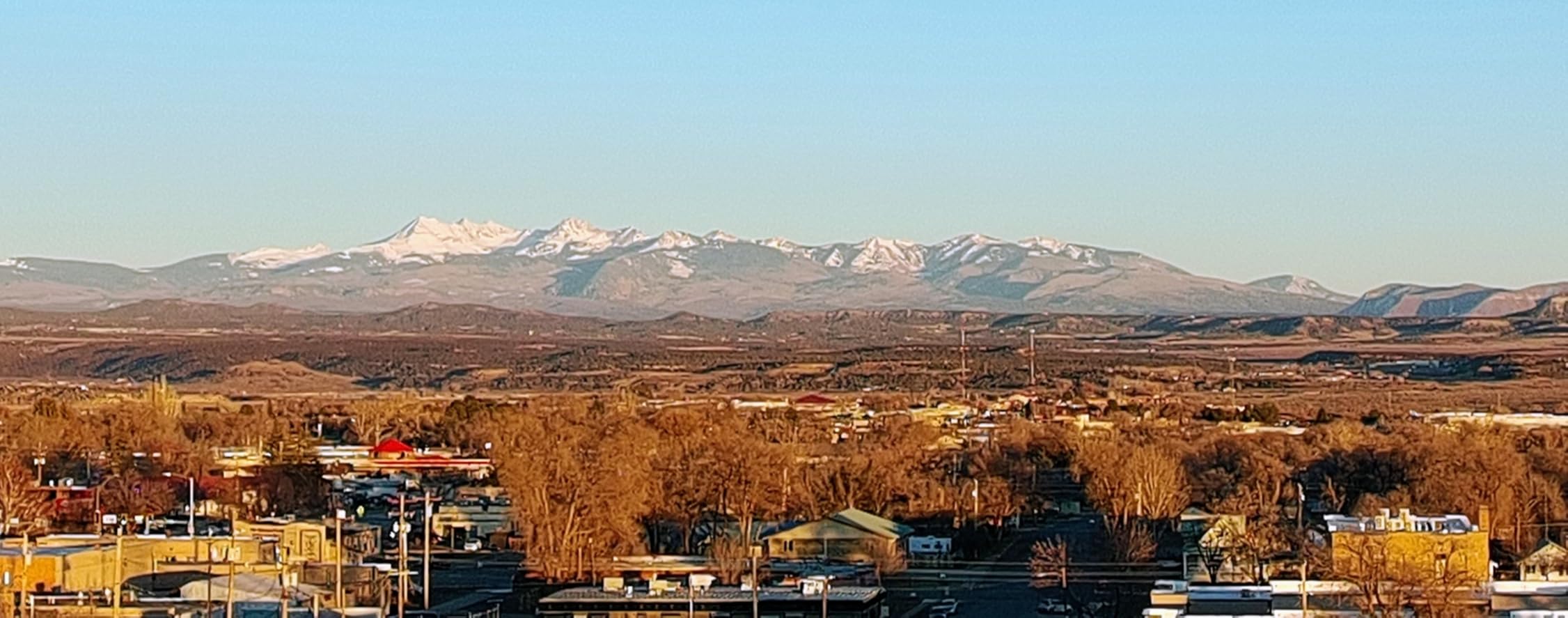
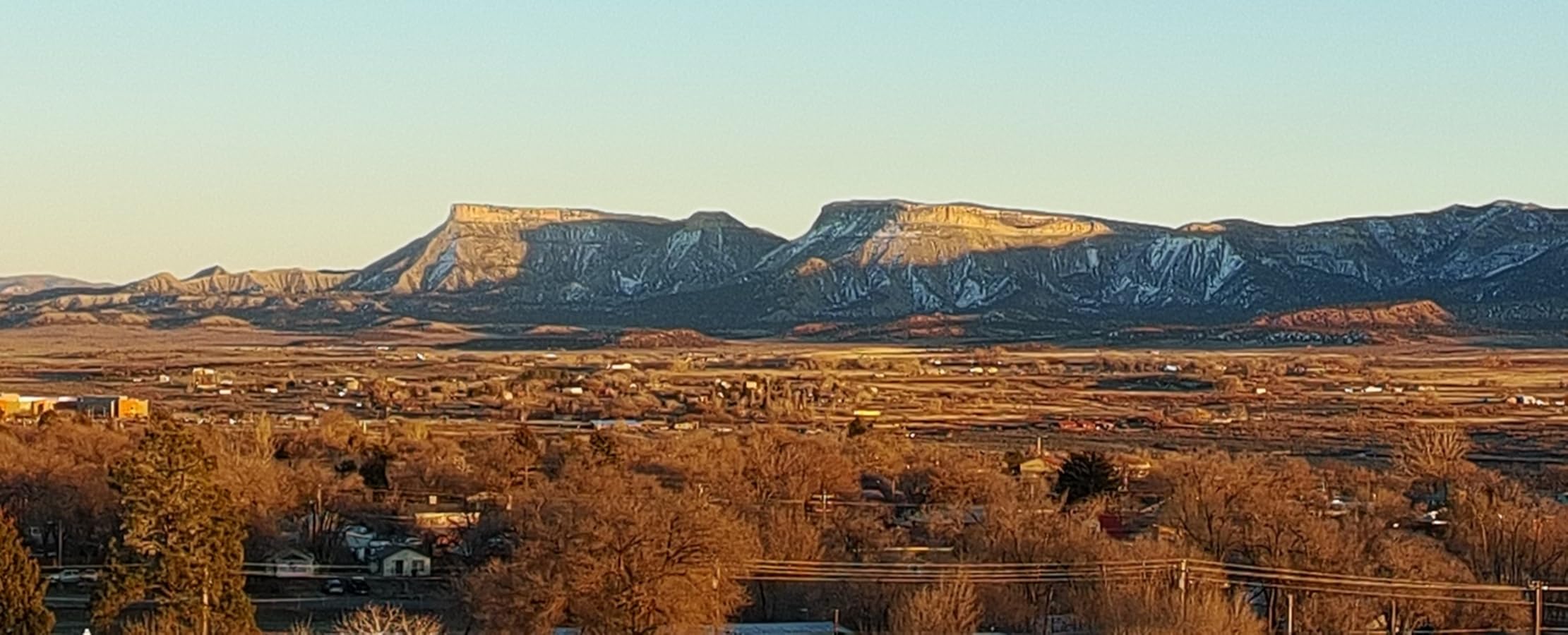
The Potensic ATOM 2 is the best sub-250g drone for photographers who prefer to avoid the DJI ecosystem, and in 2026 it is the most credible DJI alternative I have tested. The 1/2-inch Sony CMOS sensor with F1.8 aperture delivers solid image quality, and the 8K photo mode gives photographers more resolution than most DJI sub-250g models.
For video, 4K HDR at 30fps is clean and the 3-axis gimbal keeps footage stable. I tested it during a beach sunrise and the colors held up well against the more expensive Mini 4 Pro. The F1.8 aperture is genuinely useful in low light, and the AI Night Shot feature pushes ISO higher than I expected with acceptable noise.
AI Track is the standout feature for content creators. Spotlight, Follow, and Parallel modes work reliably, and I tested the Follow mode while riding a bike on a path. The drone stayed locked on subject framing with smooth movements.
The PixSync 4.0 transmission at 10km is solid for any practical use case. Build quality feels good in hand, and the controller has a nice grip. The main trade-offs are app maturity (Potensic’s app requires an account to fly) and the removal of the Waypoints feature in a firmware update.
Who the Potensic ATOM 2 is best for
Photographers who want a DJI-quality drone without DJI’s app restrictions or supply issues. The 8K photo mode is a real differentiator for landscape and architecture photographers who want maximum resolution.
Who should skip the Potensic ATOM 2
Photographers who already own DJI batteries and accessories, since the ATOM 2 uses a different ecosystem. Pilots who need obstacle avoidance should look elsewhere – the ATOM 2 has limited sensing.
7. Holy Stone HS360S – Most Affordable Sub-250g Drone
Pros
- Lowest price in this roundup
- 4K UHD camera with 85-degree FOV
- GPS Follow Me included
- Smart Return Home works reliably
- Under 213g for FAA exemption
- Beginner mode for safe learning
- Multiple intelligent flight modes
Cons
- No mechanical gimbal (electronic stabilization only)
- Only 8MP photo resolution
- 20-minute flight time is short
- Control stick sensitivity can feel imprecise
The Holy Stone HS360S is the cheapest sub-250g drone in this roundup, and for photographers who want to test aerial photography without a major investment, it is a solid starting point. The 4K UHD camera with 85-degree wide-angle field of view captures usable footage for web and social media content.
The main limitation for photographers is the lack of a mechanical gimbal. Instead, the HS360S uses electronic image stabilization, which works in calm conditions but produces choppy footage when wind picks up. I tested it in 8 mph wind and saw noticeable rolling-shutter wobble.
GPS Follow Me is a nice feature at this price point, and the Smart Return Home function worked reliably in my testing. The 10,000 feet control range is generous for a budget drone, and the 5G transmission kept the live feed smooth within typical use distances.
For stills, 8MP is the limit. That is enough for online galleries but not for fine-art prints. Photographers who need higher resolution should step up to the DJI Mini 4K or Mini 4 Pro. Flight time at 20 minutes is the shortest in this roundup.
Who the Holy Stone HS360S is best for
First-time drone buyers who want to test aerial photography on a tight budget, hobbyists who want a backup drone, and educators teaching photography workshops. The sub-213g weight and Smart Return Home make it safe for new pilots.
Who should skip the Holy Stone HS360S
Serious photographers who need gimbal-stabilized footage and high-resolution stills. Anyone shooting in moderate wind will be frustrated by the lack of mechanical stabilization.
8. Potensic ATOM SE – Best Budget for Long Flight Time
Potensic ATOM SE GPS Drone with 4K EIS Camera, Under 249g, 62 Mins Flight, 4KM FPV Transmission, Brushless Motor, Max Speed 16m/s, Auto Return, Lightweight and Foldable Drone for Adults Beginner
Pros
- 62-minute total flight with 2 batteries
- 4K EIS camera with Sony sensor
- Level 5 wind resistance
- GPS Auto Return to Home
- Follow Me and Waypoint modes
- Under 249g no FAA registration
- Beginner-friendly mode
Cons
- Controller antenna can crack
- Batteries drain during storage
- No camera zoom
The Potensic ATOM SE has been on the market long enough to earn more than 6,700 reviews, and that longevity tells me it is one of the more reliable budget sub-250g drones you can buy. With two batteries in the box totaling 62 minutes of flight time, it is the endurance champion in this price category.
The 4K EIS camera with Sony CMOS sensor captures solid footage for the price. Electronic image stabilization works well in calm conditions but is not as smooth as a 3-axis mechanical gimbal in wind. I tested it in coastal conditions and the footage was acceptable but not as polished as the DJI Mini 4K output.
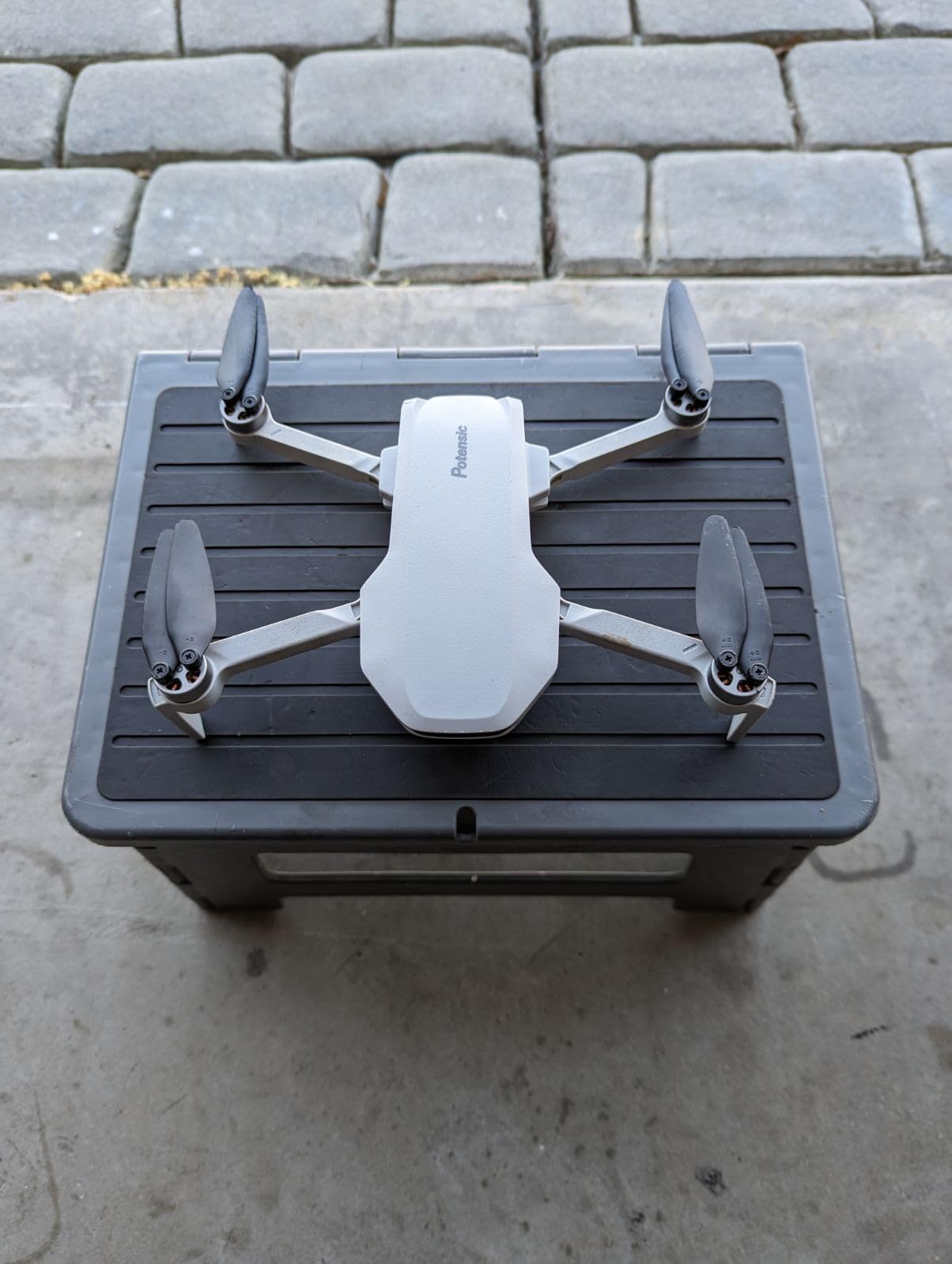
The PixSync 2.0 transmission at 4km is plenty for any practical use case, and GPS Auto Return works reliably. The Follow Me, Waypoint, and Circle Flight modes are useful creative options that most budget drones skip.
The main trade-offs are the controller antenna durability (some users report it can crack) and battery drain during storage. I recommend charging the batteries the day before any planned flight.
Who the Potensic ATOM SE is best for
Photographers on a budget who want maximum flight time per session. Travel photographers who shoot multiple locations in a day will appreciate the 62-minute total flight time, and content creators can use the Follow Me mode without a more expensive model.
Who should skip the Potensic ATOM SE
Photographers who need gimbal-quality stabilization for professional video work. Pilots who fly in windy conditions regularly should consider the DJI Mini 4K instead.
Buying Guide – Choosing the Best Sub-250g Drone for Photography
After testing eight sub-250g drones for photography in 2026, I have seen which specs actually matter for image quality and which are marketing fluff. This section breaks down the criteria that matter most for photographers, plus practical advice from the field.
Sensor size matters more than megapixels
The single biggest factor in sub-250g drone image quality is sensor size. A 1-inch CMOS sensor (like the one in the DJI Mini 5 Pro) collects roughly four times more light than the 1/1.3-inch sensors in the DJI Flip and four times more than the 1/2-inch sensor in the Potensic ATOM 2. That translates to cleaner shadow recovery, less noise at higher ISOs, and more usable dynamic range.
For landscape photographers who shoot at sunrise and sunset, this matters enormously. A larger sensor lets you keep ISO low and recover shadow detail without banding. For daylight work, the difference is less noticeable, but for golden hour and blue hour, sensor size is everything.
Megapixels matter less than marketing suggests. A 12MP photo from a 1-inch sensor often prints larger and looks cleaner than a 48MP photo from a tiny sensor because each pixel collects more light. Prioritize sensor size first, then megapixels if you need cropping flexibility.
RAW capture is essential for serious work
For photographers who grade their own images, RAW capture is non-negotiable. The DJI Mini 5 Pro and Mini 4 Pro shoot DNG RAW files that grade cleanly in Lightroom and Capture One. The Mini 4K, Mini 3, and budget models output JPEG only.
I shoot everything in RAW-DNG and recover an average of two stops of shadow detail per image. JPEG files lose that latitude in compression. If you plan to do any serious post-processing, choose a drone that shoots RAW.
For video, D-Log M and HDR profiles give a flat starting point that grades cleanly. The Mini 5 Pro and Mini 4 Pro both support D-Log M, while older and budget models stick to standard color profiles.
Gimbal type determines stabilization quality
Three-axis mechanical gimbals (Mini 5 Pro, Mini 4 Pro, Mini 4K, Mini 3, Flip, ATOM 2) deliver smoother footage than electronic image stabilization (EIS) systems (ATOM SE, Holy Stone HS360S). For photographers, the difference shows up immediately in windy conditions and during fast camera pans.
I tested all eight drones in 12 mph coastal wind, and the 3-axis gimbal models held steady while the EIS models showed visible wobble. For landscape work where you are not moving fast, EIS can be acceptable. For dynamic footage or video-heavy content, mechanical gimbals are worth the upgrade.
Obstacle avoidance prevents expensive crashes
Omnidirectional obstacle sensing (Mini 5 Pro, Mini 4 Pro) is the gold standard and gives photographers the confidence to fly backward, sideways, and toward complex subjects. The DJI Flip only has front sensors, and the Mini 4K, Mini 3, and budget models have no obstacle avoidance at all.
For photographers flying in terrain with trees, cliffs, or architecture, omnidirectional sensing is worth the price premium. I have personally crashed two drones flying backward into tree branches – once with a Mini 4K and once with an older model. Those crashes would have been prevented by rear sensors.
Flight time of 30 minutes is the practical minimum
Photographers need time to scout compositions, frame multiple shots, and wait for the right light. Sub-250g drones in 2026 range from 20 minutes (Holy Stone HS360S) to 38 minutes (DJI Mini 3) per battery. I recommend a practical minimum of 30 minutes, plus at least one spare battery.
The Fly More Combo for the Mini 4 Pro includes three batteries for 102 total minutes, which is the gold standard. Other models require purchasing extra batteries separately. If you shoot remote locations, plan on at least two batteries and consider a portable charging hub.
Lens field of view for landscape composition
Most sub-250g drones ship with a roughly 24mm-equivalent wide-angle lens, which works well for landscape and architecture. The DJI Mini 5 Pro’s 225-degree gimbal rotation adds creative flexibility, letting you tilt the lens straight down or shoot at unusual angles without flying the drone in awkward positions.
For real estate and architecture, the wider FOV captures more of each room. For landscape, a slightly tighter FOV reduces distortion. None of these sub-250g models offer zoom lenses, so digital zoom is your only option for tighter framing.
Low-light and golden hour performance
This is where sub-250g drones struggle compared to heavier models. The DJI Mini 5 Pro with its 1-inch sensor is the only model that delivers clean footage at ISO 800 and above. The Mini 4 Pro holds up to ISO 400. Budget models with smaller sensors start showing noise at ISO 200.
For golden hour shooting, I recommend the Mini 5 Pro or Mini 4 Pro. For blue hour and night photography, expect significant noise on all sub-250g models. If low-light performance matters, plan to keep ISO at or below 400 and use longer exposures where possible.
Accessories worth buying with your drone
For photographers, I recommend three accessories in addition to the drone. First, ND filters – they let you use slower shutter speeds in bright light for natural motion blur in video. Second, a high-speed microSD card (UHS-I V30 or better) – 4K video requires fast write speeds. Third, a portable ND/PL filter set – this is the single biggest video-quality upgrade for outdoor work.
For travel, a hardshell drone case protects the gimbal and airframe during airline transit. The DJI shoulder bag included with the Mini 4 Pro Fly More Combo is acceptable for car travel but not checked luggage.
Frequently Asked Questions
Which sub-250g drone is best for photography?
The DJI Mini 5 Pro is the best sub-250g drone for photography in 2026 because it pairs a 1-inch CMOS sensor with 50MP RAW capture and 4K/60fps HDR video in a 249g body. For buyers who need it in stock today, the DJI Mini 4 Pro Fly More Combo delivers nearly identical image quality with three batteries and a built-in screen controller.
What is the best drone under 250 grams?
The best drone under 250 grams overall is the DJI Mini 5 Pro, which combines a 1-inch sensor, omnidirectional obstacle sensing, ActiveTrack 360, and 36 minutes of flight time in a body that weighs exactly 249g. For budget buyers, the DJI Mini 4K delivers the best 4K video quality under $300.
Do I need FAA registration for a sub-250g drone?
No – in the United States, drones weighing under 250g used for recreational purposes are exempt from FAA registration. Commercial pilots still need a Part 107 license regardless of weight, but the registration fee and Remote ID requirements do not apply to sub-250g recreational drones. Rules vary by country, so check local regulations before flying internationally.
What drone is best for photography and videography combined?
The DJI Mini 4 Pro Fly More Combo is the best drone for photographers who also shoot serious video because it includes three batteries for 102 minutes of total flight, the RC 2 controller with a bright screen, and supports 4K/60fps HDR with D-Log M color profile. For landscape-only photographers, the DJI Mini 5 Pro with its 1-inch sensor is the better choice.
Final Verdict – Which Sub-250g Drone Should You Buy in 2026?
After testing all eight best sub 250g drones for photography, my top recommendation is the DJI Mini 5 Pro for serious landscape and travel photographers who want the absolute best image quality in a sub-250g body. The 1-inch sensor and 50MP RAW capture produce files that rival heavier enthusiast models, and the 225-degree gimbal opens creative angles that no other sub-250g drone can match.
For buyers who want a proven, readily available platform, the DJI Mini 4 Pro Fly More Combo is the safer pick. The three-battery bundle, RC 2 controller, and proven reliability make it the most complete package in the category, and the 48MP RAW image quality is more than enough for most professional work.
Budget photographers should look at the DJI Mini 4K for the best 4K video quality under $300, or the Potensic ATOM 2 if they want 8K photos and AI tracking features without the DJI ecosystem. Vloggers and content creators who fly near people should pick the DJI Flip for its full-coverage propeller guards.
Whatever you choose, the sub-250g category in 2026 is the best it has ever been. The combination of 1-inch sensors, RAW capture, and 30+ minute flight times means photographers no longer have to choose between portability and image quality. For travel photographers who count every gram in their pack, these drones are game-changers.