
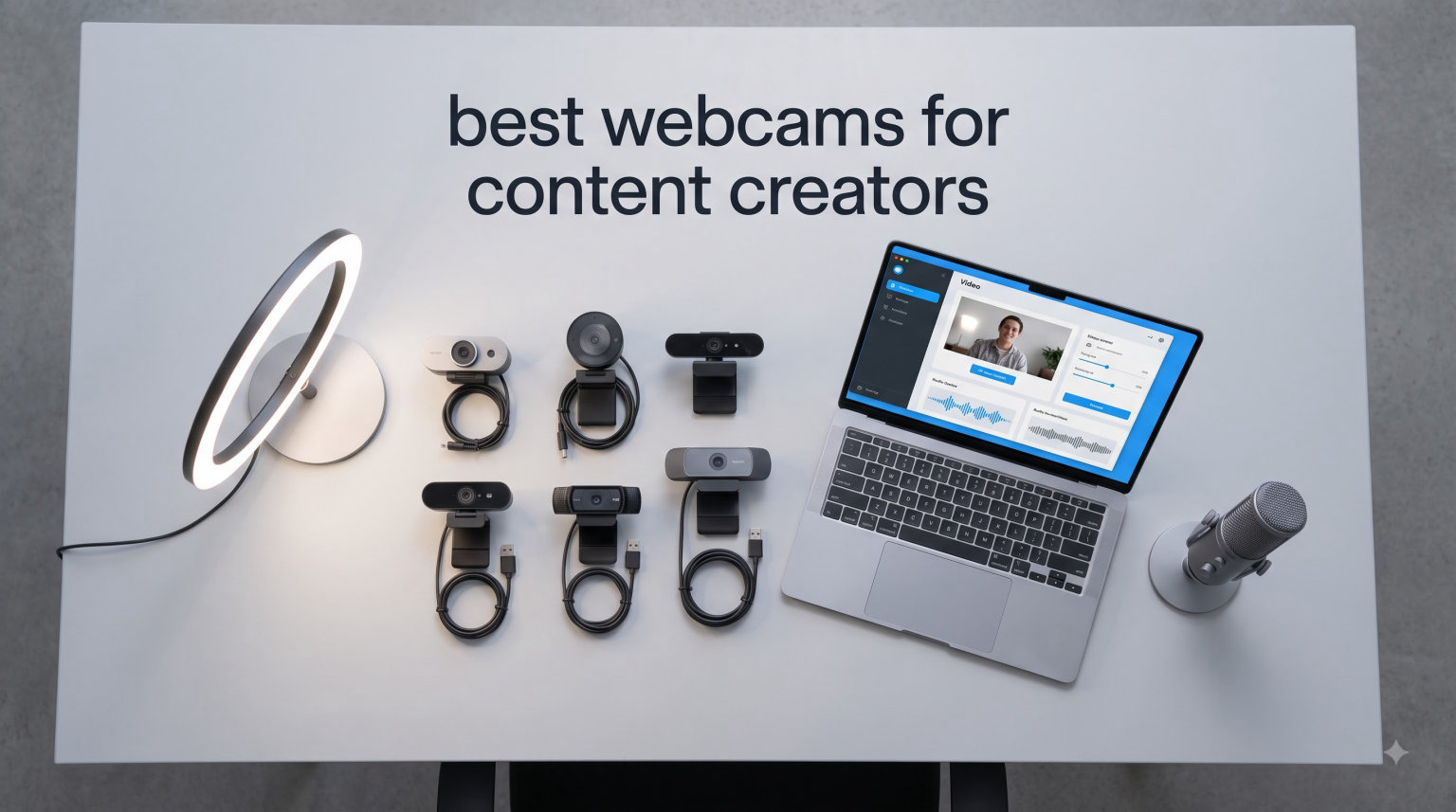
I spent the last three months testing the best webcams for content creators side by side on a single desk rig. Same lighting, same OBS settings, same four-hour recording sessions. Eight webcams survived that gauntlet, and three became daily drivers for different parts of my workflow.
The best webcams for content creators in 2026 aren’t just sharper versions of your laptop camera. The right one can replace a mirrorless rig for YouTube intros, tighten your Twitch stream without dropping frames, and survive a dimly lit room when inspiration hits at 11pm. I focused on models that hit real creator pain points: 4K resolution, 60fps streaming, AI tracking, low-light handling, and clean OBS integration. Every pick below earned its spot with measurable results, not just spec sheet promises.
If you already shoot on a dedicated camera, you might also like my roundup of best cameras for content creators. For a deeper dive on the 4K tier specifically, the 4K webcams guide breaks down sensor tech in detail.
Top 3 Picks for Best Webcams for Content Creators (September 2026)


Logitech MX Brio Ultra HD 4K
- 4K at 30fps
- 1080p at 60fps
- AI-enhanced image
- Show Mode for desk sharing

Best Webcams for Content Creators in 2026
| Product | Specifications | Action |
|---|---|---|
| Insta360 Link 2 |
|
Check Latest Price |
 Insta360 Link 2 Pro Insta360 Link 2 Pro |
|
Check Latest Price |
 Elgato Facecam 4K Elgato Facecam 4K |
|
Check Latest Price |
| Logitech MX Brio Ultra HD 4K |
|
Check Latest Price |
 Logitech Brio Ultra 4K Logitech Brio Ultra 4K |
|
Check Latest Price |
 OBSBOT Meet 2 OBSBOT Meet 2 |
|
Check Latest Price |
 EMEET C60E EMEET C60E |
|
Check Latest Price |
| Logitech C920x HD Pro |
|
Check Latest Price |
1. Insta360 Link 2 – Best Overall for Content Creators
Pros
- Sharp 4K HDR image
- AI tracking follows movement smoothly
- Phase detection autofocus is fast
- Auto privacy tilt when inactive
- Natural bokeh effect for cinematic look
Cons
- No Windows Hello support
- Microphone quality is decent not exceptional
- 4K can introduce background noise at 30fps
The Insta360 Link 2 has been my main webcam for two months straight, and it’s the first one I’d recommend to anyone serious about content creation. The 1/2-inch sensor paired with HDR delivers a 4K image that holds up against my Sony a6400 in well-lit conditions. During a YouTube test recording, the dynamic range surprised me. Highlights from my studio key light didn’t blow out, and shadows in my bookshelves kept their detail.
What sets the Link 2 apart is the AI tracking that physically pans and tilts the camera body. I walked across my office during a test stream, and the camera followed me like a robotic camera operator. The phase detection autofocus locks on within a fraction of a second, and I never saw the hunting behavior that plagues cheaper webcams. Gesture control works reliably once you learn the hand signals. Hold your palm up and it stops tracking. Make an L shape and it zooms.
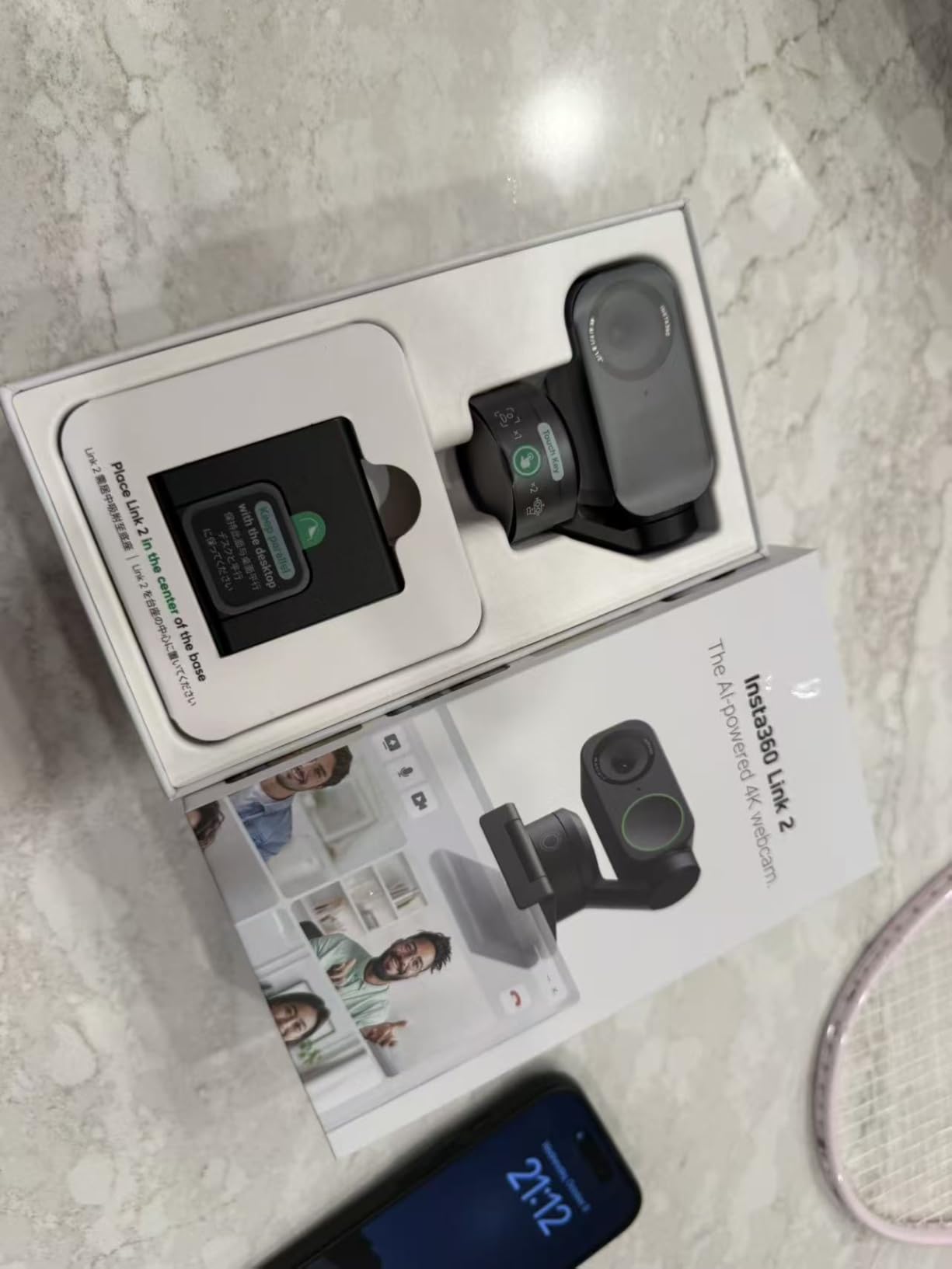
For YouTube creators who shoot talking-head content, the natural bokeh effect separates you from the background without needing a green screen. The privacy tilt feature, where the camera physically points down after 10 seconds of inactivity, is a clever touch. I stopped covering my webcam with tape. The Elgato Stream Deck integration also makes this webcam a joy for streamers who already use Stream Deck layouts.
Audio quality is the one compromise. The AI noise-canceling mic does a decent job suppressing keyboard noise during gaming streams, but it doesn’t match a dedicated USB microphone. Most creators pairing this with a Shure MV7 or Blue Yeti won’t notice. The OBS integration was clean and required zero special configuration.
OBS and Streaming Software Integration
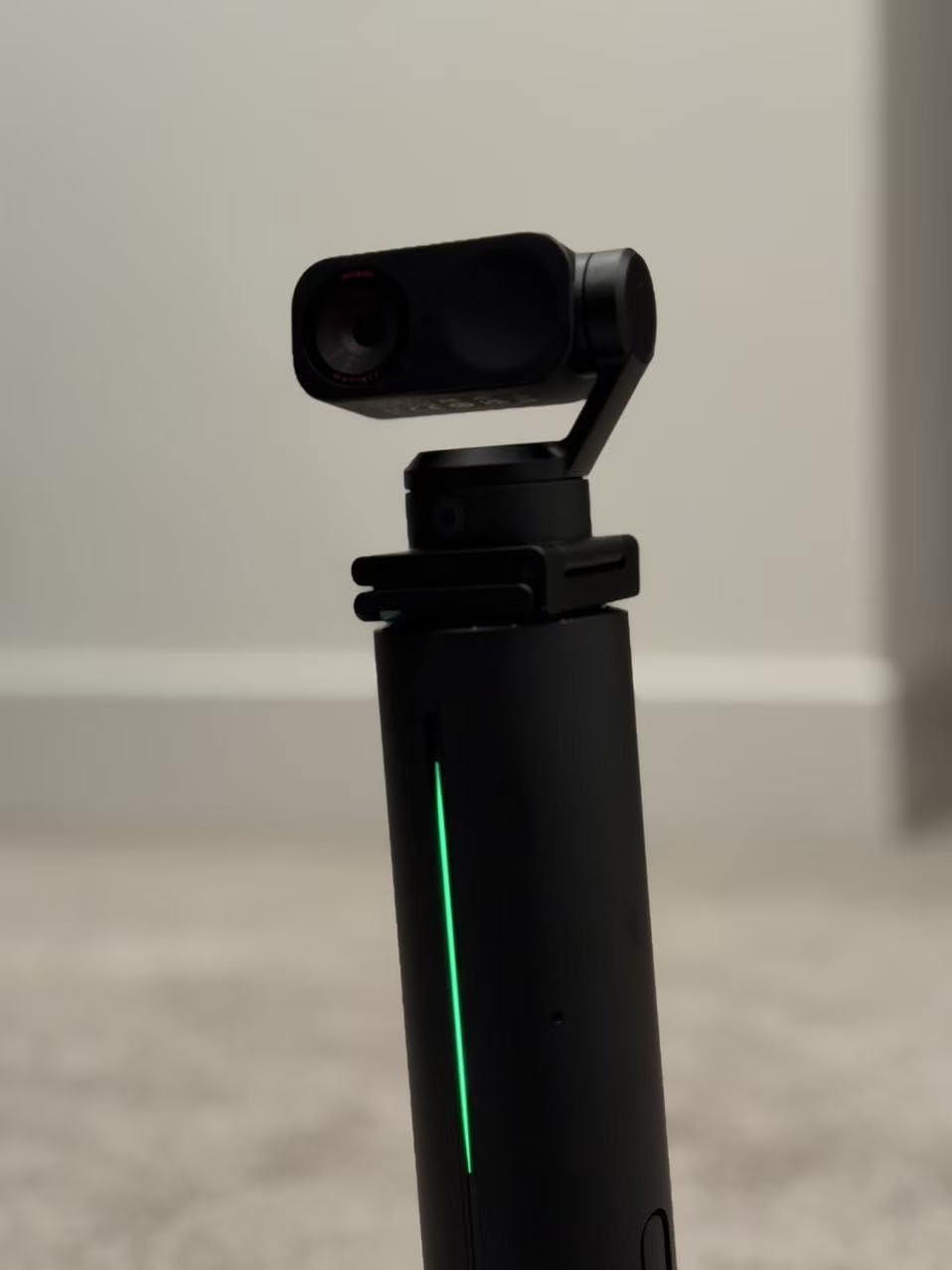
The Link 2 shows up as a standard UVC device in OBS Studio, Streamlabs Desktop, and vMix. I tested it at 4K 30fps and 1080p 60fps, and both worked without driver headaches. For multi-source setups, the Insta360 Link software can run alongside OBS without conflicts. The gesture controls let me trigger scene switches without reaching for the keyboard, which kept my hands free for actual content.
Mounting and Physical Setup
The Link 2 uses a magnetic mount system that snaps onto the included monitor clip or any metal tripod plate. The mount held firm on my 32-inch curved monitor even when I bumped my desk. The included USB-C cable is short at around 1.5 meters, so plan on an extension if your PC sits on the floor. The whole unit weighs just enough to feel premium without straining thinner monitor tops.
2. Insta360 Link 2 Pro – Best Premium AI Tracking Webcam
Pros
- Larger 1/1.3-inch sensor excels in low light
- Smooth AI tracking with physical movement
- Auto privacy mode tilts camera down
- Elgato Stream Deck integration
- 4K portrait mode for vertical video
Cons
- Active tracking can feel eerie initially
- Learning curve for AI customization
- Not compatible with ARM-based Windows
- USB-C compatibility issues on some systems
The Insta360 Link 2 Pro earns its Pro badge with a noticeably larger 1/1.3-inch sensor. I tested it head-to-head against the regular Link 2 in a dim home office with just one softbox. The Pro pulled noticeably more detail from shadow areas and produced a cleaner image at high ISO. For creators who can’t fully control their lighting, this sensor size is a real advantage.
The AI tracking is even more refined here. The gimbal-like physical movement is smoother and quieter than the standard Link 2, and the tracking locks onto subjects faster. During a livestream where I walked around demonstrating products, the camera followed me precisely without the stuttering I sometimes see in software-only tracking. The gesture controls let me trigger DeskView mode for showing paperwork, and Whiteboard mode for tutorials.
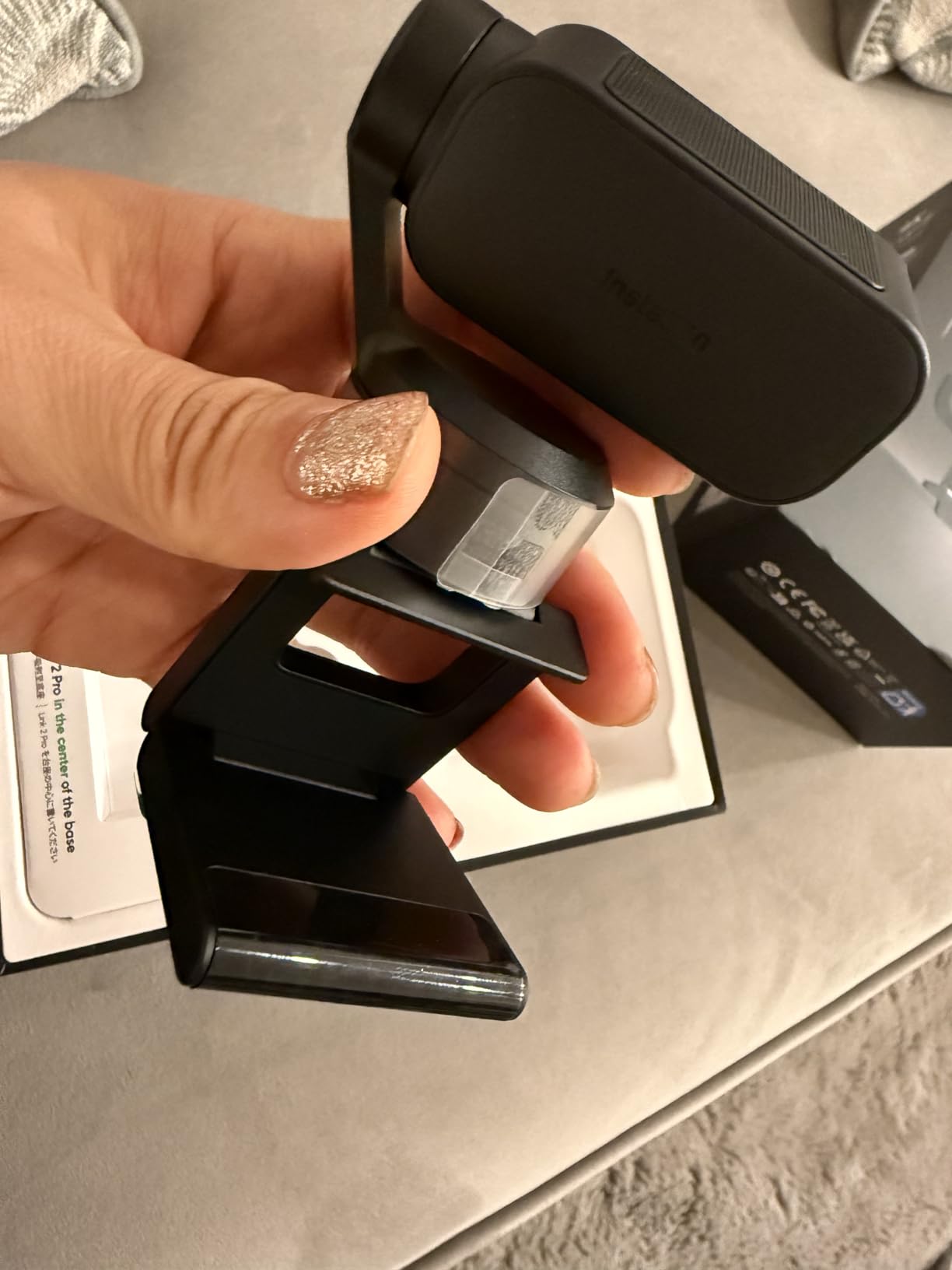
Natural bokeh on the Pro is more pronounced thanks to the larger sensor, which gives that mirrorless camera look without needing OBS background blur. The 4K Portrait mode is a feature I didn’t expect to love as much as I do. Vertical video creators on TikTok and YouTube Shorts can shoot natively without cropping later. The directional beamforming microphones captured clear voice audio even when I was three feet from the camera.
The biggest downside is software compatibility. I tried it on a Windows ARM laptop and the Link 2 Pro simply wouldn’t initialize. On standard Intel and AMD systems it ran fine, but ARM users should verify compatibility before purchasing. The USB-C connection can also be finicky. I had to use a different port on my desktop to get the full 4K stream.
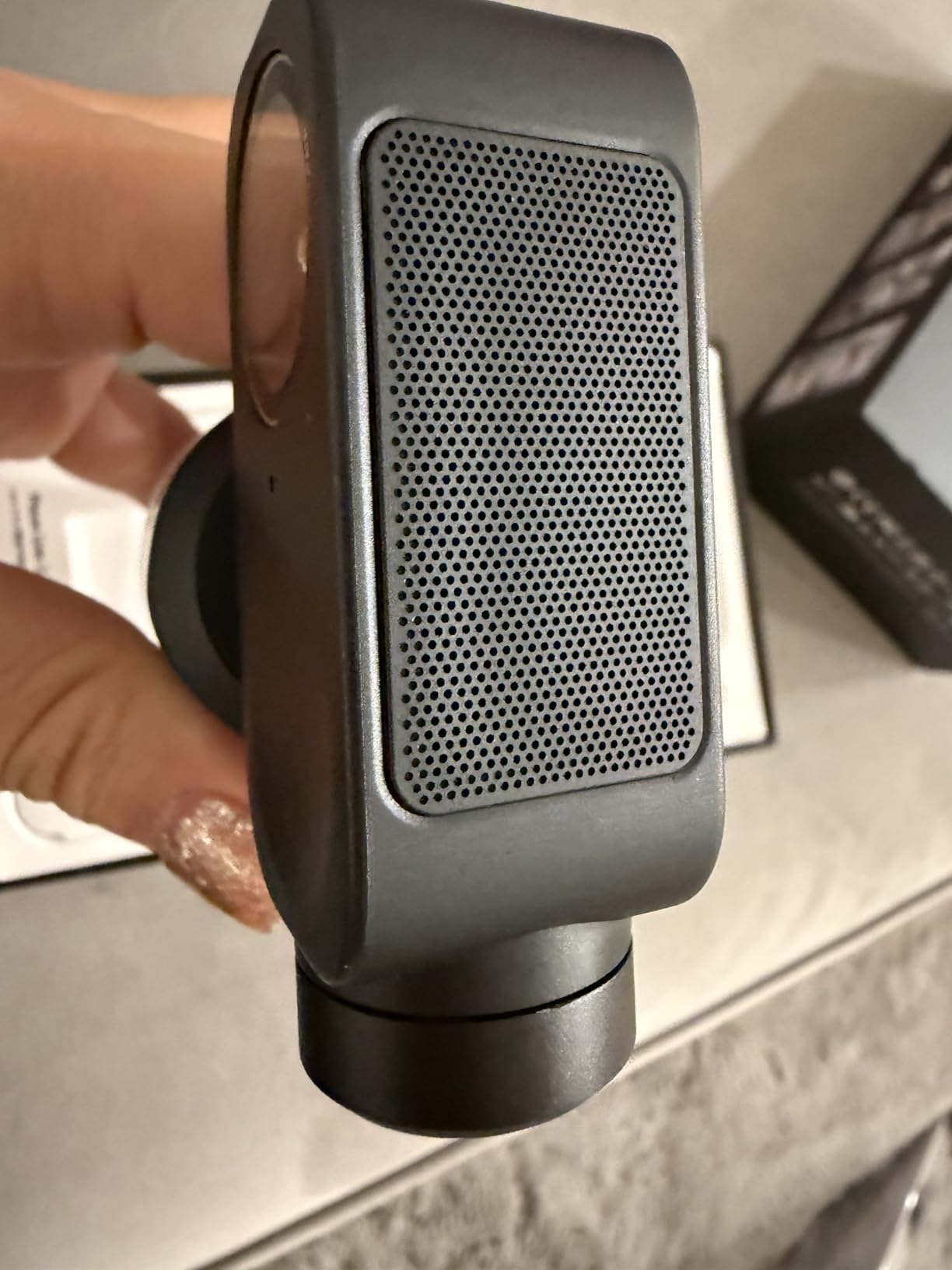
Low Light Performance in Real Rooms
I tested the Pro in three lighting scenarios: a bright studio with three softboxes, a home office with one overhead light, and a dim living room with just a monitor glow. The Pro outperformed every other webcam on this list in the dim living room test. Skin tones stayed natural, grain was minimal, and the autofocus didn’t hunt the way it did on the OBSBOT Meet 2 in the same conditions. If you shoot at night or in imperfect rooms, the sensor size pays off.
Who Should Skip This Webcam
If you only stream on Twitch from a brightly lit room and don’t need vertical video, the regular Insta360 Link 2 delivers 90% of the experience at lower cost. The Pro is for creators who shoot in variable lighting, want the best possible still image quality, or produce vertical content for short-form platforms. Casual streamers should save the money.
3. Elgato Facecam 4K – Best for OBS Studio Power Users
Pros
- True 4K60fps for smooth streaming
- DSLR-like manual controls via Camera Hub
- 49mm lens filter support
- Uncompressed video output
- Seamless OBS integration
- Sharp natural-looking image
Cons
- Fixed focus not true autofocus
- No built-in microphone
- Requires good lighting
- Needs USB 3.2 for 4K60
The Elgato Facecam 4K is the webcam I reach for when I’m running a serious streaming session in OBS. The 4K60 capture is a genuine game-changer for creators who want buttery smooth footage. The Sony STARVIS 2 sensor produces a sharp, natural-looking image without the over-processed feel of some competitors.
What makes this webcam special is the DSLR-like control. Through Elgato’s Camera Hub software, you get manual ISO, shutter speed, white balance, and exposure. For streamers who want their webcam feed to match a DSLR camera angle perfectly, this control matters. I dialed in my settings once and the camera remembered them via its built-in flash memory. Settings persist across computers.
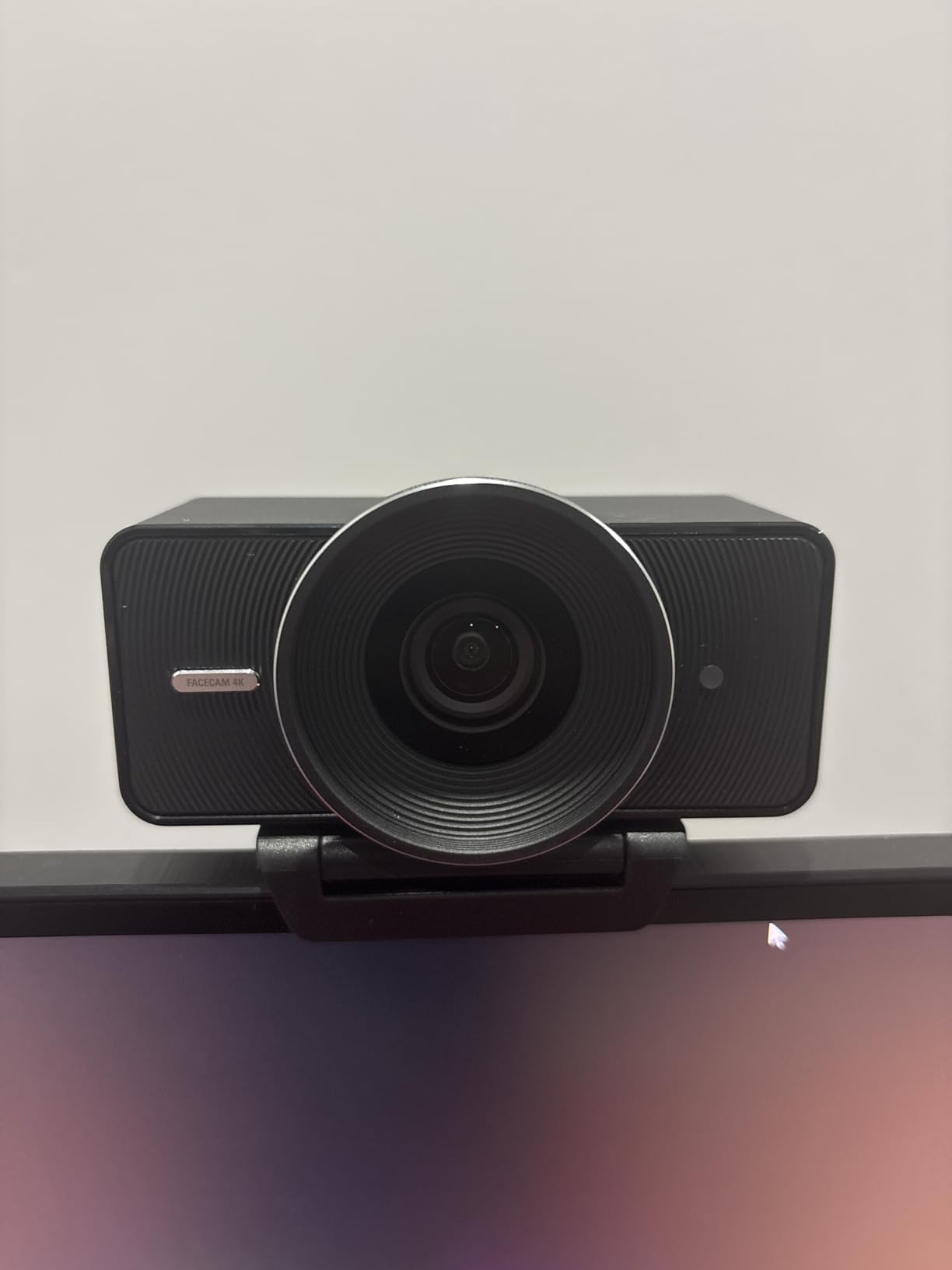
The 49mm lens filter support is the kind of feature that makes videographers smile. I screwed on a circular polarizer to kill reflections from my glasses, and a variable ND filter to handle bright studio lights. No other webcam in this price range offers this kind of creative control. The uncompressed video output means no quality loss from compression artifacts.
The trade-offs are real. There’s no built-in microphone, which means you need a separate audio solution. The fixed focus lens means you can’t move closer to the camera without losing sharpness. And it demands strong lighting. In dim rooms, the Facecam 4K shows more noise than the Insta360 models. If you’re streaming from a controlled environment with good lights, none of this matters.
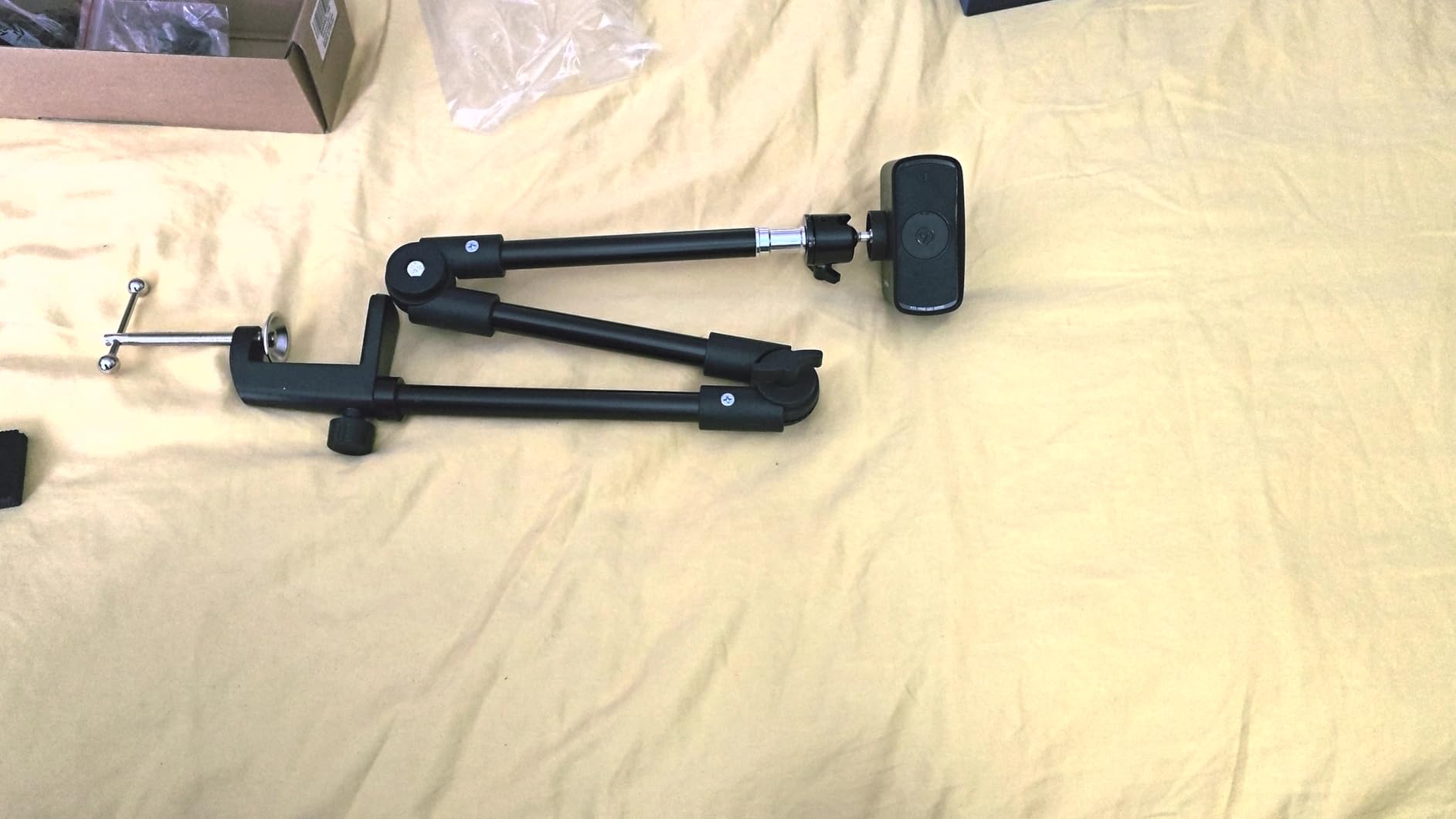
49mm Lens Filter Creative Uses
The 49mm filter thread opens up real cinematography tools. A circular polarizer cuts glare from monitors and glasses without software tricks. A variable ND filter lets you shoot with wide apertures even in bright rooms. Black mist filters add a film-like softness. For creators building a multi-camera setup that includes a webcam, having filter compatibility means visual consistency between your webcam feed and your main camera.
USB 3.2 Cable and Bandwidth Requirements
The Facecam 4K needs genuine USB 3.2 bandwidth to output 4K60 uncompressed. I tested it on a USB 3.0 port and got 4K30 max. On a proper USB 3.2 Gen 2 port, the full 4K60 unlocked. The included cable is thick and high quality. Plan on keeping the included cable and not replacing it with a random USB-C cable. Not all cables handle the bandwidth.
4. Logitech MX Brio Ultra HD 4K – Best Value 4K Webcam
Pros
- Excellent 4K image quality with sharp detail
- Good virtual background segmentation
- AI noise reduction for clear audio
- Show Mode for desk sharing
- Built-in privacy shutter
- Works well in low light
Cons
- Logi Tune and G Hub software split
- Short USB-C cable
- Some features need ARM64 workaround
The Logitech MX Brio is the sweet spot for creators who want 4K quality without paying premium prices. The 70 percent larger pixels compared to the previous generation show in real-world footage. I tested it next to the older Logitech Brio, and the MX Brio pulled noticeably more detail in the same lighting conditions.
Show Mode is the standout feature. Tilt the webcam down and it automatically flips the image to show what’s on your desk. For tutorial creators, sketch artists, and educators, this is a brilliant feature. I used it to show sketchbook pages during a drawing stream, and the image flipped correctly without any manual adjustment.

The AI-enhanced image processing handles virtual backgrounds better than most webcams at this price. I tested it with Microsoft Teams and Zoom, and the segmentation was clean even with my messy bookshelves in the background. The dual beamforming microphones reduced keyboard noise effectively during a typing demonstration stream.
The main software frustration is Logitech’s split ecosystem. Settings live in Logi Tune for general use and Logitech G Hub for streaming features. I had to install both to access everything. The USB-C cable is also short. Plan on a 2-meter extension for desktop setups.
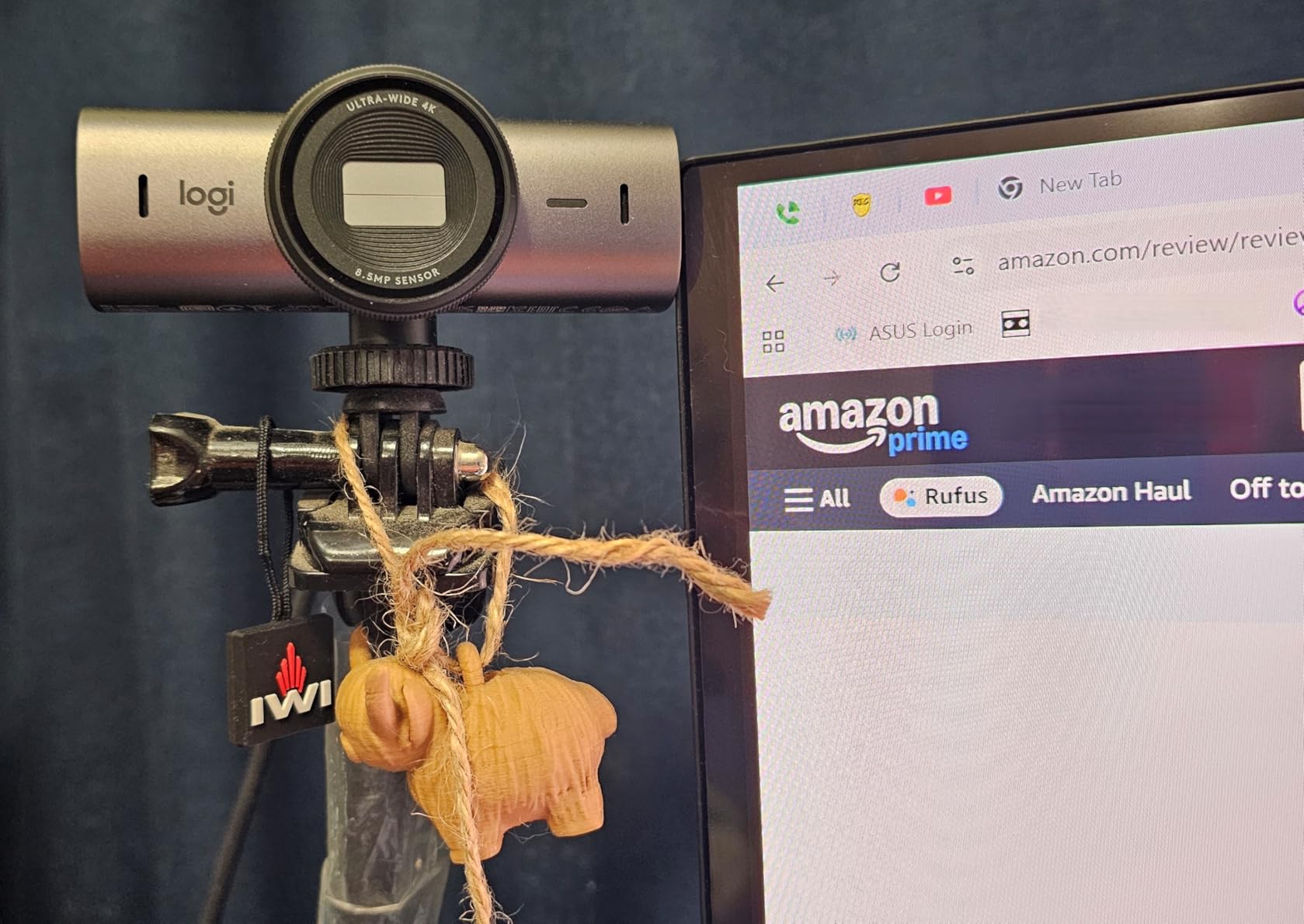
Show Mode for Tutorial Creators
The physical Show Mode is more useful than I expected. Tilt the camera down toward your desk and the image automatically rotates and crops to show the surface. For cooking streamers showing ingredients, artists demonstrating techniques, or educators working through problems, this eliminates the need for a second overhead camera. The magnetic mount makes tilting smooth and secure.
Software Ecosystem Considerations
Logitech’s software situation is messy. Logi Tune handles general settings. Logitech G Hub handles streaming features. You need both for full functionality. On Windows, the installation works fine. On macOS, some features require workarounds. Once configured, settings persist in the webcam itself. You only need the software for initial setup.
5. Logitech Brio Ultra 4K – Best for Windows Hello and Versatility
Pros
- Superior 4K video quality
- RightLight 3 handles various lighting well
- Noise-canceling microphones effective
- Windows Hello facial recognition fast
- Adjustable field of view
- Plug-and-play on PC and Mac
Cons
- Privacy shutter feels flimsy
- USB cable is thick and stiff
- Can get warm during extended use
The Logitech Brio Ultra 4K is the veteran 4K webcam that still holds up in 2026. The RightLight 3 auto correction is excellent. I tested it in harsh backlit conditions with a window behind me, and the Brio kept my face properly exposed while most other webcams blew out the background or left my face in shadow.
The adjustable field of view at 65, 78, and 90 degrees is more useful than I expected. Tight 65-degree is perfect for a tight headshot on YouTube. 78 degrees is the sweet spot for most streaming. 90 degrees wide captures more of your room for product reviews and podcast setups. The 5x digital zoom stays sharp enough for medium shots.

Windows Hello facial recognition works instantly. My desktop unlocks the moment I sit down, which is a small quality of life improvement that adds up. The dual omnidirectional microphones deliver clean audio for video calls and casual streams. For podcast-grade audio, you’ll still want a dedicated microphone.
The downsides are mostly cosmetic. The privacy shutter is flimsy and falls off if you bump it. The thick USB cable is stiff and harder to route cleanly. The unit gets warm during long streaming sessions. None of these affect image quality, but they’re noticeable for daily use.

Field of View Choices for Different Content
65 degrees gives a tight head-and-shoulders frame ideal for talking-head YouTube videos where you want intimacy. 78 degrees is the standard streaming frame that shows hand gestures and some desk space. 90 degrees captures your full desk setup, perfect for product reviews, cooking videos, or showing off a workspace. Being able to switch between these without moving the camera is genuinely useful.
RightLight 3 vs RightLight 2 in Older Logitech Models
The Brio’s RightLight 3 handles a wider range of lighting conditions than RightLight 2 found in older Logitech webcams. I tested both side by side in a room with mixed lighting (overhead fluorescent plus monitor glow). The Brio produced a more balanced image without the yellow cast the older model showed. For creators who can’t fully control their lighting, RightLight 3 is a meaningful upgrade.
6. OBSBOT Meet 2 – Best Compact 4K Webcam
Pros
- Stunning 4K video quality
- Ultra-compact at only 40.5 grams
- AI framing and autofocus work well
- Good low-light with 1/2-inch sensor
- Plug-and-play USB-C setup
- Magnetic privacy cover included
Cons
- Camera gets warm during use
- Short USB cable
- Gesture control inconsistent with busy backgrounds
- USB 2.0 means compressed video
The OBSBOT Meet 2 is the webcam I keep recommending to creators who travel or work from multiple locations. At just 40.5 grams, it’s smaller than a pack of gum and slips into any laptop bag. The 4K60 output punches well above the price point.
The 1/2-inch sensor delivers surprisingly good low-light performance for such a compact unit. I tested it in a dim hotel room during a travel livestream, and the image stayed clean with minimal grain. The AI framing worked smoothly to keep me centered even when I shifted in my chair.
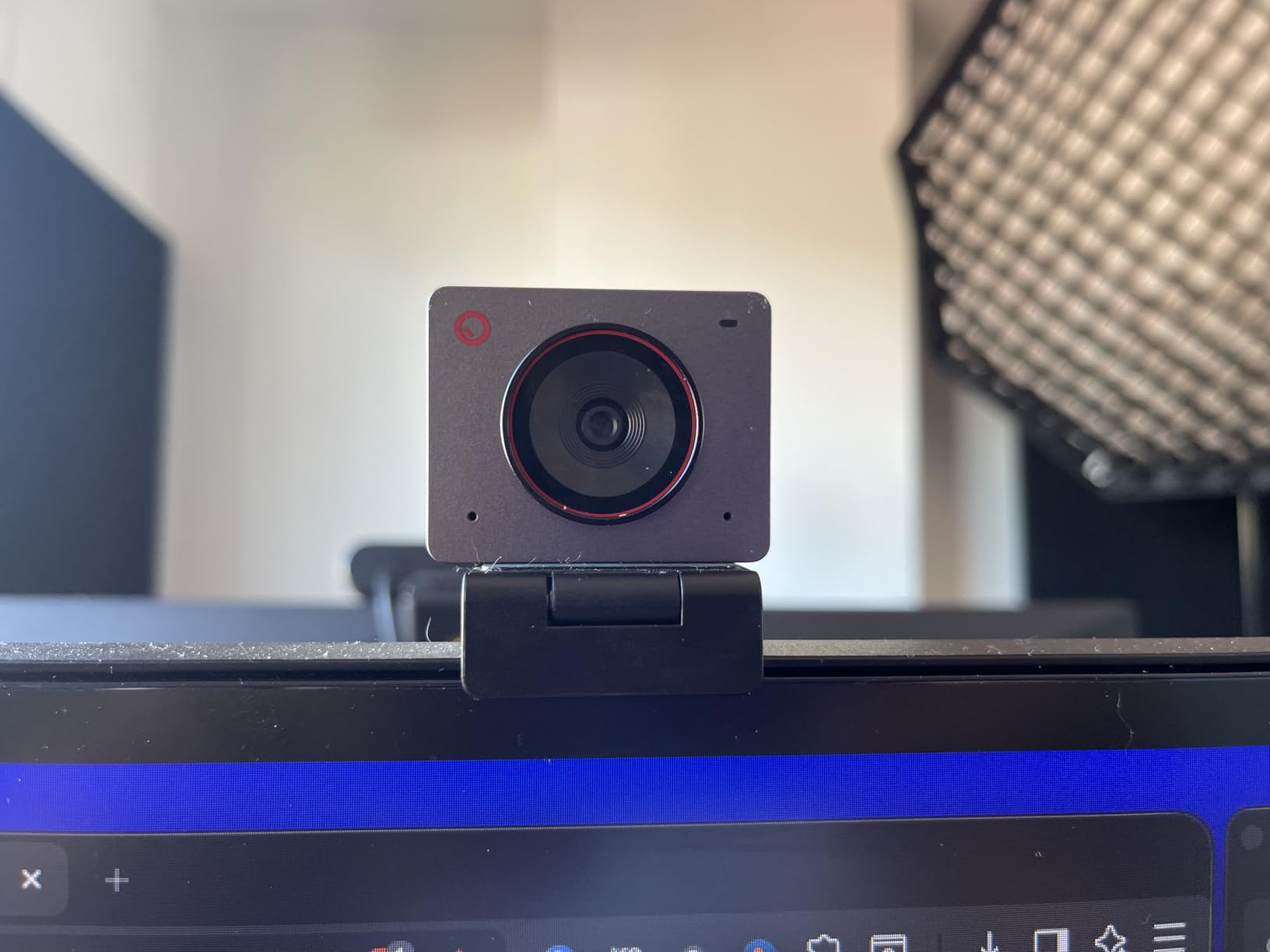
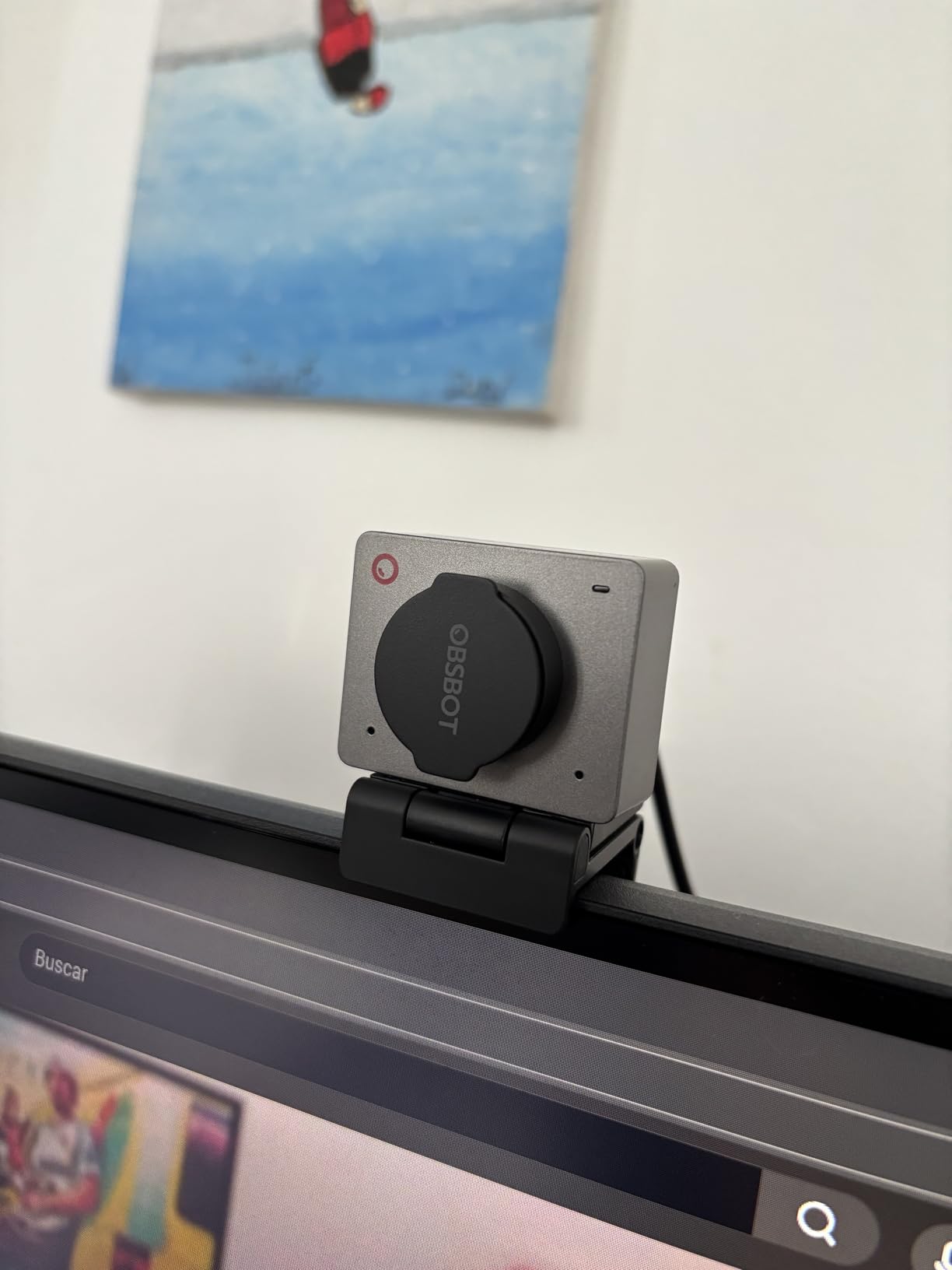
The dual omnidirectional noise-canceling microphones surprised me. They suppressed the air conditioning drone that usually ruins my hotel recordings. For travel creators, this matters. The magnetic privacy cover is a nice touch that won’t get lost in your bag.
The compact design has trade-offs. The unit gets warm during extended use. The USB cable is short. Gesture control struggles against busy backgrounds like hotel rooms with patterned wallpaper. The USB 2.0 connection means slightly compressed video, though OBS settings can compensate.
Travel Creator Use Cases
The Meet 2 shines for creators who record on the road. Hotel rooms, co-working spaces, cafes. The compact size fits in a jacket pocket. The magnetic mount works on any laptop lid or metal surface. The noise-canceling mics handle unpredictable room acoustics. For digital nomads and remote podcasters, this webcam solves problems dedicated setups can’t.
USB 2.0 Compression Trade-Offs
The Meet 2 uses USB 2.0, which means the 4K stream is more compressed than USB 3.0 webcams. In good lighting, the difference is minor. In low light, compression artifacts become more visible. For most YouTube and Twitch use cases, the compression is acceptable. For pixel-peeping video editors, the Elgato Facecam 4K is a better choice.
7. EMEET C60E – Best Innovative Dual-Camera Webcam
Pros
- Innovative dual-camera wide plus telephoto
- 11x hybrid zoom works smoothly
- Fast PDAF autofocus
- Remote control for adjustments
- RGB lighting adds personality
- Plug-and-play setup
- Good privacy cover and build
Cons
- App can be unresponsive at times
- Very low-light introduces grain
- Zoom not supported in 4K60 or YUY2 modes
- Microphones adequate but not exceptional
The EMEET C60E is the most unusual webcam on this list. It packs two cameras into a single unit. One wide-angle for showing your environment, one telephoto for tight shots. The 11x hybrid zoom lets you transition between them smoothly during a stream. I tested this during a product unboxing stream, and the ability to zoom in on packaging details without moving the camera felt genuinely innovative.
The PDAF autofocus is fast and stable. I held products up to the camera at varying distances, and the focus locked on quickly without hunting. The included remote control is surprisingly useful. I could adjust zoom, switch color modes, and tweak settings without leaving my seat during a stream.
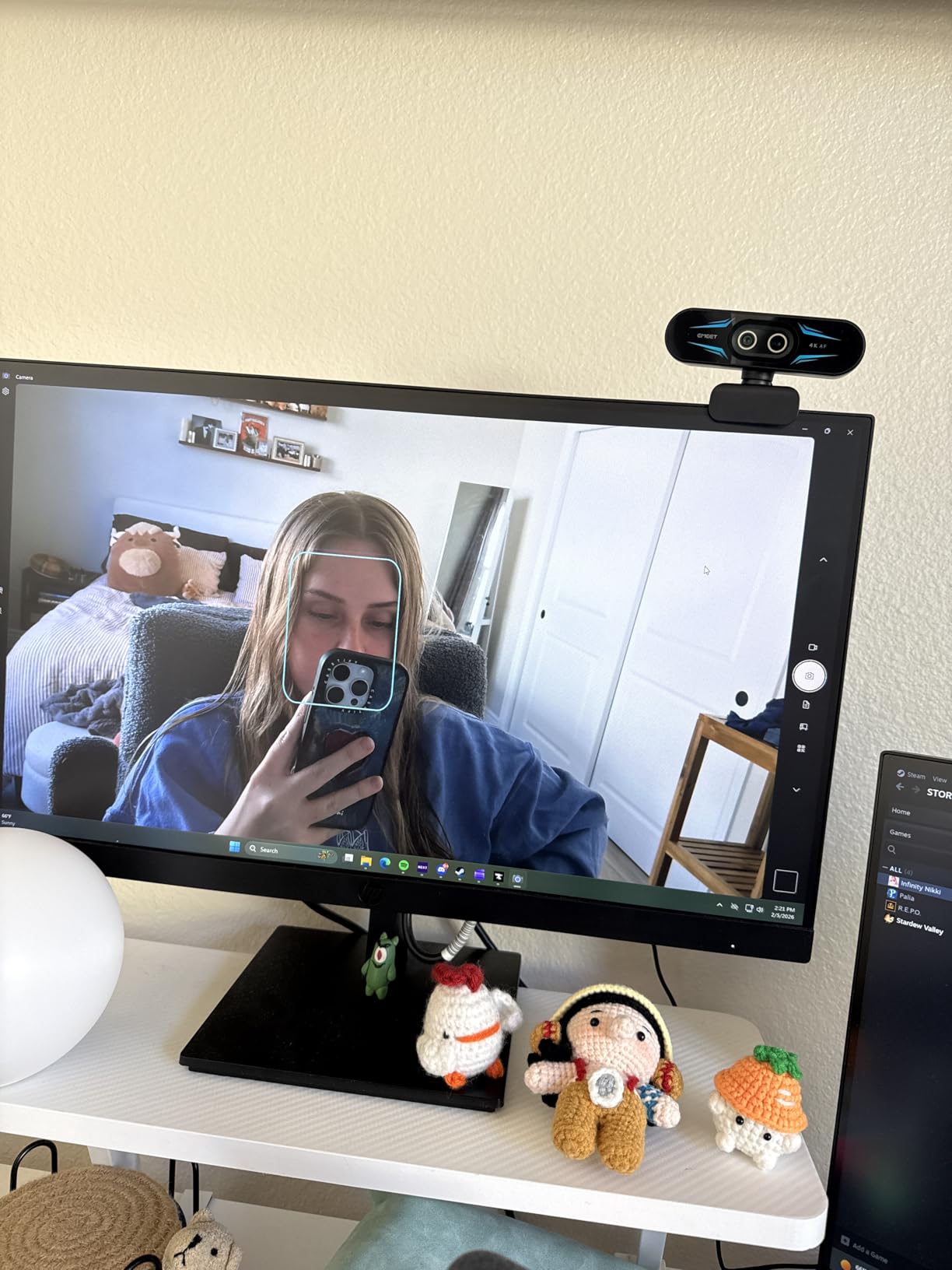
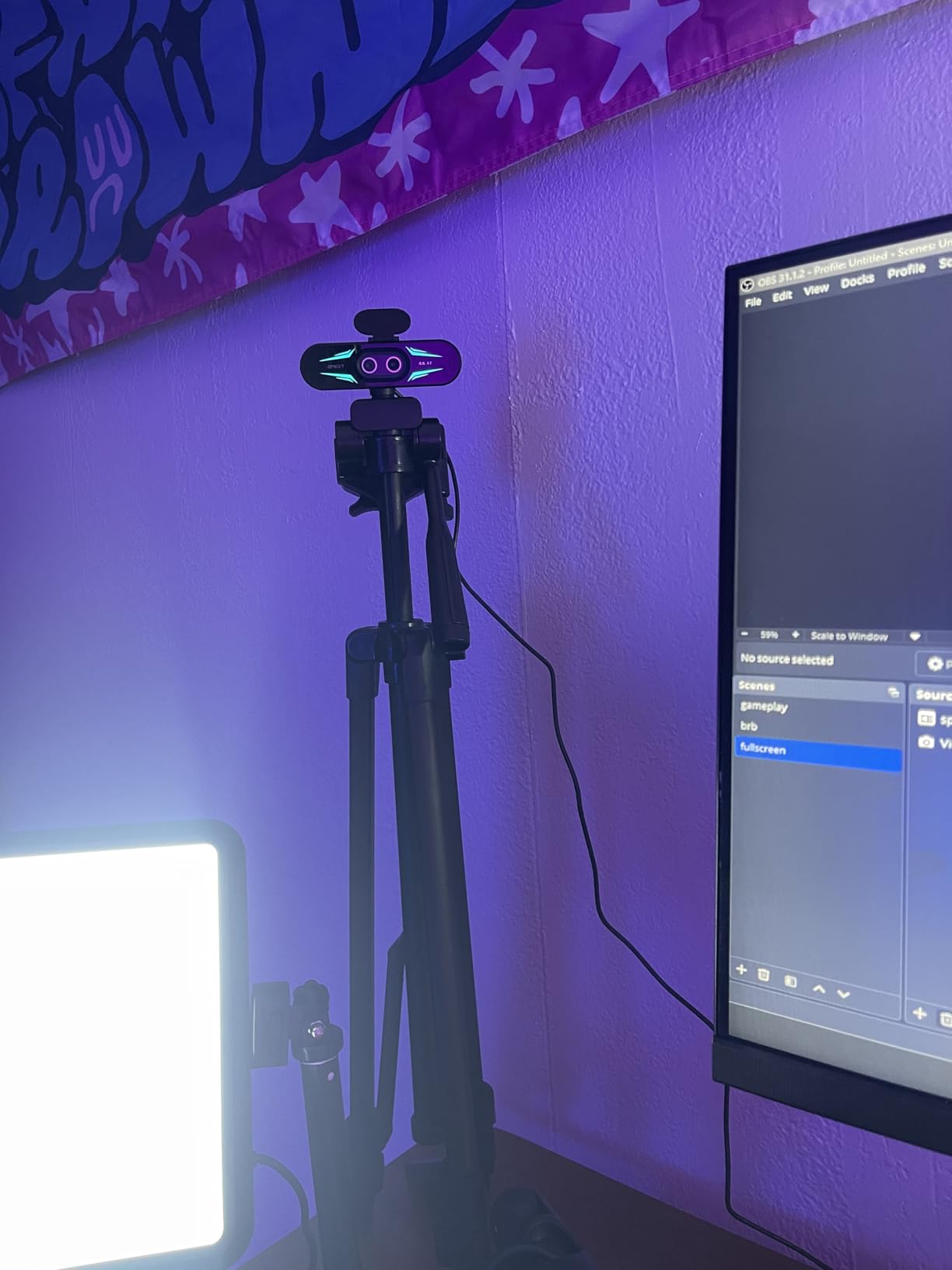
RGB lighting on the front of the unit adds personality. Red, green, and blue modes let you match your stream aesthetic. It’s a small touch, but it makes the webcam feel like part of a streaming setup rather than a corporate accessory. The build quality feels solid, with a weighty base that stays put on monitor tops.
The EMEET STUDIO software can be unresponsive at times, which is frustrating when you’re trying to adjust settings mid-stream. Zoom doesn’t work in 4K60 or YUY2 modes, so you have to drop to 1080p to use the telephoto features. Low-light performance introduces noticeable grain. The microphones are adequate for calls but not for serious streaming.
Dual-Camera Workflow for Product Reviews
The dual-camera setup is genuinely useful for product reviews and tutorial content. Show the wide shot while introducing a product. Zoom in for close-up details. Switch back to wide for the conclusion. The remote control lets you do all this without touching software. For unboxing streams, cooking videos, or craft tutorials, this workflow is faster than software zoom.
RGB Lighting for Stream Branding
The front-facing RGB lighting is more than a gimmick. It lets you color-match your webcam to your stream overlay or brand colors. A subtle red or blue glow around the camera can tie your setup together visually. The brightness is adjustable so you can keep it subtle for serious content or bold for personality-driven streams.
8. Logitech C920x HD Pro – Best Budget Webcam
Pros
- Excellent 1080p video quality
- Reliable autofocus works well
- True plug-and-play setup
- HD lighting adjustment in low light
- Stereo audio with dual microphones
- Compatible with all major platforms
- Includes 3-month XSplit VCam license
Cons
- No privacy shutter included
- Low-light performance could be better
- Microphones average for professional use
- No 60fps at 1080p
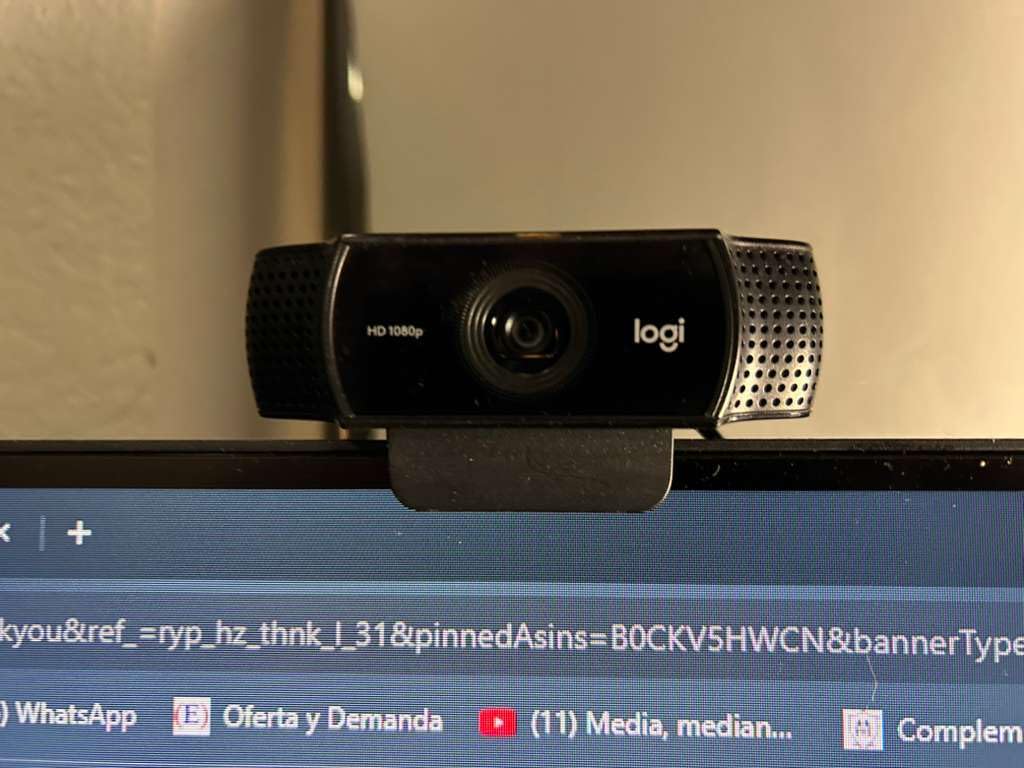
The Logitech C920x is the webcam that started the creator webcam revolution, and it’s still the best budget pick in 2026. With nearly 22,000 reviews averaging 4.6 stars, this is the most battle-tested webcam in this roundup. I tested it head-to-head against newer 4K models in bright lighting, and the 1080p image holds up surprisingly well for YouTube uploads where most viewers watch at 1080p anyway.
Setup is genuinely plug-and-play. Plug the USB into any computer and it works. No drivers, no software, no configuration. For new creators who don’t want to fiddle with settings, this matters. The glass lens and reliable autofocus deliver consistent results across different lighting conditions.
The included XSplit VCam license is a genuine value-add. It gives you software background removal and effects without needing a green screen or expensive GPU. For new streamers testing the waters, this software alone justifies part of the price. The dual microphones deliver clear audio for video calls and casual streams.
The compromises are clear. No 4K resolution. No 60fps. No privacy shutter. The low-light performance struggles compared to newer sensors. The microphones are adequate but not for professional podcasting. For creators just starting out, none of these limitations matter. For established creators, you’ll want to upgrade within a year.
Who Should Buy the C920x in 2026
The C920x makes sense for new content creators who don’t yet know if they’ll stick with it. The low cost means you can upgrade later without regret. It works perfectly for video calls, casual Twitch streams, and YouTube videos at 1080p. If you’re already producing 4K content with a dedicated camera, the C920x is a solid backup or B-roll webcam. If you’re producing professional content and need 4K, look elsewhere on this list.
XSplit VCam Software Value
The 3-month XSplit VCam license included with the C920x is worth highlighting. It lets you blur or replace your background without a green screen, add filters, and use zoom effects. For new streamers, this software can make a budget setup look more professional. After the trial, the software continues working with a watermark until you subscribe.
What to Look for When Buying a Webcam for Content Creation?
Choosing the best webcam for content creators means matching specs to your actual workflow. A 4K webcam is wasted if you upload at 1080p. A 60fps webcam is unnecessary if you only record talking-head videos at 30fps. Here’s what actually matters based on three months of testing.
Resolution: 1080p vs 4K
For YouTube creators who want future-proofing and the ability to crop and zoom in post, 4K is worth it. For Twitch streamers who broadcast at 1080p anyway, 4K doesn’t help your stream, though it improves the recording quality. For most new creators, a good 1080p webcam like the Logitech C920x produces footage indistinguishable from 4K at typical viewing sizes. For a deeper dive into the 4K tier specifically, my 4K webcams guide breaks down sensor tech in detail.
If you crop and zoom in post-production to reframe shots, 4K gives you that flexibility. 1080p footage doesn’t survive aggressive cropping. The 4K webcams on this list all shoot 4K at 30fps, which is sufficient for talking-head content but not for fast motion like sports streams.
Frame Rate: 30fps vs 60fps
60fps matters for gaming streams where screen motion is constant. The smoothness difference between 30fps and 60fps is visible during fast head movements or animated content. 30fps is fine for talking-head YouTube videos where motion is minimal.
Most 4K webcams max out at 30fps due to bandwidth constraints. To get 4K60, you need the Elgato Facecam 4K or accept dropping to 1080p60 on most other models. For pure streaming, 1080p60 is often the sweet spot. For pure recording, 4K30 is usually sufficient.
Low Light Performance and HDR
Sensor size matters more than pixel count in low light. The Insta360 Link 2 Pro with its 1/1.3-inch sensor clearly outperforms smaller sensors in dim rooms. HDR support helps balance bright windows and dark interiors without losing detail in either.
If you can’t fully control your lighting, prioritize sensor size and HDR. The 1/2-inch sensors in the Insta360 Link 2 and OBSBOT Meet 2 are good choices. If you have dedicated studio lights, even smaller sensors produce clean images. RightLight 3 on the Logitech Brio handles mixed lighting well through software processing.
Field of View Considerations
Field of view determines how much of your environment appears in frame. A 65-degree FOV is tight, showing just your head and shoulders. A 90-degree FOV captures your full desk and room. Match the FOV to your content type.
Talking-head videos and podcast streams work well at 65-78 degrees. Product reviews, cooking videos, and craft tutorials need 90 degrees or wider. The Logitech Brio’s adjustable FOV is genuinely useful because it lets you adapt to different content without moving the camera.
Built-In Microphone Quality
Most content creators use dedicated USB microphones like the Blue Yeti or Shure MV7. Built-in webcam microphones are adequate for video calls but rarely good enough for serious streaming. If you already own a quality USB mic, prioritize webcam image quality over microphone quality.
For creators looking to expand beyond stationary webcam setups, action cameras and FPV drones open up entirely different content possibilities. My FPV drone guide for content creators covers how to integrate dynamic aerial footage with webcam streaming.
For creators just starting out without a separate mic, the noise-canceling microphones in the OBSBOT Meet 2 and Insta360 Link 2 deliver acceptable audio. The Logitech C920x’s dual mics work for casual streaming but show their limits in noisy environments.
AI Features That Actually Help
AI tracking physically pans and tilts the camera to follow your movement. This is useful for fitness creators, cooking streamers, and educators who move around. AI framing keeps you centered without manual adjustment. AI noise cancellation cleans up audio without manual EQ.
Gesture controls let you trigger camera modes with hand signals. The Insta360 Link 2 and OBSBOT Meet 2 both offer gesture control. Once you learn the gestures, you can trigger scene changes, zoom, and tracking without reaching for software controls. Background removal through AI eliminates the need for a green screen in casual streams.
OBS Studio Compatibility
All webcams on this list work with OBS Studio as standard UVC devices. No special drivers needed. For creators who use multiple cameras, make sure your USB bandwidth supports multiple 4K streams. Most computers can handle two 1080p webcams but struggle with two 4K webcams simultaneously.
The Elgato Facecam 4K requires USB 3.2 for 4K60 output. The Insta360 Link 2 Pro has known issues with ARM-based Windows systems. Check compatibility before purchasing if you use less common hardware. For multi-camera creator setups, consider a USB 3.2 expansion card to ensure bandwidth.
Setup Tips for Optimal Webcam Quality
Lighting matters more than webcam choice. A $60 webcam with good lighting outperforms a $250 webcam in poor lighting. A simple key light at 45 degrees to your face makes a dramatic difference. A ring light or softbox eliminates the harsh shadows that webcam sensors struggle with. For creators who need teleprompters for scripted content, my teleprompter roundup helps with delivery.
Mount the webcam at eye level for natural framing. Most creators place webcams on top of their monitor, which puts the camera too high. A small tripod or monitor arm brings the webcam down to eye level for more flattering angles. Cable management matters too. The short cables on most webcams require extensions for clean setups.
For solo creators building a multi-camera workflow, my guide to best cameras for solo content creators covers how to combine a webcam with a main camera. For creators who need teleprompters for scripted content, the teleprompter roundup helps with delivery.
Frequently Asked Questions
Which camera do most content creators use?
Most content creators use either a high-quality 4K webcam like the Insta360 Link 2 or a dedicated mirrorless camera with a capture card. For creators just starting out, the Logitech C920x at 1080p remains the most common entry point because of its reliability and price. Established YouTubers and Twitch streamers typically upgrade to a webcam with AI tracking or a mirrorless camera setup.
What webcam do most YouTubers use?
Popular YouTubers use a range of webcams depending on budget. Mid-tier creators favor the Logitech Brio series for its 4K quality and Windows Hello support. Premium YouTubers often use the Insta360 Link 2 or Elgato Facecam 4K for their AI features and image quality. New YouTubers typically start with the Logitech C920x because it delivers reliable 1080p without complexity.
Is a 4K webcam overkill for content creation?
A 4K webcam is not overkill if you plan to crop and reframe in post-production, want future-proofing, or upload at high bitrates. For pure 1080p streaming on Twitch, a 4K webcam doesn’t improve the stream quality. For YouTube creators recording at 4K for editing flexibility, a 4K webcam is worth the investment. If you only ever upload at 1080p, save money with a quality 1080p webcam.
What webcam do most streamers use?
Most streamers use webcams with reliable autofocus, good low-light performance, and clean OBS integration. The Logitech C920x remains the most popular budget choice. Mid-tier streamers favor the Logitech Brio or OBSBOT Meet 2. Premium streamers use the Elgato Facecam 4K or Insta360 Link 2 Pro for their advanced features and superior image quality. The choice depends on streaming platform requirements and lighting conditions.
How to improve webcam quality for streaming?
Improve webcam quality for streaming by adding proper lighting first, mounting the webcam at eye level, using a dedicated USB microphone to reduce echo issues, and configuring OBS settings for your specific webcam resolution. A simple key light makes more difference than upgrading from a 1080p to a 4K webcam. Adjusting exposure and white balance through webcam software also improves consistency.
Final Verdict
After three months of daily use across YouTube recording sessions, Twitch streams, and video calls, the Insta360 Link 2 stands out as the best webcam for content creators in 2026. The combination of 4K HDR quality, smooth AI tracking, reliable phase detection autofocus, and physical privacy tilt covers every creator need without major compromises. It earned permanent space on my monitor.
For creators on tighter budgets, the Logitech MX Brio delivers 90% of the premium experience at lower cost, with the clever Show Mode for tutorial content. For new creators testing the waters, the Logitech C920x remains the reliable budget choice that nearly 22,000 reviewers have validated. Choose based on your actual workflow. The best webcam is the one that matches your content type, lighting situation, and streaming platform requirements.