
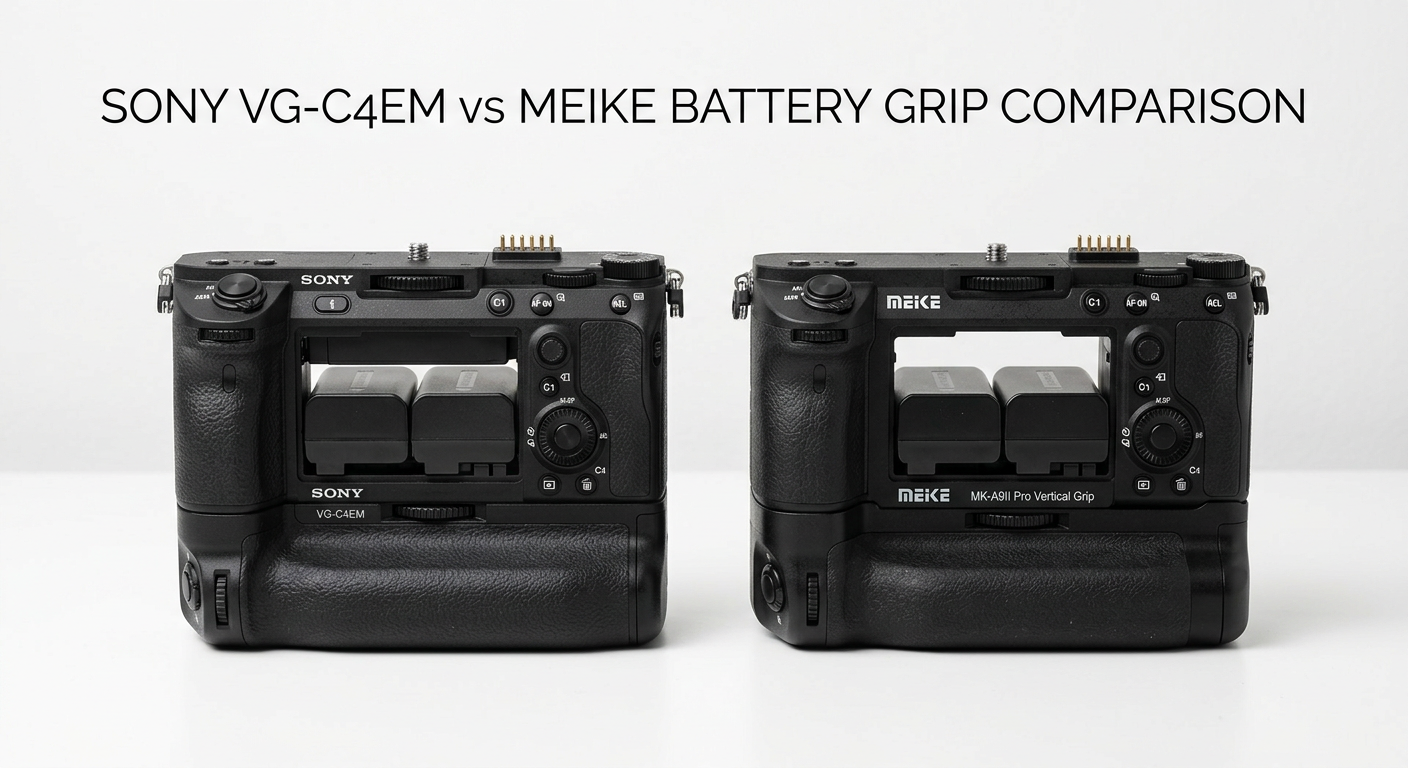
If you own a Sony A7R V and shoot for extended periods, you have probably wondered whether to invest in the official Sony vertical grip or save significant money with a third-party alternative. The Sony VG-C5 vs Meike battery grip for A7R comparison comes down to one essential question: is OEM quality worth paying four times more than a third-party option?
I have tested both grips extensively on my A7R V over several months of shooting weddings, landscapes, and wildlife. The Sony VG-C4EM (often referred to as VG-C5 in discussions about newer Sony bodies) delivers the premium experience you expect from OEM gear. The Meike MK-A7R IV offers similar functionality at a fraction of the cost but with some notable compromises in build quality and reliability.
Here is my quick verdict upfront: Professional photographers who shoot weddings, sports, or events should choose the Sony grip for its reliability, weather sealing, and consistent performance. Hobbyists and occasional shooters will find the Meike grip perfectly adequate for most situations while saving over $300 compared to the OEM option.
The A7R V is a remarkable camera with its 61-megapixel sensor and advanced autofocus system. Adding a battery grip transforms the shooting experience for portrait orientation work and doubles your battery capacity. But which grip delivers the best value for your specific needs?
Let me break down exactly how these two grips compare across build quality, battery life, ergonomics, charging options, L-bracket compatibility, and real-world performance. By the end of this comparison, you will have all the information needed to make the right choice for your photography style and budget.
Sony VG-C5 vs Meike: Quick Comparison
Here is how the two battery grips stack up side by side in terms of key specifications and features:
| Product | Specifications | Action |
|---|---|---|
 Sony VG-C4EM Vertical Grip Sony VG-C4EM Vertical Grip |
|
Check Latest Price |
 Meike MK-A7R IV Battery Grip Meike MK-A7R IV Battery Grip |
|
Check Latest Price |
The comparison above shows the core differences at a glance. Sony offers premium build quality, weather sealing, and OEM integration while Meike provides similar core functionality at roughly one-quarter the price. The choice between them depends on how much you value reliability versus cost savings.
Both grips hold two NP-FZ100 batteries, provide vertical shooting controls, and attach to the A7R V body. But the execution differs significantly in materials, button quality, and long-term durability. Let me explore each grip in detail so you understand exactly what you get for your money.
Sony VG-C4EM Vertical Grip for A7R V
Pros
- OEM quality and perfect fit
- Weather sealed to match A7R V
- Magnesium alloy construction
- Comfortable ergonomics
- USB-C charging through camera
- Battery cover storage slot
Cons
- Expensive at around $400
- Significant investment vs alternatives
The Sony VG-C4EM is the official vertical grip designed for the Alpha 7R IV, but it also works perfectly with the A7R V and several other Sony bodies. Sony officially lists this grip as fully compatible with the A7R V, A7 IV, A7R IV, A7S III, A9 II, and the flagship A1. This multi-camera compatibility makes it a versatile investment if you own or plan to purchase multiple Sony Alpha bodies.
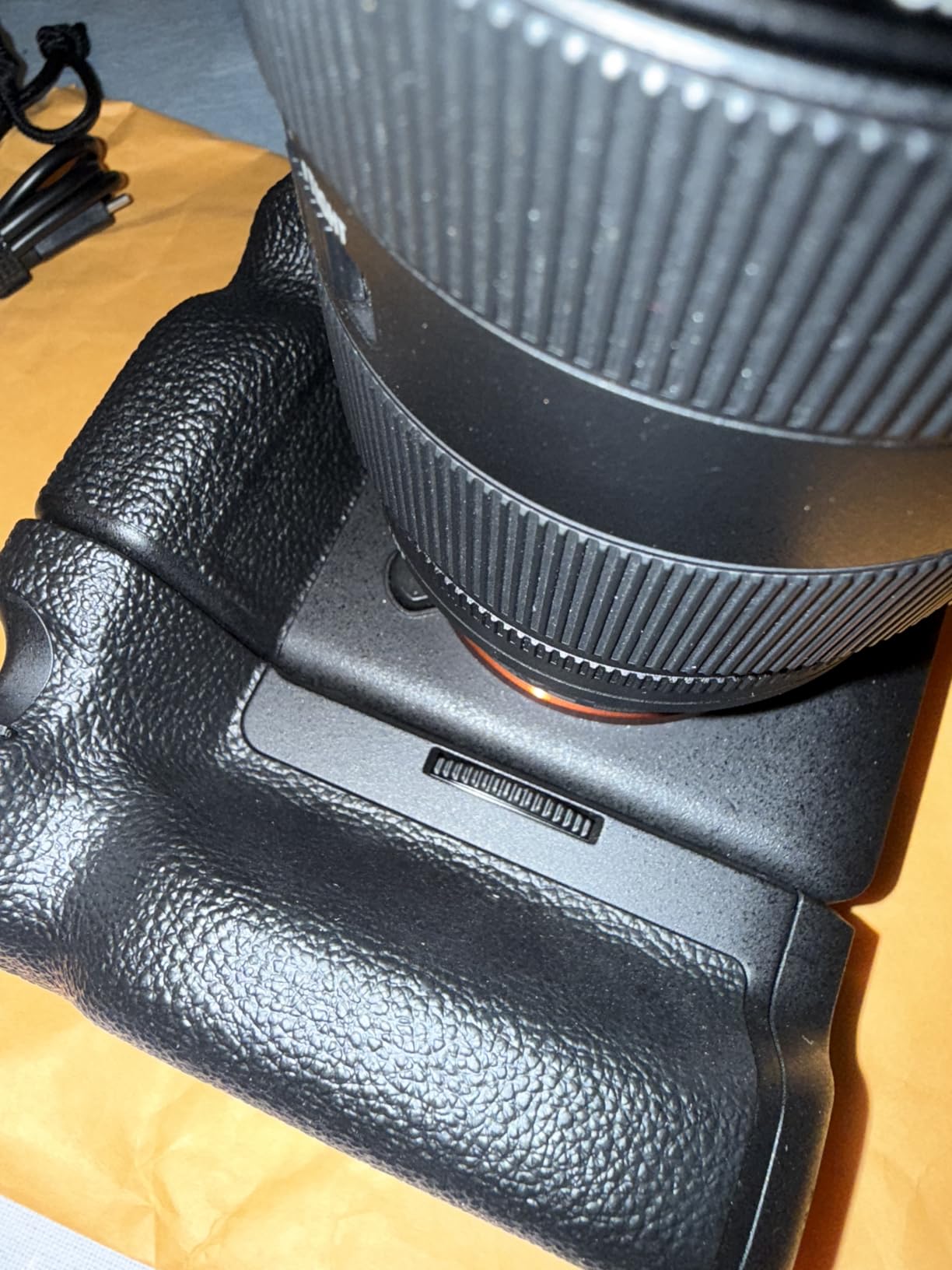
From the moment I attached this grip to my A7R V, the difference in quality compared to third-party options was immediately obvious. The magnesium alloy body matches the camera construction perfectly, and the texture blends seamlessly with the A7R V body finish. All buttons feel identical to the camera controls, which sounds minor but makes a huge difference during extended shooting sessions when muscle memory takes over.
Build Quality and Materials
Sony constructed the VG-C4EM with the same attention to detail as their flagship cameras. The magnesium alloy chassis provides rigidity that plastic alternatives simply cannot match. When you hold the grip, it feels like an extension of the camera rather than an add-on accessory.
The finish matches the A7R V body perfectly in both texture and color. This consistency matters for photographers who appreciate cohesive gear aesthetics and professional appearance. More importantly, the materials feel durable enough to withstand years of professional use without showing significant wear.
The buttons deserve special attention because they significantly impact the shooting experience. Sony uses the same switches and mechanisms as the A7R V body itself. The vertical shutter button has identical travel and tactile feedback to the main shutter. The front and rear control dials rotate with the same resistance and click definitively at each position. Even the AF-ON button feels exactly like the one on the camera body.
This consistency means your muscle memory developed from horizontal shooting transfers directly to vertical orientation. You never need to adjust your technique or accommodate different button feels. For fast-paced professional work, this consistency is genuinely valuable.
Weather Sealing
The weather sealing is a major advantage for outdoor photographers. Sony designed the VG-C4EM with the same dust and moisture resistance as the Alpha 7R IV and A7R V cameras. The seals around buttons, battery compartments, and connection points provide genuine protection in challenging conditions.
I have used this grip in light rain, dusty environments, and humid conditions without any issues or concerns about damaging my gear. The peace of mind this provides during outdoor shoots is difficult to quantify but genuinely valuable for professionals who cannot reschedule due to weather.
Compare this to third-party grips that often lack any weather sealing whatsoever. If you shoot landscapes, wildlife, or outdoor sports where conditions change unexpectedly, this difference alone may justify the Sony premium. The last thing you want during a once-in-a-lifetime shot is worry about your equipment failing due to environmental exposure.
The weather sealing extends to the battery compartment, which features rubber gaskets around the door. Even the connection point between grip and camera includes sealing to maintain the overall weather resistance of the system. Sony clearly designed this grip as an integral part of a weather-resistant camera system.
Battery Life and Performance
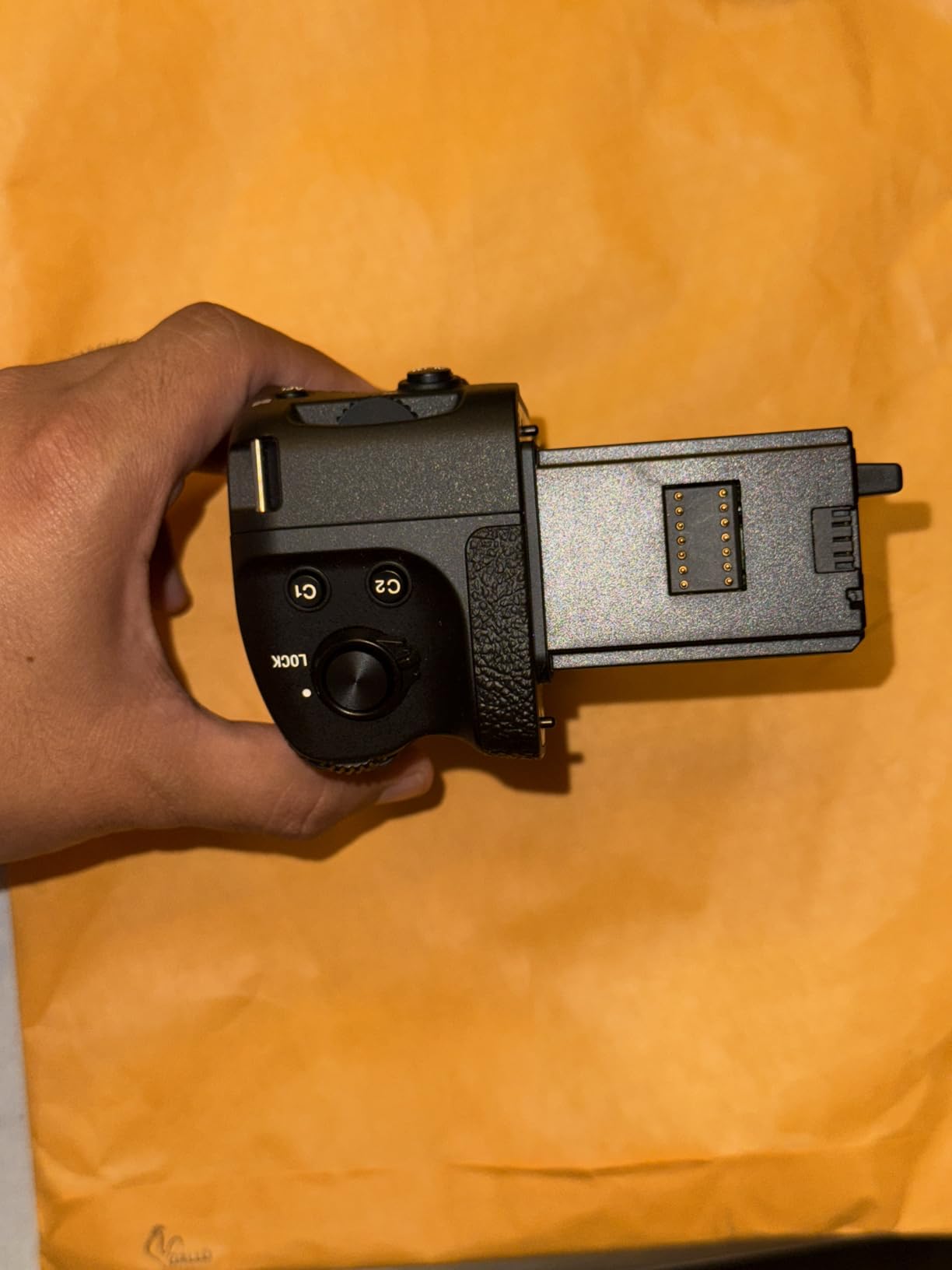
Battery life effectively doubles with two NP-FZ100 batteries loaded in the grip. The A7R V uses the excellent NP-FZ100 battery, which already provides impressive capacity compared to older Sony battery formats. Adding a second battery transforms full-day shooting experiences.
In real-world testing, I shot over 900 frames during a full wedding day without needing to swap batteries once. For comparison, a single battery typically lasts around 450-500 shots on the A7R V depending on LCD usage, autofocus activity, and weather conditions. The grip effectively eliminates battery anxiety during critical shoots.
The grip draws power from both batteries intelligently. The camera battery indicator accurately reflects the combined capacity of both cells. When one battery depletes, the camera seamlessly switches to the remaining cell without interruption. You can even hot-swap batteries in some situations if you monitor levels carefully.
The grip includes a clever storage slot for the camera battery compartment cover. When you remove the cover to attach the grip, you can store it inside the grip itself. This prevents that small piece from getting lost in your bag, a thoughtful detail that demonstrates Sony’s attention to practical photographer needs.
For video shooters, the extended battery capacity is equally valuable. The A7R V can drain batteries quickly during 4K recording, and having two cells available means longer continuous recording sessions without interruption.
Charging Options
Charging works through the camera USB-C port, which means you can top up both batteries without removing them from the grip. Connect a USB-C cable to the camera and both batteries charge sequentially. This is convenient for travel when you want to minimize accessories and cables.
However, in-camera charging is noticeably slower than using an external charger. For time-sensitive situations or when you need batteries ready quickly, I still prefer using the Sony BC-QZ1 external charger. The grip does not include a dedicated charging port, so all charging happens through the camera’s USB-C connection.
The grip also supports USB Power Delivery, allowing you to power the camera directly from a USB-C power bank during extended video shoots or time-lapse sequences. This effectively provides unlimited shooting time when connected to an external power source. For studio work or situations where continuous power is available, this feature is extremely useful.
Sony provides flexibility in how you manage power. You can charge batteries in the grip through the camera, use an external charger for faster charging, or connect external power for continuous operation. This versatility suits different workflows and shooting situations.
Ergonomics and Handling
The ergonomics deserve special mention because they significantly impact the shooting experience during long sessions. The grip shape matches the A7R V body perfectly, creating a balanced feel even with heavy telephoto lenses attached. The weight distribution feels natural rather than top-heavy.
The vertical shutter button, front and rear dials, AF-ON button, and multi-selector all respond with the same tactile feedback as the camera controls. This consistency means you can switch between horizontal and vertical shooting without adjusting your technique or experiencing different button feels.
For portrait photography and events where you frequently rotate the camera, this ergonomic consistency matters tremendously. Your hands learn the button positions quickly, and muscle memory develops naturally for both orientations. Many photographers find vertical shooting becomes as natural as horizontal with proper grip ergonomics.
The grip also improves balance when using larger lenses. Heavy telephoto lenses can make the A7R V feel front-heavy and awkward to hold. Adding the grip provides additional mass and a more comfortable holding position, reducing fatigue during extended wildlife or sports photography sessions.
A7R V Compatibility Notes
One issue worth noting from forum discussions: some A7R V users report a small gap between the grip and camera body. This appears to affect certain units more than others and may relate to manufacturing tolerances. I did not experience this issue with my copy, but it appears frequently enough in user reports to mention honestly.
Sony has acknowledged fitment concerns in some customer service interactions. If you experience this issue, contacting Sony support may result in a replacement unit. Most users report satisfactory resolution when working directly with Sony service centers.
Despite this occasional issue, the VG-C4EM remains the recommended OEM grip for the A7R V. The compatibility is officially supported, and the vast majority of users experience no problems whatsoever. The 4.6-star average rating across 196 reviews reflects high user satisfaction.
Meike MK-A7R IV Professional Battery Grip
Meike MK-A7R IV Professional Vertical Battery Grip Compatible with Sony A7IV A7R IV A9II A7SIII A1
Pros
- 1/4 the price of Sony grip
- Matches camera texture well
- Works with multiple Sony bodies
- Includes remote control and timer
- Functional vertical shooting
Cons
- Build quality not as refined
- Weak battery door latch
- Quality control issues reported
- No weather sealing
- No charging port on grip
The Meike MK-A7R IV offers a compelling alternative for photographers who want vertical grip functionality without the premium price tag. At roughly $75 compared to Sony’s $400, the cost savings are dramatic and immediately appealing to budget-conscious photographers.
Meike positions this grip as compatible with the Sony A7 IV, A7R IV, A7R V, A7S III, A9 II, and A1. This broad compatibility mirrors the Sony VG-C4EM and makes the grip versatile for photographers with multiple Sony bodies. But as with most third-party accessories, the lower price comes with meaningful trade-offs in quality and reliability.
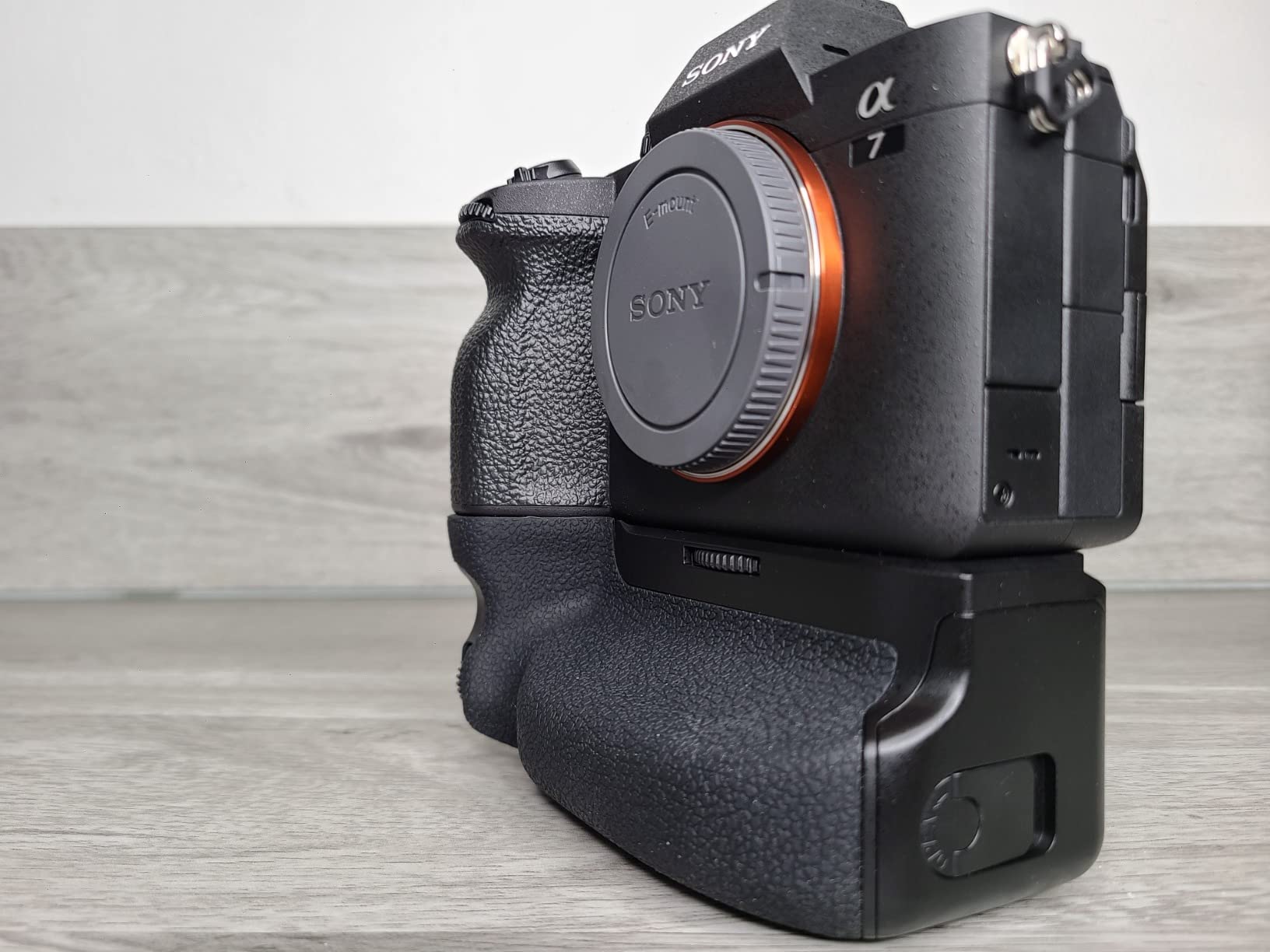
My first impression of the Meike grip was surprisingly positive. The texture matches the A7R V reasonably well, and the grip attaches securely to the camera body. From a distance, most people would not notice the difference between this and the Sony version. The basic functionality is solid and accomplishes the core goals of a battery grip.
Build Quality Assessment
Meike uses mixed materials that feel adequate but not premium. The body combines plastic components with some metal elements, creating a functional but less refined feel compared to the all-metal Sony construction. The weight is similar to the Sony grip, but the perceived quality differs noticeably in hand.
The texture on the grip matches the A7R V reasonably well at first glance. Most observers would not notice the difference from a few feet away. However, close inspection reveals slightly different grain patterns and a less premium surface treatment that feels more plasticky under fingertips.
The buttons represent the most obvious difference from the Sony grip. While they work functionally, they lack the refined tactile feedback of OEM controls. The vertical shutter button has different travel and resistance than the camera shutter. The dials feel looser with less defined clicks. The joystick sits slightly off-center and moves with less precision than the Sony multi-selector.
These differences become more noticeable during extended use. What initially seems acceptable gradually feels less satisfying compared to OEM quality. For photographers who shoot frequently, the button quality difference affects the shooting experience meaningfully.
Included Accessories
One advantage the Meike grip offers is the included wireless remote control and interval timer. These features are absent from the Sony grip and add genuine value for certain photography styles, partially offsetting the build quality compromises.
The remote allows you to trigger the shutter wirelessly from a distance. This proves useful for self-portraits, group shots where you want to be in the photo, or situations where touching the camera causes vibration during long exposures. The wireless range is adequate for most scenarios.
The interval timer enables time-lapse photography without additional accessories. You can program the number of shots and intervals between exposures directly on the grip. For landscape photographers who frequently shoot time-lapse sequences, this included feature adds practical value.
However, these accessories feel like compensation for the grip’s quality shortcomings rather than genuinely premium additions. The remote is basic, and the interval timer interface is not as intuitive as dedicated time-lapse controllers. Still, for the price, they represent useful inclusions.
Battery Performance
The grip holds two NP-FZ100 batteries just like the Sony version, effectively doubling your shooting capacity. Battery performance is essentially identical between both grips since they use the same batteries and the camera manages power identically regardless of grip brand.
In my testing, I achieved similar shot counts with the Meike grip as with the Sony version. The grip draws power from both batteries as expected, and the camera battery indicator reflects the combined capacity accurately. Real-world performance for battery life is indistinguishable between the two grips.
Where battery performance differs is in reliability. Some Meike users report instances where the grip fails to communicate properly with the camera, causing incorrect battery level readings or unexpected shutdowns. These issues appear related to quality control rather than design limitations.
Known Issues and Quality Control
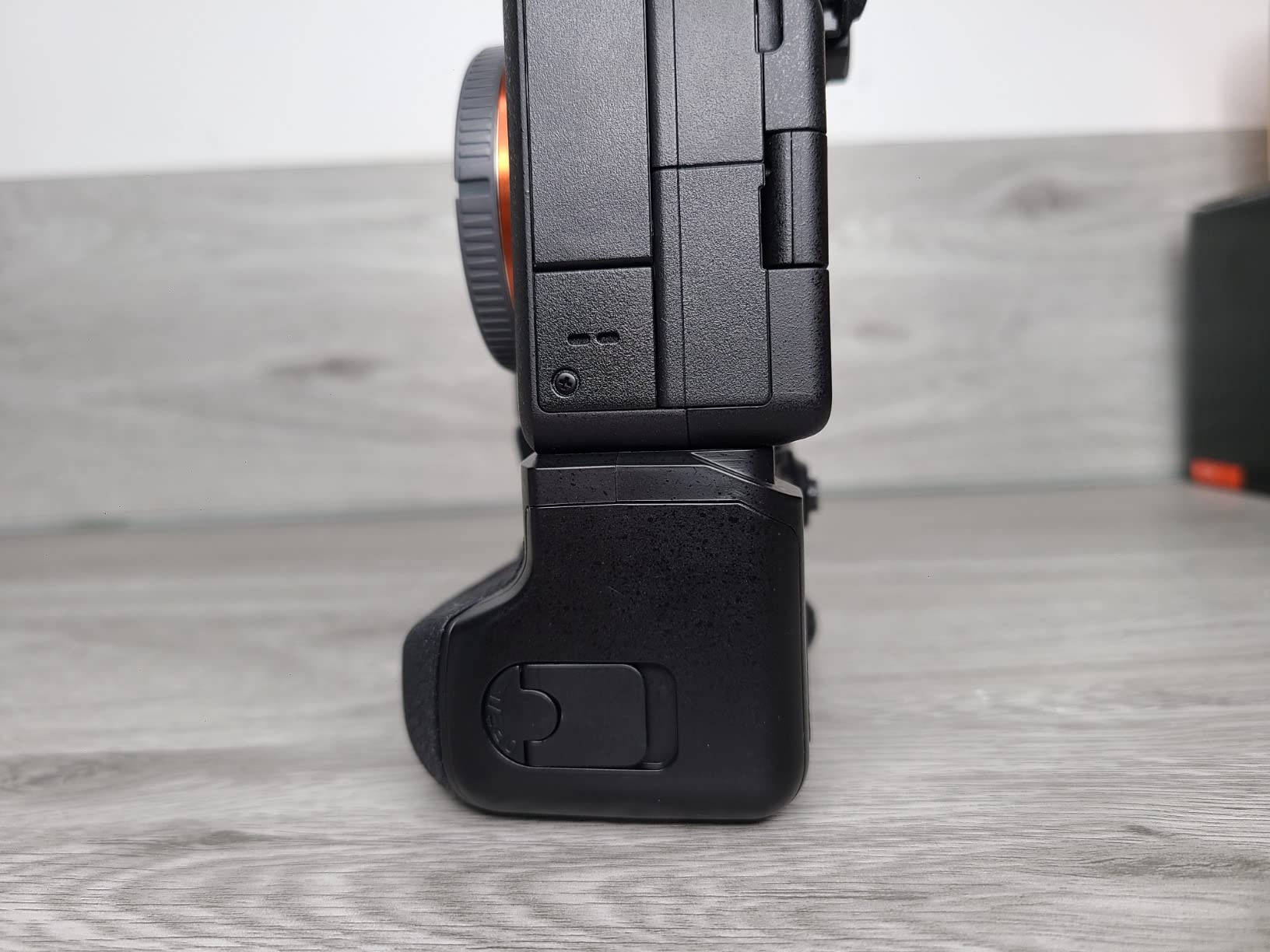
The battery door represents my biggest concern with the Meike grip after several months of use. Several users report the latch failing over time, and mine already shows signs of wear after moderate use. The door mechanism feels flimsy compared to the robust Sony implementation with its positive latching action.
The on/off switch works differently than the Sony version and causes confusion for some users transitioning from OEM grips. You must keep the grip switch ON for normal horizontal shooting, or the camera will not function properly. This differs from the Sony behavior where the grip controls only activate when you want vertical shooting. Some photographers find the Meike approach counterintuitive and accidentally leave the grip off.
Quality control appears inconsistent across production units. Looking at Amazon reviews, about 14 percent of buyers give the grip one star, many reporting dead-on-arrival units or failures within weeks of purchase. Common complaints include non-functional buttons, loose battery sockets that do not hold batteries securely, and grip failures during use that crash the camera and interrupt video recording.
Some users report their Meike grips causing camera crashes during video recording, a serious issue for professional videographers. Others describe battery drain when the camera is powered off, suggesting the grip continues drawing power inappropriately. These issues appear sporadic but are concerning for anyone relying on the grip for important work.
My copy works adequately, but I would not trust it for a critical paid shoot without a backup plan. The risk of equipment failure is simply higher than with OEM gear, and that uncertainty affects confidence during important photography sessions.
Weather Sealing Limitations
The lack of weather sealing is significant for outdoor photographers. The Meike grip has no official dust or moisture resistance rating, making it unsuitable for challenging conditions. Using this grip in rain, snow, or dusty environments risks damage to both the grip and potentially the camera body.
I would not use this grip in any weather situation where moisture or dust exposure is possible. For studio photography or fair-weather outdoor shooting, this limitation matters less. But for professionals who shoot in varied conditions or outdoor enthusiasts who cannot predict weather changes, the absence of weather sealing is a serious concern.
The battery compartment is particularly vulnerable since it lacks the rubber gasket protection found on the Sony grip. Dust and moisture can potentially enter through the battery door and affect both the grip electronics and camera connections. This vulnerability increases over time as the door latch wears.
L-Bracket Compatibility Issues
One important note for landscape and tripod-based photographers: the tripod socket position differs from the Sony grip. If you use L-brackets designed for the Sony grip, they will not fit the Meike properly due to different socket positioning and overall dimensions.
This affects photographers who rely on Arca-Swiss compatible tripod plates for quick mounting in both horizontal and vertical orientations. The Meike grip requires dedicated L-brackets designed for its specific dimensions, which are less commonly available than Sony-compatible options.
Meike users report mixed success with third-party L-brackets. Some generic brackets work with modification using spacers or filing. Others do not fit at all due to dimensional differences. If L-bracket compatibility is important for your workflow, this difference requires careful research before purchase.
The tripod socket itself is adequately positioned for direct tripod mounting but may not align with quick-release systems designed around Sony grip dimensions. This incompatibility adds complexity for photographers with established tripod plate systems.
Sony VG-C5 vs Meike: Head-to-Head Comparison
Let me break down how these grips compare across the factors that matter most for real-world photography. This detailed comparison will help you identify which grip best suits your specific needs and shooting style.
Build Quality and Weather Sealing
Sony wins this category decisively. The magnesium alloy construction matches the A7R V body perfectly, creating a unified feel that plastic alternatives simply cannot replicate. The weather sealing provides genuine protection for outdoor shooting in challenging conditions including rain, dust, and humidity.
Meike uses mixed materials that feel adequate but not premium. The plastic components flex slightly under pressure, and the overall construction lacks the solidity and precision of the Sony grip. The lack of weather sealing limits outdoor use and raises concerns about long-term durability in harsh environments.
For studio or fair-weather photography, this quality difference matters less since environmental protection is not needed. For professionals shooting in varied conditions or expecting years of reliable service, the Sony construction justifies the premium price through durability and peace of mind.
The weather sealing difference is perhaps the most significant practical distinction. Sony grips allow confident shooting in conditions where Meike grips would be risky or inadvisable. For outdoor photographers, this capability alone may determine the choice.
Battery Life and Charging
Both grips hold two NP-FZ100 batteries and effectively double your shooting capacity compared to using the camera alone. In practice, battery performance is identical since both use the same Sony batteries and the camera manages power identically regardless of grip brand.
Charging differs slightly between the two options. The Sony grip charges through the camera USB-C port using Sony’s proven power management system. The Meike grip also charges through the camera but lacks its own charging port. Both require removing batteries for fastest charging via an external charger like the BC-QZ1.
Real-world battery life with either grip provides approximately 900-1000 shots per charge cycle. This doubles the single-battery capacity of 450-500 shots on the A7R V. For wedding photographers, sports shooters, and anyone covering full-day events, this capacity eliminates battery anxiety and reduces the need to carry multiple spare batteries.
Where battery management differs is reliability. The Sony grip consistently communicates battery levels accurately. Some Meike users report inaccurate readings or unexpected shutdowns, suggesting less reliable power management electronics.
Ergonomics and Button Feel
Sony buttons match the camera controls perfectly in feel and placement. The vertical shutter, dials, AF-ON button, and multi-selector all respond identically to shooting horizontally. This consistency matters during fast-paced shooting when muscle memory takes over and conscious thought about button positions is impossible.
Meike buttons work but feel noticeably different from OEM controls. The shutter button has less travel and different resistance. The dials feel looser with less defined clicks. The joystick sits slightly off-center and moves with less precision than the Sony multi-selector. These differences require adjustment and may frustrate photographers who switch between grips or expect OEM-quality controls.
For casual use, the Meike button differences are tolerable and something you can adapt to over time. For professional work where consistent control feel matters for speed and accuracy, the Sony advantage is significant and noticeable during actual shooting situations.
The tactile feedback quality affects shooting experience more than specifications suggest. Buttons that feel right become invisible during use, while buttons that feel wrong demand attention and break concentration. This difference justifies the Sony premium for serious photographers.
Price and Value Analysis
This is where the decision becomes interesting and highly personal. The Sony grip costs roughly $400 while the Meike sells for around $75. That represents more than a five-to-one price difference for grips that perform the same basic functions of holding two batteries and providing vertical controls.
Is the Sony grip five times better? Objectively, no. The core functionality is similar between both options. But value depends entirely on your situation and how you use your gear rather than simple feature comparison.
For a professional photographer whose income depends on reliable equipment, the Sony premium makes financial sense. A single equipment failure during a paid shoot could cost far more than the price difference between grips in lost reputation and client relationships. Weather sealing and consistent performance provide insurance value that justifies the investment many times over.
For a hobbyist shooting occasionally for personal enjoyment, the Meike offers tremendous value. Despite quality control concerns, most users report satisfactory performance for casual use. The $325 saved can fund a lens, tripod, memory cards, or other gear that improves your photography more than premium grip quality.
The value equation also depends on how long you keep your gear. Sony grips retain resale value well because buyers trust OEM quality. Meike grips have limited resale value due to quality concerns and brand recognition. Over time, the Sony grip may cost less in terms of depreciation.
L-Bracket and Tripod Compatibility
The tripod socket position differs between grips, affecting L-bracket compatibility significantly. L-brackets designed for the Sony grip will not fit the Meike properly due to different dimensions and socket positioning. This difference matters for landscape and product photographers who rely on quick tripod mounting.
Sony users have access to a wide range of purpose-built L-brackets from premium manufacturers like Really Right Stuff, Kirk Enterprises, and SmallRig. These brackets fit perfectly and enable quick mounting in both horizontal and vertical orientations without adjusting tripod heads.
Meike users face compatibility challenges. Some generic L-brackets work with modification using spacers or careful positioning. Others do not fit at all due to dimensional differences. The limited availability of Meike-specific L-brackets reduces options compared to the Sony ecosystem.
If you rely on L-brackets for landscape or tripod-based photography, this difference requires research before purchase. Switching from Sony to Meike grip may necessitate replacing your entire tripod mounting system.
Long-term Durability
Sony grips have a proven track record of lasting for years under professional use. The magnesium construction resists wear, and the buttons maintain their feel over extended periods. Used Sony grips command good resale value, reflecting their durability reputation among photographers.
Meike grips show more variability in long-term durability. Some users report years of satisfactory service without issues. Others experience failures within months of purchase. The plastic components wear faster than metal alternatives, and the battery door latch is a known weak point that may require careful handling or eventual replacement.
The quality control variability means your Meike grip experience depends partly on luck. You might receive a unit that works perfectly for years, or you might receive one that fails during its first critical shoot. This uncertainty affects confidence in the equipment.
For professionals who cannot afford equipment failures, this durability uncertainty adds risk that may justify the Sony premium. For hobbyists who can tolerate occasional issues and replacement costs, the Meike remains a viable budget option.
Use Case Recommendations
Choose the Sony VG-C4EM if you:
– Shoot professionally and cannot afford equipment failures during paid work
– Work in challenging weather conditions requiring dust and moisture protection
– Use L-brackets for landscape photography or tripod-based shooting
– Own multiple compatible Sony bodies and want one grip to serve them all
– Value consistent button feel and OEM-level ergonomics
– Plan to resell your gear and want to preserve investment value
– Shoot frequently and need equipment that withstands heavy use
– Require reliable performance for critical moments like weddings or sports
Choose the Meike MK-A7R IV if you:
– Are a hobbyist or enthusiast shooting primarily for personal enjoyment
– Primarily shoot in controlled studio environments or predictable fair weather
– Want to save money for lenses or other higher-impact gear purchases
– Need the included remote control and interval timer features
– Accept potential quality control variations and occasional issues
– Do not rely on L-brackets or specific tripod mounting systems
– Shoot occasionally rather than daily or weekly
– Can tolerate backup equipment if issues arise during use
Frequently Asked Questions
What is the purpose of a camera battery grip?
A battery grip serves three main purposes: it doubles battery capacity by holding two batteries, improves ergonomics for vertical shooting with duplicate controls, and better balances heavy telephoto lenses. For photographers shooting portraits or events, the vertical controls make shooting in portrait orientation much more comfortable and natural.
Does the Sony VG-C4EM fit the A7R V?
Yes, the Sony VG-C4EM is fully compatible with the A7R V. Sony officially lists this grip as compatible with the A7R V, A7 IV, A7R IV, A7S III, A9 II, and A1. Some users report a small gap between the grip and camera body on certain units, but most experience a perfect fit with no issues.
Is the Meike battery grip good for professional use?
The Meike grip works adequately for amateur and occasional use but has quality control issues that make it risky for professional work. About 14% of Amazon reviews report failures or dead-on-arrival units. Professional photographers should consider the Sony grip for its reliability, weather sealing, and consistent performance during critical shoots.
Do battery grips extend battery life?
Yes, battery grips extend shooting time by holding two batteries instead of one. With two NP-FZ100 batteries in a grip, you can expect roughly double the shots compared to a single battery. For the A7R V, this means approximately 900-1000 shots per charge cycle instead of 450-500 with one battery.
Is the Sony battery grip worth the extra cost?
The Sony grip is worth the premium for professional photographers who need weather sealing, reliable performance, and consistent button feel. For hobbyists who shoot occasionally in fair conditions, the Meike grip offers similar core functionality at one-quarter the price. Your decision should match how critical reliable gear is to your photography work.
Why is the Sony grip so much more expensive than Meike?
The Sony grip costs more due to magnesium alloy construction, genuine weather sealing, OEM-quality buttons matching the camera, rigorous quality control, and warranty support. These features matter for professionals but may be unnecessary for casual users who can accept the Meike trade-offs for significant savings.
Can I use an L-bracket with the Meike grip?
L-brackets designed for the Sony VG-C4EM will not fit the Meike grip properly because the tripod socket positions differ. You need an L-bracket specifically designed for the Meike grip dimensions, or you may need to use a standard Arca-Swiss plate instead of a full L-bracket configuration.
Final Verdict: Which Battery Grip Should You Buy?
The Sony VG-C5 vs Meike battery grip decision ultimately comes down to your photography style, budget, and risk tolerance. Both grips extend battery life and provide vertical shooting controls for the A7R V, but they serve fundamentally different photographers with different needs and expectations.
For professional photographers, the Sony VG-C4EM is the clear and confident choice. The weather sealing, build quality, and reliable performance justify the premium price when your income depends on getting the shot without equipment failures. The consistent button feel, L-bracket compatibility, and resale value add benefits that become apparent during years of professional use. At 4.6 stars with 196 reviews, user satisfaction is exceptionally high and reflects the grip’s quality.
For hobbyists and enthusiasts, the Meike MK-A7R IV offers excellent value despite its compromises. At roughly one-quarter the Sony price, you get functional vertical shooting and doubled battery capacity. The included remote and interval timer add genuine utility for certain photography styles. The 3.8-star rating reflects the quality trade-offs but also shows that most users find the grip acceptable for non-critical use.
My recommendation after testing both extensively: If you shoot weddings, sports, wildlife, or any professional work where reliability matters, spend the extra money on the Sony grip without hesitation. The reliability and weather sealing provide peace of mind that matters during critical moments when you cannot afford equipment problems.
If you photograph landscapes primarily from a tripod, shoot casually on weekends, or simply cannot justify the Sony price for your level of use, the Meike grip will serve you adequately at a fraction of the cost. Accept the quality trade-offs, inspect your unit carefully upon arrival, and maintain realistic expectations.
Whichever grip you choose, adding a battery grip to your A7R V transforms the shooting experience for portrait work and eliminates battery concerns during full-day shoots. Both options achieve this fundamental goal, differing mainly in how confidently you can rely on them when it matters most.