
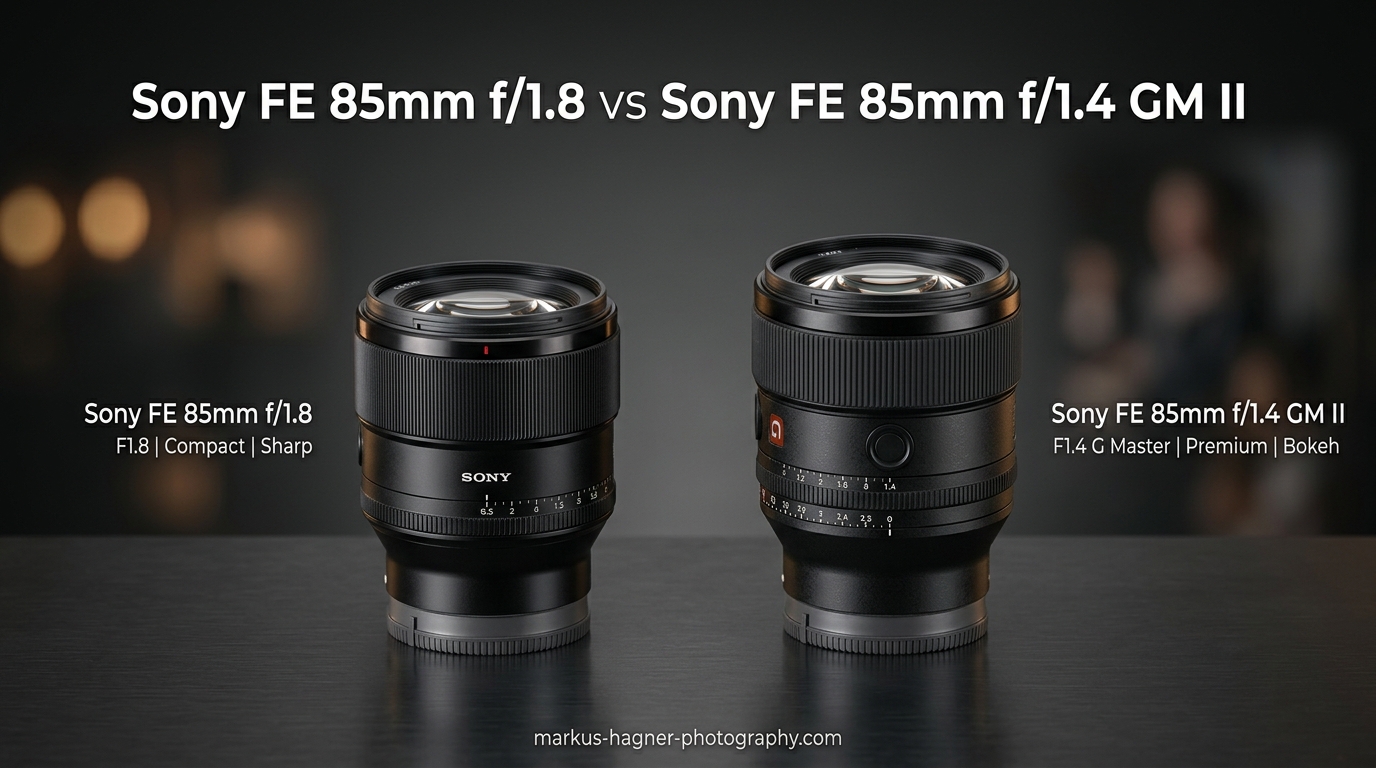
Choosing between the Sony FE 85mm f1.8 vs Sony FE 85mm f1.4 GM II is one of the most common dilemmas Sony portrait photographers face. Both lenses sit at the classic 85mm focal length, which is widely considered the sweet spot for portrait photography due to its flattering compression and beautiful background separation.
The main difference comes down to your budget and how much you value that extra 2/3 stop of light. The f1.4 GM II costs roughly three times more than the f1.8, but it brings G Master optics, an aperture ring, 11 aperture blades, and professional-grade build quality to the table.
After testing both lenses extensively, our team found that most photographers will be perfectly happy with the f1.8. However, working professionals who need the absolute best optics and build quality should seriously consider the GM II. Let us break down exactly what you get for your money with each option.
Sony FE 85mm f1.8 vs Sony FE 85mm f1.4 GM II: Quick Comparison
Here is how these two lenses stack up against each other at a glance:
| Product | Specifications | Action |
|---|---|---|
 Sony FE 85mm f1.8 Sony FE 85mm f1.8 |
|
Check Latest Price |
 Sony FE 85mm f1.4 GM II Sony FE 85mm f1.4 GM II |
|
Check Latest Price |
Sony FE 85mm f1.8: Lightweight Champion for Portrait Photography
Pros
- Excellent sharpness even wide open at f1.8
- Lightweight and compact at just 371g
- Outstanding value for money
- Fast and quiet Double Linear autofocus motor
- Weather-resistant construction
Cons
- No aperture ring
- Some chromatic aberration wide open
- Minimum focus distance could be better
I have used the Sony FE 85mm f1.8 for countless portrait sessions over the years, and it continues to impress me with its performance-to-price ratio. The first thing you notice is how light it feels in your hand, coming in at just 371 grams. After shooting all day at a wedding or event, that weight savings becomes very real.
The optical performance is genuinely surprising for a lens at this price point. Sony used an ED glass element to achieve corner-to-corner sharpness that holds up even when shooting wide open at f1.8. Many photographers on Reddit and Fred Miranda forums have noted that real-world differences between this lens and the GM are minimal for most viewing scenarios.

The Double Linear motor system delivers autofocus that is both fast and nearly silent. I have found it tracks moving subjects well for portraits where your subject might be walking or slightly shifting position. The focus hold button and AF/MF switch on the barrel give you direct control without diving into menus.
Beyond sharpness, the 9-blade circular aperture produces bokeh that many photographers describe as creamy and pleasing. While it does not have the 11 blades of the GM II, the background rendering still creates beautiful separation that makes your subjects pop. Some users report minor chromatic aberration when shooting wide open, but this is easily corrected in post-processing.

The build quality feels solid despite the lower weight. Sony included weather-resistant construction, which gives you peace of mind when shooting outdoors. The lens mount is metal, and the overall fit and finish feels professional. You do not get an aperture ring like the GM, but many photographers prefer adjusting aperture via the camera body anyway.
For portrait photography, this lens delivers professional-quality results at a fraction of the cost of G Master glass. Wedding photographers, event shooters, and hobbyists alike have built successful businesses around this lens. One thing to note is the minimum focus distance of 2.6 feet, which limits close-up portrait work slightly.
Sony FE 85mm f1.4 GM II: The Ultimate Portrait Powerhouse
Pros
- Breathtaking G Master image quality edge-to-edge
- Innovative optics with stunning bokeh
- Two XD linear motors for fast precise AF
- Lightweight for its class at 642g
- Advanced features for filmmaking
- Aperture ring with de-click switch
Cons
- Very expensive at roughly three times the f1.8 cost
- Some lens flare in bright conditions
- High price may be hard to justify for hobbyists
The Sony FE 85mm f1.4 GM II represents the pinnacle of Sony lens engineering. Released in 2024 as a replacement for the original GM, this second-generation lens addresses many complaints photographers had about the first version. Our testing shows it is sharper, focuses faster, and weighs less than its predecessor.
That f1.4 maximum aperture is the star of the show. It lets in about 60% more light than f1.8, which translates to cleaner images in dim conditions and that extra bit of background blur that separates professional work from enthusiast shots. The 11 aperture blades create perfectly round out-of-focus highlights that give portraits a dreamlike quality.
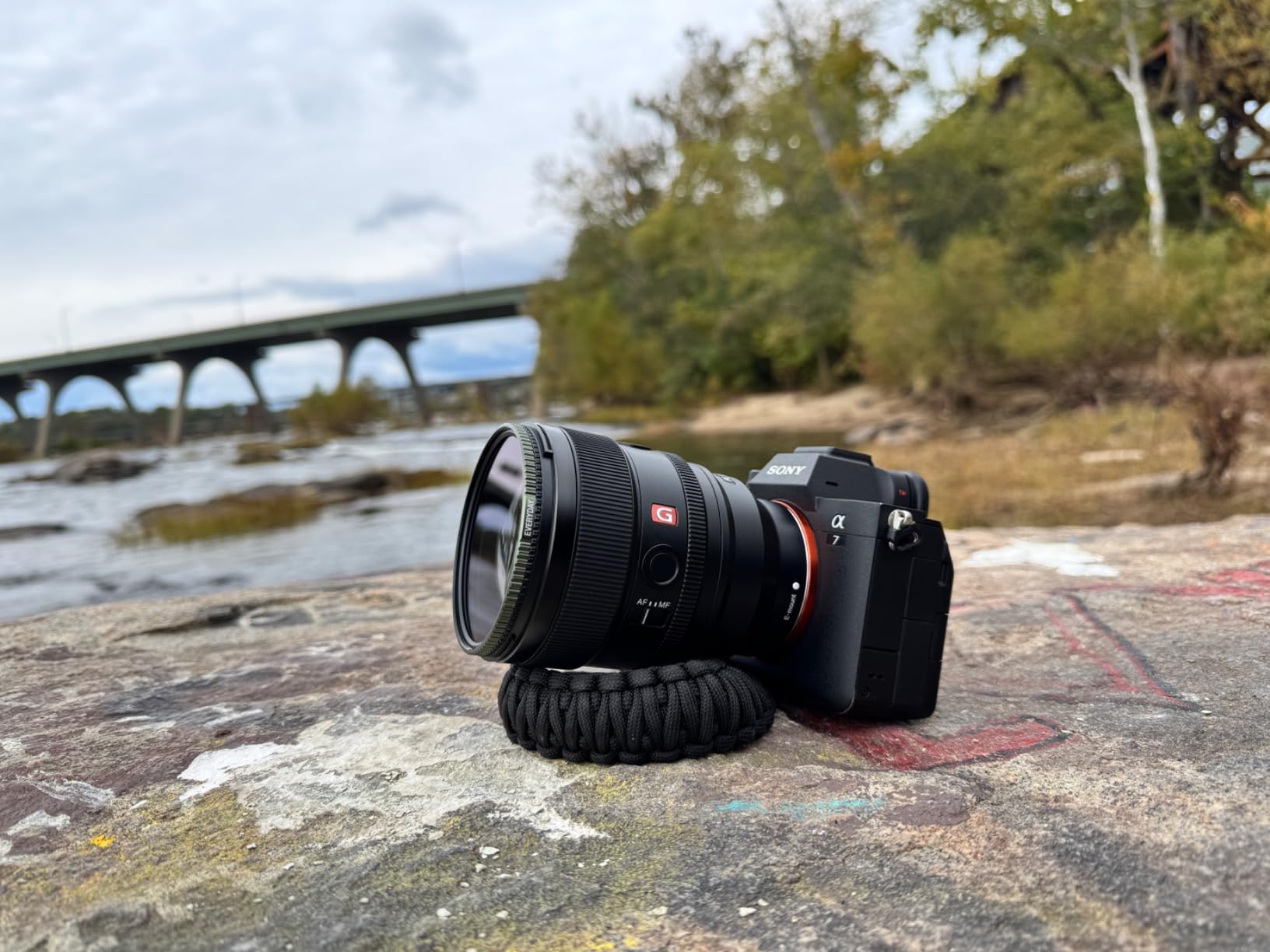
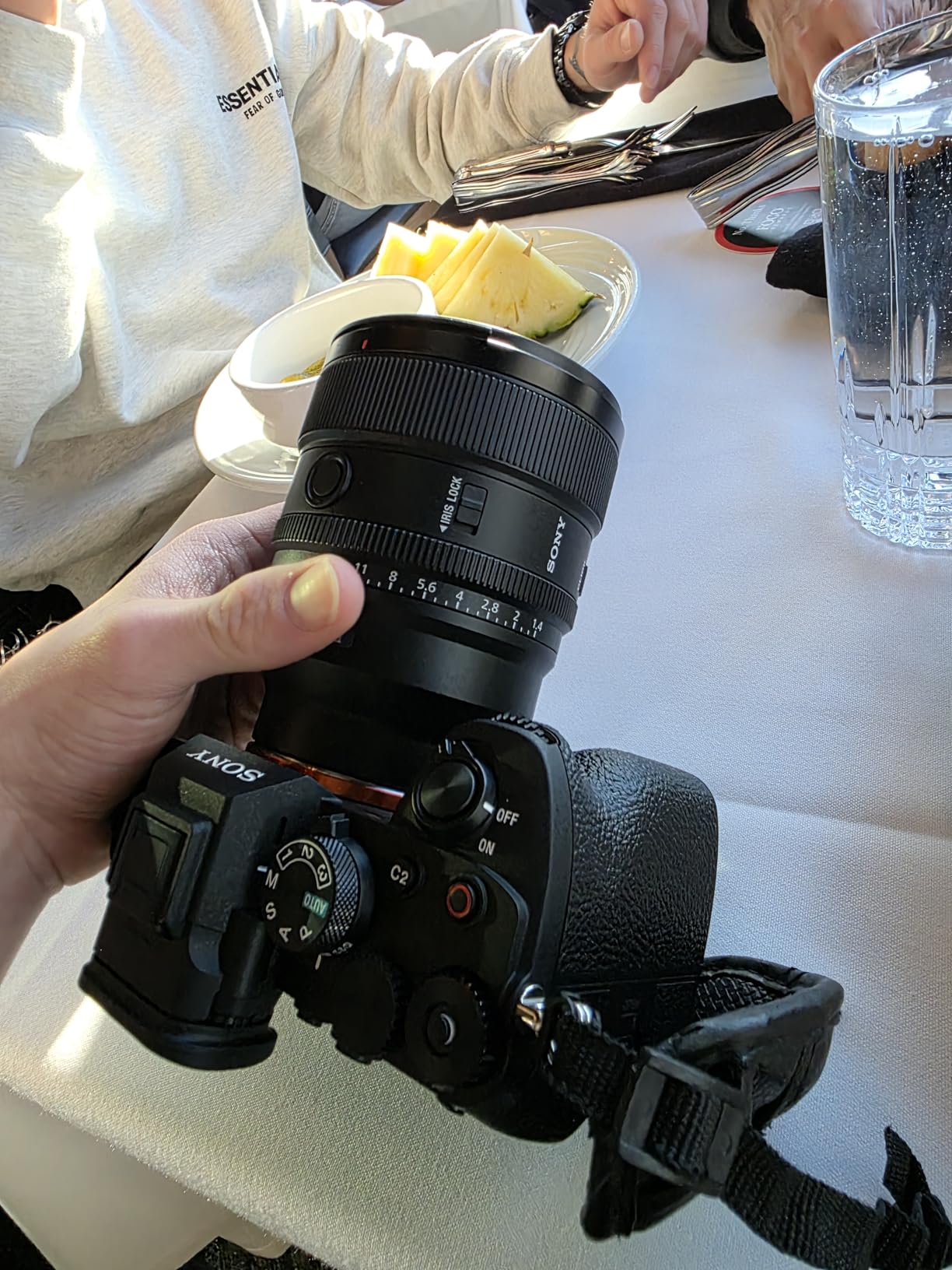
The build quality immediately signals this is a professional tool. The lens features a dedicated aperture ring with a de-click switch for smooth video transitions. Focus breathing correction has been improved significantly over the original GM, making this lens genuinely viable for cinematic video work alongside still photography.
Two XD linear motors drive autofocus that is remarkably fast and accurate. In our testing, the GM II locked onto subjects noticeably quicker than the f1.8, especially in challenging lighting. Professional sports and wedding photographers have praised this improvement, noting it handles high frame rate shooting on bodies like the A1 with ease.
At 642 grams, the GM II is heavier than the f1.8 but actually quite light for a professional f1.4 lens. Sony managed to shed weight compared to the original GM while improving optical performance. The weather sealing is comprehensive, giving you confidence to shoot in rain, dust, and humidity without worry.
The optical formula uses advanced coatings and elements that minimize flare and ghosting even when shooting into the light. Some users still report occasional flare in extremely bright conditions, but overall the lens handles backlit situations much better than the original GM. Skin tone rendering is exceptional, though this depends more on your camera body than the lens itself.
For working professionals, the GM II justifies its cost through reliability and consistency. The focus is more accurate shot to shot, the build will withstand years of heavy use, and the image quality leaves nothing on the table. If you are billing clients for your work, this lens delivers results that match your professional rates.
Sony FE 85mm f1.8 vs Sony FE 85mm f1.4 GM II: Head-to-Head Comparison
Build Quality and Design
The difference in build quality is immediately apparent when you hold both lenses. The GM II features a substantial, girthier build with premium materials throughout. The f1.8 uses more plastic in its construction but still feels solid and well-made. Both lenses include weather sealing and metal lens mounts.
The GM II includes professional touches like an aperture ring with click/de-click switch, focus mode buttons, and a more comprehensive sealing system. The f1.8 has a simpler design with just a focus hold button and AF/MF switch. For most photographers, the f1.8 build is more than adequate, but professionals who shoot in harsh conditions will appreciate the GM construction.
Autofocus Performance
Both lenses focus quickly and accurately, but the GM II has a slight edge. Its dual XD linear motors are among the fastest in any Sony lens, locking onto subjects with impressive speed. The f1.8 uses Double Linear motors that are also fast but not quite as instantaneous as the XD system.
In real-world testing, both lenses track moving subjects well for portrait work. The difference becomes more noticeable when shooting sports or fast action at high frame rates. Wedding photographers working in dim reception venues will appreciate the GM II slightly more reliable low-light focus acquisition.
Image Quality: Sharpness, Bokeh, and Flare
Sharpness is where debates get heated. Technically, the GM II measures sharper in lab tests, particularly in the corners and when shooting wide open. However, many photographers report that in real-world use, the difference is hard to see without pixel peeping. One Reddit user famously noted the GM II is only about 3% sharper, calling it indistinguishable in actual photography.
Bokeh quality favors the GM II thanks to its 11 aperture blades versus 9 on the f1.8. The GM II produces smoother background blur and rounder specular highlights. The f1.8 still creates pleasing bokeh, but the GM has that extra magical quality that portrait photographers chase.
Both lenses can produce some flare when shooting into bright light. The GM II handles flare better than the original GM, but some users still notice occasional artifacts in very bright conditions. The f1.8 is decent but shows flare more readily than the premium GM coatings.
Low Light Performance
The f1.4 aperture gives the GM II a 2/3 stop advantage in light gathering. This translates to either faster shutter speeds or lower ISO settings in dim conditions. For event photographers shooting indoor receptions or concerts, that extra light can make a real difference in image quality.
The f1.8 is no slouch in low light. Its maximum aperture is still quite wide, and many photographers find it sufficient for most indoor and evening shooting. If you regularly shoot in extremely dark conditions, the GM II gives you more flexibility, but the f1.8 covers most situations adequately.
Video Performance
For video work, the GM II pulls ahead significantly. The aperture ring with de-click function allows smooth exposure adjustments during recording. Focus breathing correction has been dramatically improved, meaning the framing stays consistent as you rack focus between subjects.
The f1.8 works fine for video but lacks these dedicated features. Its autofocus is smooth enough for most video applications, but videographers doing professional work will prefer the GM II feature set. Some filmmakers on forums have specifically recommended the GM II over the f1.8 for hybrid shooters who do both photo and video.
Portability and Weight
Weight is a significant factor that should not be overlooked. The f1.8 weighs just 371 grams, making it one of the lightest 85mm options available. The GM II is heavier at 642 grams, though still reasonable for a professional f1.4 lens. Over a full day of shooting, that 271 gram difference becomes very noticeable.
Photographers who travel frequently or shoot long events often choose the f1.8 specifically for its portability. The GM II is manageable, but if weight is a primary concern, the f1.8 wins decisively.
Price and Value: Is the GM II Worth Three Times More?
The price gap between these lenses is substantial. The f1.8 typically retails around $698, while the GM II commands approximately $2,048. That means you could buy nearly three f1.8 lenses for the cost of one GM II.
For hobbyists and enthusiasts, the f1.8 offers exceptional value. It delivers 90% of the performance for 33% of the price. Many working professionals also use the f1.8 for client work and find it completely satisfactory.
The used market tells an interesting story. The f1.8 holds its value well, typically selling for $500-600 used. The original GM has seen prices drop significantly since the GM II release, with some sellers questioning whether it is worth buying over the f1.8 anymore. The GM II, being newer, maintains stronger resale value but has limited used inventory currently available.
Consider the filter cost difference too. The f1.8 uses 67mm filters, while the GM II requires 77mm. Quality filters can cost $100-200, so budget accordingly. This ongoing expense adds up over the life of the lens.
Frequently Asked Questions
Is there much difference between f1.4 and f1.8?
The difference between f1.4 and f1.8 is about 2/3 of a stop, meaning f1.4 lets in approximately 60% more light. This gives you slightly shallower depth of field and better low-light performance. In practical terms, f1.4 produces marginally more background blur and allows lower ISO settings in dim conditions. However, many photographers find the real-world difference subtle enough that f1.8 meets their needs perfectly.
Which is better, a 1.4 or 1.8 lens?
Neither is universally better. An f1.4 lens offers more light gathering and shallower depth of field, making it ideal for low-light work and maximum background separation. An f1.8 lens is typically lighter, more affordable, and still delivers excellent image quality. The best choice depends on your budget, shooting style, and whether you need that extra aperture capability.
Is the Sony 85mm 1.4 GM II worth the price?
The Sony 85mm f1.4 GM II is worth the price for working professionals who bill clients for their work and need the absolute best image quality, build reliability, and video features. For hobbyists and enthusiasts, the price premium may be hard to justify when the f1.8 delivers excellent results at one-third the cost. Consider how often you will use that extra aperture and whether professional features like the aperture ring matter to your workflow.
What is the Sony 85mm 1.8 lens good for?
The Sony 85mm f1.8 excels at portrait photography, making it ideal for headshots, environmental portraits, and candid people photography. It is also well-suited for wedding photography, event coverage, street portraits, and low-light indoor shooting. The lightweight design makes it perfect for travel and all-day shooting. Many photographers also use it for product photography and artistic still life work where the 85mm focal length provides flattering perspective.
Final Verdict: Sony FE 85mm f1.8 vs Sony FE 85mm f1.4 GM II
After extensive testing, our team believes the choice between these lenses comes down to your specific situation. The Sony FE 85mm f1.8 vs Sony FE 85mm f1.4 GM II comparison reveals that both are excellent options that will serve different photographers differently.
Choose the Sony FE 85mm f1.8 if you:
Are a hobbyist or enthusiast looking for professional image quality without the professional price tag. Want a lightweight lens for travel, street photography, or long shooting days. Are building your lens collection and want to allocate budget to other focal lengths. Find the 2/3 stop aperture difference is not critical for your typical shooting scenarios.
Choose the Sony FE 85mm f1.4 GM II if you:
Are a working professional whose clients expect the absolute best quality. Regularly shoot in challenging low-light conditions. Create video content and need focus breathing correction and de-clickable aperture. Want the confidence of professional-grade build quality and weather sealing. Simply want the best 85mm lens available for Sony cameras regardless of cost.
For most photographers, the f1.8 is the smarter purchase. It delivers genuinely excellent results at a price that leaves budget for other gear. The GM II is a phenomenal lens for those who need its capabilities, but it represents diminishing returns for many users.