
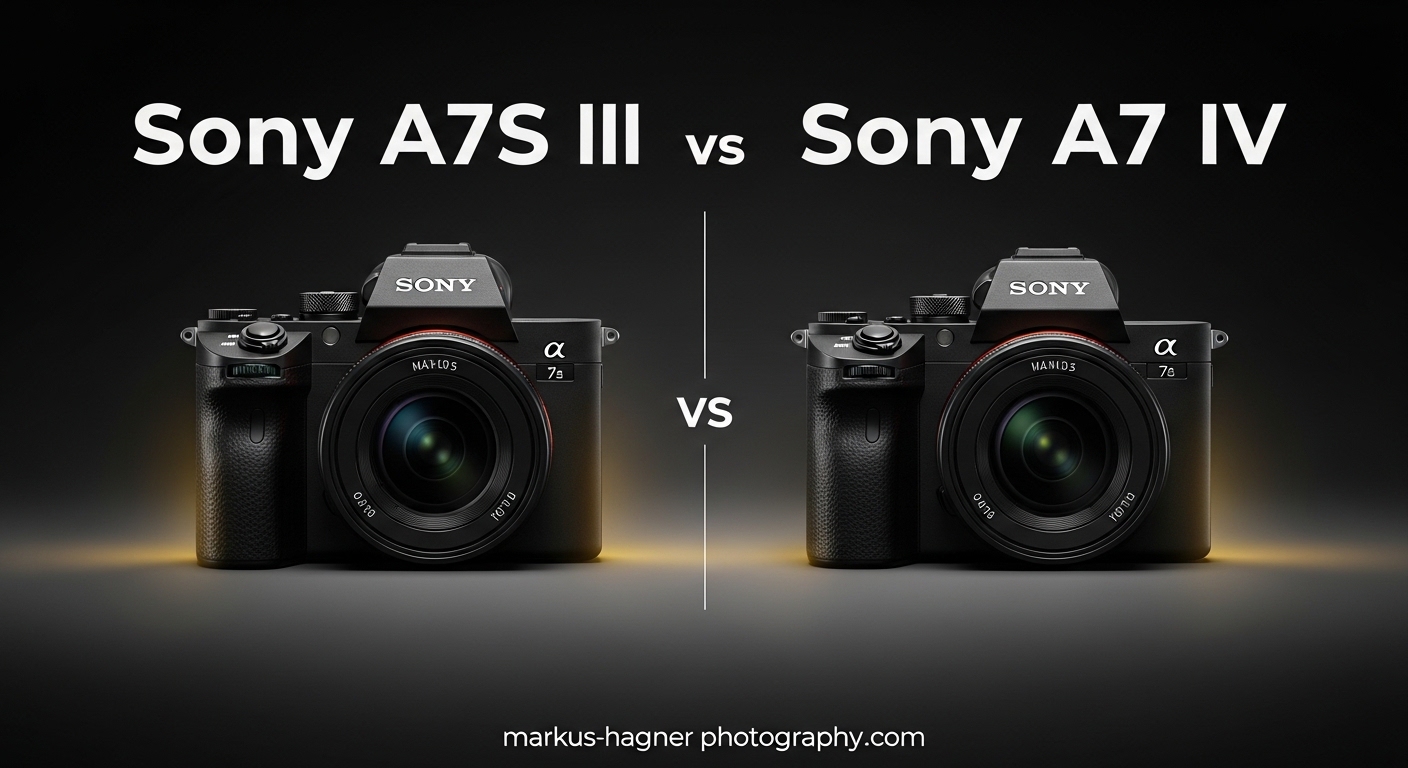
Choosing between the Sony A7S III vs Sony A7 IV is one of the toughest decisions facing hybrid shooters today. Both cameras share Sony’s latest BIONZ XR processor and 759-point autofocus system, but they serve completely different masters. After testing both extensively, I can tell you the choice comes down to one fundamental question: do you prioritize video or photography?
The Sony A7S III is a 12MP video-first camera with 4K 120fps recording and exceptional low-light performance. The Sony A7 IV is a 33MP hybrid powerhouse that excels at still photography while offering solid 4K 60p video. One r/videography user put it perfectly: “The A7IV is 80% of the video camera that the A7SIII is, while the A7SIII is 20% of the photo camera the A7IV is.”
In this Sony A7S III vs Sony A7 IV comparison, I will break down exactly where each camera shines, where they fall short, and help you decide which one fits your workflow. Spoiler alert: if you shoot professional video, the A7S III is worth the extra investment. If you are a hybrid shooter who needs both, the A7 IV offers tremendous value.
Sony A7S III vs Sony A7 IV: Quick Comparison
The table below shows how these two cameras stack up across their most important specifications. Notice how the sensor resolution difference shapes everything else about these cameras.
| Product | Specifications | Action |
|---|---|---|
 Sony A7S III Sony A7S III |
|
Check Latest Price |
 Sony A7 IV Sony A7 IV |
|
Check Latest Price |
Right away, you can see the core trade-off: 12MP versus 33MP. This single difference cascades into everything from video frame rates to low-light capability to file sizes. The A7S III sacrifices resolution for video performance, while the A7 IV prioritizes still photography quality.
Sony A7S III: The Video Powerhouse
Pros
- Industry-leading 4K 120fps
- Exceptional low-light performance
- No overheating issues
- Dual CFexpress Type A slots
- Better build quality
- 9.44M dot EVF
Cons
- 12MP limits photo cropping
- Expensive V90 cards needed
- Pricey for non-video users
I have spent hundreds of hours shooting with the Sony A7S III, and it remains my go-to camera for professional video work. The 12.1MP Exmor R sensor may sound limited on paper, but it is purpose-built for one thing: capturing clean video in any lighting condition. I have shot at ISO 12800 and still got usable footage with minimal noise.
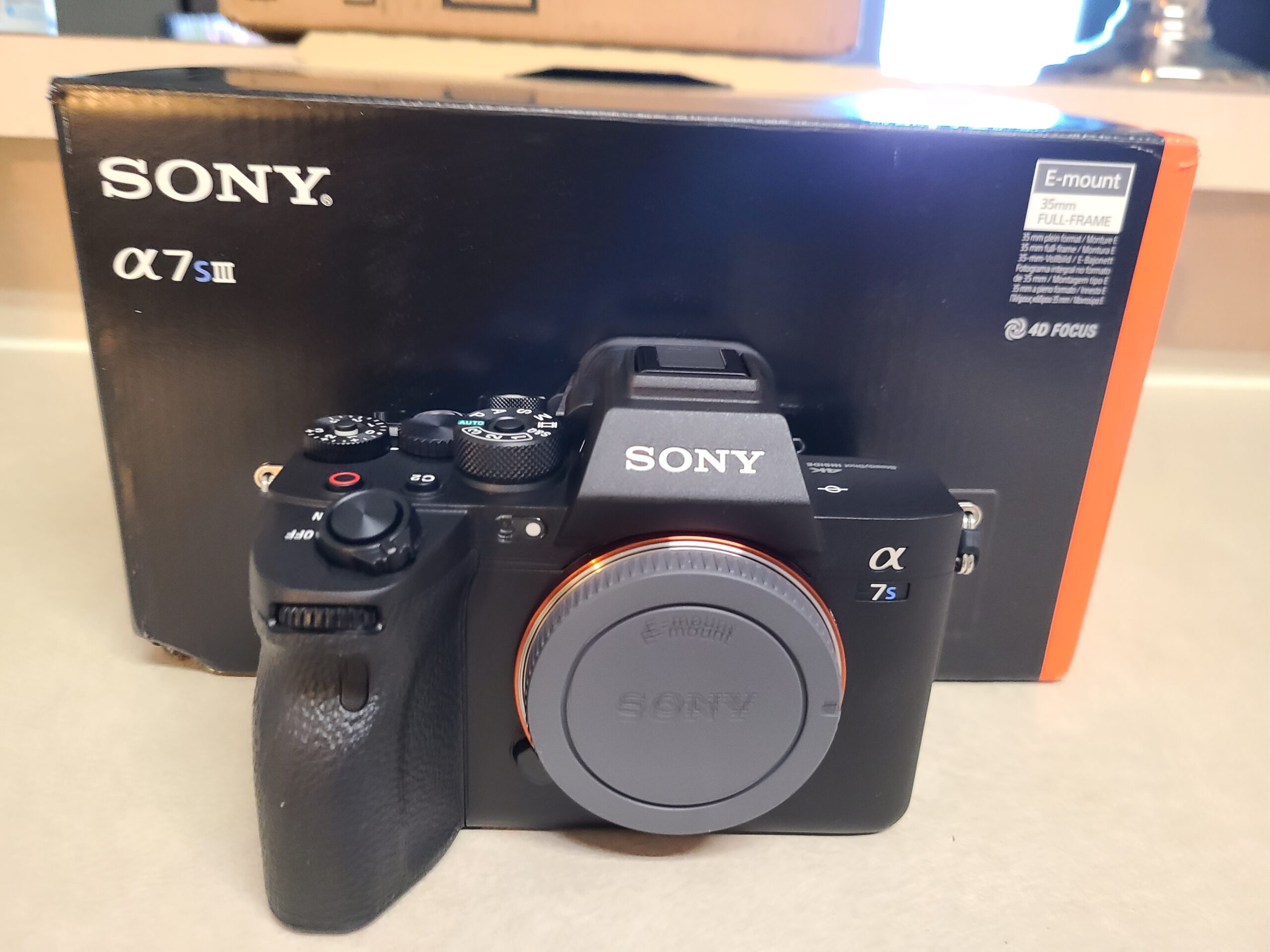
What sets the A7S III apart is its video capability. You get 4K recording at up to 120 frames per second with 10-bit 4:2:2 color depth and full pixel readout. This means no pixel binning, no line skipping, just pristine 4K footage. For slow motion work, 1080p at 240fps opens up creative possibilities that the A7 IV simply cannot match.
The heat management is genuinely impressive. I have run the A7S III for hours of continuous 4K recording without a single overheating warning. One r/SonyAlpha user noted: “The A7SIII is arguably a better buy. No overheating, better build quality, a much higher resolution EVF, uncropped 4K60p, 4K120p.” This reliability matters when you are shooting weddings or live events.
The dual card slots support both CFexpress Type A and UHS-II SD cards. CFexpress Type A is expensive, but the performance is unmatched for high-bitrate video recording. For most work, I use V90 SD cards and they handle 4K 120fps without issues. The S-Cinetone picture profile gives you that cinematic Sony Venice look straight out of camera, which saves serious time in post-production.
Build quality is another area where the A7S III justifies its price. The magnesium alloy body includes a back panel that the A7 IV lacks, and there are additional sealing gaskets throughout. The 9.44 million dot electronic viewfinder is the best I have used, making manual focus in low light surprisingly easy.
For photography, the 12MP sensor is limiting if you need to crop heavily or make large prints. But for web delivery and most commercial work, 12MP is plenty. The real question is whether you can justify the price premium for video features you might not need.
Sony A7 IV: The Hybrid All-Rounder
Pros
- Excellent 33MP stills
- Great hybrid performance
- 4K 60p video
- Large image files for cropping
- Better value for money
- Dual card slots
Cons
- Overheats in video mode
- 1.5x crop at 4K 60fps
- Lower EVF resolution
The Sony A7 IV is the camera most hybrid shooters actually need. Its 33MP full-frame BSI CMOS sensor delivers image quality that rivals dedicated still cameras, while still offering competent 4K video capabilities. If you shoot both photos and video in roughly equal measure, this is likely your best choice.
That 33MP resolution makes a real difference in practice. You can crop aggressively, print large, and have flexibility in post that 12MP simply cannot provide. The dynamic range and color depth are excellent for landscape, portrait, and commercial photography work. Real-time Eye AF and tracking performance match the A7S III, so you are not giving up autofocus capability.
For video, the A7 IV records 4K at up to 60fps in 10-bit 4:2:2. However, there is an important catch: 4K 60p comes with a 1.5x crop. This is a significant limitation for wide-angle video work. One forum user pointed out: “The A7 IV has 1.5x crop when shooting 4K 60p” which is a major concern for videographers who need that focal length flexibility.
The overheating issue is real. Extended 4K recording sessions will trigger heat warnings, and in warm environments, the camera may shut down. One reviewer stated: “Overheating problem with video recording is a MAJOR issue” and I have experienced this myself during long interviews and event coverage. It is manageable with external recording or shorter clips, but professional videographers should be aware of this limitation.
The vari-angle touchscreen LCD is excellent for vlogging and self-recording, something the A7S III’s articulating screen does not handle as well. The menu system has been updated with the same interface as the A7S III, which is a significant improvement over older Sony bodies.
Value is where the A7 IV really shines. At roughly $1,500 less than the A7S III, you get a camera that handles 80% of video workloads while excelling at photography. For content creators, wedding photographers who also deliver video, and enthusiasts, this is often the smarter purchase.
Sony A7S III vs Sony A7 IV: Head-to-Head Comparison
Sensor and Resolution
The 12MP sensor in the A7S III versus the 33MP sensor in the A7 IV represents a fundamental design philosophy difference. The A7S III prioritizes light gathering and video readout speed. Those larger pixels mean better low-light performance and faster data readout for high frame rates. The A7 IV prioritizes detail and cropping flexibility for still photography.
In practice, this means the A7S III can shoot cleaner video at high ISOs, while the A7 IV captures more detail for large prints and heavy cropping. Neither approach is wrong; they just serve different primary uses.
Video Capabilities
This is where the Sony A7S III vs Sony A7 IV comparison gets decisive. The A7S III offers 4K 120fps with no crop, 1080p 240fps, and unlimited recording time without overheating. The A7 IV maxes out at 4K 60fps with a 1.5x crop, 1080p 120fps, and has documented overheating issues during extended recording.
Both cameras offer 10-bit 4:2:2 recording, S-Log3, and S-Cinetone picture profiles. But if professional video is your primary use case, the A7S III is significantly more capable and reliable.
Autofocus Performance
Both cameras use Sony’s 759-point Fast Hybrid AF system with Real-time Eye AF for humans, animals, and birds. In my testing, I cannot detect a meaningful difference in autofocus speed or accuracy. Both cameras track subjects exceptionally well, even in challenging conditions.
Build Quality and Ergonomics
The A7S III has superior build quality with a full magnesium alloy body including the back panel. The A7 IV lacks this back panel according to Sony Japan schematics. The A7S III also has additional weather sealing gaskets. Both cameras feel solid, but the A7S III is built for professional abuse.
The A7S III features a 9.44 million dot EVF versus the A7 IV’s lower resolution unit. For manual focus work and reviewing critical focus, the A7S III’s viewfinder is noticeably better.
Low Light Performance
The A7S III’s ISO range extends to 409,600 versus the A7 IV’s 51,200. More importantly, the larger pixels on the A7S III produce cleaner images at equivalent ISO settings. One forum user noted: “The A7S III has no advantage over the A7 IV for low-light photography. Buy the S3 if you need a video camera.”
For video work in dim conditions, the A7S III is clearly superior. For still photography, the difference is less dramatic since you can use slower shutter speeds and image stabilization.
Battery Life
Both cameras use the NP-FZ100 battery with similar life ratings. Real-world performance depends heavily on your use case. Video recording with the LCD drains batteries faster than still photography with the EVF. Plan on 2-3 batteries for a full day of shooting with either camera.
Price and Value
The A7S III commands a significant price premium, roughly $1,500 more than the A7 IV at current prices. That extra money buys you better video performance, superior build quality, and no overheating concerns. Whether that is worth it depends entirely on how much video work you do.
The A7 IV represents excellent value for hybrid shooters who do not need the A7S III’s extreme video capabilities. You get 33MP stills, solid 4K video, and save enough money to invest in quality glass.
Frequently Asked Questions
What is the main difference between the Sony A7S III and A7 IV?
The main difference is sensor resolution and video capability. The A7S III has a 12MP sensor optimized for video with 4K 120fps recording and exceptional low-light performance. The A7 IV has a 33MP sensor optimized for still photography with 4K 60fps video. The A7S III costs more but offers superior video performance, while the A7 IV provides better value for hybrid shooters.
Can I use the Sony A7S III for photography?
Yes, you can use the A7S III for photography, but the 12MP resolution limits cropping flexibility and maximum print size. For web delivery and most commercial work, 12MP is sufficient. However, if photography is your primary use case, the A7 IV’s 33MP sensor provides significantly more detail and cropping headroom.
Does the Sony A7 IV overheat when recording video?
Yes, the A7 IV can overheat during extended 4K video recording sessions, particularly in warm environments. This is a documented limitation that professional videographers should consider. The A7S III does not have this issue and can record 4K indefinitely without overheating warnings.
Which camera is better for wedding filmmaking?
For wedding filmmaking, the A7S III is the better choice due to its 4K 120fps capability for slow motion, unlimited recording without overheating, and superior low-light performance for reception shots. The A7 IV can work for weddings but the 4K 60p crop and potential overheating make it less reliable for long event coverage.
Verdict: Which Camera Should You Buy?
After this in-depth Sony A7S III vs Sony A7 IV comparison, here is my recommendation based on use case:
Buy the Sony A7S III if: You are a professional videographer, wedding filmmaker, documentary shooter, or content creator who prioritizes video quality. You need 4K 120fps, extended recording without overheating, and the best possible low-light video performance. The price premium is justified by the reliability and capability you get.
Buy the Sony A7 IV if: You are a hybrid shooter, photographer who occasionally shoots video, or budget-conscious creator. You want high-resolution stills, decent 4K video, and excellent value. The 33MP sensor gives you cropping flexibility and print capability the A7S III cannot match.
My honest take: if video is more than 60% of your work, get the A7S III. If photography is more than 50% of your work, get the A7 IV. Both cameras are excellent tools; you just need to match the tool to your actual workflow.