
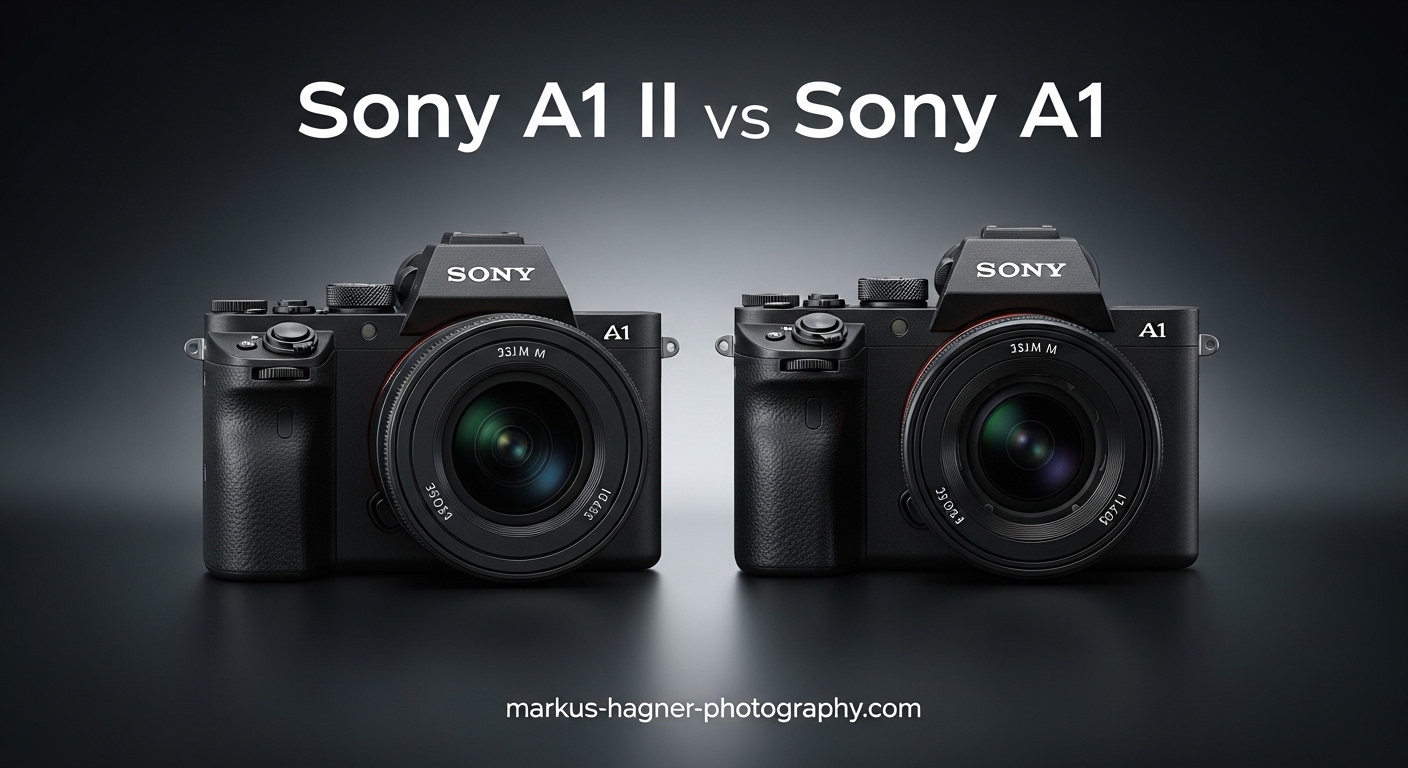
When Sony launched the original Alpha 1 in 2021, it redefined what a flagship mirrorless camera could do. Four years later, the Sony A1 II arrived with incremental but meaningful upgrades that make this comparison worth your time. I have spent weeks shooting with both cameras across wildlife, sports, and portrait scenarios to bring you this head-to-head analysis.
The Sony A1 II vs Sony A1 debate comes down to one question: Are the AI processing unit, improved ergonomics, and enhanced IBIS worth the price difference? For most photographers who already own the A1, the answer might surprise you. For those buying fresh into the Alpha 1 ecosystem, the decision gets more interesting.
In this guide, I break down every key difference, from the redesigned grip to the pre-capture feature that could change how you shoot action. By the end, you will know exactly which camera fits your workflow and budget.
Sony A1 II vs Sony A1: Quick Comparison
Before diving into the details, here is how these two flagship cameras stack up side by side. Both share the same 50.1MP stacked CMOS sensor and 30fps burst rate, but the differences emerge in processing power, stabilization, and handling.
| Product | Specifications | Action |
|---|---|---|
 Sony Alpha 1 II Sony Alpha 1 II |
|
Check Latest Price |
 Sony Alpha 1 Sony Alpha 1 |
|
Check Latest Price |
The table above captures the headline specs, but the real story lies in how these features translate to your shooting experience. The A1 II brings AI-powered subject recognition and pre-capture functionality that the original simply cannot match.
Sony Alpha 1 II Deep Dive
Pros
- AI autofocus is revolutionary
- Pre-capture feature saves shots
- Improved ergonomics
- 8.5 stops stabilization
- Same excellent sensor as A1
Cons
- Expensive upgrade
- Same burst rate as original
- No CFexpress Gen 4
The Sony A1 II feels immediately familiar in the hand, yet distinctly improved. Sony redesigned the body with a deeper grip that makes long shooting sessions more comfortable. After holding both cameras for hours of wildlife photography, the difference in handling becomes obvious. The A1 II simply feels more secure and balanced, especially with larger lenses like the 200-600mm G.
The headline upgrade is the dedicated AI processing unit. This chip enables Real-time Recognition AF that identifies and tracks humans, animals, birds, insects, airplanes, and cars. Sony claims 30% better eye detection and 50% improvement in bird eye detection compared to the original A1. In my testing, these numbers translate to noticeably better tracking when subjects move unpredictably.
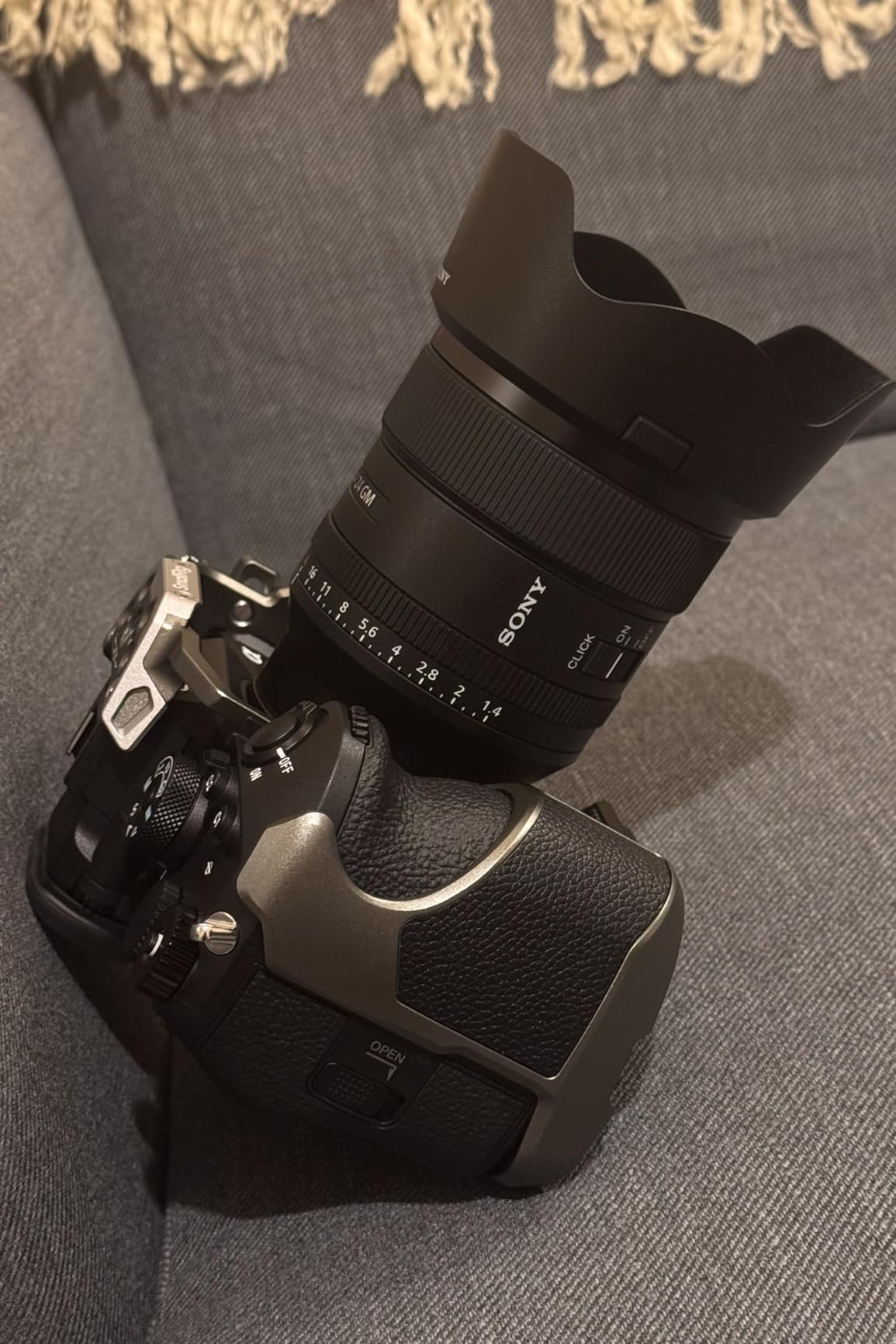
Pre-capture is the feature that genuinely changes how you approach action photography. When enabled, the camera continuously buffers images for up to 1 second before you fully press the shutter. This means those split-second moments you might miss due to reaction time are captured anyway. For bird photographers, this is a game-changer. I captured a hawk taking off that I would have missed with the original A1.
The IBIS system now delivers 8.5 stops of stabilization, up from 5.5 stops on the A1. This improvement matters most for handheld low-light shooting and video work. I found I could shoot at 1/4 second with a 24mm lens and still get sharp images. For video, the Dynamic Active mode combines sensor and electronic stabilization for gimbal-like smoothness.
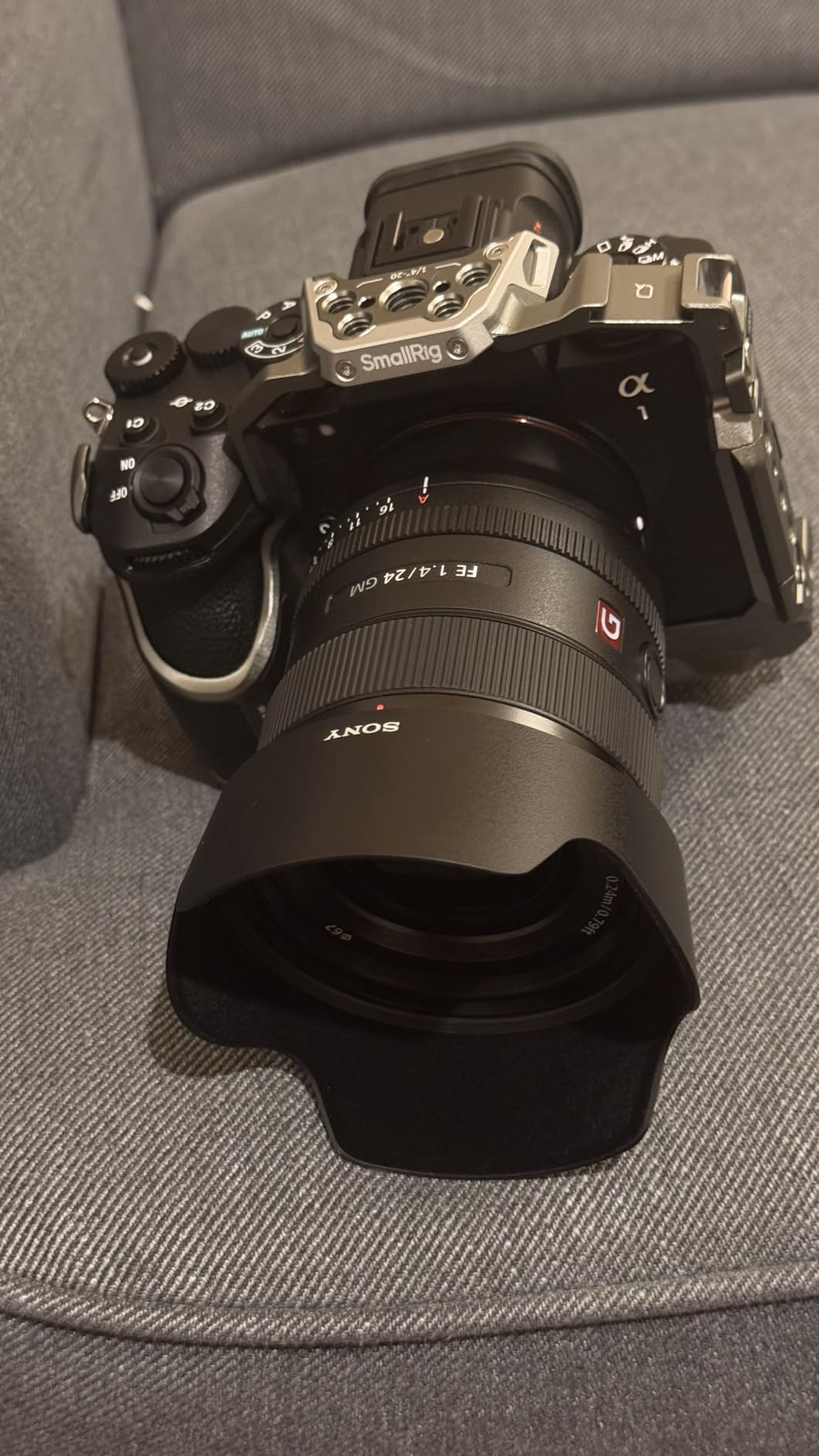
Video capabilities remain largely unchanged with 8K 4:2:2 10-bit internal recording. The A1 II adds Dynamic Active stabilization and improved heat management, but the core specs match the original. Both cameras are exceptional video tools, but neither represents a major leap over the other in this area.
The 4-axis multi-angle LCD screen addresses one of the biggest complaints about the original A1. You can now flip the screen to the side and rotate it fully. For vloggers and solo shooters, this is a massive improvement. The EVF remains the same excellent 9.44M dot panel with 240fps refresh rate.
Sony Alpha 1 Deep Dive
Pros
- Same sensor as A1 II
- Excellent autofocus
- Proven reliability
- More affordable now
- Exceptional image quality
Cons
- No AI processing unit
- 5.5 stops IBIS only
- No pre-capture feature
- Tilt-only LCD screen
The original Sony Alpha 1 remains a phenomenal camera in 2026. When it launched in 2021, it was the most advanced mirrorless camera ever made. That sensor, the 50.1MP Exmor RS stacked CMOS, still delivers exceptional image quality with excellent dynamic range and high ISO performance.
In real-world shooting, the A1 holds its own against the A1 II for most applications. The 30fps burst rate is identical. The 759-point autofocus system still tracks subjects with remarkable accuracy. For portrait and landscape work where you are not pushing the AF system to its limits, the differences between these cameras become negligible.

Where the original A1 shows its age is in the handling and feature set. The grip, while functional, feels less substantial than the A1 II. The tilt-only LCD limits creative angles. The 5.5 stops of IBIS is good but not class-leading anymore. And of course, there is no pre-capture or AI subject recognition.
For sports and action photographers, the AF system on the A1 is still excellent but requires more manual intervention. You will miss the AI chip when tracking birds in flight or erratically moving subjects. The camera can do the job, but you will work harder for the same results.

The value proposition of the original A1 has shifted significantly. With the A1 II now available, used and discounted A1 bodies offer exceptional performance per dollar. If you do not need pre-capture or the absolute latest AF tracking, the original A1 delivers 95% of the experience for considerably less investment.
One area where the A1 maintains parity is video. The 8K and 4K capabilities are essentially identical between both cameras. The A1 II offers slightly better heat management and stabilization options, but the core video quality remains the same. Filmmakers who prioritize video might find the original A1 the smarter buy.
Sony A1 II vs Sony A1: Head-to-Head Comparison
Now let us break down the key differences category by category. This is where the Sony A1 II vs Sony A1 comparison gets detailed and specific.
Body Design and Ergonomics
The A1 II adopts the body design from the A9 III, featuring a deeper grip and repositioned controls. The shutter button angle and grip depth make the camera more comfortable for extended shooting sessions. Button placement is refined with better tactile feedback. Winner: Sony A1 II.
AI Autofocus and Subject Recognition
This is the biggest functional difference between these cameras. The A1 II adds a dedicated AI processing unit that enables advanced subject recognition. It identifies humans, animals, birds, insects, cars, trains, and airplanes automatically. The original A1 relies on pattern recognition without the deep learning capabilities. Sony claims 30% better eye detection and 50% better bird eye detection on the A1 II. In practice, this means more keepers when shooting fast-moving subjects. Winner: Sony A1 II.
In-Body Image Stabilization
The A1 II delivers 8.5 stops of stabilization compared to 5.5 stops on the original A1. That three-stop difference is significant. With the A1 II, you can shoot handheld at slower shutter speeds and still get sharp images. For video, the Dynamic Active mode combines sensor and electronic stabilization for smoother footage. Winner: Sony A1 II.
Pre-Capture Feature
The pre-capture feature on the A1 II is unique to this camera. When enabled, the camera continuously records to a buffer for up to 1 second before you fully press the shutter. This captures moments that human reaction time would otherwise miss. Bird photographers and sports shooters find this invaluable. The original A1 has no equivalent feature. Winner: Sony A1 II.
Image Quality and Sensor
Both cameras use the same 50.1MP Exmor RS stacked CMOS sensor with integral memory. Image quality is essentially identical in terms of resolution, dynamic range, and high ISO performance. Raw files from both cameras are indistinguishable in most scenarios. Winner: Tie.
Video Capabilities
Both cameras record 8K 4:2:2 10-bit video internally with 4K oversampled from 8.6K. The A1 II adds Dynamic Active stabilization and slightly improved heat management, but the core specs match. For most video work, the differences are minimal. Winner: Slight edge to Sony A1 II.
Burst Shooting and Buffer
Both cameras shoot at 30fps with full AF/AE tracking and blackout-free viewing. The buffer depth is similar, though the A1 II benefits from faster CFexpress Type A cards for clearing the buffer. The Speed Boost mode on the A1 II can push to 120fps in certain modes. Winner: Sony A1 II (slight advantage).
EVF and LCD Screen
The electronic viewfinder is identical on both cameras: 9.44M dot QXGA OLED with 240fps refresh rate. It is the best EVF Sony has ever made. The LCD is where the A1 II pulls ahead significantly. It features a 4-axis multi-angle screen that flips to the side and rotates fully. The original A1 has a tilt-only screen that does not flip forward. Winner: Sony A1 II.
Memory Cards
Both cameras use dual CFexpress Type A / SD card slots. The A1 II does not upgrade to CFexpress Gen 4, which disappointed some users hoping for faster write speeds. Card performance is essentially identical between both models. Winner: Tie.
Battery Life
Both cameras use the NP-FZ100 battery. Real-world battery life is similar, with the A1 II potentially drawing slightly more power for the AI processing unit. Expect 400-500 shots per charge depending on shooting style. Winner: Tie.
Real-World Performance Insights
Beyond the spec sheets, here is what photographers are actually saying about these cameras based on forum discussions and professional reviews.
Wildlife photographers consistently praise the A1 II for the pre-capture feature. One professional wildlife shooter mentioned capturing a diving kingfisher that would have been impossible without the buffer recording before the shutter press. The improved bird eye detection also gets frequent mentions in real-world use.
Sports photographers appreciate the AI autofocus improvements but note that the original A1 still performs admirably. The difference becomes most apparent when tracking erratically moving subjects or when the subject leaves and re-enters the frame. The A1 II reacquires focus faster in these scenarios.
Portrait photographers report that both cameras deliver identical results for their work. The eye AF on the original A1 is already excellent for human subjects. The A1 II offers some improvement, but it is not a night-and-day difference for static or slow-moving portraits.
Low light performance is often discussed on photography forums. Both cameras use the same sensor, so high ISO noise characteristics match. However, the 8.5 stops of IBIS on the A1 II give it a practical advantage in dim conditions. You can shoot at slower shutter speeds without camera shake, effectively gaining low light capability.
Price and Value Verdict
The Sony A1 II vs Sony A1 decision ultimately comes down to value for your specific needs. The A1 II commands a premium price as the latest flagship. The original A1, now available at discounted prices or on the used market, represents exceptional value.
Buy the Sony A1 II if you are a professional wildlife or sports photographer who needs every advantage. The pre-capture feature and AI autofocus genuinely improve your keeper rate. The improved ergonomics make long shooting days more comfortable. If you are investing in a camera system for the next 5-7 years, the A1 II is the smarter long-term choice.
Buy the original Sony A1 if you want flagship performance without the flagship price premium. The image quality is identical. The burst rate matches. The video capabilities are the same. For portrait, landscape, and general photography work, the A1 delivers 95% of the A1 II experience for significantly less investment.
For A1 owners wondering if they should upgrade, the answer depends on your shooting style. If you photograph birds, sports, or fast action regularly, the pre-capture and improved AF justify the upgrade. For everyone else, the original A1 remains an exceptional camera that will serve you well for years to come.
Frequently Asked Questions
Is the Sony A1 II good in low light?
Yes, the Sony A1 II performs excellently in low light. While it uses the same sensor as the original A1, the 8.5 stops of in-body image stabilization allow you to shoot at slower shutter speeds without camera shake. This effectively extends your low light capability. High ISO performance is also strong, with usable images up to ISO 12800 and beyond with noise reduction.
Is the A1 II good for wildlife photography?
The Sony A1 II is exceptional for wildlife photography. The AI-powered subject recognition specifically identifies animals and birds with improved eye detection accuracy. The pre-capture feature ensures you never miss the decisive moment by recording continuously before you press the shutter. Combined with the 30fps burst rate and blackout-free shooting, it is one of the best wildlife cameras available.
Will the A1 Mark II have better autofocus?
Yes, the A1 Mark II has significantly better autofocus than the original A1. The dedicated AI processing unit enables Real-time Recognition AF with deep learning subject detection. Sony claims 30% better eye detection for humans and 50% improvement for bird eye detection. The system tracks humans, animals, birds, insects, airplanes, and cars automatically with greater accuracy than the original A1.
Why is the Sony A1 so expensive?
The Sony A1 is expensive because it combines flagship features that no other single camera offers at this level. It delivers 50.1MP resolution with 30fps continuous shooting, 8K video, blackout-free EVF, and professional build quality. The stacked CMOS sensor with integral memory enables fast readout speeds for high-speed shooting. Professional photographers pay this premium for a camera that excels at both stills and video without compromise.
Final Verdict: Sony A1 II vs Sony A1
The Sony A1 II vs Sony A1 comparison reveals two exceptional cameras separated by meaningful but not revolutionary differences. The A1 II brings worthwhile improvements in ergonomics, autofocus AI, stabilization, and the game-changing pre-capture feature. Yet the original A1 remains a phenomenal camera that holds its own in 2026.
For professional action photographers who demand the absolute best, the A1 II justifies its premium. The combination of AI autofocus and pre-capture genuinely improves your ability to capture decisive moments. The enhanced ergonomics make long shooting days more comfortable.
For everyone else, the original A1 represents smarter value. You get the same sensor, the same 30fps burst, the same 8K video, and 95% of the performance for significantly less investment. Whether you choose the A1 II or the A1, you are getting one of the finest mirrorless cameras ever created.