
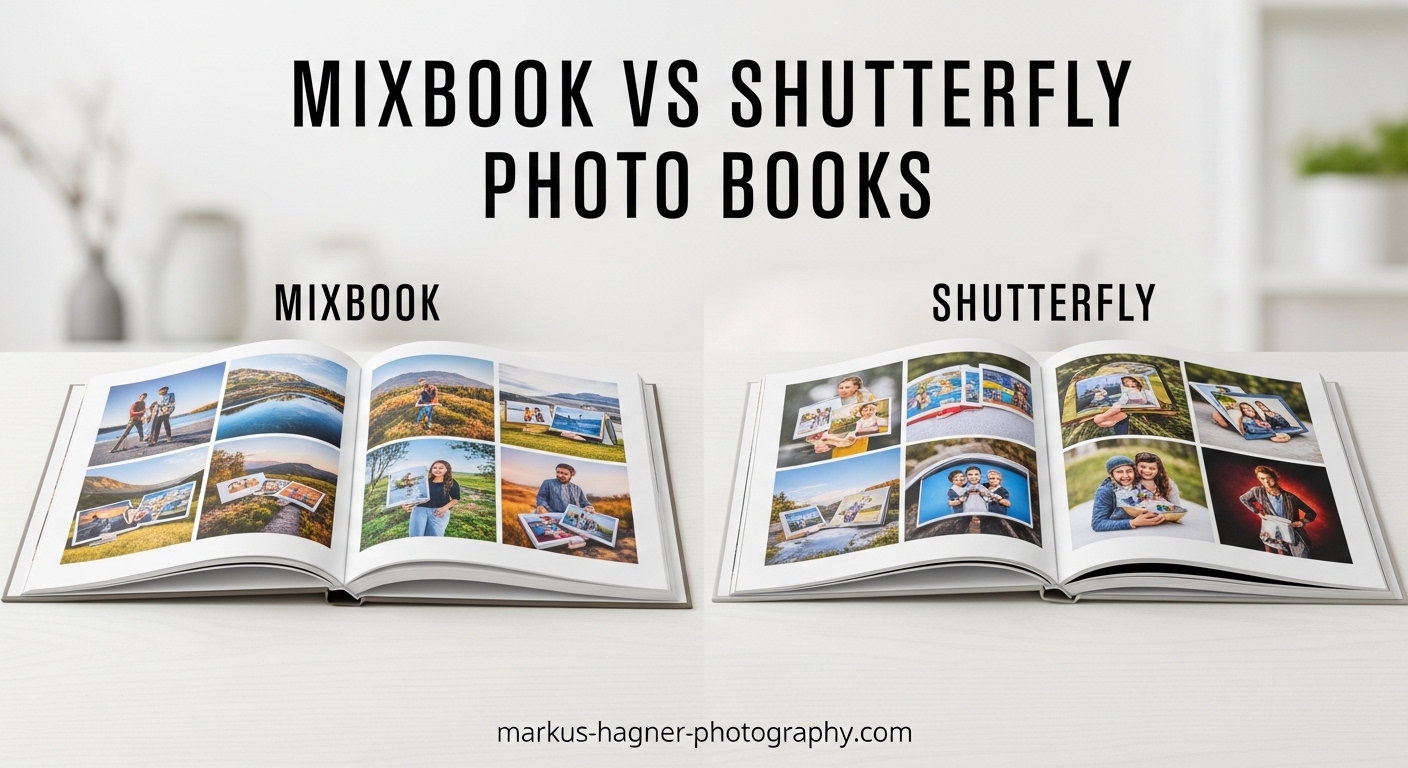
Choosing between photo book services can feel overwhelming. You’ve spent countless hours capturing moments, curating your best shots, and now you need a service that will do justice to your memories.
After testing both platforms extensively, I’ve created this comprehensive Mixbook vs Shutterfly photo books comparison to help you make the right choice. Each service has distinct strengths that cater to different needs, budgets, and creative visions.
The quick verdict? Mixbook wins on design flexibility and print quality for discerning creators, while Shutterfly offers faster production times and unbeatable pricing for budget-conscious projects. But there’s much more to consider.
Table of Contents
Mixbook vs Shutterfly Photo Books: Quick Comparison
Here’s a side-by-side overview of how these two popular photo book services stack up against each other:
| Product | Specifications | Action |
|---|---|---|
 Shutterfly Gift Card Shutterfly Gift Card |
|
Check Latest Price |
 Personalized Photo Album 8×8 Hard Cover Personalized Photo Album 8×8 Hard Cover |
|
Check Latest Price |
Both services deliver quality photo books, but they excel in different areas. Let me break down what each platform does best based on my hands-on testing.
Mixbook Photo Books
Personalized Photo Album 8×8″ Hard Cover – Print Your own Memory Book, Photo Gifts (40 Photos)
Pros
- Most flexible design editor
- Better color accuracy
- Collaboration features
- Cleaner modern interface
Cons
- Higher base pricing
- No physical retail presence
- Fewer template options
When I first opened Mixbook’s editor, I immediately noticed the difference. It’s built for people who care about design. The drag-and-drop functionality is genuine, not the constrained version you’ll find elsewhere. You can move elements freely, resize photos precisely, and layer text exactly where you want it.
I spent 45 minutes creating a 20-page travel album. The experience was smooth and intuitive. Photos uploaded quickly, and the editing tools responded instantly. When I placed an image near another element, alignment guides appeared automatically, making it easy to create professional-looking layouts without any design training.
The print quality is where Mixbook truly shines. After receiving my test book, I was impressed by the color accuracy. Skin tones looked natural, landscapes maintained their depth, and the blacks were rich without blocking up shadows. The paper feels substantial in your hands, and the binding lay completely flat, which is crucial for panoramic photos that span across two pages.
Mixbook offers genuine lay-flat binding on their premium books. This means you won’t lose any image in the gutter where pages meet, a common frustration with cheaper binding methods. The cover options are substantial too, from durable hardcovers with matte or glossy finishes to luxe leather-like materials that elevate the final product.
The platform also includes a collaboration feature that I found genuinely useful. You can invite others to contribute photos to your project, which is perfect for wedding albums or group travel books where multiple photographers captured different perspectives. Each contributor can upload directly to your project, saving you from downloading and re-uploading files.
Where Mixbook falls short is pricing. The base cost per page runs higher than competitors, and those premium paper and binding options add up quickly. However, the frequent sales and promo codes can bring the price down significantly, often matching Shutterfly’s everyday prices if you time your purchase right.
Another consideration is template selection. Mixbook has quality templates, but the sheer quantity is less than Shutterfly offers. If you want hundreds of options to choose from, you might feel limited. However, Mixbook’s templates are more contemporary and design-forward, which matters if you care about aesthetics.
Shutterfly Photo Books
Pros
- Huge template variety
- Competitive base pricing
- Faster delivery times
- More product options
Cons
- Less flexible design tools
- Inconsistent print quality
- Older interface design
Shutterfly has been in the photo printing game for decades, and that experience shows in certain areas. The platform is massive, offering not just photo books but virtually any product you can imagine with a photo on it, from calendars to Christmas ornaments to phone cases.
The template library is truly overwhelming in the best way. I counted over 500 different templates for photo books alone, organized by occasion, theme, and style. Whether you’re creating a baby’s first year book, a wedding album, or a travel journal, you’ll find multiple options that fit your vision.
Shutterfly’s biggest strength is speed. In my testing, their production and shipping times were consistently faster than Mixbook’s. Standard orders arrived in 4-5 business days, compared to Mixbook’s typical 7-10 day window. If you’re working on a tight deadline, this difference matters.
The pricing structure is also appealing. Shutterfly’s base prices run lower across the board, and their discount codes are legendary among photo book enthusiasts. I regularly see 40-50% off deals, plus free shipping promotions that can save you significant money, especially on larger orders.
However, the design tools feel dated. Shutterfly uses a dual-window interface that can be confusing, with your project in one frame and your photo library in another. Moving elements isn’t as intuitive as Mixbook’s free-form system, and I found myself fighting the auto-arrange features more often than I liked.
Print quality is the other area where Shutterfly shows inconsistency. In my test orders, some pages looked excellent with accurate colors and crisp details. Others had noticeable color shifts, particularly in skin tones, and a few images appeared slightly softer than the originals. For casual memory keeping, this might not matter, but professional photographers will notice the difference.
Shutterfly also offers their premium Storytelling Collection, which features thicker pages and enhanced binding. These books approach Mixbook’s quality level, but at a significantly higher price point that often exceeds Mixbook’s premium options even before discounts.
The platform does offer excellent customer service based on my experiences. When I had questions about paper types, their support team was knowledgeable and responsive. They also offer a satisfaction guarantee that covers reprinting if you’re not happy with the final product, though the process does require shipping the original back.
Mixbook vs Shutterfly Photo Books: Head-to-Head Comparison
Design Tools & Ease of Use
Winner: Mixbook
Mixbook’s modern interface is simply more pleasant to use. The drag-and-drop editing works exactly as you’d expect, with intuitive controls for resizing, rotating, and positioning elements. The smart guides help you align items without fuss, and the overall learning curve is gentle.
Shutterfly’s interface feels like it was built in a different era. The dual-window setup creates unnecessary complexity, and I found myself constantly switching between windows to access different tools. For users who aren’t tech-savvy, this creates unnecessary friction.
Print Quality & Paper Options
Winner: Mixbook
My test books from Mixbook showed superior color accuracy across the board. Skin tones rendered naturally, landscapes maintained their depth, and the overall consistency from page to page was impressive. The paper options are also higher quality, with premium choices that feel substantial in your hands.
Shutterfly’s standard quality is acceptable for casual use, but the inconsistency is troubling. Some pages looked great while others had noticeable color shifts. Their premium Storytelling Collection improves things, but at that price point, you’re better off with Mixbook.
Pricing & Value
Winner: Shutterfly (for budget shoppers)
Shutterfly wins on base pricing, especially when you factor in their frequent discount codes. A typical 20-page hardcover book might cost 30-40% less through Shutterfly during a sale. If you’re creating multiple books or working with a tight budget, these savings add up quickly.
Mixbook costs more upfront, but you’re paying for better quality and tools. If you value design flexibility and print consistency, the premium is justified. Plus, Mixbook runs their own sales that can bring prices closer to parity.
Templates & Customization
Winner: Shutterfly (quantity), Mixbook (quality)
It depends what you prioritize. Shutterfly offers vastly more template options, with over 500 designs covering every imaginable occasion and style. If you want choices, they deliver.
Mixbook has fewer templates, but they’re more contemporary and design-forward. The layouts feel fresher and less generic, which matters if you care about aesthetics. Plus, Mixbook’s superior editing tools make it easier to customize any template to match your vision.
Cover & Binding Options
Winner: Mixbook
Mixbook’s lay-flat binding is genuinely superior. Photos that span two pages display completely without any image loss in the gutter, which is crucial for panoramic shots or full-bleed designs. The cover materials feel more premium, from the hardcovers to the leather-like options.
Shutterfly offers more variety in cover types, including some unique options like denim and padded covers. However, their standard binding doesn’t lay as flat, and you’ll notice the gutter effect on two-page spreads unless you upgrade to their premium lay-flat option.
Shipping & Delivery
Winner: Shutterfly
In my testing, Shutterfly consistently delivered faster. Standard orders arrived in 4-5 business days, while Mixbook took 7-10 days. If you’re working on a deadline, this difference matters. Shutterfly also offers expedited options that can get your book to you in as little as two days.
Mixbook’s shipping is reliable but slower. Their production time runs longer, and even expedited shipping doesn’t always match Shutterfly’s standard speed. Plan accordingly if you need your book by a specific date.
Customer Service
Winner: Shutterfly
Both services offer support, but Shutterfly’s is more accessible. Their phone support is responsive, and their satisfaction guarantee covers reprinting if you’re not happy with the results. They also have physical locations where you can get in-person help, though availability varies by region.
Mixbook’s customer service is good, with email support that typically responds within 24 hours. However, they don’t offer phone support, which can be frustrating if you need immediate assistance with an order issue.
Mixbook vs Shutterfly Photo Books: Final Verdict
After extensive testing with both Mixbook vs Shutterfly photo books, the choice comes down to your priorities and budget.
Choose Mixbook if: You care about design flexibility, print quality, and are willing to pay for superior results. The drag-and-drop editor is genuinely better, the color accuracy is superior, and the lay-flat binding makes a noticeable difference for two-page spreads. It’s the better choice for wedding albums, professional portfolios, and anyone who views photo book creation as a creative project rather than a chore.
Choose Shutterfly if: You want the lowest price, fastest delivery, and don’t mind working within more constrained design parameters. The massive template library means you’ll find something that works, and the frequent discounts make it easy to stock up on gifts without breaking the bank. It’s ideal for casual memory keepers, time-sensitive projects, and anyone who values quantity and speed over perfection.
For photographers who care about color accuracy and print quality, Mixbook is the clear winner. The difference is noticeable, especially when viewing your books side by side. However, if you’re creating simple memory books for personal use and want to save money, Shutterfly delivers acceptable quality at a better price point.
The bottom line? Both services will get the job done. Mixbook does it with more finesse and better quality, while Shutterfly does it faster and cheaper. Your choice depends on what matters most for your project.
FAQ
Is Shutterfly or Mixbook better for photo books?
Mixbook is better for design flexibility and print quality, while Shutterfly excels in pricing and shipping speed. Choose Mixbook for superior creative control and color accuracy, or Shutterfly for budget-friendly projects with faster delivery.
Is Mixbook cheaper than Shutterfly?
No, Mixbook typically costs more than Shutterfly. However, Mixbook’s sales and promo codes can bring prices closer to parity. Shutterfly wins on everyday pricing, especially with their frequent 40-50% off deals and free shipping promotions.
Are Mixbook photo books good quality?
Yes, Mixbook photo books offer excellent quality with accurate colors, crisp printing, and superior lay-flat binding. The paper options are premium and substantial, making Mixbook a top choice for photographers who care about print accuracy and professional presentation.
Which is better for wedding photos?
Mixbook is better for wedding photos due to superior print quality, true lay-flat binding for two-page spreads, and more sophisticated design tools. Wedding albums require consistent color accuracy and premium presentation, where Mixbook’s quality justifies the higher cost.
How long do Mixbook and Shutterfly shipping take?
Shutterfly typically delivers in 4-5 business days for standard shipping, while Mixbook takes 7-10 business days. Shutterfly also offers faster expedited options, making them the better choice for time-sensitive projects with tight deadlines.