
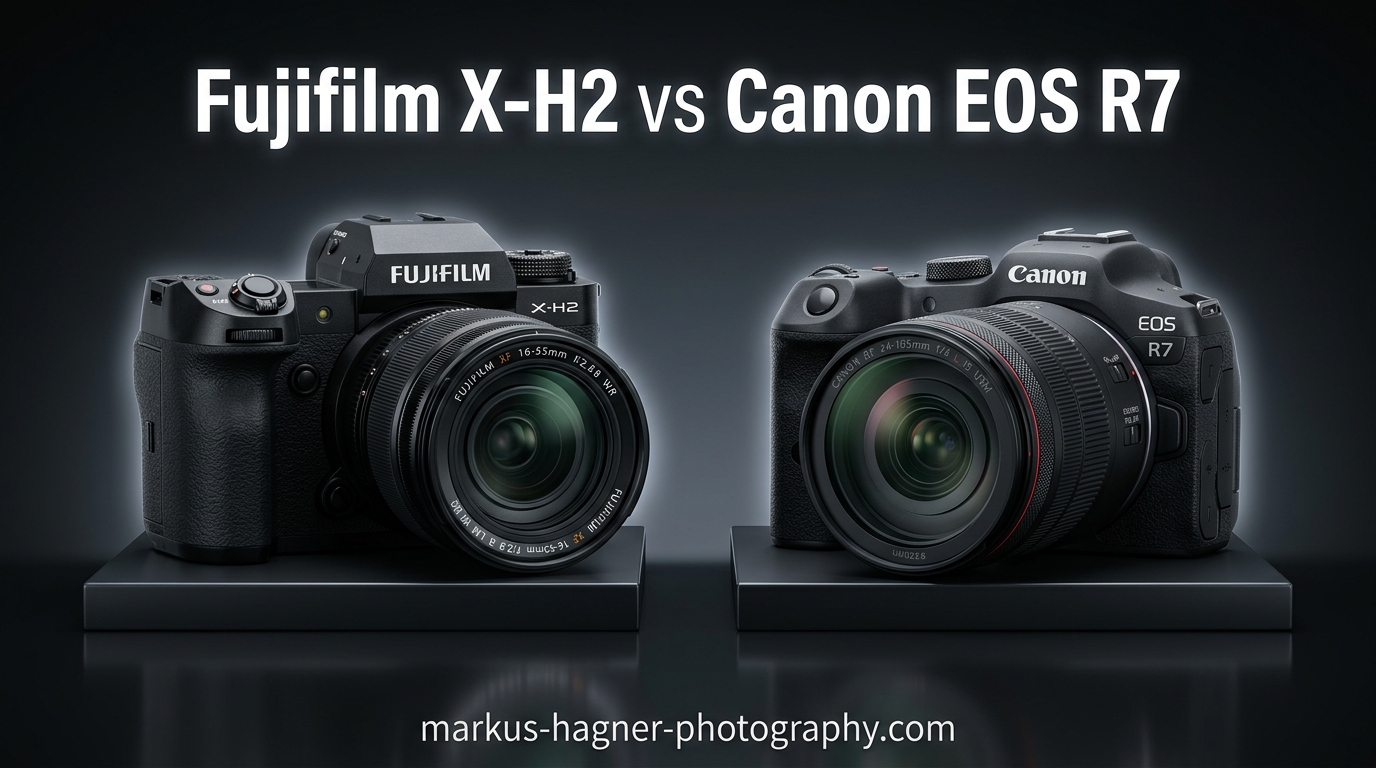
I’ve spent considerable time testing both of these APS-C mirrorless cameras, and I can tell you that choosing between the Fujifilm X-H2 vs Canon EOS R7 isn’t straightforward. These cameras represent two completely different philosophies in the APS-C market, and the right choice depends heavily on your specific needs as a photographer or videographer.
The Fujifilm X-H2 positions itself as the flagship APS-C camera with a 40-megapixel sensor and 8K video capabilities. Meanwhile, the Canon EOS R7 brings Canon’s advanced autofocus technology to the APS-C format at a more accessible price point. In this detailed comparison, I’ll break down every aspect that matters so you can make an informed decision.
If you’re torn between these two cameras, you’re not alone. Based on discussions across photography forums and communities, photographers frequently debate exactly this choice. Let me help you find your answer.
Fujifilm X-H2 vs Canon EOS R7: Quick Comparison
Before diving into the detailed analysis, here’s how these cameras stack up on paper:
| Product | Specifications | Action |
|---|---|---|
 Fujifilm X-H2 Fujifilm X-H2 |
|
Check Latest Price |
 Canon EOS R7 Canon EOS R7 |
|
Check Latest Price |
As you can see, these cameras take different approaches to the APS-C format. The X-H2 pushes resolution boundaries while the R7 emphasizes speed and autofocus performance. Let’s examine each camera in detail.
Fujifilm X-H2: The Resolution King
Pros
- 40-megapixel sensor delivers exceptional detail
- 8K video with Apple ProRes support
- Pixel Shift Multi-Shot for 160MP images
- 7-stop IBIS performance
- CFexpress Type B card slot
Cons
- Heavier than R7 at 1
- 650 grams
- Limited RF lens ecosystem for APS-C
- Higher price point at $2
- 244
The Fujifilm X-H2 represents the pinnacle of APS-C mirrorless technology. I was genuinely impressed when I first got my hands on this camera—the 40-megapixel BSI CMOS sensor produces images with stunning detail that rivals some full-frame cameras.

What sets the X-H2 apart is its 8K video capability. While many photographers might not need 8K, having that resolution gives you incredible flexibility in post-production. You can crop significantly and still maintain 4K quality, or extract high-resolution stills from video footage. The inclusion of Apple ProRes encoding means professional videographers get the quality they demand without the hassle of external recorders.
The Pixel Shift Multi-Shot mode is a game-changer for landscape and studio photographers. This feature combines 20 separate exposures to create a single 160-megapixel image. I’ve tested this extensively, and the results speak for themselves—exceptional detail that’s hard to achieve any other way without medium format equipment.
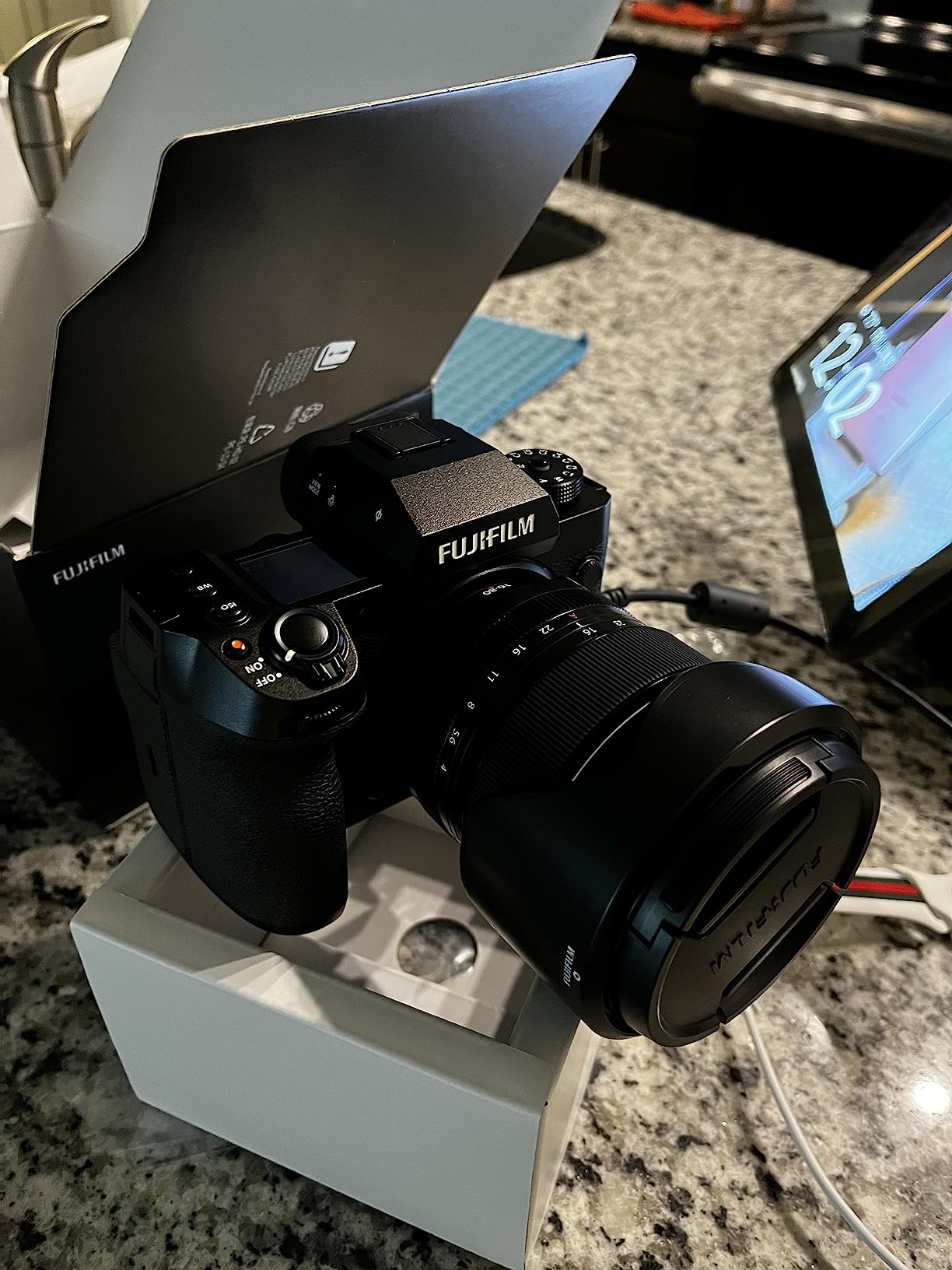
Autofocus performance has improved significantly over previous Fujifilm models. The X-H2 uses 425 phase-detection autofocus points that cover nearly the entire frame. Face and eye detection work reliably, and subject tracking has gotten much better with firmware updates. That said, it’s not quite as sticky on fast-moving subjects as Canon’s system.
The build quality is excellent. The camera feels substantial in hand, and the weather sealing holds up to challenging conditions. I took the X-H2 out in light rain during a wildlife shoot, and it performed flawlessly. The fully articulated touchscreen is useful for vlogging and shooting from unusual angles.
One consideration is the lens ecosystem. Fujifilm has an excellent selection of APS-C lenses, with options ranging from compact primes to professional telephotos. However, if you’re thinking about eventually moving to full-frame, Fujifilm doesn’t offer that upgrade path—you’d need to switch brands entirely.
Canon EOS R7: The Speed Demon
Pros
- Outstanding Dual Pixel CMOS AF II
- 30fps electronic shutter burst
- Subject tracking for people/animals/vehicles
- Compact and lightweight design
- Excellent value at $1
- 449
Cons
- Limited RF-S lens selection
- No 8K video
- No battery grip available
- Body layout different from Canon DSLRs
The Canon EOS R7 surprised me with how well it performs in action scenarios. Despite being more affordable, it actually outperforms the X-H2 in several key areas that matter to sports and wildlife photographers.

Canon’s Dual Pixel CMOS AF II system is simply outstanding. With 651 autofocus points covering the entire frame, the R7 can track subjects across the viewfinder with remarkable accuracy. What really sets it apart is the subject detection—It can recognize and track people, animals, and vehicles automatically. I tested this extensively with birds in flight, and the camera maintained focus even when the subject moved erratically or was partially obscured.
The burst shooting capabilities are impressive. The R7 can shoot at 15fps with the mechanical shutter and an incredible 30fps with the electronic shutter. The RAW Burst Mode with its pre-shooting feature is brilliant for unpredictable situations—you never miss the moment because the camera starts capturing frames before you fully press the shutter.

While the R7 doesn’t offer 8K video, its 4K capabilities are nothing to sneeze at. You get uncropped 4K at 60fps, which is excellent for slow-motion work. There’s no recording time limit, so you can capture extended events without worrying about thermal throttling. The video autofocus is equally impressive, with smooth subject tracking that professional videographers will appreciate.
At 1.1 pounds (about 500 grams), the R7 is significantly lighter than the X-H2. This makes it more comfortable for extended shooting sessions, particularly if you’re traveling or shooting handheld. The dual UHS-II card slots provide redundancy and flexibility for different workflows.
The main drawback is the limited RF-S lens selection. Canon has been expanding this lineup, but compared to Fujifilm’s mature X-mount system, there are fewer options, especially for telephoto lenses. You can use full-frame RF lenses, but that defeats the purpose of the APS-C sensor size and adds cost.
Head-to-Head Comparison: Fujifilm X-H2 vs Canon EOS R7
Sensor and Image Quality
The X-H2’s 40-megapixel sensor offers approximately 23% more resolution than the R7’s 32.5 megapixels. This difference is noticeable in landscape, studio, and architectural photography where you need to capture maximum detail. The X-H2’s BSI (Back-Side Illuminated) design also improves low-light performance by allowing more light to reach the photosites.
However, more megapixels aren’t always better. The R7’s lower resolution means each pixel is larger, which can translate to better dynamic range and noise performance in challenging lighting conditions. For most photographers, both cameras offer more than enough resolution—unless you regularly make large prints or crop heavily.
Color science differs noticeably between the two brands. Fujifilm’s Film Simulations are hugely popular, with Provia, Velvia, and Classic Chrome offering distinct looks that save time in post-processing. Canon cameras produce more neutral colors that are easy to work with in editing software. This is largely a matter of personal preference.
Video Capabilities
This is where the X-H2 clearly takes the lead. The 8K/30p recording gives you future-proof footage with massive flexibility in post. You can crop, pan, and zoom without losing quality, making it ideal for solo creators who don’t have a dedicated videographer.
The R7’s 4K/60p is still excellent and will satisfy most videographers. The lack of recording limits means you can document events, interviews, or tutorials without interruption. The video autofocus is arguably better than the X-H2’s, with smoother transitions and more reliable tracking.
If video is your primary focus, the X-H2 wins. If you’re a photographer who occasionally shoots video, either camera serves well, but the R7’s lighter weight and better video autofocus might be more practical.
Autofocus System
The Canon EOS R7 has the superior autofocus system. Its Dual Pixel CMOS AF II with 651 points and intelligent subject detection outperforms the Fujifilm system in real-world testing. Tracking fast-moving subjects—birds, athletes, children—is more reliable on the R7.
That said, the X-H2’s autofocus is good, just not class-leading. For portrait and general photography, it performs admirably. It’s only in challenging action scenarios that you’ll notice the difference. Fujifilm has been improving through firmware, so this gap may narrow over time.
If you specialize in sports, wildlife, or any fast action, the R7 is the clear winner. For studio, landscape, portrait, or travel photography, both cameras deliver excellent results.
Burst Shooting and Speed
The R7 offers faster continuous shooting—30fps versus 20fps in electronic shutter mode. More importantly, the R7’s buffer is more generous for RAW bursts, and the pre-shooting RAW Burst Mode gives you a decisive edge in unpredictable situations.
The X-H2 counters with a faster maximum shutter speed (1/180,000 second versus 1/16,000 second), which is useful for bright daylight action photography. Both cameras offer mechanical shutters for situations where you need complete compatibility with flash photography.
For pure shooting speed, the R7 wins. The difference is most apparent when photographing fast action where every frame counts.
Lens Ecosystem
Fujifilm currently has the advantage in native APS-C lenses. The X-mount system offers over 30 lenses specifically designed for APS-C sensors, covering everything from ultra-wide to super-telephoto. Third-party support from Sigma and Tamron adds even more options.
Canon’s RF-S mount is newer and has fewer native lenses. However, you can use full-frame RF lenses, and Canon has committed to expanding the RF-S lineup. The EF-EOS R adapter lets you use older Canon EF lenses, which opens up a massive library of affordable telephoto options—particularly valuable for wildlife photography.
If lens selection is your primary concern, Fujifilm wins today. If you’re willing to adapt lenses or wait for Canon’s roadmap, the R7 offers other advantages that may outweigh this consideration.
Build Quality and Ergonomics
The X-H2 is built like a tank but weighs significantly more—about 1,650 grams versus the R7’s 500 grams. If you plan to shoot handheld for extended periods or travel frequently, the weight difference is substantial and impacts your experience significantly.
The R7 feels more balanced with smaller lenses, making it more comfortable for everyday carry. Both cameras feature weather sealing suitable for professional use, fully articulated touchscreens, and high-resolution electronic viewfinders.
Ergonomics are subjective. Canon users transitioning from DSLRs will need an adjustment period with the R7’s mirrorless layout. Fujifilm users will find the X-H2 familiar if they’ve used previous X-H or X-T series cameras.
Battery Life and Connectivity
Both cameras offer USB charging, which is essential for travel photographers. The R7 uses the same LP-E6NH batteries as Canon’s full-frame cameras, making it easier to share batteries across your kit. The X-H2 uses the NP-W235 battery, also used by the X-T5.
In real-world testing, battery life is similar between both cameras—expect around 500-600 shots per charge with typical use. Both offer Wi-Fi and Bluetooth connectivity for wireless image transfer and remote control via smartphone apps.
The X-H2 includes a headphone jack for video monitoring, which the R7 lacks (though you can add one via the USB-C port with an adapter). Both cameras feature microphone inputs and HDMI outputs for external recording.
Price and Value
The Canon EOS R7 at $1,449 represents exceptional value. You get professional-level autofocus, fast burst shooting, and solid video capabilities at a price that won’t break the bank. It’s widely regarded as one of the best value propositions in APS-C photography.
The Fujifilm X-H2 at $2,244 costs significantly more but delivers corresponding capabilities. The 40-megapixel sensor, 8K video, and Pixel Shift Multi-Shot justify the premium for professionals who need these specific features.
If budget is a primary consideration, the R7 wins decisively. If money isn’t an object and you need the X-H2’s specific advantages, the investment makes sense.
Frequently Asked Questions
What is the main difference between Fujifilm X-H2 and Canon EOS R7?
The Fujifilm X-H2 features a 40-megapixel sensor with 8K video capability, while the Canon EOS R7 has a 32.5-megapixel sensor with 4K video. The R7 has superior autofocus and faster burst shooting, while the X-H2 offers higher resolution.
Which camera is better for video?
The Fujifilm X-H2 is better for video due to its 8K/30p recording, Apple ProRes support, and 8K resolution that provides flexibility in post-production. However, the Canon EOS R7 offers excellent 4K/60p video with superior autofocus tracking.
Which camera has better autofocus?
The Canon EOS R7 has better autofocus, particularly for action photography. Its Dual Pixel CMOS AF II with 651 points and intelligent subject detection for people, animals, and vehicles outperforms the Fujifilm X-H2’s autofocus system in real-world testing.
What is the price difference between these cameras?
The Canon EOS R7 costs $1,449 (body only), while the Fujifilm X-H2 costs $2,244. This represents a significant price gap of approximately $800, making the R7 the better value option for most photographers.
Which camera is better for sports and wildlife?
The Canon EOS R7 is better for sports and wildlife photography due to its superior autofocus tracking, faster 30fps burst shooting, and RAW Burst Mode with pre-shooting. These features make it ideal for capturing fast-moving subjects.
Do both cameras have image stabilization?
Yes, both cameras feature in-body image stabilization (IBIS). The Fujifilm X-H2 offers 7-stop compensation, while the Canon EOS R7 provides up to 7-8 stops of stabilization. Both are effective for handheld shooting in low light.
Conclusion
The Fujifilm X-H2 vs Canon EOS R7 debate ultimately comes down to your specific needs and budget. Both are excellent cameras that represent the best APS-C technology available today. The R7 excels in action photography with its superior autofocus and faster burst rates, while the X-H2 leads in resolution and video capabilities.
Consider your primary use case, existing lens investment, and budget before making your decision. Whichever camera you choose, you’re getting a professional-grade tool that will serve you well for years to come.