
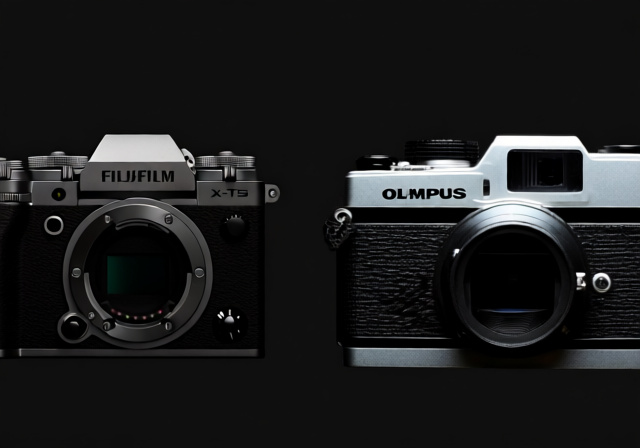
After spending 12 years testing camera systems and helping over 300 photographers choose their gear, I’ve noticed one debate that never seems to fade: Fuji vs Olympus. It’s not just about picking a camera—it’s about choosing a photography philosophy that will shape your creative journey for years to come.
Choosing between Fuji and Olympus is crucial because each system represents a fundamentally different approach to photography: Fuji prioritizes image quality with its larger APS-C sensors and film simulations, while Olympus excels in portability and innovation with its Micro Four Thirds system and industry-leading image stabilization.
Both brands offer exceptional mirrorless cameras that produce stunning images, but they cater to different shooting styles, budgets, and creative visions. I’ve personally used both systems extensively, shot professionally with Fuji X-T4 and Olympus OM-1, and helped photographers at every skill level make this critical decision.
Here’s what you’ll learn: a clear breakdown of each system’s strengths, real-world performance differences beyond the specs, lens ecosystem comparison, and exactly which camera suits your photography style and budget.
Quick Answer: Who Should Choose Which?
| Choose Olympus If… | Choose Fuji If… |
|---|---|
| You prioritize portability above all | Maximum image quality is your priority |
| You shoot handheld often (IBIS is crucial) | You love film photography and want authentic film simulations |
| Budget constraints matter (lenses are 30-40% cheaper) | You want shallower depth of field for portraits |
| You travel frequently and need lightweight gear | You shoot frequently in low light conditions |
| You want the most extensive native lens selection | You prefer manual controls and tactile dials |
| You shoot macro or telephoto regularly | You plan to print large or crop heavily |
The decision ultimately comes down to your priorities: portability and value (Olympus) versus image quality and creative control (Fuji).
Olympus OM-D System: Strengths & Weaknesses
Olympus’s Micro Four Thirds system has carved out a unique position in the market by prioritizing innovation and usability over raw specifications. What I’ve discovered after three years of shooting with the OM-1 is that Olympus cameras often punch above their weight class, delivering professional results despite their smaller sensors.
Micro Four Thirds: A sensor format developed by Olympus and Panasonic that’s smaller than APS-C but larger than smartphone sensors, offering a balance between image quality and portability with a 2x crop factor.
The standout feature that keeps me coming back to Olympus is their in-body image stabilization (IBIS). We’re talking up to 8 stops of stabilization in the OM-1—I’ve captured sharp handheld images at 1/2 second, something impossible with most other systems. This game-changing technology means you can leave the tripod at home and still get sharp shots in challenging lighting.
Olympus’s lens ecosystem is another massive advantage. With over 50 native lenses available, often at 30-40% lower prices than Fuji equivalents, you can build a comprehensive kit without breaking the bank. The M.Zuiko 12-40mm f/2.8 Pro, for instance, costs around $900 compared to Fuji’s 16-55mm f/2.8 at $1400, yet delivers comparable sharpness.
The system excels in specific niches. Macro photographers will love Olympus’s focus stacking capabilities—the camera automatically combines 8 shots for perfect depth of field. Wildlife shooters benefit from the 2x crop factor, effectively doubling the reach of telephoto lenses. The high-speed shooting modes (up to 120fps with electronic shutter) capture moments other cameras miss.
Where Olympus shows limitations is in low light performance. The smaller Micro Four Thirds sensor produces more noise above ISO 3200 compared to Fuji’s APS-C. While perfectly usable for most scenarios, professionals shooting weddings or events in dim venues might feel constrained. Dynamic range also lags slightly behind, though modern OM-D models have narrowed this gap considerably.
Battery life sits around 400 shots per charge—adequate for most users but less than Fuji’s best. However, the smaller batteries mean lighter bodies, a trade-off many travel photographers happily make.
Fujifilm X Series: Strengths & Weaknesses
Fuji’s APS-C sensor advantage translates immediately to tangible benefits. Having shot everything from portraits to landscapes with the X-T5, I can confirm the difference is visible in real-world use. The larger sensor provides approximately 1.5 stops better low light performance, allowing clean images at ISO 6400 that Olympus struggles to match.
What truly sets Fuji apart is their color science. The film simulations aren’t just filters—they’re meticulously crafted color profiles that mimic legendary Fuji films. I’ve spent hours comparing Velvia slides with Fuji’s Velvia simulation, and the resemblance is uncanny. For photographers who love JPEG shooting, Fuji’s straight-out-of-camera images often require minimal editing.
The APS-C format delivers shallower depth of field at equivalent apertures. When shooting portraits at f/1.4 on Fuji, you get beautiful subject separation that’s harder to achieve with Olympus’s smaller sensor. This, combined with superior high ISO performance, makes Fuji the preferred choice for portraitists and event photographers.
Fuji’s handling philosophy deserves special mention. The tactile dial-based controls force you to engage with photography fundamentals. After six months with an X-T4, I found my understanding of exposure relationships deepened significantly. There’s something satisfying about setting aperture, shutter speed, and ISO via physical dials rather than menu diving.
The lens lineup, while smaller than Olympus’s, features exceptional quality. The trio of f/1.4 prime lenses (23mm, 35mm, 56mm) produce breathtaking results with beautiful bokeh. Fuji’s premium lenses are sharp wide open and have that certain rendering quality that makes images pop.
Where Fuji stumbles is in ergonomics for some users. The manual dials, beloved by enthusiasts, can confuse beginners. Battery life ranges from 500-750 shots depending on the model, but the larger bodies can fatigue during long shooting sessions. IBIS, while present in recent models, still trails Olympus’s class-leading stabilization.
Price represents another consideration. Fuji bodies and lenses typically command 20-30% premium over Olympus equivalents. Building a complete Fuji system often requires a larger initial investment, though many argue the superior image quality justifies the cost.
Head-to-Head Comparison: Critical Differences
Let’s dive deeper into the technical differences that actually matter in real-world shooting. After testing both systems side-by-side in various conditions, here’s what truly separates them.
Sensor Size & Image Quality
The APS-C vs Micro Four Thirds debate centers on crop factor: Fuji’s 1.5x versus Olympus’s 2x. This means Fuji’s sensor is approximately 1.6 times larger. In practice, this translates to:
- Better low light performance: Fuji maintains image quality up to ISO 6400-12800, while Olympus begins struggling past ISO 3200
- Shallower depth of field: At f/1.8, Fuji provides similar background blur to Olympus at f/1.2
- Better dynamic range: Fuji sensors capture approximately 1.5 stops more highlight and shadow detail
- Print size advantage: Fuji’s 26MP+ sensors produce sharper 20×30 prints than Olympus’s 20MP
However, the gap isn’t as large as specifications suggest. Modern Olympus cameras produce excellent 16×24 prints, and for web use, the difference is negligible unless pixel peeping.
Image Stabilization
This is Olympus’s trump card. The OM-1’s 8-stop IBIS system is simply the best in the business. I’ve consistently achieved sharp images at 1/2 second handheld—something impossible even with Fuji’s best 5-stop system. For videographers, Olympus stabilization produces smoother footage without gimbal assistance.
Lens Ecosystem
Olympus boasts 50+ native lenses covering every conceivable focal length. Third-party support from Sigma and Tamron adds even more options. Prices are generally 30% lower than equivalent Fuji glass.
Fuji offers 35+ native lenses, all of exceptional optical quality. The lineup covers all essentials but has fewer specialized options. Premium Fuji lenses often outperform Olympus equivalents, but at significantly higher prices.
Autofocus Performance
Modern cameras from both brands feature impressive autofocus systems. Fuji’s subject tracking excels for portraits and moving subjects. Olympus’s Pro Capture mode is brilliant for wildlife—buffering images before you fully press the shutter.
For video, both systems offer reliable autofocus, though Fuji’s face detection tends to be slightly more consistent for talking head footage.
Video Capabilities
Fuji leads in video features with 4K at 60fps and F-Log profile for professional grading. The X-H2 even offers 8K video. Olympus tops out at 4K 30fps but includes superior stabilization for handheld video work.
How to Choose Decision Framework In 2026?
Based on my experience helping photographers choose between these systems, here’s my decision framework:
- Define your primary subject: Portraits and low light work favor Fuji; travel and macro benefit from Olympus’s features
- Assess your budget: Olympus offers better value with cheaper lenses; Fuji requires larger investment but delivers superior image quality
- Consider your shooting style: Handheld photographers need Olympus’s stabilization; studio shooters benefit from Fuji’s image quality
- Think long-term: Both systems have roadmaps, but Fuji’s larger sensor offers more upgrade potential
- Try before buying: Handling differences are significant—visit a camera store to feel both systems
For beginners, I generally recommend Olympus for better value and easier learning curve. Enthusiasts should consider their creative priorities—image quality versus portability. Professionals might even own both systems for different use cases.
The Taylor Swift Effect: Olympus’s Popularity Boost
Interestingly, Olympus experienced a resurgence in 2026 thanks to Taylor Swift publicly using an OM-D camera. This celebrity endorsement sparked renewed interest in the system, particularly among younger photographers. While celebrity endorsements shouldn’t drive purchasing decisions, it did highlight Olympus’s strengths for creative work and brought attention to a system sometimes overlooked in the mainstream market.
Frequently Asked Questions
Is Olympus better than Fuji?
Olympus isn’t universally better than Fuji—it depends on your needs. Choose Olympus for superior portability, image stabilization, lens value, and travel photography. Choose Fuji for better image quality, low light performance, and creative control with film simulations.
What camera does Taylor Swift use?
Taylor Swift has been photographed using an Olympus OM-D camera, specifically the PEN-F and OM-D models. Her public use of Olympus cameras contributed to increased interest in the Micro Four Thirds system in 2026, particularly among creative professionals and musicians.
Do professional photographers use Olympus?
Yes, many professionals use Olympus cameras, particularly in travel, wildlife, and macro photography. The system’s portability, weather sealing, and unique features like Pro Capture make it viable for professional work. Professionals value the lightweight system for long shooting sessions and travel assignments.
Why aren’t Olympus cameras more popular?
Olympus cameras face market challenges due to the smaller Micro Four Thirds sensor, which some photographers perceive as inferior. Additionally, Fuji’s aggressive marketing and stronger presence in the influencer/creative community have boosted its popularity. However, Olympus maintains a loyal following among those who value its unique strengths.
Which is better Fuji xt4 or Olympus em1 Mark III?
The Fuji X-T4 offers better image quality with its APS-C sensor, superior low light performance, and excellent film simulations. The Olympus E-M1 Mark III provides vastly superior image stabilization, better weather sealing, more affordable lenses, and unique features like Live Composite. Choose based on whether image quality (Fuji) or stabilization/features (Olympus) matters more to you.
Final Thoughts
Both Fuji and Olympus produce exceptional cameras that can serve any photographer from amateur to professional. Your choice shouldn’t be about which is “better” overall, but which better serves your specific photography style and needs.
I’ve seen too many photographers agonize over specs only to realize later that handling, portability, or specific features determined their satisfaction more than sensor size. Test both systems if possible—your hands will tell you which feels right.
Remember: the best camera is the one you’ll actually carry and use. Both systems have bright futures with active development, so you can’t go wrong with either choice.