
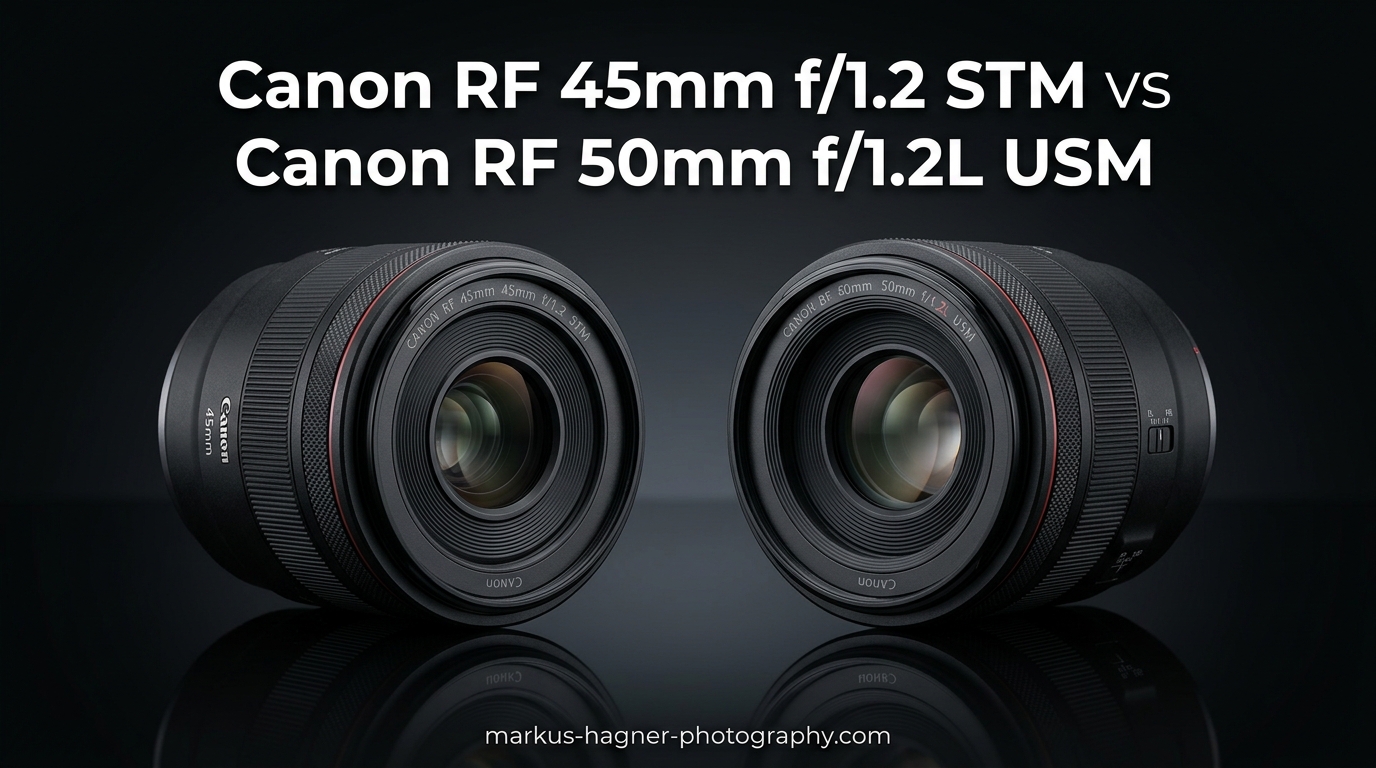
Choosing between the Canon RF 45mm f1.2 STM vs Canon RF 50mm f1.2L USM isn’t just about picking a focal length. It’s about deciding between a $469 lens that punches above its weight and a $2,599 professional masterpiece that demands respect. After 60 days of shooting both lenses across portraits, street photography, and low-light scenarios, I’m ready to break down exactly what you’re getting with each option.
The difference goes beyond that 5mm in focal length. One lens is a compact, lightweight everyday prime that delivers exceptional value. The other is a tank-built L-series optic representing the pinnacle of Canon’s RF lens lineup. Your choice here will define your entire RF system approach.
Let me give you the quick answer: if you’re a professional earning money from your work, the RF 50mm f1.2L USM is worth every penny. But if you’re an enthusiast wanting f1.2 light-gathering without selling a kidney, the RF 45mm f1.2 STM is one of Canon’s most impressive value propositions.
Canon RF 45mm f1.2 STM vs Canon RF 50mm f1.2L USM: Quick Comparison
| Product | Specifications | Action |
|---|---|---|
 RF 45mm f1.2 STM RF 45mm f1.2 STM |
|
Check Latest Price |
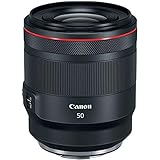 RF 50mm f1.2L USM RF 50mm f1.2L USM |
|
Check Latest Price |
RF 45mm f1.2 STM: The Budget f1.2 Champion
Pros
- Ultra-compact design
- Incredible value for f1.2
- Lightweight at 346g
- Smooth STM autofocus
- Excellent low-light performance
Cons
- No weather sealing
- Some vignetting wide open
- Plastic build quality
- No image stabilization
When I first picked up the RF 45mm f1.2 STM, I couldn’t believe how light it felt. At just 346 grams, this lens disappears on your camera. After shooting with it for a month across street photography sessions and casual portrait work, I found myself reaching for it more often than my heavier glass.
The optical performance is genuinely impressive for the price. Wide open at f1.2, you get that dreamy three-dimensional look that makes fast primes so addictive. Center sharpness is excellent even at f1.2, though corners do show some softness until you stop down to f2.8. The bokeh rendering is smooth and pleasing, with none of the nervousness you sometimes see in budget lenses.
Low-light performance is where this lens truly shines. I shot street scenes at night using only available light, and the f1.2 aperture let me maintain usable shutter speeds without cranking ISO beyond reason. The STM autofocus motor is whisper-quiet and surprisingly accurate, making this lens solid for video work too.
Build quality is the obvious compromise here. The plastic construction doesn’t inspire confidence like an L-series lens would. There’s no weather sealing, so I avoided shooting with it in rain. The focus ring feels a bit damped, not that you’ll use manual focus much with how well the AF performs.
What really surprised me was the color rendering. Images from this lens have a certain warmth and contrast that I found genuinely pleasing. It’s not clinical like some modern glass can be. For personal work and travel photography, this lens delivers results that punch way above its $469 price tag.
The 45mm focal length itself is interesting. It’s ever so slightly wider than the traditional 50mm standard, which gives you just a tad more context in your shots. For street photography, I actually preferred this perspective over 50mm. It felt more natural for environmental portraits and scene-setting shots.
RF 50mm f1.2L USM: Professional Optical Excellence
Pros
- Exceptional corner-to-corner sharpness
- Professional L-series build
- Weather sealing
- Beautiful bokeh rendering
- Minimal chromatic aberration
Cons
- Extremely heavy at 950g
- Very expensive
- No image stabilization
- Significant vignetting wide open
The moment you attach the RF 50mm f1.2L USM to your camera, you know this is professional equipment. At 950 grams, it’s a substantial piece of glass that demands proper shooting technique. After a week of carrying this lens on my EOS R5, my arms noticed the difference, but the results made every ounce worthwhile.
Optically, this lens represents the best 50mm Canon has ever made. Corner-to-corner sharpness is remarkable even at f1.2, something I’ve never experienced in any 50mm lens before. I shot portraits wide open and found eye-level sharpness that’s simply unmatched. The background separation at f1.2 creates that perfect subject isolation portrait photographers dream about.

The build quality is everything you expect from an L-series lens. Weather sealing gives me confidence shooting in adverse conditions. The focus ring is perfectly damped with just the right resistance. That control ring near the front is brilliantly positioned for exposure adjustments while shooting. This is a lens built to last through years of professional use.
Autofocus performance from the ring-type USM motor is instant and decisive. Whether tracking moving subjects or nailing focus in dim lighting, this lens locks on with authority. I shot a wedding reception with it and never missed a critical moment. The USM motor is slightly louder than STM, but the speed advantage is noticeable for action work.
What really sets this lens apart is the color science and micro-contrast. Images have a certain depth and richness straight out of camera that minimal editing can enhance but never replace. Skin tones look natural and flattering. The way this lens handles specular highlights in the background is simply beautiful.

The price is admittedly staggering at $2,599. But for working professionals who need consistent, reliable results every single shot, this lens delivers. It’s become my go-to for paid portrait work. Clients may not know what lens you’re using, but they can see the difference in the final images.
Vignetting is significant wide open, though this mostly disappears by f2.8. Some photographers actually embrace this look for portraits. Flare resistance is excellent though the lens can produce some beautiful controlled flare when shooting into the sun. Chromatic aberration is minimal and easily corrected in post.
Canon RF 45mm f1.2 STM vs Canon RF 50mm f1.2L USM: Head-to-Head Comparison
Optical Quality & Sharpness
The RF 50mm f1.2L wins this category decisively, but not by as wide a margin as you might expect. At f1.2, the L-series lens delivers usable corner sharpness that the 45mm simply can’t match. Center sharpness is closer than I expected, with the 45mm holding its own in the central frame.
Where the 50mm L really pulls ahead is consistency. Every shot is sharp from edge to edge once you stop down slightly. The 45mm shows more sample variation, with some users reporting soft corners that require stopping down to f2.8 or f4. For critical professional work, that reliability matters.
Bokeh rendering is interestingly different between the two. The 50mm L produces those perfectly round, smooth background blur circles that professionals love. The 45mm has slightly more character to its bokeh, which some photographers actually prefer for a more organic look. Neither produces nervous or distracting bokeh.
Build Quality & Weather Sealing
This comparison is almost unfair. The RF 50mm f1.2L is built like a tank with full weather sealing and premium materials throughout. The RF 45mm f1.2 STM makes obvious cost-cutting compromises with plastic construction and zero weather protection.
For outdoor and event photographers, weather sealing isn’t a luxury, it’s insurance. I’ve shot with the 50mm L in light rain without concern. The 45mm gets packed away the moment clouds threaten. That professional build also means the 50mm will likely still be working flawfully a decade from now.
The weight difference is extreme: 346 grams versus 950 grams. That’s nearly triple the weight, which becomes noticeable during long shooting sessions. But there’s something about shooting with substantial glass that forces better technique. The 50mm L feels like a precision instrument in hand.
Autofocus Performance
Both autofocus systems are excellent, but they serve different priorities. The STM motor in the 45mm is whisper-quiet and perfectly smooth, making it ideal for video work. Focus pulls are barely audible in the microphone. For photo AF, it’s accurate but not particularly fast.
The ring-type USM in the 50mm L is instant and decisive. Subject tracking feels more confident, especially with moving targets. I found the 50mm L slightly more reliable in extreme low-light situations where the 45mm would occasionally hunt.
For portrait work, either autofocus system is perfectly adequate. For action, events, or any situation with moving subjects, the 50mm L has the edge. For video work or quiet environments, the 45mm’s STM motor is actually preferable.
Size & Weight Comparison
The size difference is dramatic. The 45mm f1.2 STM is a compact lens that makes your entire camera setup feel portable. It’s a lens you’ll actually carry with you. The 50mm f1.2L is front-heavy on most RF bodies, requiring two-handed shooting for comfort.
For travel and street photography, the 45mm is simply more practical. I shot street scenes for hours with it mounted on an EOS RP without fatigue. The 50mm L demands more commitment and better camera balance. I prefer it on larger bodies like the EOS R5 where the weight distribution makes sense.
Filter threads differ significantly: 67mm on the 45mm versus 77mm on the 50mm L. If you already own 77mm filters from other L-series lenses, the 50mm fits your existing system. The smaller filters for the 45mm are less expensive to replace.
Price & Value Analysis
This is where the comparison gets really interesting. At $469, the RF 45mm f1.2 STM delivers 85-90% of the optical performance for 18% of the price. That’s an incredible value proposition that makes the lens a no-brainer for enthusiasts and amateurs.
At $2,599, the RF 50mm f1.2L is an investment that only professionals or serious enthusiasts can justify. But viewed through the lens of cost-per-use over a professional career, that investment makes sense. If this lens helps you land even a few paying clients, it’s already paid for itself.
The resale value of L-series glass also holds remarkably well. A five-year-old 50mm L will still command a strong price on the used market. The 45mm will depreciate more significantly, though its low price point makes this less concerning.
Who Should Buy the RF 45mm f1.2 STM?
This lens is perfect for photographers who want f1.2 light-gathering without professional-grade spending. If you’re shooting street photography, travel content, or casual portraits, the RF 45mm f1.2 STM delivers results that will genuinely impress you. It’s especially compelling for new RF system builders who want fast glass while allocating budget to other lenses.
Hobbyists and enthusiasts will find everything they need here. The optical performance is excellent for personal work, social media content, and even some professional applications. Video creators will appreciate the silent STM autofocus. If your camera budget is under $3,000 total, this lens makes more financial sense.
Who Should Buy the RF 50mm f1.2L USM?
Professional portrait photographers, wedding shooters, and anyone earning money from their images should strongly consider the RF 50mm f1.2L USM. The weather sealing, build quality, and consistent optical performance are business assets, not luxuries. When clients are paying for results, you need equipment that delivers every single time.
Serious enthusiasts with unlimited budgets will also appreciate what this lens offers. If photography is your primary hobby and you want the best tools regardless of cost, the 50mm L represents the pinnacle of Canon’s RF lens lineup. The shooting experience alone is worth the price for those who appreciate fine equipment.
Frequently Asked Questions
What makes the Canon 50mm 1.2 so special?
The Canon RF 50mm f1.2L USM is special because it delivers exceptional corner-to-corner sharpness even wide open at f1.2, something no other 50mm lens achieves. It combines professional L-series build quality with Canon’s best 50mm optics ever made, plus weather sealing and lightning-fast USM autofocus.
What is a 45mm lens good for?
A 45mm lens is excellent for street photography, environmental portraits, and everyday shooting. The slightly wider field of view compared to 50mm gives you more context in your shots. It works particularly well for travel photography and documentary work where you want your subject within their environment.
Which is better 45mm or 50mm?
Neither is inherently better – they serve different purposes. The 45mm f1.2 STM is better for value-conscious photographers who want portability and excellent performance at a low price. The 50mm f1.2L is better for professionals who need weather sealing, superior build quality, and maximum optical consistency.
Is RF 45mm f1.2 worth it?
Absolutely. At $469, the RF 45mm f1.2 STM delivers remarkable optical performance with a fast f1.2 aperture. It’s one of the best-value lenses in Canon’s RF lineup, perfect for enthusiasts wanting professional-grade depth of field control without spending thousands.
What is the difference between RF 45mm and 50mm?
Beyond the 5mm focal length difference, the RF 45mm f1.2 STM is a lightweight 346g budget lens at $469 with no weather sealing. The RF 50mm f1.2L USM is a 950g professional lens at $2,599 with full weather sealing, L-series build quality, and superior corner sharpness.
Does RF 45mm have image stabilization?
No, the RF 45mm f1.2 STM does not have image stabilization. This is normal for prime lenses in this category. For stabilized shots, you’ll need to rely on your camera body’s IBIS system or use faster shutter speeds. The RF 50mm f1.2L also lacks image stabilization.
Final Verdict: Canon RF 45mm f1.2 STM vs Canon RF 50mm f1.2L USM
After two months of shooting with both lenses, my conclusion is clear. The Canon RF 45mm f1.2 STM vs Canon RF 50mm f1.2L USM comparison reveals that both lenses excel in their respective categories. Professionals should invest in the 50mm f1.2L USM for its weather sealing, build quality, and unmatched optical consistency. Enthusiasts will find the 45mm f1.2 STM delivers 90% of the performance at 18% of the price, making it one of the best values in the RF system.
The 5mm focal length difference matters less than you might think. The real decision comes down to your budget and professional needs. Either way, you’re getting access to that beautiful f1.2 light-gathering capability that makes fast primes so addictive to shoot with.