
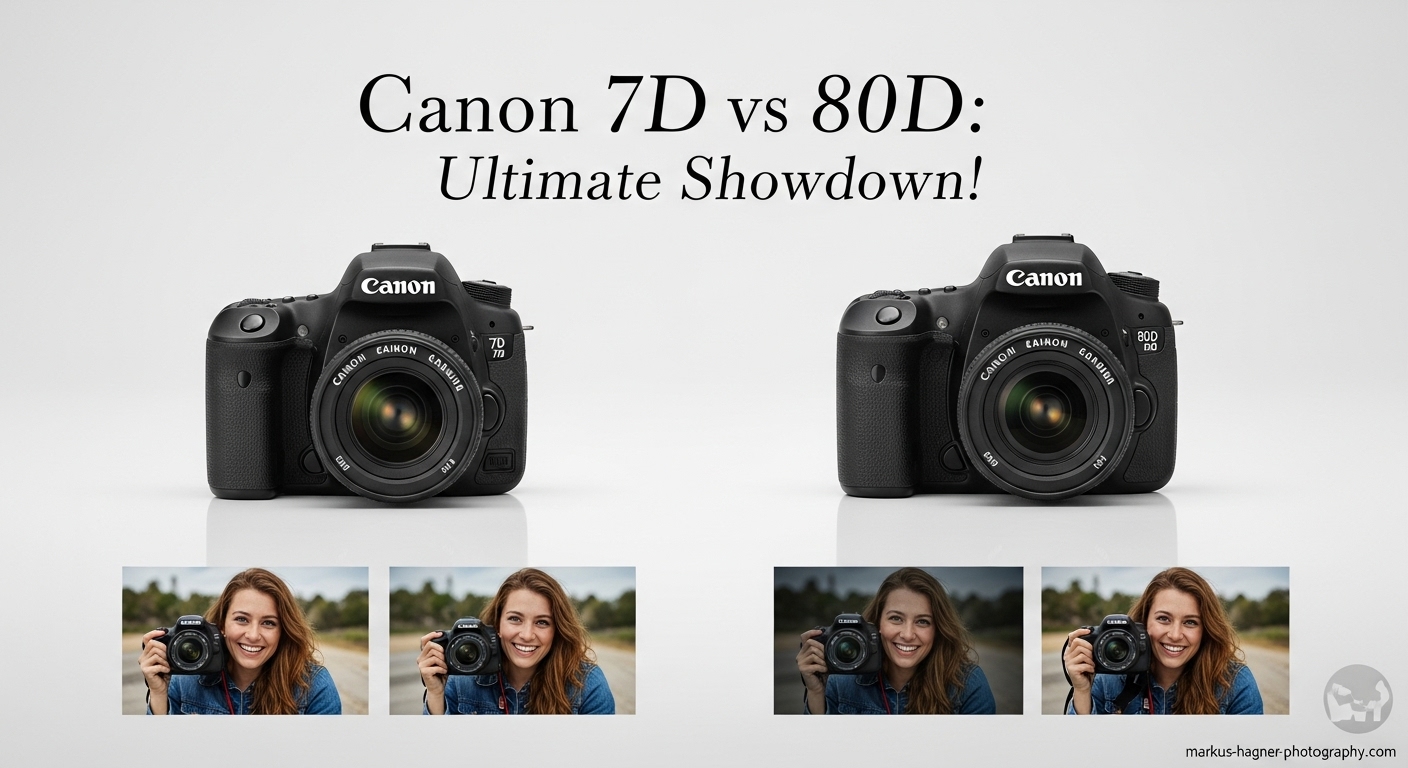
When it comes to choosing between the Canon 7D and the Canon 80D, I know firsthand how challenging this decision can be. As a photography enthusiast who has used both cameras extensively, I’ve discovered that each has its unique strengths and weaknesses that cater to different photography styles and needs. The Canon 7D, released in 2009, was a game-changer in its time, while the Canon 80D, introduced in 2016, brings more modern features to the table. In this comprehensive comparison, I’ll break down every aspect of these two cameras to help you make an informed decision about which one deserves a place in your camera bag in 2026.
Quick Overview Comparison Table
Before diving into the details, let me give you a quick side-by-side comparison of the key specifications:
| Feature | Canon 7D | Canon 80D |
|---|---|---|
| Release Year | 2009 | 2016 |
| Sensor | 18.0 MP APS-C CMOS | 24.2 MP APS-C CMOS |
| Processor | Dual DIGIC 4 | DIGIC 6 |
| ISO Range | 100-6400 (expandable to 12800) | 100-16000 (expandable to 25600) |
| Autofocus | 19-point AF (all cross-type) | 45-point AF (all cross-type) |
| Continuous Shooting | 8.0 fps | 7.0 fps |
| Video | 1080p at 30fps | 1080p at 60fps |
| Screen | 3-inch fixed LCD | 3-inch fully articulated touchscreen |
| Connectivity | None | Wi-Fi, NFC, Bluetooth |
| Battery Life | Approx. 800 shots | Approx. 960 shots |
| Body Material | Magnesium alloy | Polycarbonate over magnesium alloy |
| Weather Sealing | Yes | Yes |
Design and Build Quality
When I first picked up the Canon 7D, I was immediately impressed by its robust magnesium alloy construction. This camera feels solid in your hands, with a professional-grade build that can withstand the rigors of daily use. The weather sealing is excellent, which I’ve appreciated on numerous occasions when shooting in less-than-ideal conditions.
The Canon 80D, while still well-built, features a polycarbonate body over a magnesium alloy frame. It’s lighter than the 7D, which I found beneficial during long photography sessions. However, it doesn’t quite have the same premium feel as the 7D. That said, the 80D also offers weather sealing, so you’re not sacrificing protection for the weight reduction.
In terms of ergonomics, both cameras are comfortable to hold, but I’ve found the 80D’s grip to be slightly more contoured and comfortable for extended use. The button layout on both cameras is intuitive, but the 80D adds a few more customizable buttons that I’ve grown to appreciate.
Sensor and Image Quality
This is where you’ll notice some significant differences between these two cameras. The Canon 7D features an 18.0-megapixel APS-C CMOS sensor, which was impressive for its time. I’ve captured some stunning images with the 7D, especially in good lighting conditions. However, when I started pushing the ISO above 1600, I noticed a considerable amount of noise creeping into my shots.
The Canon 80D, on the other hand, boasts a 24.2-megapixel APS-C CMOS sensor. The extra resolution is immediately apparent when you start cropping your images or making large prints. What really impressed me, though, is the improved low-light performance. I’ve been able to shoot at ISO 3200 and even 6400 with usable results, something that was much more challenging with the 7D.
The dynamic range on the 80D is also noticeably better, allowing me to recover more detail from shadows and highlights in post-processing. When I’m shooting landscapes or high-contrast scenes, this extra flexibility has saved many of my shots.
Autofocus Performance
The autofocus system is where the Canon 80D truly shines compared to the 7D. The 7D’s 19-point autofocus system (all cross-type) was top-of-the-line when it was released, and I’ve found it to be reliable for most shooting situations. The center dual cross-type point is particularly accurate, which I’ve relied on for portrait work.
However, the 80D’s 45-point autofocus system (all cross-type) is in a different league. I discovered that the additional focus points, combined with the improved tracking capabilities, make it significantly easier to capture moving subjects. When I’m shooting sports or wildlife, the 80D’s autofocus system locks onto subjects quickly and maintains focus with impressive accuracy.
The 80D also introduces Dual Pixel CMOS AF technology, which revolutionizes autofocus when shooting in live view or recording video. I’ve found this feature to be a game-changer for video work, as it provides smooth, reliable autofocus that the 7D simply can’t match.
Continuous Shooting Speed
For action photography, continuous shooting speed is crucial. The Canon 7D edges out the 80D in this department, offering 8 frames per second compared to the 80D’s 7 frames per second. While this might not seem like a significant difference, I’ve found that extra frame per second can make all the difference when capturing the perfect moment in fast-paced situations.
The 7D’s buffer is also quite robust, allowing me to shoot bursts of RAW images without slowing down too quickly. The 80D, while slightly slower, still offers respectable performance for most action photography needs, and I’ve rarely found myself limited by its shooting speed.
Video Capabilities
When it comes to video, the Canon 80D is the clear winner. The 7D can record 1080p video at 30fps, which was decent for its time but feels dated now. I’ve used the 7D for video projects, but the lack of autofocus during video recording and the limited frame rate options were always frustrating.
The 80D, on the other hand, offers 1080p video at 60fps, which provides smoother motion and the option for slow-motion footage. The real game-changer, as I mentioned earlier, is the Dual Pixel CMOS AF system, which provides smooth, reliable autofocus during video recording. I’ve shot everything from interviews to event videos with the 80D, and the autofocus performance has consistently impressed me.
The 80D’s fully articulated touchscreen is another significant advantage for video work. I can’t tell you how many times I’ve been grateful for the ability to flip out the screen and monitor my framing from awkward angles. The touchscreen also makes it easy to adjust settings on the fly without taking my eyes off the subject.
Also Read: Leica R 35mm Elmarit vs Summicron
User Interface and Controls
Both cameras feature Canon’s familiar menu system, which I’ve always found intuitive and easy to navigate. However, the 80D adds a touchscreen interface that makes changing settings even more straightforward. I’ve found myself using the touchscreen for quick adjustments, especially when reviewing images or navigating menus.
The 80D also offers more customization options, allowing me to tailor the camera’s controls to my shooting style. I’ve set up custom shooting modes for different scenarios, which has streamlined my workflow significantly.
One area where the 7D still holds an advantage is the viewfinder. Both cameras offer 100% viewfinder coverage, but I find the 7D’s viewfinder slightly larger and more pleasant to use. It’s a minor point, but something I noticed when switching between the two cameras.
Connectivity Options
This is one area where the age difference between these two cameras becomes apparent. The Canon 7D has no built-in connectivity options, which means you’ll need to invest in additional accessories if you want to transfer images wirelessly or control the camera remotely.
The Canon 80D, on the other hand, comes with built-in Wi-Fi, NFC, and Bluetooth. I’ve found these features incredibly useful for sharing images on the go and for remote camera control via Canon’s smartphone app. The ability to transfer images to my phone without removing the memory card has saved me countless times when I needed to quickly share photos on social media.
Battery Life
Battery life is an important consideration, especially for those long shooting days. The Canon 7D uses the LP-E6 battery, which provides approximately 800 shots per charge. In my experience, this has been sufficient for most day-long shoots, though I always carry a spare battery just in case.
The Canon 80D uses the newer LP-E6N battery, which offers improved battery life of approximately 960 shots per charge. I’ve noticed that the 80D does indeed last longer on a single charge, which I appreciate during extended shooting sessions. The good news is that both cameras use compatible batteries, so if you’re upgrading from a 7D to an 80D, you can still use your existing batteries.
Price and Value
When considering the price, it’s important to remember that the Canon 7D was released in 2009, while the 80D came out in 2016. As of 2026, you can find used Canon 7D bodies for significantly less than a used Canon 80D. If you’re on a tight budget, the 7D offers excellent value for money, especially if you primarily shoot still images in good lighting conditions.
The Canon 80D commands a higher price, but I believe the additional features and improved performance justify the cost for most photographers. The better autofocus system, improved low-light performance, enhanced video capabilities, and connectivity options make the 80D a more versatile camera that can handle a wider range of shooting situations.
Also Read: Canon 85mm 1.4 IS vs 1.2
Who Should Choose the Canon 7D?
Based on my experience with both cameras, I would recommend the Canon 7D to:
- Budget-conscious photographers: If you’re looking for a capable camera without breaking the bank, the 7D offers excellent performance for its price.
- Sports and action photographers: The 7D’s 8fps continuous shooting speed and robust build make it a solid choice for capturing fast-moving subjects.
- Photographers who prioritize build quality: If you frequently shoot in challenging conditions, the 7D’s magnesium alloy construction provides excellent durability.
- Still photographers who don’t need video: If you primarily shoot still images and don’t require advanced video features, the 7D remains a competent choice.
Who Should Choose the Canon 80D?
I would recommend the Canon 80D to:
- Hybrid shooters: If you shoot both stills and video, the 80D’s superior video capabilities and Dual Pixel CMOS AF make it the clear choice.
- Low-light photographers: The improved sensor performance and higher ISO range make the 80D better suited for low-light situations.
- Portrait and event photographers: The 45-point autofocus system provides more accurate focusing, especially when using wide apertures.
- Photographers who value connectivity: If you frequently share images online or use remote control features, the 80D’s built-in Wi-Fi, NFC, and Bluetooth are invaluable.
- Vloggers and content creators: The fully articulated touchscreen and improved video autofocus make the 80D an excellent choice for video content creation.
Pro Tips for Both Cameras
Regardless of which camera you choose, here are some tips I’ve learned from years of shooting with both the 7D and 80D:
- Invest in good glass: Both cameras benefit greatly from high-quality lenses. I’ve found that investing in good glass makes more difference to image quality than upgrading the camera body.
- Use back-button focus: Both cameras support back-button focus, which I’ve found to be a game-changer for maintaining control over autofocus. It takes some getting used to, but once you make the switch, you’ll never go back.
- Customize your controls: Take the time to set up custom buttons and functions that match your shooting style. I’ve customized both my 7D and 80D extensively, and it has significantly improved my shooting efficiency.
- Shoot in RAW: Both cameras produce excellent RAW files that give you maximum flexibility in post-processing. I always shoot in RAW, especially when lighting conditions are challenging.
- Keep your firmware updated: Canon occasionally releases firmware updates that can improve performance or add new features. I make it a habit to check for updates regularly.
Frequently Asked Questions
Is the Canon 80D better than the 7D?
In most respects, yes. The Canon 80D offers a higher resolution sensor, better autofocus system, improved low-light performance, superior video capabilities, and modern connectivity options. However, the 7D still holds advantages in build quality and continuous shooting speed.
Can I use my 7D lenses on the 80D?
Yes, both cameras use Canon’s EF and EF-S lens mounts, so all your existing lenses will be fully compatible with the 80D.
Is the Canon 7D still worth buying in 2026?
If you’re on a tight budget and primarily shoot still images in good lighting conditions, the Canon 7D can still be a worthwhile purchase. However, if you need better low-light performance, video capabilities, or modern features like Wi-Fi, you’d be better served by the 80D or a more recent model.
Which camera is better for beginners?
The Canon 80D is more beginner-friendly thanks to its touchscreen interface, improved autofocus system, and helpful features like the built-in electronic level. The 7D has a steeper learning curve but offers more manual control for those who want to grow their skills.
Do both cameras have weather sealing?
Yes, both the Canon 7D and 80D feature weather sealing, though the 7D’s magnesium alloy construction provides slightly better protection than the 80D’s polycarbonate body.
Conclusion
After extensively using both the Canon 7D and 80D, I can confidently say that both are excellent cameras that have served me well in different situations. The Canon 7D, despite its age, remains a capable camera for still photography, especially for those on a budget or who prioritize build quality and continuous shooting speed.
However, for most photographers in 2026, the Canon 80D is the better choice. Its superior autofocus system, improved low-light performance, enhanced video capabilities, and modern connectivity options make it a more versatile camera that can handle a wider range of shooting situations. While it comes at a higher price, the additional features and improved performance justify the investment for most photographers.
Ultimately, the choice between these two cameras comes down to your specific needs, shooting style, and budget. I hope this comprehensive comparison has helped you make an informed decision about which camera is right for you.