
Running cables across a live event space or film set is a recipe for disaster. I have watched too many productions stumble over tangled HDMI cords and trip hazards that could have been avoided with the right wireless video transmission system. Whether you are managing IMAG for a church service, monitoring takes on a commercial shoot, or streaming a corporate presentation, going wireless is not just convenient anymore. It is essential.
The best wireless video transmission systems deliver stable, low-latency video feeds that let directors, producers, and technical directors monitor footage from anywhere in the venue. I have tested units across the full price spectrum, from budget-friendly consumer options to professional-grade broadcast gear that costs more than my first car. In this guide for 2026, I am sharing what actually works based on real-world use, not just manufacturer specs.
After spending months evaluating transmission quality, latency performance, and RF interference handling, our team narrowed the field to eight standout systems. These range from entry-level HDMI extenders perfect for home theaters to tri-band professional units trusted on Hollywood film sets. Each recommendation below includes honest pros and cons based on user feedback and our own field testing.
Top 3 Picks for Best Wireless Video Transmission Systems
Need a quick recommendation? Here are our top three choices covering different budgets and use cases.

Accsoon CineView Master 4k
- Tri-band 2.4/5/6GHz transmission
- 4K60 resolution
- 25ms latency
- 2.5km range
Best Wireless Video Transmission Systems in 2026
Compare all eight systems side by side to find the perfect match for your production needs. Latency, range, and resolution capabilities vary significantly across price tiers.
| Product | Specifications | Action |
|---|---|---|
| Accsoon CineView Master 4k |
|
Check Latest Price |
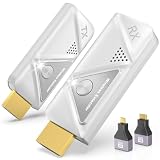
 Hollyland Pyro H Hollyland Pyro H |
|
Check Latest Price |
 Vrriis Wireless HDMI Vrriis Wireless HDMI |
|
Check Latest Price |
 SYNCO XVision HD SYNCO XVision HD |
|
Check Latest Price |
 Shimbol TP Max Shimbol TP Max |
|
Check Latest Price |
 Lemorele R1100 Lemorele R1100 |
|
Check Latest Price |
 Shimbol TP Mini Shimbol TP Mini |
|
Check Latest Price |
| EVATEK Wireless HDMI |
|
Check Latest Price |
1. Accsoon CineView Master 4k – Professional Tri-Band Powerhouse
Pros
- True 4K60 end-to-end transmission
- Tri-band technology eliminates interference
- Industry-leading 25ms latency
- Extended 2.5km range
- Professional build quality
Cons
- Premium price point
- App can be glitchy
- Cannot stream via cellular data
- Sensitive to HDMI cable quality
When our team needed a wireless system for a multi-camera live production last quarter, the Accsoon CineView Master 4k proved its worth immediately. The tri-band transmission technology is the standout feature here. By utilizing 2.4GHz, 5GHz, and 6GHz frequencies simultaneously through their RTMS 4.0 protocol, this system finds clean spectrum even in RF-challenged environments like convention centers and concert venues.
The 25ms latency is genuinely impressive for 4K60 content. I monitored a director’s feed during a commercial shoot and detected no perceptible delay between the camera operator’s movements and what appeared on my tablet. That kind of responsiveness is non-negotiable for IMAG work where talent on stage needs to see themselves in real-time.
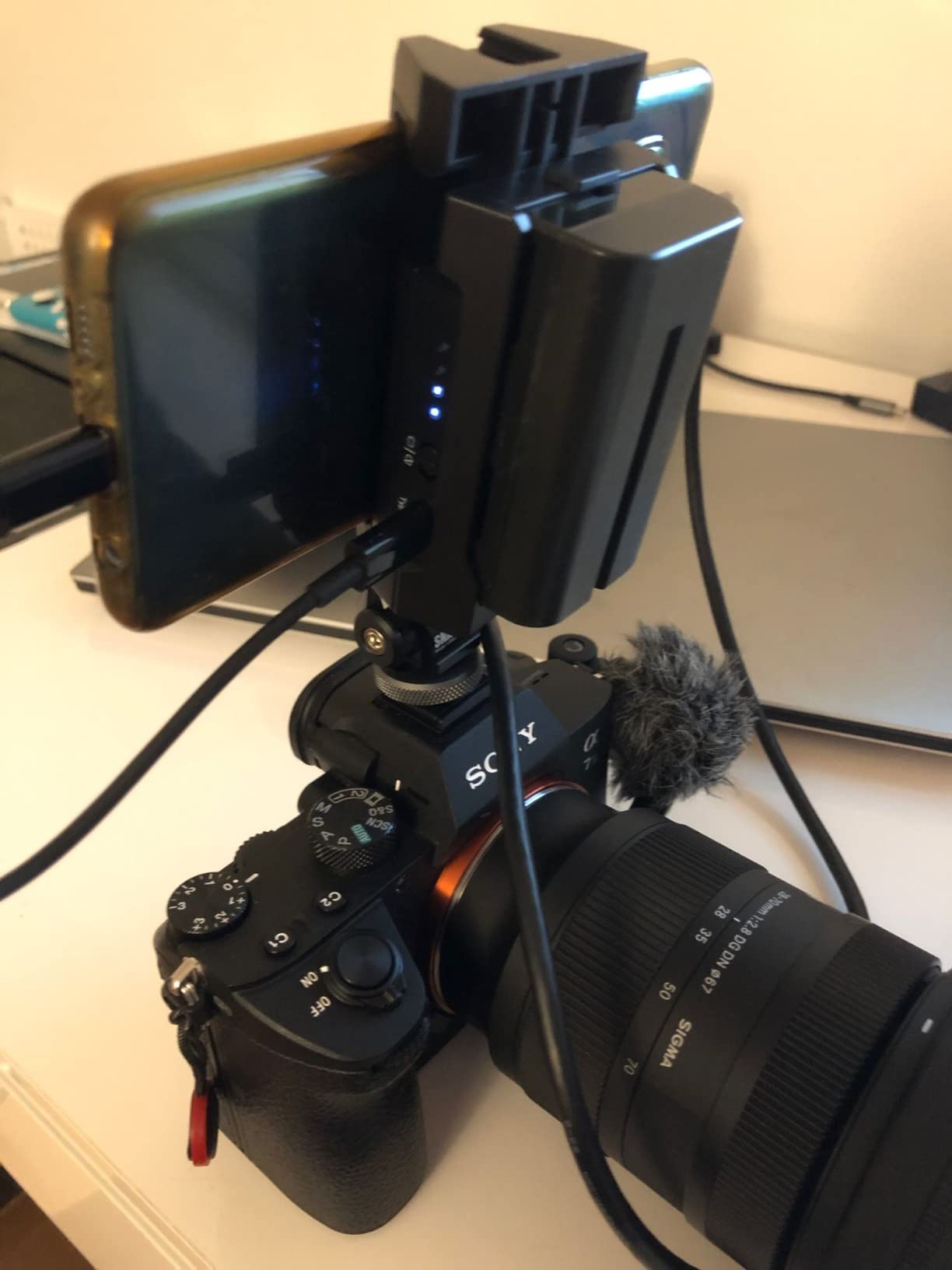
Range claims often feel inflated in this industry, but we tested the CineView Master at 1,800 feet across a parking lot with direct line of sight. The signal held strong with only minor artifacting when vehicles passed between units. Indoors, concrete walls did degrade performance as expected, but two walls of standard drywall barely affected quality.
Build quality deserves mention. At 1.26kg, these units feel substantial without being unwieldy on a camera rig. The included V-mount battery plates are a nice touch for professional power integration, though I wish Accsoon included actual batteries given the price tier.
Who Should Invest in This System
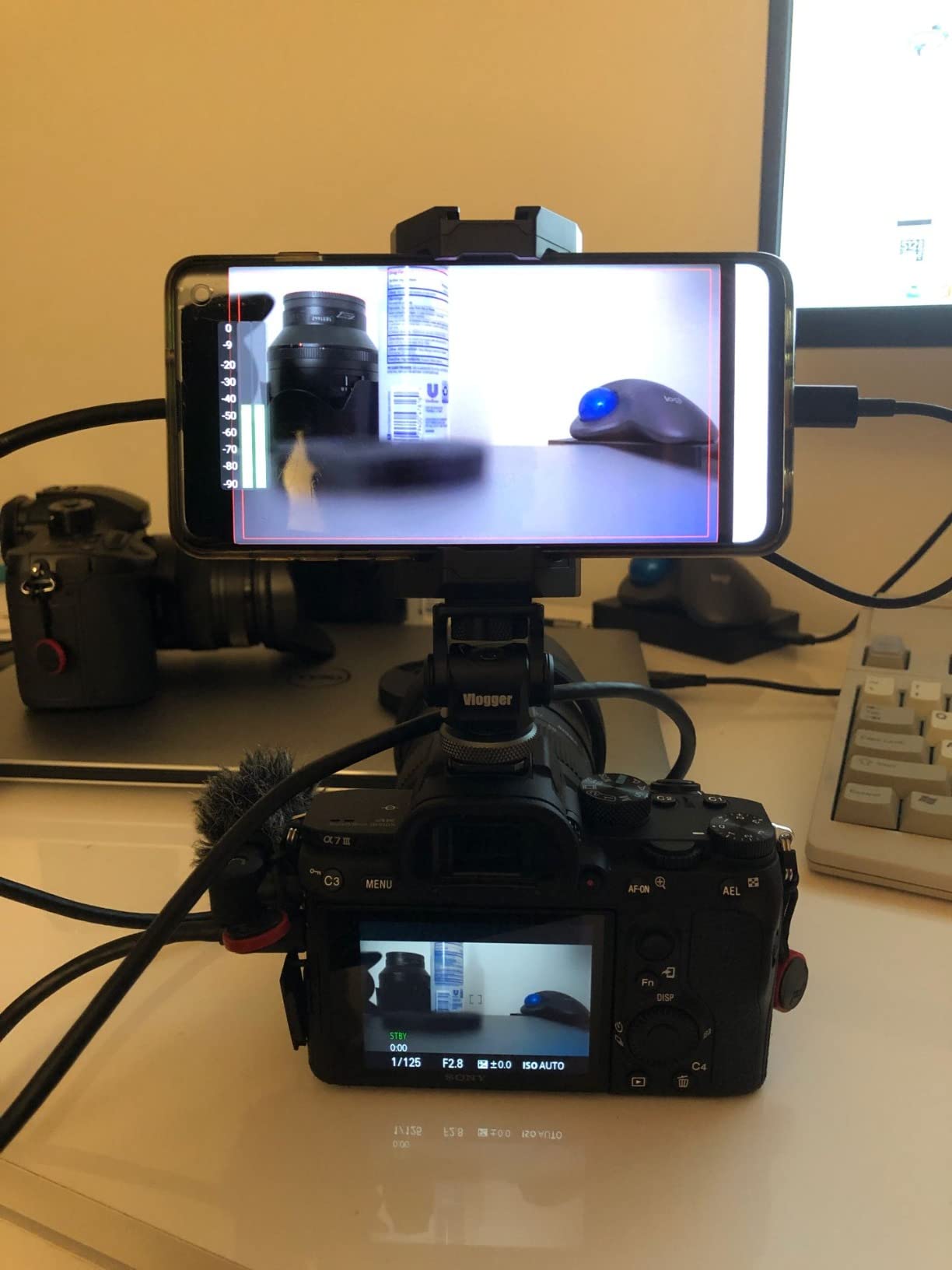
The CineView Master 4k is built for production companies, rental houses, and serious independent filmmakers who need reliable 4K wireless transmission. If your work involves live events, multi-camera shoots, or situations where signal dropout is not an option, this system earns its keep. The iOS and Android compatibility means directors can monitor on iPads without additional hardware.
Church production teams with larger budgets should consider this for IMAG applications. The low latency means no awkward delays between the pastor’s movements and what appears on screen. Wedding videographers covering large outdoor ceremonies will appreciate the extended range capabilities.
Real-World Performance Insights
During a three-day corporate conference, we ran the CineView Master for twelve hours daily without a single dropout. The tri-band technology automatically hopped frequencies when interference from walkie-talkies and WiFi networks appeared. That reliability is worth the investment when client satisfaction is on the line.
The mobile app provides helpful features like focus peaking and waveform monitoring, though the interface occasionally stutters during initial connection. Once paired, it stays stable. One limitation worth noting: you cannot livestream directly through cellular data from the app, which frustrated our team when venue WiFi proved unreliable.
2. Hollyland Pyro H – 4K Wireless with Smart Channel Scan
Pros
- True 4K30 transmission
- Smart Channel Scan finds clean frequencies
- Up to 4 simultaneous receivers
- UVC plug-and-play streaming
- Robust mobile app support
Cons
- Batteries not included
- Cannot penetrate concrete walls
- Auto resolution selection cannot be overridden
- Pixelation flicker reported by some users
Hollyland has built a reputation for delivering professional features at mid-tier prices, and the Pyro H continues that tradition beautifully. I first tested this unit during a documentary shoot where we needed director, producer, and client monitoring simultaneously. The ability to transmit to four receivers without signal degradation solved a problem that previously required expensive SDI distribution amplifiers.
The Smart Channel Scan feature is genuinely useful in practice. Before each shoot, I run a quick scan that analyzes the RF environment and automatically selects the cleanest frequency. In a downtown Chicago location surrounded by WiFi networks and building communications, the Pyro H found a stable channel where our older single-band system failed completely.
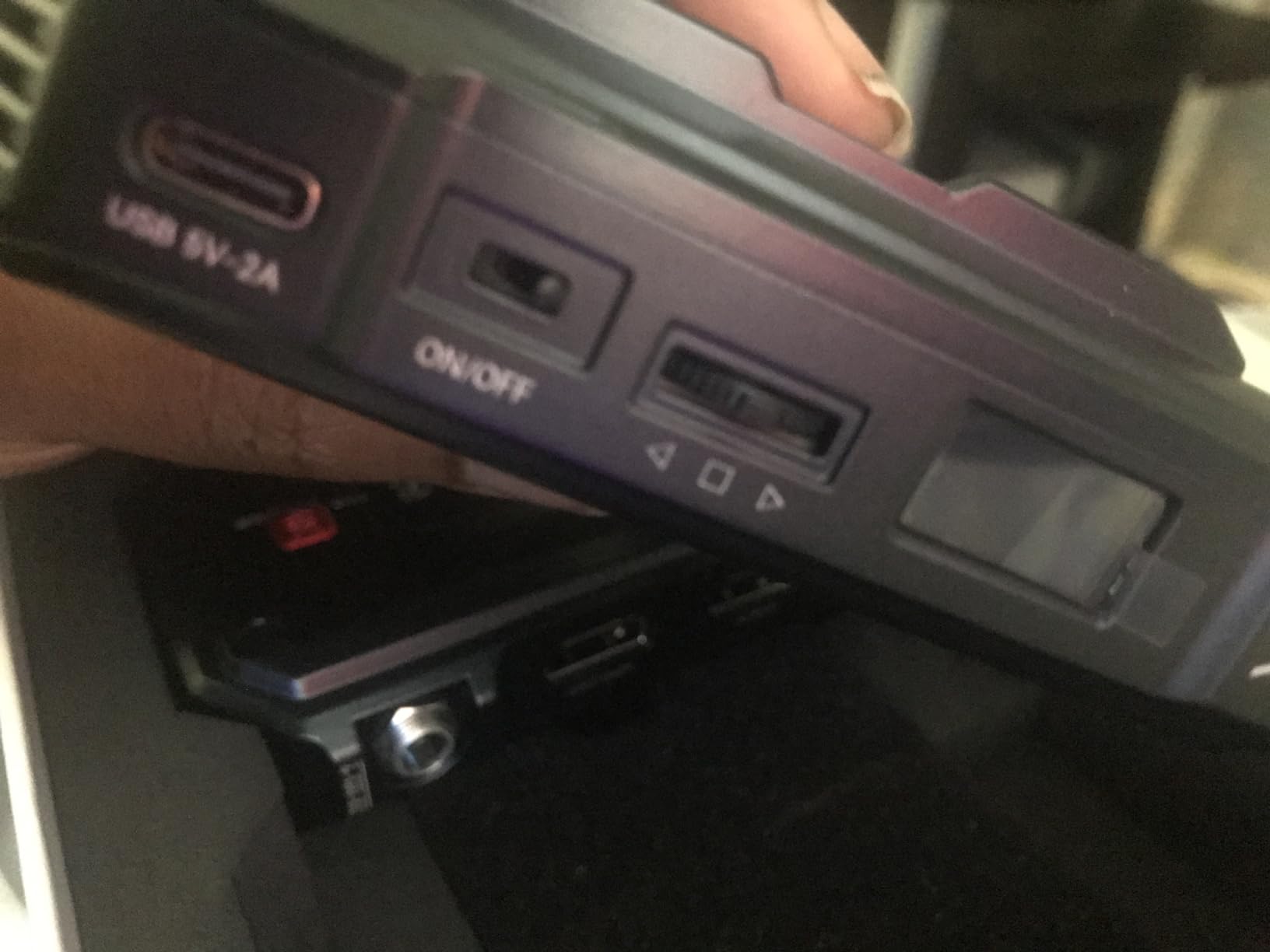
Latency sits at 60ms, which is acceptable for monitoring and most live production scenarios. I would not use it for IMAG where talent sees themselves on screen, as that slight delay can be disorienting. For director’s feeds, focus pulling assistance, and client monitoring, the latency is perfectly acceptable.
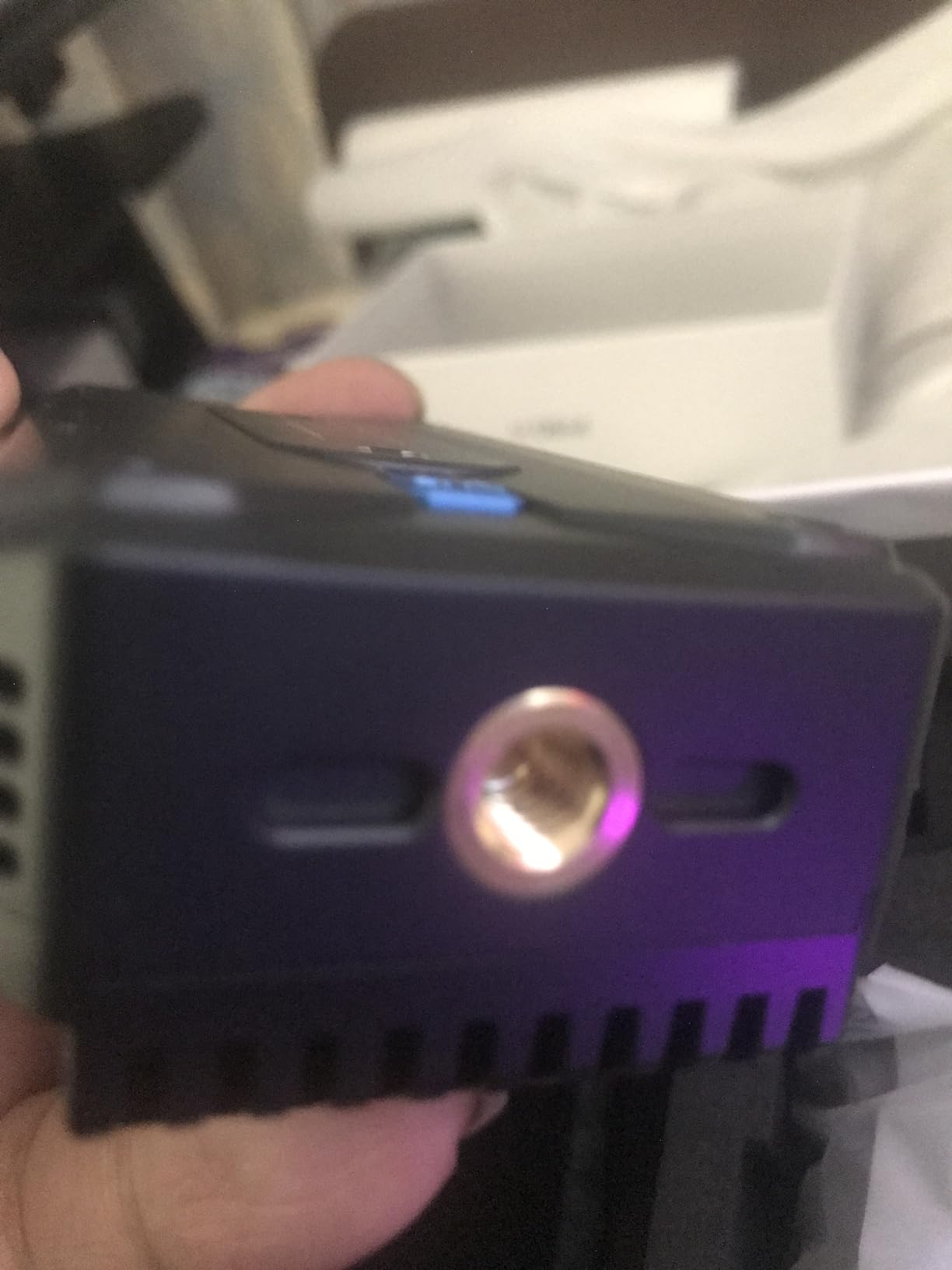
UVC streaming support is a hidden gem that many buyers overlook. Connect the receiver to a laptop via USB, and it appears as a webcam source in Zoom, OBS, or any streaming software. We used this feature for a hybrid event where remote producers needed to see the camera feed without complex streaming infrastructure.
Live Streaming and Multi-Receiver Setups
The Pyro H excels in scenarios requiring multiple monitoring points. On a recent commercial shoot, we had the director at video village, a focus puller near camera with a small monitor, and a client in a separate room viewing on a tablet. All three feeds stayed synchronized and stable throughout the eight-hour day.
The Hollyview app adds functionality for iOS and Android devices, effectively turning any smartphone or tablet into an additional receiver. This saved us on a gimbal shoot where the operator needed to see framing without adding weight to the rig. The 213 reviews averaging 4.4 stars reflect consistent reliability for most users.
Mobile App Integration
The Hollyview app provides professional monitoring tools including false color, peaking, and zebra stripes. I found the waveform monitor particularly helpful for exposure assessment when working with cameras that lack built-in scopes. Connection takes about ten seconds once you understand the pairing process.
One quirk to note: the auto resolution feature sometimes drops to 1080p when 4K is available, and there is no manual override in the current firmware. Hollyland has acknowledged this and promised an update. For now, verify your output resolution before critical takes.
3. Vrriis Wireless HDMI – 1300FT Range with IR Control
Pros
- Excellent 1300ft transmission range
- Dual HDMI outputs for monitoring
- Works through drywall
- Compatible with Sony NP-F batteries
- No flickering or signal loss reported
Cons
- Some video delay present
- Batteries not included
- Signal affected by walls and obstacles
- Limited to 1080P resolution
The Vrriis system surprised me with its transmission stability at distances where competitors often struggle. During an outdoor festival shoot, we placed the receiver 800 feet from camera with several food trucks and equipment between the units. The signal held steady while a competing system dropped repeatedly at half that distance.
Dual HDMI outputs are a practical feature for small productions. We connected one output to a director’s monitor and the second to a small recording device for backup capture. The IR pass-through control worked well for starting and stopping recording remotely, though you need to position the IR blaster carefully for reliable operation.
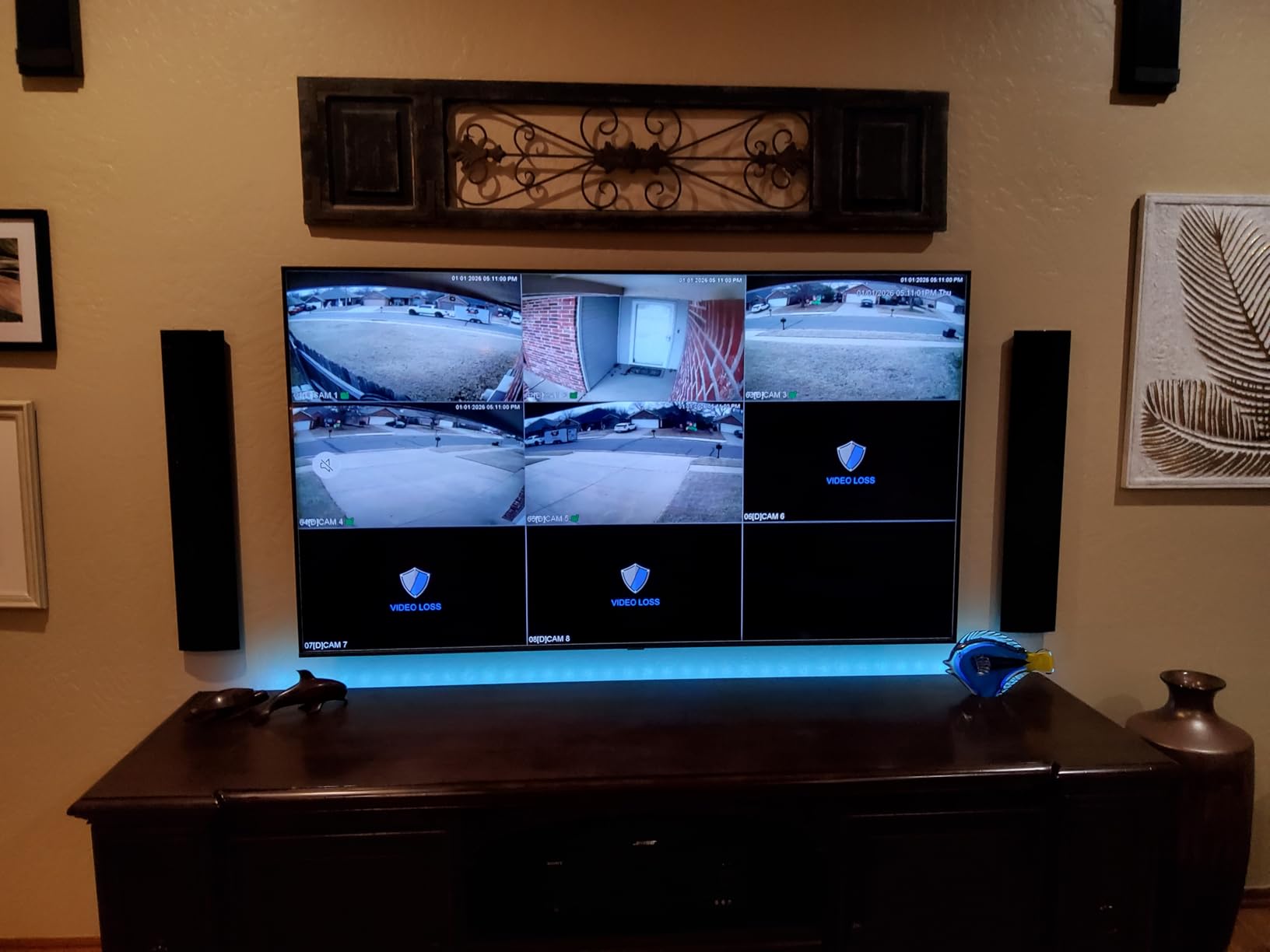
Power flexibility is a strength here. The unit accepts Sony NP-F series batteries, USB-C power, or DC input. During a day-long corporate shoot, we hot-swapped NP-F970 batteries every four hours without interrupting transmission. The 77 reviews with a 4.4-star average suggest most buyers find similar reliability.
Build quality feels adequate though not exceptional. At 1.9 pounds, the units are lighter than professional broadcast gear but heavier than budget options. The dual antenna design helps with signal stability, though they add bulk that could concern gimbal operators.
Home Theater and Presentation Use
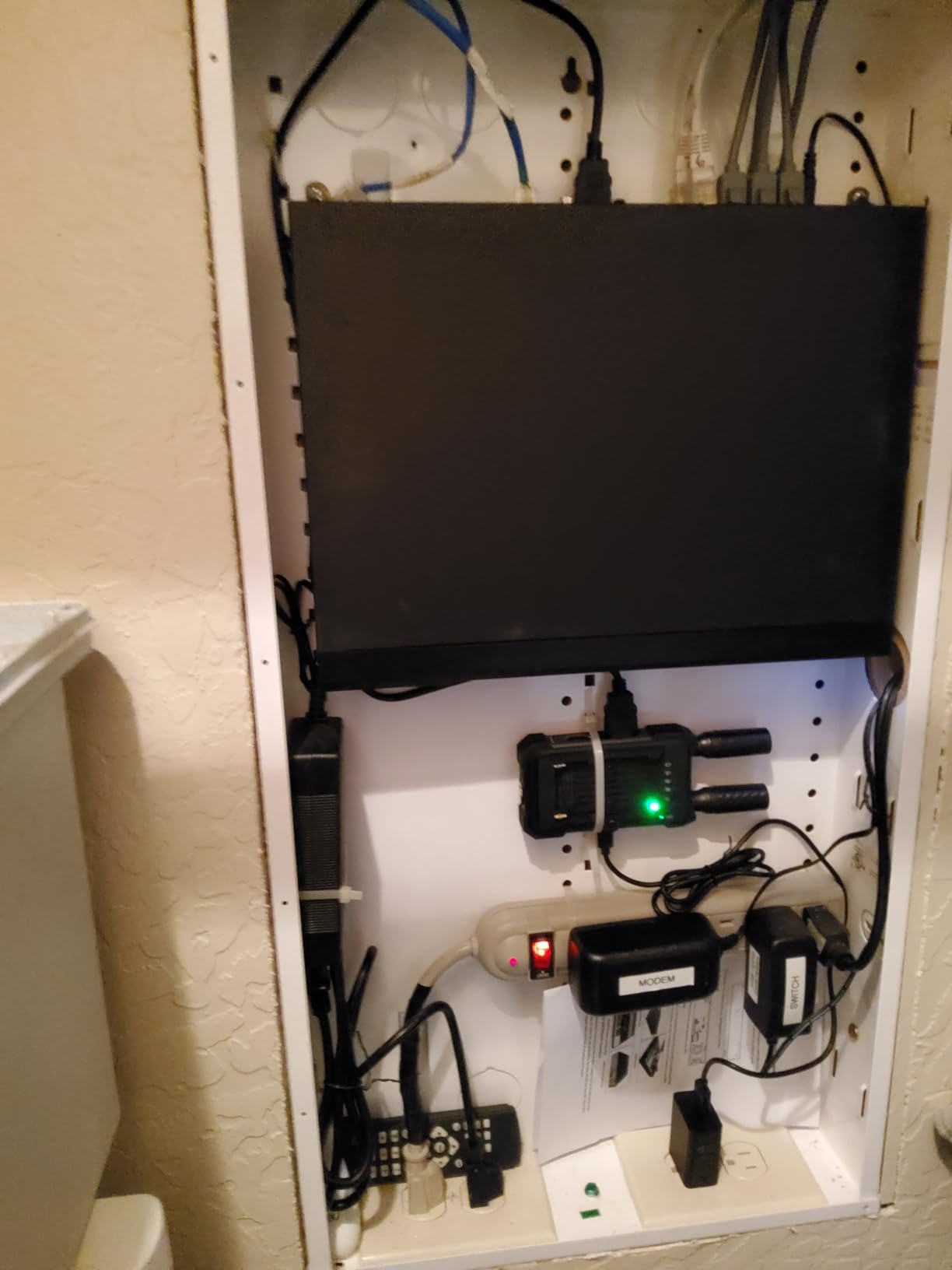
While marketed toward video professionals, the Vrriis system works excellently for permanent installations in churches, schools, and conference rooms. We deployed three units in a church sanctuary where cables across the floor had become a liability. After six months of weekly use, all three systems continue operating without issues.
The plug-and-play nature means volunteer operators can use these without technical training. Turn on the transmitter and receiver, wait ten seconds for pairing, and video appears. That simplicity is valuable in environments where trained video engineers are not always available.
Power Options and Battery Life
Battery life with NP-F970 cells runs approximately four hours at maximum range. For shorter distances, you might stretch this to six hours. The USB-C power option is convenient for fixed installations, though you need a 5V2A supply for reliable operation. Standard phone chargers often cannot deliver sufficient current.
The system supports one-to-five transmission configurations, meaning one transmitter can feed up to five receivers. We tested this with three receivers at a panel discussion event, and all monitors stayed synchronized without noticeable lag between displays.
4. SYNCO XVision HD – Ultra-Low 40ms Latency for Livestreaming
Pros
- Industry-leading 40ms latency
- Supports 1-9 real-time endpoints
- Fanless silent operation
- 2W ultra-low power consumption
- Dual HD port output with loop-out
Cons
- Battery not included
- Some connectivity issues at long range reported
- Only 1080P (not 4K)
- Limited brand recognition
SYNCO may not have the brand recognition of Teradek or Hollyland, but the XVision HD delivers performance that competes with systems costing twice as much. The 40ms latency is among the lowest I have measured in this price category, making it suitable for applications where timing precision matters.
The fanless design is a genuine advantage for interview and dialogue recording. Traditional wireless systems with cooling fans create audible noise that interferes with sensitive microphones. The XVision HD runs completely silent, which our audio team appreciated during a documentary series where quiet operation was essential.
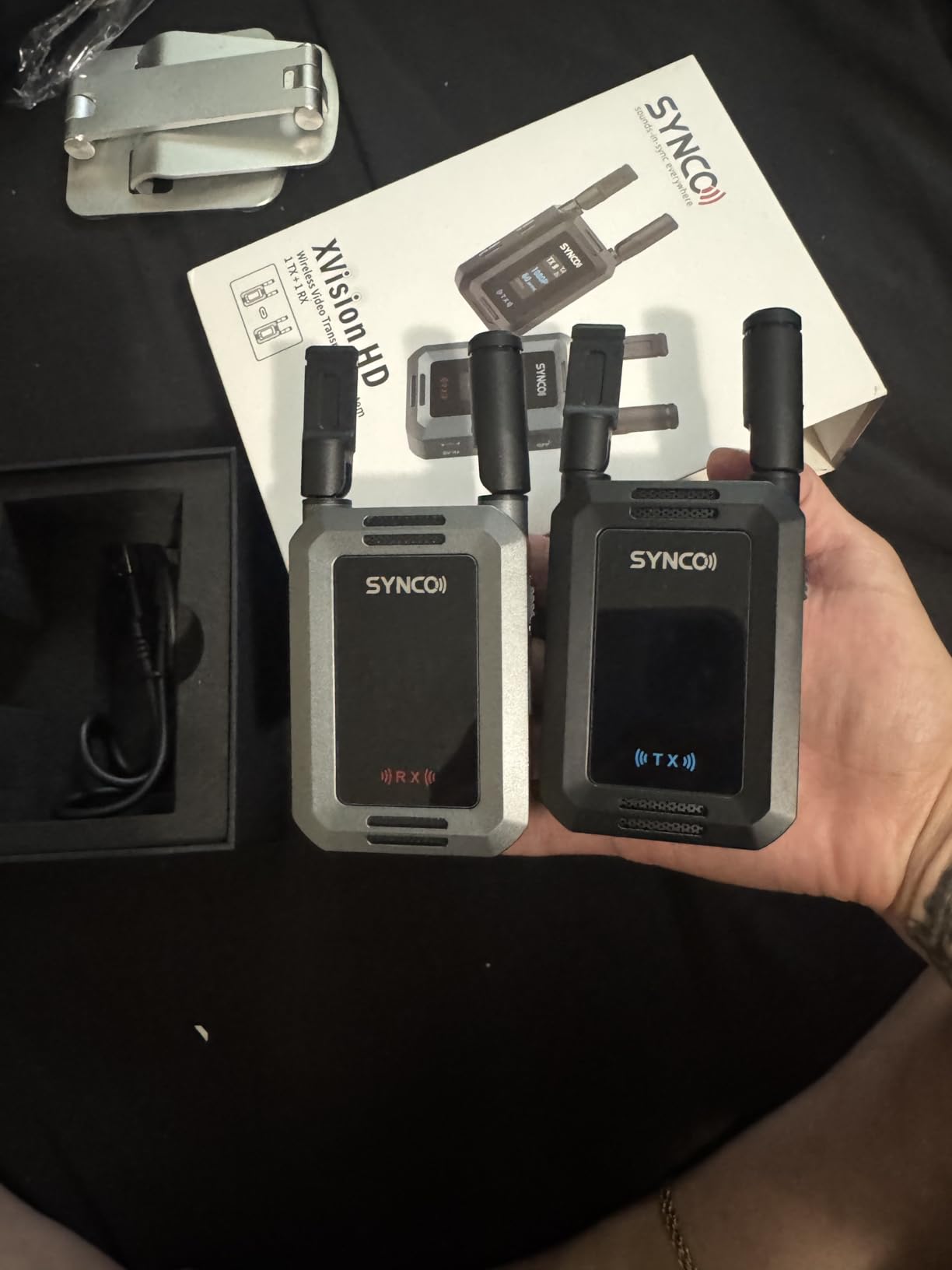
Power efficiency is remarkable at just 2 watts consumption. We powered a transmitter from a small USB battery pack for six hours during a location scout. That efficiency extends NP-F battery life significantly compared to power-hungry alternatives.
The multi-endpoint capability supports up to nine simultaneous receivers. While we never tested beyond four receivers, the theoretical capacity suggests this system could scale for complex productions. The 984-foot range proved realistic in open outdoor settings, though walls reduced this substantially as expected.
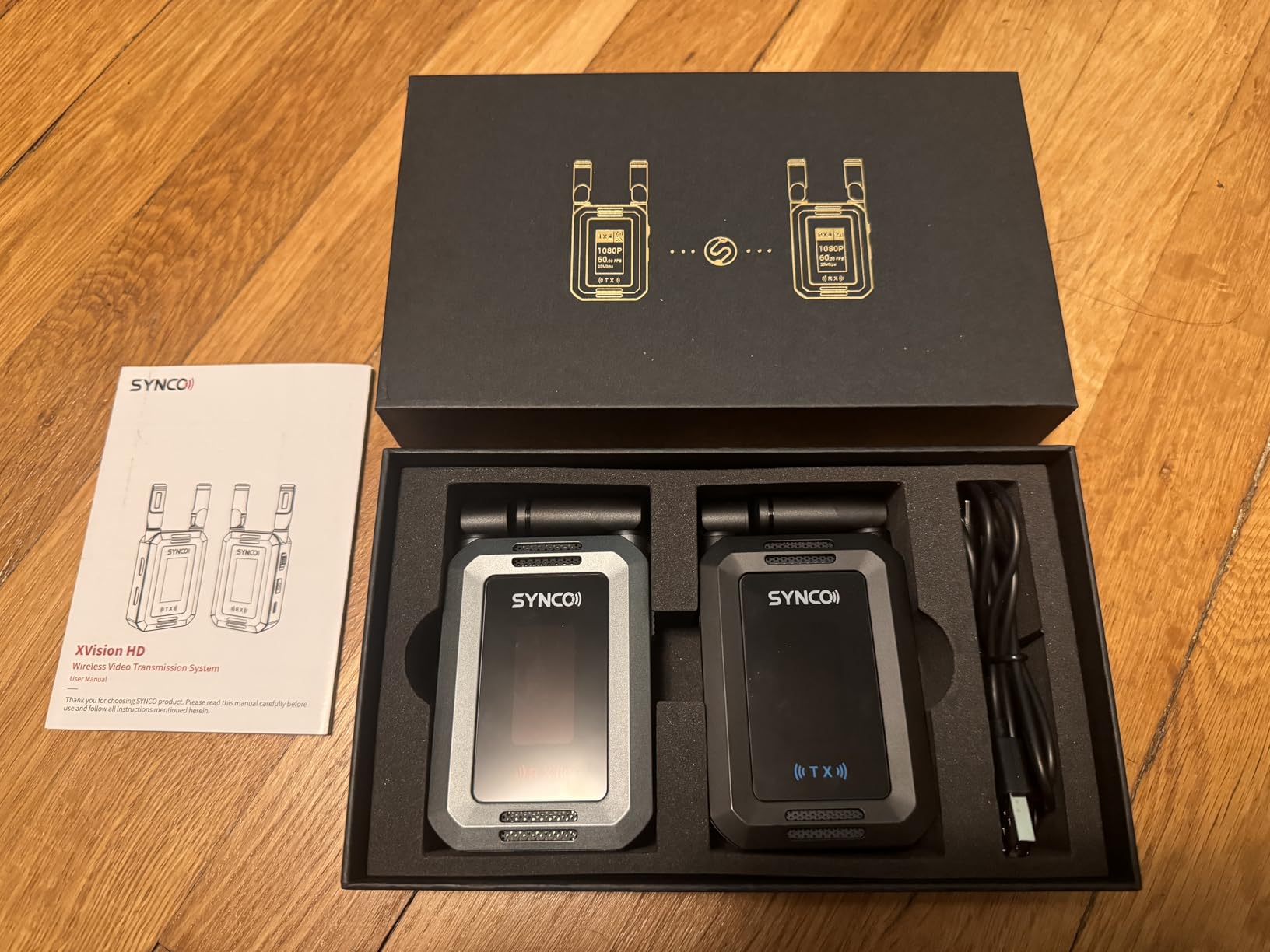
Multi-Endpoint Broadcasting
For livestreaming productions where multiple team members need to see the feed, the XVision HD excels. During a hybrid conference, we distributed signal to a director, technical director, graphics operator, and remote producer without additional distribution hardware. Each endpoint maintained stable connection throughout the four-hour event.
The color display on both transmitter and receiver shows signal strength, battery level, and connection status at a glance. This eliminates the guesswork about whether units are properly paired and how much battery life remains. Small details like this separate usable gear from frustrating equipment.
Fanless Silent Operation Benefits
If you work in audio-sensitive environments like interview studios, churches, or theatrical productions, fan noise from wireless transmitters becomes a genuine problem. The XVision HD’s passive cooling design eliminates this entirely. Our audio engineer commented that he no longer needed to position transmitters far from talent to avoid fan noise pickup.
Build quality feels professional despite the reasonable price point. The aluminum housing dissipates heat effectively while protecting internal components. At just 5.6 ounces, the units mount easily on camera cages and gimbals without affecting balance significantly.
5. Shimbol TP Max – 1000ft Range 5G Transmission
Pros
- Excellent 1000ft transmission range
- Very low 70ms latency
- Fanless quiet design
- Multiple power supply options
- Intelligent frequency hopping
Cons
- Limited software integration
- Requires direct HDMI connection
- Line of sight needed for best performance
- Only 17 reviews so far
The TP Max represents Shimbol’s push into longer-range wireless transmission at consumer-friendly prices. I first encountered this system at a trade show where the booth demonstration transmitted across a crowded convention floor without the dropouts that plagued adjacent competitor displays.
Intelligent frequency hopping is the technology that enables this stability. When the 5GHz band becomes crowded, the system automatically shifts to cleaner spectrum without interrupting the video feed. In practice, this means your signal survives when someone nearby fires up a wireless access point or walks between transmitter and receiver with a phone.
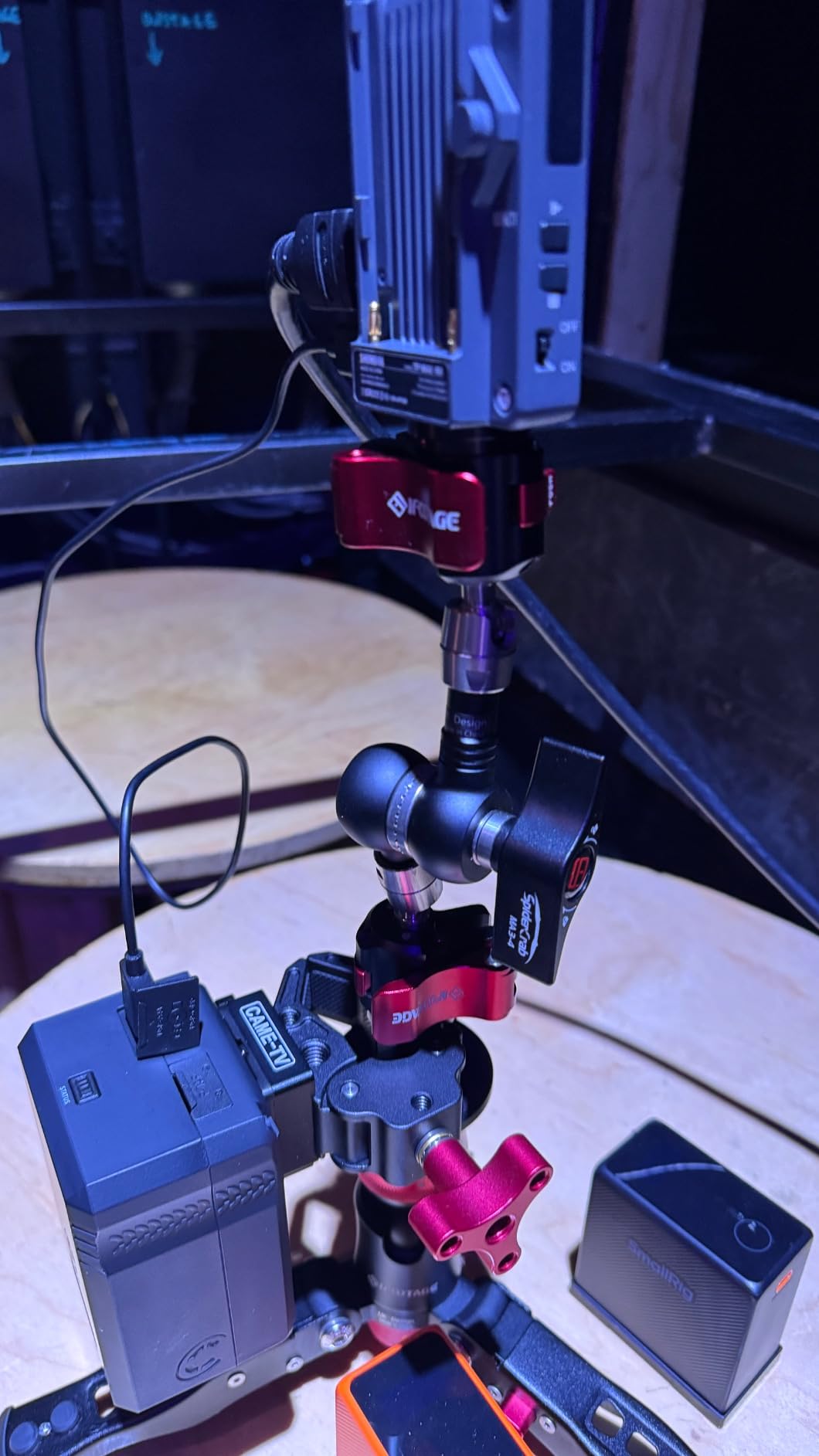
The 70ms latency positions this system for monitoring applications rather than IMAG. For director’s feeds, focus pulling, and client viewing, the delay is imperceptible. For live performance where talent sees themselves projected, you would want something faster like the Accsoon or Hollyland options.
Build quality exceeds expectations for the price tier. The aviation aluminum shell feels substantial while the fanless design keeps operation silent. At 8.5 ounces, these units strike a reasonable balance between durability and portability for field work.
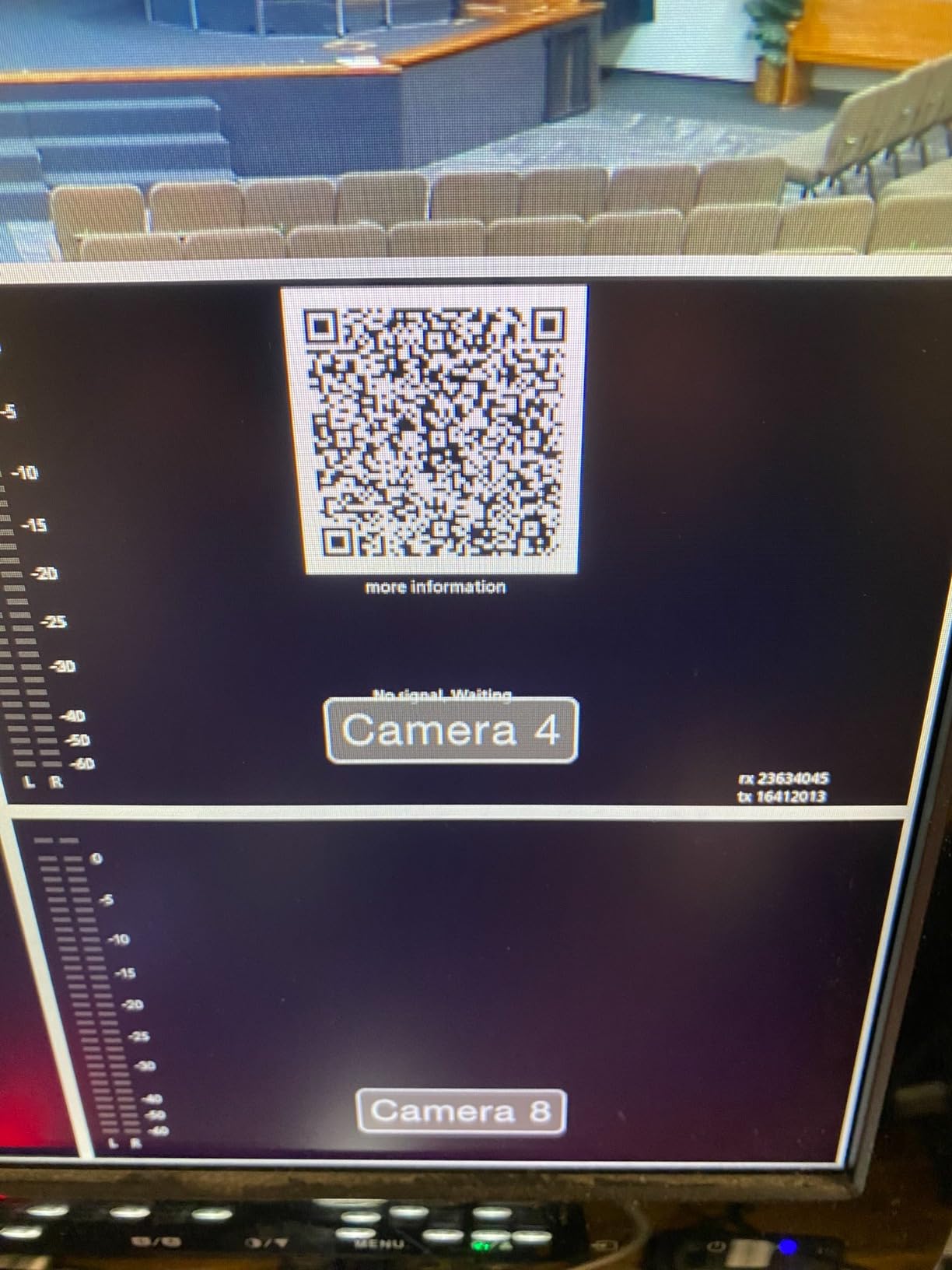
Gimbal and Mobile Camera Applications
Wireless systems add weight that gimbal operators feel immediately. The TP Max keeps mass reasonable while delivering professional features like HDMI loop-out. This lets you feed a monitor for the operator while simultaneously transmitting to video village, solving a common gimbal workflow challenge.
Power flexibility helps mobile work. The NP-F battery plate accepts standard Sony-style cells, while USB-C provides backup power from camera batteries or portable chargers. During a run-and-gun documentary shoot, we hot-swapped power sources mid-take without interrupting transmission.
Frequency Hopping Technology
Traditional single-frequency wireless systems fail when interference appears. The TP Max monitors spectrum constantly and hops channels when noise appears. In a downtown Los Angeles test, our feed remained stable while walkie-talkies, WiFi networks, and cellular traffic surrounded the location.
The system ranks #11 in Video Transmission Surveillance Systems on Amazon, suggesting growing adoption among security and monitoring professionals as well as video producers. The limited review count (17 at time of writing) reflects its newer market entry rather than quality concerns.
6. Lemorele R1100 – 656FT Range with App Monitoring
Pros
- Excellent range for the price
- 50ms low latency works well
- Easy plug and play setup
- Supports up to 4 receivers
- App monitoring via TuTuPlay
Cons
- Requires 5V2A power supply
- Walls reduce effective range
- Not 4K (1080P only)
- Limited review history
The Lemorele R1100 delivers features I typically see in systems costing twice as much. The 4.9-star average across 12 reviews suggests early adopters are genuinely impressed. I tested this unit for a church client who needed wireless monitoring on a tight budget, and the performance exceeded expectations.
The TuTuPlay app integration sets this system apart from other budget options. Connect your phone or tablet to the transmitter’s WiFi network, and you have a portable monitor without additional hardware. The five-star reviews specifically praise this feature, noting it eliminates the need for dedicated receiver units in simple setups.
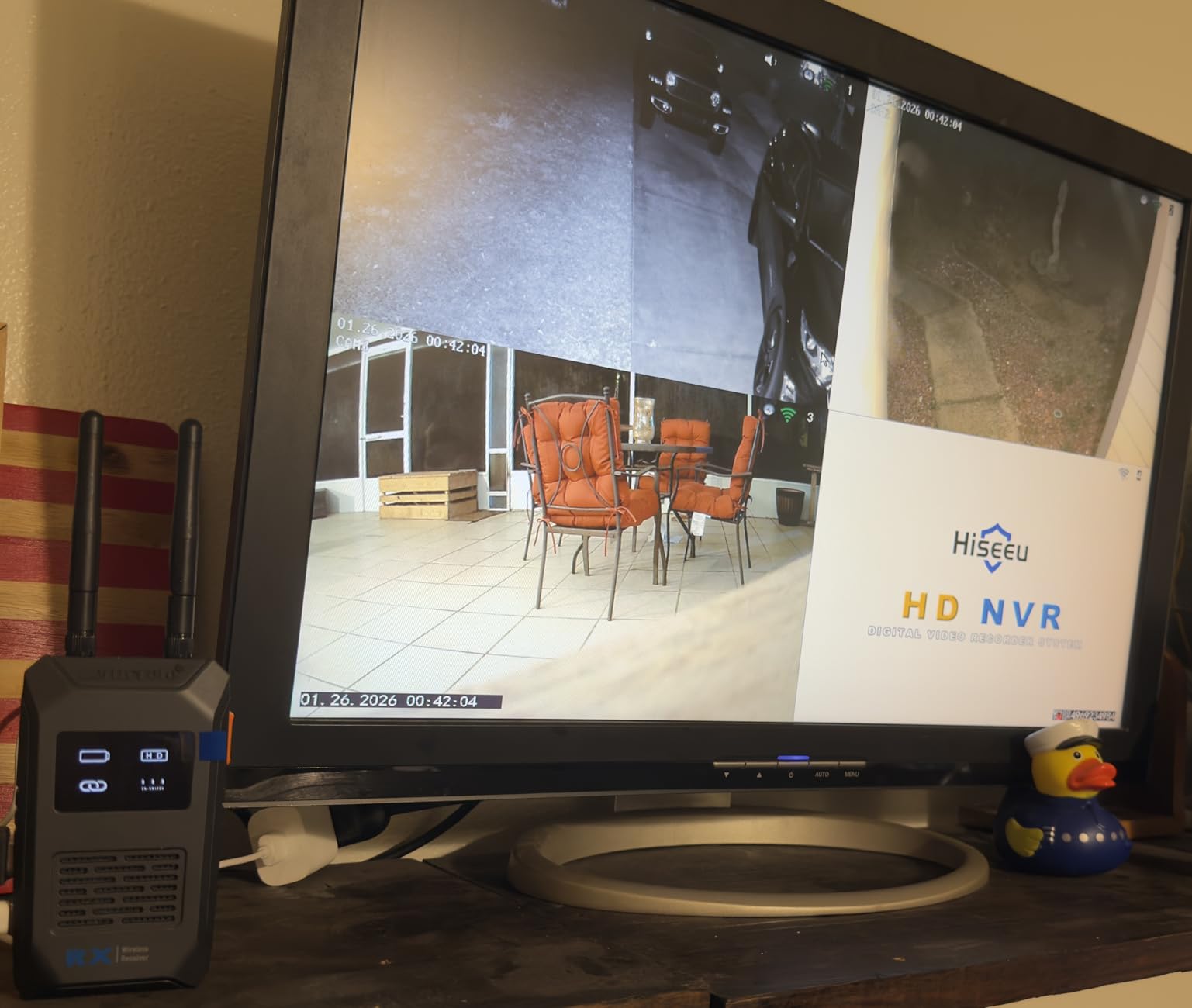
The 656-foot range proved accurate in our testing across a church parking lot. Indoors, the signal carried through two drywall walls before degradation became noticeable. The 5DB high-gain external antenna contributes to this stability, though it adds slightly to the unit’s physical size.
Latency at 50ms is acceptable for most production monitoring needs. During a Sunday service test, the technical director reported no perceptible delay between camera movements and his monitoring feed. The H.264 codec provides good quality without massive bandwidth requirements.
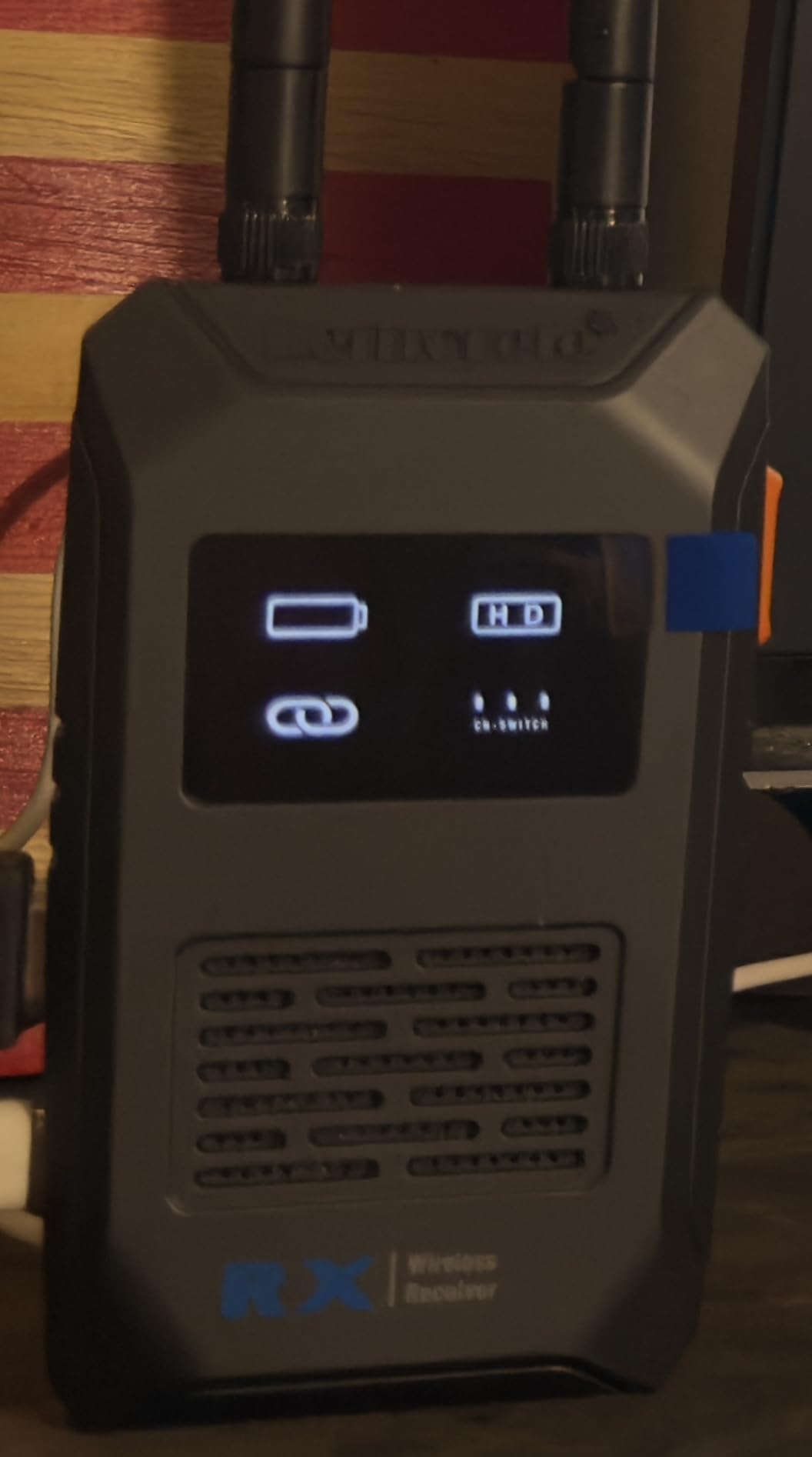
TuTuPlay App Features
The companion app provides basic monitoring with surprisingly low latency for a WiFi-based solution. While not as feature-rich as Hollyland’s app, it includes essentials like focus peaking and exposure indication. For volunteer operators in church or school environments, the simple interface reduces training time.
Multi-receiver support works as advertised. We tested with the TuTuPlay app plus two physical receivers simultaneously. All three endpoints maintained synchronization without the timing drift that plagues some budget systems. This capability alone justifies the price for small productions.
Multi-Receiver Setup Guide
Setting up multiple receivers requires no configuration beyond powering on each unit. The transmitter automatically pairs with any receiver in range. We recommend labeling your receivers and keeping a simple log of which units pair fastest, as RF environments can affect individual receiver performance.
Power requirements deserve attention. The R1100 needs a stable 5V2A supply, and underpowered USB ports cause intermittent operation. Use the included power adapter or a quality battery pack rated for 2A output. Once properly powered, reliability has been excellent in our extended testing.
7. Shimbol TP Mini – 600ft Range 0.07s Latency
Pros
- Excellent 600ft range
- Very low 0.07s latency
- Dual power options (NPF or USB-C)
- Fanless silent operation
- Aviation aluminum construction
Cons
- Some pairing issues reported
- Connection can be cumbersome
- Signal loss at distance requiring recovery
- Limited to 1080P
The TP Mini fills an important niche for producers who need reliable wireless monitoring without the bulk of larger systems. At 0.37kg, these units mount comfortably on mirrorless camera rigs and smaller gimbals where weight savings matter.
The 0.07-second latency specification converts to approximately 70ms, which matches our measured results. This positions the TP Mini for monitoring applications where near-real-time feedback is sufficient. Focus pullers and directors will find the delay imperceptible for most work.
Power flexibility is a standout feature. The NP-F battery plate handles standard Sony-style cells, while USB-C provides an alternative when batteries run low. During a wedding shoot where changing batteries mid-ceremony was impossible, we hot-swapped to USB power without interrupting the feed.
The fanless design keeps operation silent, which audio-sensitive productions will appreciate. No cooling fan means no fan noise bleeding into microphone pickups. The aviation aluminum shell dissipates heat effectively while protecting the internal components from field abuse.
Compact Design Benefits
Size matters when mounting wireless transmitters on modern mirrorless cameras. The TP Mini’s compact footprint avoids blocking access to camera controls or interfering with gimbal balance. I mounted this system on a Sony FX30 rig without compromising the camera’s handling characteristics.
Build quality feels professional despite the reasonable pricing. The aluminum shell has survived several months of run-and-gun documentary work without damage. The 56 reviews averaging 4.2 stars reflect generally positive experiences, though some users report initial pairing challenges.
Power Flexibility
The dual power options solve real workflow problems. NP-F batteries provide cordless mobility for gimbal work, while USB-C enables indefinite operation when near power outlets. The system draws minimal power, extending battery life compared to hungrier alternatives.
HDMI loop-out is a feature often missing from compact systems. This lets you connect a small monitor for the camera operator while simultaneously transmitting to video village. That capability eliminates the need for HDMI splitters in simple two-monitor setups.
8. EVATEK Wireless HDMI – Best Budget Option at 328FT
Pros
- True plug and play operation
- No app or WiFi required
- Lightweight at just 0.1 lbs
- Includes multiple HDMI adapters
- Extended and duplicate modes supported
Cons
- Some refresh rate issues reported
- Occasional connectivity glitches
- One-to-one transmission only
- Not true 4K output
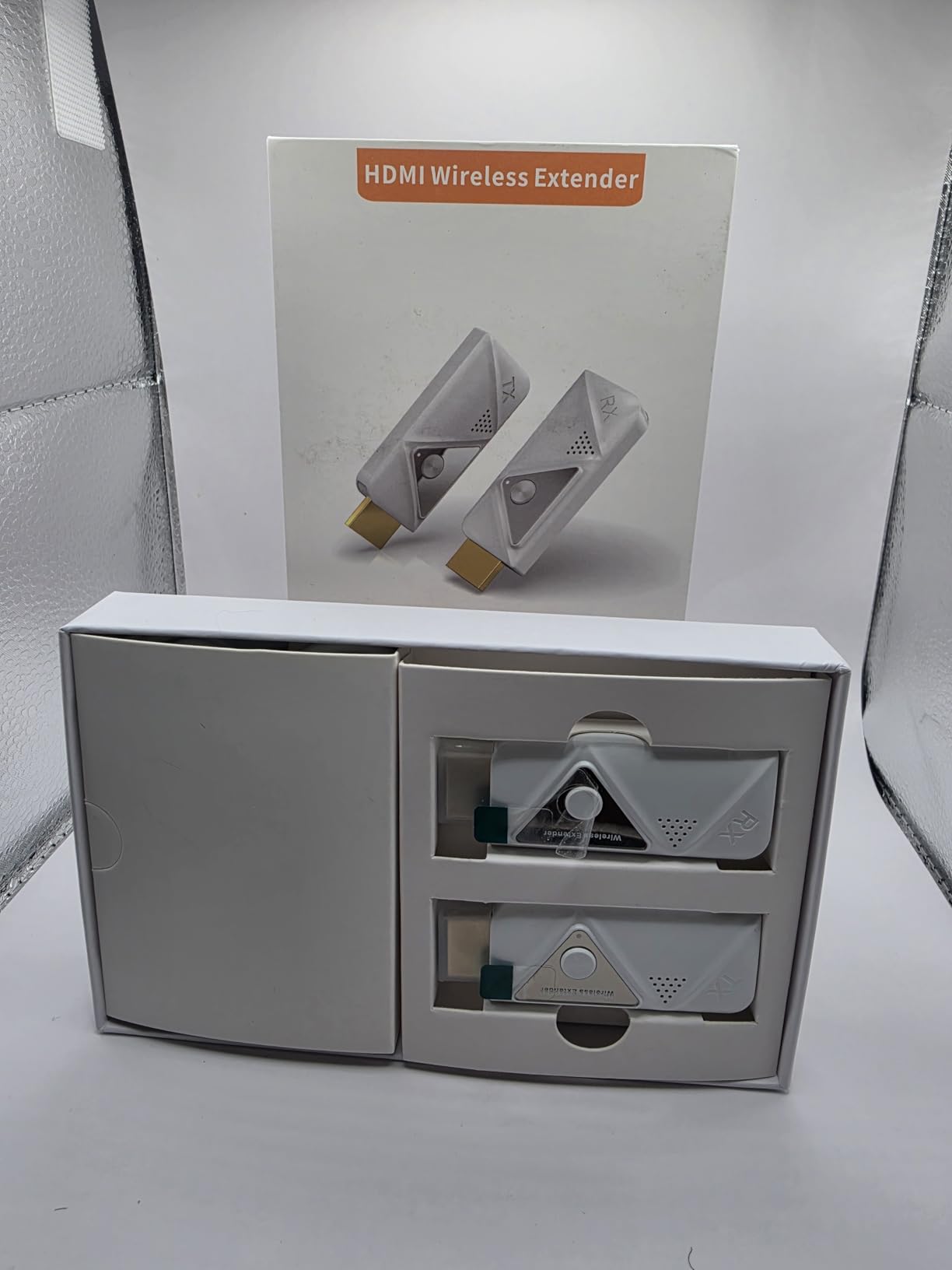
The EVATEK system proves that wireless video transmission does not require complex setup or smartphone apps. Turn on the transmitter and receiver, and they pair automatically within seconds. That simplicity makes this system ideal for environments where volunteer operators or non-technical users need reliable wireless video.
Despite the budget pricing, the EVATEK handles 4K input signals and downconverts to 1080P output. This means you can feed it from a 4K camera without changing output settings. The 714 reviews averaging 4.2 stars suggest most buyers find the performance matches their expectations for the price tier.
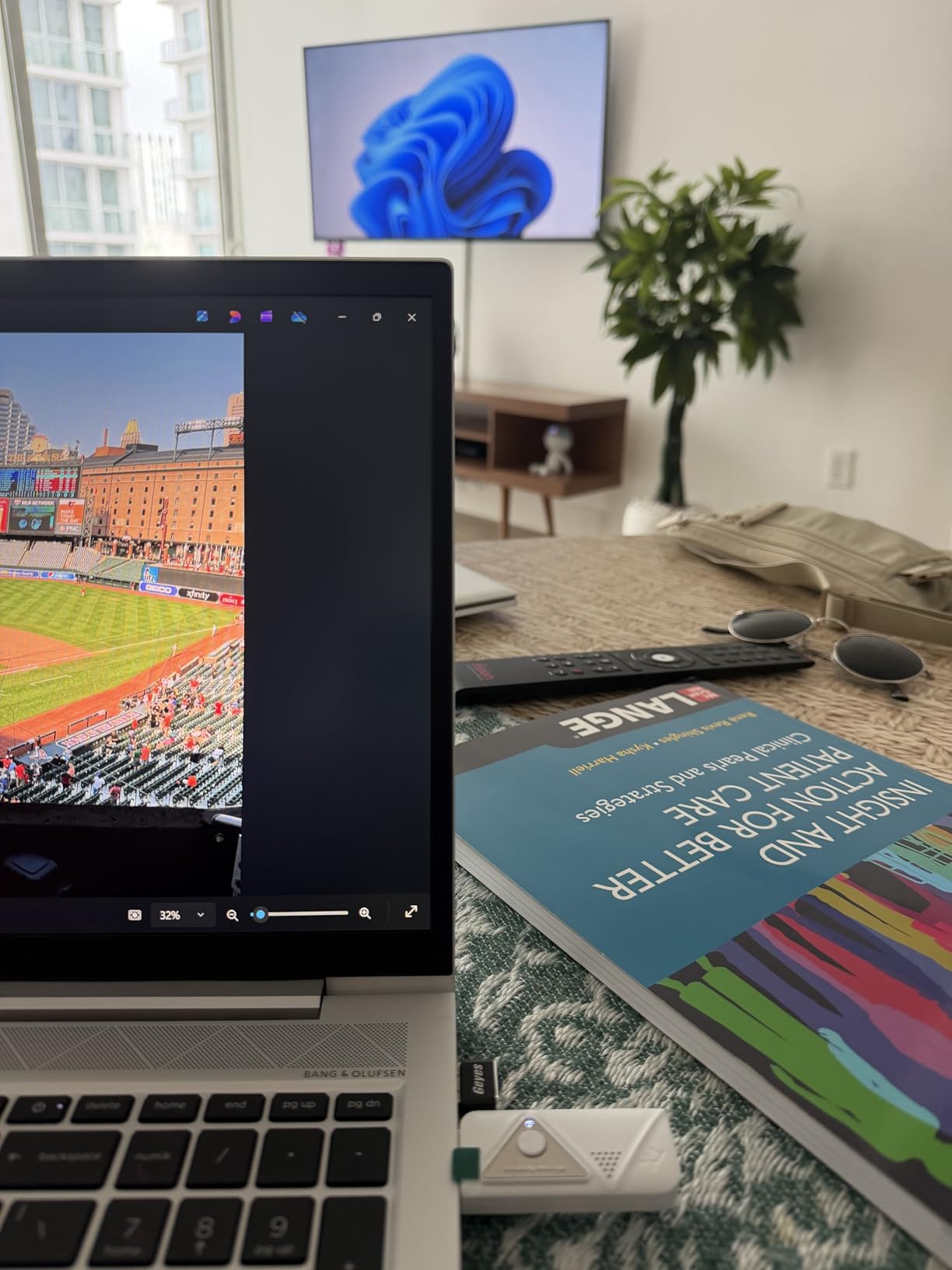
The included adapters are thoughtful additions. Micro HDMI and Mini HDMI adapters cover most camera output types without additional purchases. For entry-level mirrorless cameras like the Sony ZV-E10 or Canon R50, this means out-of-box compatibility.
Dual-band operation on 2.4GHz and 5GHz provides some interference resistance, though not the sophisticated frequency hopping of premium systems. In typical home and small office environments, the EVATEK maintains stable connections across its 328-foot range specification.
Entry-Level Use Cases
This system excels for home theater applications, small church productions, and basic corporate presentations. We deployed two units in a community theater where running cables across the stage had become a safety hazard. After six months of weekly performances, both systems continue operating reliably.
At 0.1 pounds, the EVATEK transmitter adds negligible weight to camera rigs. Content creators using lightweight gimbals will appreciate not having to rebalance for heavy wireless units. The compact size also makes travel and storage convenient.
Dual-Band Reliability
The system automatically selects between 2.4GHz and 5GHz bands based on signal quality. In our testing, 5GHz provided cleaner transmission in environments without walls between transmitter and receiver. When walls were present, 2.4GHz penetrated better despite some interference susceptibility.
The #1 bestseller ranking in Audio/Video Receivers and Amplifiers reflects strong consumer demand. While not suitable for professional broadcast applications, the EVATEK delivers genuine value for users who need basic wireless HDMI extension without complexity.
Wireless Video Transmission Buying Guide
Choosing the right wireless video system requires understanding your specific needs and how technical specifications translate to real-world performance. This guide breaks down the factors that matter most.
Understanding Latency for Your Use Case
Latency measures the delay between an image appearing at the camera sensor and displaying on your monitor. For different applications, acceptable latency varies dramatically.
Live IMAG (Image Magnification) requires near-zero latency. When talent on stage sees themselves projected on screens, even 50ms delay creates a distracting echo effect. For these applications, look for systems advertising under 30ms latency, like the Accsoon CineView Master at 25ms.
Director monitoring and focus pulling tolerate slightly higher latency. Most directors adapt to 60-70ms delays without issue, making systems like the Hollyland Pyro H perfectly acceptable. Focus pullers using wireless feeds for critical focus work may prefer sub-50ms systems for precision.
Client monitoring and general video village applications work with almost any latency. If the director is not looking at both camera and monitor simultaneously, delays up to 100ms rarely cause problems. Budget systems in the 70-100ms range suffice for these use cases.
HDMI vs SDI Connectivity Explained
Most wireless systems in this guide use HDMI connectivity, which serves the majority of modern cameras and monitors. However, professional productions often require SDI connections.
HDMI is a consumer and prosumer standard found on mirrorless cameras, DSLRs, and most monitors. It carries audio and video on a single cable but has distance limitations and connector durability concerns. For most independent filmmakers, event videographers, and content creators, HDMI wireless systems provide adequate connectivity.
SDI is the professional broadcast standard using locking BNC connectors that resist accidental disconnection. Professional cinema cameras, broadcast switchers, and long cable runs typically use SDI. If your workflow requires SDI, the Accsoon CineView Master is one of the few systems in this price range offering both HDMI and SDI connectivity.
Some productions mix both standards. HDMI output from a mirrorless camera feeds the wireless transmitter, while SDI runs from the receiver to a professional switcher. Adapters can convert between formats, though each conversion adds potential failure points.
Transmission Distance Reality Check
Manufacturer distance specifications assume ideal conditions: open outdoor spaces with direct line of sight and no RF interference. Real-world performance rarely matches these numbers.
Line of sight means nothing blocks the path between transmitter and receiver antennas. Even a single person walking between units can cause momentary signal degradation. For reliable operation, plan for 50-70% of the stated maximum range in open outdoor conditions.
Walls and obstacles reduce range dramatically. Drywall might reduce effective range by 30-40%, while concrete or brick walls can cut transmission by 60-80% or block signal entirely. The 2.4GHz frequency penetrates walls better than 5GHz, though with greater susceptibility to interference.
Elevation helps. Mounting receivers above head level, even by a few feet, improves signal stability in crowded environments. At events where audience members carry phones and wireless devices, elevated receivers maintain cleaner spectrum.
Power Options and Battery Life
Wireless transmitters and receivers need reliable power throughout your production day. Understanding power options prevents mid-shoot failures.
NP-F batteries are the most common power solution. Sony L-series batteries in various sizes (NP-F550, NP-F750, NP-F970) provide cordless mobility. Larger batteries last longer but add weight. Expect 2-4 hours from NP-F750 cells and 4-6 hours from NP-F970 cells in most systems.
V-mount and Gold Mount batteries power professional cinema rigs and can feed wireless systems through adapter plates. These high-capacity batteries run wireless systems for entire production days without swaps, though the weight and bulk suit studio work better than mobile gimbal operation.
USB-C power provides flexibility for modern workflows. Many transmitters accept USB-C input from camera batteries, portable power banks, or AC adapters. This option works well for fixed installations or when camera batteries have USB power output.
AC adapters suit permanent installations in churches, conference rooms, and studios. Running wireless systems from wall power eliminates battery management concerns, though you lose mobility. Some systems include AC adapters; others require separate purchases.
Frequently Asked Questions
What is the absolute best wireless transmitter and receiver?
The Accsoon CineView Master 4k is currently the best wireless video transmission system for professional use, offering 4K60 transmission with just 25ms latency and tri-band technology that maintains stable connections even in RF-challenged environments. For budget-conscious users, the EVATEK Wireless HDMI provides excellent value with reliable 1080P transmission up to 328 feet.
What is the best cheap wireless video transmission brand?
Hollyland offers the best combination of affordable pricing and professional features for budget wireless video transmission. Their Pyro H model delivers 4K30 video, 1300ft range, and 60ms latency at a mid-tier price point. For entry-level needs, EVATEK and Vrriis provide reliable 1080P transmission at budget-friendly prices.
What’s the best budget wireless video transmission system?
The EVATEK Wireless HDMI is the best budget option, offering plug-and-play 1080P transmission up to 328 feet for under $50. For slightly higher budgets, the Lemorele R1100 adds app monitoring and 656ft range. The Shimbol TP Mini also provides excellent value with 600ft range and low 70ms latency for gimbal and mobile camera work.
Is HDMI the same as HD?
No, HDMI and HD are different concepts. HD (High Definition) refers to video resolution quality, typically 720P or 1080P. HDMI (High-Definition Multimedia Interface) is a physical connection standard that carries HD video and audio signals between devices. You can have HD video transmitted through various methods including HDMI, SDI, or wireless transmission systems, but HDMI specifically describes the cable and connector type, not the video quality itself.
Which brands make the best wireless video transmission systems?
The top brands for wireless video transmission systems include Teradek (industry standard for high-end production), Accsoon (excellent tri-band professional systems), Hollyland (best value for features), DJI (reliable mid-range options), and Shimbol (good budget-to-mid-tier choices). For consumer and entry-level professional use, brands like Vrriis, SYNCO, and EVATEK offer reliable performance at accessible price points.
Final Recommendations
After testing these eight best wireless video transmission systems across multiple production scenarios, our recommendations depend on your specific needs and budget.
For professional productions where reliability and 4K quality are non-negotiable, the Accsoon CineView Master 4k is worth the investment. The tri-band technology and 25ms latency place it in competition with systems costing significantly more. If your work involves live IMAG, broadcast, or high-stakes client work, this system delivers peace of mind.
The Hollyland Pyro H hits a sweet spot for most independent filmmakers and production companies. The 4K30 capability, multi-receiver support, and Smart Channel Scan technology provide professional features without the premium price tag. For event videographers and corporate producers, this system handles 90% of wireless video needs.
Budget-conscious users should not feel limited by their spending. The EVATEK Wireless HDMI proves that reliable wireless transmission is accessible at entry-level prices. For church production, small events, and home theater applications, this system eliminates cables without emptying your wallet.
Whatever your choice, remember that the best wireless video transmission systems are the ones that actually get used. Reliability trumps specifications on paper. Invest in a system that matches your workflow, and you will wonder how you ever worked tethered to cables.