
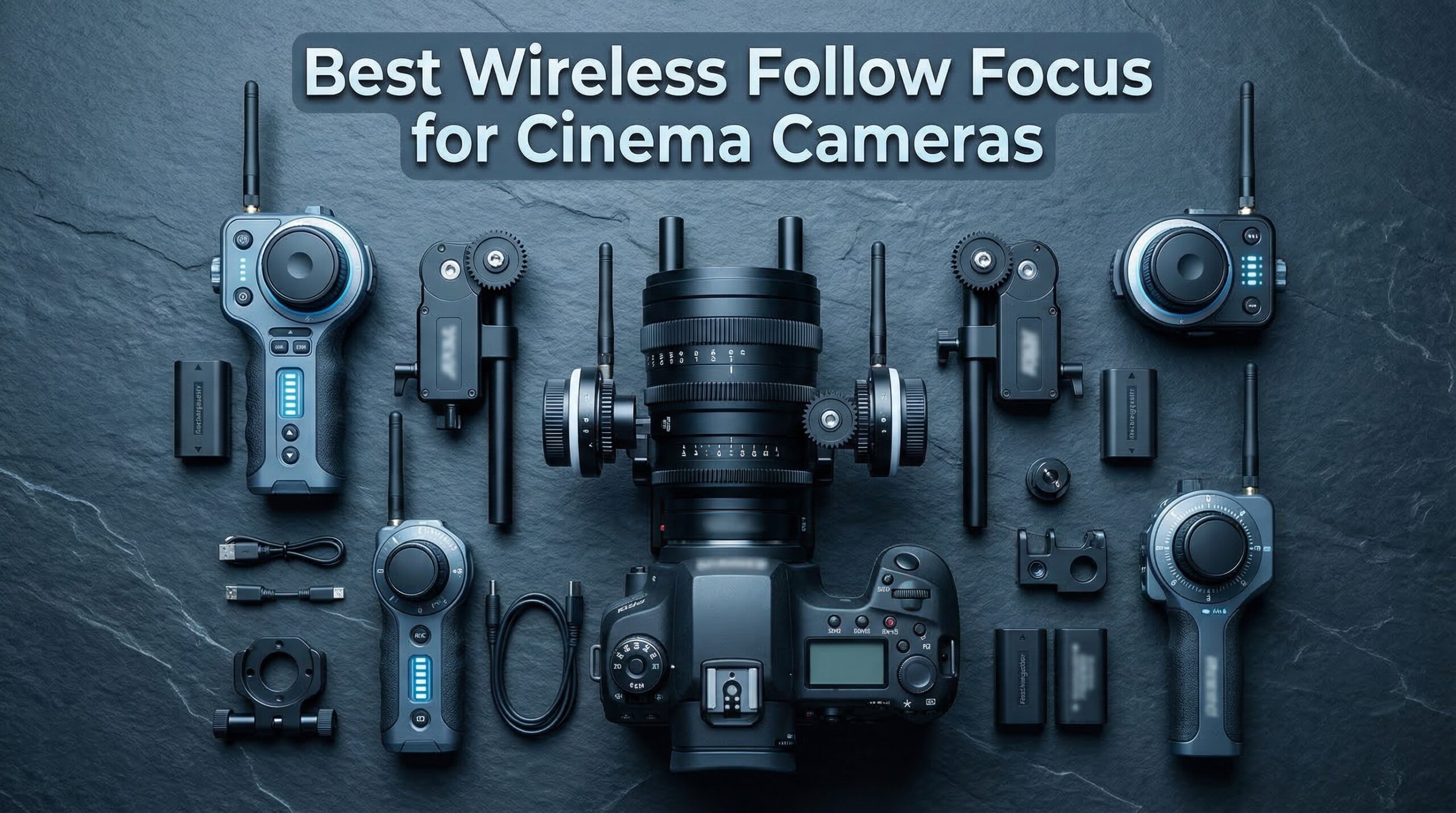
If you’ve ever missed a critical focus pull because your hands were too far from the lens, or shaken the camera while trying to adjust focus mid-shot, you already know exactly why a wireless follow focus system matters. The best wireless follow focus for cinema cameras gives you remote, precise control over your lens without ever touching the camera — and that changes everything about how you shoot.
I’ve spent a serious amount of time working through these systems with cinema cameras, mirrorless rigs, and gimbal setups. Some are full professional FIZ (Focus/Iris/Zoom) systems with thousand-foot wireless range. Others are compact, budget-friendly motors that simply get the job done on run-and-gun shoots. A few surprised me completely — like the LiDAR-equipped DJI Focus Pro Creator Combo, which represents a genuine leap forward in how focus systems work.
From talking to working cinematographers on reddit’s r/focuspuller and r/cinematography communities, the consistent theme is that reliability during a shoot matters more than raw specs. Battery life on long shooting days, wireless interference in crowded locations, and how well a motor handles stiff vintage lenses — these are the real-world concerns that separate good systems from great ones. This guide covers 15 options across every budget and use case so you can make the right call for your specific setup.
Top 3 Picks for Best Wireless Follow Focus for Cinema Cameras

Tilta Nucleus Nano II Base Kit
- Touchscreen handwheel
- Lens mapping display
- USB-C powered
- Supports 4 motors

SmallRig Wireless Follow Focus Kit Lite
- 21H battery life
- 4.3 kgf.cm torque
- One-click calibration
- 15mm rod clamp

DJI Focus Pro Creator Combo
- LiDAR focus system
- 76800 ranging points
- AI subject tracking
- FIZ lens control
Best Wireless Follow Focus for Cinema Cameras in 2026




1. Tilta Nucleus Nano II Base Kit – Best Overall Wireless Follow Focus
Pros
- Powerful motors for stiff lenses
- Compact and lightweight
- USB-C powered for flexibility
- Excellent build quality
- Lens mapping for accurate focus pulling
Cons
- Firmware updates can be difficult
- Feels delicate if dropped
- Some calibration quirks
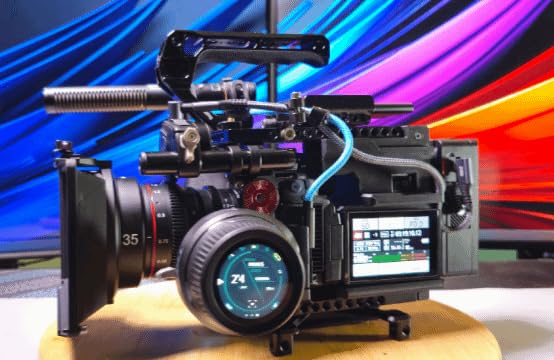
I’ve had the Tilta Nucleus Nano II set up on a Sony FX3 for several months now, and it’s become my default recommendation when someone asks me what the best wireless follow focus for cinema cameras looks like at a practical mid-range budget. The touchscreen handwheel is genuinely intuitive — you’re not scrolling through hidden menus to do basic tasks, and the 1.6-inch circular display shows you real-time focal distance information through the lens mapping feature.
The motors are stronger than you’d expect for the size. I paired mine with an older Zeiss CP.2 prime that has a notoriously stiff focus ring, and the motor handled it without hesitation. USB-C powering is also a real-world advantage — on longer shoots I can tap a battery bank instead of hunting for D-Tap cables.
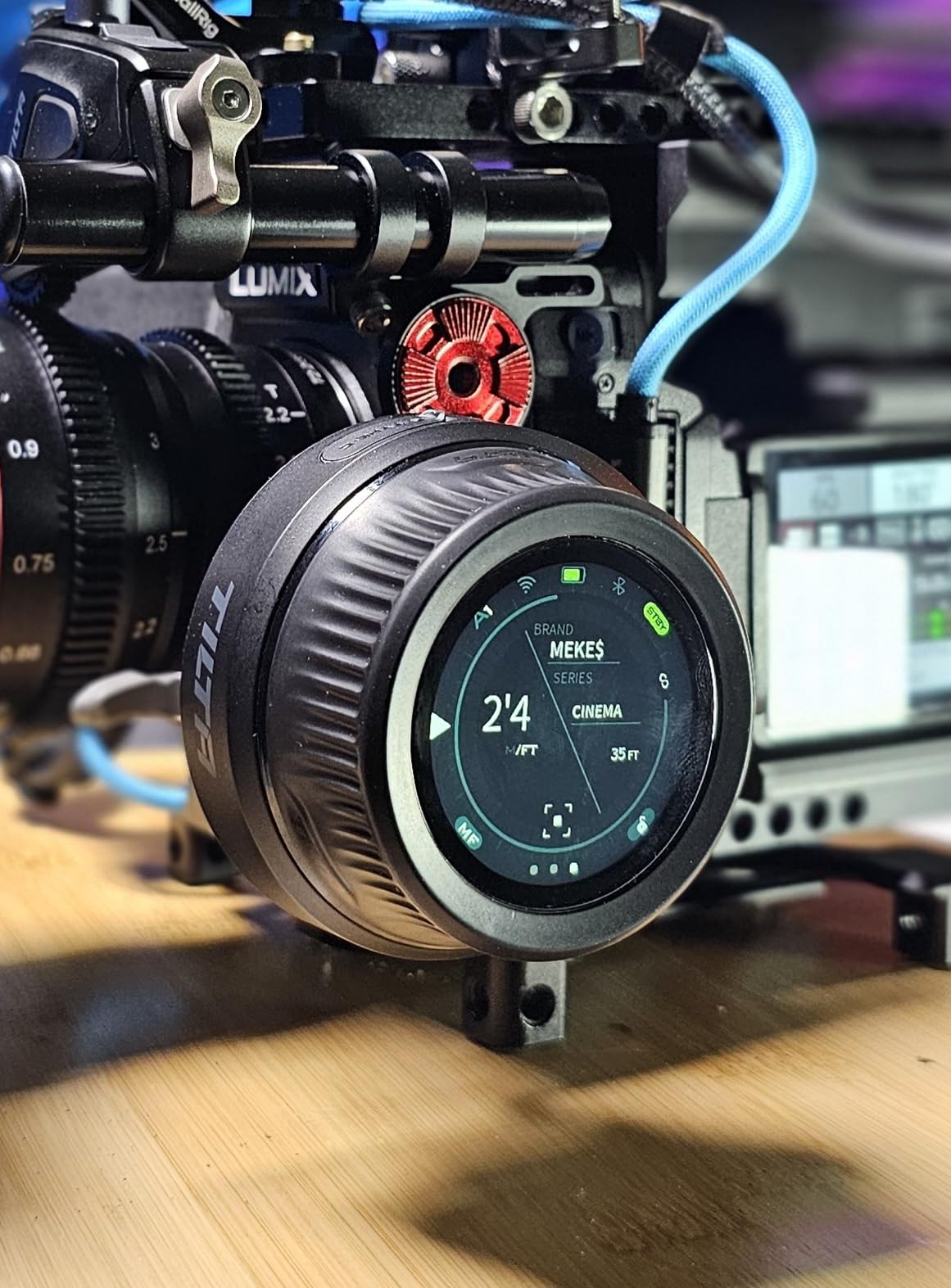
The expansion capability is worth noting too. You start with a single motor, but the system supports up to four motors through the same handwheel — so if you move into FIZ territory with iris and zoom control, you’re not buying an entirely new system. The camera communication feature via WiFi, Bluetooth, and USB-C lets you adjust ISO, shutter speed, and frame rate from the handwheel, which is something I use constantly when pulling focus on a slider setup.
The main caution I’d flag is the firmware update process. It’s not plug-and-play, and a few users on the Tilta forums have had to do multiple attempts to get it right. The device also feels like it would prefer not to be dropped — build quality is good, but it’s not a tank. If you’re shooting in rugged conditions, be careful with it.
Who This Is Best For
The Nucleus Nano II is ideal for indie filmmakers, solo operators, and camera assistants who need wireless lens control on cinema or mirrorless cameras without paying professional FIZ prices. It works especially well in controlled environments like studio shoots, narrative productions, and interview setups where you need precise, repeatable focus pulls.
Ecosystem Compatibility
One of its strongest points is broad compatibility — it works with Nucleus M and Nano motors, DJI Focus motors, and integrates with DJI Ronin S series gimbals. For Canon, Sony, and Blackmagic Design camera users, the camera communication functions are fully supported, which extends its value well beyond basic focus pulling.
2. Tilta Nucleus-M FIZ Full Kit – Best for Professional Film Sets
Pros
- Quiet motors ideal for sound recording
- Two motors and three FIZ controllers
- 1000ft wireless range
- No MDR required
- Great hand grips for shoulder rig
Cons
- Batteries not included
- Motors are heavy on gimbals
- Menu system can be finicky
The Tilta Nucleus-M has been on production sets for years, and the full FIZ dual-motor kit is one of the most comprehensive wireless lens control packages you can get without paying for a Preston or Cmotion system. On r/focuspuller, the Nucleus-M comes up again and again as the recommendation for indie and student filmmakers who need genuine professional capability at a fraction of the cost.
I’ve worked alongside DPs using this system on narrative shoots, and what strikes me every time is how quiet the motors are. On sets where sound is rolling simultaneously with camera, motor noise is a real problem with some budget wireless follow focus systems — the Nucleus-M motors are whisper-quiet, which matters more than almost any spec on the sheet.
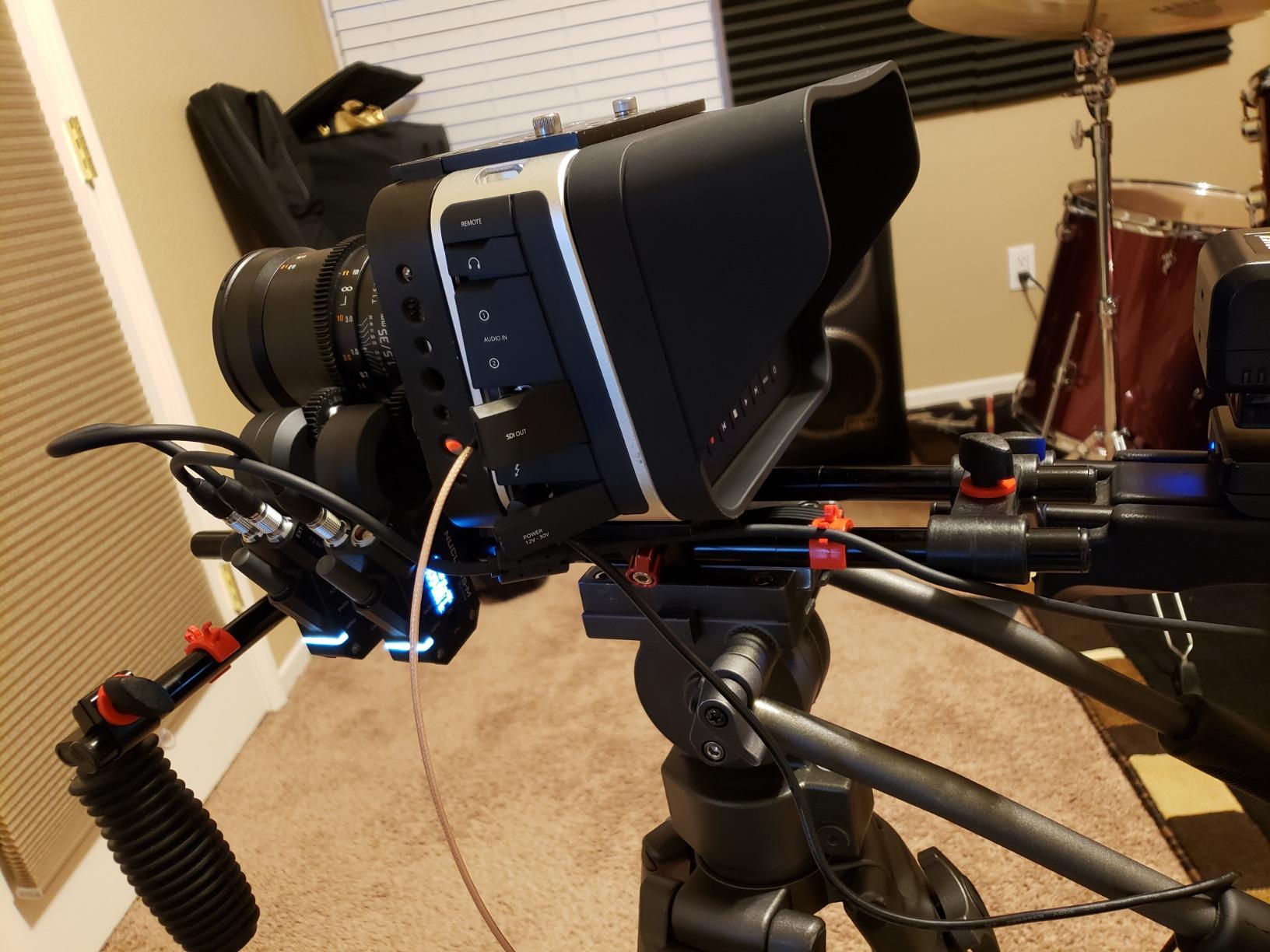
The full FIZ kit includes the wireless FIZ hand unit, left and right wireless handles, and two motors — all with 0.8 gear pitch compatibility for most cinema lenses. The 1000-foot wireless range is no-MDR-required, meaning you’re not adding a separate motor driver receiver to your follow focus setup, which simplifies the whole rig considerably.
The run/stop recording via the REC button is a feature I’ve seen very few systems at this price point include. On documentary and commercial shoots where the AC is also triggering record, that single button eliminates a whole category of miscommunication on set. The hand grips are also genuinely good for shoulder rig work — ergonomically designed rather than just functional.
Weight Considerations on Gimbals
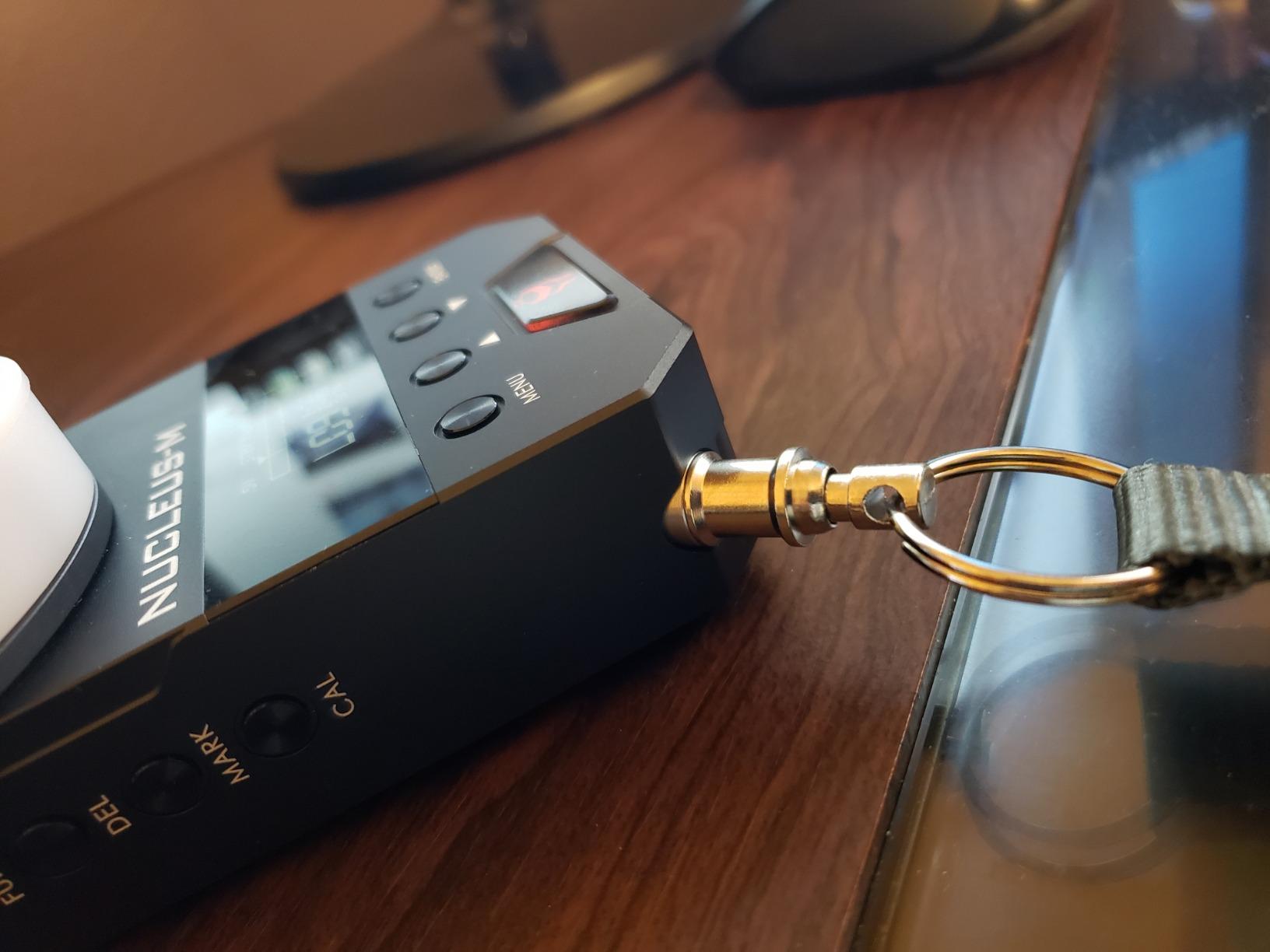
The motors are on the heavier side, and several users have noted that mounting them on gimbals requires a counterweight adjustment. If your primary setup is gimbal-based rather than shoulder rig or tripod, factor in the additional motor weight when calculating balance. The system was designed for traditional cinema rigs where weight distribution is less sensitive.
Battery and Power Setup
One notable gap: batteries are not included, and the menu system has a learning curve. Plan for a setup session before the first day of principal photography. The daisy-chain power capability means you only need one power port on your rig, but you do need to source the appropriate batteries before you can get shooting.
3. Tilta Nucleus-M K4 Kit – Outstanding Build Quality
Pros
- Outstanding construction and build quality
- Reliable through frequent professional use
- Precise focus control
- Smooth operation
- Both 15mm and 19mm rod compatibility
Cons
- Price point is significant
The Tilta Nucleus-M K4 sits at a 4.9-star average from verified users — which, given how demanding working cinematographers and camera assistants are, tells you something. This is the configuration that professional 1st ACs tend to choose when they want the Nucleus-M platform but need a specific setup for their particular rig.
What separates this from the full FIZ kit is the targeted configuration: it’s built around a specific combination of hand unit, motor, and mounting hardware that works exceptionally well for operators who know exactly what they need. The high-grade aluminum alloy and stainless steel construction gives it a feel that matches professional cinema gear — not consumer equipment built to a price point.
The customizable dampening on the hand unit is something I appreciate more every time I use it. Being able to fine-tune the resistance of the focus wheel to match the feel of a specific lens makes a tangible difference in how naturally you can execute a focus pull. It’s the kind of detail that matters in professional workflows where muscle memory and consistency are critical.
Rod System Flexibility
Support for both 19mm and 15mm rod systems means this kit adapts to virtually any cinema rig configuration. Whether you’re on a traditional 19mm studio setup or a 15mm shoulder rig, you’re covered without additional adapters. This flexibility is a meaningful advantage for rental houses and working ACs who deal with different rig configurations across different productions.
Value at the Professional Level
Yes, the price is significant — users note this in reviews. But compared to true professional wireless focus systems from brands like Preston or Arri, the Nucleus-M K4 delivers professional-level performance at a fraction of the cost. For freelance 1st ACs and production companies building their kit, the build quality and reliability justify the investment over time.
4. Tilta Nucleus Nano Motor Kit – Best Compact Motor for Run-and-Gun
Pros
- Consistent and reliable performance
- Solid motor system
- Perfect for run-and-gun rigs
- Broad lens compatibility via 0.8 gear pitch
Cons
- Calibration button poorly located
- Some reports of USB port failures
If you’ve looked at the Nucleus Nano II and thought “I just want the motor, not the full system,” the original Nucleus Nano Motor Kit is worth your attention. Several long-term users in the filmmaking community actually prefer this original Nano over the Nano II specifically for its consistent, no-surprises performance.
At only 7 ounces, it mounts to a standard 15mm rod and powers via Micro USB — which makes it compatible with virtually any USB power source on your rig. The 300-foot wireless range is more than sufficient for most production scenarios, and the 0.8 gear pitch compatibility covers the overwhelming majority of cinema lenses you’ll encounter.
The wired connection option via a side focus handle is a practical fallback that many wireless systems don’t offer. In environments with heavy wireless interference — crowded event spaces, locations near broadcast equipment — being able to switch to wired control means you’re never dead in the water. This is one of the real-world pain points that experienced operators on r/videography consistently mention when evaluating follow focus systems.
Run-and-Gun and Documentary Use
For documentary filmmakers and solo operators, the compact size and lightweight profile make this motor nearly invisible on a rig. You’re not fighting counterbalance issues, and you can configure a minimal, functional wireless follow focus setup without the complexity of a full FIZ system.
The Calibration Button Issue
Fair warning: the calibration button placement is something several users flag as genuinely problematic. It’s positioned in a way that’s easy to bump during normal operation, which can cause the motor to re-calibrate mid-shot. If you’re using this motor, take a few minutes during setup to understand where the button is and how to avoid accidentally triggering it.
5. SmallRig Wireless Follow Focus Kit Lite – Best Value All-in-One
Pros
- Exceptionally smooth easing in and out
- Very quiet operation
- Outstanding value for price
- 21-hour battery life
- One-click calibration with memory
Cons
- Can be noisy during very fast focus moves
- Instructions could be clearer
- No handwheel mount included
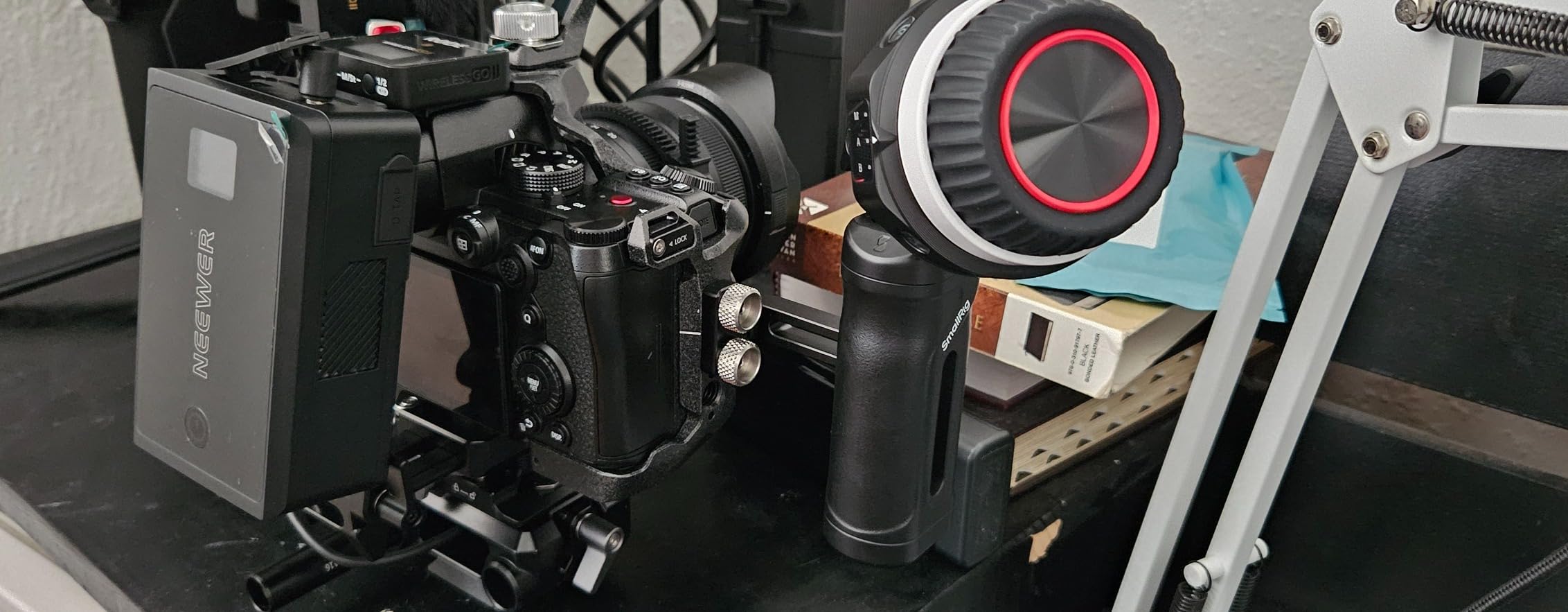
The SmallRig Wireless Follow Focus Kit Lite has become one of my go-to recommendations for filmmakers who want a complete wireless follow focus solution without spending hundreds of dollars on a Tilta or DJI system. With 169 reviews averaging 4.2 stars, this kit has been tested thoroughly by real shooters — and the feedback consistently points to one thing: it’s smoother than it has any right to be at this price.
The “unexpectedly smooth” quality users describe isn’t just subjective impression. SmallRig engineered high damping into this kit specifically for cinema and zoom lenses, and the result is a focus pull that eases in and eases out in a way that feels natural rather than mechanical. That’s not something you can fake with raw torque — it requires careful motor tuning.
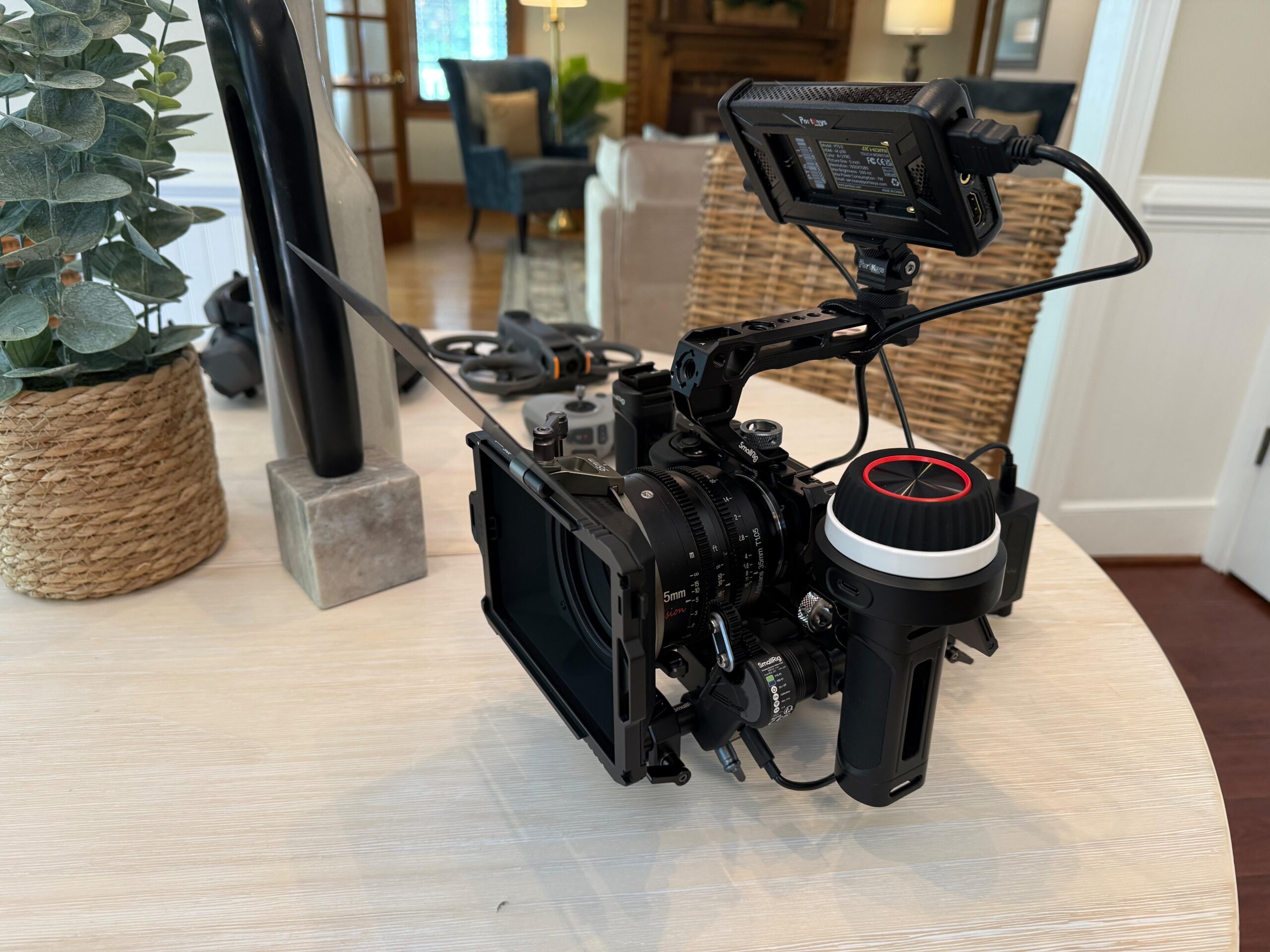
The 21-hour battery life is also not a marketing exaggeration. The 1400mAh battery with smart sleep technology means you’re getting through a full shooting day and then some. Battery anxiety during a long shoot is real, and this kit largely eliminates it. The peak torque of 4.3 kgf.cm — double the previous generation — gives it enough muscle to handle most cinema and zoom lenses without slipping.
One-click lens calibration with memory storage is another feature that punches above the kit’s price. You calibrate the lens once, and the motor remembers it. Next time you mount that lens, you’re up and running immediately. For shooters who frequently swap between a small set of lenses, this saves meaningful time during setup.
Who This Kit Works Best For
This is the kit I’d recommend to someone buying their first wireless follow focus system, or to a working shooter who needs a reliable backup to their primary system. The combination of smooth operation, long battery life, and broad lens compatibility makes it a genuinely versatile option for narrative, documentary, and commercial work.
Limitations to Know
The printed instructions are sparse — multiple users mention needing to search for setup information online. The handwheel also doesn’t come with a mounting solution, which means you’ll need to sort out how to position it on your rig independently. These are real friction points that SmallRig should address, but they don’t significantly affect the system’s performance once set up.
6. SmallRig Wireless Receiver Motor Lite – Ultra-Compact Budget Motor
Pros
- Well-built and precise
- Low latency with little to no delay
- Compact and lightweight
- Great value
- PD and QC fast charging support
Cons
- Limited torque for stiff vintage lenses
- Documentation is sparse
If you already have a SmallRig Magic FIZ handwheel controller and just need an additional receiver motor, or if you’re building a multi-motor setup on a tight budget, the SmallRig Wireless Receiver Motor Lite is the piece you want. At just 3.44 ounces and a footprint of 3.7 x 2.22 x 1.41 inches, it’s genuinely tiny without sacrificing meaningful capability.
The 4.3 kgf.cm torque rating matches the kit version, and the low latency control is something several users specifically call out — “precise control with little to no latency” is a phrase that appears repeatedly in the reviews. For focus pulling where you need the motor response to feel immediate, latency matters, and this motor delivers.
PD and QC fast charging support means you can top up the motor quickly between setups or during lunch breaks. The LED indicators for connection status keep you informed at a glance without needing to look at a screen.
Vintage Lens Limitations
The one consistent caveat in user reviews: vintage lenses with particularly stiff focus rings can exceed what this motor handles comfortably. If you’re regularly working with older manual focus glass that has tight, resistive focus rings, you may find this motor struggling under load. For modern cinema lenses and most DSLR/mirrorless glass, it’s perfectly adequate.
Documentation Gap
Like the full kit, the documentation situation here is minimal. Some features are not clearly explained in the included materials, and you’ll likely need to consult SmallRig’s online resources to get the most out of the system. Once you’re past that setup hurdle, day-to-day use is straightforward.
7. DJI Focus Pro Motor – Best for DJI Gimbal Shooters

DJI Focus Pro Motor, Compatibility:DJI RS 5, DJI RS 4 Pro, DJI RS 4, DJI RS 3 Pro, DJI RS 3, DJI Focus Pro Grip, DJI Focus Pro Hand Unit, DJI Ronin 4D Flex
Pros
- Original DJI build quality
- Smooth and precise operation
- Easy to set up
- Very durable
- Quiet performance
- Small profile
Cons
- Not compatible with DJI RS4 Mini
- Gear tread overlap issue on some units
If you’re shooting on a DJI RS 4 Pro, RS 4, RS 3 Pro, RS 3, or Ronin 4D Flex, the DJI Focus Pro Motor is the most integrated and reliable follow focus solution available for your rig. DJI’s own ecosystem delivers here — the motor communicates natively with DJI gimbals and the Focus Pro Hand Unit, which means setup is faster and the behavior is more predictable than third-party alternatives.
The motor speed is 30% faster than the previous Focus Motor, and latency drops as low as 10ms — for focus pulling where you need immediate, responsive feedback, that number is meaningful. The built-in RF antenna means you don’t need a separate receiver, which keeps the rig clean and minimizes cabling.
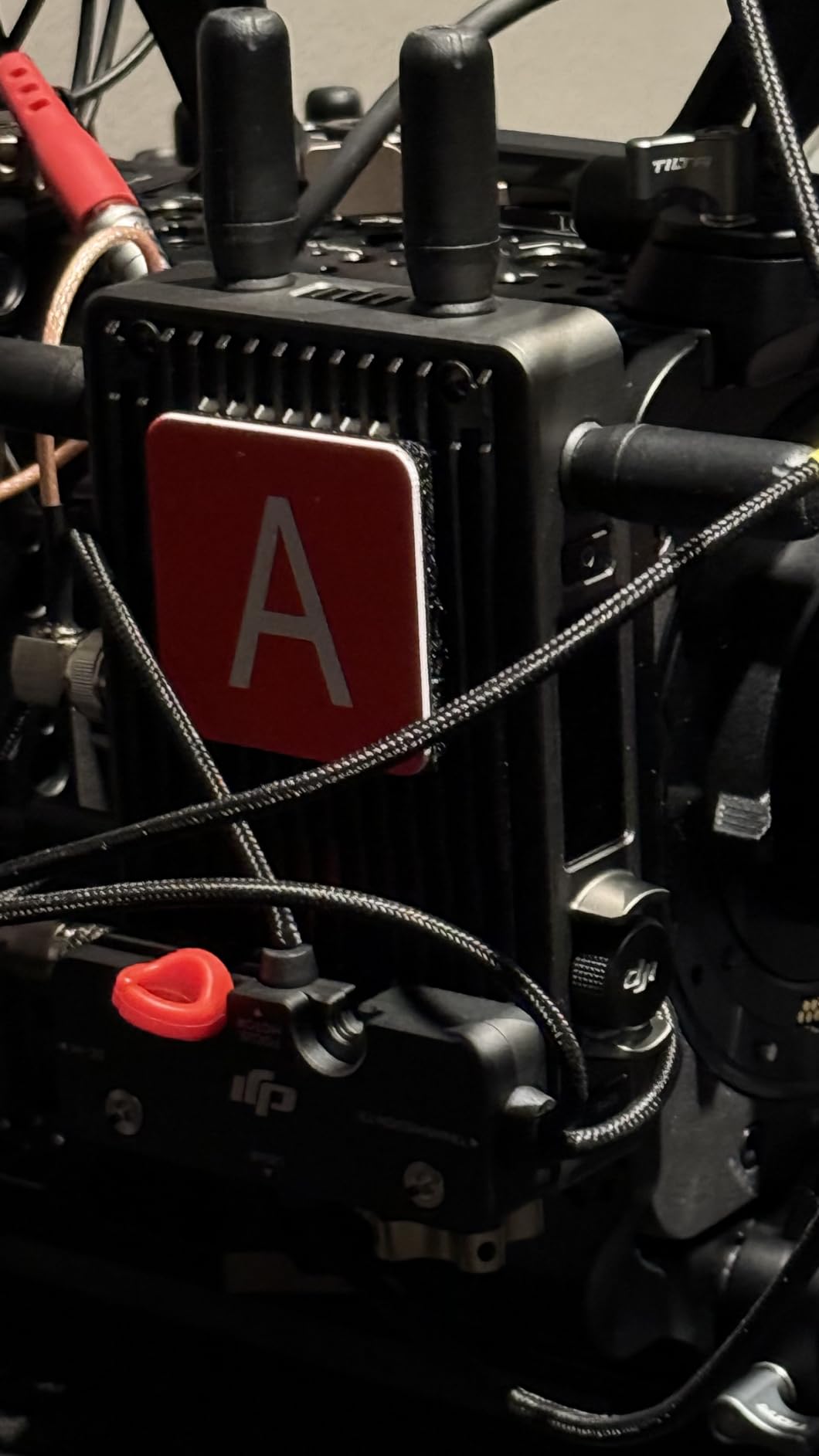
At 4.7 ounces with a 3.93 x 2.39 x 1.35 inch footprint, this is one of the most compact motors in the category. The small profile matters particularly on gimbal rigs where every gram and millimeter of extension affects balance. Several users specifically praise the “impressive power in small size” — a compact motor that doesn’t trade torque for size.
Compatibility Confirmation
One confirmed limitation from DJI’s own support: this motor does not work with the DJI RS4 Mini. If you’re on that specific gimbal, this motor won’t pair, and DJI engineering has confirmed the incompatibility. All other RS series and Ronin 4D Flex users are good to go. Verify your specific gimbal model before purchasing.
Power Integration with DJI Ecosystem
The motor can be powered directly by the DJI Focus Pro Grip via USB-C, eliminating the need for a separate power cable and keeping your rig clean. With the DJI RS 4 Pro specifically, you can support up to two motors simultaneously — useful if you want to control both focus and zoom wirelessly on a parfocal zoom lens.
8. DJI Focus Pro Creator Combo – Best LiDAR Wireless Focus System
Pros
- Highly accurate LiDAR-based focus
- Long 20-meter subject range
- AI human and vehicle tracking
- Easy lens calibration
- Great for solo shooting
- Reliable subject tracking
Cons
- Battery life 1-2 hours only
- Short 30cm cables
- Not effective in haze or fog
- Small grip screen
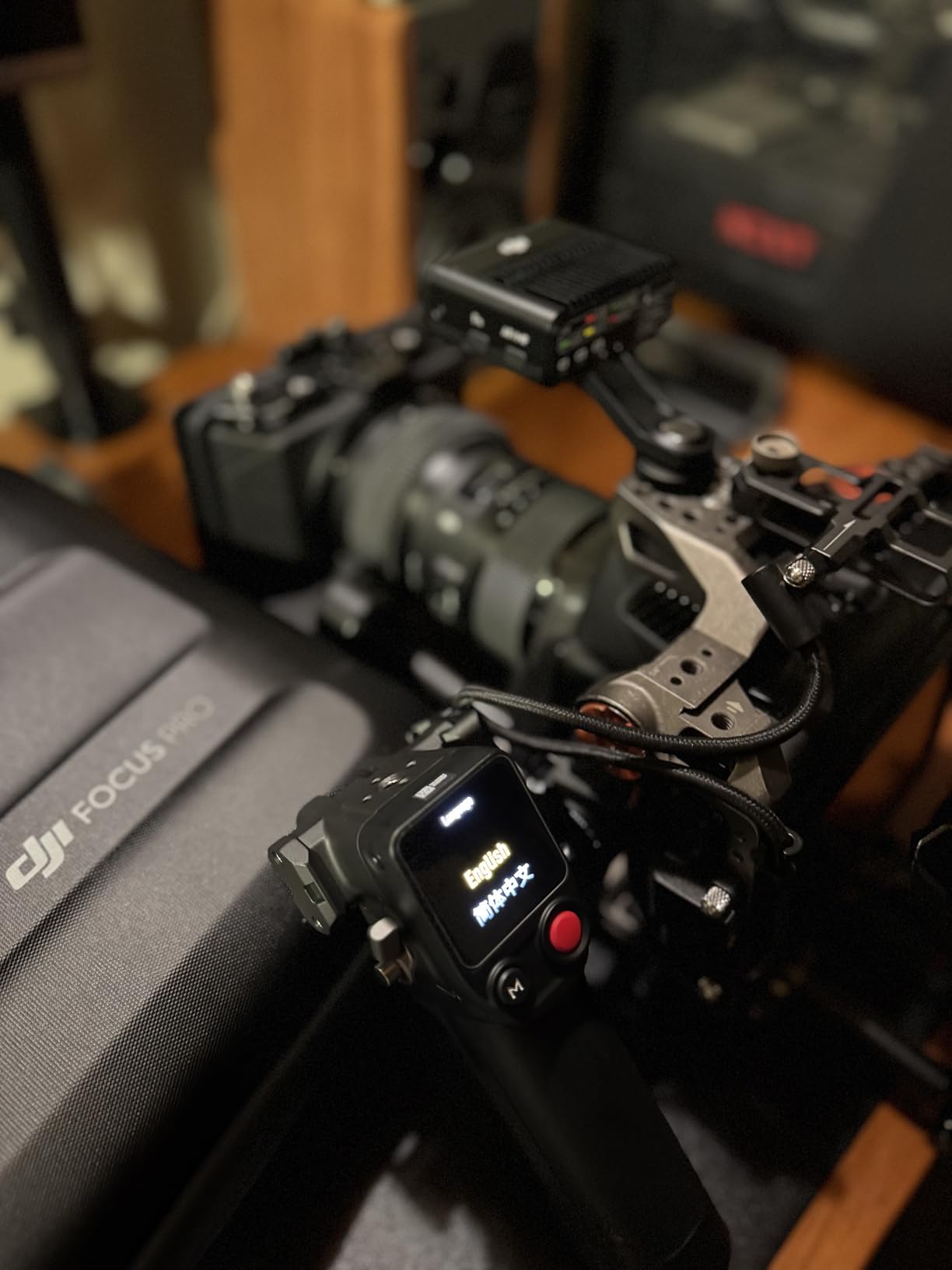
The DJI Focus Pro Creator Combo is the most technologically advanced system in this roundup, and it represents something genuinely new in how wireless follow focus can work. Instead of a traditional motor-and-handwheel system, the Focus Pro uses LiDAR ranging with 76,800 measurement points to detect subject distance in real-time and automatically drive the focus motor to the correct position.
In practice, this means you can lock onto a subject — a person walking toward the camera, a vehicle driving through frame — and the system continuously adjusts focus without a human hand on a wheel. The AMF (Auto-Manual Focus) mode is a hybrid approach where LiDAR does the heavy lifting but the operator retains override control. For solo shooters who need to be behind camera and in front of it simultaneously, or for gimbal operators running complex shots alone, this is transformative.
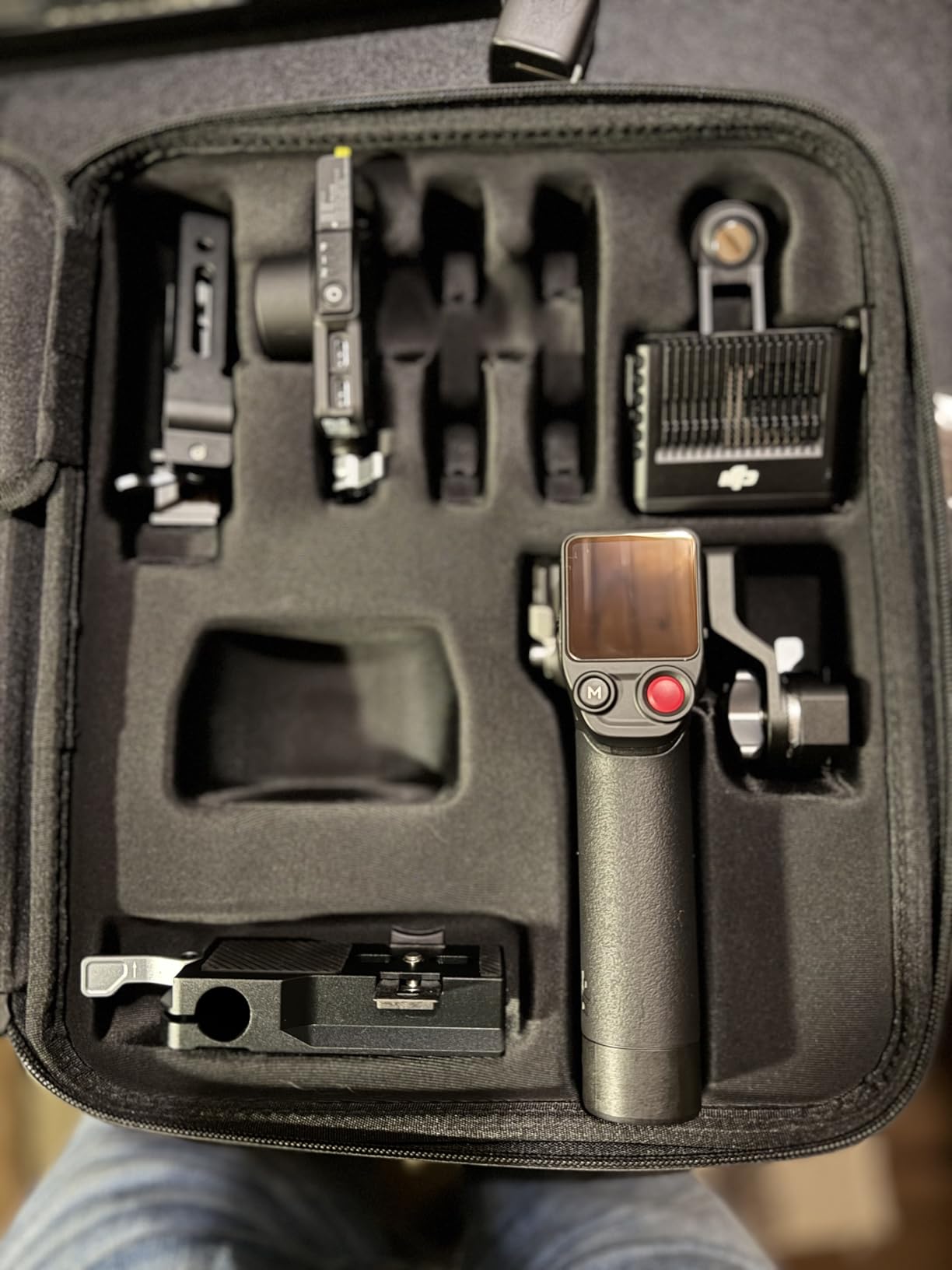
The 20-meter subject focusing range is genuinely useful for real-world cinema work. AI recognition distinguishes between humans and vehicles, which means the system maintains focus on your intended subject even when other elements are moving through the frame. Several users specifically praise the reliable tracking and the accuracy, noting it works consistently in varied lighting conditions.
The limitations are real though. Battery life hovers around 1-2 hours, which is a significant constraint on longer shooting days. The cables included are only 30cm, which is short for many rig configurations. In haze, fog, or other atmospheric conditions, the LiDAR system struggles — it needs clean line-of-sight to function. And the grip screen is noted as small for its price point.
When LiDAR Follow Focus Makes Sense
LiDAR-based wireless follow focus is best suited to controlled environments where the subject is clearly defined and the atmosphere is clean. Narrative productions with a dedicated focus puller may still prefer traditional systems for the fine manual control, but documentary work, event coverage, and solo-operator narrative shooting are ideal use cases where the autonomous tracking shines.
DJI Ecosystem Dependency
This system is deeply tied to the DJI PRO Ecosystem. It integrates with DJI gimbals, the Ronin 4D, and DJI’s app infrastructure. If you’re already in the DJI ecosystem, this integration is seamless and powerful. If you’re shooting with non-DJI cameras on non-DJI gimbals, be sure to verify compatibility with your specific equipment before investing at this level.
9. FeiyuTech Scorp Follow Focus Motor – Best for FeiyuTech Gimbals
Pros
- Budget-friendly follow focus solution
- Lightweight metal construction
- Easy mounting for compatible gimbals
- Lens compatibility up to 10cm diameter
Cons
- Mounting base lacks flexibility
- Optional pull unit feels flimsy
- Setup can be time consuming
- 10mm tube not standard
For owners of the FeiyuTech SCORP series gimbals — specifically the SCORP 3, SCORP 2, SCORP-C2, and SCORP Pro — this is the dedicated wireless follow focus motor designed to integrate cleanly with your existing hardware. At $69.90, it’s the most affordable motorized option in this roundup, and for shooters who already own a compatible FeiyuTech gimbal, it’s the most direct upgrade path to wireless lens control.
The brushless motor at only 3.8oz (108g) adds minimal weight to your gimbal setup, which matters for balance. The multifunctional button and LED indicators keep you informed about motor status, and both auto and manual calibration options give you flexibility depending on the lens you’re mounting.
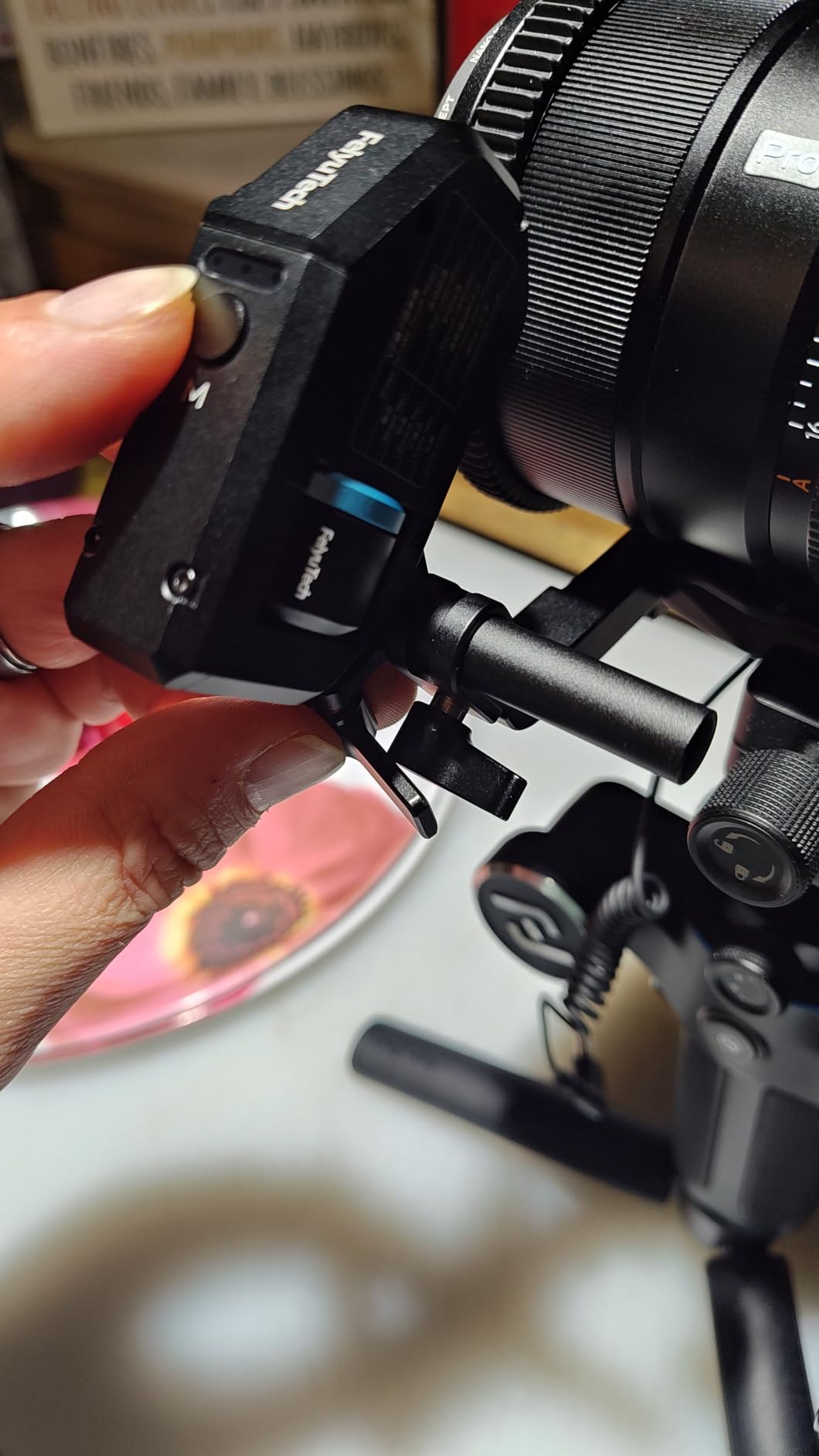
The honest assessment: this motor has real limitations. Several users flag that the mounting base lacks flexibility, and the optional focus pull unit feels less substantial than the motor itself. Setup is described as time-consuming, especially compared to the smoother experience of the Tilta or SmallRig systems. If you’re using it primarily for zoom and focus control on a FeiyuTech gimbal where the gimbal app handles the interface, the limitations matter less.
Standard Rod Compatibility Issue
A practical concern worth flagging before you buy: the motor uses a 10mm tube mounting system that is not the standard 15mm rod size. You cannot adapt it to standard 15mm rods without additional hardware. If you’re planning to use this motor outside of a FeiyuTech gimbal ecosystem, this is a significant limitation. It’s purpose-built for the Scorp series, and that’s where it performs best.
App-Controlled Focus
On compatible FeiyuTech gimbals, the motor integrates with the FeiyuTech app for zoom and focus control, which is a clean and functional experience. The app control eliminates the need for a physical handwheel in some scenarios, making this a genuinely compact wireless follow focus solution for gimbal-based shooting.
10. Tilta Nucleus Nano II Hand Wheel Controller – Best Touchscreen Controller

Tilta Nucleus Nano II Hand Wheel Controller | Control Multiple Motors | Touch Screen | Follow Focus/FIZ Controller | WLC-T05-HWC
Pros
- Intuitive touchscreen interface
- Seamless focus adjustments
- Controls multiple motors
- Up to 20 hours battery life
- Works with Canon Sony Blackmagic
Cons
- WiFi and Bluetooth dont remember connections
- No charging indicator
- Outdated online documentation
The Tilta Nucleus Nano II Hand Wheel Controller is the standalone controller component of the Nucleus Nano II system — useful if you already own compatible motors and want to upgrade your control interface, or if you’re building a multi-motor setup and need an additional hand unit. The 1.6-inch circular touchscreen is distinctive and genuinely functional rather than just a cosmetic feature.
From my time with it, the touchscreen interface genuinely earns its place. Accessing motor settings, viewing focal distance information, and switching between motors all happen on that small but readable display in a way that’s faster than navigating button-based menus. For operators who spend a lot of time in the menu system, this matters for day-to-day use.
The 20-hour battery life is exceptional for a wireless controller, and the multi-protocol connectivity — WiFi, Bluetooth, and USB-C — gives you flexibility in how you connect. The camera communication support for Canon, Sony, and Blackmagic Design cameras extends the utility beyond just focus pulling.
Connectivity Memory Issues
The most consistent criticism in user reviews is that the WiFi and Bluetooth connections don’t save between power cycles. Every time you power up, you’re re-pairing the controller. For a professional tool, this is a frustrating omission, and Tilta acknowledges it in their firmware update notes. Check the current firmware status before buying — this may have been resolved in recent updates, but it was an ongoing issue at the time of this writing.
Documentation Gap
The online documentation for the Nucleus Nano II system is noted by multiple users as being out of date or incomplete. Tilta’s product moves faster than their support resources sometimes keep up with. The Tilta community on YouTube and in filmmaking forums tends to be more helpful than the official docs for working through setup challenges.
11. Tilta Nucleus-M Brushless Motor – Solid Single Motor Option
Pros
- Very well made and sturdy
- Automatic calibration
- Accurate focus control
- Daisy chain power support
- Works well for focus and zoom on sliders
Cons
- Motor may struggle with some lenses
- No cables or documentation included
The Tilta Nucleus-M Brushless Motor is the individual motor component of the Nucleus-M system, sold separately for operators who want to add to an existing kit or replace a single motor. At $299 for a standalone motor, it’s a considered purchase — but the build quality and compatibility make it a legitimate option for professional wireless follow focus setups.
The daisy-chain power capability is a practical advantage worth highlighting. Using a single P-tap power connection, you can power multiple motors in a chain without needing separate power runs to each motor. For complex rigs with two or three motors, this dramatically reduces cable management complexity.
Automatic calibration handles lens setup without manual input, which saves time on set when you’re switching between lenses. The motor clamps to both 19mm and 15mm rods through included rod bushings, so it integrates into either professional or indie rig configurations without needing additional hardware.
Torque Limitations with Certain Lenses
Several users note that this motor can struggle with lenses that have very stiff or tight focus rings — some vintage glass in particular. The 3.9-star average reflects this inconsistency across different lens types. For standard cinema lenses with 0.8 gear pitch, performance is solid; for outlier lenses, test compatibility first if possible.
No Cables or Documentation
A bare-bones purchase experience: this motor comes without cables or documentation. If you’re not already familiar with the Nucleus-M system, you’ll need to source the appropriate cables separately and rely on online resources for setup guidance. It’s clearly designed for professionals already operating within the Tilta ecosystem who know what they need.
12. CAME-TV DP30 Cine Follow Focus Kit – Best Manual Precision Kit
Pros
- Very solid and reliable construction
- Near-zero focus slack
- High quality materials
- Excellent customer service
- Comprehensive accessories included
Cons
- No option to reverse gear rotation direction
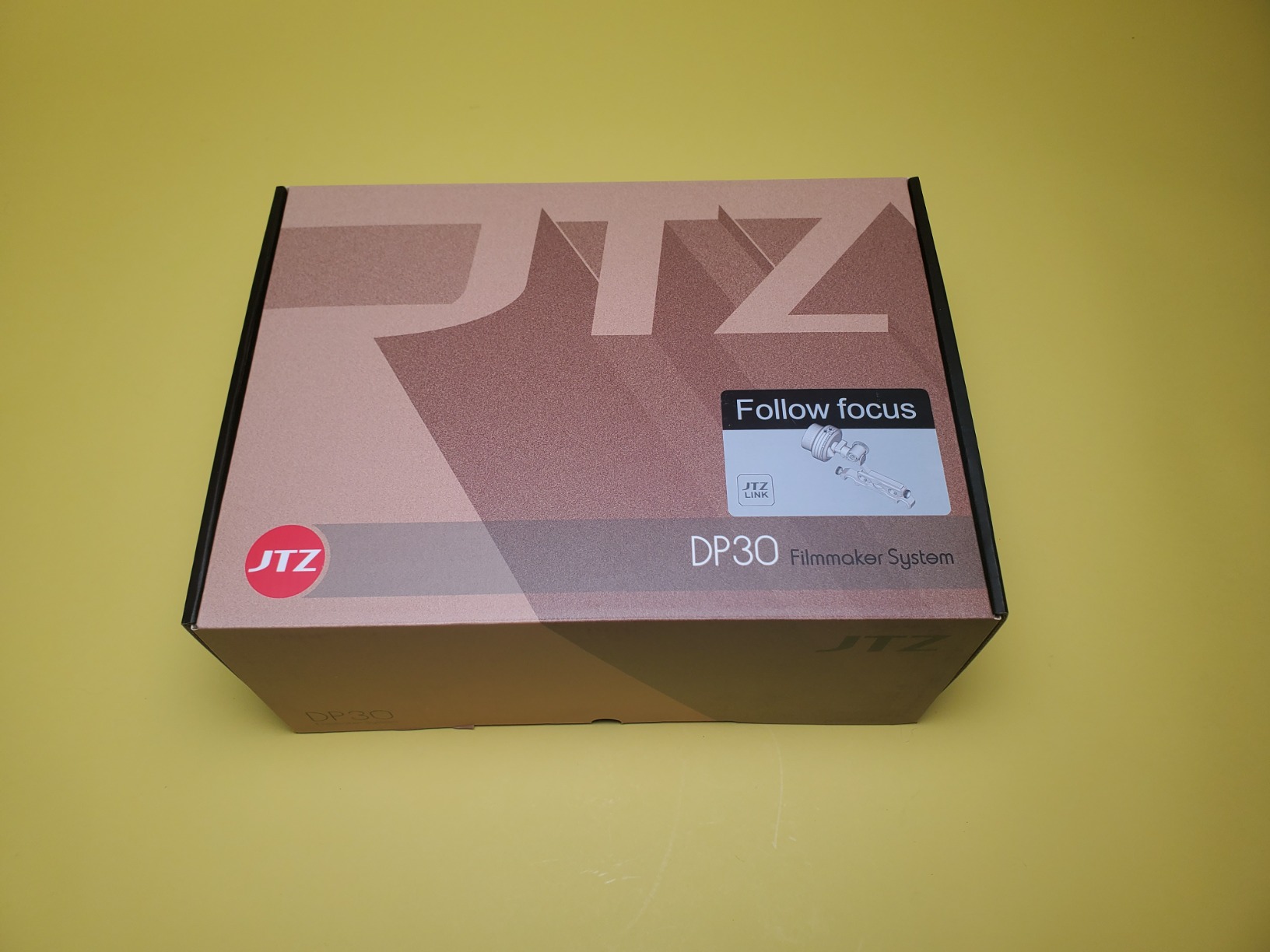
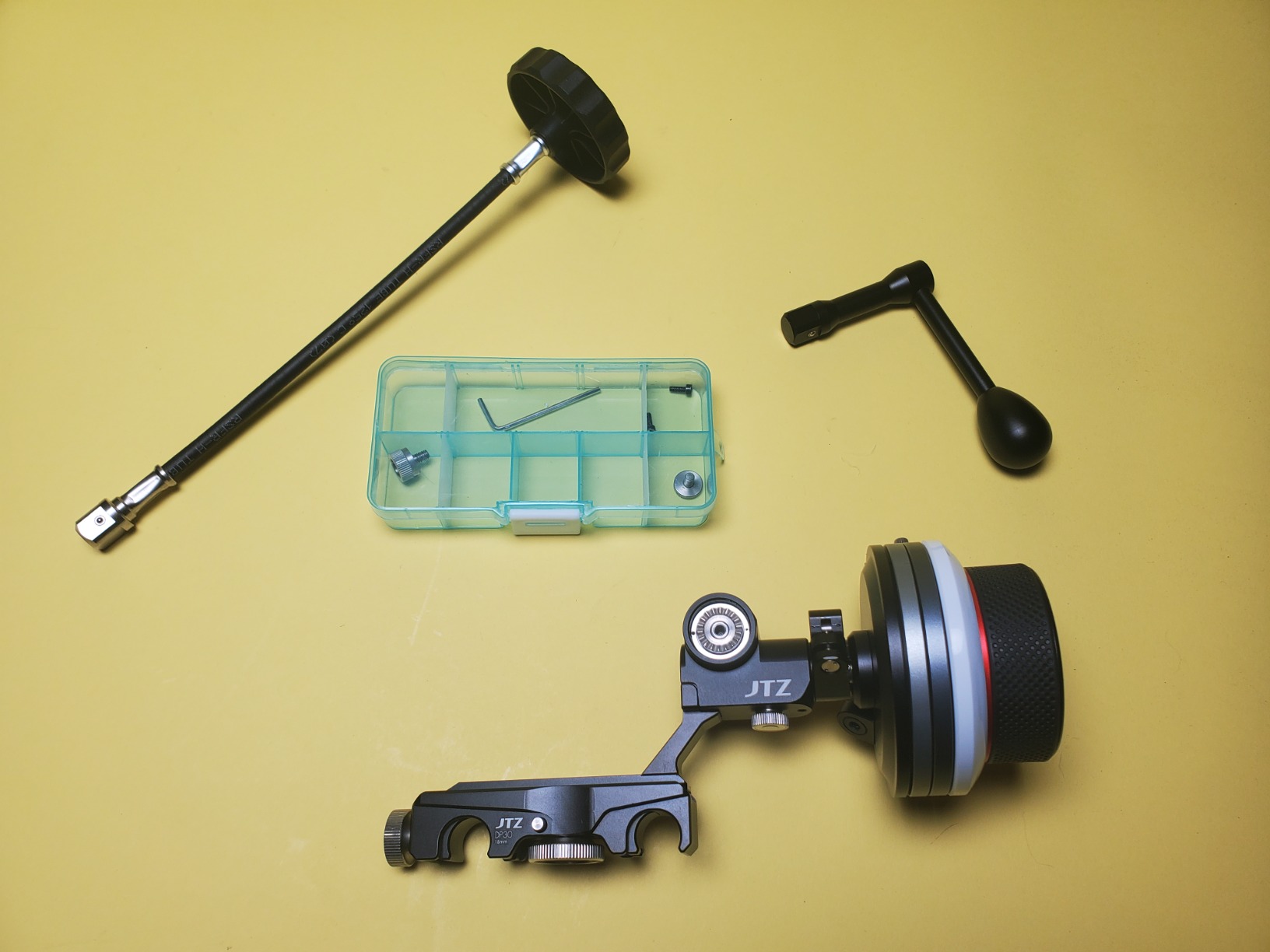
Not every follow focus solution needs to be wireless, and for operators who want the most mechanically precise manual follow focus available at a reasonable budget, the CAME-TV DP30 is worth serious consideration. With a 61% five-star rating and not a single one-star review, this is a kit that consistently delivers on its core promise: precise, backlash-free focus control.
The CNC-machined metal construction is immediately apparent when you handle it. This is not a plastic-and-resin budget product — the quality of the materials and manufacturing puts it in a different category from most manual follow focus options at this price. The A/B hard stops are integrated into the design (not an add-on), and they engage cleanly with virtually zero play.
The “less than 0.5mm backlash” specification is actually accurate in practice. Users who have worked with multiple follow focus systems consistently note that the CAME-TV DP30 has among the tightest tolerances they’ve encountered outside of professional broadcast-level equipment. Zero play in the focus pull means your marks are repeatable from one take to the next.
The included accessories kit is comprehensive: a 15mm to 19mm rod adapter, five different gear sizes (M0.8-38T, M0.8-43T, M0.8-65T, M0.6-64T, M0.5-78T), and a quick-release system for easy attachment and removal. The drive gear mounts from either side, so it works for both right-handed and left-handed focus pullers.
Manual vs Wireless for Cinema Production
A mechanical follow focus like the DP30 gives you absolute tactile feedback and zero latency — your focus pull is exactly as fast as your hands, with no motor or wireless delay. For narrative work with a dedicated focus puller on the lens, many 1st ACs still prefer a quality manual system over wireless for the feel and directness of control.
Gear Rotation Limitation
The one consistent complaint: there is no option to reverse the direction of the gear rotation. Some lenses focus in the opposite direction to what feels natural depending on the follow focus orientation, and without a rotation reverse option, you’re locked into whatever the default direction produces. It’s a limitation that matters more for some lens/rig combinations than others.
13. Tilta Pocket Follow Focus – Best Ultra-Compact Manual Option
Pros
- Solid and reliable focus solution
- Very smooth and precise operation
- Compact size for easy access
- Includes protective case
- Great quality for the price
Cons
- Included gear ring can be clunky
- No option for smaller gear ratio
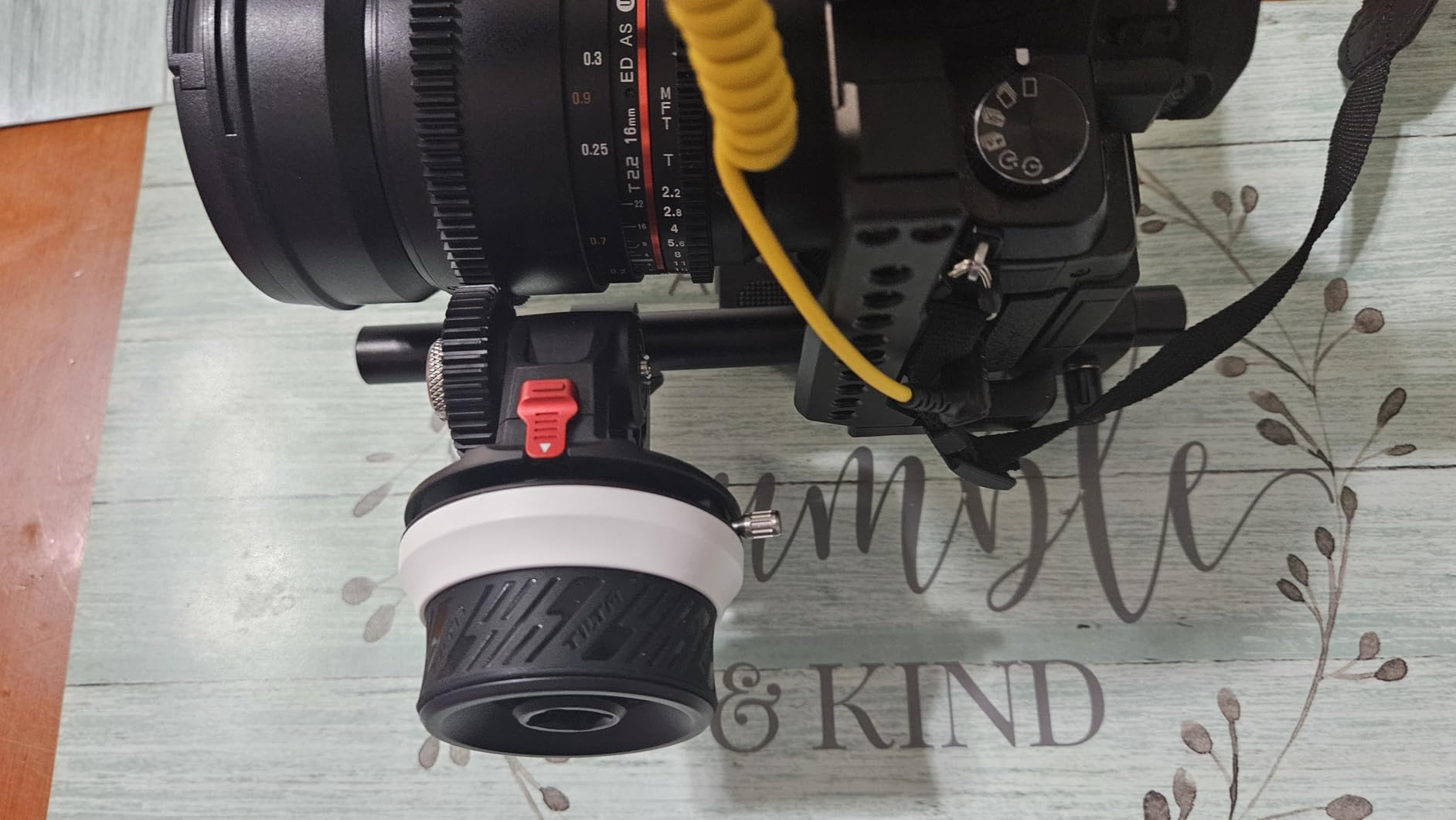
The Tilta Pocket Follow Focus has 229 reviews with an 83% five-star rate — for a manual follow focus at $59, those numbers are remarkable. This is the product for shooters who want clean, confident focus control without the complexity of a wireless system, and who need it to be small enough that it doesn’t complicate handheld or run-and-gun setups.
I’ve used this on shoulder rig configurations where I wanted the tactile certainty of a manual wheel without the weight penalty of a full wireless kit. The composite material construction Tilta used in the latest version feels solid without being heavy, and the simulated lens damping makes the focus wheel feel more like a cinema lens than a consumer focus tool.
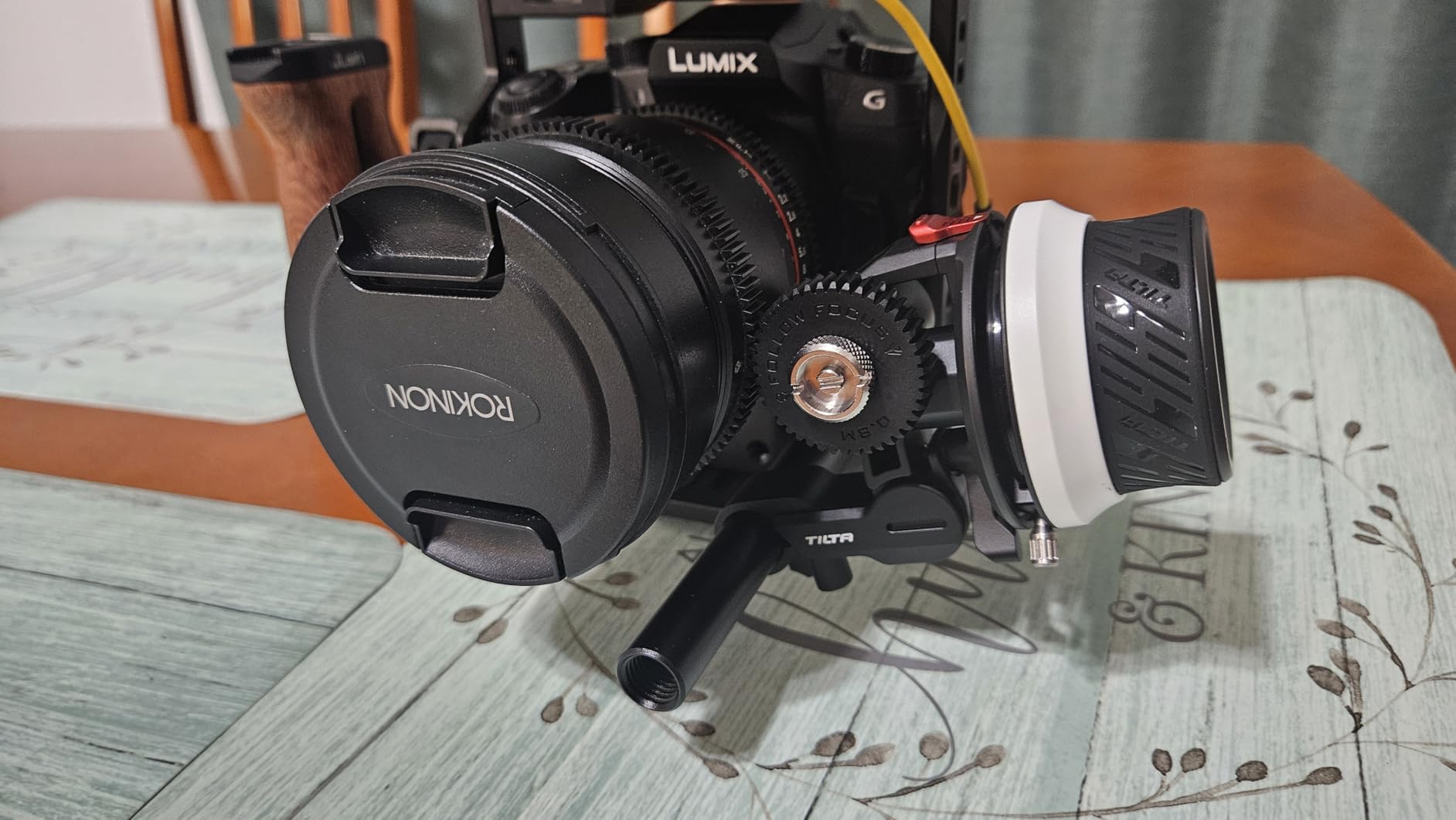
The quick-release A/B hard stop system is particularly well implemented. You can set your focus marks and engage the stops with a simple mechanism that is both secure and fast — no fumbling with small screws or levers during a take. The interchangeable gears accommodate different lens gear ring sizes, which extends compatibility across most cinema and mirrorless lens setups.
The protective case included with the kit is a small touch that matters for working shooters. You can drop this into a camera bag without worrying about the gear teeth getting damaged or the mechanism getting gunked up with debris.
Compatibility with Cinema Rigs
The single 15mm rod mount covers most modern rig configurations, and the pocket-sized footprint means it fits into tight rig configurations where a larger follow focus would be awkward. For Sony FX series, Blackmagic Pocket Cinema cameras, and similar compact cinema bodies, this is an ideal size match.
Gear Ring Upgrade Worth Considering
Multiple users recommend upgrading from the included gear ring to a quality seamless focus gear ring if you’re doing serious focus pulling work. The included ring is functional but can feel imprecise compared to aftermarket options. A $20-30 seamless gear ring investment makes this a noticeably cleaner setup for precise focus marks.
14. NEEWER Mini Follow Focus – Best Budget Manual Follow Focus
Pros
- Solid build quality and lightweight
- A/B stops lock focus at specific points
- Works with wide range of lens diameters
- Excellent value for the price
- Smooth operation
Cons
- Some internal rattling after extended use
- A/B stop alignment can be inconsistent
- Can be challenging with matte box setups
With 332 reviews and a 4.5-star average, the NEEWER Mini Follow Focus is the most-reviewed budget manual follow focus in this roundup, and the 73% five-star rate says a lot about what shooters actually experience with it. At $55.19, it covers the mechanical follow focus basics for DSLR, mirrorless, and cinema camera users who need reliable focus control without a major budget allocation.
The 114mm lens diameter compatibility is notably broad — the adaptable lens gear ring stretches to accommodate lenses that some other budget follow focus systems simply can’t fit. For shooters working with a varied lens kit including longer telephoto lenses, this flexibility is genuinely useful.
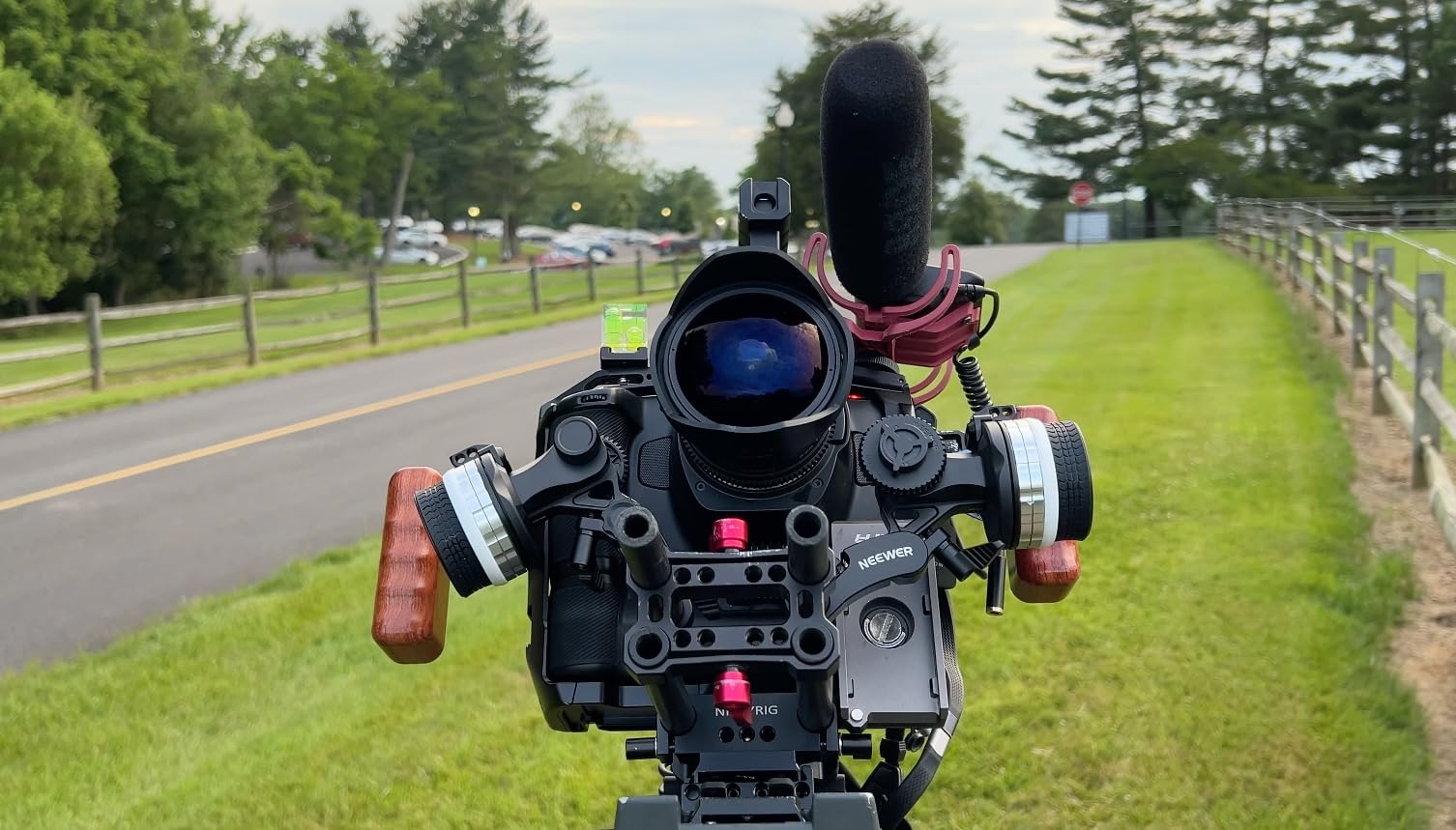
The 138-degree arm tilt adjustment means this isn’t a one-size fits all mounting situation — you can position the focus wheel in the orientation that actually works for your specific rig height and camera position. The 360-degree infinite focus adjustment (when the A/B stops are loosened) gives you complete range of motion for longer zoom lenses.
Excellent customer service is mentioned repeatedly in reviews — more than for most other products in this roundup. When something does go wrong, NEEWER’s support response time and willingness to resolve issues seems genuinely above average for the category. For a budget product, knowing that support is there if needed is meaningful reassurance.
Build Quality at Budget Price
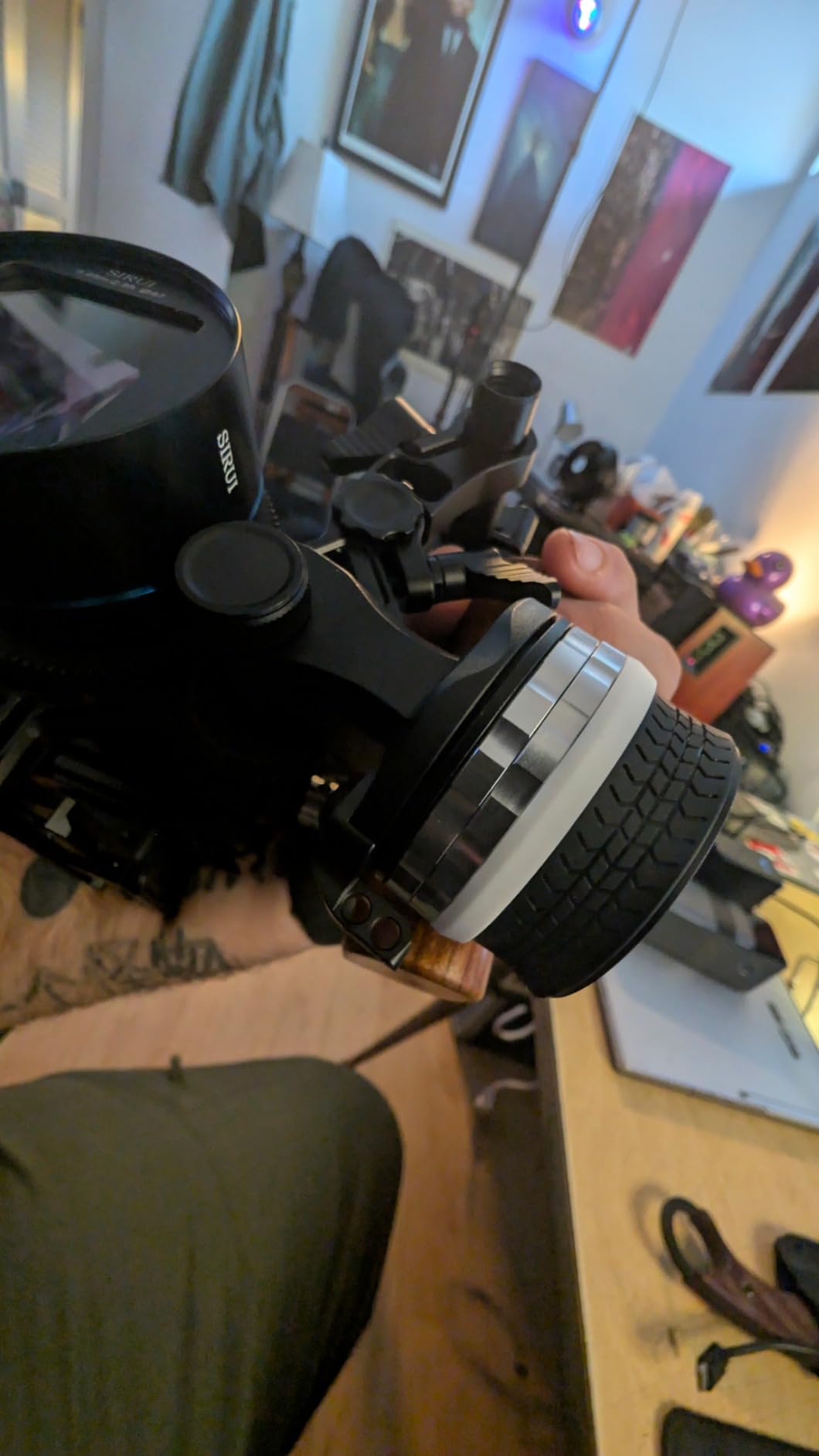
At this price point, some quality compromises are expected, and the NEEWER Mini Follow Focus does show them over extended use. A few users report internal rattling developing after heavy use, and the A/B stop alignment can be inconsistent on some units. These are the kinds of tolerances that separate a $55 follow focus from a $200 one — but for shooters just getting started with manual focus control, the trade-off is entirely acceptable.
Matte Box Compatibility
If you’re running a matte box on your rig simultaneously, the NEEWER Mini can be tricky to position cleanly. The arm geometry can create interference with certain matte box configurations, and you may need to experiment with mounting positions. Budget for some setup time if you’re integrating this into a complex rig.
15. SmallRig Mini Follow Focus – Most Popular Entry-Level Option
Pros
- Much better than expected quality
- Smooth wheel with good damping
- Compact and portable
- NATO rail to 15mm rod adapter included
- Great customer service
Cons
- Small play in gearbox on some units
- Cap cover can loosen over time
The SmallRig Mini Follow Focus holds the number 2 spot in Camera Lens Rapid-Focusing Levers on Amazon with over 1,052 reviews at a 4.5-star average — that kind of sustained performance across a large review base is hard to argue with. This is the product that thousands of filmmakers have chosen as their entry point to manual follow focus control, and the reason is straightforward: it’s better than it needs to be at this price.
At 204g (7.2oz), it’s light enough to disappear on any rig. The anti-slip, anti-sweat grip design is clearly borrowed from automotive inspiration — the textured surface gives you confident control even in the middle of a high-pressure take. The wheel dampening is smooth and consistent, with the kind of resistance that helps you execute a precise, controlled pull.
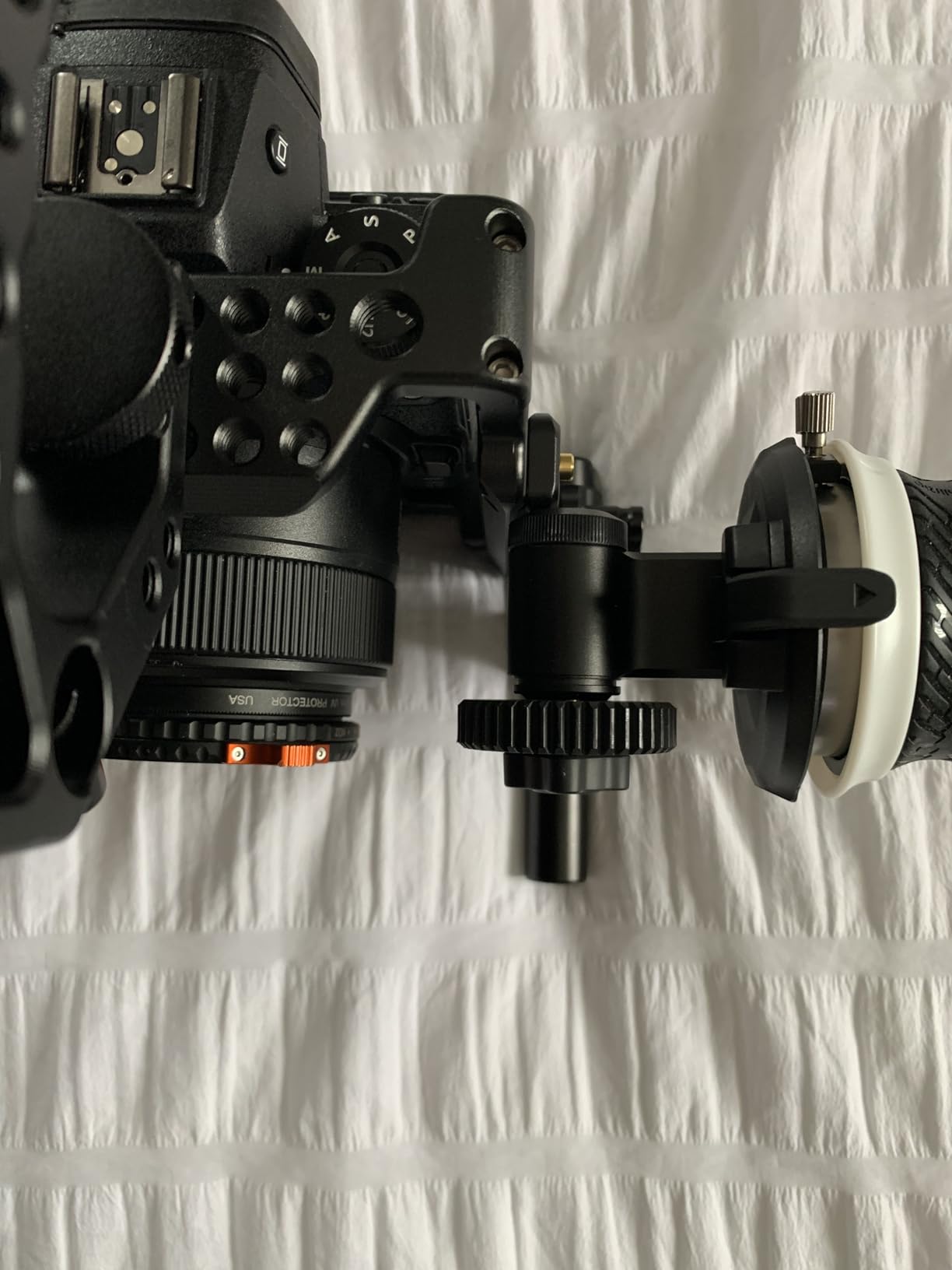
The included NATO rail to 15mm rod adapter is a thoughtful inclusion. Instead of requiring you to have a specific mounting configuration already in place, SmallRig gives you the hardware to connect this to both NATO rail accessories and traditional 15mm rod rigs. The snap-on gear ring belt and interchangeable M0.8 gears cover the majority of lens gear configurations you’ll encounter in the field.
The modular design for rapid assembly and disassembly is something experienced shooters appreciate. When you’re moving between locations or rigs, you don’t want a follow focus that requires tools to mount and unmount. The SmallRig Mini Follow Focus snaps together and apart quickly, which adds up to real time savings over a full shooting day.
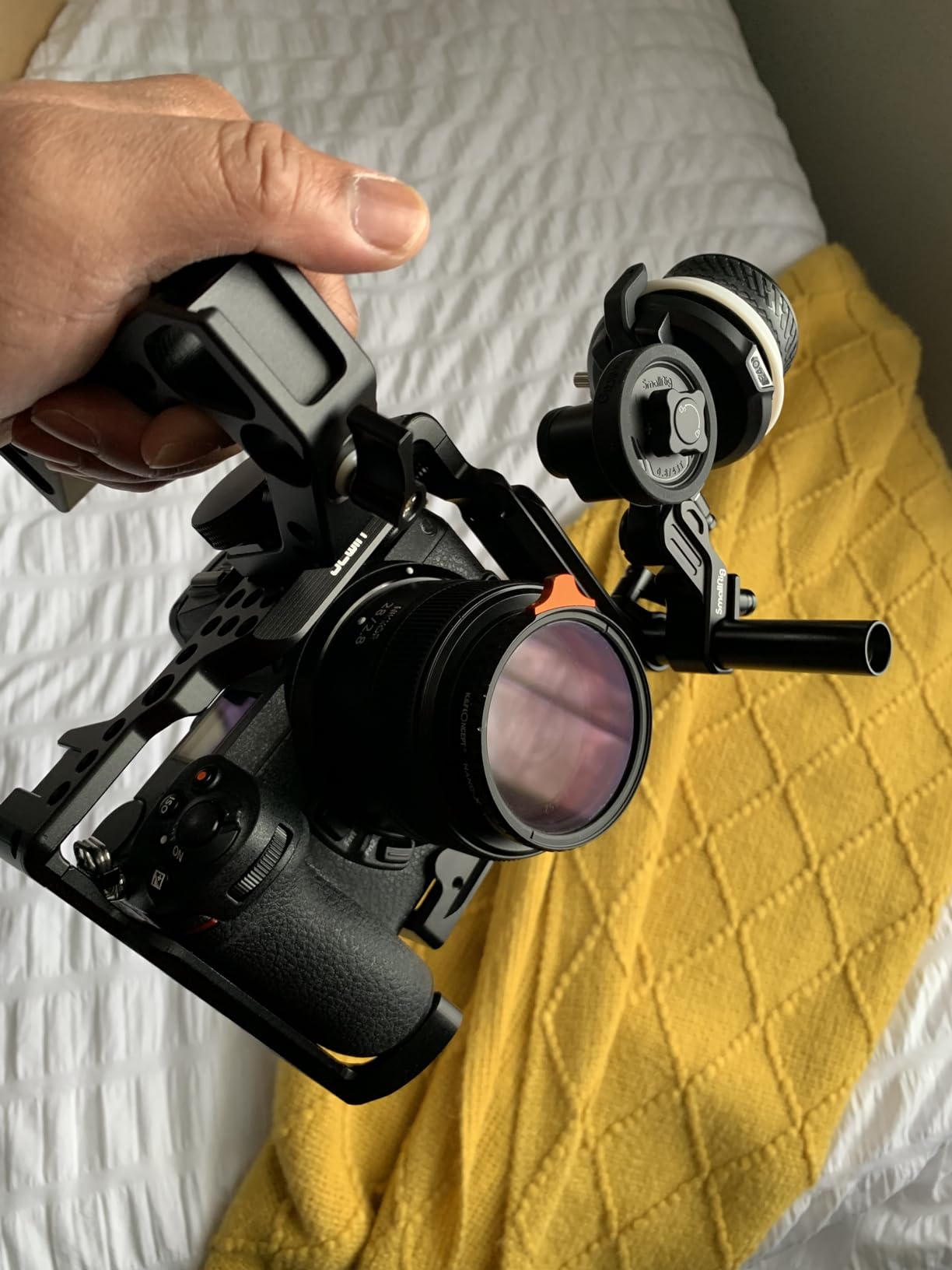
For Entry-Level Shooters and Students
This is the follow focus I’d put in the hands of a film student or someone building their first cinema camera rig. The quality-to-cost ratio is strong, the setup is intuitive, and the included accessories mean you’re not immediately hunting for additional parts. SmallRig’s customer service reputation is consistently positive, which matters when you’re learning and something goes wrong.
Long-Term Durability
A few users note a small amount of gearbox play developing over extended use, and the cap cover can loosen over time. These are wear-and-use issues rather than defects, and at this price point, SmallRig is transparent about the durability expectations. For shooters who need a workhorse follow focus that lasts years under heavy professional use, moving up to the Tilta Pocket Follow Focus or CAME-TV DP30 is the appropriate step. For part-time and student shooters, this delivers outstanding value.
How to Choose the Best Wireless Follow Focus for Cinema Cameras In 2026?
Choosing the right follow focus system requires thinking through your actual shooting scenarios, not just comparing spec sheets. Here are the factors that matter most based on real-world use and what working cinematographers consistently flag as decision points.
Wireless Range and Transmission Technology
Wireless range determines how far the operator can be from the camera. Most consumer-grade systems offer 100-300 feet, while professional systems like the Tilta Nucleus-M reach 1,000 feet. For narrative productions where the focus puller stands several meters from the camera, 300 feet is typically more than sufficient. Documentary and sports shooting with longer telephoto setups may benefit from extended range.
Transmission technology also matters in environments with wireless interference. FHSS (Frequency Hopping Spread Spectrum) technology is more interference-resistant than standard 2.4GHz systems. If you’re regularly shooting in crowded environments — events, festivals, locations near broadcast equipment — FHSS provides more reliable signal stability.
Motor Torque and Lens Compatibility
Motor torque is measured in kgf.cm, and it directly determines which lenses the motor can control. Modern cinema lenses with fresh lubricant are typically easy for any motor to drive. Vintage lenses, lenses with tight or stiff focus rings, and larger format lenses with heavy glass may require higher torque motors. If you’re working with stiff vintage glass, look for motors rated at 3.5 kgf.cm or higher.
The 0.8 module gear pitch is the cinema industry standard, and virtually all quality follow focus systems are designed around it. Always verify that the gear ring or gear on your lens matches the follow focus motor gear before purchasing.
Battery Life and Power Options
Battery life on long shooting days is a genuine pain point, as highlighted in the filmmaking community. A system that dies during a critical take creates real problems on set. Look for systems with at least 8-10 hours of rated battery life for full-day shoots. The SmallRig Wireless Follow Focus Kit Lite’s 21-hour rating is exceptional for this category.
Power options matter too. USB-C charging (supported by Tilta Nucleus Nano II), D-Tap compatibility, and PD/QC fast charging (SmallRig motors) all affect how you can integrate the system into your existing power infrastructure on set.
Rod Compatibility: 15mm vs 19mm
Cinema rigs come in two primary rod standards: 15mm for smaller camera systems (mirrorless, compact cinema bodies like the Blackmagic Pocket Cinema Camera) and 19mm for larger professional cinema rigs (Red, Arri, larger cinema cameras). Most modern follow focus systems support both through included adapters. If you’re building a dedicated professional 19mm rig, verify that your chosen system supports it natively.
FIZ vs Single-Axis Control
FIZ stands for Focus/Iris/Zoom — a full FIZ system lets you control all three lens parameters wirelessly from a single hand unit. Single-axis systems control only focus. For most indie and documentary work, single-axis wireless focus control is sufficient. Professional narrative productions with cinema lenses that have iris and zoom rings benefit from full FIZ control, particularly for maintaining consistent exposure during zoom shots or quickly adjusting depth of field.
Manual vs Wireless: Which Do You Actually Need?
Wireless follow focus is not always the answer. For operators who stay close to the camera, manual follow focus systems like the Tilta Pocket Follow Focus or SmallRig Mini Follow Focus deliver precise, zero-latency control without batteries, charging, or calibration steps. Many working 1st ACs still prefer manual systems for the direct tactile feedback on controlled sets. Wireless becomes essential when the operator needs distance from the camera — gimbal work, remote camera positions, or multi-camera setups where one focus puller serves multiple cameras.
Frequently Asked Questions
What are the best follow focus brands?
The most respected wireless follow focus brands in 2026 are Tilta, DJI, and SmallRig for accessible systems, and Preston, Arri, and Teradek for professional broadcast and cinema use. Tilta’s Nucleus-M is the most popular choice among indie filmmakers and focus pullers who need professional capability without top-tier pricing. DJI has become increasingly relevant with its Focus Pro ecosystem, particularly for gimbal-based shooting. At the entry level, SmallRig and NEEWER offer well-built manual options.
Do professional filmmakers use autofocus?
Most professional narrative filmmakers still use manual focus control through follow focus systems rather than autofocus. The primary reasons are control and repeatability — a focus puller using a wireless follow focus can execute a precise, repeatable pull to a marked position, while autofocus can hunt or lose track of the intended subject. Camera autofocus has improved dramatically on mirrorless systems, and documentary, event, and run-and-gun shooters increasingly rely on it. But on narrative sets with a dedicated 1st AC, manual wireless follow focus remains the standard.
Can I make a DIY follow focus?
A basic DIY follow focus is possible using 3D-printed gear rings, a rod clamp, and a knurled focus wheel attached to a drive gear. Several filmmakers in the cinematography community have built functional manual follow focus systems for under $30 in materials. However, DIY systems lack the precision engineering, backlash control, and reliability of commercial options. For serious production work, even the most affordable commercial options like the NEEWER Mini Follow Focus at $55 are worth the investment over a DIY build.
Which cinema camera has the best autofocus?
Sony cinema cameras — particularly the FX3, FX6, and FX9 — are widely regarded as having the best autofocus systems for cinema use, leveraging Sony’s hybrid phase-detect system. Canon’s Dual Pixel CMOS AF is also highly capable, especially in the Cinema EOS line. However, even with excellent native autofocus, many cinematographers pair these cameras with wireless follow focus systems for the manual control and precision that autofocus cannot provide on critical focus pulls with specific lens choices.
What is the difference between wireless and manual follow focus?
Manual follow focus uses a direct mechanical connection between the focus wheel and the lens gear ring — your hand movements translate immediately to the lens with zero latency. Wireless follow focus uses a motor on the lens controlled by a wireless handwheel, allowing the operator to stand away from the camera. Wireless systems require setup, calibration, batteries, and introduce a small amount of latency (as low as 10ms on high-end systems). Manual systems are simpler and more direct. The choice depends on whether you need distance between the operator and the camera.
Final Thoughts on the Best Wireless Follow Focus for Cinema Cameras
After going through all 15 systems in this roundup, the pattern that emerges is clear: the best wireless follow focus for cinema cameras is the one that matches your actual shooting workflow, not necessarily the one with the most features or the highest price tag.
For most indie filmmakers and solo operators, the Tilta Nucleus Nano II Base Kit is the strongest overall choice — the touchscreen handwheel, lens mapping, and USB-C power cover the majority of production scenarios at a sensible mid-range price. If budget is the primary concern, the SmallRig Wireless Follow Focus Kit Lite delivers surprisingly professional results. For gimbal-based DJI shooters, the Focus Pro Motor or the full LiDAR-equipped Focus Pro Creator Combo are the natural fits. And for anyone who just needs clean, reliable manual focus control without the complexity of motors and batteries, the Tilta Pocket Follow Focus and SmallRig Mini Follow Focus remain excellent choices.
The right system is the one you trust enough to rely on during a critical take. Take the time to match your choice to your specific camera, lenses, and shooting style — and you’ll find the follow focus setup that actually works for you in 2026 and beyond.