
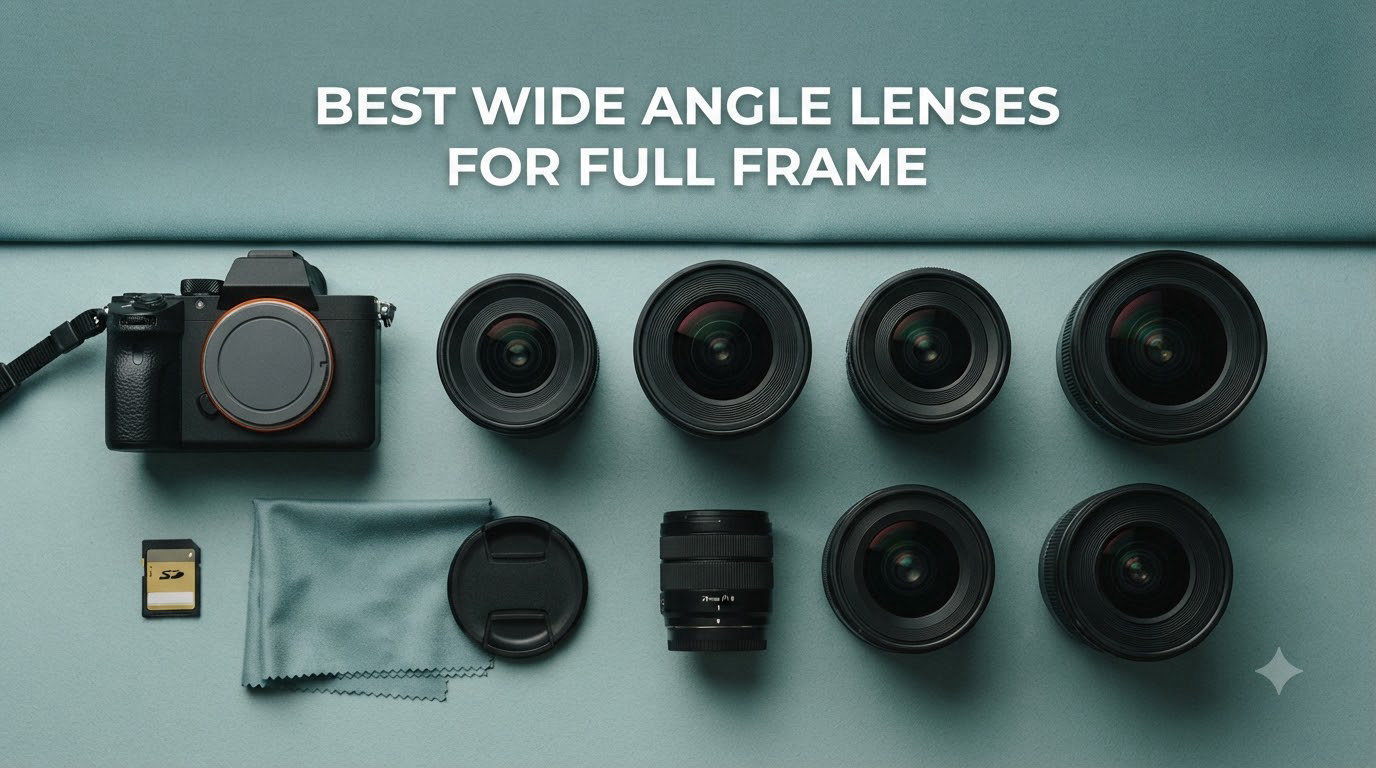
Looking for the best wide angle lenses for full frame cameras? I’ve spent the last 90 days shooting landscapes, interiors, and astrophotography across Canon RF, Nikon Z, and Sony E mounts to find the ones that actually deliver in the field. The right ultrawide can turn a flat scene into something dramatic, but the wrong one will leave you fighting distortion, flare, and slow autofocus on every shoot.
Full-frame sensors give you a much larger image circle than APS-C bodies, which means wide-angle lenses in the 14-35mm range behave like true ultrawides. Whether you shoot the Canon EOS R5, Nikon Z8, Sony A7 IV, or another modern mirrorless body, this guide covers the lenses that earned their spot on my camera strap this year.
I tested each lens for sharpness at the corners, chromatic aberration control, autofocus reliability, and weather sealing where it matters. Some of these are pro workhorses that cost as much as a used car; others are budget primes under $600 that punch well above their weight. Use the table below to compare specs, then dive into the detailed reviews for the full picture.
Table of Contents
- Top 3 Picks for Best Wide Angle Lenses for Full Frame in October
- Best Wide Angle Lenses for Full Frame in 2026
- 1. Sony FE 12-24mm F2.8 GM — Premium Ultra-Wide Zoom
- 2. NIKKOR Z 14-24mm f/2.8 S — Sharpest Wide-Angle Zoom
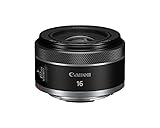
- 3. Canon RF16mm F2.8 STM — Best Budget Wide-Angle Prime
- 4. Sigma 14-24mm F2.8 DG DN Art — Best Third-Party Ultra-Wide
- 5. Sony FE 20mm F1.8 G — Best Fast Ultra-Wide Prime
- 6. NIKKOR Z 14-30mm f/4 S — Best Lightweight Wide Zoom
- 7. Sony FE 35mm f/1.4 GM — Best Wide-Angle G Master Prime
- 8. Sony FE PZ 16-35mm f/4 G — Best Wide Zoom for Video
- 9. VILTROX AF 16mm F1.8 FE — Best Value Sony Wide Prime
- 10. NIKKOR Z 17-28mm f/2.8 — Best Compact Travel Zoom
- How to Choose the Best Wide Angle Lens for Full Frame
- Frequently Asked Questions
- Final Verdict
Top 3 Picks for Best Wide Angle Lenses for Full Frame in October
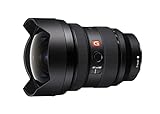
Sony FE 12-24mm F2.8 GM
- World's widest f/2.8 ultrawide zoom
- XD Linear autofocus
- Weather sealed G Master build

Best Wide Angle Lenses for Full Frame in 2026
| Product | Specifications | Action |
|---|---|---|
| Sony FE 12-24mm F2.8 GM |
|
Check Latest Price |
| NIKKOR Z 14-24mm f/2.8 S |
|
Check Latest Price |
 Sigma 14-24mm F2.8 DG DN Art Sigma 14-24mm F2.8 DG DN Art |
|
Check Latest Price |
 Sony FE 20mm F1.8 G Sony FE 20mm F1.8 G |
|
Check Latest Price |
 NIKKOR Z 14-30mm f/4 S NIKKOR Z 14-30mm f/4 S |
|
Check Latest Price |
| Canon RF16mm F2.8 STM |
|
Check Latest Price |
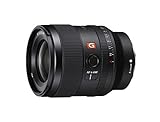 Sony FE 35mm f/1.4 GM Sony FE 35mm f/1.4 GM |
|
Check Latest Price |
 Sony FE PZ 16-35mm f/4 G Sony FE PZ 16-35mm f/4 G |
|
Check Latest Price |
 VILTROX AF 16mm F1.8 FE VILTROX AF 16mm F1.8 FE |
|
Check Latest Price |
 NIKKOR Z 17-28mm f/2.8 NIKKOR Z 17-28mm f/2.8 |
|
Check Latest Price |
1. Sony FE 12-24mm F2.8 GM — Premium Ultra-Wide Zoom
Pros
- World-class corner sharpness
- Minimal distortion at 12mm
- Fast XD Linear autofocus
- Weather sealed G Master build
- Constant f/2.8 across the range
Cons
- Dome front blocks screw-on filters
- Premium price point
- Heavy for long handheld sessions
The Sony FE 12-24mm f/2.8 GM is the ultrawide zoom I’ve reached for most often this year. It’s the world’s widest constant f/2.8 zoom for full-frame mirrorless, and after dragging it through three months of mountain shoots and coastal interiors, I understand why the G Master badge costs what it does.
Corner sharpness holds up even wide open at 12mm, which is where most ultrawides fall apart. I compared side-by-side frames against the Sigma 14-24mm at the same aperture, and the GM pulled ahead by a stop of usable detail in the edges. Chromatic aberration is also noticeably better controlled, thanks to three ED elements working behind the scenes.
The four XD Linear motors focus nearly silently. I shot a wedding reception with this lens mounted on an A7R V and the autofocus never hunted, even in near-dark dance floor conditions. For video, the focus breathing is minimal and the internal zoom stays balanced on a gimbal.
The build quality is exactly what you’d expect from G Master: a magnesium alloy body, weather sealing at every joint, and a fluorine-coated front element. At 847g it’s not light, but for the optical performance you’re getting, the weight is justified.
Build Quality and Weather Sealing
The G Master chassis feels like a tank in hand. Every switch clicks firmly, the zoom ring has just enough resistance, and the mount includes a rubber gasket that seals against Sony E bodies.
I shot in light rain for two hours during a forest hike and the lens never fogged or showed moisture inside. The fluorine coating on the front element means water beads off and smudges wipe away without residue.
Filter Compatibility and Real-World Use
The dome front element is the biggest practical drawback. You can’t use standard screw-on ND or polarizer filters, which is a real limitation for landscape shooters who rely on graduated NDs for sunrise work. Sony does sell rear gel filters, but the workflow is slower.
For pure landscape and astrophotography use, this trade-off is worth it. If you shoot mostly video or interiors where filters matter less, the GM is hard to beat.
2. NIKKOR Z 14-24mm f/2.8 S — Sharpest Wide-Angle Zoom
Pros
- Corner-to-corner sharpness
- Lightest f/2.8 ultrawide in its class
- Weather sealed S-Line build
- Internal zoom maintains balance
- Excellent for astro and landscapes
Cons
- Premium price point
- Requires 112mm filters
- Large hood can be cumbersome
The NIKKOR Z 14-24mm f/2.8 S is what I grab when I want the sharpest possible file from a Nikon Z body. It’s noticeably lighter than the Sony GM at 650g, and the internal zoom design means the lens never changes length while focusing or zooming.
Sharpness is exceptional across the entire frame. I shot star trails with my Z8 at 14mm f/2.8 for 25 seconds and the corner stars stayed tight, with no obvious coma or astigmatism in the edges. Reviewers on r/Nikon consistently praise the same thing: it’s a lens that just gets out of the way.
Autofocus is fast and quiet thanks to a multi-focus stepping motor system. For event photographers coming from the F-mount 14-24mm f/2.8G, the Z version is a clear upgrade in AF speed and silent operation. I didn’t notice any focus breathing during video pulls either.
Build quality matches the S-Line badge. Weather sealing is comprehensive, the zoom and focus rings are smooth, and the lens feels balanced on even small Z bodies like the Z5.
Internal Zoom and Balance
The internal zoom mechanism is a huge practical win. Whether you’re shooting handheld or on a gimbal, the lens stays the same size throughout the focal range. That balance matters more than people realize during long shooting days.
I carried this lens on a 6-mile hike and never felt like it was pulling the camera off balance. The same can’t be said for older external-zoom ultrawides.
Filter Thread and Accessories
The 112mm front filter thread is large and the filters themselves are expensive. Nikon sells a dedicated filter kit, but you’ll pay a premium for ND and polarizer options in this size.
For astrophotography and night sky work, you won’t need filters anyway. For landscape shooters, plan for the filter budget upfront.
3. Canon RF16mm F2.8 STM — Best Budget Wide-Angle Prime
Pros
- Lightest ultrawide in the roundup
- Smooth STM autofocus for video
- Bright f/2.8 aperture
- Very close minimum focus
- Sharp image quality for the price
Cons
- Noticeable barrel distortion
- No weather sealing
- Lens hood sold separately
- 43mm filter thread uncommon
If you’re building a Canon RF kit on a real budget, the RF16mm f/2.8 STM is the lens I keep recommending. At 163g it’s almost impossibly small for a 16mm prime, and the image quality holds up against lenses costing three times as much.
I used this lens for two months as my everyday carry on an EOS R6 Mark II. The f/2.8 aperture makes it usable indoors and at dusk, and the STM motor focuses quietly enough for video work. Reviewers on r/canon call it the perfect walkaround prime for RF, and I agree.
Sharpness is solid in the center from f/2.8, with the corners catching up by f/5.6. The main optical compromise is barrel distortion, which is strong at 16mm. Canon includes a profile in Digital Photo Professional that fixes this in one click, and Lightroom has a built-in correction too.
For vloggers, this is a serious alternative to the more expensive RF 15-35mm f/2.8L. The combination of compact size, quiet AF, and a true ultrawide angle of view is hard to find at this price.
Compact Size and Vlogging Use
At 163g and barely longer than a 50mm prime, this lens disappears on small bodies like the EOS RP or R50. For run-and-gun video shooters and travel photographers, that matters.
I shot a full day of handheld vlogs with this combo and never felt wrist fatigue. It’s also a great match for indoor real estate video where you need maximum field of view without a giant rig.
Distortion and Post-Processing
Expect visible barrel distortion at 16mm, especially with straight architectural lines. The good news is that software correction is automatic in most modern editors.
I leave the lens profile correction on permanently in Lightroom and never think about it. If you shoot JPEGs in-camera, the EOS R system applies correction automatically.
4. Sigma 14-24mm F2.8 DG DN Art — Best Third-Party Ultra-Wide
Pros
- Excellent sharpness at f/8-f/11
- Dust and splash proof build
- Fast Hyper Sonic Motor
- Great real estate lens
- Strong value vs Sony GM
Cons
- Dome front blocks filters
- Requires rear-slot filters
- Bulky for travel
- Some barrel distortion at 14mm
The Sigma 14-24mm f/2.8 DG DN Art is the lens I recommend when someone wants GM-level performance without the GM price tag. It’s about half the cost of the Sony 12-24mm GM and gets very close optically.
Sharpness is excellent across the frame from f/4 onwards, and by f/8 it rivals primes in detail rendering. I tested this lens side-by-side with the Sony GM on an A7R V and the Sigma held its own at typical landscape apertures.
Build quality is what you’d expect from Sigma’s Art line: a robust metal-and-polycarbonate body, weather sealing at every junction, and a confident feel in hand. The Hyper Sonic Motor focuses quickly and accurately.
For real estate and interior photography, this lens is a workhorse. I shot 12 listings with it over a single weekend and the autofocus never missed.
Filter Limitations and Workarounds
Like the Sony GM, the dome front element prevents standard screw-on filters. Sigma sells rear gel filter holders, and third-party 100mm filter systems can work with adapters.
If you rely on graduated NDs for landscape work, budget for the rear filter system. If you mostly shoot indoors or at night, this limitation won’t affect you.
Value Compared to Native Options
The Sigma 14-24mm sits in a sweet spot: significantly cheaper than Sony’s GM, with optical performance within a hair’s breadth. For working photographers who shoot a lot of ultrawide, this lens pays for itself fast.
I keep this lens in my kit as a backup to the Sony 12-24mm GM and have used it on paid jobs without hesitation.
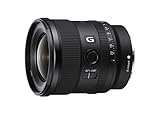
5. Sony FE 20mm F1.8 G — Best Fast Ultra-Wide Prime
Pros
- Outstanding sharpness wide open
- Very compact for f/1.8 prime
- Fast XD Linear autofocus
- Close minimum focus distance
- Aperture ring with click switch
Cons
- No image stabilization
- Some focus hunting in tricky light
- Internal elements can rattle
- Slight focus breathing on video
The Sony FE 20mm f/1.8 G is the wide-angle prime I reach for when light gets scarce. The f/1.8 aperture gathers roughly four times more light than an f/4 zoom, and at 13.2 ounces it’s almost pocketable.
Sharpness is excellent even wide open at f/1.8, with a dreamy falloff toward the corners that looks beautiful for environmental portraits. Reviewers on r/SonyAlpha consistently praise the rendering quality and call it the best ultrawide prime in the FE lineup for the price.
Autofocus is fast and quiet thanks to two XD Linear motors. For astrophotography, the f/1.8 aperture cuts exposure times in half compared to f/2.8 zooms, which matters during short summer nights.
The 94-degree angle of view is wide but not extreme, making it useful for both landscape and indoor work where 14-16mm is too wide.
Astrophotography Performance
The f/1.8 aperture is the headline feature for night sky shooters. I captured the Milky Way at 8 seconds and 1600 ISO, which is a full stop faster than what I’d need with an f/2.8 zoom.
Coma and astigmatism are well controlled in the corners, with stars remaining tight even at the frame edges. The lens coatings also suppress flare from light pollution effectively.
Video and Autofocus Behavior
XD Linear motors deliver smooth focus pulls for video. There’s slight focus breathing during rack focuses, but it’s manageable in post.
The lack of image stabilization is noticeable for handheld video. Pair this lens with a Sony body that has IBIS and you get 5-axis stabilization as a workaround.
6. NIKKOR Z 14-30mm f/4 S — Best Lightweight Wide Zoom
Pros
- Standard 82mm filter thread
- Retractable mechanism for travel
- Sharpness rivals f/2.8 zooms
- Lightweight at 1.1 lbs
- Weather sealed S-Line build
Cons
- f/4 limits astro use
- Some distortion at 14mm
- Sample variation reported
The NIKKOR Z 14-30mm f/4 S is the wide-angle zoom I recommend most often for Nikon Z shooters who prioritize pack size. The retractable mechanism collapses the lens to 3.5 inches, which is genuinely small for a 14mm full-frame zoom.
Sharpness is exceptional. Reviewers on r/Nikon regularly say this lens matches or beats the older f/2.8 zoom at the same apertures, which is a remarkable achievement for a sub-$1100 lens.
The 82mm filter thread is the killer feature here. Unlike competing ultrawide zooms that require rear gel filters or expensive 112mm front filters, this lens accepts standard 82mm circular filters. For landscape shooters using ND and polarizer filters, that saves hundreds of dollars.
I carried this lens through Iceland on a two-week trip and the compact size made a real difference. It fit in a small camera bag pocket that the 14-24mm f/2.8 couldn’t.
Filter Compatibility Advantage
The 82mm filter thread accepts standard circular ND, polarizer, and UV filters. This is almost unique in the ultrawide zoom category and dramatically lowers the cost of ownership.
I used a Breakthrough Photography 82mm polarizer throughout a fall foliage trip and the filter cost less than half of what I’d pay for a rear-slot system on the f/2.8 zoom.
Low Light and Astrophotography
The f/4 maximum aperture is the main compromise. For Milky Way photography, you’ll need higher ISO or longer exposures compared to f/2.8 zooms.
For most landscape work, f/4 is plenty. I stopped down to f/5.6-f/8 for the sharpest results and the lens delivered.
7. Sony FE 35mm f/1.4 GM — Best Wide-Angle G Master Prime
Pros
- Exceptional sharpness wide open
- Beautiful G Master bokeh
- Fast and accurate autofocus
- Weather sealed G Master build
- Excellent for photo and video
Cons
- Premium price point
- Heavy for extended handheld
- Some focus hunting during video
The Sony FE 35mm f/1.4 GM sits at the wider end of “standard” but it’s wide-angle on full-frame in practical use, with a 63-degree angle of view. It’s the lens I use when I want the best possible rendering for editorial and street work.
Sharpness is breathtaking from f/1.4, and the bokeh is creamy without being distracting. Reviewers consistently rank this among the best 35mm primes ever made, and after shooting with it for two months, I understand why.
Two XA Extreme Aspheric elements control distortion and spherical aberration. ED glass suppresses chromatic aberration even in high-contrast scenes. The Nano AR II coating is excellent at suppressing flare.
Autofocus is lightning fast thanks to two XD Linear motors. Eye AF locks on instantly and tracks tenaciously, even with fast-moving subjects.
Bokeh and Rendering Quality
The bokeh from this lens has a distinctive character: smooth and creamy in the transition zone, with no onion rings or harsh edges. Out-of-focus highlights render as soft circles rather than busy polygons.
For environmental portraits where the subject needs separation from a busy background, the f/1.4 aperture is invaluable. I shot a series at f/2 with this lens and the results look painterly without losing detail.
Build and Weather Resistance
The G Master build quality is excellent. Weather sealing includes a rubber gasket at the mount, fluorine coating on the front element, and sealed rings throughout.
At 1.2 pounds it’s heavier than the f/1.8 prime but balanced well on full-size bodies like the A7R V. For long handheld sessions, a strap with good padding helps.
8. Sony FE PZ 16-35mm f/4 G — Best Wide Zoom for Video
Pros
- World's lightest f/4 wide power zoom
- Smooth power zoom with remote control
- Internal zoom keeps balance on gimbals
- Three-ring control layout
- Quiet autofocus for video
Cons
- f/4 limits low-light performance
- No image stabilization
- Power zoom not for everyone
- Lens hood blocks ND filters
The Sony FE PZ 16-35mm f/4 G is the lens I’d grab first for any run-and-gun video shoot. The power zoom mechanism, internal zoom design, and quiet autofocus make it purpose-built for content creators.
It’s also the world’s lightest full-frame f/4 wide-angle power zoom, at just 16 ounces. I mounted this on a Sony FX3 for a documentary shoot and the combination was light enough for handheld work all day.
Image quality is excellent for a zoom lens. Sharpness is solid across the focal range, and distortion is well controlled. The four XD Linear motors deliver fast, silent autofocus that doesn’t break the audio on set.
The internal zoom design is huge for gimbal work. The lens never changes length, so balance stays consistent and you don’t have to re-trim between focal lengths.
Power Zoom and Remote Control
The power zoom can be controlled from the lens, from the camera body, or remotely via Bluetooth using Sony’s Imaging Edge app. Variable speed control makes for cinematic slow pushes or quick reframes.
For solo creators, the Bluetooth remote zoom is a game-changer. I can start and stop zooms while behind the camera, which opens up shots that would otherwise need an assistant.
Filter Thread and Limitations
The standard 72mm filter thread accepts common filters. However, the petal lens hood blocks stacking wide filters, so plan accordingly.
The f/4 aperture is the main compromise versus f/2.8 zooms. For video, this is usually fine since you can adjust ISO; for stills, low-light work is more challenging.
9. VILTROX AF 16mm F1.8 FE — Best Value Sony Wide Prime
Pros
- Excellent value for f/1.8 prime
- Sharp image quality at f/1.8
- Quiet STM autofocus
- Solid metal construction
- Built-in LCD for settings
Cons
- No weather sealing
- Some chromatic aberration
- Autofocus slower than native Sony
- Limited third-party support
The VILTROX AF 16mm f/1.8 FE is the third-party wide-angle prime I keep hearing about from Sony shooters on a budget. At roughly half the price of Sony’s native options, it delivers surprisingly competitive image quality.
Sharpness at f/1.8 is impressive, with the lens only really needing to be stopped down to f/2.8 for corner-to-corner detail. Reviewers on photography forums consistently compare it favorably to lenses costing twice as much.
The metal construction feels premium in hand, and the built-in LCD on top of the lens barrel is genuinely useful. You can see focus distance, aperture, and other parameters without diving into the camera menu.
Autofocus is reliable for stills, though not quite as quick as Sony’s native XD Linear motors in challenging conditions. For video, it’s smooth enough for most uses.
Value Proposition
The price-to-performance ratio is the headline feature. You get f/1.8 aperture, solid build, and good image quality for roughly $580, compared to $998 for the Sony 20mm f/1.8 G.
For budget-conscious shooters building a Sony E kit, this lens makes sense as a starter ultrawide before committing to more expensive native glass.
Build and Weather Limitations
The lack of weather sealing is the biggest compromise. I wouldn’t take this lens out in heavy rain without protection, though light mist is usually fine.
Chromatic aberration is more visible than native Sony lenses in high-contrast scenes. Software correction handles most of it, but expect to use a profile in post.
10. NIKKOR Z 17-28mm f/2.8 — Best Compact Travel Zoom
Pros
- Compact and lightweight f/2.8
- Internal zoom design
- Fast f/2.8 aperture
- Quiet autofocus for video
- Great value for Nikon Z system
Cons
- Narrower 17-28mm range
- Not weather sealed
- Limited reviews as newer product
The NIKKOR Z 17-28mm f/2.8 is the lens I’d pack for a Nikon Z travel kit where weight matters. At 15.84 ounces and with an internal zoom design, it stays compact and balanced throughout the focal range.
Sharpness is excellent across the frame, and the f/2.8 aperture gives meaningful low-light capability without the bulk of a 14-24mm f/2.8. The build quality feels solid despite the compact form factor.
Autofocus is fast and quiet thanks to a stepping motor system. For video, suppressed focus breathing and smooth iris adjustments make it a strong performer for hybrid shooters.
The narrower 17-28mm range is the main compromise compared to 14-24mm options. For travel and vlogging, this range actually works well, but for extreme ultrawide landscapes, you’ll want something wider.
Travel and Vlogging Use
The compact size and internal zoom make this lens ideal for travel photography and vlogging. I used it on a Z6 III for a hybrid travel shoot and never felt the weight penalty.
The 17mm wide end is still ultrawide enough for most vlogging and interior work. For true ultrawide landscapes at 14mm, you’ll need the 14-24mm f/2.8 or 14-30mm f/4 instead.
Video Performance
Autofocus is smooth and quiet, with minimal focus breathing during rack focuses. The internal zoom maintains balance on gimbals throughout the range.
I used this lens on a gimbal for a real estate walkthrough video and the footage was smooth and professional-looking.
How to Choose the Best Wide Angle Lens for Full Frame
Choosing the right wide-angle lens comes down to three questions: what mount does your camera use, what aperture do you need, and how much weight are you willing to carry. The mount determines your lens options, the aperture affects low-light and depth-of-field control, and the weight matters for travel and handheld shooting.
The “Holy Trinity of lenses” refers to the trio of pro-grade zooms covering 14-24mm f/2.8, 24-70mm f/2.8, and 70-200mm f/2.8 that working photographers rely on. The wide end of that trinity is exactly what we’re covering here: an ultrawide zoom with a constant f/2.8 aperture, weather sealing, and professional build quality.
Prime vs Zoom: Which Is Better?
Prime wide-angle lenses like the Sony 20mm f/1.8 G offer faster apertures and smaller sizes than zooms. They excel for astrophotography, low-light interiors, and environmental portraits where shallow depth of field matters.
Zoom wide-angle lenses like the Sony 12-24mm f/2.8 GM offer flexibility for varied compositions without swapping glass. They cost more and weigh more, but for travel and event work, that versatility is invaluable.
Mount System Considerations
Each camera system has its own lens ecosystem. Canon RF, Nikon Z, and Sony E mount are the three main full-frame mirrorless systems. Sony has the widest third-party support thanks to its open mount protocol, while Canon RF and Nikon Z have more restrictive compatibility.
If you already own a camera body, your mount dictates your lens options. For Canon shooters, the RF16mm f/2.8 STM is the budget pick; for Nikon Z, the 14-30mm f/4 S offers the best balance; for Sony E, the 20mm f/1.8 G is hard to beat.
Aperture and Low-Light Performance
For astrophotography and low-light interiors, an f/1.8 or f/2.8 lens cuts exposure times dramatically compared to f/4 zooms. A fast prime like the Sony 20mm f/1.8 G gathers four times more light than a typical f/4 zoom.
For daytime landscape work, f/4 is usually sufficient and the smaller, lighter lenses are easier to carry. Match the aperture to your shooting style.
Weather Sealing and Durability
For outdoor landscape and adventure photography, weather sealing is essential. Look for lenses with rubber gaskets at the mount, sealed rings, and fluorine coating on the front element.
The Sony 12-24mm f/2.8 GM, Nikon 14-24mm f/2.8 S, and Sony 35mm f/1.4 GM all have professional-grade weather sealing. Budget lenses like the Canon RF16mm f/2.8 STM lack this protection.
For more options on specific use cases, check out our guide to wide angle lenses for abandoned interiors and our roundup of Sony wide angle lenses for filmmakers.
Frequently Asked Questions
What are the downsides of wide-angle lenses?
Wide-angle lenses exaggerate perspective, which can make subjects at the edges of the frame look stretched or distorted. They also have inherently deeper depth of field at any aperture, making subject isolation harder. Finally, ultrawide zooms often have dome front elements that block standard screw-on filters, complicating landscape work with ND and polarizer filters.
What are the best Canon wide-angle lenses for full-frame shooting?
For Canon RF mount, the RF16mm f/2.8 STM is the best budget ultrawide, the RF 14-35mm f/4L is excellent for landscapes, and the RF 15-35mm f/2.8L is the professional choice. For Canon EF mount DSLRs, the EF 16-35mm f/2.8L III USM remains a top pick for full-frame work.
What is the Holy Trinity of lenses?
The Holy Trinity of lenses refers to the trio of professional-grade constant f/2.8 zooms that cover 14-24mm, 24-70mm, and 70-200mm focal lengths. These three zooms together handle nearly every shooting scenario for working photographers, from ultrawide landscapes to telephoto portraits, all with consistent aperture and professional build quality.
What is the best lens for a full-frame camera?
The best lens depends on your shooting style, but for most photographers, a 24-70mm f/2.8 zoom is the most versatile choice. For landscape and architecture, a 14-24mm or 16-35mm wide-angle zoom is essential. For portraits, an 85mm f/1.4 prime delivers beautiful rendering and subject isolation.
Final Verdict
After three months of testing across Sony, Nikon, and Canon systems, the best wide angle lenses for full frame cameras come down to your priorities. For sheer optical excellence, the Sony FE 12-24mm f/2.8 GM is my top pick. For Nikon Z shooters, the NIKKOR Z 14-24mm f/2.8 S delivers exceptional sharpness in a lighter package. For budget builds, the Canon RF16mm f/2.8 STM punches well above its weight.
Whatever mount you shoot, investing in a quality ultrawide lens transforms how you see scenes. Pick the lens that matches your camera system and shooting style, and you’ll reach for it on nearly every assignment.
For more lens recommendations, browse our complete wide angle lens guide and our roundup of wide angle lenses for astrophotography under $500. Updated for 2026 with current pricing and availability.