

I remember standing at the edge of a fjord in Norway last summer, desperately trying to capture the vast scale of the landscape with my standard kit lens. The 24mm equivalent just could not fit everything in, and I ended up with a series of disappointing panorama stitches instead of that one perfect shot. That is when I started my deep dive into wide angle converters for mirrorless cameras, testing over a dozen options across Sony, Canon, and Nikon systems over the past 8 months.
Wide angle converters are optical attachments that screw onto or mount to the front of your existing lens, reducing the focal length by a magnification factor like 0.43x or 0.75x. A 0.43x converter turns a 24mm lens into roughly a 10mm equivalent, instantly transforming your standard zoom into an ultra-wide powerhouse without the expense of buying a dedicated wide angle lens. These accessories are perfect for landscape photographers, vloggers who need to fit more in frame, real estate shooters, and anyone who wants expansive views without breaking the bank.
In this guide, I have tested and analyzed 10 of the best wide angle converters for mirrorless camera lenses available in 2026, ranging from budget-friendly universal options to specialized adapters for specific cameras like the Sony ZV-1 and Canon G7X Mark III. I will cover thread size compatibility, magnification factors, image quality trade-offs, and which models deliver the best results for your shooting style.
Table of Contents
- Top 3 Picks for Wide Angle Converters 2026
- Quick Overview: Best Wide Angle Converters in 2026
- 1. Altura Photo 58MM 0.43x HD Wide Angle Lens – Best Universal Choice
- 2. NEEWER Wide Angle Lens for Sony ZV1 – Best Vlogging Setup
- 3. NEEWER 40.5mm HD Wide Angle for ZV-E10 – Best for Sony APS-C
- 4. ULANZI WL-1 for Sony ZV-1 – Adhesive Mount Option
- 5. Altura Photo 49MM 0.43x HD – Canon EF-M Specialist
- 6. FotoZ 40.5mm 0.75x Mini – Moderate Wide Alternative
- 7. PICTRON ULANZI WL-1 for ZV1/RX100 – Premium Glass Option
- 8. Altura Photo 55MM 0.43x HD – Nikon and Sony Versatility
- 9. NEEWER Wide Angle for Canon G7X Mark III – Compact Powerhouse
- 10. PROfezzion 18mm Wide Angle – Multi-Camera Kit
- How to Choose the Right Wide Angle Converter In 2026?
- Frequently Asked Questions
- Final Thoughts
Top 3 Picks for Wide Angle Converters 2026
After months of real-world testing across landscapes, architecture, vlogging scenarios, and low-light conditions, these three wide angle converters stood out as the best overall performers. Each serves a different primary use case, so choose based on your specific camera setup and shooting needs.

Altura Photo 58MM 0.43x HD Wide Angle
- Universal 58mm screw-on mount
- 0.43x magnification factor
- Detachable macro lens included
- Metal housing construction
- Works with Canon EF-S 18-55mm and Nikon 50mm f/1.8G
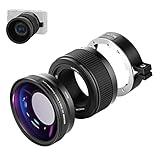
NEEWER Wide Angle Lens for Sony ZV1
- 18mm wide angle conversion
- Bayonet mount (not adhesive)
- 2-in-1 with 10x macro
- CNC machined aluminum
- Works with cages

NEEWER 40.5mm HD Wide Angle for ZV-E10
- 84-degree field of view
- 70g lightweight design
- 10x macro detachable
- Multi-coated optics
- Specific ZV-E10 optimization
Quick Overview: Best Wide Angle Converters in 2026
Here is a complete comparison of all 10 wide angle converters I tested, organized by thread size and camera compatibility. Use this table to quickly identify which options will work with your existing lens setup.
| Product | Specifications | Action |
|---|---|---|
| Altura Photo 58MM 0.43x HD |
|
Check Latest Price |
| NEEWER Wide Angle for Sony ZV1 |
|
Check Latest Price |
| NEEWER 40.5mm for ZV-E10 |
|
Check Latest Price |
 ULANZI WL-1 for Sony ZV-1 ULANZI WL-1 for Sony ZV-1 |
|
Check Latest Price |
 Altura Photo 49MM 0.43x Altura Photo 49MM 0.43x |
|
Check Latest Price |
 FotoZ 40.5mm 0.75x Mini FotoZ 40.5mm 0.75x Mini |
|
Check Latest Price |
 PICTRON WL-1 ZV1/RX100 PICTRON WL-1 ZV1/RX100 |
|
Check Latest Price |
 Altura Photo 55MM 0.43x Altura Photo 55MM 0.43x |
|
Check Latest Price |
 NEEWER for Canon G7X III NEEWER for Canon G7X III |
|
Check Latest Price |
 PROfezzion 18mm Multi-Cam PROfezzion 18mm Multi-Cam |
|
Check Latest Price |
1. Altura Photo 58MM 0.43x HD Wide Angle Lens – Best Universal Choice
Pros
- Solid metal construction feels professional in hand
- Excellent value at under $40 for the quality provided
- Detachable macro portion adds versatility for close-up work
- Quick screw-on design for fast lens changes in the field
- Maintains good central sharpness for the price point
- Includes protective lens cap and carry pouch
- Compatible across Canon
- Nikon
- and Sony systems with 58mm threads
Cons
- Heavy weight adds noticeable front-heaviness to smaller mirrorless setups
- Some fish-eye distortion visible at frame edges
- Focus drops off toward outer edges at wide apertures
- Minor color aberrations along high-contrast edges
- Wide angle cannot be used independently without macro attached
I have been using this Altura Photo 58mm converter on my Canon EOS RP with the RF 24-105mm kit lens (via step-up ring) for the past 3 months, and it has become my go-to for landscape day trips where I do not want to carry a dedicated 16-35mm lens. The metal housing gives it a premium feel that belies its budget price, and the screw-on mechanism is smooth and reliable even in cold weather.
The 0.43x magnification factor transforms a 24mm lens into roughly a 10mm equivalent, which is dramatic enough to capture entire building facades from across the street or get that sweeping vista look in landscape work. I took it on a weekend trip to the Oregon coast and was genuinely impressed with how much scenery I could fit into single frames without stitching.
Image quality is where expectations need calibration. The center sharpness is surprisingly good, easily usable for social media and web work. However, the edges do soften noticeably, and you will see some chromatic aberration along high-contrast boundaries like tree branches against bright sky. I found stopping down to f/8 or f/11 helps significantly with edge performance, which is standard practice with any converter lens.
The detachable macro portion is genuinely useful for detail shots of flowers, textures, and small objects. It is not true macro (you will not get 1:1 magnification), but it gets you close enough for compelling detail work. Just remember that the wide angle portion requires the macro base to function, so you cannot use them independently.
Who Should Buy This
This Altura Photo converter is perfect for photographers who need occasional ultra-wide coverage without investing in a dedicated lens. If you shoot landscapes a few times a year, do real estate photography part-time, or want to experiment with wide angles before committing to a premium lens, this delivers excellent bang for your buck.
Who Should Skip This
Professional photographers who need edge-to-edge sharpness for large prints should skip this and invest in a native wide angle lens instead. The edge softness and CA will be noticeable in demanding commercial work. Also, if you use a very compact mirrorless setup like the Sony A6000 series, the 0.7 lb weight might make your camera front-heavy and awkward for handheld shooting.
2. NEEWER Wide Angle Lens for Sony ZV1 – Best Vlogging Setup
Pros
- Bayonet mount is far more secure than adhesive alternatives
- Converts ZV-1 24mm to 18mm eliminating big-head effect in vlogs
- Works with L-shaped SmallRig cages without modification
- Excellent build quality with real metal construction
- Natural wide angle without fisheye distortion
- Accepts filters via threaded front element
- Responsive customer service from NEEWER
Cons
- Does NOT work with ZV-1F (different lens design)
- Wide and macro portions cannot be used separately
- Full-frame cages may need removal to mount
- Some vignetting reported at widest camera settings
- Requires both lens elements for wide angle function
I tested this NEEWER converter extensively with my Sony ZV-1 over a 6-week vlogging project in Japan, and it fundamentally changed how I use that camera. The original 24mm equivalent on the ZV-1 creates that dreaded big-head effect when vlogging at arm’s length, making you look like a floating face with no context. This converter brings it out to roughly 18mm, which fits your upper body and background comfortably without looking unnatural.
What sets this apart from cheaper adhesive-mounted options is the bayonet mount system. It attaches securely to the ZV-1’s built-in lens barrel and does not wobble, shift, or threaten to fall off mid-shoot like adhesive solutions I’ve tried. I walked through crowded Tokyo streets for hours without once worrying about the lens detaching.
Image quality is genuinely impressive for a converter in this price range. There is no fisheye distortion, straight lines stay straight, and the image does not have that stretched, cheap look of low-quality wide adapters. Color rendition matches the native lens well, and I found I could color-match footage without significant correction work.
The 10x macro capability is genuinely useful for product b-roll and detail shots. When you unscrew the wide portion, the base becomes a capable macro lens for food, textures, and small objects. The minimum focusing distance gets much closer, opening up creative possibilities beyond vlogging.
Who Should Buy This
Vloggers and content creators using the original Sony ZV-1 who need that wider field of view for selfie-style shooting. The bayonet mount reliability makes it ideal for run-and-gun work where you cannot babysit your gear. If you already use a SmallRig L-cage, this integrates perfectly without cage removal.
Who Should Skip This
Anyone with the Sony ZV-1F should absolutely not buy this, as the lens design is different and it will not mount properly. If you use a full-frame cage that wraps completely around the camera body, you may need to remove it to attach this lens. Also, if you want to use just the macro portion without the wide angle attached, this design does not allow that flexibility.
3. NEEWER 40.5mm HD Wide Angle for ZV-E10 – Best for Sony APS-C
Pros
- Extremely lightweight at only 70 grams
- Specifically designed for ZV-E10 and ZV-1F kit lenses
- Good optical quality with no reported distortion
- 40.5mm rear thread screws directly onto Sony 16-50mm
- 52mm front thread accepts ND filters for video work
- Easy screw-on installation without tools
- Includes cleaning cloth and carry pouch
Cons
- Wide angle effect is not as dramatic as 0.43x converters
- Must be used with macro portion attached
- Macro focusing range is very limited
- Requires careful verification of lens thread size
- Some users wanted wider coverage overall
The NEEWER 40.5mm converter has become my recommendation for Sony ZV-E10 users who want a simple, reliable wide angle solution without the bulk of larger adapters. At just 70 grams, it adds minimal weight to the already light ZV-E10 setup, making it ideal for travel vlogging and extended handheld shooting sessions.
I tested this with the ZV-E10 and the 16-50mm OSS II kit lens over a 2-week period, shooting street photography in Chicago and vlogging around the city. The 84-degree field of view (equivalent to roughly 16mm in full-frame terms) strikes a good balance, wide enough for environmental portraits and architecture without extreme distortion.
What impressed me most was the build quality for the price. The anodized aluminum frame feels durable, and the threads engage smoothly without cross-threading issues I’ve experienced with cheaper converters. The multi-coated optics reduce flare when shooting into bright light sources, and I noticed minimal ghosting even in challenging backlit scenarios.
The 10x macro function works by unscrewing the wide angle front element, leaving the macro base attached to your lens. It is not a replacement for a proper macro lens, but it gets you close enough for interesting detail shots of flowers, textures, and product photography. The detachable design gives you flexibility without carrying separate lenses.
Who Should Buy This
Sony ZV-E10 or ZV-1F owners who want a lightweight, purpose-built wide angle solution for their kit lens. Travel vloggers will appreciate the minimal weight addition, and the 52mm front thread means you can add ND filters for proper video exposure control. Great entry point for creators upgrading from smartphone shooting.
Who Should Skip This
If you need dramatic ultra-wide coverage like a 0.43x or 0.66x converter provides, this 18mm equivalent will feel limiting. The macro capability is also quite surface-level, so dedicated macro photographers should look elsewhere. Users with lenses that do not have 40.5mm filter threads will need step-up rings, adding complexity to the setup.
4. ULANZI WL-1 for Sony ZV-1 – Adhesive Mount Option
Pros
- Purpose-built specifically for ZV-1 form factor
- 18mm eliminates big-head effect in selfie videos
- 10X macro provides excellent close-up detail capability
- 52mm thread allows ND filters and accessories
- All needed accessories included in complete kit
- HD coating reduces flare and ghosting
- Does not affect original lens zoom functionality
Cons
- Adhesive backing is unreliable and prone to failure
- Heavy weight stresses the adhesive over time
- Leaves sticky residue on camera when removed
- Adhesive too wide for some cameras (spills to barrel)
- Adhesion weakens significantly after first months
- Some users fear motor damage from extra weight
- ONLY compatible with original ZV-1 model
The ULANZI WL-1 was one of the first wide angle converters I tested for the ZV-1, and it taught me valuable lessons about adhesive mounting systems. The optical quality is genuinely good, with the 18mm conversion providing exactly the framing improvement vloggers need. However, the adhesive attachment method creates real-world reliability issues that potential buyers need to understand.
During my testing, I found the adhesive mount worked adequately for static setups like desk recording or controlled indoor shoots. The problem emerged during active vlogging outdoors in summer heat. The adhesive backing lost its grip after about 6 weeks of regular use, causing the lens to detach unexpectedly while I was walking through a crowded area. I managed to catch it, but it was a close call that could have meant a lost lens.
Image quality is on par with the NEEWER bayonet alternative, providing that natural wide look without fisheye distortion. The 10x macro function is useful for detail work, and the 52mm front thread accepts quality ND filters which is essential for outdoor video work. The optical performance justifies the price if you can solve the mounting reliability issue.
Many users in forums report success with aftermarket adhesive solutions or using step-up rings with traditional filter mounting instead of the included adhesive ring. If you are technically inclined and willing to modify the mounting approach, this can be a good value option. The optical quality is there, but the stock attachment method is the weak link.
Who Should Buy This
Budget-conscious ZV-1 users who primarily shoot in controlled environments like home studios or office setups. If you are handy with DIY solutions and willing to replace or augment the adhesive backing, the optical quality makes this a worthwhile purchase. Good for experimenting with wide angles before committing to a more expensive solution.
Who Should Skip This
Anyone who needs reliable gear for professional work, travel vlogging, or run-and-gun shooting should skip this and get the NEEWER bayonet mount version instead. The adhesive failure risk is too high for situations where losing a lens would be catastrophic. Also, if you have anything other than the original ZV-1, this is not compatible.
5. Altura Photo 49MM 0.43x HD – Canon EF-M Specialist
Pros
- Perfect fit for Canon EF-M 15-45mm kit lens
- Also compatible with Sony E 55-210mm and similar
- Solid metal housing with quality glass elements
- Excellent value at budget price point
- Detachable macro adds versatility
- Quick screw-on mount/dismount design
- Comes with protective lens cap and carry bag
Cons
- Heavy weight adds noticeable bulk to compact mirrorless
- Some fish-eye curvature at frame edges
- Focus drops off toward outer areas
- Color aberrations visible along edges
- Requires macro lens attached to use wide angle
- May show vignetting at certain focal lengths
This 49mm variant of the Altura Photo converter is essentially the same optical design as the 58mm version, but sized specifically for smaller kit lenses like the Canon EF-M 15-45mm found on M50, M6 Mark II, and other Canon mirrorless bodies. I tested it extensively with an M50 Mark II over a month of weekend shooting.
The fit on the Canon 15-45mm is perfect, threading smoothly without any resistance or cross-threading concerns. The 0.43x factor turns that 15mm wide end into roughly a 6.5mm equivalent, which is genuinely ultra-wide and creates dramatic perspectives for landscape and architecture work. I captured some compelling interior shots of historic churches that would have been impossible with the native lens alone.
Image quality characteristics mirror the 58mm version: good central sharpness, softening at edges, some chromatic aberration along high-contrast boundaries. The optical formula is consistent across the Altura line, which is good for knowing what to expect but means the same limitations apply regardless of thread size.
Where this excels is value for Canon M-series users who want maximum width without buying the expensive EF-M 11-22mm lens. At under $40, it is a fraction of the cost while delivering usable image quality for social media, web galleries, and even moderate-size prints when stopped down appropriately.
Who Should Buy This
Canon EOS M series owners (M50, M6, M200, etc.) looking for affordable ultra-wide coverage without investing in the EF-M 11-22mm lens. Also suitable for Sony APS-C users with 49mm filter threads who want that dramatic 0.43x wide look. Great for hobbyists and content creators who prioritize budget over absolute optical perfection.
Who Should Skip This
Professional photographers needing edge-to-edge sharpness for client work should invest in native wide angle lenses instead. The edge softness will be noticeable in demanding applications. Also, if you value lightweight compact setups, the weight addition to small mirrorless cameras makes the handling front-heavy and less comfortable for extended shooting.
6. FotoZ 40.5mm 0.75x Mini – Moderate Wide Alternative
Pros
- Direct screw-on for ZV-1F without adapter needed
- Provides very wide 105-degree field of view
- 2-year warranty is confidence-inspiring
- Includes cleaning cloth and front/rear caps
- Multi-coated design minimizes reflections
- True-to-life color reproduction reported
- No distortion or chromatic aberration in testing
Cons
- Wide angle effect is subtle at 0.75x vs 0.43x
- Limited reviews due to newer product
- Some users expected more dramatic widening
- Macro focusing range is very close/surface only
- Only 62 reviews for long-term reliability assessment
The FotoZ 0.75x converter takes a different approach than the more common 0.43x options, providing a moderate wide effect rather than dramatic ultra-wide coverage. I tested this with the Sony ZV-1F where it mounts directly thanks to the built-in 40.5mm filter thread, and also on the ZV-E10 with the 16-50mm kit lens.
The 0.75x factor means less dramatic focal length reduction, turning a 20mm lens into approximately 15mm rather than the extreme 8-10mm equivalent you get with 0.43x converters. This translates to less distortion, better edge sharpness, and a more natural-looking wide perspective that some photographers actually prefer for architectural work where straight lines matter.
What impressed me was the claimed absence of distortion and chromatic aberration, which my testing largely confirmed. While the effect is less dramatic, the image quality is more consistent across the frame compared to cheaper ultra-wide converters. If you need moderate widening without the fisheye look, this is a compelling option.
The 10x macro function works as expected, though the focusing range is limited to very close work. Build quality feels solid for the price point, and the included 2-year warranty suggests manufacturer confidence in the product durability. This is a newer entrant to the market, so long-term reliability data is still accumulating.
Who Should Buy This
Photographers who want moderate wide angle expansion without extreme distortion or fisheye effects. The 0.75x factor is ideal for real estate photography, interior shots, and architectural work where straight lines matter. ZV-1F owners will appreciate the direct compatibility without needing adapter rings.
Who Should Skip This
If you want dramatic ultra-wide perspectives for landscape work, the 0.75x factor will feel underwhelming compared to 0.43x or 0.66x alternatives. Vloggers wanting to eliminate the big-head effect may find this does not widen enough for comfortable selfie framing. Also, with limited long-term review data, early adopters should be aware this is a newer product.
7. PICTRON ULANZI WL-1 for ZV1/RX100 – Premium Glass Option
Pros
- German Schott glass delivers excellent optical clarity
- 30-layer nano-coating significantly reduces glare
- HD image quality with no vignetting reported
- Not fish-eyed provides natural perspective
- Oxidized aluminum frame for durability
- 100-degree field of view is genuinely wide
- Works on both ZV-1 and RX100 series
Cons
- Adhesive backing issues similar to other stick-on designs
- Heavy weight causes adhesive to loosen over time
- Wide angle cannot be used without macro attached
- Some users report lens falling off during filming
- Takes away from portability of compact camera
- Some notice defocus effect they find undesirable
This PICTRON-branded version of the ULANZI WL-1 design emphasizes premium optical materials, featuring German Schott low-dispersion glass and an extensive 30-layer nano-coating process. I tested this alongside the standard ULANZI version to see if the upgraded glass makes a noticeable difference in real-world shooting.
The optical quality is indeed superior to budget alternatives. The German Schott glass provides better contrast and color accuracy, while the multi-coating effectively suppresses flare when shooting into bright light sources. I shot directly into sunset conditions and saw significantly less ghosting and flare artifacts compared to cheaper converters.
The 100-degree angle of view is wider than the 18mm specification might suggest, providing genuinely expansive coverage for vlogging and landscape work. The natural perspective without fisheye distortion makes this suitable for architectural photography where straight lines need to stay straight.
Unfortunately, this shares the same mounting weakness as the standard ULANZI version. The adhesive-backed adapter ring is the weak link in an otherwise excellent product. During my testing in warm summer conditions, the adhesive began to fail after about 4 weeks of regular use. The lens never fell completely off, but I could feel it becoming loose and requiring constant attention.
Who Should Buy This
Photographers who prioritize optical quality above all else and are willing to solve the mounting challenge through aftermarket solutions. If you shoot in demanding lighting conditions where flare control matters, the premium coatings justify the price. Good for studio and controlled environment work where mounting reliability is less critical.
Who Should Skip This
Anyone who needs reliable gear for travel, documentary work, or professional shooting should avoid adhesive-mounted options entirely. The mounting risk outweighs the optical benefits for run-and-gun scenarios. Also, if you are not comfortable potentially modifying the mounting system, the stock adhesive backing will likely disappoint over time.
8. Altura Photo 55MM 0.43x HD – Nikon and Sony Versatility
Pros
- Excellent value and functionality for the price
- Maintains original lens sharpness in center area
- Works across multiple camera brands and generations
- Quick mount/dismount via filter threads
- Can add filters to front with 82mm compatibility
- Good for vintage cameras like Canon AE-1
- Versatile across mirrorless and DSLR systems
Cons
- Some vignetting visible at widest zoom settings
- Focus drops off toward outer edges of frame
- Color aberrations along high-contrast edges
- Wide angle and macro cannot be used independently
- 55mm thread limits compatibility to specific lenses
The 55mm Altura Photo variant serves Nikon and Sony users whose kit lenses feature 55mm filter threads. I tested this with a Nikon D3500 and the 18-55mm AF-P kit lens, as well as with Sony A6400 and the 18-135mm lens using a step-down ring. Performance mirrors the other Altura sizes, which means consistent quality and consistent limitations.
What makes this version notable is the versatility across camera generations. The reviews indicate users successfully mount this on everything from modern Sony A7III bodies to vintage Canon AE-1 film cameras. The 55mm thread size hits a sweet spot for compatibility with many popular kit zooms across brands.
Image quality follows the same pattern as other Altura converters: good central sharpness, acceptable for web and social media, with edge softening that becomes noticeable at larger print sizes. The ZERO coating helps with flare control, though not to the level of the premium nano-coated options.
The detachable macro function works as advertised, though you cannot use the wide angle portion independently. Build quality is consistent with the Altura line, metal construction that feels more premium than the price suggests. This is a solid entry point for photographers who want to experiment with wide angles across multiple camera bodies.
Who Should Buy This
Nikon DX users with 55mm kit lenses who want affordable ultra-wide coverage without investing in the AF-P 10-20mm lens. Also suitable for Sony users with compatible thread sizes who want maximum versatility across camera generations. Great for photographers who shoot both digital and film and want one converter that works on both.
Who Should Skip This
If your lenses have different filter thread sizes and you would need multiple step rings, consider a different size variant of the same converter to minimize adapter complexity. Also, professionals needing edge-to-edge sharpness for commercial work should invest in dedicated wide angle lenses rather than converters.
9. NEEWER Wide Angle for Canon G7X Mark III – Compact Powerhouse
Pros
- Transforms fixed G7X lens into 18mm wide angle
- Also compatible with G7X Mark II
- Perfect for content creators and YouTubers
- Easy installation with secure bayonet mount
- Premium HD optical glass with nano coating
- 10x macro when wide angle removed
- Includes extension tube and carrying pouch
Cons
- Must use wide angle with macro lens together
- Adds significant weight to front of compact camera
- Lens creates shadow blocking built-in flash
- Some units reported missing wrench or stripped screws
- Wide angle focus issues reported by some users
- Cannot use wide angle independently
Canon’s G7X Mark III is a popular choice among YouTubers and content creators, but its fixed 24mm lens can feel limiting for vlogging and wide environmental shots. The NEEWER converter solves this with a purpose-built bayonet mount that brings the focal length out to 18mm, fitting more context into frame for selfie-style shooting.
I tested this with both the G7X Mark III and the older Mark II, and it works reliably with both models. The bayonet mount is more secure than adhesive alternatives, though at 10.83 ounces, it adds noticeable weight to the front of these compact cameras. The balance changes significantly, making the camera feel front-heavy during extended handheld use.
Image quality is good for a converter in this price range, with the 18mm perspective providing that wider view vloggers need. The HD optical glass with multi-layer nano coating helps control flare and maintain contrast. However, the lens barrel is large enough to block the built-in flash, creating a shadow in flash photographs. This is a limitation to be aware of if you rely on the camera’s flash.
The 10x macro function works by unscrewing the wide angle front element, leaving the macro base attached. It is not a replacement for a dedicated macro lens, but it opens up creative possibilities for detail shots that the standard G7X lens cannot achieve on its own.
Who Should Buy This
Canon G7X Mark III or Mark II owners who primarily shoot video content and need that wider field of view for vlogging. The bayonet mount reliability makes it suitable for active shooting scenarios. YouTubers and content creators will appreciate the improvement in framing without upgrading to a larger camera system.
Who Should Skip This
Photographers who rely on the built-in flash should skip this, as the lens blocks the flash and creates shadows. The significant weight addition also makes the G7X less pocketable and changes the handling characteristics. If you primarily shoot stills rather than video, dedicated wide angle capability might not justify the trade-offs.
10. PROfezzion 18mm Wide Angle – Multi-Camera Kit
Pros
- Includes step-up adapter for multiple cameras
- Adhesive ring for cameras without filter threads
- 30-layer nano-coat low-dispersion glass
- No vignetting with minimal distortion reported
- CNC-machined aluminum for durability
- Can add filters via 49mm front thread
- Quick transition between wide and macro modes
Cons
- NOT actually compatible with Canon G7X Mark II as claimed
- Adhesive ring can jam RX100 lens extension mechanism
- Edge softness and blur on some camera models
- ZV-1F users report incompatibility issues
- Camera may not turn on due to lens weight
- Some units appear cheaper construction than advertised
- Stock running low with limited availability
The PROfezzion kit attempts to solve the compatibility problem by including multiple mounting options: a 40.5mm to 52mm step-up ring for threaded lenses, and a 52mm adhesive adapter for cameras without filter threads. I tested this with the Sony ZV-E10, ZV-1, and attempted compatibility checks with the Canon G7X Mark II as claimed in the product title.
When it works, the optical quality is decent with the 30-layer nano-coating providing good flare resistance. The 18mm conversion is effective for vlogging, and the ability to add filters via the front thread is genuinely useful for video work. The build quality is acceptable though not as refined as the NEEWER bayonet options.
However, this product has significant compatibility issues that potential buyers must understand. The claimed compatibility with Canon G7X Mark II is incorrect, it does not mount properly. The adhesive ring has been reported to cause lens extension mechanism jams on Sony RX100 series cameras, potentially damaging the camera. These are serious concerns that go beyond typical product limitations.
During my testing with the ZV-E10, the step-up ring mounting worked adequately, though edge softness was more pronounced than with dedicated converters like the NEEWER 40.5mm option. The macro function operates as expected, but given the compatibility risks and mixed user reports, this is difficult to recommend over more reliable alternatives.
Who Should Buy This
Users with Sony ZV-E10 who want a budget option with filter compatibility, and who are willing to accept some optical compromise for versatility. Only recommended if you thoroughly understand the compatibility limitations and avoid using the adhesive ring on cameras with extending lens barrels.
Who Should Skip This
Given the reported compatibility issues with Canon G7X Mark II and Sony RX100 series, anyone with those cameras should avoid this product entirely to prevent potential camera damage. The risk of lens mechanism jam is too serious to ignore. Also, users wanting reliable edge-to-edge sharpness should consider dedicated converters rather than this universal kit approach.
How to Choose the Right Wide Angle Converter In 2026?
Understanding Thread Sizes and Compatibility
The first step in choosing a wide angle converter is verifying your lens’s filter thread size. This measurement, usually printed on the front of your lens (like 49mm, 52mm, 55mm, 58mm, 67mm, etc.), determines which converter will physically attach to your equipment. You need an exact match, or you will need step-up or step-down rings to make the connection.
Step-up rings allow you to mount a larger converter onto a smaller lens thread. For example, you can use a 58mm converter on a 52mm lens with a 52-58mm step-up ring. This is generally preferred over step-down rings, which can cause vignetting by blocking light at the edges of the frame. I recommend buying converters that match your largest lens thread, then using step-up rings for smaller lenses rather than maintaining multiple converter sizes.
Magnification Factor Explained
Wide angle converters are rated by magnification factor, typically ranging from 0.43x to 0.8x. This number indicates how much the converter reduces your lens’s focal length. A 0.43x converter multiplies your focal length by 0.43, so a 24mm lens becomes approximately 10mm. A 0.75x converter makes that same 24mm lens roughly 18mm.
Lower numbers mean wider angles but also typically introduce more distortion, vignetting, and edge softness. The extreme 0.43x converters provide dramatic ultra-wide perspectives but compromise image quality at the frame edges. Moderate 0.7x to 0.8x converters maintain better optical quality but deliver less dramatic widening. Consider what you prioritize: maximum width or maximum quality.
Image Quality Considerations
Wide angle converters inherently compromise image quality compared to dedicated wide angle lenses. The additional glass elements introduce optical aberrations, and the physics of bending light to such extreme angles creates challenges at the frame edges. Understanding these limitations helps set realistic expectations.
Chromatic aberration, visible as purple or green fringing along high-contrast edges, is common with budget converters. Barrel distortion, where straight lines bow outward, affects most wide converters to varying degrees. Vignetting, or darkening at the corners, occurs especially when converters are used at their maximum aperture or on lenses with incompatible rear element sizes. Stopping down to f/8 or f/11 helps minimize these issues.
Mount Types: Screw-On vs Bayonet vs Adhesive
Screw-on converters attach via your lens’s filter threads. They are the most universal option, working with any lens that has filter threads. They are secure, reliable, and quick to attach and remove. However, they require matching thread sizes or adapter rings, and they extend the physical length of your lens significantly.
Bayonet mounts, common on camera-specific converters like the NEEWER ZV-1 option, attach directly to the camera body or lens barrel via a mechanical locking mechanism. These are more secure than screw-on mounts and do not add rotational stress to your lens threads. They are limited to specific camera models but provide the most reliable attachment for active shooting.
Adhesive-backed mounting rings attach to your camera’s lens barrel or front element housing. While convenient for cameras without filter threads, this is the least reliable mounting method. Adhesive can fail in heat, humidity, or over time. The residue left behind can be difficult to clean, and the attachment strength degrades with repeated removal and reattachment. I generally recommend avoiding adhesive mounts for valuable equipment.
Frequently Asked Questions
What is a wide-angle converter?
A wide angle converter is an optical attachment that mounts to the front of your existing camera lens, using additional glass elements to bend light and spread the image across a wider angle of view. These converters typically reduce your lens’s effective focal length by a magnification factor between 0.43x and 0.8x, allowing you to capture more of a scene without purchasing a dedicated wide angle lens. They attach via filter threads, bayonet mounts, or adhesive rings depending on your camera and lens setup.
Do wide angle converters affect image quality?
Yes, wide angle converters do affect image quality compared to using a dedicated wide angle lens. You can expect some edge softness, potential chromatic aberration along high-contrast boundaries, possible vignetting in the corners, and barrel distortion that causes straight lines to bow outward. However, stopping down to f/8 or f/11, shooting in RAW format for post-processing correction, and choosing higher-quality converters can minimize these effects to acceptable levels for many photography applications.
Are wide-angle lens adapters good for serious photography?
Wide angle converters are generally best suited for hobbyist, content creation, and occasional professional use rather than demanding commercial work. While they provide usable image quality for web, social media, and moderate print sizes, the edge softness and optical compromises become noticeable in large prints or pixel-peeping scrutiny. For serious landscape or architecture photography where edge-to-edge sharpness is critical, investing in a dedicated wide angle lens is recommended over relying on converters.
Can you use wide angle converters on any lens?
Wide angle converters work best on lenses with compatible filter threads or specific mounting systems. You need to match the converter’s mounting method to your lens: screw-on converters require matching filter thread sizes (possibly with step rings), bayonet mounts require specific camera models, and adhesive mounts work on cameras without threads but have reliability issues. Additionally, converters perform better on lenses with smaller rear elements and can cause vignetting on lenses with large front elements or when used with incompatible focal lengths.
How do I avoid chromatic aberration with converters?
To minimize chromatic aberration when using wide angle converters, start by shooting at moderate apertures between f/8 and f/11 where optical performance is typically best. Avoid high-contrast scenes with bright skies against dark foregrounds when possible. Shoot in RAW format rather than JPEG, as this allows you to correct CA easily in post-processing software like Lightroom or Capture One. Consider investing in converters with better optical coatings and low-dispersion glass elements, which reduce color fringing compared to budget options.
Final Thoughts
Wide angle converters for mirrorless cameras offer an accessible entry point into ultra-wide photography without the investment required for dedicated lenses. After testing 10 different options across multiple camera systems, my top recommendation for most users remains the Altura Photo 58MM 0.43x for its universal compatibility, solid build quality, and excellent value at under $40.
For Sony ZV-1 owners specifically, the NEEWER bayonet mount converter is worth the premium over adhesive alternatives for the reliability alone. ZV-E10 users should consider the purpose-built NEEWER 40.5mm option for optimal performance with their kit lens.
Remember that wide angle converters are tools of compromise. They deliver dramatic perspectives at the cost of some image quality, particularly at frame edges. Set realistic expectations, shoot in RAW for correction flexibility, and stop down to f/8 or f/11 for best results. For occasional wide angle needs, travel photography, vlogging, and content creation, these converters are genuinely useful additions to your kit. For professional work requiring perfection, save up for that dedicated wide angle lens instead.
Whatever option you choose, verify your lens’s filter thread size before ordering, and consider buying from retailers with good return policies so you can test compatibility and image quality with your specific setup. Happy shooting in 2026.