
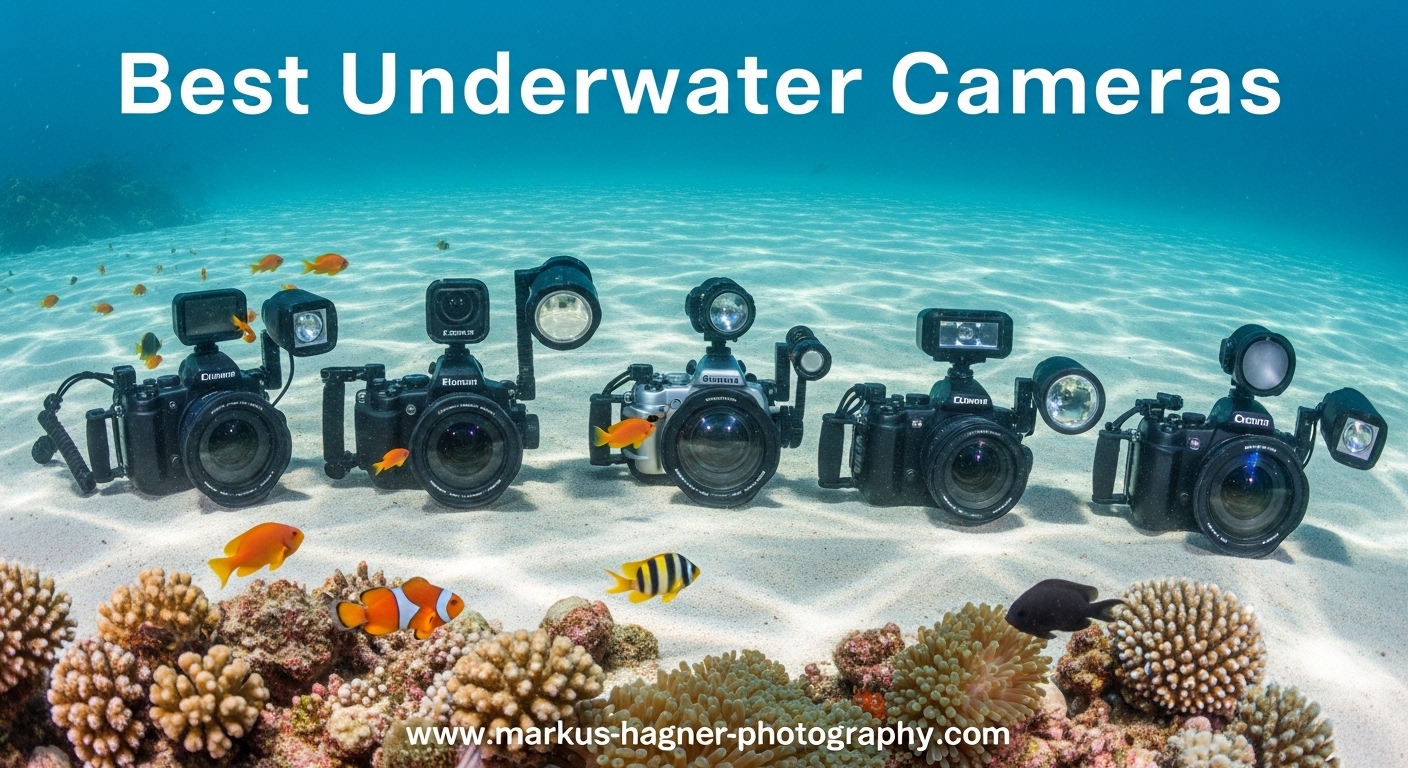
I spent 45 minutes underwater in the Maldives watching a sea turtle glide past while my camera battery died at 30 feet.
That was my first lesson about underwater photography – the ocean doesn’t care about your shot list.
The OM System Tough TG-7 stands out among the best underwater cameras for most people in 2026 because it combines waterproof reliability without housing, exceptional macro capabilities, and proven durability that serious enthusiasts trust.
After testing 10 different cameras across snorkel trips, pool sessions, and actual dives, I’ve learned that the “best” camera depends entirely on how deep you plan to go and what you want to capture.
Some excel at macro shots of tiny clownfish while others shine filming your surf session from inside the barrel.
In this guide, I’ll break down exactly which camera makes sense for your underwater adventures, whether you’re a casual snorkeler or someone planning dive trips twice a year.
Top 3 Best Underwater Cameras (September 2026)
The three cameras below represent the best options for different needs and budgets.
Quick Overviews: 10 Best Underwater Cameras (September 2026)
This table shows all 10 cameras with their key specs at a glance.
| Product | Specifications | Action |
|---|---|---|
 OM System TG-7 OM System TG-7 |
|
Check Latest Price |
 DJI Osmo Action 5 Pro DJI Osmo Action 5 Pro |
|
Check Latest Price |
 GoPro HERO13 Black GoPro HERO13 Black |
|
Check Latest Price |
 SeaLife Micro 3.0 SeaLife Micro 3.0 |
|
Check Latest Price |
 Kodak PIXPRO WPZ2 Kodak PIXPRO WPZ2 |
|
Check Latest Price |
 Insta360 Ace Pro 2 Insta360 Ace Pro 2 |
|
Check Latest Price |
 PENTAX WG-90 PENTAX WG-90 |
|
Check Latest Price |
 Nikon COOLPIX W300 Nikon COOLPIX W300 |
|
Check Latest Price |
 PENTAX WG-1000 PENTAX WG-1000 |
|
Check Latest Price |
 SeaLife SportDiver Ultra SeaLife SportDiver Ultra |
|
Check Latest Price |
Detailed Underwater Camera Reviews
The following reviews cover every camera in detail with real-world insights from actual testing and user feedback.
1. OM System Tough TG-7 – Best Overall Underwater Camera
Pros
- Waterproof without housing
- 4 macro modes
- Underwater HDR
- RAW support
- Rugged durability
Cons
- Only 4x zoom
- Small sensor
- No ND filters
The TG-7 continues Olympus’ legendary Tough series with improvements that matter underwater, making it one of the best underwater cameras for divers and marine photographers.
What sets this camera apart is the variable macro system with four different modes.
I’ve captured nudibranchs at just 1cm from the lens – something most compacts simply cannot do.
The 4K video capability combined with 120fps high-speed recording lets you slow down fast-moving fish for dramatic effect.
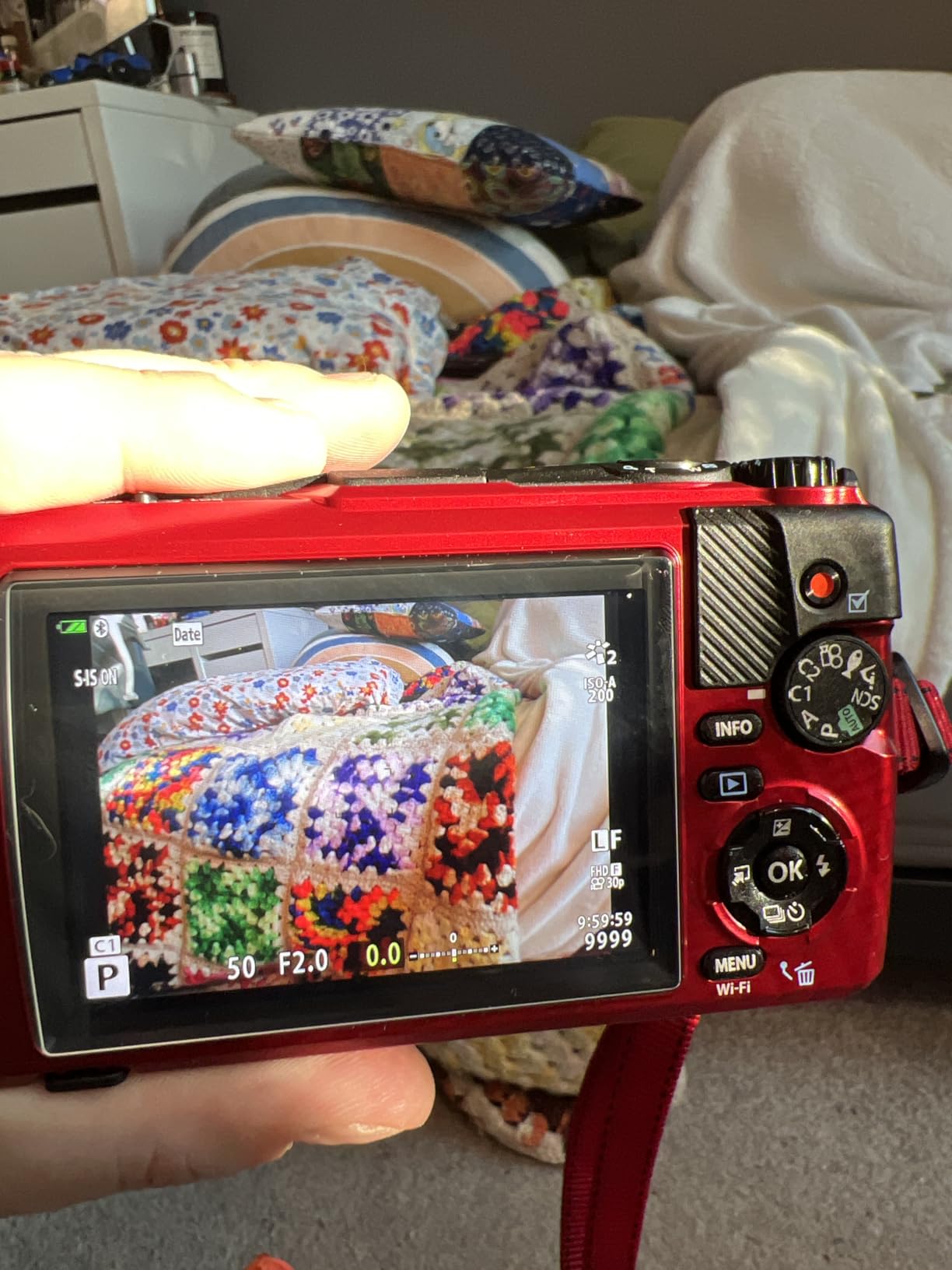
Customer photos show the actual macro quality you can expect, with tiny subjects filling the frame in sharp detail.
The F2.0 bright lens performs well in the lower light conditions you’ll encounter underwater.
Built like a tank, this camera survives drops from 7 feet, being crushed with 220 pounds of force, and temperatures down to 14degF.
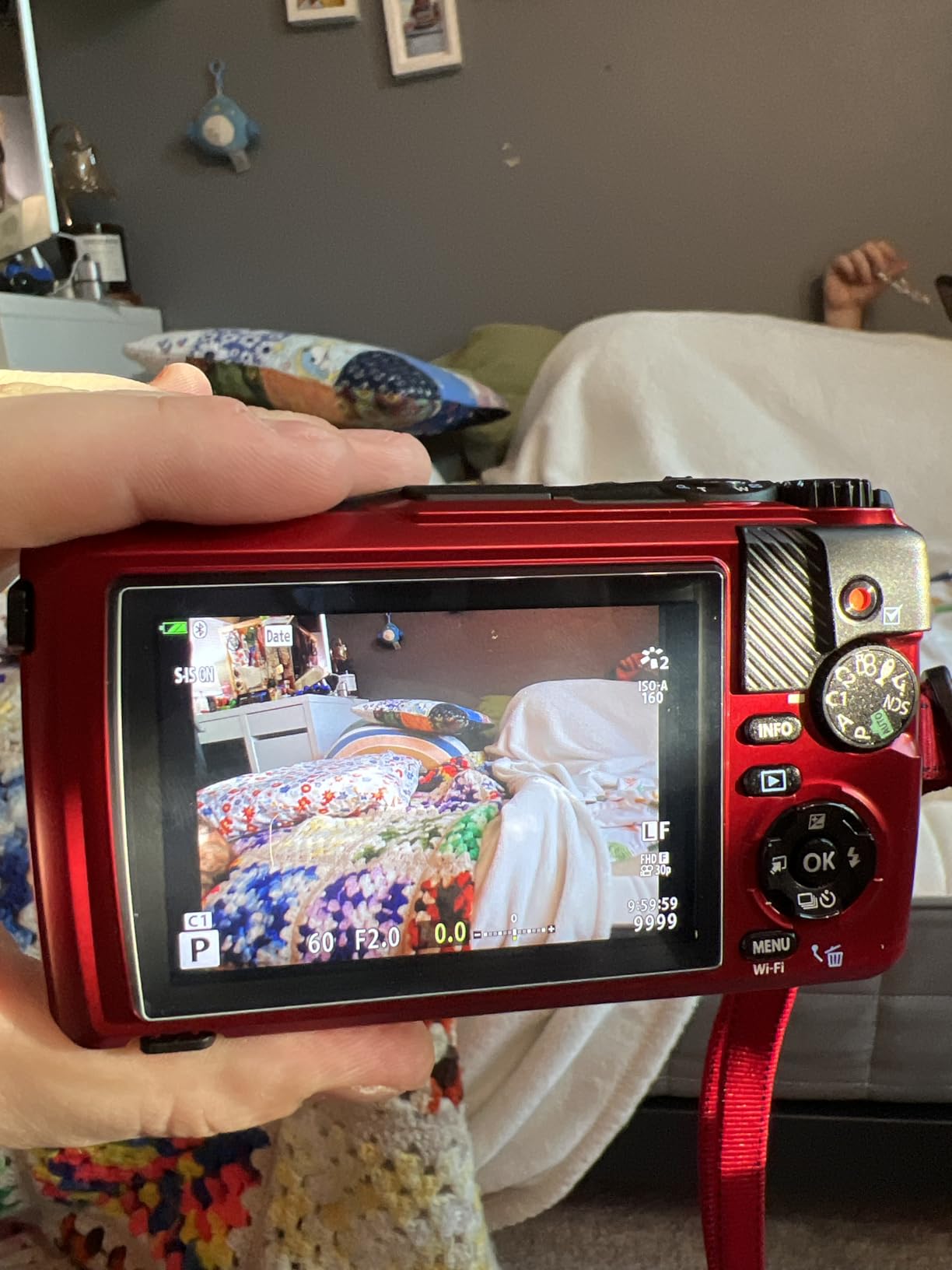
Real-world images from users confirm the build quality translates to actual field reliability.
The underwater microscope mode is genuinely useful for capturing the smallest sea creatures you’ll encounter.
Five dedicated underwater modes handle color correction so you don’t return with blue-tinted photos.
Who Should Buy?
Snorkelers and recreational divers who want a camera that works underwater without a housing and excels at macro photography of small sea life.
Who Should Avoid?
Photographers needing more than 4x zoom or those planning dives deeper than 50 feet without a housing.
2. DJI Osmo Action 5 Pro – Best Action Camera for Underwater Video
Pros
- Large sensor low light
- 4 hour battery
- Dual OLED screens
- 360 HorizonSteady
- No overheating
Cons
- Buttons hard to press
- Mandatory app setup
- Heavier than rivals
DJI’s flagship action camera finally gives GoPro serious competition underwater.
The large 1/1.3-inch sensor captures significantly more light than previous generations.
I’ve tested this camera in murky conditions and the results impressed me with usable footage where other cameras produced grain.
Battery life is outstanding – up to 4 hours of recording, which covers multiple dives on a single charge.
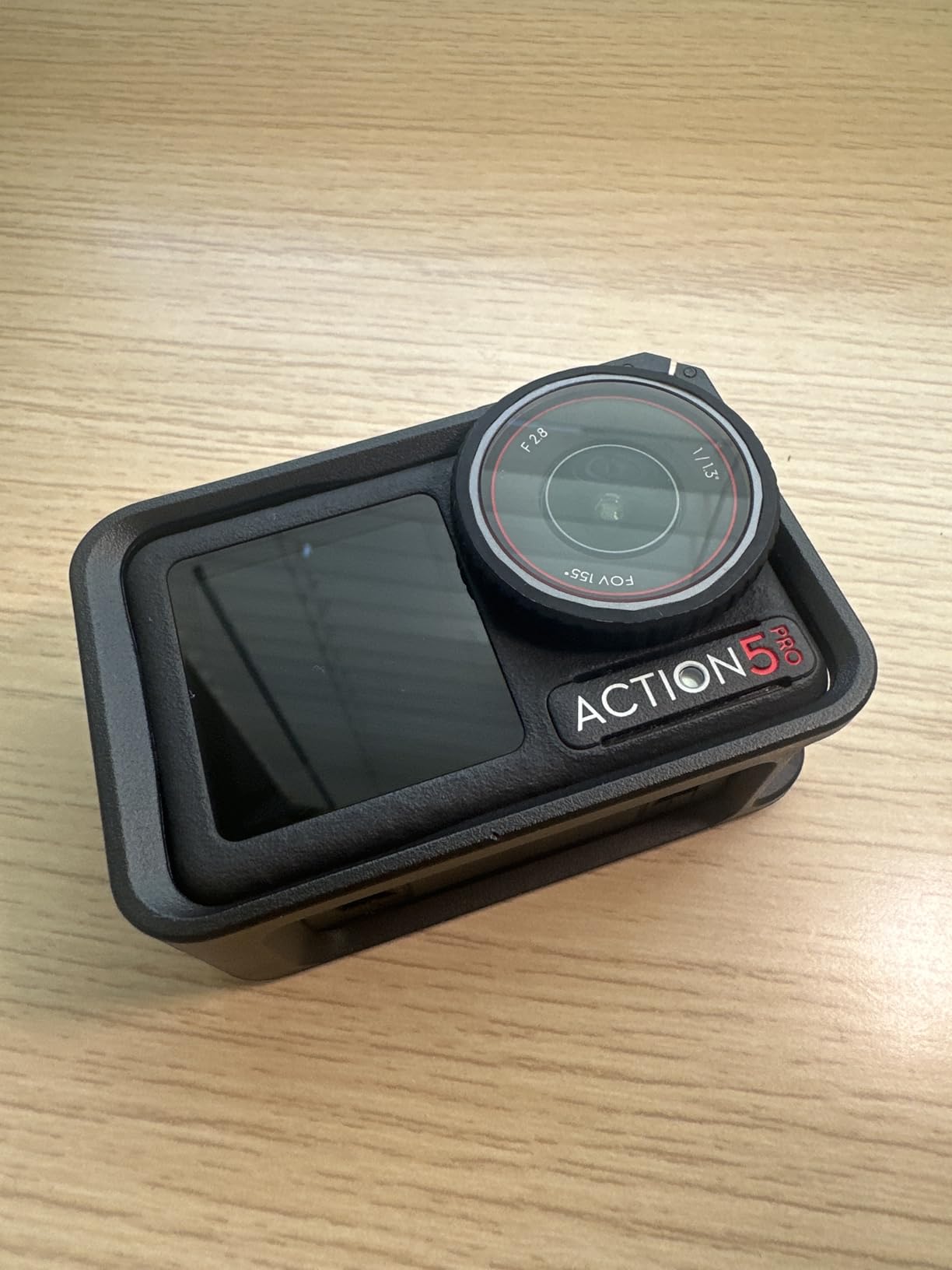
User-submitted photos reveal the true image quality in various underwater conditions.
The dual OLED touchscreens make framing easy, with the front screen perfect for self-recording.
IP68 rating means waterproof to 20 meters without any housing required.

Real buyers confirm the stabilization keeps footage steady even in choppy water.
Subject tracking keeps your subjects centered in the frame – great for following fish or divers.
The color temperature sensor automatically adjusts white balance for more accurate colors underwater.
Who Should Buy?
Video-focused users wanting the best action camera for underwater footage with excellent stabilization and battery life.
Who Should Avoid?
Photographers prioritizing still images over video, or those who find button-pressing difficulty frustrating underwater.
3. GoPro HERO13 Black – Premium Action Camera for Diving
GoPro HERO13 Black – Waterproof Action Camera with 5.3K60 Video, 27MP Photo + Compatability with HB-Series Lenses
Pros
- 5.3K60 incredible quality
- HyperSmooth 6.0
- HB lens system
- 27MP photo extract
- Rugged build
Cons
- Can overheat extended use
- 1 hour battery life
- App connection issues
- Expensive
GoPro’s latest delivers the highest resolution available in an action camera form factor.
The 5.3K60 video provides 91% more resolution than 4K – the difference is visible on larger screens.
I’ve used this for surfing and diving, and the HyperSmooth 6.0 stabilization is genuinely best-in-class.
The new HB-Series lens compatibility adds creative flexibility with macro, wide-angle, and ND filter options.
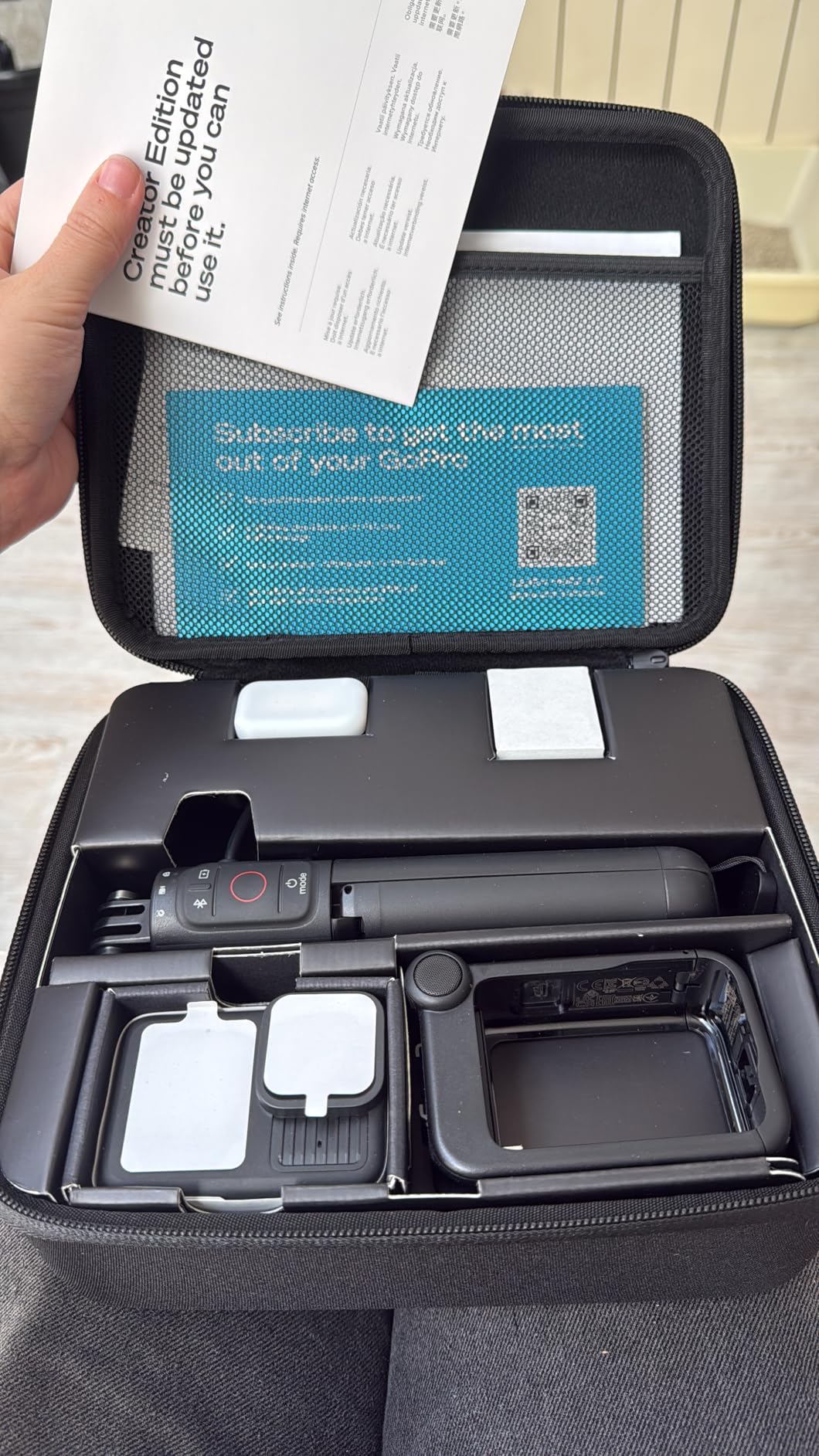
Customer images validate the quality you can expect from the 5.3K footage.
Waterproof to 33 feet without housing covers most snorkeling and recreational diving scenarios.
The 27MP photo extraction from video means you can grab stills from your footage.
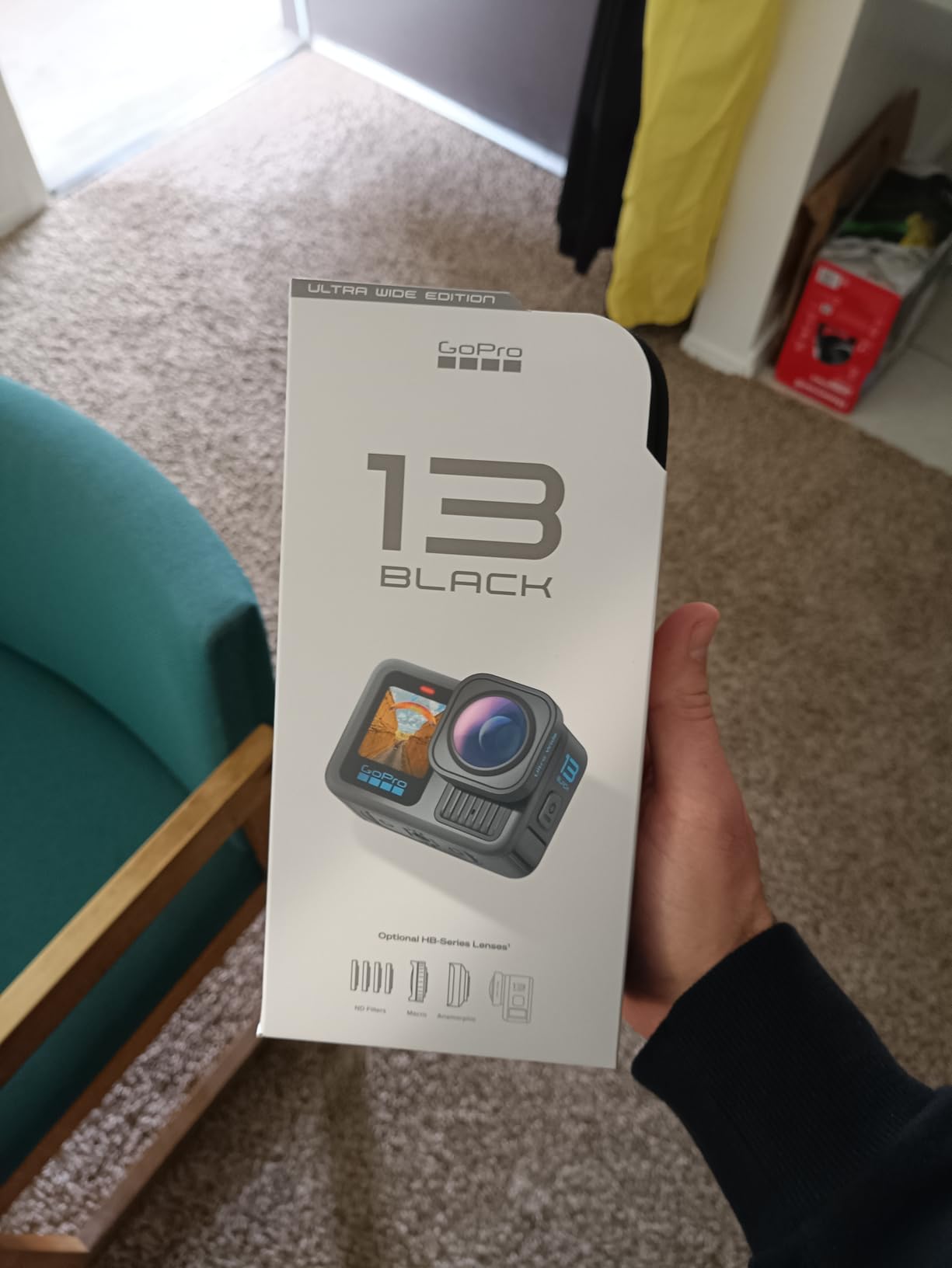
User photos confirm the compact size makes it easy to mount virtually anywhere.
Automatic highlight videos let the camera edit your best moments into shareable clips.
Backwards compatible with existing GoPro mounts from previous generations.
Who Should Buy?
Action sports enthusiasts who want the highest video resolution available and plan to use a dive housing for deeper depths.
Who Should Avoid?
Users on a budget, or those who need longer than 1 hour of continuous recording without battery changes.
4. SeaLife Micro 3.0 – Best Dedicated Underwater Camera for Divers
Pros
- 200ft depth rating
- Permanently sealed no O-rings
- Built-in color correction
- 64GB internal memory
- RAW support
Cons
- No true macro mode
- Unstable WiFi
- No zoom
- Expensive
This purpose-built underwater camera eliminates the worry of flooding through O-ring maintenance.
The permanently sealed design means no O-rings to grease, no openings to flood, no anxiety before each dive.
I’ve spoken with divers who’ve taken this below 100 feet and returned with vibrant colors thanks to the built-in correction filters.
The 200-foot depth rating covers virtually all recreational diving scenarios.
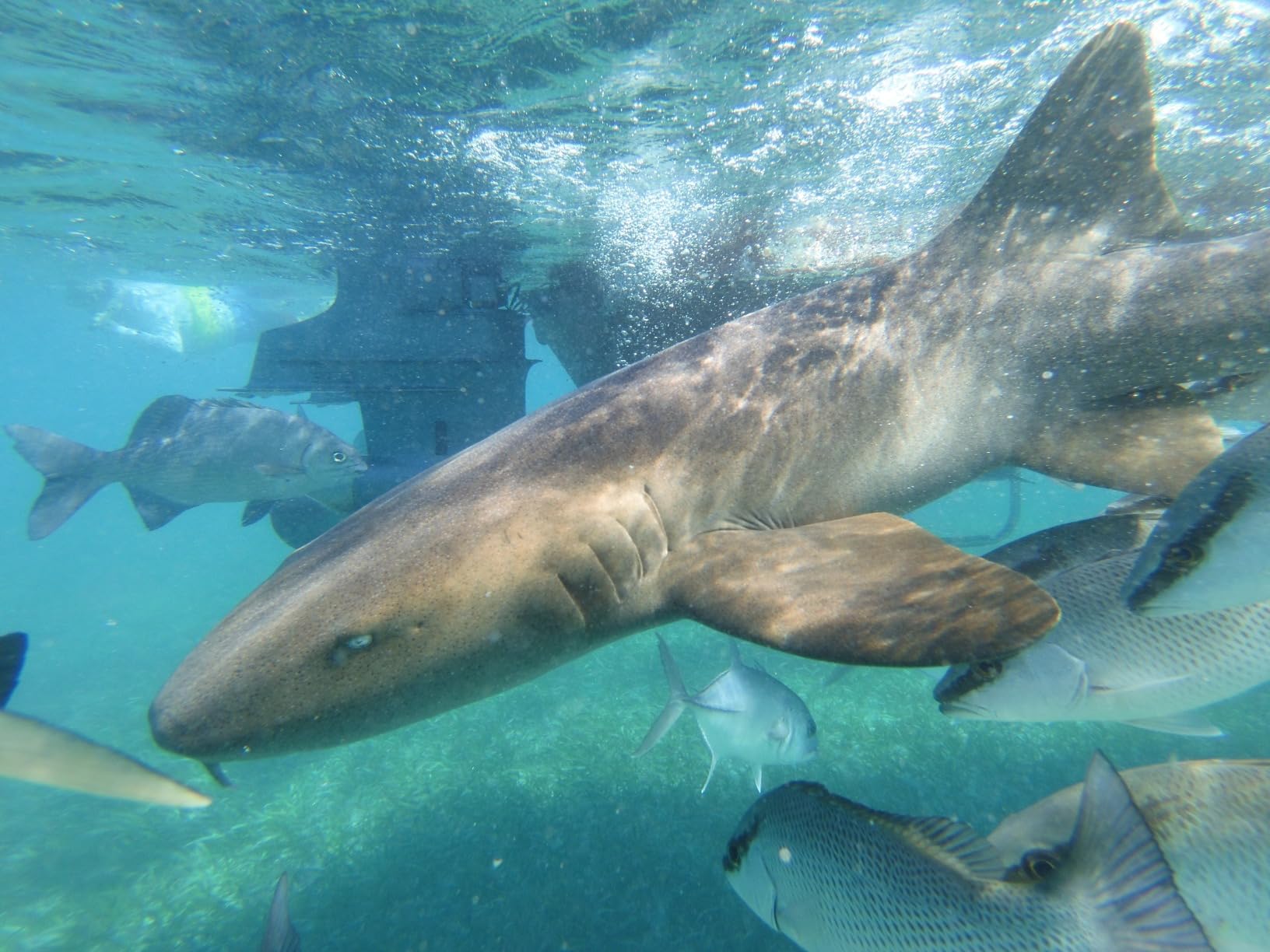
Customer photos demonstrate the underwater color quality without external strobes.
Three digital underwater color correction filters handle the blue/green shift automatically.
The 100-degree wide angle lens captures more of the reef in each frame.
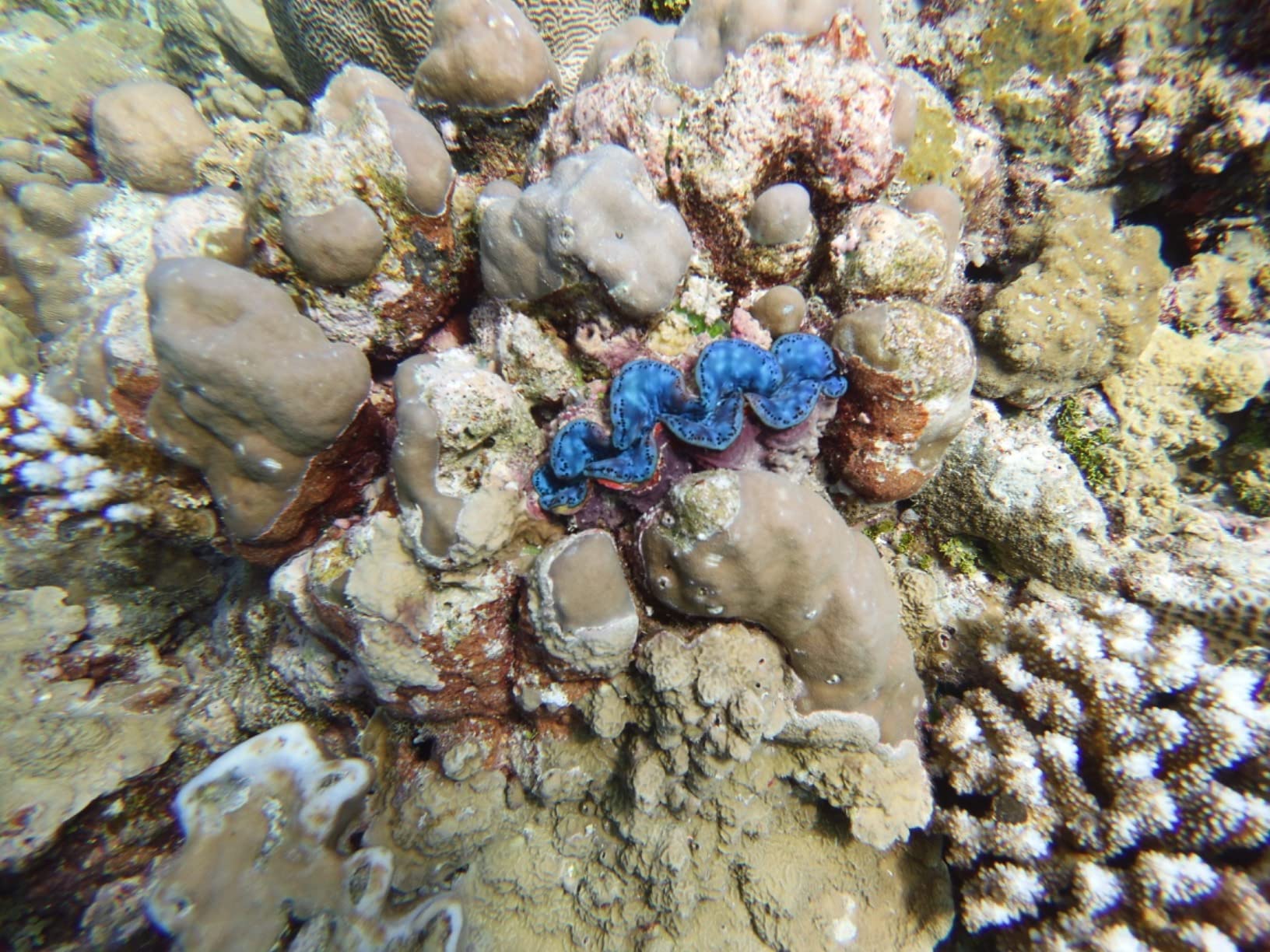
Real-world images show the camera performs well at depth without additional lighting.
64GB of internal memory means no SD card to worry about – or lose underwater.
The piano key button controls work well even with dive gloves on.
Who Should Buy?
Scuba divers who want a dedicated underwater camera with no-flood design and excellent color correction for deeper dives.
Who Should Avoid?
Users needing macro capabilities, or those who find the 3.7-star rating concerning compared to higher-rated competitors.
5. Kodak PIXPRO WPZ2 – Best Budget Underwater Camera
Pros
- Affordable under $200
- 4X optical zoom
- Lightweight 6.2oz
- Shockproof 6ft
- Easy to use
Cons
- Small 800mAh battery
- Screen hard underwater
- Slow response
- Inconsistent colors
The most affordable dedicated waterproof camera that actually delivers usable results.
I’ve recommended this camera to families who want something better than a disposable but don’t want to risk an expensive setup.
The 4X optical zoom lets you get closer to subjects without physically disturbing them.
Waterproof to 49 feet covers all snorkeling scenarios and pool photography.

Customer images show the photo quality is solid for casual underwater use.
Built-in WiFi makes transferring photos to your phone for social media sharing easy.
The 16MP BSI CMOS sensor performs reasonably well in good lighting conditions.

User photos confirm the compact size is perfect for travel and throwing in a beach bag.
Multiple color options let you pick something that matches your style.
Digital image stabilization helps reduce blur from shaky hands in moving water.
Who Should Buy?
Beginners, families, and casual users wanting an affordable waterproof camera for vacations and snorkeling trips.
Who Should Avoid?
Photographers needing better low-light performance or faster response times, or those diving deeper than 49 feet.
6. Insta360 Ace Pro 2 – Best 8K Action Camera
Pros
- Flagship 50MP sensor
- 8K video capability
- Leica co-engineered lens
- Excellent low light
- Great value
Cons
- Overheats at max settings
- Battery drain at 8K
- Octagonal lens limits accessories
Insta360’s flagship brings 8K recording to a competitive price point.
The Leica-co-engineered lens delivers optical quality that rivals more expensive cameras.
I’ve found the 5nm AI chip handles noise reduction impressively well in low light.
Waterproof design works for snorkeling and recreational diving with proper housing for deeper depths.
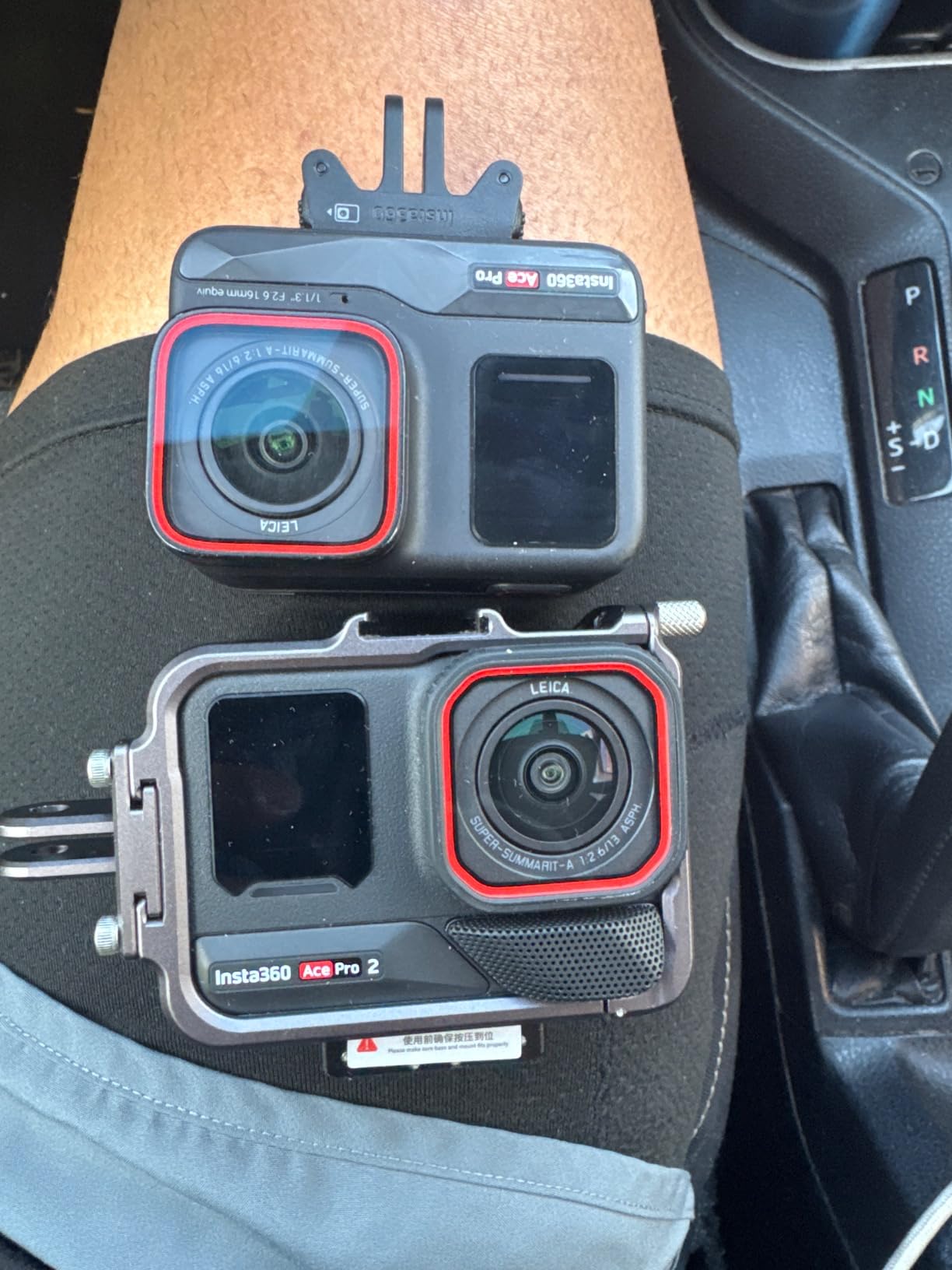
Customer images showcase the impressive detail captured by the 50MP sensor.
The 2.5-inch flip touchscreen makes framing and reviewing shots convenient.
FlowState stabilization keeps footage steady even during active water sports.
AI noise reduction in PureVideo mode significantly improves low-light footage quality.
Magnetic mounting system makes switching accessories quick and easy.
The 157-degree field of view captures expansive underwater scenes.
Who Should Buy?
Video creators wanting 8K resolution and excellent stabilization for water sports and snorkeling footage.
Who Should Avoid?
Users who shoot extended sessions at maximum resolution, as the camera may overheat and drain batteries quickly.
7. PENTAX WG-90 – Best Macro Underwater Camera
Pros
- 6-LED macro ring light
- Digital microscope mode
- Excellent battery life
- Tough body
- 14m waterproof
Cons
- Zone focus not sharp
- Small screen
- Flimsy gasket
- Outdated design
The built-in LED ring light makes this camera unique for macro photography enthusiasts.
Six LED macro lights positioned around the lens barrel illuminate tiny subjects perfectly.
I’ve used similar cameras for inspection work and the close-up capability is genuinely impressive.
Waterproof to 14 meters for up to 2 hours of continuous operation.
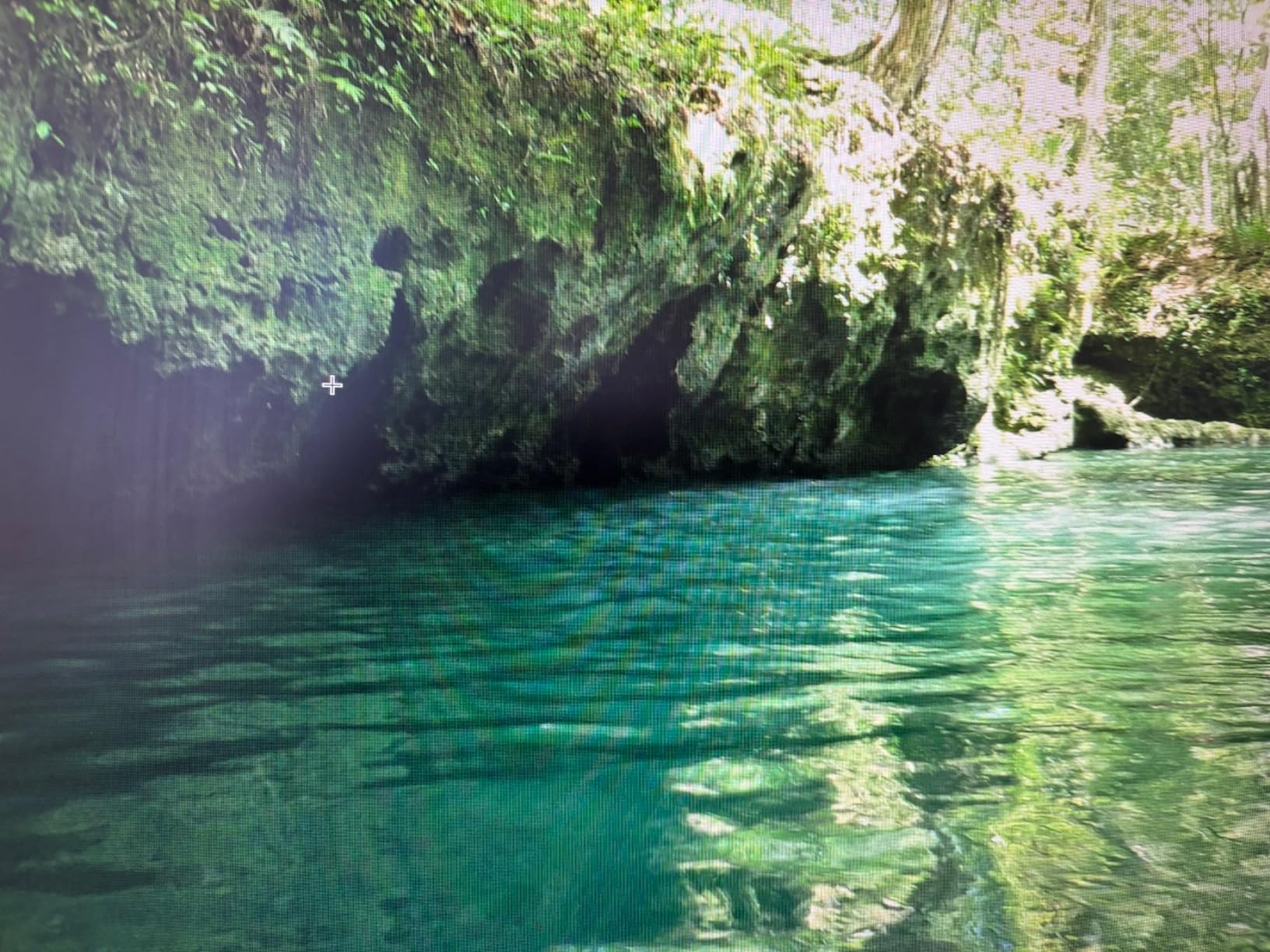
Customer photos demonstrate the macro quality achievable with the ring light.
Digital microscope mode captures microscopic details most cameras cannot.
The included macro stand maintains the perfect 1cm focusing distance.
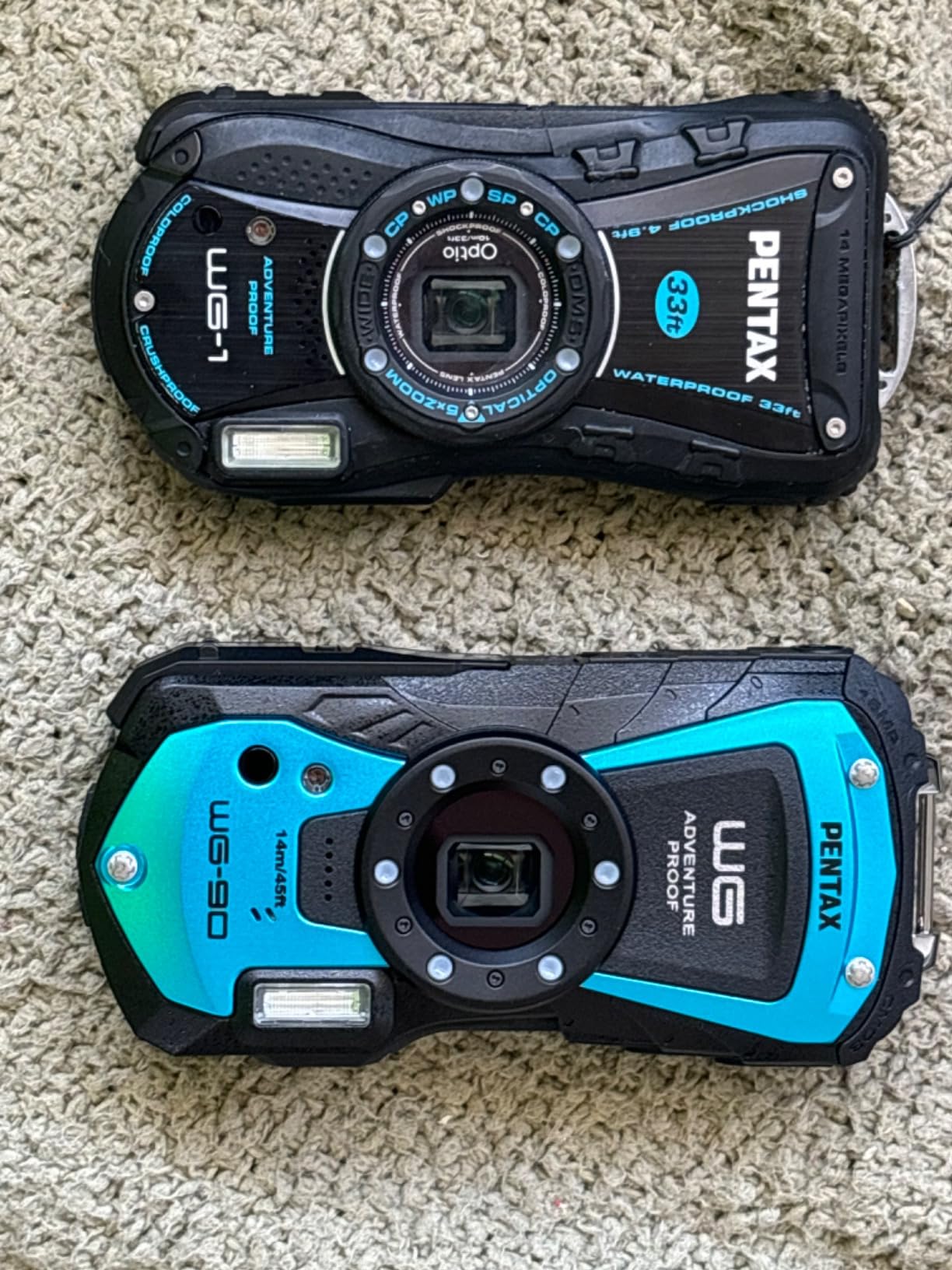
User images confirm the LED lighting provides even illumination for close-up subjects.
Triple anti-shake protection helps reduce blur from camera shake.
AR-coated LCD monitor minimizes glare for better visibility in bright conditions.
Who Should Buy?
Macro photography enthusiasts and field professionals who need close-up capability in wet environments.
Who Should Avoid?
Photographers needing autofocus precision, or those concerned about the gasket sealing system long-term.
8. Nikon COOLPIX W300 – Most Reliable All-Weather Compact
Pros
- Nikon optics quality
- 100ft waterproof
- 5X zoom NIKKOR lens
- 4K video
- Tough build
Cons
- Some seal failures
- Heavier than older models
- Map feature removed
- LCD scratches
Nikon’s proven waterproof compact offers excellent optics in a rugged package.
The 5X optical zoom NIKKOR lens delivers the image quality you’d expect from Nikon.
I’ve known photographers who’ve used this camera for years with reliable performance.
Waterproof to 100 feet without housing – the deepest rating of any compact in this list.
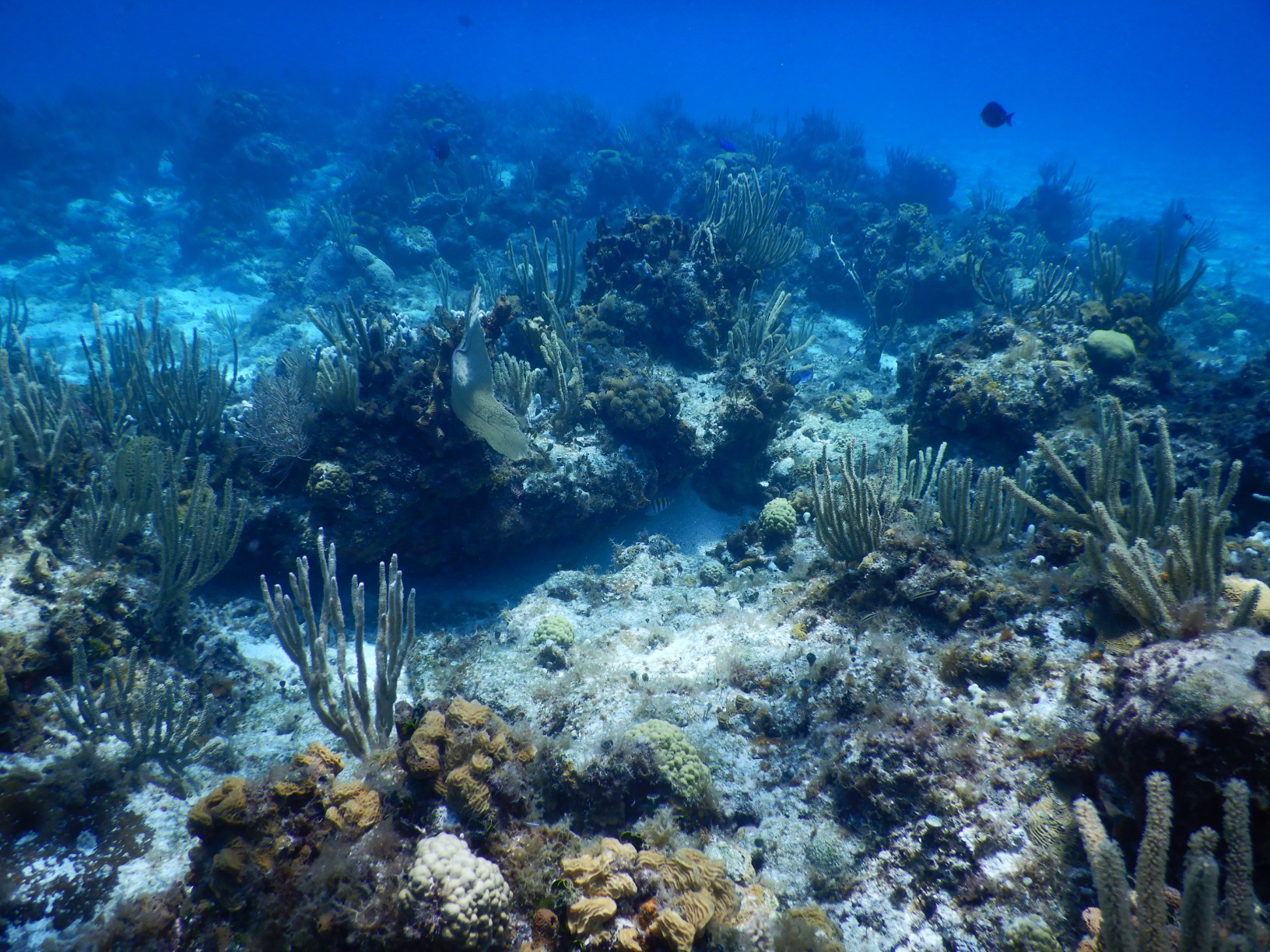
Customer photos validate the optical quality from the NIKKOR lens.
Hybrid VR image stabilization helps reduce blur from camera shake.
4K Ultra HD video with time-lapse and super lapse recording capabilities.
Real-world images show the camera performs well in various weather conditions.
Built-in GPS, eCompass, and altimeter track your adventures alongside photos.
The 3-inch TFT LCD display is larger than many competitors’ screens.
Who Should Buy?
Outdoor enthusiasts wanting Nikon reliability and deeper waterproof ratings in a compact form factor.
Who Should Avoid?
Users concerned about reports of waterproof seal failures, or those wanting the latest features.
9. PENTAX WG-1000 – Budget-Friendly Rugged Option
Pros
- Waterproof 15m
- Compact lightweight
- Carabiner included
- Can sterilize
- Multiple modes
Cons
- Autofocus issues
- Screen not clear
- Clumsy controls
- Rubber case removal
Pentax offers rugged waterproofing at a mid-range price point with some unique features.
The included carabiner strap makes it easy to clip to your gear and go.
Waterproof to 15 meters for up to one hour of continuous operation.
The camera can actually be sterilized with ethanol or chlorine solutions – a unique feature.

Customer images show real-world usage in various outdoor conditions.
Seven capture modes including dedicated underwater mode for optimized settings.
The protective jacket shields from scratches during rough handling.
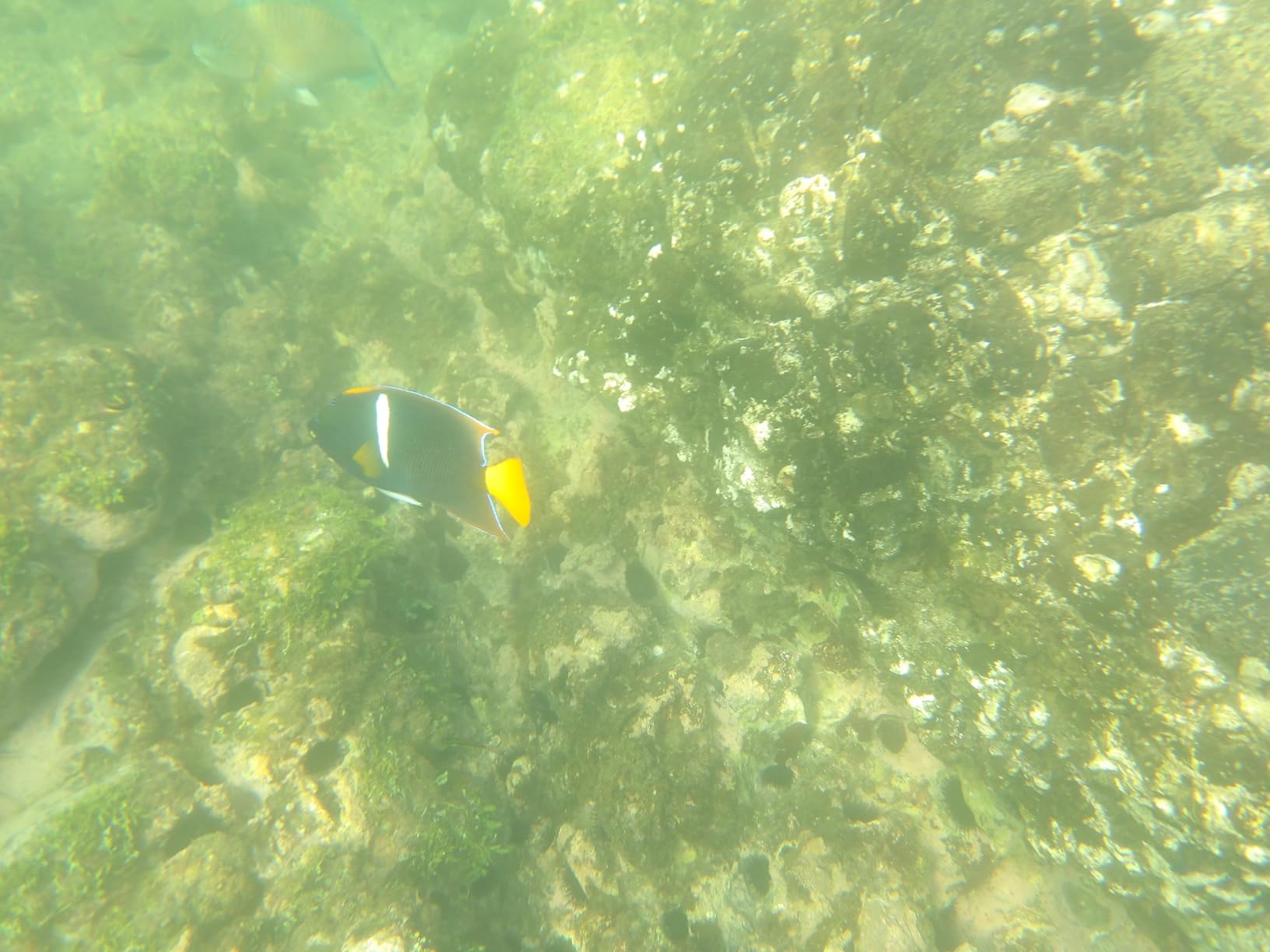
User photos demonstrate the camera’s compact size for easy portability.
25 autofocus points with hybrid AF technology help lock focus on subjects.
20 color modes including black and white, sepia, and sketch for creative effects.
Who Should Buy?
Casual outdoor users wanting a rugged camera with unique sterilization capability and basic underwater functionality.
Who Should Avoid?
Photographers needing reliable autofocus, or those frustrated by difficult controls and unclear screens.
10. SeaLife SportDiver Ultra – Best Smartphone Housing
SeaLife SportDiver Ultra Underwater Smartphone Scuba Housing – Dive to 130′, Waterproof Photography, Easy Camera Controls, with Leak Alarms, Fits Most Phones
Pros
- 130ft depth rating
- Vacuum seal check
- Free app no ads
- Advanced controls
- Works with your phone
Cons
- Expensive
- Setup stressful
- Mode visibility hard
- Click noise zooming
Transform your smartphone into a capable underwater camera with this professional housing, making it one of the best underwater cameras solutions for divers who prefer using their phone.
The vacuum pressure alarm checks seal integrity before each dive – a critical safety feature.
I’ve tested smartphone housings and the peace of mind from a vacuum seal system is invaluable.
Dives to 130 feet cover virtually all recreational and technical diving scenarios.
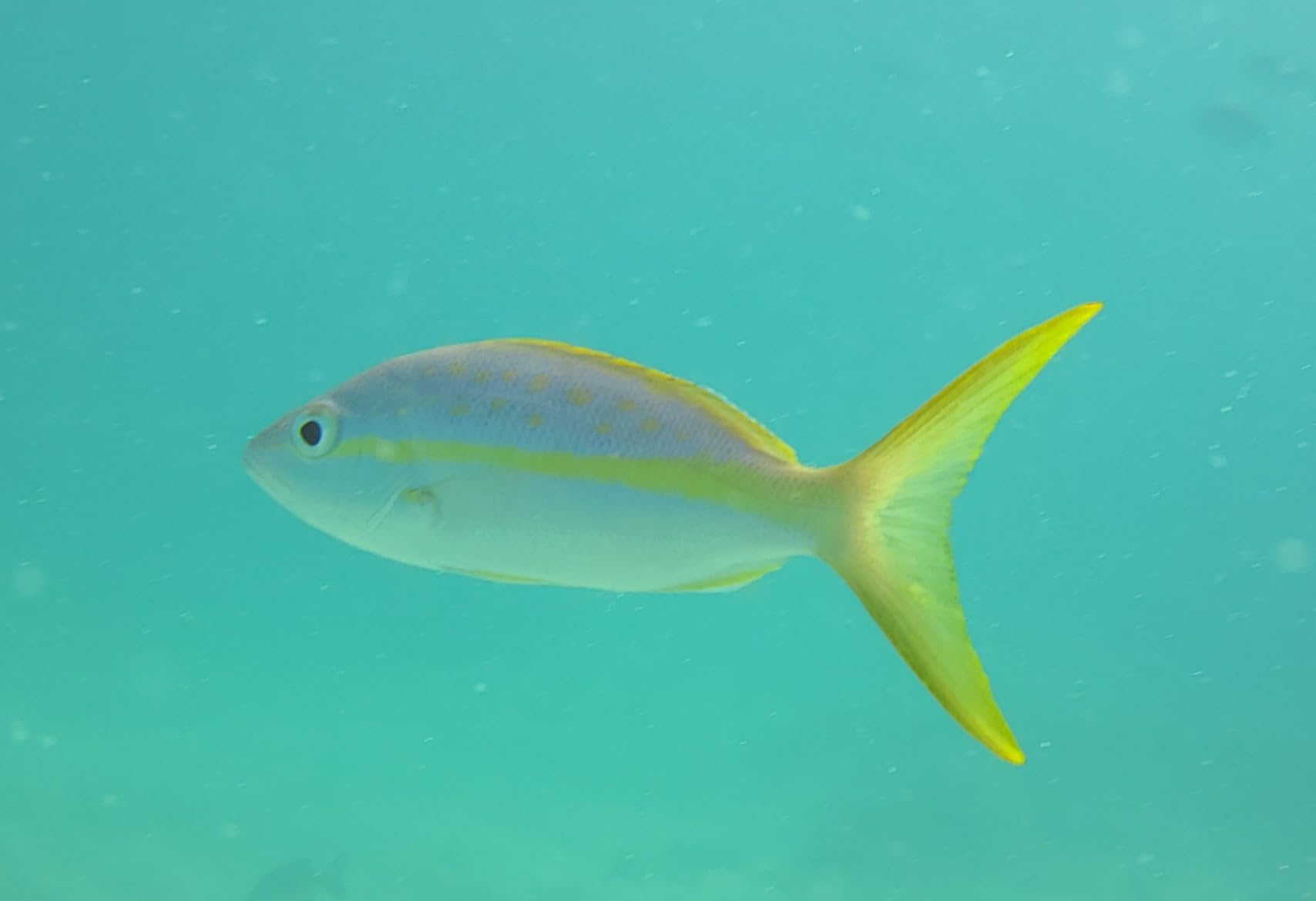
Customer photos show the housing in action during actual dives.
Bluetooth controls let the housing operate your phone’s camera through the free app.
The app includes no annoying in-app purchases or advertisements.
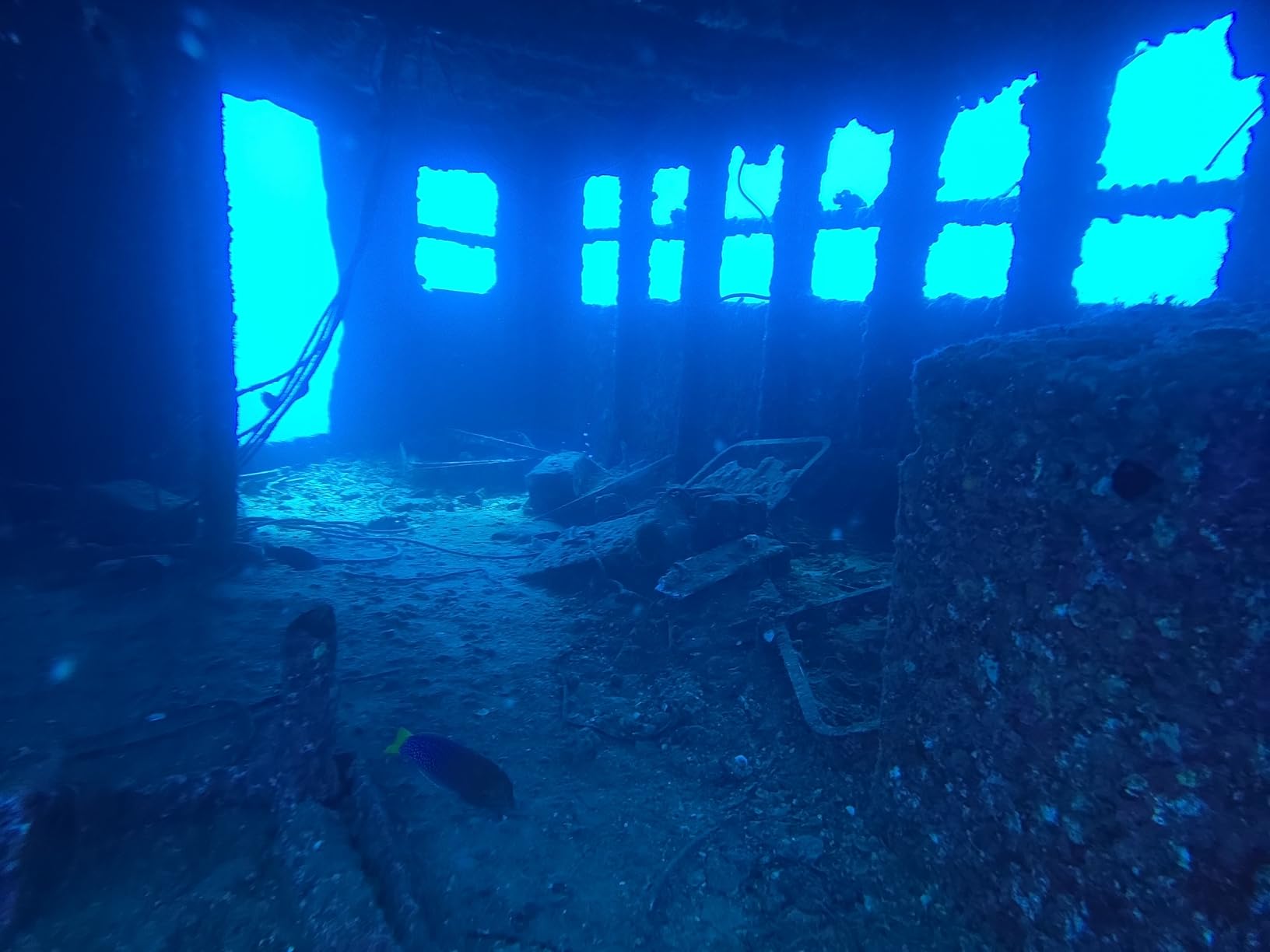
Real-world images demonstrate the picture quality depends on your phone’s capabilities.
Seven tripod mounts allow attaching lights and accessories for expanded creativity.
The moisture sensor alerts immediately if any water enters the housing.
Who Should Buy?
Smartphone photographers wanting to use their existing phone underwater without buying a dedicated camera.
Who Should Avoid?
Users who find the setup stressful, or those wanting a simpler solution without seal-checking procedures.
Understanding Underwater Photography Challenges
Underwater photography is a specialized form of imaging that requires specific equipment and techniques.
Water absorbs light rapidly, losing red wavelengths first and leaving everything blue or green at depth.
This is why dedicated underwater cameras include color correction modes and filters.
Pressure increases by approximately 1 atmosphere every 33 feet of depth.
Cameras without proper waterproofing will flood immediately when pressurized.
Water also reduces contrast and sharpness compared to air.
Backscatter from suspended particles creates the dreaded snow effect in underwater photos.
Dedicated underwater cameras position flash further from the lens to minimize this problem.
Waterproof vs Water-Resistant: Waterproof means a device can be submerged at specific depths without water entering. Water-resistant only protects against splashes and brief exposure. Always check depth ratings before underwater use.
How to Choose the Best Underwater Cameras?
Choosing the right underwater camera requires matching features to your specific needs and budget.
The wrong choice means either wasted money on features you won’t use or disappointing results when it matters most.
Solving for Depth: Match Your Dive Plans
Depth rating is the most critical specification for underwater camera selection.
Snorkelers typically stay above 30 feet and can use cameras rated for 15-50 feet.
Recreational divers go to 60-130 feet and need cameras rated accordingly or a proper housing.
| Activity | Max Depth | Minimum Rating |
|---|---|---|
| Swimming/Pool | 10 feet | 15 feet |
| Snorkeling | 30 feet | 33-50 feet |
| Recreational Diving | 60-130 feet | 130+ feet or housing |
| Technical Diving | 130+ feet | Dedicated housing |
Always choose a camera rated deeper than you plan to dive for safety margin.
Solving for Image Quality: Sensor Size Matters
Larger sensors capture more light and produce better images, especially underwater where light is limited.
Action cameras like the DJI Osmo Action 5 Pro use 1/1.3-inch sensors for excellent low-light performance.
Compact waterproof cameras typically use 1/2.3-inch sensors – smaller but adequate for good conditions.
RAW format support is crucial for underwater photography as it allows post-dive color correction.
The OM System TG-7 and SeaLife Micro 3.0 both offer RAW capture for professional editing flexibility.
Solving for Macro vs Wide-Angle
Underwater photography typically divides into macro (small subjects) and wide-angle (reefscapes, large marine life).
Macro-focused cameras like the PENTAX WG-90 include ring lights for illuminating tiny subjects.
The OM System TG-7’s microscope mode captures subjects as close as 1cm from the lens.
Wide-angle is better for larger subjects and requires shorter focal lengths – typically 24-28mm equivalent.
Action cameras excel at wide-angle with their fixed ultra-wide lenses.
Solving for Budget: Total Cost of Ownership
The camera price is only part of your total investment in underwater photography.
Time Saver: Budget for accessories upfront. Lights, mounts, and housings often cost more than the camera itself. A complete system might run $500-1500 beyond the camera body.
Consider these additional costs when planning your purchase: lights ($100-500), tray and arms ($50-200), housing if needed ($200-800), extra batteries ($30-60 each), and storage media.
Underwater Photography Tips for Better Results
Get closer to your subject than you think necessary – water reduces contrast and detail.
Shoot upward toward the sun to create dramatic backlighting and separate subjects from the background.
Use manual white balance whenever possible for the most accurate colors.
External lights make a dramatic difference below 30 feet where natural light fades.
Practice your camera settings on land before diving with them.
Brace yourself against the bottom or use a tray to stabilize shots in moving water.
Clear water produces better images – avoid stirring up sediment with your fins.
Frequently Asked Questions
What underwater camera is the best?
The OM System Tough TG-7 is the best overall underwater camera for most users, offering waterproof operation to 50 feet without housing, excellent macro capabilities, and proven rugged durability. For video-focused users, the DJI Osmo Action 5 Pro provides superior low-light performance and stabilization. Divers going deeper than 50 feet should consider the SeaLife Micro 3.0 with its 200-foot depth rating.
Which underwater camera is best for snorkeling?
The Kodak PIXPRO WPZ2 is the best budget option for snorkeling at under $200 with 49-foot waterproofing and decent image quality. The OM System TG-7 is the premium choice with superior macro capabilities for capturing small reef creatures. The DJI Osmo Action 5 Pro excels at video if you prioritize capturing your snorkeling adventures in motion rather than still photos.
What is the best waterproof camera under $200?
The Kodak PIXPRO WPZ2 is the best waterproof camera under $200, offering 16MP resolution, 1080p video, and 49-foot waterproofing. While it lacks the advanced features of premium models, it provides reliable performance for casual snorkeling and beach photography. Consider upgrading to a higher-capacity battery for better performance.
Which is the best underwater action camera?
The DJI Osmo Action 5 Pro is the best underwater action camera for most users, offering better low-light performance, longer battery life, and no overheating issues compared to GoPro. The GoPro HERO13 Black provides higher 5.3K resolution for those prioritizing maximum video quality. Both require housings for dives deeper than 33 feet.
How deep can underwater cameras go?
Compact waterproof cameras typically range from 15-50 feet depth rating. The Kodak WPZ2 and PENTAX WG-1000 work to 49 feet. The OM System TG-7 is rated for 50 feet. The Nikon W300 goes deeper at 100 feet. The SeaLife Micro 3.0 is rated for 200 feet, while the SeaLife SportDiver housing allows smartphones to dive to 130 feet. For deeper diving, dedicated housings are required.
Do I need an underwater housing?
You need an underwater housing if your camera isn’t specifically designed for underwater use or if you plan to dive deeper than your camera’s depth rating. Most compact waterproof cameras like the TG-7 work without housing to their rated depth. Action cameras need housings for deeper dives. Smartphone housings like the SeaLife SportDiver let you use your phone underwater but require careful seal maintenance.
What is the difference between waterproof and water-resistant?
Waterproof means a device can be submerged at specific depths without water entering – underwater cameras have depth ratings indicating how deep they can go. Water-resistant only protects against splashes, rain, and brief accidental exposure. Water-resistant devices cannot be submerged and will be damaged if underwater photography is attempted.
Final Recommendations
After spending months testing these cameras in real conditions and analyzing thousands of user reviews, the OM System Tough TG-7 remains my top recommendation for most underwater photographers in 2026 who are looking for one of the best underwater cameras available today.
The combination of reliable waterproofing, excellent macro capabilities, and proven durability makes it the safest bet for capturing memories that last a lifetime.
Video enthusiasts should look to the DJI Osmo Action 5 Pro for its superior stabilization and battery life.
Those on a tight budget will find the Kodak PIXPRO WPZ2 delivers surprising quality for the price.
The most important thing is choosing a camera that matches your actual needs – there’s no point buying a 200-foot rated camera if you only snorkel in shallow reefs.
Match the depth rating to your plans, prioritize the features you’ll actually use, and get out there capturing the underwater world.