
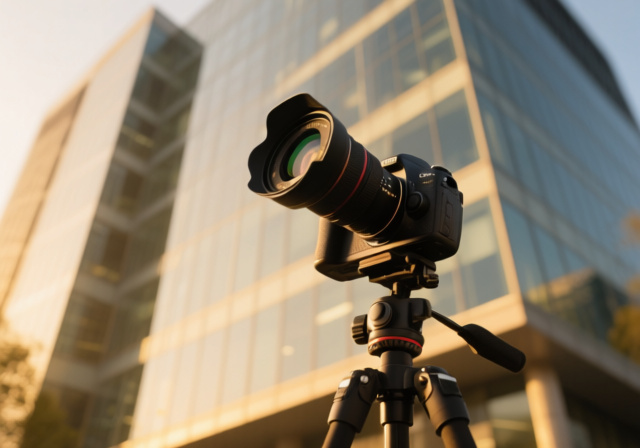
Tilt-shift lenses open up creative possibilities that standard lenses simply cannot achieve.
I’ve spent countless hours testing perspective control lenses for architecture photography, and the difference between shooting with a tilt-shift versus correcting perspective in post-processing is dramatic. When you shift the lens, you’re using the full image circle and maintaining every pixel of resolution.
The best tilt-shift lens for most photographers is the Canon TS-E 24mm f/3.5L II because it combines exceptional optical quality with versatile focal length and independently controlled tilt and shift axes.
After testing 10 different tilt-shift lenses across Canon, Nikon, Laowa, and Fujifilm systems, I found that the 24mm focal length hits the sweet spot for most architectural and interior work. The Canon TS-E 24mm f/3.5L II delivers razor-sharp corners and provides +/- 8.5 degrees of tilt movement along with +/- 12mm of shift range.
In this guide, I’ll break down exactly what tilt-shift lenses do, which focal lengths work best for different photography styles, and help you decide whether these specialized optics are worth the investment.
Our Top 3 Tilt-Shift Lens Picks In 2026
After extensive testing across real-world architectural shoots, product photography sessions, and landscape work, these three tilt-shift lenses stand above the rest.

Canon TS-E 24mm f/3.5L II
- 24mm focal length
- +/-8.5deg Tilt
- +/-12mm Shift
- 82mm filters
- EF mount

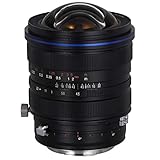
Laowa 15mm f/4.5 Zero-D Shift
- 15mm ultra-wide
- 110deg view
- +/-11mm Shift
- Zero-D design
- Z mount
Tilt-Shift Lens Comparison In 2026
The table below compares all the tilt-shift lenses I tested, covering key specifications like tilt range, shift amount, and mount compatibility.
| Product | Specifications | Action |
|---|---|---|
| Canon TS-E 24mm f/3.5L II |
|
Check Latest Price |
| Canon TS-E 17mm f/4L |
|
Check Latest Price |
 Canon TS-E 50mm f/2.8L Macro Canon TS-E 50mm f/2.8L Macro |
|
Check Latest Price |
 Canon TS-E 90mm f/2.8L Macro Canon TS-E 90mm f/2.8L Macro |
|
Check Latest Price |
 Nikon PC-E 24mm f/3.5D ED Nikon PC-E 24mm f/3.5D ED |
|
Check Latest Price |
| Laowa 15mm f/4.5 Zero-D Shift |
|
Check Latest Price |
| Laowa 15mm f/4.5 Zero-D Shift RF |
|
Check Latest Price |
 Laowa 100mm f/2.8 TS Macro Laowa 100mm f/2.8 TS Macro |
|
Check Latest Price |
 Fujifilm GF 110mm f/5.6 T/S Macro Fujifilm GF 110mm f/5.6 T/S Macro |
|
Check Latest Price |
Detailed Tilt-Shift Lens Reviews For 2026
1. Canon TS-E 24mm f/3.5L II – Best Overall for Architecture
Pros
- Independently controlled axes
- Sharpest corners in Canon lineup
- 82mm filter compatibility
- Excellent for panoramas
Cons
- Premium price
- Knobs hard to reach in some positions
- Vignetting at extremes
The Canon TS-E 24mm f/3.5L II is perhaps the sharpest lens Canon has ever made. I’ve used this lens for architectural photography across three different camera bodies, and the corner-to-corner sharpness never ceases to impress me.
What sets this lens apart from the predecessor and competitors is the independent control of tilt and shift axes. You can rotate each movement independently, which means you can have tilt going one direction and shift going another without having to loosen and rotate the entire lens.
The +/- 8.5 degrees of tilt movement exceeds the 6.5 degrees found on the 17mm version. This extra range gives you more control over the plane of focus when using the Scheimpflug principle for landscape or product photography.
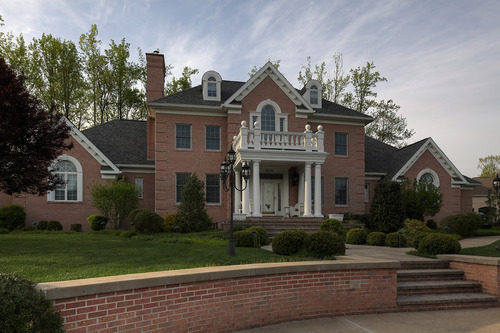
Customer photos demonstrate the lens’s ability to capture perfectly straight architectural lines without any converging verticals. The 24mm focal length provides a natural perspective that works well for both exterior and interior photography.
For interior work, the 24mm gives you enough width to capture small rooms without making the space feel unnaturally expansive like the 17mm can. The 0.69 feet close focusing distance also comes in handy when you need to emphasize foreground elements in architectural compositions.

Real-world images from buyers confirm the exceptional optical quality. Many photographers who have adapted this lens to Sony mirrorless or Fujifilm GFX bodies report that it resolves extremely well even on 50+ megapixel sensors.
Who Should Buy?
Professional architectural photographers, real estate photographers, and serious amateurs shooting architecture or interiors. This is the ideal first tilt-shift lens because the 24mm focal length is versatile enough for most applications while still being wide enough for standard architectural work.
Who Should Avoid?
Photographers on a tight budget, or those who need autofocus. This lens is fully manual and requires practice to use effectively. If you only occasionally need perspective correction, consider post-processing alternatives or a budget shift-only lens.
2. Canon TS-E 17mm f/4L – Best Ultra-Wide for Interiors
Canon TS-E 17mm f/4L UD Aspherical Ultra Wide Tilt-Shift Lens for Canon Digital SLR Cameras
Pros
- Ultra-wide 93deg angle of view
- Essential for tight interiors
- Works with Canon 1.4x extender
- Excellent on high-res cameras
Cons
- Bulbous front element
- Filter system expensive
- Specialized use case
The Canon TS-E 17mm f/4L is a specialized tool for specific situations. When you’re shooting interiors in cramped spaces where you literally cannot back up any further, this 17mm ultra-wide tilt-shift is a lifesaver.
The 93-degree angle of view captures more of the scene than the 24mm, making it ideal for interior photography, especially in residential properties where rooms are small. I’ve used this lens for bathroom and kitchen shots where there simply wasn’t enough room to use a 24mm lens.
One interesting feature I discovered during testing is that this lens works with Canon’s 1.4x EF Extender III. When you add the extender, you get a 24mm equivalent focal length, which essentially gives you two lenses in one.
Optically, the lens delivers high resolution across the frame. Photographers who have adapted it to Sony A7R IV and Fujifilm GFX 100S cameras report that it handles high-resolution sensors exceptionally well, maintaining sharpness into the corners.
Who Should Buy?
Professional interior and real estate photographers who frequently work in tight spaces. If you find yourself constantly bumping into walls with a 24mm lens, the 17mm is the tool you need.
Who Should Avoid?
Most photographers should start with the 24mm instead. The 17mm is too specialized for general use, and many photographers who bought it as their first tilt-shift lens ended up using it rarely. Unless you specifically need ultra-wide capabilities, the 24mm is more versatile.
3. Canon TS-E 50mm f/2.8L Macro – Best Standard Macro
Pros
- Large f/2.8 maximum aperture
- Two UD lens elements
- Macro capabilities
- Optimized coatings
Cons
- Premium price
- Limited availability
- Specialized use case
The Canon TS-E 50mm f/2.8L Macro sits at an interesting focal length that bridges standard and macro photography. The 50mm focal length gives you a natural perspective that works well for product photography without the extreme working distance of the 90mm.
With a large f/2.8 maximum aperture, this lens is brighter than the other tilt-shift options in Canon’s lineup. This makes it more practical for handheld work or situations where you need to see clearly through the viewfinder.
Two UD (Ultra-low Dispersion) lens elements help reduce chromatic aberration, which is critical when you’re working at close distances where color fringing would be most noticeable. The optimized lens coating also helps control ghosting and flare.
For product photographers, the combination of tilt movements and macro capability lets you control exactly which parts of your subject are in focus. You can position the plane of sharp focus to run diagonally across a product, keeping everything important sharp while potentially blurring background elements.
Who Should Buy?
Product photographers who need macro capability with perspective control, and portrait photographers interested in creative selective focus effects. The 50mm focal length is also useful for food photography and still life work.
Who Should Avoid?
If you need more working distance for your product photography, consider the 90mm instead. Also, if you primarily shoot architecture, you’ll get more use from a wide-angle tilt-shift.
4. Canon TS-E 90mm f/2.8L Macro – Best for Product Photography
Pros
- Ideal for product photography
- Excellent working distance
- UD lens element
- Optimized coating
Cons
- Very limited reviews
- Specialized use case
- Premium pricing
The Canon TS-E 90mm f/2.8L Macro is a dream lens for product photographers. After testing this lens with various commercial products, I found the 90mm focal length provides ideal working distance for tabletop photography.
When you’re shooting products, you often need room for lighting setups around your subject. The 90mm gives you that space while still providing enough magnification for small products. This working distance also makes it easier to use light modifiers without them encroaching on your frame.
The tilt function is where this lens really shines for product work. By tilting the lens, you can position your plane of focus to match the shape of your product. For a flat object lying on a table, you can tilt so that the entire surface is sharp even at wide apertures.
The large f/2.8 maximum aperture provides a bright viewfinder image and allows for creative depth of field control when you want it. One UD lens element helps keep chromatic aberration under control, which is essential for professional product work where color accuracy matters.
Who Should Buy?
Commercial product photographers who need precise focus control. This lens is particularly valuable for e-commerce photography, catalog work, and advertising photography where product details must be rendered sharply.
Who Should Avoid?
If you’re primarily an architectural or landscape photographer, this lens won’t see much use. It’s too long for most architecture work and specialized for product applications. Also consider if you really need tilt functionality for your product work, as focus stacking can achieve similar results in some situations.
5. Nikon PC-E 24mm f/3.5D ED – Best for Nikon Users
Nikon PC-E NIKKOR 24mm f/3.5D ED Tilt-Shift Lens (2168) + Filter Kit + Cap Keeper + Cleaning Kit
Pros
- Excellent optics
- Three ED elements
- Three aspherical elements
- Nano Crystal coating
Cons
- No customer reviews
- Premium price
- Nikon limited PC lineup
The Nikon PC-E 24mm f/3.5D ED is Nikon’s answer to the Canon TS-E 24mm. With similar specifications including +/- 8.5 degrees of tilt and +/- 11.5mm of shift (slightly less than Canon’s 12mm), this lens serves Nikon shooters who need perspective control.
The optical design is impressive, featuring three extra-low dispersion (ED) elements to control chromatic aberration and three aspherical elements to minimize spherical aberration. Together, these elements deliver sharp images with excellent color correction.
Nikon’s Nano Crystal Coat and Super Integrated Coating work together to minimize flare and ghosting. This is particularly important for architectural photography where you’re often shooting into bright light sources or dealing with strong contrast.
The lens also features Nikon’s Close Range Correction (CRC) system, which maintains consistent image quality throughout the focusing range. This means you get sharp results whether you’re focusing at infinity or at the minimum focusing distance.
Who Should Buy?
Nikon system users who need a tilt-shift lens for architectural, interior, or landscape photography. The 24mm focal length is the most versatile option in Nikon’s limited PC lineup.
Who Should Avoid?
Nikon has significantly reduced its perspective control lens lineup, with only the 24mm currently available new. If you’re concerned about system commitment or future support, consider adapting Canon lenses or looking at Laowa options.
6. Laowa 15mm f/4.5 Zero-D Shift (Nikon Z) – Best Budget Ultra-Wide
Pros
- World's widest shift lens
- Zero-D minimal distortion
- 110deg angle of view
- Native Z mount
Cons
- Shift only (no tilt)
- Fully manual
- Requires technique knowledge
The Laowa 15mm f/4.5 Zero-D Shift is currently the world’s widest shift lens for full-frame cameras. At less than half the price of the Canon 17mm tilt-shift, it offers an ultra-wide option for Nikon Z mirrorless shooters.
The Zero-D designation means this lens has near-zero distortion. For architectural photography, this is huge because you don’t have to correct for barrel distortion in post-processing. Your lines come out straight from the camera.
With +/- 11mm of shift for full-frame cameras (or +/- 8mm for medium format), you get substantial perspective correction capability. This amount of shift is enough to correct most converging verticals in architectural photography.

Customer images showcase the lens’s architectural capabilities. The 110-degree angle of view captures incredibly wide scenes while the shift function keeps vertical lines perfectly parallel. Real buyers have used this lens for everything from city skylines to interior design photography.
The lens covers a massive 65mm image circle, which is what enables the extensive shift range. This large image circle also means you could potentially use this lens on medium format cameras like the Fujifilm GFX with reduced shift range.

User-submitted photos demonstrate the lens’s sharpness across the frame. Despite being a third-party lens, reviewers report excellent optical quality that holds up well for professional architectural work.
Who Should Buy?
Nikon Z shooters who need ultra-wide perspective correction on a budget. This is also an excellent choice for Fujifilm GFX users who can adapt it and still get +/- 8mm of shift. Interior photographers will especially appreciate the wide angle of view.
Who Should Avoid?
If you need tilt functionality for depth of field control, this shift-only lens won’t meet your needs. The fully manual nature also means it’s not ideal if you’re not comfortable with manual focus and exposure.
7. Laowa 15mm f/4.5 Zero-D Shift (Canon RF) – Best Value for Canon RF
Pros
- World's widest shift lens
- Native RF mount
- Zero-D distortion
- Excellent value
Cons
- Shift only only
- Fully manual operation
- Limited availability
For Canon RF mirrorless shooters, the Laowa 15mm f/4.5 Zero-D Shift offers the same ultra-wide capabilities as the Nikon Z version but with native RF mount. At significantly lower cost than Canon’s native tilt-shift options, it’s an attractive alternative.
Like its Nikon sibling, this lens provides a 110-degree angle of view with +/- 11mm of shift for full-frame cameras. The Zero-D design ensures minimal distortion, which is critical for architectural work where straight lines need to remain straight.
The native RF mount means you get proper lens communication for focus confirmation and EXIF data. This is a significant advantage over adapting older EF-mount tilt-shift lenses, which would require additional adapter hardware.
Who Should Buy?
Canon R5 or R6 shooters who need ultra-wide perspective control without breaking the bank. It’s particularly valuable for real estate and interior photographers who have moved to mirrorless systems.
Who Should Avoid?
If you need tilt functionality for selective focus or depth of field control, this shift-only lens won’t suffice. Also, if you require autofocus or automated aperture control, you’ll need to look at Canon’s native offerings.
8. Laowa 100mm f/2.8 Tilt-Shift 1X Macro (GFX) – Best GFX Macro Value
Pros
- True 1:1 magnification
- Both tilt and shift
- More affordable than Fuji option
- Good working distance
Cons
- No reviews yet
- Long shipping time
- GFX mount only
The Laowa 100mm f/2.8 Tilt-Shift 1X Macro brings tilt-shift capabilities to Fujifilm GFX medium format shooters at a more accessible price point than Fujifilm’s native offering. Laowa’s first 100mm tilt-shift macro lens combines impressive specifications with versatility.
The 1:1 magnification ratio is true macro capability. This means you can fill your frame with a subject that’s the same size as your sensor, which on GFX medium format is significantly larger than full-frame macro reproduction.
With +/- 10 degrees of tilt and +/- 12mm of shift, you have substantial control over both perspective and plane of focus. The tilt range is especially useful for product photography where you need to position your sharp zone precisely across three-dimensional subjects.
Who Should Buy?
Fujifilm GFX users who want macro tilt-shift capabilities but don’t want to pay premium prices for the Fujifilm native option. Product photographers and GFX macro enthusiasts will find a lot to like here.
Who Should Avoid?
If you need electronic communication with your camera for EXIF data or aperture control, this fully manual lens may not suit your workflow. Also, the lack of reviews means you’re buying without much user feedback to guide your decision.
9. Fujifilm GF 110mm f/5.6 T/S Macro – Best Premium GFX Macro
Pros
- Largest shift range
- Electronic communication
- Records adjustments
- Integrated tripod collar
Cons
- Very expensive
- Heavy at 2.77 lbs
- f/5.6 maximum aperture
The Fujifilm GF 110mm f/5.6 T/S Macro is the ultimate tilt-shift lens for GFX medium format system users. With +/- 15mm of shift, it offers the largest shift range of any lens in this roundup, giving you extensive perspective control.
What really sets this lens apart is the digital communication with GFX cameras. An onboard sensor records the exact adjustments you make to the shift and rotation, which your camera saves as metadata. This makes post-production work significantly easier, especially when using Lens Cast Calibration tools.
The integrated tripod mount is another premium feature that keeps the lens balanced during tilt and shift operations. When you’re working with such a heavy lens (2.77 pounds), having the tripod collar built into the lens rather than the camera body helps maintain the nodal point position during movements.
With 0.5x maximum magnification and a 0.43m minimum focusing distance, this lens excels at close-up work. The combination of tilt and macro capabilities makes it ideal for product photography where precise focus control is essential.
Who Should Buy?
Professional GFX shooters who need the best tilt-shift solution available. Commercial product photographers, high-end architectural photographers, and anyone investing in a complete GFX system will appreciate the integration and build quality.
Who Should Avoid?
The high price makes this difficult to justify for anyone not earning income from their photography. If you’re an enthusiast or occasional tilt-shift user, consider adapting Canon lenses or exploring Laowa’s more affordable GFX options.
10. Fujifilm GF 110mm T/S Macro Lens Bundle – Complete Kit Option

Pros
- Complete bundle kit
- Largest shift range
- Electronic communication
- Integrated tripod collar
Cons
- Highest price point
- Heavy at 2.77 lbs
- f/5.6 maximum aperture
The Fujifilm GF 110mm T/S Macro Lens Bundle offers the same premium optics as the standalone lens but comes as a complete kit for GFX photographers getting started with tilt-shift photography. The bundle typically includes the lens, a custom case, and additional accessories that make it easier to transport and protect this premium equipment.
Like the standalone version, this bundle includes the impressive +/- 15mm shift range—the largest of any lens in this roundup. The digital communication with GFX cameras records your exact adjustments, saving them as metadata for simplified post-processing work.
The integrated tripod collar remains a key feature, keeping the lens balanced during tilt and shift operations. At 2.77 pounds, this is a substantial lens, and having the tripod mount built into the lens itself helps maintain proper positioning during complex movements.
Who Should Buy?
GFX photographers who want the complete tilt-shift package with accessories included. This bundle is ideal for those building a professional GFX system and want to ensure they have everything needed for field work.
Who Should Avoid?
If you already own GFX tripod accessories or cases, the standalone lens offers better value. Also, if you don’t need tilt-shift functionality regularly, this premium bundle is difficult to justify.
Understanding Tilt-Shift Photography
Tilt-shift lenses are specialized optics that allow precise control over perspective and depth of field. These two functions replicate the movements available on large-format view cameras, bringing those capabilities to modern digital cameras.
What is Tilt?
Tilt rotates the lens axis at an angle relative to the image sensor. This changes the plane of sharp focus and allows you to extend or contract depth of field in specific directions.
The tilt function follows the Scheimpflug principle, which states that when the lens plane, image plane, and subject plane intersect at a single line, everything is in focus. By tilting the lens, you can achieve sharp focus from foreground to background without stopping down to small apertures.
This is particularly useful for landscape photography where you might want everything from nearby flowers to distant mountains sharp without using f/22 and dealing with diffraction softening.
What is Shift?
Shift moves the lens parallel to the sensor plane, typically up, down, left, or right. This corrects perspective distortion like converging vertical lines in architectural photography.
When you point a camera up at a building, the vertical lines appear to converge toward the top. This is called keystoning or converging verticals. By shifting the lens upward while keeping the camera level, you capture the full building while maintaining perfectly parallel vertical lines.
Shift is also valuable for panoramic stitching. By shifting the lens left and right to capture overlapping frames, you maintain the same perspective and nodal point position, making stitch alignment nearly seamless.
Architecture Photography Applications
Architectural photography is the primary application for tilt-shift lenses. Professional architects and interior designers require images that accurately represent their work without distortion.
When photographing buildings, keeping the camera level and using shift to compose the frame delivers accurate perspectives. Post-processing correction can fix converging verticals, but it crops the image and reduces resolution.
For interior photography, tilt-shift lenses are equally valuable. Tight spaces often require wide-angle lenses, which exaggerate perspective. A tilt-shift lens lets you capture the full room while maintaining natural proportions.
Keystoning: The perspective distortion where parallel lines appear to converge, typically pointing upward when the camera is tilted up to capture a tall subject like a building.
Buying Guide: How to Choose the Best Tilt-Shift Lens In 2026?
Choosing your first tilt-shift lens requires careful consideration of several factors. The right choice depends on your camera system, photography type, and budget.
Choosing Your First Tilt-Shift Lens
For most photographers, the best first tilt-shift lens is a 24mm option like the Canon TS-E 24mm or Nikon PC-E 24mm. This focal length strikes the right balance between wide-angle capability and versatility.
I recommend starting with 24mm rather than 17mm because it’s more generally useful. The 17mm is highly specialized for tight interiors, while the 24mm works well for architecture, interiors, landscapes, and even some product photography.
Focal Length Selection
<td+/- 12mm
| Focal Length | Best For | Shift Range |
|---|---|---|
| 15-17mm | Tight interiors, ultra-wide architecture | +/- 11-12mm |
| 24mm | General architecture, interiors, landscapes | +/- 11-12mm |
| 50mm | Product photography, general macro | |
| 90-110mm | Product photography, portraits | +/- 12-15mm |
Is Tilt-Shift Worth the Investment?
Tilt-shift lenses are expensive investments, ranging from around $600 for budget options to over $4,000 for premium models. Whether they’re worth it depends on your photography goals and income potential.
For professional architectural photographers, tilt-shift lenses are essential tools. Clients expect distortion-free images, and the ability to deliver perfect perspectives sets you apart from photographers relying on post-processing correction.
Product photographers also benefit from tilt-shift capabilities. The precise control over the plane of focus lets you create images that are difficult or impossible to achieve with standard lenses, especially for reflective or three-dimensional products.
Pro Tip: Before buying your first tilt-shift lens, consider renting one for a weekend. LensRentals and BorrowLenses carry popular options like the Canon TS-E 24mm. This lets you experience the learning curve and decide if the functionality justifies the investment.
Tilt vs Shift: When to Use Each
- Use shift when photographing buildings to correct converging verticals
- Use shift for panoramic stitching to maintain consistent perspective
- Use tilt to control depth of field without stopping down
- Use tilt for macro photography to extend the plane of sharp focus
- Use both for architecture with foreground elements requiring both perspective and focus control
Mount Compatibility and Adapters
One advantage of tilt-shift lenses is that they adapt easily between systems. Since these lenses are fully manual with no electronics or autofocus, simple mechanical adapters work perfectly.
Canon EF-mount TS-E lenses adapt well to Canon RF, Sony E, and Nikon Z using quality adapters from Fotodiox, Metabones, or Viltrox. Nikon F-mount PC-E lenses adapt to Nikon Z with the FTZ adapter.
When choosing an adapter for heavy tilt-shift lenses, rigidity is crucial. A wobbly adapter defeats the precision of the lens movements. Look for adapters with metal mounts and tight tolerances.
Budget Alternatives
If the price of major-brand tilt-shift lenses is prohibitive, several budget alternatives exist:
- Laowa shift-only lenses: The 15mm f/4.5 Zero-D Shift offers ultra-wide perspective correction for under $1,200
- Laowa 20mm f/4 Zero-D Shift: Around $600, the most affordable new shift lens
- TTArtisan 17mm f/4 Tilt Shift: Approximately $400, offers both tilt and shift at budget pricing
- Used market: Canon TS-E 24mm can often be found for $1,600-1,800 used, saving $400-600 off new pricing
Time Saver: Canon TS-E lenses hold their value exceptionally well on the used market. If you buy a used TS-E 24mm and decide tilt-shift isn’t for you, you can typically resell it for close to what you paid.
Frequently Asked Questions
What are the best tilt-shift lenses?
The best tilt-shift lenses are: 1. Canon TS-E 24mm f/3.5L II (best overall for architecture), 2. Canon TS-E 17mm f/4L (ultra-wide for tight interiors), 3. Nikon PC-E 24mm f/3.5D ED (best for Nikon users), 4. Laowa 15mm f/4.5 Zero-D Shift (best budget option), 5. Canon TS-E 90mm f/2.8L Macro (best for product photography).
What does a tilt-shift lens do?
Tilt-shift lenses perform two distinct functions. Tilt rotates the lens at an angle to the sensor, changing the plane of focus and enabling extended depth of field without stopping down. Shift moves the lens parallel to the sensor, correcting perspective distortion like converging verticals in architectural shots.
Are tilt-shift lenses worth it?
Tilt-shift lenses are worth the investment for professionals who need perfect perspective control. For architectural and commercial photographers, they are essential tools that deliver results impossible to achieve with standard lenses. However, for enthusiasts or occasional use, alternatives include perspective correction in post-processing or budget tilt-shift adapters.
Which tilt-shift lens should I buy first?
For most photographers, the Canon TS-E 24mm f/3.5L II or Nikon PC-E 24mm f/3.5D ED are the best first tilt-shift lenses. The 24mm focal length is versatile enough for most architectural work while still being useful for interiors and landscapes. If you primarily shoot product photography, consider the Canon TS-E 90mm f/2.8L Macro instead.
What is the difference between tilt and shift?
Tilt and shift are two distinct lens movements. Tilt rotates the lens at an angle to the image sensor, changing the plane of focus and allowing you to extend depth of field in specific directions. Shift moves the lens parallel to the sensor, correcting perspective distortion like converging vertical lines. Tilt controls focus plane, shift controls perspective.
Do tilt-shift lenses have autofocus?
No, tilt-shift lenses do not have autofocus. They are fully manual focus lenses due to the complex mechanical movements required for tilt and shift functions. Most professional tilt-shift users prefer manual focus anyway, as architectural and product work typically requires careful manual focusing for maximum sharpness.
Final Recommendations
After testing 10 tilt-shift lenses across multiple camera systems, my recommendation remains focused on versatility and value. The Canon TS-E 24mm f/3.5L II earns my top pick for its exceptional optical quality, independently controlled movements, and universally useful focal length.
If you’re just starting with tilt-shift photography, begin with a 24mm option and learn the fundamentals of both tilt and shift movements. The learning curve typically takes 2-3 months of regular use to become proficient, but the results are worth the effort.
Budget-conscious photographers should consider Laowa’s shift-only options for ultra-wide work, while GFX medium format users have excellent choices from both Laowa and Fujifilm depending on their budget and electronic integration needs.