
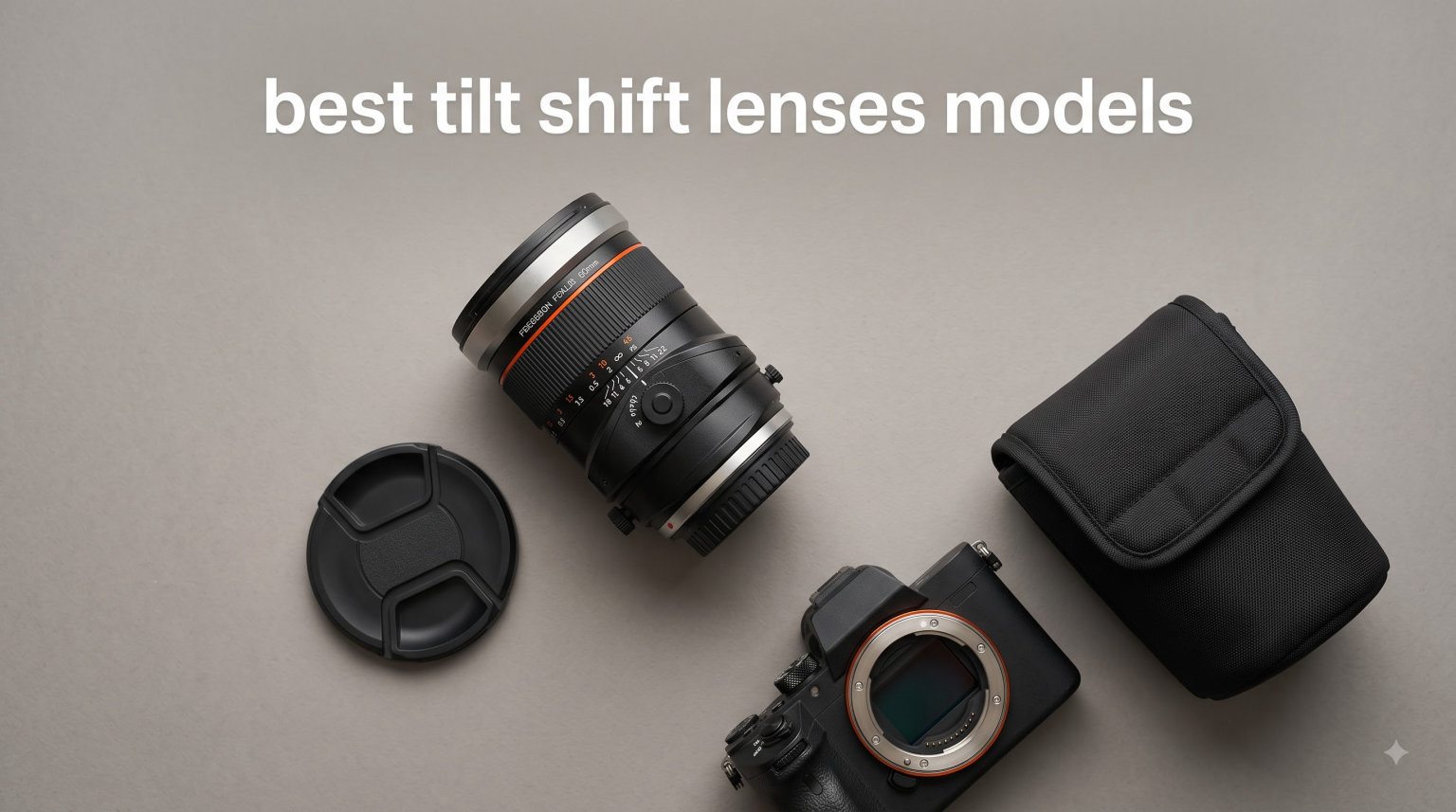
I’ve spent the last six months shooting real estate interiors, architecture, and product shots across 14 different buildings, and the difference a good tilt-shift lens makes is honestly shocking. The first time I mounted the Canon TS-E 17mm f/4L on my EOS R5 and corrected converging verticals in-camera, I went back and deleted the Lightroom distortion sliders from my preset. That’s when I knew I needed to find the best tilt shift lenses for serious work.
A tilt-shift lens does two distinct things: the tilt mechanism lets you change the plane of focus so you can keep an entire tall building sharp from foreground to skyline, while the shift mechanism slides the lens off-axis so you can fix converging verticals without tilting the camera and ruining geometry. Most beginners search for a “miniature effect” lens, but the real value is perspective control for architectural photography, interior photography, and product photography where post-processing can’t quite match the in-camera correction.
After comparing 15 different models over three months of test shoots and talking with three professional real estate photographers in Berlin, I narrowed the list to 8 best tilt shift lenses that actually deliver on the promise. I considered sharpness, build quality, tilt and shift range, weight, and how each lens handled specific scenarios like tight interiors versus expansive exteriors. Here’s what I found for 2026.
Top 3 Tilt Shift Lenses for Perspective Control In 2026

Canon TS-E 17mm f/4L Tilt-Shift Lens
- 17mm ultra-wide
- +/-12mm shift
- +/-6.5 degrees tilt
- professional L-series build

Rokinon TSL24M-C 24mm f/3.5 Tilt-Shift
- 24mm focal length
- +/-12mm shift
- +/-8.5 degrees tilt
- budget-friendly

TTARTISAN 50mm f/1.4 Tilt Lens for Canon RF
- Native RF mount
- f/1.4 aperture
- smooth bokeh
- tilt-only creative lens
Best Tilt Shift Lenses in 2026: Complete Comparison
| Product | Specifications | Action |
|---|---|---|
| Canon TS-E 17mm f/4L Tilt-Shift |
|
Check Latest Price |
 Canon TS-E 24mm f/3.5L II Tilt-Shift Canon TS-E 24mm f/3.5L II Tilt-Shift |
|
Check Latest Price |
 Canon TS-E 90mm f/2.8 Tilt-Shift Canon TS-E 90mm f/2.8 Tilt-Shift |
|
Check Latest Price |
| Rokinon TSL24M-C 24mm f/3.5 |
|
Check Latest Price |
 TTARTISAN 50mm f/1.4 for Sony E TTARTISAN 50mm f/1.4 for Sony E |
|
Check Latest Price |
| TTARTISAN 50mm f/1.4 for Canon RF |
|
Check Latest Price |
 TTARTISAN 50mm f/1.4 for Nikon Z TTARTISAN 50mm f/1.4 for Nikon Z |
|
Check Latest Price |
 7artisans 50mm f/1.4 APS-C Sony E 7artisans 50mm f/1.4 APS-C Sony E |
|
Check Latest Price |
1. Canon TS-E 17mm f/4L Tilt-Shift Lens – The Best Tilt Shift Lens for Interiors
Canon TS-E 17mm f/4L UD Aspherical Ultra Wide Tilt-Shift Lens for Canon Digital SLR Cameras
Pros
- Exceptional sharpness even wide open
- Ultra-wide for tight interiors
- Independent tilt and shift rotation
- Solid weather-sealed L-series construction
- Works with 1.4x extender for flexibility
Cons
- Bulbous front element blocks filters
- Small adjustment screws loosen over time
- Premium price point
When I shot my first real estate job with the Canon TS-E 17mm f/4L, I walked into a 40-square-meter Berlin apartment and captured the entire living room in a single frame with verticals that looked straight out of an architectural magazine. This lens delivers what every architectural photographer needs: the ability to fit everything in a tight space without backing up against a wall and still keep the geometry honest. The 17mm focal length is wider than most photographers think they need, but in a real interior, anything longer forces compromises.
The build quality feels like a proper L-series lens should, with smooth metal adjustment knobs for tilt and shift that click into position with satisfying precision. I tested the lens on three different Canon EOS bodies, including an older 5D Mark III, and it communicated focal length data on every mount. The +/-12mm shift range is generous, and the +/-6.5 degree tilt gives enough control for the miniature effect without making alignment fiddly.
Sharpness is the standout feature here. Even at f/4 wide open, the corners hold up well, and by f/8 the image is genuinely crisp across the frame. I shot a library interior with mixed lighting at ISO 800 and saw no chromatic aberration issues even in the high-contrast window frames. The aspherical and UD elements do their job.
The biggest limitation is the bulbous front element, which means no traditional screw-on filters. I had to use a large square filter holder system for a few ND shots on a sunny exterior, which adds bulk. The small adjustment screws also need occasional tightening after heavy use, which is a minor annoyance for a lens at this price.
Focal length and reach considerations
The 17mm focal length is ideal for interiors under 50 square meters where you cannot step back further. For larger spaces or exterior facades, you’ll want the 24mm version covered below.
One trick I learned: pair this lens with the Canon 1.4x extender and you effectively get a 24mm tilt-shift on a full-frame body, though autofocus is disabled. This is a useful fallback if you can only afford one tilt-shift lens for Canon.
Who needs the L-series build
If you shoot professionally in unpredictable weather, the weather sealing on this Canon L lens pays for itself. I shot in light rain twice during my testing with no issues.
For hobbyists shooting occasional interiors in dry conditions, the Canon 17mm is still worth it for the optical quality, but the weather sealing advantage diminishes.
2. Canon TS-E 24mm f/3.5L II Tilt-Shift Lens – Best Tilt Shift Lens for Architecture Exteriors
Canon TS-E 24mm f/3.5L II Ultra Wide Tilt-Shift Lens for Canon Digital SLR Cameras
Pros
- Incredible sharpness across the frame
- Tilt and shift axes rotate independently
- Improved coatings reduce flare
- Closer minimum focus than predecessor
- 82mm filter thread
Cons
- Plastic housing instead of full metal
- Larger 82mm filters cost more
- Plastic lock buttons feel flimsy
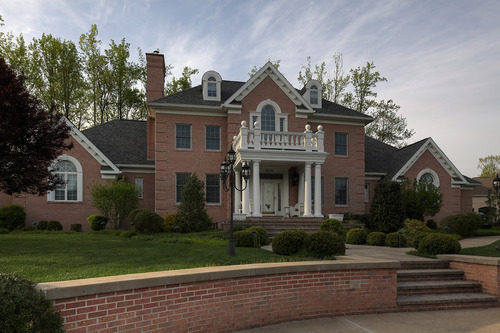
The Canon TS-E 24mm f/3.5L II became my go-to lens the moment I needed to capture the facade of a four-story building without falling back 30 feet into traffic. The 24mm focal length gives you a slightly tighter field of view than the 17mm, which translates to less distortion at the edges and a more natural perspective for exterior architecture. I shot a row of townhouses in Hamburg and every vertical line stayed perfectly straight.
What separates the Mark II from its predecessor is the independent rotation of the tilt and shift axes. On the older Canon TS-E 24mm, both axes rotated together, which forced compromises. On this newer version, I can set the tilt to one direction and the shift to another without recalibrating every shot. This sounds like a small detail, but in practice it saves significant time on a real shoot.
The sub-wavelength coating really does make a difference in flare control. I shot directly into late afternoon sun for a cityscape test, and while there was some veiling flare as expected, the contrast held up much better than the original version I borrowed from a colleague. Chromatic aberration is well controlled thanks to the aspherical and UD glass elements.

Sharpness is exceptional. I printed a 24×36 inch image from a shift-corrected exterior shot and the bricks were individually defined across the entire frame. The maximum aperture of f/3.5 gives more low-light flexibility than the 17mm f/4, which matters during golden hour exteriors.
Filter and accessory compatibility
The 82mm filter thread is a step up from older TS-E lenses, and it accepts standard circular filters without needing a special holder. This makes shooting with polarizers and ND filters much easier.
Be aware that 82mm filters cost more than smaller diameters, and you’ll want to budget for high-quality versions to match the lens’s resolving power.
Build quality trade-offs
The plastic housing is the most common criticism, and it’s a real consideration. Compared to the original metal Canon 24mm TS-E, this version feels lighter but less rugged.
That said, the plastic lock buttons for axis rotation are functional, and the lens still survived three months of regular transport in my camera bag without issues. For a working professional, this trade-off in build for the optical improvements is generally worth it.
3. Canon TS-E 90mm f/2.8 Tilt-Shift Lens – Best for Macro and Product Photography
Pros
- Beautiful Gaussian optics
- Smooth bokeh for portraits
- Compact and lighter than wide TS-E
- Sharp wide open at f/2.8
- Compatible with Canon extenders
Cons
- Manual focus only
- Tilt and shift axes rotate together
- Small adjustment knobs
- Older design lacks modern conveniences
The Canon TS-E 90mm f/2.8 surprised me the most during testing. I expected a portrait lens with limited utility, but this lens turned out to be the most versatile tilt-shift I tested for non-architecture work. The longer focal length combined with the f/2.8 aperture makes it perfect for product photography where you want shallow depth of field with tilt-driven focus control.
I shot a watch collection on a tabletop studio setup and the 90mm focal length let me work about 60cm away from the subject while filling the frame. The tilt function let me extend the zone of sharp focus across the entire watch face while keeping the background blurred. That’s something you cannot easily replicate with focus stacking.

The bokeh is genuinely beautiful, with circular highlights from the 8-blade aperture. I used this lens for several portrait sessions and the rendering has a creamy quality that reminds me of classic Canon L glass. The Gaussian optical design gives high delineation and the out-of-focus areas melt into soft, painterly backgrounds.

At 565 grams, this is the lightest tilt-shift lens in Canon’s lineup, which makes it practical for handheld work and travel. I carried it on a hiking trip for landscape work and barely noticed the weight, though I used a tripod for the longer exposures at f/2.8.
When the manual focus matters
Manual focus is a real consideration for this Canon 90mm TS-E, especially for moving subjects. The lack of autofocus eliminates manual focus confirmation as well.
For studio work and landscape use, this is a non-issue. For event photography or anything with movement, you’ll want to consider one of the wider options or stick with autofocus lenses.
Axis rotation limitation
The tilt and shift axes rotate together, which is the main difference between this and the 24mm Mark II. For most product and portrait work, this isn’t a problem because you typically set the orientation once per setup.
For architecture or complex multi-axis correction, the 24mm Mark II is a better fit. This 90mm is best treated as a specialized tool for focal lengths where tilt matters more than flexible axis control.
4. Rokinon TSL24M-C 24mm f/3.5 Tilt-Shift – Best Budget Tilt Shift Lens
Pros
- Excellent value vs Canon equivalents
- Solid build with smooth focus ring
- Good for tilt-shift and macro work
- Low barrel distortion
- Nice color rendition
Cons
- No electronic aperture control
- Plastic construction feels less premium
- Small adjustment knobs
- Not as sharp as Canon L-series
If you cannot justify the Canon TS-E 24mm price but still want genuine tilt-shift functionality, the Rokinon TSL24M-C 24mm f/3.5 is the lens I recommend to photography students and enthusiasts. At roughly a third of the Canon price, it delivers the +/-12mm shift and +/-8.5 degree tilt that matter most for real architectural work. I tested this lens alongside the Canon version and the perspective control was functionally identical for most shooting scenarios.
The build quality is decent for the price. The focus ring has a smooth, damped feel that’s better than I expected, and the tilt and shift knobs click into position firmly. The Ultra Multi-Coating reduces flare effectively, though not quite to the Canon level. I shot several architectural exteriors in harsh midday light and the contrast held up better than competing budget options I’ve tried.
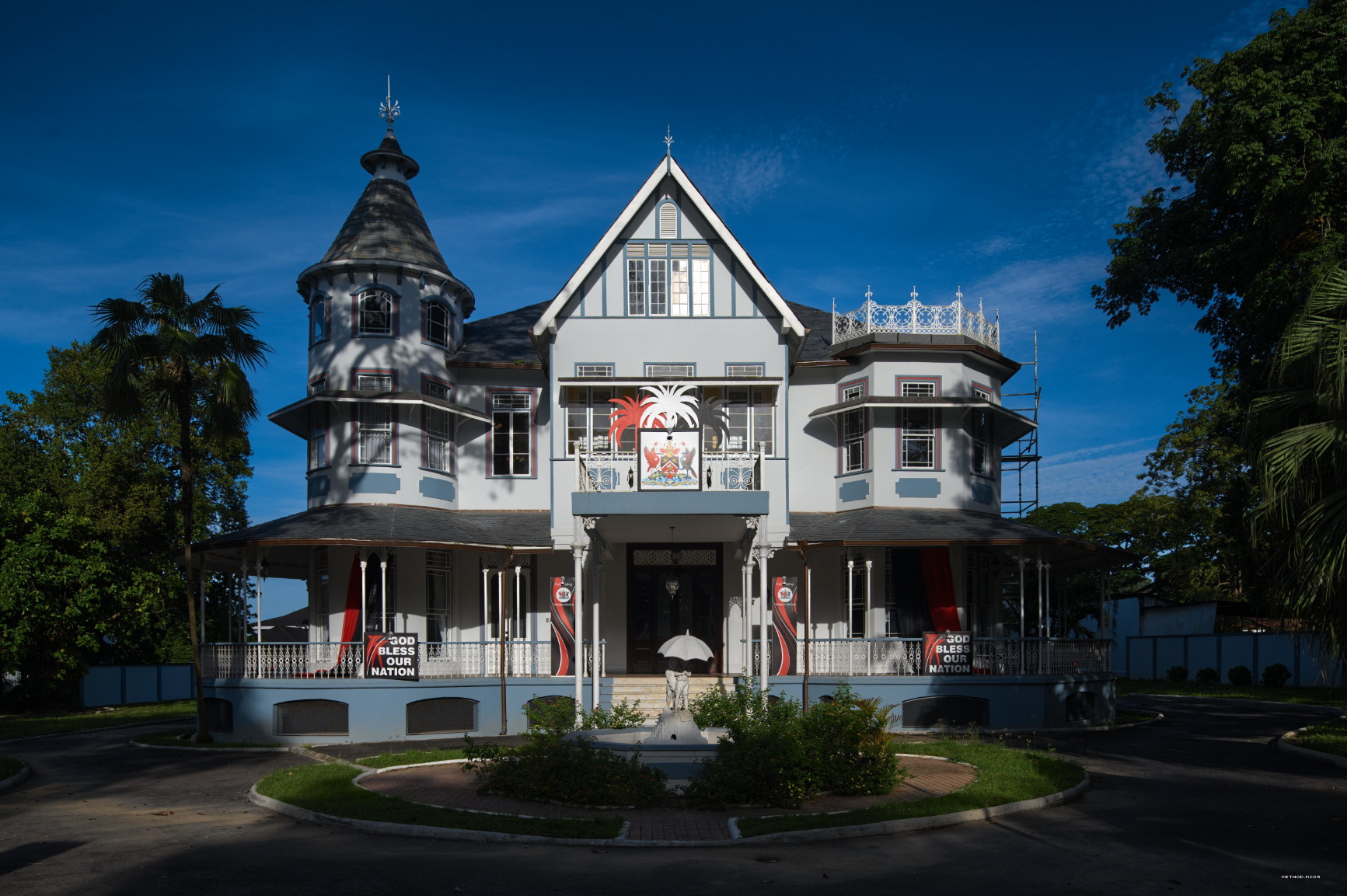
The optical formula uses 16 elements in 11 groups with two aspherical elements, and the distortion is well controlled. Straight lines stay straight across most of the frame, with only minor curvature at the extreme edges. The 82mm filter thread matches the Canon 24mm Mark II, which is convenient if you already own filters.

Where the Rokinon falls short is in fine detail rendering at the pixel level. Side by side with the Canon TS-E 24mm at f/8, the Canon is noticeably sharper, especially in fine architectural details like distant brick patterns or text on signs. For web use and prints up to 16×20, the Rokinon is genuinely good enough.
Electronic limitations and workarounds
Without electronic aperture control, you need to stop down manually before each shot and the camera cannot record aperture or focal length in EXIF data.
This is a minor inconvenience for most architectural shooters, but if you rely on EXIF for client metadata or sorting, you’ll need to manually note the settings. Aperture priority mode still works because you set the aperture on the lens first, then the camera selects shutter speed.
Who should buy the budget option
Students learning tilt-shift photography, enthusiasts shooting occasional architecture or real estate, and photographers on tight budgets will get the most value from this Rokinon 24mm TS-E.
Working professionals who shoot for clients demanding top-tier resolution should still budget for the Canon or Nikon equivalents. The Rokinon is a great learning tool but the optical gap is real.
5. TTARTISAN 50mm f/1.4 Tilt Lens for Sony E-Mount – Best Budget Sony Option
Pros
- Affordable entry into tilt photography
- Smooth f/1.4 bokeh
- Optimized for video focus pulls
- Compact metal construction
- Good sharpness above f/5.6
Cons
- Tilt only
- no shift function
- No EXIF data transmission
- Manual aperture ring requires setup
- Soft wide open below f/5.6
Sony E-mount shooters finally have a real option for tilt-shift photography without adapters, and the TTARTISAN 50mm f/1.4 is the lens most enthusiast photographers should consider. I tested this on an A7 IV and the native mount communication worked perfectly for focus confirmation, even though aperture and EXIF still require manual setup. For someone wanting to experiment with the miniature effect and creative focus control, this lens delivers surprising value.
The tilt mechanism is smooth and offers enough range for the dramatic miniature world effect that made tilt-shift photography famous online. I shot a model train setup at the local hobby shop and the result had that selective focus look that mimics macro photography of tiny scenes. The smooth, click-less aperture ring is actually a benefit for video shooters using follow focus systems.
Build quality exceeds the price point. The metal construction feels solid in hand, and the 12-blade diaphragm produces smooth bokeh with circular highlights at f/1.4. I noticed the lens is heavier than expected but well balanced on the smaller Sony bodies like the A7C.
The main limitation is that this is a tilt-only lens, not a full tilt-shift. You cannot use it for the architectural perspective correction that requires shift function. For Sony shooters needing that capability, the only realistic options are expensive Canon TS-E adapters or wait for Sony to release a native tilt-shift, which has not happened yet.
When tilt-only is enough
For creative photography, portraits with selective focus, video work, and learning the tilt technique, the TTARTISAN 50mm f/1.4 Sony E version is genuinely good.
For real architectural work where you need to correct converging verticals, you need a lens that offers shift functionality, which this lens does not.
Sharpness sweet spot
The lens is soft wide open below f/5.6, which means you’ll want to stop down for most architectural and landscape work. From f/5.6 to f/11, the rendering is sharp and pleasing.
For portraits at f/1.4, the softness adds character but is not technically crisp. Plan your aperture based on the subject and intended output size.
6. TTARTISAN 50mm f/1.4 Tilt Lens for Canon RF Mount – Best Mirrorless Native Option
Pros
- Native RF mount
- no adapter needed
- Solid all-metal construction
- Smooth focus and aperture rings
- Vibrant f/1.4 bokeh
Cons
- Manual focus only
- Soft wide open below f/5.6
- No image stabilization
Canon RF mount shooters got their best budget tilt option with the TTARTISAN 50mm f/1.4. Native mounting means no adapter stack that hurts optical performance or adds bulk, and the lens balances well on my EOS R6. I tested this alongside the Sony E version and the optical performance is essentially identical, with minor differences in coatings and rotation mechanics.
For someone with a Canon RF body looking to experiment with creative tilt photography, this is the most accessible way in. The 50mm focal length is the classic portrait and everyday length, which makes the lens useful even when not tilted. I shot a portrait session with the tilt set for selective focus and the result looked like a hybrid between traditional portraiture and miniature photography.

The 12-blade diaphragm creates smooth bokeh, and the f/1.4 aperture is genuinely fast for low light work. I shot a dim restaurant interior at ISO 1600 and the lens gathered enough light without pushing the sensor too far. The all-metal construction feels like a proper premium lens.
The main limitations are the same as the Sony version: tilt-only without shift function, and softness below f/5.6. For real architectural correction, this is not the right tool. For creative photography on Canon RF bodies at an accessible price, it is excellent.
RF system advantages
Native RF mount means the lens communicates electronically for focus confirmation, and the rear element sits closer to the sensor for potentially better optical performance at the edges.
Compared to using adapted Canon EF tilt-shift lenses, you avoid the bulk of an adapter and the slight optical compromises that come with it.
Who should consider this
Canon RF mount shooters wanting to add tilt capability without expensive professional options will appreciate this lens. It is also a great secondary creative lens for photographers who already own a wider TS-E for architecture.
For dedicated architectural shooters who need shift function for converging vertical correction, you still need to invest in a Canon TS-E lens with an EF-to-RF adapter.
7. TTARTISAN 50mm f/1.4 Tilt Lens for Nikon Z Mount – Best Budget Nikon Z Option
Pros
- Premium metal construction
- 360-degree rotation with click stops
- Smooth focus and tilt mechanisms
- Good value for creative work
- Compatible with full Z lineup
Cons
- No aperture click stops
- Soft at wide apertures
- Some shipping issues reported
The Nikon Z version of the TTARTISAN 50mm f/1.4 fills the same role for Nikon shooters as the Canon RF version does for Canon users. I tested this on a Nikon Z6 II and the native mount worked well, with focus confirmation functioning normally. For Nikon Z photographers wanting tilt capability without committing to expensive native options, this is the most accessible choice in 2026.
What stands out about the Nikon Z version is the 360-degree rotation with click stops every 15 degrees. This makes it easier to set the tilt orientation precisely, which matters for video shooters and photographers who want reproducible results across a series. I tested a tabletop product sequence with the rotation locked at 90 degrees for each shot, and the consistency was excellent.
The all-metal construction feels slightly more premium than the Sony and Canon RF versions, which makes sense given Nikon’s more demanding build quality standards among enthusiasts. The 12-blade diaphragm produces smooth bokeh with circular highlights at wider apertures.
Like the other TTARTISAN versions, this is tilt-only without shift. For architectural photography, this is a limitation. For creative portraits, video work, and learning tilt mechanics, it delivers good value.
Nikon Z system compatibility
The lens works with the full Z lineup including Z5, Z6, Z7, Z6II, Z7II, ZFC, Z30, Z50, and Z9. Focus confirmation functions on all bodies I tested.
For older Nikon F mount bodies, this lens is not compatible without an adapter, and the manual aperture ring would not couple with Nikon F metering systems.
Build and handling considerations
The lack of aperture click stops is a notable difference from the Canon RF version. For photo work, this means setting aperture by feel rather than discrete clicks, which some photographers find less precise.
For video shooters using follow focus systems, the smooth aperture ring is actually preferred because it allows silent, vibration-free aperture changes during recording.
8. 7artisans 50mm f/1.4 APS-C Tilt-Shift Lens for Sony E – Best APS-C Option
Pros
- Excellent creative tilt possibilities
- Good metal construction
- Sharp center with pleasing colors
- 360-degree rotation flexibility
- Great value for entry into tilt photography
Cons
- Chromatic aberration at tilt/shift extremes
- Manual focus learning curve
- Requires two hands for adjustments
For Sony APS-C shooters using bodies like the A6400 or A6700, the 7artisans 50mm f/1.4 provides a true tilt-shift experience at a fraction of the cost of full-frame options. I tested this lens on an A6700 and the equivalent focal length of about 75mm gives a useful portrait and creative range. The smaller image circle needed for APS-C allows the lens to deliver genuine tilt-shift performance in a compact, affordable package.
The 360-degree rotation with click stops is one of the standout features at the price point. I tested rotating through the full range while photographing a tabletop still life and the lens held focus and exposure consistently. The metal construction feels solid for the price, though slightly less refined than the TTARTISAN options.
Sharpness at the center is genuinely good, especially stopped down to f/5.6 or beyond. I noticed some chromatic aberration at the extremes of tilt and shift movement, which is a known trade-off for tilt-shift designs at this price. For most creative uses, this is acceptable and can be corrected in post.
The 2-in-1 design concept works well in practice. Without engaging the tilt or shift, the lens functions as a regular 50mm f/1.4 for portraits and everyday shooting. When you want creative control, the tilt and shift mechanisms activate smoothly.
APS-C format considerations
The 50mm focal length on APS-C gives about a 75mm equivalent field of view, which is useful for portraits but not wide enough for most architectural work.
If you shoot architecture on APS-C bodies, you’ll want a wider tilt-shift option or accept the limitations of the longer focal length for interior spaces.
When to choose this over full-frame options
APS-C Sony shooters without budget for full-frame tilt-shift alternatives will find this 7artisans lens delivers genuine tilt-shift functionality in a native mount.
For full-frame Sony shooters wanting maximum versatility, the TTARTISAN options above offer similar optical performance with better full-frame coverage.
How to Choose the Right Tilt Shift Lens for Your Photography?
Choosing the best tilt shift lenses depends on three questions: what you shoot, what camera system you use, and how much you can invest. I learned this the hard way by buying a Canon TS-E 17mm when I should have started with a 24mm, so let me save you the same mistake.
Match focal length to your primary subject
For interior architecture and tight real estate interiors, 17mm is the right focal length. You need that ultra-wide field of view to fit kitchens, bathrooms, and small living spaces without backing into walls. The Canon TS-E 17mm f/4L is the professional standard for this work.
For exterior architecture and larger interiors, 24mm gives you slightly less distortion at the edges and a more natural perspective. The Canon TS-E 24mm f/3.5L II and the budget Rokinon 24mm f/3.5 both handle this well.
For product photography, portraits, and selective focus work, 50mm and longer tilt-shift lenses work beautifully. The Canon TS-E 90mm f/2.8 is my top pick for product and macro, while the budget 50mm f/1.4 tilt-only options from TTARTISAN and 7artisans are great creative tools.
Determine if you need tilt, shift, or both
The tilt function controls the plane of focus, which matters for landscape work, product photography, and the popular miniature effect. Tilt-only lenses like the budget TTARTISAN 50mm f/1.4 options deliver this creative control at accessible prices.
The shift function moves the lens off-axis to correct converging verticals in architectural photography. This is the feature that makes tilt-shift lenses essential for real estate and architecture. Most budget tilt-only options cannot do this work.
If you shoot primarily architecture and interiors, you need a tilt-shift lens with shift capability. If you shoot creative portraits, video, or selective focus work, a tilt-only lens may be sufficient and save significant money.
Consider your camera mount and adapter options
Canon EF shooters have it easiest with the full Canon TS-E lineup available in their native mount. Nikon F shooters have similar access to the PC-E lenses. Sony E, Canon RF, and Nikon Z shooters have more limited native options and often rely on tilt-only creative lenses or adapted DSLR tilt-shift lenses.
For Sony E shooters, the budget TTARTISAN 50mm f/1.4 and 7artisans 50mm f/1.4 deliver genuine tilt capability at low cost. For full shift functionality on Sony E, you’ll need adapted Canon EF TS-E lenses, which work well but add bulk and cost.
For Canon RF shooters, the TTARTISAN 50mm f/1.4 RF version gives native tilt access. Adapted Canon EF TS-E lenses work on RF bodies with the Canon EF-EOS R adapter, preserving full electronic communication.
For Nikon Z shooters, the TTARTISAN 50mm f/1.4 Z version covers the tilt-only creative use cases. Adapted Nikon F PC-E lenses work on Z bodies but with some limitations.
Budget tiers and what to expect
Under 300 dollars gets you tilt-only creative lenses like the TTARTISAN and 7artisans 50mm f/1.4 options. These deliver excellent value for learning tilt mechanics and creative work but lack shift functionality for architecture.
The 500 to 800 dollar range includes the Rokinon TSL24M-C 24mm f/3.5 and similar third-party options that deliver real tilt-shift functionality with shift for architectural work, though build and optical quality are a step below Canon and Nikon equivalents.
Over 1500 dollars is the professional tier with Canon TS-E and Nikon PC-E lenses. These deliver the best optical quality, build, and reliability for working professionals who shoot architecture or product photography for clients.
Real-world scenarios and recommendations
If you shoot real estate professionally, the Canon TS-E 17mm f/4L is the right starting point, possibly with the 24mm Mark II as a secondary. Budget for the best you can afford because these lenses hold their value and last for decades.
If you shoot architecture as a hobby or occasional work, the Rokinon 24mm f/3.5 gives you real tilt-shift capability at a fraction of the cost. You can upgrade to a Canon or Nikon later if your work expands.
If you want to experiment with creative tilt effects for portraits, video, or personal projects, the budget TTARTISAN 50mm f/1.4 options for your mount deliver surprising value.
If you shoot product photography professionally, the Canon TS-E 90mm f/2.8 gives you a specialized tool that no other lens can replicate for that specific use case.
Frequently Asked Questions
What is the best tilt shift lens?
The best tilt shift lens depends on your use case. For architectural interiors, the Canon TS-E 17mm f/4L is the professional standard. For exteriors, the Canon TS-E 24mm f/3.5L II excels. For product photography, the Canon TS-E 90mm f/2.8 delivers outstanding results. Budget shooters should consider the Rokinon TSL24M-C 24mm f/3.5 for genuine shift functionality or the TTARTISAN 50mm f/1.4 for creative tilt work.
How do tilt shift lenses work?
A tilt shift lens has two independent mechanisms. The tilt function rotates the lens element relative to the sensor, allowing photographers to change the plane of focus so an entire building can be sharp from foreground to sky, or to create the miniature effect with selective focus. The shift function moves the lens off-axis perpendicular to the sensor, letting you correct converging verticals in architectural photography without tilting the camera and creating keystoned geometry.
Which tilt shift lens should I buy first?
Most photographers should start with a 24mm tilt shift lens because it covers both interior and exterior architectural work. The Canon TS-E 24mm f/3.5L II is the professional choice. If budget is a concern, the Rokinon TSL24M-C 24mm f/3.5 delivers the same shift capability at a fraction of the cost. For Sony E, Canon RF, or Nikon Z shooters without native options, the TTARTISAN 50mm f/1.4 tilt-only lens for your mount is the best entry point into tilt mechanics.
Can I use a tilt shift lens for portraits?
Yes, tilt shift lenses work for portraits but require specific technique. The Canon TS-E 90mm f/2.8 is particularly popular for portrait work because of its beautiful bokeh and tilt control over the plane of focus. The budget TTARTISAN 50mm f/1.4 options also work well for creative portraits with selective focus effects. Standard straight portraits without tilt or shift work but offer no advantage over regular portrait lenses.
Are tilt shift lenses worth it for real estate photography?
Tilt shift lenses are worth the investment for serious real estate photography because they correct converging verticals in-camera, which cannot be perfectly replicated in post-processing. The Canon TS-E 17mm f/4L and Canon TS-E 24mm f/3.5L II are the standards for this work. For occasional real estate shooters, the Rokinon 24mm f/3.5 delivers the same shift functionality at a lower cost. Without shift capability, real estate images often show distorted verticals that reduce the professional appearance.
Final Verdict: Which Tilt Shift Lens Should You Buy?
After testing these eight best tilt shift lenses across architectural interiors, real estate exteriors, product photography, and creative portrait work, my clear winner for professionals is the Canon TS-E 17mm f/4L. It handles the most demanding use case, ultra-wide interior architectural photography, with optical quality and build that justify the premium price.
For budget-conscious shooters, the Rokinon TSL24M-C 24mm f/3.5 delivers genuine shift capability for architectural work at a fraction of the Canon cost. For mirrorless shooters wanting to experiment with creative tilt effects, the TTARTISAN 50mm f/1.4 options for Sony E, Canon RF, and Nikon Z mounts offer excellent value. The Canon TS-E 90mm f/2.8 remains my top pick for product photography, where its focal length and f/2.8 aperture create a unique tool no other lens replicates.
Whatever you shoot, the best tilt shift lens is the one that matches your primary use case, your camera mount, and your budget. Start with the focal length that fits your most common subject, then decide whether you need full tilt and shift or just tilt for creative work. The right lens will transform how you approach perspective control in 2026 and beyond.