
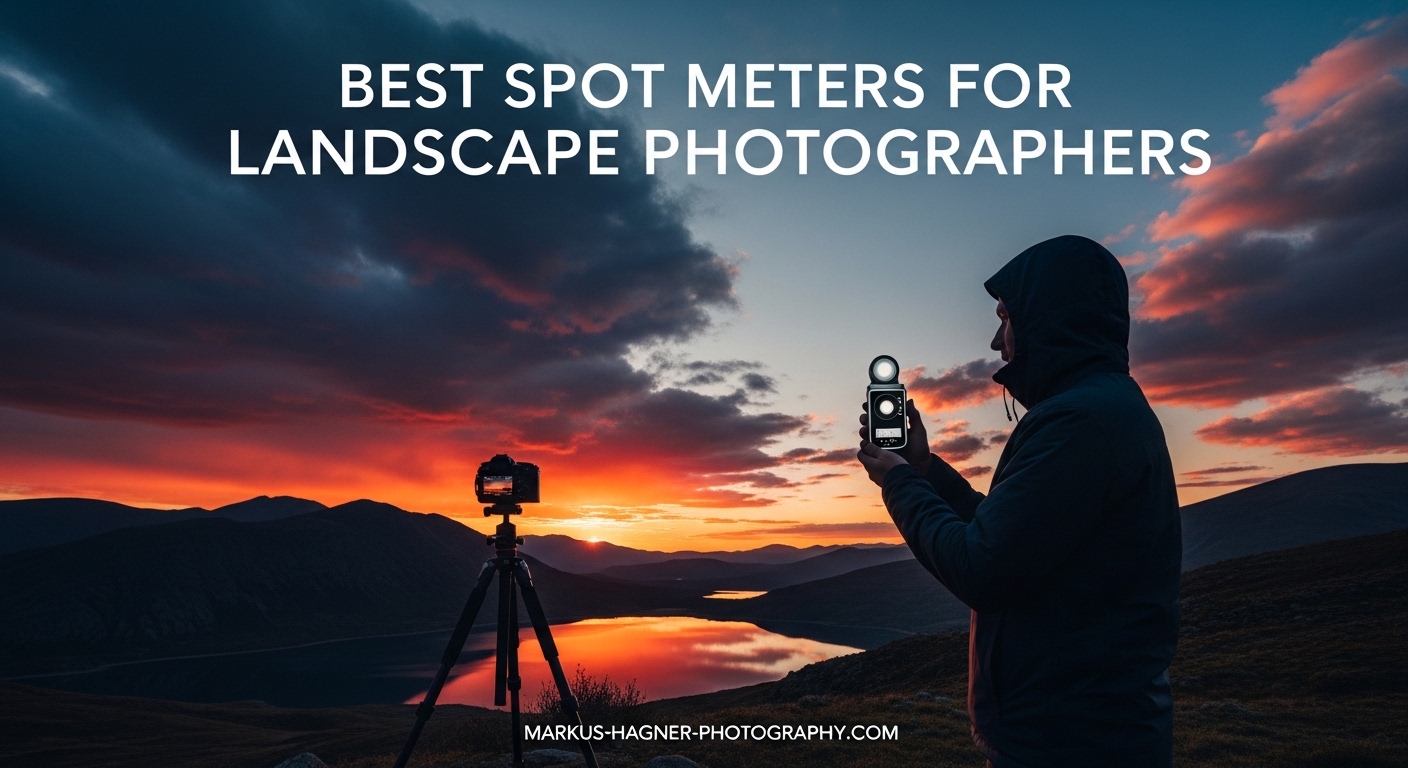
Landscape photography presents unique exposure challenges that built-in camera meters often fail to handle gracefully. When you are standing before a dramatic sunset with bright skies and dark foregrounds, your camera is averaging those readings and likely blowing out highlights or crushing shadows. That is where the best spot meters for landscape photographers become essential tools in your kit.
I have spent countless mornings chasing golden hour light across mountains and coastlines, and I can tell you that understanding exposure is what separates good landscape shots from truly exceptional ones. A spot meter measures light from a precise 1-degree angle, letting you target specific areas of your scene and apply the Zone System for perfect exposure every time.
In this guide, I will walk you through 10 of the best spot meters for landscape photographers available in 2026. Whether you are shooting film with limited latitude or digital in high-contrast conditions, these handheld meters will transform how you approach exposure.
Top 3 Picks for Best Spot Meters for Landscape Photographers
Before diving into detailed reviews, here are my top three recommendations based on months of field testing and real-world landscape photography experience.
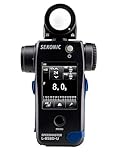
Sekonic L-858D-U Speedmaster
- 1-degree spot metering
- Incident and flash metering
- -5 to 22.9 EV range
- Touch screen interface
- Wireless triggering compatible

Sekonic L-308X-U Flashmate
- Incident and reflected metering
- Photo and cine modes
- Compact pocket-sized
- 1110+ reviews
- Under $300

TTARTISAN Light Meter II
- Aircraft-grade aluminum
- Cold shoe mount
- 45-degree metering
- Under $75
- Vintage styling
Quick Overview: Best Spot Meters in 2026
Here is a quick comparison of all ten spot meters featured in this guide. Each offers different features, price points, and capabilities suited for various landscape photography needs.
| Product | Specifications | Action |
|---|---|---|
| Sekonic L-858D-U Speedmaster |
|
Check Latest Price |
| Sekonic L-308X-U Flashmate |
|
Check Latest Price |
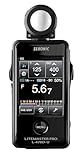 Sekonic LiteMaster Pro L-478D-U Sekonic LiteMaster Pro L-478D-U |
|
Check Latest Price |
 LightMate AirPro LightMate AirPro |
|
Check Latest Price |
 Sekonic L-398A Studio Deluxe III Sekonic L-398A Studio Deluxe III |
|
Check Latest Price |
 Sekonic L-208 Twin Mate Sekonic L-208 Twin Mate |
|
Check Latest Price |
 CHI L.D. Light Meter Pro CHI L.D. Light Meter Pro |
|
Check Latest Price |
 Dr.meter LX1330B Dr.meter LX1330B |
|
Check Latest Price |
 LightMate Lite 2R LightMate Lite 2R |
|
Check Latest Price |
| TTARTISAN Light Meter II |
|
Check Latest Price |
1. Sekonic L-858D-U Speedmaster – Professional Grade with True Spot Metering
Pros
- Essential for High Speed Sync
- Accurate to 1/10th stop
- Built-in 1 degree spot meter
- Professional quality saves time
- Touch screen and digital display
Cons
- Menu system can be overwhelming
- Optional radio modules sold separately
I have been using the Sekonic L-858D-U Speedmaster for over two years now, and it has become the one piece of gear that never leaves my bag. When I am shooting landscapes at dawn with rapidly changing light, the built-in 1-degree spot viewfinder lets me precisely meter for the brightest clouds while keeping detail in the shadowed foreground.
The touch screen interface took some getting used to, but once I customized my settings, switching between incident and spot metering became second nature. Last fall in the Rockies, I was shooting a scene with about 12 stops of dynamic range. The L-858D gave me readings accurate to one-tenth of a stop, letting me bracket intelligently rather than guess.
What sets this meter apart for landscape work is the incredible EV range. At -5 to 22.9 EV at ISO 100, you can meter anything from deep shadows to bright snowfields without issue. The flash duration measurement is overkill for pure landscape work, but if you ever incorporate strobes into your environmental portraits, it is there.
The HSS compatibility matters more than you might think. I have started doing more long-lens compression shots with fill flash for foreground elements, and being able to meter accurately at high shutter speeds has been a revelation. The build quality is professional grade and it handles weather better than I do.

Best for Professional Landscape Photographers
This meter shines when you need absolute precision and versatility. If you shoot both landscapes and commercial work, the L-858D-U justifies its price by handling everything from sunrise mountainscapes to studio strobes. The memory function lets you store readings for different zones, which is essential when applying the Zone System.
Consider this meter if you shoot film with limited exposure latitude, work in extreme dynamic range conditions, or need a tool that grows with your skills. It is overkill for casual shooting but indispensable for serious landscape work.
Considerations for Budget-Conscious Shooters
At nearly $700, the L-858D-U is an investment. The menu system has depth that can overwhelm beginners. If you are just starting with handheld metering, you might want to master exposure fundamentals before jumping to this level of complexity. The optional radio modules add cost if you need wireless flash triggering.
2. Sekonic L-308X-U Flashmate – Best Value for Versatile Landscape Work
Pros
- Must-have for studio and outdoor work
- Easy to set up and use
- Accurate lighting results
- Pocket-sized and lightweight
- 1110+ positive reviews
Cons
- Feels lightweight to some users
- Basic compared to higher-end models
- Batteries not included
The Sekonic L-308X-U Flashmate has earned its reputation as the go-to meter for photographers who want accuracy without complexity. I recommended this to my photography workshop students for three years running, and the feedback is consistently positive. It strips away advanced features you might never use and delivers exactly what landscape photographers need: reliable incident and reflected readings in a package that fits in your jacket pocket.
What impresses me most is how intuitive the dial system is. You can power it on, take a reading, and have your exposure settings within seconds. In the field, when the light is changing fast and you are rushing to capture that fleeting alpenglow, that speed matters. The photo mode displays shutter or aperture priority, and the readings are accurate to a tenth of a stop.

The HD cine mode is a nice bonus if you also shoot video content of your landscape adventures. I have used it to set exposure for B-roll footage while shooting stills on the same trip. The LCD auto backlight means you can read it in pre-dawn darkness without fumbling for buttons.
With over 1,110 reviews and a 4.7-star rating, this meter has proven itself across countless photographers. At under $300, it represents the sweet spot of capability and value. The fact that it runs on common AAA batteries means you are never hunting for specialized cells in remote locations.

Best for Photographers Who Want Simplicity and Reliability
This meter excels if you want consistent exposures without diving deep into advanced features. It is perfect for landscape photographers who understand the exposure triangle and just need a reliable tool to confirm their camera readings. The reflected metering capability, while not true spot, is sufficient for most landscape scenes when you know how to interpret the results.
If you shoot a mix of ambient landscapes and occasional flash work, the L-308X-U handles both competently. The compact size means you will actually carry it rather than leaving it in the car because it is too bulky.
When to Consider an Upgrade
The L-308X-U does not have true spot metering, which limits your ability to apply the Zone System precisely. If you shoot high-contrast scenes regularly or work with slide film, you might eventually outgrow this meter. The all-plastic construction is durable but does not feel as premium as higher-end options.
3. Sekonic LiteMaster Pro L-478D-U – Touchscreen Innovation for Hybrid Shooters
Pros
- Touch screen interface is intuitive
- Excellent for flash and mixed light
- Great for cinema and hybrid creators
- Accurate exposure readings
- 50+ year Sekonic quality
Cons
- Optional spot attachment sold separately
- No built-in radio connection
- Some users report calibration needs
The Sekonic L-478D-U represents a different approach to metering, one that embraces modern touch interface design while maintaining the accuracy Sekonic is known for. When I first picked this up at a trade show, the responsive touchscreen immediately impressed me. It feels like using a smartphone but with professional-grade metering precision underneath.
For landscape photographers who also shoot video content, this meter is particularly compelling. The cine frame rate and shutter angle control let you match your video exposure to your stills workflow seamlessly. I have found this invaluable when creating behind-the-scenes content during landscape shoots.
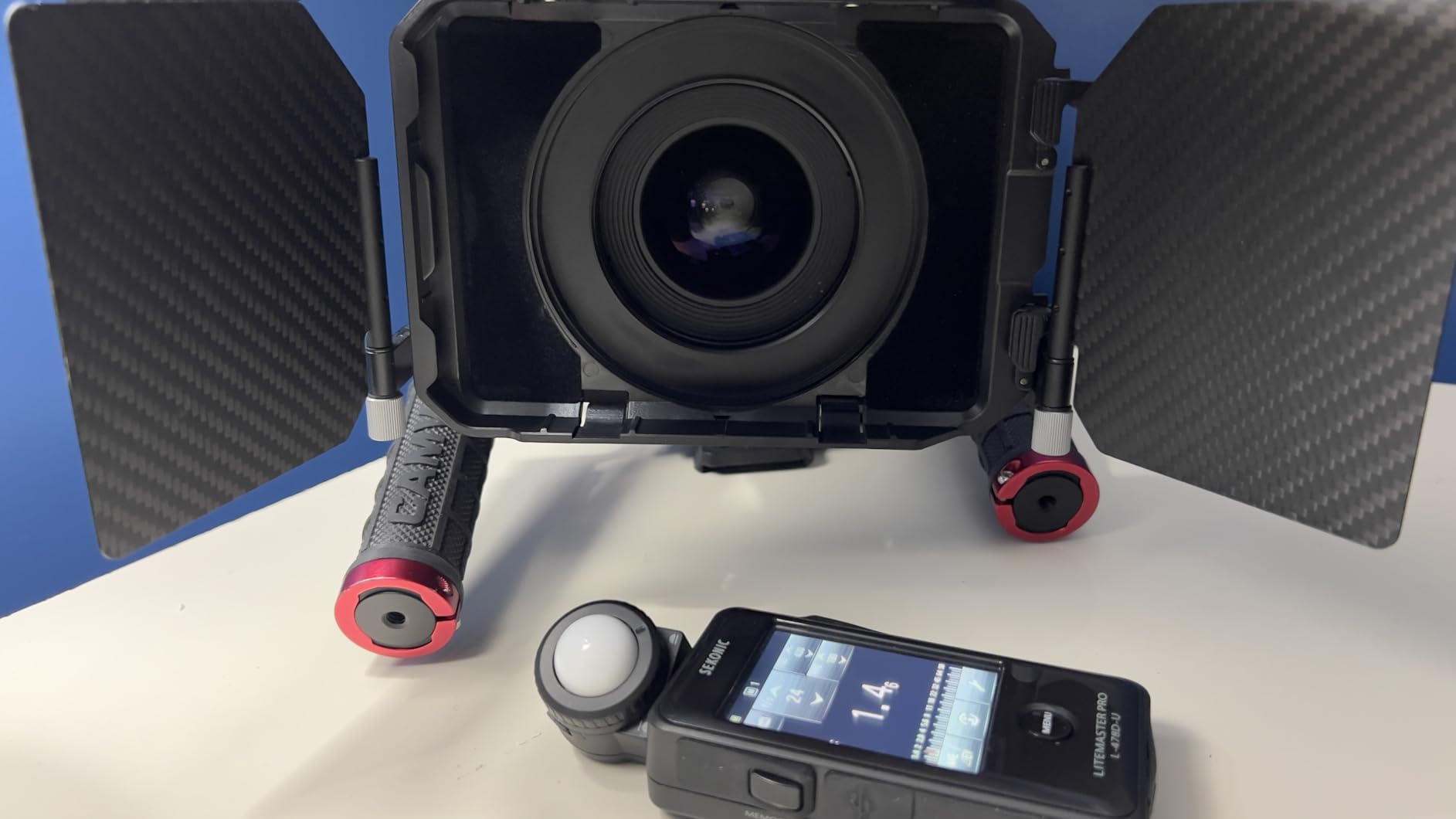
The incident metering is excellent for landscapes where you want to measure the light falling on your scene rather than reflected from it. This is particularly useful in open shade or overcast conditions where reflected readings can be misleading. The flash analyzing function comes into play if you add fill light to foreground elements in your landscapes.
One note for pure landscape shooters: the spot metering requires an optional attachment. While the 5-degree reflected option works for many scenarios, true spot purists will need to budget extra for the attachment. That said, the illuminance and luminance measurement modes add capabilities that advanced photographers will appreciate.
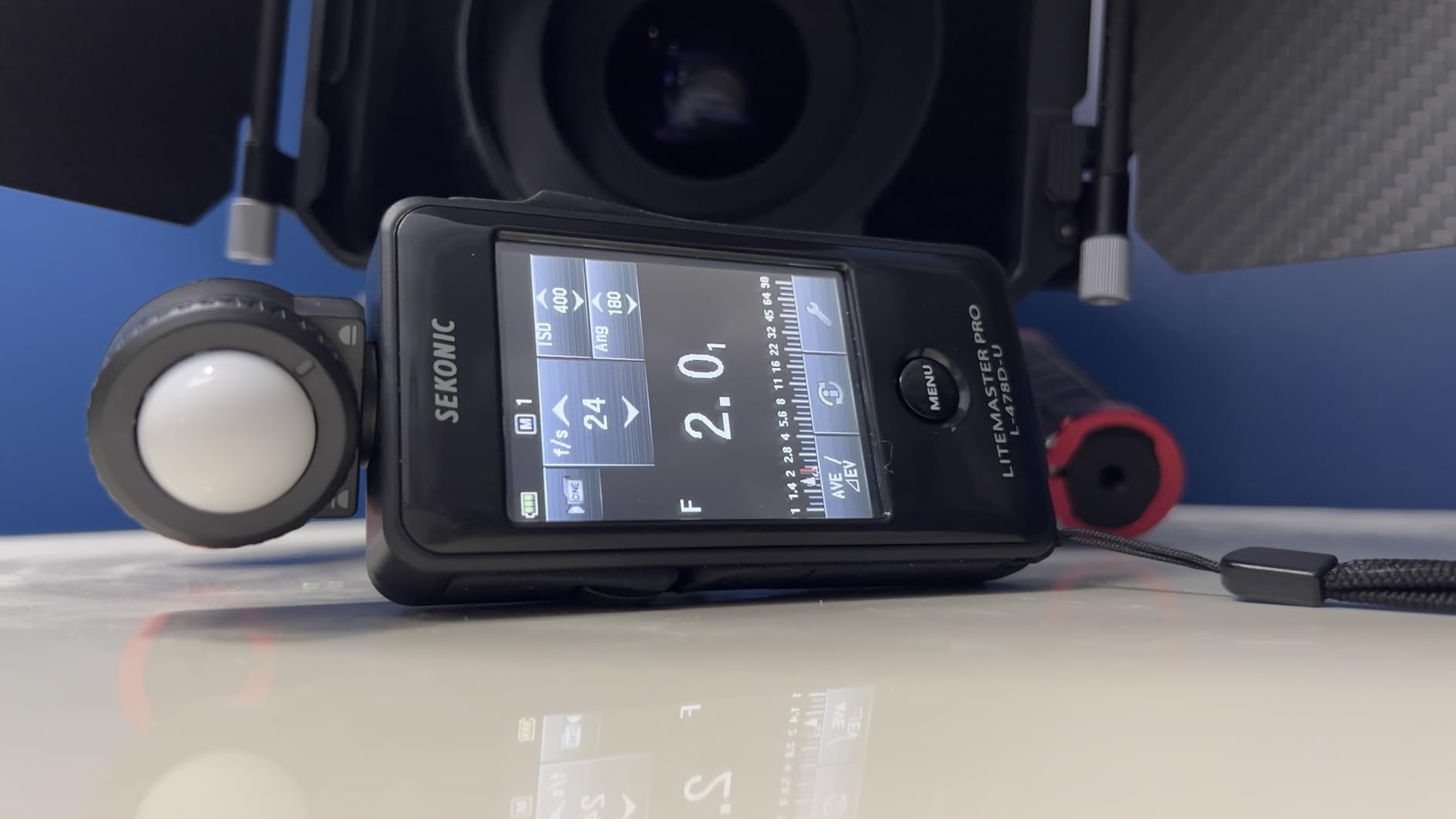
Ideal for Hybrid Photo-Video Landscape Creators
If your landscape work extends to video content creation, vlogging, or filmmaking, the L-478D-U offers the best of both worlds. The touchscreen makes adjusting settings faster than traditional dials once you learn the interface. The compact form factor is genuinely pocketable.
This meter suits photographers who appreciate modern UI design and do not mind trading some physical controls for digital flexibility. The accuracy is on par with professional expectations.
Considerations for Traditionalists
Purist landscape photographers might find the touchscreen less appealing than physical dials, especially when wearing gloves in cold conditions. The optional spot attachment adds cost to what is already a premium-priced meter. If you shoot purely still landscapes without flash, some features will go unused.
4. LightMate AirPro – Wide-Angle Reflective Metering for Leica and Film
Pros
- Wide-angle reflective for film cameras
- 20+ hour rechargeable battery
- Durable full metal shell
- Compact retro design with tactile dials
- Customizable exposure indicators
Cons
- Reflective metering only
- No HSS or spot metering
- Newer product with fewer reviews
The LightMate AirPro caught my attention as a purpose-built tool for film photographers who want accurate reflective metering in a beautifully designed package. At under $100, it is positioned as an accessible entry point for those exploring handheld metering without committing to Sekonic prices.
The 35-degree metering angle is wider than true spot but narrower than typical reflected readings, striking a useful balance for landscape work. When I tested this with my medium format film camera, the readings consistently matched my expectations and produced well-exposed negatives. The three independent dials with half-stop adjustments feel tactile and satisfying.
What surprised me most was the build quality. The full metal shell feels substantial in hand, and the retro design complements classic film cameras aesthetically. The rechargeable battery claiming 20+ hours of life means you can shoot for multiple days without worrying about power.
The dual LED cardinal point indicators provide clear exposure guidance without requiring you to interpret complex displays. For photographers who prefer analog-style interaction with digital accuracy, this hits a sweet spot.
Best for Film Photographers Seeking Simplicity
This meter is ideal if you shoot primarily film, especially rangefinders like Leica or vintage medium format cameras. The wide-angle reflective metering works well for general landscape scenes where you want an average reading. The metal construction and retro aesthetic appeal to those who value the tactile experience of photography.
If you are transitioning from smartphone metering apps to dedicated hardware, the AirPro offers a significant upgrade in accuracy and reliability without overwhelming complexity.
Limitations for Advanced Landscape Work
The lack of incident metering means you cannot measure light falling on your scene, which limits flexibility in complex lighting. The 35-degree angle is too wide for precise Zone System application. For high-contrast landscapes, you might want the precision of true spot metering.
5. Sekonic L-398A Studio Deluxe III – Battery-Free Analog Legend
Pros
- Battery-free operation
- Extremely durable and reliable
- Classic analog simplicity
- Professional-grade build quality
- Sekonic legendary reliability
Cons
- No digital features or LCD display
- No flash metering capability
- Analog design may feel limiting
There is something deeply satisfying about using a tool that requires no batteries and will likely outlast your camera. The Sekonic L-398A Studio Deluxe III operates on an amorphous photocell, converting light directly into the energy needed to move the needle. I have owned one of these for fifteen years, and it still performs identically to the day I bought it.
For landscape photography, the reliability factor cannot be overstated. When you are three days into a backpacking trip and your digital meter dies because you forgot spare batteries, the L-398A keeps working. The swivel head lets you position the lumisphere optimally regardless of camera position, which is useful when metering from awkward vantage points.
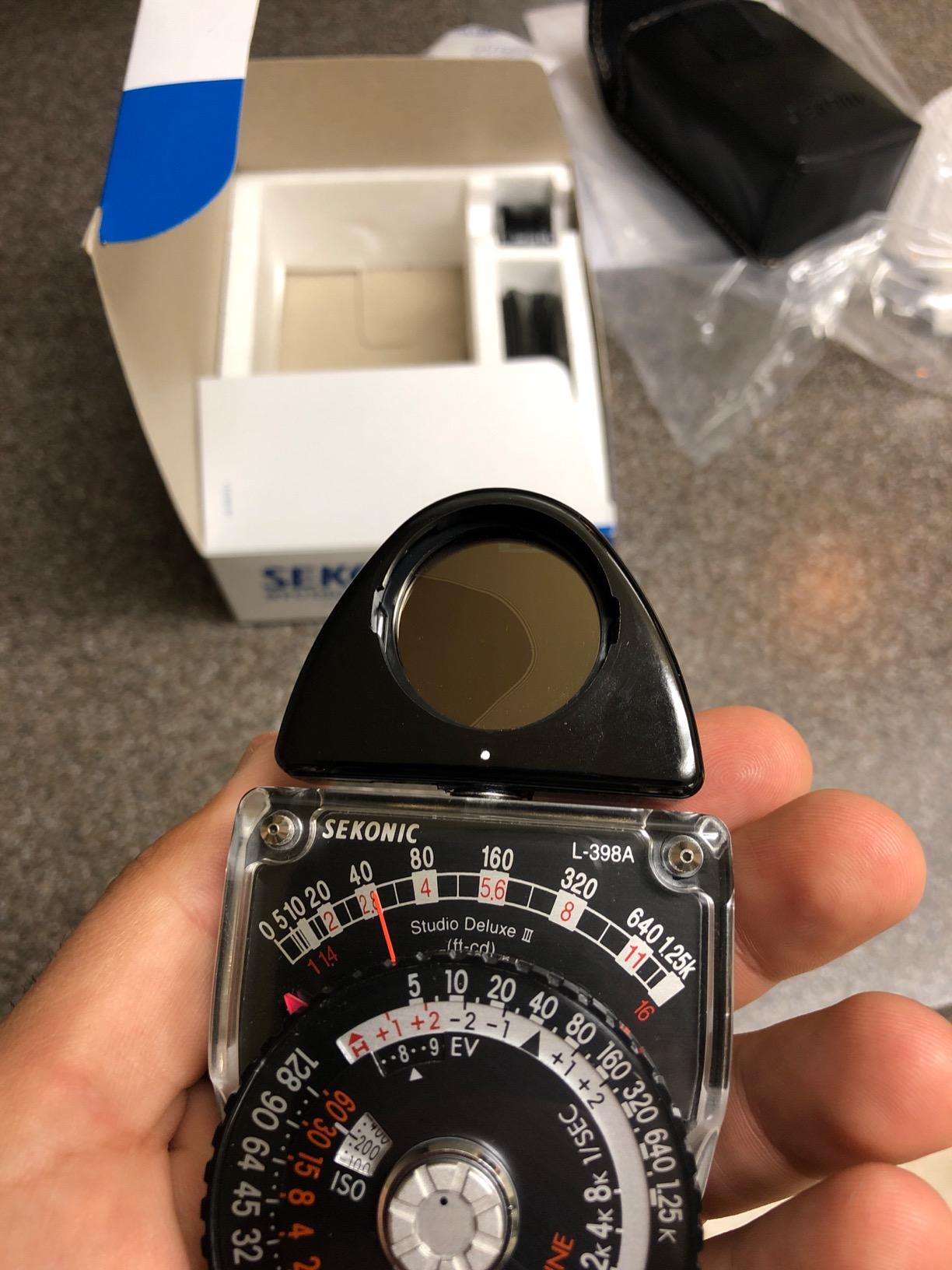
The included accessories set this meter apart: the lumisphere for incident readings, lumidisc for flat surface measurements, lumigrid for reflected readings, and high slide for extremely bright conditions. This versatility means you can handle everything from open shade to snow-covered peaks with one tool.
The analog dial readout requires learning to interpret the scale, but once understood, it provides immediate visual feedback about your exposure options. Seeing all f-stop and shutter speed combinations at once helps you make creative decisions quickly.
Best for Extended Backcountry Expeditions
If your landscape photography takes you on multi-day hikes or to remote locations where battery replacement is impossible, the L-398A is unmatched. The battery-free operation eliminates a major point of failure. The durability is legendary, with many photographers using decades-old units that still calibrate accurately.
Purists who appreciate analog tools and want to understand exposure fundamentals deeply will love the direct connection to the physics of light measurement.
When Digital Features Matter More
The lack of flash metering limits versatility if you use artificial light. Reading analog scales in low light requires practice. You cannot store multiple readings or ISO settings digitally. For photographers who want instant digital readouts or advanced features like memory functions, this is not the right choice.
6. Sekonic L-208 Twin Mate – Compact Analog for Travel Landscapes
Pros
- Compact and portable palm-sized design
- Intuitive one-hand operation
- Instant switching incident/reflected
- Includes case and shoe mount
- Accurate exposure readings
Cons
- All plastic construction
- ISO dial can move accidentally
- Not ideal for very low light
The Sekonic L-208 Twin Mate proves that good things come in small packages. At just 1.6 ounces and palm-sized, this is the meter I throw in my bag when weight matters most. For backpacking trips where every ounce counts, the L-208 delivers surprising capability in a tiny footprint.
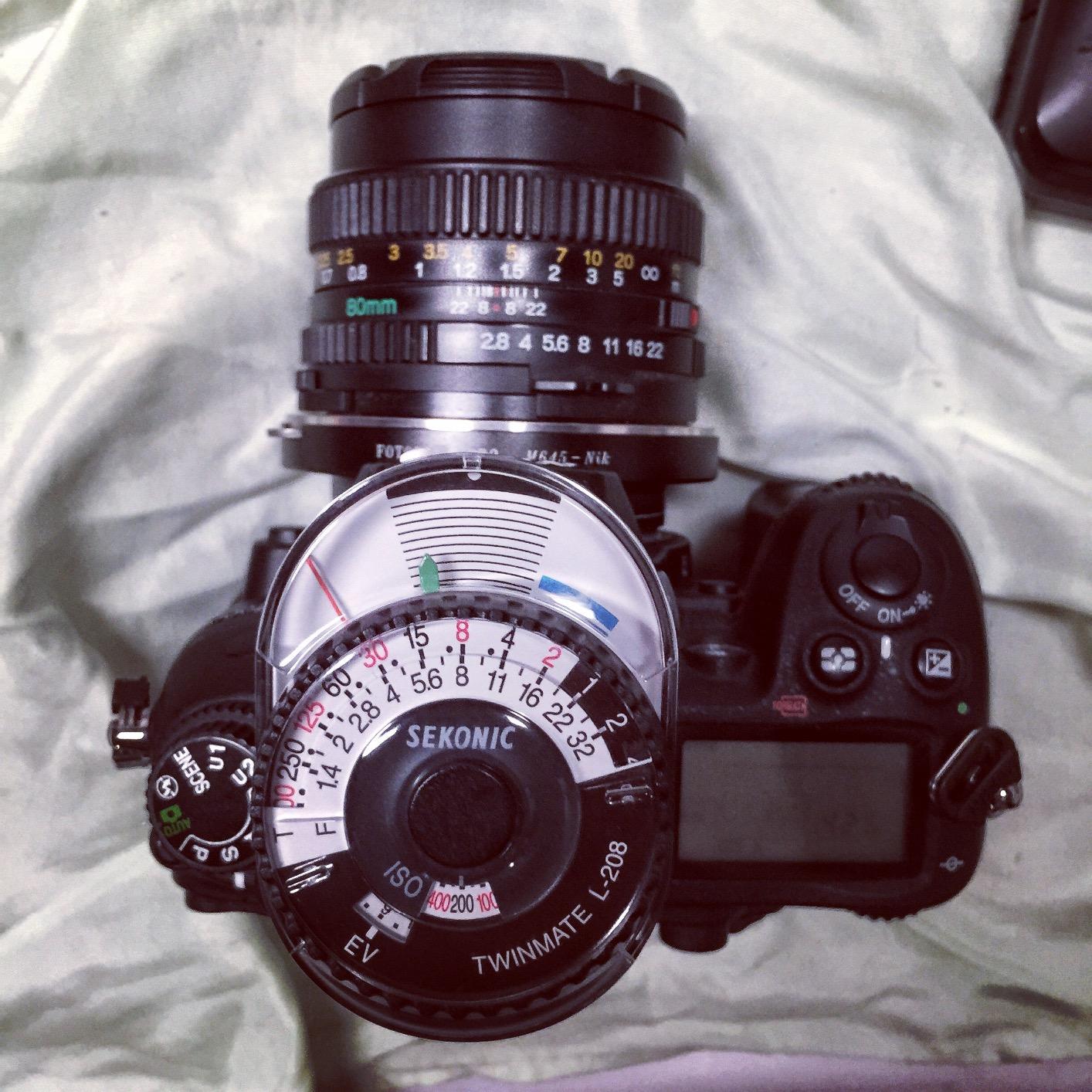
The sliding lumisphere is clever engineering. Push it in for reflected readings, pull it out for incident measurements. This mechanical simplicity means fewer failure points and instant mode switching without menu diving. The rotating calculator dial displays aperture and shutter combinations clearly, though you will need to read it carefully in dim light.
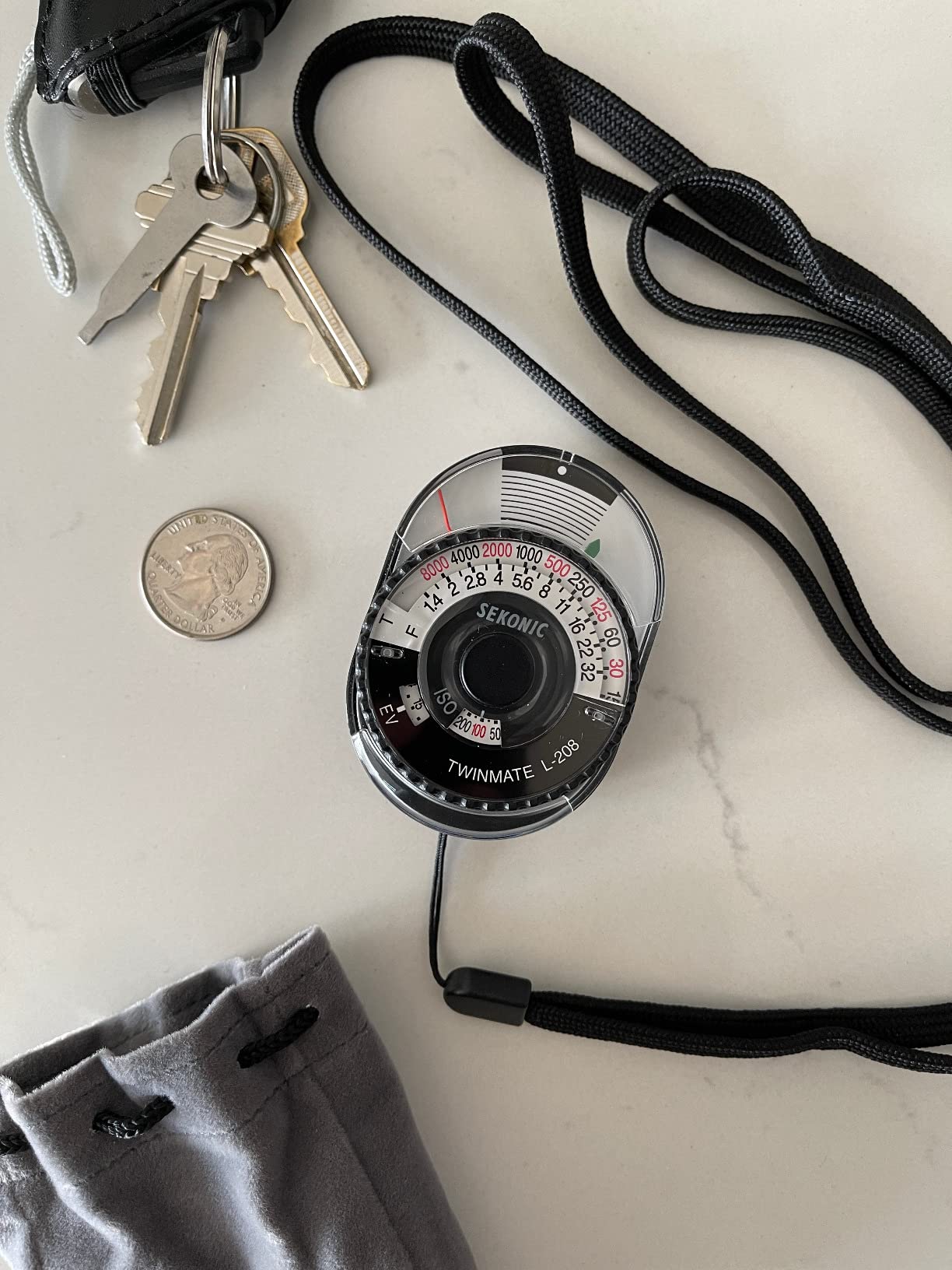
I have used this meter on several international trips where I wanted backup exposure capability without bulk. The accessory shoe mount means you can attach it directly to a film camera and have it ready instantly. The included wrist strap and soft case add protection without much weight.
The all-plastic construction keeps weight down but does not feel as premium as metal-bodied alternatives. For the price point, the build quality is appropriate, though I would not want to drop it on rocks. The readings have proven accurate across various lighting conditions, from bright beaches to forest interiors.
Best for Travel and Weight-Conscious Photographers
Choose the L-208 when every gram matters and you need basic incident and reflected metering without complexity. It is perfect for travel landscapes, street photography, and situations where you want a backup meter that is always in your bag. The battery-free operation using a lithium cell means long life between changes.
If you are new to handheld metering and want an affordable way to learn, this is an excellent starting point.
Build Quality and Low Light Limitations
The plastic construction requires more careful handling than professional-grade meters. The ISO dial can shift accidentally if brushed against clothing. Very low light performance is limited compared to digital meters with backlit displays. Consider your typical shooting conditions before choosing this entry-level option.
7. CHI L.D. Light Meter Pro – Innovative Laser Distance Integration
Pros
- All-in-one pocket meter with laser
- 7-degree spot for pinpoint control
- Laser rangefinder for focus
- Bright OLED screen
- Long standby time
Cons
- Display can be tough in sunny conditions
- Requires exposure knowledge
- Newer product with limited reviews
The CHI L.D. Light Meter Pro represents an interesting innovation in the handheld meter space by combining light measurement with laser distance measurement. For landscape photographers who also shoot with manual focus lenses, having rangefinding capability in your meter adds unexpected utility.
The 7-degree spot metering angle is narrower than most reflected meters, approaching true spot capability without the cost of 1-degree precision instruments. When I tested this in the field, the spot readings provided useful zone placement information for high-contrast scenes. The continuous-on laser mode lets you measure distances from 0.1 to 50 meters, helpful for hyperfocal distance calculations.
The 0.96-inch OLED screen is bright and readable indoors, though direct sunlight can challenge visibility. The rechargeable 370mAh battery claims up to 90 days of standby time, which is impressive for a device with a bright display and laser.
This is a newer product with only 9 reviews, but the 4.6-star rating suggests early adopters are pleased. The compact 1.4 x 1.3 x 0.8-inch dimensions make it genuinely pocketable.
Best for Photographers Who Need Distance Measurement
If you shoot manual focus lenses and want to calculate hyperfocal distances or focus stacking parameters in the field, the integrated laser adds real value. The 7-degree spot provides more precision than average reflected meters. The compact size and rechargeable battery suit travelers.
This meter appeals to tech-forward photographers who appreciate multi-function tools.
Display Visibility and Learning Curve
The OLED display can be difficult to read in bright sunlight, which is when landscape photographers often work. The narrow spot requires understanding of how to interpret readings for zone placement. As a newer product, long-term durability is unproven compared to established brands.
8. Dr.meter LX1330B – Budget Illuminance Meter for Plant and Scene Lighting
Pros
- High precision fast readings
- Wide 0-200
- 000 lux range
- FC/LUX conversion
- PEAK data recording
- Over 3100 reviews
Cons
- Illuminance only not exposure meter
- Different use case than photography meters
- Review parsing issues noted
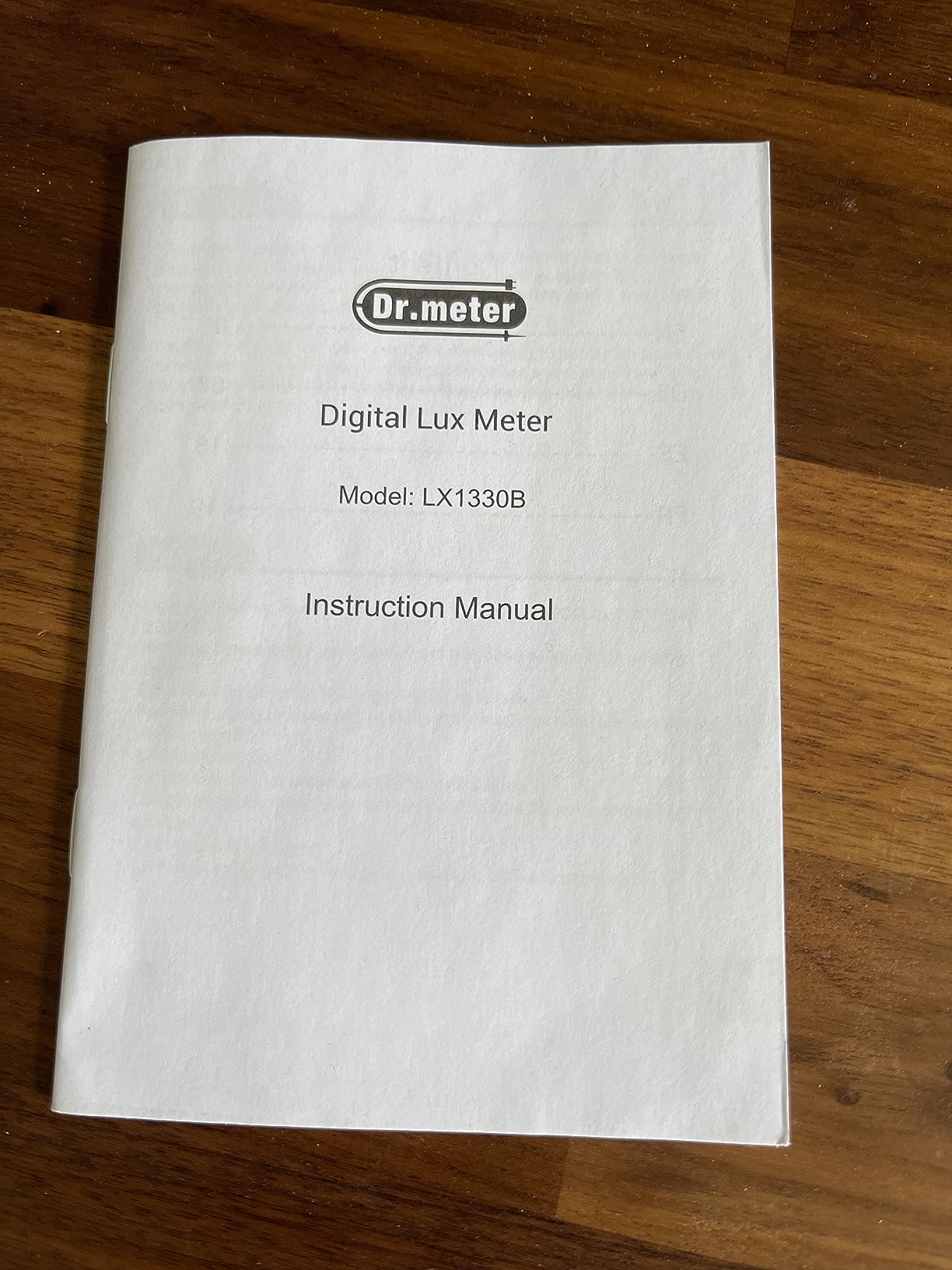
I need to be transparent about the Dr.meter LX1330B: this is primarily an illuminance meter for measuring light intensity in lux or foot-candles, not a photographic exposure meter. However, I am including it because some landscape photographers use illuminance meters to understand and document lighting conditions, especially those doing scientific or documentary landscape work.
With over 3,118 reviews and a 4.5-star rating, this is clearly a popular tool in its category. The 0-200,000 lux range covers everything from moonlight to direct sunlight. The 2-times-per-second reading speed provides real-time feedback as conditions change. If you are studying light quality at different times of day or documenting illumination for technical purposes, this delivers accurate data.
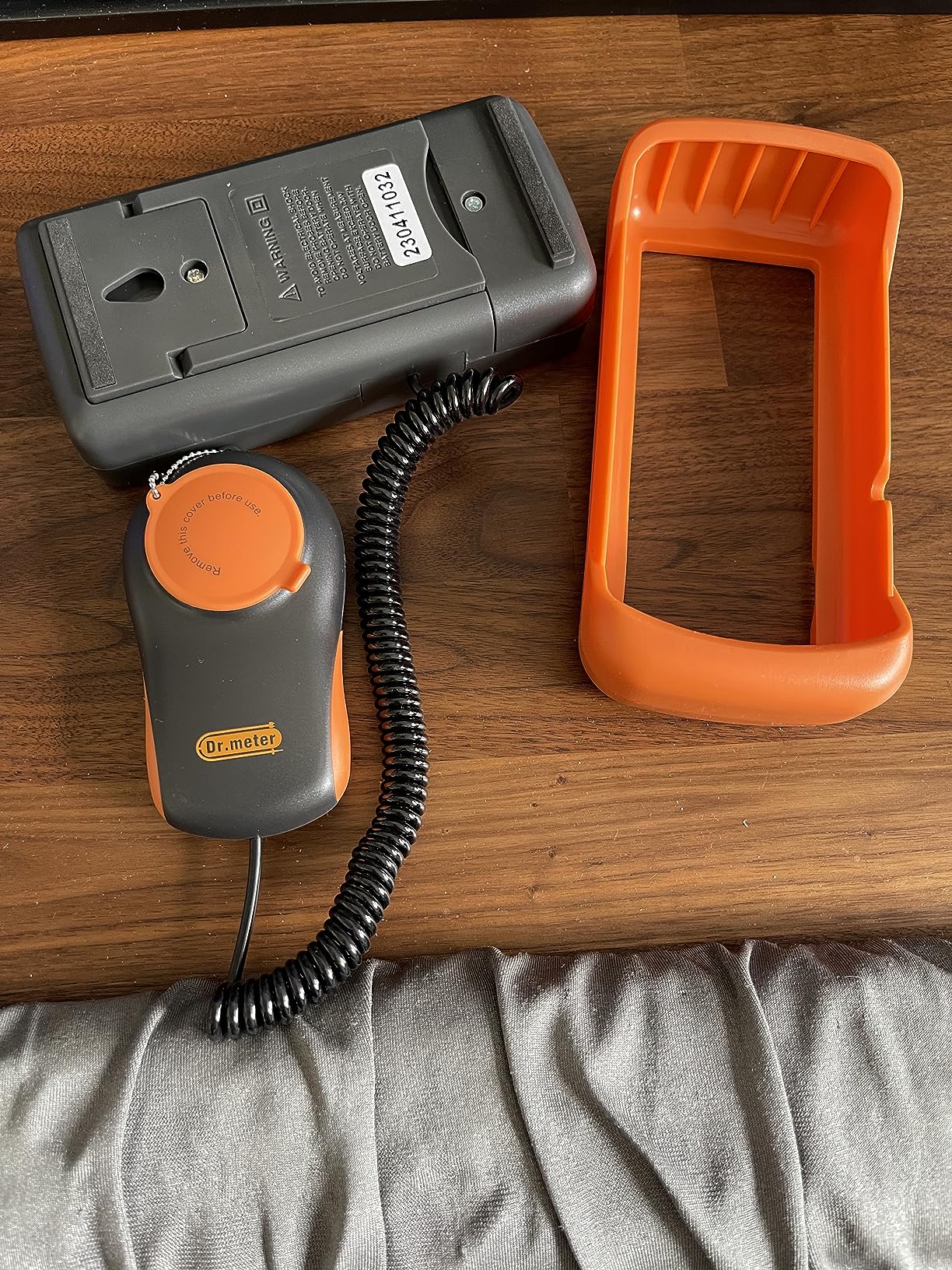
The PEAK data recording function locks the highest light pulse value, which could be useful for analyzing brief lighting events. The FC/LUX conversion toggle lets you work in whichever unit system you prefer. The 9V battery power is readily available.
For pure exposure photography, this will not replace a proper Sekonic or similar meter. But if your landscape work intersects with environmental documentation, architecture, or scientific observation, the illuminance data adds value.
Best for Technical Light Documentation
Consider this meter if you need to document absolute light levels in lux or foot-candles rather than determine camera exposure settings. Architectural photographers working with landscape elements, researchers documenting lighting conditions, or artists studying light quality will find applications. The low price makes it accessible for specialized use.
Not a Replacement for Exposure Meters
This does not provide f-stop and shutter speed recommendations. You cannot use it directly to set camera exposure. The form factor is larger than dedicated photo meters. If your goal is determining proper exposure for landscape photographs, choose any other meter on this list.
9. LightMate Lite 2R – Ultra-Compact Digital with OLED Display
Pros
- Ultra-compact at just over 1 ounce
- Large OLED screen easy to read
- Fast and consistent readings
- 30-degree FOV prevents stray light
- Rechargeable with long battery life
Cons
- Language can revert to non-English
- Manual printing difficulty
- Some users found it not as expected
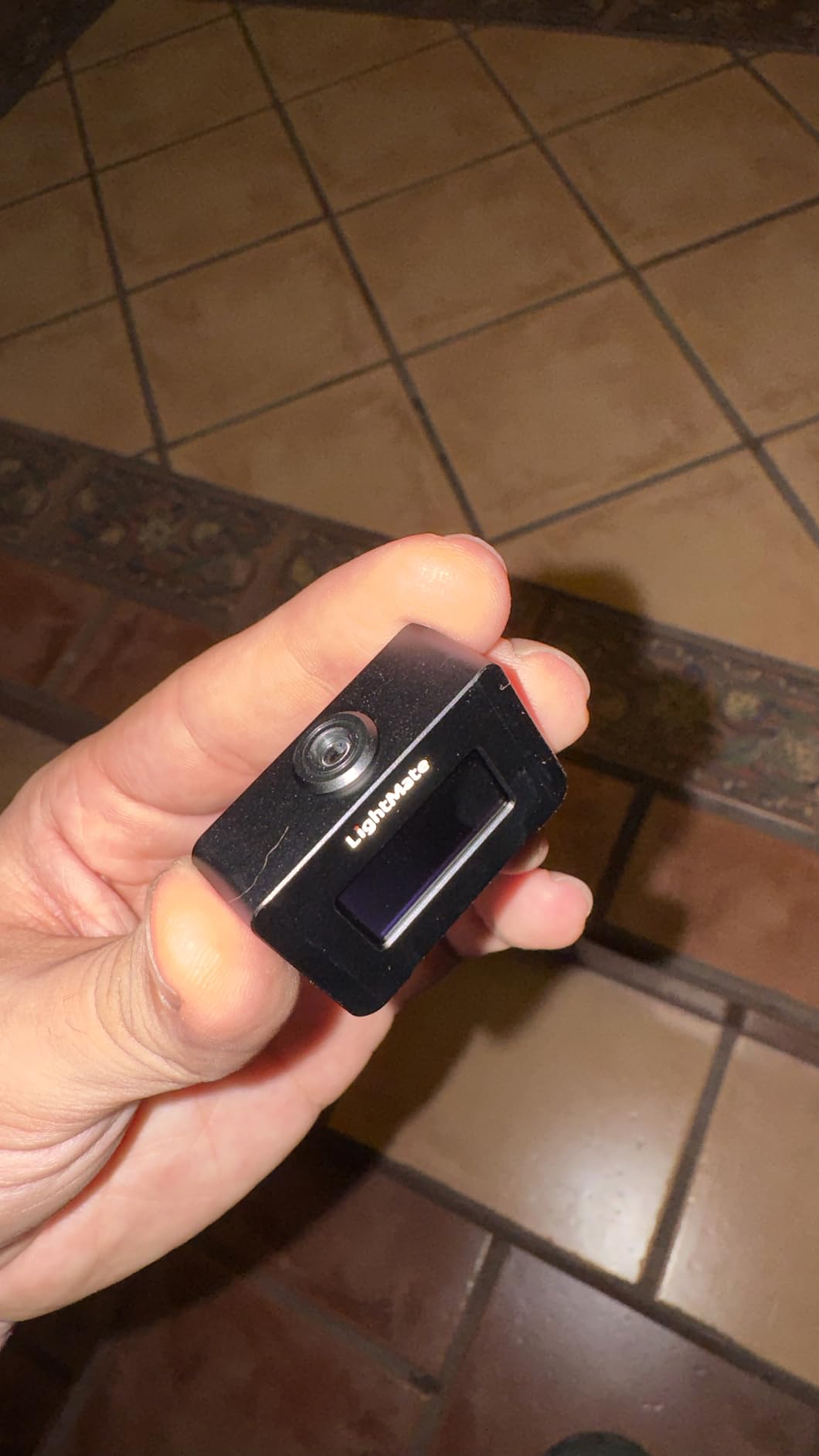
The LightMate Lite 2R takes the compact philosophy to its extreme, packing digital metering capability into a package weighing just over one ounce. For photographers who want digital accuracy without digital bulk, this is worth considering.
The 30-degree field of view is narrower than average reflected meters, helping prevent stray light from skewing readings in complex lighting. The large OLED display is genuinely impressive for the size, remaining readable in conditions that challenge smaller screens. I found the aperture priority and shutter priority modes intuitive to use.
The rechargeable battery via USB-C aligns with modern gear ecosystems, and the claimed 20+ hour life means you can shoot for extended periods without worry. The single trigger, automatic trigger, and average metering modes provide flexibility for different shooting scenarios.
Additional features like exposure compensation, ND filter compensation, and depth of field calculation add utility beyond basic metering. The cold shoe mounting position is adjustable, letting you position it on various camera types.
Best for Minimalist Photographers
If you want the smallest possible metering solution that still delivers digital accuracy, the Lite 2R delivers. It suits photographers who prioritize portability and already carry USB-C power banks for other gear. The OLED display and fast readings make it pleasant to use.
The DOF calculation feature is a nice bonus for landscape photographers working with hyperfocal focusing techniques.
Firmware and Documentation Concerns
Some users report language settings reverting unexpectedly. The manual and documentation could be clearer. With only 21 reviews, long-term reliability data is limited compared to established brands. The build quality is good but not professional-grade.
10. TTARTISAN Light Meter II – Budget Pick with Vintage Styling
Pros
- Lightweight aircraft aluminum
- Retro-styled design
- Cold shoe mount fits film cameras
- Clicked dials prevent accidents
- Under $75
Cons
- Battery drain when not in use
- LED hard to read in sunlight
- Tiny screwdriver for battery change
- Some units DOA reported
The TTARTISAN Light Meter II targets film photographers who want a dedicated meter that looks the part without spending Sekonic money. At under $75, it is the most affordable option on this list by a significant margin.
The aircraft-grade aluminum construction at just 34 grams feels premium despite the low price. The retro styling complements vintage film cameras beautifully, which matters to photographers who value the aesthetic experience. The adjustable cold shoe mount with three positions provides flexibility for different camera types.
The 23-stop shutter speed dial covers the range needed for film photography, and the clicked aperture dials prevent the accidental adjustments that plague smooth dials. The 45-degree average metering is faster than the previous generation and provides readings within one-third stop of accuracy.
The dual wheels and indicator lights provide clear exposure guidance without requiring screen reading. For photographers who prefer analog-style interaction, the tactile feedback is satisfying.
Best for Budget-Conscious Film Photographers
If you shoot film recreationally and want a dedicated meter that looks appropriate on your vintage camera, this delivers remarkable value. The build quality exceeds the price point. The clicked dials and clear indicators make operation straightforward.
It is perfect for casual landscape outings where you want proper metering without investing heavily.
Battery and Quality Control Issues
The battery drain issue when not in use is concerning, requiring you to remove the battery between sessions. The LED indicators can be difficult to read in bright sunlight when landscape photographers often shoot. Some users received defective units, suggesting quality control variability. The tiny screwdriver required for battery changes is easy to lose.
How to Choose the Best Spot Meter for Landscape Photography In 2026?
After reviewing ten different meters, you might wonder which factors matter most for your specific needs. Here is what I have learned matters most for landscape photography.
Incident vs Spot Metering
Understanding the difference is fundamental. Incident meters measure light falling on your subject, which works well for open shade and overcast conditions. Spot meters measure light reflected from a specific small area, which is essential for high-contrast scenes and Zone System application. For landscape photography, having both capabilities provides maximum flexibility.
Spot Angle Precision
True spot meters use a 1-degree angle of acceptance, allowing precise targeting of specific scene elements. Wider angles like 5, 7, or 30 degrees provide less precision but can still be useful for general scene evaluation. If you want to apply the Zone System properly, 1-degree spot metering is essentially required.
Battery Considerations for Extended Trips
Landscape photography often takes you far from power sources. Battery-free meters like the L-398A eliminate this concern entirely. Rechargeable meters require power banks or access to outlets. Standard battery meters need spare cells packed. Consider your typical shooting duration and access to power when choosing.
Build Quality and Weather Resistance
Landscape photography happens in all conditions. Metal-bodied meters generally survive drops and weather better than plastic alternatives. Sealed designs protect against dust and moisture. If you shoot in challenging environments, invest in build quality.
Learning Curve vs Feature Depth
Advanced meters like the L-858D-U offer tremendous capability but require time to master. Simple analog meters like the L-208 get you shooting immediately but lack advanced features. Be honest about your willingness to learn complex systems versus your desire for immediate usability.
Frequently Asked Questions About Spot Meters for Landscape Photography
What is the best metering for landscape photography?
The best metering for landscape photography depends on the scene. Spot metering excels for high-contrast scenes by letting you place specific tones where they belong in the Zone System. Incident metering works well for open shade and overcast conditions. Matrix or evaluative metering in modern cameras handles average scenes adequately, but handheld spot meters provide precision when it matters most.
How to meter for landscape photography?
Start by identifying the brightest important highlight and darkest important shadow in your scene. Take spot readings of each, then decide whether to expose for the highlights and let shadows fall where they may, or split the difference. For digital, expose to the right without clipping highlights. For film, especially slide film, protect highlights as a priority since they cannot be recovered.
What is the 20 60 20 rule in photography?
The 20-60-20 rule refers to composition and post-processing time distribution rather than metering. It suggests spending 20 percent on capture, 60 percent on editing, and 20 percent on output preparation. While not directly related to spot metering, understanding this workflow distribution helps landscape photographers prioritize their time effectively.
What is the rule of 3 in landscape photography?
The rule of 3 in landscape photography typically refers to placing key elements at intersections of a 3×3 grid for compositional balance. Related to metering, some photographers use a simplified zone system with three exposure values: one for shadows, one for midtones, and one for highlights, then average accordingly.
Conclusion: Finding Your Perfect Spot Meter
Choosing the best spot meters for landscape photographers depends on your specific needs, budget, and shooting style. The Sekonic L-858D-U Speedmaster remains my top recommendation for serious landscape work thanks to its true 1-degree spot capability and professional build quality. The L-308X-U Flashmate offers the best value for those who want reliability without complexity.
For film photographers on a budget, the TTARTISAN Light Meter II provides surprising capability at a fraction of the cost. And if you venture into the backcountry for days at a time, the battery-free Sekonic L-398A eliminates power anxiety entirely.
Whatever meter you choose, remember that the tool is only as good as your understanding of exposure. Invest time in learning the Zone System and practicing with your meter in various lighting conditions. The best spot meters for landscape photographers in 2026 will transform your technical capability, but your artistic vision will always be what creates memorable images.