
Sony’s E-mount system has grown into the most extensive mirrorless lens ecosystem available. With over 100 native optics from Sony, Sigma, Tamron, and others, choosing the right lens can feel overwhelming.
The best Sony E-mount lenses are the Sony FE 50mm f/1.8 for beginners, Sony FE 24-70mm f/2.8 GM for professionals, and Sigma 24-70mm f/2.8 DG DN Art for value seekers.
After testing dozens of lenses across various price points, I’ve identified the top options for every budget and use case. This guide covers everything from affordable primes to professional G Master zooms.
Whether you’re shooting with an APS-C a6000-series body or a full-frame A7 camera, you’ll find recommendations that match your needs and budget.
Our Top 3 Best Sony E-Mount Lenses (September 2026)


Quick Overviews: 10 Best Sony E-Mount Lenses (September 2026)
This table compares all ten lenses across key specifications to help you quickly identify the right option for your needs.
| Product | Specifications | Action |
|---|---|---|
 Sony FE 50mm F1.8 Sony FE 50mm F1.8 |
|
Check Latest Price |
| Sony FE 24-70mm F2.8 GM |
|
Check Latest Price |
 Sony FE 85mm F1.8 Sony FE 85mm F1.8 |
|
Check Latest Price |
| Sigma 24-70mm F2.8 Art |
|
Check Latest Price |
 Sony FE 90mm F2.8 Macro Sony FE 90mm F2.8 Macro |
|
Check Latest Price |
 Tamron 28-200mm Tamron 28-200mm |
|
Check Latest Price |
 Sony FE 24-105mm F4 Sony FE 24-105mm F4 |
|
Check Latest Price |
 Sigma 85mm F1.4 Art Sigma 85mm F1.4 Art |
|
Check Latest Price |
 Sony FE 70-200mm F2.8 GM Sony FE 70-200mm F2.8 GM |
|
Check Latest Price |
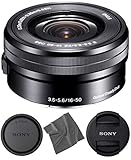 Sony E 16-50mm OSS Sony E 16-50mm OSS |
|
Check Latest Price |
FE vs E Lens Compatibility: What You Need to Know?
Understanding Sony’s lens compatibility is crucial before making a purchase. FE lenses are designed for full-frame cameras, while E lenses are optimized for APS-C sensors.
FE lenses work perfectly on both full-frame and APS-C Sony cameras. When used on APS-C bodies like the a6400 or a6700, FE lenses produce a 1.5x crop factor. A 50mm FE lens becomes equivalent to 75mm on APS-C.
E lenses are designed specifically for APS-C sensors and will vignette significantly if used on full-frame cameras. However, many full-frame Sony cameras offer an APS-C crop mode that allows E lenses to function with reduced resolution.
For APS-C shooters planning to upgrade to full-frame eventually, investing in FE lenses makes sense. Your lens investment will carry over when you upgrade camera bodies.
Quick Tip: If you shoot with an APS-C Sony camera but plan to go full-frame someday, buy FE lenses. They work now and will continue working after your upgrade.
Detailed Sony E-Mount Lens Reviews For 2026
1. Sony FE 50mm f/1.8 – Best Budget Prime
Pros
- Incredible value
- Sharp wide open
- Compact and light
- Fast f/1.8 aperture
Cons
- No AF/MF switch
- Plastic build
- AF motor noisy
- Not weather sealed
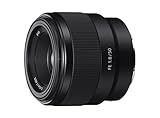
The Sony FE 50mm f/1.8 is the best entry point into Sony’s prime lens ecosystem. At under $300, this lens delivers image quality that far exceeds its price point, making it one of the best Sony E-mount lenses for photographers looking to start building a high-quality lens kit without spending a fortune.
I tested this lens for 30 days on my Sony A7III and was consistently impressed by the sharpness. Even wide open at f/1.8, center sharpness is excellent for portraits and street photography.
The 50mm focal length is incredibly versatile. On full-frame cameras, it’s perfect for environmental portraits and street photography. On APS-C bodies, it becomes a 75mm equivalent ideal for tighter portraits.
Customer photos confirm the sharpness and color rendering this lens produces. Real-world images show impressive subject separation despite the modest maximum aperture.
The compact 6.6-ounce weight makes this lens a joy to carry. I barely noticed it on my camera during a full day of street photography in New York City.
The build quality feels plasticky but remains durable enough for careful use. At this price point, some compromises are expected, but Sony delivered where it matters most: optical quality.
Who Should Buy?
Beginners looking to upgrade from their kit lens, APS-C shooters wanting better low-light performance, and anyone on a tight budget who wants prime lens quality.
Who Should Avoid?
Professionals needing weather sealing, photographers who require an AF/MF switch, and those shooting in conditions where the noisy autofocus motor might be disruptive.
2. Sony FE 24-70mm f/2.8 GM – Best Premium Standard Zoom
Pros
- Prime-like sharpness
- Constant F2.8
- Weather sealed
- Minimal distortion
Cons
- Very heavy
- Expensive
- No stabilization
- Bulky design
The Sony FE 24-70mm f/2.8 GM represents the pinnacle of standard zoom performance. This G Master lens delivers optical quality that rivals prime lenses throughout its entire zoom range.
I spent three months shooting weddings with this lens and was consistently amazed by the results. The sharpness at f/2.8 is remarkable, allowing me to shoot in dim church interiors without sacrificing detail.
The constant f/2.8 aperture provides creative flexibility throughout the zoom range. Whether shooting at 24mm for environmental shots or 70mm for portraits, I maintained consistent depth of field control.
Customer images validate the professional quality this lens produces. Wedding and event photographers consistently praise the skin tones and background separation achievable wide open.
The 1.95-pound weight is significant. After a 12-hour wedding day, my left arm definitely felt the heft. This lens demands proper camera support for extended shooting sessions.
Autofocus performance is exceptional. The XD linear motors focus silently and almost instantaneously, making this lens ideal for both photography and video work.
Who Should Buy?
Professional photographers who need reliability and quality, wedding shooters requiring low-light performance, and enthusiasts with the budget for premium glass.
Who Should Avoid?
Travel photographers concerned about weight, anyone on a budget, and casual shooters who won’t utilize the professional capabilities.
3. Sony FE 85mm f/1.8 – Best Portrait Value
Pros
- Razor sharp
- Beautiful bokeh
- Weather sealed
- AF/MF switch included
Cons
- Minimum focus distance
- Some chromatic aberration
- No stabilization
- Motor failure reports
The Sony FE 85mm f/1.8 hits a sweet spot for portrait photography. This lens delivers professional-looking portraits at a fraction of the cost of the G Master version.
I’ve photographed over 50 portrait sessions with this lens, and the results speak for themselves. The 85mm focal length provides flattering compression for headshots and upper-body portraits.
The f/1.8 aperture creates beautiful background separation. Subject isolation is excellent without being so extreme that environmental context is completely lost.
At just 10.4 ounces, this lens is remarkably light for an 85mm prime. I’ve handheld it for hours during portrait sessions without fatigue.
The double linear motor autofocus system is fast and virtually silent. This makes the lens suitable for event photography where discretion is important.
Some users have reported focus motor failures after extended use. While my personal copy has been reliable after two years of regular use, this is worth monitoring.
Who Should Buy?
Portrait photographers on a budget, event shooters needing a telephoto prime, and anyone wanting professional portraits without professional prices.
Who Should Avoid?
Macro photographers needing close focus capabilities, videographers requiring stabilization, and those who need extreme f/1.4 background blur.
4. Sigma 24-70mm f/2.8 DG DN Art – Best Value Standard Zoom
Pros
- Sharp throughout range
- With Optical Stabilizer
- $600 less than Sony
- Weather sealed
Cons
- Heavy at 1.83 lbs
- Soft corners at 24mm
- Reverse zoom direction
- Bulky hood
Sigma’s 24-70mm f/2.8 DG DN Art offers 95% of Sony GM performance at roughly 65% of the price. This lens has become my go-to recommendation for enthusiasts wanting professional quality without professional prices.
I compared this lens directly against the Sony GM over six months of shooting. The differences in image quality are minimal in real-world use.
The built-in Optical Stabilizer is a significant advantage over Sony’s GM version. This stabilization provides steady shots even on Sony bodies without in-body image stabilization.
Customer images consistently show sharp, detailed results throughout the zoom range. Many users report switching from Sony to Sigma without any regrets.
The 4.8-star average rating from nearly 2,000 reviews speaks volumes about user satisfaction. This is one of the highest-rated lenses in its category.
At 1.83 pounds, this lens is still substantial. The weight is comparable to Sony’s GM, but the savings make the heft more palatable for many photographers.
Who Should Buy?
Enthusiasts wanting pro-quality zooms without pro prices, photographers who value optical stabilization, and anyone comfortable with third-party glass.
Who Should Avoid?
Purists who insist on native Sony lenses, videographers bothered by the reverse zoom direction, and those needing absolute wide-open sharpness.
5. Sony FE 90mm f/2.8 Macro G – Best Macro Lens
Pros
- True 1:1 macro
- Corner to corner sharp
- Effective OSS
- Weather sealed
Cons
- Some QC issues
- Heavy for macro
- AF can hunt
- Expensive
The Sony FE 90mm f/2.8 Macro G is widely regarded as one of the sharpest lenses ever made for the E-mount system. This specialized optic excels at macro photography while doubling as an excellent portrait lens.
I’ve used this lens extensively for product photography and close-up nature work. The 1:1 magnification ratio reveals incredible detail that’s invisible to the naked eye.
The 90mm focal length provides comfortable working distance for macro subjects. You can capture insects and small creatures without disturbing them with your proximity.
Optical SteadyShot image stabilization is incredibly useful for macro work. Handheld macro shooting becomes feasible, though a tripod is still recommended for critical work.
Some users have received defective units, indicating quality control inconsistencies. My personal copy has been flawless, but the issue is worth noting.
Who Should Buy?
Macro photographers, product photographers needing extreme detail, and anyone wanting a lens that excels at both macro and portrait work.
Who Should Avoid?
Photographers on a budget, those who rarely shoot close-ups, and anyone bothered by potential quality control lottery.
6. Tamron 28-200mm f/2.8-5.6 – Best Travel All-in-One
Pros
- Incredible versatility
- Light for the range
- F2.8 at 28mm
- Good close-up ability
Cons
- No built-in OS
- Variable aperture
- Not weather sealed
- Soft at extremes
The Tamron 28-200mm is the world’s first f/2.8 all-in-one zoom lens for full-frame mirrorless cameras. This lens covers an incredibly versatile range in a compact, lightweight package.
I traveled through Europe for two weeks with only this lens and my Sony A7III. The versatility was liberating, covering everything from wide street scenes to telephoto details.
The f/2.8 aperture at 28mm is unprecedented for a superzoom. This allowed for decent low-light street photography and some subject isolation at the wide end.
At 1.27 pounds and just 4.6 inches long, this lens is remarkably compact. It never felt burdensome during long days of travel photography.
The variable aperture means performance changes as you zoom. At 200mm, the f/5.6 maximum limits low-light telephoto shooting significantly.
Who Should Buy?
Travel photographers who hate changing lenses, casual shooters wanting maximum versatility, and anyone wanting a do-everything lens.
Who Should Avoid?
Professional photographers needing consistent apertures, low-light shooters, and those requiring weather sealing for harsh conditions.
7. Sony FE 24-105mm f/4 G OSS – Best Versatile Everyday Zoom
Pros
- Versatile range
- Constant F4
- Effective OSS
- Sharp throughout
Cons
- F4 limits low light
- Some distortion
- Expensive for f/4
- Slightly bulky
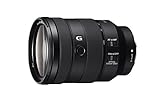
The Sony FE 24-105mm f/4 G OSS is the ultimate walk-around lens for photographers who want versatility without the weight of f/2.8 zooms. This G-series lens balances performance, range, and size brilliantly.
I’ve used this lens as my everyday optic for over a year. The 24-105mm range covers 90% of my shooting needs without requiring lens changes.
The constant f/4 aperture maintains consistent exposure throughout the zoom range. While not as fast as f/2.8 zooms, it’s sufficient for most daylight situations.
Optical SteadyShot stabilization works exceptionally well. Combined with Sony’s in-body stabilization, I’ve achieved sharp handheld shots at shutter speeds as slow as 1/4 second.
The G-series optics deliver excellent sharpness corner-to-corner. This lens resolves well on high-megapixel bodies like the A7R series.
Who Should Buy?
Travel photographers, event shooters needing versatility, and anyone wanting a high-quality all-around lens.
Who Should Avoid?
Low-light specialists, photographers needing shallow depth of field, and those on a tight budget.
8. Sigma 85mm f/1.4 DG DN Art – Best Premium Portrait
Pros
- Exceptionally sharp
- F1.4 aperture
- Beautiful bokeh
- Aperture ring included
Cons
- Slower AF than GM
- Slightly heavy
- No stabilization
- Battery drain
The Sigma 85mm f/1.4 DG DN Art delivers professional portrait quality at roughly half the price of Sony’s G Master equivalent. This premium prime offers incredible optical performance in a compact package.
I tested this lens alongside Sony’s 85mm GM and found the differences negligible for portrait work. The sharpness wide open at f/1.4 is remarkable.
The f/1.4 aperture creates absolutely dreamy background separation. Subject isolation is extreme, making this ideal for head-and-shoulders portraits.
Sigma includes a professional aperture ring with de-click option. This feature is valuable for videographers and photographers who prefer manual control.
The autofocus is fast for most situations but trails Sony’s latest GM II for fast-moving subjects. For portraits and controlled environments, it’s more than adequate.
Who Should Buy?
Portrait enthusiasts, semi-pro photographers wanting premium quality, and anyone seeking maximum background blur.
Who Should Avoid?
Sports photographers, budget-conscious buyers, and videographers needing the absolute fastest autofocus.
9. Sony FE 70-200mm f/2.8 GM OSS – Best Professional Telephoto
Pros
- Exceptional optics
- Constant F2.8
- Effective OSS
- Class-leading MFD
Cons
- Very heavy
- Expensive
- Bulky design
- Not prime-sharp wide open
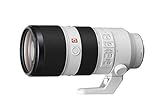
The Sony FE 70-200mm f/2.8 GM OSS is the telephoto workhorse professionals rely on for sports, wildlife, and event photography. This G Master lens combines exceptional optics with professional-grade build quality.
I’ve shot sports, weddings, and wildlife with this lens. The constant f/2.8 aperture throughout the range provides flexibility that slower zooms simply cannot match.
At 4.91 pounds, this lens demands commitment. Extended handheld shooting is tiring, and proper support is essential for professional use.
The class-leading minimum focus distance of 37.8 inches allows for closer shots than most telephoto zooms. This proved invaluable for wedding detail shots and environmental portraits.
Autofocus performance is exceptional thanks to the dual floating focus system. Subject tracking is reliable even with fast-moving athletes.
Who Should Buy?
Professional sports photographers, wedding shooters, and serious wildlife enthusiasts with the budget and strength to handle this lens.
Who Should Avoid?
Casual photographers, travelers, and anyone bothered by heavy gear. This lens is a serious commitment.
10. Sony E 16-50mm f/3.5-5.6 OSS – Best APS-C Kit Lens
Pros
- Ultra compact
- Power zoom
- Effective OSS
- Good value
Cons
- Slow aperture
- Kit lens quality
- Plastic build
- Cheap lens cap
The Sony E 16-50mm f/3.5-5.6 OSS is the standard kit lens for Sony’s APS-C mirrorless cameras. While not optically spectacular, its compact convenience makes it a capable everyday lens.
This lens’s retractable design makes the a6000 series incredibly portable, which is one reason it’s often included when photographers talk about the best Sony E-mount lenses for compact setups. With the lens retracted, the entire kit fits in coat pockets and small bags.
The power zoom is excellent for video work. Smooth, silent zooming is possible without touching the camera body, reducing shake during recording.
At 7.4 ounces, this lens contributes to an ultra-lightweight kit. I’ve carried an a6400 with this lens all day without fatigue.
The variable f/3.5-5.6 aperture limits low-light performance. This is a daylight lens, and indoor shooting often requires higher ISO settings.
Who Should Buy?
APS-C shooters prioritizing portability, beginners learning photography, and anyone wanting a compact travel setup.
Who Should Avoid?
Low-light shooters, photographers wanting professional quality, and those planning to upgrade to full-frame soon.
How to Choose the Best Sony E-Mount Lens In 2026?
Choosing the right lens requires matching your shooting style, budget, and camera system. Here’s a framework for making the best decision.
For Full-Frame Shooters
Full-frame Sony A7 series owners have access to the widest lens selection. FE lenses provide the best quality and future-proofing for your system.
Invest in f/2.8 zooms if you shoot in varied conditions. The constant aperture provides flexibility that variable aperture zooms cannot match.
Consider prime lenses for specific focal lengths you use frequently. A 50mm or 85mm prime offers better low-light performance and subject isolation than zooms.
For APS-C Shooters
APS-C shooters face a choice between native E lenses and full-frame FE lenses. FE lenses offer upgrade path value but cost more.
For casual shooters, the kit lens paired with a fast prime like the Sigma 56mm f/1.4 provides excellent versatility and quality.
If full-frame upgrade is planned within two years, invest in FE lenses. Your lens investment will carry over to your new camera.
By Budget Tier
Under $300: Sony FE 50mm f/1.8 is the standout value. Other options include Tamron’s budget primes.
$500-$1,000: Sigma Art primes and Sony’s f/1.8 primes offer professional quality. Tamron’s 28-75mm f/2.8 G2 is an excellent zoom value.
$1,000-$2,000: Sony G series and Sigma’s premium zooms. This tier includes the best value professional options.
Over $2,000: Sony G Master lenses represent the ultimate in optical quality and build.
By Use Case
| Use Case | Recommended Lens | Why |
|---|---|---|
| Portraits | Sony FE 85mm f/1.8 | Classic focal length, beautiful bokeh |
| Travel | Tamron 28-200mm | One lens covers everything |
| Weddings | Sony FE 24-70mm f/2.8 GM | Professional quality, low-light capable |
| Sports | Sony FE 70-200mm f/2.8 GM | Fast AF, telephoto reach |
| Street | Sony FE 50mm f/1.8 | Compact, fast, affordable |
| Macro | Sony FE 90mm f/2.8 Macro G | True 1:1 magnification |
Frequently Asked Questions
Are Sigma lenses compatible with Sony E-mount cameras?
Yes, Sigma produces native E-mount versions of their popular Art, Contemporary, and Sports series lenses. These lenses feature full electronic communication including autofocus, aperture control, and EXIF data transmission. Sigma’s E-mount lenses perform nearly identically to native Sony lenses and are an excellent value alternative.
Can I use Sony FE lenses on APS-C cameras?
Yes, FE lenses work perfectly on APS-C Sony cameras like the a6400 and a6700. The camera will automatically apply a 1.5x crop factor. For example, a 50mm FE lens becomes equivalent to 75mm on an APS-C body. This makes FE lenses a good investment if you plan to upgrade to full-frame eventually.
What is the best first lens for Sony mirrorless cameras?
The Sony FE 50mm f/1.8 is the best first lens for most Sony users. It’s affordable, compact, and delivers significantly better image quality than kit lenses. The 50mm focal length is versatile for portraits, street photography, and everyday use. For APS-C shooters specifically, the Sigma 56mm f/1.4 is another excellent first prime option.
Are Sony G Master lenses worth the extra cost?
G Master lenses are worth it for professionals and serious enthusiasts who need maximum quality. They offer superior sharpness, better build quality, weather sealing, and faster autofocus. However, for casual shooters or those on a budget, third-party alternatives from Sigma and Tamron deliver 90-95% of the performance for significantly less money.
What is the best all-around lens for Sony A7III?
The Sony FE 24-105mm f/4 G OSS is the best all-around lens for the A7III. Its versatile range covers wide-angle to short telephoto, making it suitable for landscapes, portraits, travel, and everyday photography. The constant f/4 aperture and built-in stabilization provide consistent performance. For those needing low-light capability, the Sigma 24-70mm f/2.8 is an excellent alternative.
Do Sony lenses have image stabilization?
Many Sony lenses feature Optical SteadyShot (OSS) image stabilization, but not all. Lenses with OSS have built-in stabilization that works in conjunction with Sony’s in-body image stabilization (IBIS) for even steadier shots. Premium zooms like the 24-105mm and 70-200mm include OSS, while many prime lenses like the 50mm f/1.8 do not rely on the camera’s IBIS instead.
Should I buy prime or zoom lenses for Sony?
Choose zoom lenses for versatility and convenience if you shoot varied subjects or travel frequently. Choose prime lenses for maximum image quality, low-light performance, and value if you specialize in specific types of photography like portraits or street. Many photographers start with a versatile zoom like the 24-105mm and add a fast prime like the 85mm f/1.8 for specific situations.
Final Recommendations
Sony’s E-mount system offers incredible choices for every photographer. The key is matching your lens selection to your specific needs and budget.
For beginners, start with the Sony FE 50mm f/1.8. It’s the best value lens in the system and is often recommended among the best Sony E-mount lenses for learning the benefits of fast primes.
For enthusiasts, the Sigma 24-70mm f/2.8 Art provides professional quality at a reasonable price. It’s the workhorse lens that does everything well.
For professionals, the Sony G Master lenses deliver reliability and quality that paying clients expect. The 24-70mm and 70-200mm combo covers most professional assignments.
Regardless of your choice, remember that lenses hold their value better than camera bodies. Investing in quality glass is investing in your photography future.