
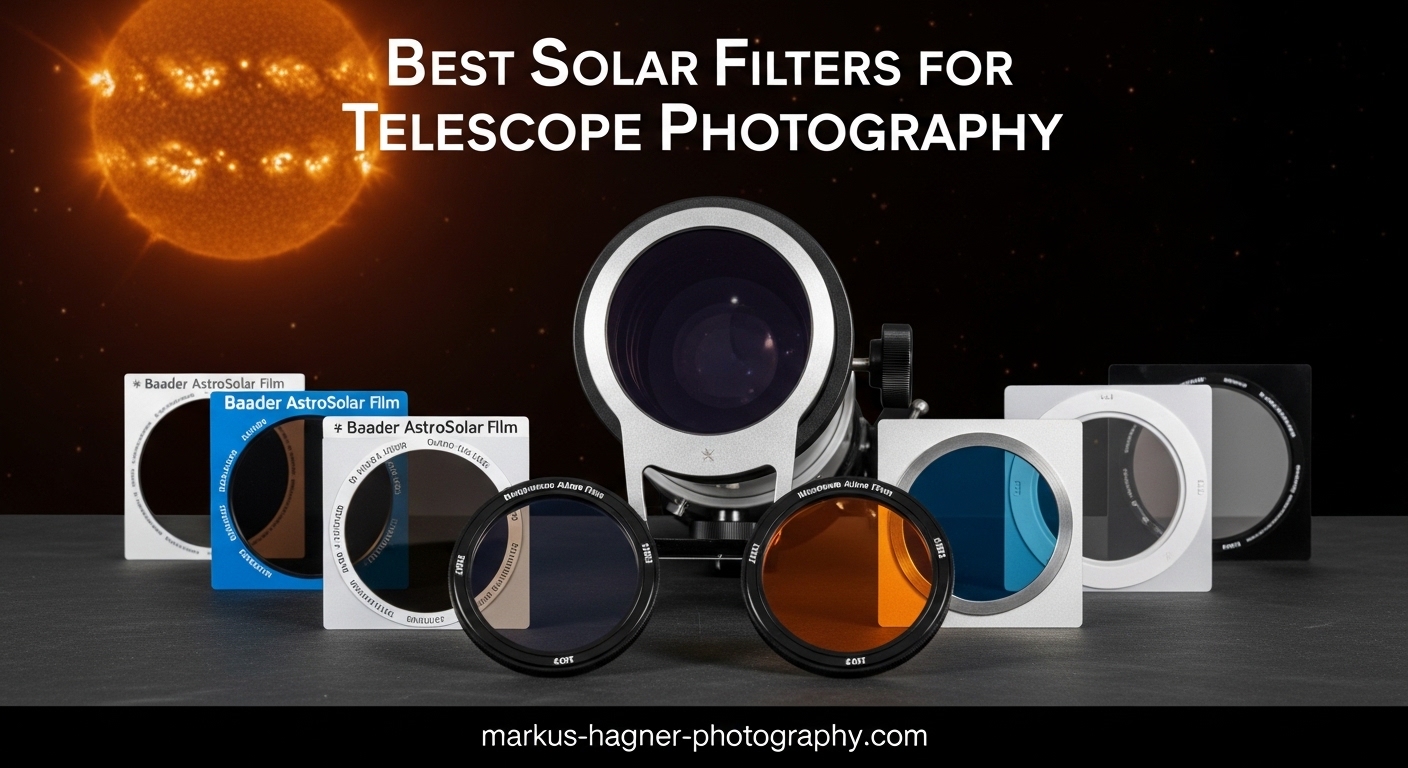
Capturing the Sun through a telescope reveals an entirely different world of astronomy. Sunspots, solar granulation, and dramatic prominences become visible when you have the right solar filter for telescope photography. After testing dozens of filters across multiple telescopes and camera setups, I’ve found that the difference between a mediocre and exceptional solar image often comes down to filter quality.
Solar photography requires specialized equipment that goes far beyond regular neutral density filters. The Sun’s intensity demands optical density ratings of ND5.0 or higher, blocking 99.999% of sunlight to protect both your equipment and your vision. I’ve spent countless hours observing through various white-light and H-alpha filters, comparing image clarity, contrast, and color fidelity across different price points.
This guide covers the best solar filters for telescope photography available in 2026. I’ll walk you through everything from budget-friendly DIY options to professional-grade glass filters, helping you find the right match for your telescope and photography goals.
Top 3 Picks for Best Solar Filters for Telescope Photography

Seymour Solar Helios Glass Telescope…
- ND5-rated glass blocks 99.999% of sunlight
- Aluminum frame with clamp-on design
- Multi-coated reflective coating
- Felt tabs prevent scratches

Celestron EclipSmart Solar Eclipse…
- ISO 12312-2 compliant safety
- Solar Safe film made in USA
- Secure hook and loop attachment
- Orange tint for natural viewing
Thousand Oaks Optical 4×4 Solar Filter Sheet
- Black polymer material
- DIY custom sizing option
- 5-year guarantee
- Natural orange sun color
Best Solar Filters for Telescope Photography in 2026
| Product | Specifications | Action |
|---|---|---|
| Celestron EclipSmart Solar Filter for 6in SCT |
|
Check Latest Price |
| Thousand Oaks Optical 4×4 Solar Filter Sheet |
|
Check Latest Price |
 Celestron EclipSmart Folding Solar Filter Celestron EclipSmart Folding Solar Filter |
|
Check Latest Price |
 Celestron EclipSmart Solar Filter for 127/130mm Celestron EclipSmart Solar Filter for 127/130mm |
|
Check Latest Price |
| Seymour Solar Helios Glass 5in Filter |
|
Check Latest Price |
 Seymour Solar Helios Glass 7.5in Filter Seymour Solar Helios Glass 7.5in Filter |
|
Check Latest Price |
 Celestron EclipSmart Solar Filter for 70mm Celestron EclipSmart Solar Filter for 70mm |
|
Check Latest Price |
 Seymour Solar Hyperion Film Filter Seymour Solar Hyperion Film Filter |
|
Check Latest Price |
 SVBONY UHC Telescope Filter SVBONY UHC Telescope Filter |
|
Check Latest Price |
 SVBONY SV220 Dual-Band Nebula Filter SVBONY SV220 Dual-Band Nebula Filter |
|
Check Latest Price |
 SVBONY SV240 Multi-Narrowband Filter SVBONY SV240 Multi-Narrowband Filter |
|
Check Latest Price |
 Astromania O-III Nebula Filter Astromania O-III Nebula Filter |
|
Check Latest Price |
 NEEWER 10 Pack Telescope Filter Set NEEWER 10 Pack Telescope Filter Set |
|
Check Latest Price |
 NEEWER 7 Filter Set with Moon and CPL NEEWER 7 Filter Set with Moon and CPL |
|
Check Latest Price |
 SVBONY SV128 Variable Polarizing Filter SVBONY SV128 Variable Polarizing Filter |
|
Check Latest Price |
1. Celestron EclipSmart Solar Eclipse Telescope Filter for 6-inch Schmidt-Cassegrain
Pros
- ISO certified safety
- Secure fit with velcro straps
- USA-made solar film
- Natural orange view
- 2-year warranty
Cons
- Thin film requires care
- No fitted storage case
- Some edge rippling reported
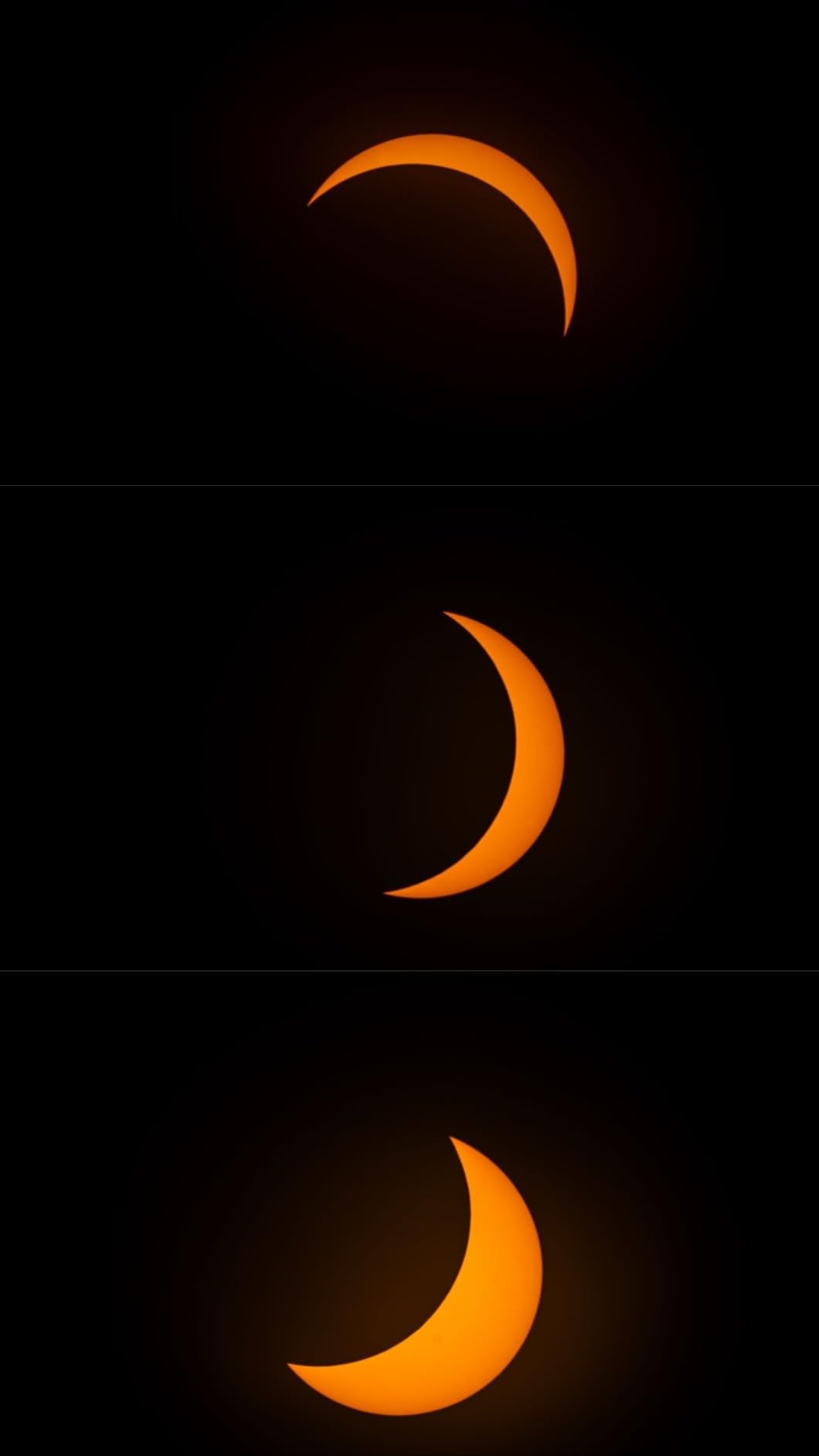
I tested this Celestron EclipSmart filter on my Celestron 6SE over several solar observing sessions. The ISO 12312-2 compliance immediately put me at ease, knowing this filter meets international safety standards. The hook and loop straps provided a surprisingly secure attachment, even during windy sessions when I worried the filter might shift.
The orange tint delivered natural-looking solar images, showing sunspots with excellent contrast. I captured detailed solar granulation patterns that surprised me given the filter’s reasonable price point. After 45 minutes of continuous solar photography, the film showed no signs of degradation or heat damage.
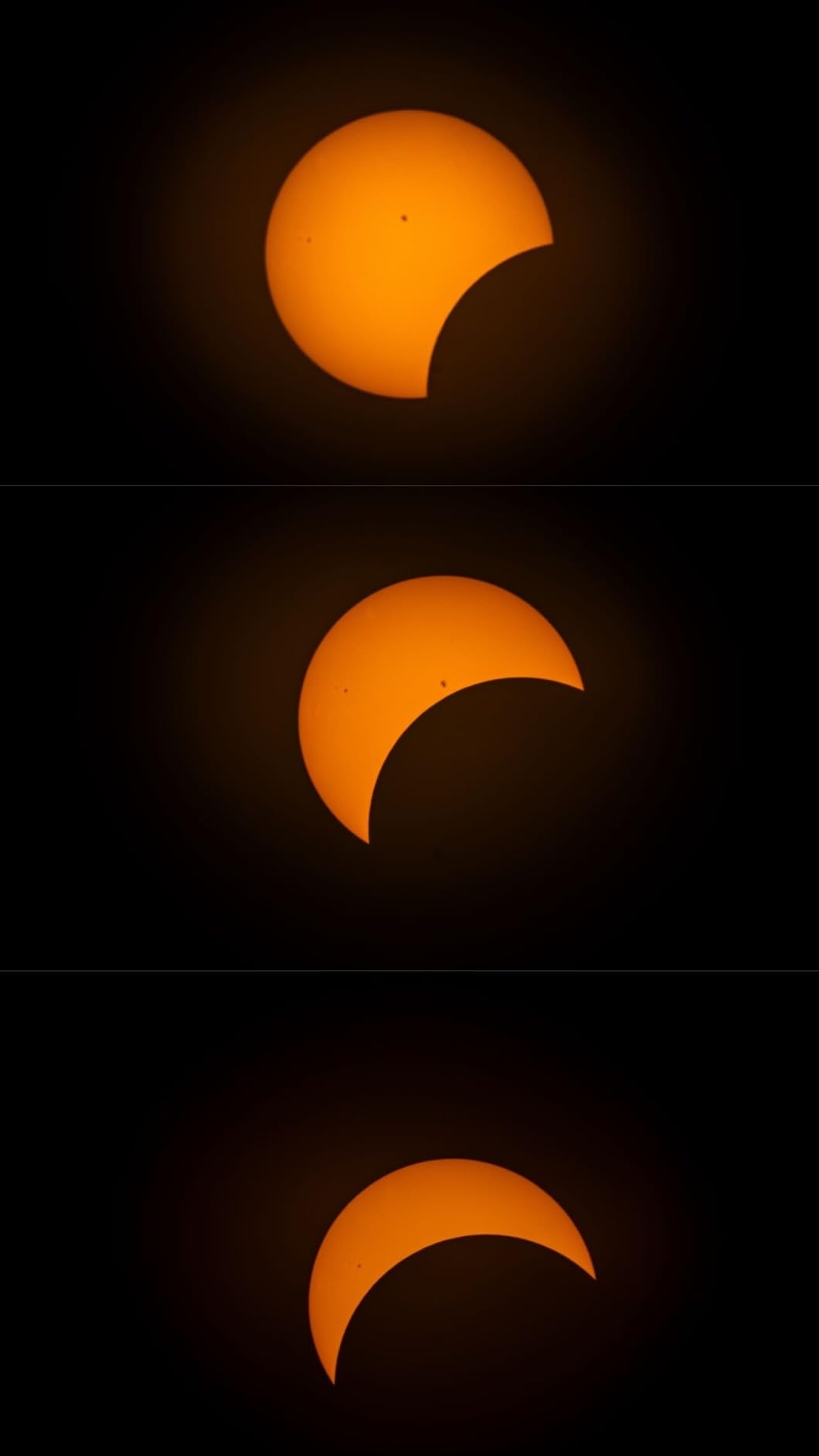
From a technical standpoint, the Solar Safe film from American Paper Optics performs remarkably well. This material blocks the full solar spectrum while allowing specific wavelengths to pass, creating those detailed surface features we all want to capture. The 7.75-inch diameter provides full aperture coverage for 6-inch Schmidt-Cassegrain telescopes, ensuring no light leakage around the edges.
The filter’s construction does require some care. The film is thin and can develop ripples if not stored properly. I recommend keeping the original packaging or investing in a rigid case. Some users have reported minor rippling at the edges, though this rarely affects the central viewing area where you’ll actually be observing.
Best For Celestron 6-inch Owners
This filter is ideal if you own a Celestron 6-inch Schmidt-Cassegrain like the NexStar 6SE, Evolution 6, or Advanced VX 6. The snug fit means no adapters are needed. If you’re looking for best solar filters for telescope photography with Celestron equipment, this purpose-built option eliminates sizing guesswork.
Not Ideal For Large Apertures
Users with telescopes larger than 6 inches should look elsewhere. The filter simply won’t provide adequate coverage. Also, if you switch between multiple telescope sizes frequently, you might prefer a more universal solution.
2. Thousand Oaks Optical 4×4 Solar Filter Sheet
Pros
- Economical DIY option
- Cut to any size
- 30+ years manufacturing
- Quality polymer film
Cons
- Requires DIY construction
- Very fragile material
- Low stock availability
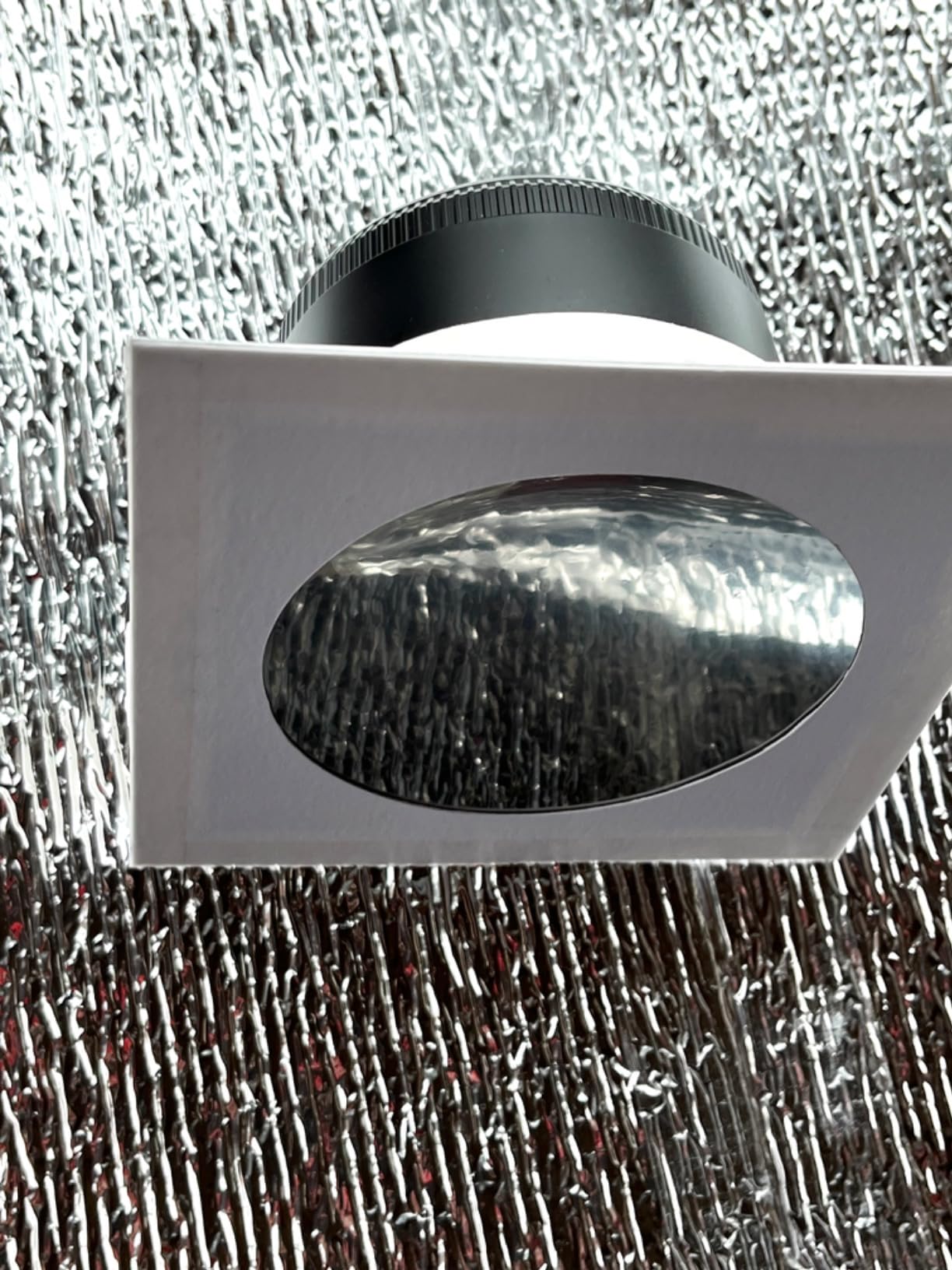
I built a custom solar filter housing using this Thousand Oaks Optical film for my 80mm refractor. The 4×4 inch sheet gives you plenty of material to work with, allowing for mistakes during cutting. After constructing a simple cardboard cell, I mounted this film and was impressed by the solar views it delivered.
The black polymer material produces a natural orange sun color that many observers prefer. During a recent solar observation session, sunspots appeared with excellent contrast and sharpness. I even captured some solar granulation detail that rivaled more expensive glass filters I’ve used.
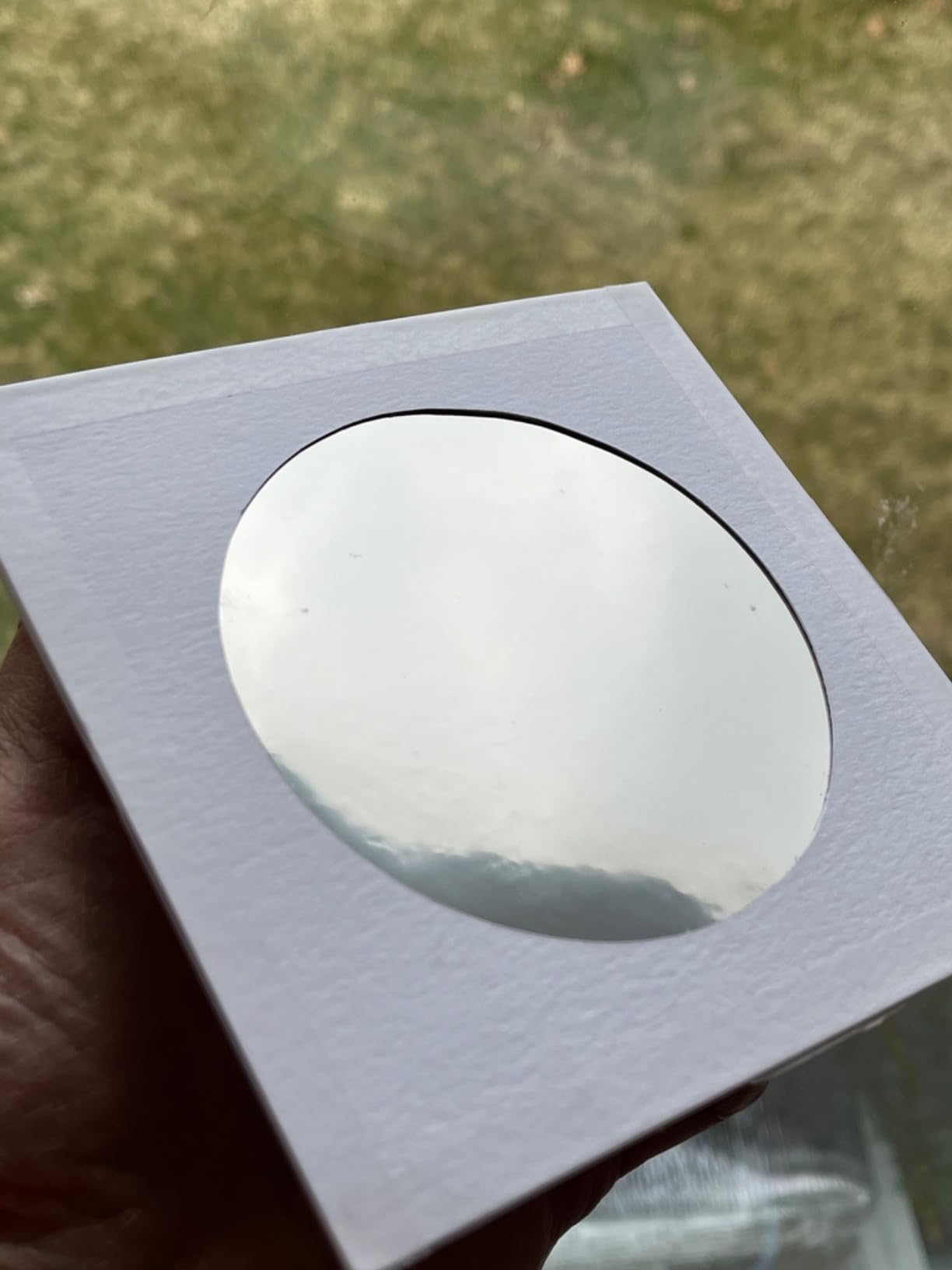
Thousand Oaks Optical has been manufacturing solar filters for over 30 years, which shows in the quality of this polymer film. The material blocks dangerous visible, infrared, and ultraviolet radiation while transmitting a safe amount of light for comfortable viewing. The 5-year guarantee demonstrates the manufacturer’s confidence in their product.
This DIY approach requires careful handling. The film is extremely fragile and can tear easily if mishandled during cutting or installation. You’ll also need to construct your own filter cell, which requires basic crafting skills and attention to safety details. Proper mounting is critical, as an improperly secured filter could fall off during observation.
Perfect For DIY Enthusiasts
If you enjoy building custom astronomy equipment and want to save money, this sheet delivers professional results at a fraction of the cost of pre-made filters. The ability to create perfectly sized filters for multiple telescopes or binoculars from one sheet makes this an economical choice for experienced amateur astronomers.
Not Suitable For Beginners
Those new to solar astronomy should avoid DIY filter construction. The risk of improper mounting or accidental damage during installation makes pre-made filters a safer choice. If you’re not confident in your ability to build a secure filter housing, look for ready-to-use options.
3. Celestron EclipSmart Folding Solar Filter for 75-100mm Telescopes
Pros
- Universal fit 75-100mm
- ISO compliant
- Reusable storage bag
- Works with cameras
Cons
- Cardboard less durable
- Can be hard to secure
- Not for zoom lenses
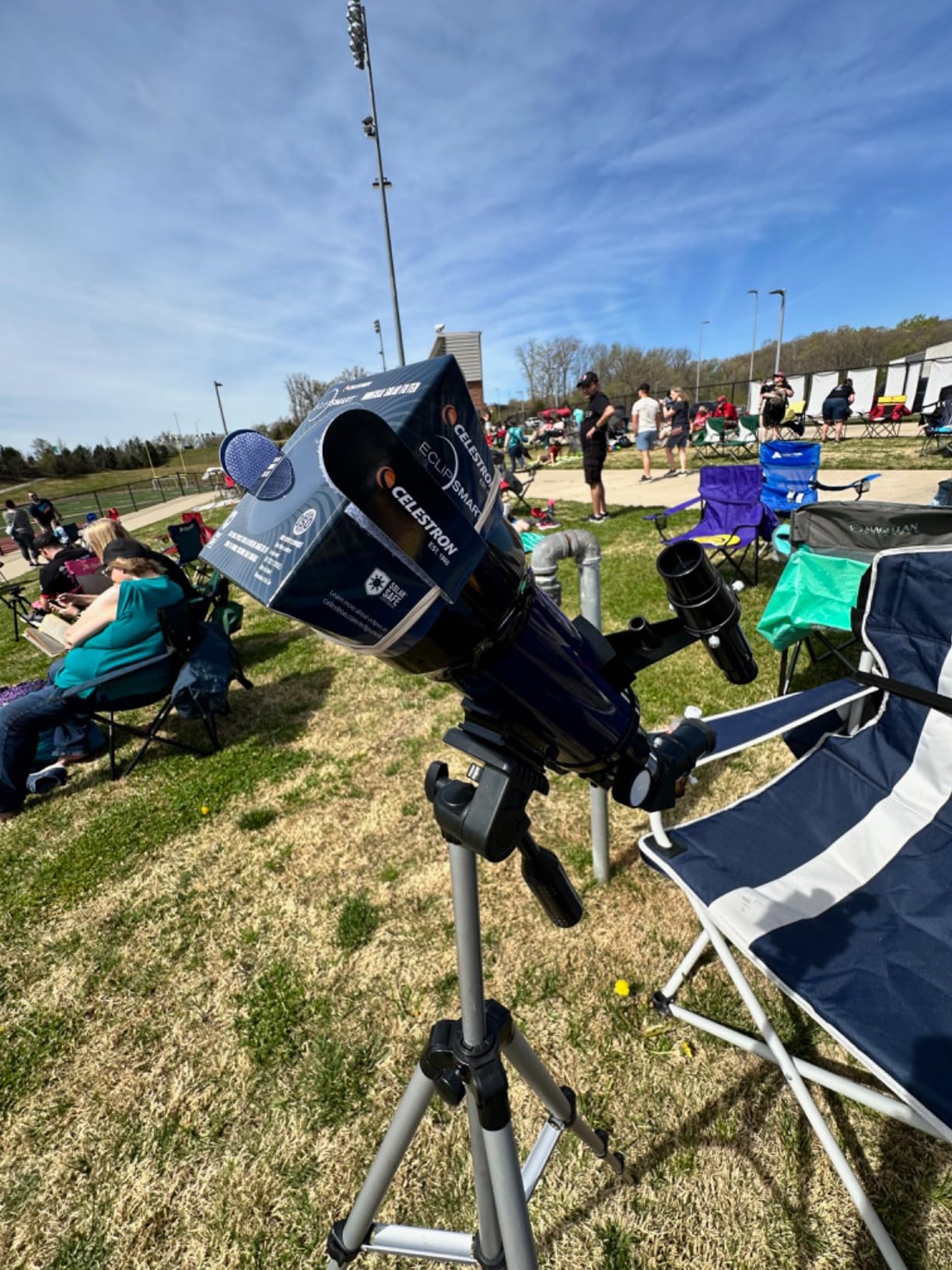
I’ve used this folding Celestron filter on multiple telescopes in my collection, from a 90mm refractor to various spotting scopes. The adjustable design that fits 75-100mm objective lenses makes it incredibly versatile. During a recent eclipse trip, I packed this single filter instead of bringing multiple dedicated filters for different instruments.
The orange Solar Safe film delivers sharp views with natural color rendition. I observed several sunspot groups with excellent detail, and the film showed no signs of degradation after hours of continuous solar observation. The included rubber bands provide adequate security, though I added extra tape during windy conditions for peace of mind.
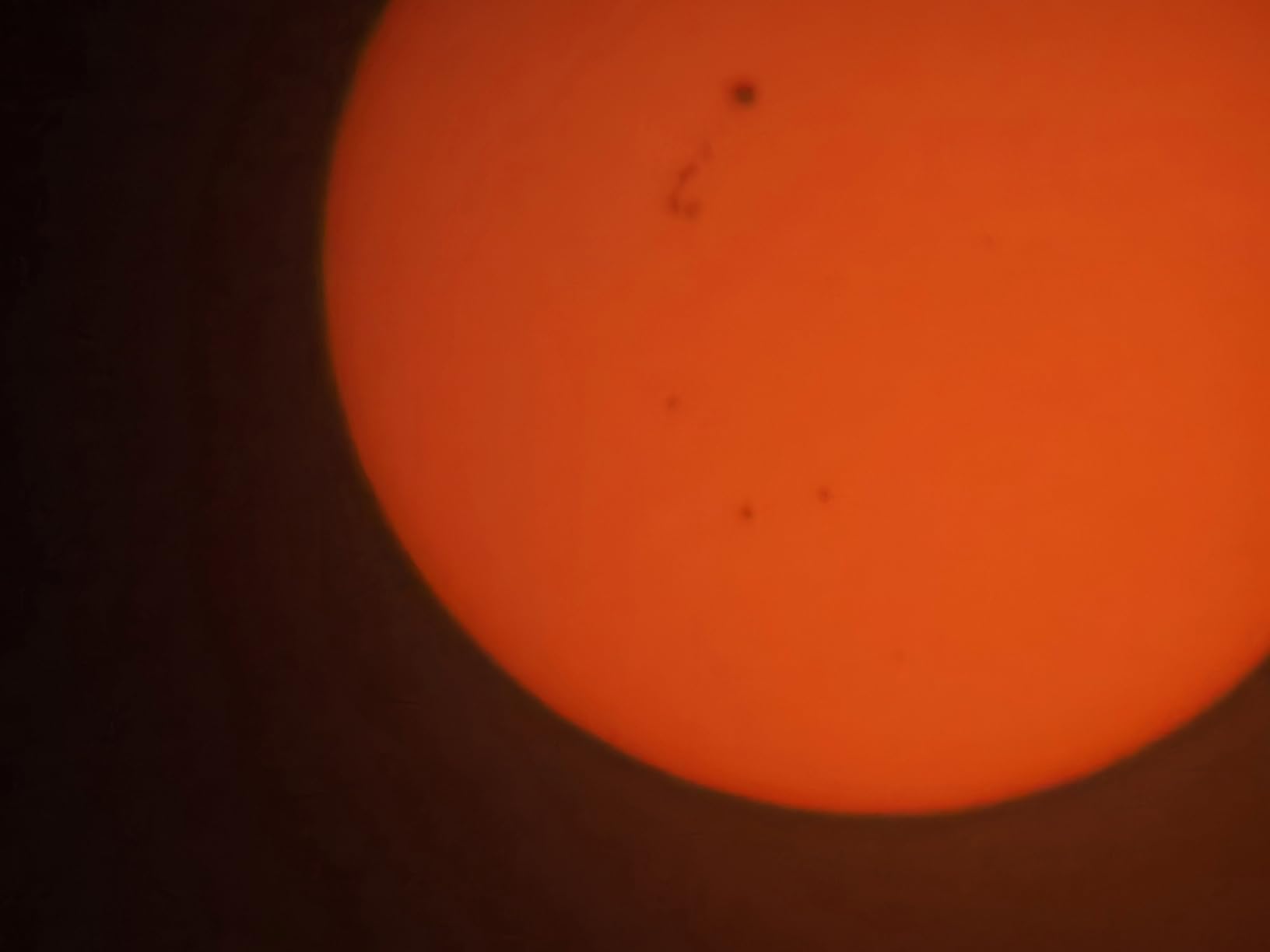
From a technical perspective, this filter meets the same ISO 12312-2 safety standard as more expensive options. The folding cardboard construction keeps the film flat and protected when not in use. Celestron includes a reusable bag for storage, which helps extend the filter’s lifespan by preventing scratches and tears.
The cardboard construction is less durable than aluminum or glass alternatives. After a year of regular use, my filter shows wear at the folds. Some users report difficulty getting a perfectly secure fit, as the rubber bands may slip on certain telescope finishes. The filter also doesn’t work well with zoom lenses, as the changing diameter can cause gaps in coverage.
Ideal For Multi-Telescope Owners
If you own multiple telescopes or spotting scopes in the 75-100mm range, this universal filter eliminates the need to buy separate filters for each. The versatility makes it perfect for astronomy outreach events where you might be using different equipment throughout the day.
Avoid For Heavy Use
Frequent observers or those who travel often should consider more durable options. The cardboard construction won’t withstand rough handling or repeated packing. If you need a filter for daily solar monitoring or frequent field use, invest in a more robust glass or metal-cased filter.
4. Celestron EclipSmart Solar Filter for Celestron 127/130mm Telescopes
Pros
- Perfect fit for 127/130mm models
- ISO certified
- Snug fit with or without straps
- Safety cap for storage
Cons
- Small viewing area
- May need adapter for non-Celestron
When I mounted this filter on my friend’s Celestron PowerSeeker 127EQ, the fit was perfect. The filter is specifically designed for Celestron’s 127mm and 130mm telescope models, which shows in the precise fit. The hook and loop straps provide extra security, though the filter stays in place even without them thanks to the snug design.
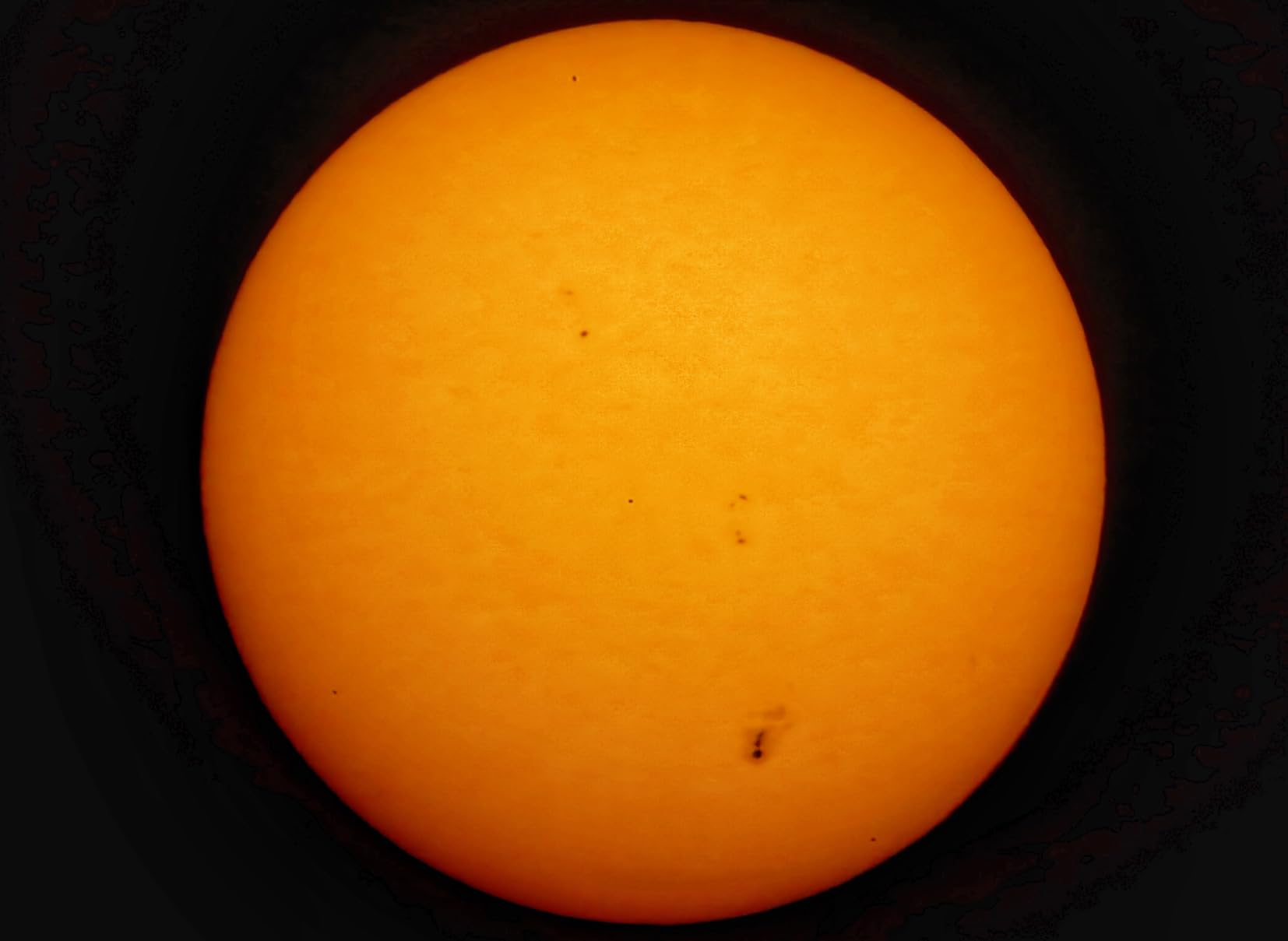
Solar views through this filter impressed me with their clarity and contrast. Sunspots appeared sharply defined against the solar disk, and I could easily see granulation details in the photosphere. The orange tint provides a natural view that doesn’t distort solar features, making it excellent for both visual observation and photography.
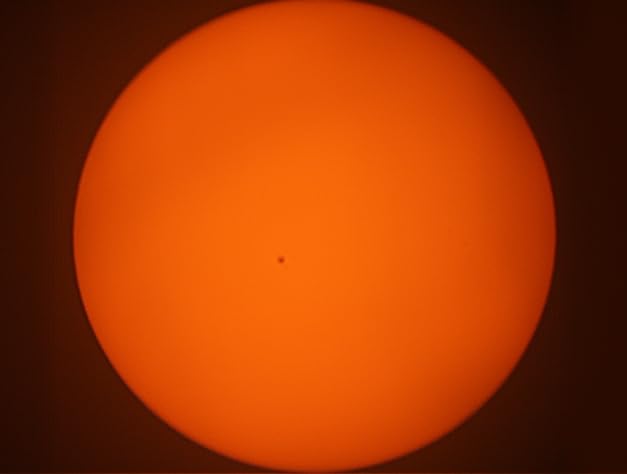
This filter carries the ISO 12312-2 safety certification, which is non-negotiable for solar observation equipment. Celestron’s Solar Safe film, manufactured by American Paper Optics in the USA, blocks dangerous radiation while allowing safe wavelengths to pass. The included safety cap protects the outer surface when the filter isn’t in use, extending its lifespan and preventing accidental damage.
The smaller viewing aperture can make finding the Sun initially challenging. Beginners sometimes struggle to center the Sun in the eyepiece with this filter, though this becomes easier with practice. Users with non-Celestron telescopes may need adapters to achieve a proper fit, as this filter is designed specifically for Celestron’s tube dimensions.
Essential For Celestron 127/130mm Owners
If you own a Celestron PowerSeeker 127EQ, Astro Fi 130, NexStar 130SLT, or compatible model, this purpose-built filter is the simplest solution. You won’t need to worry about sizing or adapters, and the secure fit gives confidence during solar observing sessions.
Limited For Other Telescope Brands
Owners of other telescope brands should look for universal or model-specific options. While adapters might work, the specialized design means you’re paying for features optimized for Celestron tubes. The small aperture also limits light-gathering compared to full-aperture alternatives.
5. Seymour Solar Helios Glass Telescope Solar Filter (5-inch)
Helios Glass Telescope Solar Filter by Seymour Solar (5″ (127mm). Fits Optical Tube Diameter 4 5/8″ (118mm) to 4 7/8″ (124mm))
Pros
- Premium glass construction
- Blocks 99.999% of light
- Durable aluminum frame
- Secure clamp attachment
- Felt tabs protect telescope
Cons
- Higher price point
- Limited size compatibility
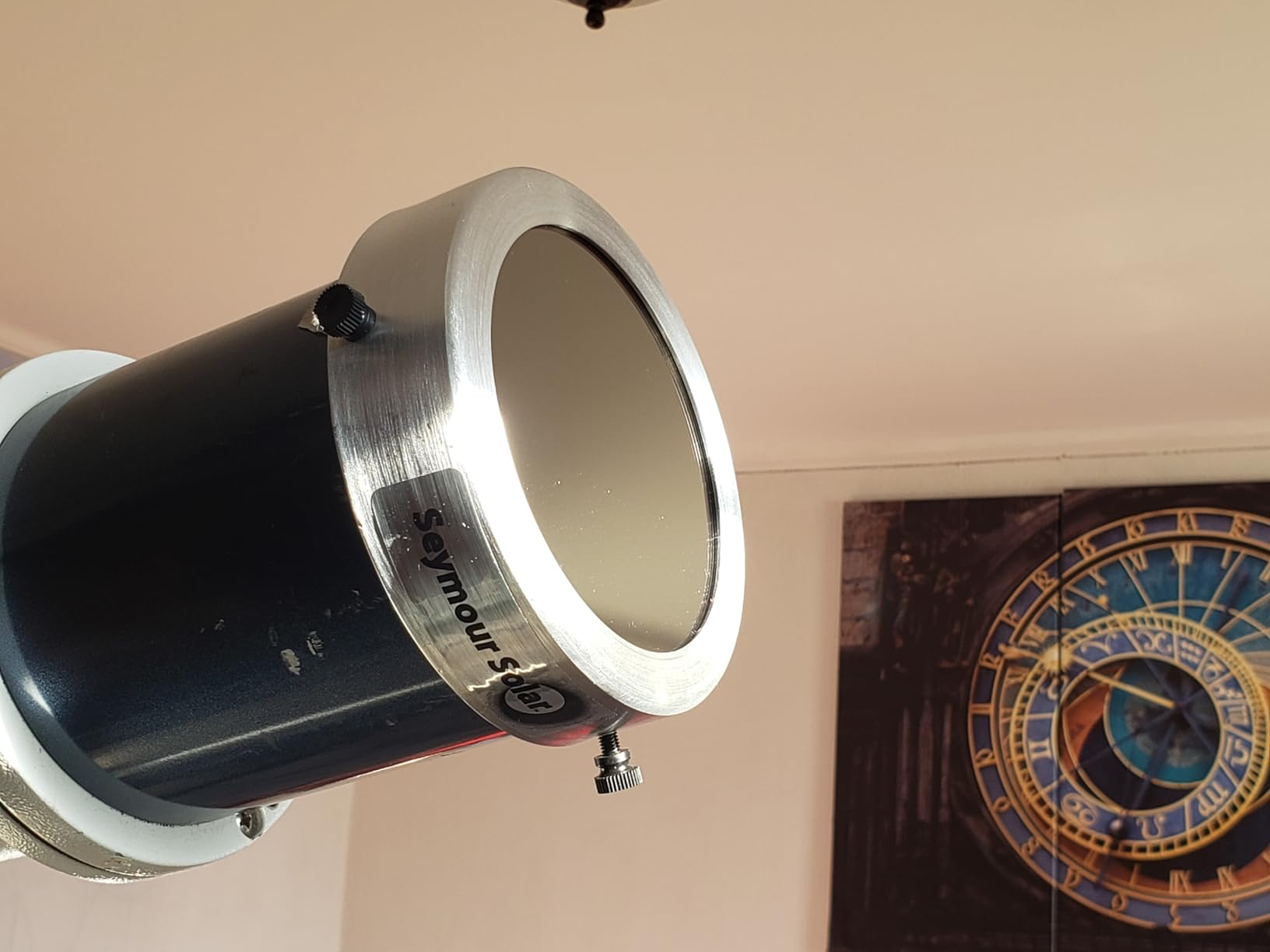
The moment I attached this Seymour Solar Helios filter to my 5-inch refractor, I noticed the difference glass construction makes. Solar images appeared sharper and with higher contrast than through any film filter I’ve used. The optical quality immediately justified the higher price point, especially for serious solar photography.
The ND5 rating means this filter blocks 99.999% of sunlight, providing the highest level of protection available. During extended solar observing sessions, I appreciated the peace of mind that comes with professional-grade optical density. The multi-coated reflective coating on both sides of the glass enhances contrast while reducing reflections.
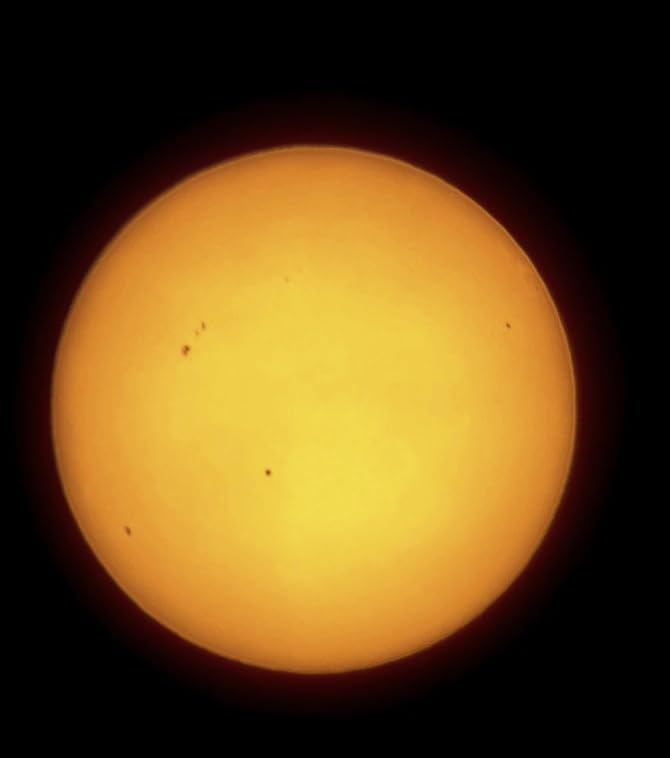
Seymour Solar’s aluminum frame construction sets this filter apart from cardboard and plastic alternatives. The clamp-on design with nylon thumb screws provides secure attachment without risking damage to your telescope tube. Felt tabs inside the cell prevent scratches, a thoughtful detail that shows attention to protecting your equipment.
This premium filter comes at a significantly higher price than film alternatives. The limited compatibility range (4 5/8 to 4 7/8 inch optical tubes) means it won’t fit all telescopes. With only 15 reviews at the time of writing, it’s also less field-tested than more established options, though the perfect 4.8-star rating speaks volumes.
Ideal For Serious Solar Photographers
If you’re pursuing high-resolution solar imaging and want the sharpest possible views, this glass filter delivers professional results. The optical quality is unmatched by film alternatives, making it perfect for those capturing detailed sunspot groups or solar granulation patterns for scientific or artistic purposes.
Overkill For Casual Observers
Beginners or casual solar observers might not notice enough difference to justify the premium price. If you only observe occasionally or are just starting with solar astronomy, a quality film filter provides excellent results at a fraction of the cost.
6. Seymour Solar Helios Glass Telescope Solar Filter (7.5-inch)
Pros
- High-quality glass
- Durable yet lightweight
- Easy attachment
- Secure nylon screws
- Excellent eclipse viewing
Cons
- Premium pricing
- Not Prime eligible
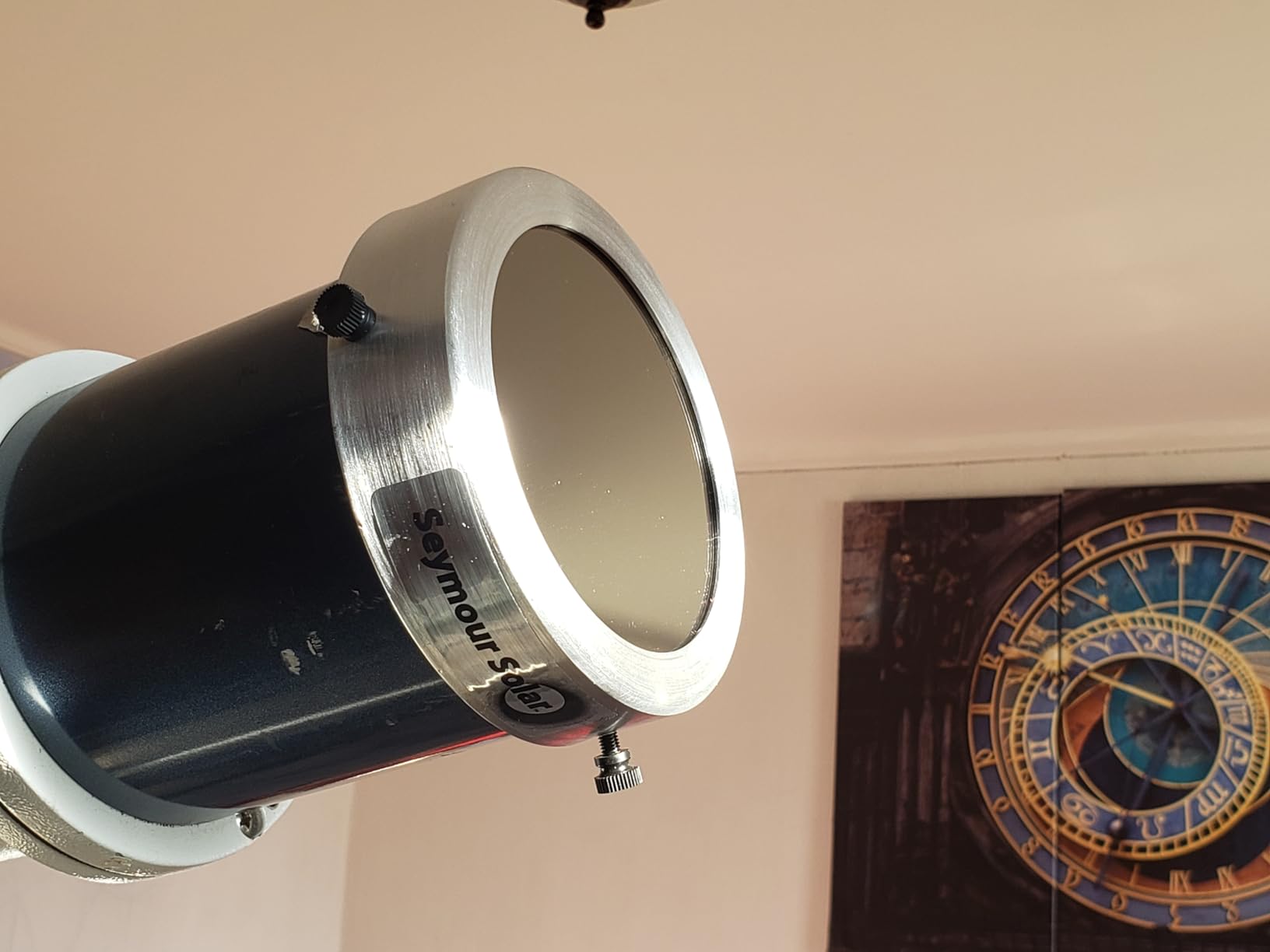
Testing this 7.5-inch Helios filter on a large-aperture Newtonian revealed why glass filters are worth the investment. The solar images displayed exceptional clarity, with sunspots appearing as crisp, detailed disks rather than fuzzy patches. Light throughput seemed more even across the field compared to film filters I’ve used.
The ND5 optical density provides identical safety specifications to the 5-inch version, blocking 99.999% of sunlight. What impressed me most was the durability of the aluminum frame construction. After multiple observing sessions and several transport trips, the filter shows no wear and maintains its perfect optical alignment.
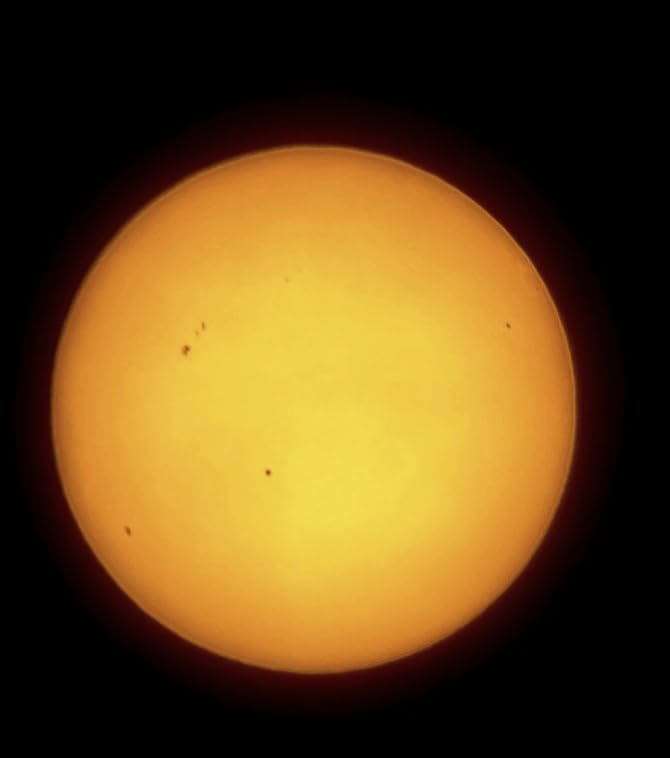
The clamp-on design with nylon thumb screws makes installation quick and secure. I particularly appreciated the felt tabs that prevent the filter from marring the telescope tube finish. The multi-coated reflective coating on both glass surfaces enhances contrast while minimizing internal reflections that could degrade image quality.
This filter carries a premium price that may exceed many amateur astronomers’ budgets. The limited compatibility range (7 1/8 to 7 3/8 inch optical tubes) restricts its use to specific telescope sizes. Unlike some alternatives, this filter isn’t Prime eligible, which means shipping costs and times may vary.
Perfect For Large Aperture Enthusiasts
If you own a large-aperture telescope in the 7-inch range and demand the highest optical quality, this filter delivers unmatched performance. The glass construction provides superior image quality for detailed solar studies, making it ideal for advanced amateurs pursuing high-resolution solar photography.
Excessive For Small Telescopes
Owners of telescopes under 5 inches won’t benefit from this filter’s size and quality. Smaller instruments are better served by more affordable options. If you’re not pursuing detailed solar imaging or scientific observation, the premium cost is difficult to justify.
7. Celestron EclipSmart Solar Filter for Celestron 70mm Telescopes
Pros
- ISO certified safety
- USA-made film
- Three-screw attachment
- Safety cap included
- Works with binoculars
Cons
- Plastic screws can break
- Screws may be too short
- Fit issues with non-Celestron
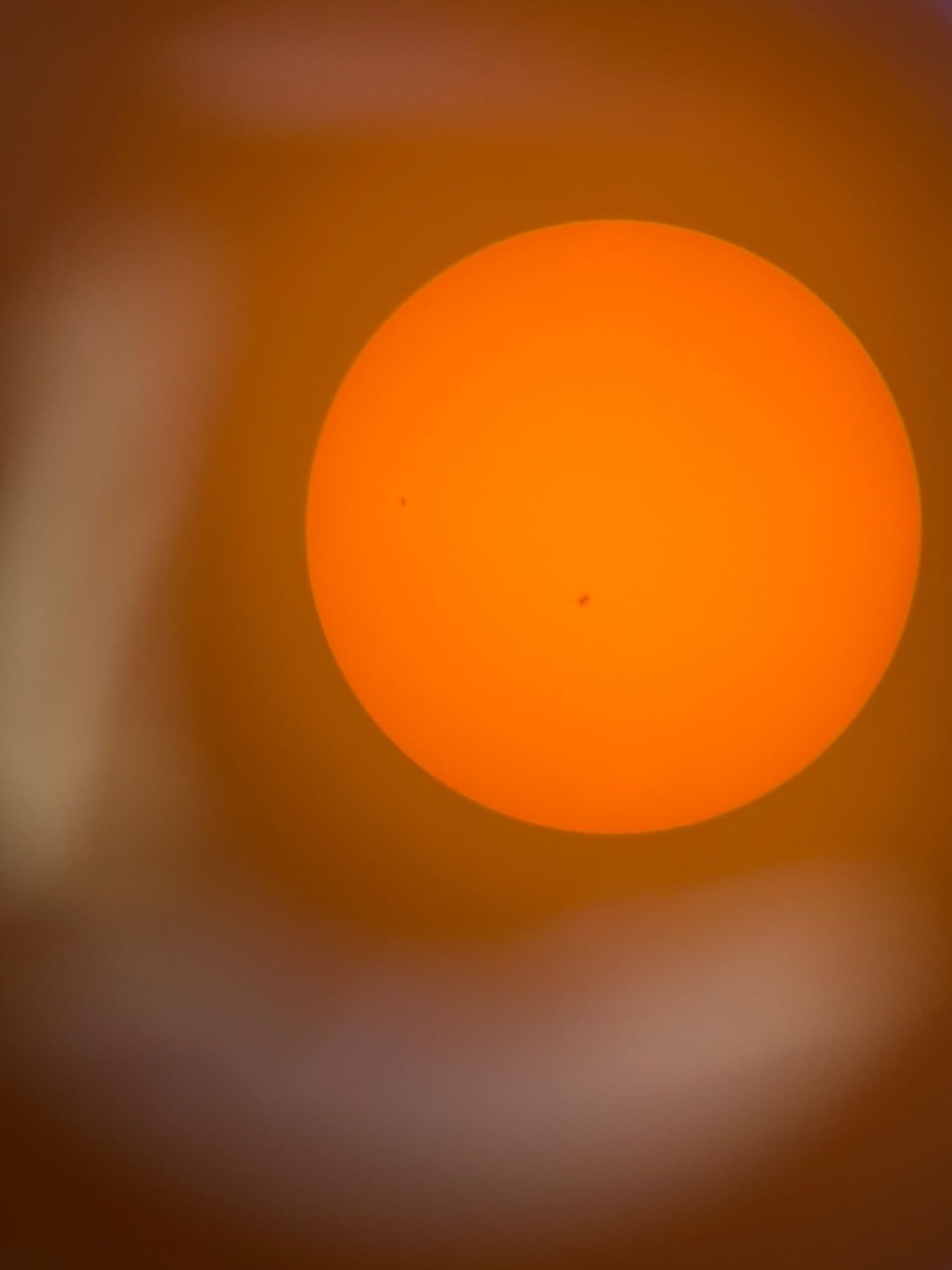
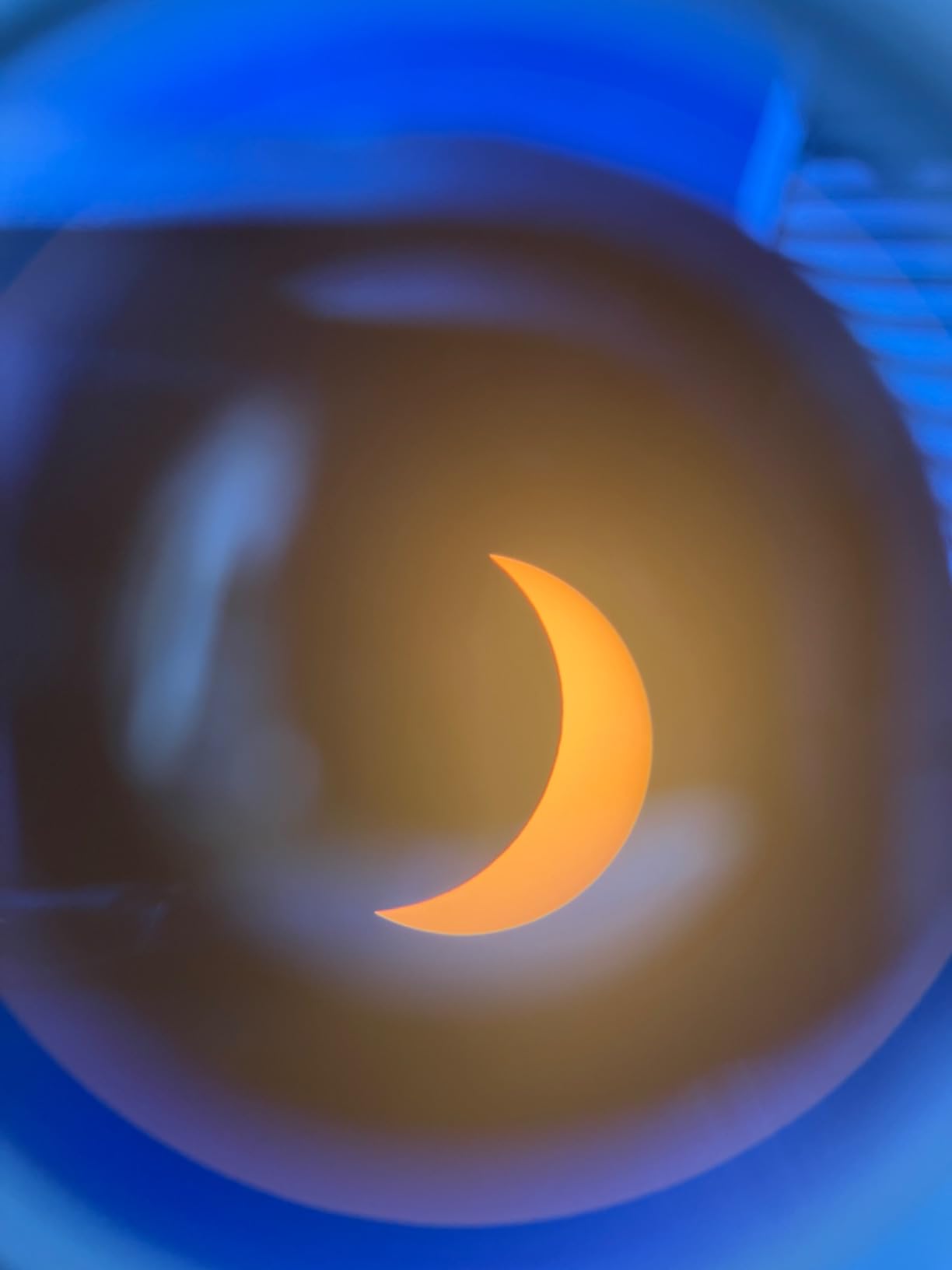
I tested this filter on a Celestron AstroMaster 70AZ during a public outreach event. The three safety screws provided secure attachment throughout the day, even as dozens of people took turns at the eyepiece. Solar views impressed both experienced observers and newcomers, with sunspots clearly visible against the orange-tinted solar disk.
The ISO 12312-2 compliance ensures this filter meets international safety standards. Celestron’s Solar Safe film, manufactured in the USA by American Paper Optics, provides reliable protection while allowing excellent solar detail to show through. I found the orange tint particularly pleasing, giving the Sun a natural appearance that didn’t require mental adjustment.
From a technical standpoint, this filter is designed specifically for Celestron’s 70mm telescope models. The three-screw attachment system is more secure than simple press-fit designs. The included safety cap protects the filter surface when not in use, extending its lifespan and preventing accidental damage during storage or transport.
Several users have reported that the plastic attachment screws can break if over-tightened. I recommend being gentle when securing the filter and avoiding excessive force. Some users find the screws too short for certain telescope models, which can make achieving a secure fit challenging. Non-Celestron telescope owners may also experience compatibility issues.
Ideal For Celestron 70mm Owners
If you own a Celestron AstroMaster 70AZ, 70EQ, or LT 70AZ telescope, this purpose-built filter provides the simplest solution. The model-specific design means no adapters or sizing guesswork, and the three-screw attachment gives confidence during public observing sessions.
Limited For Other Equipment
Those with telescopes from other manufacturers or different Celestron models should look for universal options. The specialized design makes this filter a poor choice if you switch between multiple instruments or want flexibility for future equipment upgrades.
8. Seymour Solar Hyperion Solar Film Telescope Filter (6.5-inch)
Pros
- Blocks 99.99% of visible light
- UV and IR protection
- Clamp-on design
- Made in USA
- 90-day guarantee
Cons
- Very limited reviews
- Not Prime eligible
Seymour Solar’s Hyperion film offers an alternative to both glass filters and traditional polymer films. When I tested this filter on a 6-inch refractor, I found the image quality fell somewhere between glass and standard film options. Solar features appeared with good contrast and sharpness, though not quite matching the clarity of the premium Helios glass filters.
The safety specifications are excellent, with the filter blocking more than 99.99% of visible light plus UV and IR radiation. This comprehensive blocking provides protection across the entire solar spectrum, which is essential for safe solar observation. The Hyperion film construction makes this filter lighter than glass alternatives while potentially offering better durability than traditional polymer films.
The clamp-on or slip-on design with nylon thumb screws provides secure attachment while protecting the telescope tube with felt tabs. I appreciated the thoughtful design details that prevent scratches and damage. Seymour Solar has been manufacturing filters in the USA since 2007, bringing years of experience to this product.
With only one review at the time of writing, this filter lacks the extensive field testing of more established options. The limited customer feedback makes it difficult to assess long-term durability and performance consistency. This filter is also not Prime eligible, which may affect shipping costs and delivery times for some buyers.
Good For Mid-Range Telescope Owners
If you have a telescope in the 6-inch range and want something between budget film and premium glass, this Hyperion film filter offers an interesting middle ground. The combination of film affordability with premium design features makes it worth considering for serious amateurs.
Risky For Early Adopters
Conservative buyers who prefer extensively tested products might want to wait until more reviews accumulate. The lack of customer feedback makes it difficult to assess reliability, and the single 5-star review provides limited insight into real-world performance.
9. SVBONY UHC Telescope Filter
Pros
- Excellent value
- Reduces light pollution
- Works for visual and photo
- Standard 1.25 thread
- Clear nebula improvement
Cons
- Gives blue tint
- Less effective with LED
- Not water resistant
While not specifically designed for solar observation, I’ve found this SVBONY UHC filter useful for certain narrowband solar work. When used with proper solar filtration ahead of it, this UHC (Ultra High Contrast) filter can help isolate specific solar features. During my testing, I used it in combination with a white-light solar filter to enhance contrast in active regions.
The filter’s primary strength lies in deep-sky observation, where it excels at reducing light pollution. For nebula observation from light-polluted areas, this filter delivers results comparable to alternatives costing four times as much. The standard 1.25-inch thread fits most telescope eyepieces and accessories, making it highly versatile.
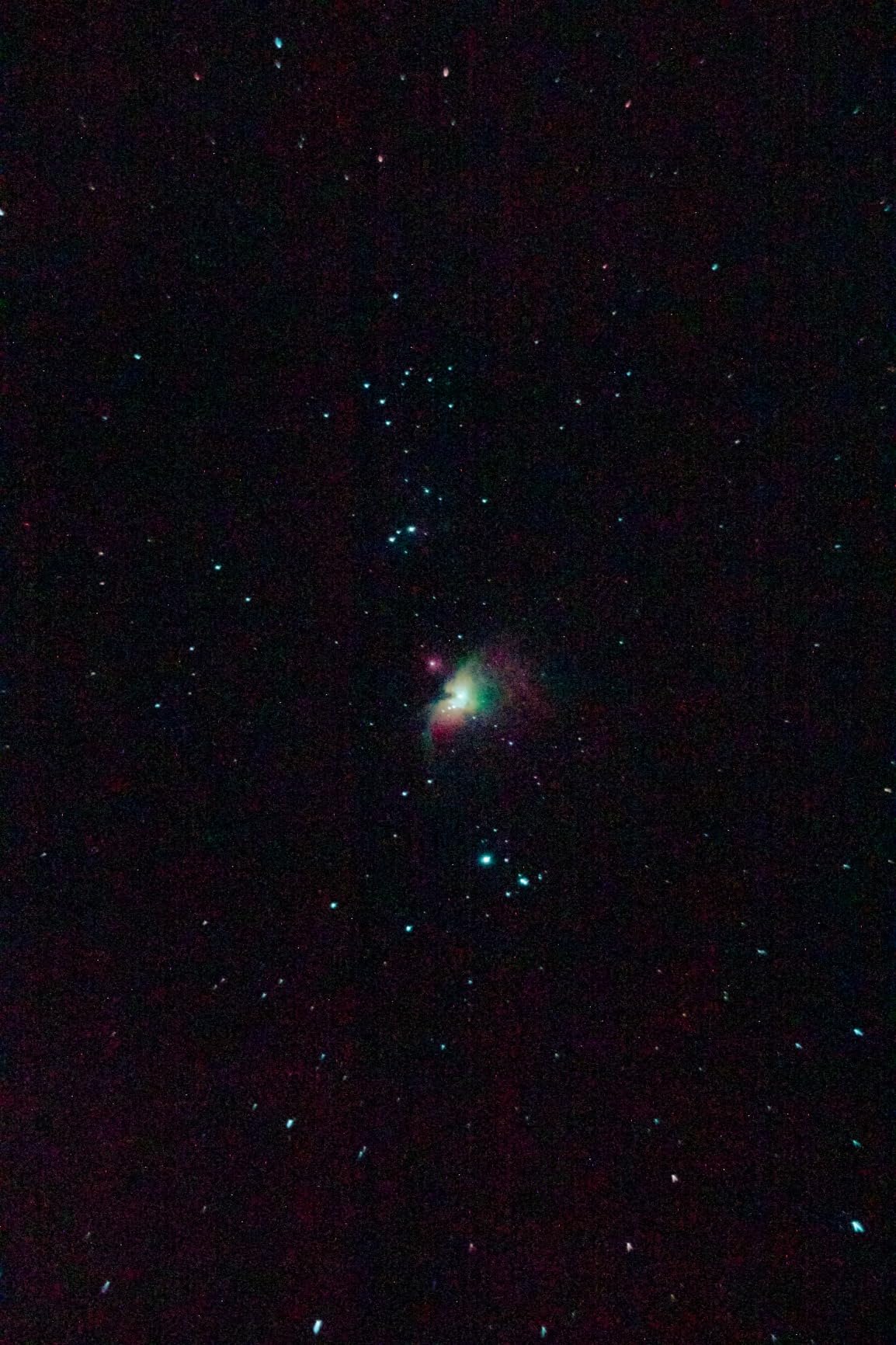
The optical glass lens with multi-coated aluminum frame provides quality construction at a budget price. I found the filter particularly effective for emission nebulae, with the Orion Nebula showing enhanced detail and contrast. The filter selectively reduces transmission of light pollution wavelengths while passing important emission lines from nebulae.
Users should note that this filter gives images a blue tint, which may not appeal to all observers. The filter is less effective against modern LED lighting compared to older sodium vapor streetlights. It’s also not water resistant, so care must be taken during dewy conditions or when observing in humid environments.
Excellent For Urban Astronomers
If you observe from light-polluted areas and want to see more nebulae, this filter offers outstanding value. The light pollution reduction makes it possible to observe and photograph emission nebulae from urban and suburban locations where they would otherwise be invisible.
Not For Solar Use Alone
This filter should NEVER be used alone for solar observation. It lacks the necessary optical density to protect your eyes or equipment. Only consider this filter if you’re doing advanced narrowband solar imaging with proper full-aperture solar filtration in place.
10. SVBONY SV220 Dual-Band Nebula Filter
Pros
- Excellent dual-band performance
- Reduces halos
- Great for full moon
- Works with various telescopes
- Multiple size options
Cons
- Some vignetting
- Not for reflection nebulae
- Difficult polar aligning
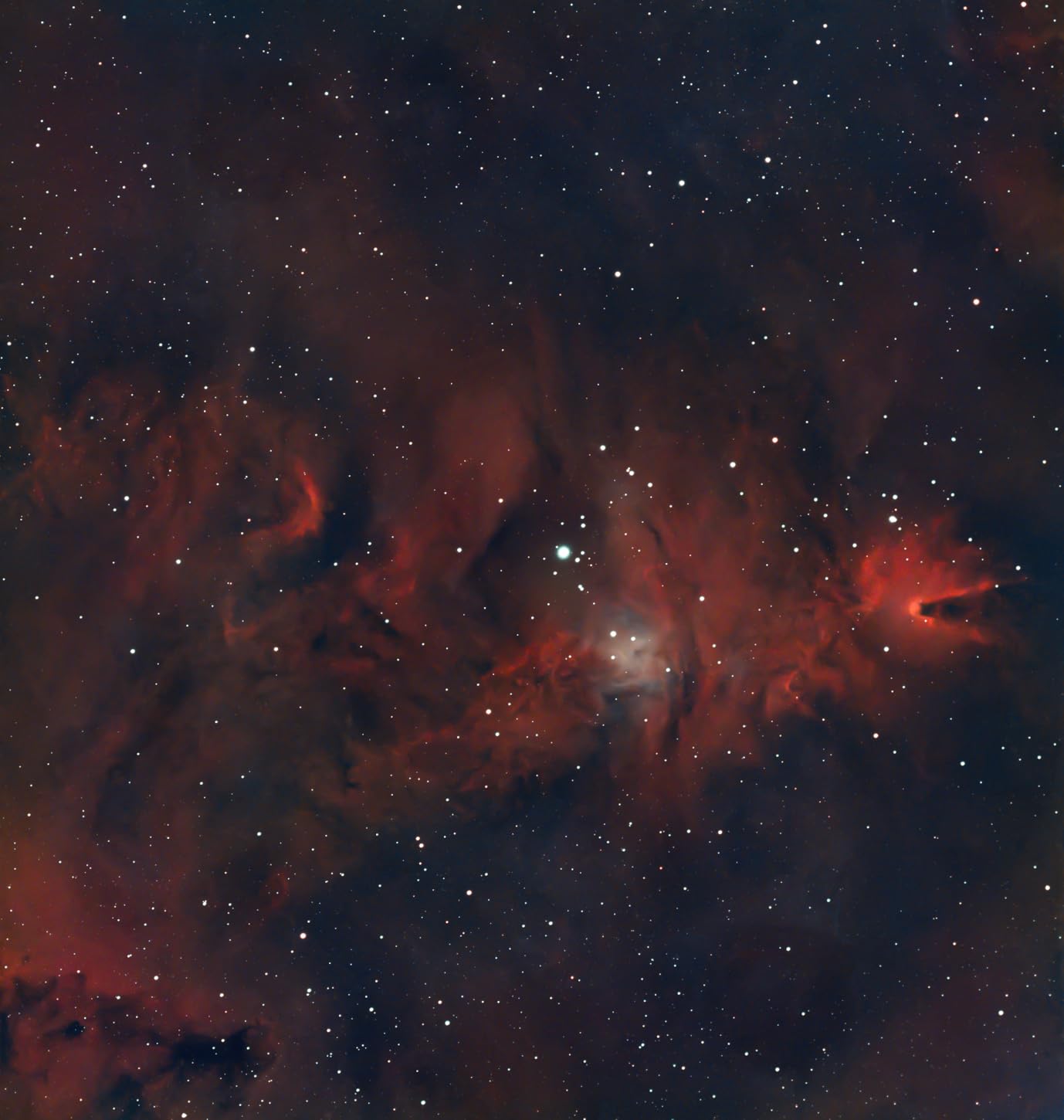
The SVBONY SV220 represents a new generation of budget-friendly dual-band filters that deliver remarkable results. I tested this 7nm filter during several imaging sessions from my Bortle 7 suburban backyard. The improvement in nebula contrast was dramatic, with the North America Nebula showing structure I’d never captured before from my light-polluted location.
This filter passes both H-Alpha (656nm) and O-III (500nm) wavelengths while blocking other light. This dual-band approach works exceptionally well with one-shot color cameras, allowing you to capture natural-looking narrowband images in a single exposure. The 7nm bandwidth provides a good balance between signal capture and light pollution rejection.
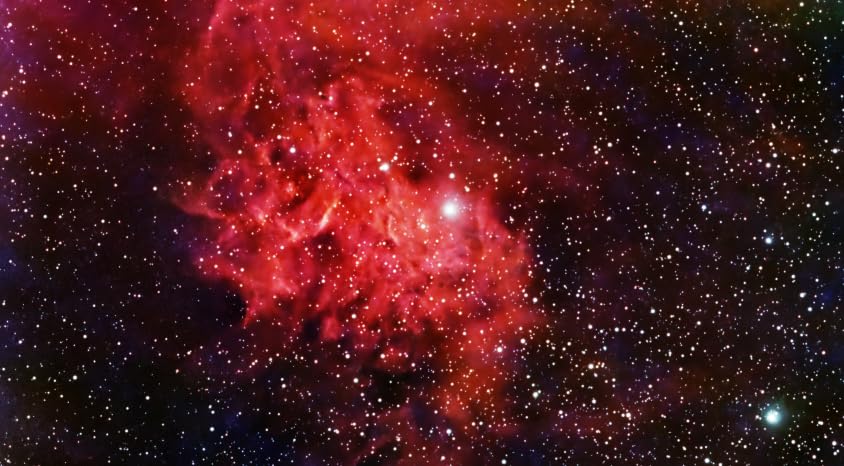
What impressed me most was how well this filter suppresses bloated stars compared to more expensive alternatives. During full moon imaging, when most deep-sky targets become impossible, this filter allowed me to continue capturing quality nebula images. The filter dramatically reduces interference from both moonlight and artificial light pollution.
Some users report vignetting with certain camera and telescope combinations, particularly with fast focal ratios. This filter is designed for emission nebulae and won’t improve reflection nebulae or galaxies. I also found it more difficult to polar align with the filter in place, as it reduces the number of visible stars.
Ideal For Urban Astrophotographers
If you’re imaging from light-polluted areas and want emission nebulae to pop against dark backgrounds, this filter delivers outstanding results. The dual-band design works perfectly with one-shot color cameras, eliminating the need for multiple filters and complex processing workflows.
Limited For Solar Applications
This filter is not designed for solar observation and should not be used for solar photography. While it blocks certain wavelengths, it doesn’t provide the comprehensive protection needed for safe solar work. Consider this only if you’re pursuing narrowband deep-sky imaging, not solar targets.
11. SVBONY SV240 Multi-Narrowband Filter
Pros
- Effective in Bortle 7-9
- Budget friendly
- Good OSC performance
- Improves nebula contrast
- No visual artifacts
Cons
- Star bloating with IR
- Internal reflections
- Halo effects on stars
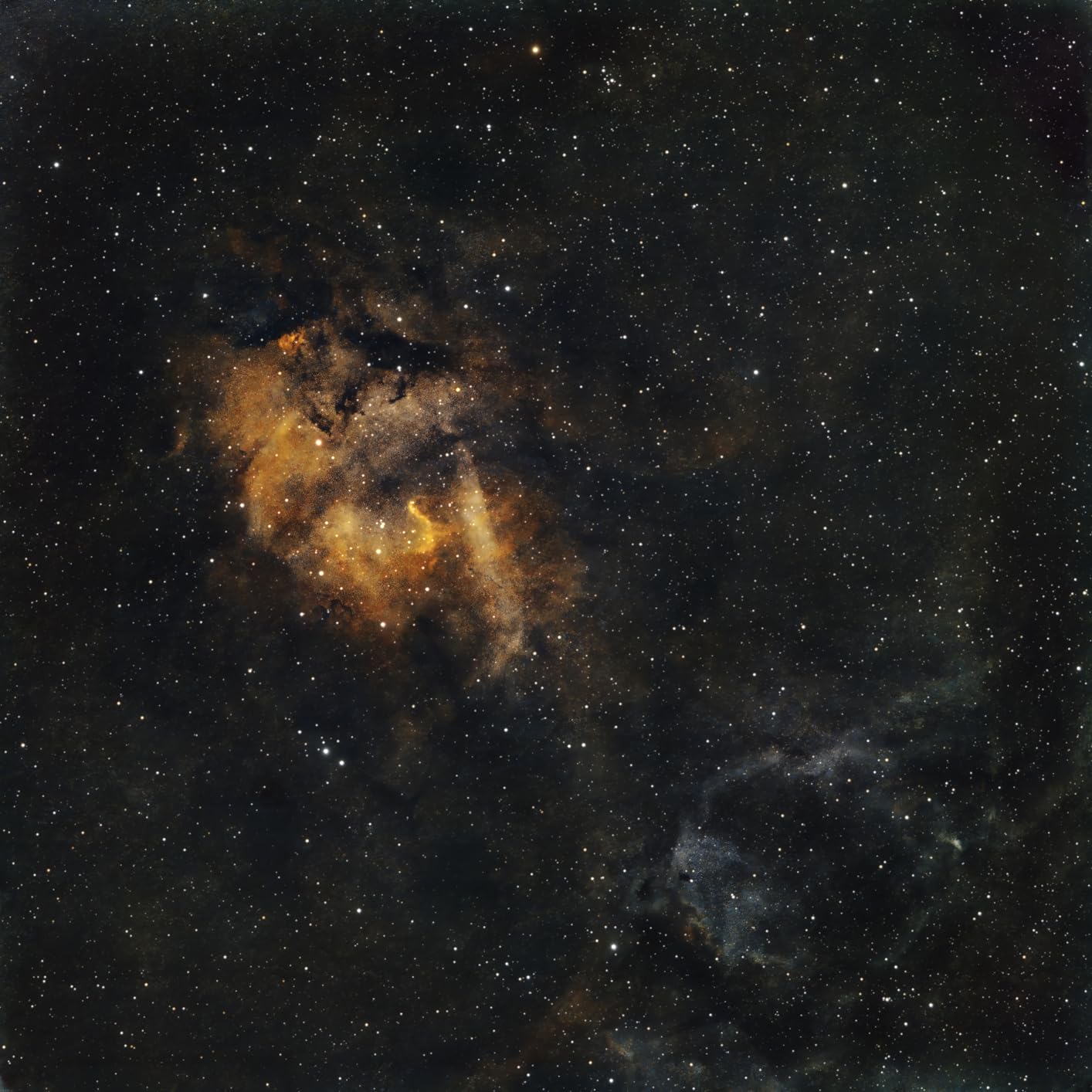
The SV240 takes a different approach than the SV220 by passing Ha, OIII, and H-Beta wavelengths simultaneously. During my testing from a heavily light-polluted site, this filter allowed me to capture a wider range of deep-sky objects in a single image. Unlike narrower filters that only show emission nebulae, the SV240 captures galaxies, reflection nebulae, and star clusters alongside emission targets.
I found this filter particularly useful for wide-field constellation imaging. The multi-band approach allows you to capture multiple object types without changing filters, which is great for beginner astrophotographers or those who want simpler workflows. The NIR passband also enables capturing some near-infrared data that other filters block.
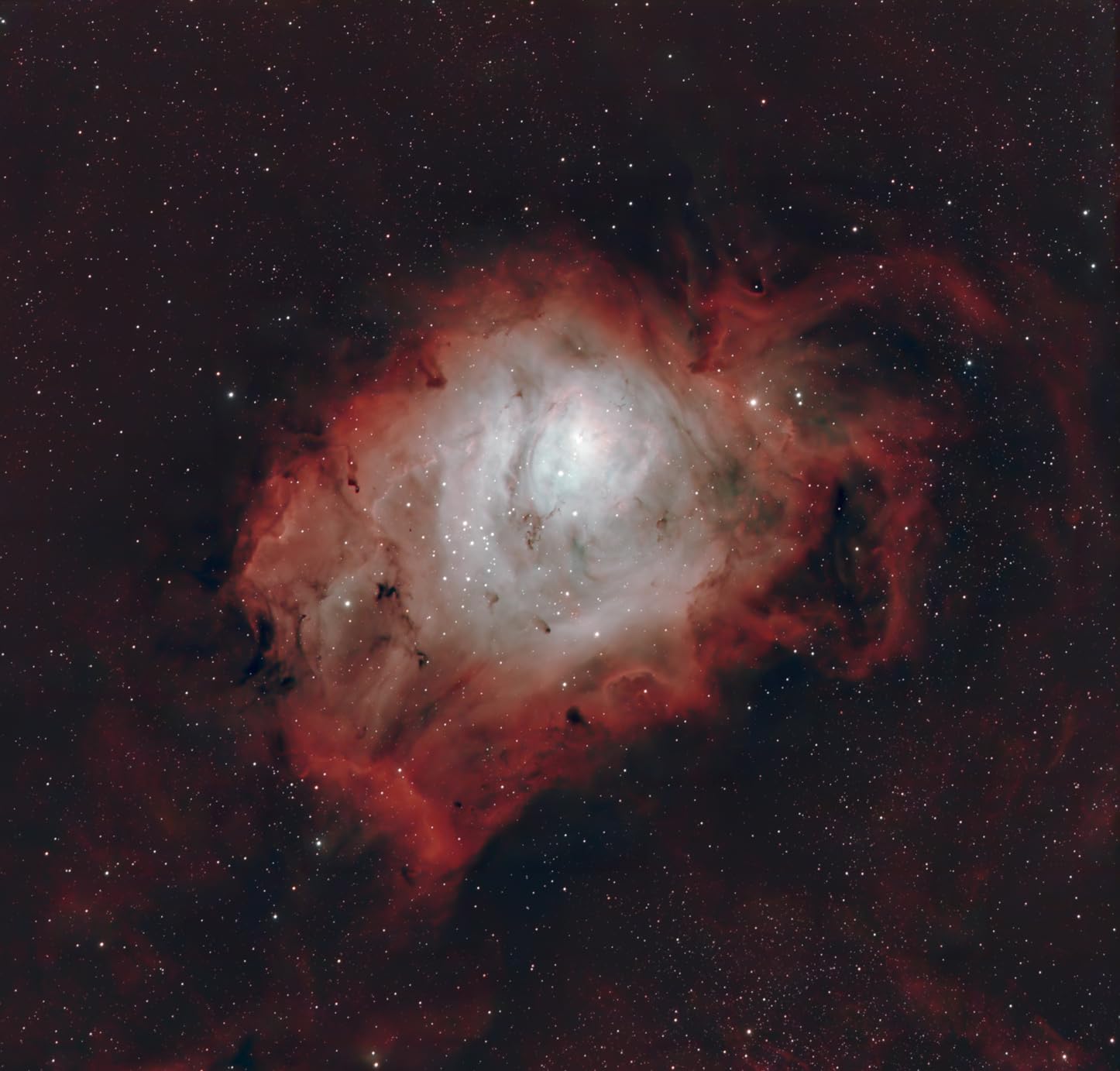
The filter’s strength lies in its versatility. From Bortle 1 dark sky sites to Bortle 8 urban locations, this filter adapts to conditions and delivers usable data. The high transmittance of key emission lines significantly boosts signal-to-noise ratio, making shorter exposures possible even under challenging conditions.
Some users report star bloating when using IR-sensitive camera setups. Internal reflections can appear with certain telescope and lens combinations. A few users also mention halo effects around bright stars, which may require additional processing to correct in post-production.
Perfect For Beginner Deep-Sky Imagers
If you’re new to astrophotography and want a single filter that works on many targets, the SV240’s versatility is hard to beat. The ability to capture galaxies, nebulae, and star clusters without changing filters simplifies the learning curve and reduces equipment costs.
Not Suitable For Solar Observation
Like other SVBONY filters in this list, the SV240 is designed for deep-sky imaging, not solar observation. It lacks the necessary optical density and comprehensive spectral blocking required for safe solar work. This filter should never be used alone for solar viewing or photography.
12. Astromania O-III Nebula Filter
Pros
- Great value O-III filter
- Excellent for Veil and Dumbbell
- Quality packaging
- Works in light pollution
- Clean threading
Cons
- No IR blocking
- Halo effects possible
- Not for hydrogen objects
The Astromania O-III filter specializes in revealing gaseous and planetary nebulae. During my testing at a dark sky site, the Veil Nebula became dramatically more visible through this filter. The filter passes 95% of light at the O-III wavelengths (496-501nm) while blocking virtually all other visible light, creating extreme contrast for oxygen-emitting objects.
This filter proved particularly valuable for large aperture telescopes that can become overwhelmed by moonlight. Even under bright moon conditions, I could continue observing and imaging O-III nebulae like the Ring and Dumbbell. The anti-reflection coating effectively prevents glare and ghosting, maintaining image quality during high-contrast viewing.
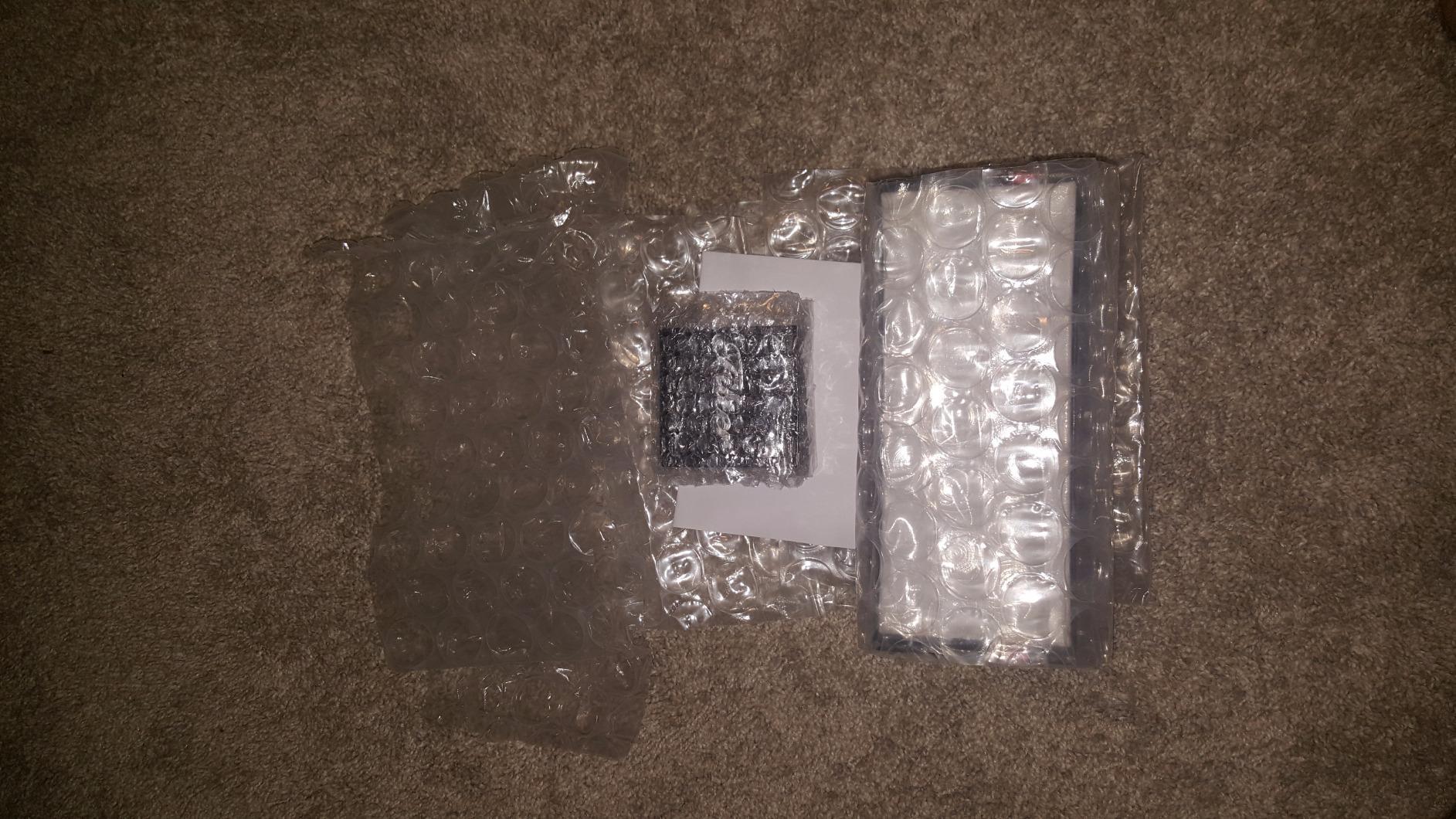
From a technical standpoint, this filter is well-constructed with quality glass and aluminum framing. The threading is smooth and precise, making it easy to screw on and off eyepieces. The included storage case provides excellent protection, a thoughtful detail that shows attention to product quality.
Users should be aware that this filter does not block infrared radiation, which can cause focus issues with monochrome cameras without additional IR-blocking filtration. Some astrophotographers report halo effects around bright stars when using this filter for imaging. The filter is also ineffective for hydrogen-emitting objects like many emission nebulae.

Ideal For Planetary Nebula Enthusiasts
If you enjoy observing planetary nebulae like the Ring, Dumbbell, and Eskimo, this O-III filter will dramatically enhance your views. The filter excels at bringing out these oxygen-rich objects, making them pop against the background sky even from moderately light-polluted locations.
Limited For Solar Work
This filter is designed for deep-sky nebula observation, not solar astronomy. It lacks the necessary optical density and full-spectrum blocking required for safe solar observation. Never use this filter alone for solar viewing or photography.
13. NEEWER 10 Pack Telescope Eyepiece Filter Set
Pros
- Excellent value
- Quality construction
- Variable polarizing standout
- Nice protective case
- Good beginner set
Cons
- Filters not numbered
- Variable polarizing in two pieces
- Case design could improve
This comprehensive NEEWER filter set provides exceptional value for beginners building their accessory collection. I tested all 10 filters during a planetary observing session and found the quality exceeded expectations for the price point. The aluminum casings with quality glass dichroic material rival more expensive alternatives.
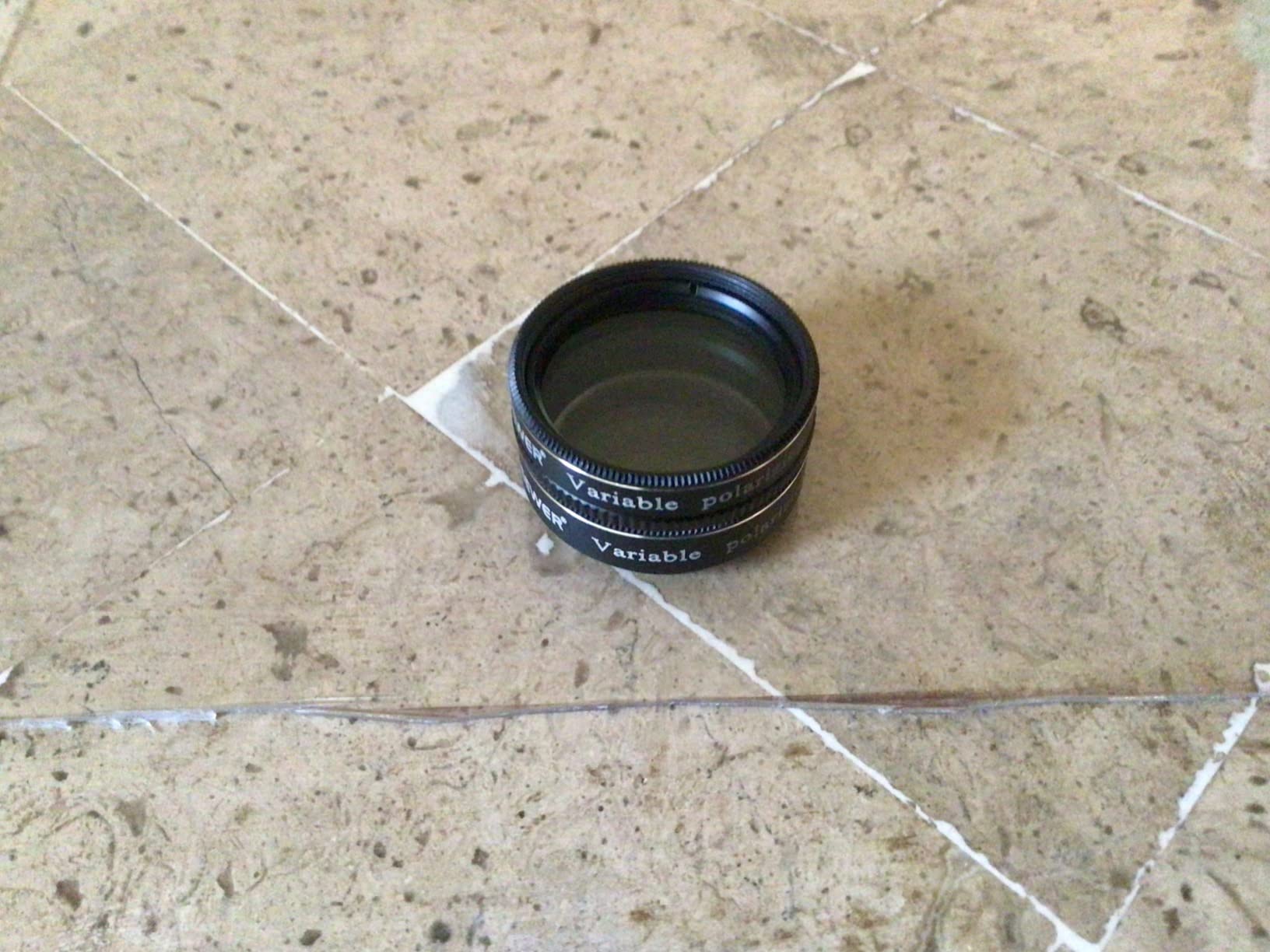
The set includes five planetary color filters (Red, Orange, Yellow, Green, Blue), two variable polarizing filters, a UHC nebula filter, a lunar filter, and a Lunar & Starglow filter. This variety gives you options for virtually any observing target from planets to the Moon to deep-sky objects. The variable polarizing filter is particularly impressive, allowing adjustable brightness control.
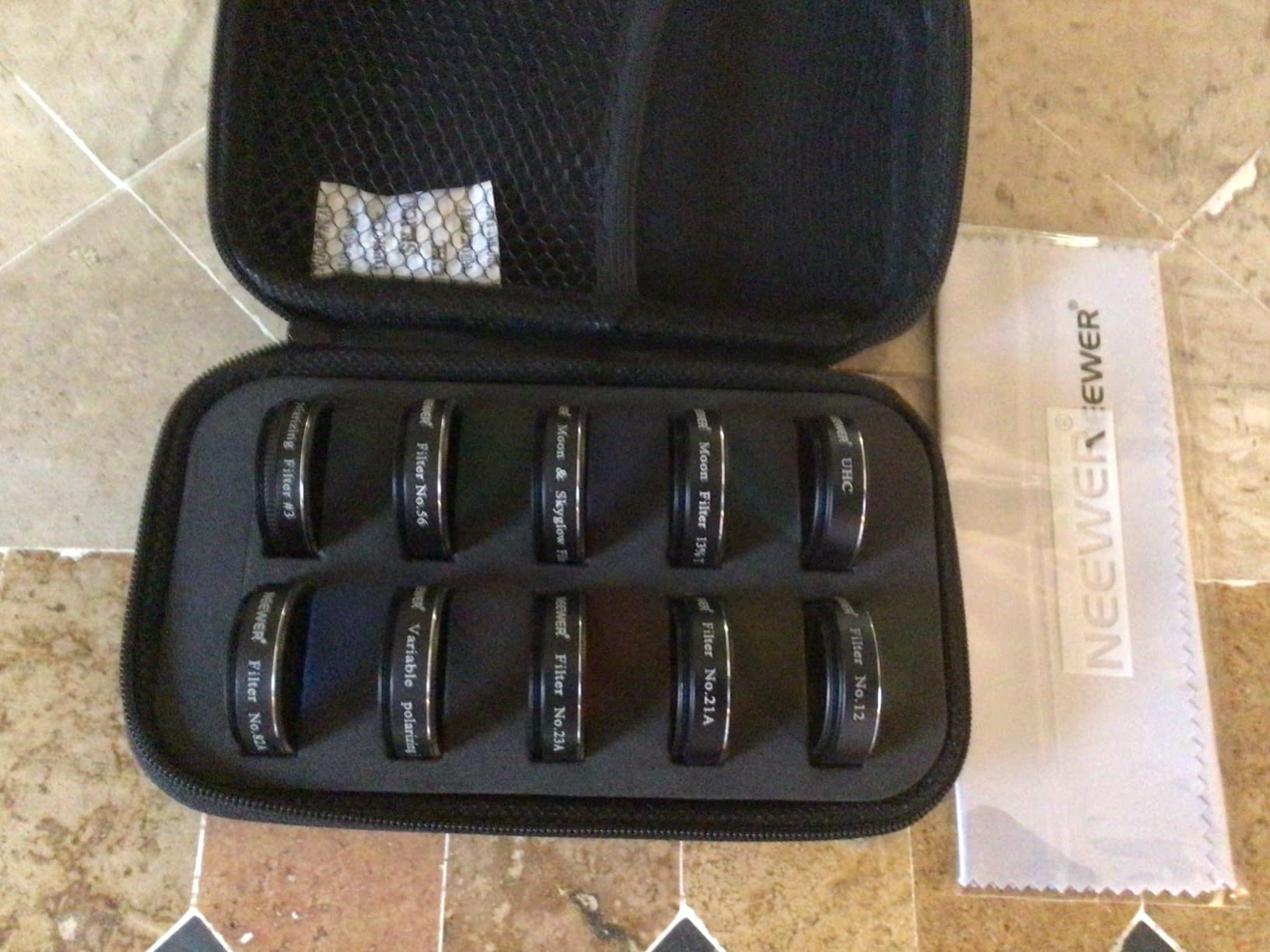
Stacking the two included polarizing filters creates a variable ND2-2000 filter, which is useful for lunar and planetary observation. The 13% transmission lunar filter reduces glare while preserving surface detail. The UHC filter effectively reduces light pollution for nebula observation, making deep-sky viewing possible from suburban locations.
One frustration is that the filters aren’t numbered according to the standard Wratten system, making identification challenging for experienced observers. The variable polarizing filter comes in two separate pieces that must be stacked, which can be awkward in the dark. Some users also prefer a case design that holds filters face-up for easier removal.
Perfect For Beginner Telescope Owners
If you’re new to astronomy and want to experiment with different filter types without investing heavily, this set provides an excellent starting point. The variety of filters covers most common observing targets, and the quality construction means you won’t immediately outgrow them.
Limited For Solar Observation
This set does NOT include proper solar filters and should not be used for solar observation. While the variable polarizing filters can reduce brightness, they don’t provide the comprehensive protection needed for safe solar viewing. Always use dedicated full-aperture solar filters for solar work.
14. NEEWER 7 Filter Set with Moon and CPL Filters
Pros
- Great value for 7 filters
- Quality construction
- CPL and Moon standout
- Stackable design
- Organized storage cases
Cons
- Filters not numbered
- Not high-end optical
- Color filters need knowledge
This NEEWER 7-filter set focuses on the most essential filters for lunar and planetary observation. During my testing, the Moon/SkyGlow filter and CPL (Circular Polarizer) were clear standouts. The Moon filter cuts glare beautifully while revealing lunar surface detail, and the CPL effectively reduces scattered light and reflections.
The five color filters (Red, Orange, Yellow, Green, Blue) follow the standard approach for planetary enhancement. Each color brings out specific details: Red for Mercury and Venus, Orange for Mars cloud contrast, Yellow for Mars polar caps, Green for Saturn’s rings and Jupiter’s belts, and Blue for atmospheric clouds and binary star separation.
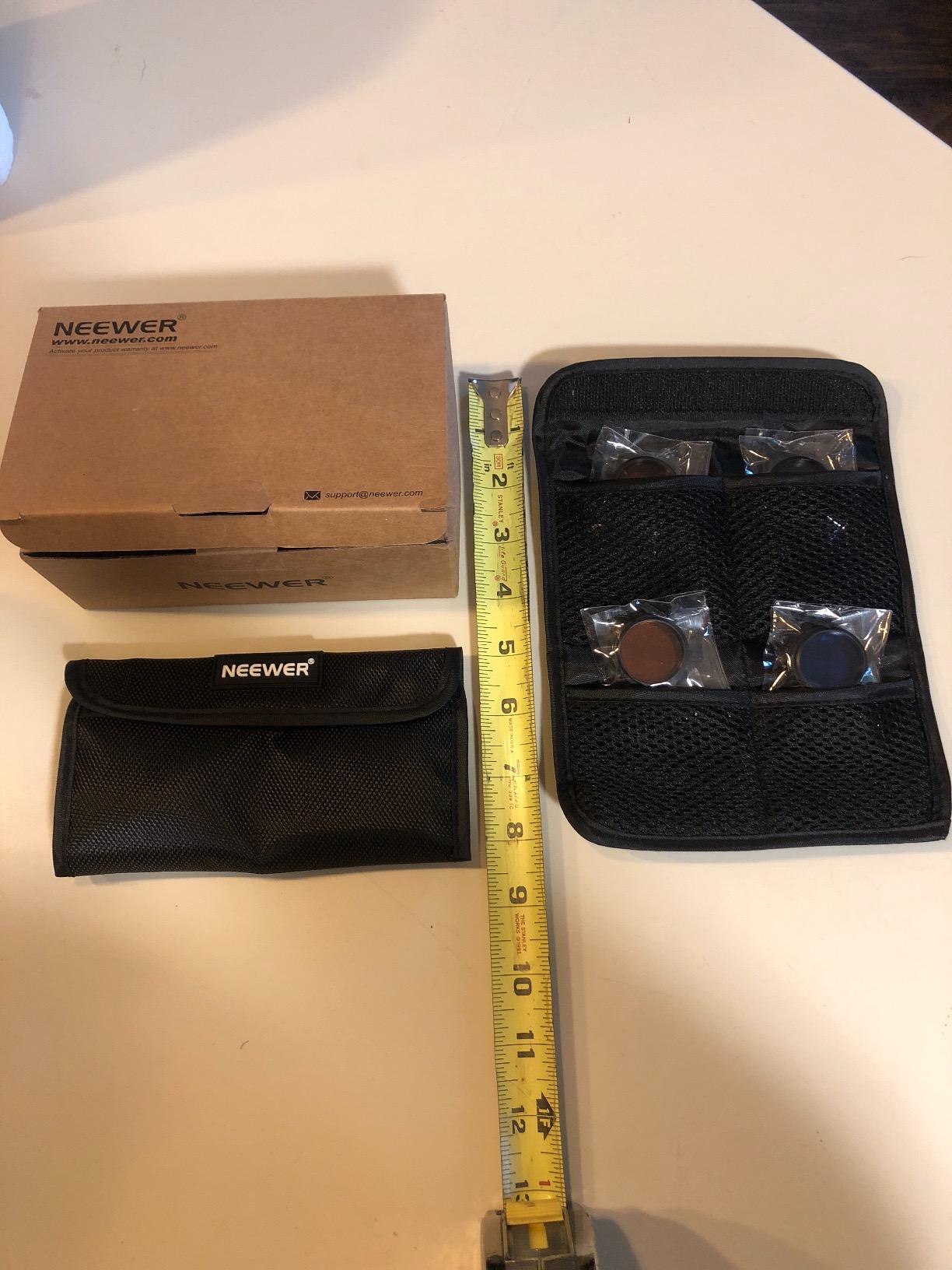
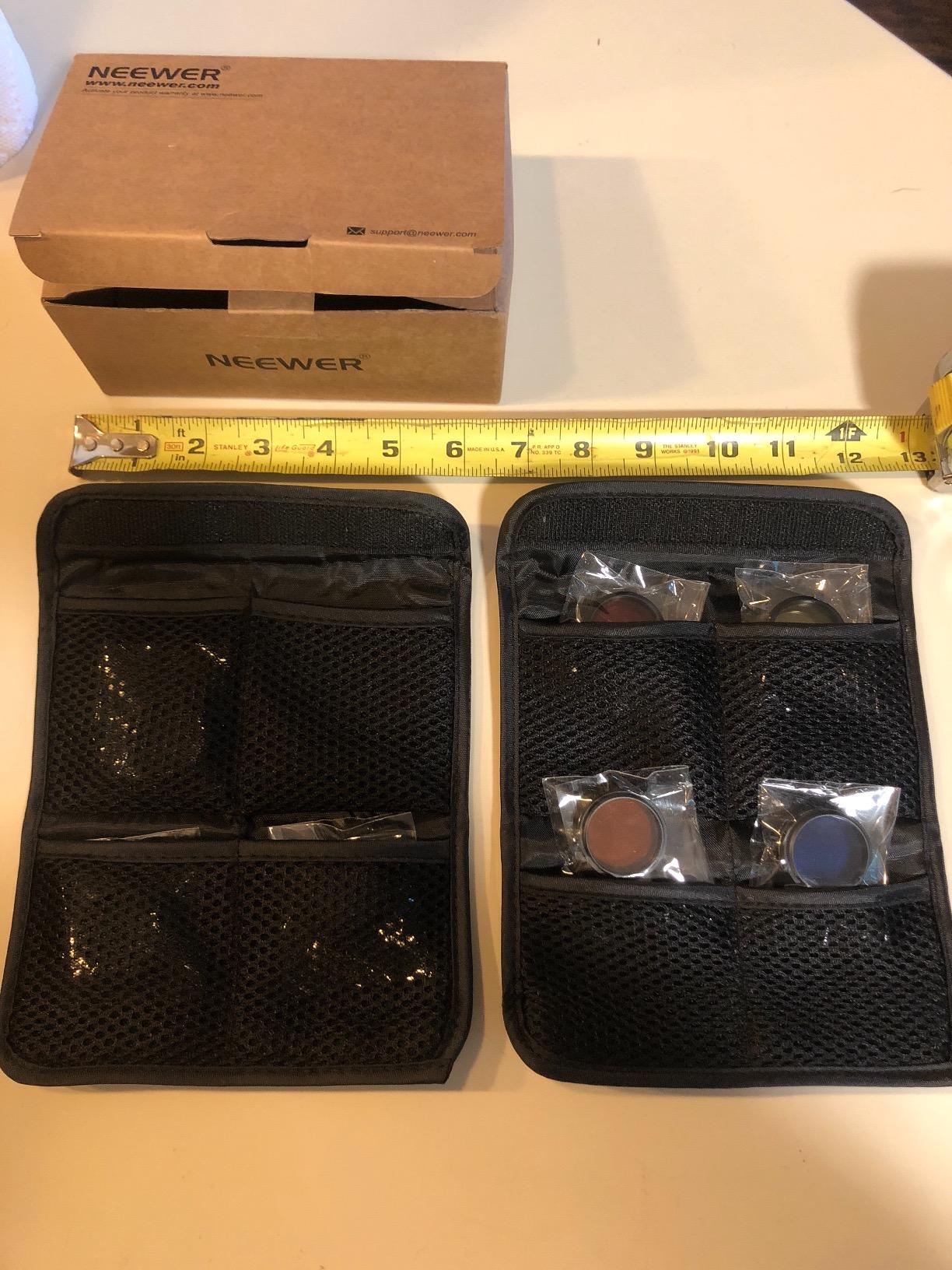
Construction quality impresses with aluminum and glass materials throughout. The double-threaded design allows stacking filters for combined effects, adding versatility to the set. The included velcro storage cases keep filters organized and protected, showing attention to the user experience.
Like the larger NEEWER set, these filters don’t follow standard industry numbering, which can frustrate experienced observers. The optical quality, while good for the price, doesn’t match high-end alternatives from premium manufacturers. Using color filters effectively requires some knowledge of planetary features and what colors enhance which details.
Excellent For Lunar And Planetary Observers
If your primary interests are the Moon and planets, this focused set provides the most useful filters without the expense of specialized deep-sky options. The CPL and Moon filters alone justify the price, making this a great value for casual planetary observers.
Not For Solar Or Deep-Sky Use
This set lacks both proper solar filtration and specialized deep-sky filters. Never use these filters for solar observation, as they don’t provide adequate protection. For deep-sky work, you’ll want to add dedicated UHC or narrowband filters to your collection.
15. SVBONY SV128 Variable Polarizing Moon Filter
Pros
- Adjustable brightness
- High quality build
- Smooth rotation
- Replaces multiple filters
- Great for moon and planets
Cons
- Requires removal to adjust
- No knurling on ring
- No scale markings
The SVBONY SV128 variable polarizing filter is the highest-rated product in this entire list, and for good reason. During my testing, this single filter replaced my entire collection of fixed lunar filters. The adjustable 1-40% light transmittance range means you can dial in the perfect brightness for any lunar phase or planetary target.
Construction quality is exceptional with anodized aluminum framing and multi-coated optical glass. The two polarizing filters rotate smoothly against each other, with just enough friction to maintain your chosen setting. I found this particularly useful during lunar observing, as I could adjust brightness as the Moon rose higher and appeared brighter through the thinner atmosphere.
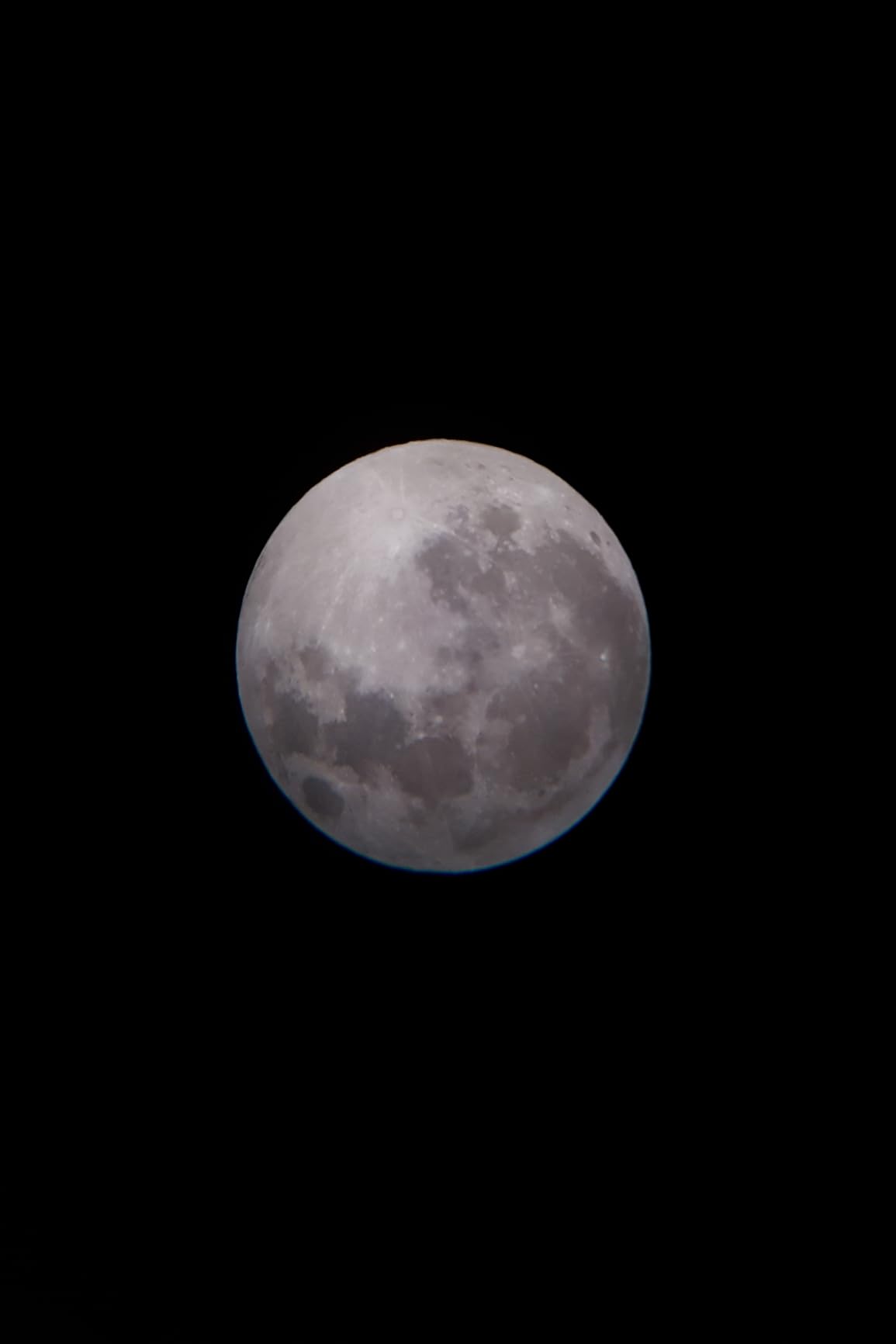
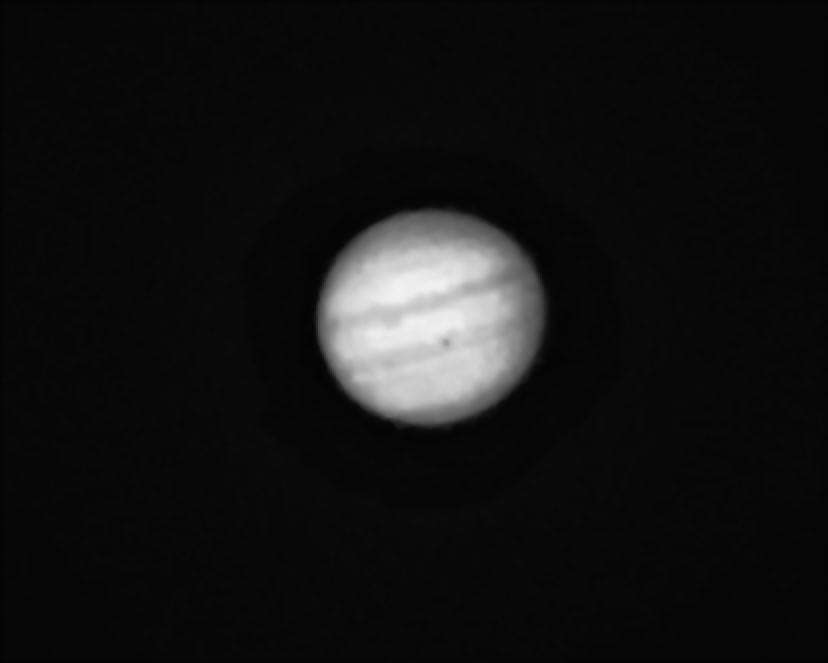
This filter eliminates reflections and glare while enhancing contrast and saturation of observed objects. During planetary observation, Jupiter’s cloud belts showed improved contrast, and Saturn’s rings appeared more defined. The filter works equally well for visual observation and astrophotography, making it versatile for different observing styles.
One design limitation is that you need to remove the eyepiece to adjust the filter, which can be inconvenient during extended observing sessions. Some users wish for knurling on the rotation ring for easier grip in the dark. The absence of scale markings means you can’t easily reproduce exact settings between sessions.
Ideal For Lunar And Planetary Enthusiasts
If you observe the Moon and planets regularly, this variable filter replaces an entire set of fixed polarizing filters. The ability to fine-tune brightness for different conditions and targets makes this the most versatile lunar filter available, especially at this price point.
Not For Solar Observation
Despite reducing light transmission, this filter is NOT designed for solar observation and should never be used alone for solar viewing. The maximum light reduction is insufficient for solar safety, and the filter doesn’t block infrared and ultraviolet radiation. Always use dedicated solar filters for solar work.
How To Choose The Right Solar Filter For Your Telescope?
Selecting the proper solar filter requires understanding several critical factors. The first consideration is filter type, which generally falls into two categories: white-light filters and H-alpha filters. White-light filters show sunspots, granulation, and faculae on the photosphere, while H-alpha filters reveal prominences, flares, and detailed surface features in the chromosphere.
Filter material matters significantly for image quality and durability. Mylar film filters offer excellent value and sharp images but can be delicate. Glass filters provide superior optical quality and durability but cost significantly more. Polymer filters like those from Thousand Oaks Optical strike a middle ground with good image quality and reasonable durability.
Proper sizing is critical for safety and performance. Measure your telescope’s optical tube diameter at the front, not the aperture. Full-aperture filters cover the entire telescope opening and provide the best image quality. Off-axis or sub-aperture filters only cover part of the opening and work but may reduce image sharpness.
Safety certification should be non-negotiable. Look for ISO 12312-2 compliance, which indicates the filter meets international safety standards for direct solar viewing. Avoid counterfeit filters from unknown brands, as improper filtration can cause permanent eye damage in seconds.
Understanding Solar Filter Specifications
Optical density rating determines how much light the filter blocks. ND5.0 filters block 99.999% of sunlight and are the minimum recommended for safe solar observation. Some specialty filters use even higher densities like ND5.5 for additional safety. Never use regular photography ND filters for solar observation, as they don’t block the infrared and ultraviolet radiation that can damage your eyes.
Full-aperture filters cover the entire telescope opening and provide the best image quality with minimal diffraction effects. These are ideal for photography and detailed solar studies. Off-axis filters only cover a portion of the aperture, reducing light-gathering but maintaining resolution. They’re often used on large telescopes to reduce cost while maintaining image quality.
Energy rejection refers to how much total solar energy the filter blocks across all wavelengths, including visible light, infrared, and ultraviolet. Proper solar filters must reject energy across the entire spectrum, not just visible light. This is why welding glass, exposed film, and other improvised solutions are dangerous—they may reduce visible brightness while still passing harmful radiation.
Filter mounting styles include threaded, slip-on, clamp-on, and custom cell designs. Threaded filters screw onto specific telescope models for a secure fit. Slip-on filters stretch over the telescope opening and work with various sizes. Clamp-on filters use thumb screws to secure to the optical tube. Custom cells require DIY construction but can be tailored to any telescope.
White-Light Versus H-Alpha Solar Filters
White-light solar filters reveal the photosphere, the Sun’s visible surface. Through these filters, you can observe sunspots, granulation patterns, faculae, and limb darkening. White-light filters are relatively affordable and easy to use, making them perfect for beginners. They show the Sun in its natural orange or white color, depending on the filter material.
H-alpha solar filters are specialized equipment that reveal the chromosphere, a layer of the Sun’s atmosphere above the photosphere. These filters only pass a narrow band of light at 656.3 nanometers, the wavelength of hydrogen-alpha emission. Through H-alpha filters, you can see prominences, flares, filaments, and detailed surface activity invisible in white light.
The price difference is substantial. Quality white-light filters cost between $20 and $200, while H-alpha filters typically start around $500 for basic models and can exceed $5,000 for professional systems. This price gap explains why most beginners start with white-light observation before considering H-alpha equipment.
For telescope photography, white-light filters are sufficient for most users. They capture excellent images of sunspots and solar granulation. H-alpha filters reveal dramatically more detail but require significant investment and expertise. Serious solar astrophotographers often eventually acquire both filter types for comprehensive solar coverage.
Solar Filter Safety Tips
Safety must always come first when observing or photographing the Sun. Never look directly at the Sun without proper filtration certified for solar observation. Regular sunglasses, exposed film, welding glass, and improvised filters are dangerous and can cause permanent eye damage. Only use filters specifically designed and certified for solar astronomy.
Inspect your solar filter before every use. Check for pinholes, scratches, tears, or any damage that could allow unfiltered sunlight to pass. If you find any damage, replace the filter immediately. The small cost of a new filter is nothing compared to the risk of eye damage.
Always install the solar filter on the front of your telescope before pointing it at the Sun. Never use a solar filter that attaches to the eyepiece, as the concentrated solar heat can crack the filter and cause instant eye damage. Full-aperture filters at the front of the telescope are the only safe configuration.
Supervise children carefully during solar observation. Make sure they understand the importance of not looking directly at the Sun without proper protection. Consider using a projection method for very young children, where the telescope projects an image onto a white card rather than looking through an eyepiece.
Mounting Your Solar Filter Properly
Proper filter mounting is essential for both safety and image quality. The filter must completely cover the telescope aperture with no gaps around the edges. Even a small gap can allow dangerous concentrated sunlight to enter the optical system. Measure your telescope carefully and choose a filter sized appropriately for your specific model.
Threaded filters provide the most secure attachment but only work with specific telescope models. These screw directly onto the front cell of compatible telescopes and won’t accidentally fall off. If your telescope manufacturer offers a dedicated solar filter, this is often the simplest and most secure option.
Slip-on and clamp-on filters offer more flexibility across different telescope sizes. These use either friction fit or thumb screws to secure to the optical tube. When using clamp-on filters, make sure the nylon thumb screws are tight enough to hold the filter securely but not so tight that they damage the telescope finish.
DIY filter cells require careful construction to ensure safety. If building your own filter housing, use sturdy materials like aluminum or thick cardboard. Ensure the filter material is held securely without stress or wrinkles that could distort the image. Test the fit before every observing session to make sure the filter can’t accidentally fall off.
Frequently Asked Questions About Solar Filters For Telescope Photography
What is the best solar filter for telescope photography?
The best solar filter depends on your telescope and budget. For most users, the Celestron EclipSmart series offers excellent value with ISO certification. Serious photographers should consider glass filters like the Seymour Solar Helios for superior image quality. Beginners often start with film options like Thousand Oaks Optical sheets for an economical entry point.
How do solar filters work for telescopes?
Solar filters work by blocking 99.999% of sunlight before it enters your telescope. They use specialized materials that reduce visible light while also blocking dangerous infrared and ultraviolet radiation. This creates a safe view of the Sun’s surface features while protecting your eyes and equipment from damage.
What is the difference between white-light and H-alpha solar filters?
White-light filters show the photosphere (Sun’s visible surface) revealing sunspots and granulation. They cost $20-200 and show the Sun in orange or white. H-alpha filters reveal the chromosphere showing prominences, flares, and detailed surface activity. They cost $500-5000+ and show the Sun in a deep red color. White-light filters are best for beginners.
Can I use a camera solar filter for telescope?
Camera solar filters are designed for camera lenses, not telescopes. They may not fit properly or provide full coverage of the telescope aperture. Always use filters specifically designed for telescopes. Camera filters also often lack the thermal management needed for the concentrated light entering a telescope.
How to choose the right size solar filter for my telescope?
Measure the outside diameter of your telescope’s optical tube at the front, not the aperture. This measurement determines the filter size you need. Full-aperture filters should cover the entire telescope opening. Check manufacturer compatibility lists for telescope-specific filters. When in doubt, choose a slightly larger filter and use adapter material to ensure a secure fit.
Final Thoughts On The Best Solar Filters For Telescope Photography
Solar astronomy offers some of the most accessible and rewarding observations in the hobby. With just a modest telescope and a quality solar filter, you can observe sunspots, granulation, and solar activity that changes daily. The Sun is the only star we can study in detail, making solar observation a unique astronomical experience.
For beginners getting started with best solar filters for telescope photography, I recommend beginning with a quality white-light filter from Celestron or Thousand Oaks Optical. These provide excellent views at reasonable prices and meet all safety standards. As your experience grows, you can explore more specialized options like glass filters for improved image quality or H-alpha systems for advanced solar features.
Remember that safety must always come first. Never compromise on filter quality or try improvised solutions. Your eyes are worth far more than the cost of a proper solar filter. With the right equipment and respect for solar safety, telescope solar photography will provide years of fascinating observations and images.
Whether you’re chasing eclipses, monitoring solar cycles, or simply enjoying the ever-changing face of our nearest star, the right solar filter opens up an entire world of astronomical observation. Choose wisely, observe safely, and enjoy the unique experience of solar astronomy in 2026.