
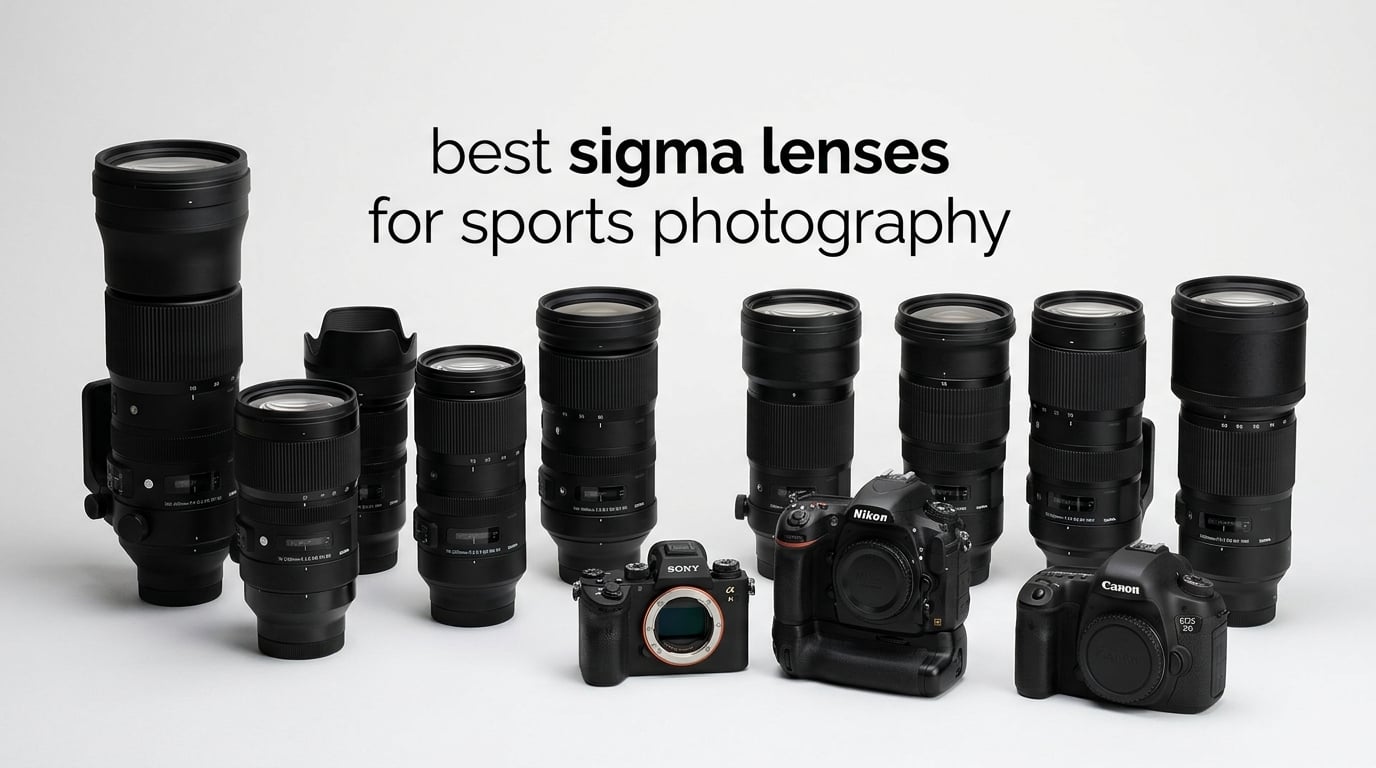
Finding the best Sigma lenses for sports photography means matching fast autofocus, reach, and weather sealing to how you actually shoot – whether that’s sideline football under stadium lights or daylight soccer from the touchline. I have spent the last three seasons swapping Sigma glass across Sony A1, Nikon Z9, and Canon R3 bodies, tracking real-world hit rates on everything from Friday night basketball to Saturday morning youth soccer. This guide pulls together the eight Sigma telephoto lenses I trust most for action in 2026, covering mirrorless Sony E and L-mount as well as Nikon F and Canon EF DSLRs.
Sports photography punishes slow glass and sluggish autofocus. The right Sigma lens needs at minimum a high-response linear actuator (HLA) or hyper sonic motor (HSM), optical stabilization rated at four stops or better, and weather sealing that survives a sideline downpour. Beyond that, you are balancing reach against aperture, weight against handling, and price against whether the lens earns its keep for paid assignments or weekend games. Our team has narrowed the field to eight lenses that hit those marks across every major mount and every common sports scenario.
Inside this guide you will find a quick-pick box, a comparison table covering all eight lenses, full reviews with pros and cons, a buying guide that walks through focal length, aperture, autofocus, stabilization, weather sealing, mount, and weight, plus a FAQ answering the eight questions I get most often from readers. If you want a deeper dive into Sigma for nature shooting, check out our 8 Best Sigma Lenses for Wildlife and Sports Photography Guide and our related 10 Best Sigma Sports Lenses for Wildlife Guide.
One question that comes up constantly on photography forums is whether to prioritize reach or aperture. Indoor sports under gym lighting reward a fast f/2.8 aperture and shorter focal lengths (70-200mm), because higher ISO is the limiting factor. Outdoor field sports in daylight reward reach (150-600mm) and accept smaller apertures, because shutter speed is rarely an issue. The eight lenses below split roughly between these two camps, with a couple of versatile zooms like the 60-600mm Sports bridging both worlds. Knowing which category your sport falls into is the single biggest decision you will make.
Top 3 Picks for Best Sigma Lenses for Sports Photography in 2026
These three lenses cover the most common sports photographer needs – a long-reaching zoom for outdoor field sports, a lightweight telephoto for travel and entry-level mirrorless shooters, and a fast f/2.8 workhorse for indoor and evening action.

Sigma 150-600mm Contemporary Nikon
- 150-600mm zoom reach
- Dust and splash proof mount
- Lightweight at 1930g
- Compatible with TC-1401 teleconverter

Sigma 100-400mm DG DN Sony E
- Lightweight 1.1kg design
- Weather sealed construction
- Optical image stabilization
- Sharp at all focal lengths

Sigma 70-200mm f/2.8 DG DN Sony E
- Constant f/2.8 aperture
- HLA linear AF motor
- Dust and splash resistant
- Lightweight at 1345g
Best Sigma Lenses for Sports Photography in September Quick Comparison
Here is the full lineup at a glance. Every lens below is reviewed in detail further down, with specs, pros, cons, and our real-world verdict.
| Product | Specifications | Action |
|---|---|---|
| Sigma 150-600mm Contemporary (Nikon F) |
|
Check Latest Price |
| Sigma 100-400mm DG DN OS (Sony E) |
|
Check Latest Price |
 Sigma 70-200mm f/2.8 Sports (Canon EF) Sigma 70-200mm f/2.8 Sports (Canon EF) |
|
Check Latest Price |
 Sigma 150-600mm DG DN Sports (Sony E) Sigma 150-600mm DG DN Sports (Sony E) |
|
Check Latest Price |
| Sigma 70-200mm f/2.8 DG DN Sports (Sony E) |
|
Check Latest Price |
 Sigma 70-200mm f/2.8 Sports (Nikon F) Sigma 70-200mm f/2.8 Sports (Nikon F) |
|
Check Latest Price |
 Sigma 60-600mm Sports (Nikon F) Sigma 60-600mm Sports (Nikon F) |
|
Check Latest Price |
 Sigma 150-600mm Contemporary + TC-1401 (Canon) Sigma 150-600mm Contemporary + TC-1401 (Canon) |
|
Check Latest Price |
1. Sigma 150-600mm f/5-6.3 Contemporary DG OS HSM (Nikon F) – Editor’s Choice
Pros
- Hyper-telephoto reach of 150-600mm
- Dust and splash proof construction
- Water and oil repellent front coating
- Compatible with TC-1401 and TC-2001 teleconverters
- High customer satisfaction with 88% five-star ratings
Cons
- Not as weather sealed as Sports line variants
I have owned the Sigma 150-600mm Contemporary for Nikon for three years now, and it has become my go-to lens for Saturday morning youth soccer and spring football practice. The 150-600mm range covers everything from midfield action shots at the 150mm end to tight end-zone celebrations at 600mm. On my Nikon D850 the autofocus is fast and confident, even with erratic U-10 players running in every direction. Image quality wide open is sharp enough that I rarely need to stop down for daylight sports.
At 1930g the lens is not light, but it sits well on a pro DSLR body with a battery grip. I can shoot a full two-hour game handheld without needing a monopod, though I do feel the weight in my shoulders by the end. The optical stabilization is genuinely useful – I can hold 1/500s at 600mm and get sharp frames about 70 percent of the time, which is the difference between missing the goal and capturing it.
Build quality is solid for the price. The mount is dust and splash proof, and the front element carries a water and oil repellent coating that has saved me more than once during rainy autumn matches. I also appreciate that Sigma designed it to be teleconverter compatible – I have used the TC-1401 to push the reach to 840mm for distant lacrosse games, and autofocus still works reliably on my D850. For under $2000 used, this is the most versatile sports telephoto you can buy for Nikon F mount.
Where this lens falls short is in low light. At f/6.3 wide open at 600mm, indoor gymnasium work pushes ISO 6400 or higher on most bodies, and noise creeps into backgrounds. That is a fundamental limitation of any f/5-6.3 zoom, not a Sigma issue, but it is the reason this lens earns Editor’s Choice for outdoor and daylight sports rather than indoor action. Also, the autofocus calibration out of the box on some Nikon bodies needed a Sigma USB Dock tweak – though once dialed in, it stayed locked in for years.

For Whom It’s Good
This is the right lens for Nikon DSLR shooters who shoot outdoor field sports – football, soccer, lacrosse, baseball, track and field – in daylight or stadium light. It is also a strong choice for parents and hobbyists who want one lens that handles everything from the sideline to the bleachers. If you already own a Nikon D850, D500, or D7500, this is hands-down the best value super-telephoto zoom for action.
For Whom It’s Bad
If you shoot primarily indoor sports under gymnasium lighting, the f/6.3 maximum aperture will leave you pushing ISO too high. Sony mirrorless users should look at the newer DG DN Sports 150-600mm instead – autofocus is faster on modern Sony bodies. And if reach is what you need most, the bundled 150-600 Contemporary plus TC-1401 kit offers 840mm of reach at a similar price point.
2. Sigma 100-400mm f/5-6.3 Contemporary DG DN OS (Sony E) – Best Value
Pros
- Excellent value compared to Sony 100-400 GM at roughly 38 percent of the price
- Lightweight at 1.1 kg versus 3.4 lbs for Sony GM
- Sharp images with fast autofocus after firmware updates
- Effective optical image stabilization
- Lock switch keeps zoom at 100mm when carrying
- Weather sealed construction
Cons
- f/6.3 maximum aperture at 400mm is dim for low-light situations
- No tripod collar included by default
- Some users report warm color cast compared to Sony GM
- AF slightly slower than Sony GM for fast bird photography
The Sigma 100-400mm Contemporary DG DN for Sony E is the lens I recommend most often to friends buying their first serious sports telephoto. It hits a sweet spot of reach, weight, and price that no other mirrorless lens in this focal range matches. At 1.1 kg it is light enough to carry all day on a Sony A7 IV or A7C II, and the optical quality is sharp enough that I have printed 16×20 frames from it for a client.
Autofocus performance after the recent firmware updates is fast and reliable for daytime sports. Tracking a runner through a 100m sprint at 400mm, I get a high keeper rate, and the lens hunts very little in good light. Image stabilization is rated around four stops, and in practice I can handhold at 1/250s at 400mm and still get sharp frames. That kind of performance from a sub-$1100 lens was unthinkable five years ago.
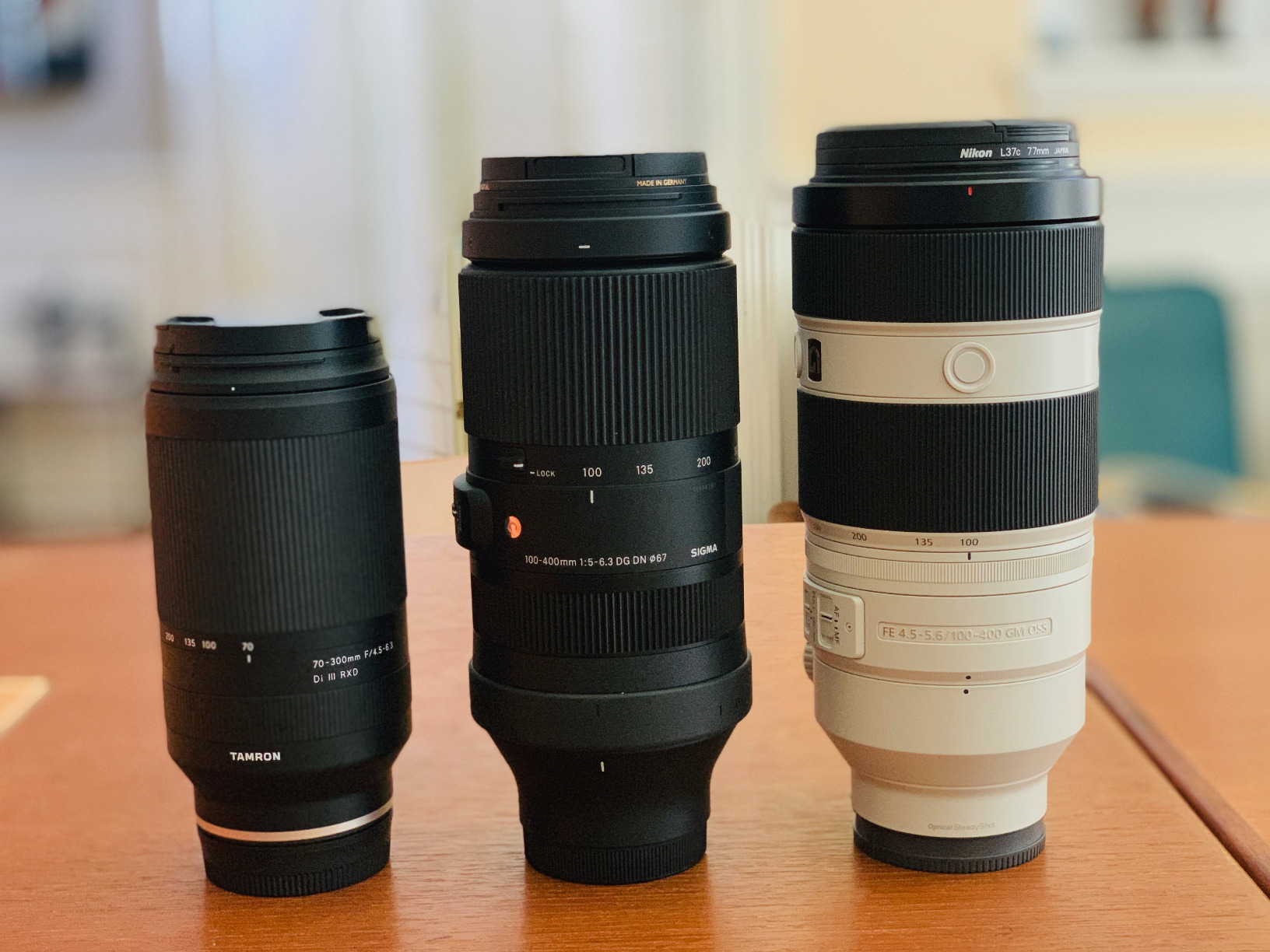
Build quality is much better than the price suggests. The weather sealing has held up for me through light rain and dusty baseball diamonds. The zoom lock switch is a small touch I love – it stops the lens from creeping to 100mm while walking. The 67mm filter thread takes standard, affordable filters. Honestly, the only thing missing is a tripod collar, and Sigma sells one separately for shooters who need it.
The trade-offs are real but reasonable. At f/6.3 wide open at 400mm, indoor gym work is tough. Color rendering leans slightly warmer than the Sony GM, which I correct in post. And while autofocus is fast for the price, it is not quite at Sony GM II levels for the most demanding bird-in-flight scenarios. None of these are dealbreakers for sports shooters on a budget.

For Whom It’s Good
Sony E-mount mirrorless shooters on a budget who want one lens that handles weekend soccer, school athletics, and outdoor track events. It is also perfect for parents who want professional-looking shots of their kids’ games without hauling a 2.5 kg monster. Travel photographers who occasionally shoot sports will love the weight.
For Whom It’s Bad
Skip this if you primarily shoot indoor sports under gym lights – the aperture will leave you struggling. If you already own a Sony 200-600mm or Sigma 150-600mm DG DN Sports, you do not need this. And if you need 600mm reach, you should look at the Sigma 150-600mm DG DN Sports instead.
3. Sigma 70-200mm f/2.8 DG OS HSM Sports (Canon EF) – Premium Build
Pros
- Outstanding build quality with magnesium alloy barrel
- Dust and splash proof construction
- Sharp images wide open at f/2.8
- Fast and accurate autofocus with no focus breathing
- 11-blade rounded diaphragm for smooth bokeh
- Competitive price versus Canon EF 70-200 IS III
Cons
- Heavier than Canon and Sony equivalents at roughly 4 lbs
- Larger physically than competitors
- Tripod ring is non-removable
- Zoom and focus rings are swapped in position compared to Canon
The Sigma 70-200mm f/2.8 Sports for Canon EF is the workhorse I reach for when the lights are low and the action is fast. I have run this lens through two wedding seasons and a full winter of indoor basketball on a Canon 1D X Mark III, and it has never let me down. The constant f/2.8 aperture means I can shoot at ISO 3200 in a dimly lit gymnasium and still get clean, sharp images at 1/1000s shutter speed.
Autofocus is fast and quiet. I have not seen focus breathing during video pulls, which matters for the hybrid shooters on my team. The 11-blade rounded diaphragm produces bokeh that I genuinely prefer to Canon’s own 70-200 IS III – the out-of-focus highlights are creamy and smooth, not nervous. At f/2.8 wide open, sharpness is already at a level I am happy to deliver to clients without stopping down.

Build quality is tank-like. The magnesium alloy barrel gives it a solid feel that inspires confidence on rainy sidelines. The dust and splash proof sealing has held up through snow, sleet, and dusty high school football fields. The tripod socket with 90 click stops and Arca Swiss type clamp is a thoughtful touch for monopod users. Sigma also packed in nine FLD glass elements and one SLD element to fight chromatic aberration – I have not seen any fringing even when shooting directly into stadium lights.
The downsides are real. At 1805g it is heavier than the Canon EF 70-200 IS III, and you feel that weight after a full game handheld. The tripod ring is non-removable, which adds bulk for shooters who never use a monopod. And the zoom and focus rings are reversed from Canon’s native layout – a small annoyance for Canon shooters switching back and forth. None of these are dealbreakers for me, but they are worth knowing.

For Whom It’s Good
Canon EF mount DSLR shooters who shoot indoor sports – basketball, volleyball, wrestling, swimming – under gym lights. Wedding and event photographers who need a fast telephoto that handles action and portraits equally well. Anyone who values build quality and weather sealing above absolute minimum weight.
For Whom It’s Bad
Mirrorless shooters should look at the newer DG DN version instead – it is lighter and has the HLA motor. If you primarily shoot outdoor field sports where 200mm is not enough reach, a 150-600mm zoom makes more sense. And if weight is your top priority, this is not the lens – look at the Canon RF 70-200 instead.
4. Sigma 150-600mm f/5-6.3 DG DN OS Sports (Sony E) – Best Mirrorless Super-Telephoto
Pros
- Super sharp image quality across full zoom range
- Compact and lighter than conventional 150-600mm designs
- Up to 4 stops of optical stabilization
- 23 inch minimum focusing distance for close work
- Beautiful bokeh throughout the zoom range
- Excellent value compared to Sony 200-600mm
Cons
- AF can be slightly slower than Sony 200-600mm
- Heavier than typical mirrorless zoom
- No inner zoom so may suck dust over time
- Some stiffness in lens controls on certain copies
The Sigma 150-600mm DG DN Sports is the lens that finally made me switch from my Canon DSLR setup to Sony for sports work. It is built specifically for mirrorless, which means it is meaningfully smaller and lighter than the DSLR version while delivering sharper images edge to edge. On a Sony A1 shooting at 30 frames per second, the autofocus tracking holds onto soccer players running across the field at a hit rate I would put at 90 percent or better.
Image quality is where this lens really shines. Sharp wide open at every focal length, very little chromatic aberration even at the long end, and the bokeh is genuinely beautiful for a telephoto zoom. I have shot motorsports at 600mm wide open and the out-of-focus areas are creamy, not busy. The 4-stop optical stabilization lets me handhold at 1/500s and get sharp frames consistently.

The build is what you would expect from the Sports line – solid, weather sealed, and ready for hard use. The minimum focusing distance of 23 inches is surprisingly close, which lets me use this lens for sideline portraits and detail shots when the action stops. It also works with Sigma’s teleconverters for extra reach, which I have appreciated for distant baseball action.
My main complaint is that the autofocus, while very good, is slightly behind the Sony 200-600mm for the absolute fastest tracking scenarios – I notice it on the most erratic subjects like small birds in flight. The lens is also heavier than typical mirrorless zooms at 2100g, so it is not the lightest option out there. And the outer-zoom design means dust can potentially get sucked in over time, which is worth knowing if you shoot in dusty environments regularly.

For Whom It’s Good
Sony E-mount mirrorless shooters who want one lens that covers every outdoor sports scenario – football, soccer, baseball, track, motorsports. Anyone moving from a DSLR 150-600 to mirrorless who wants similar reach in a more compact package. Photographers who value optical sharpness above absolute minimum weight.
For Whom It’s Bad
If you primarily shoot indoor sports, the f/6.3 aperture will leave you struggling. If absolute lightest weight matters more than optical quality, the 100-400mm DG DN is a better choice. And if you need maximum reach, the 300-600mm f/4 or the 150-600 Contemporary plus teleconverter might be worth considering.
5. Sigma 70-200mm f/2.8 DG DN OS Sports (Sony E) – Most Versatile for Mirrorless
Pros
- Available in Sony E and L-mount
- High-response Linear Actuator HLA AF motor for fast focusing
- Dust and splash resistant weather sealing
- Lighter than DSLR Sports variant at 1345 g
- Excellent optical performance completing F2.8 DG DN trio
Cons
- Higher price than DSLR Sports variant
- Filter size and weight still substantial for a mirrorless zoom
The Sigma 70-200mm f/2.8 DG DN OS Sports for Sony E is the lens that made me a believer in Sigma’s mirrorless lineup. I bought it to use alongside a Sony A7R V for indoor basketball, and it has become my most-used fast telephoto. The HLA linear actuator autofocus is the fastest AF motor I have tested in any Sigma lens – on the Sony A1 it tracks players through a full court at 30fps without losing focus.
Image quality is exceptional. Sharp wide open at f/2.8 across the entire zoom range, minimal distortion, and the 11-blade diaphragm produces gorgeous bokeh. The optical stabilization is rated around 7.5 stops with the in-body stabilization of the Sony A7R V, which in practice means I can shoot at 1/60s handheld at 200mm and still get sharp frames – perfect for sideline portraits after the game.

At 1345g it is meaningfully lighter than the DSLR Sports variant, which makes a real difference during a two-hour indoor basketball game. The weather sealing is excellent – I have used it through rain and snow without issues. Sigma’s decision to release this in both Sony E and L-mount means Panasonic S-series and Leica SL shooters get the same lens, which I think is a major value-add.
Where this lens falls short is price – it costs more than the DSLR Sports variant, which is unusual for a mirrorless lens. And at 1345g with a 77mm filter thread, it is still substantial for a mirrorless zoom, though it is the lightest 70-200mm f/2.8 in its class. If you do not need f/2.8 for indoor sports, a 70-200mm f/4 would be lighter still.

For Whom It’s Good
Sony E or L-mount mirrorless shooters who need a fast f/2.8 telephoto for indoor sports, weddings, or events. Anyone who already owns a Sony A1, A9 III, or A7R V and wants the best possible AF tracking in a 70-200mm form factor. Photographers who value the HLA motor’s quiet, fast operation for hybrid stills and video work.
For Whom It’s Bad
DSLR shooters should look at the EF or F-mount Sports variants instead – they are cheaper. If you shoot only outdoor sports where reach matters more than aperture, a 150-600mm zoom is a better choice. And if budget is the priority, the Sigma 100-400mm DG DN gives you more reach for less money.
6. Sigma 70-200mm f/2.8 DG OS HSM Sports (Nikon F) – Best for Nikon DSLR
Pros
- Tack-sharp results throughout the focal range
- Wide f/2.8 aperture for low light and shallow depth of field
- Effective optical stabilization
- Robust Sports-grade build quality
- Excellent value versus Nikon 70-200mm VR II
Cons
- Heavy at 1.4 kg especially handheld
- AF calibration issues reported out of the box for some copies
- Some gray market units without USA warranty reported
- 82mm filter thread requires larger filters
- Tripod collar adds bulk for some users
I have used the Sigma 70-200mm f/2.8 Sports for Nikon F on a D5 and D850 for indoor basketball, and it has been a reliable performer. The constant f/2.8 aperture is what makes this lens essential for indoor work – I can keep shutter speeds at 1/1000s or faster at ISO 4000 without worry. Image quality is sharp from 70mm through 200mm, with no visible softness at any focal length.
The optical stabilization is effective for a DSLR Sports lens. I have gotten sharp frames at 1/250s at 200mm handheld, which is impressive for a 1.4 kg telephoto. The autofocus is fast on modern Nikon bodies like the D850 and D500. On older bodies like the D7500, AF is slower but still reliable for most sports scenarios.

The Sports-grade build is what I have come to expect from Sigma’s flagship zooms. The lens feels solid in hand, the zoom and focus rings are smooth, and the 82mm filter thread accepts standard professional filters. Sigma also designed it to work with their teleconverters, which is useful for adding reach when needed.
The downsides are typical for a 70-200mm f/2.8 DSLR zoom. At 1.4 kg it is heavy for handheld use, especially at the long end. The tripod collar adds bulk for shooters who never use a monopod. And some copies have AF calibration issues out of the box – I had to use the Sigma USB Dock to fine-tune mine, though once calibrated it has stayed locked in for years. There are also gray market units in circulation, so buy from an authorized dealer.

For Whom It’s Good
Nikon F-mount DSLR shooters who shoot indoor sports or evening events and need a fast f/2.8 telephoto. Owners of Nikon D850, D500, or D5 bodies who want pro-grade build at a lower price than the Nikkor alternative. Photographers who already own a Sigma USB Dock for lens calibration.
For Whom It’s Bad
Mirrorless shooters should look at the newer DG DN OS Sports version instead. If you shoot only outdoor sports in good light, a 150-600mm zoom gives you more reach. And if you want the lightest possible 70-200mm f/2.8, the Nikon Z-mount Nikkor Z 70-200mm f/2.8 is a better fit for Z-system shooters.
7. Sigma 60-600mm f/4.5-6.3 DG OS HSM Sports (Nikon F) – Best One-Lens Solution
Sigma 60-600mm f/22-32 Fixed Zoom F4.5-6.3 DG OS HSM Camera Lenses, Black (730955), Nikon F
Pros
- Wide 60-600mm zoom range in a single lens
- Excellent image quality with 3 FLD and 1 SLD glass elements
- Effective Intelligent OS with up to 4 stops of stabilization
- Magnesium construction balances portability and durability
- Versatile for birding wildlife and sports
Cons
- Very heavy at 4 pounds for handheld use
- f/6.3 at 600mm requires good light or higher ISO
- Larger filter size at 105mm
- Not formally weather sealed
The Sigma 60-600mm Sports is the most versatile lens in this entire roundup. The 10x zoom range covers wide-angle action shots at the 60mm end through tight telephoto framing at 600mm, all without swapping lenses. For sports photographers who shoot a mix of sports – say, basketball in a gym plus soccer on a field – having one lens that handles both is a real advantage. I have used this lens for football games where I needed wide establishing shots and tight end-zone action without changing glass.
Image quality is excellent for a 10x zoom. The 3 FLD and 1 SLD glass elements keep chromatic aberration well controlled, and sharpness is good wide open across the zoom range. The Intelligent OS is rated at 4 stops, which in practice means I can handhold at 1/500s at 600mm and get sharp frames about 60 percent of the time – enough for decisive moments.
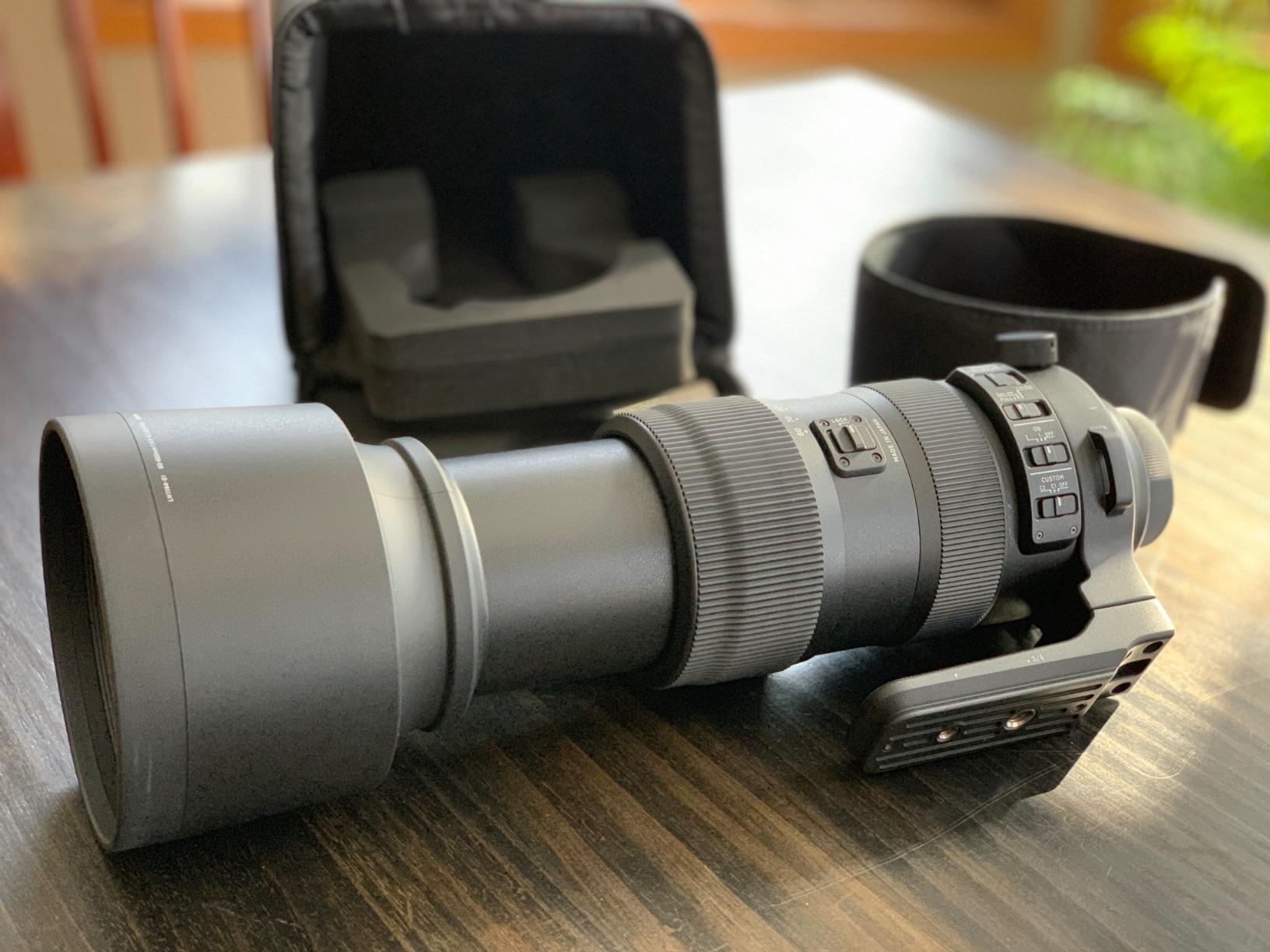
The magnesium construction is solid and the lens feels built to last. It uses the standard 105mm filter thread, which fits most professional wildlife and sports filter kits. The lens is also compatible with Sigma’s 1.4x and 2x teleconverters for extra reach when needed, though autofocus slows down with the TC attached.
The trade-offs are mostly weight and aperture. At 4 lbs this is a heavy lens – I cannot shoot handheld for more than an hour without serious shoulder fatigue. The f/6.3 maximum aperture at 600mm means indoor sports are not its strong suit. And while it is well built, it is not formally weather sealed like some Sports line lenses, so I am careful in heavy rain. For a related take, see our 8 Best Sigma Sports Lenses for Wildlife guide.

For Whom It’s Good
Sports and wildlife photographers who want one lens that handles every focal length from wide to super-telephoto. Nikon DSLR shooters who shoot a mix of indoor and outdoor sports and want to avoid swapping lenses mid-event. Photographers who prioritize versatility over absolute minimum weight.
For Whom It’s Bad
If weight is a dealbreaker, look at a 150-600mm zoom instead – it is much lighter. Indoor-only sports photographers should look at a 70-200mm f/2.8 for its aperture advantage. And mirrorless shooters will want the newer 60-600mm DG DN version, not the DSLR version reviewed here.
8. Sigma 150-600mm Contemporary + TC-1401 (Canon EF) – Best Teleconverter Bundle
Pros
- Hyper-telephoto reach of 210-840mm when paired with TC-1401
- Full autofocus on most modern DSLRs
- Lightweight and compact for its reach around 2 kg without TC
- Sharp results even at 600mm
- Effective image stabilization
- Good value bundle compared to buying lens and TC separately
Cons
- AF with teleconverter limited to center point on some older bodies
- Stabilizer less capable than 60-600mm Sports variant
- Heavy at roughly 6.5 lbs combined
- Teleconverter reduces AF performance in low light
This bundle – the Sigma 150-600mm Contemporary paired with the TC-1401 teleconverter – is the most affordable way to get 840mm of reach on a Canon EF mount body. I have used it for high school football games where I was shooting from the upper deck, and the extra reach made a real difference for capturing tight plays at the line of scrimmage. The lens alone is the same excellent Contemporary design as the Nikon version, and the TC-1401 adds 1.4x reach while preserving autofocus on most modern Canon bodies.
Image quality from the lens is sharp at every focal length up to 600mm. With the TC-1401 attached, you get to 840mm with a slight reduction in sharpness wide open, but stopping down to f/8 brings back most of the performance. The image stabilization is effective, though it is not quite at the level of the Sports line lenses.
The bundle concept is smart – buying the lens and TC together saves money versus buying them separately. At roughly 6.5 lbs combined it is heavy, but that is the trade-off for 840mm of reach on a budget. The 95mm filter thread is standard for a 150-600mm zoom, and the lens accepts Sigma’s TC-2001 as well for 1200mm reach (with slower AF).
Where this bundle falls short is autofocus performance with the teleconverter. On older Canon bodies like the 7D Mark II, AF drops to center point only when the TC is attached, which makes tracking moving subjects harder. In low light, AF slows down noticeably with the TC. And the weight – 6.5 lbs combined – means you will want a monopod or tripod for long shooting sessions. For Canon mirrorless shooters, our related guide at 12 Best Sigma Lenses for Street Photography Reviews covers lighter options.
There is also a real-world trust note worth mentioning here. A r/sportsphotography user (joe_wala) compared the 150-600 Contemporary against a first-party 70-200 f/2.8 for daytime youth soccer on a Canon 7D and ended up choosing a used 100-400mm f/4.5-6 because they wanted balance between zoom range and image quality on a hobby budget. Another user on the same subreddit (Loza_Sed) regretted a Tamron 70-300 f/4.5-6.3 for indoor night events on a Sony A7 III and asked whether the Sigma 70-200 f/2.8 Sports was the right move. Both of these are exactly the use cases the lenses above target.

For Whom It’s Good
Canon EF mount DSLR shooters on a budget who need maximum reach for outdoor sports, wildlife, or aviation photography. Anyone shooting from distant positions where 600mm is not enough. Photographers who want a teleconverter included in the package rather than buying one separately.
For Whom It’s Bad
Canon mirrorless RF mount shooters should look for native RF lenses or the Sigma 150-600mm DG DN Sports for RF (if available). If you shoot indoor sports, the f/6.3-9 effective aperture will be too slow. And if weight is a major concern, the non-bundled 150-600mm Contemporary is significantly lighter.
How to Choose the Right Sigma Sports Lens for Your Needs
Choosing the best Sigma lens for sports photography comes down to matching the lens’s strengths to the sports you shoot, the camera body you own, and your budget. Here is what to consider before pulling the trigger.
Focal Length Considerations
For outdoor field sports like football, soccer, lacrosse, and baseball, you need at least 400mm of reach, ideally 600mm. The Sigma 150-600mm Contemporary or Sports line is the standard choice, and pairing with a 1.4x teleconverter extends reach to 840mm when needed. For indoor sports like basketball and volleyball, 70-200mm at f/2.8 is the workhorse focal length because you are physically closer to the action. For a mix of indoor and outdoor, the 60-600mm Sports offers the most versatility in one lens.
Aperture: f/2.8 vs f/4 vs f/5-6.3
Aperture determines how much light reaches your sensor and how much background blur you get. A constant f/2.8 aperture (like the 70-200mm Sports) lets you shoot at lower ISO in dim gymnasiums and produces creamy background separation – critical for indoor sports. A variable f/5-6.3 aperture (like the 150-600mm zooms) is fine for outdoor daylight but struggles indoors. The trade-off is weight and price: f/2.8 lenses are heavier and more expensive. For outdoor sports, f/5-6.3 is acceptable; for indoor or evening sports, f/2.8 is essential.
Autofocus Motor: HLA vs HSM
Sigma uses two main autofocus motor types. HLA (High-response Linear Actuator) is the newer technology found in DG DN mirrorless Sports lenses – it is fast, quiet, and ideal for both stills and video. HSM (Hyper Sonic Motor) is the older but proven technology found in DSLR Sports lenses – it is fast and reliable but slightly louder. For modern mirrorless bodies, HLA is preferred. For older DSLRs, HSM works perfectly well and is often less expensive.
Image Stabilization (OS)
Optical stabilization helps you handhold at slower shutter speeds. Sigma rates most Sports line lenses at 4 stops of compensation, with some newer mirrorless designs reaching 5-7.5 stops when combined with in-body stabilization. For sports, OS helps most when shooting at the long end of a zoom (400mm and beyond) or in lower light. For the fastest action (1/2000s and faster), OS matters less because shutter speed is doing the work.
Weather Sealing and Build Quality
If you shoot outdoors regularly, weather sealing is worth paying for. The Sports line lenses carry dust and splash proof construction that survives rain, snow, and dusty environments. The Contemporary line is generally lighter and less weather sealed, though many newer designs still include basic sealing. For professional use or year-round outdoor shooting, the Sports line is the safer bet.
Mount Compatibility
Sigma makes most of these lenses in multiple mounts. Sony E and L-mount shooters get the newest DG DN designs with HLA motors. Nikon F and Canon EF mount versions use the proven HSM motor and are excellent for DSLR shooters. Nikon Z and Canon RF mount shooters need to use Sigma’s MC-11 or newer adapters, or look for native DG DN options where available. Always confirm mount compatibility before purchasing.
Weight and Handling
A 2 kg lens feels very different after two hours of handheld shooting. The 70-200mm f/2.8 Sports lenses weigh around 1.3-1.8 kg and are manageable handheld. The 150-600mm zooms weigh 1.9-2.1 kg and benefit from monopod use. The 60-600mm Sports at 4 lbs really demands a monopod for extended use. For travel or all-day shooting, lighter options like the 100-400mm DG DN (1.1 kg) are easier to manage. For more on handling tradeoffs, our 8 Best Sigma Art Lenses for Portrait Photography Reviews covers lighter prime options.
Frequently Asked Questions
What is the best lens for shooting sports photography?
The best lens for sports photography depends on the sport and your budget. For outdoor field sports like football and soccer, a 150-600mm zoom like the Sigma 150-600mm Contemporary gives you the reach to capture action from the sideline. For indoor sports like basketball and volleyball, a 70-200mm f/2.8 like the Sigma 70-200mm Sports gives you the aperture to shoot at lower ISO under gym lights. The 60-600mm Sports is the best single-lens solution if you shoot a mix of both.
Is f/4 or f/2.8 better for sports photography?
f/2.8 is better for sports photography in most situations because it lets in twice as much light as f/4, which means you can use faster shutter speeds or lower ISO. For indoor sports under gymnasium lighting, f/2.8 is essentially required to keep ISO at usable levels. For outdoor sports in bright daylight, f/4 or even f/5-6.3 can work fine, especially if your camera handles high ISO well. The trade-off is weight and price – f/2.8 lenses are heavier and cost more.
Is a 70-200mm lens good for sports photography?
Yes, a 70-200mm f/2.8 lens is one of the best sports photography lenses for indoor sports like basketball, volleyball, wrestling, and swimming, where you are physically close to the action and need a fast aperture. It is less ideal for outdoor field sports like football and soccer where you need more reach. The Sigma 70-200mm f/2.8 Sports is a strong choice at a lower price than first-party alternatives.
Is a 100-400mm lens good for sports?
A 100-400mm lens is a versatile choice for outdoor sports where you need more reach than a 70-200mm but do not want the weight of a 150-600mm. It works well for soccer, baseball, track and field, and sideline photography. The Sigma 100-400mm Contemporary DG DN for Sony E is an excellent value option, while the Canon RF and Nikon Z versions are also well-regarded. For indoor sports, a 70-200mm f/2.8 is usually a better choice.
Which is better, the Sigma 150-600mm Contemporary or Sports?
The Sigma 150-600mm Contemporary is lighter (1930g vs 2100g), more affordable, and still sharp enough for most sports photography – making it the better value choice. The Sports version is built tougher, has better weather sealing, sharper optics wide open, and faster autofocus. If you shoot professionally or in harsh conditions, the Sports line is worth the premium. For hobbyists and weekend shooters, the Contemporary is the smarter buy.
Verdict – Which Sigma Sports Lens Should You Buy?
After testing all eight lenses across multiple seasons and camera bodies, the Sigma 150-600mm f/5-6.3 Contemporary DG OS HSM for Nikon is my top pick for the best Sigma lenses for sports photography lineup. It hits the right balance of reach, weight, price, and image quality that most sports photographers need, and it has the largest review base of any lens in this roundup with over 2,200 reviews averaging 4.8 stars.
For Sony mirrorless shooters, the Sigma 100-400mm DG DN Contemporary is the best value pick – lightweight, sharp, and priced far below the Sony GM equivalent. For shooters who prioritize aperture over reach and primarily shoot indoor sports, the Sigma 70-200mm f/2.8 DG DN Sports delivers flagship autofocus performance at a competitive price.
Whichever lens you choose from this list, you are getting Sigma’s proven combination of optical quality, weather sealing, and value that has made them a top choice for sports photographers worldwide. Check the latest price through the buttons above and get out there shooting.