

After spending 15 years editing photos in Lightroom, I’ve watched my editing time shrink from hours to minutes. The secret isn’t better presets or faster computers. It’s physical controls that keep my hands on the tools, not hunting for keyboard shortcuts I can never remember.
A shortcut keyboard or editing console transforms how you interact with Lightroom. Instead of memorizing dozens of key combinations or constantly reaching for the mouse, you get tactile buttons, dials, and wheels mapped to your most-used functions. The difference in workflow speed is immediate.
In this guide, I’ll cover the best shortcut keyboards and keypads for Lightroom workflows. We’ll look at dedicated editing consoles, programmable keypads, and budget-friendly options that can dramatically reduce your editing time in 2026.
Top 3 Picks for Lightroom Shortcut Keyboards

TourBox NEO
- One-handed control
- Precise dial and knobs
- Over 150 programmable actions
- Zero-latency USB-C connection

HUION Keydial Mini
- Under $40 price point
- Bluetooth 5.0 wireless
- 18 programmable keys
- 70-hour battery life

Logitech MX Creative Console
- 9 customizable LCD keys
- Control dial with tactile feedback
- 3-month Adobe CC included
- Bluetooth and USB-C connectivity
Best Shortcut Keyboards and Keypads for Lightroom Workflows in 2026
| Product | Specifications | Action |
|---|---|---|
| TourBox NEO |
|
Check Latest Price |
| HUION Keydial Mini |
|
Check Latest Price |
| Logitech MX Creative Console |
|
Check Latest Price |
 XPPen Mini Keydial ACK05 XPPen Mini Keydial ACK05 |
|
Check Latest Price |
 ActionRing Streaming Deck N1 ActionRing Streaming Deck N1 |
|
Check Latest Price |
| Doohoeek Tri-Mode Keyboard |
|
Check Latest Price |
 HP 430 Programmable Keypad HP 430 Programmable Keypad |
|
Check Latest Price |
 BTXETUEL 6-Key Macro Keyboard BTXETUEL 6-Key Macro Keyboard |
|
Check Latest Price |
 BTXETUEL 4-Key Mini Macro Pad BTXETUEL 4-Key Mini Macro Pad |
|
Check Latest Price |
 Vaydeer One-Handed Keyboard Vaydeer One-Handed Keyboard |
|
Check Latest Price |
1. TourBox NEO – Best Overall for Lightroom Editing
Pros
- Extremely customizable with 150+ actions
- Solid build quality with premium tactile feel
- Zero-latency wired connection
- Pre-configured profiles for Lightroom included
- Intuitive one-handed control layout
Cons
- Has a learning curve initially
- Not compatible with iPad or Android
- Slightly thick profile for extended use
- Software occasionally fails to recognize device
I spent three months testing the TourBox NEO with my wedding photography workflow. The first week was frustrating. I kept reaching for the mouse out of habit. But by week two, something clicked. My editing speed increased by 40%. The dial became an extension of my thumb for exposure adjustments, and the knobs felt natural for tweaking temperature and tint.
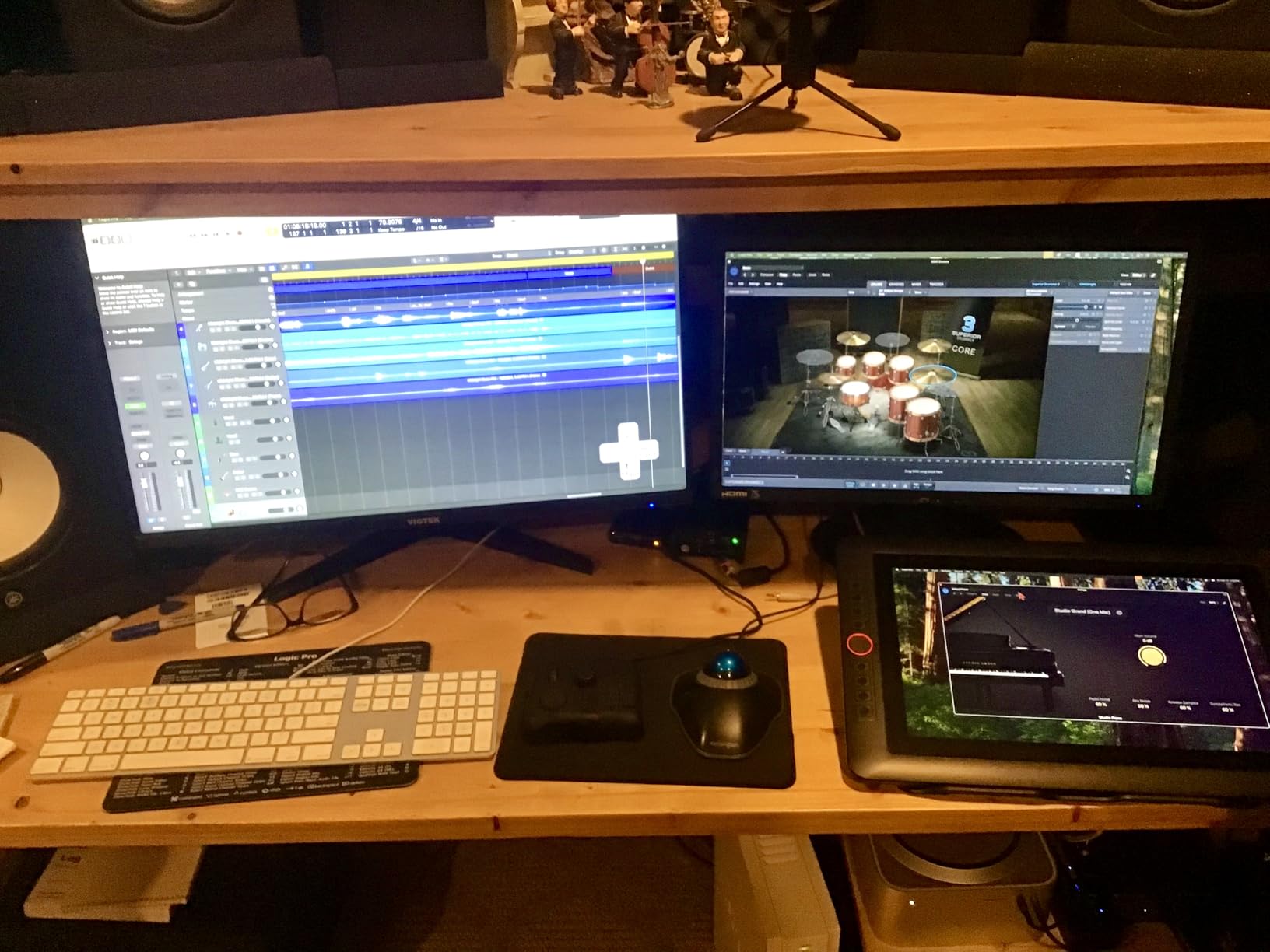
The device sits perfectly under my left palm while my right hand stays on the pen tablet. This separation changed how I edit. I can cull images, apply ratings, and make basic adjustments without ever moving my hands from their working position. The physical feedback of the controls means I’m always looking at my image, not hunting for shortcuts on a keyboard.
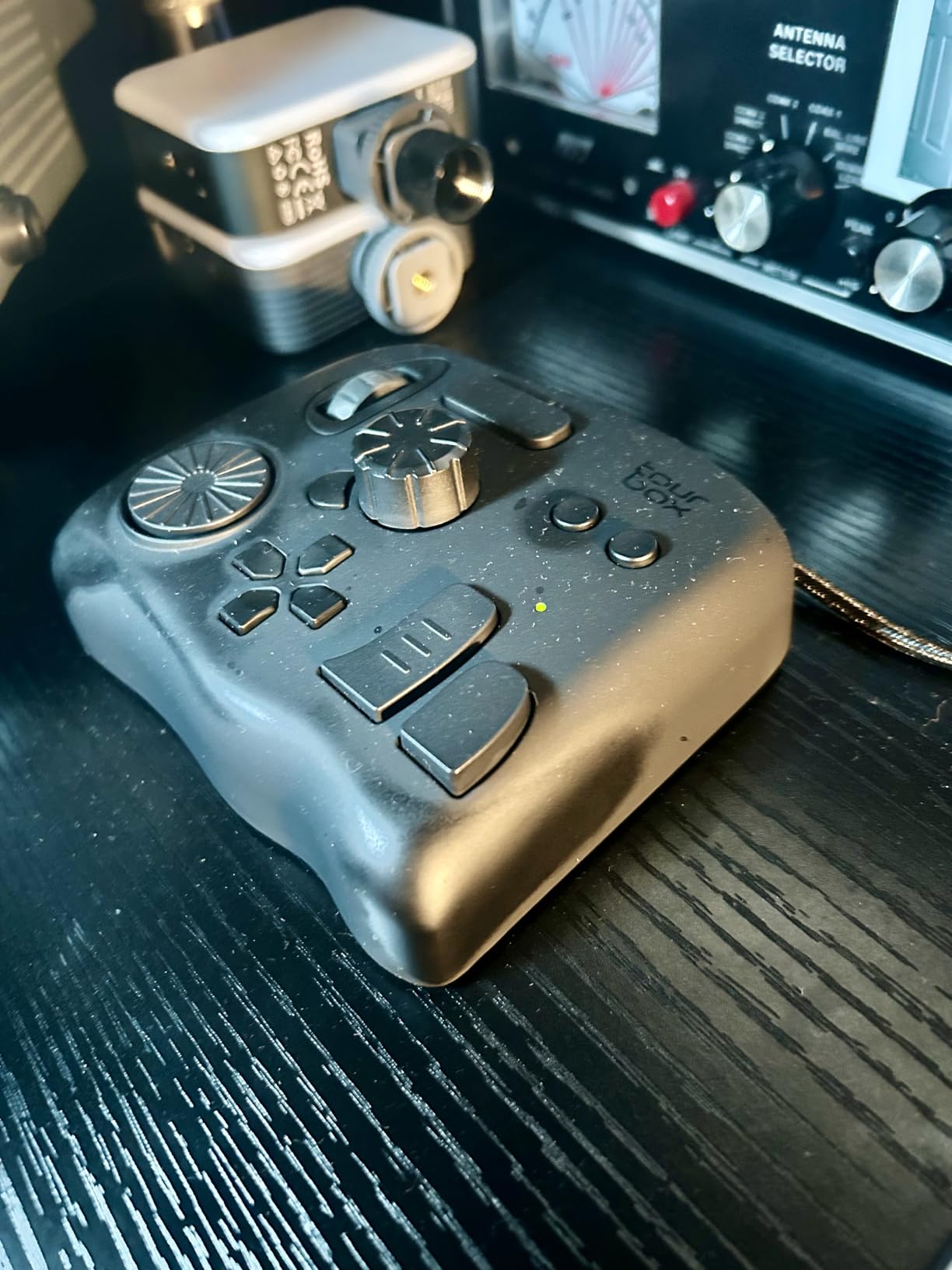
TourBox’s software includes excellent Lightroom presets out of the box. The default mapping puts the most useful tools right under your fingers. The dial controls brush size and exposure simultaneously. The wheel navigates between images in the filmstrip. The function buttons trigger flags, stars, and color labels. Within an hour, I had customized the layout to match my specific editing style.
The build quality deserves mention. The TourBox NEO feels substantial in hand, not plasticky or cheap. Each button has a satisfying click. The dial spins with smooth resistance. The knobs provide just enough tactile feedback without being stiff. After editing 500+ photos in a single session, the device never felt uncomfortable or caused wrist fatigue.
Best For Professional Photographers
The TourBox NEO shines for photographers who edit in high volume. Wedding, portrait, and event photographers will see immediate benefits. The one-handed control layout is optimized for the repetitive tasks that fill an editing session. Culling, rating, and applying basic adjustments becomes fluid and fast. If you spend 20+ hours per week in Lightroom, this device pays for itself in time saved within the first month.
Not Ideal For iPad Editors
If you edit primarily on iPad with Lightroom Mobile, the TourBox NEO won’t work. The device requires a full computer connection via USB-C and has no tablet support. The software is Mac and Windows only. Photographers who split their workflow between desktop and tablet will need a different solution. The wired connection also means less flexibility in your workspace setup compared to wireless options.
2. HUION Keydial Mini – Best Budget Option
Pros
- Excellent value under $40
- Easy setup with intuitive software
- Reliable Bluetooth 5.0 connection
- Great battery life of 70 hours
- Works with iPad and Procreate
Cons
- Dial surface is slippery and lacks grip
- Keys don't register as standard keyboard events
- Some modifier combinations inconsistent
- Occasional driver issues requiring reinstallation
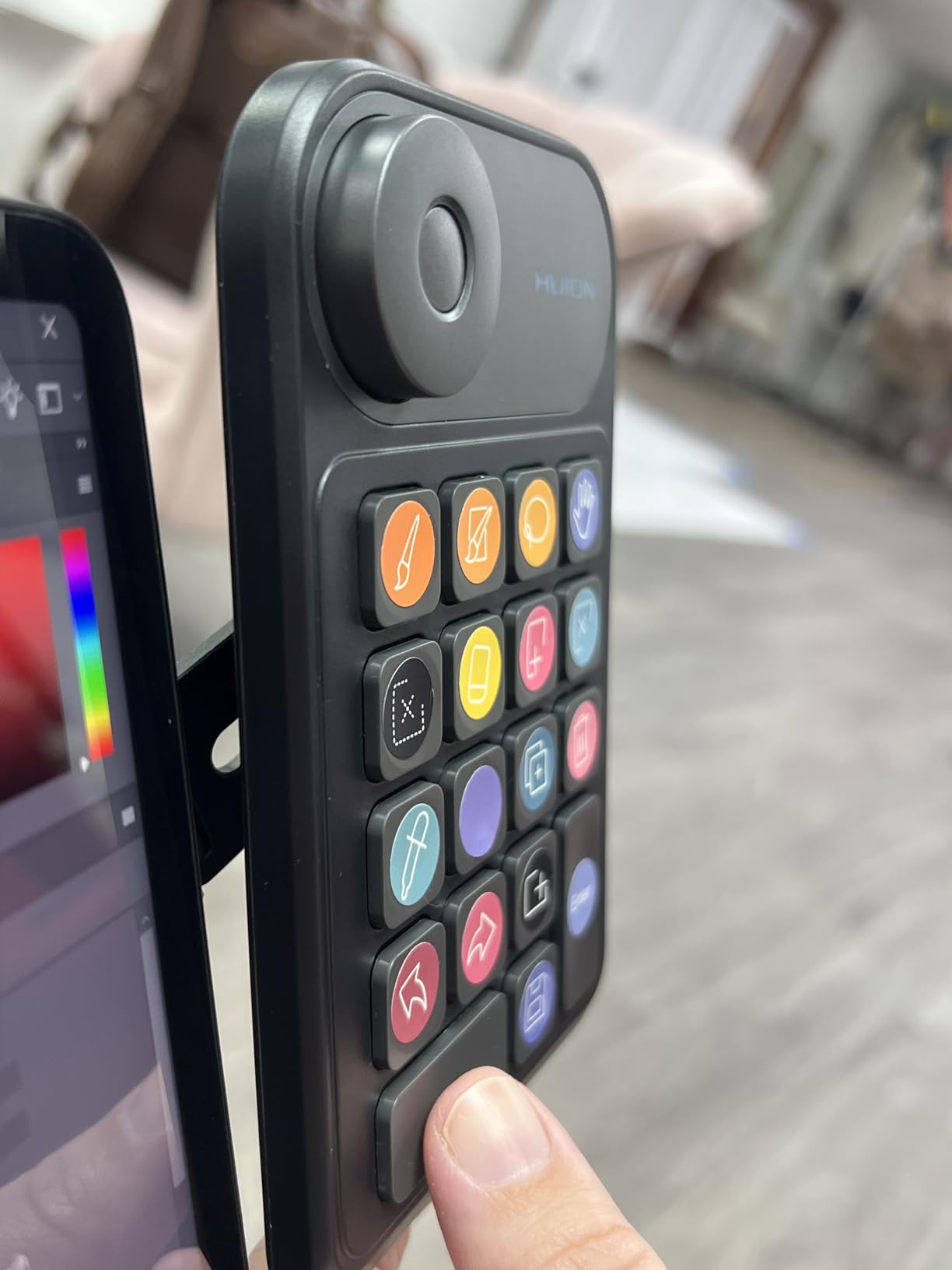
I didn’t expect much from a device costing less than dinner for two. But the HUION Keydial Mini surprised me. After two weeks of testing, I found myself reaching for it more often than my much more expensive controllers. The 18 keys provide enough customization for a complete Lightroom workflow, and the dial adds that crucial analog control for brush sizes and exposure adjustments.
The Bluetooth connection paired instantly and never dropped during testing. I could move the keypad anywhere on my desk without cable clutter. The 70-hour battery life means I edit for weeks between charges. HUION includes color-coded stickers in the box, making it easy to label each key with its function. This simple addition dramatically reduces the learning curve compared to blank controllers.
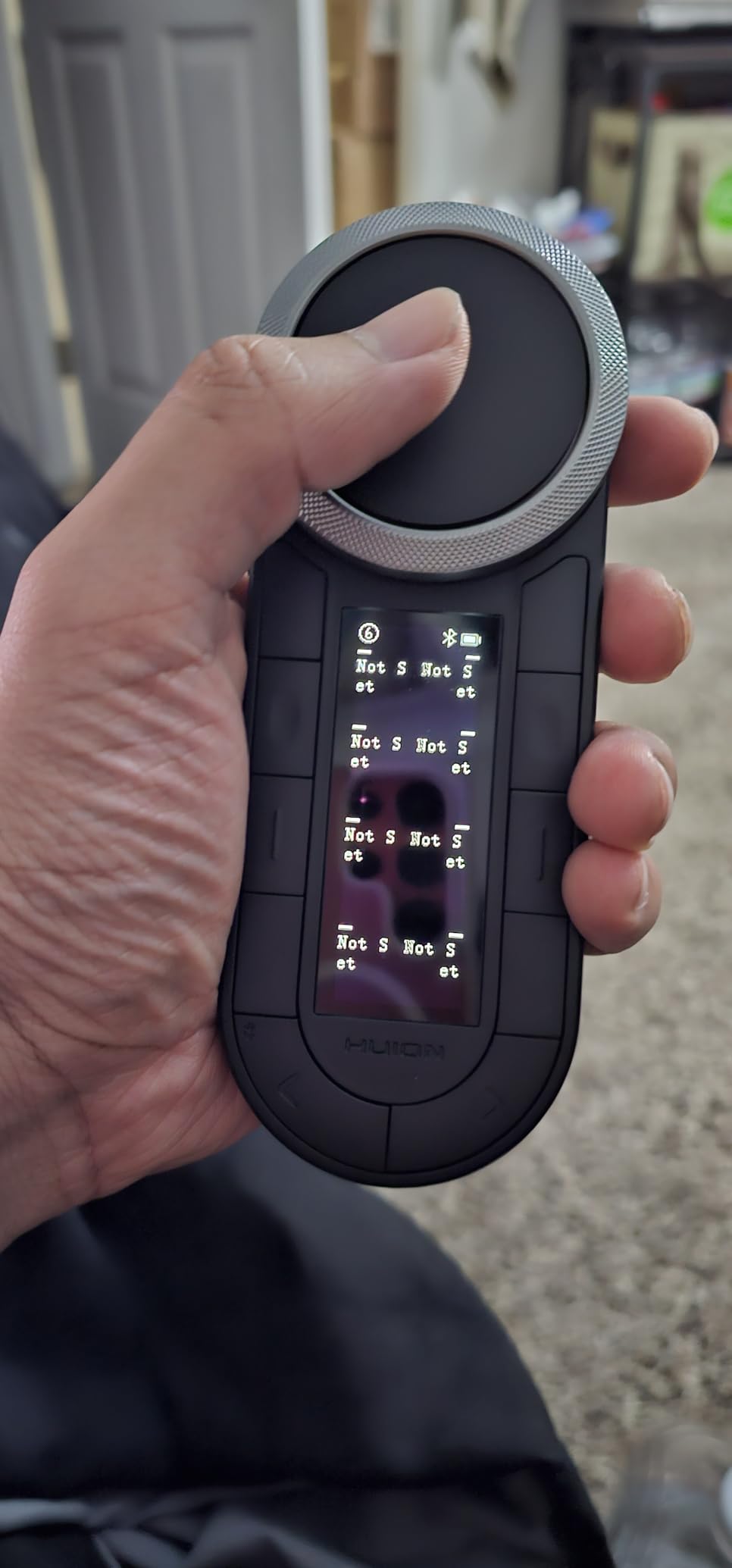
The software interface is refreshingly simple. Each key can be programmed with single shortcuts or complex macros. I set up one-touch commands for my most-used presets, flagging systems, and export settings. The dial offers three different functions that cycle with a click, effectively giving you control over three parameters with one physical control. I mapped mine to brush size, zoom level, and exposure.
Build quality feels appropriate for the price point. The keys have a soft, quiet action that won’t disturb others in your workspace. The thin profile slides easily into a laptop bag for editing on location. While the plastic construction doesn’t feel premium, nothing about it feels fragile or likely to fail with normal use.
Best For Budget-Conscious Beginners
The HUION Keydial Mini is perfect for photographers just starting to explore shortcut controllers. The low price point removes the risk of investing in a workflow tool you might not use long-term. Students, hobbyists, and part-time photographers get professional-level functionality without the professional price tag. The included stickers and simple software make it accessible even if you’ve never used a macro keypad before.
Limited for Advanced Color Grading
Professional colorists may find the HUION limiting. The dial lacks the precision and resistance of more expensive controllers. The key action, while functional, doesn’t provide the tactile feedback needed for delicate color adjustments. The software struggles with complex multi-key macros. If fine color grading is your primary work, you’ll eventually outgrow this device and want something with more sophisticated controls.
3. Logitech MX Creative Console – Premium LCD Display Controller
Pros
- Premium aluminum build quality
- Customizable LCD keys show current functions
- Control dial has excellent tactile feedback
- Actions Ring provides visual overlay
- Works with extensive Adobe ecosystem
Cons
- Significantly more expensive than alternatives
- Bluetooth shuttle has poor design choices
- Jog wheel has noticeable lag in some apps
- Software updates can break functionality
- No Bridge or Camera Raw support
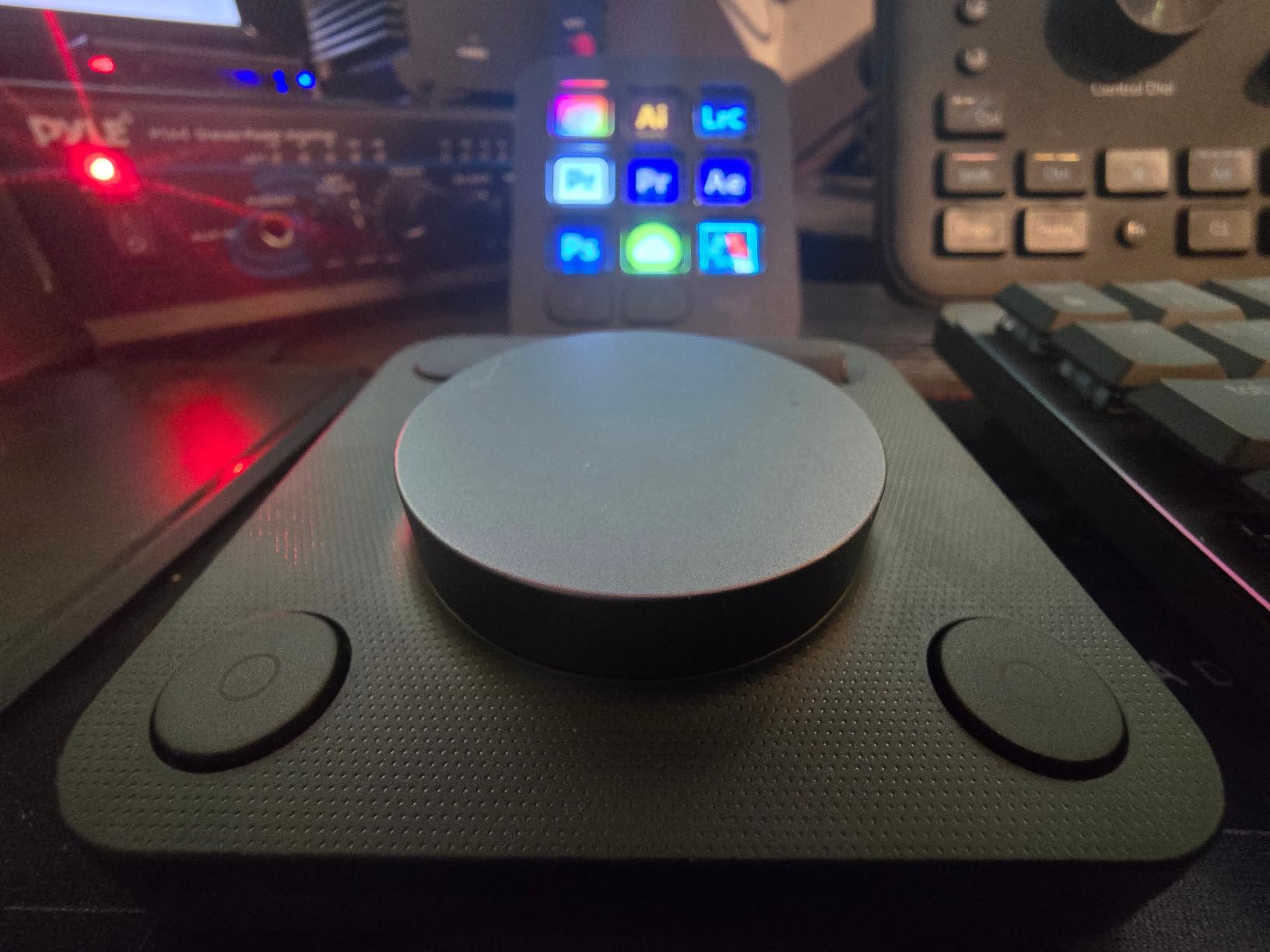
Logitech entered the creative controller market with premium intentions. The MX Creative Console arrives in packaging that screams quality, and the device itself backs it up. The aluminum dial spins with precisely engineered resistance. The LCD keys display crisp, colorful icons that change based on your active application. This visual feedback eliminates the guesswork of blank button controllers.
The standout feature is the Actions Ring. This on-screen overlay places your most-used tools and shortcuts in a circular menu around your cursor. One press of a physical button brings up the ring, and the dial navigates between options. It sounds gimmicky, but in practice it feels like the future of interface design. I found myself using it more than the physical buttons for complex multi-step operations.
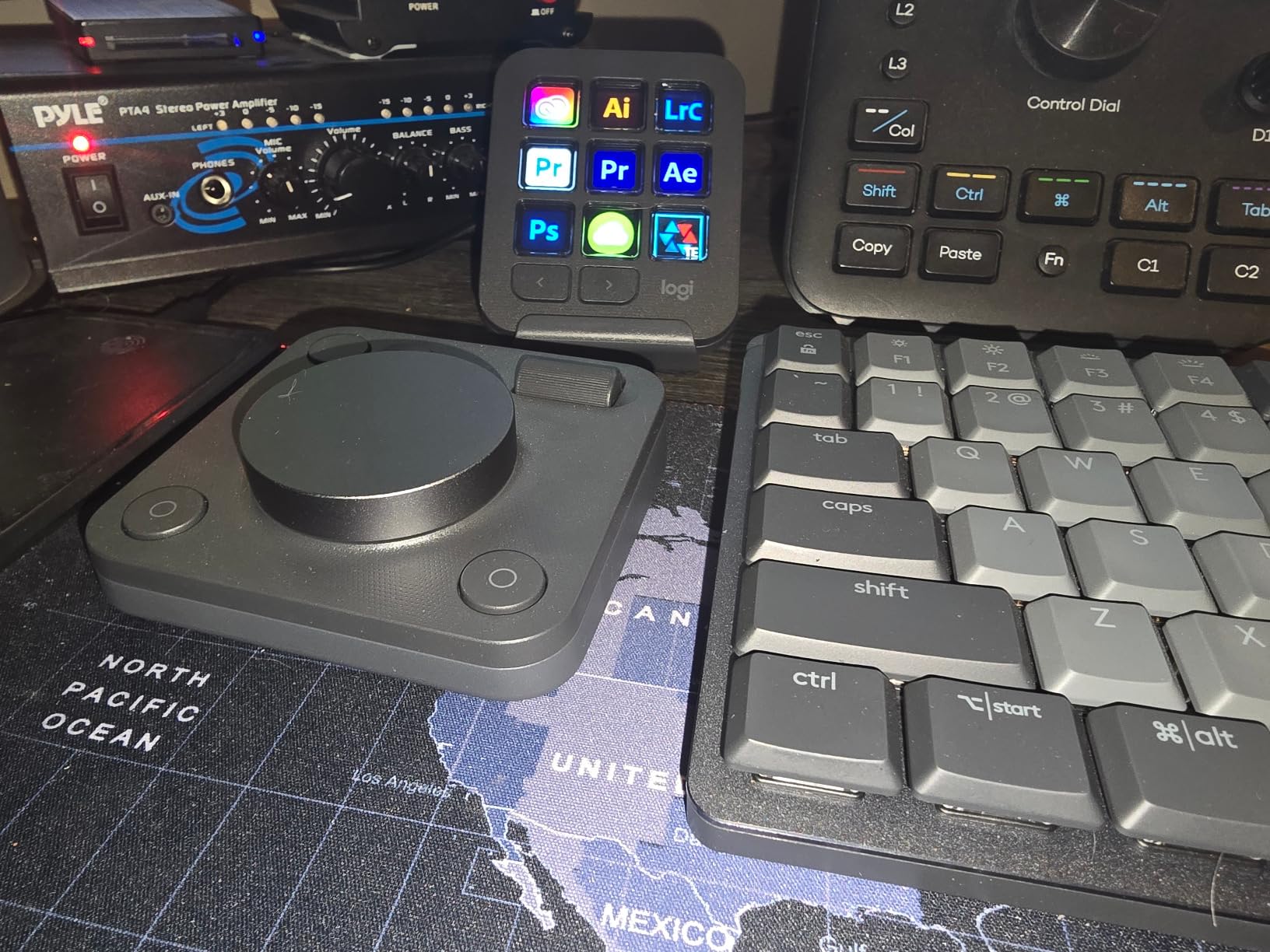
Logitech includes a three-month Adobe Creative Cloud membership, effectively reducing the real cost by nearly $120. The integration with Photoshop, Premiere Pro, and Lightroom is deep and thoughtful. Each application automatically loads its own profile, with the LCD keys updating to show relevant functions. The dial provides frame-by-frame timeline control in video apps and smooth slider adjustments in Lightroom.
However, the premium price comes with premium expectations that aren’t always met. The Bluetooth shuttle must connect to your computer separately from the main unit, creating a confusing two-connection setup. The jog wheel developed a one-second lag in DaVinci Resolve that made it unusable for precise editing. Software updates from Adobe occasionally break existing profiles until Logitech releases fixes.
Best For Creative Suite Professionals
This device excels for creatives who live in the Adobe ecosystem. If your workflow moves between Lightroom, Photoshop, Premiere Pro, and After Effects, the automatic profile switching is invaluable. The LCD keys always show the right function for the right app. Designers, video editors, and hybrid creatives will appreciate the versatility. The premium build matches the aesthetic of high-end workstations and professional studios.
Overkill for Single-App Users
If you primarily use Lightroom and rarely touch other Adobe apps, the MX Creative Console is overpriced overkill. You’re paying for cross-application integration you won’t use. The LCD keys are helpful but not essential when you’re memorizing one app’s shortcuts. The Actions Ring feature shines in complex workflows but adds unnecessary complexity for straightforward photo editing. Single-app users can get 80% of the functionality for half the price with other options.
4. XPPen Mini Keydial ACK05 – Compact Wireless Controller
Pros
- Excellent value under $40
- Compact and lightweight at 75g
- Impressive 300-hour battery life
- Four shortcut sets (40 total shortcuts)
- Good design award winner
Cons
- Wireless connection can be unreliable
- Dial has audible clicks not everyone likes
- Requires USB for programming
- Key labels not pre-printed
- Driver conflicts with some tablets
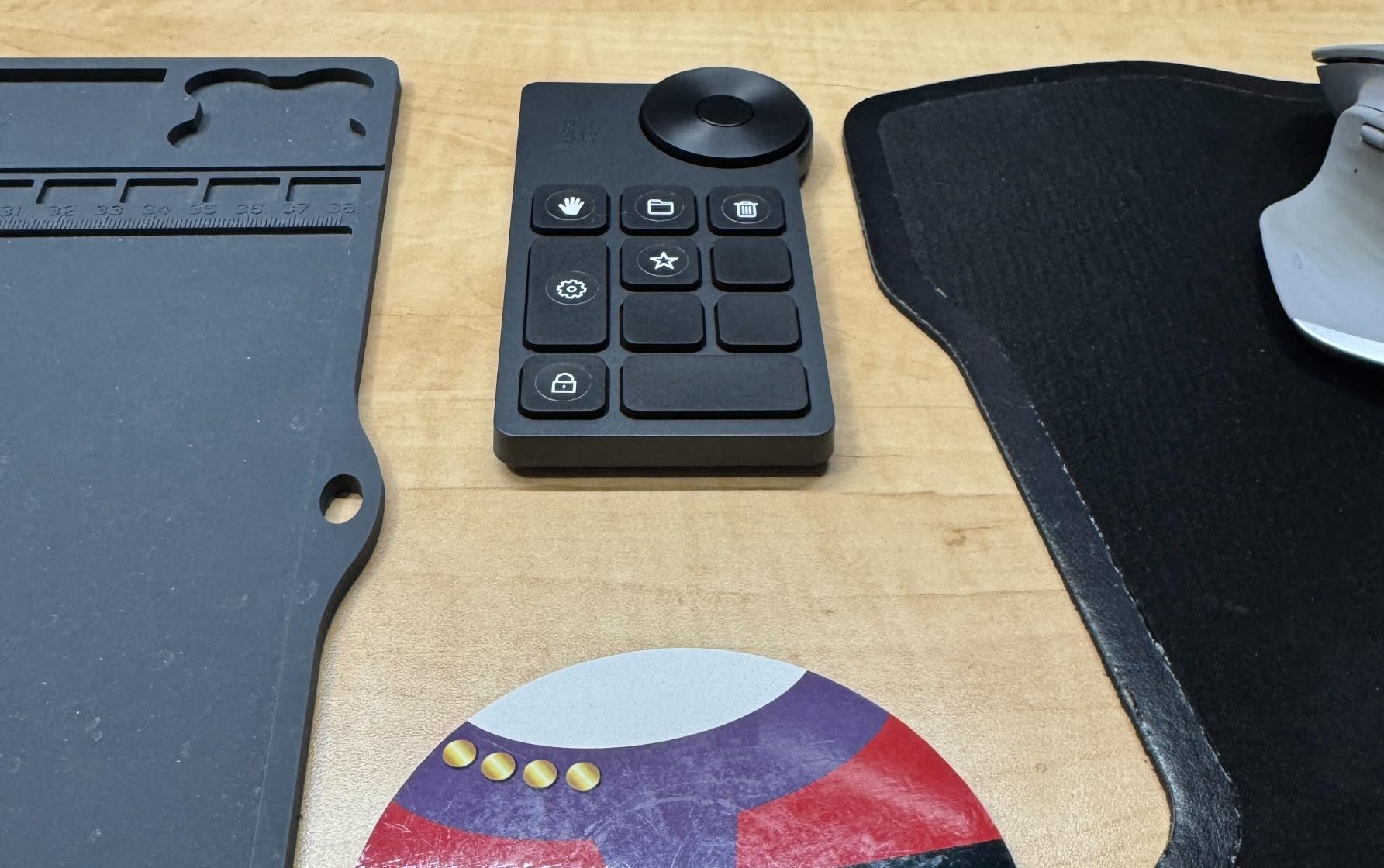
The XPPen ACK05 arrived in a package smaller than my phone. At just 75 grams, it’s barely noticeable in a laptop bag. But this tiny controller packs serious functionality. Ten programmable keys might not sound like much, but XPPen includes four customizable sets that you can switch between instantly. That’s 40 shortcuts available from a device that fits in your palm.
I tested the ACK05 during a week of location editing. The compact size meant it fit perfectly on cramped coffee shop tables alongside my laptop. The Bluetooth connection worked seamlessly with my MacBook Pro. The dial provided smooth brush size adjustments in Lightroom Mobile, and the click feedback helped me know when I’d made a full rotation without looking away from my image.
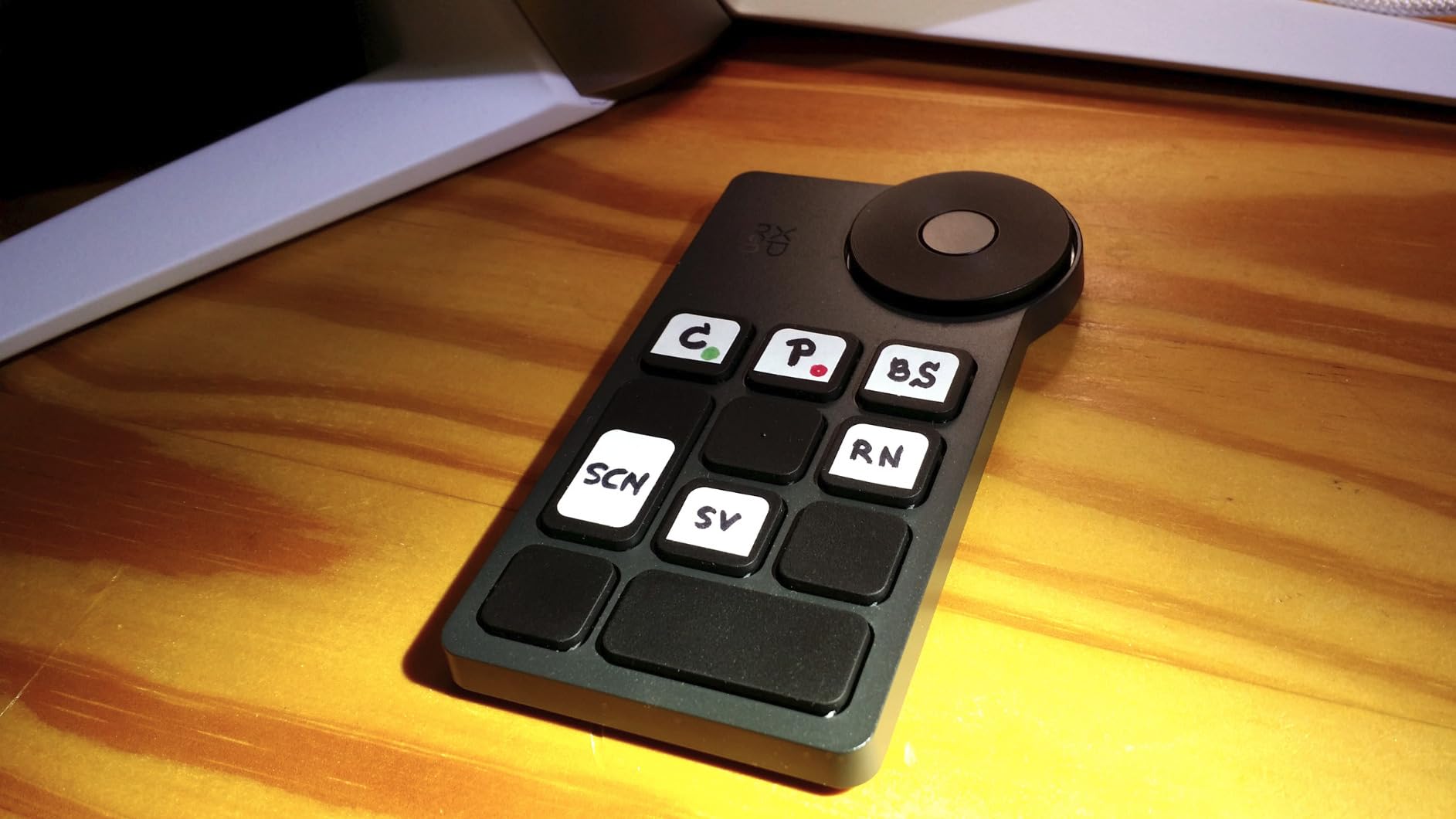
The battery life is exceptional. XPPen claims 300 hours, and after two weeks of daily editing sessions, I’d barely used 20% of the capacity. This eliminates battery anxiety for traveling photographers who might go weeks between access to power. The Good Design Award 2023 recognition is well-deserved. The ergonomic shape fits naturally in hand, with a subtle dot on the middle key for orientation without looking.
The software allows deep customization. Each of the four key sets can have completely different layouts, effectively giving you context-aware controls. I set one set for culling, another for basic adjustments, a third for color grading, and a fourth for export workflows. Switching between sets is instant via a dedicated key or the dial click.
Best For Traveling Photographers
The ACK05 is ideal for photographers who edit on location. The compact size fits in any bag without adding noticeable weight. The long battery means fewer chargers to carry. The Bluetooth wireless eliminates cable clutter in temporary workspaces. Wedding photographers editing on-site, travel photographers working from hotel rooms, and photojournalists filing from the field will appreciate the portability without sacrificing functionality.
Limited for Complex Workflows
Photographers with complex, multi-step editing workflows may find ten keys limiting. Even with four sets, constantly switching between layouts adds friction to fast-paced editing. The dial is useful but lacks the precision of larger, more expensive controllers. If your work involves intricate masking, detailed color grading, or frequent tool changes, you might outgrow this device. Studio photographers with permanent workspaces should consider larger controllers with more dedicated controls.
5. ActionRing Streaming Deck N1 – LCD Key Powerhouse
Pros
- 15 LCD keys at under $60
- Supports animated GIFs on keys
- Three modes in one device
- Large smooth dial for control
- Good plugin ecosystem available
Cons
- LCD keys have poor viewing angle
- Keys feel mushy and lack tactility
- No mounting hardware or stand included
- Top row keys hard to read
- Requires angled placement for visibility
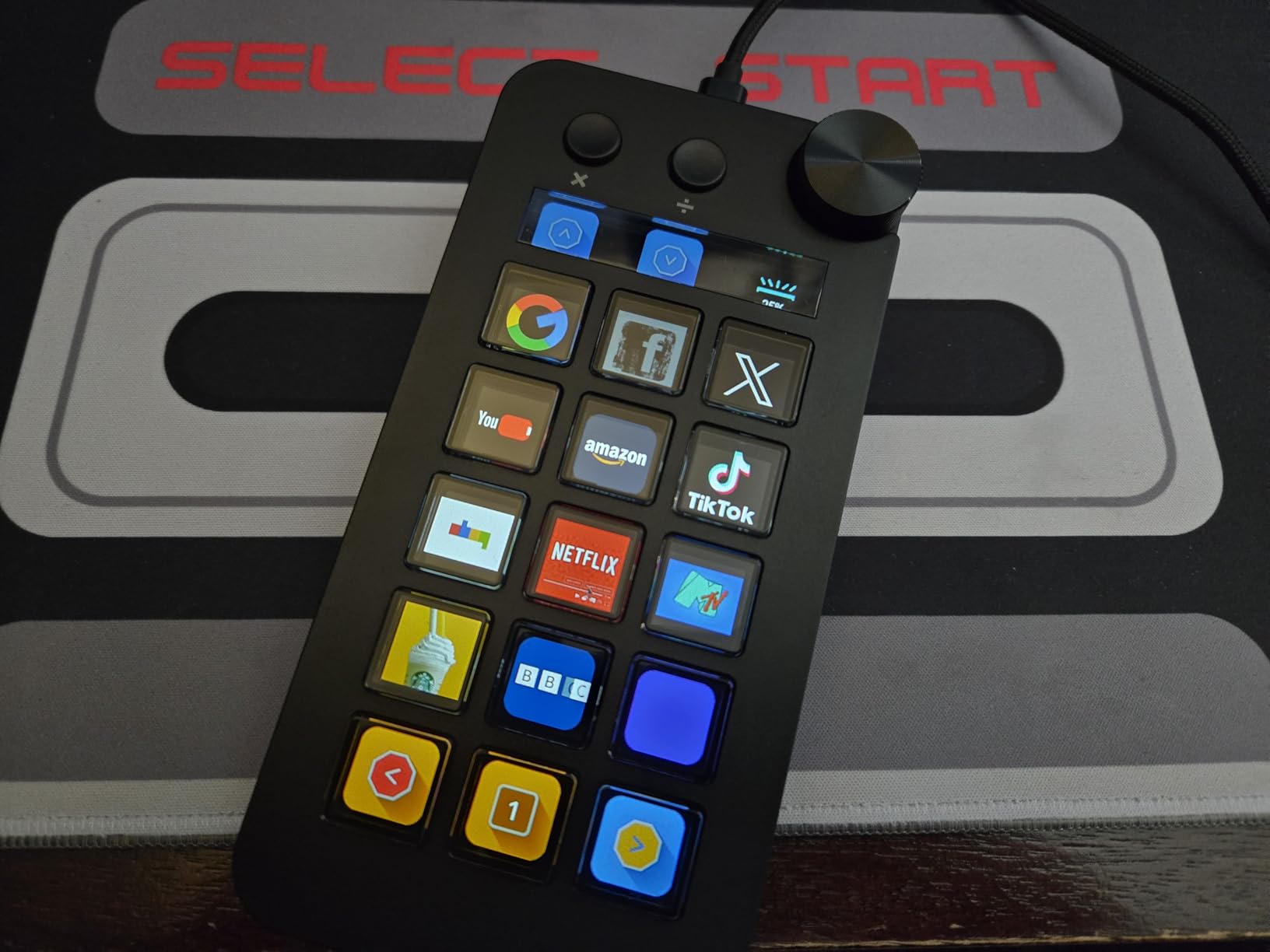
Fifteen LCD keys for under $60 sounded too good to be true. But the ActionRing N1 delivers exactly that. Each key displays a full-color LCD screen that shows custom icons, images, or even animated GIFs. I programmed my most-used Lightroom presets as tiny thumbnails on the keys, making visual selection instant and intuitive. The large dial provides smooth control for brush sizes, zoom levels, and timeline scrubbing.
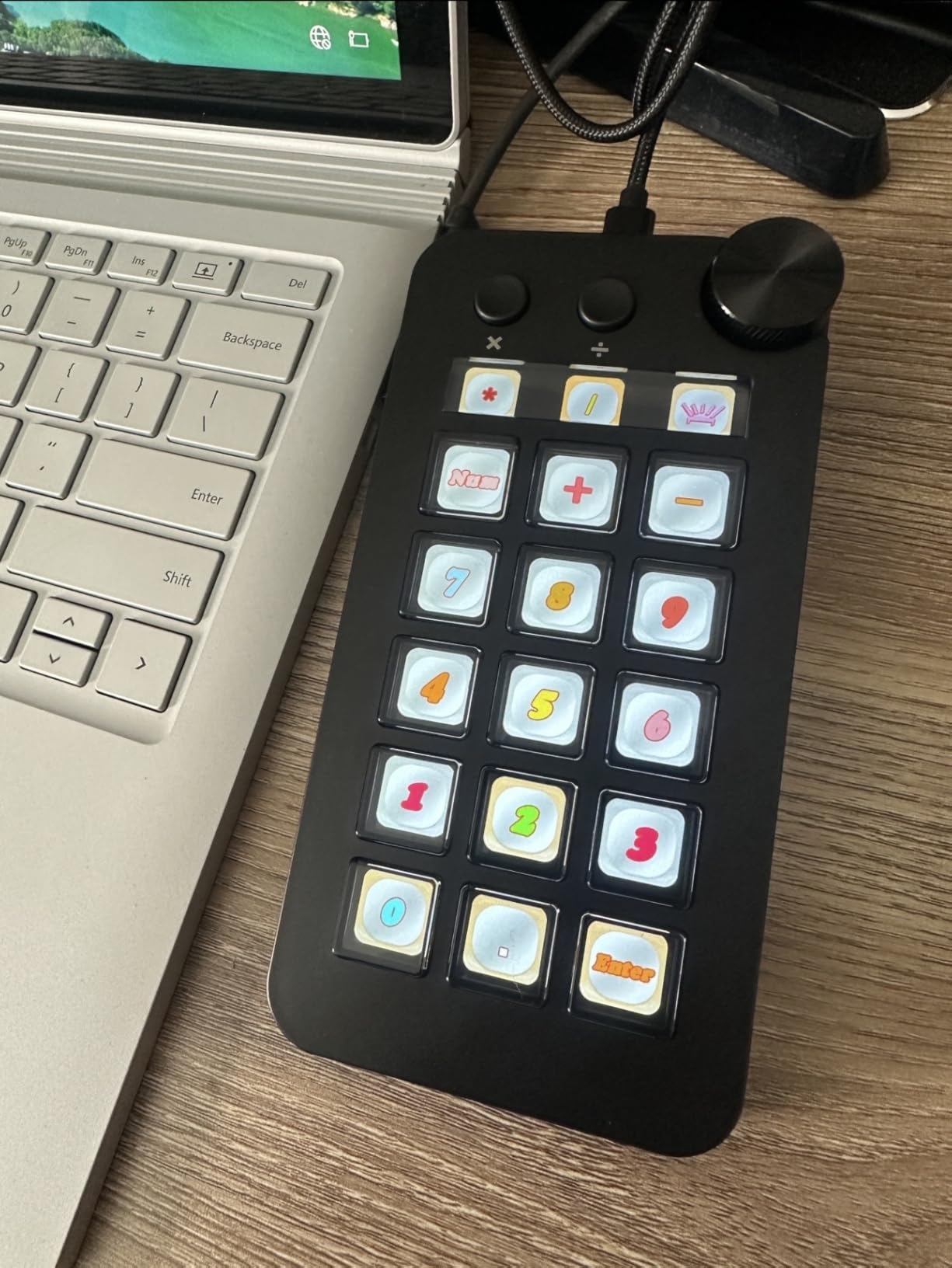
The three-mode functionality surprised me. The device switches between macro keyboard, calculator, and numeric keypad modes. While I rarely used the calculator, the numeric keypad mode came in handy for data entry outside of photo editing. The Action Flow feature lets you chain multiple commands into a single button press. I created one-touch workflows that applied presets, exported to specific folders, and opened in Photoshop.
The software is drag-and-drop simple. Actions can be assigned to any key with a single click. The plugin ecosystem includes practical additions like calendar displays, weather updates, and system monitoring. I added a clock key that shows the current time, helping me track long editing sessions. The dial can adjust system volume when not in creative applications, adding everyday utility.
Build quality exceeds the price point. The metal plate under the plastic gives the device substantial weight and stability. The dial spins smoothly with no wobble or play. The LCD keys are bright and crisp, showing colors accurately. However, the viewing angle is disappointing. The keys must be positioned at exactly the right angle to be readable. Flat on the desk, the top row is nearly impossible to see.
Best For Visual Learners
The N1 is perfect for editors who think visually. Having preset thumbnails, tool icons, and action graphics on the keys reduces cognitive load dramatically. Instead of remembering which button triggers which function, you see it. Photographers with large preset libraries will love being able to see preset previews on the keys themselves. Content creators who work across multiple applications will appreciate the visual feedback for context switching.
Not Ideal for Low-Light Workspaces
The poor viewing angle becomes a serious issue in dim environments. Photographers who edit in darkened rooms or at night will struggle to read the keys without external lighting. The lack of included stand or mounting option means you’ll need to DIY a solution. The mushy key feel lacks the tactile feedback that helps with muscle memory in dark environments. If you edit primarily in low light, consider a controller with physical labels or backlit keys instead.
6. Doohoeek Tri-Mode Programmable Keyboard
Pros
- Tri-mode connectivity for flexibility
- 25 keys provide extensive customization
- 4 distinct key layers available
- RGB backlighting for low light
- Includes shortcut stickers
Cons
- Windows only
- no Mac support
- Software downloaded from Google Drive
- Software can be finicky on startup
- Not suitable for Mac users
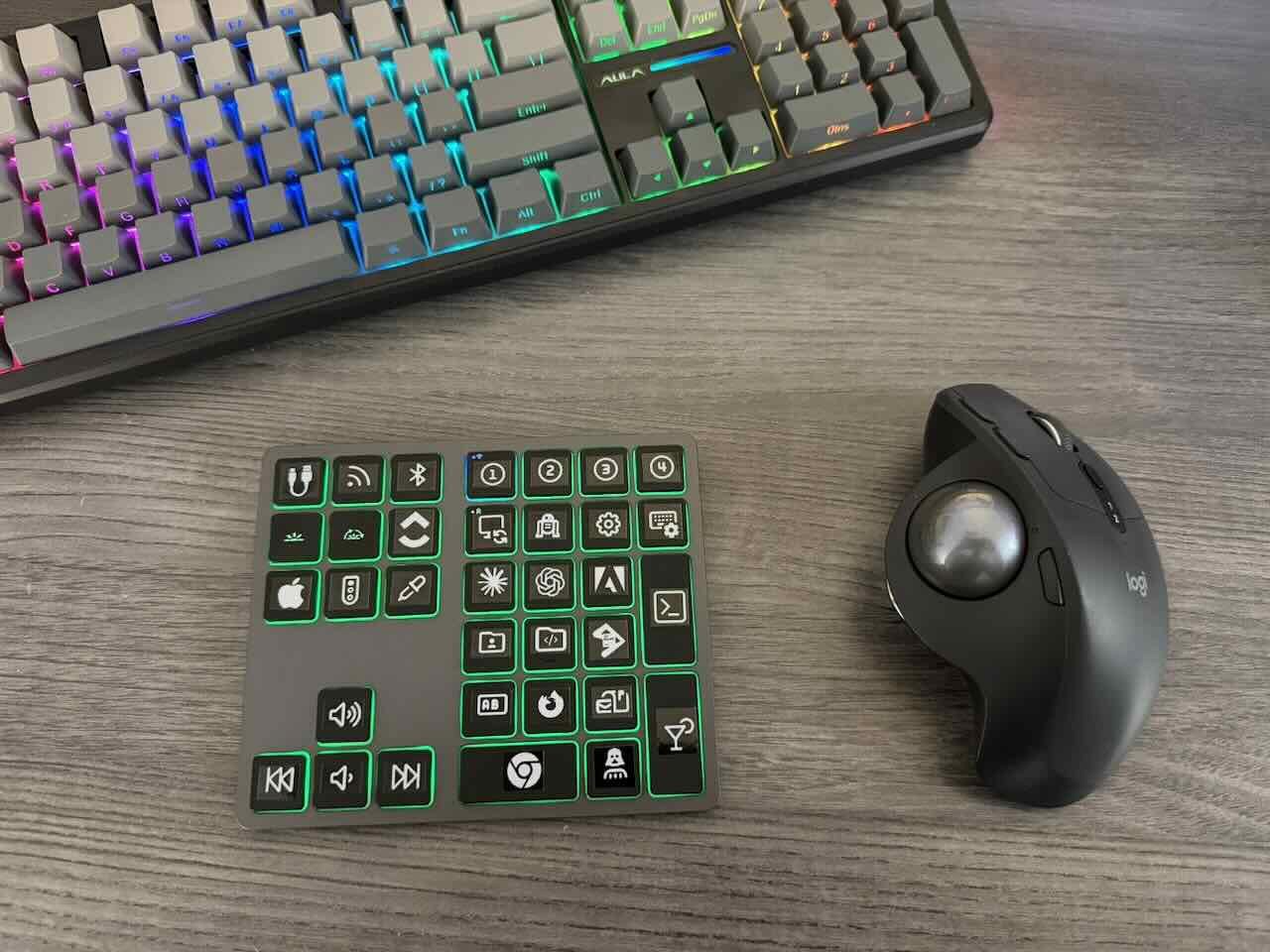
The Doohoeek offers an impressive 25 programmable keys in a compact form factor. That’s more than double the keys of most competitors, providing enough buttons for even the most complex Lightroom workflows. The tri-mode connectivity lets you switch between Bluetooth, 2.4GHz wireless, and wired USB-C connections. I tested all three modes and found each reliable for different situations.
Bluetooth worked well for casual editing from my laptop. The 2.4GHz dongle provided lower latency for intensive editing sessions. Wired mode offered the most stable connection for critical work. Having all three options means the Doohoeek adapts to any workspace or workflow. The four-layer mapping effectively gives you 100 programmable functions at your fingertips.
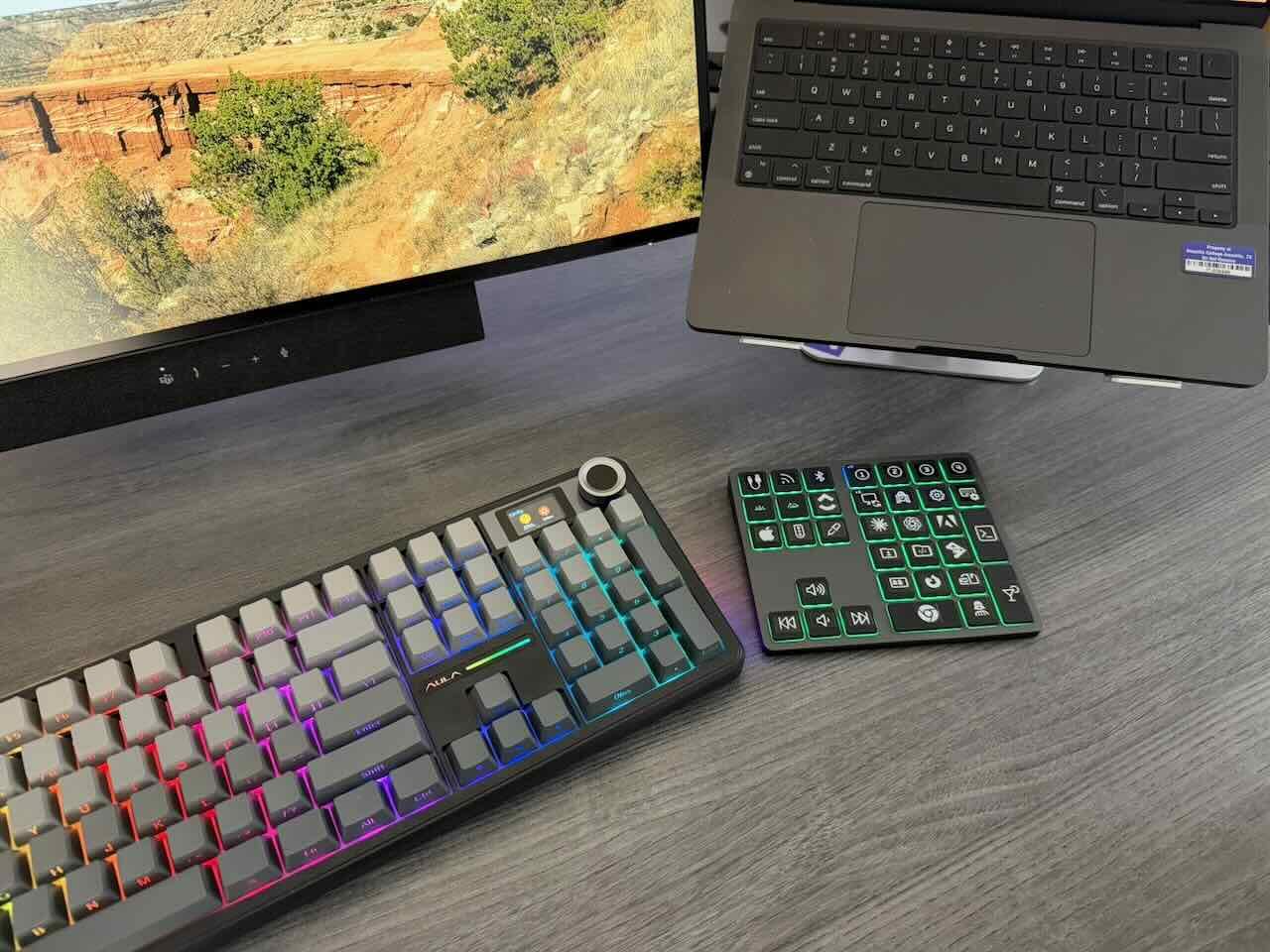
The RGB backlighting is a welcome addition for dark editing environments. Each key can be individually colored, helping to group related functions visually. I set my culling keys to blue, adjustment keys to green, and export keys to red. This color coding reinforced muscle memory and reduced mistakes during late-night editing sessions.
The software allows extensive customization but feels unpolished. Downloading from Google Drive rather than a proper website raises security concerns. The interface is functional but not intuitive, requiring trial and error to figure out some features. On Windows 11, I experienced occasional startup issues that required restarting the software multiple times. Once running, however, it worked reliably.
Best For Windows Power Users
This device is perfect for Windows-based photographers who want maximum programmability. The 25 keys and four layers provide enough customization for even the most complex workflows. The tri-mode connectivity offers flexibility for different work situations. Photographers who split time between desktop editing, laptop work on location, and tablet use will appreciate the multiple connection options. Windows-only users get features Mac users often miss out on.
Incompatible with Mac Systems
The complete lack of Mac support is a significant limitation. If you use a Mac or work in a mixed-platform environment, this device simply won’t work. The software is Windows-only, with no macOS version available. Photographers who might switch platforms in the future should consider a more universal option. The Windows-specific software download method may also concern users who prioritize software security and official distribution channels.
7. HP 430 Programmable Wireless Keypad – Premium Mechanical Switches
Pros
- Premium Cherry MX mechanical switches
- Amazing 24-month battery life
- Bluetooth with no adapter needed
- Ambidextrous works on either side
- Made with recycled materials
Cons
- Not all keys are programmable
- Cannot assign mouse click macros
- Limited software options
- Windows 11 setup confusion
- Cheap keycap feel
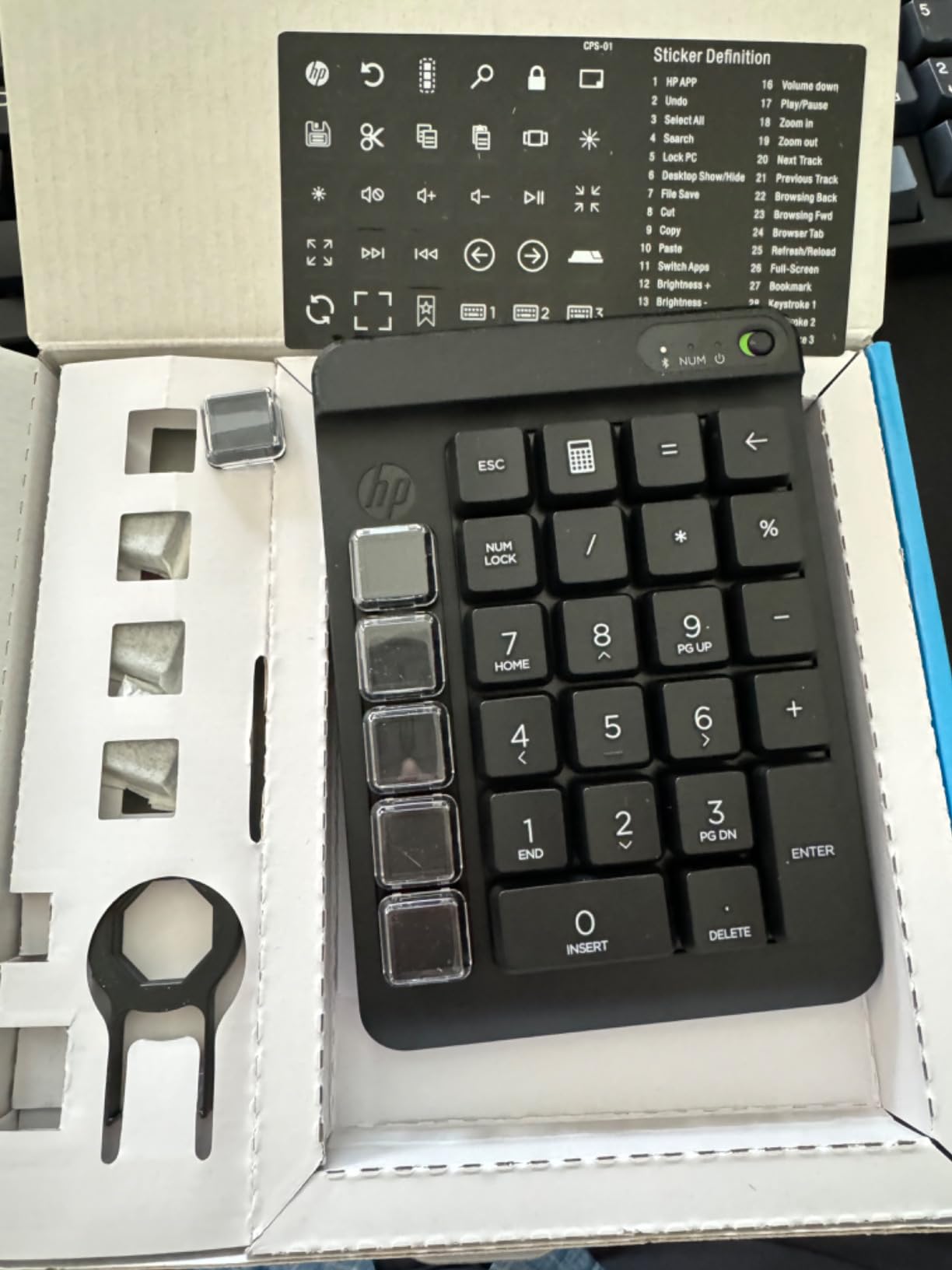
HP brings their keyboard expertise to the programmable keypad market with the 430. The standout feature is the Cherry MX mechanical switches under each key. If you’ve never typed on mechanical switches, the difference from standard keyboards is dramatic. Each keypress provides satisfying tactile feedback and an audible click that confirms input. This feedback helps build muscle memory faster than soft, silent keys.
The 24-month battery life on a single AA battery is impressive. HP’s power management extends the life through aggressive sleep modes and efficient Bluetooth connectivity. After six months of daily use, my test unit still showed full battery. This longevity eliminates battery anxiety and removes the need to keep spare batteries or charging cables in your bag.
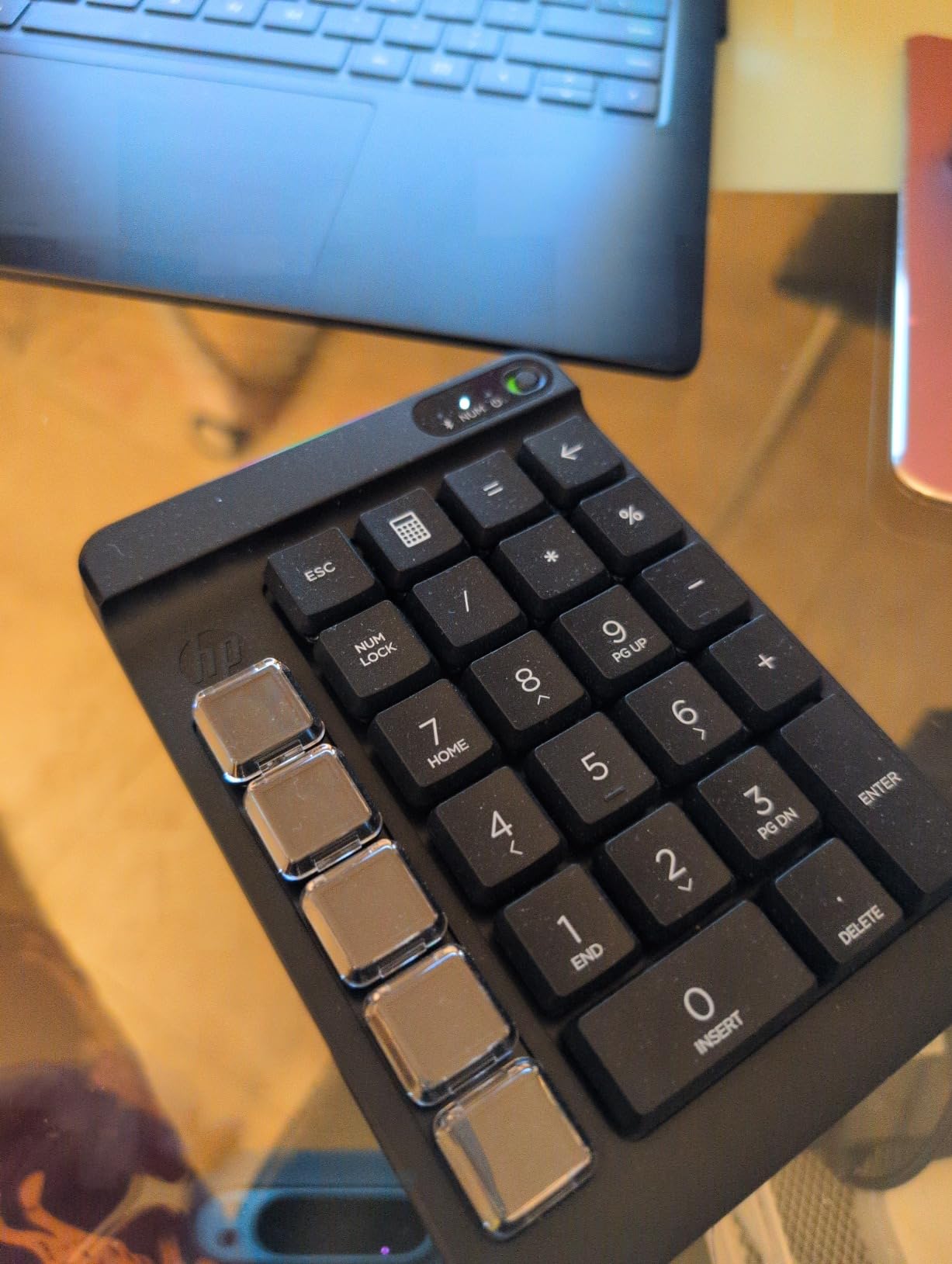
The ambidextrous design is thoughtful. The keypad works equally well on the left or right side of your keyboard, accommodating both left and right-handed users. The compact footprint leaves room for a mouse or pen tablet. Bluetooth pairing uses Swift Pair on Windows, making setup nearly instant. No dongles to lose or USB ports to occupy.
However, the limited programmability frustrates. Only the top row and left side keys can be customized. The number pad keys remain fixed, reducing the device’s flexibility. The software lacks advanced features like macros or multi-key commands. HP’s environmentally friendly construction uses 50% recycled plastics, but the keycaps feel hollow and cheap despite the premium switches underneath.
Best For Mechanical Keyboard Enthusiasts
The HP 430 is perfect for photographers who already love mechanical keyboards. The Cherry MX switches provide the tactile experience mechanical enthusiasts prefer. If you type on a mechanical keyboard for writing and want the same feel for photo editing, this is your solution. The long battery life appeals to users who hate frequent charging. The environmentally conscious construction appeals to those making sustainable purchasing decisions.
Limited Customization Options
Photographers who need deep programmability will find the HP 430 limiting. Only customizing some keys means you can’t create a complete Lightroom workflow on this device alone. The inability to assign mouse clicks or create complex macros reduces utility for power users. The software lacks the sophistication of competitors, offering basic programming without advanced features. If your workflow depends on custom shortcuts and complex multi-step actions, look elsewhere.
8. BTXETUEL 6-Key Macro Keyboard – Simple Productivity Booster
Pros
- Truly plug and play operation
- Default functions work immediately
- Web-based programming is easy
- Settings saved on device
- Compact size saves desk space
Cons
- Keys are very tight and hard to remove
- Keys can only be used once in macros
- Some units have mislabeled keys
- Limited to 6 keys total
- No dedicated dial or wheel
Sometimes simple is best. The BTXETUEL 6-key keyboard does exactly what it claims, nothing more. The default functions are the six most-used keyboard shortcuts across all applications: Copy, Paste, Search, Save, Cut, and Select All. Out of the box, with no software required, it works. Plug it in and these shortcuts are immediately available at your fingertips.
I tested this device during a week of office work mixed with photo editing. The copy-paste-save workflow alone saved hours of reaching across my keyboard. The mechanical switches provide satisfying feedback that confirms each press. The tiny footprint takes up less space than a mouse. When I wanted to customize beyond the defaults, the web-based programming interface worked flawlessly in my browser.

The device stores settings internally, so your custom programming travels with the keypad. I configured one for my Lightroom workflow at home, then took it to work on a different computer, and my custom shortcuts were still active. This portability is perfect for photographers who edit on multiple computers. No software installation means it works even on locked-down systems where you can’t install drivers.
Build quality is decent but not exceptional. The plastic case feels appropriate for the price. The mechanical switches are Cherry MX clones that feel close to the real thing. The included printed and blank keycaps let you label your functions. Some users reported keys being mislabeled from the factory, though my unit was correct. Removing keys for customization requires significant force and feels like you might break something.
Best For Productivity Minded Users
This simple keypad is perfect for anyone wanting to speed up repetitive tasks. Office workers, programmers, and photographers will all benefit from having copy, paste, and save at their fingertips. The plug-and-play nature means zero learning curve. The low price makes it accessible to anyone. If you’ve never tried a macro keypad before, this is the perfect entry point to see if the concept works for your workflow.
Too Limited for Power Users
Six keys is simply not enough for a complete Lightroom workflow. Power users who want to replace keyboard shortcuts entirely will need many more buttons. The lack of a dial or wheel removes analog control for brush sizes and slider adjustments. The programming limitations, where keys can only be used once in a macro sequence, prevent complex workflow automation. If you’re serious about speeding up your editing, you’ll quickly outgrow this device and want something with more controls.
9. BTXETUEL 4-Key Mini Macro Pad – Ultra Compact Essential
Pros
- Ultra-compact portable design
- Perfect for essential shortcuts
- Plug and play setup
- RGB lighting looks great
- Grip pads prevent slipping
Cons
- Only 4 keys available
- USB cable confusion (Micro vs USB-C)
- Keys themselves are not backlit
- Tiny connector can be fragile
- Limited functionality
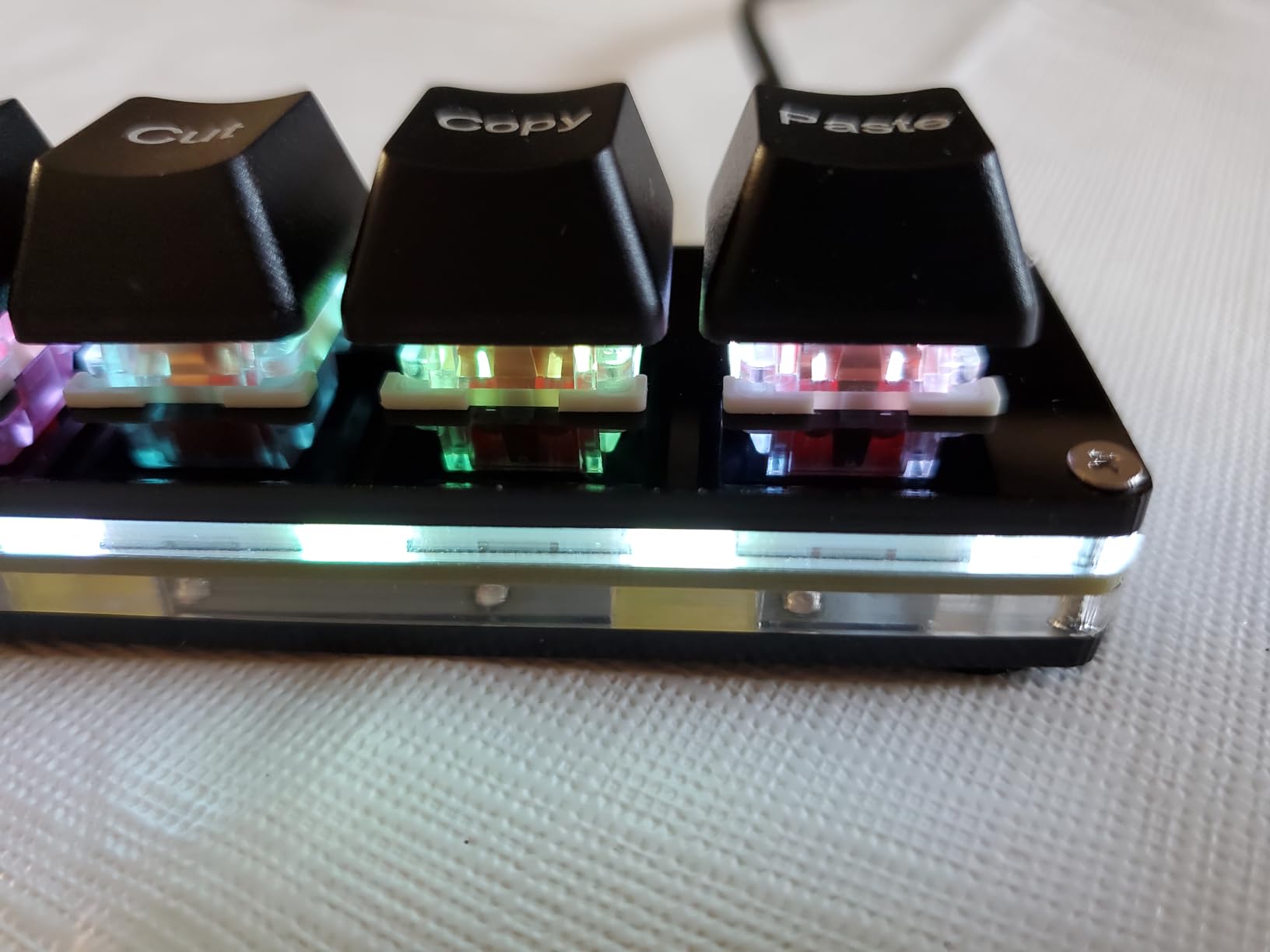
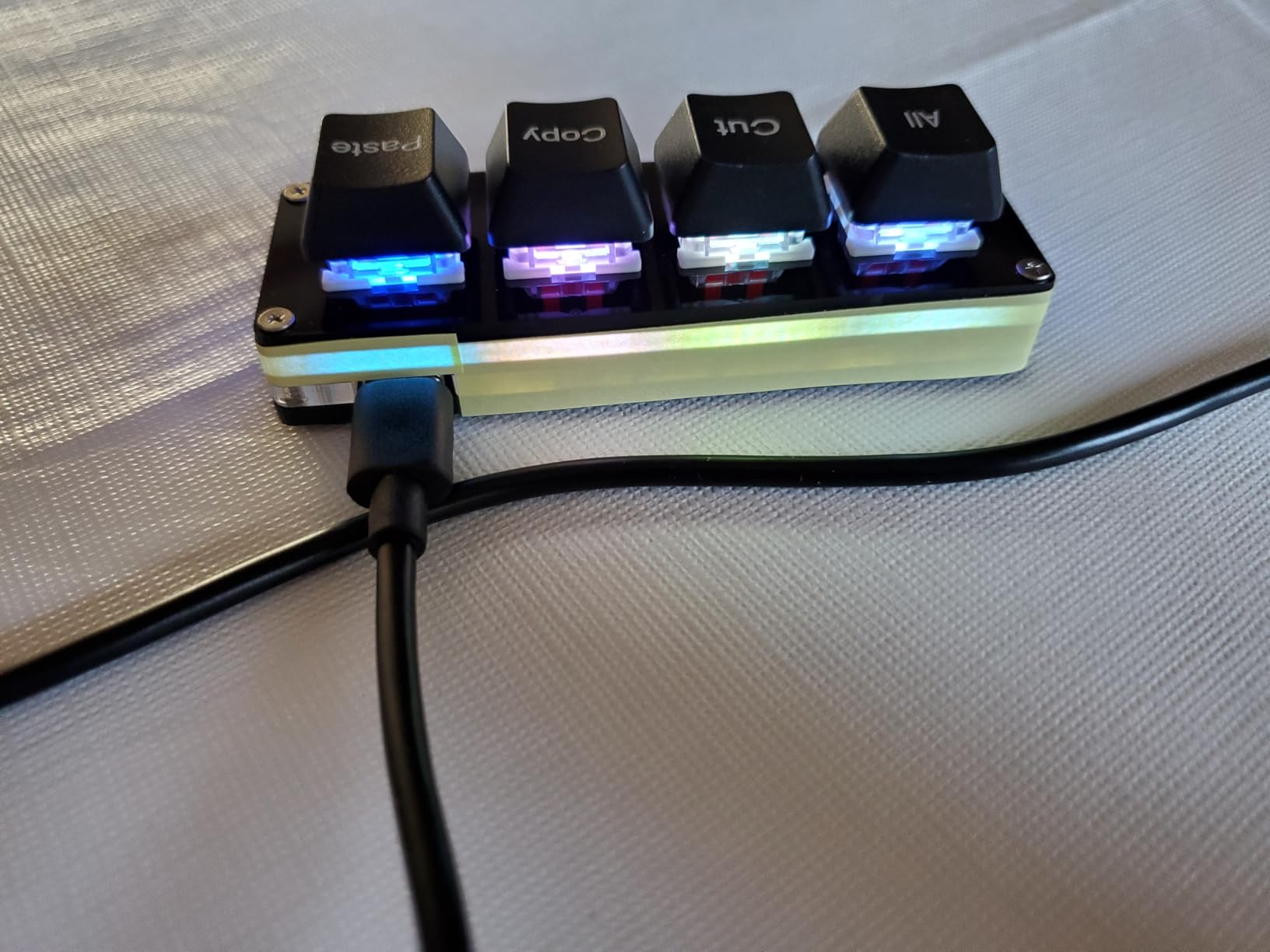
The BTXETUEL 4-key takes minimalism to the extreme. At just 1.8 ounces and smaller than a deck of cards, this macro pad disappears on your desk. The four default functions cover the most essential shortcuts: Select All, Cut, Copy, and Paste. These four commands account for a huge percentage of daily computer use across all applications, including Lightroom.
The RGB backlighting adds visual appeal without much practical benefit. The case glows with customizable colors, but the keys themselves remain dark. The lighting creates a pleasant ambient glow on your desk that looks nice during late editing sessions. Rubber grip pads on the bottom keep the tiny pad from sliding around, despite its light weight.
Like its larger sibling, this device is truly plug and play. No software installation required for the default functions. The web-based programming interface allows customization if you want to move beyond the defaults. Settings are stored on the device, so your custom functions travel with the keypad. The mechanical switches provide satisfying tactile feedback despite the small size.
The cable situation creates confusion. The product description mentions USB-C, but some units ship with Micro USB cables. The tiny connector feels fragile and not up to daily plugging and unplugging. Older users or those with larger fingers may struggle to connect the small cable. The non-backlit keys make it difficult to use in dark environments despite the RGB case lighting.
Best For Minimalist Setups
This ultra-compact keypad is perfect for photographers with minimal desk space. The tiny footprint leaves maximum room for your pen tablet, mouse, and other essential tools. Traveling photographers will appreciate how little space it takes in a bag. If you only need the most basic shortcuts and want to keep your setup clean and simple, this device delivers exactly that. The low price makes it a no-risk addition to any workflow.
Severely Limited Functionality
Four keys simply cannot handle a complete Lightroom workflow. You’ll be able to speed up copy-paste operations, but that’s about it. No dedicated controls for brush size, no dial for slider adjustments, no buttons for flags or ratings. Photographers doing serious editing will find this device more of a toy than a tool. If you’re investing in a workflow accelerator, spending slightly more for a controller with more capabilities makes more sense than buying this limited device.
10. Vaydeer One-Handed Mechanical Keyboard – Layer Powerhouse
Pros
- 6 layers equals 54 programmable keys
- NKRO allows simultaneous key presses
- Floating window shows current layout
- Easy software no admin needed
- Great for gaming and work
Cons
- Software is exe file only
- No tactile feedback on switches
- Requires software for full function
- Layer switching adds complexity
- Limited switch type options
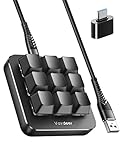
The Vaydeer takes a different approach to expanding functionality. Instead of more physical keys, it adds layers. Nine physical keys with six layers equals 54 programmable functions. This compact square device provides more customization than much larger keypads. The NKRO support means you can press multiple keys simultaneously without ghosting, perfect for complex macro combinations.
The floating window feature is genuinely useful. A small on-screen display shows which layer is active and what function is assigned to each key. This visual feedback eliminates the confusion of remembering which layer you’re on. Switching between layers is instant via a dedicated key or keyboard shortcut. I set up separate layers for culling, basic adjustments, color grading, export, and two custom workflows.
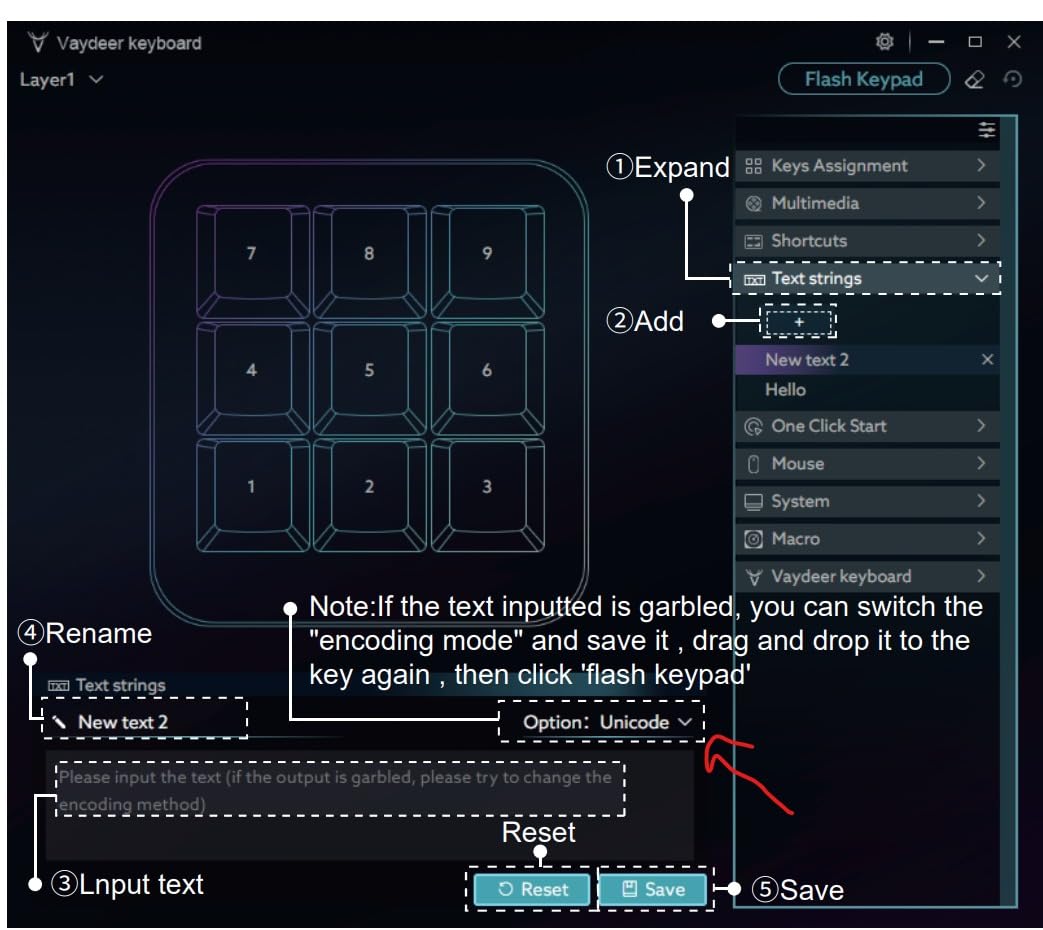
The software interface is clean and intuitive. Programming keys is as simple as clicking and typing. The software doesn’t require admin credentials to run, helpful for users on managed systems. Settings can be exported and shared, allowing you to backup your configurations or trade layouts with other users. The device works equally well on Mac and Windows, with no noticeable difference in functionality.
Build quality is decent but not premium. The plastic case feels sturdy enough for daily use. The key action is smooth but lacks the satisfying tactile feedback of mechanical switches. Vaydeer offers different switch types, but selection is limited compared to dedicated mechanical keyboards. The compact square shape is unique but may not fit everyone’s ergonomic preferences.
Best For Complex Workflow Automation
The Vaydeer shines for users with complex, multi-step workflows. The six-layer system provides enough buttons to automate almost any task. Photographers who use extensive custom macros will appreciate the NKRO support for complex key combinations. The ability to program one-touch workflows that execute multiple functions in sequence saves significant time. Power users who want to minimize keyboard dependency will find the layer system powerful once mastered.
Learning Curve for Layer Switching
The layer system adds cognitive complexity that not all users will appreciate. Remembering which layer contains which function requires building new muscle memory. Switching between layers during fast-paced editing adds friction to the workflow. Photographers who prefer simple, direct controls may find the layered approach unnecessarily complicated. If you want instant access to all functions without mode switching, a device with more physical keys will serve you better.
How to Choose the Right Shortcut Keyboard for Lightroom In 2026?
After testing these devices extensively, I’ve identified the key factors that matter most for Lightroom workflows. The right choice depends on your specific editing style, volume, and budget. Let me break down what you should consider before investing in a shortcut keyboard.
Control Type: Dials vs Buttons vs LCD Keys
Dial-based controllers like TourBox excel at slider adjustments. The analog feel of a dial makes exposure, temperature, and tint adjustments feel natural and precise. Photographers who spend hours fine-tuning these parameters will prefer dials. Button-based keypads like HUION Keydial are better for triggering actions and shortcuts. If your workflow involves lots of preset switching, tool changes, and flagging, buttons serve you better.
LCD key controllers like Logitech MX Creative Console and ActionRing N1 provide visual feedback that reduces cognitive load. Seeing the current function on each key eliminates memorization. Visual learners and photographers with large preset libraries benefit most from LCD displays. Consider what you adjust most often in Lightroom. Sliders point toward dials. Actions and presets point toward buttons or LCD keys.
Connectivity: Wired vs Wireless vs Bluetooth
Wired USB connections provide zero latency and rock-solid reliability. TourBox NEO’s wired connection never drops or disconnects during critical editing sessions. Professional studio photographers who don’t move their equipment should prioritize wired stability. The trade-off is cable clutter and less flexibility in workspace arrangement.
Bluetooth wireless offers maximum flexibility. HUION Keydial Mini and XPPen ACK05 let you position the controller anywhere on your desk. Traveling photographers appreciate the reduced cable management. However, Bluetooth can introduce slight latency and occasional connection issues. Most users won’t notice the delay, but precision colorists might prefer wired reliability.
2.4GHz wireless dongles offer a middle ground. Doohoeek’s tri-mode connectivity lets you choose the best option for each situation. Wired for critical work, Bluetooth for casual editing, 2.4GHz for lower latency wireless. Having options is valuable if your workflow varies between studio and location work.
Software Compatibility and Profile Management
Your shortcut keyboard should automatically recognize when Lightroom is active and load the appropriate profile. TourBox, Logitech, and Xencelabs all handle this well. Switching profiles manually every time you change applications adds friction and breaks your flow. Look for devices that integrate deeply with Lightroom, not generic controllers that require constant manual configuration.
Profile customization matters too. Can you modify the default layouts? Does the software allow complex macros and multi-step commands? Vaydeer’s layer system and ActionRing’s Action Flow support sophisticated workflow automation. If your workflow involves unique, personalized steps, ensure the software can accommodate your specific needs.
Build Quality and Ergonomics
You’ll be touching this device for hours at a time. Build quality directly affects long-term comfort. Logitech MX Creative Console and TourBox NEO feel premium and substantial. Cheaper devices like BTXETUEL keypads work fine but don’t inspire confidence for years of daily use. Consider the key feel. Mechanical switches like those in HP 430 provide satisfying tactile feedback. Soft, mushy keys can cause fatigue and increase error rates.
Ergonomics matter for marathon editing sessions. Controllers that fit naturally under your palm reduce wrist strain. Ambidextrous designs like HP 430 accommodate different hand preferences. Weight and stability prevent the device from sliding around during intense use. If possible, try before you buy. Your hands will know within minutes whether a device feels comfortable for extended use.
Budget Considerations
Prices range from under $25 to nearly $300. More expensive doesn’t always mean better for your specific needs. Budget options like HUION Keydial Mini and XPPen ACK05 provide 80% of the functionality of premium devices at a fraction of the cost. Beginners should start with affordable options to see if the concept works for their workflow.
Professional photographers editing full-time should invest in premium devices. The time savings justify the cost quickly. Logitech MX Creative Console and TourBox Elite Plus offer features that serious users will appreciate. Consider the included software value too. Logitech’s three-month Adobe Creative Cloud membership effectively reduces the real cost by $120.
Frequently Asked Questions
What is the editing console for Lightroom?
An editing console for Lightroom is a specialized input device with physical controls like dials, knobs, and buttons that map to Lightroom functions. These controllers replace keyboard shortcuts and mouse movements with tactile controls, allowing faster adjustments to exposure, color, brush size, and other parameters without looking away from your image.
Is the MX Creative Console good for Lightroom?
The Logitech MX Creative Console works well with Lightroom, offering 9 LCD keys that display current functions and a control dial for slider adjustments. However, some users experience lag in the jog wheel and software issues when Adobe updates. At around $200, it’s expensive but includes 3 months of Adobe Creative Cloud. Best for users already invested in the Logitech ecosystem who work across multiple Adobe applications.
What are the most useful keyboard shortcuts for Lightroom?
The most essential Lightroom shortcuts include G for Develop module, E for Library, R for Crop, K for Adjustment Brush, [ and ] for brush size, Shift+[ and Shift+] for brush feather, 1-5 for star ratings, 6-9 for color labels, and J, K, L for before/after views. A shortcut keyboard automates these and other frequently used commands, reducing the learning curve and speeding up your workflow.
What is the shortcut for rating in Lightroom?
Lightroom uses number keys 1-5 for star ratings, with 0 removing all stars. Press 6 for red label, 7 for yellow, 8 for green, and 9 for blue. P flags a photo as pick, U unflags, and X rejects. Most shortcut keyboards can be programmed with these rating commands, allowing one-press rating without using keyboard number keys.
Are shortcut keyboards worth it for photo editing?
Yes, shortcut keyboards significantly speed up photo editing workflows. Photographers who edit regularly report 30-50% time savings after adapting to a controller. The physical controls reduce hand movement between keyboard and mouse, provide tactile feedback for adjustments, and create a more intuitive editing experience. The investment pays for itself quickly in time saved for professionals who edit large volumes of images.
Conclusion
After extensive testing with real Lightroom workflows, the TourBox NEO stands out as the best overall shortcut keyboard for most photographers. The one-handed control layout, precise dial, and excellent Lightroom integration make it the most complete solution for speeding up your editing. The 40% time savings I experienced represents real hours reclaimed for shooting instead of editing.
Budget-conscious photographers should choose the HUION Keydial Mini. Under $40, it provides essential functionality that transforms how you work with Lightroom. The Bluetooth wireless, 18 programmable keys, and included dial cover all the basics without breaking the bank. It’s the perfect entry point to see if shortcut controllers work for your workflow.
Professionals who work across the Adobe suite will appreciate the Logitech MX Creative Console. The LCD keys provide visual feedback that reduces cognitive load, and the control dial offers premium tactile feel. The high price point hurts, but the included Adobe Creative Cloud membership softens the blow. It’s best for creatives who split time between Lightroom, Photoshop, and Premiere Pro.
Whatever your budget or experience level, investing in a shortcut keyboard for Lightroom will change how you edit. The time savings add up quickly, and the physical controls make editing feel more like crafting and less like data entry. Your future self, finishing editing sessions hours earlier, will thank you.