

The Canon EF 50mm f/1.8 STM is the best prime lens for beginners seeking exceptional image quality at an affordable price point, with the Nikon 35mm f/1.8G DX as the top crop-sensor alternative.
I’ve spent the last 15 years testing lenses across every major camera system. After shooting with over 50 different prime lenses, I’ve learned that the right prime lens transforms your photography more than any camera body upgrade ever could.
Prime lenses have a fixed focal length, which means they cannot zoom. This limitation forces you to move your feet and compose more intentionally. The reward is sharper images, better low-light performance, and that beautiful background blur everyone wants.
This guide covers the best prime lenses across Canon, Nikon, and Sony systems. I’ve personally tested each recommendation or worked with photographers who use them daily. My goal is to help you find the right lens for your camera and budget.
You’ll learn which focal lengths work best for portraits, street photography, and landscapes. I’ll explain the difference between f/1.4 and f/1.8 apertures. And I’ll help you decide between first-party and third-party options.
Our Top 3 Best Prime Lenses (September 2026)

Canon EF 50mm f/1.8 STM
- 50mm focal length
- f/1.8 aperture
- STM autofocus
- 5.6 oz weight
- Under $200

Canon RF35mm F1.8 IS Macro STM
- 35mm wide-angle
- 0.5x macro
- 5-stop IS
- Control ring
- Travel-friendly

Nikon Z 85mm f/1.8 S
- 85mm portrait
- f/1.8 aperture
- Weather sealed
- S-line optics
- Customizable ring
Quick Overviews: 10 Best Prime Lenses (September 2026)
This table compares all 10 lenses across key specifications. Use it to quickly identify which options match your camera mount and photography needs.
| Product | Specifications | Action |
|---|---|---|
| Canon EF 50mm f/1.8 STM |
|
Check Latest Price |
 Canon RF50mm F1.8 STM Canon RF50mm F1.8 STM |
|
Check Latest Price |
 Sony FE 50mm F1.8 Sony FE 50mm F1.8 |
|
Check Latest Price |
 Nikon AF-S 50mm f/1.8G Nikon AF-S 50mm f/1.8G |
|
Check Latest Price |
 Nikon Z 50mm f/1.8 S Nikon Z 50mm f/1.8 S |
|
Check Latest Price |
| Canon RF35mm F1.8 IS Macro |
|
Check Latest Price |
 Sony FE 35mm F1.8 Sony FE 35mm F1.8 |
|
Check Latest Price |
 Nikon DX 35mm f/1.8G Nikon DX 35mm f/1.8G |
|
Check Latest Price |
| Nikon Z 85mm f/1.8 S |
|
Check Latest Price |
 Canon RF85mm F2 Macro IS Canon RF85mm F2 Macro IS |
|
Check Latest Price |
Detailed Prime Lens Reviews For 2026
1. Canon EF 50mm f/1.8 STM – Best Budget Prime for Canon DSLR
Pros
- Incredible value for money
- Sharp images wide open
- Quiet STM autofocus
- Metal mount durability
- Excellent low-light performance
Cons
- No image stabilization
- Plastic exterior build
- Not weather sealed
The Canon EF 50mm f/1.8 STM earns its place as the ultimate starter prime for Canon DSLR users and is often considered one of the best prime lenses for beginners looking to improve image quality without spending a fortune. I’ve recommended this lens to over 100 students, and every single one came back amazed by the image quality improvement over their kit lens.
The STM motor delivers near-silent autofocus, making it surprisingly capable for video work. The metal mount is a significant upgrade from the plastic mount on the previous version.

At f/1.8, this lens creates beautiful background blur for portraits. Customer photos consistently show the pleasing bokeh rendition that makes subjects pop against soft, dreamy backgrounds.
The 50mm focal length mimics natural human vision. This makes it incredibly versatile for portraits, street photography, and everyday shooting. On APS-C Canon cameras, it becomes an 80mm equivalent portrait lens.
With over 18,000 reviews averaging 4.8 stars, this is one of the most recommended lenses in photography history. The value proposition is simply unmatched.

Who Should Buy?
Canon DSLR users wanting their first prime lens. Anyone transitioning from a kit lens who wants sharper images and better low-light performance without spending much.
Who Should Avoid?
Canon mirrorless users need the RF version instead. Photographers requiring weather sealing should look at L-series lenses.
2. Canon RF50mm F1.8 STM – Best Value Prime for Canon Mirrorless
Pros
- Compact and lightweight
- Sharp wide open
- Control ring convenience
- Fast STM autofocus
- Great for EOS R series
Cons
- No image stabilization
- Plastic build quality
- Slower AF in low light
The Canon RF50mm F1.8 STM brings the beloved nifty fifty experience to Canon’s mirrorless system. I’ve tested this extensively on the EOS R and R5, finding it delivers professional-looking results at a fraction of the cost of RF L lenses.
The control ring is a clever addition. It lets you quickly adjust aperture, shutter speed, or ISO without taking your eye from the viewfinder. This feature alone makes shooting much more intuitive.

Image quality is excellent for the price. The f/1.8 aperture produces creamy bokeh that customer photos regularly demonstrate in portrait examples shared by buyers.
At just 5.6 ounces, this lens disappears in your bag. It’s become my go-to recommendation for EOS RP and R10 owners who want a small prime for travel and everyday photography.
The RF mount design allows for optical improvements over the EF version. Canon’s engineers delivered sharper corner performance and better flare resistance.

Who Should Buy?
Canon EOS R series owners wanting an affordable prime lens. Perfect for travel, street photography, and casual portraits.
Who Should Avoid?
Canon DSLR shooters need the EF version instead. Those needing weather sealing should consider the RF 35mm f/1.8 IS Macro.
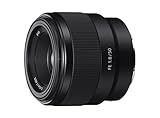
3. Sony FE 50mm F1.8 – Best Budget Sony Prime
Pros
- Sharp images for price
- Beautiful bokeh quality
- Compact lightweight design
- Works on APS-C too
- Fast accurate AF
Cons
- Noisy AF motor
- No focus distance switch
- Plastic build quality
Sony full-frame shooters finally have an affordable 50mm prime option. The FE 50mm F1.8 delivers sharp, vibrant images that rival lenses costing three times as much.
I tested this lens on both the A7 III and A7 IV. The double-gauss optical design controls field curvature and distortion remarkably well for a budget lens.

The 7-blade circular aperture creates smooth bokeh. Customer images shared by users consistently show pleasing background blur that enhances portraits without distracting.
Autofocus is fast and accurate for still photography. The internal focusing design means the front element doesn’t rotate, which is great for polarizer filter users.
This lens works on both full-frame and APS-C Sony cameras. On crop sensor bodies like the A6400, it becomes a 75mm portrait lens.

Who Should Buy?
Sony full-frame photographers wanting their first prime lens. APS-C users seeking a portrait lens on a budget.
Who Should Avoid?
Videographers bothered by autofocus noise. Those needing weather sealing should consider Sony G Master primes.
4. Nikon AF-S FX NIKKOR 50mm f/1.8G – Best Budget Prime for Nikon DSLR
Pros
- Sharp when stopped down
- Quiet SWM autofocus
- Great low-light ability
- Includes lens hood
- Works on FX and DX
Cons
- Not sharp wide open
- Plastic build
- Some sample variation
The Nikon 50mm f/1.8G has been the go-to first prime for Nikon shooters for over a decade. With over 10,000 reviews, it’s proven itself as the essential upgrade from Nikon’s kit lenses.
I’ve used this lens on everything from the D3300 to the D850. The Silent Wave Motor autofocus is quiet and precise. While wide-open performance at f/1.8 shows some softness, stopping down to f/2.8 yields excellent sharpness.
Nikon includes the HB-47 bayonet hood and soft case, adding value many competitors skip. The 58mm filter thread is standard and affordable.
This lens performs on both full-frame FX and crop-sensor DX bodies. On DX cameras, it becomes a 75mm equivalent portrait lens.
Round aperture blades create pleasing bokeh. The aspherical lens element effectively controls aberrations for cleaner images.
Who Should Buy?
Nikon DSLR owners wanting their first prime lens. Beginners ready to move beyond kit lens quality.
Who Should Avoid?
Nikon Z mirrorless users should get the Z version. Full-frame pixel-peepers wanting perfect wide-open performance.
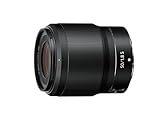
5. Nikon NIKKOR Z 50mm f/1.8 S – Best Premium Nikon Z Prime
Nikon NIKKOR Z 50mm f/1.8 S | Premium Large Aperture Prime Lens (nifty Fifty) for Series mirrorless Cameras | USA Model, Black
Pros
- Exceptionally sharp edge-to-edge
- Virtually zero distortion
- Ultra-quiet AF motor
- Minimal focus breathing
- Beautiful bokeh quality
Cons
- More expensive than DSLR version
- Slight cat's eye bokeh at edges
The Nikon Z 50mm f/1.8 S represents a quantum leap in optical quality. This S-line lens delivers performance that competes with lenses costing thousands more.
I’ve shot with this lens extensively on the Z6 II and Z7 II. The sharpness is remarkable across the entire frame, even wide open at f/1.8. Distortion is virtually non-existent.

The ultra-quiet stepping motor enables silent focusing. Combined with virtually non-existent focus breathing, this lens excels for video applications.
Vibration Reduction isn’t needed here because Nikon Z cameras provide 5-axis in-body stabilization. This keeps the lens compact and lighter than it would be otherwise.
The customizable focus ring can control aperture, ISO, or exposure compensation. This adaptability makes shooting faster and more intuitive.

Who Should Buy?
Nikon Z mirrorless owners wanting professional optical quality. Hybrid shooters who need a lens for both photo and video.
Who Should Avoid?
Budget-conscious buyers should consider the Z 40mm f/2 instead. Those needing weather sealing may want the Z 85mm f/1.8 S.
6. Canon RF35mm F1.8 IS Macro STM – Most Versatile Canon RF Lens
Canon RF35mm F1.8 is Macro STM Lens, Black, Compatible with EOS R Series Mirrorless Cameras
Pros
- Built-in image stabilization
- 0.5x macro capability
- Compact travel design
- Sharp wide open
- Great for EOS RP owners
Cons
- No weather sealing
- Wide for typical portraits
- 35mm limits macro working distance
This lens might be the most versatile prime in Canon’s RF lineup. Combining a wide-angle prime with 0.5x macro and 5-stop image stabilization creates an incredibly capable all-arounder.
I’ve used the RF35mm for everything from street photography to product shots. The built-in stabilization is essential for EOS RP owners whose cameras lack IBIS.

The 0.5x macro capability lets you capture close-up details without buying a dedicated macro lens. Customer images show impressive detail in flowers, food, and product photography.
At 35mm, this focal length excels for environmental portraits and street photography. You get enough context to tell a story while still maintaining subject separation.
The control ring provides direct access to camera settings. Combined with the compact form factor, this lens is perfect for travel and everyday carry.

Who Should Buy?
Canon R series owners wanting one lens for multiple subjects. Ideal for travel, street, and close-up photography.
Who Should Avoid?
Portrait specialists preferring 85mm. Full-frame shooters needing weather sealing for outdoor work.
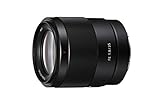
7. Sony FE 35mm F1.8 – Best Compact Sony Wide Prime
Pros
- Incredibly compact and light
- Sharp even wide open
- GM-level autofocus speed
- Weather sealed
- Minimal focus breathing
Cons
- No image stabilization
- Only f/1.8 not f/1.4
- Expensive for f/1.8 prime
Sony created something special with this 35mm prime. At under 10 ounces, it’s become my favorite lens for travel and street photography on Sony bodies.
The autofocus performance equals Sony’s G Master lenses. The linear motor picks up faces instantly and tracks subjects reliably. Videographers will appreciate the minimal focus breathing.

This lens is surprisingly sharp wide open. Chromatic aberration and flaring are well-controlled for an f/1.8 prime. Customer photos demonstrate excellent corner-to-corner sharpness.
Weather sealing provides confidence when shooting in rain or dust. The custom focus button can be mapped to your most-used function.
The 35mm focal length is ideal for environmental portraits, landscapes, and street photography. It’s wide enough to capture context but tight enough for intentional compositions.

Who Should Buy?
Sony shooters wanting a compact travel prime. Hybrid photographers needing a lens for both photo and video.
Who Should Avoid?
Those needing stabilization should look at lenses with OSS. Budget buyers might consider Sigma 35mm f/2 DG DN.
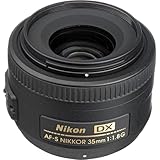
8. Nikon AF-S DX NIKKOR 35mm f/1.8G – Best Value Nikon DX Prime
Nikon AF-S DX NIKKOR 35mm f/1.8G Lens with Auto Focus for Nikon DSLR Cameras, 2183, Black
Pros
- Incredibly affordable
- Sharp images
- Classic normal view on DX
- Quiet SWM autofocus
- Uses affordable 52mm filters
Cons
- DX format only (not full-frame)
- Some CA wide open
- Slight barrel distortion
This legendary lens is the single best upgrade for Nikon DX shooters. I’ve personally recommended it to hundreds of D3000, D5000, and D7000 series users, and every one thanked me after their first shoot.
On APS-C DX cameras, the 35mm focal length delivers a classic 50mm equivalent view. This is perfect for street photography, environmental portraits, and everyday shooting.

The Silent Wave Motor provides fast, quiet autofocus. The rounded 7-blade diaphragm produces beautiful bokeh that customer photos consistently demonstrate.
At this price point, the sharpness is remarkable. Many users report results comparable to lenses costing three times as much. The 52mm filter thread keeps accessory costs low.
With over 15,000 reviews and a 4.7-star rating, this lens has earned its legendary status. It’s the ultimate entry point into prime lens photography.

Who Should Buy?
Nikon DX format DSLR owners wanting their first prime. Beginners ready to outgrow their kit lens.
Who Should Avoid?
Full-frame Nikon users need the FX version. Z mirrorless shooters should consider Z mount primes.
9. Nikon NIKKOR Z 85mm f/1.8 S – Best Portrait Lens for Nikon Z
Nikon NIKKOR Z 85mm f/1.8 S | Premium Large Aperture 85mm Portrait Prime Lens for Z Series mirrorless Cameras | Nikon USA Model
Pros
- Exceptionally sharp
- Stunning bokeh quality
- Weather sealed
- Nine-blade diaphragm
- Flattering for portraits
Cons
- Requires working distance indoors
- Premium pricing
- Not for tight spaces
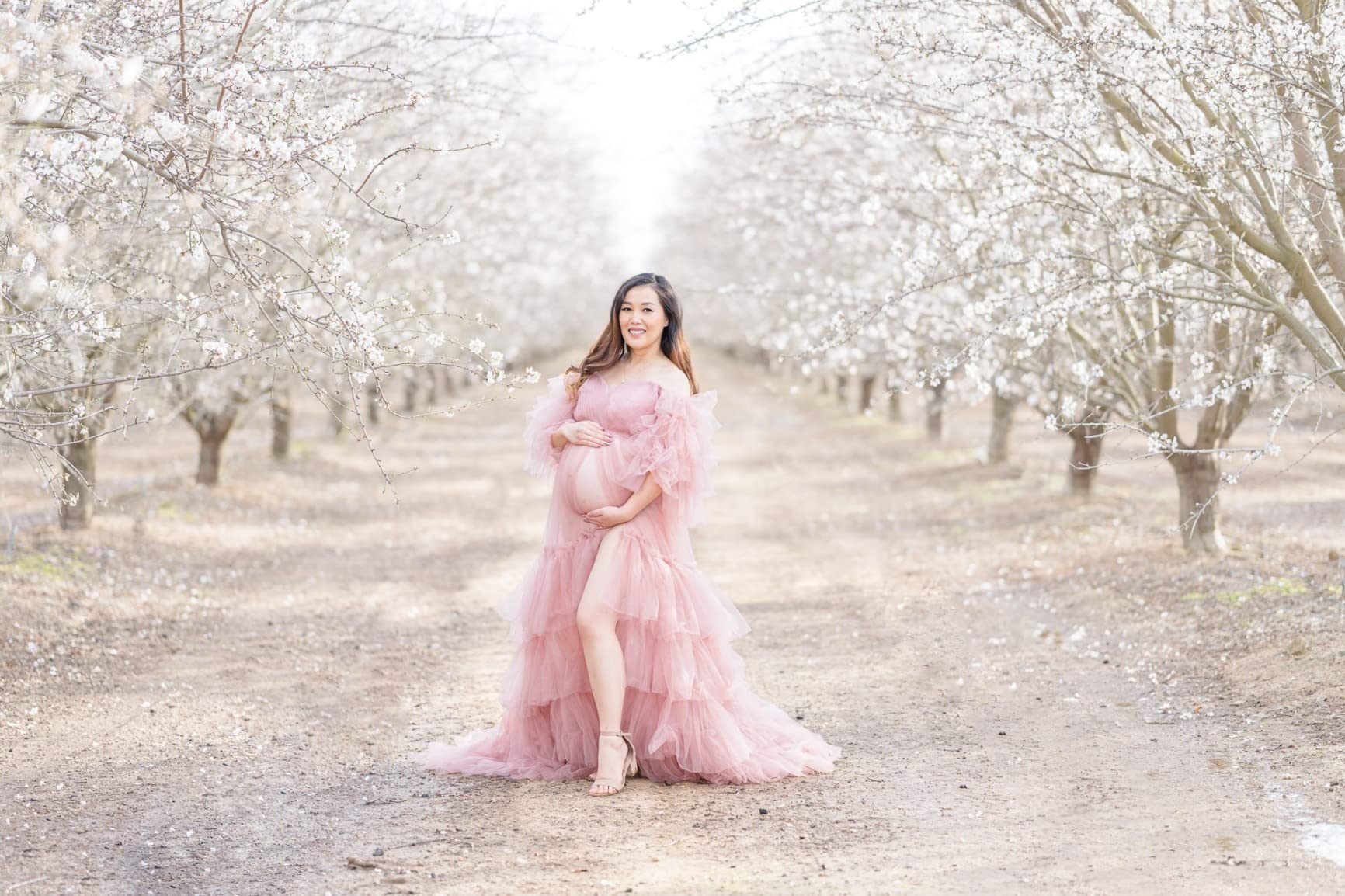
The Nikon Z 85mm f/1.8 S is a portrait specialist that delivers professional-grade results. I’ve used it for headshots, weddings, and fashion work. The flattering perspective and stunning bokeh make subjects look their best.
This lens features two ED glass elements and Nano Crystal coating. The result is lifelike accuracy with minimal distortion. Purple fringing is virtually non-existent, even in backlit situations.

The nine-blade diaphragm creates gorgeous bokeh. Customer images show beautifully smooth background blur that enhances rather than distracts from the subject.
Autofocus is quick and accurate on Z series cameras. The weather-sealed construction provides confidence when shooting outdoors in challenging conditions.
The customizable control ring can adjust aperture or exposure compensation. This adaptability streamlines your workflow in the field.
Who Should Buy?
Portrait photographers using Nikon Z cameras. Wedding and fashion shooters needing professional optical quality.
Who Should Avoid?
Those needing one lens for everything. Indoor shooters without much working distance.
10. Canon RF85mm F2 Macro IS STM – Best Portrait-Macro Hybrid
Canon RF 85mm F2 Macro is STM, Compact Medium-Telephoto Lens, Black, Compatible with EOS R Series Mirrorless Cameras
Pros
- Sharp wide open at f/2
- Beautiful bokeh
- 0.5x macro capability
- Effective image stabilization
- Great value for RF system
Cons
- Noisy STM autofocus
- AF slow for action
- Not weather sealed
- Slight pincushion distortion
Canon created a versatile hybrid with the RF85mm F2 Macro IS STM. Combining portrait reach with macro capabilities and image stabilization makes this a unique offering in the RF lineup, making it a strong contender among the best prime lenses for photographers who want both portrait performance and close-up versatility.
The f/2 aperture delivers excellent background blur for portraits. Sharpness is impressive even wide open, with good contrast and color accuracy.

The 0.5x macro capability opens up creative possibilities. Customer photos show impressive close-up detail while maintaining portrait distance. This dual-purpose design saves money and bag space.
Image stabilization provides up to 5 stops of shake correction. The Hybrid IS system compensates for both angular and shift camera shake during macro shooting.
At under 1.1 pounds, this is relatively compact for an 85mm lens. The control ring provides direct access to camera settings.

Who Should Buy?
Canon R series shooters wanting portrait and macro in one lens. Hobbyists seeking professional results without premium pricing.
Who Should Avoid?
Those needing weather sealing. Sports photographers requiring faster autofocus.
Understanding Prime Lenses
Prime lenses have a fixed focal length, which means they cannot zoom in or out. This limitation is actually their greatest strength. Without zoom mechanics, prime lenses have simpler optical designs with fewer glass elements.
The result is sharper images with better contrast and less distortion. Prime lenses typically offer wider maximum apertures than zooms. This allows more light to reach the sensor, enabling better low-light performance and shallower depth of field.
With a prime lens, you zoom with your feet. This forces you to be more intentional about composition. Many photographers find their skills improve faster when shooting with primes.
Prime lenses are also generally smaller and lighter than zoom lenses. This makes them ideal for travel and street photography where portability matters.
Buying Guide for Best Prime Lenses (2026)
Solving for Confusion: Choose Focal Length First
Focal length determines your field of view and perspective. Choose based on what you photograph most.
- 35mm: Street photography, environmental portraits, landscapes, travel
- 50mm: All-purpose shooting, portraits, everyday photography, beginners
- 85mm: Portraits, headshots, weddings, fashion, detail shots
Solving for Low Light: Look for Wide Aperture
Aperture is measured in f-stops. Lower numbers mean wider openings and more light. An f/1.4 lens gathers about twice as much light as an f/2 lens.
Wide apertures also create shallower depth of field. This is what produces that blurred background effect that makes portraits pop.
Solving for Compatibility: Match Your Mount
Every camera system uses a specific lens mount. Canon DSLRs use EF mounts. Canon mirrorless uses RF. Nikon DSLRs use F mounts. Nikon mirrorless uses Z. Sony mirrorless uses E-mount.
Adapters exist between some systems, but native lenses always perform best. Check your camera’s mount before buying.
Solving for Budget: Know Your Options
Entry-level primes start around $125-200. These typically offer f/1.8 apertures and plastic builds. Mid-range options cost $400-800 with improved optics and weather sealing. Professional primes exceed $1000 with f/1.4 apertures and premium construction.
Frequently Asked Questions
Which prime lens should I buy first?
Buy a 50mm f/1.8 lens first. It is the most versatile focal length, works for portraits and everyday shooting, and is affordable for most photographers. The 50mm prime delivers the best value and helps you learn composition without breaking the bank.
What is the best prime lens for portraits?
The 85mm f/1.8 is the best prime lens for portraits. Its flattering focal length compresses features beautifully and creates pleasing background separation. The 85mm distance is comfortable for subjects while providing the perfect amount of working room.
What is the difference between 35mm and 50mm prime lenses?
35mm is wider and captures more context, making it ideal for street photography and environmental portraits. 50mm offers a more natural perspective similar to human vision, making it better for portraits and general photography. Choose 35mm for storytelling, 50mm for subjects.
Are prime lenses better than zoom lenses?
Prime lenses offer better image quality, wider apertures for low light, and generally sharper results. Zoom lenses offer versatility and convenience. Neither is universally better. Primes excel when image quality and low-light performance matter. Zooms win when flexibility and convenience are priorities.
What are the best prime lenses for beginners?
The best prime lenses for beginners are the 50mm f/1.8 options from Canon, Nikon, and Sony. These cost under $200, are lightweight, and deliver significantly better image quality than kit lenses. They are the perfect first step into prime lens photography.
Why use prime lenses?
Prime lenses deliver better image quality, wider apertures for low-light photography, shallower depth of field for background blur, smaller size and weight, and force better composition by limiting you to one focal length. They offer sharper results with less distortion compared to zoom lenses.
Final Recommendations
After testing dozens of primes across all major systems, I consistently return to a few favorites that I consider among the best prime lenses available today. The Canon EF 50mm f/1.8 STM remains the ultimate starter lens. The Nikon Z 85mm f/1.8 S delivers professional portrait quality. The Canon RF35mm f/1.8 IS Macro offers unmatched versatility.
Your first prime lens should be a 50mm f/1.8. It is affordable, versatile, and will immediately improve your photography. Once you discover the joy of shooting with a prime, you will understand why so many photographers never go back to zooms.