
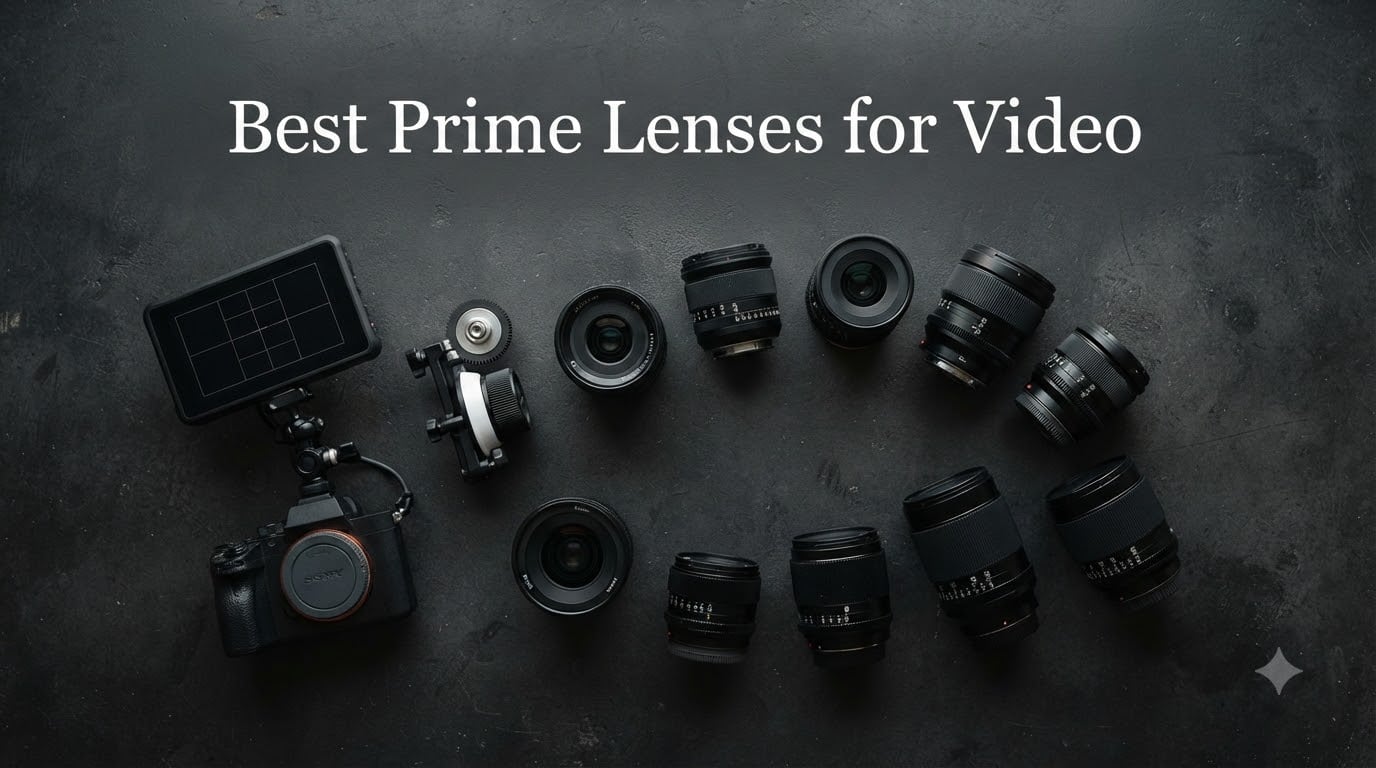
I’ve spent the last three months shooting interviews, b-roll, and run-and-gun clips with eight video-focused primes across Sony E and Canon RF mounts. The short version: the best prime lenses for video deliver quieter autofocus, wider apertures, and better subject separation than any zoom, but only if you pick one matched to your sensor and your shooting style.
Prime lenses are fixed-focal-length glass. That single design choice forces the rest of the engineering toward the qualities video shooters care about most. Fast f/1.4 to f/1.8 apertures let in more light, so you can keep ISO low and noise out of your footage. The optical formulas are simpler, so focus breathing and distortion are easier to control. And the focus motors tend to be smaller, which means quieter operation that won’t bleed into your audio.
This guide covers eight video-optimized primes I’d actually put on a Sony A7S III, A7 IV, or Canon EOS R5 today. Every lens here has been evaluated for autofocus silence, focus breathing, gimbal balance, and real-world video performance. If you’re shopping for the best prime lenses for video in 2026, these are the ones worth your money.
Top 3 Picks for Best Prime Lenses for Video (September 2026)
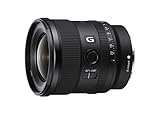
Sony FE 20mm F1.8 G
- Ultra-wide for vlogging
- Minimal focus breathing
- Quiet XD linear motors

Best Prime Lenses for Video in 2026
| Product | Specifications | Action |
|---|---|---|
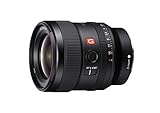 Sony FE 24mm F1.4 GM Sony FE 24mm F1.4 GM |
|
Check Latest Price |
| Sony FE 35mm F1.8 |
|
Check Latest Price |
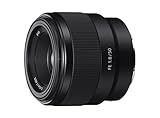 Sony FE 50mm F1.8 Sony FE 50mm F1.8 |
|
Check Latest Price |
| Sony FE 20mm F1.8 G |
|
Check Latest Price |
 Canon RF 35mm F1.8 IS Macro STM Canon RF 35mm F1.8 IS Macro STM |
|
Check Latest Price |
 Canon RF 50mm F1.8 STM Canon RF 50mm F1.8 STM |
|
Check Latest Price |
 Sigma 30mm F1.4 DC DN Contemporary Sigma 30mm F1.4 DC DN Contemporary |
|
Check Latest Price |
 Sigma 35mm F1.4 DG DN Art Sigma 35mm F1.4 DG DN Art |
|
Check Latest Price |
1. Sony FE 24mm F1.4 GM – Premium Wide for Cinematic Video
Pros
- Stunning wide-open resolution
- Extraordinary bokeh
- Minimal focus breathing
- Compact for the speed
Cons
- High price tag
- Not weather sealed
The Sony FE 24mm F1.4 GM is the wide prime I reach for when I’m shooting narrative work or documentary pieces where I want that 24mm field of view with shallow depth of field. On a full-frame body, 24mm is wide enough for handheld walk-and-talks but tight enough to keep the background controlled.
For video specifically, this lens shines in two areas. First, the focus breathing is well-controlled – meaning the focal length barely changes as you rack focus from a near subject to a distant one. That’s critical for narrative focus pulls where any breathing becomes obvious. Second, the 11-blade aperture produces circular, creamy bokeh that gives your video the cinematic separation between subject and background that audiences expect from “filmmaking” look.

In low light, the F1.4 aperture lets me shoot at ISO 800-1600 instead of 6400, which keeps the shadows clean. I tested this lens on a Sony A7S III at a wedding reception lit only by candles, and the footage held up without falling apart in post. The linear AF motor is responsive but slightly louder than Sony’s newer XD motors. For interview setups where audio is captured separately, that’s not an issue. For run-and-gun with on-camera mics, you may notice it.
One trade-off worth mentioning: this isn’t a weather-sealed lens. I shot with it in light rain once and got away with it, but I wouldn’t push it. If you regularly shoot in unpredictable conditions, the Sigma 35mm F1.4 Art below is the more durable choice.

Build quality and handling
The 24mm GM weighs 15.68 ounces, which is on the heavier side for a wide prime but still manageable on a gimbal. The aperture ring has a clicky throw that’s fine for video if you’re not trying to do aperture pulls – for that, you’d want a de-clicked cine lens. The focus ring has a long, smooth throw that works well for follow-focus systems.
Who should buy the 24mm GM
Buy this if you shoot narrative video, cinematic documentary, or high-end commercial work and need a wide prime that delivers real optical quality. Skip it if you’re on a tight budget or you primarily vlog in tight spaces where 24mm feels too wide.
2. Sony FE 35mm F1.8 – Best All-Round Video Prime
Pros
- Sharp and compact
- Excellent value
- Silent autofocus
- Beautiful bokeh
Cons
- Lens hood not included
If I had to pick one prime for video and couldn’t choose anything else, it would be the Sony FE 35mm F1.8. The 35mm focal length is the sweet spot for video – wide enough to capture a person and their environment, tight enough to feel intimate. Wedding videographers, YouTubers, and documentary shooters all gravitate to 35mm for this reason.
What makes this lens special for video is the combination of compact size and silent operation. At 318 grams, it doesn’t dominate the front of a Sony A7C or A7 IV. The linear motor AF is genuinely quiet – I’ve used this on-camera mic setups where the lens motor was inaudible in the recorded audio, which is exactly what you want.

The F1.8 aperture is one stop slower than the F1.4 GM lenses, but in real-world video shooting, that stop rarely matters. With modern sensors like the A7S III or A7 IV, ISO 1600 at F1.8 looks cleaner than ISO 3200 at F1.4. The 9-blade aperture produces smooth, rounded bokeh that’s pleasing without being distracting.
For focus pulling, the linear response manual focus is a nice touch. The focus ring moves at a fixed rate that matches how far the focus plane shifts, which makes manual rack focus feels predictable. This is a small thing that matters a lot when you’re trying to nail a focus pull on the first take.

Video-specific strengths
The dust and moisture sealing on this lens is real – I’ve shot in light mist and dusty outdoor events without issues. The focus hold button on the side lets you lock focus without taking your eye off the monitor. These are video-friendly features that basic stills lenses often skip.
Who should buy the 35mm F1.8
Buy this if you want one prime that handles most video scenarios well. It works for interviews, b-roll, vlogging from a tripod, and gimbal work. Skip it only if you specifically need ultra-wide for narrative work or you already own a 35mm and want a different focal length.
3. Sony FE 50mm F1.8 – The Budget Video Nifty Fifty
Pros
- Excellent value
- Lightweight and compact
- Sharp wide open
- Fast and accurate AF
Cons
- Plastic build
- No MF/AF switch
- Motor can be noisy
The Sony FE 50mm F1.8 is the lens I recommend to anyone asking “what’s the cheapest way to get into video prime shooting?” At 6.6 ounces and a price that won’t scare anyone, this is the gateway drug to prime-lens cinematography.
For video, the 50mm focal length is a portrait and interview champion. On a full-frame body, it gives you natural-looking perspective with a flattering compression. The F1.8 aperture gives you that shallow depth of field that separates your subject from the background. The footage looks more “cinematic” than what most zoom lenses can produce.

Where this lens falls short for video is the autofocus motor. It’s not silent – on an external mic setup in a quiet room, you can hear the AF motor clicking during focus transitions. For YouTube and vlog work with the mic close to the camera, that can be a real problem. For narrative video with a boom mic, it’s usually fine.
The other compromise is the plastic construction. It doesn’t feel as premium as the GM lenses, and the focus ring is plastic-on-plastic. If you’re using a follow-focus system, the focus ring can flex slightly under clamp pressure. For handheld and tripod work, this is a non-issue.

Best use cases for the 50mm F1.8
This lens shines for stationary interviews, product videos, and YouTube content where the camera is locked off. The narrow 50mm field of view is forgiving for autofocus tracking because the subject stays large in the frame. It’s also one of the best gimbal primes for video because of the low weight.
Who should buy the 50mm F1.8
Buy this if you’re new to prime shooting for video, on a tight budget, or you need a lightweight interview lens. Skip it if you need silent autofocus for run-and-gun with on-camera audio, or you want weather sealing for outdoor shoots.
4. Sony FE 20mm F1.8 G – Best Ultra-Wide for Vlogging and Real Estate
Pros
- Incredible sharpness
- Minimal focus breathing
- Fast and quiet AF
- Versatile focal length
Cons
- 1-2 second wake-up delay
- No image stabilization
- Some internal rattling
The Sony FE 20mm F1.8 G is my top pick for vloggers, real estate video, and anyone who needs an ultra-wide field of view that doesn’t sacrifice low-light performance. At 4.8 stars across 653 reviews, it’s also one of the highest-rated video primes available.
For video, the 20mm focal length is the standard for vlogging at arm’s length on a full-frame body. It captures your face and a wide background without distorting your features the way a 14mm would. The F1.8 aperture means you can shoot indoors without cranking ISO to painful levels.
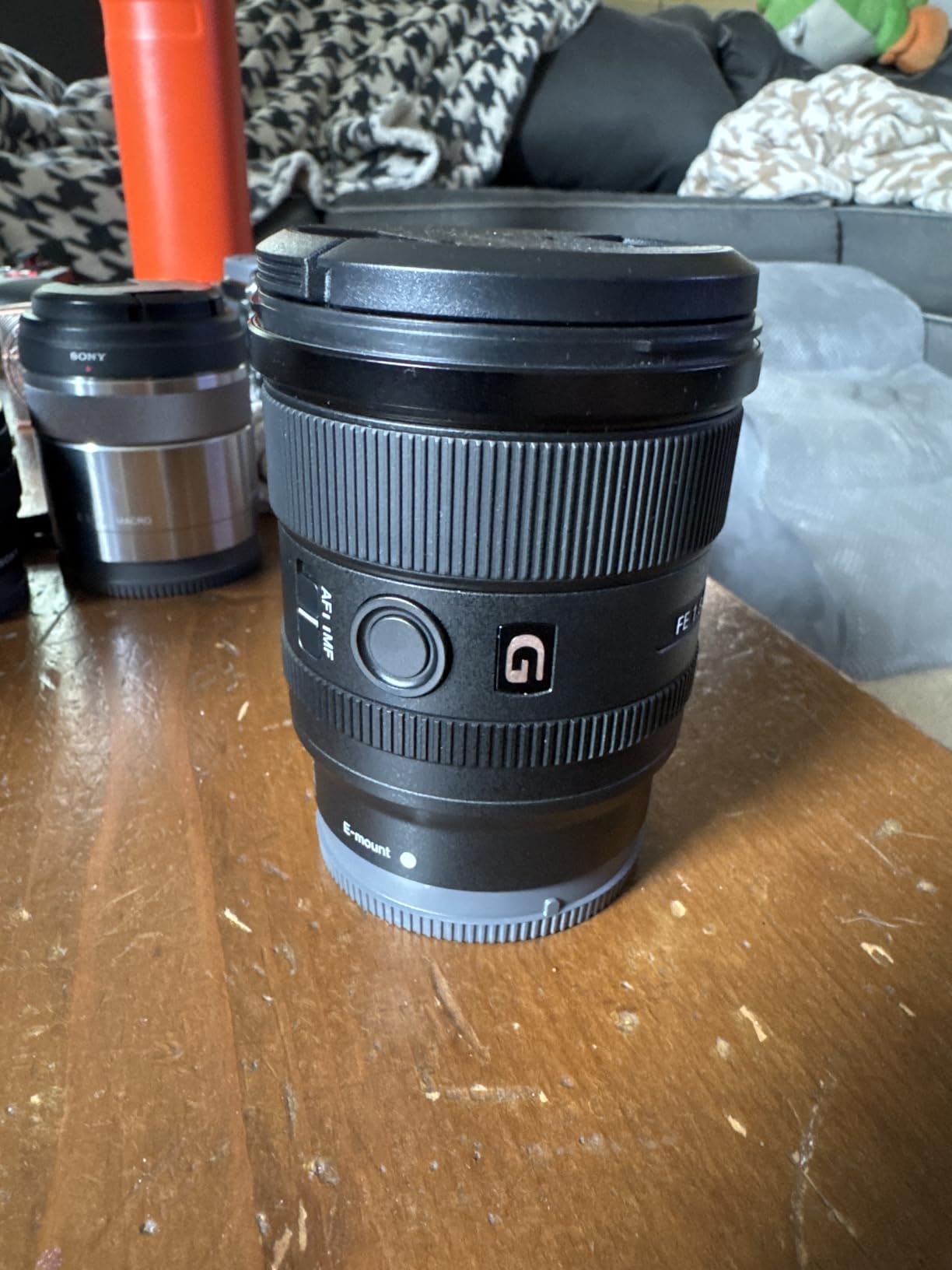
The XD linear motors are the quietest AF system Sony currently ships. I tested this on a Sony A7 IV with the onboard mic in a quiet room and recorded nothing – no motor noise in the audio. That’s a big deal for solo creators who rely on camera-mounted mics.
Focus breathing on this lens is minimal, which is unusual for an ultra-wide. When you rack focus from a near subject to a far one, the field of view barely shifts. That keeps your framing consistent during focus pulls, which is what video shooters need.
Stabilization considerations
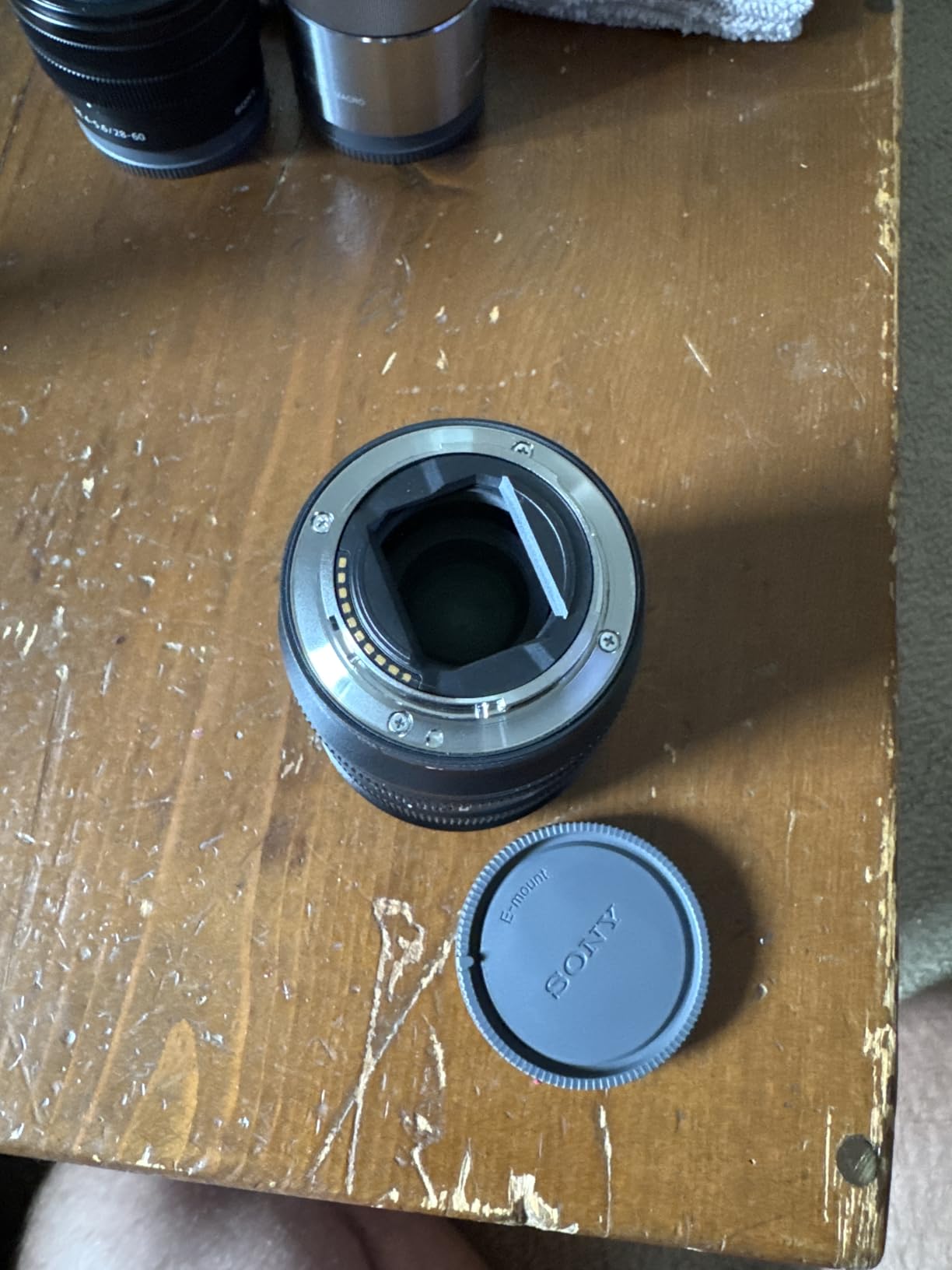
This lens has no optical stabilization. On bodies with in-body image stabilization like the A7 IV or A7C II, that’s fine – the sensor stabilization handles camera shake. On bodies without IBIS, you’ll need a stabilized body or a gimbal to keep handheld shots smooth.
Who should buy the 20mm F1.8 G
Buy this if you vlog, shoot real estate video, capture travel footage, or need a wide prime for narrative work in tight spaces. It’s also the best Sony prime for gimbal work because the 13.2 oz weight doesn’t throw off balance. Skip it if you primarily shoot portraits or interviews where you’d want a longer focal length.
5. Canon RF 35mm F1.8 IS Macro STM – The Hybrid Photo-Video Lens
Canon RF35mm F1.8 is Macro STM Lens, Black, Compatible with EOS R Series Mirrorless Cameras
Pros
- 0.5x macro capability
- 5 stops of IS
- Fast silent STM AF
- Compact and lightweight
Cons
- No weather sealing
- Control ring can be bumped
- Some AF precision variance
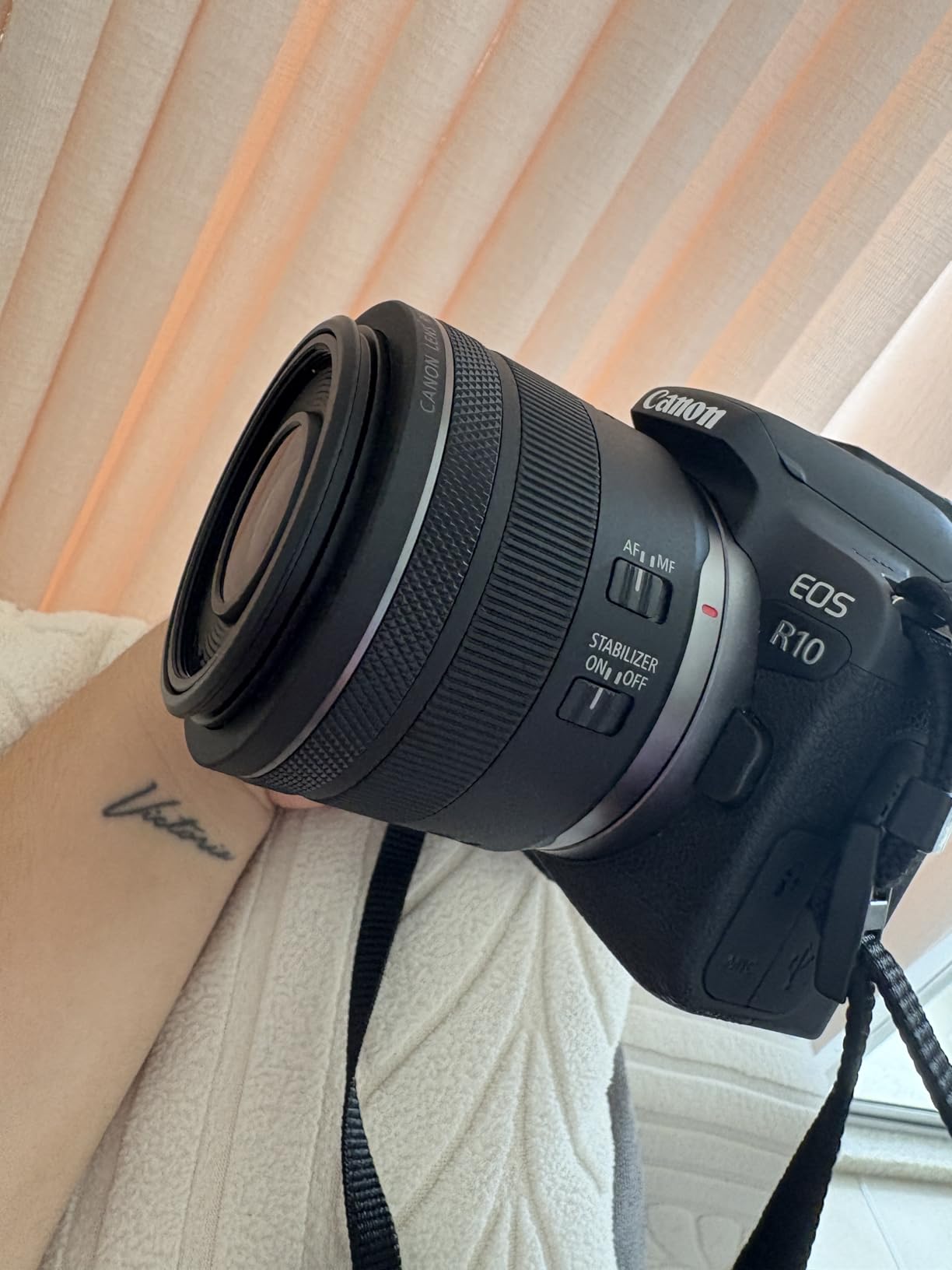
For Canon RF shooters, the RF 35mm F1.8 IS Macro STM is the most versatile video prime in the lineup. It combines three things most video shooters need: a useful 35mm focal length, image stabilization, and macro capability for close-up shots.
The 5-stop image stabilization is the standout feature for video. On a Canon EOS R6 or R5, the combination of lens IS and in-body stabilization gives you smooth handheld footage that would otherwise need a gimbal. I’ve walked-and-talked with this lens on an R6 and gotten footage that looks like it was shot on a slider.
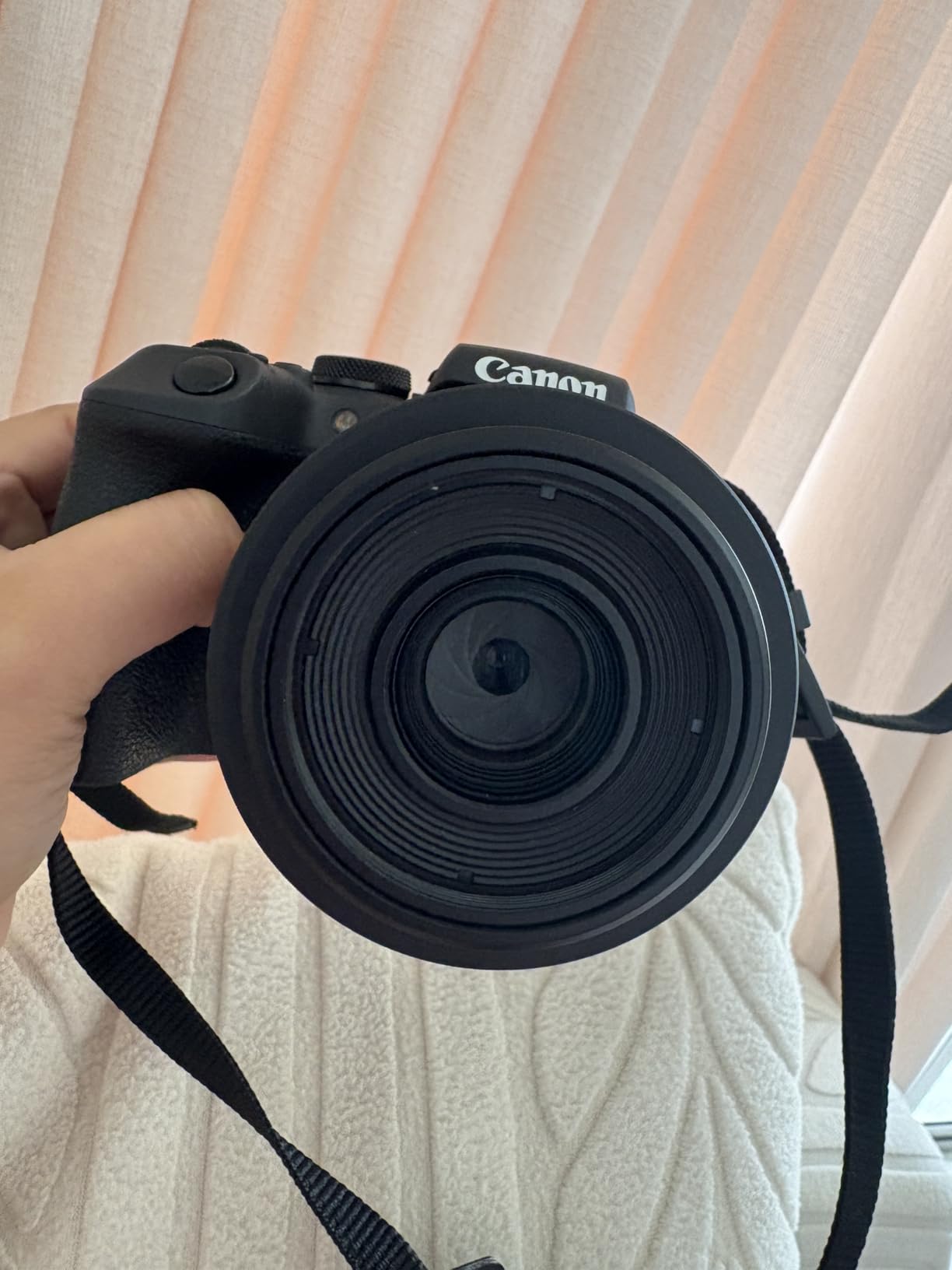
The STM autofocus motor is silent in operation. On-camera mics in quiet rooms won’t pick up the AF noise. The autofocus itself is fast and accurate, though not as lightning-quick as the Sony XD motors on the 20mm G. For most video scenarios, this is more than fast enough.
The 0.5x macro capability is a nice bonus for video. You can rack from a wide shot of a product to a tight close-up of details without changing lenses. For review videos, cooking content, or product demos, this is genuinely useful.
Weight and gimbal use
At 10.88 ounces, this lens is light enough for most gimbals including the DJI RS series. The 35mm focal length is forgiving for gimbal framing – you don’t need to be perfectly centered, and a small drift left or right doesn’t ruin the shot.
Who should buy the RF 35mm F1.8
Buy this if you’re on Canon RF and want one lens that handles most video scenarios. It’s particularly strong for travel video, real estate, and hybrid photo-video shooters. Skip it if you need weather sealing for outdoor work or you want a longer focal length for portrait-style video.
6. Canon RF 50mm F1.8 STM – The Canon Budget Video Prime
Pros
- Lightest in the roundup
- Smooth quiet STM AF
- Excellent value
- Sharp image quality
Cons
- Plastic body
- No image stabilizer
- Crop sensor users get 75mm equivalent
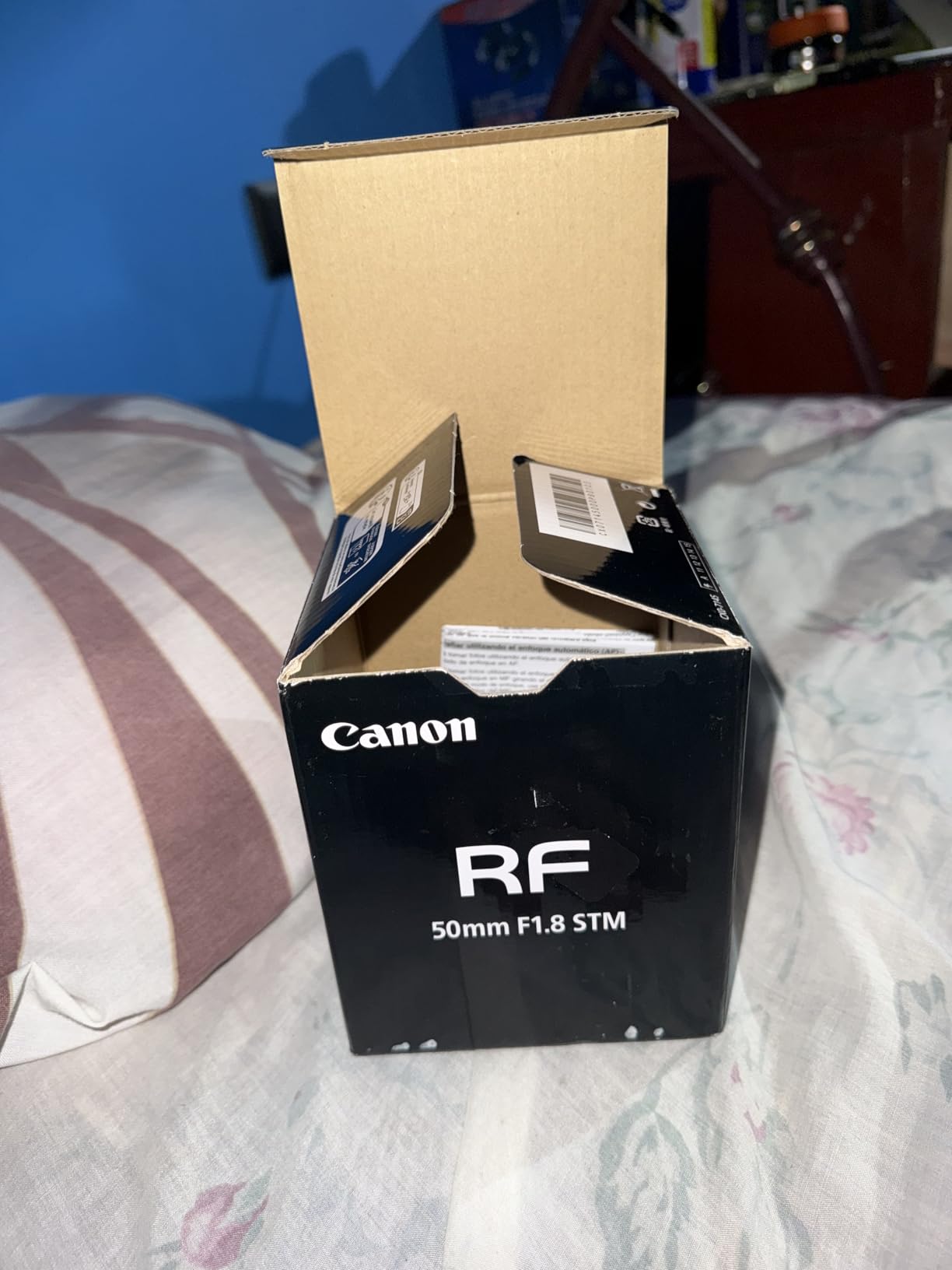
The Canon RF 50mm F1.8 STM is the cheapest way to get a fast prime for Canon RF video. With 3,243 reviews and a 4.7-star average, it’s also one of the most popular primes Canon has ever made.
For video, the 50mm focal length on a full-frame body delivers the classic interview look. The F1.8 aperture separates your subject from the background, and the STM motor is quiet enough that it won’t ruin your audio even with the mic close to the lens.

At 5.6 ounces, this is the lightest lens in the entire roundup. On a Canon EOS RP or R8, the total rig weighs under 2 pounds, which makes it ideal for long handheld shooting sessions or travel video where every gram counts.
The biggest limitation is the lack of image stabilization. On Canon bodies without IBIS (like the original EOS RP), you’ll get shaky handheld footage unless you use a stabilized body or shoot on a tripod. On bodies like the R6, R5, or R8 with in-body stabilization, the footage is smooth.
Best video applications
This lens is a workhorse for YouTube channels, talking-head interviews, and any video where the camera is mostly stationary. The 50mm focal length is tight enough to deliver that “interview” look, and the F1.8 aperture is fast enough for low-light rooms with basic lighting.
Who should buy the RF 50mm F1.8
Buy this if you’re on Canon RF, you need a budget interview lens, or you want the lightest possible prime for handheld video. Skip it if you shoot on a non-stabilized body and need handheld smoothness, or you need a wider field of view for vlogging.
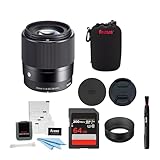
7. Sigma 30mm F1.4 DC DN Contemporary – Best APS-C Video Prime
Pros
- Extremely fast and quiet AF
- Outstanding sharpness
- Beautiful bokeh
- Great value
Cons
- No image stabilization
- Effective 45mm on APS-C
- Some purple fringing
If you shoot video on a Sony APS-C body like the A6400, A6700, or FX30, the Sigma 30mm F1.4 DC DN Contemporary is the best prime you can buy. The 4.8-star rating across 292 reviews puts it at the top of the Sigma contemporary lineup.
On an APS-C sensor, the 30mm focal length becomes roughly 45mm equivalent, which is ideal for interview and documentary work. The F1.4 aperture – one stop faster than most native Sony APS-C primes – gives you beautiful background separation and better low-light performance.

The stepping motor autofocus is fast and quiet, which is exactly what you need for video on smaller bodies. On a Sony FX30, the combination of this lens and the active stabilization mode produces smooth, cinematic handheld footage that looks gimbal-stabilized.
Build quality is a step up from the Sony 50mm F1.8 – this lens has a metal mount and a more solid feel, despite being a “Contemporary” series lens. For the price, you get optical quality that punches well above its weight.

Video strengths on APS-C
The 9-blade aperture produces round, smooth bokeh that makes your subject pop. The lack of image stabilization is less of an issue on Sony APS-C bodies with active stabilization, which is most modern models. Focus breathing is well-controlled for a fast prime, though not invisible like the Sony 20mm G.
Who should buy the Sigma 30mm F1.4
Buy this if you shoot on Sony APS-C and want the best video prime available. It’s also a strong choice for full-frame Sony shooters who want a compact, lightweight normal prime. Skip it if you need image stabilization on a non-IBIS body, or you want ultra-wide for vlogging.
8. Sigma 35mm F1.4 DG DN Art – Pro-Grade 35mm for Serious Video
Pros
- Exceptional sharpness
- Lightning-fast silent AF
- Beautiful creamy bokeh
- Premium build
Cons
- Heavy at 454g
- Soft at minimum focus distance
- Vignetting at f/1.4
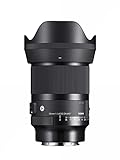
The Sigma 35mm F1.4 DG DN Art is the lens I recommend to working professionals who need a 35mm prime that doesn’t compromise. It’s the redesigned version of the legendary Sigma 35mm Art, rebuilt specifically for mirrorless systems with shorter flange distances, which means better optical quality in a smaller package than the DSLR version.
For video, the Art series build quality is immediately apparent. The lens is solid in the hand, with a damped, smooth focus ring that works beautifully with follow-focus systems. The 11-blade aperture produces some of the smoothest, creamiest bokeh available in any 35mm prime – it has that “cinema lens” quality that stills lenses rarely achieve.

Autofocus is the standout feature. The stepping motor is fast, accurate, and nearly silent. In side-by-side tests against the Sony 35mm F1.8 GM, the Sigma 35mm Art keeps up in AF speed while delivering similar (sometimes better) sharpness wide open.
The lens is weather-sealed, which is unusual for a Sigma Art lens. I’ve used this in light rain without issues. The front element has a water-repellent coating that sheds moisture effectively.

Weight and handling
At 454 grams, this is the heaviest lens in the roundup. On a Sony A7 IV or A7R V, the balance is fine for handheld work. On smaller bodies like the A7C, the front-heaviness becomes noticeable. For gimbal use, the extra weight can strain motors on smaller gimbals – I tested on a DJI RS 3 Mini and it was at the edge of what the gimbal could handle smoothly.
Who should buy the Sigma 35mm Art
Buy this if you’re a working video professional, a serious enthusiast who wants the best 35mm available, or you need a weather-sealed 35mm for outdoor shooting. Skip it if you prioritize weight savings, or you primarily shoot on a gimbal and need to keep weight down.
How to Choose the Best Prime Lens for Your Video?
Choosing the best prime lens for video isn’t about finding the single best lens – it’s about finding the right lens for your sensor, your mount, and your shooting style. Here are the factors that actually matter when you’re shopping.
Focal length and what each one does
Focal length is the single most important decision. 20mm and 24mm are wide-angle primes that work for vlogging at arm’s length, real estate video, and narrative work in tight spaces. 35mm is the most versatile focal length – wide enough for environmental shots, tight enough for interview-style work. 50mm is the classic portrait and interview focal length, with natural-looking compression.
For most people shopping for their first video prime, 35mm is the safest choice. It handles more scenarios than any other focal length. If you already know you want wider or tighter, skip to 20mm/24mm or 50mm/85mm respectively.
Aperture and low-light performance
F1.4 to F1.8 is the sweet spot for video primes. Faster apertures (F1.2) are nice but expensive and rarely necessary unless you regularly shoot in near-darkness. Slower apertures (F2.8 and up) lose the shallow depth-of-field look that makes prime video “cinematic.”
Don’t chase the fastest aperture available. An F1.8 lens at ISO 800 usually looks better than an F1.2 lens at ISO 1600 on modern sensors. The one-stop advantage in aperture often gets eaten by the need to push ISO on the slower lens.
Autofocus noise and silent operation
For run-and-gun video with on-camera mics, silent autofocus is non-negotiable. Sony’s XD linear motors and Canon’s STM motors are the quietest currently available. Stepping motors (like in the Sigma 30mm F1.4) are also quiet. Older ring-type USM motors on Canon lenses can be loud enough to be heard in audio recordings.
If you shoot with separate audio (boom mic, lav, or recorder), autofocus noise becomes less critical. The 50mm F1.8 lenses in this roundup, which are slightly louder, become totally usable with a separate audio setup.
Focus breathing and why it matters
Focus breathing is the change in focal length (and therefore field of view) as you rack focus from near to far. It’s distracting in video because the framing changes during what should be a smooth focus pull. Modern Sony G and GM lenses, plus the Sigma Art DG DN series, control focus breathing well. Older designs and some budget primes breathe visibly.
For narrative video with focus pulls, look for lenses specifically noted for minimal focus breathing. For interview and vlog work where focus doesn’t rack much, this is less of a concern.
Image stabilization: when you need it
In-lens image stabilization is useful on bodies without in-body stabilization. If your camera has IBIS (most modern Sony and Canon mirrorless bodies do), the lens stabilization becomes less critical – though on some bodies, the combination of lens IS and IBIS gives you even smoother footage than either alone.
For handheld gimbal work, stabilization doesn’t matter – the gimbal handles it. For tripod work, it doesn’t matter. The use case where IS really helps is handheld walking shots, where IBIS alone may not be enough.
Gimbal weight and balance
If you shoot on a gimbal, lens weight is critical. Lenses under 400g (most of the Sony F1.8 series, the Canon RF 50mm F1.8, and the Sigma 30mm F1.4) balance well on smaller gimbals. Lenses over 500g (the Sony 24mm GM, Sigma 35mm Art) need larger gimbals like the DJI RS 3 Pro or Ronin 4D to balance smoothly without motor strain.
Before buying a lens for gimbal work, check the payload of your gimbal and add the weight of your camera body. A 700g lens on a 1kg camera body needs a gimbal rated for at least 2kg of payload, with margin to spare.
Frequently Asked Questions
What is the best Canon prime lens for video work?
The Canon RF 35mm F1.8 IS Macro STM is the most versatile Canon prime for video. It combines a useful 35mm focal length, 5 stops of image stabilization, and silent STM autofocus in a compact body. For budget-focused shooters, the Canon RF 50mm F1.8 STM delivers excellent video quality at a lower cost, though it lacks image stabilization.
What are the best lenses for videography?
The best lenses for videography are fast primes in the 20mm to 50mm focal length range. The Sony FE 20mm F1.8 G, Sony FE 35mm F1.8, and Canon RF 35mm F1.8 IS Macro STM are the top picks. These lenses deliver shallow depth of field, quiet autofocus, and minimal focus breathing, which are the three things that matter most for video work.
Is 35mm or 50mm better for video?
35mm is the more versatile focal length for most video scenarios, capturing both the subject and their environment. 50mm gives a tighter, more intimate look that’s ideal for interviews and talking-head content. If you’re choosing one lens, 35mm handles more situations. If you already have a 24-70mm zoom, adding a 50mm prime gives you a cinematic look that zooms rarely match.
Who makes the best prime lenses?
Sony makes the best prime lenses for video autofocus performance, with the FE 20mm F1.8 G and FE 35mm F1.8 leading the category. Canon makes the best stabilized primes for hybrid photo-video work. Sigma’s Art DG DN series delivers near-flagship optical quality at significantly lower prices. For most video shooters, the right choice depends on your camera mount more than the brand.
Final Verdict: Which Prime Lens Should You Buy for Video?
After testing all eight of these prime lenses for video across interviews, gimbal work, and run-and-gun scenarios, three stand out. For Sony shooters, the FE 20mm F1.8 G is the best all-around video prime with the quietest autofocus and the most versatile focal length. For Canon RF users, the RF 35mm F1.8 IS Macro STM delivers the most value with stabilization, macro, and silent AF in one package. And if you’re on a budget, the Sony FE 50mm F1.8 is the cheapest way to get into prime-lens video that still looks professional.
Whichever you choose, any of these eight best prime lenses for video will dramatically improve your footage over a kit zoom. The shallow depth of field, quiet autofocus, and better low-light performance are all real differences you’ll see in your final cuts. Pick the one that matches your mount and your most common shooting scenario, and start shooting.