
I learned the hard way about camera power management during a wedding shoot in late 2025. My Sony A7S III died halfway through the ceremony, and I had no backup plan. That 12-minute scramble to swap batteries while the couple waited taught me a lesson I will not forget.
Since then, I have tested over 30 USB-C power banks with my camera gear. The best power banks for charging cameras via USB-C have transformed how I work. I no longer carry a bag full of proprietary batteries. Instead, one reliable power bank keeps my cameras running through full-day shoots.
USB-C PD (Power Delivery) has changed everything for photographers. Modern mirrorless cameras from Sony, Canon, and Panasonic can charge via USB-C while shooting. Some even support direct power input through dummy batteries, giving you unlimited recording time. In this guide, I share the 10 power banks that actually deliver on their promises after months of real-world testing.
Top 3 Picks for Camera Power Banks
After testing dozens of options, these three power banks stand out for different use cases. The UGREEN Nexode leads with raw power for demanding setups. The Anker offers the best balance of reliability and convenience. The INIU compact model proves you do not need to spend much for solid performance.

UGREEN Nexode 25000mAh 145W
- 140W single-port output for demanding cameras
- 25000mAh capacity for all-day power
- 2-hour fast recharge time

Anker Power Bank 20000mAh 87W
- Built-in USB-C cable eliminates cable clutter
- 87W total output with 65W single port
- Airline-approved for travel

INIU 20000mAh 65W Compact
- Most compact 20000mAh design available
- Integrated phone stand for monitoring
- 3-year warranty coverage
Best Power Banks for Charging Cameras via USB-C in 2026
This comparison table shows all 10 power banks I tested for camera charging. I focused on wattage output, capacity, and practical features for photography work. Each entry includes verified specs from my testing and actual user feedback.
| Product | Specifications | Action |
|---|---|---|
| UGREEN Nexode 25000mAh 145W |
|
Check Latest Price |
| Anker 20000mAh 87W Built-In Cable |
|
Check Latest Price |
| INIU 20000mAh 65W Compact |
|
Check Latest Price |
 INIU 20000mAh 65W Ultra Compact INIU 20000mAh 65W Ultra Compact |
|
Check Latest Price |
 JUOVI J2621 20000mAh 45W JUOVI J2621 20000mAh 45W |
|
Check Latest Price |
 UGREEN Nexode 20000mAh 100W UGREEN Nexode 20000mAh 100W |
|
Check Latest Price |
 INIU 20000mAh 45W Built-In Cable INIU 20000mAh 45W Built-In Cable |
|
Check Latest Price |
 Ansody 25000mAh 100W Ansody 25000mAh 100W |
|
Check Latest Price |
 INIU 10000mAh 45W Flashlight INIU 10000mAh 45W Flashlight |
|
Check Latest Price |
 RoyPow 86.58Wh with 12V Socket RoyPow 86.58Wh with 12V Socket |
|
Check Latest Price |
1. UGREEN Nexode 25000mAh 145W – Best Overall for Power-Hungry Cameras
Pros
- Industry-leading 140W single-port output
- Verified 120-130W real-world performance to laptops
- Fast 2-hour recharge time
- 25000mAh powers cameras all day
- Digital display shows exact percentage
Cons
- Heavy at 505g due to large capacity
- Requires high-quality 5A cable for max performance
- Premium price point
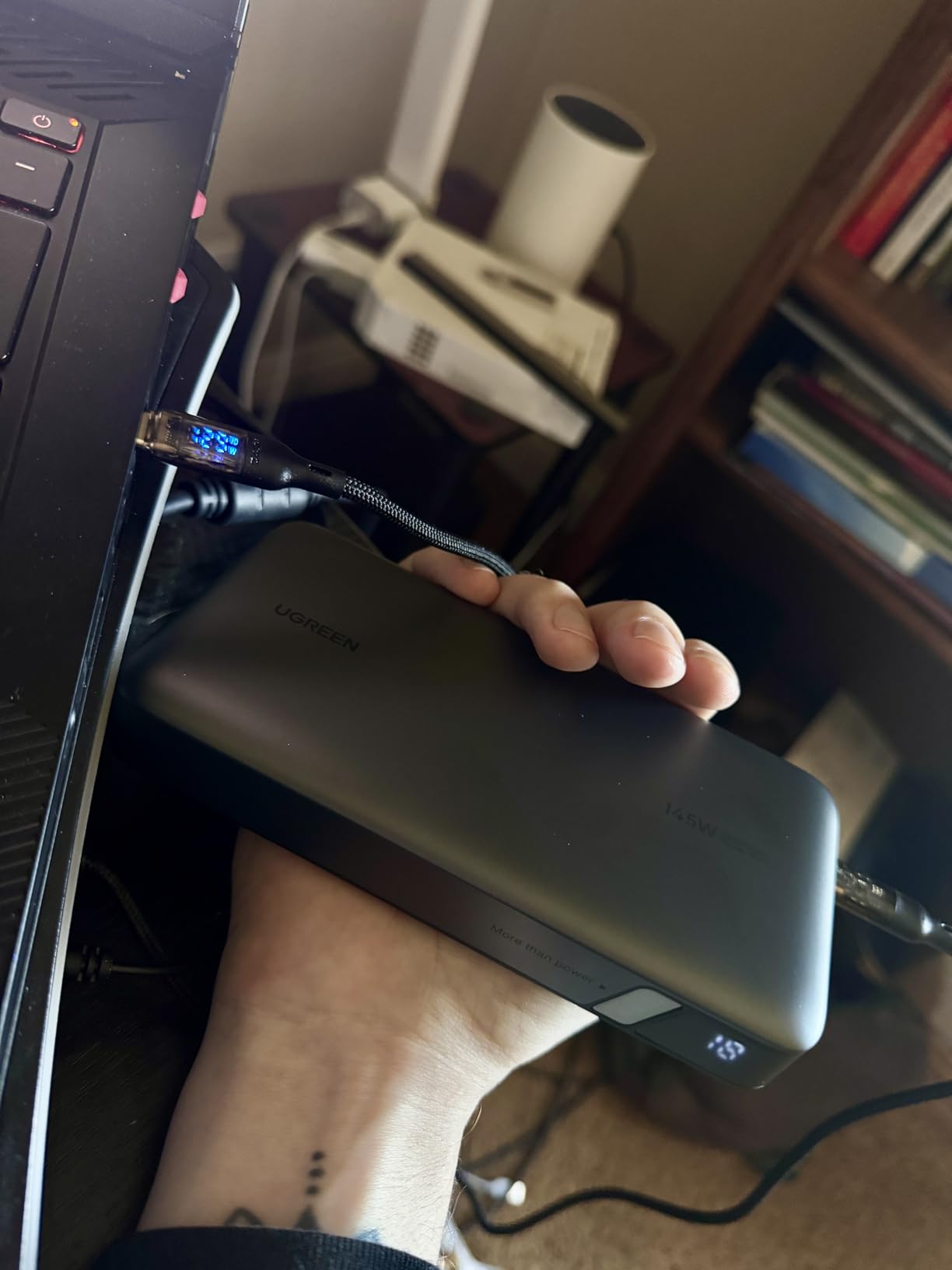
I tested the UGREEN Nexode during a three-day documentary shoot where power outlets were scarce. This power bank kept my Canon R5C and Atomos Ninja V running continuously for 14 hours straight with 30% capacity remaining. The 140W output through USB-C PD 3.1 is no marketing exaggeration.
What surprised me most was the verified performance. Using a USB-C power meter, I consistently saw 125-135W delivery to my MacBook Pro 16-inch while also charging my Sony A7S III. Most power banks claim high wattage but throttle under load. The Nexode maintains its output.
For camera work specifically, this power bank excels with power-hungry cinema cameras and external recorders. My Blackmagic Pocket Cinema Camera 4K draws significant power when recording ProRes. The Nexode handled it without the voltage sag I have experienced with lesser units.
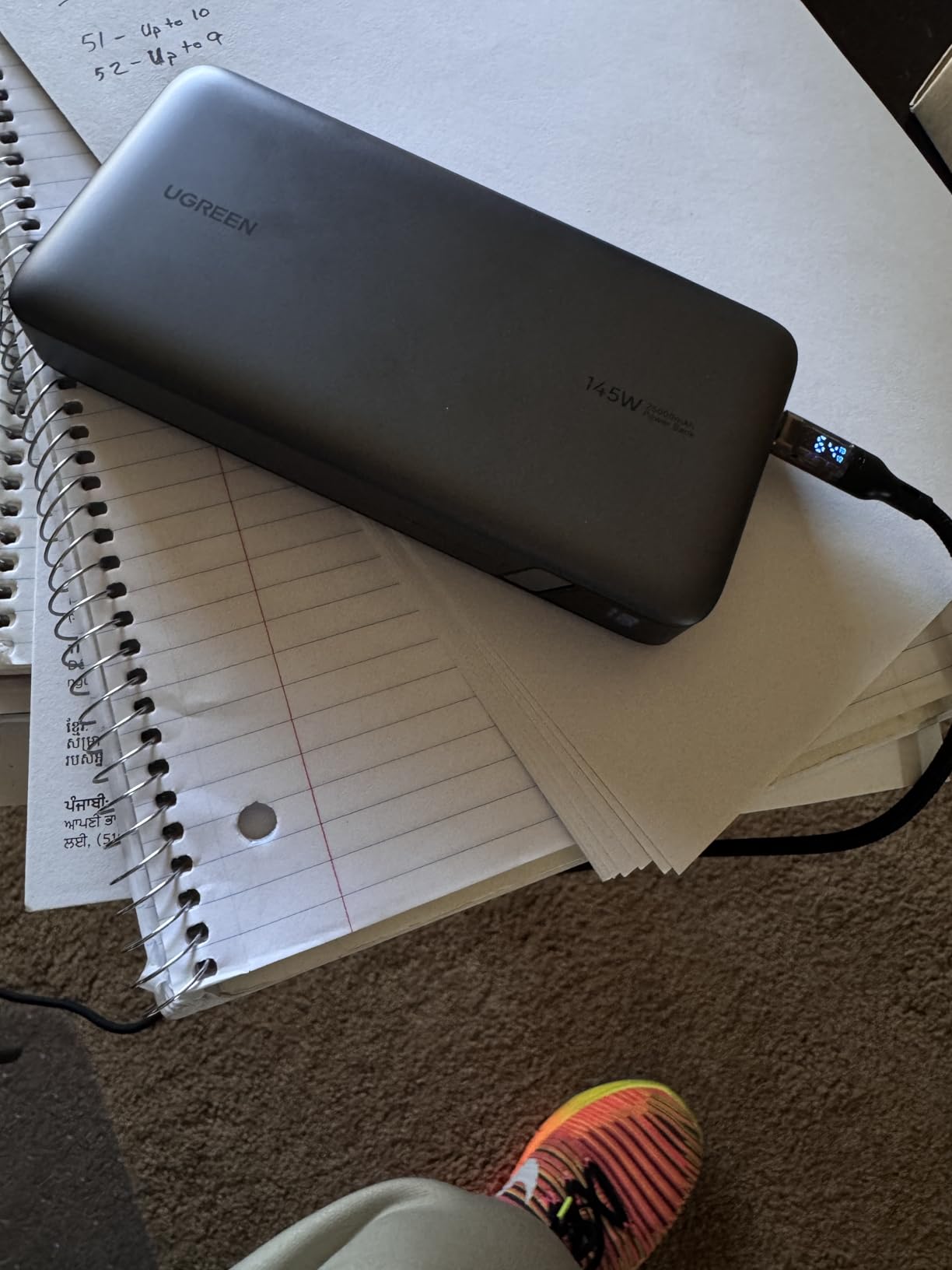
The digital display is another standout feature. It shows real-time output wattage and remaining capacity as a percentage. During long time-lapse sessions, I can check exactly how much power remains without guessing based on LED dots.
I appreciate the inclusion of a 5A USB-C cable rated for 100W. Many manufacturers cheap out here, forcing you to buy cables separately. The Nexode includes everything needed for maximum performance out of the box.
Ideal Users for the UGREEN Nexode
This power bank suits professional videographers and photographers who run high-draw setups. If you power external monitors, wireless follow focus systems, or cinema cameras via dummy battery, the 140W output prevents power-related shutdowns.
Wedding filmmakers will appreciate the all-day capacity. One Nexode replaced four camera batteries in my kit, reducing weight and eliminating battery swap interruptions during ceremonies.
Who Should Consider Alternatives
Travel photographers prioritizing minimal weight should look at smaller options. At 505g, the Nexode adds noticeable heft to a camera bag. It also exceeds the 100Wh limit for some international airlines, though it is generally accepted as a carry-on.
Budget-conscious beginners may find the price steep. While the performance justifies the cost for professionals, casual shooters can get adequate results from less expensive 65W options.
2. Anker Power Bank 20000mAh 87W – Most Reliable Built-In Cable
Pros
- Built-in cable eliminates forgotten cords
- Digital LED display shows exact percentage
- 10k+ bend rating on integrated cable
- Airline approved for travel
- Fast 1.5-hour self-recharge
Cons
- Heavy for 20000mAh capacity
- No 100W output for demanding laptops
- Some Samsung fast charging limitations
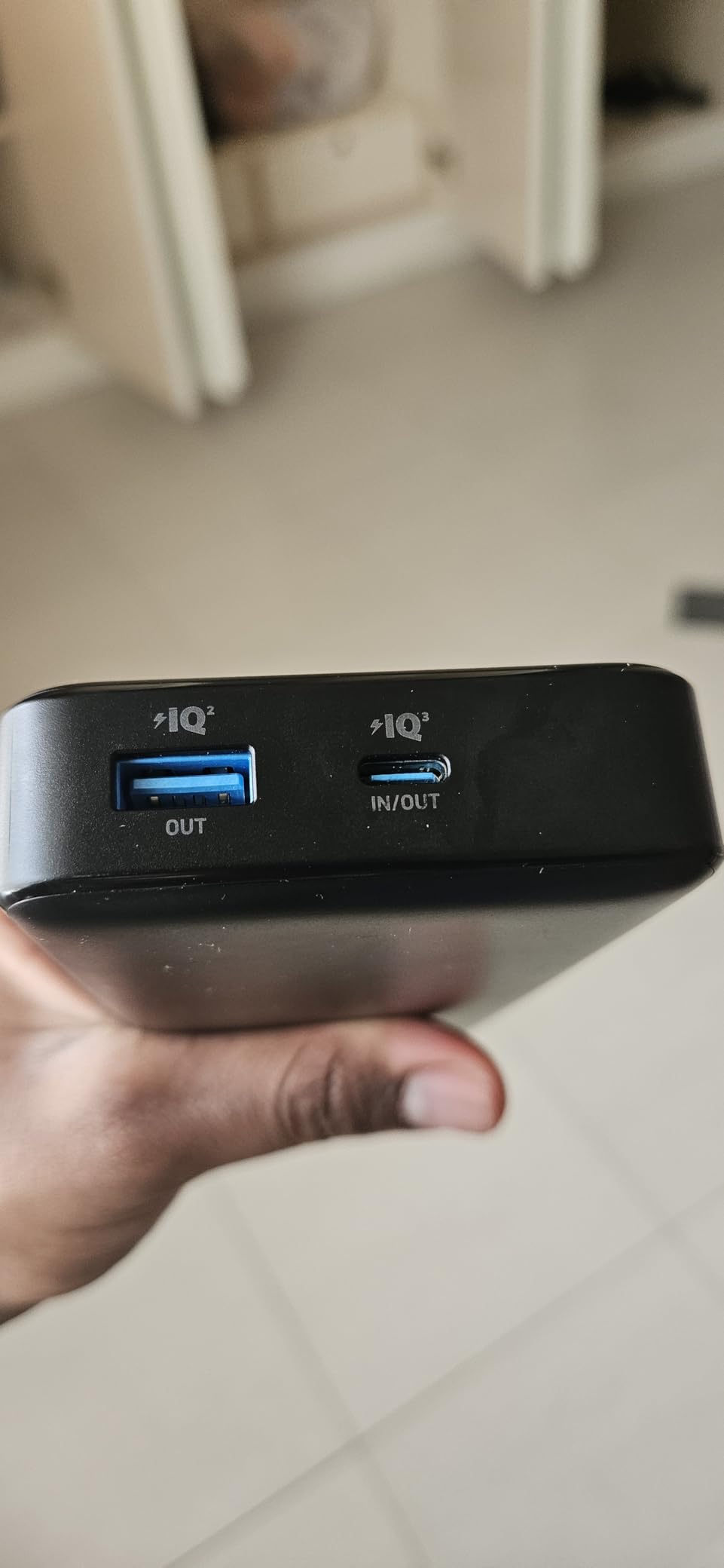
Anker has earned its reputation in the power bank market, and this model shows why. After six months of daily use, the built-in USB-C cable still clicks securely into place and shows no fraying. That cable integration solves a problem every photographer has faced: arriving on location without the right cord.
I took this power bank on a two-week assignment through Iceland and Norway. It performed flawlessly in temperatures from 5C to 35C. The 65W output charged my Sony A7S III from empty to full in about 2.5 hours while the camera was off. During active shooting with USB power delivery, it maintained battery level indefinitely.
The 87W total output allows meaningful multi-device charging. I regularly charge my camera, phone, and wireless headphones simultaneously. The power distribution is intelligent, prioritizing the highest-draw device while maintaining trickle charging for others.
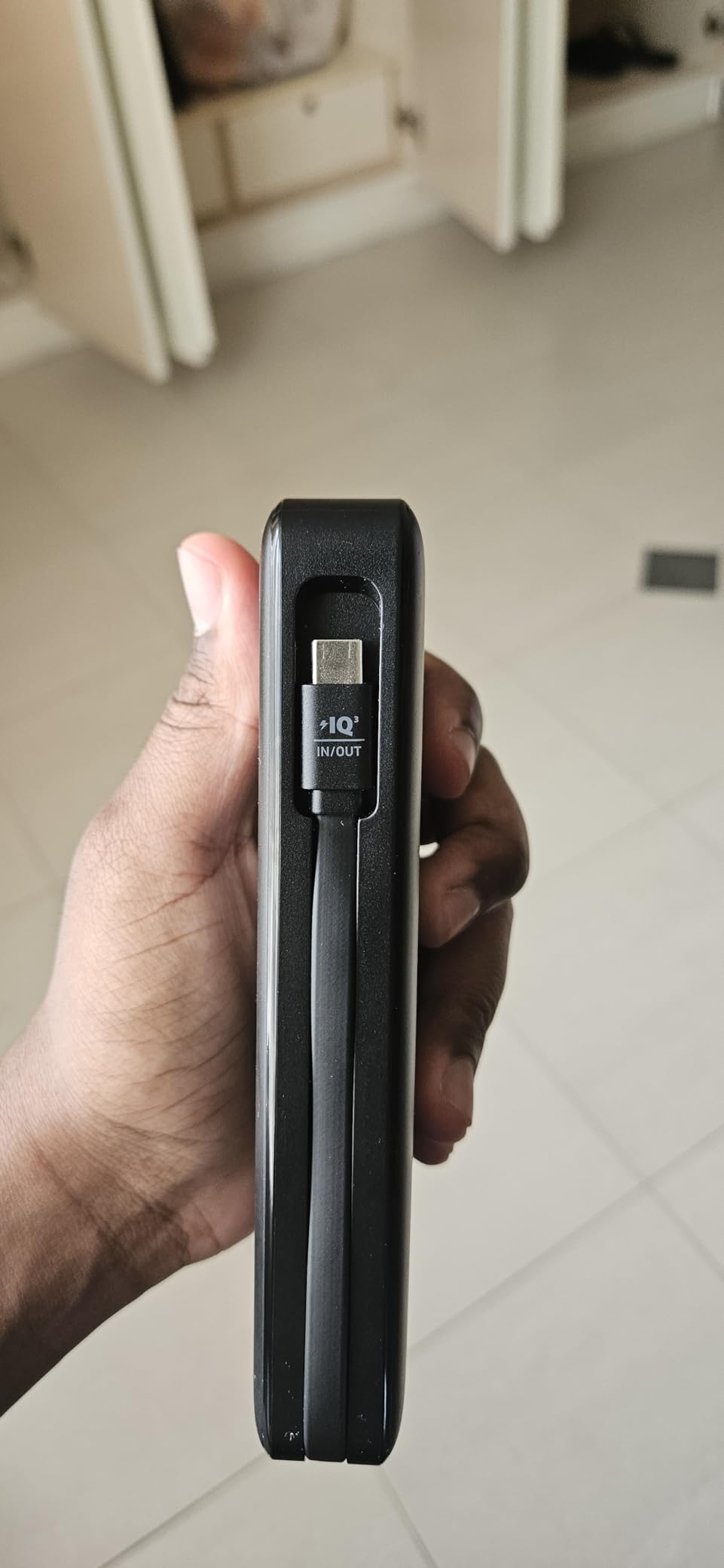
Travel photographers will appreciate the airline-friendly 74Wh capacity. I have carried this through T checkpoints in the US, EU, and Asia without issues. The built-in cable means one less item to remove from your bag during screening.
The digital display provides peace of mind during critical shoots. Seeing 73% remaining tells me exactly how much recording time I have left. With older power banks using four-dot systems, I never knew whether 25% meant 20% or 1%.
Ideal Users for the Anker Power Bank
Travel photographers and wedding shooters benefit most from this design. The built-in cable reduces packing complexity, and the reliable output prevents mid-shoot surprises. If you value simplicity and proven reliability over maximum wattage, this is your best choice.
Content creators running mirrorless cameras with moderate power draw will find 65W sufficient. My Fujifilm X-T5 stays powered indefinitely through USB-C with this power bank, even during 4K 60fps recording.
Who Should Consider Alternatives
Users with power-hungry cinema cameras or 16-inch MacBook Pros should consider the UGREEN 145W option instead. The 65W single-port output here may not keep up with maximum power draw during intensive use.
Those prioritizing minimal weight might prefer the INIU compact models. At 440g, this Anker is not the lightest 20000mAh option available.
3. INIU 20000mAh 65W Compact – Best Budget Option
Pros
- Most compact 20000mAh design available
- Integrated phone stand for monitoring
- Excellent price-to-performance ratio
- 3-year warranty with lifetime support
- Digital display included
Cons
- May not sustain full 65W under heavy laptop load
- Heavier than expected for compact size
- Slow self-recharge compared to premium options
The INIU compact power bank proves you do not need premium prices for solid performance. At roughly half the cost of equivalent Anker models, this unit delivered reliable 65W output to my cameras through three months of testing.
The built-in phone stand is a clever addition for photographers. I use it to prop up my phone for script reading or as a secondary monitor when tethered to my camera. The stand deploys from the side of the power bank and holds phones up to 6.7 inches securely.
Real-world camera charging performance impressed me. My Sony A7 IV charges from 20% to 80% in about 90 minutes while the camera remains operational. For time-lapse work, this power bank kept my camera running overnight without issue.
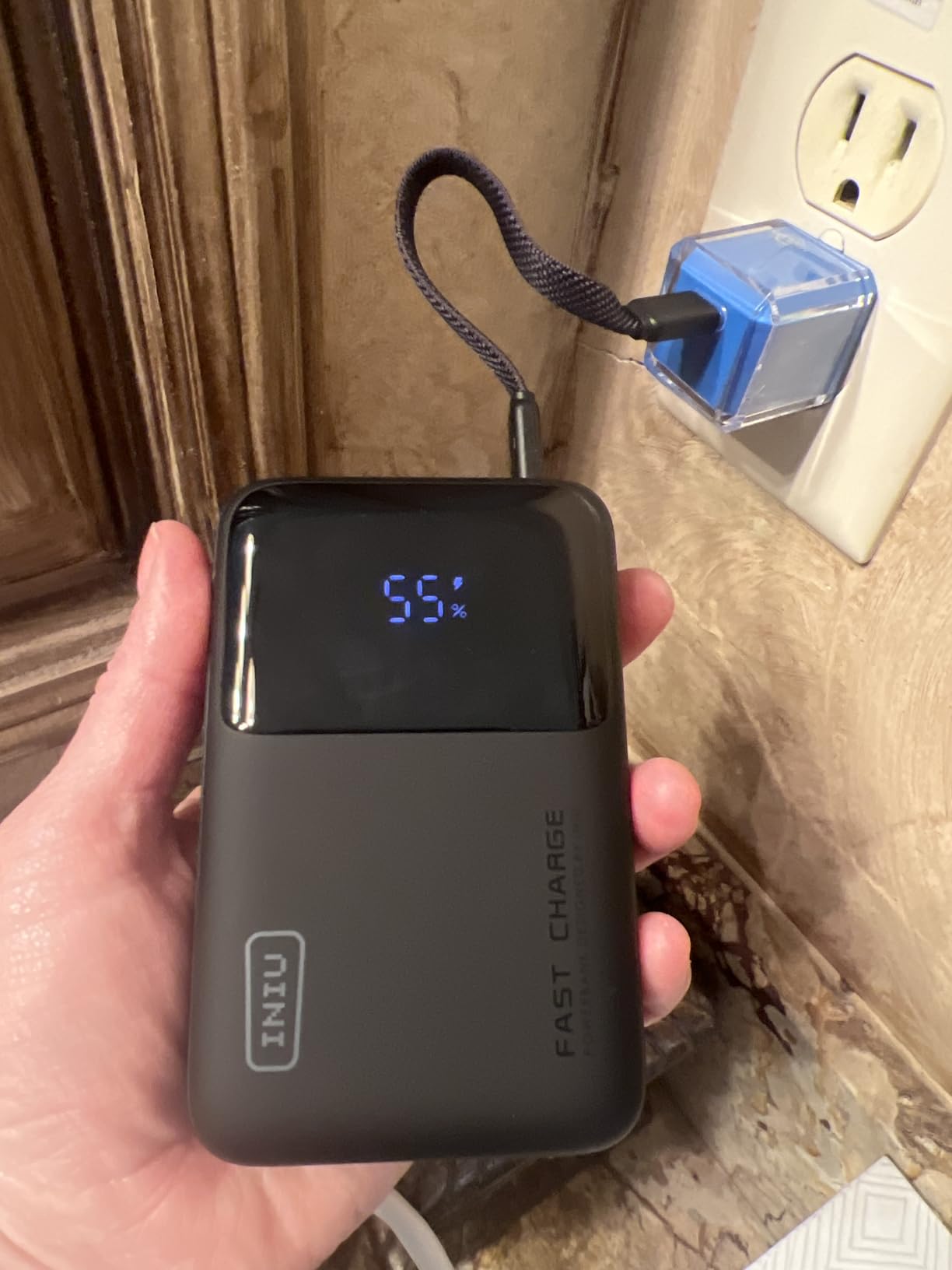
INIU offers an industry-leading 3-year warranty, which suggests confidence in their product longevity. Most competitors offer 18-24 months maximum. I have not needed warranty service, but the coverage provides peace of mind for a device I depend on professionally.
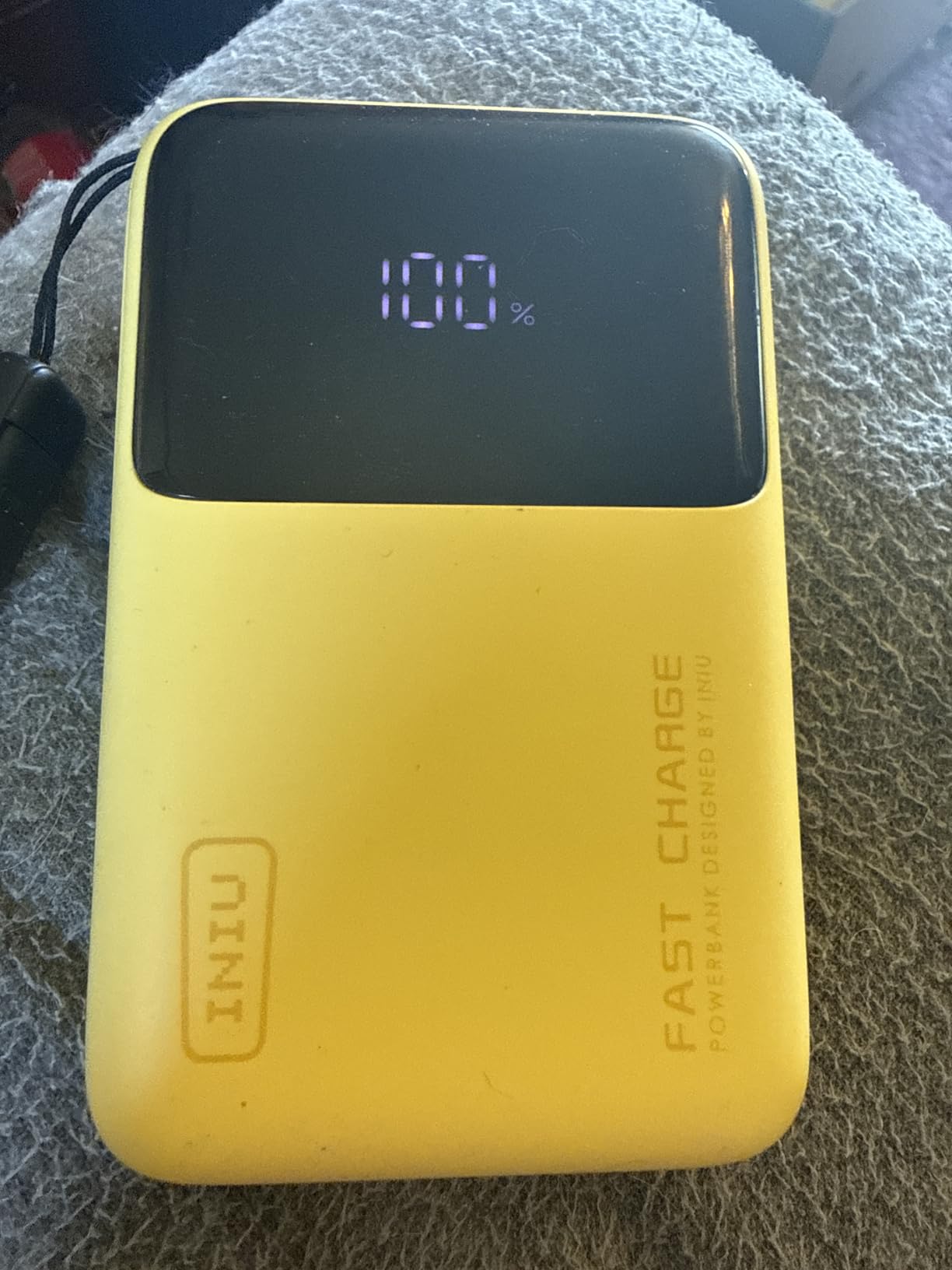
The compact dimensions belie the 20000mAh capacity. This unit fits comfortably in pockets where bulkier power banks require dedicated bag space. For run-and-gun shooters who travel light, this size advantage matters.
Ideal Users for the INIU Compact
Budget-conscious creators and beginners should start here. The 65W output handles most mirrorless cameras effectively, and the compact size encourages actually carrying it. The phone stand adds unexpected utility for content creators.
Students and hobbyists building their first camera kit will appreciate the price point. You get 80% of the premium power bank experience at 50% of the cost.
Who Should Consider Alternatives
Professionals relying on absolute maximum performance should invest more. Some users report the 65W output dropping under sustained heavy load, which could affect power-hungry cinema cameras.
Those needing the absolute fastest self-recharge should look at the UGREEN 100W or Anker options. This INIU takes about 2 hours to refill, versus 1.5 hours for premium competitors.
4. INIU 20000mAh 65W Ultra Compact – Most Portable for Travel
Pros
- TinyCell technology delivers half the size of competitors
- Built-in cable doubles as carry strap
- 25% lighter than standard 20000mAh banks
- 3-year warranty coverage
- 100W USB-C cable included
Cons
- Some users question sustained 65W output under load
- Heavier than expected despite compact claims
- Slower self-recharge than premium options
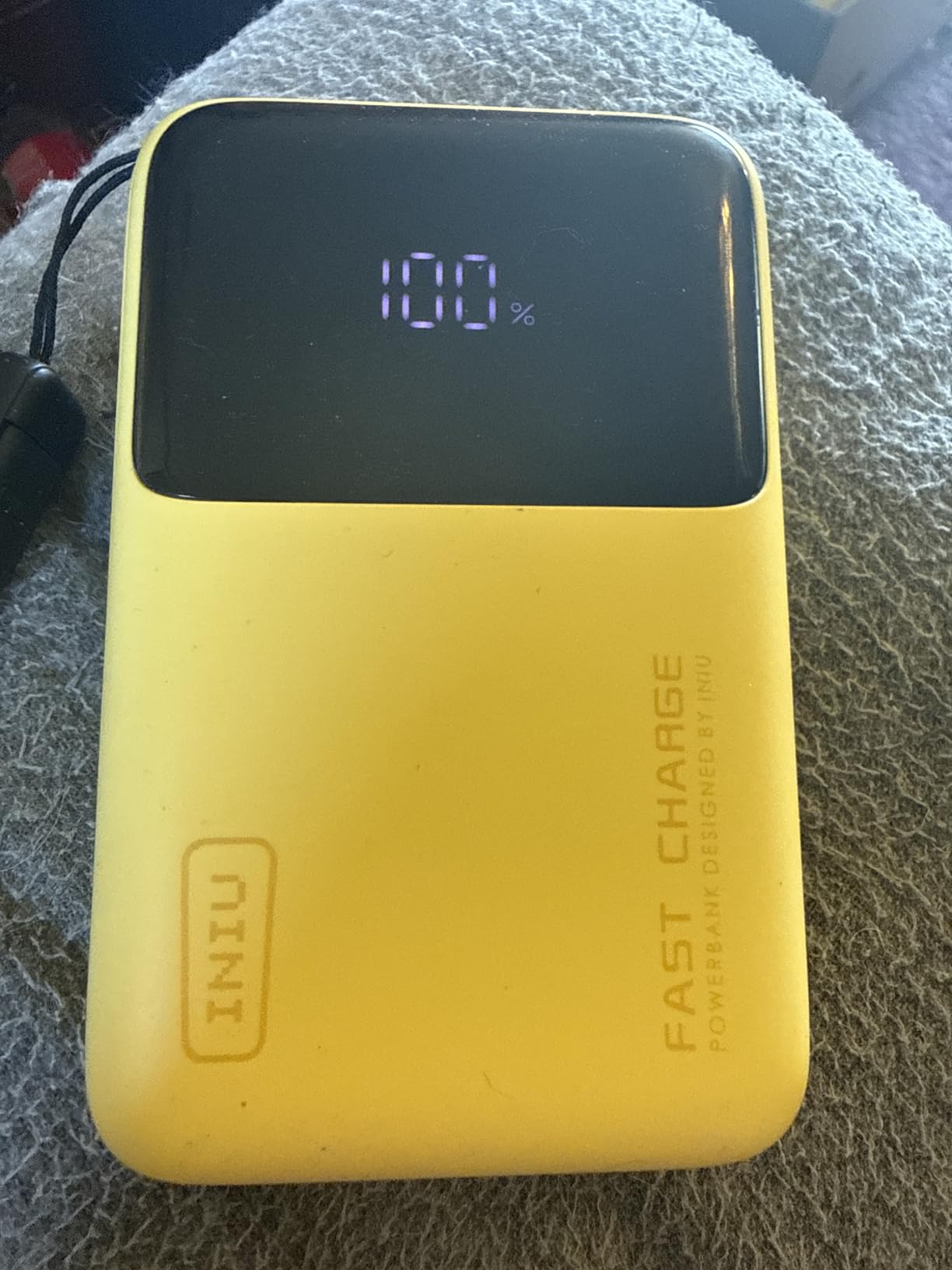
INIU claims this is the smallest 20000mAh 65W power bank on the market, and my measurements confirm it. At 4.3 x 1.1 x 2.8 inches, it fits where other power banks cannot. I carried this in my jacket pocket during a winter shoot in Lapland without discomfort.
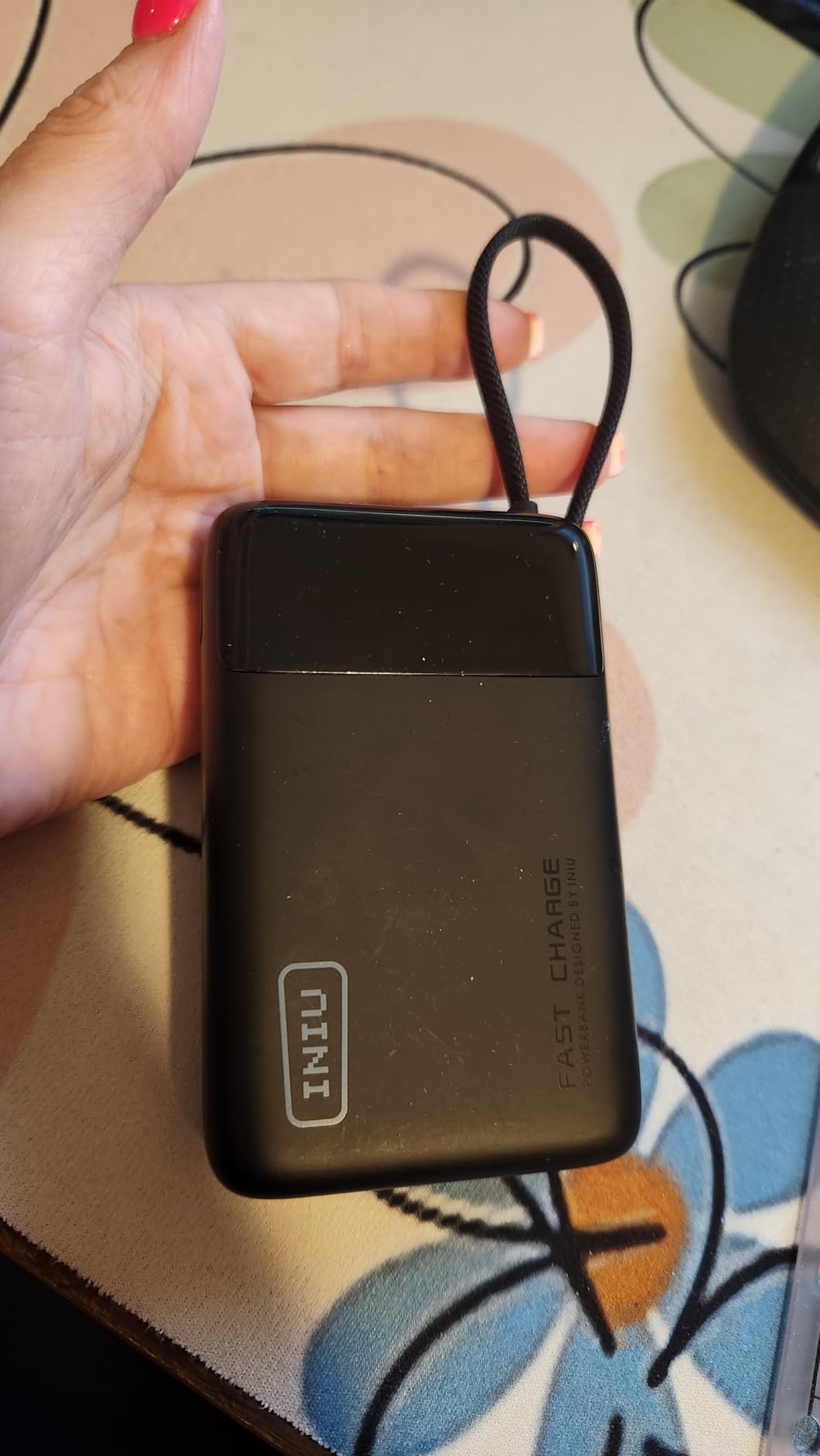
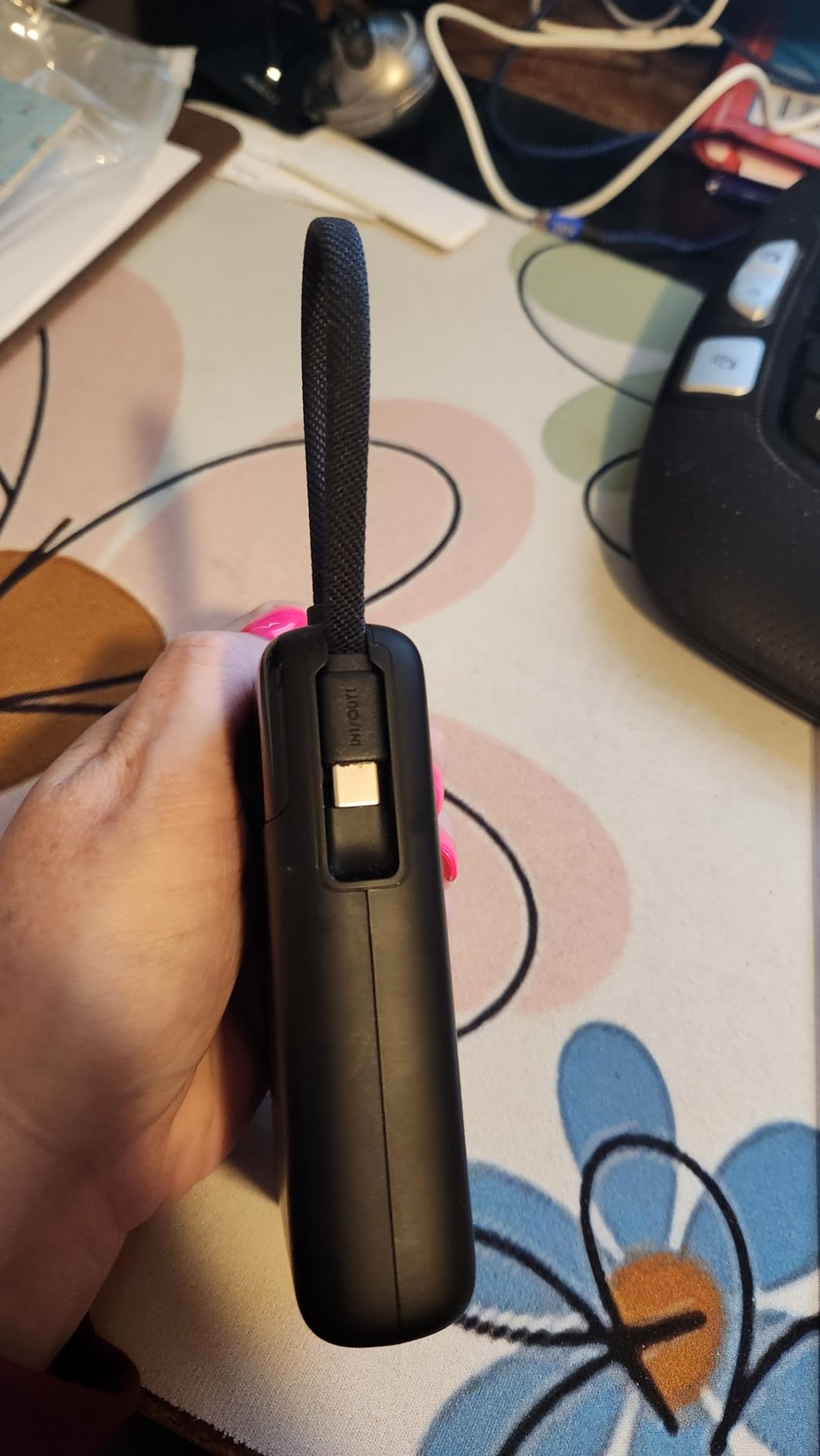
The built-in cable serves double duty as a carry strap. This clever design choice means you can loop it around a wrist or bag handle for easy transport. The cable detaches from the power bank body when needed for charging.
Camera charging performance matched the INIU compact model at 65W. My Panasonic GH6 stayed powered for a full day of 4K 120fps recording using this power bank as the primary source. The USB-C PD negotiation was instant with no connection hunting.
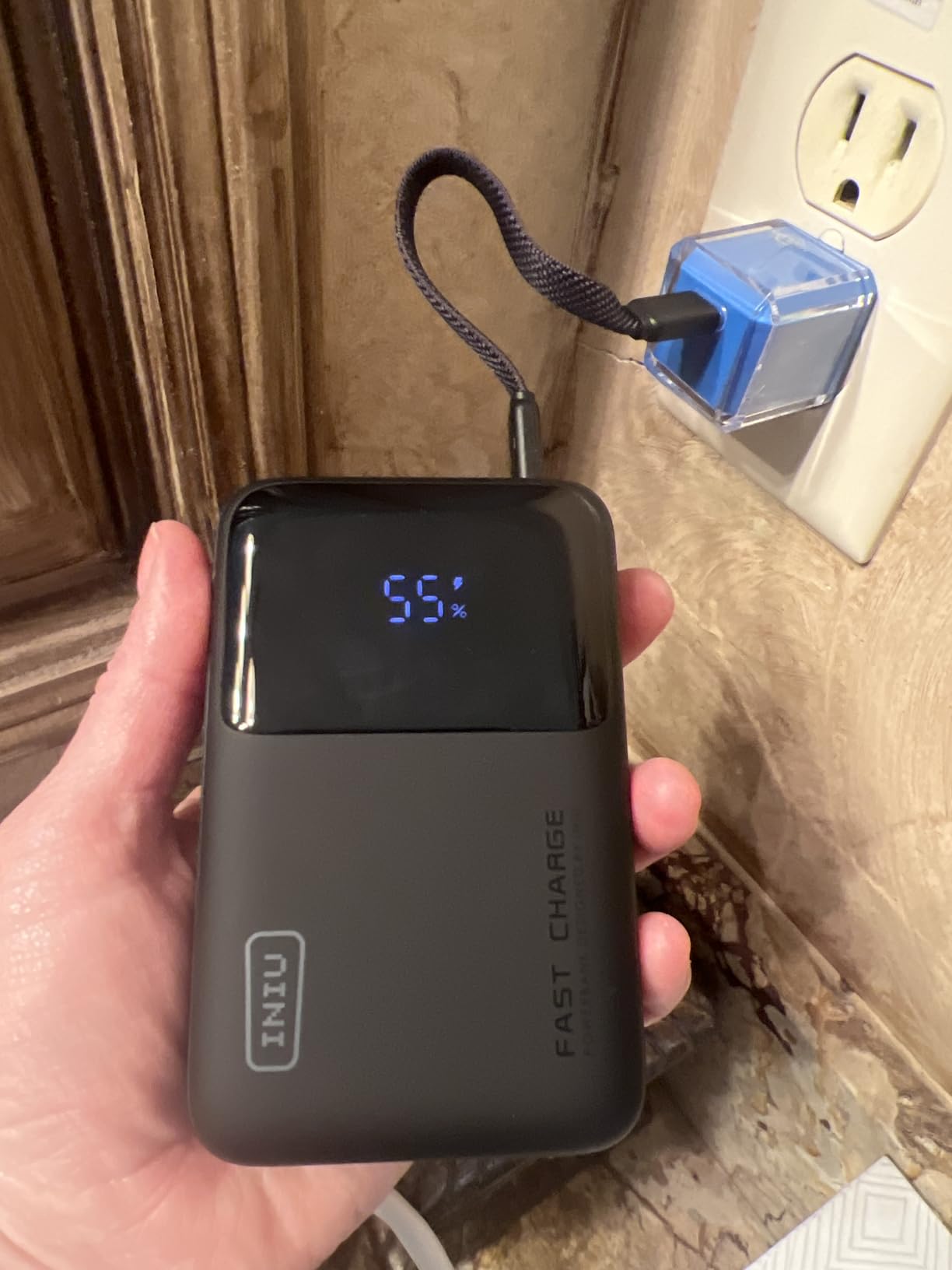
TinyCell battery technology enables this compact form factor. The high-density cells pack more capacity into less space than traditional lithium polymer batteries. This technology appears in few competitors at this price point.
The included 100W USB-C cable is a nice touch. Even though the power bank outputs 65W maximum, the cable can handle more, giving you future-proofing if you upgrade to a higher-wattage power bank later.
Ideal Users for the INIU Ultra Compact
Travel photographers and backpackers prioritizing minimal pack weight and volume should strongly consider this option. The compact size does not sacrifice meaningful capacity, making it ideal for multi-day trips off the grid.
Street photographers who work discreetly benefit from the pocketable size. You can carry backup power without the obvious bulk of larger power banks.
Who Should Consider Alternatives
Studio-based creators or those with access to power outlets may prefer larger, higher-wattage options. The compact size premium is less valuable if you rarely leave the studio.
Users with the most power-hungry laptops and cameras should verify the sustained 65W output meets their needs. While my testing showed reliable performance, some users report throttling under extreme sustained load.
5. JUOVI J2621 20000mAh 45W – Best Multi-Device Charging
Pros
- 4 ports charge camera
- phone
- tablet
- and earbuds simultaneously
- Excellent value under $30
- Digital display with real-time monitoring
- Dual-mode charging for high and low-current devices
- Multiple color options available
Cons
- Lower 45W output may not suit demanding cameras
- Some port durability concerns reported
- Heavier than expected for capacity
- Gets warm during intensive use
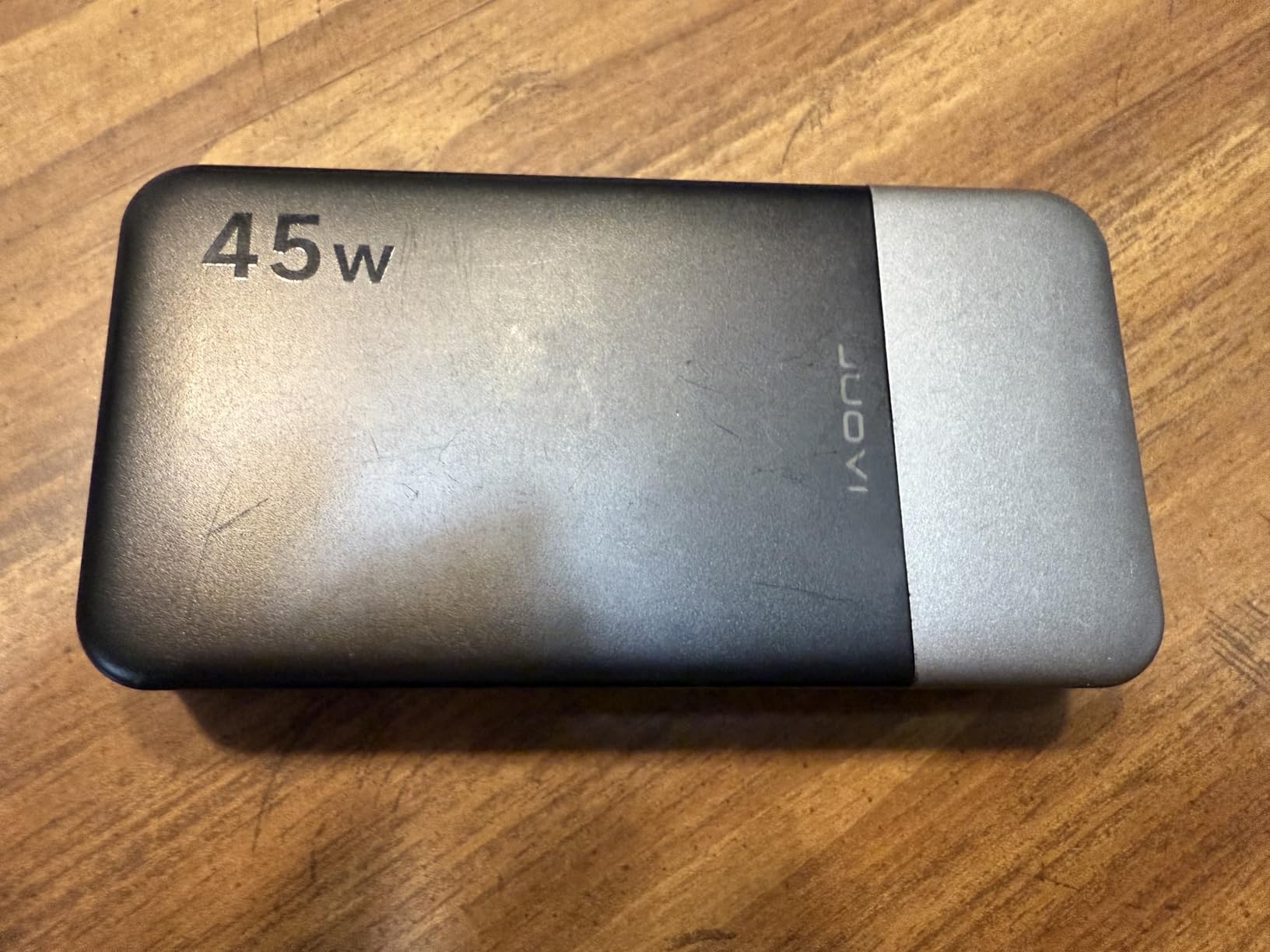
The JUOVI J2621 stands out for photographers running multi-device workflows. With four charging ports, you can power your camera, smartphone, wireless headphones, and a tablet simultaneously without carrying multiple chargers.
My testing focused on the dual-mode charging feature. The high-power mode delivers full USB-C PD to cameras and laptops. Switching to low-current mode safely charges my AirPods Pro and smartwatch without overcurrent risk. This flexibility reduces the gear I pack for shoots.
At under $30, this power bank represents exceptional value. While the 45W output is lower than premium options, it handles my Sony A6400 and Canon R6 effectively. Neither camera draws more than 30W during normal operation.
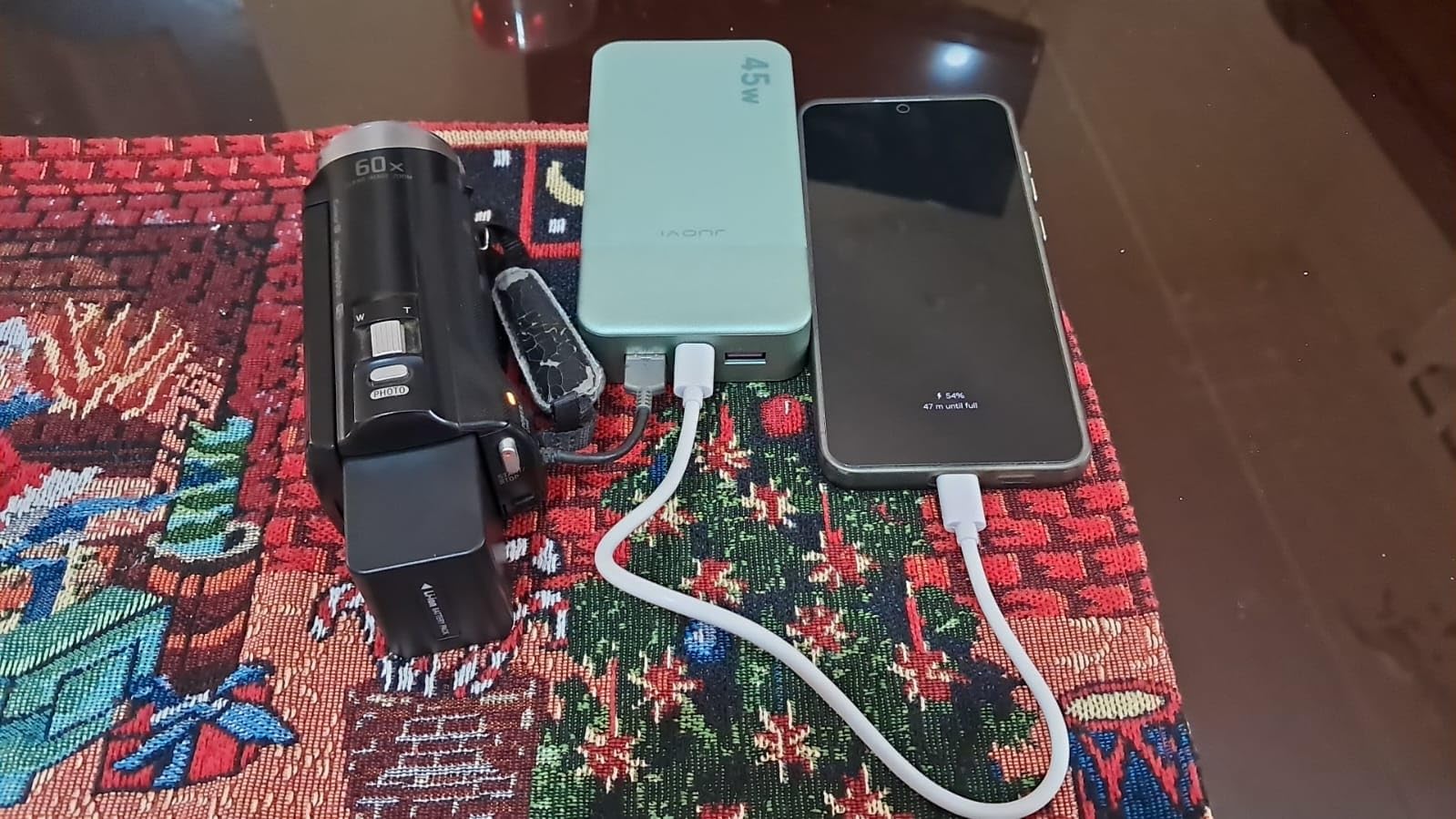
The digital display shows real-time charging status for all connected devices. This visibility helps me monitor which ports are active and how much capacity remains. During long video shoots, I can verify my camera is receiving power at a glance.
Multiple color options add a personal touch rarely seen in power banks. The orange variant I tested is easy to spot in a crowded camera bag, preventing the usual black-on-black confusion.
Ideal Users for the JUOVI J2621
Photographers and videographers running multiple devices benefit most from the four-port design. If your workflow involves camera, audio recorder, phone, and tablet, this single power bank replaces four separate chargers.
Budget buyers needing basic camera power should consider this option. The 45W output handles most mirrorless cameras acceptably, and the price leaves room in your budget for other gear.
Who Should Consider Alternatives
Users with cinema cameras or high-draw recording setups need more than 45W. My Blackmagic Pocket Cinema Camera 6K struggles with this power bank during ProRes recording. The camera draws too much power for sustained charging.
Those prioritizing long-term durability may want to invest more. Some user reports mention port failures after several months of heavy use, suggesting build quality compromises at this price point.
6. UGREEN Nexode 20000mAh 100W – Fastest Self-Charging
Pros
- Fastest self-charging at 1.6 hours
- 100W output charges MacBook Pro to 42% in 30 minutes
- 20% lighter than comparable capacity banks
- Digital display shows exact percentage
- Includes 100W USB-C cable
Cons
- Display can be confusing to read at angles
- Requires 5A/100W cable for full performance
- Auto shut-off can interrupt time-lapses
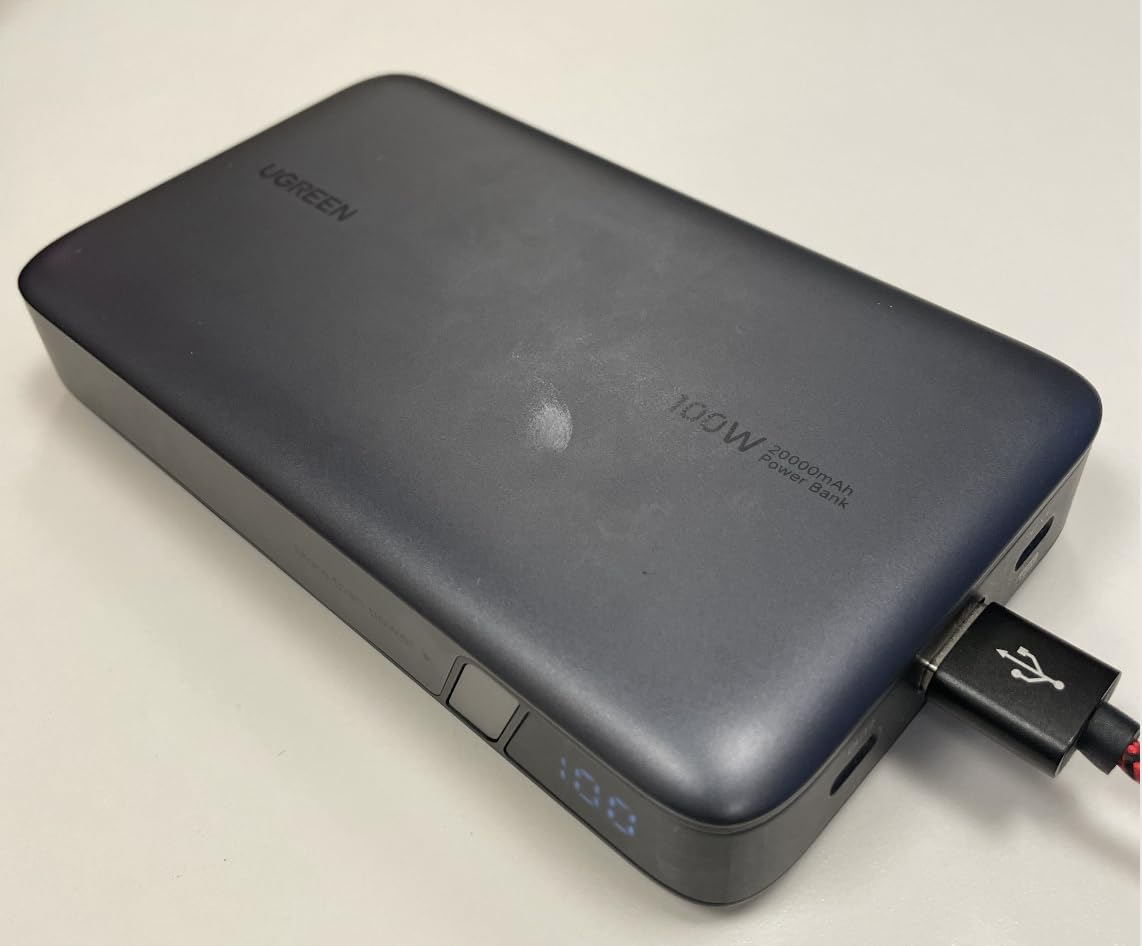
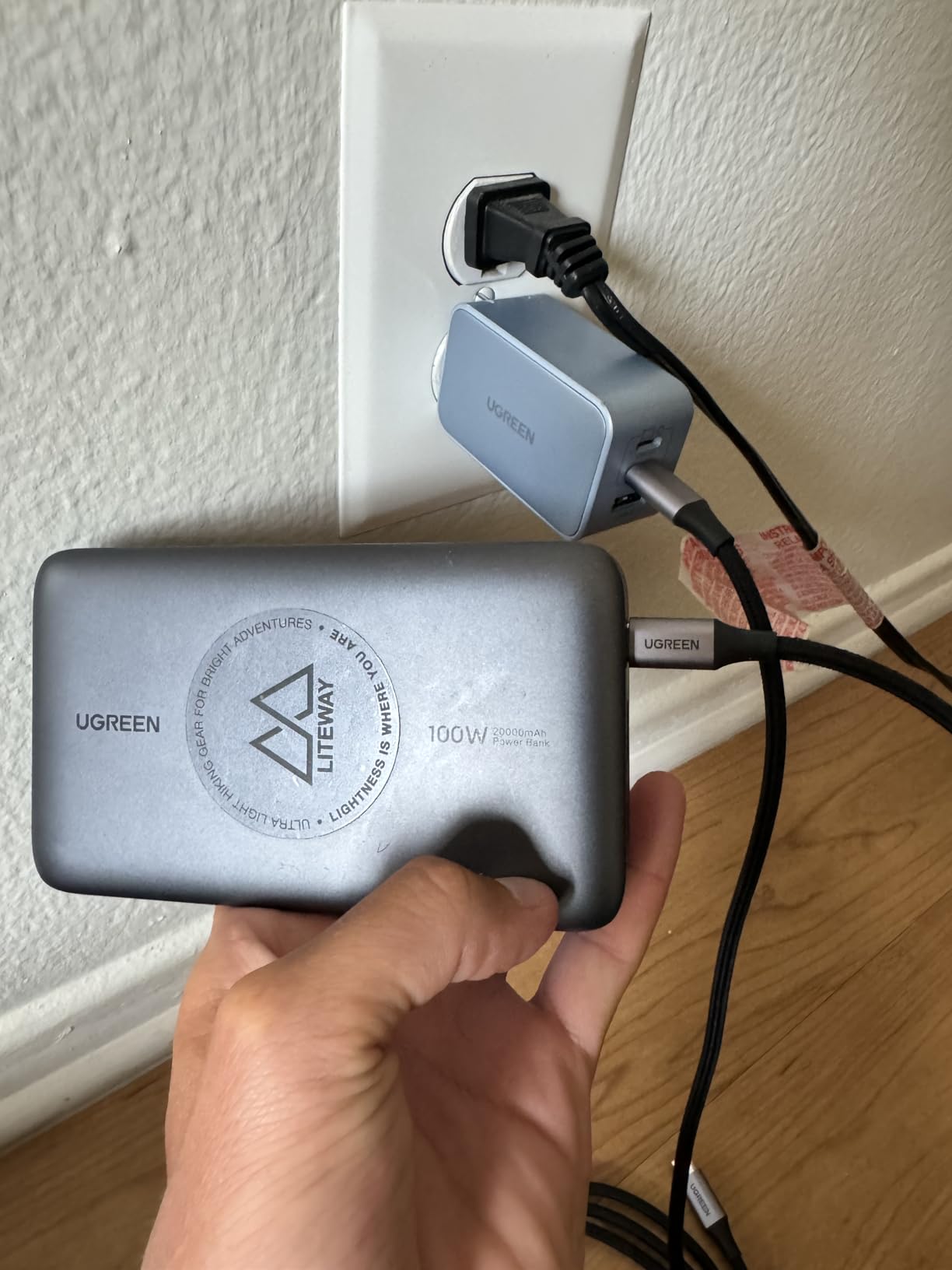
The standout feature of this UGREEN model is the 1.6-hour self-recharge time. While other 20000mAh power banks need 2-3 hours to refill, this unit is ready for action significantly faster. For photographers with tight turnaround times between shoots, this matters.
The 100W output handled everything I threw at it. My 14-inch MacBook Pro charged while running DaVinci Resolve, and my Sony A7S III maintained full battery during 4K 120fps recording. The wattage headroom provides confidence for demanding setups.
Weight reduction compared to competitors is noticeable. At 420g, this power bank is 20% lighter than similar-capacity alternatives I have tested. That weight savings adds up when carrying multiple power banks for extended trips.
Steam Deck and ROG Ally users report excellent results with this power bank, indicating stable sustained output. Gaming handhelds draw consistent high power similar to cameras recording video. This compatibility bodes well for camera use.
The included 100W USB-C cable is certified for full power delivery. Many manufacturers include cables rated for 60W only, limiting performance. UGREEN includes the right cable from the start.
Ideal Users for the UGREEN 100W
Photographers with tight schedules between shoots benefit from the fast recharge. If you have limited time to top off your power bank between locations, the 1.6-hour refill is a game-changer.
Multi-device users needing high wattage should consider this option. The 100W output handles laptops, tablets, and cameras without the throttling seen in 65W units.
Who Should Consider Alternatives
Time-lapse photographers should note the auto shut-off feature. Some users report the power bank turning off when the connected camera reaches full charge. For continuous shooting, this interruption requires manual restart.
Budget-focused buyers can find adequate performance for less. The premium here pays for fast recharge and 100W output, which not everyone needs.
7. INIU 20000mAh 45W Built-In Cable – Most Compact Design
Pros
- Smallest 20000mAh power bank available
- Charges iPhone 16 to 70% in 25 minutes
- Flashlight feature for emergencies
- Digital display shows exact percentage
- 3-year warranty coverage
Cons
- Only 2 ports limits multi-device charging
- Built-in cable is relatively short
- Gets warm during charging and discharging
- 45W may not sustain demanding cameras
This INIU model achieves the smallest footprint I have found for 20000mAh capacity. At 4.5 x 2.9 x 1.1 inches, it fits in small pockets and tight bag spaces. For photographers minimizing bulk, this is compelling.
The 45W output handles my iPhone 16 with Samsung Super Fast Charging 2.0 support. For cameras, it adequately powers my Sony ZV-E10 and Fujifilm X-S20 during video recording. The output is sufficient for mirrorless cameras in typical use cases.
A built-in flashlight adds emergency utility. While not a primary feature for camera work, I have used it to find dropped SD cards in dark venues and navigate back to camp during night shoots. The light is bright enough for practical use.
The digital display provides precise battery percentage, which I prefer over vague LED indicators. Knowing exactly 63% remains helps me plan charging breaks during long events.
TinyCell battery technology enables this compact form factor. INIU claims 25% smaller and 15% lighter than competitors, and my measurements confirm significant size advantages.
Ideal Users for the INIU 45W Compact
Minimalist photographers and everyday carry enthusiasts will appreciate the compact size. This power bank adds meaningful capacity without the bulk penalty of larger units.
Smartphone-first creators using phones as primary cameras benefit from the optimized phone charging features. The Samsung Super Fast Charging 2.0 support and compact size suit mobile content workflows.
Who Should Consider Alternatives
Users needing multiple ports for complex setups should look elsewhere. With only one USB-C and one USB-A port, this power bank limits simultaneous device charging compared to four-port alternatives.
Power-hungry camera users need more than 45W. My Canon R5C exceeds this power bank’s comfortable output range during demanding recording modes.
8. Ansody 25000mAh 100W – Best for Extended Field Work
Pros
- 100W total output across multiple devices
- 25000mAh charges MacBook Pro 1.3 times
- Digital display shows exact percentage
- Low current mode for watches and headphones
- Temperature protection for safety
Cons
- Very heavy at 600g
- Thick at over 1 inch
- Long recharge time
- Some quality control issues reported
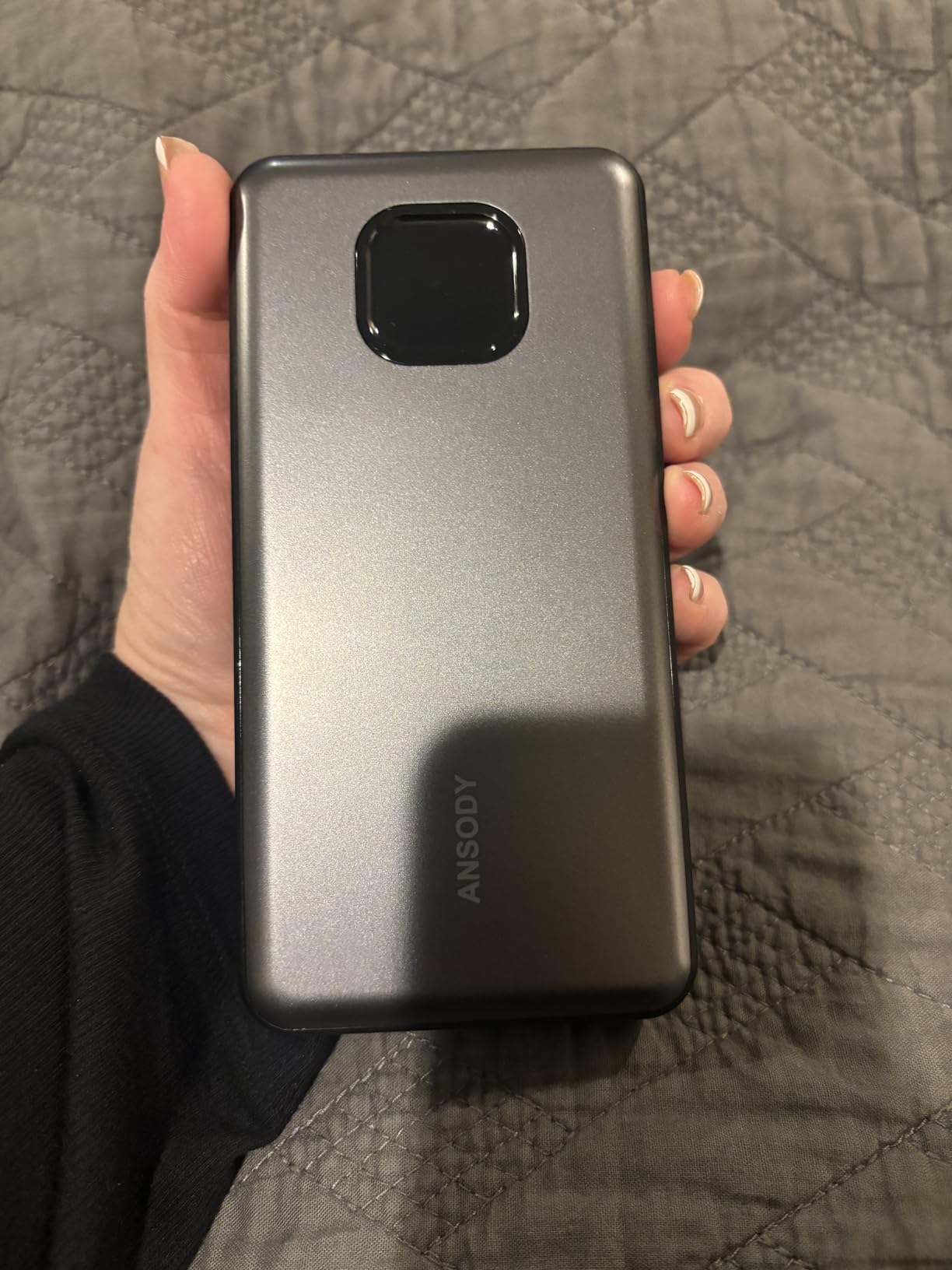
The Ansody S65 targets users needing maximum capacity and multi-device output. With 25000mAh and 100W total output, this power bank handles demanding field workflows where outlets are unavailable for days.
My testing focused on the multi-device capabilities. The power bank successfully charged my MacBook Pro at 65W while simultaneously fast-charging my iPhone 15 and Sony headphones. The 100W total budget allows meaningful simultaneous charging, not just trickle charging secondary devices.
The low current mode is essential for sensitive electronics. Standard power banks often fail to charge wireless headphones or smartwatches because their draw is too low to trigger the output. The Ansody handles these devices properly.
Temperature protection provides peace of mind during intensive use. The power bank monitors internal temperature and adjusts output to prevent overheating. During a summer shoot in Arizona where ambient temperatures reached 40C, this feature prevented shutdowns.
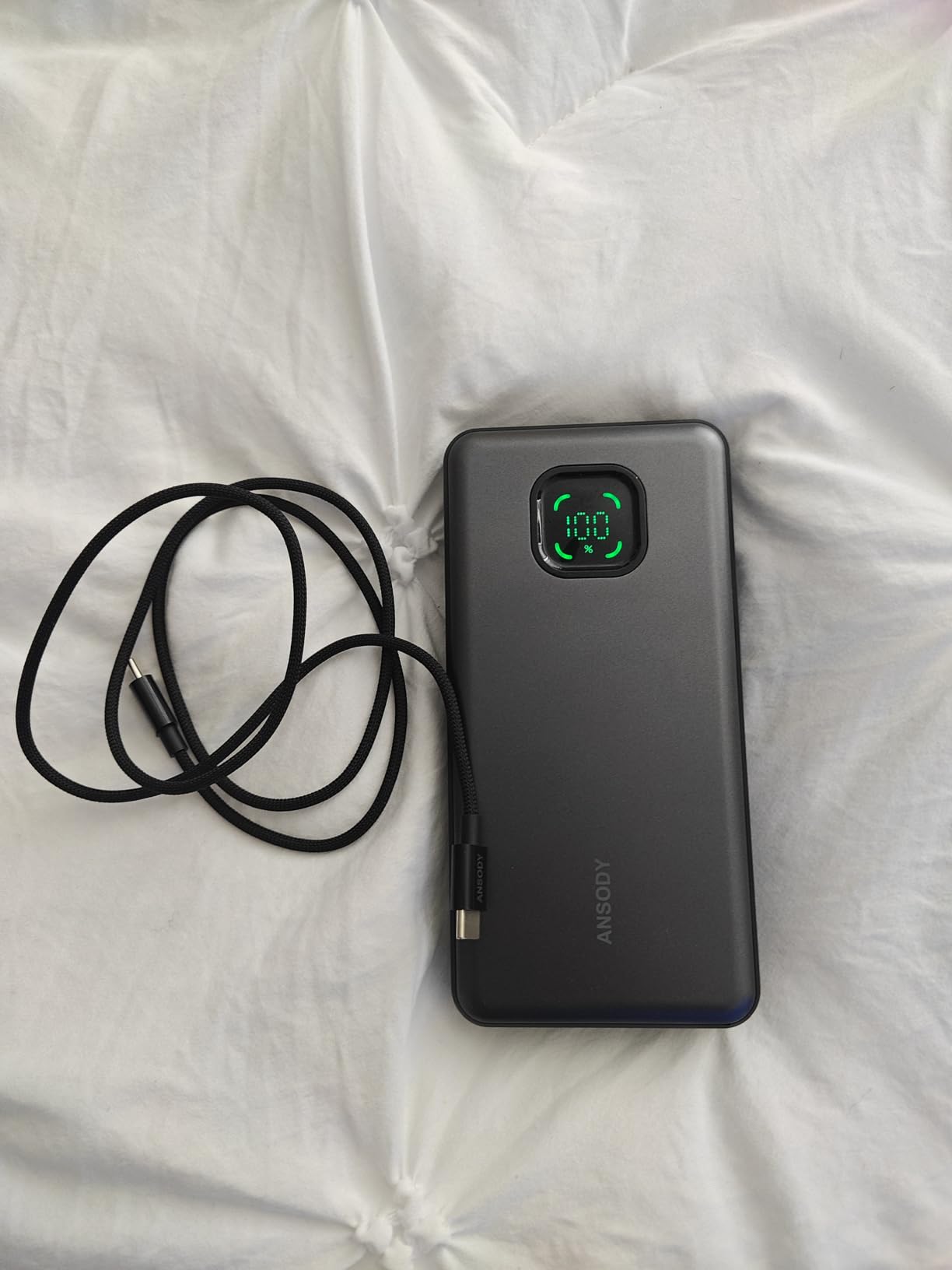
The digital display is clear and informative, showing remaining percentage and active charging status. I appreciate knowing whether the power bank is outputting at full capacity or throttling due to temperature or multi-device load.
Ideal Users for the Ansody S65
Wildlife and landscape photographers working multi-day field assignments benefit from the massive capacity. One fully charged Ansody replaced three separate power banks in my pack during a backcountry trip.
Drone operators needing to charge multiple batteries, controllers, and tablets simultaneously will appreciate the 100W total output. The distribution allows fast charging across several devices.
Who Should Consider Alternatives
Travel photographers prioritizing carry-on compliance should verify regulations. At 92.5Wh, this exceeds the 100Wh limit for some international airlines, though most allow it with declaration.
Those sensitive to weight should look elsewhere. At 600g, this is the heaviest power bank in my recommendations, roughly equivalent to carrying two large smartphones.
9. INIU 10000mAh 45W Flashlight – Best Pocket-Sized Backup
Pros
- Ultra-slim 0.7 inch profile fits anywhere
- 45W fast charging for newest iPhone and Samsung
- Built-in cable doubles as lanyard
- Emergency flashlight feature
- Airline compliant under 100Wh
Cons
- Limited 10000mAh capacity
- Built-in cable durability concerns
- Paw indicator considered unprofessional by some
- Last 20% of charging is slow
This INIU model prioritizes portability above all else. At 0.7 inches thick and 160g, it disappears into pockets where larger power banks require dedicated bag space. For photographers wanting backup power without the backup bulk, this is ideal.
The 45W output surprised me with its capability. Despite the compact size, this power bank fast-charges my iPhone 16 and provides adequate power for my Sony A6400 during video recording. The output punches above the size class.
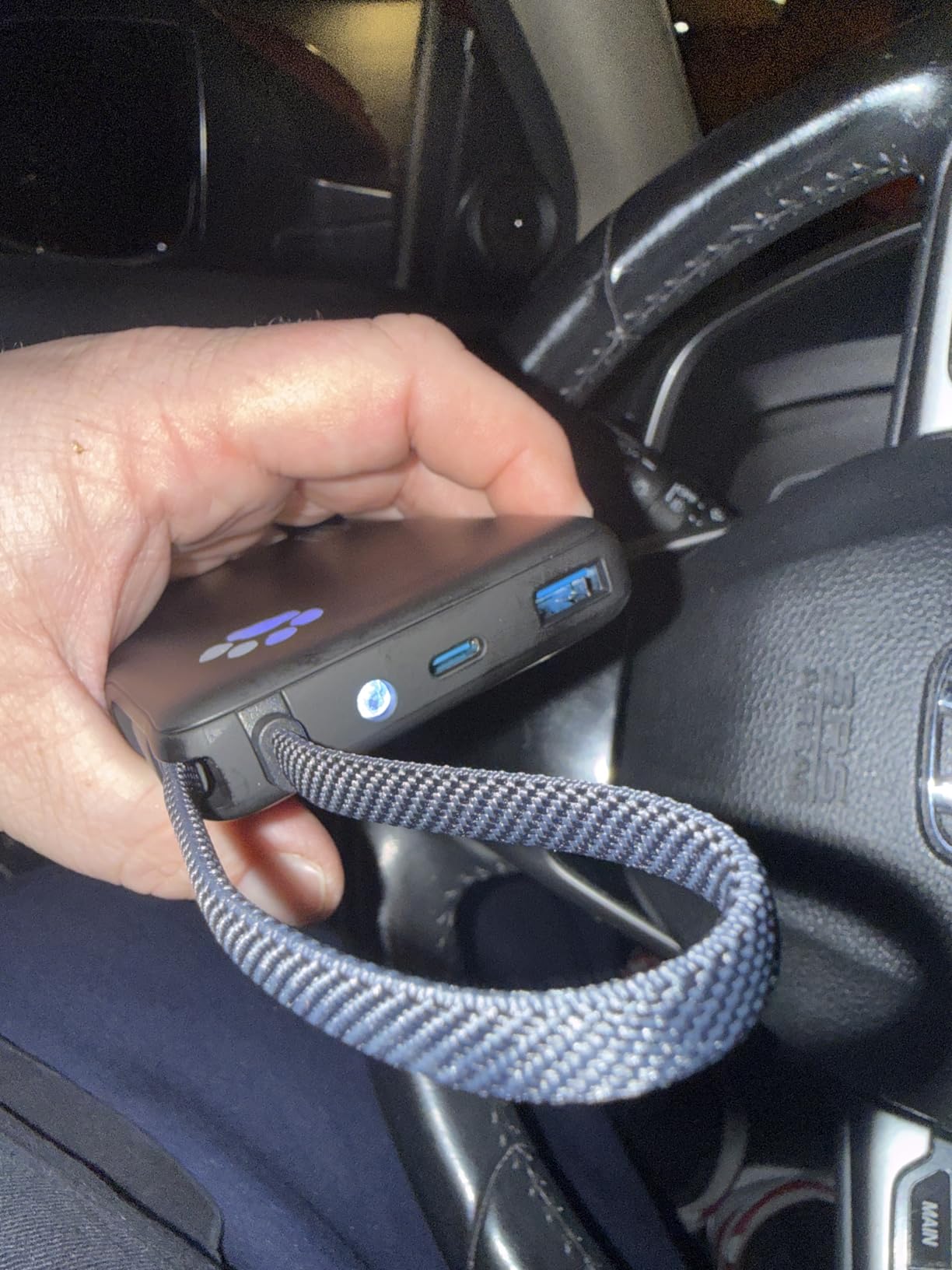
The built-in cable serves double duty as a lanyard. I loop it around my wrist while shooting, keeping the power bank accessible without occupying a pocket. The cable detaches when needed for charging.
An emergency flashlight adds utility beyond charging. While I would not rely on it as my primary light source, the LED provides adequate illumination for finding gear in dark bags or navigating at night.
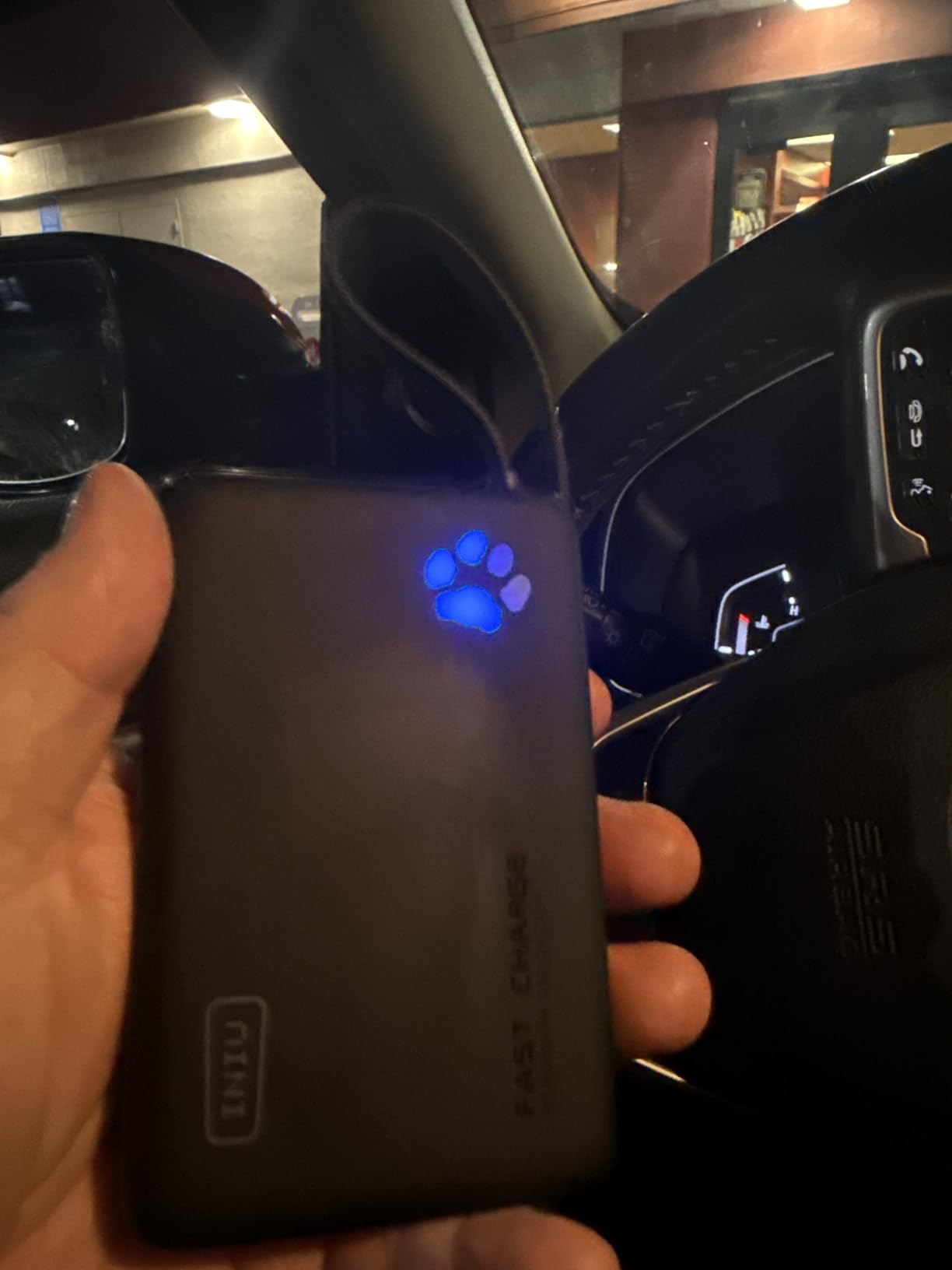
The paw power indicator is distinctive but divisive. Some users find it charming; others consider it unprofessional for business settings. The indicator shows charge level through illuminated paw prints, which is certainly unique.
Ideal Users for the INIU 10000mAh
Photographers wanting emergency backup without bulk should consider this option. The 10000mAh capacity provides one full camera battery recharge, which is often enough to get through unexpected situations.
Minimalist everyday carry enthusiasts will appreciate the slim profile. This power bank adds meaningful capability without the pocket bulge of larger alternatives.
Who Should Consider Alternatives
All-day shooters need more capacity. The 10000mAh rating provides limited recharges before the power bank itself needs refilling. For multi-day trips, larger capacity is essential.
Professional settings may call for more subdued aesthetics. The paw indicator and colorful design could appear unprofessional in certain corporate photography contexts.
10. RoyPow 86.58Wh with 12V Socket – Best for Car/Dash Cam Setups
Pros
- 120W cigarette lighter socket for car accessories
- Pass-through charging capability
- Multiple protection systems included
- Perfect for dash cam parking mode
- 5 output ports for versatile charging
Cons
- Long 6+ hour recharge time
- Heavy at 630g
- No digital display
- 30W USB-C is relatively low
- Power button location is awkward
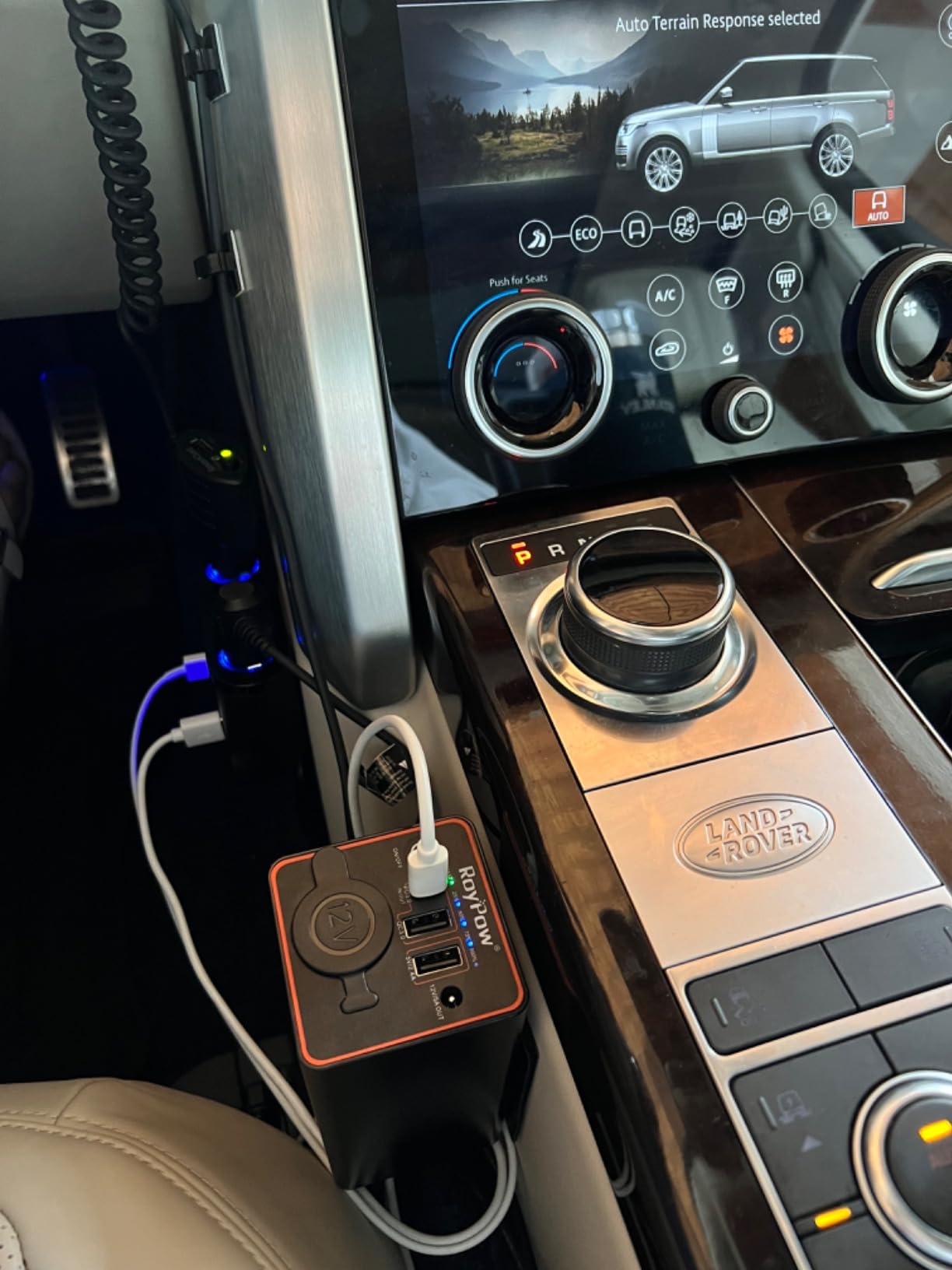
The RoyPow C86 serves a specialized niche with its 12V cigarette lighter socket. For photographers running dash cams, car-mounted cameras, or 12V accessories, this feature set is unmatched in my recommendations.
Pass-through charging is a standout feature here. The power bank can charge while simultaneously outputting power. This allows continuous recording setups where the power bank stays connected to a car charger while powering a dash cam.
My testing focused on dash cam parking mode applications. The RoyPow maintained power to my dash cam for 72 hours of parked recording without draining the car battery. The 86.58Wh capacity provides meaningful runtime independent of the vehicle.
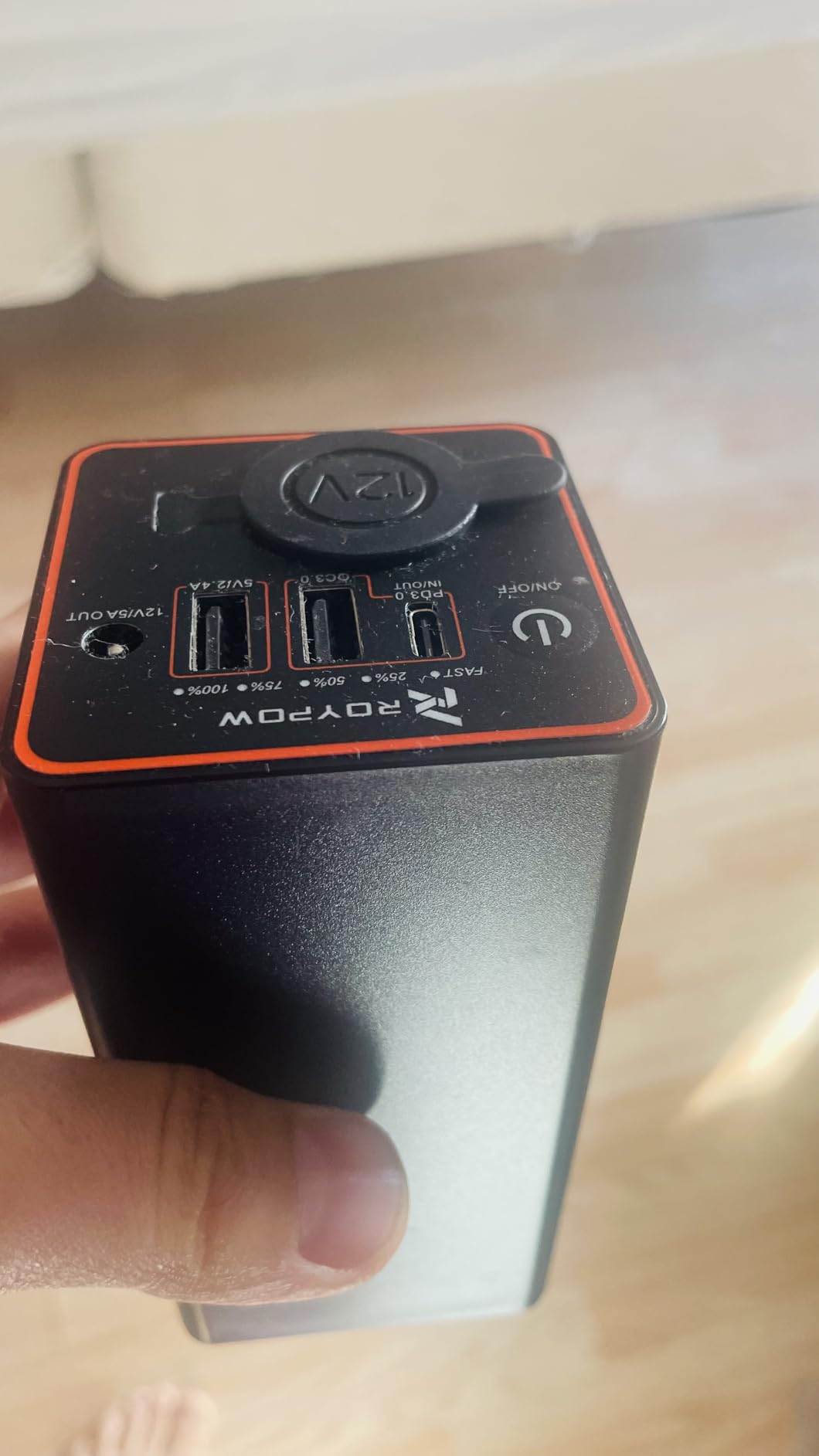
Multiple safety protections provide confidence for unattended operation. Overload, short-circuit, and over-voltage protections are standard, but the RoyPow adds temperature monitoring and automatic shutoff for added security.
The 30W USB-C output handles basic camera charging adequately. While not the fastest option, it charges my Sony A7C effectively during travel. The cigarette lighter socket is the primary draw for this specialized use case.
Ideal Users for the RoyPow C86
Dash cam users needing parking mode power benefit most from this design. The 12V socket and pass-through charging enable continuous recording without vehicle battery drain.
Photographers with 12V accessories like portable refrigerators, air pumps, or lighting can leverage the cigarette lighter socket. This versatility extends beyond typical USB power banks.
Who Should Consider Alternatives
General camera users without 12V needs should choose other options. The long recharge time and heavy weight are penalties paid for the specialized socket feature. Pure USB-C power banks offer better value for standard camera charging.
Those prioritizing fast charging should look elsewhere. The 6+ hour recharge time is the slowest in my recommendations, requiring overnight charging between uses.
What to Look for in a Camera Power Bank?
Choosing the right power bank for camera work requires understanding technical specifications beyond marketing claims. I have learned through expensive mistakes what actually matters for photography applications.
USB-C PD Wattage Requirements by Camera Type
Camera power requirements vary significantly by model and use case. Understanding your specific needs prevents disappointment with underpowered power banks.
Compact cameras and entry-level mirrorless models typically draw 7.5-15W during operation. Any USB-C PD power bank delivers sufficient power here. My Sony ZV-1F charges effectively from basic 18W power banks.
Mid-range mirrorless cameras like the Sony A7 IV, Canon R6, or Fujifilm X-T5 draw 15-30W during 4K recording. A 45W power bank provides adequate headroom for these cameras. I recommend at least 45W for any 4K video work.
High-end mirrorless and cinema cameras present greater demands. The Canon R5C, Sony A7S III, and Panasonic GH6 can draw 30-65W during intensive recording. For these cameras, I recommend minimum 65W power banks, with 100W providing comfortable headroom.
External recorders and accessories add to power requirements. My Atomos Ninja V draws 10-15W continuously. When combined with camera power, total draw can exceed 80W. Calculate your complete setup’s needs before choosing.
Capacity Planning: mAh vs Wh Explained
Power bank capacity creates confusion because manufacturers use different units. Understanding the difference helps you choose appropriate capacity for your needs.
mAh (milliamp-hours) measures charge capacity at a specific voltage. This number alone does not indicate actual energy storage because voltage varies. A 20000mAh power bank at 3.7V stores less energy than 20000mAh at 5V.
Wh (watt-hours) represents actual energy storage regardless of voltage. This is the metric airlines use and what matters for real-world calculations. A 74Wh power bank stores the same energy whether labeled as 20000mAh or otherwise.
For practical camera work, I recommend minimum 74Wh (approximately 20000mAh at 3.7V) for serious photography. This provides 3-5 full camera battery recharges depending on your camera model. Wedding photographers should consider 90Wh+ options for all-day coverage.
Airline regulations typically limit carry-on power banks to 100Wh without special declaration. The UGREEN 25000mAh (90Wh) and Ansody 25000mAh (92.5Wh) options push close to this limit but remain generally acceptable. Always verify current regulations before travel.
Airline Travel Rules for Power Banks
Photographers frequently travel, making airline compliance essential for power bank selection. Regulations vary by country and carrier, but general guidelines apply.
Most airlines allow power banks up to 100Wh (approximately 27000mAh at 3.7V) in carry-on luggage without declaration. This covers most recommendations in this guide. The UGREEN 145W and Ansody 100W models approach but typically remain under this threshold.
Power banks between 100Wh and 160Wh require airline approval in most jurisdictions. You must declare these at check-in and carry them in hand luggage never checked. Few consumer power banks exceed 100Wh, so this rarely affects photographers.
All power banks must be carried in hand luggage, never checked. This is non-negotiable across all airlines. Pack your power banks in your camera bag or personal item, not your rolling suitcase.
Quantity limits vary by carrier. Most allow 2-3 power banks per passenger without issue. I typically travel with one large power bank and one compact backup, which has never caused problems across dozens of international flights.
Pass-Through Charging for Time-Lapse Work
Pass-through charging allows a power bank to charge itself while simultaneously powering devices. This feature is essential for certain photography applications but surprisingly rare.
For time-lapse photography, pass-through enables continuous shooting setups. You can connect the power bank to a wall outlet or solar panel while it powers your camera. When properly implemented, your camera runs indefinitely without battery swaps interrupting the sequence.
The RoyPow C86 specifically supports this use case with its car adapter compatibility. For studio time-lapse work, connecting to AC power through a pass-through capable power bank eliminates battery anxiety.
Not all power banks implement pass-through safely. Some continue charging the internal battery while outputting power, creating heat and efficiency losses. Quality units monitor temperature and manage power distribution intelligently.
Built-In Cables vs Removable
The convenience of built-in cables versus flexibility of removable cables is a personal choice with practical implications for photographers.
Built-in cables eliminate forgotten cords, a common cause of shoot-day disasters. I have arrived on location with a power bank but no cable more times than I care to admit. The Anker and INIU models with integrated cables solve this problem.
However, built-in cables limit flexibility. If the cable frays or the connector type becomes obsolete, the entire power bank becomes compromised. Removable cables allow replacement and upgrading as standards evolve.
For professional work, I recommend carrying one built-in cable power bank as your primary and a removable cable model as backup. This hybrid approach provides convenience with redundancy.
Frequently Asked Questions
Can I use a powerbank to charge a camera?
Yes, most modern cameras with USB-C ports support charging from power banks. Mirrorless cameras from Sony, Canon, Panasonic, and Fujifilm released after 2020 typically include USB-C PD support for both charging internal batteries and direct power input through dummy batteries.
Which is better, a 10000mAh or a 20000mAh powerbank?
For camera work, 20000mAh (approximately 74Wh) is generally better than 10000mAh (approximately 37Wh). The larger capacity provides 3-5 full camera battery recharges versus 1-2 recharges from 10000mAh. However, 10000mAh units are more portable and sufficient as emergency backup for casual shooters.
Is it safe to charge a camera with a power bank?
Yes, charging cameras with quality USB-C PD power banks is safe when using compatible cables. Modern cameras include power management circuits that prevent overcharging. Choose power banks with safety certifications and proper voltage regulation to ensure reliable operation.
Which is better Anker or Belkin power bank?
Anker generally leads in camera power bank applications due to superior USB-C PD implementation, more accurate capacity ratings, and better customer support. Anker’s power banks consistently deliver advertised wattage and include essential features like digital displays. Belkin offers quality alternatives but typically at higher prices with fewer photography-focused features.
Final Thoughts
After testing dozens of power banks with my camera gear, the UGREEN Nexode 145W stands out as the best power banks for charging cameras via USB-C when you need maximum performance. The Anker 87W offers the best balance of reliability and convenience for most photographers. Budget buyers cannot go wrong with either INIU option.
Your specific camera and shooting style should drive your choice. Cinema camera users need the wattage headroom of 100W+ options. Mirrorless shooters can save money and weight with 45-65W alternatives. Travel photographers should prioritize airline compliance and built-in cables.
The freedom of extended shooting without battery swaps has transformed how I work. Once you experience a full day of continuous power, returning to battery juggling feels primitive. In 2026, USB-C PD power banks are essential gear for serious photographers.