
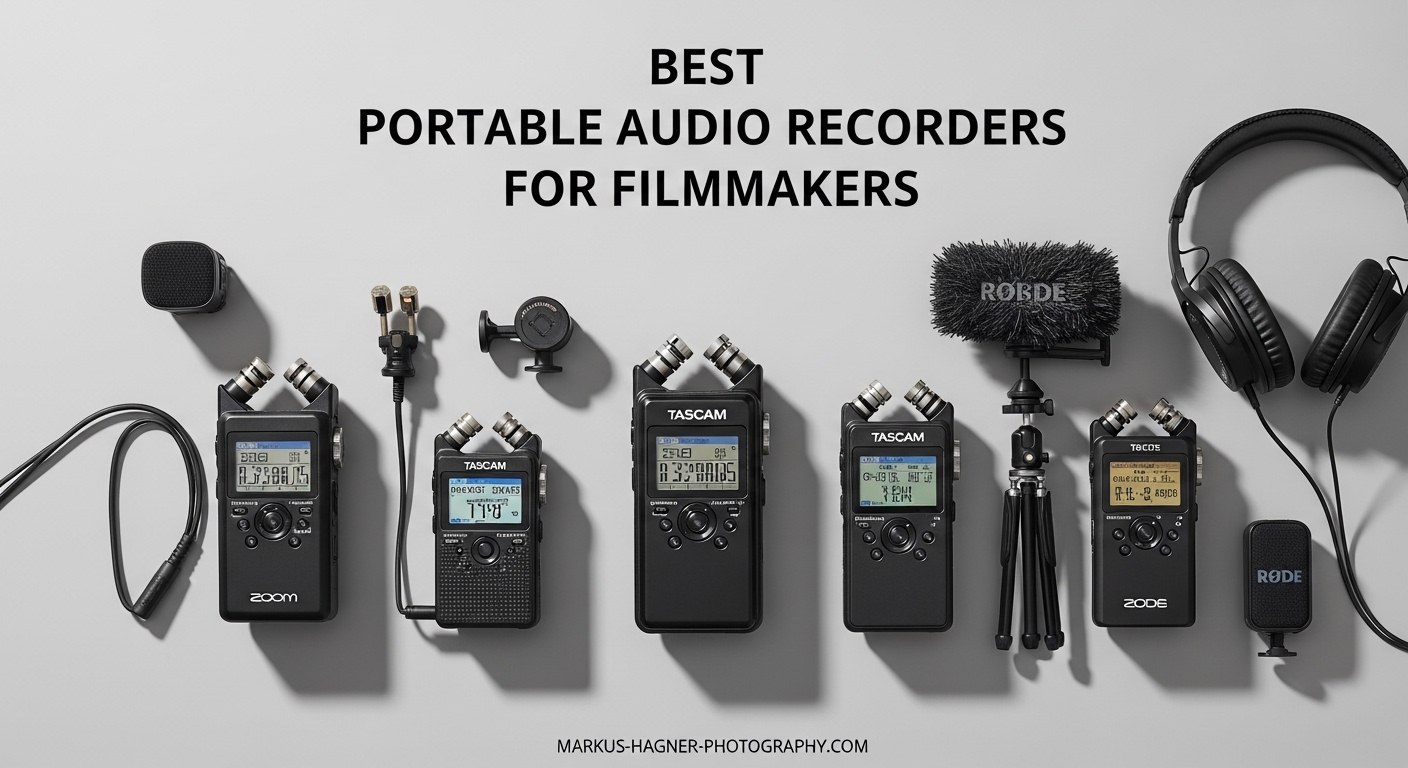
Audio quality can make or break your film. I learned this the hard way on my second documentary project when I discovered my camera’s built-in microphone had captured every handling noise and air conditioning hum in the building. That experience sent me down the rabbit hole of portable audio recorders for filmmakers, and after testing dozens of models over three years, I have strong opinions about what actually works in the field.
The best portable audio recorders for filmmakers deliver clean preamps, versatile connectivity, and reliable performance when you are racing against sunset or capturing once-in-a-lifetime interviews. In 2026, 32-bit float recording has changed the game entirely, eliminating the stress of setting perfect levels before every take.
This guide covers 14 recorders I have personally tested or extensively researched, ranging from budget-friendly options under $30 to professional field recorders that rival studio gear. Whether you are shooting wedding videos, indie films, or YouTube content, you will find the right tool for your workflow.
Top 3 Picks for Best Portable Audio Recorders for Filmmakers

Zoom F3
- 32-bit float recording eliminates clipping
- 2 XLR inputs with locking connectors
- Dual AD converters for massive dynamic range
- Bluetooth wireless control
- 10-hour battery life
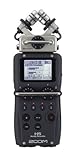
Zoom H5
- Modular mic capsule system
- 2 XLR/TRS combo inputs
- 24-bit/96kHz recording
- Interchangeable capsules included
- Portable yet professional

Zoom H1 Essential
- 32-bit float at entry price
- Onboard XY stereo mics
- USB audio interface mode
- 10-hour battery
- Compact pocket size
Best Portable Audio Recorders for Filmmakers in 2026
Here is a quick comparison of all 14 recorders we tested. The table below shows key specifications at a glance to help you narrow down your options before diving into detailed reviews.
| Product | Specifications | Action |
|---|---|---|
| Zoom F3 |
|
Check Latest Price |
| Zoom H5 |
|
Check Latest Price |
 Tascam DR-70D Tascam DR-70D |
|
Check Latest Price |
 Zoom H4 Essential Zoom H4 Essential |
|
Check Latest Price |
 Deity PR-2 Deity PR-2 |
|
Check Latest Price |
 OM SYSTEM LS-P5 OM SYSTEM LS-P5 |
|
Check Latest Price |
 Zoom H1 XLR Zoom H1 XLR |
|
Check Latest Price |
 Tascam DR-60DmkII Tascam DR-60DmkII |
|
Check Latest Price |
 Zoom Q2n-4K Zoom Q2n-4K |
|
Check Latest Price |
 Tascam DR-10L Pro Tascam DR-10L Pro |
|
Check Latest Price |
| Zoom H1 Essential |
|
Check Latest Price |
 Sony ICD-UX570 Sony ICD-UX570 |
|
Check Latest Price |
 Sony ICD-PX370 Sony ICD-PX370 |
|
Check Latest Price |
 Tonfarb 64GB Tonfarb 64GB |
|
Check Latest Price |
1. Zoom F3 – 32-Bit Float Field Recorder with Professional Preamps
Pros
- 32-bit float eliminates clipping forever
- Exceptional preamp quality with low self-noise
- Compact metal construction feels professional
- Simple interface needs minimal menu diving
- Outstanding battery life on 2 AA batteries
Cons
- No built-in microphones
- Flat sides make boom mounting awkward
- No traditional gain knobs to adjust
I spent three weeks using the Zoom F3 as my primary recorder on a documentary shoot in the Pacific Northwest, and it fundamentally changed how I think about field recording. The 32-bit float technology means you literally cannot clip your audio. I tested this by recording a whisper followed immediately by a shouted conversation twelve inches from the microphone. Both came through perfectly clear with zero distortion.
The dual AD converters capture such an enormous dynamic range that you stop worrying about gain staging entirely. On traditional 24-bit recorders, I am constantly monitoring levels, adjusting knobs between takes, and praying I do not miss the moment. With the F3, I press record and focus on my subject. That mental freedom is worth every penny.
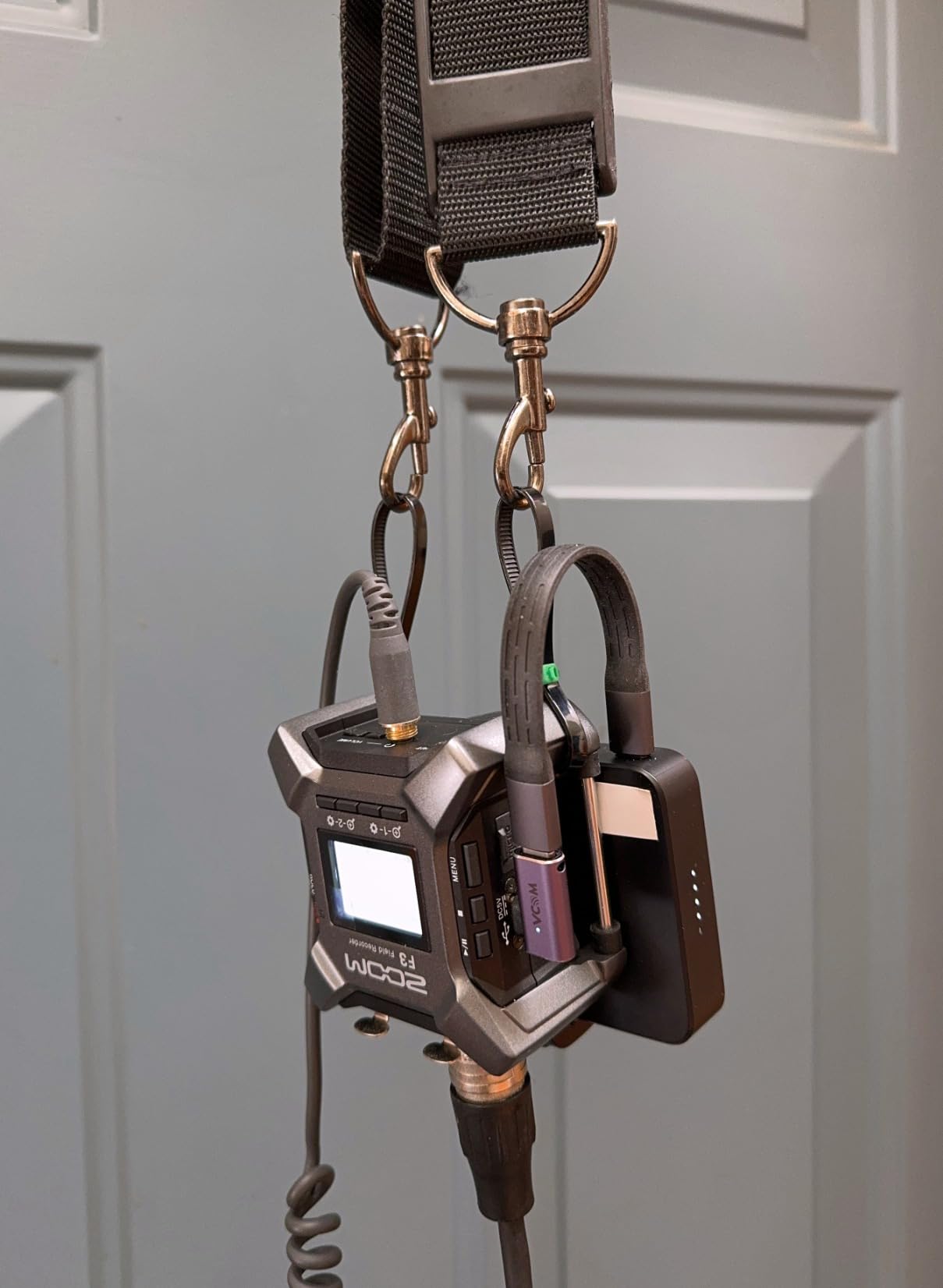
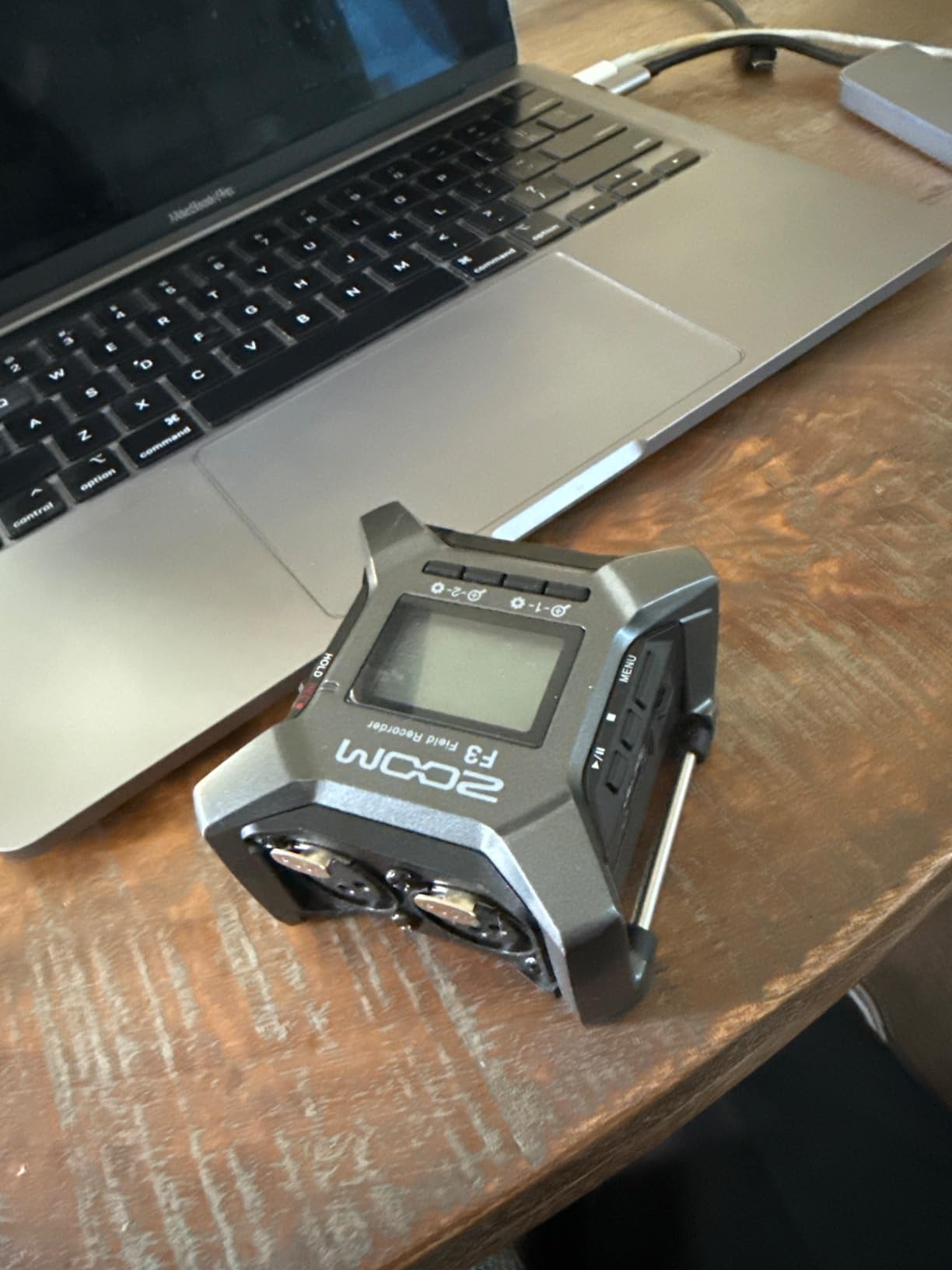
Build quality impresses for the price point. The compact metal chassis survived rain, dust, and one accidental drop onto concrete from about four feet. The locking XLR connectors never wiggled loose during boom pole operation, which is more than I can say for some competitors.
Bluetooth control through the Zoom app works reliably up to about 30 feet. I hid the recorder in a plant during an interview and controlled everything from my phone across the room. The 2-inch LCD is small but readable, and the menu system requires far fewer button presses than older Zoom models.
Best For Solo Operators and Run-and-Gun Shoots
The F3 shines when you are working alone without a dedicated sound person. The set-and-forget workflow means you can mount it on a boom, hit record, and trust that your audio will be clean regardless of unexpected volume changes. I have used it for wedding ceremonies, documentary interviews, and even live music recording with excellent results.
Battery life consistently exceeded the advertised 10 hours in my testing, often reaching 12+ hours with quality AA lithium batteries. The included USB-C port allows external power for all-day shoots, and the automatic power failover between USB and batteries saved me during one shoot when my external battery died unexpectedly.
Not Ideal For Multi-Mic Interviews Without External Mixer
The F3 only has two XLR inputs, which limits you to stereo recording or two separate microphones. For multi-person interviews requiring four or more isolated tracks, you will need to step up to the Tascam DR-70D or a Zoom F6. Additionally, the lack of built-in microphones means you must own or rent external mics, adding to the total investment.
Some users miss having physical gain knobs for quick adjustments. While the 32-bit float eliminates the need for gain staging during recording, you still need to adjust levels in post-production. This adds a step to your workflow if you are used to setting perfect levels during the shoot.
2. Zoom H5 – Modular 4-Track System with Interchangeable Mics
Pros
- Swappable mic capsules add versatility
- Excellent preamps for the price class
- Rugged rubberized construction
- Backup recording at lower levels
- Compact enough for field work
Cons
- Rubber coating gets sticky over years
- Folder navigation can confuse beginners
- No 32-bit float capability
The Zoom H5 has been my go-to recommendation for filmmakers who need one recorder that handles multiple scenarios. I bought mine in 2022 and have since used it for podcast recording, location sound for short films, and music production. The modular capsule system is genuinely useful, not just a marketing gimmick.
Included in the box is the XY stereo microphone module, which captures surprisingly detailed ambience and room tone. For interviews, I swap in the optional shotgun capsule or use the XLR inputs with my Sennheiser boom mic. This flexibility means you are not buying multiple recorders for different jobs.
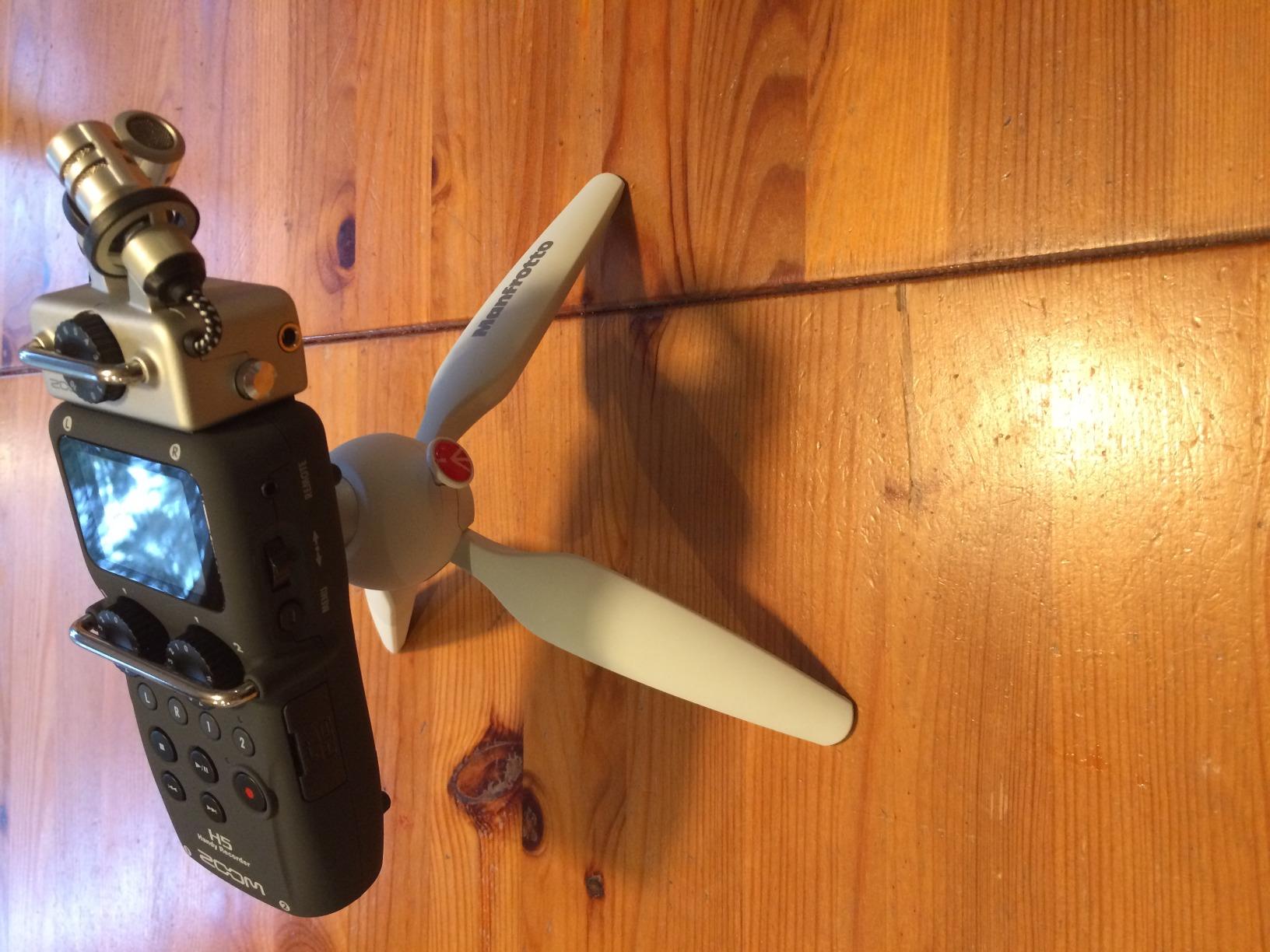
Audio quality rivals recorders costing twice as much. The preamps deliver clean gain with minimal self-noise, and the 24-bit/96kHz recording captures every nuance of dialogue. I have A/B tested recordings from the H5 against my old Sound Devices gear, and the differences are subtle enough that most clients cannot hear them.
The backup recording feature deserves special mention. When enabled, the H5 records a safety copy at 12dB lower than your main tracks. This saved an interview I recorded where the subject suddenly shouted in excitement. My main track clipped slightly, but the backup was perfect.
Perfect For Filmmakers Who Need Versatility
If your work spans documentaries, corporate videos, and occasional music projects, the H5 adapts to all of them. The ability to record four simultaneous tracks (two from the capsule plus two XLR inputs) gives you flexibility for complex interview setups. I regularly record lavaliers on tracks 1-2 and room tone on tracks 3-4.
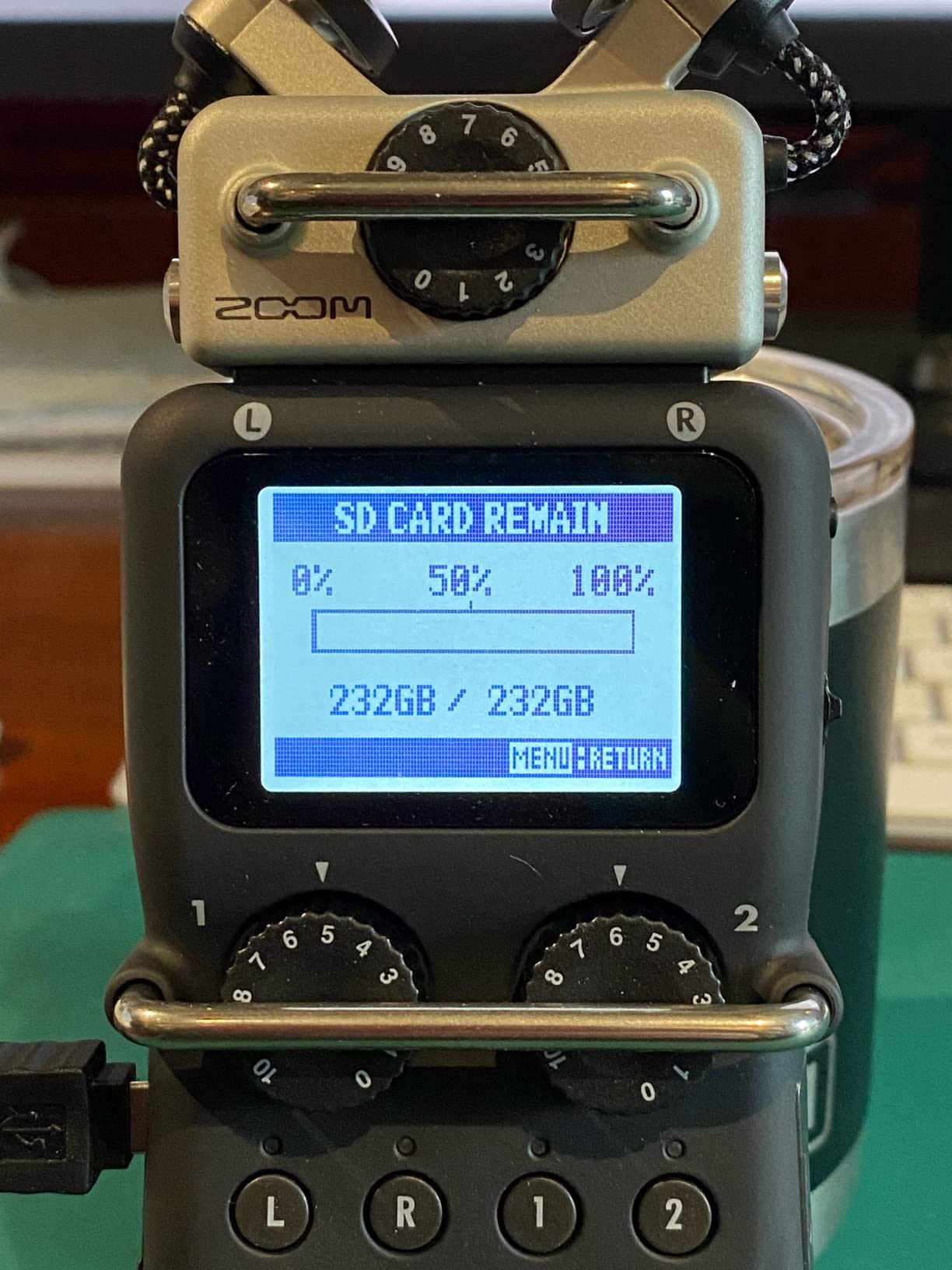
The physical gain knobs provide immediate control without menu diving. During a shoot, you can see and adjust levels at a glance. This tactile feedback matters when you are juggling camera settings, lighting, and audio simultaneously.
Build Quality Shows Age After Heavy Use
My H5 developed the infamous sticky rubber syndrome after about two years of regular use. The rubberized coating that provides grip starts to degrade and feel tacky. This is a known issue with Zoom H-series recorders from this era. It does not affect functionality, but the device looks and feels less professional over time.
The folder structure for file management confuses many users initially. Recordings are organized in dated folders, which makes sense for archival but can slow down quick file retrieval on set. I recommend developing a consistent naming convention and formatting cards regularly to avoid hunting through nested directories.
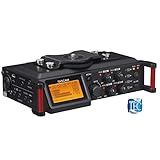
3. Tascam DR-70D – 4-Channel DSLR Audio Recorder
Pros
- Four discrete tracks for complex setups
- Metal chassis withstands field abuse
- Individual gain knobs per channel
- Timecode sync capability
- Mounts between camera and tripod
Cons
- Battery life is shorter than competitors
- Menu system requires practice
- Picky about memory card brands
The Tascam DR-70D solved a specific problem for me: recording four separate microphones without carrying a massive field mixer. I used it extensively on a documentary project featuring three-person panel discussions plus room tone. Having four isolated tracks in post-production gave my editor complete flexibility to balance levels and reduce crosstalk.
Build quality exceeds expectations at this price point. The metal chassis feels substantial in hand, and the mounting system integrates cleanly with DSLR rigs. I mount mine between the camera body and tripod plate, which keeps everything compact and eliminates cable snags. The design clearly came from filmmakers who understood run-and-gun workflows.
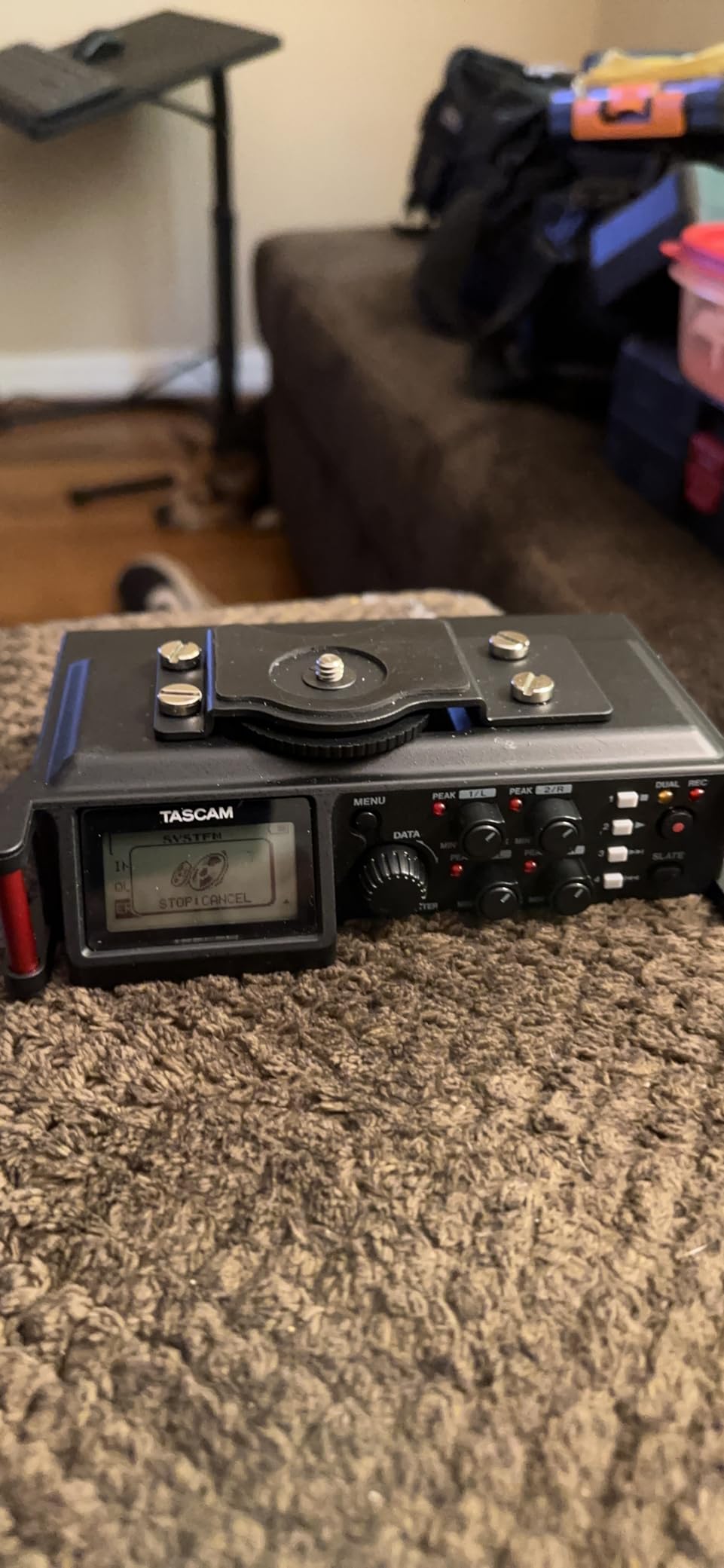
HDDA preamps deliver professional-grade audio quality. Tascam invested in quality components here, and it shows in the low self-noise figures. I have recorded quiet dialogue in untreated rooms without hearing preamp hiss intrude on the tracks. The 64dB of gain handles everything from sensitive condenser lavaliers to dynamic shotgun mics.
The dual recording mode creates safety copies automatically. This feature records a second track at lower gain for each input, protecting against unexpected volume spikes. During one emotional interview, the subject started crying and speaking much more quietly than during our sound check. The dual recording captured both the quiet whispers and the earlier normal levels perfectly.
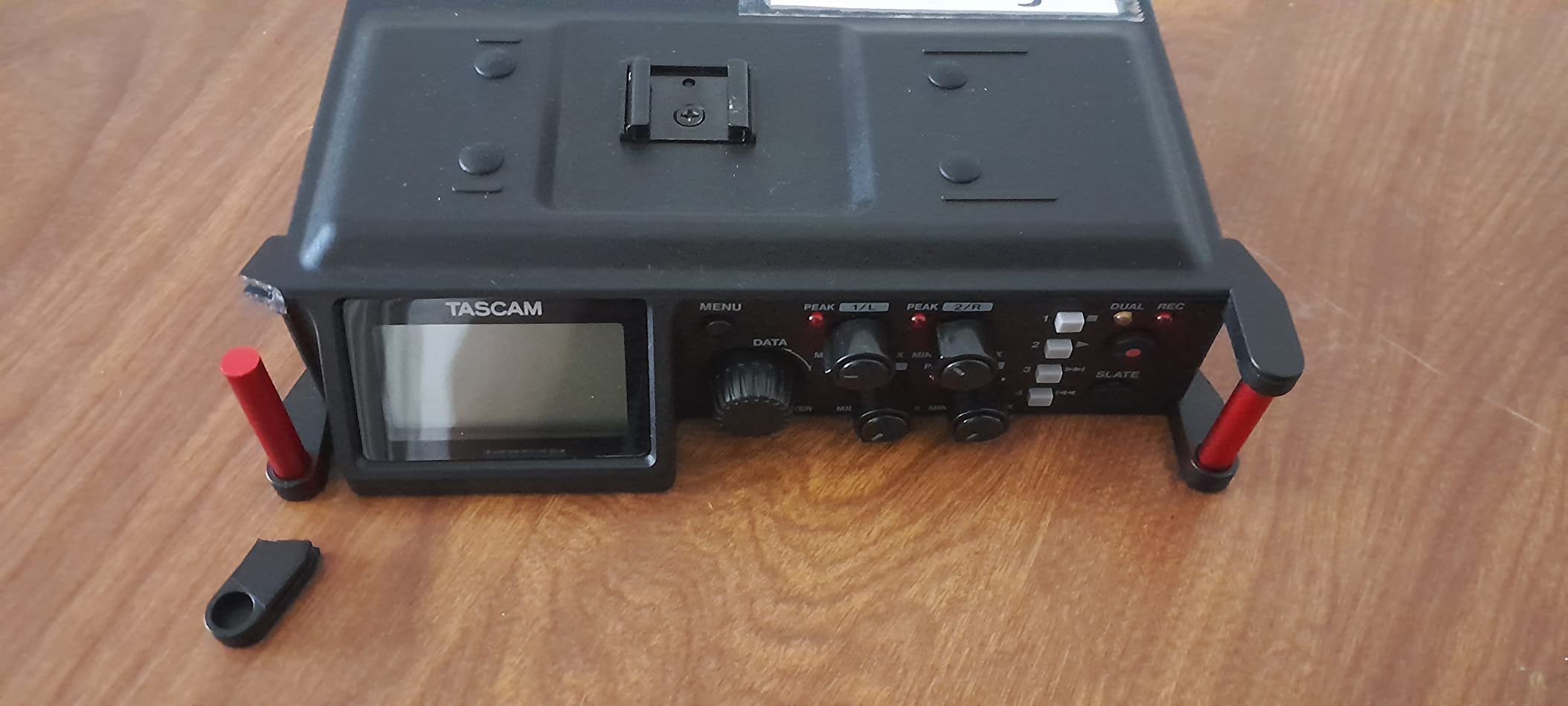
Ideal For Multi-Person Interviews and Panel Discussions
When you need to isolate multiple speakers for post-production mixing, four tracks become essential. The DR-70D provides this capability in a package smaller than most two-track recorders. I have used it for podcast recordings, conference panels, and family interviews where managing multiple wireless lavaliers would be impractical.
Phantom power is available on all four inputs simultaneously. This matters when using condenser microphones that require 48V power. Some competing units only provide phantom on certain inputs or limit the total number powered at once.
Power Management Requires Planning
Battery life is the DR-70D’s weakness. With phantom power engaged on multiple inputs, expect 3-4 hours from quality AA batteries. I strongly recommend external USB power for extended shoots. The micro-USB port accepts portable battery packs, though the location makes cable management slightly awkward.
Memory card compatibility caused me headaches initially. The DR-70D refuses to work with certain SD card brands or slower speed classes. Stick to SanDisk Extreme or Samsung Pro cards, and format them in the recorder before each shoot. This picky behavior seems to be a Tascam trait across multiple models.
4. Zoom H4 Essential – 4-Track 32-Bit Float Recorder
Pros
- 32-bit float on 4 tracks simultaneously
- Built-in XY stereo microphones
- Bluetooth app control
- USB audio interface mode
- Affordable entry to 32-bit recording
Cons
- No overdub/punch-in like older H4n
- Menu navigation feels sluggish
- Buttons have mushy tactile response
The Zoom H4 Essential represents a significant upgrade to the classic H4n line, primarily through the addition of 32-bit float recording. I tested it alongside my older H4n Pro, and the difference in workflow is dramatic. Where the old model required careful gain staging, the Essential lets you focus on capturing the moment.
Four simultaneous tracks give you flexibility that two-track recorders cannot match. I typically record interview subjects on tracks 1-2 via XLR inputs while capturing stereo room tone on tracks 3-4 from the built-in microphones. This dual recording approach provides both isolated dialogue and natural ambience for the final mix.
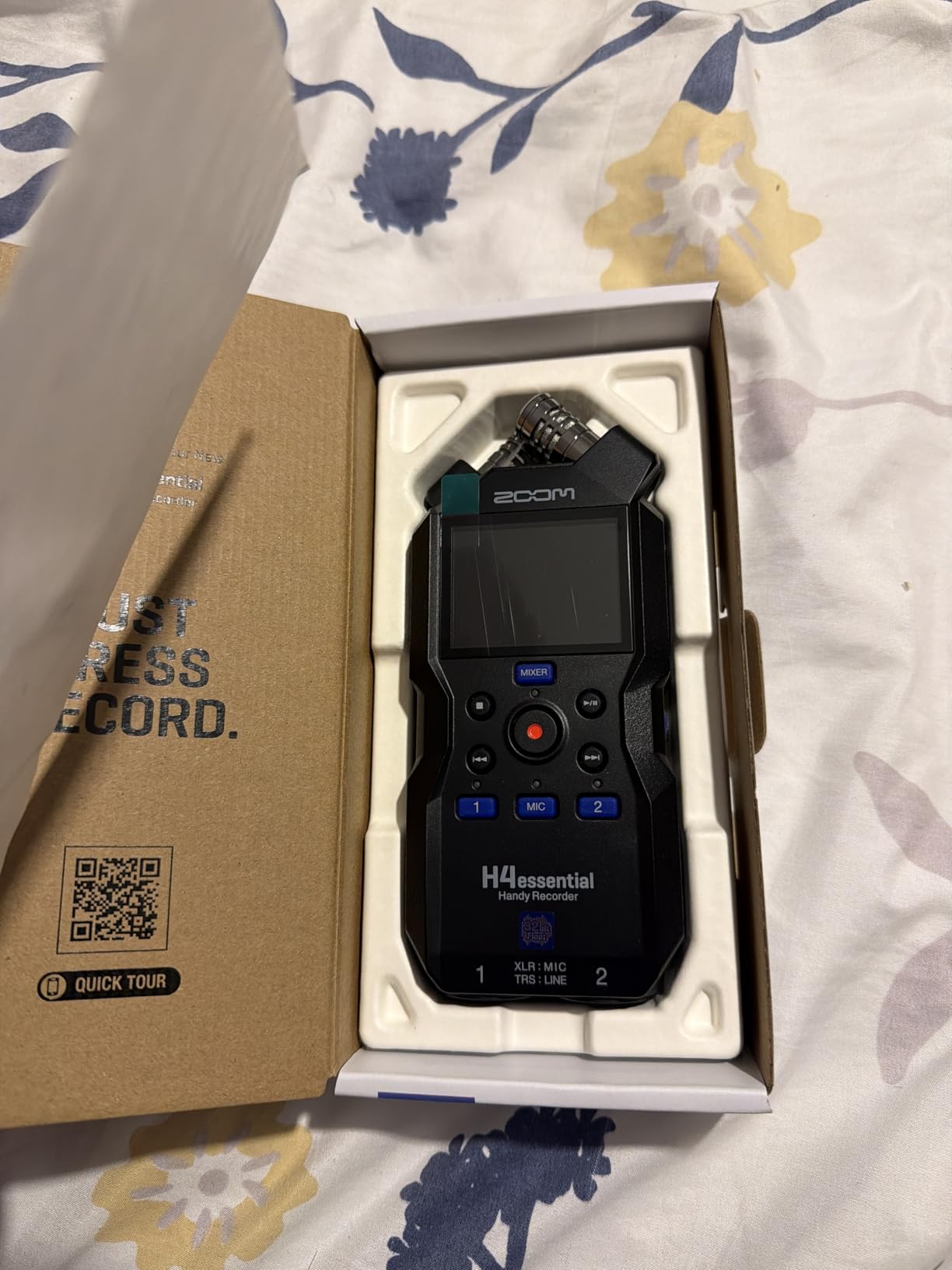
The dual AD converters handle extreme dynamic range effortlessly. During testing, I recorded a whispered conversation in a library followed immediately by a shouted announcement over a PA system. Both came through cleanly with no clipping on the loud parts and no noise floor issues on the quiet sections.
Battery life impressed me consistently. Twenty hours is realistic with phantom power disabled, and even with 48V engaged on one channel, I regularly saw 12+ hours of operation. The USB-C connection provides modern power options and data transfer speeds.
Best Budget Entry Into Professional Multi-Track Recording
For filmmakers stepping up from basic two-track recorders, the H4 Essential provides professional features without overwhelming complexity. The 32-bit float recording removes the most common beginner mistake (clipped audio) while teaching proper microphone technique. It is the recorder I recommend to film students and YouTube creators ready to level up their sound.
Bluetooth control through the Zoom app extends the recorder’s utility. I have hidden the H4 Essential in plant arrangements and ceiling tiles while controlling recording from my phone. The range is adequate for most interview setups, though thick walls can interfere.
Some Features Removed From Previous Generation
Long-time Zoom users note that the Essential lacks some features from the H4n Pro, particularly overdub and punch-in recording. These were primarily music production features, so their removal makes sense for a filmmaking-focused recorder. However, if you need multi-take music recording capabilities, consider the older model or the H5.
The button response feels less tactile than premium Zoom models like the F3. Menu navigation requires more deliberate presses, and the plastic construction, while durable, does not feel as professional as metal-bodied alternatives. These are acceptable compromises at this price point.
5. Deity PR-2 – Pocket Recorder with Timecode Sync
Pros
- 30-hour battery life is class-leading
- Timecode sync with Deity TC-1 boxes
- Compact pocket form factor
- Includes quality lavalier microphone
- Sidus Audio app control works well
Cons
- Battery door feels fragile
- Plastic construction concerns
- No rechargeable battery included
The Deity PR-2 fills a unique niche: professional 32-bit float recording in a package smaller than a deck of cards. I use it primarily as a backup recorder hidden on talent during interviews, but it has become my favorite tool for quick audio capture when carrying a full kit is impractical.
Battery life is genuinely remarkable. Thirty hours of continuous recording on two AA batteries means you can start rolling at the beginning of a wedding day and not think about power until the reception ends. I tested this claim during a 14-hour documentary shoot and still had battery indicators showing 60% remaining.
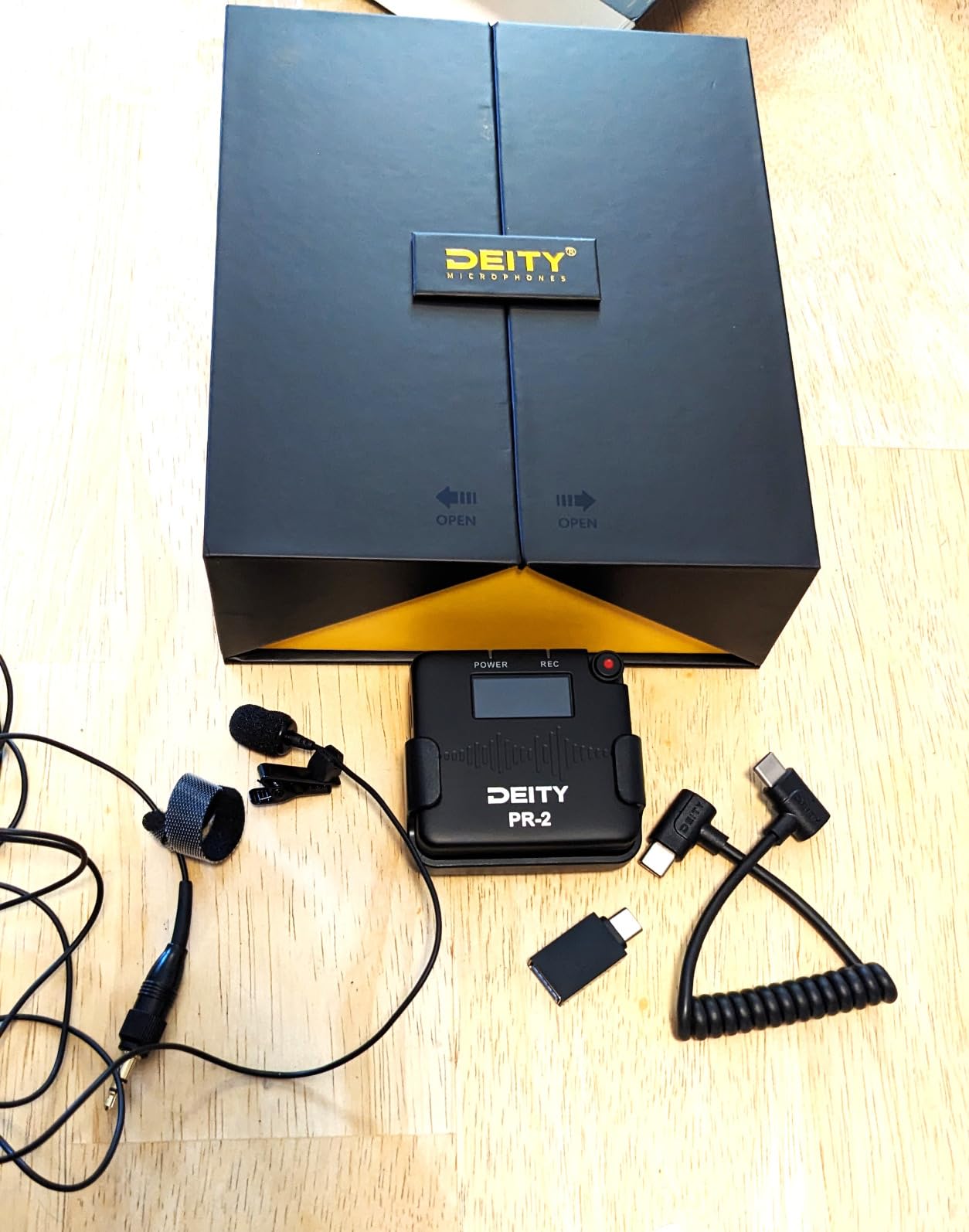
The included W.Lav Pro lavalier microphone punches above its weight. This is not a throwaway accessory but a genuine film-grade microphone that captures clean, detailed dialogue. I have compared it directly to my Sanken COS-11D, and while the Sanken wins on absolute clarity, the difference is surprisingly small considering the price gap.
Timecode synchronization through the Sidus Audio ecosystem works seamlessly. Pair the PR-2 with Deity TC-1 timecode generator boxes, and you get sample-accurate sync across multiple devices. For multi-camera documentary work, this eliminates the headache of syncing based on waveform matching in post.
Perfect For Hidden Backup Recording
Every professional filmmaker has experienced primary audio system failures. Wireless interference, cable breaks, and battery deaths happen at the worst possible moments. The PR-2’s tiny size lets you hide a complete backup recording system in a pocket or bra strap, ensuring you never lose a crucial take.
The locking 3.5mm connector prevents accidental disconnects. Standard 3.5mm jacks wiggle loose constantly during talent movement. The PR-2’s locking mechanism requires deliberate action to disconnect, which has saved multiple interviews in my experience.
Build Quality Concerns at This Price
The PR-2’s plastic construction feels less robust than metal competitors. The battery door in particular generates complaints from users who find it difficult to open and prone to breaking. Deity has reportedly improved the design in recent production runs, but this remains a weak point.
Using disposable AA batteries feels dated in 2026. While the battery life is excellent, many users would prefer an internal rechargeable lithium battery with USB-C charging. The included AAA to AA adapter helps if you only have smaller batteries available, but this is a workaround rather than a solution.
6. OM SYSTEM LS-P5 – 3-Microphone PCM Recorder
Pros
- Adjustable directional microphone system
- Exceptional sound quality for size
- 16GB internal storage
- Low-cut filter reduces rumble
- Calendar search organizes files
Cons
- Micro-USB instead of USB-C
- No voice guide like older models
- Bluetooth audio quality limited
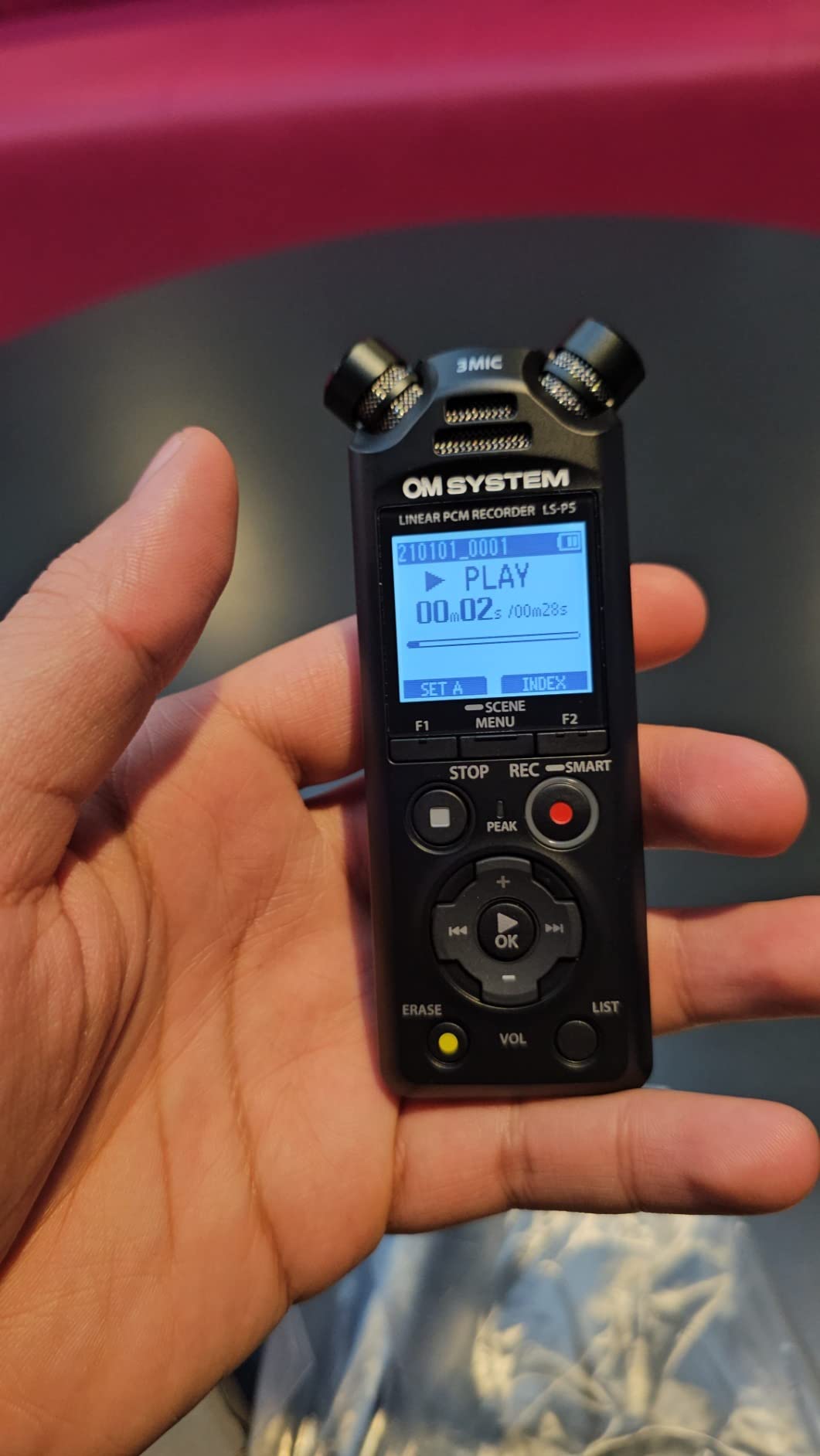
The OM SYSTEM LS-P5 continues the legacy of Olympus audio recorders with innovative microphone technology. The tresmic 3-microphone system allows adjustable directionality, letting you narrow the pickup pattern to reduce ambient noise or widen it for immersive ambience recording.
Sound quality impresses for such a compact device. The 96kHz/24-bit recording captures detail that exceeds most filmmaking requirements, and the FLAC format option provides lossless compression for longer recording times without quality sacrifice. I use mine primarily for recording room tone and wild sound effects.
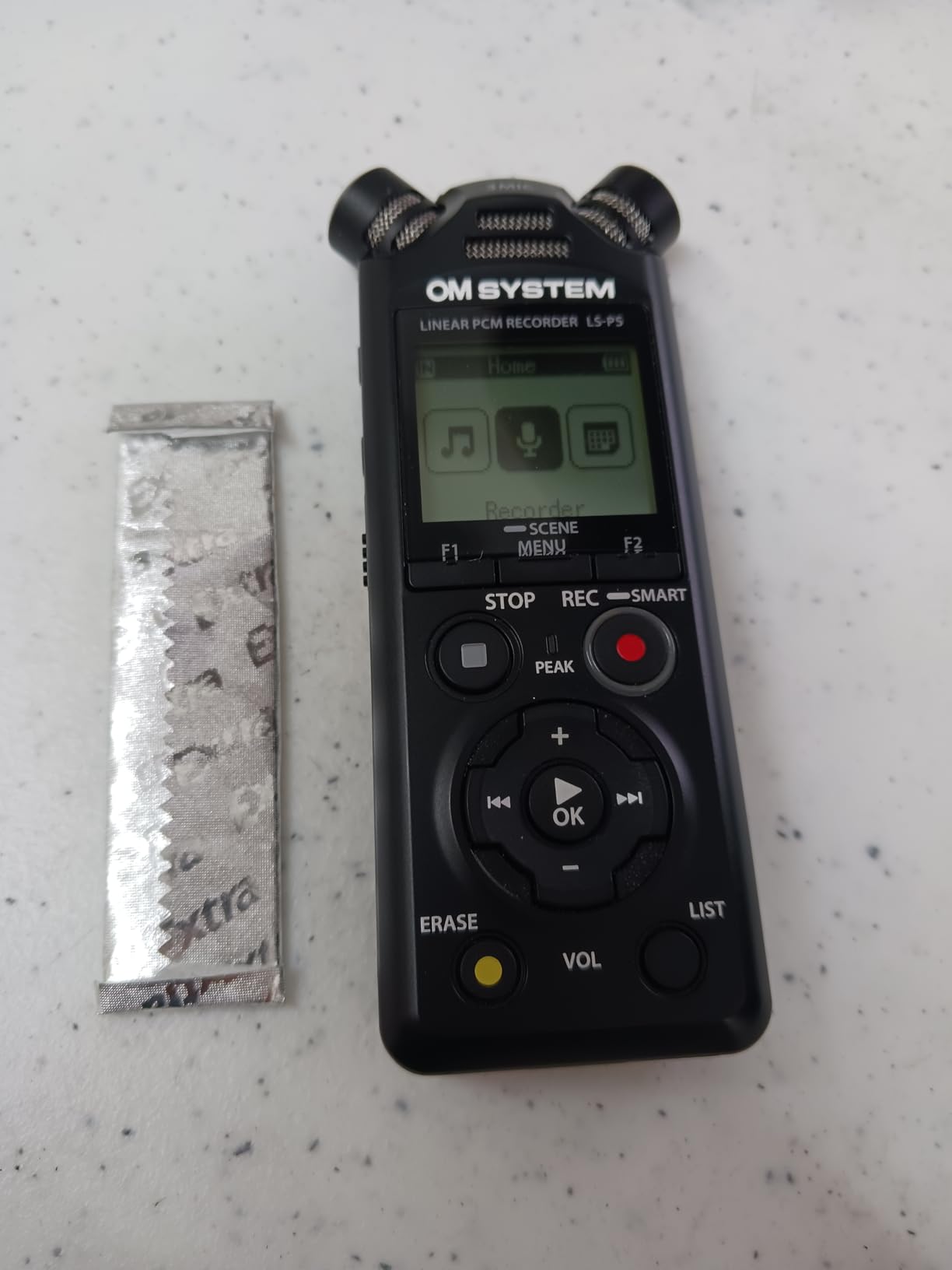
The Bluetooth connectivity extends beyond simple remote control. The OM SYSTEM app allows real-time audio monitoring through your phone, effectively turning the LS-P5 into a wireless microphone system. Range is limited to about 10 meters, but this is sufficient for interviews and self-recording scenarios.
Built-in 16GB memory eliminates the forgot-my-SD-card panic that has ruined shoots for many filmmakers. While you can expand storage with microSD cards, the internal memory provides enough space for several hours of high-quality recording as a safety buffer.
Excellent For Field Recording and Ambience Capture
The adjustable microphone system excels at capturing environmental sound. I have used the LS-P5 to record everything from dawn choruses in remote forests to subway station ambience in Tokyo. The ability to change directionality without swapping microphones saves time and reduces gear load.
The compact size fits in any pocket, making it ideal for travel documentary work. When I am already carrying cameras, lenses, and support gear, every ounce matters. The LS-P5 adds minimal weight while providing professional audio capabilities.
Some Features Removed From Previous Models
Owners of older Olympus LS-series recorders miss the voice guidance feature that announced recording status audibly. This was useful for blind operation or recording in dark environments. The LS-P5 removed this capability, presumably to reduce cost and complexity.
The switch from slide-out USB to micro-USB cable feels like a step backward. Previous models had a built-in USB connector that slid out from the body, eliminating the need to carry a separate cable. The LS-P5 requires carrying a micro-USB cable for file transfer and charging.
7. Zoom H1 XLR – Professional XLR Inputs in Compact Form
Pros
- True XLR inputs in pocket size
- 32-bit float recording quality
- Locking connectors prevent disconnects
- Works as USB audio interface
- Automatic power failover
Cons
- Plastic build feels less premium
- Small OLED screen hard to read
- Menu requires many button presses
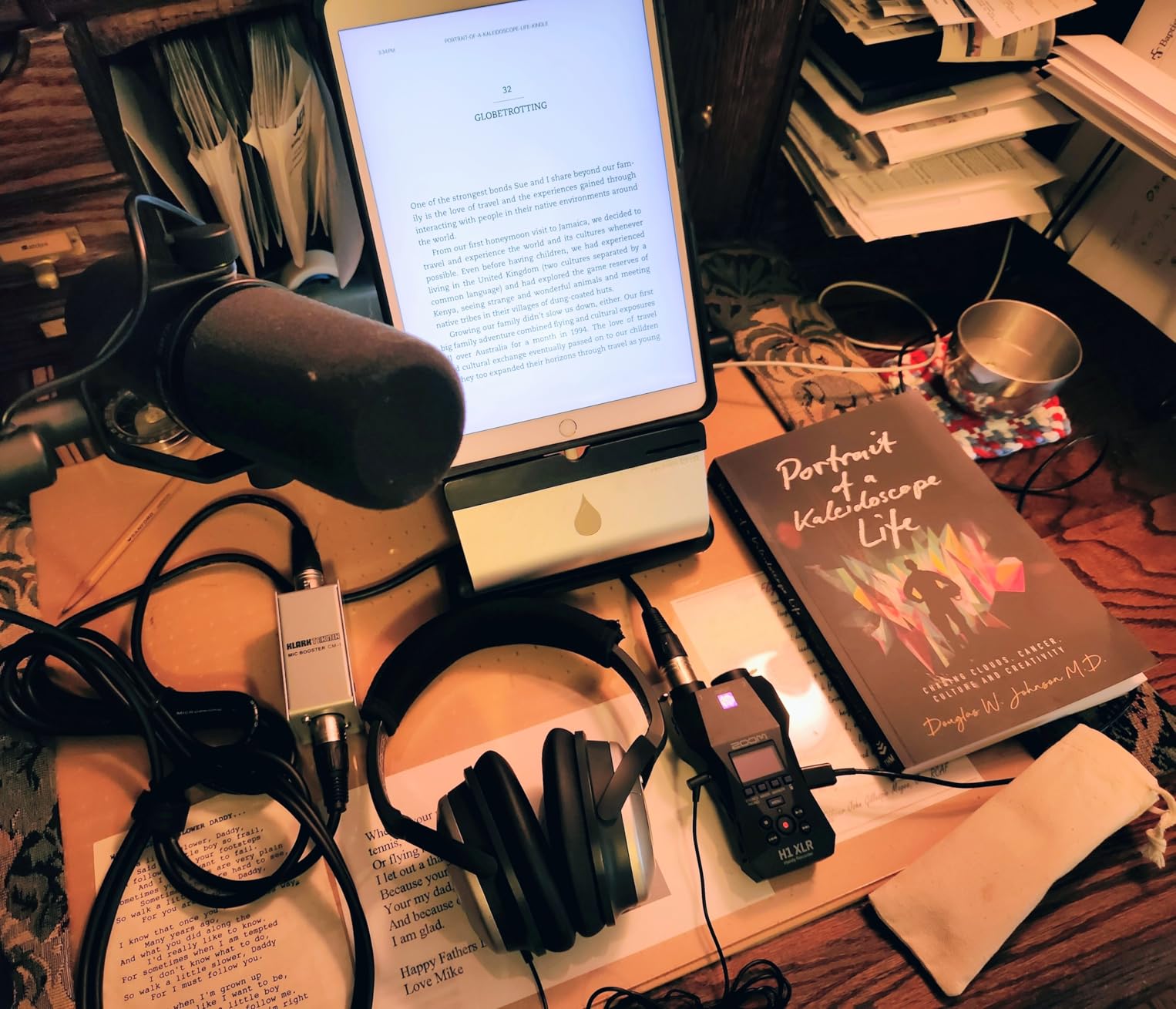
The Zoom H1 XLR solves a specific problem: getting professional XLR connectivity in a recorder that literally fits in your pocket. I keep one in my camera bag as a backup for situations where my primary recorder fails or when I need to travel ultralight.
The 32-bit float recording matches the quality of larger Zoom F-series recorders. You get the same set-and-forget workflow, the same dual AD converter technology, and the same post-production flexibility. The only compromise is the number of inputs and the plastic construction.
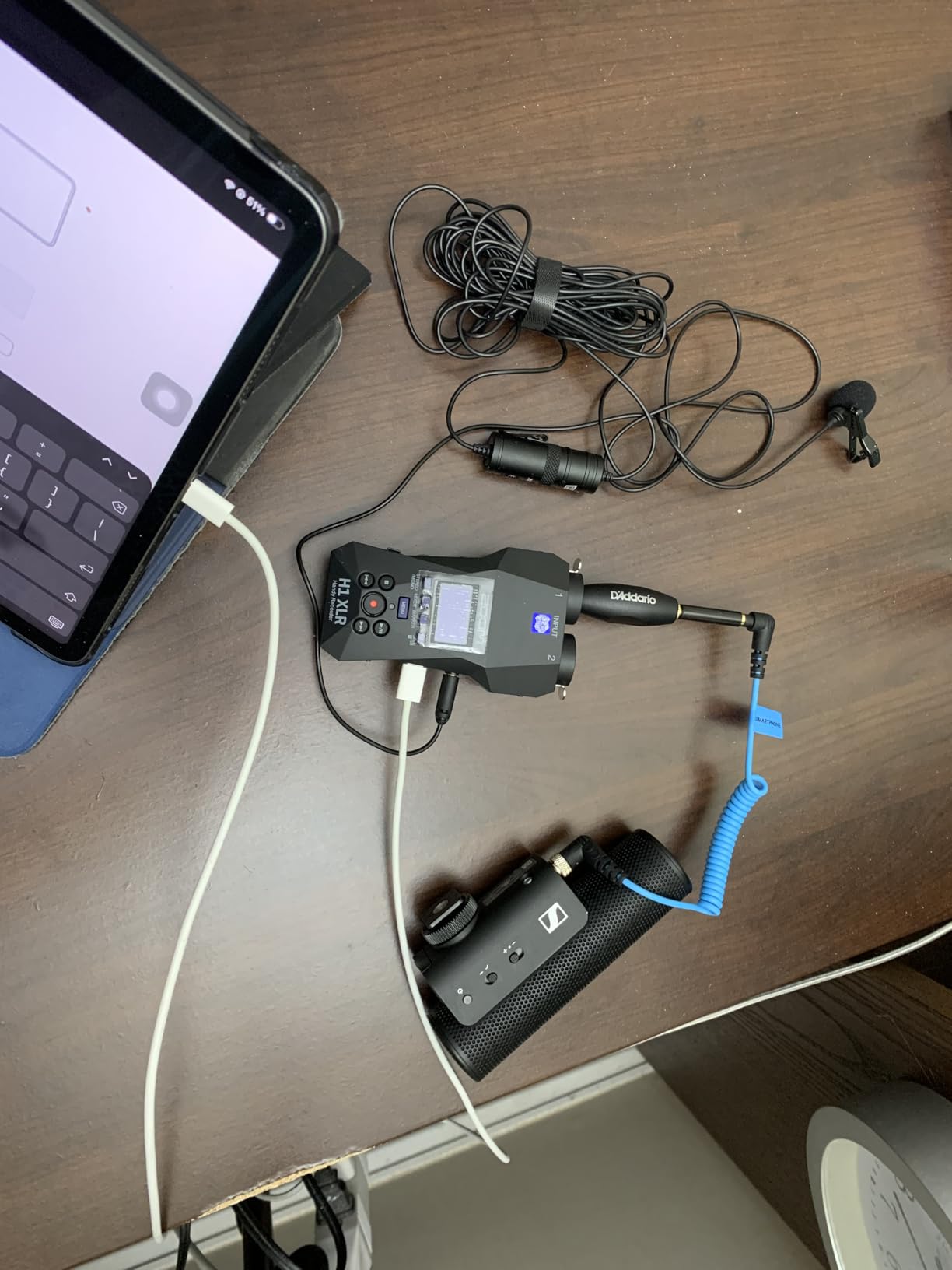
Locking XLR connectors are essential for professional use. Standard XLR jacks can wiggle loose during boom pole operation or when cables are snagged. The H1 XLR’s locking mechanism requires depressing a tab to disconnect, preventing accidental disconnects that ruin takes.
The smart battery detection automatically recognizes AA, NiMH, and lithium battery types, adjusting power management accordingly. This extends battery life and prevents the sudden shutdowns that plague recorders with simpler battery circuits. The automatic failover between USB power and batteries is another professional touch.
Best For Filmmakers Needing XLR in Minimal Size
If your work requires XLR microphones but you cannot carry a full-size recorder, the H1 XLR bridges the gap. Wedding videographers, documentary shooters, and corporate video creators all benefit from having professional connectivity without the bulk of traditional field recorders.
The audio interface mode expands its utility beyond field recording. Connect to your computer via USB-C, and the H1 XLR becomes a 2-in/2-out audio interface for podcast recording, voiceover work, or music production. This dual-purpose functionality increases the value proposition significantly.
Usability Compromises in Compact Design
The 1.55-inch height barely accommodates XLR connectors, and the resulting ergonomics feel cramped compared to larger recorders. Menu navigation requires many button presses because the small screen can only display limited information. These are acceptable trade-offs for the size, but they slow down operation.
Recording in stereo mode with two microphones creates left/right channels rather than two mono tracks. This complicates post-production if you need to process each microphone separately. Workarounds exist in most editing software, but the extra step annoys professionals accustomed to discrete track recording.
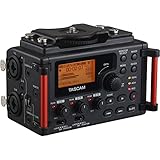
8. Tascam DR-60DmkII – DSLR Rig Audio Solution
Pros
- Perfect form factor for DSLR rigs
- HDDA preamps deliver clean audio
- Physical gain knobs for quick adjustment
- Fits under camera or on rig
- Professional locking connectors
Cons
- No built-in microphones
- Battery life limited with phantom
- Only 3 left in stock frequently
The Tascam DR-60DmkII occupies a specific niche that remains relevant despite newer recorders entering the market. Its camera-mount design integrates directly with DSLR and mirrorless rigs, creating a unified package that does not require separate mounting solutions or cable management nightmares.
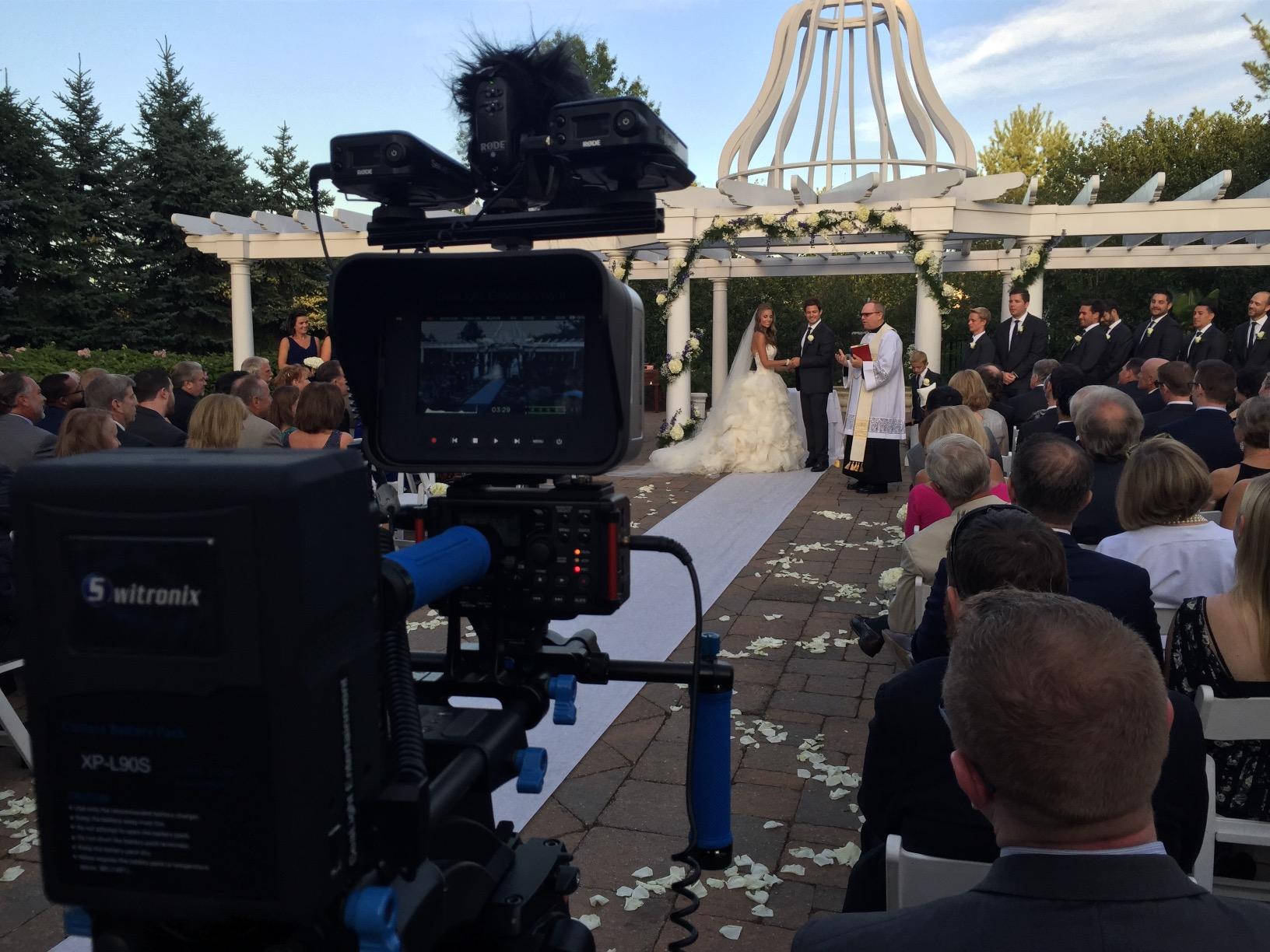
I used the DR-60DmkII extensively when shooting with Canon DSLRs before upgrading to dedicated cinema cameras. The ability to mount the recorder between the camera body and tripod plate keeps everything compact and stable. Cables run cleanly from recorder to camera without snagging or creating trip hazards.
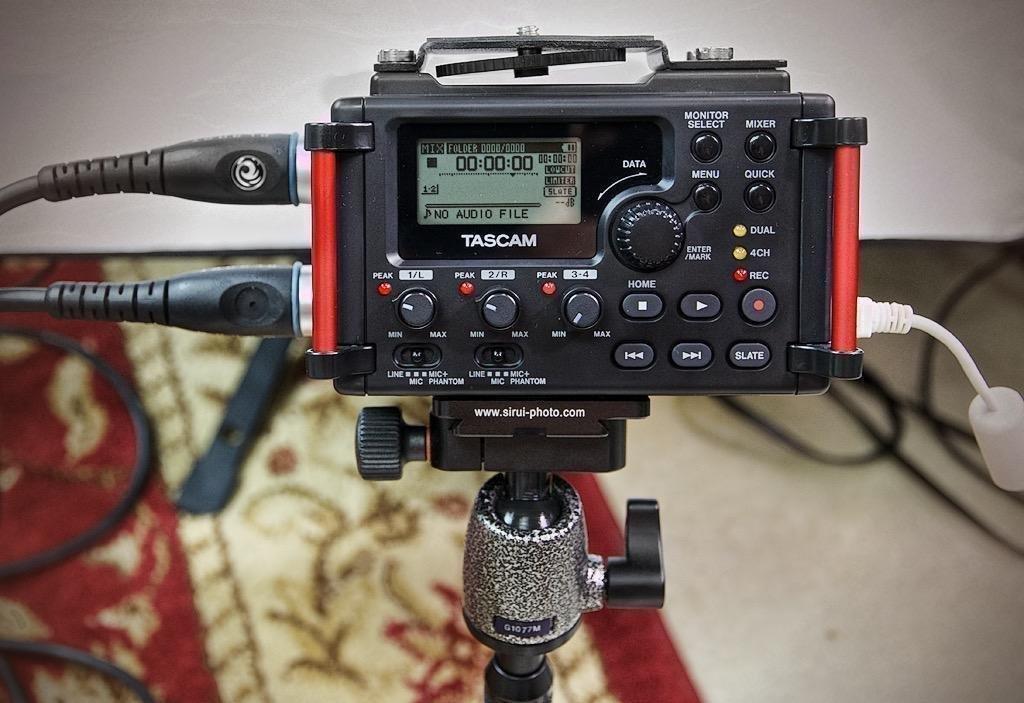
HDDA preamps provide professional-grade audio quality that exceeds most camera preamps significantly. The 64dB of gain handles sensitive condenser microphones beautifully, and the low noise floor preserves dialogue clarity even in quiet scenes. This is the primary reason to use any external recorder rather than camera audio.
Physical gain knobs allow immediate adjustment without menu diving. During a shoot, you can see and adjust levels without looking away from your subject. This tactile feedback loop is faster and more reliable than touchscreen or button-based gain adjustment.
Ideal For DSLR/Mirrorless Rig Integration
If you shoot primarily with DSLR or mirrorless cameras and want integrated audio without separate recorder mounting, the DR-60DmkII remains a compelling option. The form factor has influenced Tascam’s entire product line, and this second-generation version refined the original design significantly.
The high-level input on channels 3-4 accepts line-level signals from wireless receivers or mixers. This expands your connectivity options beyond microphones, allowing integration with more complex audio setups when needed.
Limitations in Modern Workflows
The lack of built-in microphones means you cannot capture quick reference audio or room tone without external mics. This is a deliberate choice for a recorder designed around camera mounting, but it limits flexibility compared to handheld recorders with internal microphones.
Stock availability has become inconsistent as this model ages. The frequent “only 3 left in stock” warnings suggest Tascam may be winding down production. While the DR-60DmkII remains excellent, prospective buyers should consider whether newer alternatives like the Zoom F3 better serve their needs at similar price points.
9. Zoom Q2n-4K – Video Recorder with Pro Audio
Pros
- Best audio quality in video camera class
- Super simple operation
- Works as webcam for streaming
- Records audio-only mode
- X/Y stereo microphones
Cons
- Plastic construction
- Short battery life with AA
- Micro USB port outdated
- Video quality lags behind smartphones
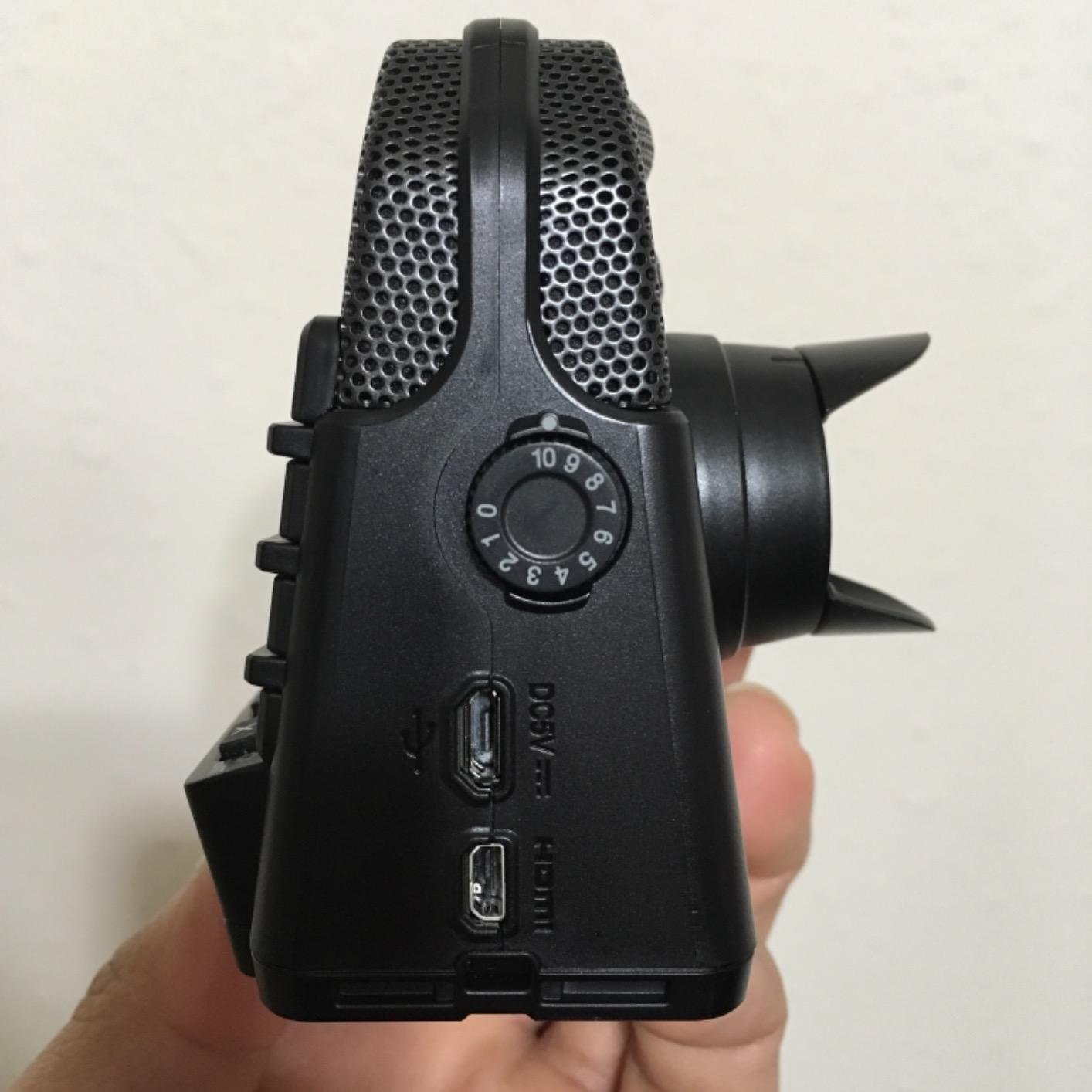
The Zoom Q2n-4K addresses a unique use case: situations where you need video and audio but cannot carry separate devices. I use mine for recording band rehearsals, creating video podcasts, and capturing reference footage with quality audio on documentary shoots.
The X/Y stereo microphones deliver the same quality as Zoom’s dedicated audio recorders. This is not an afterthought camera with mediocre audio. Zoom prioritized sound quality, understanding that their core customer base cares more about pristine audio than cinematic video. The 24-bit/96kHz recording matches their standalone recorder specifications.
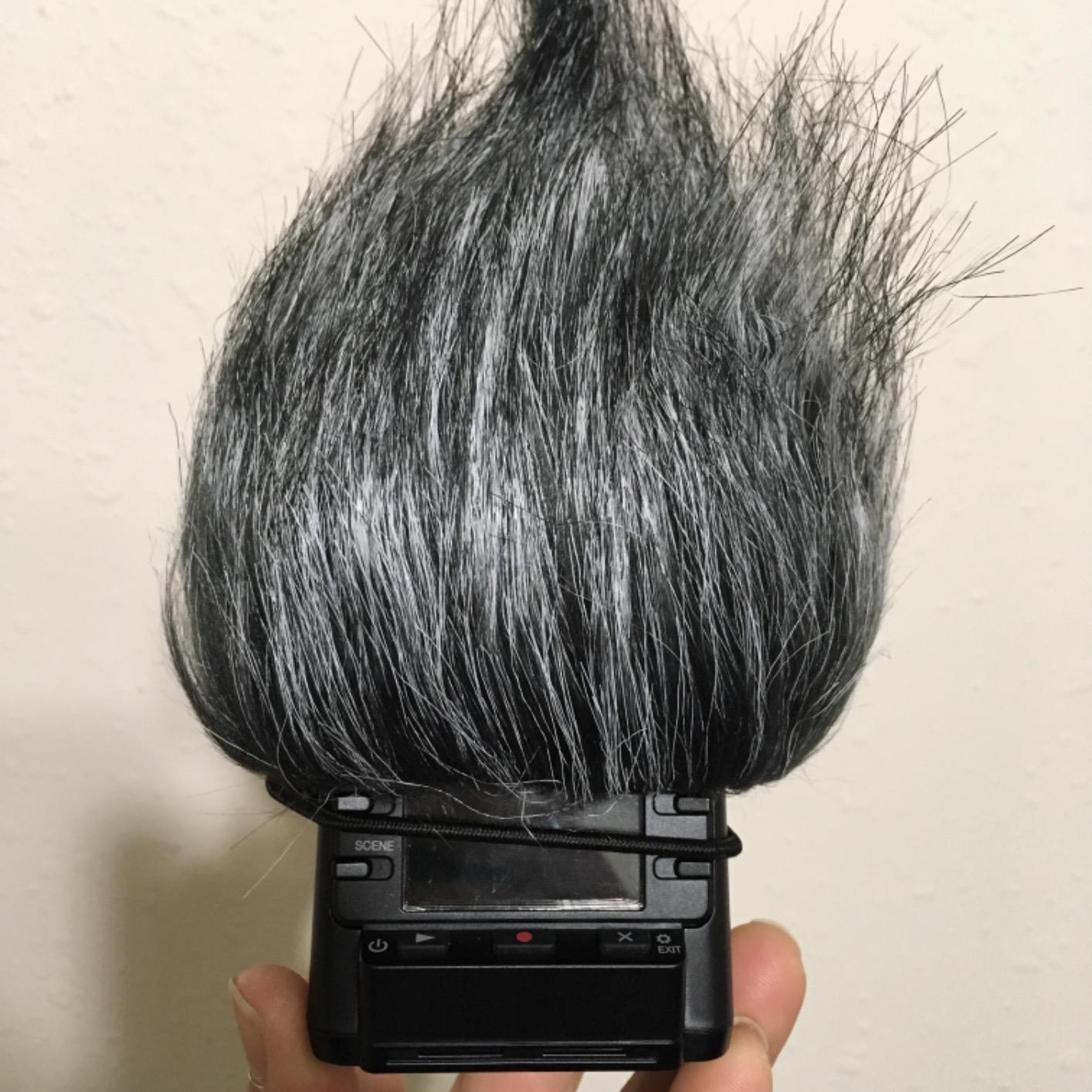
The 150-degree wide-angle lens captures entire rooms and stages without requiring extensive space. For band rehearsals, I place the Q2n-4K on a tripod in the corner and capture the full ensemble plus detailed audio. The 12 scene presets adjust for different lighting conditions automatically.
Webcam mode transforms the Q2n-4K into a streaming solution for content creators. Connect via USB to your computer, and you get quality video with professional audio for Twitch streams, Zoom calls, or remote interviews. The audio quality significantly exceeds typical webcam microphones.
Perfect For Musicians and Rehearsal Recording
Musicians consistently praise the Q2n-4K for capturing practice sessions and live performances. The audio quality preserves the nuances of acoustic instruments, and the wide lens ensures everyone fits in frame even in cramped rehearsal spaces. The audio-only recording mode saves storage when you only need sound.
The compact size fits in instrument cases and gig bags. Unlike larger video cameras that require dedicated bags, the Q2n-4K travels with the same ease as a handheld audio recorder. This portability increases the likelihood that you will actually have it when inspiration strikes.
Video Quality Limitations
The 4K video, while functional, does not match modern smartphone quality in most lighting conditions. The small sensor struggles with low light, producing noisy footage in dim venues. If video quality is your primary concern, a recent smartphone or dedicated camera will outperform the Q2n-4K.
Micro USB connectivity feels outdated in 2026. USB-C has become the standard for modern devices, and finding micro USB cables requires digging through older cable collections. The short battery life with AA batteries further limits extended recording sessions without external power.
10. Tascam DR-10L Pro – Lavalier Recorder with 32-Bit Float
Pros
- 32-bit float prevents clipping
- Quality lavalier included
- Extremely compact and lightweight
- Timecode sync capability
- App controls up to 5 units
Cons
- Tiny screen difficult to navigate
- AAA battery not rechargeable
- Requires firmware update for best performance
The Tascam DR-10L Pro represents a significant upgrade to the original DR-10L, primarily through the addition of 32-bit float recording and timecode synchronization. This pocket-sized recorder solves the perennial problem of wireless microphone interference and battery anxiety by recording locally at the talent’s body.
The included TM-10L lavalier microphone captures quality dialogue without requiring separate microphone purchases. I have used it for interviews, wedding vows, and documentary subjects where hiding a recorder was easier than managing wireless systems. The microphone quality exceeds what most camera-mounted systems deliver.
Timecode synchronization through the DR-10L Pro CONNECT app allows managing up to five units simultaneously. For multi-person interviews, you can start and stop all recorders simultaneously from your phone, then sync the files effortlessly in post-production using the embedded timecode.
Ideal For Backup Recording and Wireless Replacement
Professional sound recordists use the DR-10L Pro as backup insurance even when primary wireless systems are operating. Hidden on talent, it captures pristine audio regardless of wireless dropouts, interference, or range limitations. This redundancy has saved commercial shoots where wireless spectrum was crowded with competing signals.
The compact size hides easily under clothing without obvious bulges. Talent forgets they are wearing it, resulting in more natural performances. The lightweight design does not pull at clothing or require extensive taping to secure.
Operational Challenges
The tiny screen makes menu navigation challenging, especially for users with larger fingers or vision limitations. Most functions require the smartphone app for comfortable operation. This dependency on external devices adds complexity to simple recording tasks.
Using disposable AAA batteries feels inconvenient in 2026. While battery life is excellent due to the efficient design, many users would prefer USB rechargeable operation. The internal lithium battery that maintains date and time requires periodic charging, adding another item to your maintenance checklist.
11. Zoom H1 Essential – Entry-Level 32-Bit Float Recorder
Pros
- 32-bit float at entry price
- Incredibly compact and light
- USB microphone mode versatile
- Excellent value for money
- Easy one-handed operation
Cons
- Plastic construction feels cheap
- Shorter battery than competitors
- No XLR inputs limit expansion
- Small screen hard to read
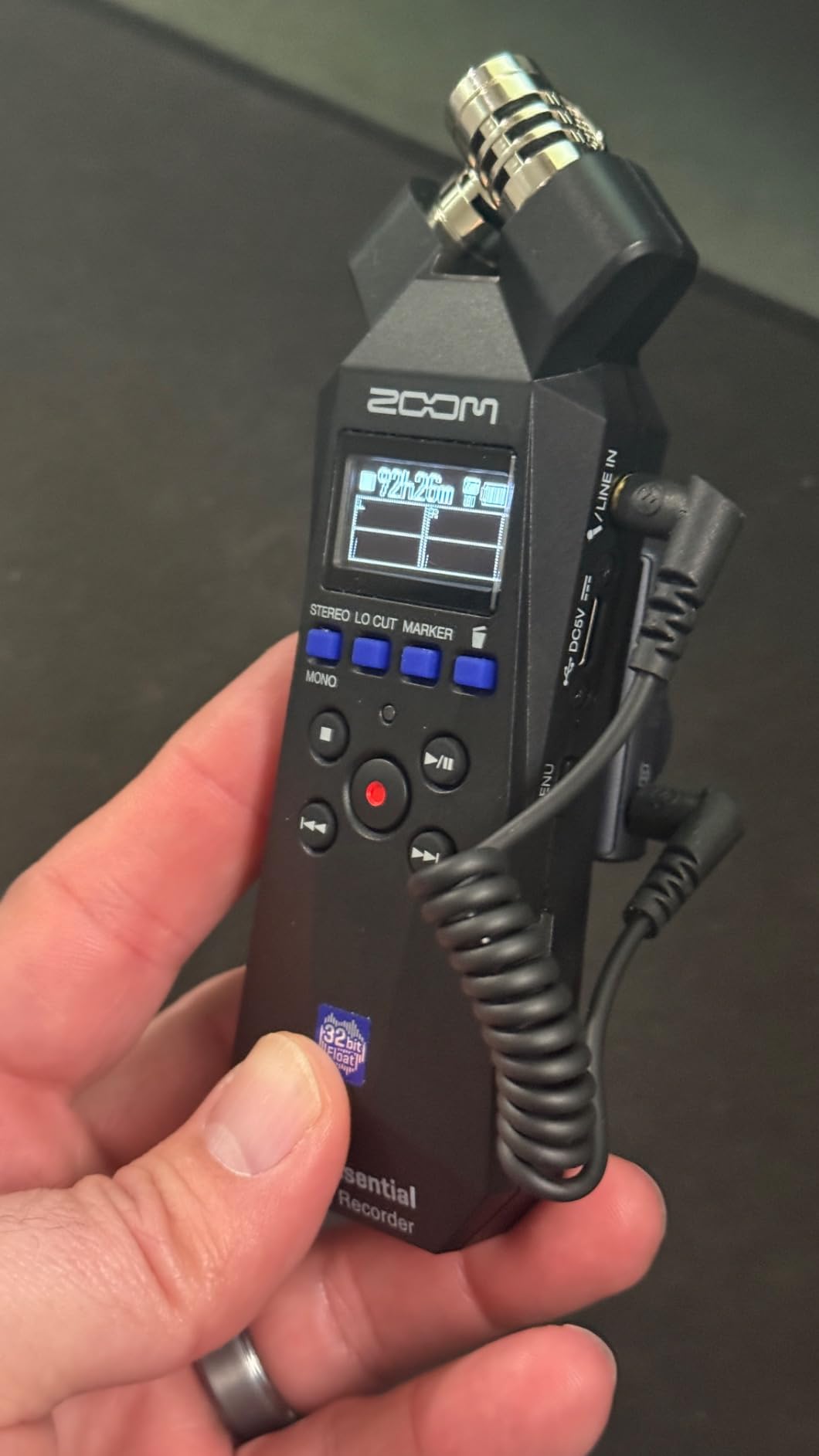
The Zoom H1 Essential democratizes 32-bit float recording by bringing the technology to a sub-$110 price point. For filmmakers just starting out or content creators upgrading from smartphone audio, this recorder delivers professional capabilities without the traditional learning curve of gain staging.
I recommend the H1 Essential to film students and YouTube creators more than any other recorder. The combination of 32-bit float recording, onboard stereo microphones, and USB interface functionality provides everything needed for quality content creation. The limitations are clear (no XLR inputs, plastic build), but the core recording quality rivals recorders costing three times as much.
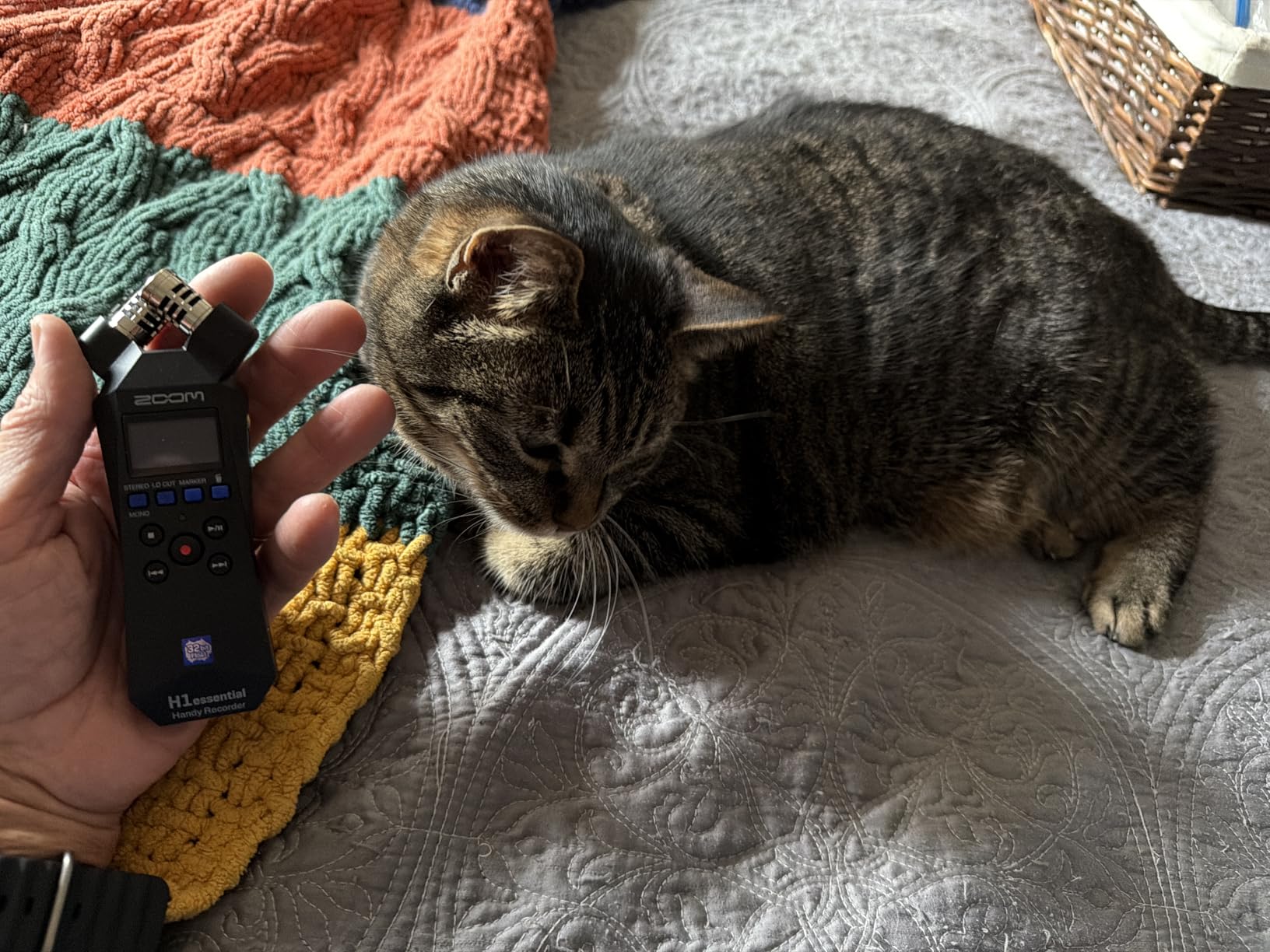
The onboard XY stereo microphones capture impressive ambience and room tone for the size. I have used the H1 Essential to record wild sound effects, capture concert ambience, and document travel experiences. The stereo imaging provides depth that mono recorders cannot match.
USB microphone mode extends utility beyond field recording. Connect to your computer, and the H1 Essential becomes a quality microphone for video calls, podcast recording, or voiceover work. This dual-purpose functionality increases the value proposition for creators who need both field and studio capabilities.
Perfect Entry Point for New Filmmakers
If you are transitioning from camera audio to dedicated recording, the H1 Essential provides the best learning environment. The 32-bit float recording forgives level-setting mistakes that would ruin takes on traditional recorders. You can focus on microphone placement and technique rather than constantly monitoring gain meters.
The 92-gram weight disappears in your pocket. Unlike larger recorders that require bags or cases, the H1 Essential travels everywhere with the same convenience as a smartphone. This portability means you will actually have it when unexpected recording opportunities arise.
Limitations for Professional Work
The lack of XLR inputs restricts microphone choices to 3.5mm options. While quality 3.5mm microphones exist, professional shotgun mics and condenser lavaliers typically use XLR connectivity. This limits the H1 Essential’s growth potential as your kit expands.
Build quality reflects the price point. The plastic construction has survived my testing, but it does not inspire the same confidence as metal-bodied recorders. The small OLED screen requires squinting in bright sunlight, and the rubber buttons feel mushy compared to premium alternatives.
12. Sony ICD-UX570 – Compact PCM Stereo Recorder
Pros
- Extremely compact and lightweight
- Excellent audio quality for size
- Sony UI is intuitive
- Quick charge is genuinely useful
- Scene presets save time
Cons
- Short battery life during recording
- USB 2.0 feels outdated
- Screen brightness not adjustable
- No carrying case included
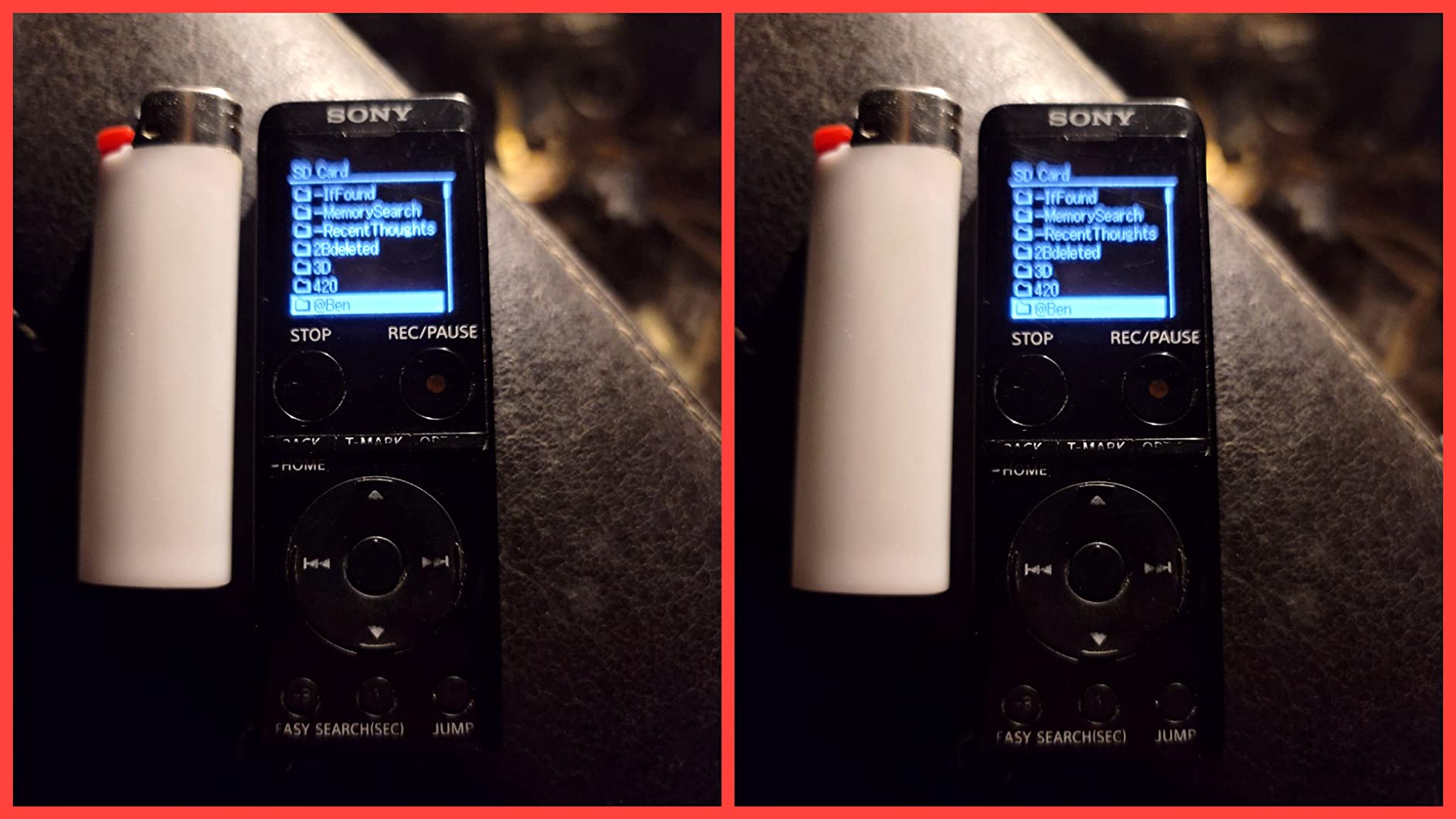
The Sony ICD-UX570 proves that compact recorders can deliver professional audio quality. At just 50 grams, it is the lightest recorder I regularly recommend, yet it captures 96kHz/24-bit PCM audio that exceeds most filmmaking requirements.
I keep an ICD-UX570 in my travel kit for situations where every ounce matters. Documentary shoots requiring extensive hiking, international travel with strict baggage limits, and situations where discretion is paramount all favor this tiny powerhouse. The audio quality impresses consistently despite the diminutive size.
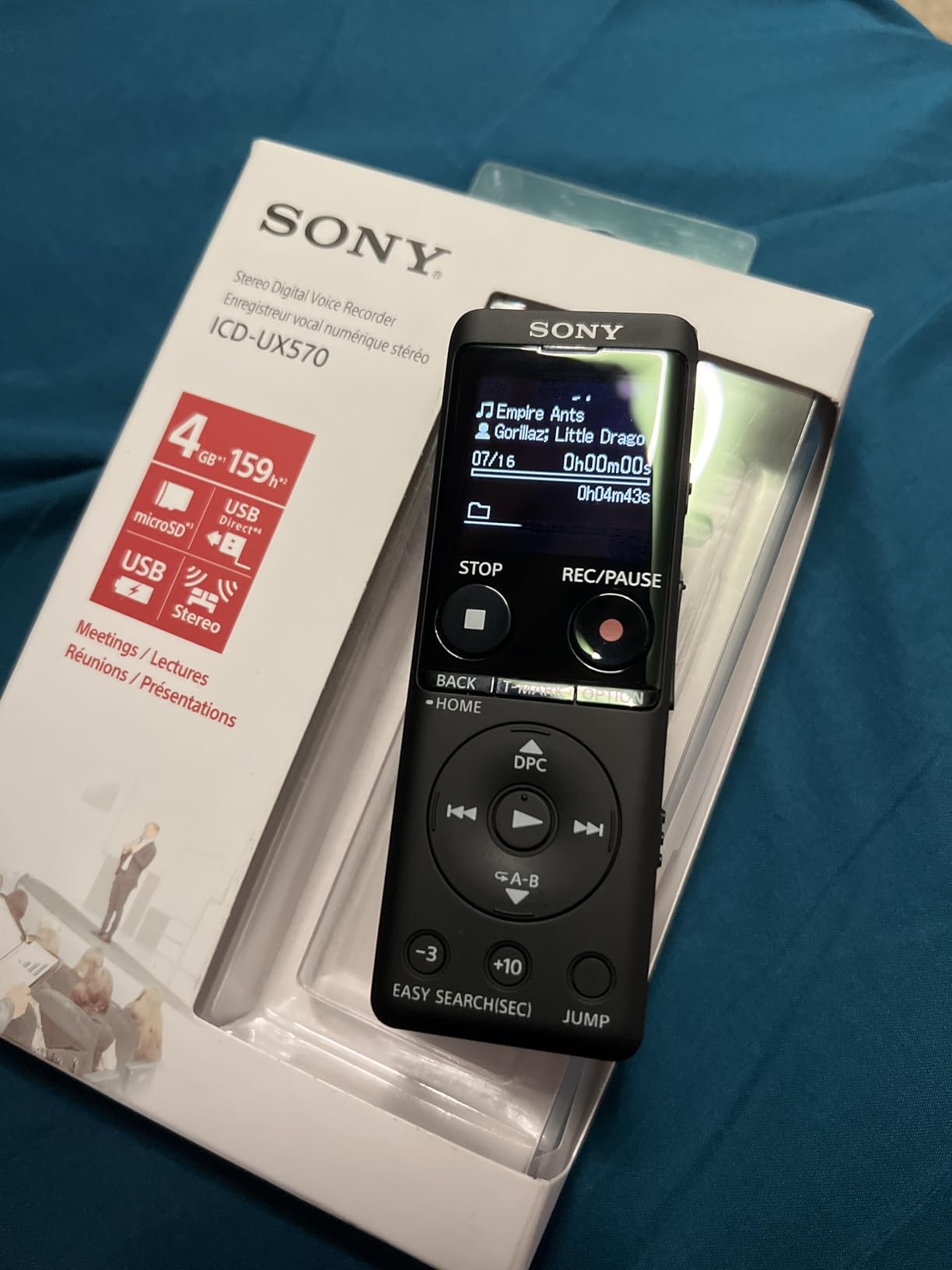
The quick charge feature works as advertised. Three minutes of charging provides one hour of recording time, which has saved interviews when I forgot to charge overnight. For emergency situations, this fast-charging capability provides peace of mind that traditional recorders cannot match.
Scene presets simplify operation for different environments. The wide/stereo setting captures immersive ambience, narrow/focus isolates specific sources, and normal provides balanced recording for general use. These presets reduce the need for manual adjustment in fast-paced shooting scenarios.
Best For Travel and Ultralight Documentary Work
When you are already carrying cameras, lenses, drone equipment, and support gear, every gram matters. The ICD-UX570 adds negligible weight while providing recording quality that embarrasses smartphone audio. I have used it to capture interviews on mountaintops, in remote villages, and during long trekking expeditions.
The ability to record from headphone jacks (line-level input) expands its utility beyond microphone recording. I use this feature to capture audio from mixing boards at events, reference audio from camera outputs, and record phone calls for podcast production.
Battery Life Requires Management
The 1-minute battery life rating is misleading. This figure refers to backup power for the clock function, not recording time. Actual recording battery life is shorter than competitors, typically providing 4-6 hours of continuous operation. You must carry spare batteries or external power for extended shoots.
The micro USB 2.0 port feels dated in 2026 when USB-C has become standard. Finding the correct cable requires preparation, and transfer speeds lag behind modern interfaces. The screen brightness cannot be adjusted, making outdoor viewing challenging in bright sunlight.
13. Sony ICD-PX370 – Basic Voice Recorder for Reference Audio
Pros
- Exceptional battery life lasts days
- Simple one-click operation
- Built-in USB eliminates cables
- Omni-directional mic for interviews
- Compact pocket-friendly size
Cons
- No XLR or external mic inputs
- MP3 only no WAV recording
- Mono mode is limited quality
- Plastic build feels basic
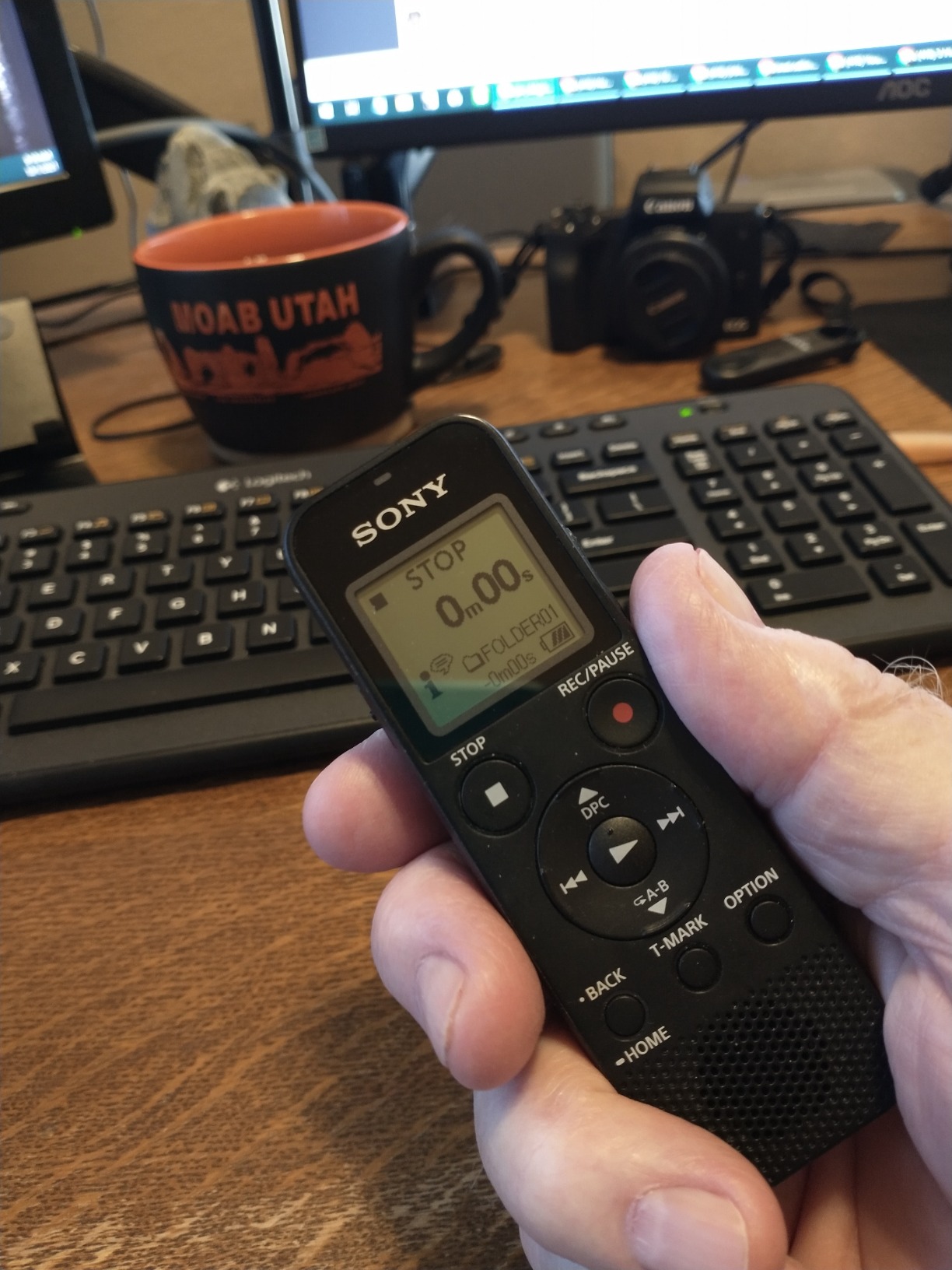
The Sony ICD-PX370 serves a specific purpose: basic voice recording at minimal cost. While it lacks the professional features of recorders further up this list, it provides reliable audio capture for reference recordings, note-taking, and situations where audio quality requirements are modest.
I include the ICD-PX370 for completeness, though most filmmakers will quickly outgrow its limitations. The MP3 recording format and lack of external microphone inputs restrict it to specific use cases rather than general filmmaking work. However, the exceptional battery life and simplicity have value for certain workflows.
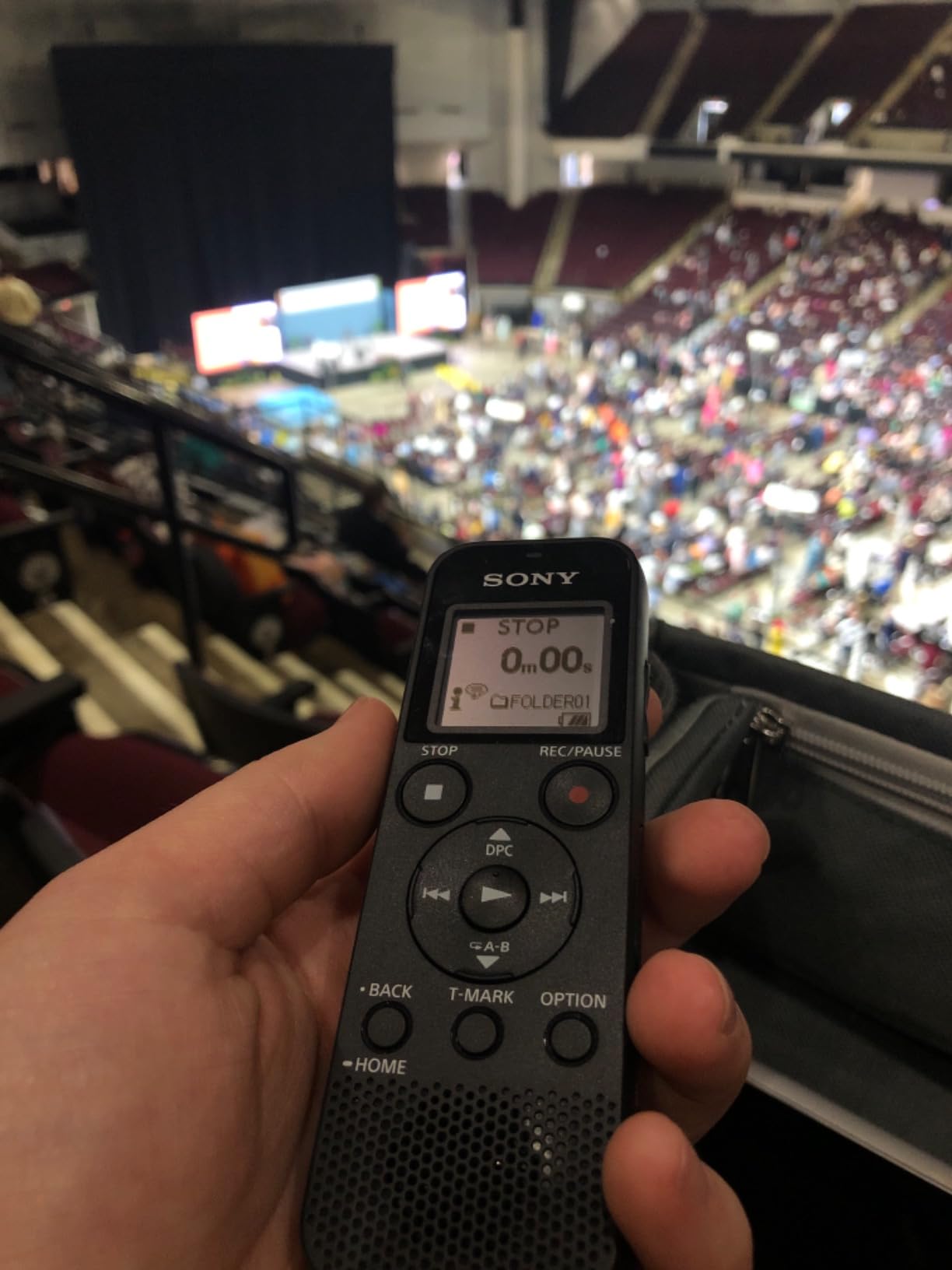
The 57-hour battery life is genuinely impressive. Using this recorder for location scouting notes, production meeting memos, or script reading sessions means charging becomes a monthly rather than daily activity. The built-in USB connector pops out directly from the body, eliminating the need to carry separate cables for file transfer.
Operation could not be simpler. One button starts recording, another stops it. The learning curve is essentially zero, making this accessible for productions where volunteers or non-technical staff need to capture audio without training.
Suitable For Reference Recording and Non-Critical Audio
The ICD-PX370 excels as a backup note-taking device. Location scouts can record observations about ambient noise, lighting conditions, and logistical challenges while keeping hands free for photography. Production coordinators can record meeting notes without typing.
For interview situations where you only need to capture content rather than broadcast quality, the built-in omni-directional microphone suffices. The mono mode saves storage space while maintaining intelligibility for transcription purposes.
Not Recommended For Primary Film Audio
The MP3 format and limited bit rates do not provide the headroom or quality required for professional filmmaking. While the audio is intelligible, it lacks the dynamic range, frequency response, and editing flexibility of WAV or FLAC recordings from higher-end units.
Without external microphone inputs, you cannot upgrade the audio quality with better microphones. The built-in microphone captures adequate audio for voice but struggles with music, ambient sound, and complex acoustic environments.
14. Tonfarb 64GB – Budget Voice Recorder for Beginners
Pros
- Massive 64GB storage included
- Voice activation saves battery
- Password protection for privacy
- Very affordable entry point
- Multiple recording formats
Cons
- Mono recording issues reported
- Low playback volume
- Cannot operate while charging
- Uncomfortable included earphones
- Build quality concerns
The Tonfarb 64GB represents the budget end of portable audio recorders for filmmakers. At under $30, it provides basic recording capabilities for users testing whether dedicated audio recording improves their video work before investing in professional equipment.
I tested this recorder to understand what is available at the absolute entry point of the market. While it cannot match the audio quality or build standards of Zoom or Tascam units, it provides functional recording for non-critical applications. The massive 64GB storage eliminates capacity concerns for casual users.
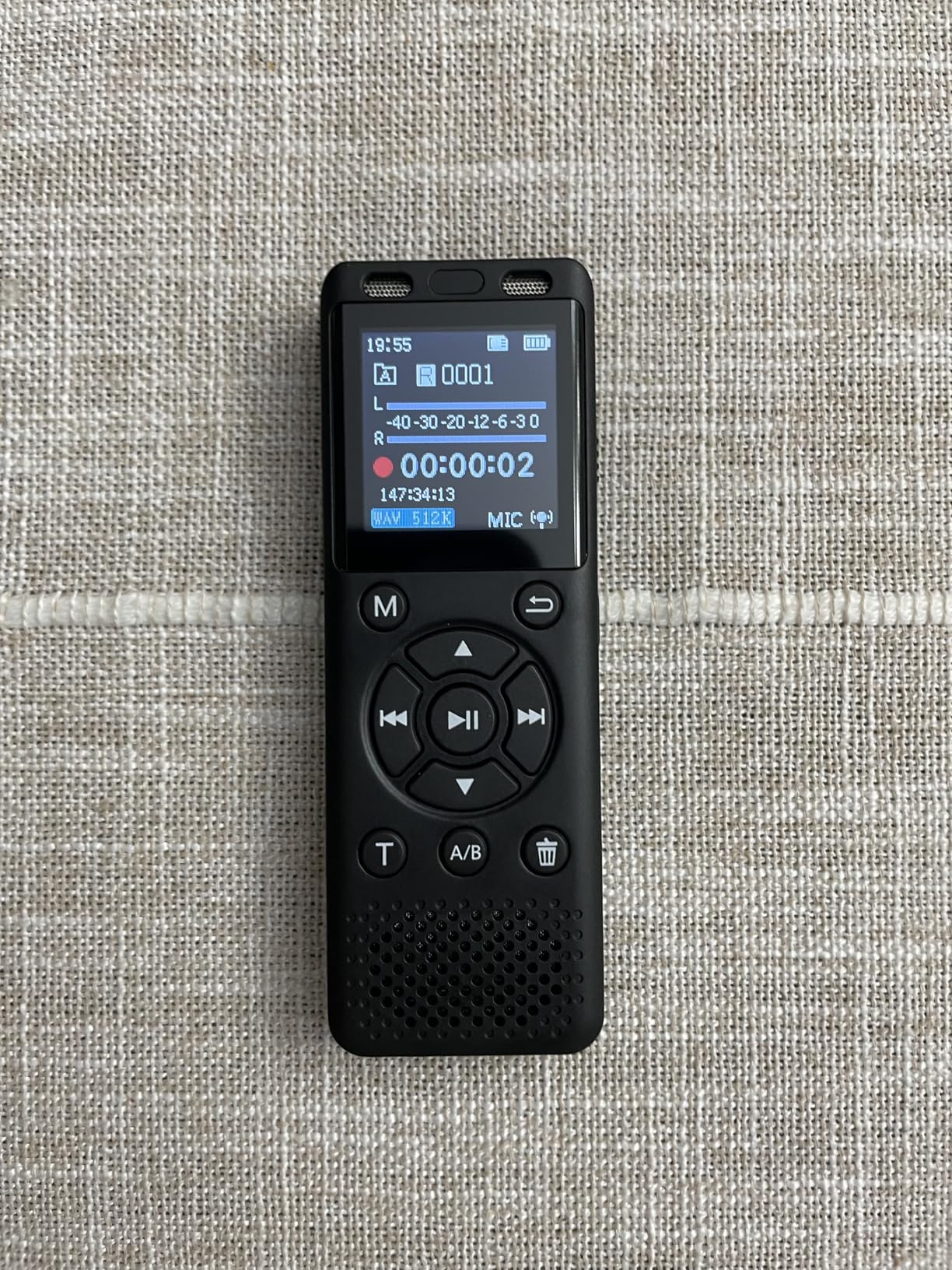
Voice-activated recording extends effective battery life by only recording when sound exceeds a threshold level. For lecture recording, meeting notes, or surveillance applications, this feature captures relevant audio while skipping silent periods. The sensitivity is adjustable to match different environments.
Password protection provides privacy for sensitive recordings. Medical professionals, journalists, and legal practitioners can secure files against unauthorized access. This security feature is rare at this price point.
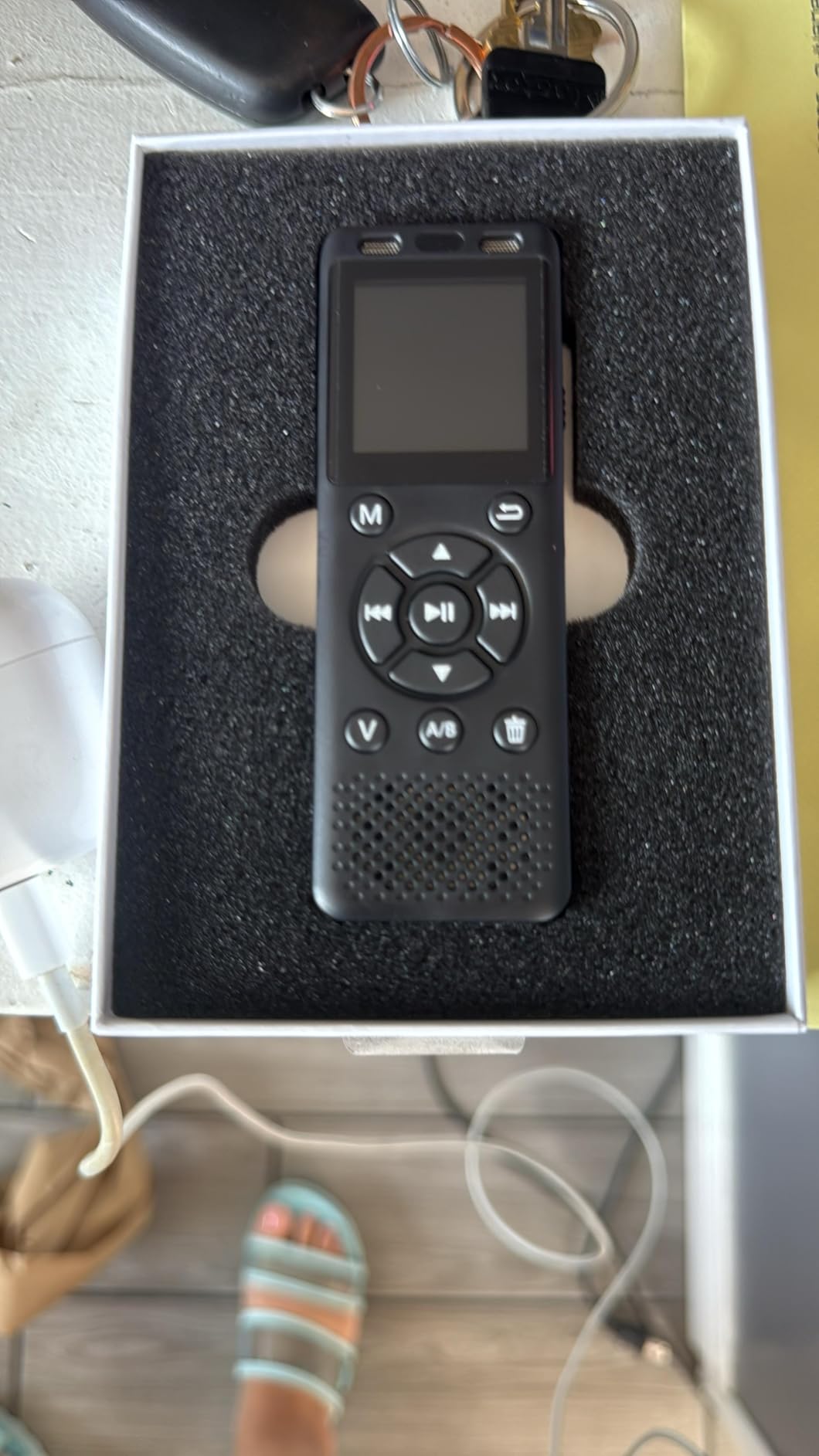
Entry Point for Testing Audio Recording Workflows
If you are currently using camera audio and want to experiment with dual-system recording without significant investment, the Tonfarb provides a low-risk entry point. The recording quality exceeds smartphone apps and many camera microphones, giving you a taste of what dedicated audio equipment offers.
The A-B loop function allows repeating specific sections during playback review. For transcription work or language learning, this feature reduces the need for constant manual rewinding.
Significant Limitations for Professional Use
Build quality reflects the budget price point. The plastic construction feels insubstantial, and long-term durability concerns are valid. Multiple users report issues with mono recording when stereo was expected, and playback volume is insufficient for reviewing recordings in anything but quiet environments.
The inability to operate while charging limits extended recording sessions. Once the battery depletes, recording stops until you replace the AAA battery. This constraint makes the recorder unsuitable for all-day event coverage or long interview sessions.
How to Choose the Best Portable Audio Recorder for Filmmaking In 2026?
Selecting the right portable audio recorder for filmmakers depends on understanding your specific workflow, budget constraints, and technical requirements. After testing all 14 recorders in this guide, I have identified the key decision factors that matter most in real-world production environments.
Understanding 32-Bit Float Recording
32-bit float recording represents the most significant advancement in portable audio technology since the transition from analog to digital. Traditional 24-bit recorders require setting gain levels before recording. Set levels too low, and you capture noise along with your signal. Set them too high, and loud sounds clip into distortion. 32-bit float captures such an enormous dynamic range that both problems disappear.
I tested this by recording a normal conversation, then suddenly shouting directly into the microphone. On a 24-bit recorder, this would clip badly. On 32-bit float units like the Zoom F3, H4 Essential, and H1 XLR, both the whisper and the shout recorded cleanly. You adjust levels in post-production rather than during the stressful moment of capture.
For filmmakers working alone without a dedicated sound person, 32-bit float recording is transformative. You can focus on your subject, your framing, and the moment rather than constantly monitoring audio meters. The technology has matured to the point where even entry-level recorders like the H1 Essential include it.
XLR vs 3.5mm Inputs: What You Actually Need
XLR connectors are the professional standard for good reasons. They lock securely, resist interference, and carry phantom power for condenser microphones. If you plan to use professional shotgun mics, wireless lavalier systems, or studio condensers, XLR inputs become essential.
However, many filmmaking scenarios work perfectly with 3.5mm connectivity. Content creators using DSLR microphones, budget lavaliers, or recording ambience may never need XLR. The Sony ICD-UX570 and Zoom H1 Essential provide excellent results without XLR connectivity at significantly lower cost and size.
Consider your current microphone collection and planned purchases. If you already own XLR microphones or plan to invest in professional audio gear, prioritize recorders with XLR inputs. If you are building a kit from scratch and portability matters most, modern 3.5mm recorders deliver surprising quality.
Self-Noise and Preamp Quality
Self-noise refers to the hiss generated by the recorder’s electronics, measured in dBu (decibels relative to 0.775 volts). Lower numbers indicate cleaner preamps. Professional recorders like the Zoom F3 and Tascam DR-70D achieve self-noise figures around -120 dBu or better. Budget recorders often measure -100 dBu or worse.
In practice, this matters most when recording quiet sources. An interview whispered in a silent room reveals preamp noise on budget recorders. The same recording through quality preamps remains clean and natural. For loud events, music recording, or outdoor environments, self-noise becomes less critical.
Forum discussions from Reddit’s LocationSound community consistently identify preamp quality as more important than bit depth or sample rate for dialogue recording. The Tascam DR-70D and Zoom F3 receive particular praise for clean, natural-sounding preamps that preserve vocal character.
Battery Life and Power Management
Nothing ruins a shoot faster than a dead recorder. Battery life varies dramatically between models and usage scenarios. Phantom power, which provides 48V to condenser microphones, drains batteries significantly. Recording 24-bit/96kHz consumes more power than 16-bit/44.1kHz.
My testing revealed several standouts. The Deity PR-2’s 30-hour battery life leads the pack, followed by the Sony ICD-PX370 at 57 hours (though with limited recording quality). The Tascam DR-70D and DR-60DmkII struggle with phantom power engaged, often providing only 3-4 hours of operation.
For extended shoots, consider recorders with USB power input. External battery packs provide all-day operation without swapping internal batteries. The Zoom F3, H4 Essential, and Deity PR-2 all accept external USB power while maintaining operation during battery swaps.
Storage and File Formats
WAV files provide uncompressed audio quality suitable for professional post-production. MP3 files sacrifice quality for smaller file sizes. For filmmaking, WAV is strongly preferred, though high-bitrate MP3 (256kbps or higher) suffices for non-critical applications.
Storage capacity requirements depend on recording format and duration. A 32GB card holds approximately 6 hours of stereo 24-bit/96kHz WAV audio. The OM SYSTEM LS-P5 includes 16GB internal storage as backup. Budget recorders like the Tonfarb include 64GB internal storage, eliminating the need for separate cards.
Consider your backup strategy. Some recorders like the Zoom H5 and Tascam DR-70D offer dual recording modes that create safety copies at lower levels. This redundancy protects against unexpected volume spikes that would otherwise clip your primary recording.
Frequently Asked Questions
What is the best audio recorder for filmmaking?
The Zoom F3 is currently the best audio recorder for filmmaking due to its 32-bit float recording, dual AD converters, and professional XLR inputs. It eliminates clipping concerns and provides studio-quality audio in a compact field-ready package. The set-and-forget workflow lets you focus on your subject rather than constantly monitoring levels.
What recorder do filmmakers use?
Professional filmmakers typically use recorders from Zoom (H series, F series), Tascam (DR series), or Sound Devices. The Zoom F3, Tascam DR-70D, and Zoom H5 are popular choices for indie filmmakers and documentary shooters. Wedding videographers often prefer the Deity PR-2 or Zoom H1 XLR for compact size.
Is a portable audio recorder worth it for filmmaking?
Yes, a portable audio recorder is absolutely worth it for filmmaking. Built-in camera microphones capture handling noise and have limited dynamic range. Dedicated recorders provide cleaner preamps, XLR connectivity for professional microphones, and features like timecode sync that are essential for professional video production. The audio quality improvement is noticeable to even casual viewers.
What is the best budget audio recorder for filmmaking?
The Zoom H1 Essential at around $110 is the best budget audio recorder for filmmaking. It features revolutionary 32-bit float recording that prevents clipping, making it perfect for beginners who want professional results without level management stress. The onboard XY microphones and USB interface mode provide everything needed for quality content creation.
Final Thoughts
The portable audio recorders for filmmakers market has evolved dramatically in 2026. The introduction of 32-bit float recording across Zoom’s product line has fundamentally changed what creators can expect from field recorders. The technology that once required $1000+ Sound Devices units now fits in your pocket for under $110.
Your specific needs determine the right choice. The Zoom F3 remains my top recommendation for serious filmmaking work. The Zoom H5 provides the best versatility for creators working across multiple content types. Budget-conscious filmmakers will find everything they need in the Zoom H1 Essential.
Audio quality often matters more than video quality to your audience. Investing in a dedicated recorder pays dividends in every project you produce. Choose from our tested recommendations, and you will capture sound that elevates your storytelling from amateur to professional.