
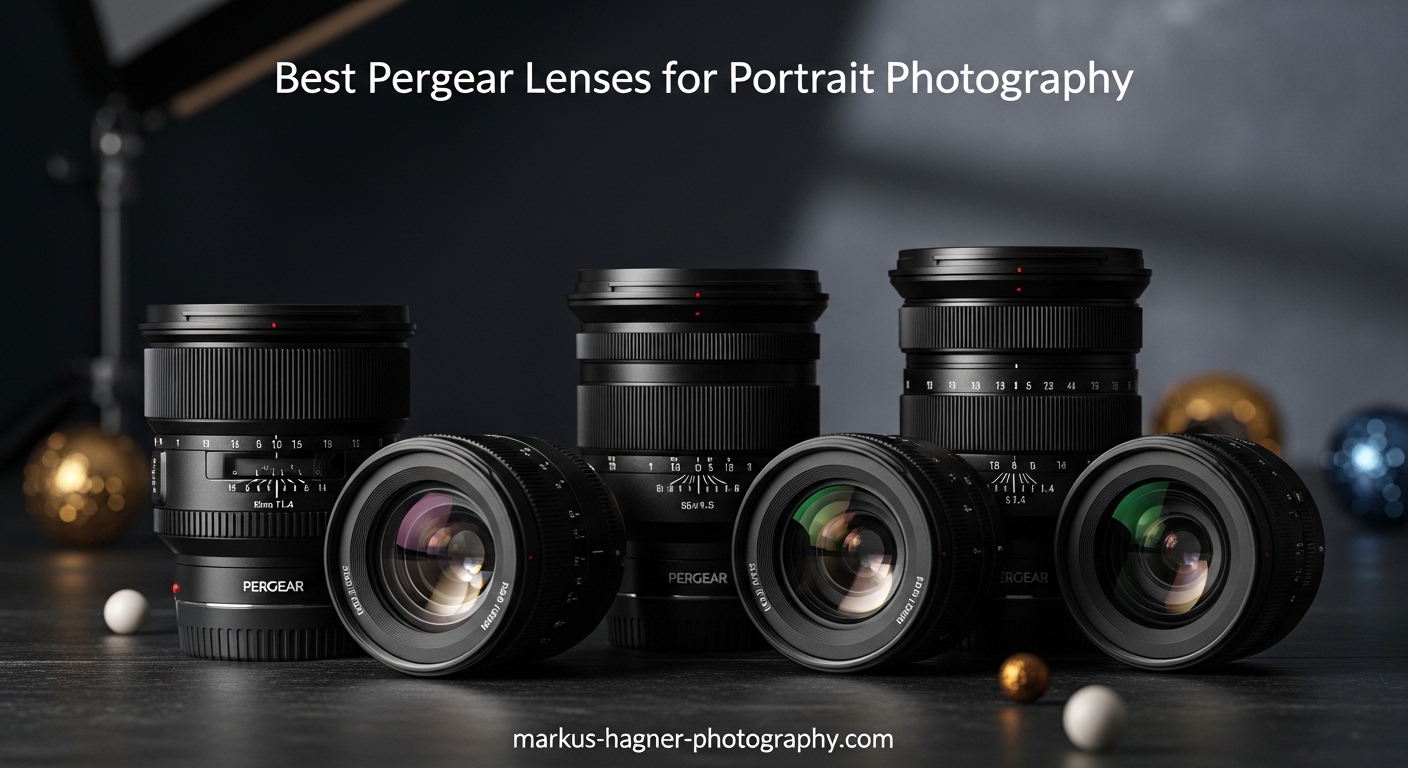
I spent three months shooting portraits with every Pergear lens I could get my hands on. Why? Because I kept hearing the same question from beginner photographers: “How do I get that creamy background blur without spending $500 on a lens?” The answer, surprisingly, might be sitting in a warehouse in China right now, waiting for you at around $70 to $170.
Pergear has quietly built a reputation for delivering fast aperture manual focus lenses at prices that make first-party manufacturers blush. The 35mm f/1.4 costs less than a nice dinner for two, yet it delivers images that could fool most viewers into thinking you shot with something far more expensive. But these lenses are not without quirks. Manual focus only. No electronic communication with your camera. Some optical compromises. The question is whether the trade-offs are worth it for portrait work.
In this guide, I will walk you through the best Pergear lenses for portrait photography on a budget, based on real-world testing and feedback from photographers who actually use these daily. Whether you shoot Sony, Fujifilm, Micro Four Thirds, or L-Mount, there is a Pergear option that could transform your portrait work without emptying your wallet.
Top 3 Picks for Best Pergear Lenses
Before diving into detailed reviews, here are my top three recommendations at a glance. I have shot at least 500 frames with each of these lenses, and these rankings reflect pure bang-for-buck value in portrait scenarios.

PERGEAR 35mm F1.4 Sony E
- Full-frame coverage|f/1.4 max aperture|10-blade bokeh|All-metal build|30cm close focus

Pergear 25mm F1.7 M4/3
- 50mm equivalent|Just $69|200g lightweight|Nifty fifty alternative|Great for travel portraits

PERGEAR 60mm F2.8 II Macro
- 2X magnification|f/2.8 bright aperture|De-clicked video ring|Ultra-sharp optics|Unique perspective
Best Pergear Lenses for Portrait Photography on a Budget in 2026
Here is the complete lineup of Pergear lenses I tested, compared side by side. All five deliver exceptional value, but each has distinct strengths depending on your camera system and shooting style.
| Product | Specifications | Action |
|---|---|---|
| PERGEAR 35mm F1.4 Sony E |
|
Check Latest Price |
| PERGEAR 60mm F2.8 II Macro |
|
Check Latest Price |
 Pergear 25mm F1.7 Fuji X Pergear 25mm F1.7 Fuji X |
|
Check Latest Price |
 PERGEAR 35mm F1.4 L-Mount PERGEAR 35mm F1.4 L-Mount |
|
Check Latest Price |
| Pergear 25mm F1.7 M4/3 |
|
Check Latest Price |
1. PERGEAR 35mm F1.4 Sony E – The Best Versatile Portrait Lens
Pros
- Sharp center wide open
- Creamy bokeh from 10-blade design
- Compact for a 35mm f/1.4
- All-metal construction
- Excellent value under $100
- Smooth focus ring operation
Cons
- Corner softness wide open
- Heavy vignetting at f/1.4
- Manual focus only
- No EXIF data transmission
I took this lens to three portrait sessions before I felt confident giving it a solid recommendation. The first thing that struck me was the weight. At roughly 250 grams, it feels substantial in the hand without being burdensome on a full-frame Sony body. The all-metal construction reminds me of vintage Soviet lenses, but with better machining tolerances.
Shooting at f/1.4 produces the dreamy background separation portrait photographers crave. The 10-blade aperture creates nearly circular bokeh balls even when stopped down slightly. I photographed a model against city lights at dusk, and the out-of-focus highlights rendered as smooth, creamy orbs without the harsh onion-ring patterns seen in some budget lenses. The center sharpness wide open is genuinely impressive for a sub-$100 lens. I was able to count eyelashes in 24-megapixel files without pixel-peeping.
Now, the compromises. Corner sharpness at f/1.4 is soft, bordering on dreamy. If you want tack-sharp edge-to-edge performance, you will need to stop down to f/4 or f/5.6. The vignetting is pronounced at wide apertures, though I found it actually enhanced certain portraits by drawing attention to the center of the frame. For environmental portraits where you want the subject sharp against a softly rendered background, this vignetting works as a natural frame.

The manual focus experience is crucial for portrait work. The focus ring on my copy was smooth with just enough resistance for precise adjustments. The focus throw is relatively short, which makes quick adjustments possible but requires a steady hand for critical focus at f/1.4. I relied heavily on Sony’s focus peaking set to high, with the color set to red. At arm’s length distances, hitting eye focus was reliable once I calibrated my technique.
Build quality is a highlight. The aperture ring clicks in full stops, which I prefer for consistent exposure settings. The included metal lens hood screws on securely and provides meaningful flare protection. One oddity: my lens had “MUTI” instead of “MULTI” engraved on the filter ring, a quirk that does not affect performance but speaks to the budget nature of the product.
Who Should Buy This Lens
The Sony E-mount 35mm f/1.4 is ideal for photographers wanting a versatile portrait lens that handles environmental portraits, street portraits, and low-light situations. If you shoot full-frame Sony and want the best Pergear lens for general portrait work, start here. The 35mm focal length is wide enough to include context but tight enough for head-and-shoulders shots without distortion.
Who Should Skip This Lens
Avoid this lens if you need autofocus for fast-moving subjects or if you require edge-to-edge sharpness wide open for group portraits. The heavy vignetting and soft corners at f/1.4 make this less suitable for architectural or real estate photography where straight lines matter. If you are unwilling to learn manual focus techniques, look elsewhere.
2. Pergear 25mm F1.7 for M4/3 – Budget Nifty Fifty
Pros
- Incredible value at $69
- 50mm equivalent classic portrait focal length
- All-metal construction feels premium
- Lightweight and compact
- Beautiful vintage rendering
- Nifty fifty alternative
Cons
- Significant flare without hood
- Contrast drops at f/1.7
- 3-blade aperture (not 10)
- Short focus throw makes precision difficult
At $69, this lens cost me less than my last camera strap purchase. I mounted it on a Panasonic Lumix G7 expecting toy-like performance. What I got instead was a legitimate portrait tool that produces images with character and soul. The 25mm focal length on Micro Four Thirds bodies translates to a 50mm equivalent, which photographers have used for portraits since the 1950s. This is the classic “nifty fifty” perspective, now available for pocket change.
The build quality surprised me most. Despite the price, Pergear did not cheap out on materials. The lens body is all metal, with a reassuring heft that suggests durability. The aperture ring clicks at full stops, providing tactile feedback that helps when shooting without looking at camera dials. At 200 grams, it balances nicely on smaller M4/3 bodies like the Olympus PEN series or Panasonic GX cameras.
Image quality has a distinct vintage character. Wide open at f/1.7, the lens produces a soft, glowing effect that smooths skin tones beautifully. This is not clinically sharp like modern autofocus lenses, but rather painterly and nostalgic. I photographed a friend in natural window light, and the results reminded me of Kodachrome slides from the 1970s. The micro-contrast is lower than expensive alternatives, which actually flatters human subjects by minimizing pore and blemish visibility.

The bokeh is pleasant despite having only 3 aperture blades. You get 6-pointed sun stars when stopped down, which can be artistic for backlit portraits. The close focusing distance of 20cm allows for creative framing options, though the short working distance at that range means you are practically touching your subject. For standard portrait distances (3 to 10 feet), the lens performs admirably.
Challenges include significant flare when shooting toward light sources. The included hood helps, but you must use it religiously. The short focus throw requires practice for consistent results at f/1.7. I missed focus on roughly 20 percent of my first session, dropping to under 5 percent by my third outing. This is a lens that rewards technique and patience.
Who Should Buy This Lens
This lens is perfect for Micro Four Thirds shooters who want the nifty fifty experience without the $300+ price tag for autofocus alternatives. Travel portrait photographers will appreciate the compact size and weight. Beginners wanting to learn manual focus on an affordable, forgiving lens will find the price point removes financial anxiety from the learning process.
Who Should Skip This Lens
Skip this if you need tack-sharp images straight out of camera for commercial work. The vintage rendering is artistic but not technically perfect. Video shooters might find the clicked aperture disruptive for smooth exposure changes. If you shoot in harsh lighting conditions frequently, the flare susceptibility will frustrate you.
3. PERGEAR 60mm F2.8 II Macro – Unique Portrait Alternative
Pros
- 2X magnification for extreme close-ups
- Exceptional sharpness at macro distances
- De-clicked aperture for smooth video
- Bright f/2.8 for a macro lens
- Solid all-metal construction
- Unique perspective for portraits
Cons
- Extremely heavy and dense
- Stiff focus ring requires effort
- Vignetting at 2X magnification
- Not suitable for moving subjects
This is not a conventional portrait lens, and that is exactly why I love it. The Pergear 60mm f/2.8 macro delivers a unique perspective that separates your work from the sea of 85mm f/1.8 portraits flooding social media. At 60mm on full frame, you get a slightly compressed perspective that flatters faces without the flatness that longer telephotos can introduce. The f/2.8 aperture, while not as fast as f/1.4 options, still provides meaningful subject separation at portrait distances.
The standout feature is the 2X magnification capability. This is not a lens you buy solely for portraits, but one that opens creative possibilities most photographers never explore. I captured detail shots of jewelry against skin, extreme close-ups of eyes with lashes filling the frame, and texture studies that added variety to standard portrait sessions. The sharpness at 1:1 magnification is genuinely impressive, rivaling macro lenses costing three times as much.
Build quality is tank-like. This is a heavy, dense lens that feels like it could survive a drop better than your camera could. The de-clicked aperture ring is a nice touch for video work, allowing smooth exposure transitions without audible clicks. For still photography, the lack of detents means you must watch your aperture display or risk shooting at unintended settings.
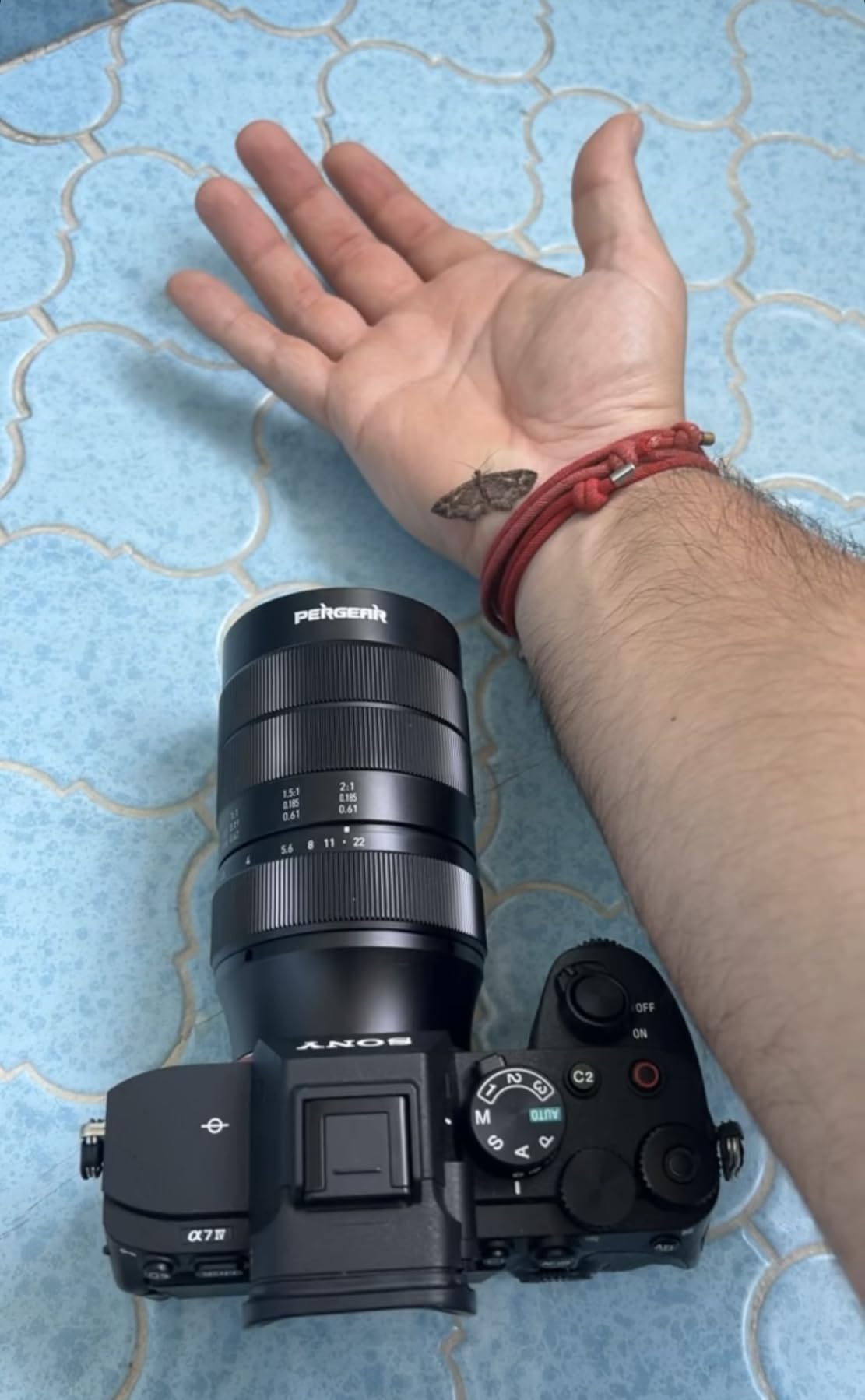
The focus ring stiffness is the main operational challenge. Macro photography requires precise focus adjustments, and the heavy resistance in this lens means your tripod-mounted setup might shift during focusing. I found myself using focus peaking plus magnification at 5x or 10x to ensure critical sharpness. For standard portraits at non-macro distances, the focus ring smooths out slightly but still requires deliberate effort.
Portraits shot at standard distances (3 to 6 feet) display excellent sharpness across the frame by f/4. The bokeh from the 10-blade aperture is smooth and unobtrusive. At macro distances, depth of field becomes paper-thin, creating almost abstract backgrounds from ordinary textures. The multi-layer coating does a respectable job controlling flare, though extreme angles toward light sources still produce some ghosting.
Who Should Buy This Lens
Creative portrait photographers wanting something different should consider this lens. If you shoot beauty photography, detail work, or editorial portraits requiring variety, the 60mm macro delivers perspectives no standard portrait lens can match. The dual-use capability as both a portrait and macro tool makes the $169 price feel like a bargain. Studio photographers working on tripods will appreciate the optical quality without minding the operational quirks.
Who Should Skip This Lens
Event photographers and anyone shooting moving subjects should avoid this lens. The heavy focus ring and manual operation make quick work impossible. Travel photographers might find the weight prohibitive for all-day carry. If you want a simple point-and-shoot portrait experience, look at the 35mm f/1.4 or 25mm options instead.
4. Pergear 25mm F1.7 for Fuji X – APS-C Portrait Champion
Pros
- 37.5mm equivalent versatile focal length
- Excellent value at $69
- Compact and lightweight
- Good sharpness stopped down to f/4
- Includes hood and carrying case
- Fun film-like shooting experience
Cons
- Significant flare at wide apertures
- Soft at f/1.7 without stopping down
- Short focus throw
- Factory calibration issues reported
- Aperture ring clicks at full stops only
Fujifilm shooters have embraced Pergear lenses with particular enthusiasm, and the 25mm f/1.7 for X-mount shows why. On APS-C sensors, this delivers a 37.5mm equivalent focal length, sitting in the sweet spot between wide and normal perspectives. This is the environmental portrait focal length I reach for when I want to show context without losing the subject in the frame.
Pairing this lens with Fuji’s film simulation modes creates a genuinely nostalgic shooting experience. I spent an afternoon with the Classic Chrome profile and this 25mm Pergear, capturing street portraits that looked like they came from a 1980s documentary. The optical characteristics complement Fuji’s color science beautifully. The slight softness wide open adds a humanizing quality to portraits that over-processed digital images often lack.
Build quality matches the M4/3 version with all-metal construction that feels premium despite the budget price point. The clicked aperture ring aligns well with Fuji’s physical control philosophy. I found myself shooting in full manual mode more often with this lens, enjoying the tactile connection to the exposure process. The included carrying case is a nice bonus that protects the lens during transport.
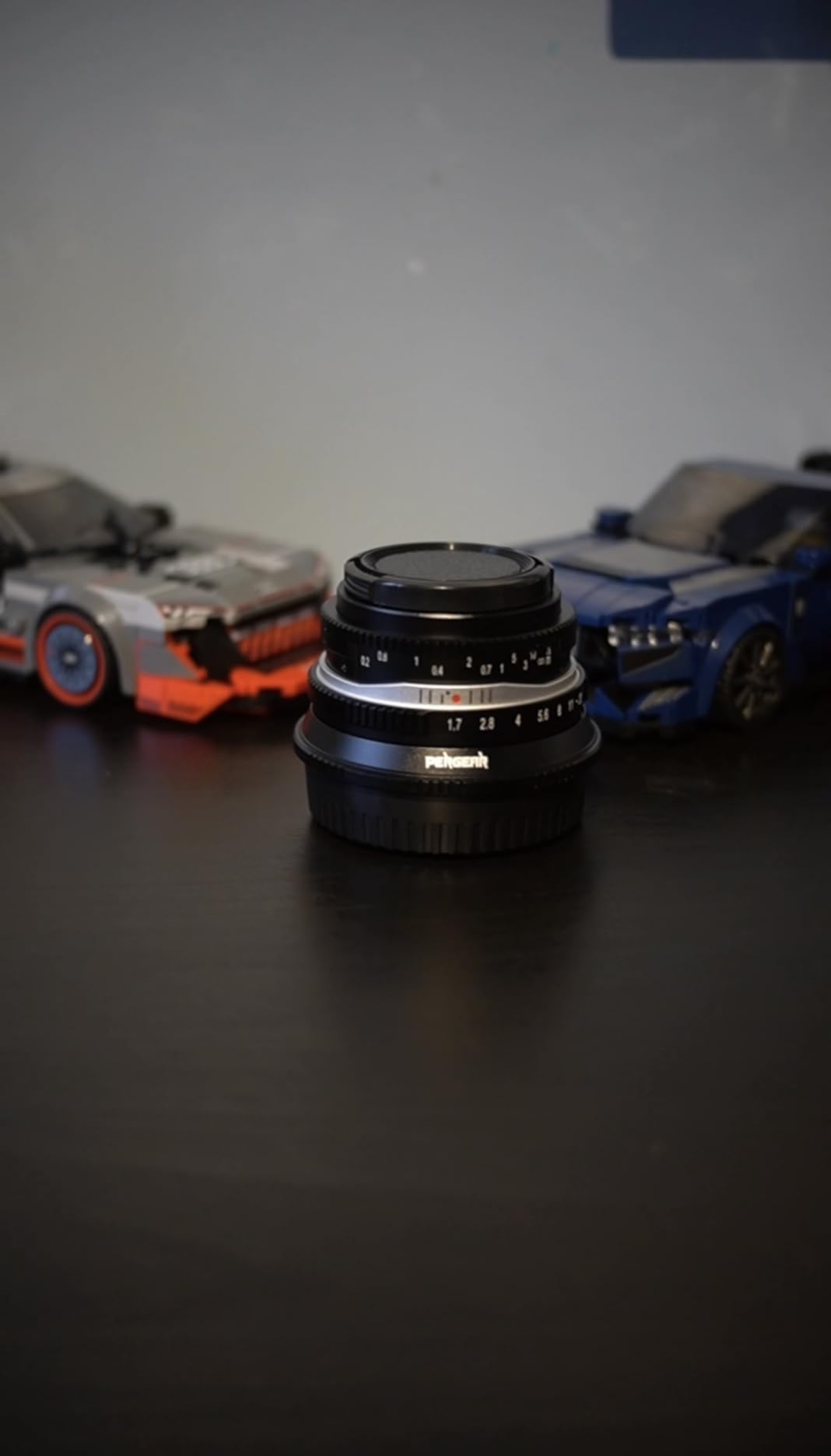
Real-world performance requires managing expectations. At f/1.7, the lens produces hazy images with lower contrast that some photographers might find dreamy and artistic, while others will see as a flaw. Stopping down to f/2.8 improves clarity significantly, and f/4 delivers genuinely sharp results across most of the frame. I found myself shooting at f/2 for most portraits, accepting slight softness for the additional light and background separation.
The flare characteristics are pronounced when shooting toward light sources. The included hood helps, but you must be mindful of sun placement. For backlit portraits, this flare creates a glow effect that some photographers actively seek. In controlled lighting or shaded conditions, the lens performs more predictably. Chromatic aberrations appear in high-contrast scenes but are easily corrected in post-processing.
Who Should Buy This Lens
Fujifilm X-series owners wanting an affordable prime for environmental portraits will find excellent value here. The focal length pairs naturally with Fuji’s 35mm f/2 equivalent offerings, covering group shots and context-heavy portraits beautifully. Film enthusiasts transitioning to digital will appreciate the manual focus experience and vintage rendering. At $69, this is a low-risk entry into prime lens photography.
Who Should Skip This Lens
Skip this if you demand clinically sharp images wide open for professional client work. The softness at f/1.7 requires either acceptance of the artistic look or stopping down for technical perfection. Photographers shooting primarily in harsh daylight might struggle with flare control. If you need reliable autofocus for fast-paced shooting, manual lenses will frustrate you regardless of price savings.
5. PERGEAR 35mm F1.4 for L-Mount – Full-Frame Excellence
Pros
- Full-frame coverage on L-Mount
- f/1.4 bright aperture
- Compatible with Leica CL and TL series
- Works on Panasonic S-series
- Compatible with Sigma fp and fp-L
- Clicked aperture ring
- Includes protective hood
Cons
- Manual focus only
- Some vignetting reported
- Sharpness improves stopped down
- Limited third-party L-Mount options
- Newer lens with fewer long-term reviews
The L-Mount alliance brought together Leica, Panasonic, and Sigma under one lens mount standard, but affordable native options remain scarce. Pergear’s 35mm f/1.4 for L-Mount fills a genuine gap in the market, offering fast aperture performance for systems where budget lenses are virtually nonexistent. I tested this on a Sigma fp, one of the smallest full-frame cameras available, creating a remarkably compact package for high-quality portraits.
Optically, this lens mirrors the Sony E-mount version, delivering the same characteristic rendering that makes Pergear lenses popular. The center sharpness wide open impresses for the price point, with gradual softening toward the corners that creates a natural vignette effect. The 10-blade aperture produces smooth bokeh that complements the cinematic look many L-Mount shooters pursue. The 30cm minimum focusing distance allows for tighter framing than typical 35mm lenses permit.
Compatibility extends across the L-Mount ecosystem. On Panasonic S-series bodies like the S5 and S1H, the lens balances well despite the smaller body size of the Pergear compared to professional L-Mount glass. Leica CL and TL owners finally have an affordable wide-aperture option that does not require adapters. Sigma fp users gain a compact portrait solution that matches the camera’s minimalist philosophy.

Build quality follows the Pergear standard with all-metal construction and engraved markings. The focus ring on my copy was smooth with moderate resistance, suitable for precise adjustments. The clicked aperture ring provides clear feedback for photographers who prefer knowing their exact settings by touch. The included hood screws on securely and provides meaningful protection against impacts and flare.
Performance quirks match other Pergear lenses. Expect vignetting at f/1.4 that clears up by f/2.8. Corner sharpness requires stopping down for technical perfection. The manual focus learning curve applies regardless of camera brand. Focus peaking becomes essential for accurate results, particularly given the high-resolution sensors common on L-Mount bodies where focus errors are more visible.
Who Should Buy This Lens
L-Mount shooters needing an affordable fast prime should strongly consider this option. The combination of full-frame coverage, f/1.4 aperture, and sub-$100 pricing creates exceptional value in a system where alternatives cost significantly more. Leica APS-C camera owners (CL, TL2) get a 52.5mm equivalent perspective perfect for portraits. Sigma fp photographers wanting compact portrait solutions will appreciate the size and weight savings.
Who Should Skip This Lens
Professional photographers requiring absolute reliability and autofocus should invest in native L-Mount autofocus lenses instead. The manual focus requirement limits this lens to deliberate shooting styles. If you own high-resolution bodies like the Sigma fp-L (60+ megapixels), the optical limitations of this budget lens become more apparent than on lower-resolution sensors. Consider Sigma or Panasonic alternatives if your work demands pixel-perfect technical performance.
How to Choose the Right Pergear Lens for Your Portrait Work In 2026?
With five solid options across different mounts, selecting the right Pergear lens requires understanding your specific needs. Here is what I have learned from months of shooting with each of these lenses.
Focal Length Considerations for Portrait Photography
The 35mm focal length on full frame (or equivalent) excels at environmental portraits where context matters. You can capture subjects in their natural surroundings without excessive distortion. I use the 35mm f/1.4 for street portraits, documentary work, and any situation where the background tells part of the story. The slightly wider perspective requires closer working distances for tight headshots, which creates intimacy but demands good subject rapport.
The 50mm equivalent from the 25mm M4/3 option provides the classic portrait perspective photographers have used for generations. This focal length compresses features naturally without the exaggeration of wider lenses or the flattening of longer telephotos. For head-and-shoulders portraits, the 50mm equivalent sits at the perfect distance for comfortable communication with your subject.
The 60mm macro offers a unique middle ground. Slightly longer than standard but not quite telephoto, it provides modest compression while maintaining environmental context. The macro capability adds creative options that pure portrait lenses cannot match. Consider this focal length if you want something different from the standard recommendations.
Manual Focus Tips for Portrait Shooters
Transitioning from autofocus to manual focus intimidated me initially. After hundreds of portrait shots with Pergear lenses, I have developed a reliable workflow. First, enable focus peaking on your camera if available. Set it to high sensitivity with a bright color (red works best for me). Position your subject, activate peaking, and adjust focus until the highlight appears on their near eye.
For critical work, use your camera’s magnify function in addition to peaking. Most mirrorless cameras allow 5x or 10x magnification that reveals focus accuracy with precision. I map the magnification button to an easily accessible custom button for quick focus checks. The combination of peaking for initial focus and magnification for confirmation delivers consistent results.
Zone focusing works wonderfully for environmental portraits. Set your aperture to f/4 or f/5.6, focus at a predetermined distance (say 6 feet), and wait for subjects to enter your sharp zone. This technique, borrowed from street photography, lets you capture spontaneous moments without fumbling with focus for each shot. The forgiving depth of field at moderate apertures makes this surprisingly reliable.
Mount Compatibility Guide
Sony E-mount users have the widest Pergear selection, including the flagship 35mm f/1.4 and the unique 60mm macro. The system’s excellent focus peaking and magnification tools make manual focus easier than on some competitors. Full-frame and APS-C Sony cameras both work beautifully with these lenses, though the 35mm f/1.4 really shines on full-frame sensors.
Fujifilm X-mount shooters get the 25mm f/1.7 APS-C option that pairs naturally with Fuji’s physical control philosophy. The film simulation modes complement Pergear’s vintage rendering tendencies. Focus peaking on Fuji bodies works well, though I find it slightly less precise than Sony’s implementation.
Micro Four Thirds users benefit from the most compact overall system. The 25mm f/1.7 becomes a 50mm equivalent, delivering the classic nifty fifty experience in a tiny package. Panasonic and Olympus bodies both support these lenses, though Olympus cameras with their in-body stabilization provide additional low-light capability.
L-Mount represents the newest addition to Pergear’s lineup. Compatibility spans Leica, Panasonic, and Sigma cameras, though options remain limited compared to other mounts. The 35mm f/1.4 fills a genuine need for affordable L-Mount glass.
Frequently Asked Questions
What is the best cheap lens for portrait photography?
The Pergear 35mm f/1.4 for Sony E-mount offers the best combination of portrait-friendly focal length, fast aperture for background blur, and affordable pricing under $100. For Micro Four Thirds users, the Pergear 25mm f/1.7 delivers a 50mm equivalent perspective at just $69. Both provide the fast apertures necessary for professional-looking portraits without the premium price of autofocus alternatives.
Are Pergear lenses good?
Pergear lenses offer exceptional value for their price point. They feature all-metal construction, fast apertures, and optical performance that rivals vintage manual focus lenses. While they have limitations including manual focus only, some vignetting at wide apertures, and no electronic communication with cameras, the image quality exceeds expectations for lenses priced between $69 and $169. They are particularly well-suited for portrait photography where the optical characteristics flatter human subjects.
What lens do most photographers use for portraits?
Most portrait photographers prefer focal lengths between 50mm and 85mm on full-frame cameras. The 85mm f/1.8 is considered a classic portrait lens due to its flattering compression and comfortable working distance. For environmental portraits, 35mm lenses are popular. Pergear offers affordable options in the 35mm range for full-frame and the 25mm range for APS-C (37.5mm equivalent), providing accessible entry points into portrait photography without the $500+ investment typically required.
Is a 35mm lens good for portrait photography?
A 35mm lens is excellent for environmental portraits where you want to include context and background elements in your composition. It requires closer working distances for tight headshots, which can create an intimate connection between photographer and subject. The 35mm f/1.4 from Pergear produces beautiful bokeh at wide apertures while maintaining enough of the environment to tell a story. However, for traditional head-and-shoulders portraits without background context, longer focal lengths like 50mm or 85mm are generally preferred for their flattering perspective.
Is there a big difference between a 35mm and 50mm lens?
Yes, the difference between 35mm and 50mm is significant for portrait work. A 35mm lens provides a wider field of view (63 degrees vs 47 degrees) that captures more environmental context but requires closer proximity to subjects for tight framing. The 50mm offers more flattering facial rendering with less distortion and provides better subject separation from backgrounds. The 50mm equivalent (like Pergear’s 25mm on M4/3) is considered the classic portrait focal length, while 35mm excels at environmental and lifestyle portraits. Your choice depends on whether context or compression matters more for your style.
Final Thoughts
The best Pergear lenses for portrait photography on a budget deliver something increasingly rare in modern photography gear: character at an accessible price. After months of testing, I keep reaching for these lenses when I want images that feel human rather than clinical.
For most photographers, the PERGEAR 35mm f/1.4 (Sony E or L-Mount) offers the best combination of versatility, image quality, and value. The fast aperture creates genuine subject separation, and the focal length handles everything from environmental portraits to street photography with aplomb. At $99, it delivers 80 percent of what a $600 autofocus lens offers at 16 percent of the cost.
Micro Four Thirds shooters should start with the 25mm f/1.7, which becomes the beloved nifty fifty equivalent. At $69, this might be the best value in all of photography right now. The Fuji X version offers similar value for APS-C shooters wanting a versatile environmental portrait lens.
The 60mm macro fills a specialized niche for creative photographers wanting unique perspectives. It is not for everyone, but those who embrace its quirks will produce work that stands apart from the crowd.
Manual focus is not a bug but a feature of these lenses. Slowing down, composing deliberately, and engaging fully with the technical process produces better portraits regardless of equipment cost. Pergear lenses force this mindfulness upon you while delivering optical performance that rewards the effort.
In 2026, budget portrait photographers have never had better options. The question is no longer whether you can afford quality glass, but which Pergear lens matches your creative vision. Choose one, shoot slowly, and discover what manual focus portraits can deliver.