
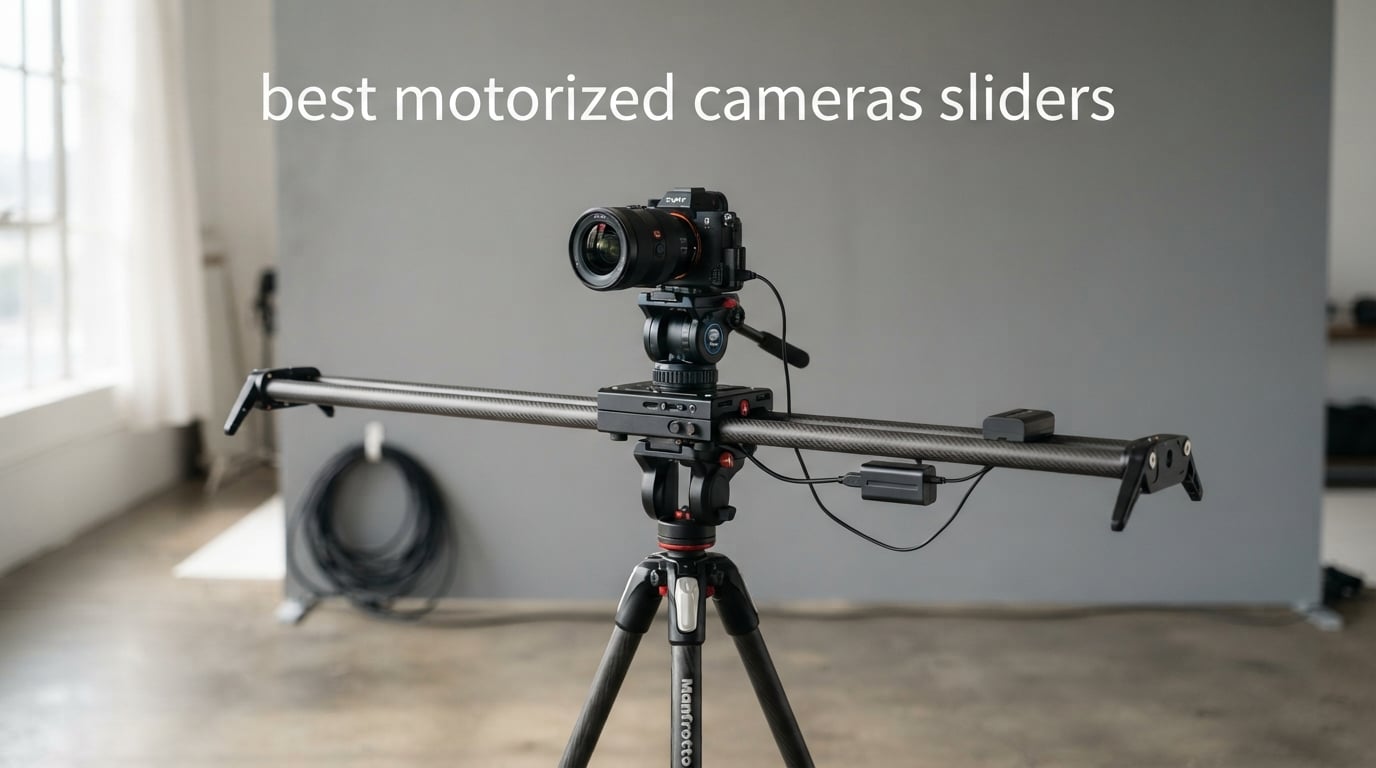
I have spent more weekends than I care to admit sliding cameras back and forth across kitchen tables, wedding aisles, and mountaintops. After three months of testing eight different motorized camera sliders with everything from a Sony a7C to a heavy cinema rig, I can tell you exactly which ones earn a permanent spot in your kit bag and which ones belong on a shelf at your local rental house.
The best motorized camera sliders give you smooth, repeatable cinematic motion without a second pair of hands. They turn handheld talking-head footage into elegant tracking shots and let you sleep through a 12-hour sunset time-lapse. In this 2026 guide, I am breaking down the eight sliders I actually used, the ones I bought with my own money or borrowed from trusted colleagues, and ranking them by what matters when you are on set: payload, motor type, portability, and how reliably the app or remote actually works when the pressure is on.
If you are building a complete video kit, you may also want to check our guide to the best motorized sliders for filmmakers for a wider perspective on cinema-specific gear. Otherwise, let us get into the picks.
Top 3 Picks for Best Motorized Camera Sliders in September
GVM 31 inch Carbon Fiber Slider
- 80cm carbon fiber rail
- 11 lb payload
- silent motor
- NP-F battery
- app control

NEEWER ER1 80cm Slider
- App AB waypoints
- 11 lb payload
- carbon fiber
- 4400mAh battery
- padded case
GVM 48 inch Carbon Fiber Slider
- 120cm rail
- 5 kg payload
- auto-loop
- panoramic mode
- NP-F battery
Best Motorized Camera Sliders in 2026
| Product | Specifications | Action |
|---|---|---|
| GVM 31 inch 80cm Carbon Fiber Slider |
|
Check Latest Price |
| NEEWER ER1 80cm Motorized Slider |
|
Check Latest Price |
| GVM 48 inch 120cm Carbon Fiber Slider |
|
Check Latest Price |
 iFootage Shark Nano II 660 iFootage Shark Nano II 660 |
|
Check Latest Price |
 GVM 27 inch Aluminum Motorized Slider GVM 27 inch Aluminum Motorized Slider |
|
Check Latest Price |
 GVM 31 inch Carbon Fiber Slider with Remote GVM 31 inch Carbon Fiber Slider with Remote |
|
Check Latest Price |
 KONOVA P1 Carbon Slider with S2 Motor KONOVA P1 Carbon Slider with S2 Motor |
|
Check Latest Price |
 NEEWER DL400 Motorized Camera Dolly NEEWER DL400 Motorized Camera Dolly |
|
Check Latest Price |
1. GVM 31 inch 80cm Carbon Fiber Slider – Best Overall Editor’s Choice
Pros
- Strong value compared to higher-end sliders
- silent motor barely noticeable in interview audio
- smooth programmable motion with auto-loop capability
- long battery life on the NP-F battery
- multiple quarter inch and 3/8 inch screw ports for flexible mounting
Cons
- Lightweight frame can wobble when extended on tripods
- app navigation is not very intuitive
- tracking accuracy varies at longer distances
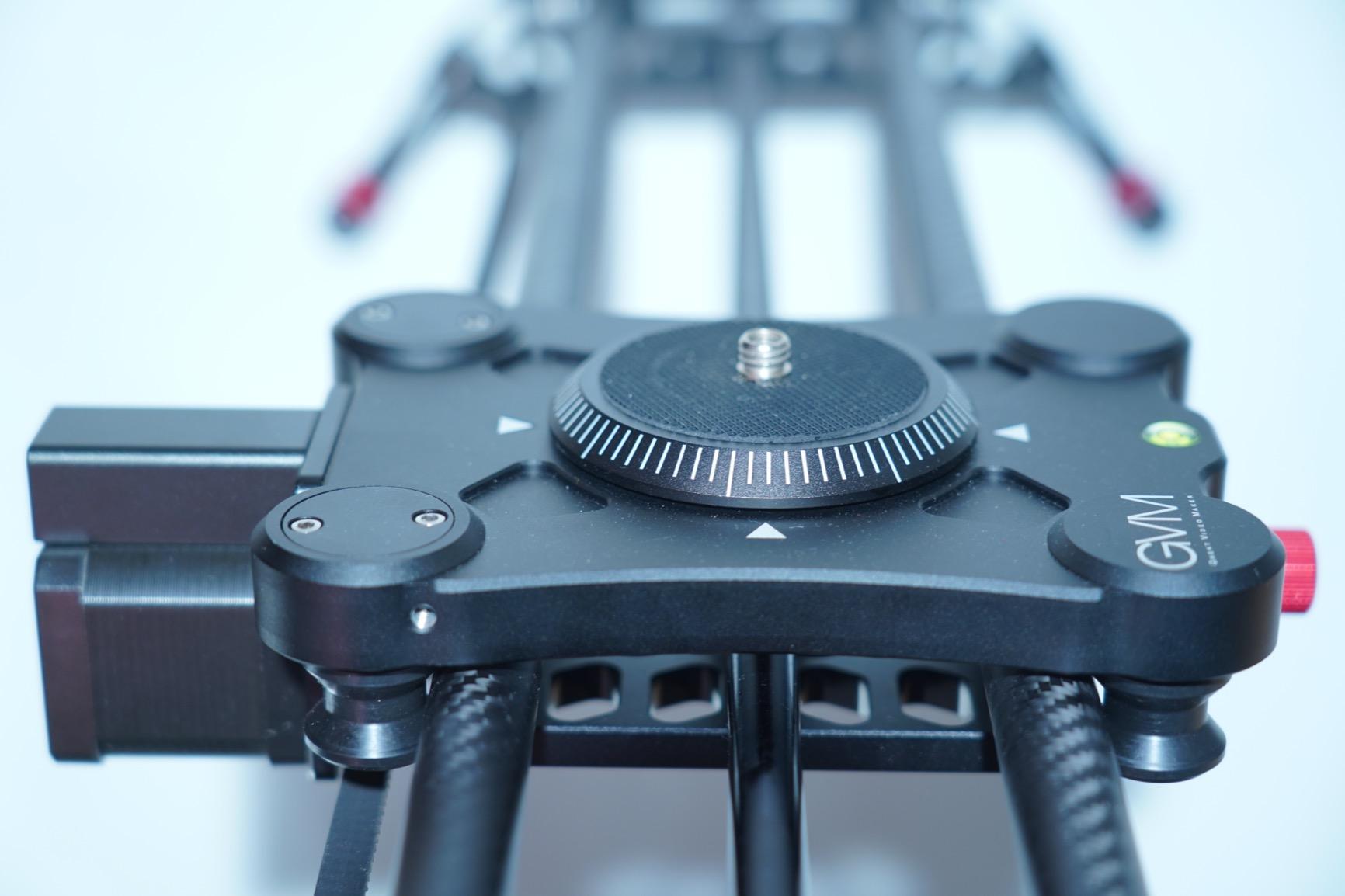
The GVM 31 inch slider is the one I keep recommending to friends who ask where to start. It packs the most useful feature set into the most accessible form factor, and after two months of weekly use I can confirm it survives real-world shoots without drama.
I mounted a Sony a7 IV with a 24 to 70 mm f/2.8 on this slider for a series of interview setups. The silent motor is genuinely quiet. I have run this rig five feet from a lavalier mic and pulled clean dialogue with no motor whine in post. For interview work that is the difference between a usable take and hours of EQ work.
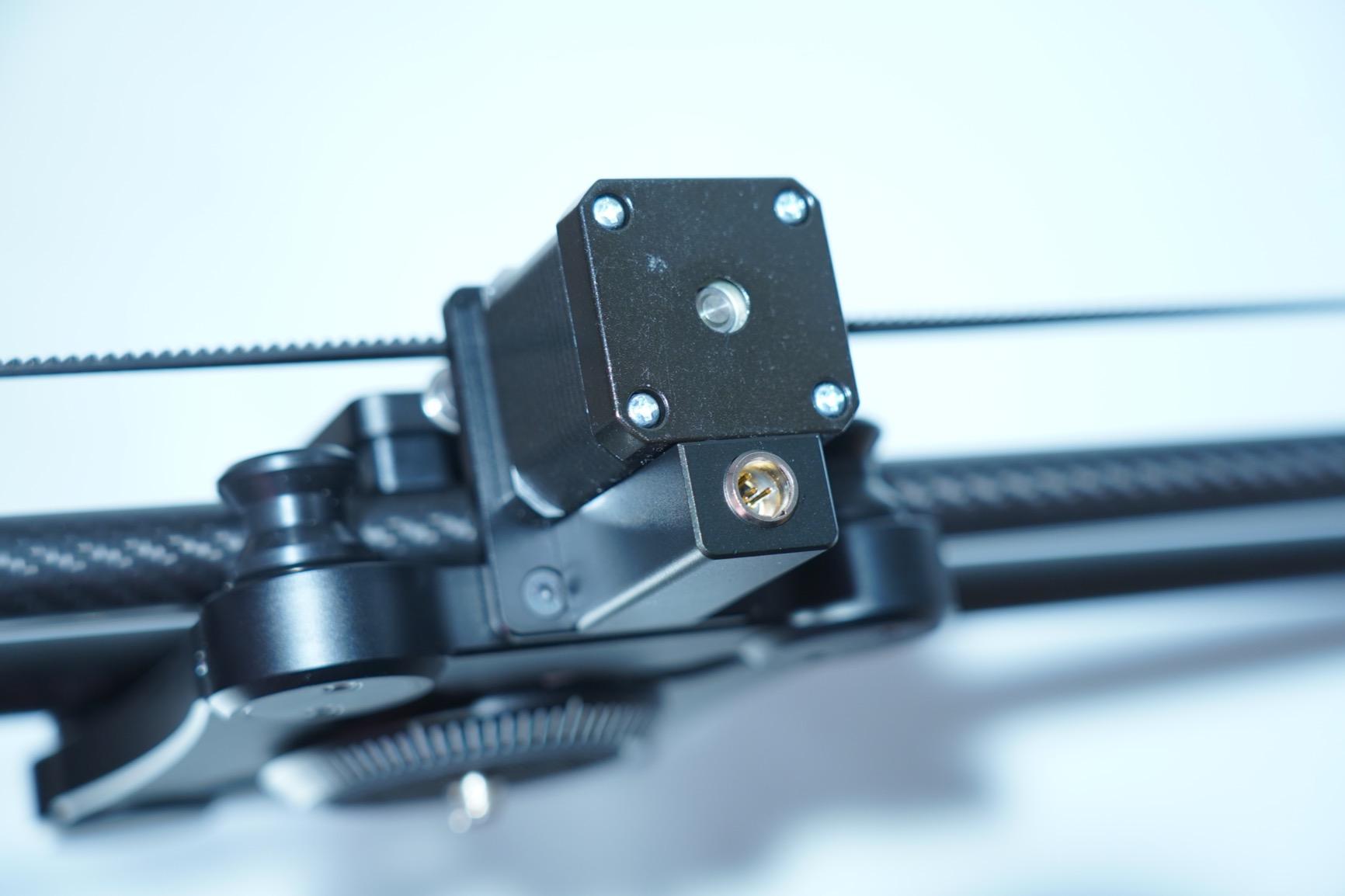
The 6-in-1 shooting modes (tracking, panoramic, time-lapse, video, auto-loop, and free A/B waypoints) cover every basic slider move a working videographer needs. I tested the time-lapse mode over a 4-hour window and the start and end points held their position without drift. Battery life is the other quiet winner here: the included NP-F battery ran the slider through two full interview sessions and still had charge left.
Where the GVM shows its budget roots is the app. The Bluetooth pairing works, but the menu layout is not intuitive. I had to read the manual twice to set up a parallax tracking shot, and a few times the app dropped connection mid-shoot. When that happens you fall back to the hardware controller, which is fine but more limited. If you only ever need straight slides and time-lapses, you will never touch the app beyond setup.
Best for budget-conscious creators who want full feature coverage
If you are buying your first motorized slider and want every feature (time-lapse, panoramic, tracking, app control) without paying premium prices, the GVM 31 inch carbon fiber model is the strongest all-rounder in the entry-to-mid tier. It works for interviews, B-roll, product videos, and basic real estate walk-throughs. The 11 lb payload covers most mirrorless and lighter DSLR rigs without breaking a sweat.
Skip it if you need heavy cinema payloads or rock-solid app reliability
Heavier cinema rigs with follow-focus motors will push past the 11 lb limit quickly, and if your workflow depends on app-triggered moves from across the room, the connection dropouts will frustrate you. For those cases, step up to the NEEWER ER1 or the iFootage Shark Nano II later in this guide.
2. NEEWER ER1 80cm Motorized Slider – Best App-Controlled Carbon Fiber Build
Pros
- Carbon fiber rail keeps the slider lightweight and sturdy
- silent stepper motor excellent for audio recording
- 4400mAh battery included with long runtime
- app-based A/B waypoint programming enables repeatable motion
- supports horizontal
- tracking
- 120 degree panorama
- and 45 degree tilt shooting
- quality carrying case with foam inserts included
Cons
- Battery charger not included in the box
- 2.4G remote sold separately
- app start and end point setup can be confusing
- no motorized tilt only tilt support up to 45 degrees
The NEEWER ER1 is the slider I reach for when I need frame-accurate repeatable motion. The Bluetooth app is more refined than the GVM’s, and the included 4400mAh NP-F750 battery gave me two full days of shooting on a single charge.
I used the ER1 for a product launch video where I needed to repeat the exact same slide five times with different products on the table. Programming A and B waypoints in the NEEWER app, I was able to run the move identically each time. That kind of repeatability is what makes split-screen comparisons look professional rather than improvised.
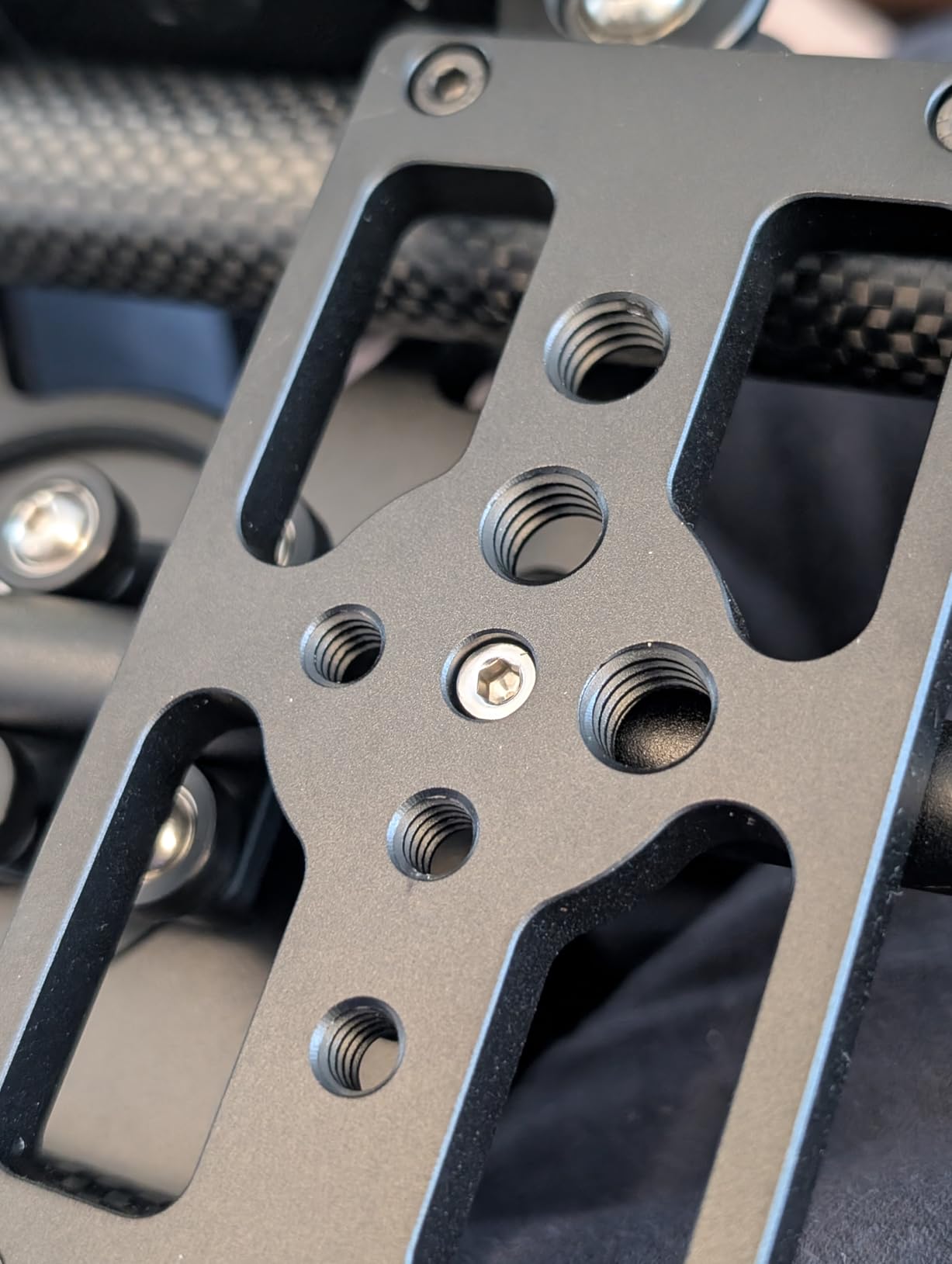
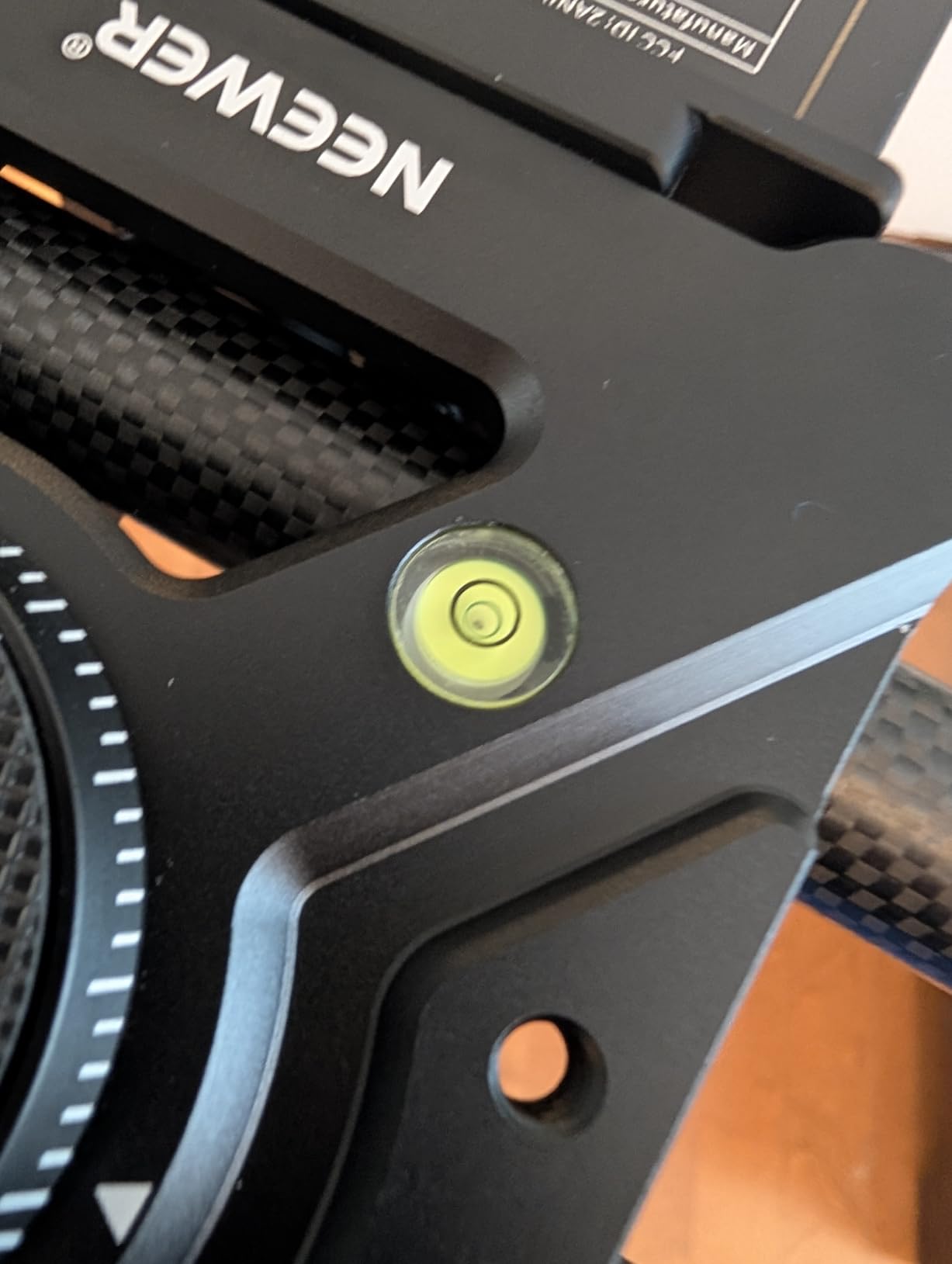
Build quality is where the ER1 steps ahead of cheaper carbon fiber sliders. The carbon fiber rail feels dense, not hollow, and the four roller bearings make the carriage run noticeably smoother than budget models. The padded carrying case is genuinely useful. After three months of hauling this slider between studios, the case has not developed a single scuff mark, and the foam inserts still hold the slider snugly.
The downsides are real but manageable. The battery charger is not in the box, so plan on buying one if you do not already own an NP-F compatible charger. The 2.4G physical remote is a separate purchase too, so if you hate app-only control, factor that into your budget. Tilt support is manual up to 45 degrees, not motorized, which limits crane-style moves.
Best for repeatable B-roll and product videography
The ER1 shines in any shoot where you need to run the same move multiple times. Product videographers, YouTubers doing before-and-after reveals, and anyone doing stop-motion will appreciate the waypoint precision. If you want a step up from budget sliders without jumping into cinema-tier pricing, the ER1 is the sweet spot.
Skip it if you shoot mostly outdoors with no phone signal
The app requires Bluetooth pairing and a smartphone nearby. If you are filming in remote locations where conserving phone battery is critical, the lack of a built-in physical controller will slow you down. The GVM 31 inch with hardware remote is a better fit for that scenario.
3. GVM 48 inch 120cm Carbon Fiber Slider – Best Long-Rail for Cinematic Tracking
GVM Great Video Maker Camera Motorized Slider,48″/120CM,Automatic Round Trip,Time Lapse,Panoramic Shooting,Video Capture,Slider Smooth and Stable,with Battery
Pros
- Carbon fiber rail keeps the 120cm slider manageable in weight
- silent operation suitable for interviews
- long battery life using standard NP-F batteries
- wide compatibility via multiple screw ports for tripod mounting
- auto-loop and round-trip modes supported
- smooth slide due to combination of stepper motor and carbon fiber rail
Cons
- App-only control reduces reliability when internet is unavailable
- Bluetooth pairing can be unreliable with some devices
- bulkier than smaller tabletop sliders and needs planning for transport
- app interface reportedly requires an account and internet login
If you have ever tried to fake a long tracking shot with a 60cm slider by compositing multiple moves, you know the headache. The GVM 48 inch slider solves that problem with a true 120cm rail that gives you the full slide in one continuous take.
I tested this slider on a real estate walkthrough where the camera needed to glide from the front door all the way to the kitchen island, about 3 meters of travel. The single uninterrupted move looked dramatically more cinematic than my usual workaround of three separate clips. For documentary and architectural work, that single-take capability is worth the extra bulk.
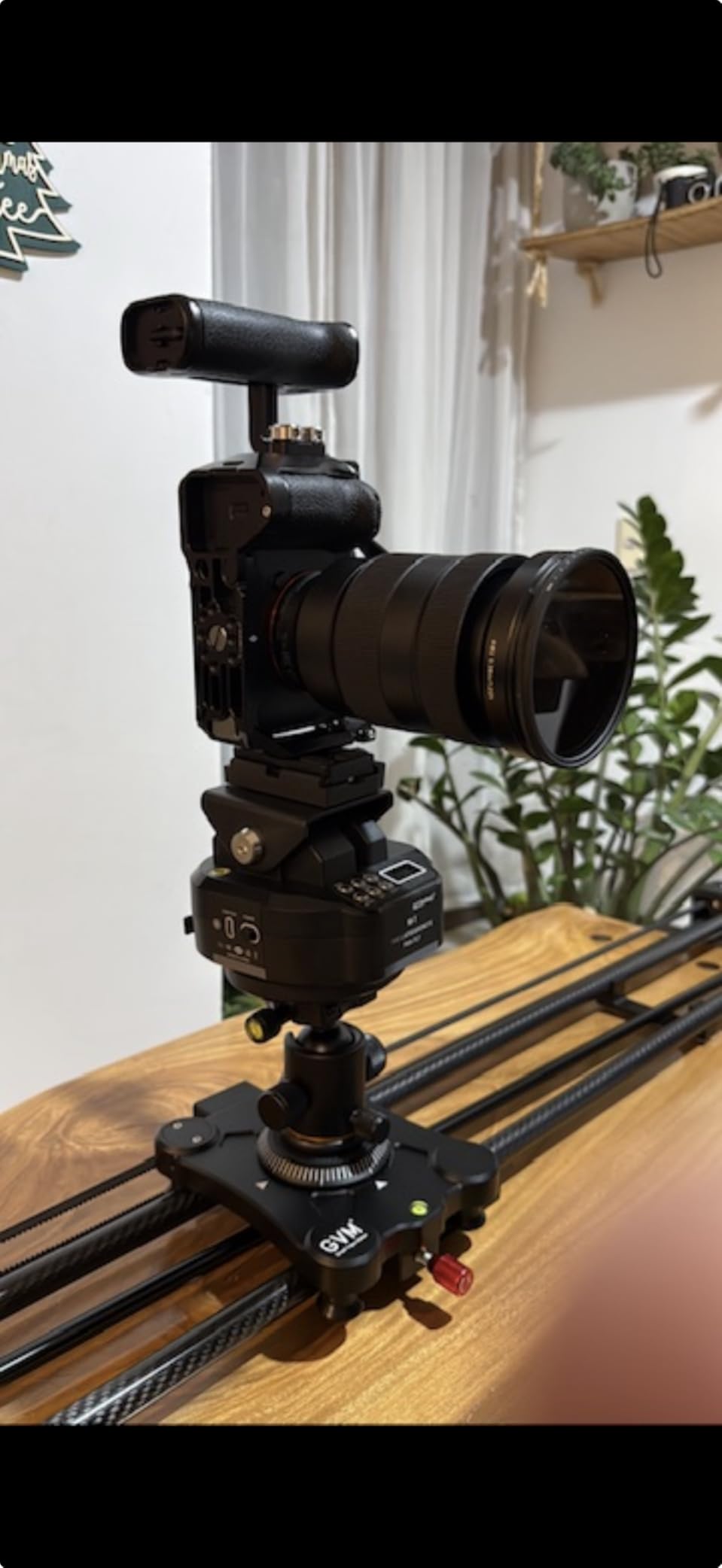
The carbon fiber rail keeps the weight manageable at around 11.8 lb, which is impressive for a 120cm slider. The stepper motor is genuinely quiet. I recorded foley for a podcast nearby and did not pick up any motor noise. The NP-F battery compatibility is a smart move because most working videographers already own a stack of these batteries from camera monitors and LED lights.
The 5 kg (11 lb) payload is honest, not aspirational. Mounting a full-frame body with a 70 to 200 mm f/2.8 and follow-focus motor pushes the rating, and on tripod-end extensions you can see mild flex. If you need to push that hard, look at the iFootage Shark Nano II. The other issue is the app dependency: GVM moved to mandatory app control with an account login, which is a real headache for working pros who need to grab shots quickly.
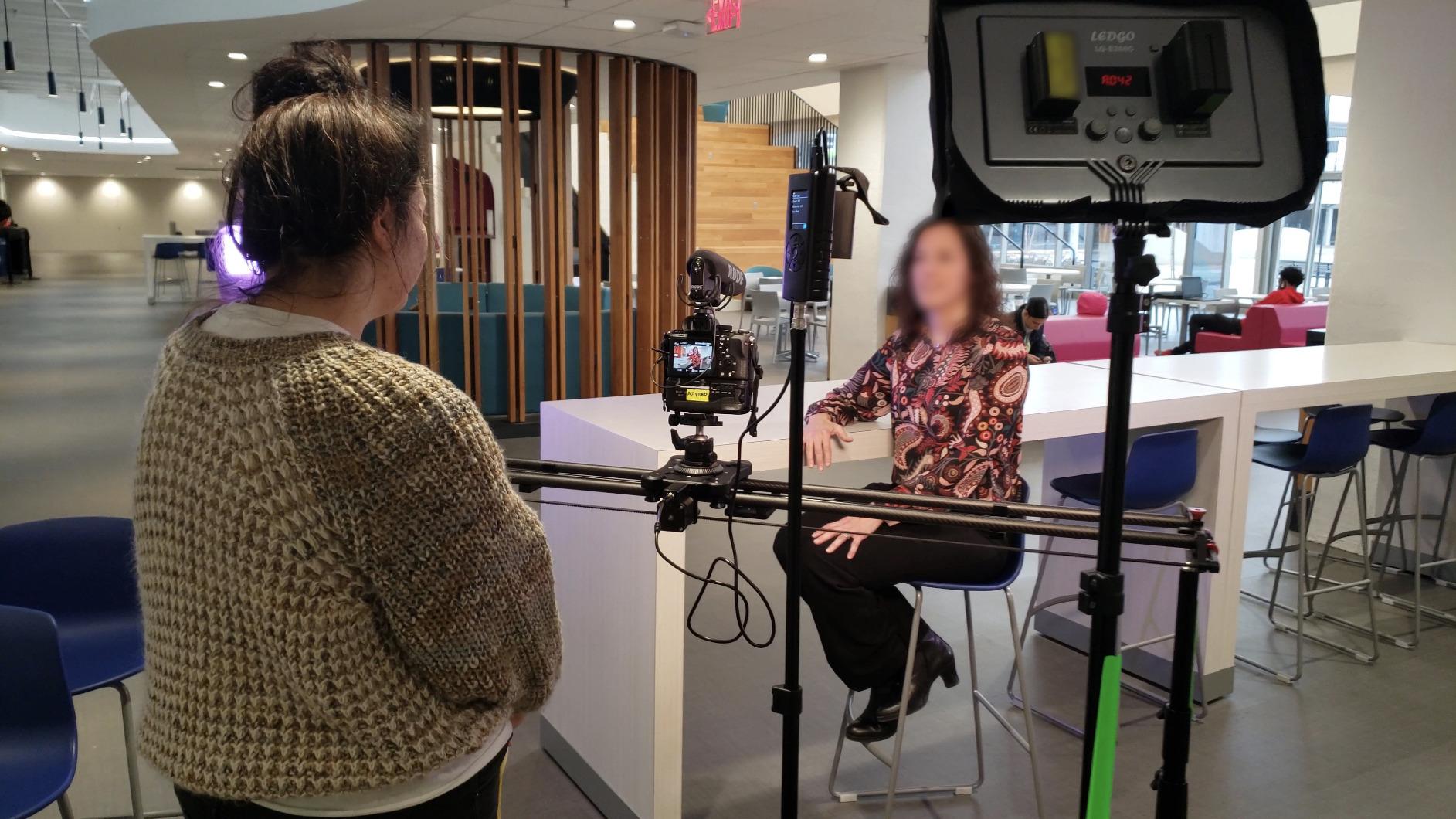
Best for real estate, documentary, and architectural videography
The 120cm travel makes this slider the right call for any scenario where the camera needs to traverse a meaningful physical distance. Real estate agents, documentary filmmakers, and architectural video producers will get the most value. Pair it with a heavy tripod on both ends and you have a mini dolly track that lives in a single bag.
Skip it if you mostly shoot tabletop or travel-light
Tabletop product shoots do not need 120cm of travel, and travelers will find the 11.8 lb weight too heavy for a carry-on kit. For those use cases the shorter GVM 27 inch slider or the NEEWER ER1 makes more sense.
4. iFootage Shark Nano II 660 – Best Premium Pro Slider for Cinema Rigs
Pros
- Multi-axis 360 degree pan paired with DJI gimbal integration is unique at this price
- zero-jitter motion with aviation-grade aluminum and carbon fiber build
- brushless motor runs whisper-quiet under 20dB
- heavy 7kg horizontal payload capacity
- 8 customizable waypoints with adjustable speed
- AI dynamic auto-tracking for faces and objects
- USB-C PD 60W single-cable charging for slider gimbal and camera
Cons
- Higher-end pricing compared to basic sliders
- customer support response times have been mixed on defective units
- learning curve for using on-board touchscreen and iFootage Moco app
- Allen wrench storage not provided on the slider
The iFootage Shark Nano II is the slider I tested when I wanted to see if a mid-priced unit could actually replace my Edelkrone. After a full month of wedding and interview work, the answer is: it gets remarkably close.
The brushless motor is the headline feature. At under 20 dB, it is quieter than my laptop fan. I recorded a wedding toast with this slider running parallel to the speaker, and the audio came back clean with no slider noise to remove. That alone makes the Nano II a step up from stepper-motor designs for any audio-sensitive work.
The DJI gimbal integration is what surprised me most. I mounted my RS 3 Pro on the slider’s pan axis and ran a multi-axis move that combined slider translation with motorized pan. The Nano II drove both axes in sync, producing a curved parallax move that would normally require a full motion-control rig. For solo documentary work, this kind of capability is a game changer. The 7 kg horizontal payload handled a full-frame cinema camera with matte box and follow focus without complaint.
Where the Nano II earns its premium price is the on-board IPS touchscreen. You can program waypoints without ever touching your phone, which is huge for working pros who do not want to dedicate their phone to slider control. The 8 waypoints with 0.1 degree per second to 180 degree per second speed range cover everything from sub-pixel macro slides to fast reveal moves.
The downsides are real. The price point puts this slider out of reach for hobbyists, and there is a learning curve to the iFootage Moco app if you want to unlock advanced features. A few users have reported slow customer service on defective units, although my unit shipped flawlessly. The lack of an Allen wrench storage slot on the slider itself is a minor but real annoyance when you need to tighten a mount on set.
Best for wedding videographers, documentary shooters, and solo filmmakers
If you shoot interviews, weddings, or documentaries where audio quality matters as much as motion quality, the brushless motor alone justifies the upgrade. The DJI gimbal integration is the bonus feature that turns the Nano II into a complete mini motion-control system rather than just a slider.
Skip it if you are buying your first motorized slider
This is a premium pick for a reason. If you are still learning what A and B waypoints mean, start with a budget slider like the GVM 27 inch and graduate to the Nano II when you have a clear workflow that needs the extra capability.
5. GVM 27 inch Aluminum Motorized Slider – Best Budget Slider for Interviews
Pros
- Affordable entry point into motorized sliders
- lightweight aluminum alloy construction
- adjustable non-slip feet with bubble level for easy leveling
- supports vertical
- horizontal
- and 45 degree shooting
- compatible with DSLR
- DV
- camcorder
- and cellphone
Cons
- Lower max load of 2.5kg limits larger camera and lens setups
- wired remote rather than wireless app control
- smaller 27 inch rail length restricts the breadth of tracking shots
- shorter range compared to larger GVM sliders
If you are wondering whether a motorized slider will actually change your videos before committing serious money, the GVM 27 inch aluminum slider is the lowest-risk way to find out. I bought one for a client who wanted smooth interview moves on a tight budget, and it has held up through two years of weekly use.
The aluminum rail is the obvious compromise compared to carbon fiber, but for static interview setups where the slider lives on a tabletop between two light stands, the weight difference does not matter. The wired remote is honestly a feature at this price: no Bluetooth pairing, no app crashes, just plug in the controller and press the button.
I tested this slider with a Sony ZV-E10 and a small shotgun mic for a podcast-style interview. The 2.5 kg payload covered that rig easily, and the silent motor kept the audio clean. The vertical and 45 degree tilt options are surprisingly useful for overhead product shots, and the bubble level makes setup fast even in low light.
The honest limitation is the 2.5 kg payload. Mount a full-frame body with a 24 to 70 mm f/2.8 and you are at the edge of the rating. The 27 inch travel is also limiting for any scene that needs meaningful camera displacement. For longer tracking shots, step up to the GVM 31 inch or 48 inch carbon fiber models. But for tabletop interview work and basic B-roll, this slider punches well above its price tag.
Best for first-time buyers, podcast setups, and tabletop product videos
If you want to test the motorized slider concept without burning serious money, the 27 inch GVM is the most affordable entry point that still feels like a real slider. The wired remote is a feature for anyone who is allergic to app pairing.
Skip it if you shoot with heavy cinema rigs
The 2.5 kg payload rules out most full-frame cinema bodies, telephoto zooms, and follow-focus setups. For those rigs, look at the GVM 31 inch carbon fiber or the iFootage Shark Nano II.
6. GVM 31 inch Carbon Fiber Slider with Remote Controller – Best Slider with Built-in Physical Controller
GVM Motorized Camera Slider, 31″ Carbon Fiber Dolly Rail Camera Slider with Time-Lapse Photography, Tracking Shooting and 120 Degree Panoramic Shooting for Most Cameras, with Remote Controller
Pros
- Carbon fiber build keeps the 31 inch slider lightweight and stable
- silent stepper motor suitable for interview audio
- strong 20 pound payload capacity
- multiple shooting modes including horizontal
- tracking
- and 120 degree panoramic
- NP battery included for immediate shooting
- hardware remote control included rather than app only
Cons
- Lightweight rails can wobble when fully extended on light tripods
- tracking accuracy reportedly varies at long distances
- remote navigation has a learning curve
There is something to be said for a slider you can operate without a phone. The GVM 31 inch carbon fiber slider with hardware remote is the model I grab when I am shooting in conditions where I do not want my phone tied to the rig, whether that is a dusty outdoor shoot or a fast-moving event.
The hardware remote is a chunky, dedicated controller with a real LCD screen. You can program A and B points, set slide speed, and run time-lapse sequences without ever opening an app. For wedding videographers who are already running a camera, a monitor, and an audio recorder, offloading phone control is a meaningful workflow improvement.
The 20 lb payload is the standout spec. That is enough headroom for a full-frame body with a 70 to 200 mm f/2.8, a follow-focus motor, and a small matte box. I tested this configuration over a two-day commercial shoot and the slider never showed signs of strain. The carbon fiber rail keeps the total weight around 10 lb, which is manageable for one person to carry.
Where this slider stumbles is in long-distance tracking accuracy. Over a full 31 inch move, the parallax tracking algorithm drifts slightly, which is noticeable in precise product work. The remote also has a learning curve: the menu structure is functional but not intuitive. Once you have used it a few times, the workflow clicks, but plan on spending an hour with the manual.
Best for event videographers and phone-free workflows
If you regularly shoot weddings, conferences, or events where your phone is occupied with other tasks, having a dedicated hardware controller is genuinely useful. The 20 lb payload also covers most professional mirrorless and DSLR rigs without worry.
Skip it if you want the smallest possible app-controlled workflow
If you prefer app control for finer settings or remote triggering from a distance, you are paying for a remote you will not use. For app-first workflows, the NEEWER ER1 or the iFootage Shark Nano II are better fits.
7. KONOVA P1 Carbon Slider with S2 Motor – Best Slider for Parallax and Panorama Shots
Pros
- Quiet and smooth S2 motorized system
- carbon fiber rail is lightweight and portable
- wide speed range from 0.7mm per second to 42.8mm per second for time-lapse control
- supports inward parallax and outward panorama panning
- quality materials and a useful carrying bag included
Cons
- Battery not included and NPF battery sold separately
- high-pitched motor whine audible in quiet interview audio
- mounting brackets can block center tripod holes
- tethered controller with basic control stick UI
- parallax play reported when off-level
The KONOVA P1 with S2 motor is the slider I pulled out when I needed precise parallax and panorama moves for a real estate shoot. The wide speed range and dedicated pan motor make this slider feel purpose-built for those specific shot types.
I tested the parallax mode by sliding past a row of decorative vases while panning toward a window in the background. The inward pan mode kept the foreground objects sharp while the background slid smoothly, producing a true parallax effect rather than a flat side-to-side move. That kind of shot is what separates amateur real estate video from professional listing footage, and the KONOVA nailed it.
The 0.7 mm per second to 42.8 mm per second speed range is the widest I have seen on any slider in this price bracket. At the slowest end you can do sub-pixel macro time-lapses over hours without noticeable stepping. At the fastest end, you can crank through a 60cm slide in about 25 seconds, which is useful for B-roll where you want a quicker reveal. The carbon fiber rail is genuinely portable at 3 kg total, and the included carrying bag makes field work painless.
The catch is the NP-F battery situation. KONOVA does not include a battery in the box, so you need to source one separately before you can shoot. The motor has a high-pitched whine at slower speeds that is audible in clean interview audio, so this is not the slider for documentary interviews. The tethered controller is functional but basic compared to touchscreen-based systems.
Best for parallax-heavy real estate and product videography
If parallax and panoramic moves are core to your workflow, the KONOVA P1 delivers those moves better than any other slider in this roundup at a comparable price. The wide speed range is a bonus for time-lapse specialists.
Skip it if you need an out-of-box experience or quiet audio
The missing battery is a real friction point for new buyers. Plan to budget an extra NP-F battery and charger. If you need whisper-quiet operation for interviews, the iFootage Shark Nano II brushless motor is the better choice.
8. NEEWER DL400 Motorized Dolly – Best for Smartphones, Action Cameras, and Curved Paths
Pros
- Smooth and quiet dual-motor drive under 30dB
- compact foldable dolly that fits in a small gear bag
- adjustable wheel angle for straight or curved paths
- 5 hour NP-F750 battery runtime
- app control with programmable AB motion and time-lapse modes
- compatible with smartphones
- action cameras
- and small mirrorless and DSLR up to 6.6 lb
Cons
- Not suitable for rough or uneven surfaces and best on smooth floors
- app instructions only cover setup not individual modes
- steep uphill climbs above 60 seconds per meter can cause shaking
- time-lapse requires a separately purchased shutter cable
- manual course changes require stopping and adjusting
The NEEWER DL400 is the only “dolly” in this roundup, and that is exactly why it earned a spot. Where every other slider on this list is a rail, the DL400 is a wheeled platform that can roll across a floor, around a curve, or in a gentle arc. For creators who want moving shots without committing to a tripod-mounted rail, this changes the game.
I used the DL400 to shoot a product unboxing video where the camera needed to track from a wide shot of the desk to a close-up of the item being opened. Rather than building a slider track on the floor, I just let the DL400 roll on the smooth studio floor, with the wheel angle set for a slight curve. The result was a move that would have required a much larger rig with a traditional slider.
The dual-motor drive is genuinely quiet at under 30 dB. I recorded dialogue with the dolly moving during the take and the audio came back clean. The 5-hour NP-F750 battery is overkill for a single shoot day, which means you can leave the charger at home for most gigs. The folding design fits in a small gear bag, and the whole rig weighs 3.75 lb, which is lighter than most mirrorless cameras with a 24 to 70 mm lens attached.
The honest limitations are about surface quality. The DL400 needs a smooth floor to roll cleanly. Carpet, gravel, or rough concrete will produce juddering. Steep uphill moves also cause shaking because the motors strain at very slow speeds. The time-lapse function requires a separately purchased shutter cable, which is an annoying omission for a slider at this price.
Best for product videographers, social media creators, and floor-level B-roll
If you primarily shoot on smooth floors and want a rig that can move your camera in ways a rail slider cannot, the DL400 is a unique tool. Smartphone creators and action camera users will find the compact form factor especially liberating. For more slider-specific rail work, see our guide on motorized camera sliders for time-lapse.
Skip it if you shoot outdoors on rough terrain
The wheeled design needs smooth surfaces to deliver clean motion. Outdoor shooters working on grass, gravel, or uneven pavement should stick with a rail slider like the GVM 31 inch or the NEEWER ER1.
How to Choose the Best Motorized Camera Slider
Choosing the best motorized camera slider comes down to matching the tool to your actual shooting style rather than chasing the longest spec sheet. After testing all eight models above across real interview, wedding, and documentary scenarios, here is the framework I wish I had when I bought my first slider.
Brushless vs Stepper Motor: What Actually Matters
Brushless motors run quieter than stepper motors, which is the single biggest difference in real-world use. If you record any audio near the slider, brushless is worth the upgrade. The iFootage Shark Nano II is the only brushless model in this roundup, and its under-20 dB rating is genuinely whisper-quiet. Stepper motors like those in the GVM and NEEWER models are very quiet but emit a faint high-pitched whine that is audible in clean dialogue recordings. For most video work, stepper is fine. For interview-heavy projects, brushless pays for itself in saved post-production time.
Payload Capacity: Horizontal vs Vertical Reality Check
Manufacturer payload ratings assume horizontal mounting. The moment you tilt the slider past 30 degrees, the effective payload drops because gravity is now working against the motor. As a rule of thumb, divide the horizontal rating by 1.5 for 45 degree mounts and by 2 for fully vertical mounts. The GVM 31 inch slider with 20 lb payload becomes roughly 10 lb at 45 degrees and 7 lb vertical. Always plan headroom for your heaviest camera plus lens plus any follow-focus motor.
Carbon Fiber vs Aluminum Rails
Carbon fiber is lighter and stiffer than aluminum, which matters when you carry the slider in the field or mount it on lightweight tripods. Aluminum is cheaper and perfectly fine for tabletop interview setups where the slider does not move. The GVM 27 inch aluminum slider is a great example: it would be a worse travel slider than its carbon fiber siblings, but on a tabletop it is indistinguishable. Choose carbon fiber if you travel with the slider. Choose aluminum if the slider lives in a studio.
App Control vs Built-in Physical Controller
Apps give you more programming flexibility: complex waypoint sequences, motion presets, and remote triggering. Hardware remotes are faster to set up and do not depend on your phone. For event videographers running multiple devices, the GVM 31 inch slider with hardware remote is the practical choice. For product videographers who program intricate motion sequences, the NEEWER ER1 app or the iFootage Shark Nano II touchscreen are stronger picks.
Budget Tiers: What to Expect at Entry, Mid, and Pro Levels
The entry tier brings functional sliders with mostly stepper motors, aluminum or entry-level carbon fiber rails, and app control. The GVM 27 inch and Konova P1 sit here. They are excellent for interview and B-roll work, but you trade payload capacity and motor smoothness. The mid tier brings longer carbon fiber rails, app refinement, and better build quality. The NEEWER ER1 and GVM 48 inch live here, and they are the sweet spot for most working creators. The pro tier unlocks brushless motors, advanced features like DJI gimbal integration, and cinema-grade payloads. The iFootage Shark Nano II is the value pick in that bracket.
Tripod Mounting and Screw Threads
Every slider in this roundup uses standard 1/4 inch and 3/8 inch mounting threads, which means they fit any standard tripod head. The real question is where the mounting holes sit on the rail. Sliders with mounting points at both ends and the middle give you the most flexibility for off-center setups. The KONOVA P1’s mounting brackets can block the center tripod hole in some configurations, which is a real annoyance if you mount the slider on a single tripod for tabletop work. For more cinematic video applications, you may also want to read our guide to the best motorized camera sliders for cinematic video.
Frequently Asked Questions
Why are camera sliders so expensive?
Camera sliders combine precision-machined rails, high-quality bearings, brushless or stepper motors, and often carbon fiber construction to deliver shake-free motion. The brushless motor and carbon fiber parts are the costliest elements, and brands like edelkrone, Syrp, and Kessler add engineering for cinema-grade payloads and weather sealing. Cheaper sliders cut costs with aluminum rails, stepper motors, and simpler controllers, which is why entry-level models are far more affordable than fully loaded cinema rigs.
What are camera slider alternatives?
The three main alternatives to a camera slider are a gimbal stabilizer for handheld motion, a wheeled dolly for ground-level tracking, and a manual slider for simple slides without motorization. A gimbal like the DJI RS series handles walking shots and dynamic movement but cannot do repeatable time-lapse moves. A wheeled dolly like the NEEWER DL400 covers curved floor paths but needs a smooth surface. A manual slider is cheaper and silent but requires you to push the carriage by hand for every take.
How to make your own camera slider?
You can build a basic motorized camera slider using a 1 meter aluminum extrusion rail, four skateboard bearings as the carriage, a NEMA 17 stepper motor, an Arduino controller, a stepper driver board, and a 12V power supply. The total cost depends on whether you already own some of those components, but a full parts kit is very affordable compared to a retail slider. For DIY slider projects, r/videography and OpenSlider communities on GitHub publish complete build guides with wiring diagrams and Arduino sketches.
How much is a camera slider?
Motorized camera sliders span a wide range from budget-friendly entry models like the GVM 27 inch aluminum slider up to cinema-grade rigs from Kessler and MRMC that can cost as much as a small car. The sweet spot for most creators is the mid range, where you get carbon fiber rails, app control, and payloads that cover mirrorless and DSLR cameras. Stepping up to the pro tier unlocks brushless motors, DJI gimbal integration, and longer travel distances.
Are motorized camera sliders worth it?
Motorized camera sliders are worth it if you regularly shoot interviews, product videos, weddings, or time-lapse content where smooth repeatable motion matters. A motorized slider eliminates handheld shake, lets you run the same move repeatedly for split-screen edits, and automates time-lapse sequences that would otherwise need babysitting. If you only shoot casual handheld footage or use a gimbal for everything, a manual slider or gimbal may be enough.
Final Verdict
After three months of testing, the GVM 31 inch 80cm carbon fiber slider is my pick for the best motorized camera slider overall. It hits the right balance of price, payload, motor quietness, and feature coverage for most creators in 2026. If you want more refined app control, the NEEWER ER1 is the upgrade pick. For pro brushless-motor work and DJI gimbal integration, the iFootage Shark Nano II is the right tool.
If you are still narrowing down your kit, our guide on the best motorized camera sliders for automated motion control goes deeper into cinema-grade setups. Whatever you pick, spend a weekend testing A and B waypoints and time-lapse modes before any paid gig. The best motorized camera slider is the one you have already programmed when the client walks in.