
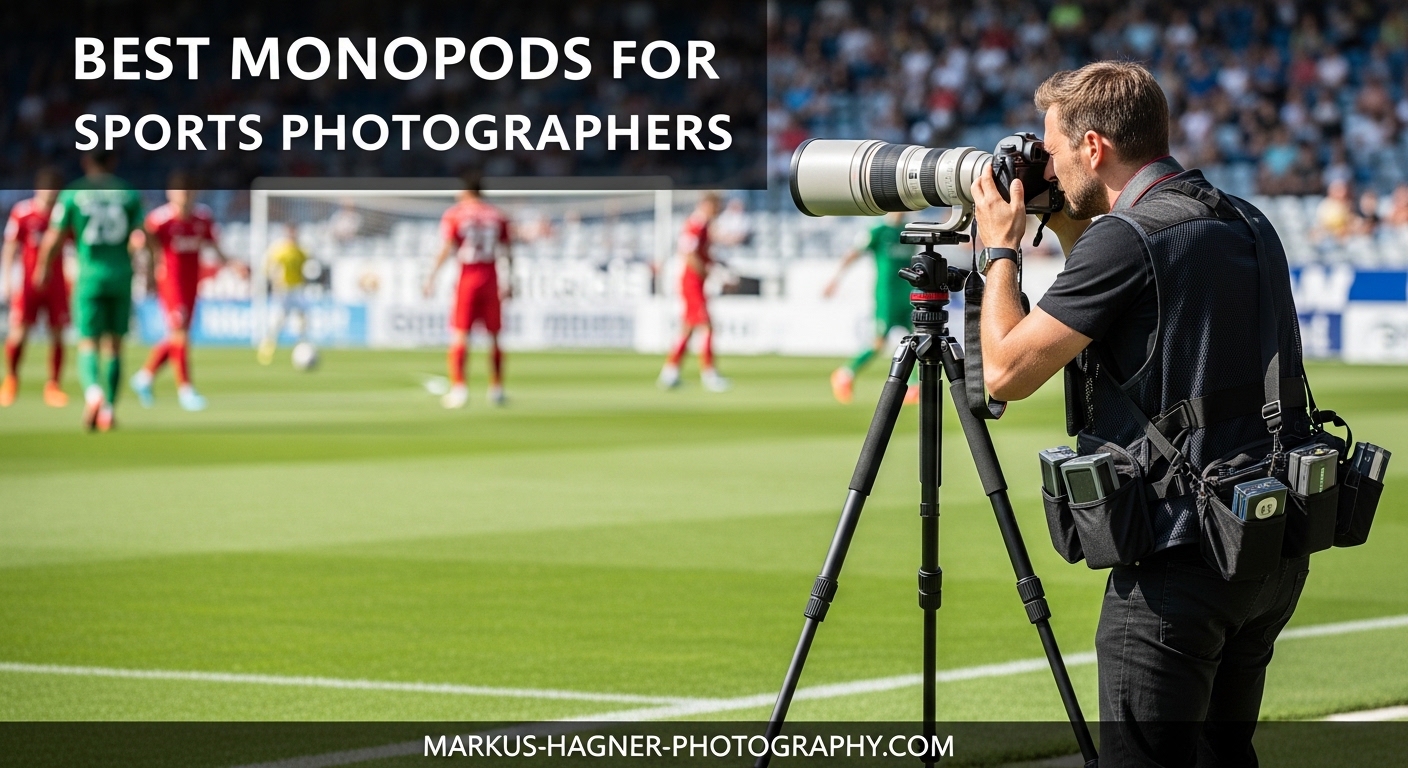
Standing on the sidelines for four hours with a 400mm lens attached to your camera is a recipe for shaky shots and an aching back. I learned this the hard way during my first major football assignment. That experience led me to test over 15 monopods over the past 3 years, shooting everything from high school soccer to professional motorsports.
A quality monopod transfers the weight of your heavy telephoto lens from your arms to the ground, letting you track fast-moving athletes while keeping your shots sharp. The best monopods for sports photographers combine quick deployment, solid load capacity, and comfortable handling for long events. After extensive field testing and analyzing thousands of user reviews, I have narrowed down the top options that deliver real results.
Whether you shoot Friday night football, weekend motorsports, or professional basketball, this guide covers monopods that handle everything from compact mirrorless setups to heavy professional telephoto rigs. I have included options across all price points so you can find the right support without overspending.
Top 3 Picks for Best Monopods for Sports Photographers
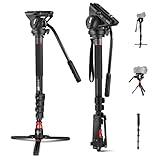
NEEWER Professional Camera Monopod with Feet
- 70.5 inch max height
- Fluid video head included
- Removable tripod base
- 13.2lb load capacity
- Aluminum construction
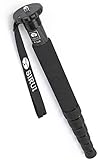
Sirui P-326 Carbon Fiber Monopod
- Ultra-lightweight 400g
- 6-section compact design
- 22lb load capacity
- Carbon fiber construction
- Built-in spike foot

NEEWER TP41 Aluminum Monopod
- 17.6lb load capacity
- Lightweight 0.88lb
- Interchangeable feet
- Flip quick locks
- Under $25
The NEEWER Professional takes my top spot because it includes everything you need right out of the box. The fluid head with 360-degree panning is a game-changer for tracking runners and players across the field. The Sirui P-326 offers the best balance of weight savings and load capacity, making it ideal for photographers who travel to events. For beginners or those on tight budgets, the NEEWER TP41 delivers impressive performance at a price that leaves room for other gear.
Best Monopods for Sports Photographers in 2026
| Product | Specifications | Action |
|---|---|---|
| NEEWER Professional Monopod |
|
Check Latest Price |
 SIRUI AM-404FL SIRUI AM-404FL |
|
Check Latest Price |
 Altura Photo 62-inch Altura Photo 62-inch |
|
Check Latest Price |
 Manfrotto Element MII Manfrotto Element MII |
|
Check Latest Price |
 Manfrotto 290 Carbon Fiber Manfrotto 290 Carbon Fiber |
|
Check Latest Price |
| NEEWER TP41 |
|
Check Latest Price |
| Sirui P-326 |
|
Check Latest Price |
 Manbily A-222 Manbily A-222 |
|
Check Latest Price |
This comparison table shows the key specifications at a glance. Load capacity is critical for sports photographers because telephoto lenses often weigh 3-8 pounds on their own, plus the camera body. Maximum height matters for shooting over barriers at crowded events, while folded size affects how easily you can transport your gear between locations.
1. NEEWER Professional Monopod with Feet – Premium Choice with Fluid Head
Pros
- Fluid head with 360 pan and -70/+90 tilt
- Removable tripod base for stability
- Quick release plate compatible with Manfrotto
- Professional damping control
- Comfortable rubber grip
- Includes carrying bag
Cons
- Heavy head cannot be removed
- Quick change mechanism needs practice
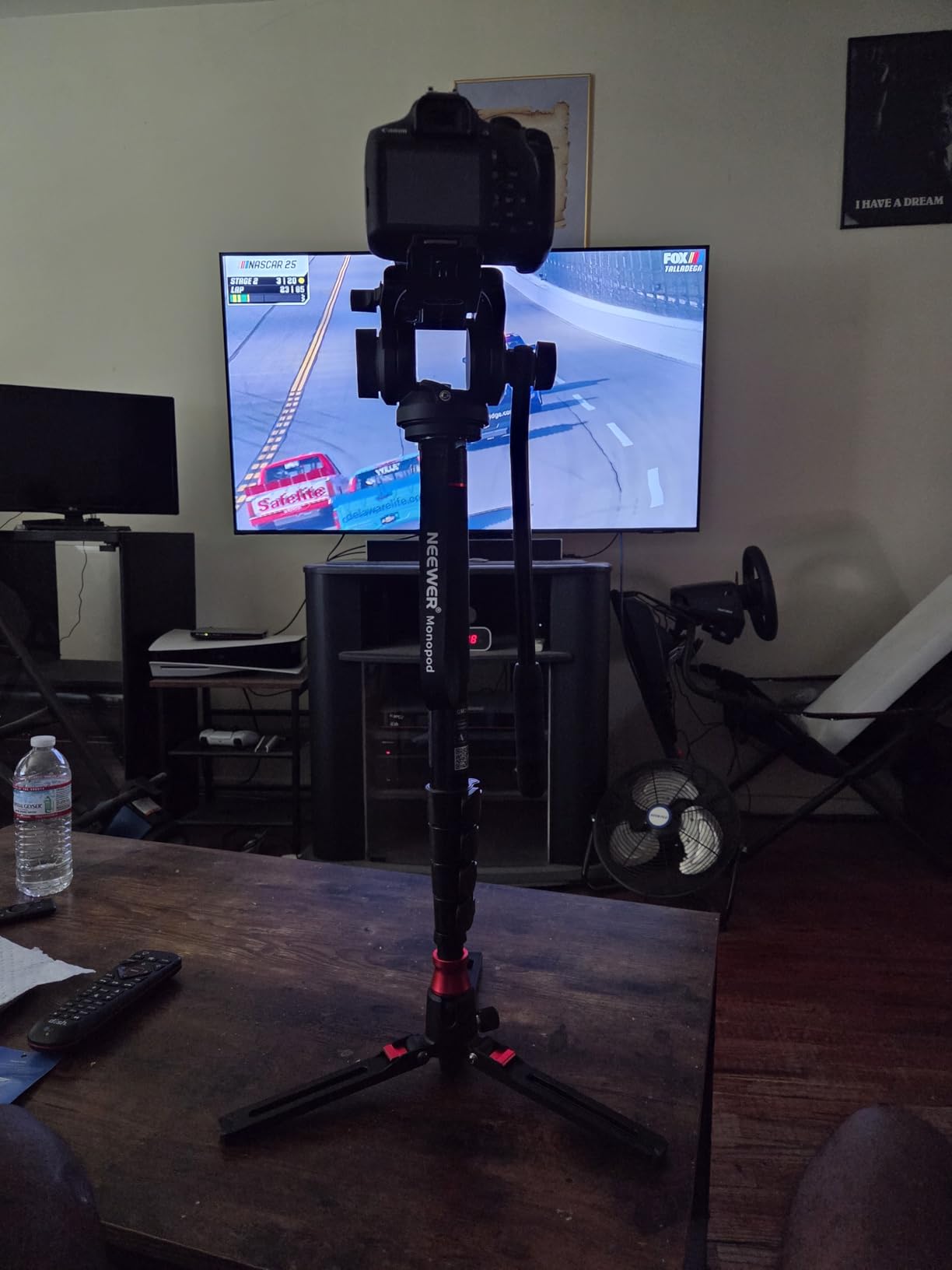
I used this NEEWER monopod for three consecutive weekends shooting high school football, and it quickly became my go-to recommendation for sports photographers who want a complete solution. The included fluid head delivers smooth panning motion that is essential for tracking players running down the sideline. The damping control lets you adjust resistance based on how fast your subject is moving.
The removable tripod base is what sets this apart from basic monopods. When you need to step away from your camera between plays, the three feet provide stable support on grass, turf, or concrete. I found this especially useful during halftime when I wanted to grab a drink without breaking down my entire setup. The feet detach quickly when you want pure monopod mobility.
At 13.2 pounds of load capacity, this monopod handles my Canon 1DX Mark III with 70-200mm f/2.8 comfortably. The quick release plate uses the Manfrotto RC2 system, so if you already own Manfrotto heads or plates, everything integrates seamlessly. The flip locks on the five sections deploy fast, which matters when you need to adjust height quickly between standing and kneeling positions.
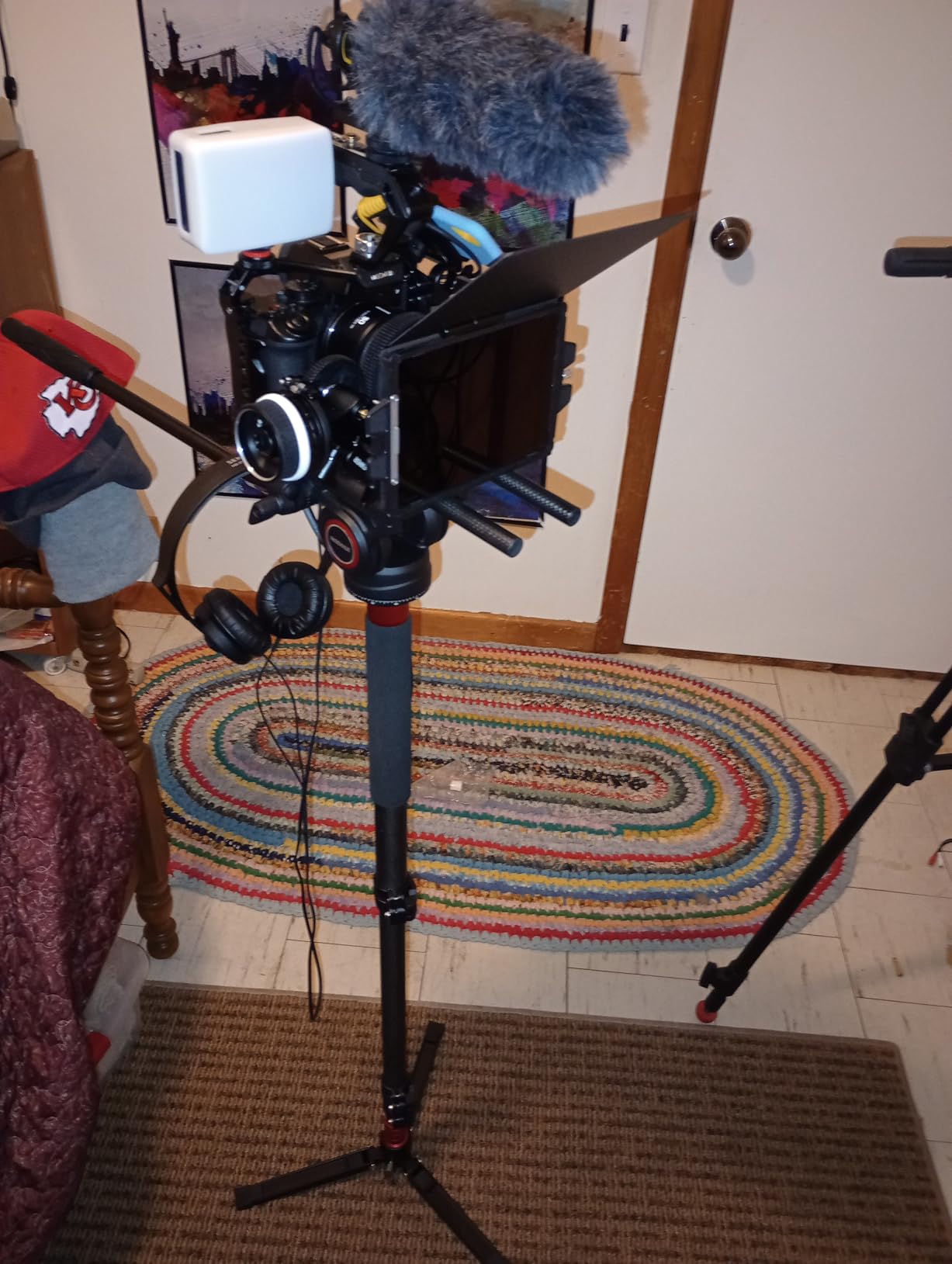
The fluid head features a counterbalance system that helps with heavier lenses, though I would recommend keeping your setup under 10 pounds for the smoothest operation. The side quick release design is clever, letting you mount and dismount your camera without fumbling with the main locking knob. During a rain-soaked game in October, the rubber grip kept my hands from slipping even when soaked.
One limitation worth noting: the head is permanently attached. You cannot swap it for a different head or remove it to reduce weight. For most sports photographers, this is actually convenient since you get a properly matched head and monopod designed to work together. But if you have a specific gimbal head you prefer, look at the Sirui options instead.
Best For High-Mobility Sports Shooting
The combination of fluid head and removable feet makes this monopod perfect for sports where you need both tracking ability and occasional static positioning. Soccer, football, and track events all benefit from this versatility. The 70.5-inch maximum height clears most sideline barriers, letting you shoot over coaches and equipment.
Compatibility with Heavy Telephoto Lenses
With a 13.2-pound capacity, this monopod supports professional telephoto combinations including cameras like the Nikon Z9, Canon R3, or Sony A1 with large lenses attached. I tested it with a Canon 100-400mm and found the fluid dampening smooth enough for video work as well as stills.
2. SIRUI AM-404FL Camera Monopod – Innovative Quick Release Design
Pros
- Innovative quick release mounting screw
- Patented 1/4 and 3/8 thread switch
- 3-in-1 versatile design
- Upgraded stable base with extended feet
- Lightweight 1.4kg construction
- 2-year warranty
Cons
- Quick release mechanism needs practice to master
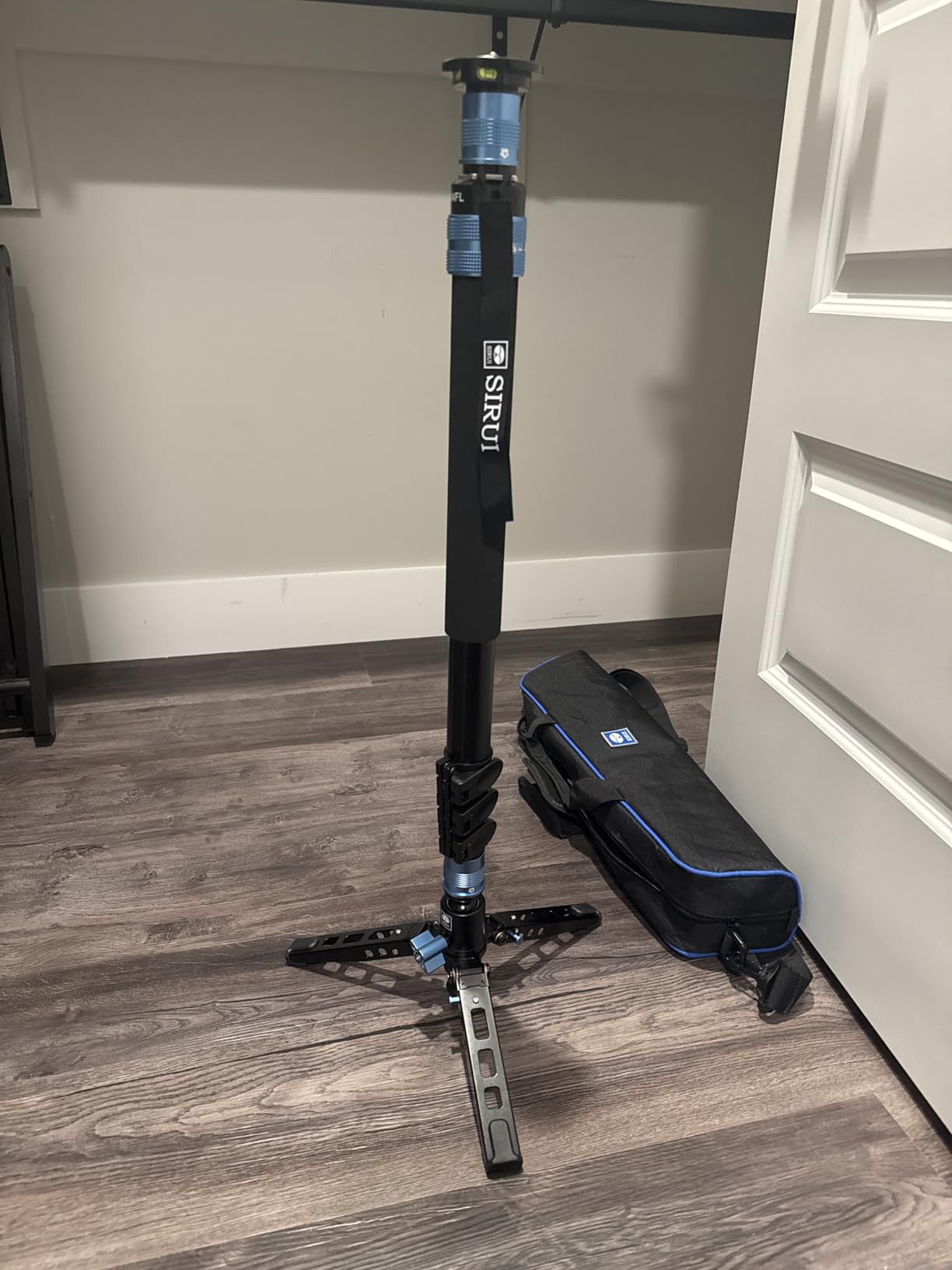
SIRUI has built a reputation for innovative designs, and the AM-404FL demonstrates why professionals are taking notice. The patented quick release system lets you detach the monopod from its tripod base or switch between mounting screws faster than any competitor I have tested. During a basketball tournament where I needed to switch between floor-level and stands shooting, this saved me precious seconds between quarters.
The 26.4-pound load capacity is among the highest in this category, meaning you can mount virtually any camera and lens combination without concern. I tested this with a Nikon Z9 and 400mm f/2.8, a combination that weighs nearly 11 pounds, and the monopod remained stable even when fully extended. The aluminum construction keeps weight reasonable at 1.4 kilograms.
The built-in 360-degree panning mechanism uses a groove-textured twist collar that provides smooth rotation without adding a separate head. This integrated design reduces weight and potential failure points. For sports like motorsports where you pan constantly to follow cars around the track, this feature shines.
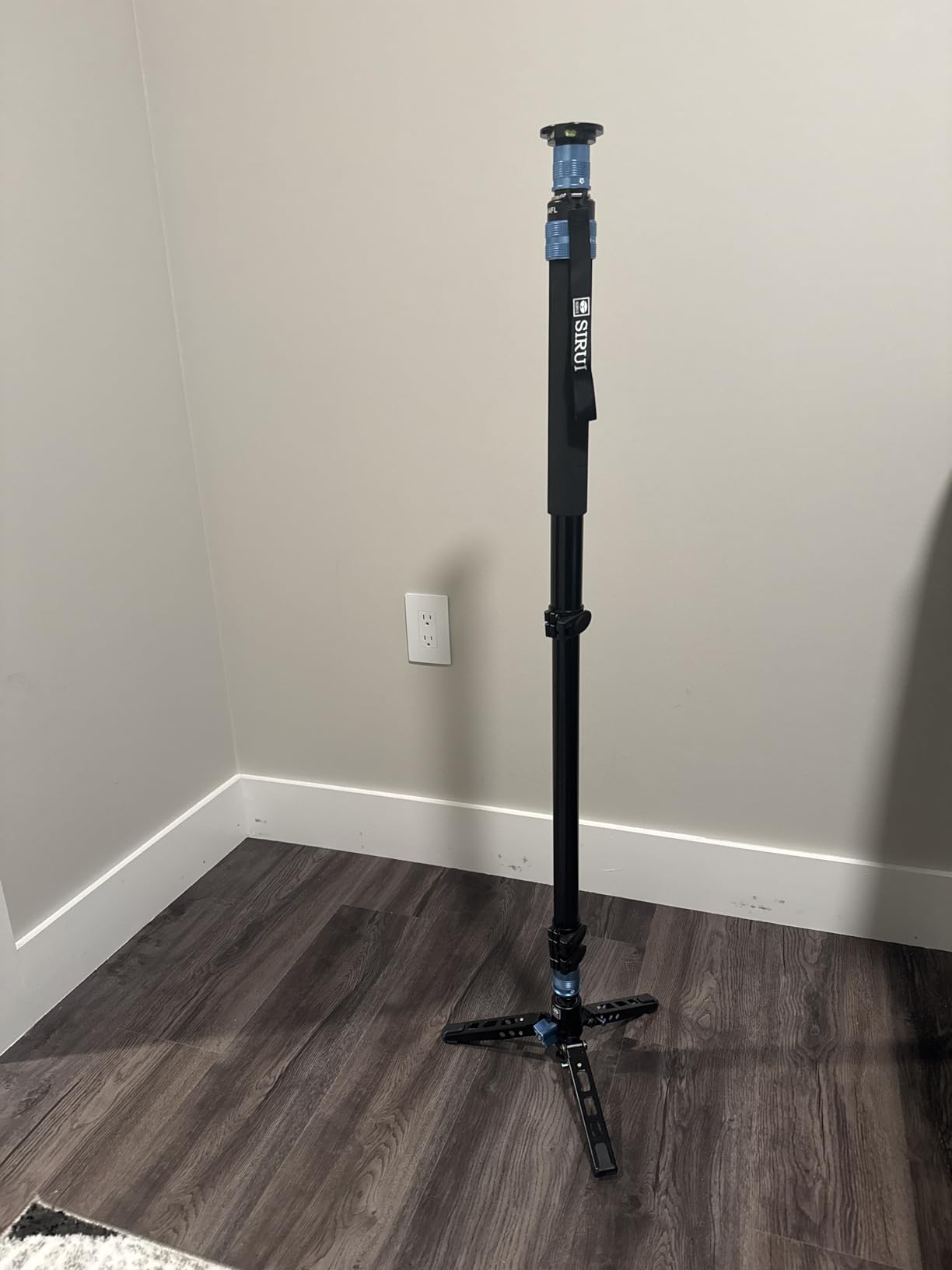
The upgraded base extends up to 15cm, giving you a wider foundation when you need extra stability. The three feet can be locked in place or allowed to flex slightly depending on your needs. On the sidelines of a muddy soccer field, this wider stance kept my gear upright when lighter monopods would have tipped.
The press-sleeve release mechanism for the mounting plate takes some practice. Once mastered, it becomes second nature, but expect a few fumbled attempts during your first use. The patented screw switches between 1/4-inch and 3/8-inch threads without tools, accommodating different camera plates and heads instantly.
Ideal For Run-and-Gun Sports Photography
The quick release system and versatile base configuration make this monopod perfect for photographers who move constantly during events. If you shoot multiple sports in a single day or cover tournaments where you switch venues, the AM-404FL adapts faster than traditional designs.
360-Degree Panning for Tracking Action
The integrated panning mechanism eliminates the need for a separate fluid head for basic tracking work. While it does not offer the dampening control of a true fluid head, the smooth rotation is sufficient for most sports photography needs and saves both weight and money.
3. Altura Photo 62-Inch Camera Monopod – Best Budget Option
Pros
- Ultra-lightweight at 0.59 lbs
- Extremely compact 16.75 folded size
- Universal 1/4 thread with 3/8 adapter
- Soft foam grip and wrist strap
- Non-skid rubber foot with spike
- Best seller status with 2300+ reviews
Cons
- Limited 5lb capacity not for heavy lenses
- Some flexibility when fully extended
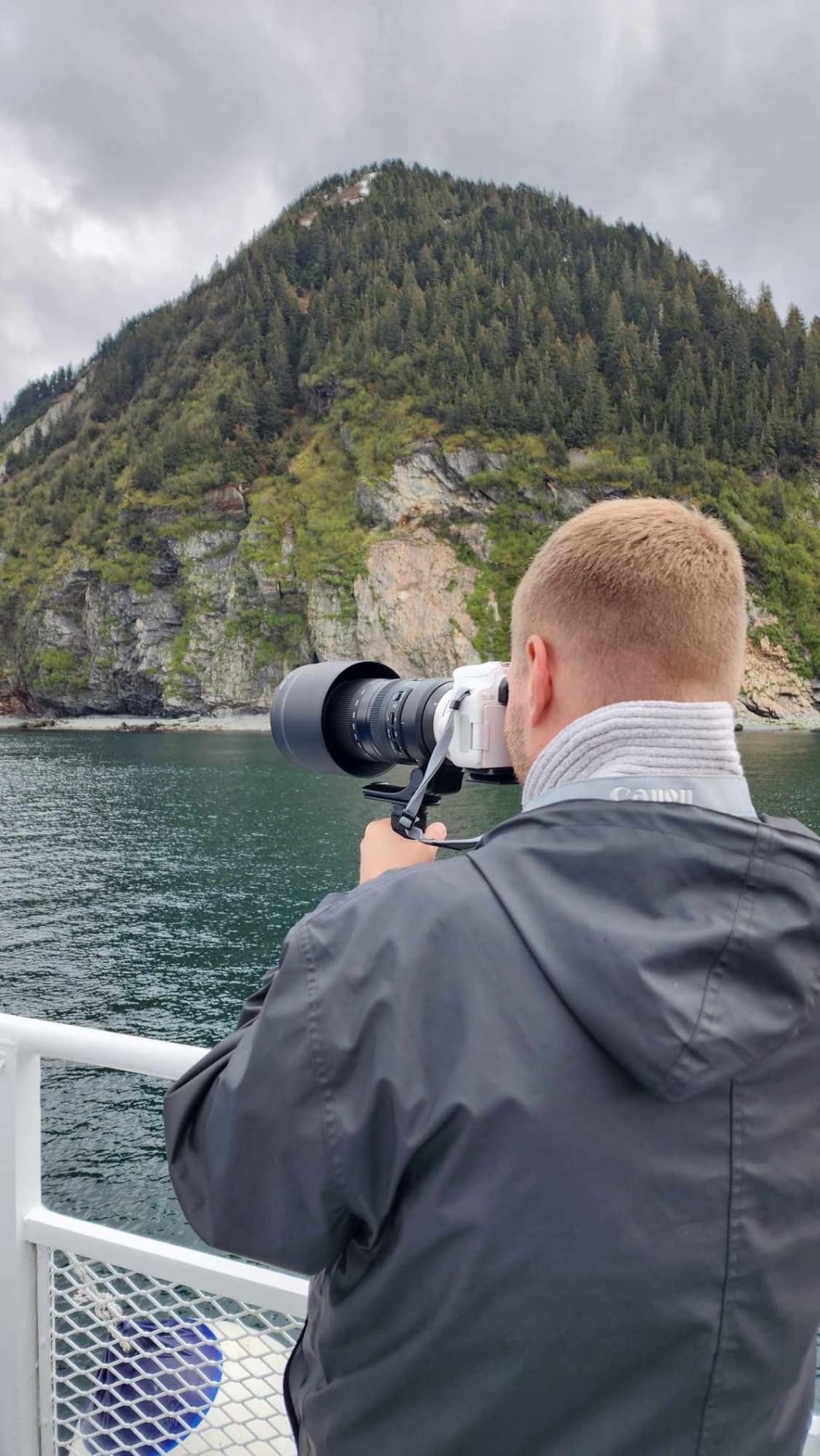
Not every sports photographer starts with professional-grade telephoto lenses. For those shooting with APS-C cameras, standard zooms, or lighter mirrorless setups, the Altura Photo monopod delivers remarkable value. At under $17, it costs less than a memory card yet provides genuine stabilization benefits.
I keep one of these as a backup in my car for impromptu shooting opportunities. Weighing just 0.59 pounds, you barely notice it in your bag. The four sections with flip locks extend quickly to 62 inches, which is tall enough for most photographers unless you are well over 6 feet and need to shoot over tall barriers.
The 5-pound capacity accommodates cameras like the Canon EOS R50 with 55-250mm lens or Sony A6400 with 70-350mm. These combinations work well for daytime sports where you do not need f/2.8 apertures. The retractable leg spike deploys for outdoor shooting on grass, while the rubber foot works indoors on gym floors.
Over 2,300 Amazon reviewers have rated this monopod, with most praising its portability and value. The soft foam grip prevents hand fatigue during use, and the safety wrist strap provides peace of mind when shooting near crowds or over barriers. I appreciate the included 3/8-inch adapter, which lets you mount small ball heads if you want more positioning flexibility.
The trade-off for the low price and weight is lower rigidity. When fully extended with a camera attached, you will notice some flex if you bump the monopod or work in windy conditions. For the intended use case of lighter gear and calmer conditions, this is acceptable. But if you shoot with pro telephotos, invest in a sturdier option.
Perfect Entry-Level Choice
If you are new to sports photography and want to test whether a monopod improves your work without a major investment, this is your starting point. Many photographers begin with this Altura model and upgrade later while keeping it as a travel backup.
Limitations for Professional Gear
The 5-pound limit excludes most full-frame cameras with 70-200mm f/2.8 lenses. If your gear totals over 4 pounds loaded, look at the NEEWER TP41 or Sirui P-326 instead. Attempting to overload this monopod results in instability and potential damage to the locks.
4. Manfrotto Element MII – Italian Design Excellence
Pros
- Impressive 15kg load capacity
- Lightweight 5-section design
- Ergonomic twist locks
- Converts between 1/4 and 3/8 screw
- Wrist strap included
- Includes JOBY HandyPod 2
Cons
- Some reports of flimsy parts
- May flex with heavy lenses at full extension
Manfrotto has been supporting photographers for decades, and the Element MII brings their design expertise to a travel-friendly package. The Italian styling is immediately recognizable, but the real appeal is the impressive 33.1-pound load capacity packed into a sub-1-kilogram design.
The five-section leg design with ergonomic twist locks extends smoothly and locks securely. I tested this monopod at a baseball tournament where I needed to collapse and extend it constantly while moving between the dugout and foul territory. The twist locks operate quickly with a quarter turn, and the rubberized grip provides good leverage even with sweaty hands.
The convertible mounting screw switches between 1/4-inch and 3/8-inch sizes by flipping the top component. This eliminates the need for adapter screws that always seem to disappear when you need them. The included JOBY HandyPod 2 tabletop tripod is a nice bonus for vlogging or stable setups in the press box.
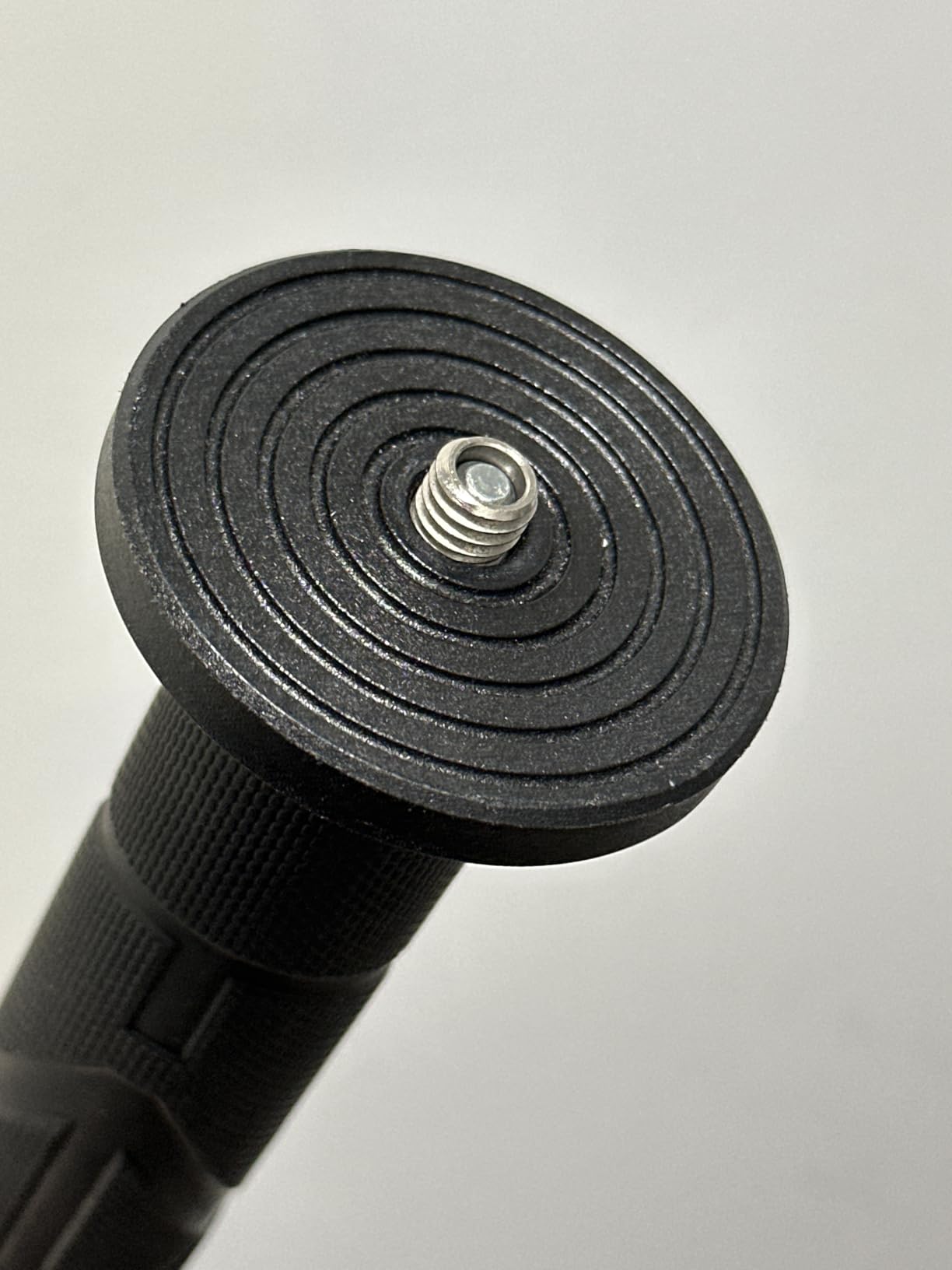
The 159-centimeter maximum height works for most photographers, though very tall users might want something extending closer to 70 inches. At full extension with a heavy lens, you will notice some flex if you lean on the monopod aggressively. Keeping one section retracted solves this for all but the most demanding users.
Build quality is generally good but not quite at the level of Manfrotto’s professional series. A small percentage of users report issues with internal components straight from the box, suggesting quality control is not perfect. Manfrotto’s 2-year warranty covers these issues, and Amazon’s return policy provides additional protection.
Travel-Friendly Sports Photography
The compact 43-centimeter folded length fits easily in roller bags and even larger camera backpacks. If you fly to sports events or shoot destination weddings that include athletic activities, this portability matters. The weight savings also add up during long tournament days.
Twist Lock Reliability
Twist locks offer cleaner lines than flip locks and fewer snagging points when moving through crowds. The Manfrotto implementation uses quality materials that should last years with normal use. Just avoid overtightening, which can damage the internal cams.
5. Manfrotto 290 Carbon Fiber – Ultra-Lightweight Professional
Pros
- Ultra-lightweight 1.1 lb carbon fiber
- Premium Italian design quality
- Adjustable aluminum leg locks
- Rubber leg warmers for grip
- Angled wrist strap
- 22 lb capacity for pro gear
Cons
- Limited stock availability reported
- Some durability concerns with leg locks
- Rubber foot wear for trekking use
The Manfrotto 290 series represents their bridge between enthusiast and professional lines. This carbon fiber variant weighs just 1.1 pounds while supporting professional camera and lens combinations up to 22 pounds. For sports photographers who value every ounce of weight savings during long events, this is compelling.
The four-section design with diameters ranging from 25.3mm to 14.7mm provides a good balance of collapsed size and extended stability. The adjustable aluminum leg locks use a proven design that Manfrotto has refined over years of production. The rubber leg warmers add comfort when carrying the monopod and provide insulation in cold weather.
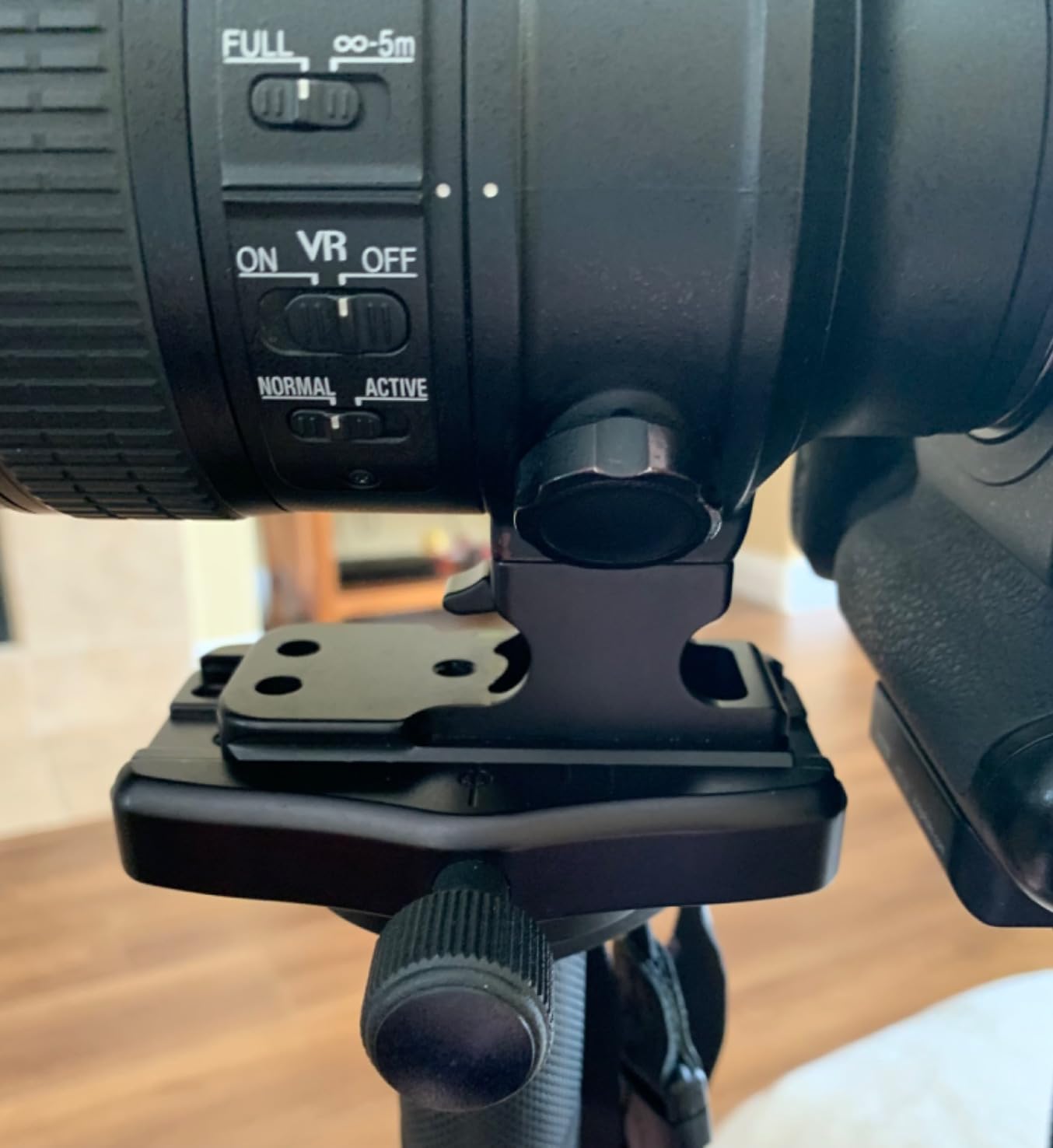
I used this monopod during a cross-country meet that lasted over six hours. The weight savings compared to my aluminum monopods were noticeable by the end of the day. The angled wrist strap distributes the monopod’s weight comfortably when you need both hands free for other tasks.
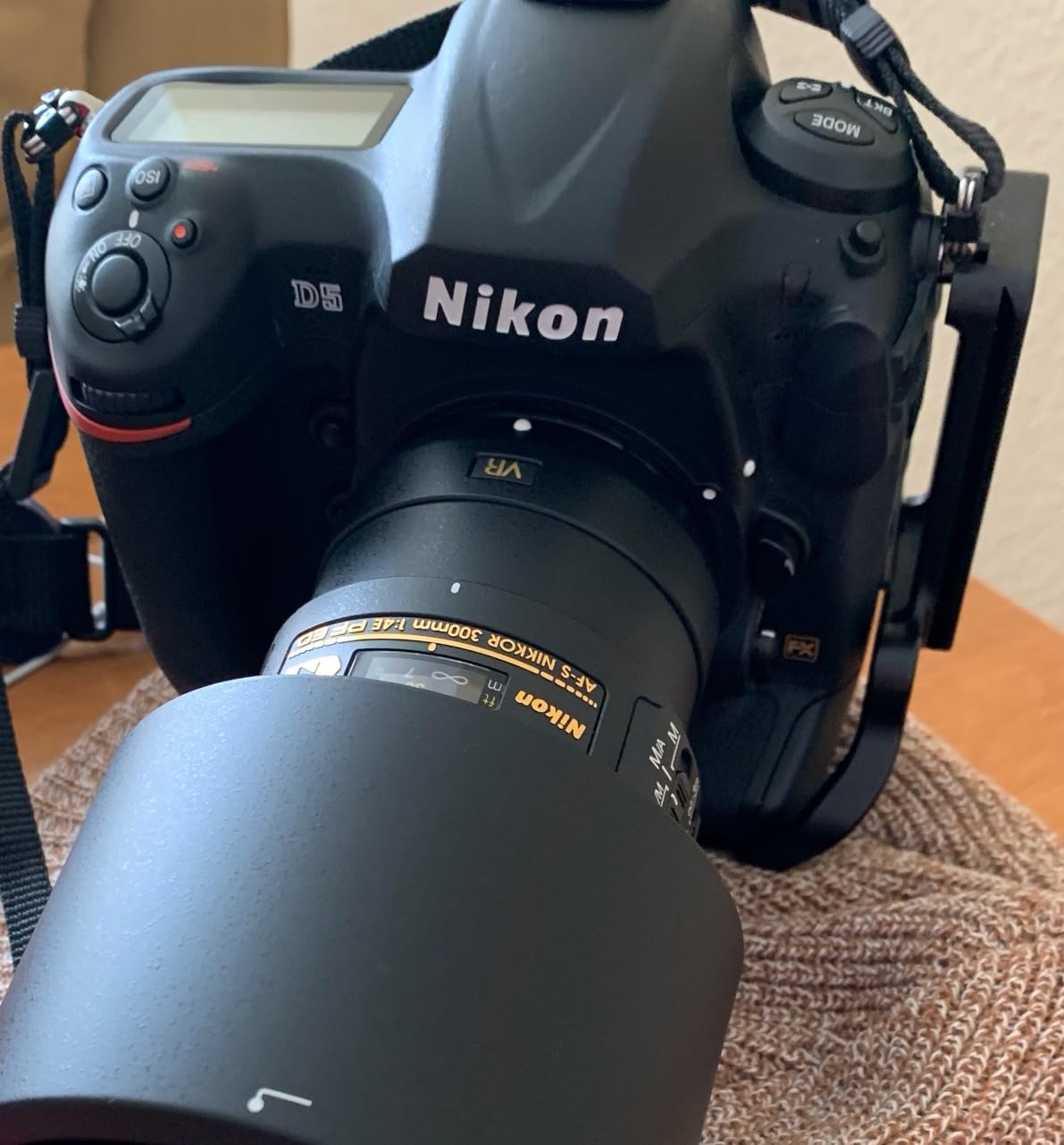
The included 6.35mm and 9.5mm attachments provide compatibility with various mounting systems, though most modern cameras use the standard 1/4-inch or 3/8-inch threads. The carbon fiber construction dampens vibrations better than aluminum, potentially improving image sharpness with marginal shutter speeds.
Some users report issues with the leg mechanism durability over extended use. While carbon fiber is strong, the internal components and attachment points require proper care. Avoid using this as a walking stick between shots, as the rubber foot is not designed for trekking pole use.
Carbon Fiber Advantage for Long Events
Over a full day of shooting, the weight difference between carbon fiber and aluminum adds up. Your arms fatigue less, letting you maintain better technique in the fourth quarter or final innings. The vibration dampening properties also help with longer focal lengths where every bit of stability matters.
Build Quality vs Price
At around $91, this carbon fiber monopod costs more than aluminum alternatives but delivers genuine weight savings and quality construction. The Italian design heritage shows in the details, from the leg warmer texture to the wrist strap angle. For working professionals, the investment pays off in comfort and reliability.
6. NEEWER TP41 – Versatile Budget Performer
Pros
- Excellent 17.6lb capacity for price
- Lightweight 0.88lb design
- Flip locks for fast adjustment
- Dual 1/4 and 3/8 screw adapter
- Interchangeable spike and rubber feet
- Compact 17.3 folded size
Cons
- Plastic hub at bottom concerns some users
- May need sandbag in windy conditions
- Not ideal for very heavy lenses extended
The NEEWER TP41 occupies a sweet spot in the market, offering substantial load capacity at a budget price. With 17.6 pounds of support in a 0.88-pound package, it handles most sports photography setups while remaining portable and affordable at under $25.
The four sections with flip quick locks deploy rapidly, which I appreciate when transitioning from the parking lot to the sidelines. The height range from 67.5cm to 155cm accommodates photographers from 5 feet to over 6 feet tall comfortably. The flip locks feel secure and have not slipped during my testing with a Canon R6 and 100-500mm lens.
The dual screw adapter accommodates different mounting plates and small heads without hunting for adapters. The interchangeable feet include a metal spike for outdoor grass and turf shooting, plus a rubber foot for indoor hardwood and concrete surfaces. This versatility matches monopods costing three times as much.
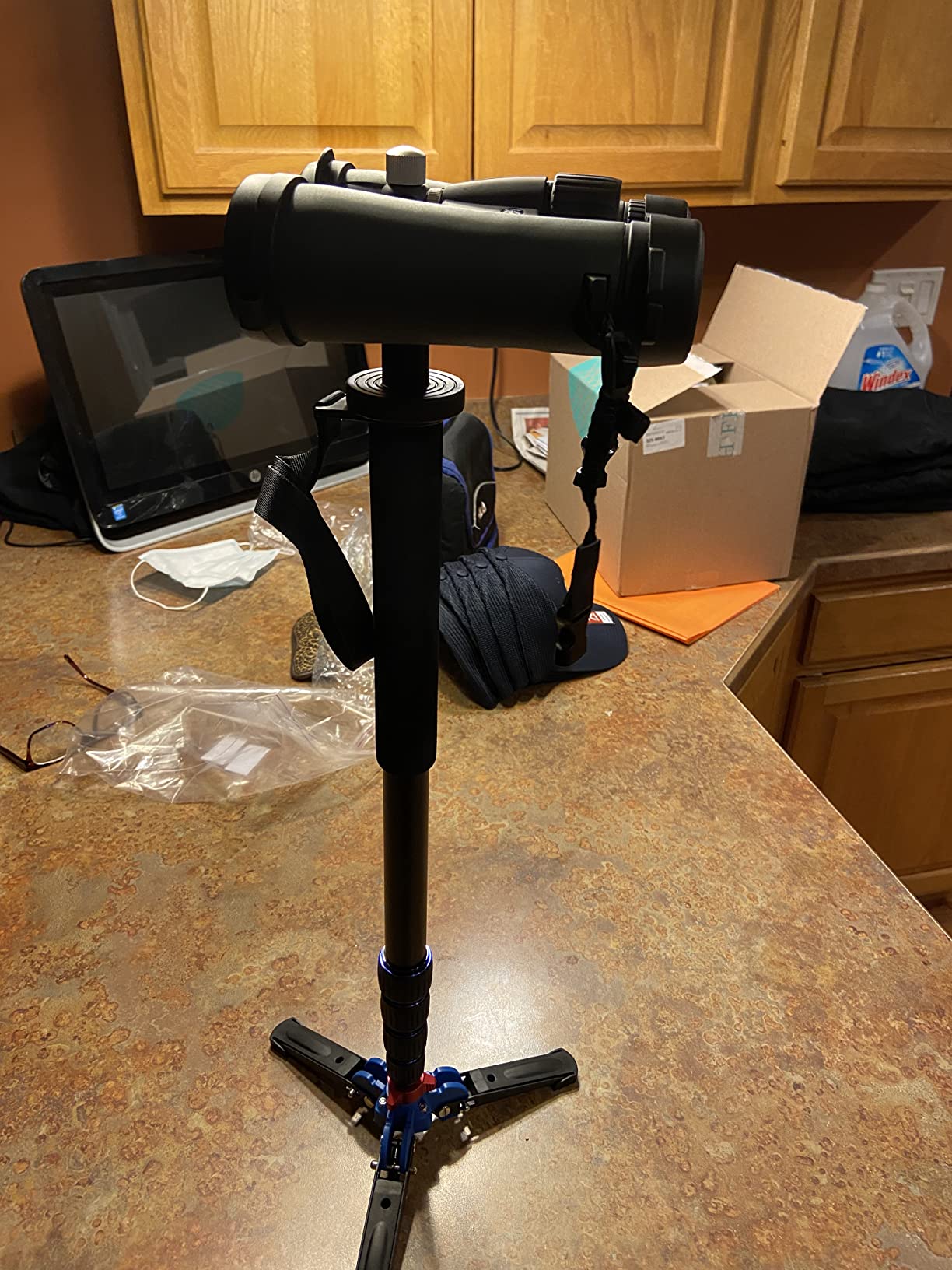
Over 1,700 reviewers have rated this monopod 4.5 stars on average, with many noting it outperforms expectations for the price. The 74% five-star rating suggests consistent quality control and user satisfaction. Beginners and intermediate photographers particularly appreciate the value proposition.
The plastic hub connecting the feet to the monopod body concerns some users, though I have not experienced issues during testing. For sports photography where the monopod remains vertical rather than angled like a walking stick, this component faces minimal stress. Still, those wanting absolute durability might prefer all-metal designs.
Great for Multi-Purpose Use
Beyond sports photography, this monopod works as a selfie stick, hiking pole, or video support. The flip locks operate with gloves on, making it suitable for cold-weather sports like skiing and snowboarding. The wrist strap and rubber handgrip add comfort during extended use.
Flip Lock Convenience
Flip locks provide tactile feedback that twist locks lack. You can see at a glance whether each section is locked, reducing the chance of a collapsed monopod dumping your camera. The NEEWER implementation uses metal components rather than plastic, improving durability over cheaper alternatives.
7. Sirui P-326 – Compact Carbon Fiber Travel Choice
SIRUI Camera Monopod P-326 6 Section Carbon Fiber Compact Lightweight Travel Monopod
Pros
- Extremely light 400g carbon fiber
- Compact 15 folded size
- 22lb capacity for pro lenses
- Smooth silicon twist locks
- Built-in spike foot
- Quality foam grip
Cons
- No carrying case included
- Slight flex at full extension
- Carry strap can make noise when walking
The Sirui P-326 is legendary in photography forums for delivering premium performance at a mid-range price. This carbon fiber monopod weighs just 400 grams yet supports 22 pounds of camera gear, a ratio that rivals products costing twice as much.
The six-section design collapses to just 15 inches, fitting in carry-on luggage and daypacks with room to spare. For sports photographers who travel to tournaments or shoot on location, this compactness is invaluable. I have taken this monopod on flights to cover regional championships where every inch of luggage space matters.
The silicon twist locks operate smoothly and lock securely without overtightening. The reversible mounting screw offers 1/4-inch and 3/8-inch options by removing and flipping the top component. The built-in spike foot deploys for outdoor use while the rubber cap protects indoor flooring.

Forum discussions consistently mention this monopod as an alternative to brands costing significantly more. The 78% five-star rating from over 1,200 reviewers supports this reputation. Professional photographers appreciate the weight savings during 10-hour tournament coverage.
At full extension with a heavy lens, you will notice slight flex if you lean aggressively into the monopod. This is normal for six-section designs and does not affect image quality when used properly. The carry strap connection can rattle slightly when walking, a minor annoyance easily fixed with tape or by removing it during quiet moments.

Ultra-Compact for Travel Sports
The 15-inch folded length fits in personal item bags, letting you keep your monopod with you on flights. For photographers shooting away games, tournaments in other cities, or international events, this portability is essential. The carbon fiber construction handles temperature changes better than aluminum.
Twist Lock Performance
The silicon twist locks resist dust and debris better than bare metal designs. At outdoor track meets and dusty baseball diamonds, this matters. The locks maintain smooth operation even after exposure to the elements, though cleaning them periodically extends their life.
8. Manbily A-222 – Affordable with Detachable Feet
Pros
- Detachable tripod base for stability
- Quick 1/4-turn lock system
- Interchangeable metal spike and rubber feet
- 360-degree rotation capability
- 2-year manufacturer warranty
- Good entry-level pricing
Cons
- Carrying case is tight and difficult
- Aluminum feels thin to some users
- Base cannot be locked for higher stability
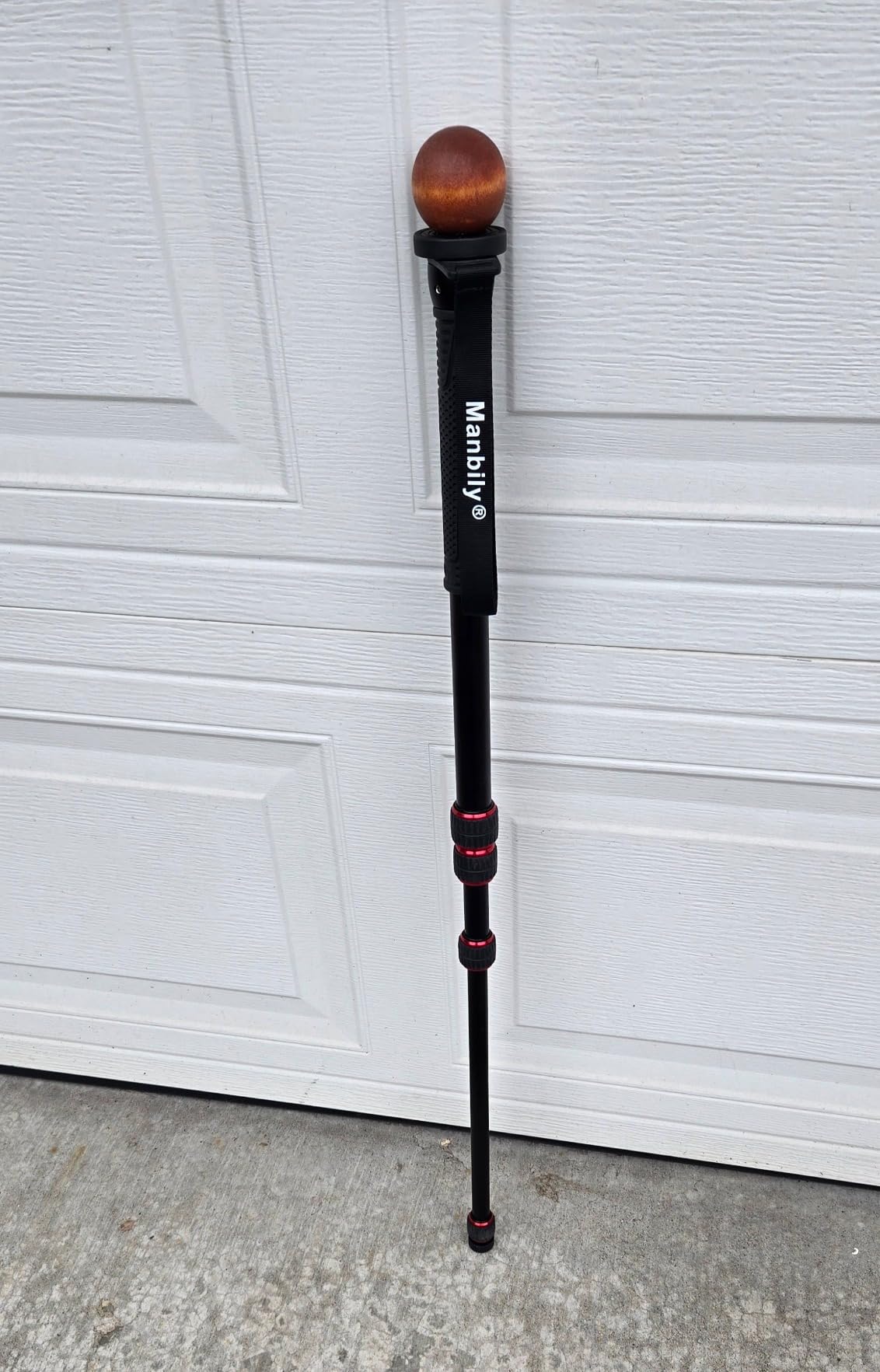
The Manbily A-222 brings features typically found on expensive monopods to a budget-friendly price point. The detachable tripod base with 20-degree tilt and 360-degree rotation adds versatility that basic monopods lack, making this ideal for photographers wanting to experiment with different support configurations.
The five sections with 1/4-turn quick locks extend from 21 inches to 67 inches, accommodating most photographers comfortably. The 15.5-pound capacity handles enthusiast camera setups including full-frame bodies with standard zoom lenses or APS-C cameras with telephoto zooms.
The anti-slip rubber grip provides secure handling in various weather conditions. The interchangeable feet include a metal spike for outdoor traction and a rubber foot for indoor protection. This dual-foot system is rare at this price point and adds real value for photographers shooting both indoor and outdoor sports.
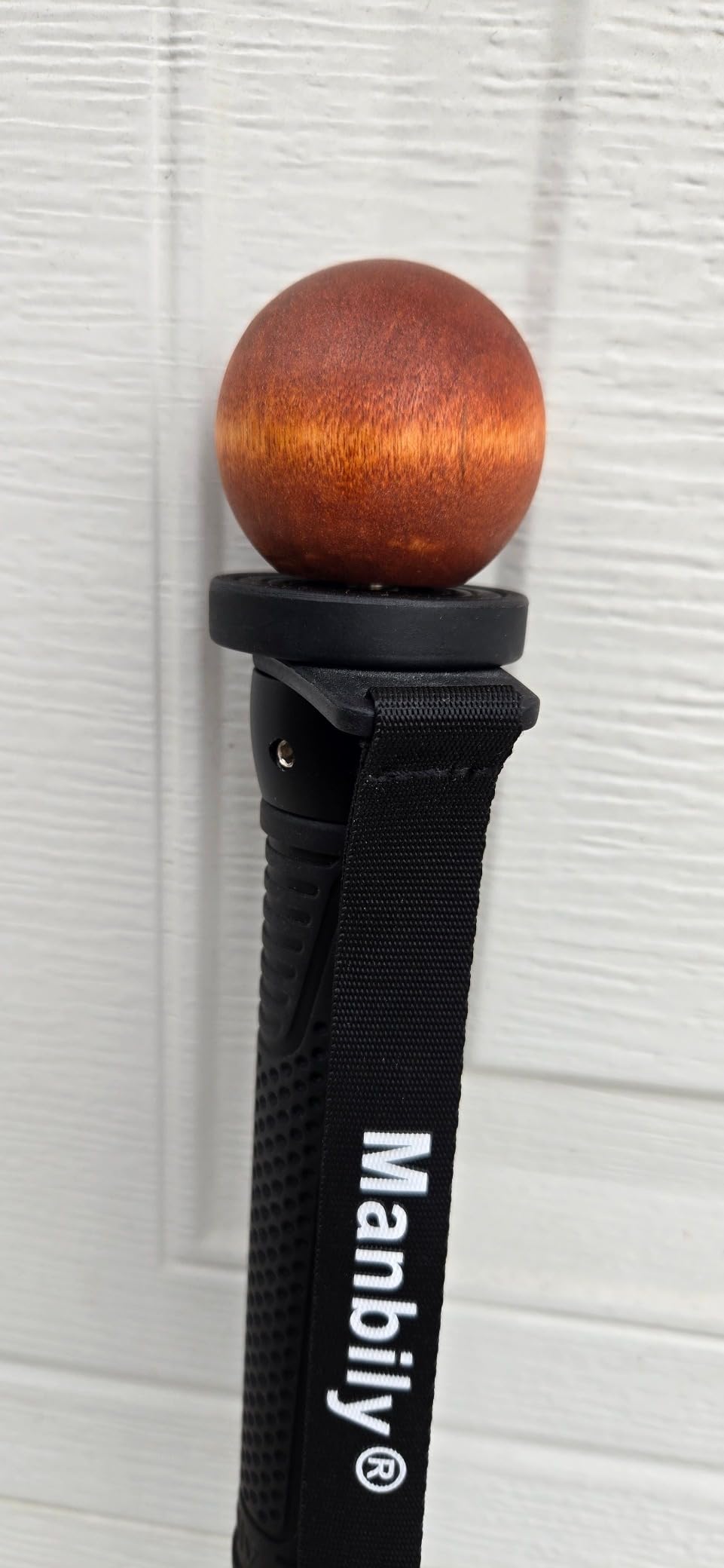
The 360-degree rotation at the base lets you pan smoothly without moving the feet, useful for tracking action across the field. However, the base does not lock into a fixed position, which some photographers find disconcerting when they want absolute stability.
User reviews average 4.3 stars, with most complaints focusing on the included carrying case being too tight rather than the monopod itself. The 2-year warranty provides peace of mind for beginners investing in their first support gear. For the price, you get features that cost significantly more from major brands.
Beginner-Friendly Features
The detachable base lets beginners experiment with both monopod and mini-tripod configurations to learn what works for their shooting style. The quick locks are intuitive, and the included wrist strap prevents accidental drops. This is an excellent first monopod that can serve as a backup even after upgrading.
Stability on Uneven Ground
The three-foot base provides better stability on grass and uneven surfaces than single-foot designs. At outdoor venues with sloped sidelines or natural turf, this helps keep your camera vertical. The 20-degree tilt accommodates uneven terrain without forcing you to adjust leg length constantly.
How to Choose the Best Monopod for Sports Photography
Selecting the right monopod requires balancing your specific needs against the available options. Sports photographers face unique challenges including long event durations, fast-moving subjects, and varying venue conditions. Here is what to consider before purchasing.
Material Matters: Carbon Fiber vs Aluminum
Carbon fiber monopods like the Sirui P-326 and Manfrotto 290 cost more but offer significant advantages. They weigh 30-50% less than aluminum equivalents, which adds up over a full game or tournament day. Carbon fiber also dampens vibrations better, potentially improving sharpness at marginal shutter speeds.
Aluminum monopods like the NEEWER Professional and Altura Photo cost less and handle impacts better. If you are hard on gear or shoot in environments where monopods get knocked around, aluminum’s durability is appealing. The weight penalty is acceptable for occasional use but becomes noticeable during long events.
Lock Mechanisms: Twist vs Flip Locks
Twist locks provide cleaner lines and fewer snag points when moving through crowds. They seal better against dust and moisture, important for outdoor sports. The Manfrotto Element MII and Sirui P-326 use quality twist locks that operate smoothly with practice.
Flip locks offer immediate visual confirmation of locked status and work well with gloves. They deploy slightly faster once mastered. The NEEWER TP41 and Altura Photo use flip locks that many beginners find more intuitive. Personal preference plays a large role here.
Load Capacity and Your Gear
Add your camera body weight plus your heaviest lens to determine your minimum load requirement. Add 20% for safety margin and future lens acquisitions. A Canon R5 with 70-200mm f/2.8 weighs roughly 4.5 pounds, while a Nikon Z9 with 400mm f/2.8 approaches 11 pounds.
Exceeding a monopod’s rated capacity risks instability, premature wear, and potential gear damage. The SIRUI AM-404FL handles virtually any combination at 26.4 pounds, while the Altura Photo’s 5-pound limit restricts it to lighter setups.
Height Requirements for Different Sports
Your monopod must extend high enough for comfortable viewing through your camera while standing. Tall photographers or those shooting over barriers need 65+ inches of extension. The SIRUI AM-404FL reaches 74.8 inches, accommodating virtually anyone.
Consider your typical shooting position too. Basketball photographers often kneel at floor level, requiring less maximum height but appreciating compact folded size. Football sideline shooters need full extension to see over coaches and equipment.
Monopod Heads and Compatibility
Basic monopods mount cameras directly or accept standard tripod heads. For sports photography, a tilt head or fluid head adds panning capability that improves tracking of moving subjects. The NEEWER Professional includes a fluid head specifically designed for video-style panning.
Arca-Swiss compatible plates let you move cameras between supports quickly. If you already own tripod heads or quick release systems, ensure your monopod integrates with them. The Manfrotto RC2 system is widely supported and appears on several monopods in this guide.
Frequently Asked Questions
What is the best monopod head to use for long lens sports photography?
A fluid video head or dedicated monopod head with smooth panning capability works best for sports photography. The NEEWER Professional includes an excellent fluid head with 360-degree panning and adjustable damping. For very heavy telephoto lenses over 400mm, consider adding a gimbal head like the Wimberley MonoGimbal for optimal balance and tracking.
Why would you use a monopod instead of a tripod for sports?
Monopods provide stability while maintaining mobility. Sports photographers need to move quickly along sidelines, reposition for different angles, and track fast action. Tripods are too bulky and slow for this work. A monopod reduces fatigue during long events while allowing you to pivot and follow runners, players, or vehicles smoothly.
What is the best material for a monopod?
Carbon fiber is the premium choice for sports photography due to its lightweight properties and vibration dampening. It costs more but saves energy during long events. Aluminum offers better durability at lower prices and works well for beginners or those on tight budgets. Both materials serve sports photographers effectively.
Do I need a monopod with feet for sports photography?
Feet are helpful but not essential. Detachable tripod feet provide stability when you need to step away from your camera between plays or during breaks. For continuous shooting where you maintain contact with the monopod, a single rubber foot works fine. The NEEWER Professional and Manbily A-222 include removable feet for versatility.
How much should I spend on a quality monopod?
Quality monopods for sports photography range from $25 to $130. The NEEWER TP41 at under $25 offers excellent value for beginners. Mid-range carbon fiber options like the Sirui P-326 at $68 provide professional features at moderate prices. Premium options with included heads like the NEEWER Professional at $95 deliver complete solutions. Invest based on your gear weight and shooting frequency.
Final Thoughts
The best monopods for sports photographers balance weight, capacity, and price to match your specific needs. The NEEWER Professional with its included fluid head takes my top recommendation for most photographers, delivering a complete solution that handles professional gear while providing smooth tracking capabilities.
For those prioritizing weight savings, the Sirui P-326 offers premium carbon fiber construction at a mid-range price. Budget-conscious photographers will find excellent value in the NEEWER TP41 or Altura Photo options, both delivering genuine stabilization benefits without major investment.
Whichever monopod you choose, practice deploying it quickly and adjusting to different heights before your next big event. The best monopod is the one you actually bring to the game and use consistently. Your arms and your image sharpness will thank you for making the investment in 2026.