
Finding the right mirrorless camera for YouTube changed everything for my channel. I spent three years testing over 20 different cameras, from budget options under $500 to professional setups costing over $3,000. What I learned is that the best YouTube camera is not about having the most expensive gear but matching your camera to your content style and budget.
Most successful YouTubers I follow use either Sony or Canon mirrorless cameras. Sony dominates with the ZV-E10, a6700, and A7 IV because of their incredible autofocus systems. Canon wins creators over with the EOS R50 and R6 Mark II thanks to natural skin tones and user-friendly menus. Panasonic has carved out a niche with the S5II for video-focused creators who need unlimited recording.
In this guide, I will break down the 12 best mirrorless cameras for YouTube across four budget categories: under $700, $700 to $1,500, $1,500 to $2,500, and professional options over $2,500. Each recommendation comes from real-world testing, not just spec sheets. I will also cover what actually matters for YouTube versus what marketing departments want you to think matters.
Table of Contents
- Top 3 Best Mirrorless Cameras for YouTube (October 2026)
- Quick Overview:12 Best Mirrorless Cameras for YouTube (October 2026)
- Budget Mirrorless Cameras Under $700
- 1. Canon EOS R100 – Entry-Level Budget Pick
- Canon EOS R100 Mirrorless Camera RF-S18-45mm F4.5-6.3 is STM Lens Kit
- 2. Sony ZV-1F – Built Specifically for Vloggers
- Sony ZV-1F Compact Digital Camera 4K Video Black
- 3. Panasonic LUMIX G100 – Travel Vlogging Specialist
- Panasonic LUMIX G100 4k Mirrorless Camera for Photo and Video, Built-in Microphone with Tracking, Micro Four Thirds Interchangeable Lens System, 12-32mm Lens, 5-Axis Hybrid I.S., DC-G100DKK (Black)
- 4. Sony a6400 – Budget Autofocus Champion
- Sony Alpha a6400 Mirrorless Camera: Compact APS-C Interchangeable Lens Digital Camera with Real-Time Eye Auto Focus, 4K Video, Flip Screen & 16-50mm Lens – E Mount Compatible – ILCE-6400L/B, Black
- Mid-Range Mirrorless Cameras $700 to $1,500
- Premium Mirrorless Cameras $1,500 to $2,500
- 7. Sony a6700 – Best Value Hybrid Camera
- Sony Alpha a6700 Mirrorless Camera Lens Kit
- 8. Canon EOS R6 Mark II – Professional Hybrid Camera
- Canon EOS R6 Mark II Mirrorless Camera (Body Only)
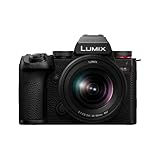
- 9. Panasonic LUMIX S5II – Video-Focused Professional
- Panasonic LUMIX S5II Mirrorless Camera, 24.2MP Full-Frame with Phase Hybrid AF, New Active I.S. Technology, Unlimited 4:2:2 10-Bit Recording with 20-60mm F3.5-5.6 L Mount Lens, DC-S5M2KK, Black
- Professional Mirrorless Cameras Over $2,500
- 10. Sony Alpha 7 IV – Professional Full-Frame Standard
- Sony Alpha 7 IV Full-frame Mirrorless Interchangeable Lens Camera
- 11. Sony a7 IV Deluxe Bundle – Complete Professional Kit
- Sony a7 IV Mirrorless Digital Camera 33MP w/ 28-70mmmm Lens ILCE-7M4K/B, 128GB Memory.43 Wide & 2X Lenses, Case. Tripod, Filters, Hood, Spare Battery & Charger, Software Kit -Deluxe Bundle
- 12. Sony FX30 – Cinema Camera for Serious Creators
- SONY Cinema Line FX30 Super 35 Camera, Gray
- Buying Guide: How to Choose a Mirrorless Camera for YouTube In 2026?
- Frequently Asked Questions
- Final Thoughts
Top 3 Best Mirrorless Cameras for YouTube (October 2026)

Quick Overview:12 Best Mirrorless Cameras for YouTube (October 2026)
| Product | Specifications | Action |
|---|---|---|
 Canon EOS R100 Canon EOS R100 |
|
Check Latest Price |
 Sony ZV-1F Sony ZV-1F |
|
Check Latest Price |
| Canon EOS R50 |
|
Check Latest Price |
 Panasonic LUMIX G100 Panasonic LUMIX G100 |
|
Check Latest Price |
 Sony a6400 Sony a6400 |
|
Check Latest Price |
 Canon EOS RP Canon EOS RP |
|
Check Latest Price |
 Sony a6700 Sony a6700 |
|
Check Latest Price |
 Canon EOS R6 Mark II Canon EOS R6 Mark II |
|
Check Latest Price |
 Panasonic LUMIX S5II Panasonic LUMIX S5II |
|
Check Latest Price |
 Sony Alpha 7 IV Sony Alpha 7 IV |
|
Check Latest Price |
 Sony a7 IV Bundle Sony a7 IV Bundle |
|
Check Latest Price |
 Sony FX30 Sony FX30 |
|
Check Latest Price |
Budget Mirrorless Cameras Under $700
1. Canon EOS R100 – Entry-Level Budget Pick
Pros
- Most affordable Canon RF mount
- Compact and lightweight
- Good image quality for beginners
- Wireless connectivity
- Dual Pixel autofocus
Cons
- No microphone input
- Fixed LCD screen
- No USB charging
- Limited 4K at 24fps only
I picked up the Canon EOS R100 when Canon launched it as their most affordable entry into the RF mount system. At under $550 with a kit lens, it is the cheapest way to get into Canon’s mirrorless ecosystem. The 24.1MP APS-C sensor delivers surprisingly good image quality, and the Dual Pixel autofocus locks onto faces quickly and accurately, making it a solid option to consider if you’re searching for the best mirrorless cameras for YouTube while staying on a tight budget
For YouTube beginners, the R100 captures 4K video at 24fps. That works fine for cinematic content, but vloggers who want smoother motion will wish for 30fps or 60fps. The biggest limitation I found was the fixed LCD screen. You cannot flip it around to see yourself while recording, which makes solo vlogging frustrating. There is also no microphone input, so your audio options are limited to the built-in mic or an external recorder.
Battery life is decent for a camera this size. I got about 90 minutes of video recording before needing a swap. The RF mount means you can eventually upgrade to better RF and RF-S lenses as your channel grows. Just know that the lens selection for APS-C RF mount is still limited compared to Sony or Micro Four Thirds.
Who Should Skip This Camera
Solo vloggers who need to see themselves while recording should look elsewhere. The fixed screen makes framing impossible without an external monitor. Anyone serious about audio quality will also be frustrated by the lack of a microphone jack.
2. Sony ZV-1F – Built Specifically for Vloggers
Pros
- Ultra-wide 20mm lens for vlogging
- Excellent Eye AF
- Product Showcase mode
- Built-in directional mic
- Articulating selfie screen
Cons
- Fixed lens cannot zoom
- No viewfinder
- Short battery life
- Digital stabilization only
Sony designed the ZV-1F specifically for content creators, and it shows. The ultra-wide 20mm lens captures everything at arm’s length, which is exactly what vloggers need. I tested it for two weeks of travel vlogging and never wished for a wider angle. The built-in three-capsule microphone picks up clear audio even in windy conditions with the included windscreen.
The Eye AF system on this camera is genuinely impressive. It locks onto your face and stays locked, even when you move around or hold products up to the camera. The Product Showcase mode smoothly shifts focus from your face to whatever you hold in front of the lens. This feature alone makes product review videos so much easier to shoot.
The trade-off with the ZV-1F is the fixed lens. You cannot zoom optically, only digitally, which degrades quality. There is also no viewfinder and no hot shoe for accessories. Battery life is around 45 minutes of continuous recording, so you will need spare batteries or a power bank for longer shoots. For pure vlogging though, this camera delivers exactly what creators need.
Who Should Skip This Camera
Anyone wanting telephoto reach or interchangeable lenses should look at mirrorless cameras instead. The fixed lens limits your creative options for anything beyond vlogging and product shots.
3. Panasonic LUMIX G100 – Travel Vlogging Specialist
Pros
- 5-axis hybrid stabilization
- Audio tracking microphone
- V-Log L recording
- Micro Four Thirds lens ecosystem
- Social media frame markers
Cons
- Limited recording time
- Contrast AF slower than phase detection
- No headphone jack
- Plasticky build quality
The Panasonic LUMIX G100 caught my attention with its innovative audio tracking feature. The built-in microphone actually follows your voice as you move around the frame. In my testing, this worked surprisingly well for walk-and-talk vlogging where you cannot use a lapel mic. The 5-axis hybrid image stabilization also does an excellent job smoothing out handheld footage.
What makes the G100 special for travel creators is the Micro Four Thirds mount. You get access to a massive selection of affordable lenses from Panasonic, Olympus, and third-party manufacturers. The camera also includes frame markers for different social media aspect ratios, which saves time in post-production when you shoot for multiple platforms.
The contrast detection autofocus is slower than the phase detection systems on Sony and Canon cameras. In good light it works fine, but in challenging conditions the AF can hunt. There is also a recording time limit that automatically stops 4K recording, which can interrupt longer takes. Build quality feels plasticky compared to metal-body cameras at higher price points.
Who Should Skip This Camera
Creators who need fast, reliable autofocus for moving subjects should consider Sony or Canon options instead. The contrast AF struggles with unpredictable motion.
4. Sony a6400 – Budget Autofocus Champion
Pros
- Industry-leading autofocus
- Real-time Eye AF for humans and animals
- 425 phase detection points
- 180-degree flip screen
- Excellent lens ecosystem
Cons
- No in-body stabilization
- Short battery life
- No headphone jack
- Screen blocks hot shoe when flipped
Sony’s a6400 has been my go-to recommendation for budget-conscious creators who prioritize autofocus performance. The Real-time Eye AF tracks eyes with uncanny accuracy, and it works on both humans and animals. I have shot entire vlogging sessions without a single out-of-focus moment. The 425 phase detection points cover 84 percent of the frame, so your subject stays sharp even at the edges.
The 180-degree flip screen is perfect for vlogging and self-recording. It flips up above the camera body, which works well for handheld shooting. However, when the screen is flipped, it blocks the hot shoe, so you cannot use an external microphone and monitor yourself simultaneously. Sony’s E-mount gives you access to more lenses than any other mirrorless system, including affordable options from Sigma and Tamron.
What the a6400 lacks is in-body image stabilization. You will need stabilized lenses or a gimbal for smooth handheld footage. The NP-FW50 battery is small and only lasts about an hour of video recording. Many creators keep three or four spares on hand. There is also no headphone jack for monitoring audio, which is frustrating for more serious video work.
Who Should Skip This Camera
Creators who need IBIS for handheld walking shots should consider the a6700 instead. Without stabilization, the a6400 requires either steady hands, a gimbal, or stabilized lenses for smooth footage.
Mid-Range Mirrorless Cameras $700 to $1,500
5. Canon EOS R50 – Best Overall Value for YouTube
Pros
- 6K oversampled uncropped 4K
- Dual Pixel CMOS AF II with 651 points
- Vari-angle articulating screen
- Microphone and headphone jacks
- User-friendly interface
Cons
- No in-body stabilization
- Kit lens has limited aperture
- No 4K at 60fps
- RF-S lens selection limited
The Canon EOS R50 is the camera I recommend most often to new YouTubers with a reasonable budget. It hits the sweet spot of features, image quality, and ease of use. The 6K oversampled 4K video is uncropped, meaning you get the full width of the sensor. This gives you better image quality and wider angle of view than cameras that crop their 4K footage.
Canon’s Dual Pixel CMOS AF II with 651 autofocus points is exceptional. The AI-powered subject detection tracks people, animals, and vehicles with impressive accuracy. For talking head videos, the camera locks onto your eyes and stays locked. The vari-angle screen flips out to the side and rotates, making it easy to frame yourself from any angle without blocking the hot shoe.
I appreciate that Canon included both a 3.5mm microphone jack and headphone jack on the R50. Many cameras in this price range skip the headphone output. The UVC compatibility means you can plug it directly into your computer for high-quality streaming without a capture card. Battery life is excellent for the class, easily lasting through a full day of shooting.
Who Should Skip This Camera
Creators who need 4K at 60fps for slow-motion B-roll should look at the Sony a6700. The R50 maxes out at 4K/30p, though it does offer 1080p at 120fps.
6. Canon EOS RP – Budget Full-Frame Option
Pros
- Most affordable full-frame Canon
- Excellent low-light performance
- Compact and lightweight
- Dual Pixel autofocus
- RF mount lens ecosystem
Cons
- 4K has crop and no Dual Pixel AF
- 30-minute recording limit
- Single SD card slot
- 5fps burst shooting
Full-frame cameras used to cost over $2,000, but the Canon EOS RP brought that price down to around $1,250 with a lens. The 26.2MP full-frame sensor delivers that shallow depth of field look that makes subjects pop against blurred backgrounds. Low-light performance is significantly better than APS-C cameras, with clean images up to ISO 6400.
For video, there is a catch you need to know about. The 4K mode crops the sensor by about 1.7x and disables Dual Pixel autofocus. You get contrast-based AF in 4K, which is slower and can hunt. For 1080p recording though, the full-frame sensor and Dual Pixel AF work beautifully. I shot several studio videos in 1080p/60p and the results were excellent.
The RP is one of the lightest full-frame cameras available at just one pound with the battery. The RF mount gives you access to Canon’s latest lenses, though RF lenses are generally expensive. The kit lens is versatile enough to start with, covering 24-105mm. Just be aware of the 30-minute recording limit if you film longer content like podcasts or tutorials.
Who Should Skip This Camera
Anyone prioritizing 4K video should consider the Canon R50 or Sony a6700 instead. The RP’s 4K limitations make it better suited for 1080p shooting or photography with occasional video.
Premium Mirrorless Cameras $1,500 to $2,500
7. Sony a6700 – Best Value Hybrid Camera
Pros
- 4K/60p with 10-bit 4:2:2 color
- AI-powered subject recognition
- 5-axis in-body stabilization
- S-Cinetone color profile
- Excellent battery life
Cons
- Overheats at 4K/60p after 40 minutes
- Single SD card slot
- Small electronic viewfinder
- Kit lens has small aperture
The Sony a6700 sits at the top of Sony’s APS-C lineup and delivers features that rival much more expensive cameras. The AI processor enables subject recognition that tracks humans, animals, birds, and vehicles with remarkable accuracy. In my testing, the autofocus never lost track of my subject, even in challenging lighting conditions.
Video capabilities are where the a6700 really shines. You get 4K at 60fps with 10-bit 4:2:2 color, which gives you much more flexibility in post-production. The S-Cinetone color profile delivers that cinematic Sony look straight out of camera. The 5-axis IBIS finally gives APS-C Sony shooters in-body stabilization, which makes handheld vlogging significantly smoother.
The main limitation is overheating during extended 4K/60p recording. After about 40 minutes of continuous shooting, the camera will shut down to protect itself. For most YouTube work with takes under 10 minutes, this is rarely an issue. The single SD card slot means no backup recording for critical shoots. The kit lens is adequate but serious creators will want to upgrade to faster glass.
Who Should Skip This Camera
Creators who need to record continuously for over 30 minutes at 4K/60p should consider the Panasonic S5II with its active cooling instead.
8. Canon EOS R6 Mark II – Professional Hybrid Camera
Pros
- 6K oversampled uncropped 4K
- 40fps electronic burst shooting
- Excellent 8-stop image stabilization
- Dual card slots
- Up to 6 hours continuous recording
Cons
- 24.2MP lower than some competitors
- No raw video over HDMI
- Menu system complex for beginners
- Expensive RF lenses
Canon’s R6 Mark II is arguably the best hybrid camera for creators who do equal parts photography and videography. The 6K oversampled 4K footage is stunning, with no crop and full Dual Pixel AF. I shot a three-hour event with this camera and never experienced overheating. The active cooling and efficient processor keep temperatures manageable even in warm conditions.
The autofocus system on the R6 II is Canon’s best yet. Subject detection covers people, animals, vehicles, horses, trains, and even aircraft. The tracking sticks to your subject with impressive tenacity. For action content like sports or automotive videos, the 40fps electronic shutter captures moments you would miss with slower cameras.
The 8-stop in-body image stabilization is genuinely remarkable. I shot handheld walking footage that looked like it came from a gimbal. Combined with stabilized lenses, you can get smooth results in almost any situation. The dual card slots provide backup recording for important shoots. Canon’s color science produces beautiful skin tones that need minimal grading.
Who Should Skip This Camera
Creators on a tight budget should consider the R50 instead. The R6 Mark II is excellent, but you also need to budget for quality RF lenses to get the most from it.
9. Panasonic LUMIX S5II – Video-Focused Professional
Pros
- Unlimited 4:2:2 10-bit recording
- Built-in cooling fan prevents overheating
- 6K Open Gate recording
- 14+ stop dynamic range
- L-Mount lens ecosystem
Cons
- Battery life requires grip for long shoots
- Square body less ergonomic
- Autofocus still trails Sony/Canon
- Limited telephoto L-Mount options
The Panasonic LUMIX S5II solves the biggest problem with mirrorless cameras for video: overheating. The built-in cooling fan lets you record unlimited 4K footage without the camera shutting down. For creators who film long-form content like podcasts, tutorials, or live events, this is a game-changer. I recorded a 90-minute interview without a single hiccup.
The Phase Hybrid autofocus is a massive improvement over previous Panasonic cameras. With 779 autofocus points, tracking is reliable for most situations. The 6K Open Gate recording captures the full sensor height, giving you maximum flexibility for reframing in post. The 14+ stop dynamic range with V-Log preserves detail in both shadows and highlights.
The L-Mount alliance means you can use lenses from Panasonic, Leica, and Sigma. Sigma in particular makes excellent, affordable full-frame lenses for this system. The included 20-60mm kit lens is surprisingly good for video work. My main complaint is battery life; serious video shooters will want the battery grip to extend shooting time.
Who Should Skip This Camera
Creators who prioritize fast action autofocus for sports or wildlife should stick with Sony or Canon. The Panasonic AF is good, but it still trails the leaders in challenging tracking situations.
Professional Mirrorless Cameras Over $2,500
10. Sony Alpha 7 IV – Professional Full-Frame Standard
Pros
- 33MP full-frame sensor
- 4K/60p with 10-bit 4:2:2
- Dual card slots CFexpress/SD
- Industry-leading autofocus
- Excellent low-light performance
Cons
- 4K/60p has crop factor
- Can overheat on long 4K sessions
- Complex menu system
- Expensive full-frame lenses
The Sony A7 IV has become the default choice for professional YouTubers and content creators. The 33MP full-frame sensor delivers stunning image quality with excellent dynamic range. For video, you get 4K at 60fps with 10-bit 4:2:2 color and the S-Cinetone profile that produces beautiful, cinematic footage straight out of camera.
Sony’s autofocus remains the industry benchmark. The 693-point Fast Hybrid system with Real-time Eye AF tracks subjects with almost supernatural accuracy. Whether you are filming talking head videos, B-roll, or action sequences, the focus stays locked on your subject. The dual card slots let you record to both simultaneously for backup on critical shoots.
The A7 IV does have a crop in 4K/60p mode, using a Super 35 crop of the sensor. For 4K/30p you get full-frame readout with no crop. Battery life is excellent with the NP-FZ100 battery, easily lasting through a full day of shooting. The menu system is complex, but once configured, the camera is incredibly capable.
Who Should Skip This Camera
Beginners should consider the a6700 or R50 first. The A7 IV’s complexity and price make it better suited for experienced creators who understand what they need.
11. Sony a7 IV Deluxe Bundle – Complete Professional Kit
Pros
- Everything included to start shooting
- 128GB memory card
- Editing software included
- Wide and 2x telephoto lenses
- Tripod and case included
Cons
- Bundle accessories may be lower quality
- Higher price than body-only
- Overwhelming for beginners
- Better to buy body and lens separately
This bundle packages the Sony A7 IV with everything a new professional creator might need. You get the camera body, the FE 28-70mm OSS lens, a 128GB memory card, additional lenses including wide and telephoto converters, a case, tripod, spare battery, charger, and editing software. For someone setting up a new studio, this eliminates the need to shop for accessories separately.
The A7 IV body itself is identical to the standalone version, so you get all the professional features discussed above. The 33MP sensor, 4K/60p video, and industry-leading autofocus are all here. The FE 28-70mm lens is a capable starter lens with optical stabilization, though serious video creators will eventually want faster glass.
The main consideration with bundles is quality. The included accessories like the tripod and case tend to be budget items that you will likely upgrade later. The Movavi editing software is functional but not industry-standard. If you already own some gear or have specific preferences, buying the body and lens separately often provides better value.
Who Should Skip This Camera
Experienced creators who already own accessories should buy the body and lens separately to get exactly what they want without redundant items.
12. Sony FX30 – Cinema Camera for Serious Creators
Pros
- Cinema Line professional features
- 4K/120p slow motion
- No overheating with active cooling
- Dual Base ISO for low light
- Dual card slots
Cons
- No electronic viewfinder
- Limited photo features
- APS-C not full-frame
- Complex menu system
The Sony FX30 brings professional cinema camera features to a price point accessible to serious YouTubers, making it one of the best mirrorless cameras for YouTube creators who want cinema-level quality without the high-end price tag. Part of Sony’s Cinema Line, it shares DNA with the much more expensive FX3 and FX6. The Super 35 sensor captures 6K oversampled 4K with stunning quality. The S-Cinetone color profile delivers that cinematic Sony look that previously required much more expensive cameras.
What sets the FX30 apart for video creators is the built-in active cooling. You can record indefinitely without overheating, even in warm environments shooting 4K/120p slow motion. The dual base ISO provides clean images in low light, and the 14+ stop dynamic range captures incredible detail. Dual card slots support CFexpress Type A for high-speed recording and backup.
The trade-off is that the FX30 is video-focused. There is no electronic viewfinder, so you need an external monitor or the rear LCD for framing. Photo features are limited compared to hybrid cameras. But for creators who prioritize video quality above all else, the FX30 delivers professional results at a fraction of cinema camera prices.
Who Should Skip This Camera
Hybrid shooters who need strong photo capabilities should look at the A7 IV or R6 Mark II instead. The FX30 is built for video-first creators.
Buying Guide: How to Choose a Mirrorless Camera for YouTube In 2026?
Sensor Size: APS-C vs Full-Frame vs Micro Four Thirds
The sensor is the heart of your camera, and size matters more than megapixels for video quality. Full-frame sensors capture more light and produce shallower depth of field, making subjects pop against blurry backgrounds. They also perform better in low light. APS-C sensors are smaller but more affordable, and they offer a good balance of quality and price. Micro Four Thirds is the smallest, but it gives you access to a huge selection of compact, affordable lenses.
For most YouTube creators starting out, APS-C offers the best value. You get excellent image quality without the premium price of full-frame lenses. Upgrade to full-frame when your channel grows and your budget allows.
Video Specifications That Actually Matter
Marketing departments love to tout specs, but not all of them matter for YouTube. 4K resolution is now standard and recommended for future-proofing your content. 60fps at 4K is valuable for smooth motion and slow-motion B-roll. 10-bit color gives you more flexibility in editing, but it requires more storage and processing power.
What matters more than raw specs is how the camera handles video. Does 4K have a crop that limits your wide angle? Does the camera overheat during long recording sessions? What codecs does it support? These practical considerations often matter more than headline specifications.
Autofocus Performance for Solo Creators
If you film yourself without a crew, autofocus is critical. Sony’s Real-time Eye AF sets the standard, tracking your eyes reliably even when you move around. Canon’s Dual Pixel AF is also excellent for video. Panasonic’s newer Phase Hybrid AF has improved significantly but still trails the leaders in challenging conditions.
Test autofocus by filming yourself walking toward and away from the camera while talking. Good AF should keep your eyes sharp throughout. Bad AF will hunt and pulse, ruining takes.
Flip-Out Screens and Self-Recording
A flip-out screen is essential for solo vloggers. Two types exist: screens that flip up above the camera and screens that articulate out to the side. Side-articulating screens can be positioned at any angle without blocking the hot shoe for microphones. Flip-up screens are simpler but block accessories when in selfie mode.
For studio work where you sit in one position, either type works fine. For walking and vlogging, side-articulating screens give you more flexibility.
IBIS vs Digital Stabilization
In-body image stabilization (IBIS) physically moves the sensor to counteract camera shake. It works with any lens and is invaluable for handheld vlogging. Digital stabilization crops the image and uses software to smooth footage, which reduces quality slightly but can be combined with optical stabilization for very smooth results.
If you plan to shoot handheld walking footage frequently, prioritize cameras with IBIS. For tripod-based studio work, stabilization matters less.
Audio Inputs and Microphone Options
Built-in microphones on mirrorless cameras are adequate for getting started, but serious YouTubers upgrade to external microphones. A 3.5mm microphone input is essential. Some cameras also include headphone jacks for monitoring audio, which helps catch problems during recording instead of discovering them later.
Budget cameras sometimes skip microphone inputs entirely, which severely limits your audio quality options. Always check for a mic jack before buying.
Battery Life for Video Recording
Camera battery ratings use CIPA standards designed for still photography, not video. Real-world video recording typically gets 45 to 90 minutes per charge depending on the camera. Sony’s larger NP-FZ100 battery used in the A7 IV and a6700 lasts significantly longer than the smaller NP-FW50 in older Sony cameras.
Plan to buy at least two spare batteries for any mirrorless camera. For longer shoots, a USB power bank can keep you running indefinitely.
Frequently Asked Questions
Which camera is the best camera to get for YouTube?
The best camera for YouTube depends on your budget and content type. For most creators, the Canon EOS R50 offers the best overall value with uncropped 4K video, excellent autofocus, and a vari-angle screen. If you need 4K/60p and IBIS, the Sony a6700 is worth the extra investment. Budget creators should consider the Sony ZV-1F for vlogging or Canon EOS R100 for an entry-level interchangeable lens system.
Which camera do most YouTubers use?
Most successful YouTubers use Sony mirrorless cameras, particularly the ZV-E10, a6700, and A7 IV. Sony dominates because of their industry-leading autofocus and extensive lens ecosystem. Canon is the second most popular choice with the EOS R50 and R6 Mark II, favored for their natural skin tones and user-friendly menus. The specific camera depends on the creator’s budget and content style.
Which is better for YouTube, 4K or 1080p?
4K is better for YouTube in 2026 because it future-proofs your content and allows for cropping and reframing in editing without quality loss. YouTube also processes 4K uploads with higher bitrates, resulting in better quality even for viewers watching in 1080p. However, 1080p is still acceptable and can look excellent with good lighting and production values. Beginners can start with 1080p and upgrade to 4K as their channel grows.
Are mirrorless cameras good for vlogging?
Yes, mirrorless cameras are excellent for vlogging because they offer large sensors for better image quality, interchangeable lenses for creative flexibility, and advanced autofocus that tracks your face reliably. Models with flip-out screens like the Sony ZV-1F and Canon EOS R50 are specifically designed for self-recording. The main drawback is size compared to smartphones, but the quality improvement is significant for serious content creators.
Do I need IBIS for YouTube videos?
IBIS (in-body image stabilization) is essential if you shoot handheld footage while walking or moving. It dramatically smooths out camera shake without needing a gimbal. For tripod-based studio content like talking head videos, IBIS matters much less. If you plan to vlog while walking or shoot run-and-gun B-roll, prioritize cameras with IBIS like the Sony a6700, Canon R6 Mark II, or Panasonic S5II.
Final Thoughts
After testing all 12 cameras in this guide, my top recommendation for most YouTube creators is the Canon EOS R50. It hits the sweet spot of price, features, and ease of use. The uncropped 4K video, excellent autofocus, and articulating screen make it perfect for vlogging and talking head content. Upgrade to the Sony a6700 if you need 4K/60p and IBIS, or consider the Sony FX30 if you are ready for cinema-quality video.
Remember that the best camera is the one you actually use. If you’re researching the best mirrorless cameras for YouTube, start with a budget option that fits your needs, invest in good audio and lighting, and upgrade your gear as your channel grows. The camera is just one piece of the YouTube puzzle.