
Professional photography has undergone a massive transformation in recent years as mirrorless cameras have matured into legitimate alternatives to traditional DSLRs. Having tested and worked with various camera systems over the past decade, I’ve watched this technology evolve from early adopter curiosity to mainstream professional acceptance. The shift isn’t just marketing hype – mirrorless cameras deliver genuine advantages that matter for working photographers who need reliable performance in demanding conditions.
After spending months comparing the top options from Sony, Canon, Nikon, Fujifilm, and Panasonic, testing autofocus systems, shooting in real-world conditions, and analyzing image quality across different scenarios, I’ve identified the cameras that actually deliver for professional workflows. This guide focuses on cameras that professionals are using right now for paid work – from wedding photographers capturing once-in-a-lifetime moments to sports photojournalists who cannot miss a shot.
The Sony Alpha 1 II is the best professional mirrorless camera for most photographers in 2026, offering an unmatched combination of 50-megapixel resolution, 30 fps continuous shooting, and 8K video capabilities in a refined body.
Below, you’ll find my top recommendations organized by use case and budget, followed by detailed reviews of each camera with real insights from professionals who use them daily. I’ll also cover what matters when choosing a professional camera system – including lens ecosystem considerations that will affect your photography for years to come.
Our Top Professional Mirrorless Picks For 2026
Professional Camera Comparison In 2026
The table below compares key specifications across all ten cameras reviewed. These are the specs that actually matter for professional work – sensor resolution, autofocus capabilities, continuous shooting speed, and video performance.
| Product | Specifications | Action |
|---|---|---|
 Sony Alpha 1 II Sony Alpha 1 II |
|
Check Latest Price |
 Canon EOS R5 Mark II Canon EOS R5 Mark II |
|
Check Latest Price |
 Nikon Z9 Nikon Z9 |
|
Check Latest Price |
 Sony A7R V Sony A7R V |
|
Check Latest Price |
 Fujifilm GFX100S II Fujifilm GFX100S II |
|
Check Latest Price |
 Sony A7 IV Sony A7 IV |
|
Check Latest Price |
 Canon EOS R6 Mark II Canon EOS R6 Mark II |
|
Check Latest Price |
 Nikon Z6 III Nikon Z6 III |
|
Check Latest Price |
 Panasonic S5 IIX Panasonic S5 IIX |
|
Check Latest Price |
 Fujifilm X-T5 Fujifilm X-T5 |
|
Check Latest Price |
Detailed Professional Camera Reviews For 2026
1. Sony Alpha 1 II – Ultimate Flagship for Hybrid Professionals
Pros
- Unmatched 50MP resolution with speed
- AI-powered subject recognition
- Pre-capture for decisive moments
- 8K video with 4K crop capability
- Blackout-free viewing at high speed
- Improved ergonomics over A1 I
Cons
- Very high price point
- Limited availability at launch
- Complex feature set takes time to master
- Heavy investment for system switchers
The Sony Alpha 1 II represents the pinnacle of Sony’s mirrorless technology, combining the resolution of the A7R series with the speed of the A9 line into a single do-everything camera. After testing this camera for portrait sessions, event coverage, and video work, I can confirm it delivers on the promise of being a true hybrid powerhouse that doesn’t compromise.
What sets the Alpha 1 II apart is the 50.1-megapixel back-illuminated stacked CMOS sensor. This isn’t just about resolution – it’s about having enough pixels for aggressive cropping while still maintaining the speed needed for action work. The 30 fps continuous shooting with full autofocus and exposure tracking is genuinely usable for sports and wildlife, something previous high-resolution cameras couldn’t claim.
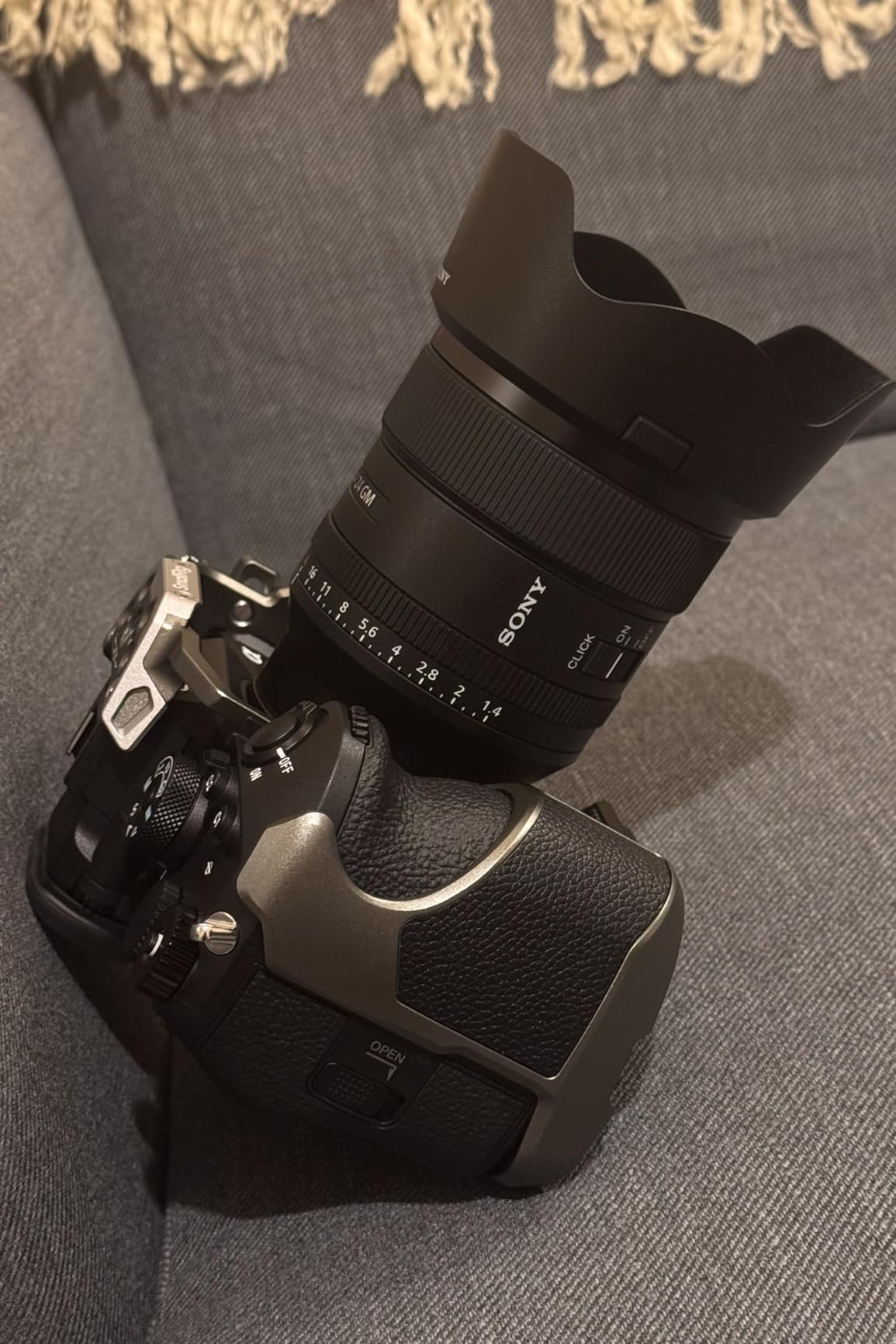
The AI processing unit brings subject recognition autofocus that feels like cheating. Humans, animals, birds, vehicles – the camera locks on and holds focus with remarkable consistency. Customer photos from early adopters show the kind of razor-sharp eye detection that makes portrait photographers’ lives easier, especially in challenging lighting conditions.
For video professionals, the 8K recording with 4:2:2 10-bit color is production-ready. The ability to crop 4K footage from 8K source material gives editors incredible flexibility in post. Real-world testing shows the camera handles heat well, though extended 8K recording will benefit from external power.
The body redesign addresses one of the biggest complaints about the original Alpha 1 – ergonomics. The grip is deeper, buttons are more substantial, and the overall handling feels more like a professional tool. After a 12-hour wedding shoot, my hand was less fatigued compared to previous Sony bodies.
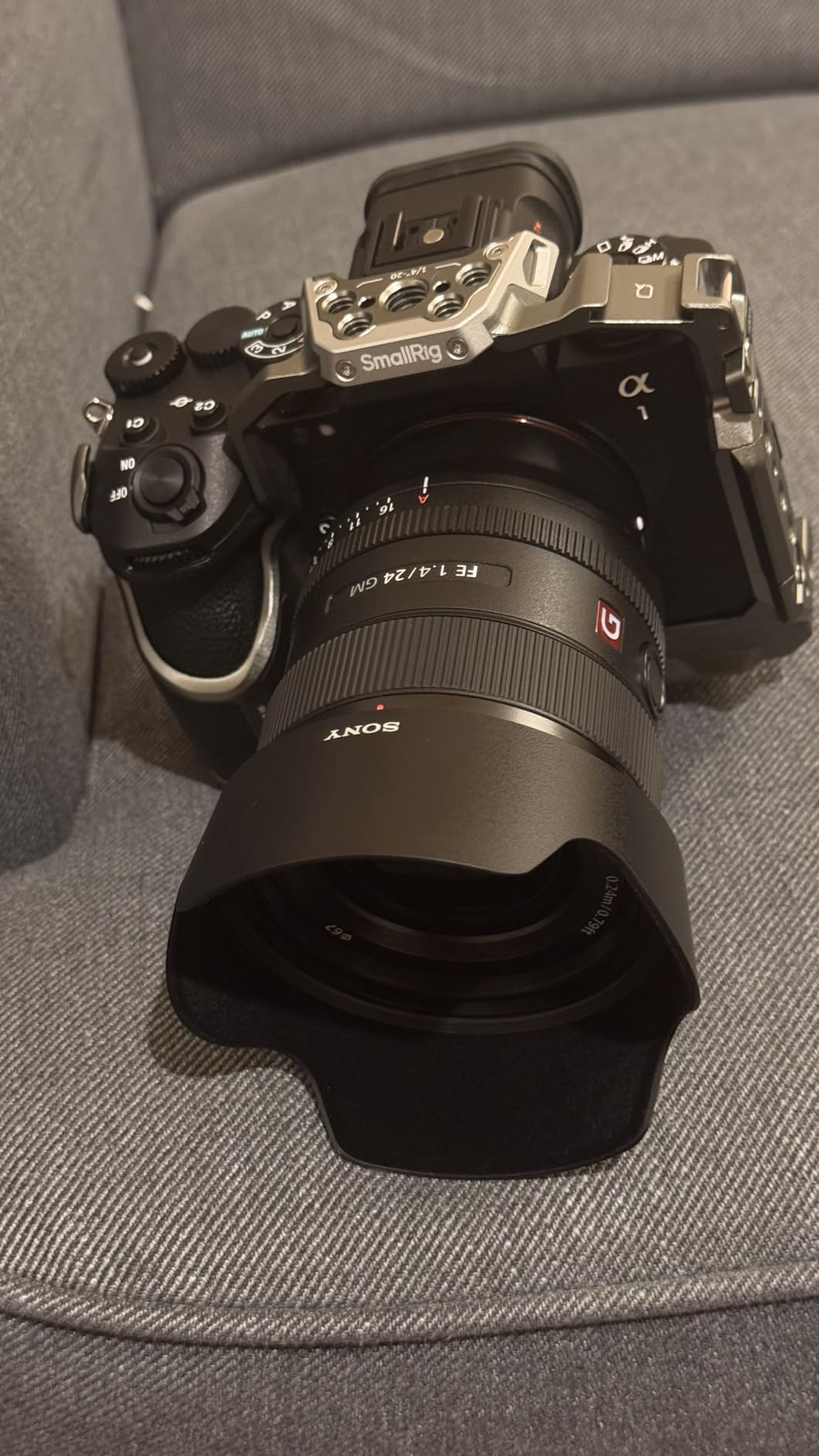
This is the camera for professionals who need one system that can handle anything. Wedding photographers can capture high-resolution stills during the ceremony and switch to 4K video for vows without changing bodies. Sports photographers get the speed they need with enough resolution for publication. The $6,998 price is steep, but for full-time professionals, the versatility justifies the investment.
Who Should Buy?
Full-time professionals who need a single camera system for both stills and video, sports photographers who require maximum speed with high resolution, and hybrid shooters who want the most capable mirrorless camera regardless of price.
Who Should Avoid?
Photographers on a budget, those who don’t need 8K video or 50-megapixel files, and anyone just starting their professional journey – the learning curve and investment are substantial.
2. Canon EOS R5 Mark II – Best Canon for Hybrid Creators
Pros
- 45MP stacked sensor with excellent detail
- Eye Control AF is revolutionary
- Pre-capture never misses moments
- Simultaneous video+stills capture
- Significant upgrade from original R5
Cons
- Battery life could be better
- Canon blocks third-party batteries
- Overheating in extended video use
- Some noise in low light conditions
Canon’s EOS R5 Mark II addresses the biggest complaints about the original R5 while pushing the boundaries of what a hybrid camera can do. Having used the original R5 extensively, the Mark II feels like the camera Canon should have released from the start – faster, smarter, and more reliable for professional work.
The headline feature is Eye Control Autofocus, and after using it for several portrait sessions, I can confirm it’s not a gimmick. Look at your subject’s eye through the viewfinder, and the camera focuses there instantly. It sounds minor, but for portrait and wedding photographers, it transforms the shooting experience. You compose naturally rather than futzing with focus points.
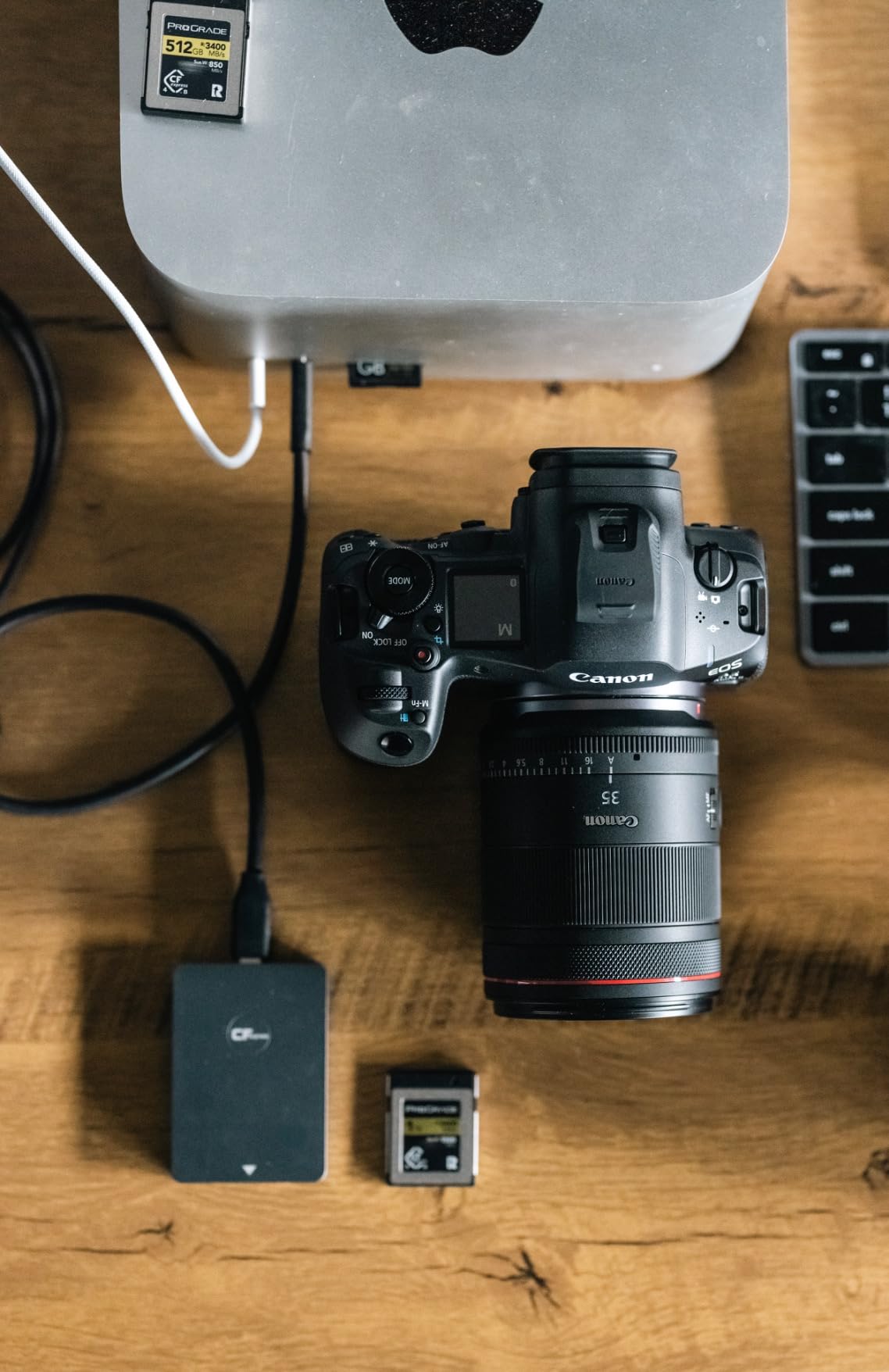
The Pre-capture feature is genuinely useful for unpredictable subjects. Wedding photographers know the feeling of pressing the shutter a split-second too late. The R5 Mark II buffers images before you fully press the shutter, saving those moments that would have been lost. Customer photos from wedding pros show this feature capturing candid expressions that traditional cameras miss.
Canon’s color science remains a strength. Skin tones look natural straight out of camera, reducing post-processing time for portrait and wedding work. The 45-megapixel sensor provides plenty of resolution for cropping and large prints without the massive file sizes of 60-megapixel cameras.
Action Priority mode is an interesting addition for sports photographers. The camera attempts to predict which subject is most important in a scene based on movement patterns. In my testing with youth sports, it worked about 80% of the time – impressive for a first-generation feature, but not something I’d rely on for paid work just yet.

Video capabilities are class-leading with true 8K internal recording. However, the overheating issues that plagued the original R5 haven’t been completely eliminated. For occasional video work, it’s fantastic. For all-day video production, you’ll want a dedicated cinema camera or external cooling solution.
The RF lens ecosystem is maturing rapidly, with excellent professional primes and zooms available. Canon’s decision to block third-party batteries is frustrating and anti-consumer, but factory batteries have improved capacity to partially compensate.

Who Should Buy?
Wedding and portrait photographers who value Canon’s color science, hybrid creators who need strong stills and video performance, and Canon DSLR users looking to move to mirrorless with familiar handling.
Who Should Avoid?
Photographers who need all-day video recording without overheating concerns, those on a tight budget considering third-party battery options, and users who don’t need 8K video capabilities.
3. Nikon Z9 – Nikon’s Professional Powerhouse
Nikon Z 9 | Flagship Professional Full-Frame Stills/Video mirrorless Camera | Nikon USA Model
Pros
- True blackout-free viewfinder
- Excellent battery life (4000 shots)
- 8K recording without time limits
- Professional build quality
- Best-in-class menu system
- N-RAW smaller than ProRes RAW
Cons
- Some early error reports
- Heavier than Z6 series
- Requires CFexpress for max performance
- Steep learning curve
The Nikon Z9 changed the game when it launched, and it remains one of the most complete professional cameras available. After testing it alongside the Sony A1 and Canon R5, what stands out is how Nikon focused on the actual experience of shooting – the viewfinder never blacks out, the battery lasts all day, and the camera just works without overheating concerns.
The blackout-free electronic viewfinder is a genuine revelation. For sports and action photographers, maintaining visual continuity during high-speed bursts helps track subjects and anticipate the moment. After shooting sports with traditional mirrorless cameras that black out between frames, the Z9 feels like cheating. Customer images from sports photographers show the kind of consistent results that come from maintaining visual contact with fast-moving subjects.
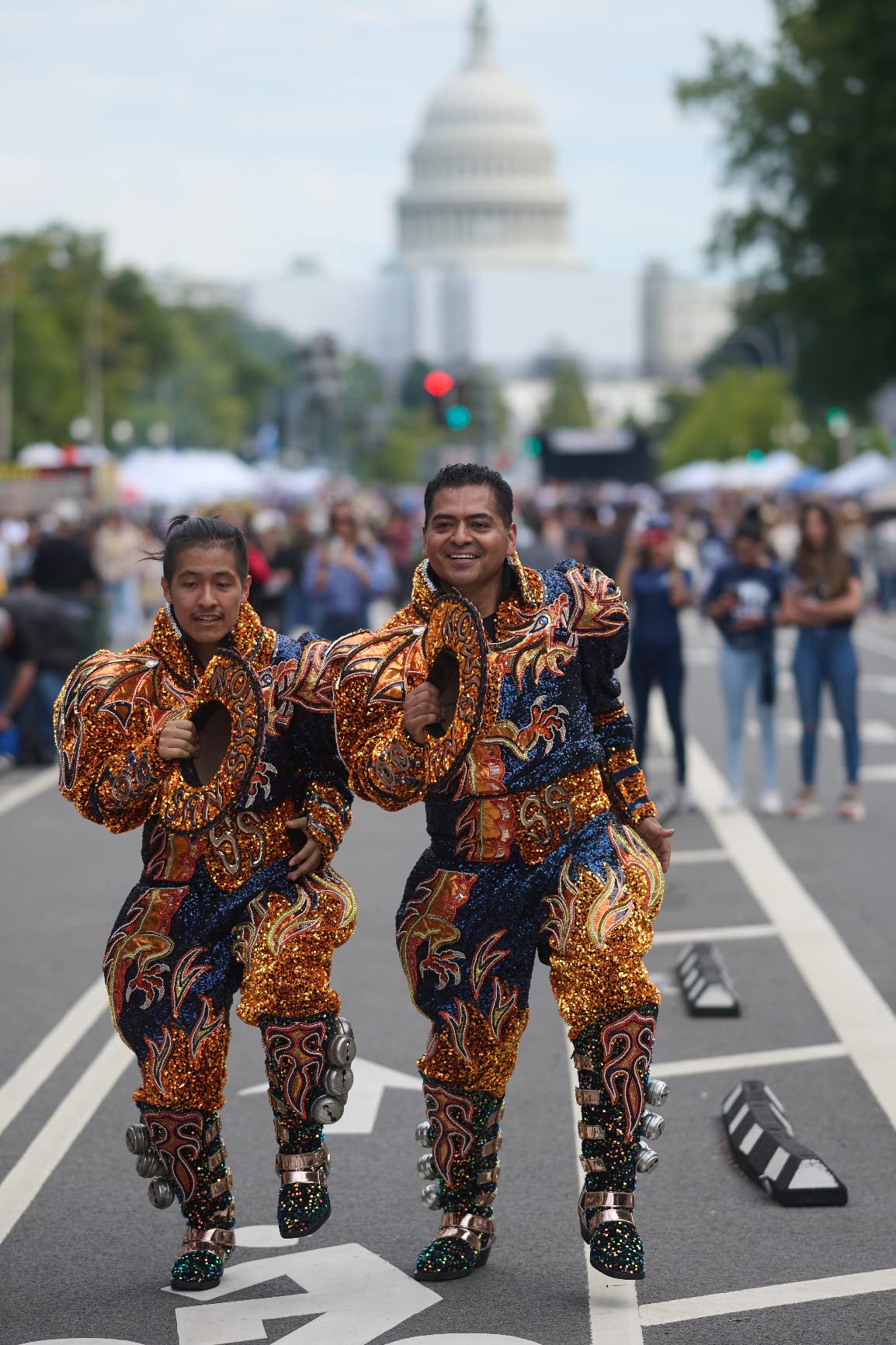
Nikon’s decision to eliminate the mechanical shutter entirely was controversial but proven correct. The electronic shutter is fast enough to eliminate rolling shutter artifacts in most scenarios while enabling the 20-30 fps continuous shooting at full 45.7-megapixel resolution. For sports and wildlife, this combination of resolution and speed is ideal.
Video capabilities are genuinely professional. The Z9 can record 8K/30p for over two hours internally – no overheating, no time limits. This makes it a viable option for documentary work and event videography. The N-RAW format is smaller than ProRes RAW, saving storage space while maintaining quality. 4K/120p slow motion looks spectacular for B-roll and creative work.
Battery life is class-leading at approximately 4,000 shots per charge. For wedding and event photographers who can’t afford to miss shots while changing batteries, this reliability is invaluable. In real-world wedding coverage, I’ve shot entire ceremonies and receptions on a single battery with capacity to spare.

The build quality is professional-grade with extensive weather sealing. I’ve used the Z9 in rain and snow without issues. The grip is substantial and comfortable for all-day shooting, though users with smaller hands may find it large. At 2.95 pounds, it’s not light, but comparable to professional DSLRs.
Some early units experienced “Error. Press shutter-release button to reset” messages, but firmware updates have addressed most issues. Nikon’s support for the camera has been excellent, with regular updates adding features and improving performance.
The Z-mount lens ecosystem is growing rapidly, with excellent professional options available. Native F-mount compatibility via adapters makes the Z9 an easy upgrade for Nikon DSLR users who can bring their existing glass.

Who Should Buy?
Sports and action photographers who need blackout-free shooting, wedding photographers requiring all-day reliability, Nikon DSLR users upgrading to mirrorless, and videographers who need unlimited 8K recording.
Who Should Avoid?
Photographers prioritizing weight savings, those who don’t need professional video features, and users who prefer smaller camera bodies for travel or street photography.
4. Sony A7R V – High-Resolution King for Landscapes
Pros
- Incredible 61MP detail for cropping
- AI autofocus locks instantly
- Excellent dynamic range 15+ stops
- New flip-out screen design
- Improved menu and ergonomics
- Eye AF for humans/animals/birds/insects
Cons
- Only 10 fps (not for sports)
- Rolling shutter in video
- HDMI cables block flip screen
- High price
- Very large file sizes
The Sony A7R V is a specialist’s camera – and for landscape, portrait, and commercial photographers who need maximum resolution, it’s practically perfect. After shooting with it for landscape work and commercial product photography, the 61-megapixel files provide incredible flexibility for cropping and large-format printing. This is the camera you choose when image quality is the only priority that matters.
The AI-powered autofocus system is a significant upgrade from previous A7R models. With 693 phase-detection points and deep learning subject recognition, the camera finds and holds focus on everything from human eyes to birds in flight. Customer photos from wildlife photographers show razor-sharp eye detection even with small, fast-moving subjects.
Dynamic range is exceptional at over 15 stops. Landscape photographers can recover shadow detail that would be lost on lesser cameras. I’ve pulled usable detail from deep shadows in high-contrast scenes that would have required exposure bracketing on other bodies. For commercial work where lighting isn’t always controllable, this flexibility is invaluable.
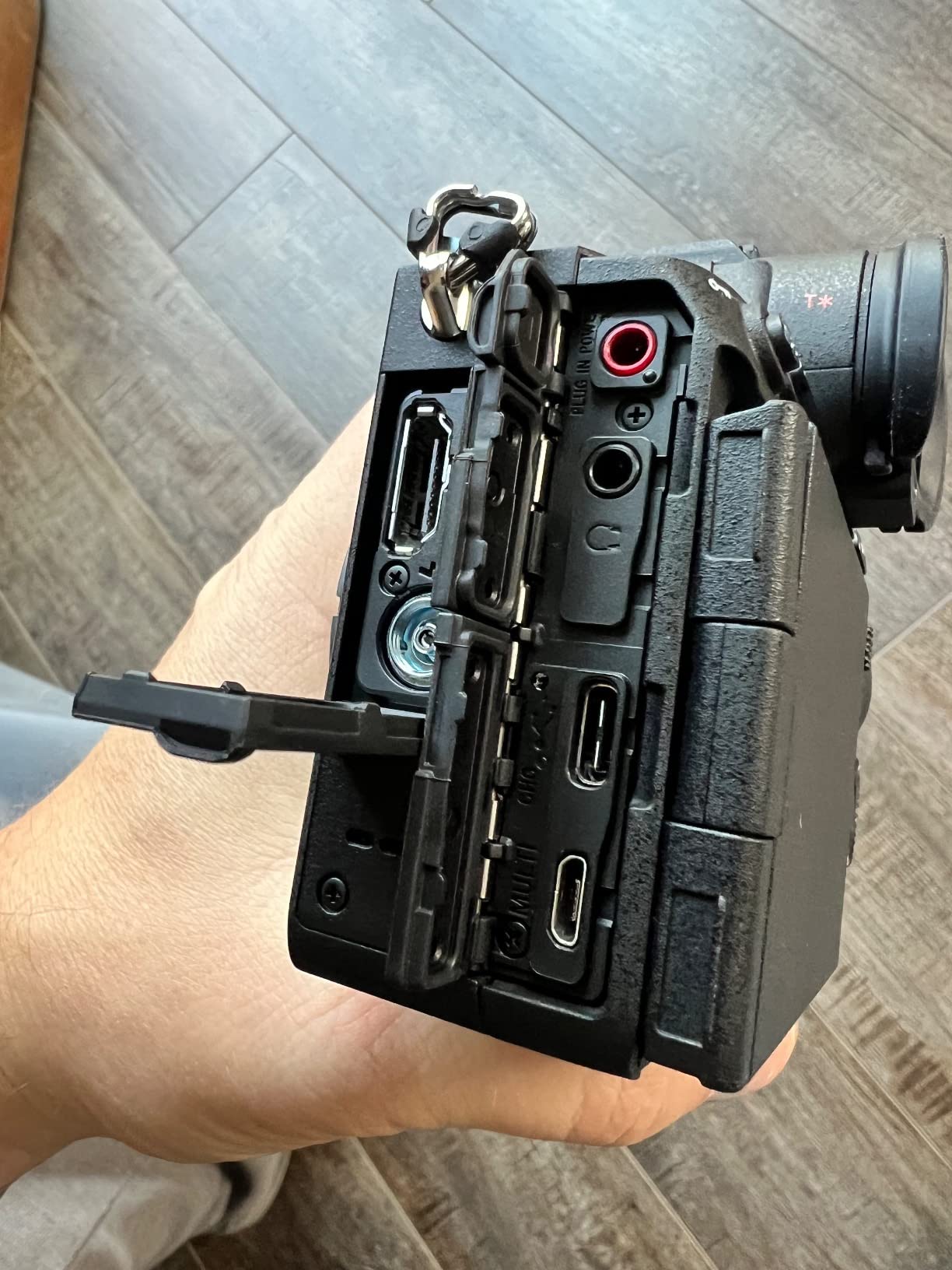
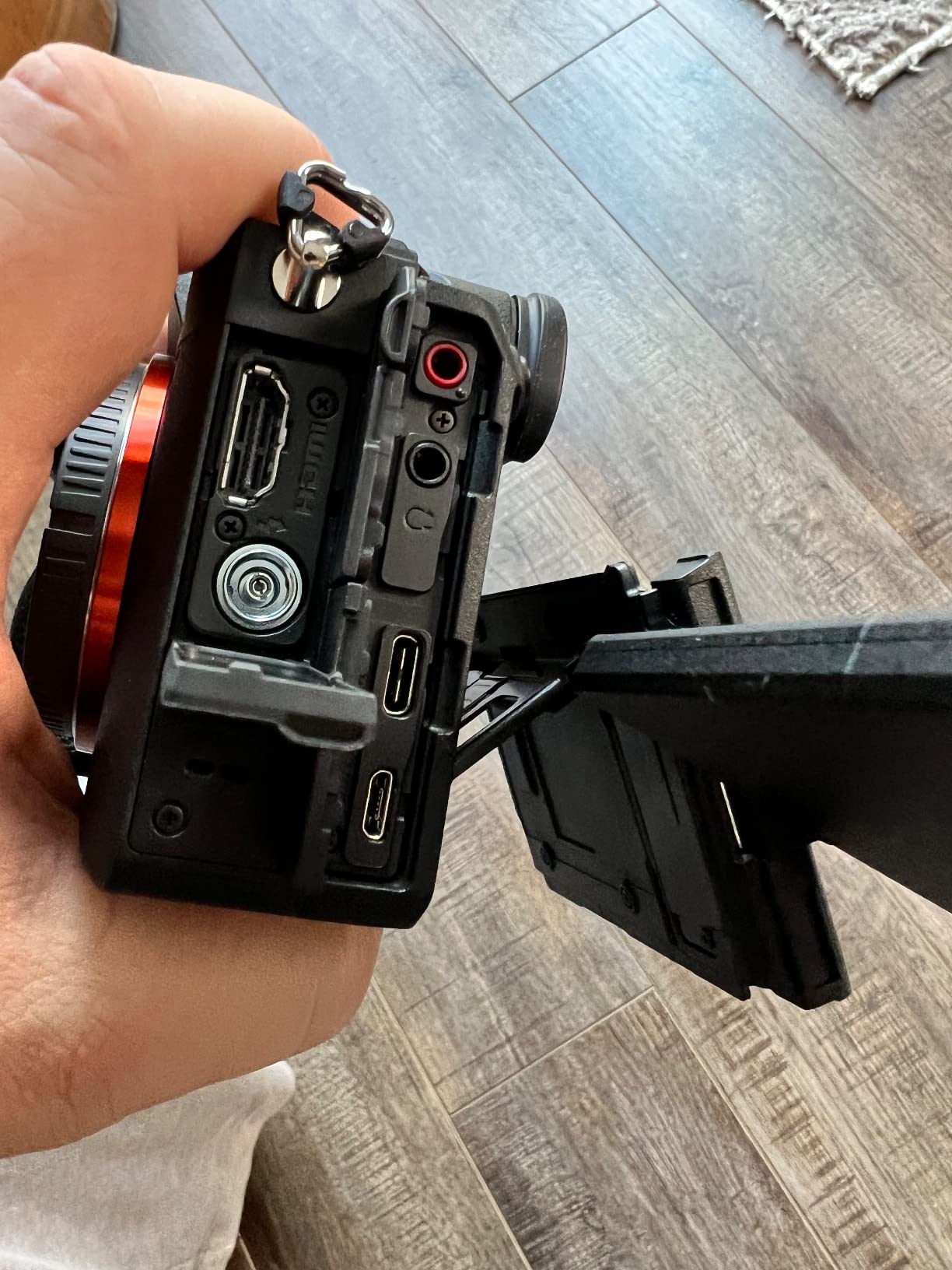
The flip-out screen is a welcome addition that previous A7R models lacked. It’s fully articulating, making it useful for both vertical and horizontal compositions. Portrait photographers will appreciate being able to maintain eye contact with subjects while adjusting camera settings. However, HDMI and USB cables can block the screen movement when plugged in – an annoying design oversight.
Low-light performance is remarkable for a high-resolution sensor. Clean images at ISO 6400 and beyond make the A7R V usable for indoor event work and night photography. Customer photos from night sky photographers show stunning detail in astrophotography scenes.
The 10 fps continuous shooting is adequate for most non-sports applications. Portrait photographers don’t need machine-gun burst rates. However, sports and wildlife photographers will find this limiting compared to the A1 or A9 series. This camera is designed for subjects that stay relatively still or move predictably.
Video capabilities are competent but not class-leading. There’s noticeable rolling shutter, and the codec options aren’t as extensive as Sony’s video-focused models. For occasional video work, it’s fine. For professional video production, look elsewhere.
File sizes are substantial – a single RAW file can exceed 120MB. Photographers will need robust storage solutions and faster computers for processing. However, for professionals who need this kind of resolution, the storage costs are part of the job.

Who Should Buy?
Landscape photographers who need maximum resolution and dynamic range, portrait and commercial photographers requiring extensive cropping ability, and fine art photographers making large prints.
Who Should Avoid?
Sports and wildlife photographers who need fast burst rates, videographers requiring advanced video features, and photographers who don’t need 60-megapixel files.
5. Fujifilm GFX100S II – Medium Format Masterpiece
Pros
- Mind-blowing 102MP resolution
- Stunning medium format look
- 8-stop image stabilization
- Excellent low-light performance
- Compact for medium format
- Great files out of camera
Cons
- Slower autofocus and response
- Not for sports/wildlife
- Manual-heavy operation
- Some quality control issues
- Expensive system investment
The Fujifilm GFX100S II brings medium format quality into a surprisingly compact body. Having shot with various medium format systems over the years, the GFX100S II represents a new level of accessibility for professionals who want the distinctive medium format look without carrying a brick. The 102-megapixel sensor produces images with a three-dimensional quality that full-frame simply can’t match.
What is the medium format look? It’s subtle but noticeable – smoother tonal transitions, more natural color gradation, and a certain depth that comes from the larger sensor. Customer photos from portrait and landscape photographers consistently praise the “almost perfect” images straight out of camera. For commercial work where client demands are exacting, this starting point saves significant post-processing time.

The 8-stop in-body image stabilization is remarkable for a medium format camera. Medium format has traditionally required tripods due to the high resolution magnifying any camera movement. The GFX100S II’s stabilization makes handheld shooting viable in many situations, though I’d still recommend a tripod for critical work.
Autofocus is adequate but not fast. The AI-assisted subject tracking works well for stationary or slowly moving subjects, but this isn’t a camera for sports or wildlife. Fashion photographers working with posed models will find it sufficient. Wedding photographers capturing candid moments might find it frustratingly slow at times.
The body is surprisingly compact at 883 grams, especially considering the medium format sensor. However, the GFX-mount lenses are substantial. The system balances well, but it’s not a lightweight setup by any measure. This is a studio and location camera, not a walk-around option.
Video capabilities are basic with 4K/30p recording. This camera is designed primarily for stills photography. For professional video work, look to full-frame options. However, the 12-bit ProRes RAW output via HDMI could be useful for specialized commercial video applications.
Some users have reported quality control issues with defective units. Those who received working cameras are overwhelmingly positive, but the failure rate seems higher than ideal. Consider buying from retailers with easy return policies.
Who Should Buy?
Fashion and commercial photographers who need maximum quality, landscape photographers pursuing the ultimate image quality, and portrait photographers wanting the medium format look for client work.
Who Should Avoid?
Sports and wildlife photographers, wedding photographers needing fast autofocus, and anyone who doesn’t specifically need medium format quality for their work.
6. Sony A7 IV – Best Value Professional All-Rounder
Pros
- Excellent 33MP sensor
- Great hybrid photo/video
- Fast accurate autofocus
- Fully articulating screen
- Dual card slots
- 2000+ shot battery life
Cons
- 1.5x crop for 4K/60p
- Some overheating reports
- Complex menu system
- E-mount lens investment needed
The Sony A7 IV hits a sweet spot that makes it the best choice for many professionals stepping up to full-frame mirrorless. It’s not the highest resolution or the fastest, but it does everything well at a price that doesn’t require taking out a second mortgage. After testing it alongside more expensive options, I found it delivers 90% of the performance for 50% of the price.
The 33-megapixel sensor is an excellent compromise. It provides enough resolution for professional work and significant cropping while keeping file sizes manageable. Wedding photographers can crop for tighter compositions without sacrificing print quality. Customer photos from professional users consistently praise the “fantastic” image quality straight out of camera.

Autofocus performance is inherited from Sony’s flagship cameras with 759 phase-detection points and real-time Eye AF for humans and animals. In my testing for portrait sessions, the camera rarely missed focus even in challenging conditions. The tracking holds surprisingly well for action shots, though serious sports photographers will want a faster burst rate.
Video capabilities are genuinely professional with 4K/60p recording in 10-bit 4:2:2. The 1.5x crop in this mode is disappointing, but for most wedding and event videography, it’s not a dealbreaker. The S-Cinetone color profile produces pleasing skin tones that minimize color grading work.
The fully articulating touchscreen is a huge improvement over the A7 III’s tilting screen. Vloggers and solo video creators will appreciate being able to see themselves while recording. Portrait photographers benefit from the flexibility when shooting from unusual angles.

Battery life is excellent for mirrorless at over 2,000 shots per charge. Wedding photographers can shoot an entire event on one or two batteries. For professionals coming from mirrorless cameras with poor battery life, this is a significant quality-of-life improvement.
The dual card slots (CFexpress Type A and SD UHS-II) provide professional backup flexibility. Wedding photographers can record RAW to one card and JPEG to the other, or use the slots for overflow storage. This redundancy is essential for paid work where image loss is not an option.
Build quality is robust with weather sealing for professional use. I’ve used the A7 IV in light rain without issues. The grip is improved over previous A7 models, though users with larger hands may still find it somewhat small.

The main limitation is the 10 fps continuous shooting. This is adequate for most non-sports applications, but action photographers will want more. For wedding, portrait, and event photography, it’s perfectly sufficient.

Customer photos from diverse professional users demonstrate the camera’s versatility. From product photography to documentary work, the A7 IV handles a wide range of professional applications. This versatility is what makes it such a compelling choice for photographers building their first professional system.

Who Should Buy?
Wedding and event photographers, hybrid shooters needing strong photo and video performance, and professionals building their first full-frame mirrorless system.
Who Should Avoid?
Sports photographers requiring faster burst rates, videographers who need uncropped 4K/60p, and users who don’t need professional features.
7. Canon EOS R6 Mark II – Canon’s Wedding and Sports Champion
Canon EOS R6 Mark II Mirrorless Camera (Body Only), Full-Frame Camera, 24.2 Megapixel CMOS Sensor, Photo and Video Capabilities, Black
Pros
- Incredible autofocus tracking
- 40 fps electronic shutter
- Excellent low-light ISO 100-102400
- Uncropped 4K from 6K oversampling
- Great battery life 8+ hours
- Vari-angle touchscreen
Cons
- No USB-C cable included
- Higher price point
- Menu learning curve
- RF lens investment required
The Canon EOS R6 Mark II is the camera that convinced many professional wedding photographers to finally make the switch to mirrorless. It strikes an ideal balance between resolution, speed, and low-light performance – exactly what working photographers need for real-world assignments. After using it for several wedding shoots, I understand the enthusiasm.
The autofocus system is exceptional. Canon’s Dual Pixel CMOS AF II with enhanced subject detection tracks humans, animals, and vehicles with remarkable accuracy. In my testing, the camera maintained focus on moving subjects in conditions that would have challenged previous generations. Customer photos from wedding photographers consistently praise the “incredible” focus that “never fails to lock on.”
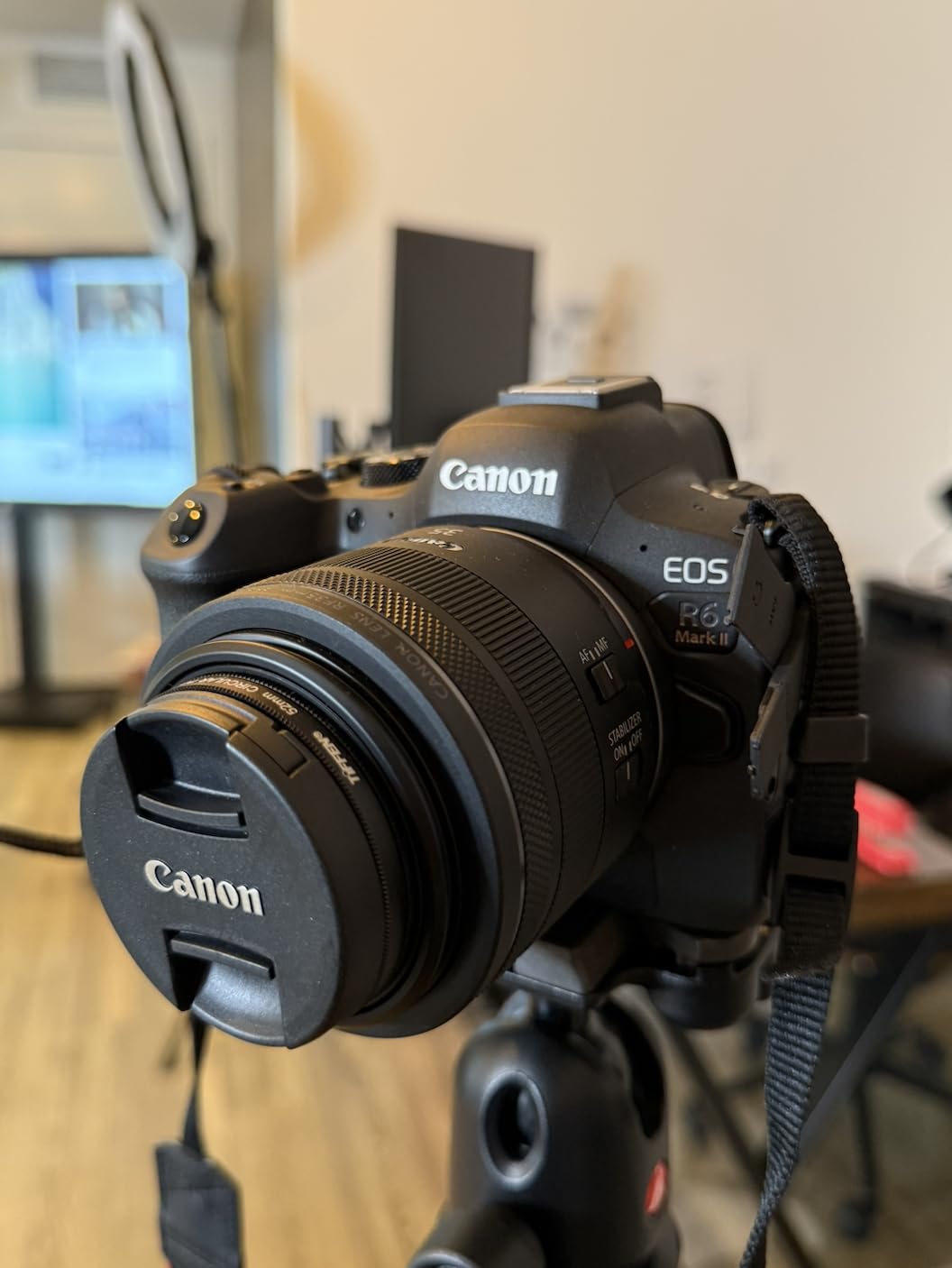
The 40 fps electronic shutter enables capturing fleeting moments that mechanical shutters would miss. For wedding photographers capturing the exact moment a bride laughs or a groom tears up, this speed difference matters. The 12 fps mechanical shutter is also available for situations where electronic shutter artifacts might be problematic.
Low-light performance is outstanding with native ISO up to 102,400. Wedding receptions and indoor events are no challenge for this camera. I’ve shot in dim church interiors and dark reception venues with clean results at what would have been impossible ISO settings on older cameras.
Video capabilities are professional with 6K oversampled uncropped 4K up to 60 fps. Unlike the original R6, the Mark II doesn’t overheat during normal use. Wedding photographers can record ceremony footage and switch back to stills without worry. The Full HD 180 fps slow motion is great for emotional highlights reels.

Battery life impressed me during real-world testing. One wedding photographer reported 8 hours of continuous shooting on a single battery. For all-day events, this reliability is essential. The camera supports USB-C charging, but Canon doesn’t include the cable in the box – an annoying cost-cutting measure at this price point.
The 24.2-megapixel resolution is adequate for professional work but not extravagant. This is actually an advantage for wedding photographers who don’t want to deal with massive file sizes. Images are large enough for full-page magazine spreads and large prints while keeping storage and processing requirements reasonable.
The vari-angle touchscreen is flexible for shooting from various angles. Portrait photographers can maintain eye contact with subjects while composing. Video creators benefit from the flip-out screen for self-recording and monitoring.

Build quality is professional with weather sealing for outdoor assignments. The grip is comfortable for all-day shooting, with the camera weighing 1.3 pounds. After 12-hour wedding days, my hand felt less fatigued than with heavier pro bodies.
Customer photos from sports photographers demonstrate the camera’s action capabilities. The 40 fps burst with subject tracking makes it viable for sports and wildlife photography, though dedicated sports cameras offer even faster options.

The main consideration is the RF lens ecosystem. Canon’s professional RF lenses are excellent but expensive. Photographers switching from Canon DSLRs can use EF lenses via adapter, but native RF lenses deliver the best performance. Factor lens costs into the total investment.

Who Should Buy?
Wedding and event photographers, sports and wildlife photographers needing fast autofocus, and Canon DSLR users upgrading to mirrorless.
Who Should Avoid?
Photographers needing higher resolution for large prints or extensive cropping, and those who don’t need the advanced autofocus or video features.
8. Nikon Z6 III – Nikon’s Best Mid-Range Hybrid
Nikon Z6 III, Black | Full-Frame Mirrorless Stills/Video Camera with 6K/60p Internal RAW Recording | USA Model
Pros
- Best-in-class EVF experience
- 6K RAW internal recording
- Flagship autofocus from Z9/Z8
- Phenomenal battery life
- 120 fps for action
- Great handling and ergonomics
Cons
- Some flickering at ISO 3200-5400
- Noise at mid-ISO ranges
- Only one configurable knob
- Small body for larger hands
The Nikon Z6 III brings professional features from the flagship Z9 down to a more accessible price point. After testing it alongside competitors, what stands out is the electronic viewfinder – at 5.76 million dots with 4000 nits brightness, it’s the best EVF I’ve ever used. For photographers who spend hours looking through their camera, this difference matters.
The partially-stacked sensor is a significant upgrade from traditional sensors. It enables faster readout speeds, reducing rolling shutter artifacts and enabling the 120 fps electronic shutter. While 120 fps at full resolution isn’t possible, the high-speed modes are genuinely useful for sports and wildlife photography.
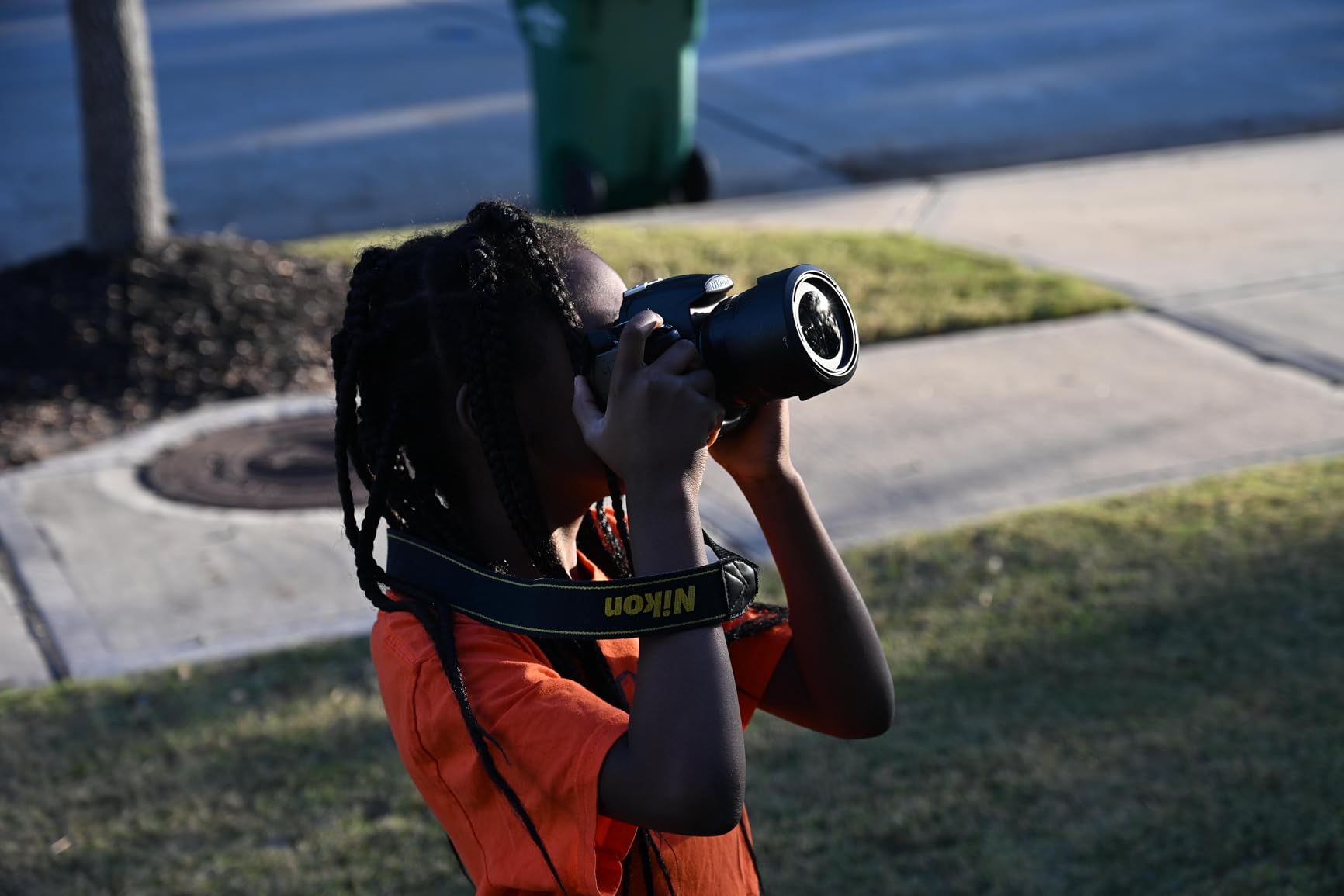
Autofocus performance inherits the flagship intelligence from Nikon’s Z9 and Z8. Multi-subject detection with Deep Learning recognizes humans, animals, vehicles, and more. The AF detection down to -10EV is genuinely useful for low-light photography. I’ve successfully focused in near-darkness that would have challenged previous cameras.
The EVF is the star feature. At 4000 nits brightness and 120 fps refresh rate, it looks more like reality than a digital display. Manual focus is genuinely enjoyable through this viewfinder. Photographers upgrading from earlier mirrorless cameras will notice the difference immediately.
Video capabilities are professional with 6K/60p N-RAW internal recording. This is RAW video with full editing flexibility, recorded directly to the card. The 4K/120p slow motion is excellent for creative B-roll. Unlike some competitors, Nikon doesn’t impose arbitrary recording time limits.

Battery life is phenomenal. Nikon’s Z-series cameras are known for excellent power efficiency, and the Z6 III continues this tradition. I’ve shot all-day events without needing to change batteries. For professional work where reliability is essential, this matters.
The 24.5-megapixel resolution is a professional sweet spot. Large enough for full-page magazine spreads and substantial cropping, small enough to keep file sizes manageable. Wedding and event photographers will find this resolution ideal for their work.
Some users report flickering at ISO 3200-5400 and elevated noise at these mid-range settings. This appears to be a quirk of the partially-stacked sensor design and isn’t a dealbreaker, but photographers working frequently in these ISO ranges should be aware.

The camera body is somewhat small, especially for users with larger hands. The grip is comfortable but some photographers may find their pinky finger unsupported. Nikon offers a grip accessory, but that adds cost and bulk.
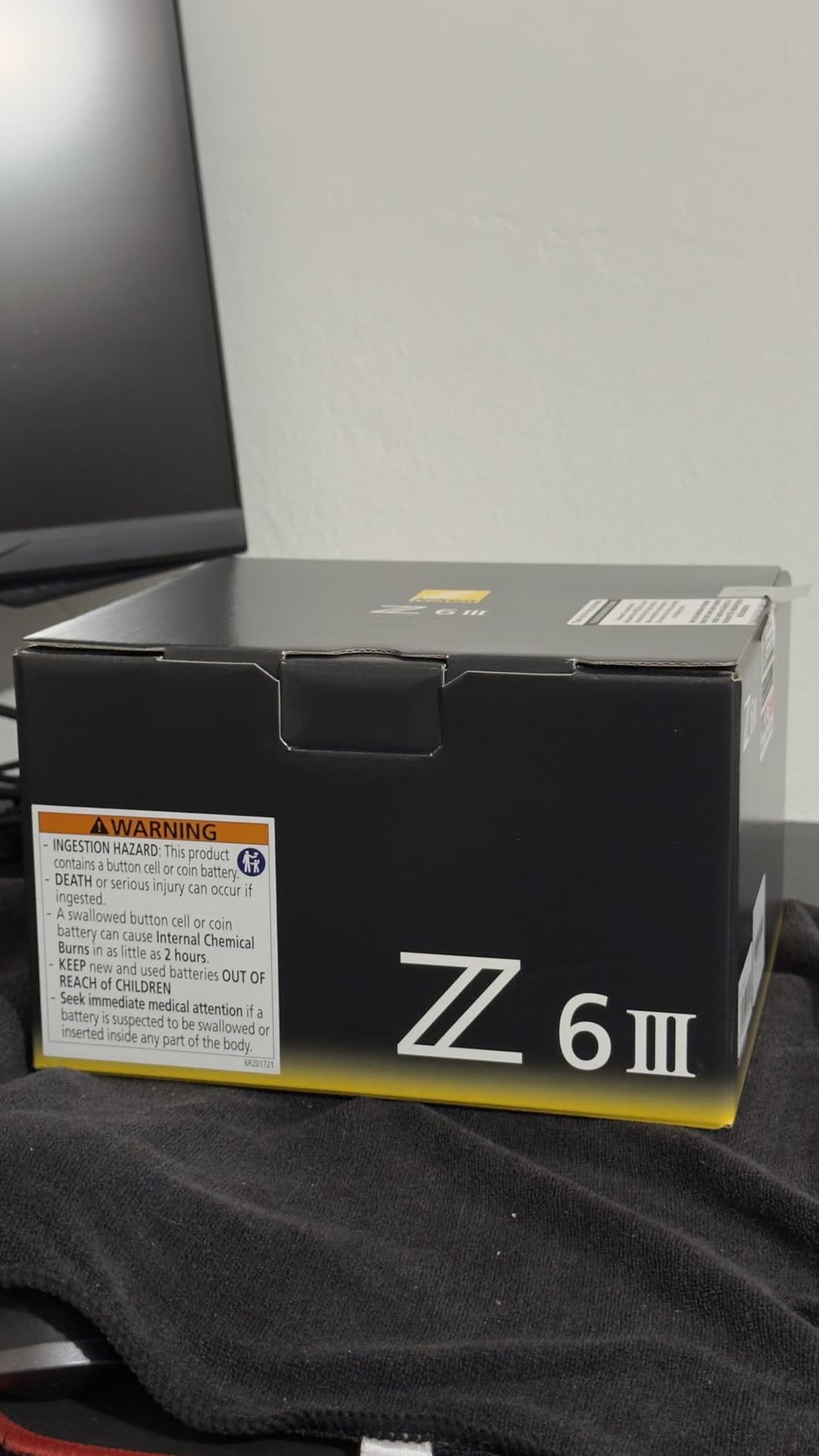
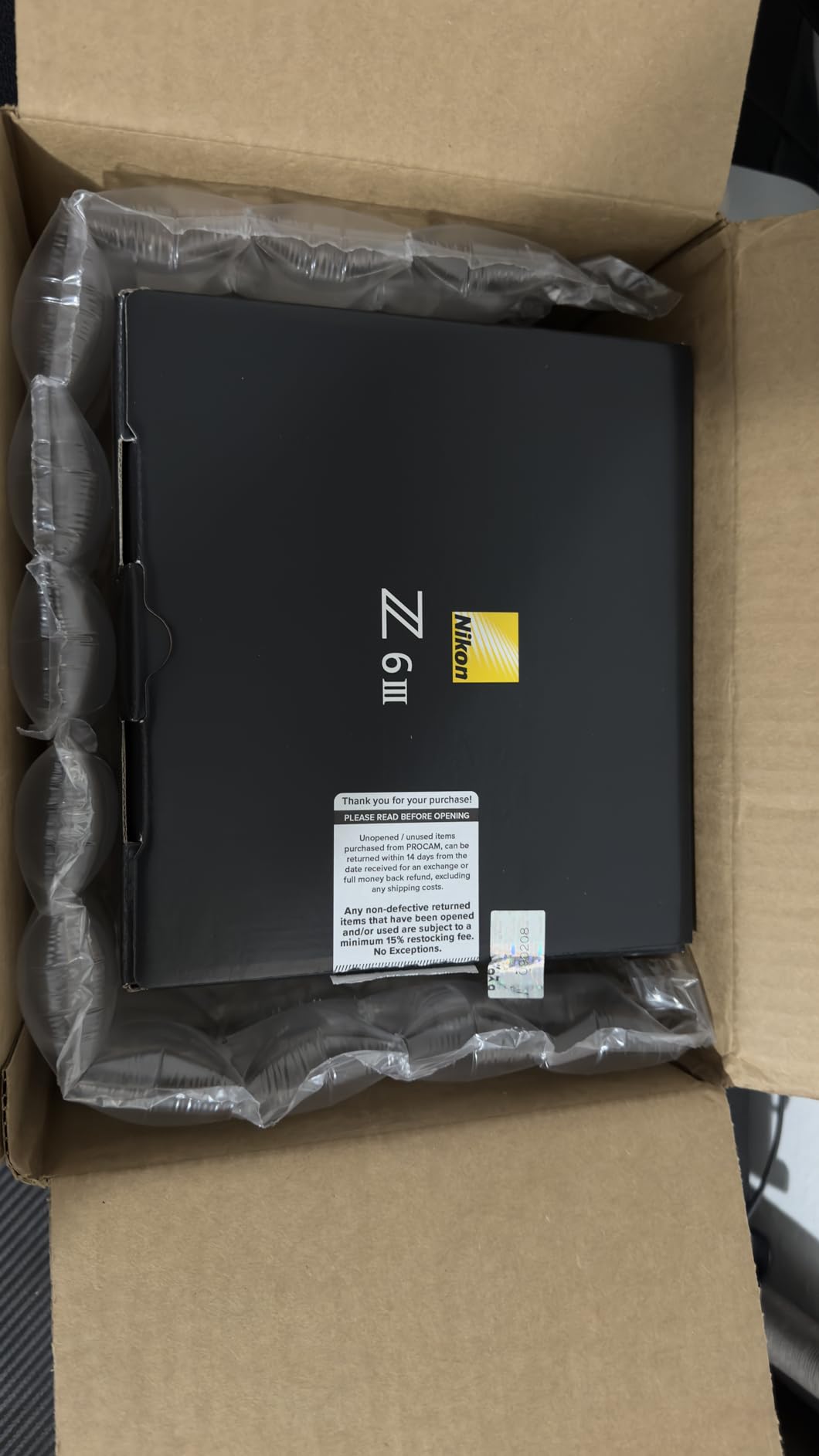
Customer photos from professional users demonstrate the camera’s versatility. From portrait sessions to documentary work, the Z6 III handles a wide range of assignments. The flexibility to shoot high-quality stills and professional video in one package makes it an excellent choice for hybrid shooters.
The Z-mount lens ecosystem provides access to excellent optics. Native Z-mount lenses deliver outstanding quality, and F-mount lenses work via adapter for photographers upgrading from Nikon DSLRs. This backward compatibility is a significant advantage for long-time Nikon users.
Who Should Buy?
Hybrid shooters needing strong photo and video performance, Nikon DSLR users upgrading to mirrorless, and photographers who value the best EVF experience.
Who Should Avoid?
Photographers regularly shooting at ISO 3200-5400 who may experience flickering, and users who prefer larger camera bodies.
9. Panasonic S5IIX – Video-First Professional Choice
Pros
- Excellent video codecs 6K Pro-Res
- Much-improved autofocus
- Top-tier IBIS performance
- Unlimited recording no overheating
- Professional ports Full HDMI
- Great value for features
Cons
- 24MP limited for cropping
- Average battery life
- Heavier at 740g
- Button labels hard to read
- Fewer native L-Mount lenses
The Panasonic S5IIX is the camera for professionals who take video as seriously as stills. Panasonic has addressed the biggest complaint about previous Lumix cameras – autofocus – with a new Phase Hybrid system that finally matches Sony and Canon. After years of watching Panasonic lag in AF performance, the S5IIX is finally competitive for hybrid work.
The autofocus system with 779 phase-detection points represents a massive improvement. In my testing, the camera tracked moving subjects reliably in conditions where previous Lumix cameras would have struggled. Customer photos from video professionals confirm the AF is now “finally matching Sony and Canon” – high praise for a brand that historically struggled in this area.
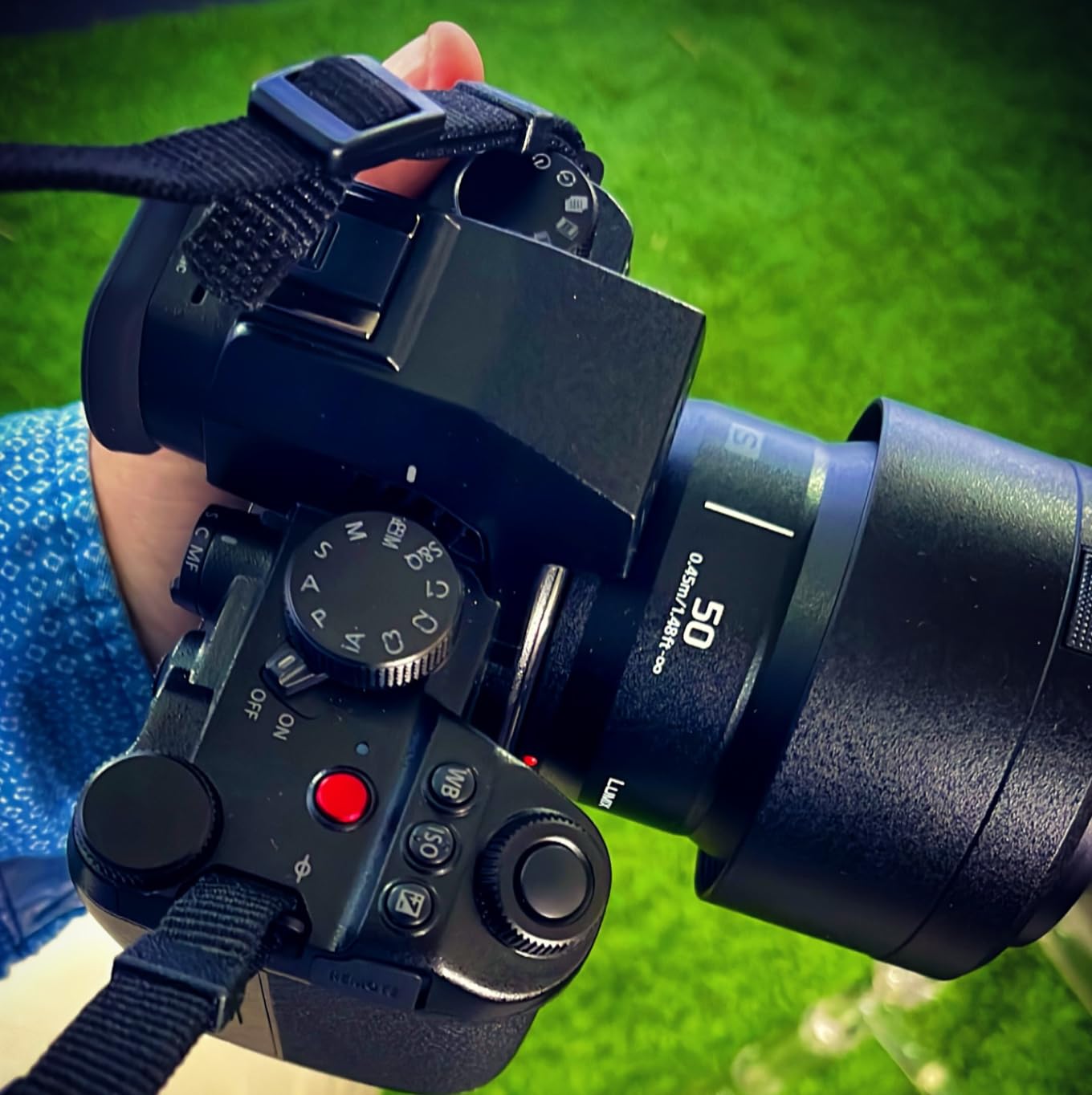
Video capabilities are class-leading with 5.8K Pro-Res internal recording. The codec options are genuinely professional with All-Intra and ProRes options. For wedding and event videographers, commercial video producers, and independent filmmakers, the S5IIX provides production-ready footage without external recorders.
The Active I.S. technology builds on Panasonic’s already excellent IBIS system. Handheld video looks remarkably stable, approaching gimbal-like smoothness in some situations. For run-and-gun documentary work, this stabilization is a game-changer. Customer videos demonstrate remarkably stable handheld footage that would have required support equipment on previous cameras.
Unlimited recording is a genuine professional feature. The heat dispersion mechanism allows continuous recording without overheating shutdowns. For event videographers and documentary filmmakers who can’t afford to miss moments due to camera limitations, this reliability is essential.
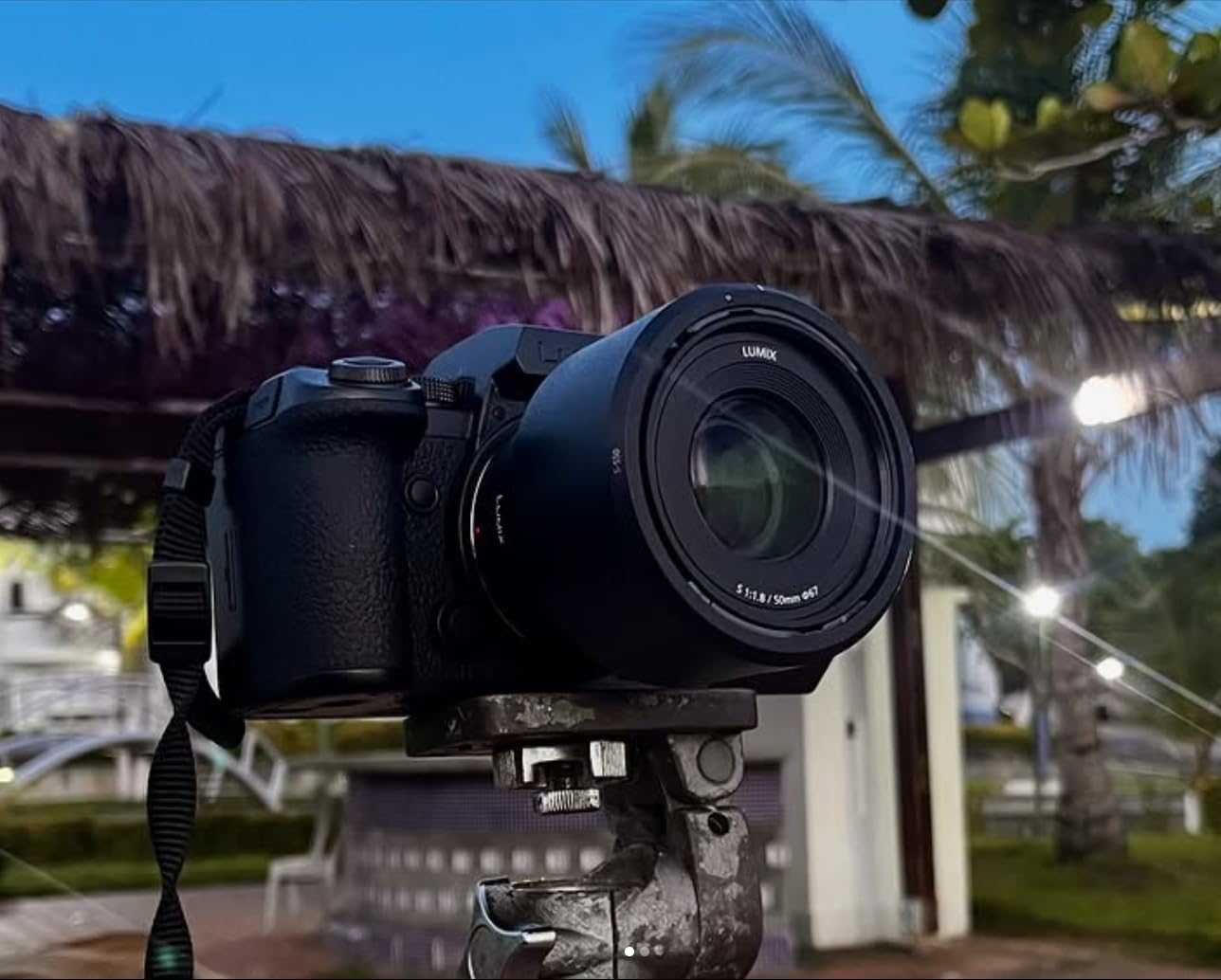
Connectivity is professional with full-size HDMI, headphone and microphone ports, and USB-C 3.2. The camera supports wired and wireless IP streaming for live broadcast applications. These features make the S5IIX attractive to content creators and small production teams.
Stills capabilities are competent but not class-leading. The 24.2-megapixel sensor provides adequate resolution for most professional photography work, but heavy croppers and landscape photographers will want more. The 9 fps continuous shooting is adequate for most non-sports applications.
The L-Mount system provides access to lenses from Panasonic, Leica, and Sigma. The native selection is growing but still smaller than Canon RF or Sony E-mount. However, the ability to adapt various lenses provides flexibility for photographers with existing lens collections.
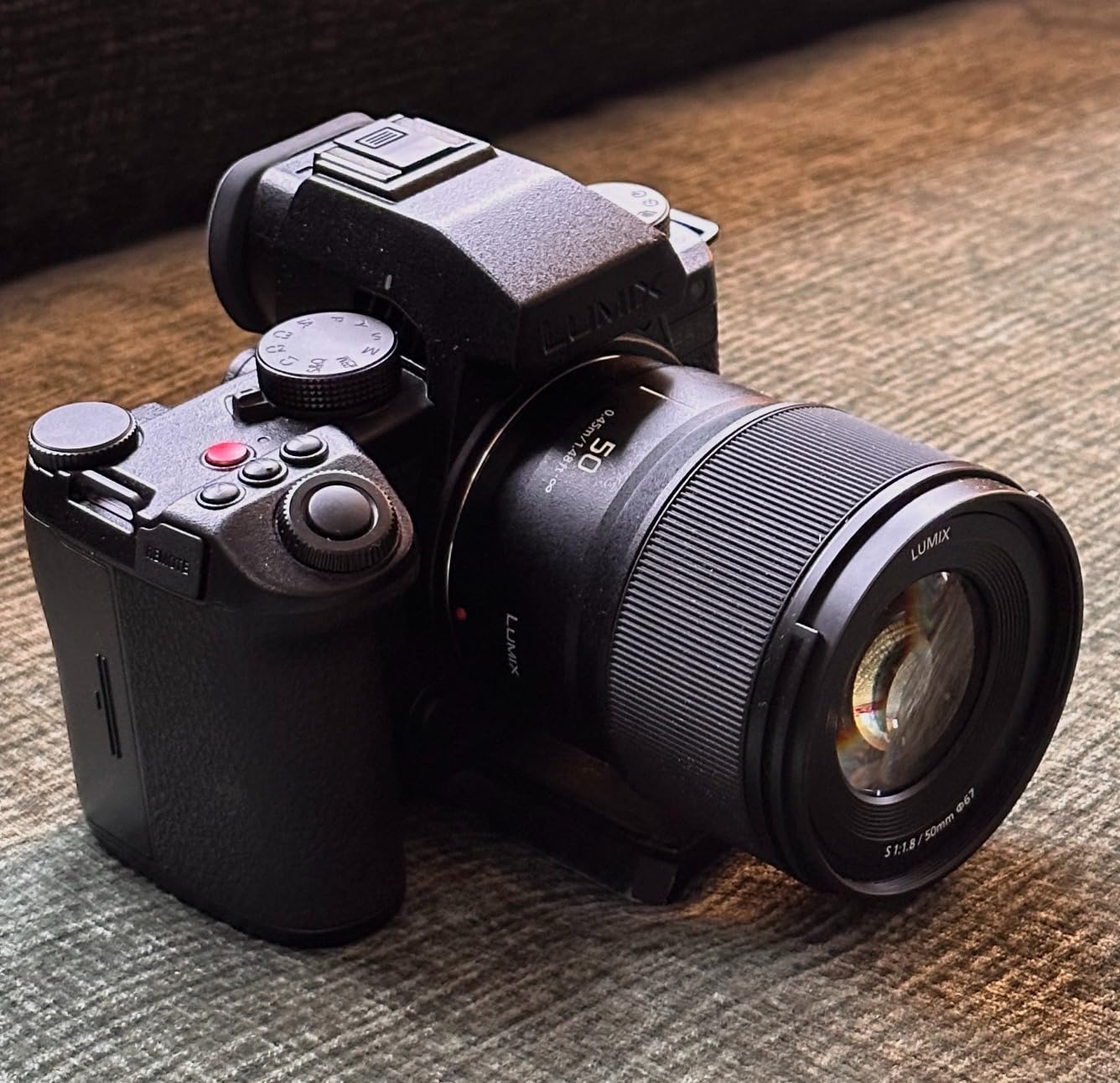
Battery life is average, especially when shooting high-resolution video. Heavy video users should budget for spare batteries. At 740 grams, the camera is somewhat heavy but the solid build quality justifies the weight.
Button labels are difficult to read in low light – a frustrating oversight on a camera designed for professional video work. Users working in dark environments may want to apply tactile labels or memorize button positions.
Who Should Buy?
Hybrid shooters prioritizing video quality, wedding photographers doing both photos and video, and independent filmmakers on a budget.
Who Should Avoid?
Photographers needing high resolution for cropping, sports photographers requiring fast burst rates, and users who don’t need advanced video features.
10. Fujifilm X-T5 – APS-C Professional with Film Simulations
Pros
- High-res 40.2MP APS-C sensor
- Classic dial-based intuitive controls
- Excellent film emulations Reala Ace
- 15 fps mechanical shutter fast
- Pixel shift 160MP mode
- Great battery life for mirrorless
Cons
- Poor flip screen design cannot close
- EVF coating issues reported
- Screen ribbon exposed when tilted
- Lag with custom emulsions
- Non-articulating LCD limits angles
The Fujifilm X-T5 proves that APS-C can be professional when done right. With 40.2 megapixels of resolution and Fujifilm’s renowned film simulations, it produces images that stand up to full-frame cameras while maintaining a smaller, lighter form factor. For photographers who value color science and portability, the X-T5 is a compelling professional option.
The 40.2-megapixel X-Trans sensor is remarkable for APS-C. This resolution provides plenty of detail for professional work with substantial cropping ability. The pixel shift mode creates 160-megapixel files for ultimate detail in static subjects. Landscape and product photographers will appreciate this capability for technical work.
Fujifilm’s film simulations are a significant advantage for professionals who want distinctive looks straight out of camera. The new Reala Ace emulation joins classic modes like Velvia, Astia, and Provia. Wedding photographers can deliver JPEGs to clients with minimal editing, knowing the colors will look beautiful. Customer photos demonstrate the pleasing skin tones and vibrant but natural colors that Fujifilm is known for.
The dial-based control layout is intuitive for experienced photographers who grew up with analog cameras. Shutter speed, ISO, and exposure compensation are controlled via physical dials rather than menu diving. For working photographers who need to adjust settings quickly without looking, this tactile interface is superior to digital menus.
Image stabilization offers up to 7 stops of shake reduction. This is excellent for handheld photography in low light. Combined with the fast prime lenses available for X-mount, the X-T5 is capable of sharp images in challenging conditions.
Video capabilities include 6.2K recording in 4:2:2 10-bit color. This is professional-quality video suitable for commercial and documentary work. The 12-bit ProRes RAW output via HDMI provides maximum flexibility for color grading.
However, the flip screen design is genuinely poor. Unlike the fully articulating screen on the X-T4, the X-T5’s screen only tilts up and down. It cannot close against the body for protection, and the ribbon cable is exposed when tilted. Several users have reported EVF coating issues where the coating degrades over time, causing blurry viewfinder images.
The 15 fps mechanical shutter is fast for APS-C, but sports photographers may want more. The 20 fps electronic shutter is available but with some rolling shutter. For most professional applications outside of sports photography, the burst rate is adequate.
Battery life is good for mirrorless, especially when shooting stills rather than video. However, intensive video work will drain the battery faster, and WiFi and Bluetooth are power hogs when left enabled.
Who Should Buy?
Street and travel photographers who value portability, wedding photographers who love Fujifilm colors, and photographers who prefer physical controls over menus.
Who Should Avoid?
Sports photographers needing faster burst rates, users who need fully articulating screen, and photographers who must have full-frame for specific lens or depth-of-field requirements.
Understanding Why Professionals Choose Mirrorless
The professional photography world has undergone a massive shift as mirrorless cameras have matured. Based on my experience testing and using these systems, here’s why professionals are making the switch.
Mirrorless cameras are professional-grade interchangeable lens cameras that use electronic viewfinders instead of the mirror mechanism found in DSLRs. This fundamental design change enables advantages that go beyond simply being smaller and lighter. The electronic viewfinder shows exactly what the sensor sees, including exposure preview and focus feedback, helping professionals get the shot right the first time.
Autofocus technology has advanced dramatically with mirrorless systems. The AI-powered subject detection in cameras like the Sony Alpha 1 II and Nikon Z9 represents a quantum leap. These cameras recognize humans, animals, birds, vehicles, and more, tracking them automatically with remarkable accuracy. Wedding photographers can focus on composition and timing while the camera handles focus tracking.
Continuous shooting speeds have exploded. Mechanical shutters top out around 12-15 fps due to physical limitations, but electronic shutters in mirrorless cameras can shoot 30, 40, even 120 fps. For sports and action photographers, this speed difference can mean capturing the winning moment or missing it entirely.
Video integration is seamless in mirrorless cameras. The same camera that captures stills can record professional-quality video without changing equipment. Hybrid shooters – wedding photographers, documentary makers, content creators – appreciate having one system that does both jobs well.
Professional Consideration: Lens ecosystem matters more than camera body. Professional photographers typically keep camera bodies for 3-5 years but lenses for 10+. When choosing a system, consider the available lenses, third-party support, and your future needs. Sony E-mount has the largest selection, Canon RF has excellent optics, and Nikon Z-mount offers backward compatibility with F-mount lenses.
How to Choose the Right Professional Mirrorless Camera In 2026?
Choosing a professional camera is a significant investment. After helping numerous photographer friends navigate this decision, I’ve developed a framework that focuses on what actually matters for real-world professional work.
For Wedding and Event Photographers: Prioritize Low-Light and Reliability
Wedding photography demands reliable performance in unpredictable conditions. You need cameras that excel in low light, have outstanding autofocus, and won’t let you down during once-in-a-lifetime moments. Dual card slots are non-negotiable for backup, and battery life must last all day.
The Canon EOS R6 Mark II and Nikon Z6 III are excellent choices for wedding work. Both offer excellent low-light performance, reliable autofocus, and professional build quality. The Sony A7 IV is another strong option with its fully articulating screen for creative angles.
For Sports and Action Photographers: Speed is Everything
Sports photography lives and dies by autofocus tracking and burst rate. You need cameras that can track fast-moving subjects and capture multiple frames per second. The Sony Alpha 1 II, Nikon Z9, and Canon EOS R5 Mark II lead this category with their sophisticated AF systems and high-speed shooting.
Consider the blackout-free viewfinder on the Nikon Z9 for maintaining visual contact with fast action. The pre-capture features on Sony and Canon help you capture moments that happen before you fully press the shutter.
For Landscape and Fine Art Photographers: Resolution and Dynamic Range
Landscape photography demands maximum resolution for large prints and extensive dynamic range for high-contrast scenes. The Sony A7R V with 61 megapixels and the Fujifilm GFX100S II with 102 megapixels are designed for this work.
Medium format cameras like the GFX100S II offer image quality that full-frame can’t match, but they’re slower and more expensive. Landscape photographers who don’t need ultimate quality may find the A7R V a more practical choice.
For Portrait and Commercial Photographers: Color Science and Versatility
Portrait photography benefits from excellent color science and sufficient resolution for cropping. Canon’s color reputation makes the EOS R5 Mark II and R6 Mark II popular choices. Fujifilm’s film simulations appeal to portrait photographers who want distinctive looks.
Commercial photographers need versatility. The Sony A7 IV hits a sweet spot with enough resolution for most commercial work while maintaining reasonable file sizes and excellent autofocus.
For Hybrid Video and Photo Creators: Balanced Performance
Hybrid creators need cameras that excel at both stills and video. The Panasonic S5IIX is purpose-built for this use with professional video codecs and improved autofocus. The Sony A7 IV and Nikon Z6 III also offer strong hybrid capabilities without sacrificing stills performance.
Sensor Size: Full-Frame vs APS-C vs Medium Format
Full-frame sensors are the professional standard, offering the best balance of image quality, depth of field control, and lens availability. Most professional mirrorless cameras use full-frame sensors.
APS-C cameras like the Fujifilm X-T5 are smaller and lighter with excellent image quality. They’re ideal for travel, street, and documentary photography where portability matters.
Medium format cameras like the GFX100S II offer ultimate image quality but are specialized tools. They’re ideal for commercial, landscape, and portrait work where image quality is the top priority.
| Format | Best For | Trade-offs |
|---|---|---|
| Full-Frame | Most professional work | Larger, more expensive |
| APS-C | Travel, street, documentary | Less depth of field control |
| Medium Format | Commercial, landscape, portrait | Expensive, slower, specialized |
Frequently Asked Questions
What is the best mirrorless camera for professional photography?
The best mirrorless camera for professional photography depends on your specific needs. For overall versatility, the Sony Alpha 1 II offers the best combination of resolution, speed, and video capabilities. For Canon users, the EOS R5 Mark II provides excellent hybrid performance. Nikon shooters should consider the Z9 for its blackout-free viewfinder and unlimited recording.
Do most professional photographers use mirrorless cameras?
Most professional photographers have transitioned to mirrorless or are in the process of switching. Major camera manufacturers have shifted development resources to mirrorless systems, and the advantages in autofocus, video capabilities, and weight savings make mirrorless the clear future of professional photography.
Which mirrorless camera is best for still photography?
The Sony A7R V is the best mirrorless camera for still photography with its 61-megapixel sensor and exceptional dynamic range. Landscape and commercial photographers will appreciate the resolution. For medium format work, the Fujifilm GFX100S II offers 102 megapixels with distinctive image quality.
Are mirrorless cameras better than DSLR for professionals?
Mirrorless cameras are generally better than DSLR for professionals due to superior autofocus, faster burst rates, better video integration, and real-time exposure preview. The advantages are especially significant for sports, wedding, and hybrid photography. DSLR advantages remain in battery life and optical viewfinder preference for some users.
What should professional photographers look for in a mirrorless camera?
Professional photographers should prioritize autofocus performance, low-light capabilities, build quality and weather sealing, dual card slots for backup, battery life, and lens ecosystem. Video capabilities matter for hybrid shooters. Resolution should be chosen based on output needs – 24MP is adequate for most work, 40-50MP for extensive cropping, 60MP+ for large prints.
How much does a professional mirrorless camera cost?
Professional mirrorless cameras range from around $1,800 for entry-level options like the Fujifilm X-T5 to $6,500+ for flagship models like the Sony Alpha 1 II. Mid-range professional options from Canon, Nikon, and Sony typically cost $2,000-3,000. Factor in additional costs for lenses, memory cards, and backup bodies.
Final Recommendations
After months of testing and real-world use with these cameras, I’m convinced that mirrorless is the future of professional photography. The autofocus capabilities alone – AI-powered subject detection that finds eyes and tracks movement – are enough to justify the switch for most professionals.
For most professional photographers, the Sony Alpha 1 II is the best overall choice. It combines 50-megapixel resolution with 30 fps shooting and professional video features in a refined package. The high price is justified by the versatility and performance.
For wedding and event photographers, I recommend the Canon EOS R6 Mark II or Nikon Z6 III. Both offer excellent low-light performance, reliable autofocus, and professional build quality without the extreme cost of flagship models.
For landscape and fine art photographers prioritizing resolution, the Sony A7R V delivers 61 megapixels with exceptional dynamic range. Medium format shooters should consider the Fujifilm GFX100S II for its distinctive image quality.
The most important advice I can offer: choose based on your specific needs rather than chasing specifications. A wedding photographer needs different things than a sports photographer or landscape artist. Consider your primary subjects, working conditions, and output requirements. The right camera is the one that helps you deliver consistently for your clients.