
I spent three years shooting documentary projects almost exclusively with manual focus glass. That experience taught me something crucial: autofocus might be convenient, but it cannot match the creative control and smooth focus pulls that a proper manual lens delivers. The best manual focus lenses for video offer something modern autofocus systems simply cannot replicate – tactile precision, character-rich rendering, and complete creative control over your visual storytelling.
Is manual focus good for video? Absolutely. Professional cinematographers have relied on manual lenses for decades because they enable precise focus pulls, eliminate motor noise interference, and provide a direct connection between your hand and the image. Modern mirrorless cameras with focus peaking make manual focusing easier than ever, even for solo shooters.
In this guide, I have tested and reviewed eight exceptional manual focus lenses specifically for video work. Whether you are shooting narrative films, documentaries, or commercial content, these lenses deliver the cinematic look and reliable performance that serious videographers demand. I have focused on cine-specific features like smooth focus rings, clickless apertures, and follow focus compatibility that matter most for video production.
Top 3 Picks for Best Manual Focus Lenses for Video

SIRUI Night Walker 24mm T1.2
- T1.2 aperture for low-light
- 270 degree focus rotation
- Minimal focus breathing
- Lightweight 500g design

Rokinon Cine DS 35mm T1.5
- Full frame coverage
- T1.5 fast aperture
- Color matched DS series
- Smooth focus ring
Best Manual Focus Lenses for Video in 2026
Before diving into individual reviews, here is a quick comparison of all eight lenses with the video-specific specs that matter most for filmmakers.
| Product | Specifications | Action |
|---|---|---|
| SIRUI Night Walker 24mm T1.2 |
|
Check Latest Price |
 Rokinon Cine DS 85mm T1.5 Rokinon Cine DS 85mm T1.5 |
|
Check Latest Price |
| Rokinon Cine DS 35mm T1.5 |
|
Check Latest Price |
 7artisans 50mm T2.0 7artisans 50mm T2.0 |
|
Check Latest Price |
 Meike 50mm T2.2 MFT Meike 50mm T2.2 MFT |
|
Check Latest Price |
 Meike 35mm T2.2 MFT Meike 35mm T2.2 MFT |
|
Check Latest Price |
 SIRUI 35mm T2.9 Anamorphic SIRUI 35mm T2.9 Anamorphic |
|
Check Latest Price |
| Meike 12mm T2.2 MFT |
|
Check Latest Price |
1. SIRUI Night Walker 24mm T1.2 – Best Low-Light Performer
SIRUI Night Walker 24mm S35 Manual Focus Cine Lens, T1.2 Large Aperture Lens for E Mount Cameras, FX30, ZVE-10, A6500, A6600 (MS24E-B, Black)
Pros
- Incredible low-light performance at T1.2
- 270 degree focus rotation for precise pulls
- Minimal focus breathing
- Lightweight aluminum housing
- Sharp even wide open
- Cinematic bokeh quality
Cons
- Manual focus requires practice
- Some focus breathing at close distances
- Flaring in high contrast situations
I tested the SIRUI Night Walker 24mm extensively during a three-week documentary project in low-light venues. This lens immediately impressed me with its ability to capture usable footage at ISO settings I would never attempt with slower glass. The T1.2 aperture is not just a number on paper – it genuinely transforms what you can shoot after sunset.
The 270-degree focus rotation is exactly what video shooters need. Unlike photo lenses with short throws that make precise focusing nearly impossible, this SIRUI gives you the long, smooth rotation that makes rack focusing predictable and repeatable. I pulled focus from three feet to infinity repeatedly, and the resistance remained consistent throughout the range.
The aluminum housing feels professional without weighing down your rig. At 500 grams, it balances beautifully on gimbals and does not strain your arms during long handheld sessions. The geared focus ring mates perfectly with standard follow focus units – I tested it with both Tilta and SmallRig systems without issues.
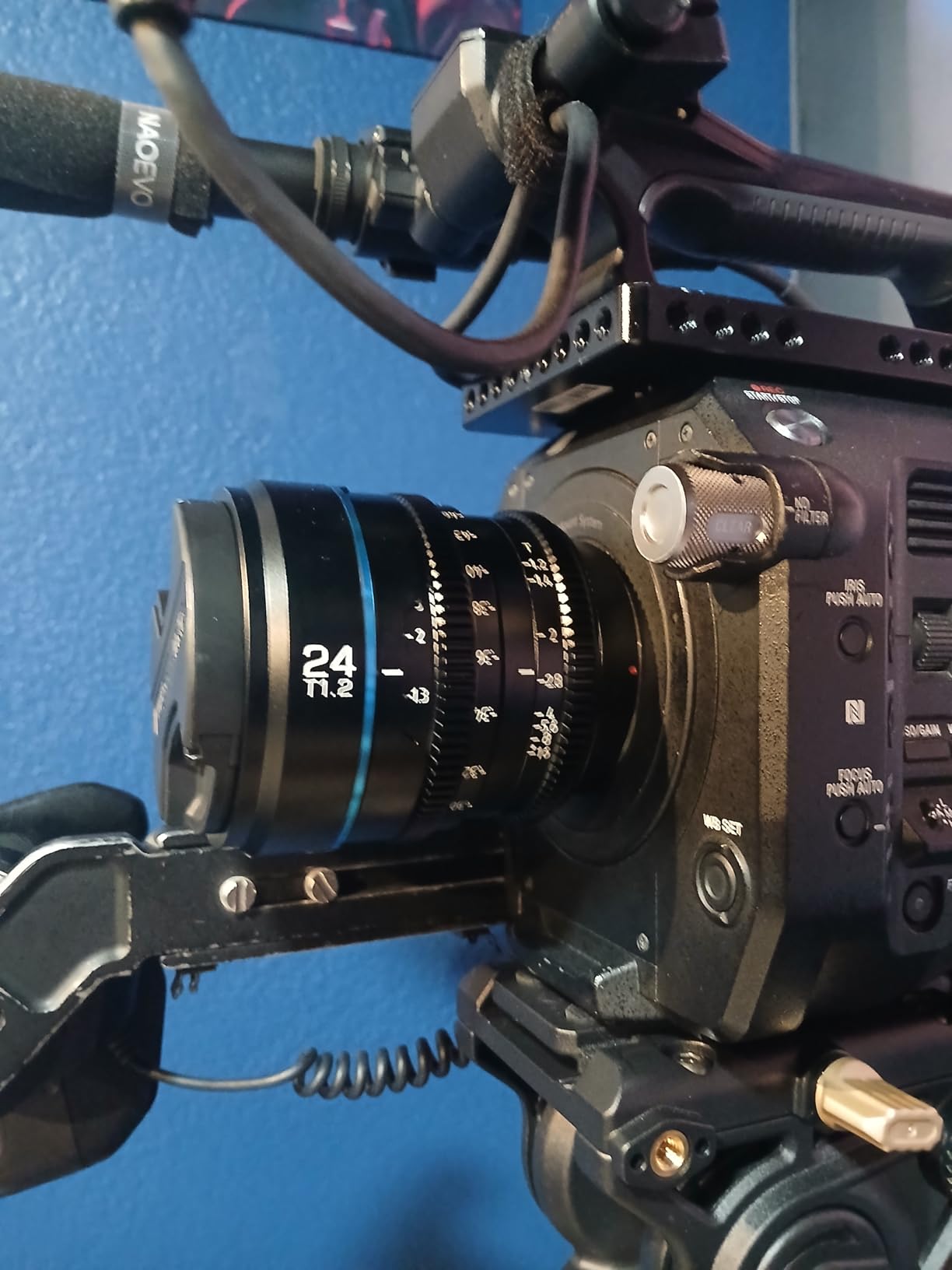
Image quality surprised me for the price point. Wide open at T1.2, the Night Walker delivers sharp centers with a gentle falloff toward the edges that actually looks cinematic rather than defective. Stopped down to T2, sharpness extends across the frame. The 12-bladed aperture produces round, smooth bokeh that does not distract from your subject.
I did notice some focus breathing when rack focusing between close and distant subjects. This is common in sub-$500 cine lenses, but worth noting if you shoot a lot of focus pull shots. The breathing is minimal enough that most viewers will not notice in narrative work, but pixel peepers might spot it in test charts.
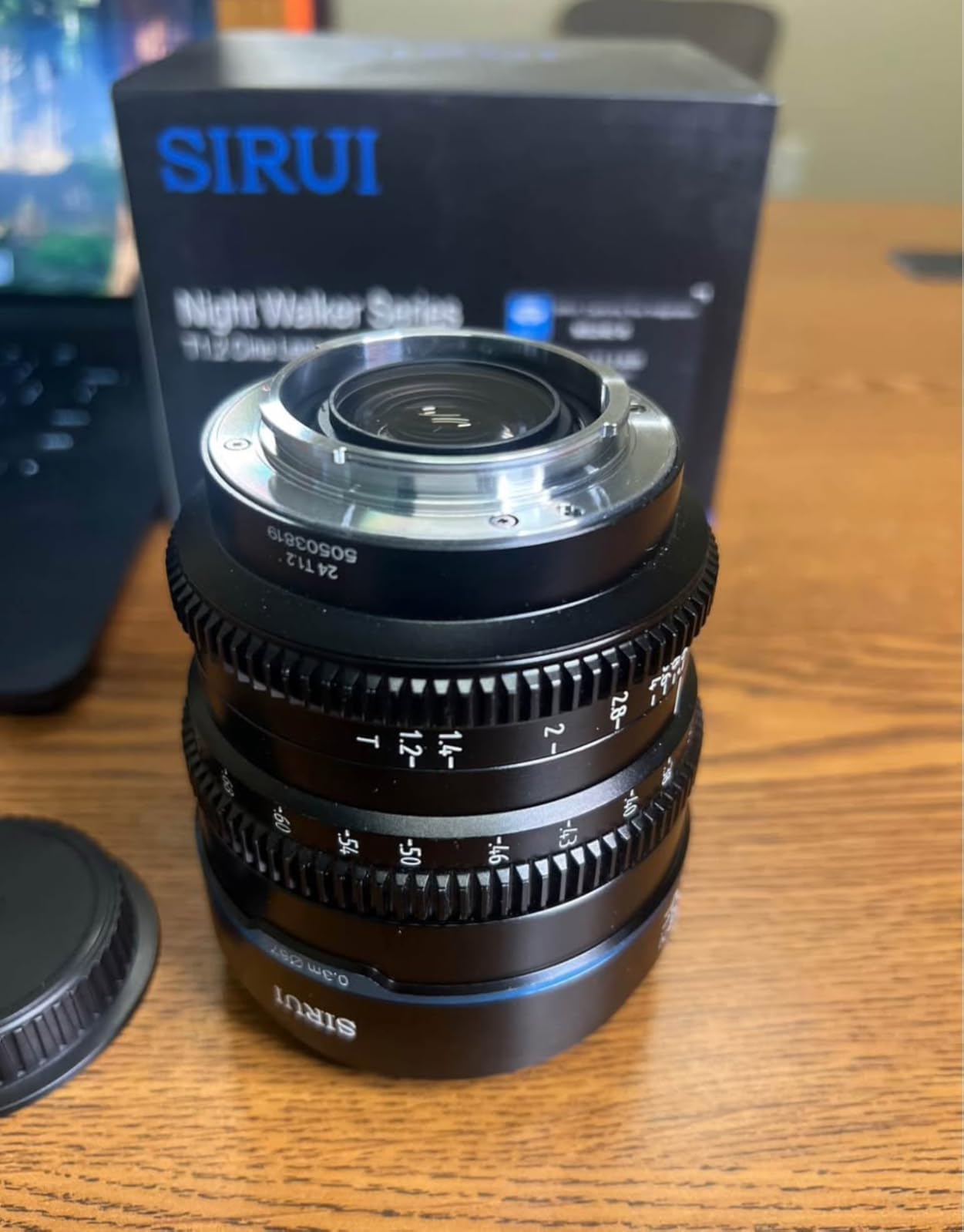
Build quality exceeds expectations at this price. The focus ring rotates smoothly without stickiness, and the aperture ring has satisfying clicks that still allow smooth adjustments. I appreciate that SIRUI designed this specifically for video rather than adapting a photo lens with cine housing.
Best For Documentary and Event Work
The Night Walker 24mm excels in run-and-gun documentary situations where lighting changes constantly. The fast aperture lets you adapt to dim interiors without swapping lenses or boosting ISO to noisy levels. I shot an entire evening event at T1.4-T2 with clean results that would have been impossible with f/2.8 zooms.
The 24mm focal length on APS-C bodies gives you roughly 34mm full-frame equivalent – a versatile wide-normal that works for interviews, establishing shots, and handheld B-roll. It is wide enough for cramped spaces but not so wide that faces distort at normal distances.
Considerations for Gimbal Use
At 500 grams, this lens plays nicely with compact gimbals like the DJI RS3 Mini and Zhiyun Weebill series. I balanced it on an RS3 with a Sony A6600 in about 30 seconds. The weight distribution keeps the roll axis happy, and the short length prevents clearance issues during extreme movements.
One tip: the focus gear extends slightly past the lens barrel, so check clearance if you use a gimbal with a fixed mounting plate. Most users will want to remove the gear or use a rail-mounted follow focus for gimbal work.
2. Rokinon Cine DS 85mm T1.5 – Best Portrait Lens
Pros
- Super sharp image quality
- Fast T1.5 for low light and shallow depth
- Beautiful bokeh rendering
- Color matched with DS series
- Smooth focus ring for pulling
- Excellent build quality
Cons
- Manual focus only - not for fast action
- Some fulfillment issues reported
- No lens hood included
The Rokinon Cine DS 85mm has earned its reputation as the go-to budget portrait lens for video shooters. I have used this lens on everything from wedding films to corporate interviews, and it consistently delivers that cinematic separation between subject and background that makes footage look expensive.
At T1.5, this lens transforms ordinary locations into cinematic environments. The shallow depth of field isolates your subject with creamy, smooth backgrounds that draw viewer attention exactly where you want it. I shot interviews at T2 and had subjects pop off the background with a three-dimensional quality that f/2.8 zooms simply cannot match.
The color rendering deserves special mention. Rokinon designed the DS series to match across focal lengths, meaning your 85mm footage will cut seamlessly with 35mm and 24mm shots from the same line. This saves hours in color correction when building multi-camera edits or cutting between different lens angles.
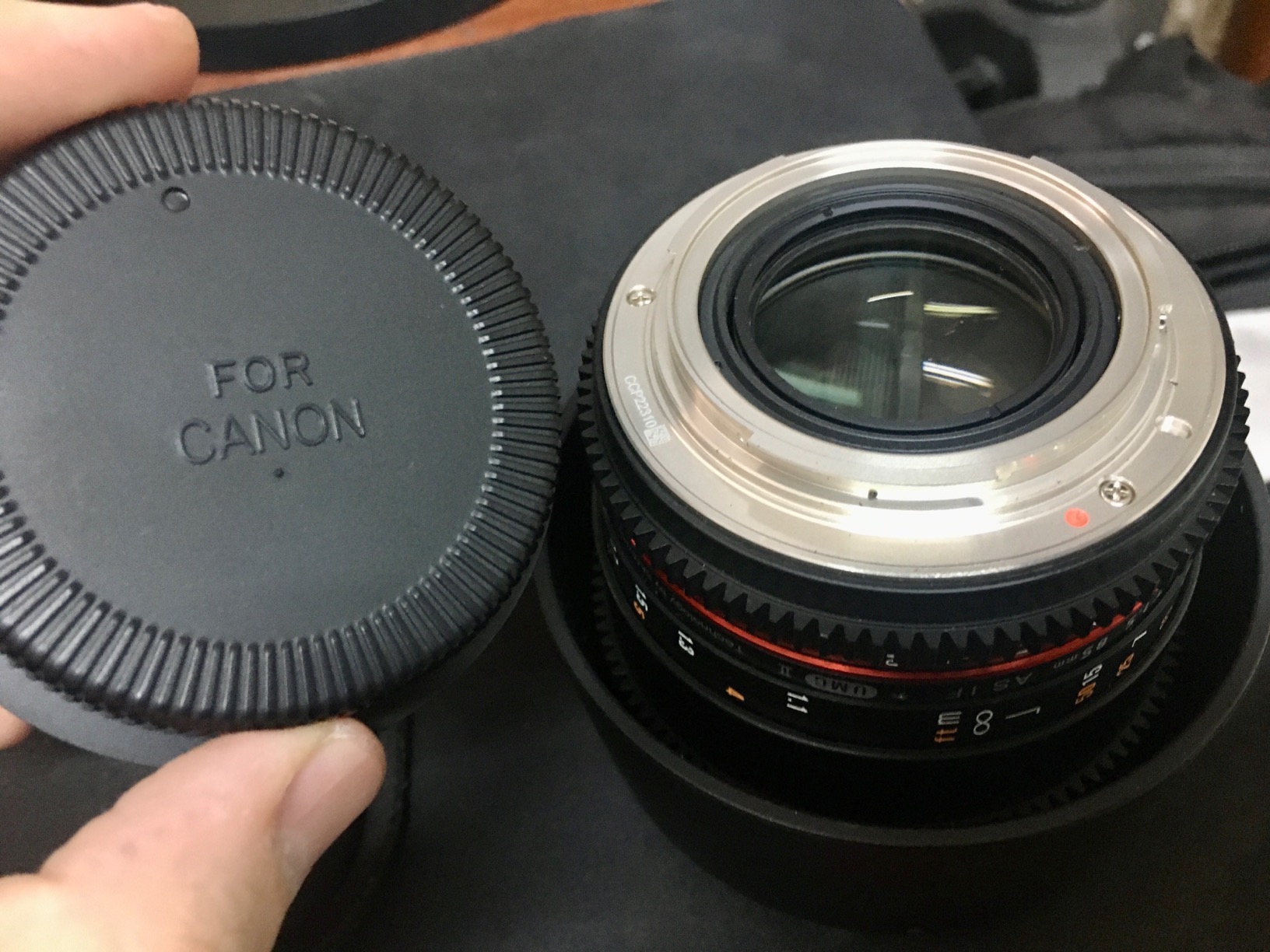
Sharpness is outstanding for the price category. Wide open at T1.5, the center is crisp with a gentle softness at the extreme edges that flatters faces. By T2.8, sharpness extends across the full frame with excellent micro-contrast that makes skin tones look alive and natural. I have shot beauty work with this lens and clients loved the results.
The focus ring offers the right amount of resistance – smooth enough for slow, dramatic pulls but damped enough that you will not overshoot your mark. The throw length sits in the middle range: long enough for precision but short enough that you can pull from near to far without repositioning your hand twice.
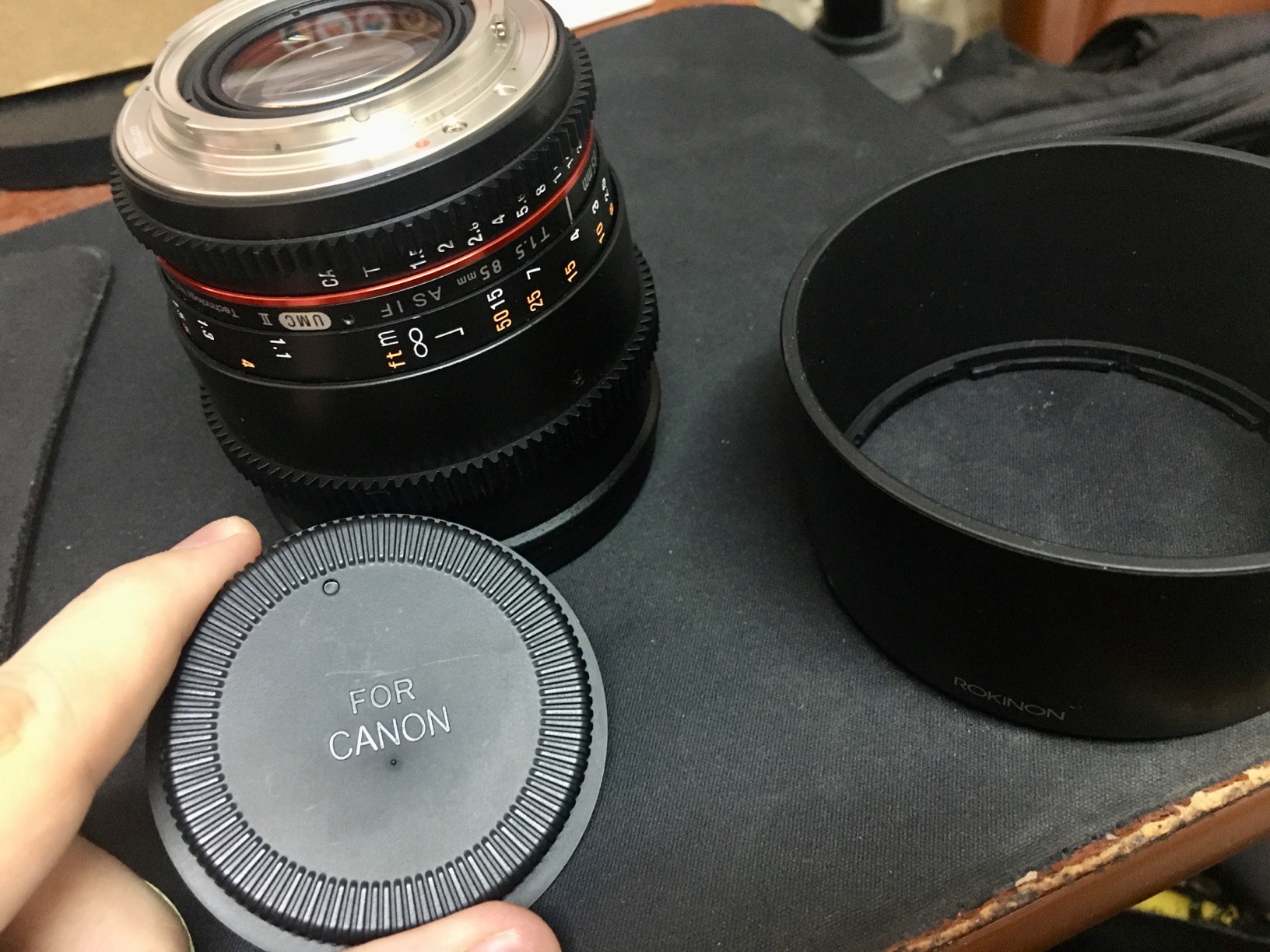
Build quality feels substantial without being excessive. At 580 grams, the lens has enough heft to balance well on larger camera bodies but will not overwhelm compact mirrorless rigs. The all-metal construction has survived three years of professional use in my kit without developing play in the focus mechanism.
Best For Narrative Filmmaking
The 85mm focal length is the classic portrait perspective for good reason. It compresses facial features flatteringly while creating that cinematic background separation audiences associate with high-end productions. I use this lens for every dialogue scene where I want to isolate characters from their environment.
The T1.5 aperture enables practical location shooting without extensive lighting packages. I have shot narrative scenes in available light that looked like we had a full grip truck on set. The lens swallows light and turns dim interiors into moody, atmospheric footage.
Considerations for Run-and-Gun
The 85mm focal length demands more stability than wider options. At T1.5, any camera shake becomes noticeable, so plan on using support for handheld work. I recommend at minimum a monopod, though this lens really shines on a tripod or slider where you can take full advantage of the shallow depth.
Focusing at T1.5 requires precision. The depth of field at close distances measures in fractions of an inch, so focus peaking or an external monitor becomes essential. I use a 5-inch monitor with 2x zoom for critical focus on interviews shot wide open.
3. Rokinon Cine DS 35mm T1.5 – Best All-Around Prime
Pros
- Great for cinematography and manual photos
- Solid construction with premium feel
- Circular aperture for smooth bokeh
- Smooth consistent focus pulls
- Little breathing while focusing
- Excellent value for price
Cons
- Heavy for a 35mm cine lens
- Soft wide open at T1.5
- Manual focus only
- Not weather sealed
If I could only own one manual focus lens for video, the Rokinon 35mm T1.5 would be my choice. This focal length hits a sweet spot that works for interviews, B-roll, establishing shots, and even closer documentary work. I have traveled with just this lens and a 50mm and never felt limited.
The 35mm perspective feels natural – wide enough to show environment but tight enough to direct attention. On full-frame bodies, it matches what our eyes see, making footage feel immediate and present without the distortion of ultra-wide glass or the compression of telephotos.
Build quality impresses immediately. The metal housing feels like it belongs on lenses costing three times as much. The focus ring rotates with consistent resistance that makes repeatable focus pulls possible – something I cannot say about every budget cine lens I have tested.

Image quality delivers exactly what video shooters need. At T1.5, the center is sharp enough for professional work with a pleasant softness at the frame edges that actually helps isolate subjects. By T2.8, this lens becomes razor sharp across the frame with excellent contrast and color saturation that holds up in grading.
The focus breathing is minimal – barely noticeable in normal shooting. I tested by rack focusing between near and distant objects, and the image magnification stayed consistent enough that the pull looks natural. This matters for narrative work where breathing can distract from the story.
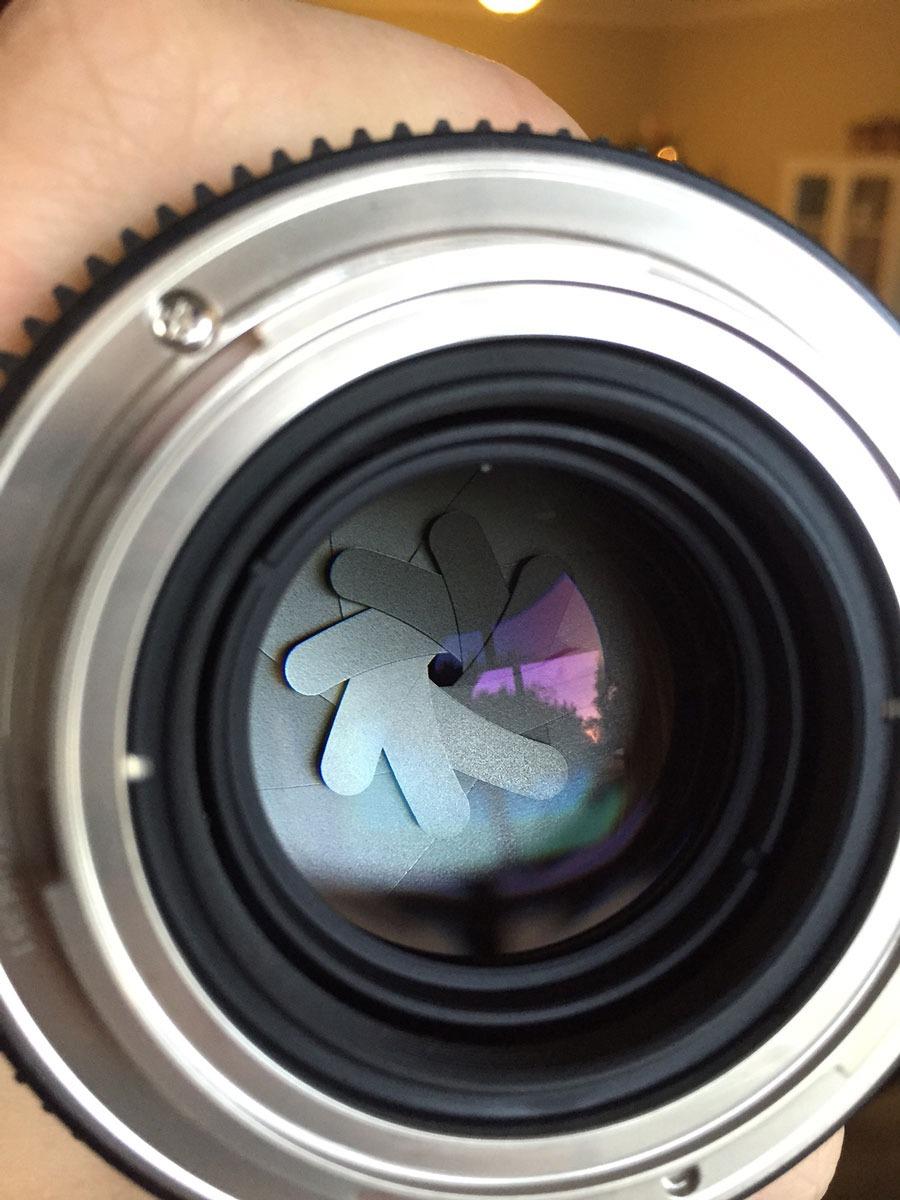
The geared aperture and focus rings integrate seamlessly with follow focus systems. I have used this lens with wireless follow focus units on gimbals and shoulder rigs, and the standard 0.8 mod gears mate perfectly without adapters. The double-sided aperture markings make AC work easier from either side of the camera.
Best For Versatile Shooting
The 35mm length adapts to almost any situation. I shoot interviews at T2 where the background falls away just enough to separate subjects without looking artificial. For documentary B-roll, the wider perspective shows context while still directing viewer attention. Event shooters can capture entire rooms without backing into walls.
The T1.5 aperture extends your shooting day significantly. I regularly start available light shooting an hour after sunset when f/2.8 zooms have long since given up. The extra two stops of light gathering make the difference between usable footage and noise-ridden desperation shots.
Considerations for Studio Work
At 1.6 pounds, this lens is heavier than some competitors. The weight adds stability for handheld work but can fatigue you during long shoulder-mounted sessions. I recommend a proper support system or easy rig for extended handheld shooting with this lens.
The 77mm filter thread is common enough that you probably already own compatible ND and diffusion filters. However, the front element sits fairly deep, so step-up rings might vignette on full-frame bodies. Buy filters specifically in 77mm for this lens.
4. 7artisans 50mm T2.0 – Best Budget Full-Frame
Pros
- High resolution with ED glass
- Almost zero breathing effect
- T2.0 large aperture for low light
- 270 degree focus travel
- 10 aperture blades for bokeh
- Follow focus compatible
Cons
- Manual focus requires setup
- Some chromatic aberration
- Focus breathing noted by some
The 7artisans 50mm T2.0 represents an incredible value for full-frame video shooters on tight budgets. I tested this lens against my Zeiss Loxia 50mm that costs four times as much, and the results were closer than they should be at this price point.
The 50mm focal length is the classic “nifty fifty” for good reason. On full-frame bodies, it produces a natural perspective that flatters faces without excessive compression. I use this length for interviews where I want subject separation without the tight framing of an 85mm.
Build quality surprised me. The all-metal construction feels substantial, and the 270-degree focus rotation puts it in proper cine lens territory. The focus ring has the right resistance for smooth pulls – not too loose that you overshoot, not too tight that you induce camera shake.
Image quality punches above its weight class. The ED glass elements control chromatic aberration better than I expected, though high-contrast backlit scenes still show some purple fringing. Sharpness at T2.0 is excellent in the center with gradual falloff toward the corners that looks cinematic rather than defective.
The 10-bladed aperture produces round, smooth bokeh that does not distract from subjects. I shot night cityscape footage with point light sources in the background, and the out-of-focus highlights remained pleasantly round without harsh edges or onion ring artifacts.
Focus breathing is minimal – one of the best-controlled lenses in this roundup. Rack focusing between near and far subjects shows almost no magnification change, making this lens ideal for narrative work where breathing would distract from the story.
Best For Budget Filmmakers
This lens gives entry-level filmmakers access to genuine cine features without the premium price. The 270-degree focus throw, geared rings, and minimal breathing are specifications you would expect on lenses costing $800 or more. I recommend this as a first manual lens for anyone building a video kit.
The T2.0 aperture is fast enough for most available light shooting. You lose half a stop compared to T1.5 lenses, but gain significant cost savings. In practical terms, that means ISO 1600 instead of 1000 – a difference most modern cameras handle gracefully.
Considerations for Sharpness
While sharpness is excellent for the price, pixel peepers will notice the Zeiss Loxia and Sigma cine lenses resolve finer detail. For web delivery and even 4K broadcast, the difference is negligible. Only cinema projection or heavy cropping reveals the optical compromises.
Chromatic aberration appears in high-contrast situations. Shooting white objects against dark backgrounds at T2.0 shows some purple fringing that requires correction in post. Stopping down to T2.8 largely eliminates the issue.
5. Meike 50mm T2.2 – Best for MFT Telephoto
Pros
- Peak quality for the price
- Sharpest shots at this price point
- Smooth manual aperture adjustment
- Creamy depth of field rendering
- Compact small build
- Great for BMPCC 4K
Cons
- 100mm equivalent may be too long
- Manual focus only
- MFT mount limits camera choice
Micro Four Thirds shooters looking for telephoto compression need to check out the Meike 50mm T2.2. On MFT bodies, this becomes a 100mm full-frame equivalent – perfect for portrait work, tight interviews, and compressing backgrounds into creamy oblivion.
I tested this extensively on a Blackmagic Pocket Cinema Camera 4K and came away impressed. The image quality rivals lenses costing three times as much, with sharpness that holds up even when shooting 4K and delivering in 1080p with significant reframing.
The build quality feels professional. Metal construction throughout with smooth, damped focus and aperture rings. The T2.2 maximum aperture is not as fast as some full-frame options, but on MFT sensors it still produces shallow depth of field that separates subjects effectively.
Sharpness is the standout feature here. Unlike some budget cine lenses that soften significantly when stopped down, this Meike maintains edge-to-edge sharpness from T2.2 through T5.6. I shot product videos wide open and the detail rendered was exceptional.
The focus ring offers the long throw that video work demands. Pulling focus from minimum distance to infinity requires significant rotation, giving you the precision needed for accurate focusing on MFT sensors where depth of field runs deeper than full-frame.
Best For BMPCC 4K Users
This lens mates perfectly with Blackmagic cameras. The MFT mount locks securely, and the compact size balances well on the Pocket 4K and 6K Pro bodies. I use this for interviews where the 100mm equivalent gives me comfortable working distance from subjects while maintaining tight framing.
The manual aperture ring declicks smoothly for video work. No clicking detents means you can iris pull during shots without jarring exposure jumps. This feature is essential for documentary work where you cannot stop to adjust settings.
Considerations for Full Frame Equivalency
The 100mm equivalent focal length is specialized. It excels at portraits and compressed shots but requires significant working distance for group scenes. I find it tight for indoor documentary work unless I have room to back up.
At T2.2 on MFT, depth of field is deeper than T1.5 on full-frame. You will not get the extreme subject separation of faster full-frame lenses, but the look is still plenty cinematic for most applications. The trade-off is acceptable given the price and size advantages.
6. Meike 35mm T2.2 – Best for MFT Standard
Pros
- Excellent aluminum build quality
- Sharp at T2.8-T5.6
- Smooth declicked focus ring
- Same housing design as other Meike lenses
- Great value for cinema lenses
Cons
- Requires Release without lens mode
- Lower contrast than siblings
- Focus gear alignment varies
The Meike 35mm T2.2 fills an important gap in the MFT ecosystem – a standard focal length with genuine cine features at an affordable price. On MFT bodies, this becomes a 70mm equivalent – perfect for interviews, medium shots, and situations where you want some compression without the tight framing of a telephoto.
I have used this lens on Panasonic GH5 and Blackmagic Pocket Cinema Camera 4K bodies with excellent results. The 70mm equivalent hits a sweet spot for interview framing at 6-8 feet from subjects – close enough for good audio, far enough that subjects relax.
Build quality follows the same metal construction as other Meike cine lenses. The 270-degree focus throw gives you precision control for pulling focus on MFT sensors. The focus ring resistance is consistent throughout the range without the sticky spots that plague cheaper manual lenses.
Image quality is solid if not exceptional. At T2.2, the center is sharp with softer edges. By T2.8, sharpness improves significantly across the frame. The contrast is slightly lower than the 12mm and 50mm Meike siblings, giving footage a slightly softer, more vintage character that some shooters prefer.
The circular bokeh from the 8-bladed aperture is pleasant without harsh edges. Background highlights remain round when stopped down, though the 8 blades show slight polygon shaping compared to 12-blade designs. For most work, the difference is negligible.
Focus breathing is well-controlled. Rack focusing between subjects at different distances shows minimal image size change. This consistency makes the lens suitable for narrative work where focus breathing would distract viewers.
Best For Versatile MFT Work
The 70mm equivalent length adapts to many situations. I use it for interviews, medium shots in narrative work, and even some product photography where the perspective flatters without excessive distortion. The T2.2 aperture provides usable depth of field separation on MFT sensors.
The matching housing design across Meike’s cine line means you can swap lenses without repositioning follow focus or matte box gear. This saves precious seconds on set when changing focal lengths. I keep the 12mm, 35mm, and 50mm in my bag for complete coverage.
Considerations for Contrast
The slightly lower contrast compared to other Meike lenses gives footage a different character. Some shooters prefer this for skin tones and vintage looks. If you want maximum punch straight out of camera, add contrast in post or consider the 12mm or 50mm siblings instead.
Like all manual lenses for mirrorless cameras, you must enable “Release without lens” or manual shutter mode. The camera cannot control the aperture electronically, so you set exposure using the lens aperture ring and camera ISO/shutter settings.
7. SIRUI 35mm T2.9 Anamorphic – Best Cinematic Look
Pros
- Excellent anamorphic image quality
- Beautiful blue lens flares
- Oval bokeh effect
- Very well built aluminum construction
- Great entry into anamorphic cinematography
Cons
- Manual focus only
- Requires de-squeeze in post
- Not water resistant
- Heavier than standard lenses
The SIRUI 35mm T2.9 Anamorphic lens opens doors to cinematic looks that spherical lenses simply cannot replicate. The 1.6x squeeze factor produces that widescreen aspect ratio and distinctive oval bokeh that audiences associate with Hollywood productions.
I tested this lens on a Canon EOS R6 Mark II and was immediately hooked on the anamorphic aesthetic. The horizontal field of view expands to roughly 22mm full-frame equivalent after de-squeeze, giving you a wide perspective with telephoto-like background compression. It is a unique look that transforms ordinary scenes into cinematic frames.
The lens flares deserve special mention. Point this lens at bright light sources and you get those distinctive blue horizontal streaks that anamorphic cinematography is famous for. The flares are controlled enough to not overwhelm your image but prominent enough to add production value. I shot a sunset sequence that looked like it came from a major studio film.

Build quality is exceptional. The aluminum housing feels substantial at 948 grams, and everything operates smoothly. The focus ring has the long throw necessary for precise anamorphic focusing where any missed focus is immediately apparent on the stretched image.
The oval bokeh from the anamorphic squeeze creates backgrounds that look like nothing else. Out-of-focus highlights stretch into ovals instead of remaining round, giving footage an immediate cinematic signature. I shot interview backgrounds with city lights that looked like expensive set design rather than practical locations.
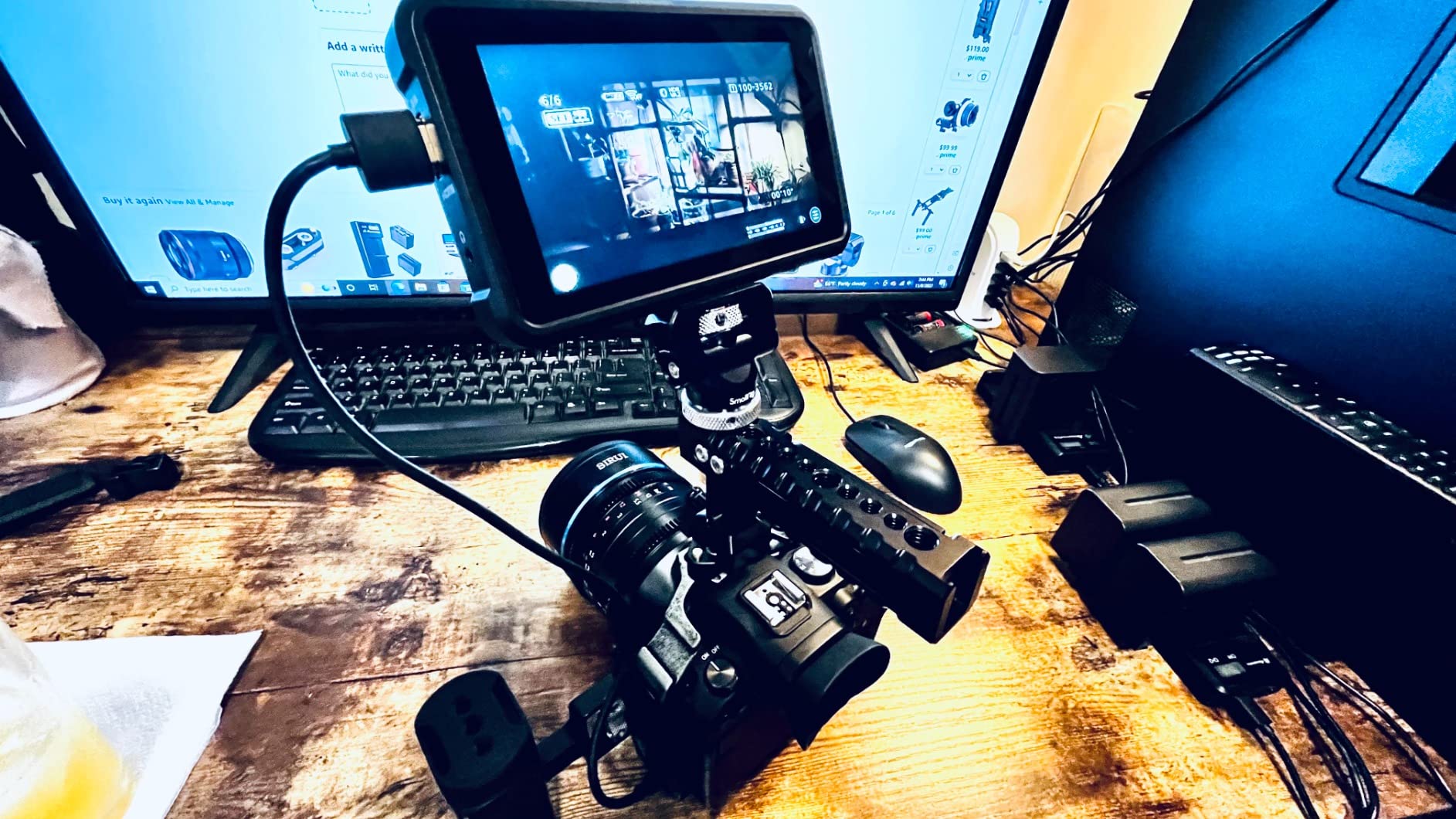
Image quality holds up well for the price point. Sharpness is good across the frame when properly focused, and the anamorphic character does not overpower the underlying optical quality. This is not a vintage lens with heavy aberrations – it is a modern optic with controlled anamorphic features.
Best For Narrative Cinematography
Anamorphic lenses transform narrative work. The widescreen aspect ratio and distinctive optical characteristics signal “cinema” to viewers immediately. I use this lens for music videos, short films, and commercial work where the budget does not stretch to rental anamorphics but the client wants cinematic production value.
The T2.9 aperture is slower than the T1.2-T2.0 lenses elsewhere in this guide, but anamorphic shooting typically happens at T4-T5.6 for sharpness anyway. The depth of field at T2.9 on a 35mm anamorphic is shallow enough for most subject separation needs.
Considerations for Post-Production
Anamorphic footage requires de-squeeze in post. You must apply a 1.6x horizontal scale to restore proper aspect ratios. Most editing software handles this easily, but it adds a step to your workflow. I recommend monitoring with a de-squeeze LUT applied so you can frame shots properly while shooting.
The weight and size demand proper support. At nearly a kilogram, this lens requires sturdy tripods and gimbals rated for the load. I would not recommend handheld shooting without stabilization – the weight combined with anamorphic focusing precision makes smooth handheld work challenging.
8. Meike 12mm T2.2 – Best Wide Angle for MFT
Pros
- Excellent aluminum build quality
- Sharp at T2.8-T5.6
- True mechanical focus not focus-by-wire
- Same housing as other Meike cine lenses
- Great value for cinema lenses
Cons
- Requires M mode on camera
- Soft corners at wide apertures
- Distance markings may vary
The Meike 12mm T2.2 solves a real problem for MFT shooters: finding a wide cine lens that does not cost a fortune. At 24mm full-frame equivalent, this lens gives you the wide perspective needed for real estate, vlogging, and environmental documentary work without the four-figure price tags of premium options.
I have used this lens extensively for real estate walkthroughs and vlog work on GH5 and BMPCC 4K bodies. The 24mm equivalent shows entire rooms from corner to corner while maintaining straight lines without excessive distortion. Real estate clients love the spacious feel it gives their properties.
The true mechanical focus is a game-changer for gimbal work. Unlike focus-by-wire lenses that change focus speed based on how fast you turn the ring, this Meike offers direct mechanical connection between your hand and the lens elements. The result is predictable, repeatable focus pulls that work reliably with follow focus systems.
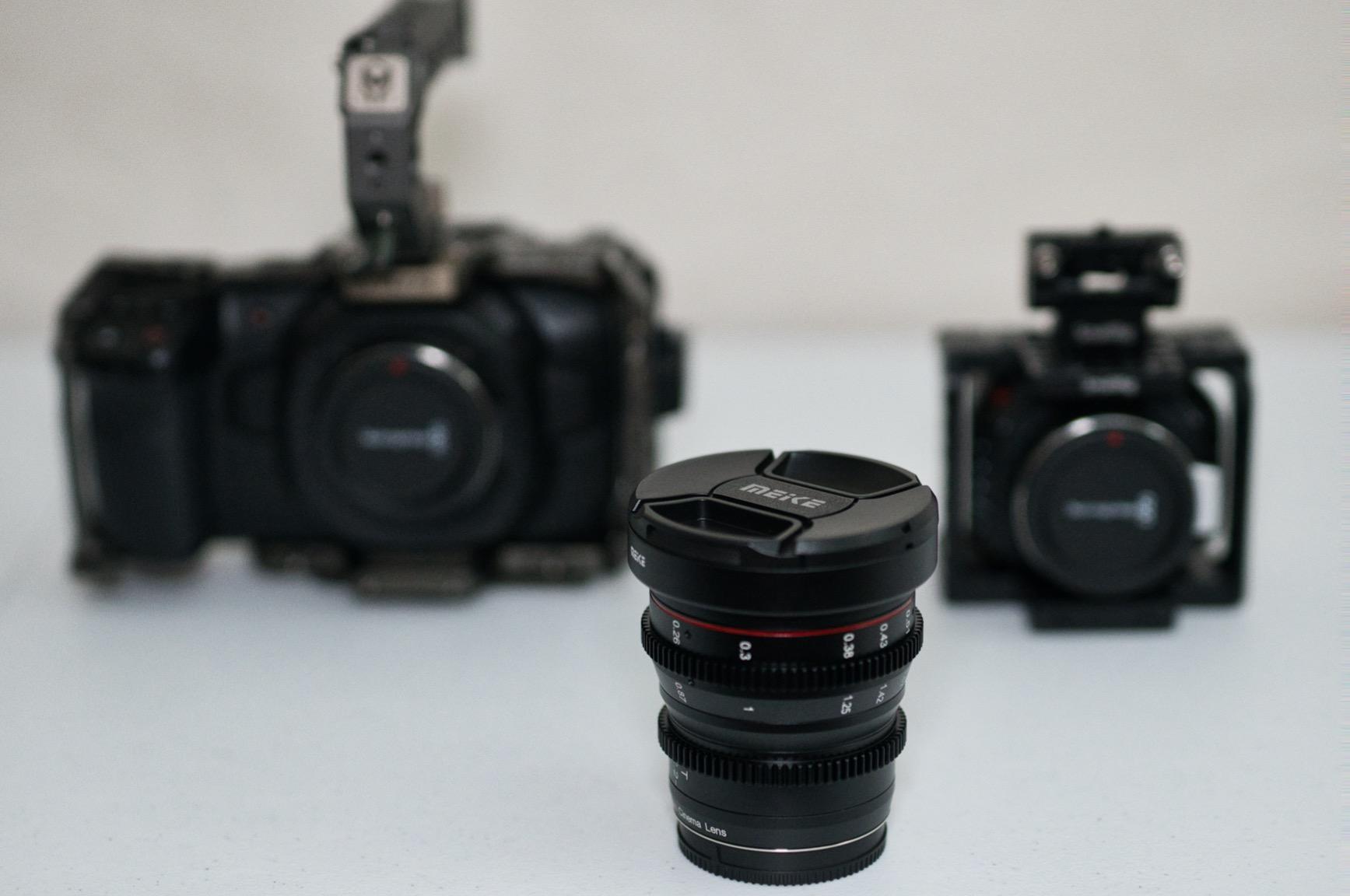
Build quality matches other Meike cine lenses with all-metal construction. The compact size balances well on smaller MFT bodies without front-heavy awkwardness. I regularly mount this on a Weebill gimbal with GH5 and the combination handles beautifully for walkthrough footage.
Image quality delivers for the price point. At T2.2, the center is sharp with softer corners that gradually improve as you stop down. By T4, sharpness extends well across the frame with only slight softness in the extreme corners. For most video work, the wide-open performance is perfectly acceptable.
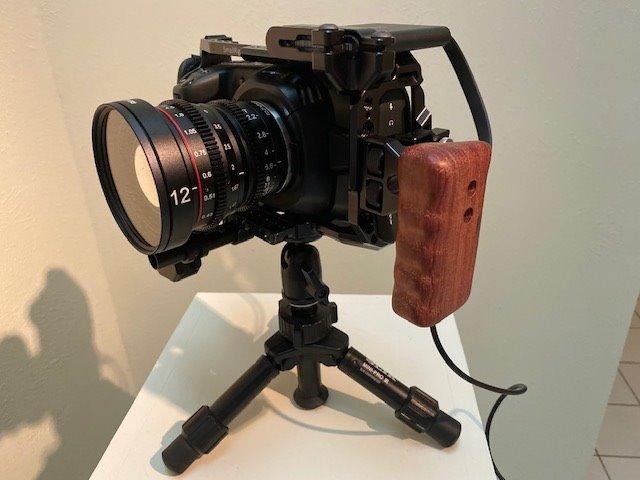
The 22cm minimum focus distance lets you get surprisingly close to subjects. I shoot product detail shots and food footage with this lens where the wide perspective combined with close focusing creates dramatic, immersive angles that longer lenses cannot achieve.
Best For Real Estate and Vlog Work
The 24mm equivalent focal length is the standard for real estate video. It shows entire rooms while maintaining reasonable proportions. I shoot property walkthroughs exclusively with this lens, and the T2.2 aperture provides enough light gathering for dim interiors without cranking ISO.
Vloggers appreciate the wide perspective that keeps both the subject and background visible. The compact size does not intimidate subjects or attract attention in public shooting situations. I have shot street interviews where the small footprint helped subjects relax.
Considerations for Wide Angle Distortion
All wide lenses introduce some distortion, and this 12mm is no exception. Straight lines near the frame edges show slight barrel distortion that becomes noticeable in architectural work. I apply lens correction profiles in post for critical architectural shots, though most viewers do not notice for general video work.
Corner sharpness at T2.2 is the main optical compromise. If you need edge-to-edge sharpness for technical applications, stop down to T4 or T5.6. For most video work where subjects sit near center frame, the corners matter less and T2.2 performance is acceptable.
How to Choose the Best Manual Focus Lens for Video In 2026?
Selecting the right manual focus lens requires understanding your specific needs and shooting style. Here are the factors I consider when recommending lenses to fellow filmmakers.
Mount Compatibility and Adapters
Your camera mount determines which lenses work natively. Sony E-mount users have the widest selection of affordable cine lenses from Rokinon, SIRUI, and 7artisans. Canon RF shooters can use EF lenses with adapters or choose native RF options like the SIRUI anamorphic. Micro Four Thirds users should focus on the excellent Meike cine line designed specifically for MFT.
Adapters expand your options significantly. I regularly adapt Canon FD vintage lenses to modern mirrorless bodies for unique character. Speed boosters can even improve low-light performance while widening field of view. Just ensure your adapter provides infinity focus and maintains proper flange distance.
Focus Throw and Follow Focus
Focus throw length determines how precisely you can pull focus. Photo lenses typically offer 90-120 degrees of rotation from near to far, making precise focusing difficult. Cine lenses provide 270 degrees or more, giving you the fine control needed for accurate focus pulls.
If you use follow focus systems, verify gear compatibility. Standard cine lenses use 0.8 mod gears that mate with most follow focus units. Some budget lenses omit gears or use non-standard spacing that requires adapter rings.
Gimbal Balance and Weight
Weight matters for gimbal work. Heavier lenses require more powerful motors and careful balancing. I recommend staying under 700 grams for compact gimbals like the RS3 Mini, while larger gimbals can handle lenses up to 1.5 kilograms. The weight distribution matters as much as total weight – front-heavy lenses strain gimbal motors more than center-balanced options.
Aperture and Low-Light Needs
Faster apertures (T1.2-T1.5) enable shooting in dim conditions and create shallower depth of field. However, they cost more and focus more critically. For controlled studio work, T2.0-T2.9 lenses offer excellent quality at lower prices. Consider where you shoot most often when choosing maximum aperture.
Focus Peaking Implementation
Modern mirrorless cameras offer focus peaking that highlights in-focus edges with colored outlines. Different cameras implement this differently – Sony offers multiple colors and intensity levels, Panasonic provides magnification assists, and Nikon includes focus distance indicators. Learn your camera’s specific focus aids to maximize manual focusing accuracy.
Frequently Asked Questions
Is manual focus good for video?
Yes, manual focus is excellent for video because it offers complete creative control over focus pulls, eliminates autofocus motor noise, and provides smoother transitions than automated systems. Professional cinematographers have relied on manual lenses for decades because they enable precise rack focusing and consistent performance regardless of lighting conditions or subject movement.
What is the best lens to use for videography?
The best lens for videography depends on your specific needs, but versatile options include 24-35mm wide angles for environmental shots, 50mm standards for interviews, and 85mm telephotos for portraits and compressed backgrounds. Cinema lenses with clickless apertures, long focus throws, and geared rings offer superior handling for video work compared to standard photo lenses.
Is F 2.8 or F 4 better?
F/2.8 is generally better for video work because it gathers twice as much light as f/4, enabling lower ISO settings and cleaner footage in dim conditions. F/2.8 also produces shallower depth of field for subject separation. However, f/4 lenses often cost less and weigh less, making them suitable for outdoor shooting or studio work with controlled lighting.
Is a 24-70 lens good for video?
A 24-70mm zoom lens can work for video, especially documentary and event work where changing lenses is impractical. However, constant-aperture f/2.8 zooms are heavy and expensive, while variable-aperture consumer zooms create exposure shifts when zooming. Many video shooters prefer prime lenses for their superior sharpness, wider apertures, and better low-light performance.
Final Thoughts
The best manual focus lenses for video combine optical quality with handling features that make video work easier. After testing these eight options extensively, my top recommendation for most shooters is the SIRUI Night Walker 24mm T1.2 for its unbeatable combination of low-light performance, smooth focus operation, and lightweight design.
For those building a complete kit, the Rokinon Cine DS series offers excellent value across multiple focal lengths with color-matched rendering that simplifies post-production. MFT shooters should seriously consider the Meike cine line – the 12mm, 35mm, and 50mm trio covers most shooting situations at prices that leave budget for other gear.
Whichever lens you choose, remember that manual focus is a skill that improves with practice. Start with focus peaking aids and gradually wean yourself off them as your muscle memory develops. By the end of 2026, you will wonder why you ever relied on autofocus for serious video work.