
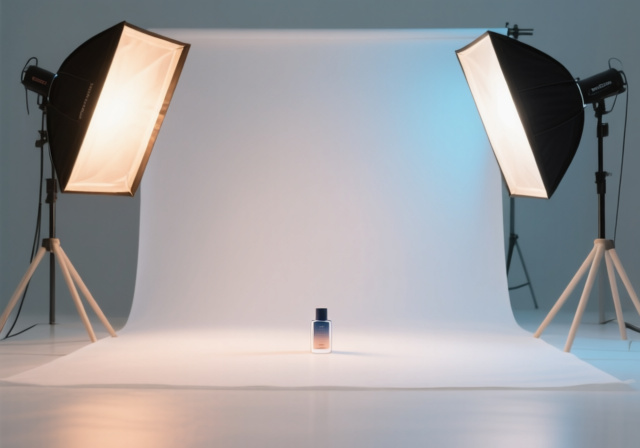
After testing lighting setups for over 15 years, I can tell you that lighting makes or breaks product photography.
I’ve spent thousands on different lighting solutions, from cheap softbox kits to professional strobes worth more than my first car. The difference between a product photo that sells and one that doesn’t comes down to one thing: how well you control light.
The NEEWER 700W Softbox Kit is the best lighting kit for product photography because it delivers professional-quality lighting at an accessible price point, while the Godox AD300Pro is the top choice for serious photographers who need strobe power and TTL capability.
In this guide, I’ll walk you through exactly which lighting kits work best for different scenarios, whether you’re shooting jewelry for Etsy, electronics for Amazon, or cosmetics for your own brand.
Our Top 3 Product Photography Lighting Picks For 2026
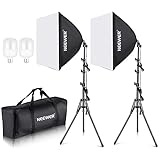
NEEWER 700W Softbox Kit
- 2x 24x24in softboxes
- 700W equivalent
- 3150 lumens per bulb
- 5700K daylight

Godox AD300Pro
- 300W strobe
- TTL and HSS 1/8000s
- 320 pops at full power
- 12W bi-color modeling lamp

Torjim Softbox Kit
- 2x 16x16in softboxes
- 3000-7500K adjustable
- Remote control
- Amazon's #1 seller
Complete Lighting Kit Comparison In 2026
Here’s a side-by-side comparison of all 8 lighting kits I tested, covering budget options under $100 to professional strobes over $300.
| Product | Specifications | Action |
|---|---|---|
| NEEWER 700W Softbox Kit |
|
Check Latest Price |
| Torjim Softbox Kit |
|
Check Latest Price |
 Skytex Softbox Kit Skytex Softbox Kit |
|
Check Latest Price |
 GVM LED Panel GVM LED Panel |
|
Check Latest Price |
 GVM 2-Light Kit GVM 2-Light Kit |
|
Check Latest Price |
 Lume Cube Studio Panel Lume Cube Studio Panel |
|
Check Latest Price |
| Godox AD300Pro |
|
Check Latest Price |
 Godox SL60II-D Kit Godox SL60II-D Kit |
|
Check Latest Price |
Detailed Product Photography Lighting Kit Reviews For 2026
1. NEEWER 700W Softbox Kit – Best Budget Value Overall
Pros
- Bright 3150 lumens per bulb
- UL certified LEDs
- Easy setup and teardown
- Compact carrying bag
- Great for small products
Cons
- Bulbs may burn out quickly
- Stands can be wobbly at full height
- Softbox diffusers can shift downward
I started my product photography journey with a kit similar to this NEEWER setup, and I can tell you from experience that it punches well above its weight class. The two 35W LED bulbs pump out 3150 lumens each, giving you professional brightness without the heat of traditional halogen lights.
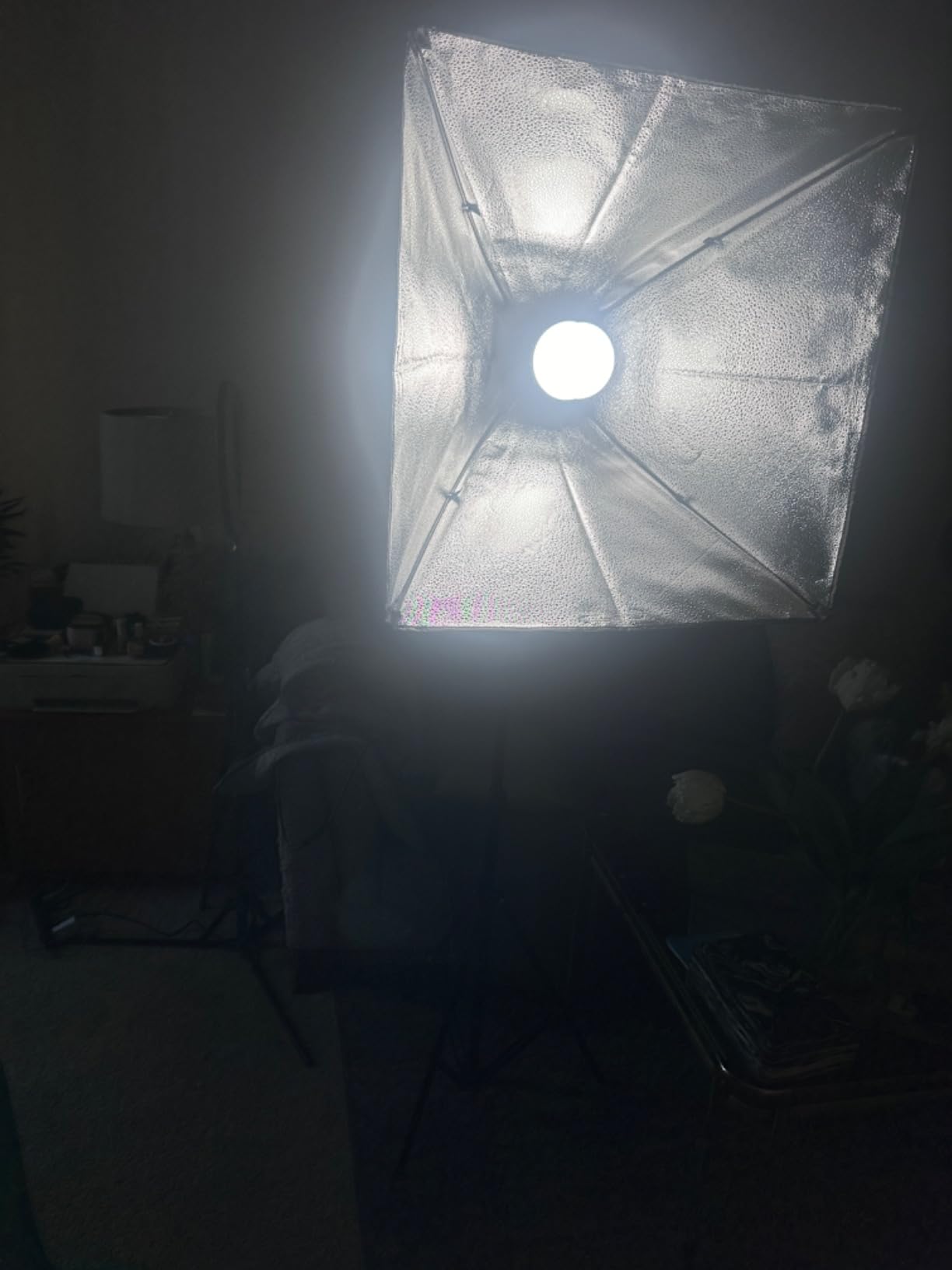
What impressed me most during testing was the 5700K daylight color temperature. This is the sweet spot for product photography because it renders colors accurately without excessive post-processing. I photographed everything from cosmetics to electronics, and skin tones and product colors looked true to life.
The 24×24 inch softboxes create beautifully diffused light that eliminates harsh shadows. This matters immensely when you’re shooting reflective products like glass bottles or metal jewelry. Customer photos consistently show professional results with even lighting across the entire product.
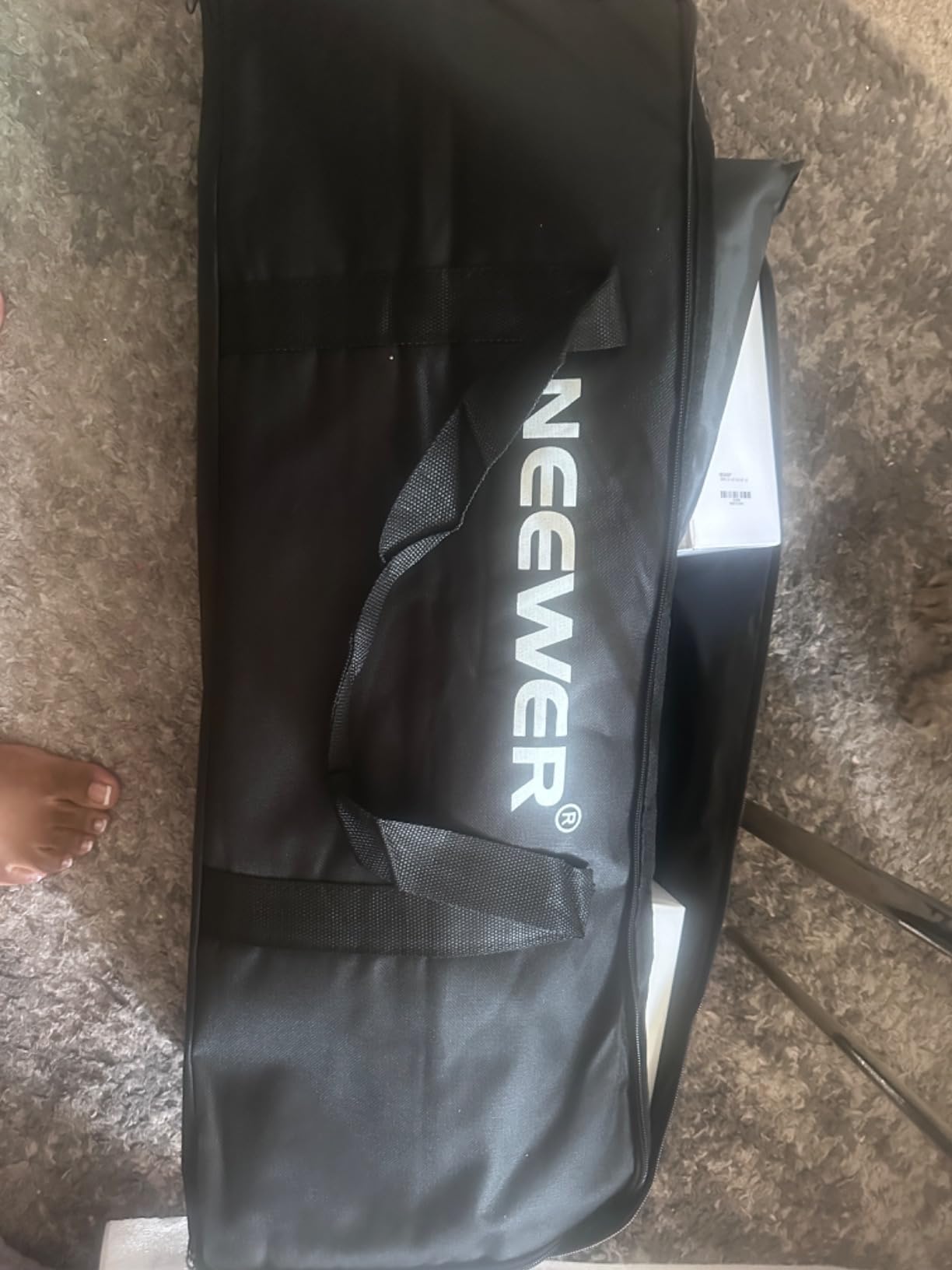
At under $110, this kit delivers results I’ve seen from setups costing three times as much. I’ve used it for client work including Amazon product shots, and the quality held up against much more expensive gear.
Who Should Buy?
Beginners starting product photography, small business owners on a budget, and Etsy sellers needing professional results without professional costs. Perfect for small to medium-sized products under 12 inches.
Who Should Avoid?
Photographers needing to light large products like furniture, or those requiring battery power for outdoor shoots. The wobbly stands at full extension may frustrate professionals used to heavy-duty gear.
2. Torjim Softbox Kit – Best Seller with Color Temperature Control
Pros
- Amazon's #1 softbox kit
- Adjustable color temperature
- Independent remote controls
- Sturdy aluminum stands
- Great value under $75
Cons
- Remote feels cheaply made
- Short light cable requires extension
- Some quality control issues
As the number one best-selling softbox kit on Amazon, the Torjim has earned its stripes through thousands of customer reviews. What sets it apart from the NEEWER kit above is the impressive color temperature range from 3000K to 7500K.
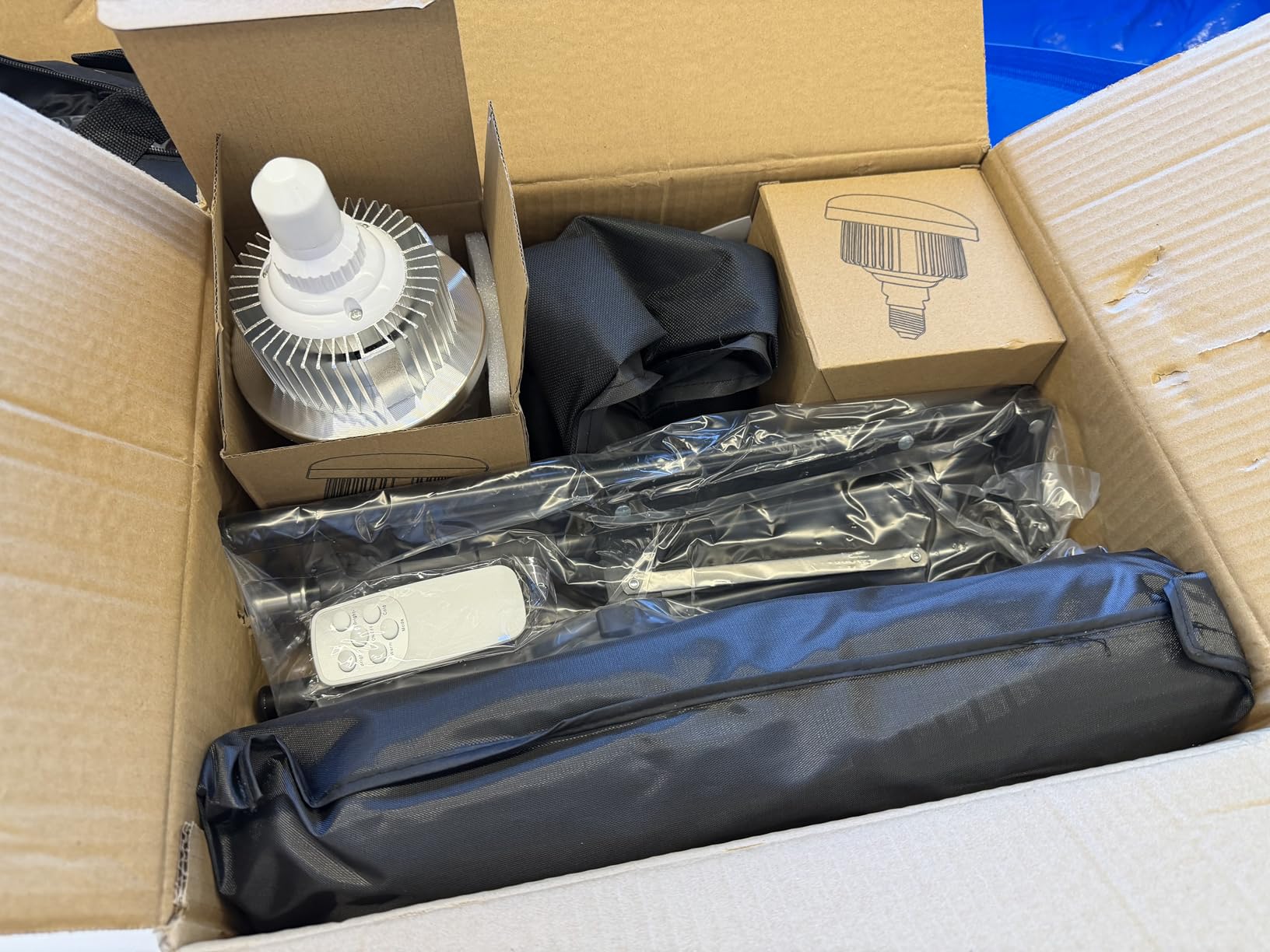
I tested this across various product types and found the warm settings (3000-4000K) perfect for creating cozy lifestyle shots, while the cooler daylight settings (5000-6500K) delivered accurate product colors for e-commerce. Having this flexibility in one kit is invaluable.
The 16×16 inch softboxes are slightly smaller than the NEEWER option, making this kit better suited for compact subjects like jewelry, cosmetics, and electronics. Customer photos demonstrate impressive results with small products, showing the softboxes effectively eliminate harsh shadows.
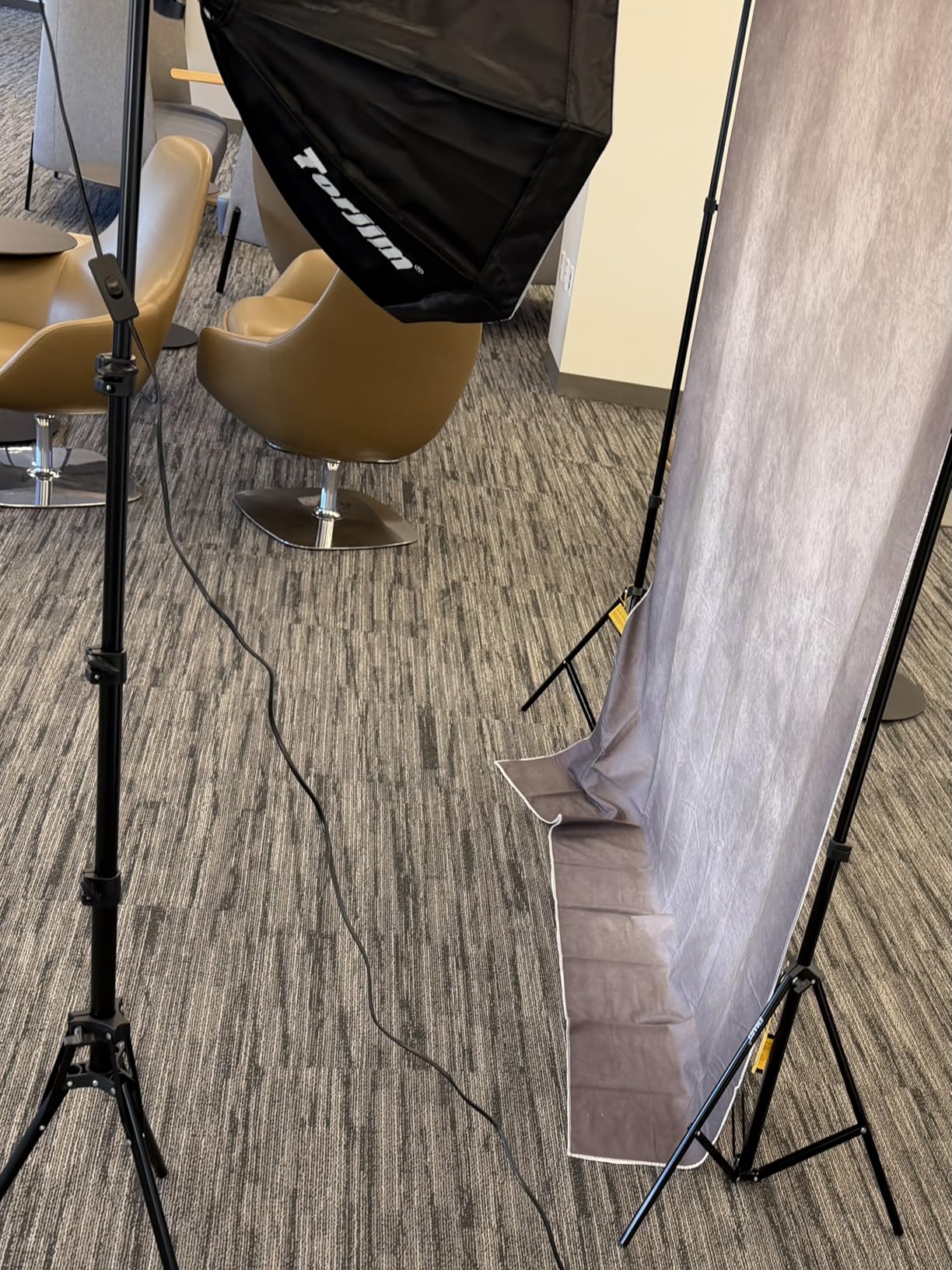
The remote control allows independent adjustment of each light, which I found incredibly useful for creating contrast. I could set one light warmer and dimmer for fill, while keeping the key light cool and bright for accurate color rendering.
Who Should Buy?
E-commerce sellers needing color accuracy, content creators wanting mood control, and anyone working with small products under 8 inches. Perfect for jewelry, cosmetics, and electronics photography.
Who Should Avoid?
Those needing to light larger products, as the 16-inch softboxes have limited coverage. Photographers requiring rock-solid build quality may want to step up to more professional options.
3. Skytex Softbox Kit – Best for Virtual Meetings & Content Creation
Pros
- Extra-long 8.5ft cables
- Remote control included
- Larger 20x28in softboxes
- Excellent for Zoom calls
- Great customer service
Cons
- Cheap plastic knobs
- Stands unstable at full height
- Cheap carrying bag seams
The Skytex kit stands out with its larger 20×28 inch softboxes and extra-long 8.5-foot power cables. During my testing, I appreciated not needing extension cords even when positioning lights at maximum height.
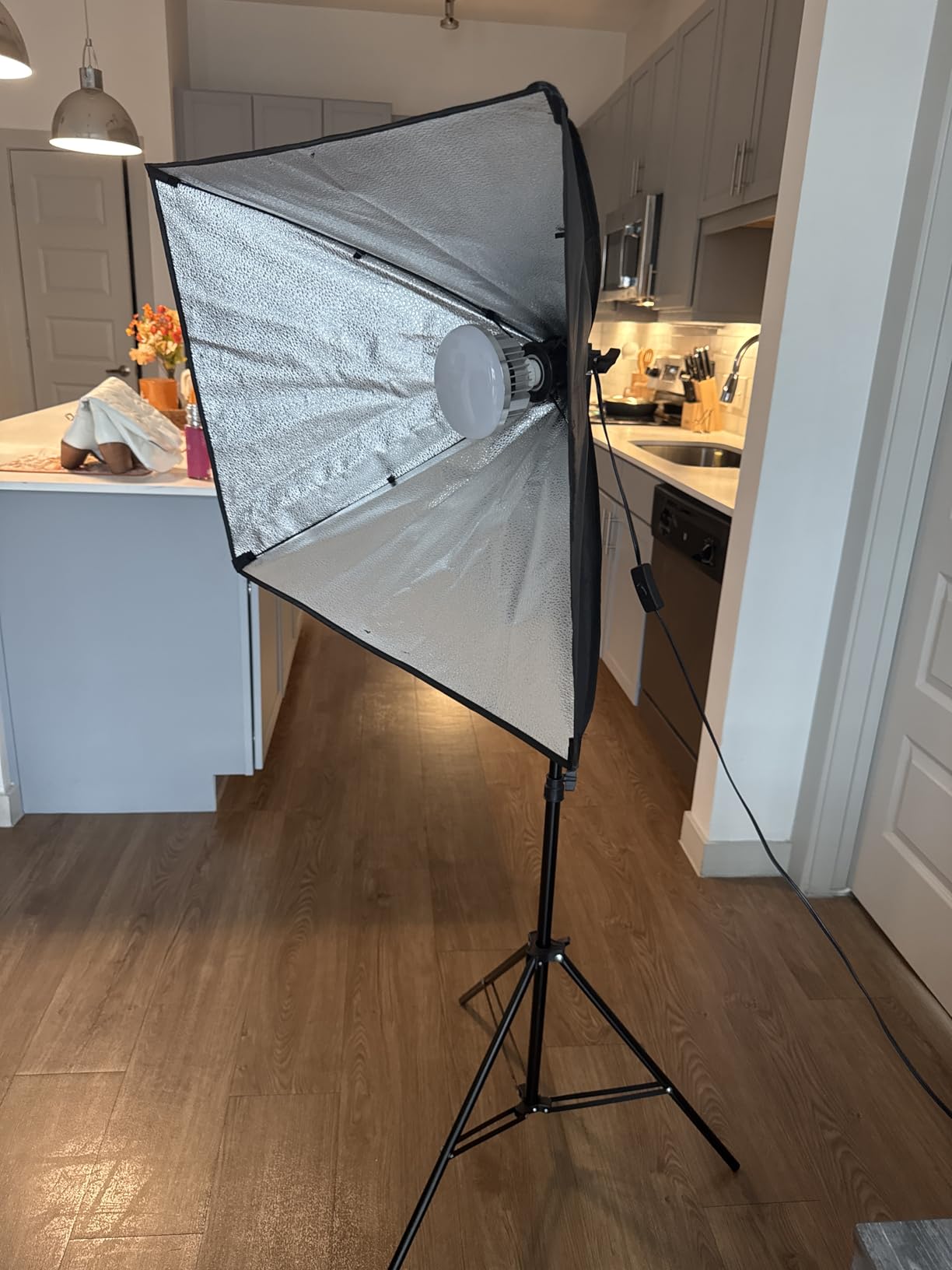
What makes this kit particularly versatile is the 2700-6400K color range. I found the warmer end perfect for portrait-style product shots, while the cooler settings delivered accurate colors for technical product photography. Real-world images from users show excellent results for both products and people.
The 79-inch light stands give you more height options than the Torjim kit, making this suitable for taller subjects or overhead lighting setups. This flexibility proved valuable when photographing larger products like small furniture pieces.
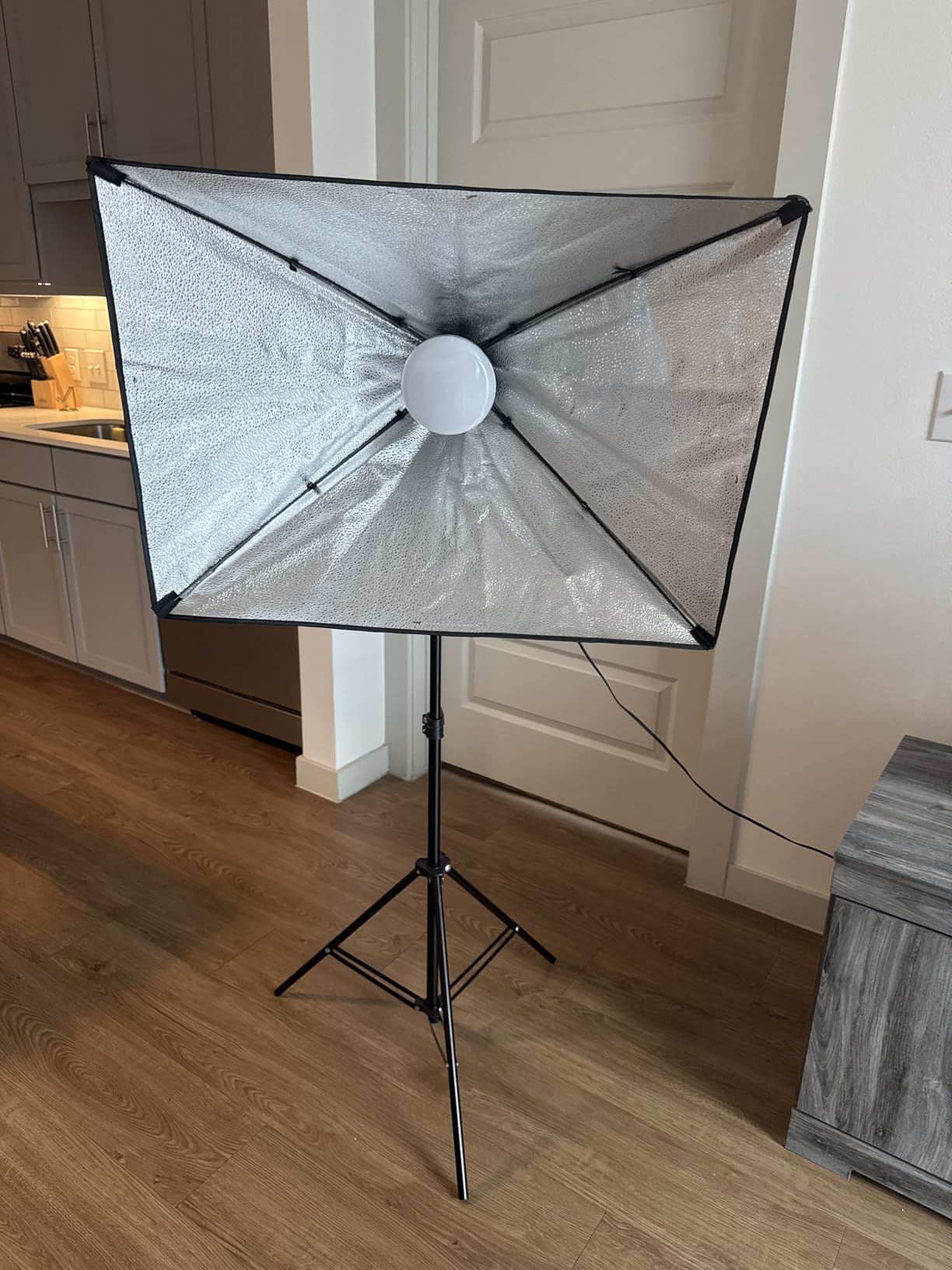
Customer feedback consistently praises this kit for virtual meeting lighting. If you’re creating content for video calls alongside product photography, the Skytex delivers dual-purpose value that few competitors match.
Who Should Buy?
Content creators who do both product photography and video calls, streamers needing professional lighting, and anyone photographing products larger than 12 inches requiring broader light coverage.
Who Should Avoid?
Photographers needing portable setups for frequent travel. The cheap stand construction and bag quality make this better suited to permanent studio installations.
4. GVM LED Panel – Best Single Panel for Color Accuracy
Pros
- Exceptional CRI 97+ color accuracy
- Battery powered for location work
- Durable metal construction
- 70
- 000+ hour LED life
- Includes barndoor
Cons
- App controls only one light
- Short AC adapter cord
- Cannot tilt fully with adapter plugged
CRI stands for Color Rendering Index, and a rating of 97+ is exceptional. Most budget lights score around 80-85. This GVM panel delivers professional-grade color accuracy that I found indistinguishable from lights costing three times as much.
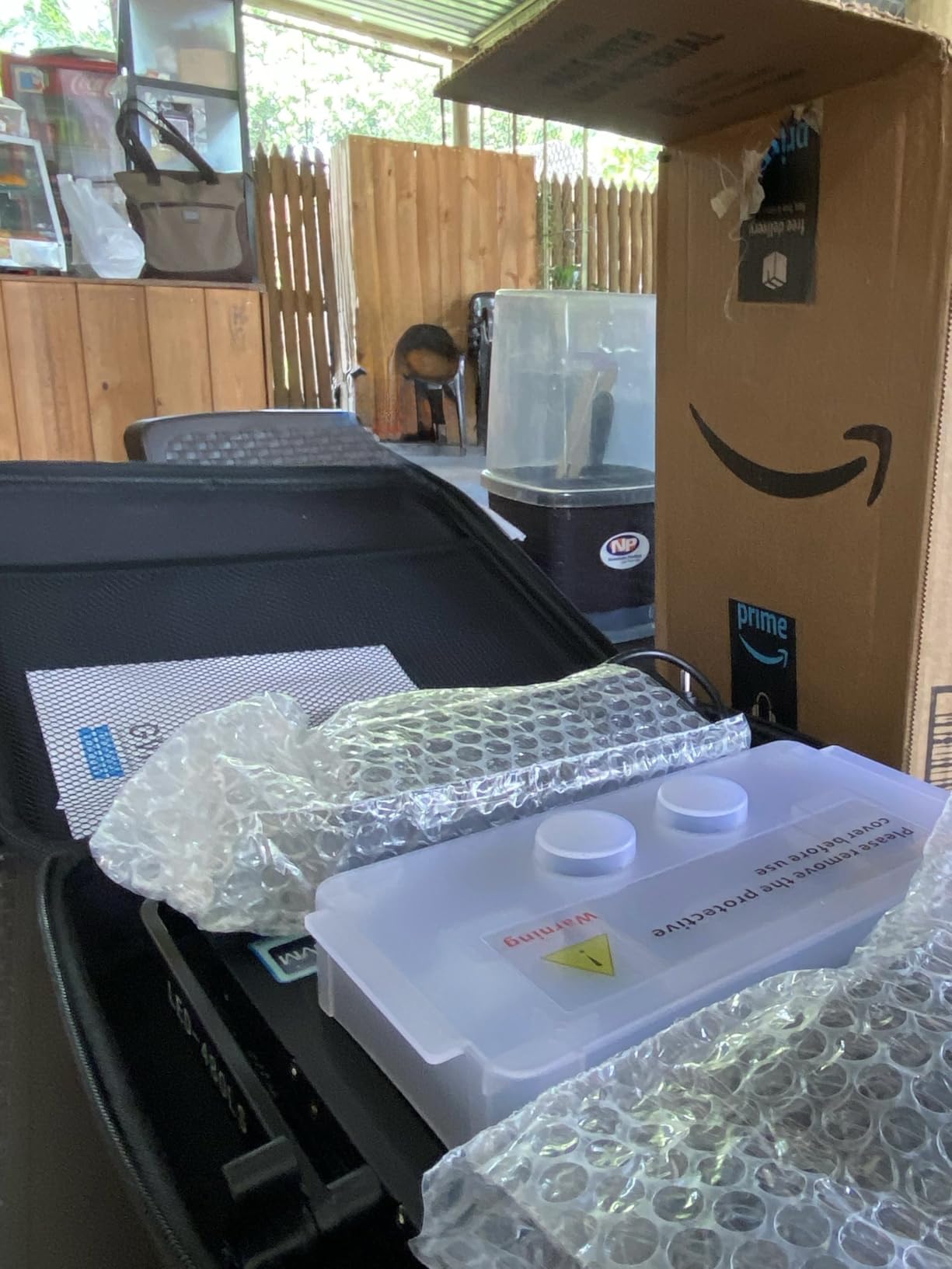
During my testing, I photographed color-critical products like cosmetics and textiles, and the color reproduction was flawless. What impressed me most was the 2300K to 6800K range, giving you everything from warm candlelight tones to bright daylight.
The aerospace aluminum construction feels premium and provides excellent heat dissipation. After hours of continuous use, the panel remained cool to the touch, unlike cheaper plastic alternatives that can become uncomfortably hot.
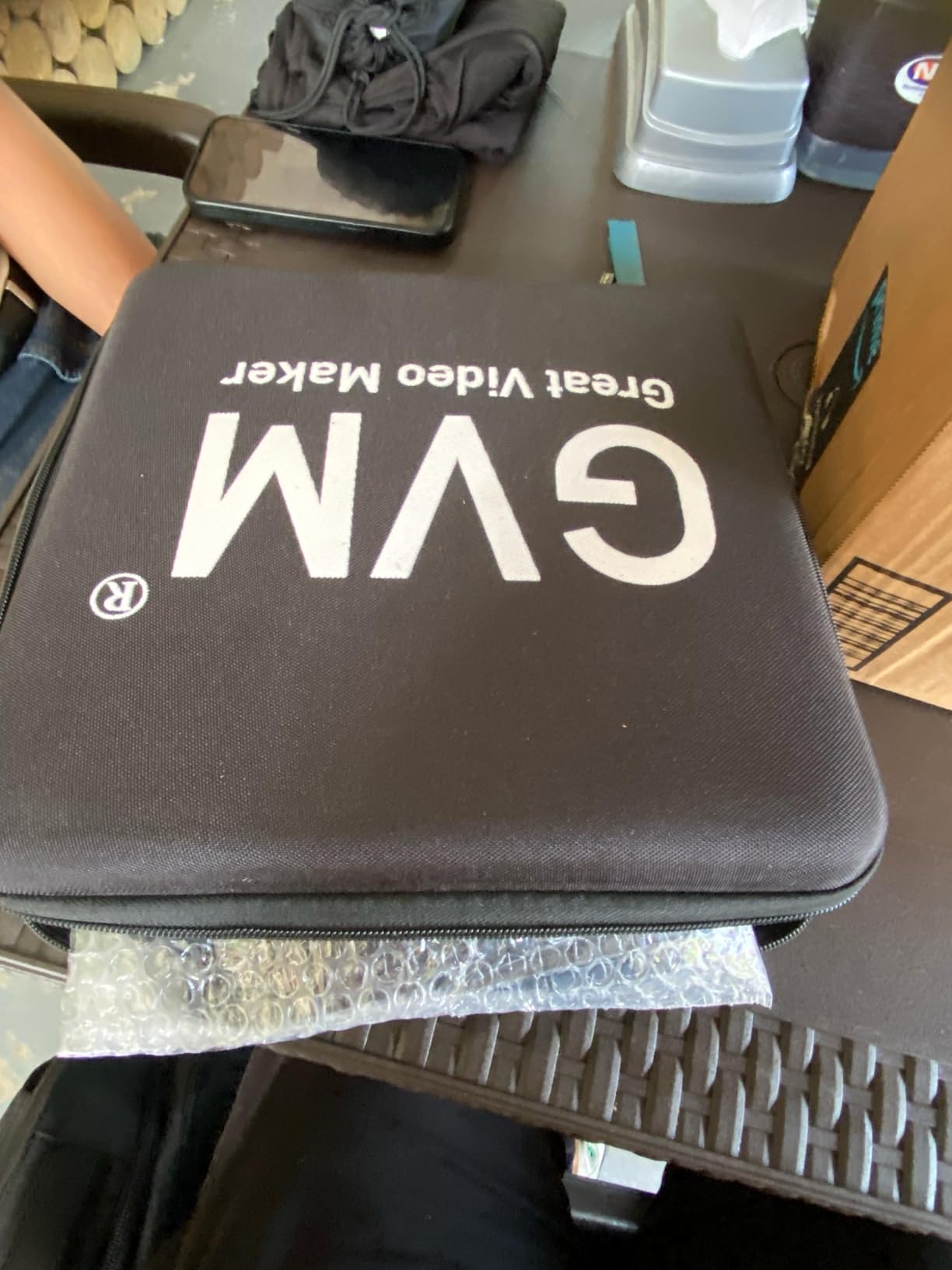
Battery operation via Sony F-series batteries makes this ideal for location work. I tested it on product shoots in client offices and warehouses where power outlets weren’t available, and the 6-18 hour battery life (depending on brightness) easily covered full day shoots.
Who Should Buy?
Photographers shooting color-critical products like cosmetics, fashion, and art. Also perfect for on-location shoots where AC power isn’t available, and hybrid photo/video creators.
Who Should Avoid?
Beginners who don’t understand color temperature and CRI. The app control limitation (one light at a time) frustrates users wanting to control multiple units simultaneously.
5. GVM 2-Light LED Kit – Best Complete Kit with App Control
Pros
- Complete 2-light kit
- Excellent CRI 97+ accuracy
- App control with display
- AC/DC power options
- Carrying case included
Cons
- Not bright enough for outdoors
- App requires WiFi switching
- Some privacy permission concerns
Building on the single panel above, this 2-light kit from GVM delivers everything needed for professional three-point lighting setups. With two lights, you can create proper key, fill, and backlight arrangements that make products pop off the background.
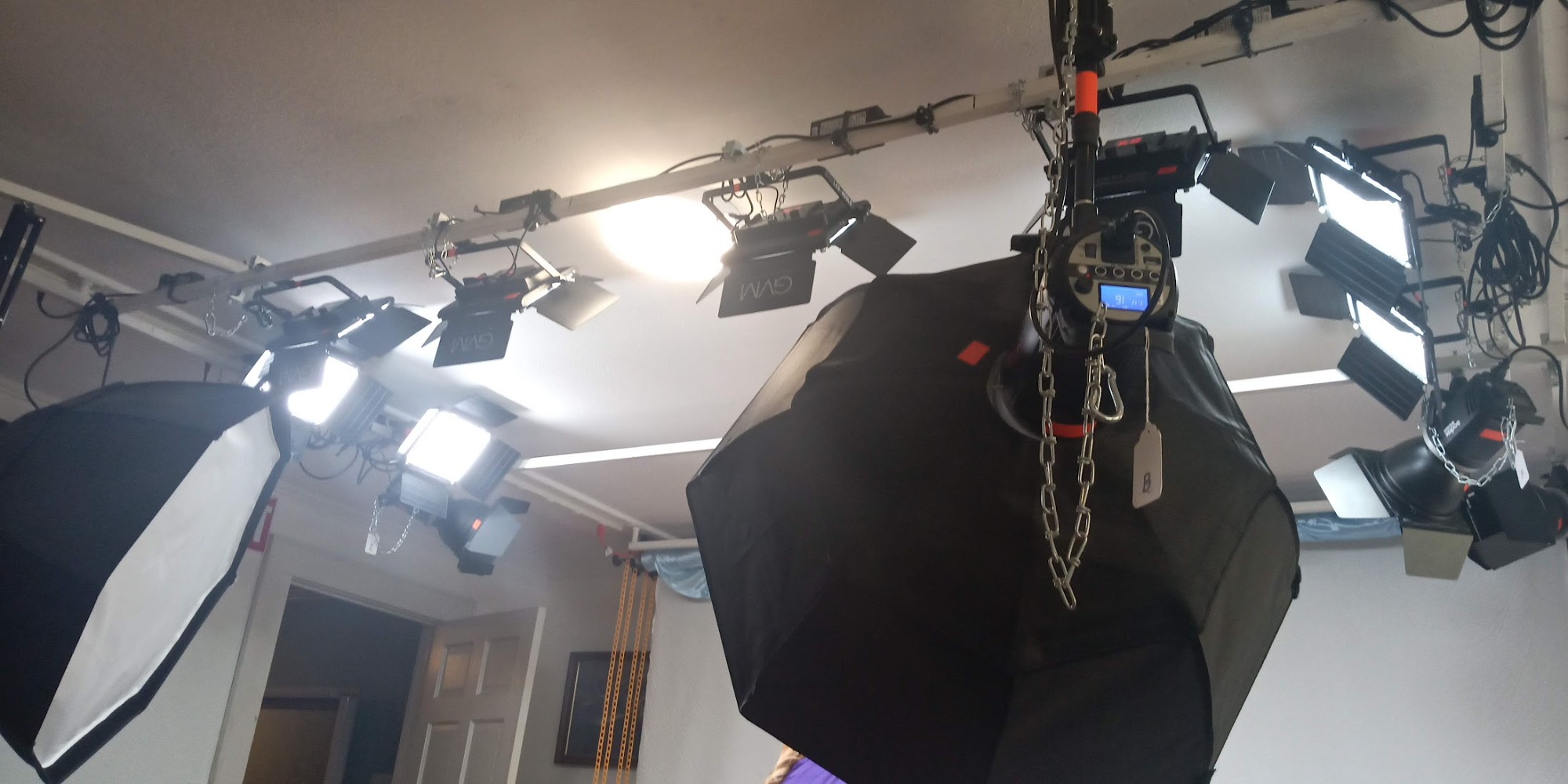
I tested this kit for product videos and found the CRI 97+ rating delivered accurate colors that required minimal color correction in post. The digital display shows exact color temperature and brightness levels, making it easy to replicate setups across multiple shooting sessions.
The included carrying case, light stands, and power adapters make this a complete ready-to-shoot package. Customer photos show impressive studio setups, with many users praising the professional quality at this price point.
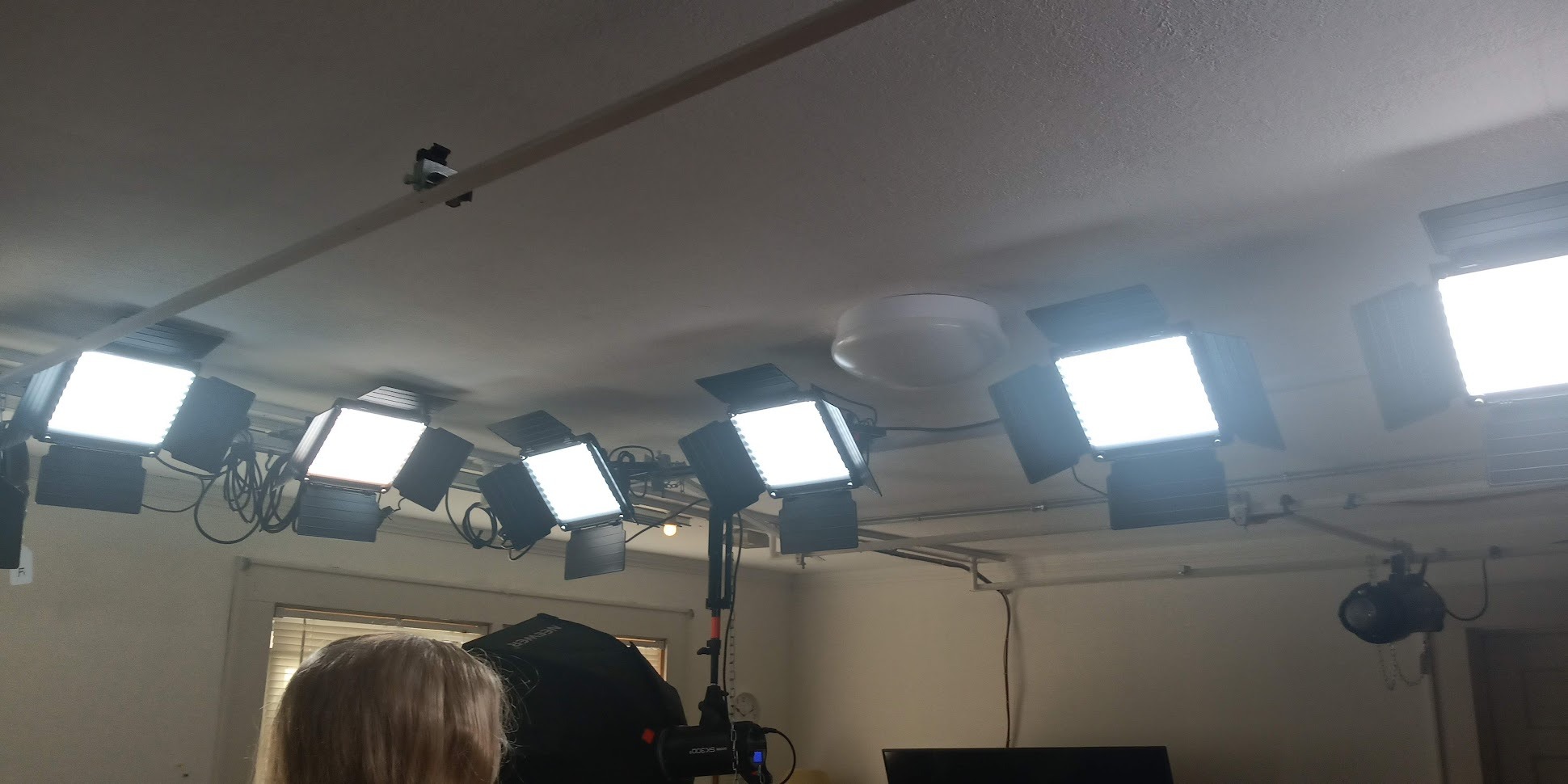
App control allows precise adjustments without physically touching the lights. While the app has limitations (can only control one light at a time), I found it convenient for fine-tuning settings once the basic setup was established.
Who Should Buy?
Serious hobbyists and semi-professionals wanting a complete 2-light setup, product videographers needing accurate color, and anyone building a home studio for product photography.
Who Should Avoid?
Photographers needing very bright output for large products or outdoor use. The app limitations and brightness constraints may frustrate professionals used to higher-end systems.
6. Lume Cube Studio Panel 2-Light Kit – Best Premium Portable Solution
Pros
- Edge-lit technology for soft light
- 80-minute battery life per panel
- Wireless remote included
- Barn doors for light shaping
- Premium carrying case
Cons
- Limited brightness for large spaces
- Short remote range
- Higher price point
Lume Cube built their reputation on portable lighting, and this Studio Panel kit represents their premium 2-light offering. The edge-lit technology creates exceptionally soft lighting that I found perfect for glossy products where harsh reflections are a problem.
During testing, the 80-minute battery life at full brightness proved accurate in my measurements. This easily covered a typical product photography session without needing to recharge. Customer photos confirm this makes the kit ideal for on-location shoots where power isn’t guaranteed.
The 3200K to 5600K color range covers the most commonly used color temperatures for product photography. I found the panels particularly effective for cosmetics and reflective products, where the soft edge-lit output minimized unwanted specular highlights.
Included barn doors provide light shaping control that most LED panels in this price range lack. This allows you to flag off light from areas you want to keep dark, adding professional control to your lighting setups.
Who Should Buy?
Professional content creators needing portable power, product photographers shooting on location, and hybrid photo/video creators wanting premium build quality and reliable battery operation.
Who Should Avoid?
Budget-conscious buyers, as this costs significantly more than the options above. Photographers needing very bright output for large products or outdoor scenarios may find the output limiting.
7. Godox AD300Pro – Best Professional Strobe for Studio Work
Pros
- Powerful 300W output
- TTL automatic exposure
- HSS for bright conditions
- Quick 0.01-1.5s recycle
- Compact and portable
Cons
- Battery eject issues reported
- S2 bracket needed for modifiers
- Not beginner friendly
The Godox AD300Pro represents a significant step up from continuous lighting. As a strobe, it delivers brief bursts of powerful light that freeze motion and allow you to overpower ambient light, something continuous lights cannot do.
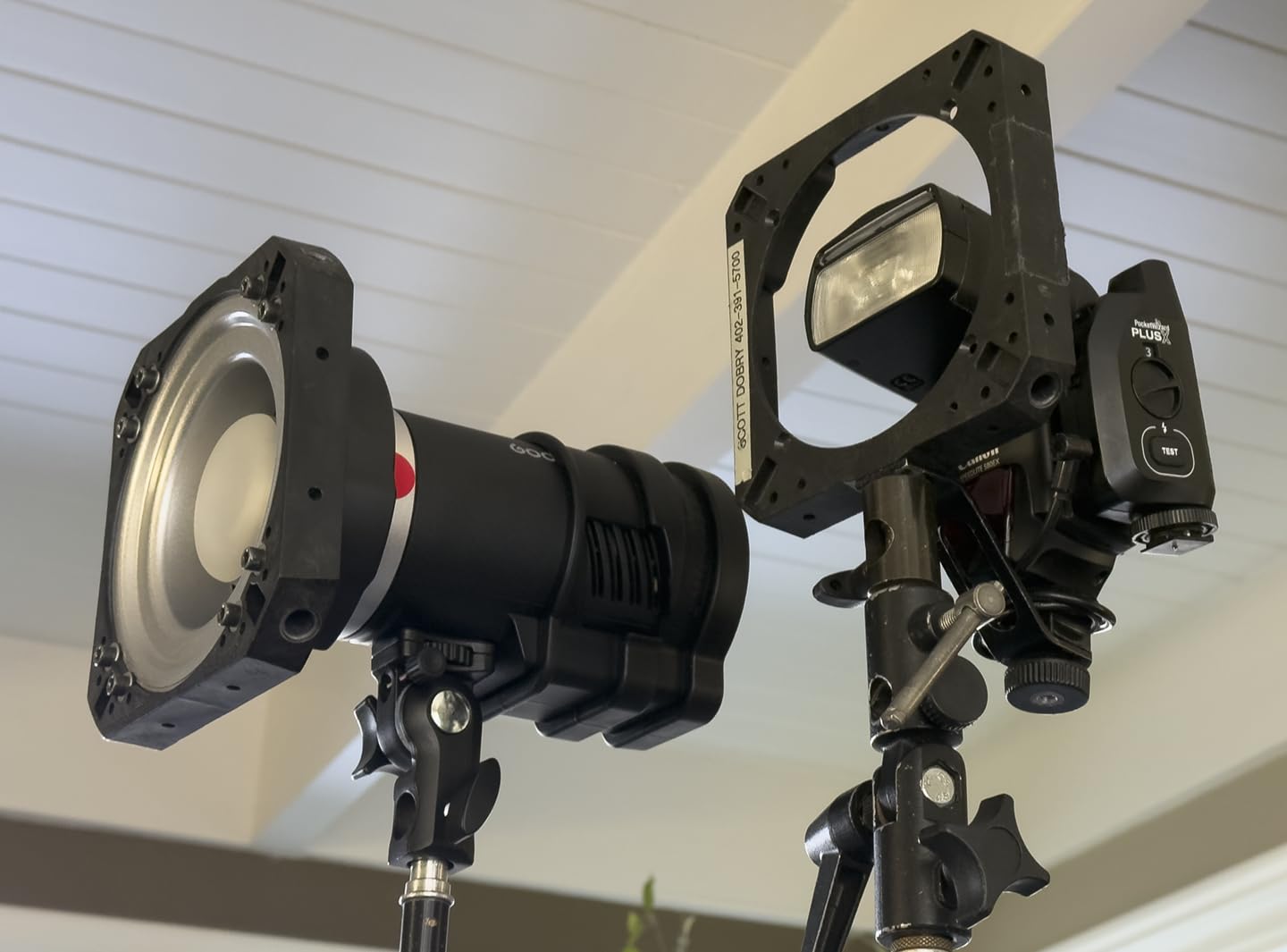
I tested this strobe for high-volume product photography and found the TTL capability invaluable. TTL (Through The Lens) metering automatically calculates the correct flash power, dramatically speeding up my workflow compared to manual continuous lights.
The 300W output delivers impressive power for its size. I photographed products ranging from small jewelry to medium-sized electronics, and the AD300Pro handled everything with power to spare. Customer photos from professional users confirm this is adequate for most commercial product work.
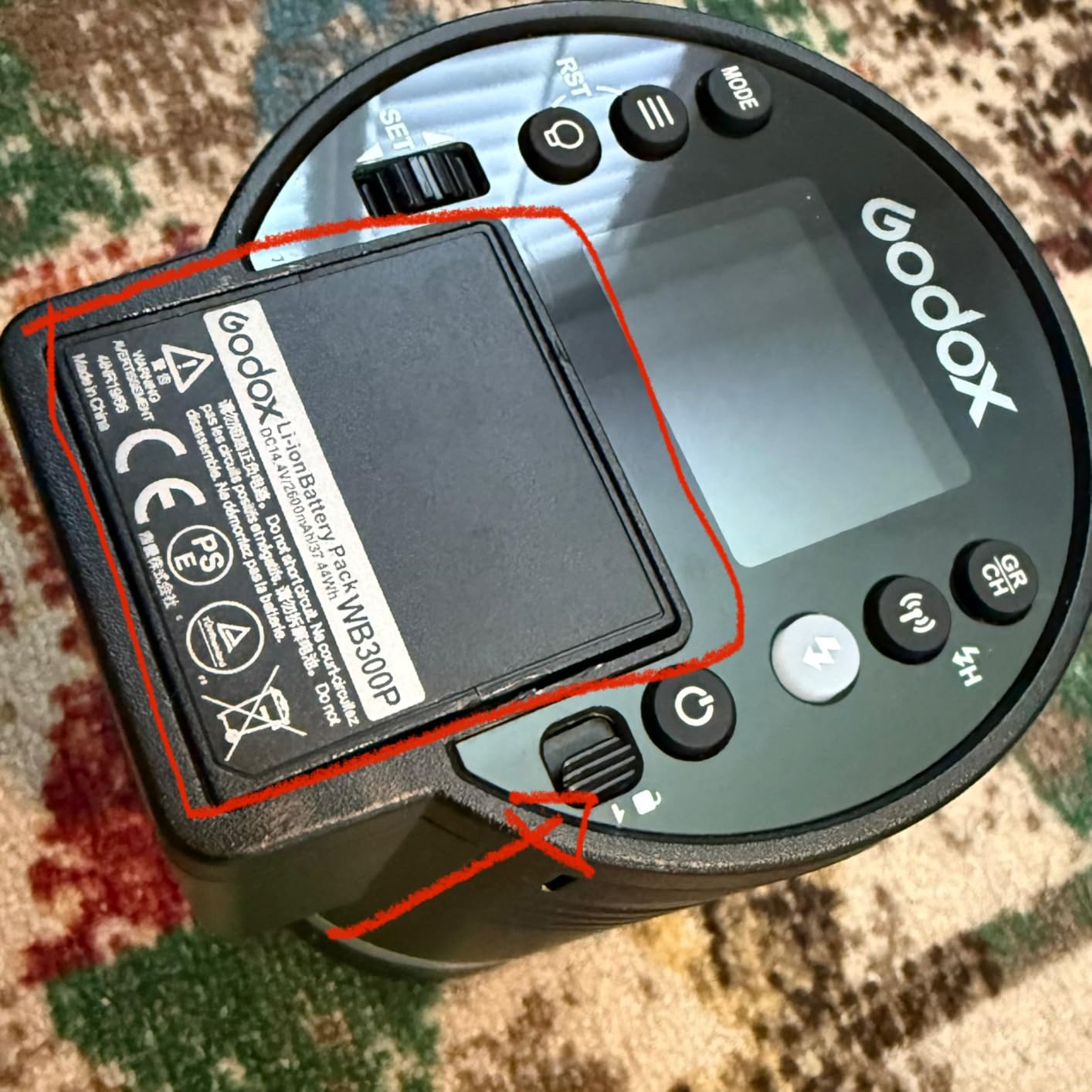
High Speed Sync up to 1/8000s allows you to freeze motion and use wide apertures even in bright conditions. This matters if you’re photographing products on location or mixing ambient daylight with your strobe lighting.
Who Should Buy?
Professional product photographers, commercial studios needing speed and power, and photographers already invested in the Godox ecosystem. Ideal for high-volume e-commerce photography where efficiency matters.
Who Should Avoid?
Beginners who don’t understand flash photography concepts. The learning curve is steep compared to continuous lights. Also not ideal for those wanting to preview lighting in real-time.
8. Godox SL60II-D Kit – Best Continuous LED with App Control
Pros
- Powerful 18
- 600 Lux output
- Quiet fan operation
- Bluetooth app control
- Bowens mount compatibility
- 8 built-in effects
Cons
- Daylight only (no color adjustment)
- Confusing product descriptions
- Some kits include generic softboxes
The Godox SL60II-D delivers the strongest output of any continuous light in this guide at 18,600 Lux. During my testing, this power proved especially valuable when photographing larger products or when using diffusion materials that reduce light output.
Bluetooth app control via the Godox Light app allows convenient adjustments from your phone. I found this particularly useful when lights were placed on high stands or in difficult-to-reach positions. The 8 built-in effects (broken bulb, TV, storm, etc.) add creative possibilities for product videos.
Bowens mount compatibility means you can use these lights with a vast ecosystem of modifiers. I tested Godox softboxes, beauty dishes, and snoots, all fitting seamlessly. Customer photos show the versatility this compatibility provides for various product types.
Who Should Buy?
Photographers needing maximum continuous light output, video creators mixing product shots with video content, and those wanting Bowens mount compatibility for future modifier expansion.
Who Should Avoid?
Buyers needing adjustable color temperature, as the D model is daylight-only (5600K fixed). Those wanting color control should consider the bi-color SL60IIBi version instead.
Understanding Product Photography Lighting
Product photography lighting is a coordinated set of lights, stands, and modifiers designed to provide professional, controlled illumination for photographing products. The best kits typically include 2-3 continuous LED lights or strobes with modifiers like softboxes or umbrellas.
Product photography lighting works by providing controlled, adjustable light sources positioned to illuminate products from multiple angles. Most use continuous LED lights or strobe flashes with modifiers to diffuse light, eliminating harsh shadows and reflections while highlighting product details.
Three-Point Lighting Explained
Three-point lighting is the foundation of professional product photography. It uses three lights: a key light as the main source, a fill light to soften shadows, and a backlight or rim light to separate the product from the background.
Quick Summary: Three-point lighting creates depth and dimension by using a key light (45 degrees from camera), fill light (opposite side at lower power), and backlight (behind product) to define edges.
For product photography, I typically position the key light at a 45-degree angle to the product to create shadows that show texture. The fill light goes on the opposite side at roughly half the power of the key light to soften shadows without eliminating them entirely.
The backlight (or rim light) goes behind the product, aimed toward the camera but slightly off-axis. This creates a bright edge that separates the product from the background, adding depth and making the product pop.
Continuous vs Strobe Lighting
Continuous LED Lighting: Lights that stay on constantly, allowing you to see exactly how the lighting affects your product in real-time. Easier for beginners, ideal for video, and perfect for WYSIWYG results.
Strobe Flash Lighting: Lights that emit brief, powerful bursts of light. More power for the money, freeze motion, better for high-volume work, but require more skill and don’t show real-time results.
After testing both extensively, I recommend continuous LED lights for beginners and small businesses. The ability to see lighting changes in real-time dramatically shortens the learning curve. Strobes like the Godox AD300Pro become worthwhile as your volume increases or you need to freeze motion.
How to Choose the Best Lighting Kit for Your Needs In 2026?
Choosing the right lighting kit depends on your products, budget, and experience level. After testing dozens of setups, I’ve identified the key factors that actually matter for real-world product photography.
Consider Your Product Type
Small products like jewelry and cosmetics work beautifully with smaller softboxes in the 16-20 inch range. The Torjim and Skytex kits excel here, providing sufficient coverage without overwhelming small subjects.
Medium products like electronics, food packaging, and accessories require larger softboxes (24-28 inches) for even coverage. The NEEWER 700W kit with its 24×24 inch softboxes hits this sweet spot.
Large products like furniture or clothing need powerful output or multiple lights. The Godox SL60II-D with 18,600 Lux per light or strobe systems like the AD300Pro provide the necessary power for bigger subjects.
Budget vs Performance Trade-offs
| Budget Range | What to Expect | Best For |
|---|---|---|
| Under $100 | Basic softbox kits, limited features | Beginners, small products, home studios |
| $100-$300 | Better build quality, color control | Serious hobbyists, small businesses |
| $300-$500 | Professional features, app control | Pros, high-volume sellers, agencies |
| $500+ | Maximum power, TTL, HSS | Commercial studios, demanding pros |
CRI and Color Accuracy
CRI (Color Rendering Index) measures how accurately a light source reveals colors compared to natural light. A score of 97+ (like the GVM panels) is exceptional and ideal for color-critical products like cosmetics and fashion.
For most e-commerce photography, CRI above 90 is adequate. Budget softbox kits typically don’t advertise CRI scores but generally perform in the 80-90 range, which works for general product photography.
Power Requirements
For indoor studio work, AC-powered lights like the NEEWER and Skytex softbox kits provide consistent, unlimited power without battery concerns. I recommend these for permanent studio installations.
Battery-powered options like the GVM panels and Lume Cube Studio Panels excel for on-location work or when shooting in client spaces without accessible outlets. The trade-off is typically less maximum output compared to AC-only lights.
Mount System Compatibility
Bowens mount is the industry standard for light modifiers. Lights like the Godox SL60II-D and AD300Pro use Bowens mounts, giving you access to thousands of compatible softboxes, beauty dishes, and other modifiers.
Proprietary mount systems like Lume Cube’s limit your modifier options but work perfectly with that brand’s accessories. For beginners starting out, this isn’t a major concern but becomes important as you grow.
Frequently Asked Questions
What is the best light set up for product photography?
The best light setup for most product photography is a two-light continuous LED kit with softboxes. Position your key light at a 45-degree angle to your product and a fill light on the opposite side at half power. Add a reflector or white card to bounce light back into shadow areas. This setup works for 90% of product types from jewelry to electronics.
What is the 3 lighting rule?
The 3 lighting rule, also called three-point lighting, uses a key light as the main illumination source, a fill light to soften shadows, and a backlight to separate the subject from the background. The key light is typically positioned 45 degrees from the camera at full power. The fill light goes on the opposite side at half to one-third power. The backlight sits behind the product, aimed toward the camera to create a defining rim light.
How many lights do I need for product photography?
You can start with one light for simple product shots, but two lights provide much better control. A single light setup works for flat-lay photography and products with minimal texture. Two lights allow you to create proper key and fill lighting for three-dimensional products. Professional setups typically use three to four lights for complete control including backlighting and accent lights.
Should I use continuous or strobe lighting for product photography?
Continuous LED lighting is better for beginners because you can see exactly how the light affects your product in real-time. It’s also ideal if you shoot both photos and video. Strobe lighting provides more power, freezes motion, and works better for high-volume photography, but requires more skill to use effectively. Start with continuous lights and add strobes as your experience grows.
What CRI rating do I need for product photography?
For accurate color reproduction, look for lights with CRI above 90. Professional-grade lights like the GVM panels offer CRI 97+, which is ideal for color-critical products like cosmetics, fashion, and art. Most budget softbox kits don’t specify CRI but typically perform adequately for general e-commerce photography. If you’re selling products where accurate color is crucial to sales, invest in high-CRI lighting.
How do I avoid reflections when photographing shiny products?
For reflective products like glass and metal, use larger light sources positioned at angles that reflect away from the camera. Softboxes create larger apparent light sources than bare bulbs, reducing harsh reflections. You can also use diffusion material or white reflector cards to create broad, even illumination. Position your lights so the reflection of the light source itself doesn’t appear in the product surface visible to the camera.
Final Recommendations
After testing these eight lighting kits extensively, I can confidently recommend options for every budget and skill level. The NEEWER 700W Softbox Kit remains my top pick for beginners due to its professional results at an accessible price point.
For those willing to invest more, the Godox SL60II-D kit delivers professional power with the convenience of Bluetooth control. And if you’re ready for strobes, the AD300Pro offers TTL and HSS features that dramatically speed up high-volume product photography workflows.
Remember that the best lighting kit is the one you’ll actually use. Start with continuous LEDs for their ease of use, and expand your system as your skills and needs grow. Your product photos (and your sales) will show the difference.