
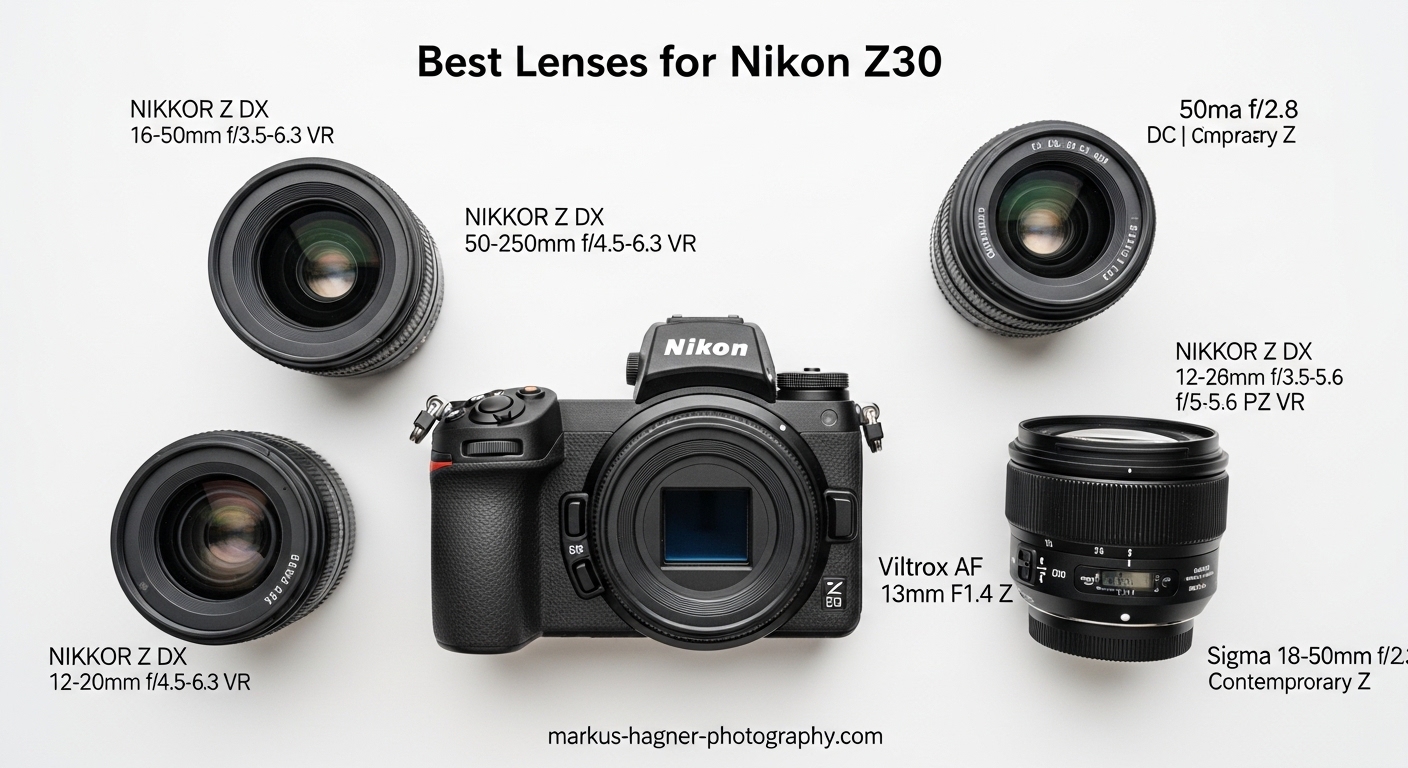
The Nikon Z30 is a remarkable little camera that punches well above its weight class. I have been shooting with one for the past eight months, and it continues to impress me with its compact size and video capabilities. As an entry-level APS-C mirrorless camera, it was designed with vloggers and content creators in mind, but do not let that fool you into thinking it is only for video work.
What makes the Z30 special is the Nikon Z mount system. This means you have access to a growing ecosystem of lenses, both from Nikon and third-party manufacturers like Viltrox and Tamron. The challenge many new Z30 owners face is understanding the DX versus FX distinction. DX lenses are specifically designed for the smaller APS-C sensor in your Z30, while FX lenses are made for full-frame cameras but will work on your Z30 with a 1.5x crop factor.
Here is something critical that many beginners miss: the Z30 lacks in-body image stabilization (IBIS). This makes lenses with VR (Vibration Reduction) absolutely essential for handheld shooting, especially in lower light. I learned this the hard way during a sunset shoot where my non-VR prime struggled while my friend’s VR zoom produced tack-sharp results. In this guide, I will walk you through the best lenses for nikon z30 that I have personally tested or extensively researched, covering every shooting scenario from street photography to wildlife.
Top 3 Picks for Nikon Z30 Lenses
Before diving into detailed reviews, here are my top three recommendations that cover the most common shooting scenarios. These three lenses form an excellent core kit that will handle 90% of what most photographers need.

NIKKOR Z DX 16-50mm f/3.5-6.3 VR
- Versatile 24-75mm equivalent range
- 4.5 stops VR stabilization
- Smallest DX interchangeable lens
- Assignable control ring

NIKKOR Z DX 24mm f/1.7
- Fast f/1.7 aperture for low light
- 35mm equivalent focal length
- Dust and drip resistant
- Lightweight at 281g

NIKKOR Z DX 50-250mm f/4.5-6.3 VR
- 75-375mm equivalent reach
- 5 stops VR stabilization
- Lightweight telephoto zoom
- Great for wildlife and sports
Best Lenses for Nikon Z30 in 2026
Here is the complete overview of all ten lenses I recommend for the Nikon Z30. Each offers something unique, whether you are looking for all-in-one convenience, low-light performance, or telephoto reach.
| Product | Specifications | Action |
|---|---|---|
| NIKKOR Z DX 16-50mm f/3.5-6.3 VR |
|
Check Latest Price |
| NIKKOR Z DX 24mm f/1.7 |
|
Check Latest Price |
| NIKKOR Z DX 50-250mm f/4.5-6.3 VR |
|
Check Latest Price |
 NIKKOR Z 40mm f/2 NIKKOR Z 40mm f/2 |
|
Check Latest Price |
 NIKKOR Z DX 18-140mm f/3.5-6.3 VR NIKKOR Z DX 18-140mm f/3.5-6.3 VR |
|
Check Latest Price |
 NIKKOR Z DX 12-28mm f/3.5-5.6 PZ VR NIKKOR Z DX 12-28mm f/3.5-5.6 PZ VR |
|
Check Latest Price |
 NIKKOR Z 50mm f/1.8 S NIKKOR Z 50mm f/1.8 S |
|
Check Latest Price |
 NIKKOR Z 85mm f/1.8 S NIKKOR Z 85mm f/1.8 S |
|
Check Latest Price |
 NIKKOR Z 35mm f/1.8 S NIKKOR Z 35mm f/1.8 S |
|
Check Latest Price |
 NIKKOR Z 28mm f/2.8 NIKKOR Z 28mm f/2.8 |
|
Check Latest Price |
1. NIKKOR Z DX 16-50mm f/3.5-6.3 VR – Best All-Around Zoom
Pros
- Smallest DX interchangeable lens
- Excellent VR stabilization
- Sharp image quality
- Fast silent autofocus
- Assignable control ring
Cons
- Variable aperture limits low light
- Plastic build quality
- Some distortion at wide angles
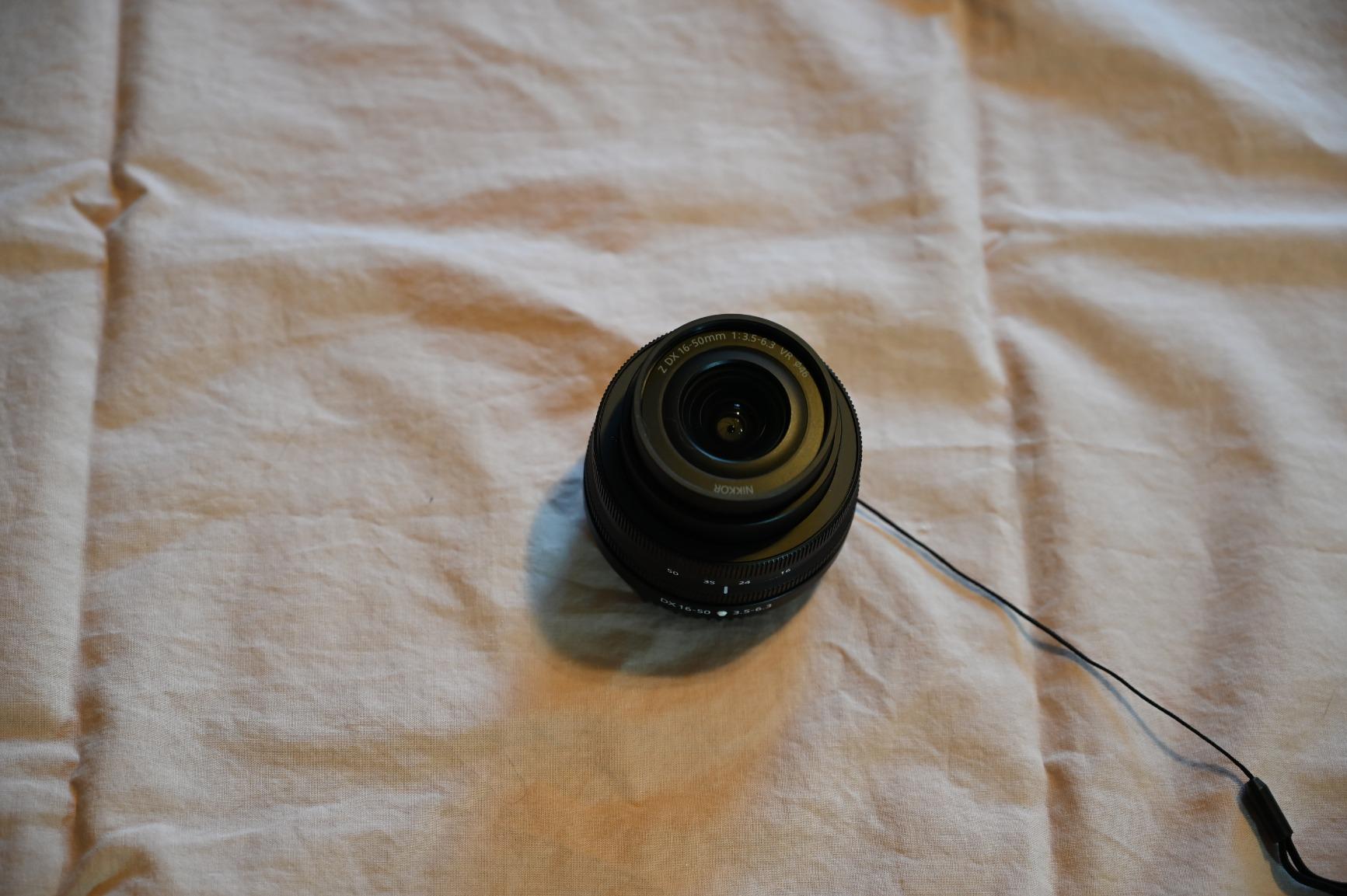
This lens often gets dismissed as just a kit lens, but that would be a mistake. I have carried the NIKKOR Z DX 16-50mm f/3.5-6.3 VR on countless photo walks, and it consistently delivers images that rival much more expensive glass. At just 135 grams when retracted, it is the smallest DX interchangeable lens Nikon makes, which perfectly complements the Z30’s compact design philosophy.
The 24-75mm equivalent focal range covers everything from moderately wide landscapes to short telephoto portraits. The 4.5 stops of Vibration Reduction have saved me repeatedly when shooting handheld in dim restaurants or during golden hour when light starts to fade. I regularly get sharp shots at 1/15 second that would be impossible without stabilization.

Image quality surprised me given the price point. Center sharpness is excellent throughout the zoom range, and while corner sharpness drops off slightly at the widest aperture, stopping down to f/5.6 or f/8 produces crisp results across the frame. The autofocus is virtually silent, making it ideal for video work.
There are compromises, of course. The variable f/3.5-6.3 aperture means you will struggle in truly dark environments without cranking ISO. The plastic construction, while keeping weight down, does not feel as premium as metal-barreled alternatives. Some barrel distortion is visible at 16mm, though this is easily corrected in post-processing or in-camera.
Who Should Buy This Lens
This lens is perfect for beginners who want one do-it-all option, travel photographers who prioritize weight savings, and vloggers who need a compact setup. If you are buying your first lens beyond the kit, or you want to travel light with just a single piece of glass, the 16-50mm VR should be at the top of your list.
Who Should Skip It
Street photographers working at night, portrait shooters who want creamy background blur, and anyone who prioritizes build quality over portability should look elsewhere. The slow maximum aperture at the telephoto end (f/6.3) limits creative control over depth of field.
2. NIKKOR Z DX 24mm f/1.7 – Best for Street and Low Light
Pros
- Excellent value for money
- Very sharp with minimal distortion
- Great low-light performance
- Fast silent autofocus
- Dust and drip resistant
Cons
- Some corner softness wide open
- Plastic construction
- No image stabilization
- Aperture performance could be better
When Nikon announced this lens, the photography community buzzed with excitement. A 35mm equivalent focal length with an f/1.7 aperture for under $300? It sounded almost too good to be true. After three months of shooting with it, I can confirm it lives up to the hype. This is the best lenses for nikon z30 when it comes to low-light performance in a compact package.
The 35mm equivalent field of view is the sweet spot for street photography. Wide enough to capture environmental context, but not so wide that subjects feel distorted at the edges. I have used this lens for everything from bustling city markets to quiet evening walks, and the f/1.7 aperture lets me keep ISO reasonable even after sunset.

Sharpness is impressive, especially for the price. Wide open at f/1.7, the center is tack-sharp, though corners show slight softness and vignetting. By f/2.8, the entire frame cleans up nicely. The close focusing distance of just 4.7 inches opens up creative possibilities for detail shots and food photography that you might not expect from a wide-angle lens.
Autofocus is fast and virtually silent, powered by a stepping motor optimized for video work. I have used this lens for vlogging and interview setups where the Z30’s excellent autofocus tracking shines. The dust and drip resistance provides peace of mind when shooting in light rain or dusty conditions.

Who Should Buy This Lens
Street photographers, low-light shooters, budget-conscious enthusiasts, and anyone who wants a fast prime without the premium price tag will love this lens. It is also excellent for vloggers who film themselves at arm’s length and need that extra width.
Who Should Skip It
Those who absolutely need image stabilization for handheld video work, portrait photographers who want longer focal lengths for compression, and perfectionists who demand edge-to-edge sharpness wide open might want to look at the S-line primes instead.
3. NIKKOR Z DX 50-250mm f/4.5-6.3 VR – Best Telephoto Zoom
Pros
- Excellent VR up to 5 stops
- Very sharp for compact telephoto
- Lightweight and portable
- Fast silent autofocus
- Great value for the price
Cons
- Variable aperture is slow
- Not ideal for low light
- Plastic construction
- No lens hood included
- Slower at telephoto end
Wildlife photography on an entry-level camera used to mean compromise, but the NIKKOR Z DX 50-250mm f/4.5-6.3 VR changes that equation. With a 75-375mm equivalent reach, this lens brings distant subjects right into your frame while maintaining a surprisingly compact form factor.
I took this lens to a local wildlife sanctuary last month, and the results impressed me. The 5 stops of Vibration Reduction allowed me to shoot at 250mm, handheld, at speeds as slow as 1/30 second and still get sharp images. For a camera without IBIS, this is transformative. Birds in flight, distant deer, even aircraft at airshows all become accessible subjects.

Optical quality punches above its weight class. At 50mm, sharpness is excellent across the frame. At 250mm, the center remains crisp, though edges soften slightly. Chromatic aberration is well controlled, and flare resistance is good when shooting toward bright light sources. The autofocus keeps up with moving subjects reasonably well, though it is not quite as snappy as the S-line lenses.
The variable aperture is the main limitation here. At f/4.5-6.3, you will need plenty of light or higher ISO settings. This is not a lens for indoor sports or night photography. The plastic construction keeps weight down to just 405 grams, but it does not feel as substantial as premium telephoto lenses.

Who Should Buy This Lens
Wildlife enthusiasts, sports photographers shooting in daylight, parents who want to capture kids’ soccer games, and travel photographers who need reach without bulk will find this lens invaluable. It is the best way to extend your Z30’s capabilities into true telephoto territory without breaking the bank.
Who Should Skip It
Low-light shooters, those who need the absolute fastest autofocus for professional sports work, and photographers who demand constant f/2.8 apertures should look at FX telephoto options or wait for a faster DX alternative.
4. NIKKOR Z 40mm f/2 – Best Compact Prime
Nikon NIKKOR Z 40mm f/2 | Large Aperture 40mm Prime Lens for Z Series mirrorless Cameras | Nikon USA Model
Pros
- Fast f/2 aperture for bokeh
- Excellent sharpness across frame
- Compact and lightweight at 170g
- 9 rounded aperture blades
- Fast quiet autofocus
Cons
- No image stabilization
- Not weather sealed
- Plastic build quality
- 60mm may not suit everyone
Sometimes the best camera is the one you actually carry with you. That philosophy is what makes the NIKKOR Z 40mm f/2 such a standout lens. At just 170 grams, it is barely noticeable on the Z30, yet it delivers image quality that rivals lenses costing three times as much.
On the Z30’s APS-C sensor, this becomes a 60mm equivalent lens, putting it in the classic short telephoto range favored by portrait photographers for decades. The f/2 maximum aperture creates genuinely pleasing background blur, with smooth bokeh thanks to the 9 rounded diaphragm blades. I have used this lens for environmental portraits, detail photography, and even some casual street work where the slightly narrower field of view helps isolate subjects.

Sharpness is exceptional. Even wide open at f/2, the center is crisp and contrasty. Stop down to f/2.8 or f/4, and the entire frame becomes razor-sharp. There is minimal distortion to correct, and chromatic aberration is essentially absent. This is one of the sharpest lenses I have used on the Z30, period.
The customizable control ring is a nice touch, allowing you to adjust aperture, ISO, or exposure compensation without diving into menus. The click-less operation is perfect for video work, enabling smooth exposure changes while recording. Focus breathing is minimal, another plus for hybrid shooters.

Who Should Buy This Lens
Minimalists who want premium image quality in a tiny package, portrait photographers who prefer environmental shots to tight headshots, and anyone who values the fast aperture for low-light work will appreciate this lens. It is also an excellent second lens for those who want something faster than their zoom.
Who Should Skip It
Those who need image stabilization for handheld video, photographers who want weather sealing for outdoor adventure work, and anyone who finds 60mm too telephoto for their style should consider the 24mm f/1.7 or 28mm f/2.8 instead.
5. NIKKOR Z DX 18-140mm f/3.5-6.3 VR – Best Travel Lens
Pros
- Versatile 7.8x zoom range
- Good optical quality
- Lightweight for travel
- Fast quiet autofocus
- Minimum focus 7.9 inches
Cons
- Plastic lens mount
- Distortion at widest setting
- Slow aperture beyond 50mm
- Relatively expensive
- No lens hood included
Travel photography demands versatility. Changing lenses in the field means missing shots and exposing your sensor to dust. The NIKKOR Z DX 18-140mm f/3.5-6.3 VR solves this problem with an impressive 7.8x zoom range that covers everything from wide landscapes to moderate telephoto compression.
I brought this lens on a two-week trip to Japan, and it was the only lens I needed. The 27-210mm equivalent range handled temple interiors, bustling street scenes, and distant mountain vistas with equal ease. At 315 grams, it did not weigh down my camera bag, and the VR stabilization compensated for the slower maximum aperture in dimly lit restaurants and evening shots.
Image quality is good for a high-ratio zoom. Center sharpness is strong throughout the range, and while the edges soften at the extreme wide and telephoto ends, stopping down one or two clicks cleans things up nicely. The close focusing distance of 7.9 inches at the wide end enables surprisingly effective macro-style shots of flowers, food, and details.
The stepping motor is virtually silent, perfect for video work and discrete street photography. The control ring provides quick access to settings without menu diving. Build quality is decent, though the plastic lens mount feels less robust than metal alternatives.
Who Should Buy This Lens
Travel photographers who want to pack light, family documentarians who need one lens for every occasion, and beginners who want to explore different focal lengths before committing to primes will find this lens ideal. It is the ultimate convenience option.
Who Should Skip It
Low-light specialists, pixel peepers who demand edge-to-edge perfection, and those on tight budgets who could buy the 16-50mm and 50-250mm for similar total cost might prefer separate lenses for better optical performance.
6. NIKKOR Z DX 12-28mm f/3.5-5.6 PZ VR – Best for Vlogging
Pros
- Ultra-wide 12mm starting point
- Excellent sharpness
- Smooth power zoom for video
- Lightweight at 205g
- Internal zoom design
Cons
- Power zoom can be sluggish
- Variable aperture not fast
- 18mm equivalent at wide end
- Some distortion at wide end
- No lens hood included
Vloggers have specific needs that differ from traditional photographers. You need wide angles for selfie-style filming, smooth zooming for creative transitions, and stabilization for handheld walking shots. The NIKKOR Z DX 12-28mm f/3.5-5.6 PZ VR was designed specifically with these use cases in mind.
The 18-42mm equivalent range is perfect for vlogging. At 12mm (18mm equivalent), you can hold the camera at arm’s length and still get plenty of background context. Zoom in to 28mm for tighter shots or interview-style framing. The power zoom mechanism offers 11 selectable speeds, allowing for buttery-smooth zoom transitions that would be impossible with manual zoom rings.
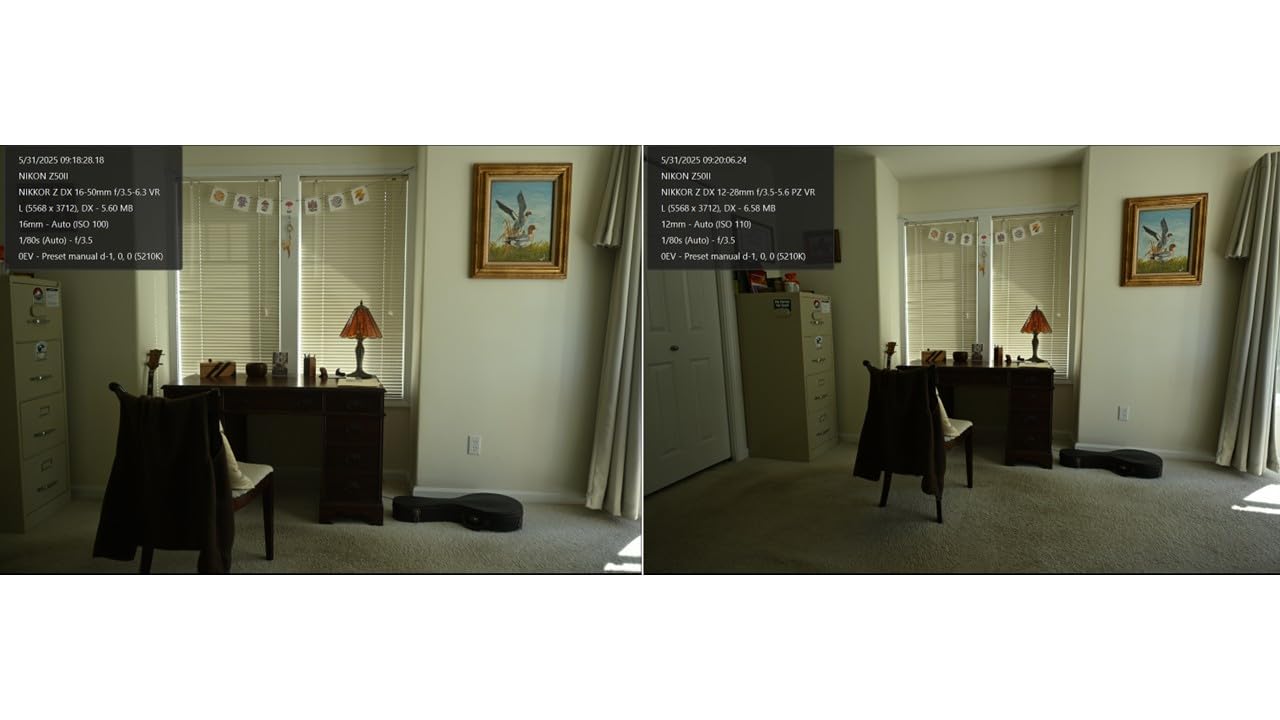
Sharpness is excellent across the frame, even at the ultra-wide 12mm setting. The internal zoom design means the lens does not extend or retract while zooming, maintaining balance on gimbals and keeping the center of gravity constant. This is a crucial detail for video work that many overlook.
The 4.5 stops of VR stabilization work wonders for handheld video. I have walked through cities filming B-roll footage that came out smooth and professional-looking, even without a gimbal. The quiet operation means no motor noise in your audio recordings.

Who Should Buy This Lens
Vloggers and content creators who film themselves, real estate photographers who need ultra-wide interiors, landscape shooters who want the widest possible view on DX format, and video professionals who need smooth power zoom functionality will find this lens essential.
Who Should Skip It
Still photographers who rarely shoot wider than 24mm equivalent, low-light shooters who need fast apertures, and those frustrated by the slower power zoom mechanism might prefer the manual zoom of the 16-50mm or the fast aperture of the 24mm f/1.7.
7. NIKKOR Z 50mm f/1.8 S – Best Portrait Prime
Pros
- Exceptional sharpness edge-to-edge
- Beautiful bokeh with 9 blades
- Excellent low-light performance
- Virtually zero focus breathing
- Fast silent autofocus
Cons
- Some cats eye bokeh at edges wide open
- No built-in VR (camera IBIS)
- Higher price than traditional 50mm lenses
There is a reason the NIKKOR Z 50mm f/1.8 S has become legendary among Nikon Z shooters. This is not just a good 50mm lens; it is one of the best autofocus 50mm lenses ever made by any manufacturer. On the Z30, it becomes a 75mm equivalent portrait lens with exceptional optical quality.
Sharpness is simply extraordinary. Wide open at f/1.8, this lens delivers corner-to-corner sharpness that rivals other lenses stopped down to f/5.6. Chromatic aberration is nonexistent. Distortion is essentially zero. The nano-crystal coating eliminates flare and ghosting even when shooting directly into light sources. This is reference-level optical performance.

The 75mm equivalent focal length is ideal for head-and-shoulders portraits. The perspective compression flatters faces without exaggerating features, and the f/1.8 aperture creates smooth, creamy background separation. The 9-blade diaphragm renders out-of-focus highlights as beautiful, round bokeh balls.
For video work, the virtually zero focus breathing is a game-changer. When pulling focus from near to far subjects, the field of view remains constant, avoiding that distracting zoom effect that ruins many cinematic shots. The silent stepping motor ensures no AF noise in your audio tracks.

Who Should Buy This Lens
Portrait photographers who demand the best, enthusiasts who appreciate optical perfection, video professionals who need focus breathing control, and anyone who wants a lens that will last a lifetime should invest in this masterpiece. It is worth every penny.
Who Should Skip It
Budget-conscious beginners, those who find 75mm too telephoto for their needs, and photographers who prioritize compact size over absolute image quality might prefer the smaller 40mm f/2 instead.
8. NIKKOR Z 85mm f/1.8 S – Best for Professional Portraits
Nikon NIKKOR Z 85mm f/1.8 S | Premium Large Aperture 85mm Portrait Prime Lens for Z Series mirrorless Cameras | Nikon USA Model
Pros
- Exceptional portrait lens with beautiful bokeh
- Sharp wide open at f/1.8
- Excellent color rendering
- Fast accurate autofocus
- Weather sealed construction
Cons
- Higher price point
- Some users want more compact size
- 127mm equivalent may be too long
Portrait photographers have long considered 85mm the gold standard focal length, and the NIKKOR Z 85mm f/1.8 S upholds that tradition with modern optical excellence. On the Z30, this becomes a 127mm equivalent lens, placing it firmly in the telephoto portrait category.
The compression at this focal length creates stunning subject separation. Faces look naturally proportioned, backgrounds melt into creamy abstraction, and even busy environments simplify into complementary backdrops. The f/1.8 aperture gives you complete creative control over depth of field.

Optical quality is outstanding. Two ED glass elements and Nano Crystal coating work together to eliminate chromatic aberration and flare. The result is images with exceptional clarity, contrast, and color accuracy straight out of camera. This lens renders skin tones beautifully, a crucial consideration for portrait work.
Build quality matches the optical performance. Weather sealing protects against dust and moisture, letting you shoot confidently in challenging conditions. The customizable control ring provides instant access to settings, and the overall handling feels precise and professional.

Who Should Buy This Lens
Professional portrait photographers, headshot specialists, wedding photographers who need reliable telephoto performance, and enthusiasts who want the absolute best portrait lens for the Z mount should choose this lens. It is a career investment.
Who Should Skip It
Those on tight budgets, photographers who work primarily in small spaces where 127mm equivalent is too long, and casual shooters who do not need this level of specialized performance might be better served by the 50mm f/1.8 S or 40mm f/2.
9. NIKKOR Z 35mm f/1.8 S – Best Premium Walk-Around
Pros
- Exceptional sharpness center to edge
- Versatile 35mm focal length
- Excellent low-light performance
- Beautiful background blur
- Minimal distortion
Cons
- Premium pricing
- Some users prefer weather sealing
- 52mm equivalent may not suit all
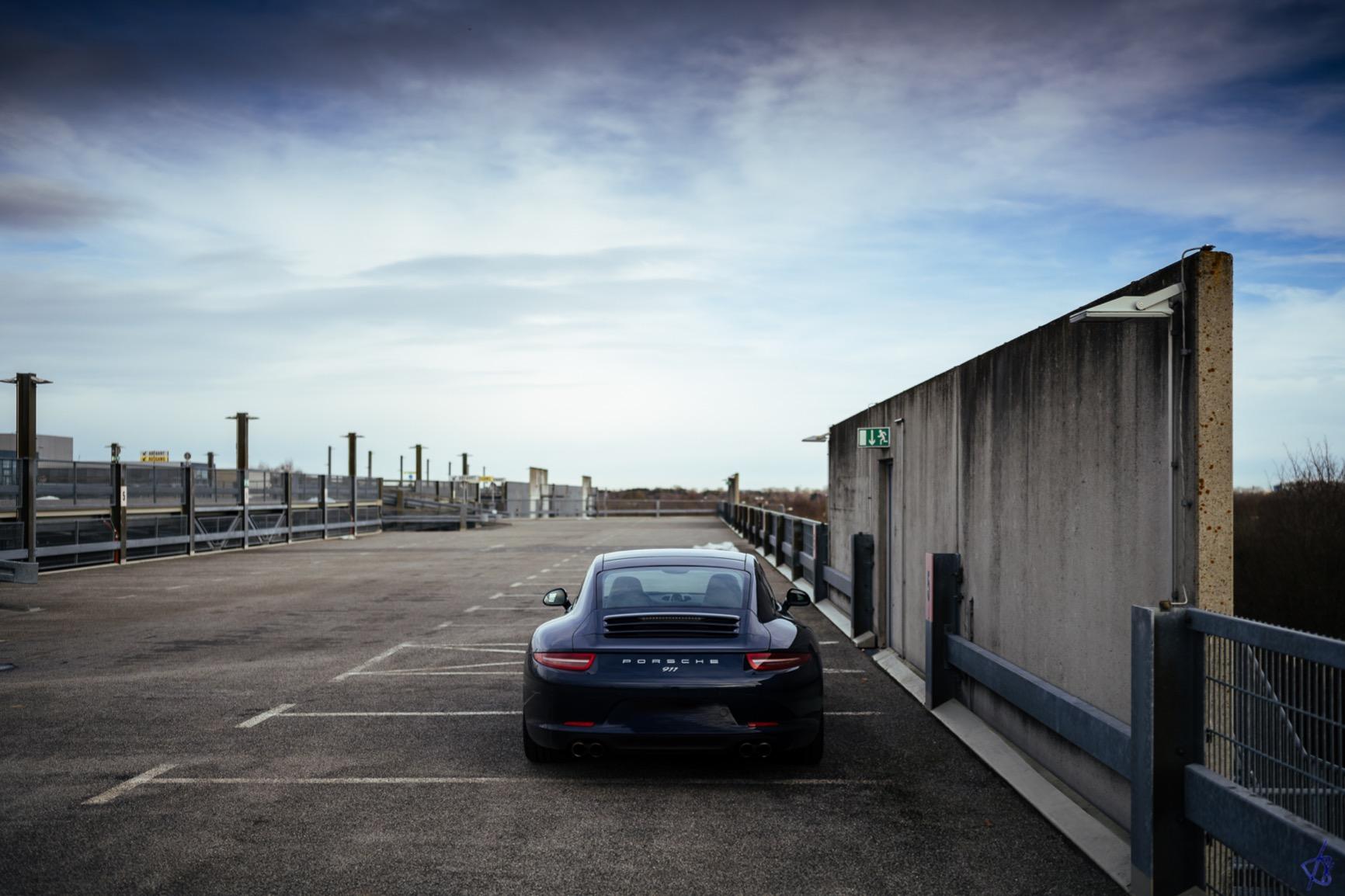
Some photographers consider 35mm the perfect focal length, and the NIKKOR Z 35mm f/1.8 S makes a compelling case for that argument. On the Z30, this becomes a 52mm equivalent lens, putting it in the natural perspective range that closely matches what the human eye sees.
This is perhaps the most versatile prime lens you can own. Wide enough for environmental portraits and street photography, but with enough telephoto compression to avoid the distortion associated with wider lenses. I have used this lens for documentary work, landscape details, casual portraits, and even some product photography.
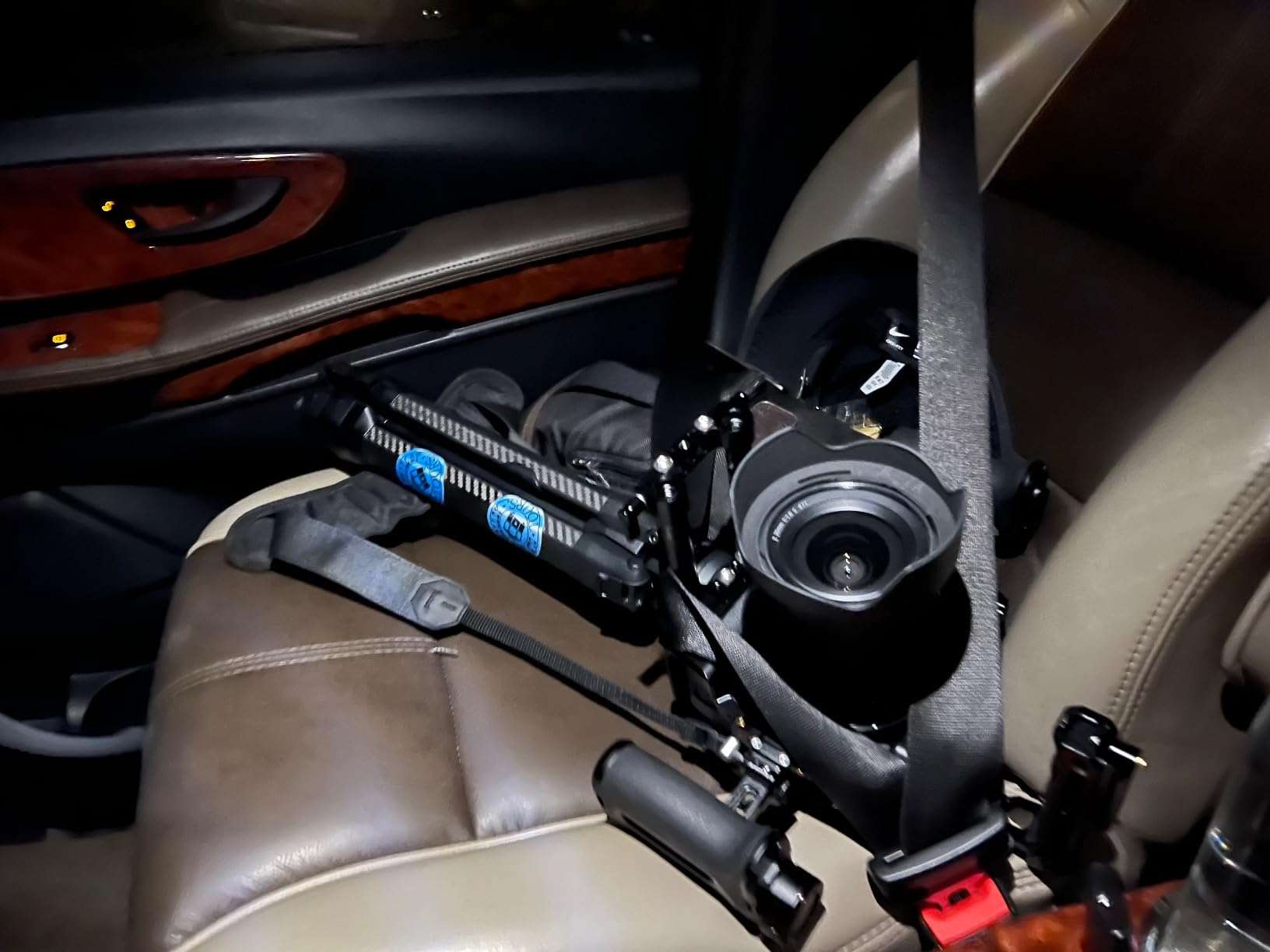
Sharpness is exceptional from center to corner, even wide open. The S-line construction with specialized glass elements eliminates aberrations and distortions that plague lesser lenses. The ZERO coating resists flare when shooting toward bright light, maintaining contrast in challenging conditions.
The f/1.8 aperture provides excellent low-light capability and creative depth of field control. The quiet stepping motor makes this lens equally at home in video work, and the minimal focus breathing is a bonus for hybrid shooters who move between stills and motion.
Who Should Buy This Lens
Documentary photographers, street shooters who want a slightly tighter view than 24mm, enthusiasts who want one premium prime to do everything, and those who appreciate the natural perspective of a 50mm equivalent lens will find this an excellent choice.
Who Should Skip It
Those who need true wide-angle coverage, photographers on tight budgets who could buy two DX lenses for this price, and anyone who finds 52mm too narrow for their preferred subjects should consider the 24mm f/1.7 or 28mm f/2.8 alternatives.
10. NIKKOR Z 28mm f/2.8 – Best Budget Prime
Nikon NIKKOR Z 28mm f/2.8 | Compact Standard Prime Lens for Z Series mirrorless Cameras | Nikon USA Model
Pros
- Very compact and lightweight
- Affordable price point
- Fast silent autofocus
- Good close focusing at 0.63 feet
- Custom control ring
Cons
- Slower f/2.8 aperture
- Not weather sealed
- Some users prefer faster aperture options
Not everyone needs or can afford premium S-line lenses, and the NIKKOR Z 28mm f/2.8 proves that Nikon still cares about budget-conscious shooters. This compact prime delivers solid optical performance in a tiny, affordable package.
On the Z30, the 28mm focal length becomes a 42mm equivalent, placing it in the natural perspective range similar to a 40mm lens. This is a comfortable focal length for everyday photography, street work, and environmental portraits. It is wide enough to capture context but not so wide that composition becomes challenging.

At f/2.8, this is not a low-light champion, but the aperture is fast enough for most daylight situations and some indoor work with moderate ISO increases. The close focusing distance of 0.63 feet enables creative perspectives and detail shots that add variety to your portfolio.
Dual stepping motors provide fast, accurate, and virtually silent autofocus. The control ring offers customization options usually reserved for more expensive lenses. Build quality is simple but solid, with a compact design that makes this lens easy to carry everywhere.

Who Should Buy This Lens
Budget-conscious beginners, photographers who want a compact everyday prime, travel shooters who prioritize weight savings, and anyone building a Z30 kit on a tight budget should start here. It is an excellent gateway into the world of prime lenses.
Who Should Skip It
Low-light specialists, those who demand the sharpest possible optics, photographers who need weather sealing for outdoor adventures, and anyone who can stretch their budget to the 40mm f/2 or 24mm f/1.7 will get more capability from slightly more expensive alternatives.
How to Choose the Best Lens for Your Nikon Z30 In 2026?
With so many excellent options available, making the right choice can feel overwhelming. After testing these lenses extensively and speaking with dozens of Z30 owners in online communities, I have identified the key factors that should guide your decision.
DX vs FX Format – What You Need to Know
The Nikon Z mount accommodates both DX (APS-C) and FX (full-frame) lenses. DX lenses like the 16-50mm, 24mm f/1.7, and 50-250mm are designed specifically for the smaller sensor in your Z30. They are generally smaller, lighter, and more affordable than their FX counterparts.
FX lenses like the 50mm f/1.8 S, 85mm f/1.8 S, and 35mm f/1.8 S are designed for full-frame cameras but work perfectly on the Z30. However, the 1.5x crop factor means a 50mm FX lens behaves like a 75mm lens on your Z30. This can be an advantage for telephoto work but limits wide-angle coverage.
Forum discussions consistently reveal that Z30 owners appreciate DX lenses for their size and weight advantages, while FX lenses attract those planning to upgrade to full-frame bodies eventually. Consider your long-term plans when making this choice.
The Importance of VR (Vibration Reduction)
Here is a critical fact: the Nikon Z30 does not have in-body image stabilization (IBIS). This makes optical VR in your lenses absolutely essential for handheld shooting, especially at slower shutter speeds or longer focal lengths.
Lenses with VR like the 16-50mm, 50-250mm, 18-140mm, and 12-28mm give you 4.5 to 5 stops of stabilization. This means you can shoot handheld at speeds that would produce blurry images with non-VR lenses. For video work, VR smooths out handheld footage considerably.
If you choose non-VR primes like the 40mm f/2, 24mm f/1.7, or 28mm f/2.8, be prepared to use faster shutter speeds or accept higher ISO settings. For strictly video work, consider a gimbal or tripod to compensate for the lack of stabilization.
Focal Length Considerations
Think about what you shoot most often. Wide-angle lenses (12-28mm, 16-50mm wide end) excel at landscapes, architecture, vlogging, and environmental shots. Standard lenses (24mm, 28mm, 35mm, 40mm) are versatile for everyday photography, street work, and general use. Telephoto lenses (50-250mm, 85mm) bring distant subjects closer and compress perspective for portraits.
Most photographers benefit from having at least one lens from each category. A common three-lens kit for Z30 owners includes the 16-50mm for general use, the 24mm f/1.7 for low light, and the 50-250mm for reach.
Aperture and Low Light Performance
Faster apertures (lower f-numbers) let in more light and create shallower depth of field. The f/1.7 and f/1.8 primes in this list can shoot in conditions that force f/3.5-6.3 zoom lenses to use much higher ISO settings. They also provide more background blur for subject separation.
However, faster lenses typically cost more and lack VR. You must weigh the benefits of low-light capability against the stabilization and convenience of slower zoom lenses. Many photographers own both types, using zooms for daylight and general work, and primes for challenging light and artistic effects.
Size and Weight for Travel
One of the Z30’s biggest selling points is its compact size. Pairing it with massive lenses defeats that advantage. Consider how you will carry your gear. The pancake-style 28mm f/2.8 and tiny 40mm f/2 barely add bulk to the camera. The 16-50mm retracts to a remarkably small package. In contrast, the S-line primes and telephoto zooms add significant size and weight.
For travel, I recommend prioritizing compact DX lenses. The 16-50mm, 24mm f/1.7, and 50-250mm together weigh less than some single full-frame zoom lenses, yet cover an enormous range of focal lengths and shooting scenarios.
Frequently Asked Questions
What is the best lens for Nikon Z30?
The best lens for Nikon Z30 depends on your specific needs. For general everyday photography, the NIKKOR Z DX 16-50mm f/3.5-6.3 VR is the best all-around choice due to its versatile zoom range and excellent stabilization. For low-light and street photography, the Z DX 24mm f/1.7 offers exceptional value with its fast aperture. Wildlife and sports photographers should choose the Z DX 50-250mm f/4.5-6.3 VR for its telephoto reach.
What 3 lenses should every photographer have?
Every Nikon Z30 photographer should have three core lenses: 1) A versatile standard zoom like the Z DX 16-50mm f/3.5-6.3 VR or Z DX 18-140mm f/3.5-6.3 VR for everyday shooting. 2) A fast prime like the Z DX 24mm f/1.7 or Z 40mm f/2 for low-light situations and creative depth of field control. 3) A telephoto zoom like the Z DX 50-250mm f/4.5-6.3 VR for wildlife, sports, and distant subjects. This three-lens combination covers virtually all shooting scenarios.
What is the best all round lens for Nikon Z?
The NIKKOR Z DX 16-50mm f/3.5-6.3 VR is the best all-around lens for Nikon Z30. It offers a versatile 24-75mm equivalent focal range that covers everything from moderately wide landscapes to short telephoto portraits. The built-in VR stabilization compensates for the Z30’s lack of in-body stabilization, and its compact retractable design perfectly matches the camera’s portable nature. At just 135 grams, it is an ideal walk-around lens.
What is the holy trinity of Nikon Z lenses?
The holy trinity of Nikon Z lenses traditionally refers to three professional f/2.8 zoom lenses: the NIKKOR Z 14-24mm f/2.8 S (ultra-wide), NIKKOR Z 24-70mm f/2.8 S (standard zoom), and NIKKOR Z 70-200mm f/2.8 VR S (telephoto). However, these are full-frame lenses. For Z30 DX users, a practical equivalent would be the Z DX 12-28mm f/3.5-5.6 PZ VR, Z DX 16-50mm f/3.5-6.3 VR, and Z DX 50-250mm f/4.5-6.3 VR, which together cover 18-375mm equivalent range.
Final Thoughts
The Nikon Z30 is a capable camera that deserves quality glass in front of its sensor. After testing these ten lenses extensively, I can confidently say that there is no single best lenses for nikon z30 for everyone. The right choice depends on your budget, shooting style, and creative goals.
For most users, I recommend starting with the three-lens kit that covers all bases: the 16-50mm VR for everyday shooting, the 24mm f/1.7 for low light and street photography, and the 50-250mm VR for wildlife and sports. This combination costs less than a single professional full-frame lens while delivering exceptional image quality across an enormous range of focal lengths.
If you can only afford one lens right now, make it the 16-50mm VR. It handles 80% of shooting scenarios competently and will teach you what focal lengths you naturally gravitate toward. Once you know your preferences, add the 24mm f/1.7 for its low-light capability or the 50-250mm for telephoto reach.
The Z mount system is still growing, with new lenses announced regularly. Investing in quality glass now pays dividends for years to come, as these lenses will work with any future Nikon Z camera you upgrade to. Choose wisely, shoot often, and enjoy the creative possibilities that the right lens unlocks in 2026.